
Let’s be honest — most garages are hiding some serious chaos. Bikes leaning against the wall, tools scattered everywhere, and seasonal decorations buried under five layers of mystery boxes. If this sounds familiar, you need some smart garage shelf ideas that actually work.
- 1. Go Vertical with Floor-to-Ceiling Shelving
- 2. Install Wall-Mounted Shelves for Everyday Access
- 3. Use Overhead Ceiling Racks to Reclaim Floor Space
- 4. Set Up a Slatwall System for Total Flexibility
- 5. Build Zone-Based Shelving for a Logical Layout
- 6. Add Rolling Shelves for Portable, Flexible Storage
- 7. Use Pegboards for Small Tool Organization
- 8. Store Seasonal Items in Clear, Labeled Stackable Bins
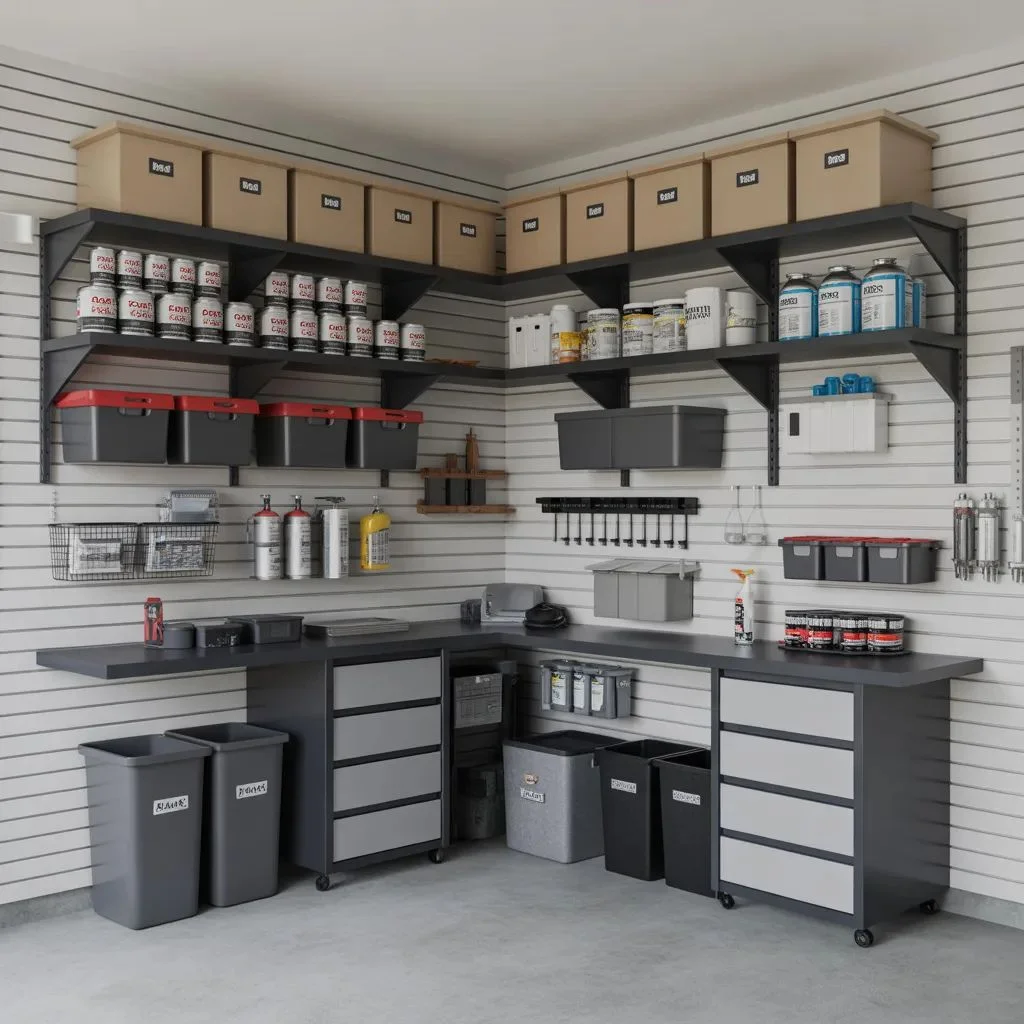
- 9. Maximize Corner Space with Angled or Corner Shelves
- 10. Create a Dedicated Hazardous Storage Zone with Locked Shelving
- Ready to Transform Your Garage?
- Frequently Asked Questions
The good news? You don’t need to tear everything apart or spend a fortune. The right shelving strategy can turn your messy garage into a clean, functional space — one where you can actually find things. From floor-to-ceiling builds to overhead racks and slatwall systems, these ideas cover every corner of your garage.
Whether you’re working with a tiny one-car garage or a spacious three-car setup, there’s something here for you. Let’s dig in.
1. Go Vertical with Floor-to-Ceiling Shelving
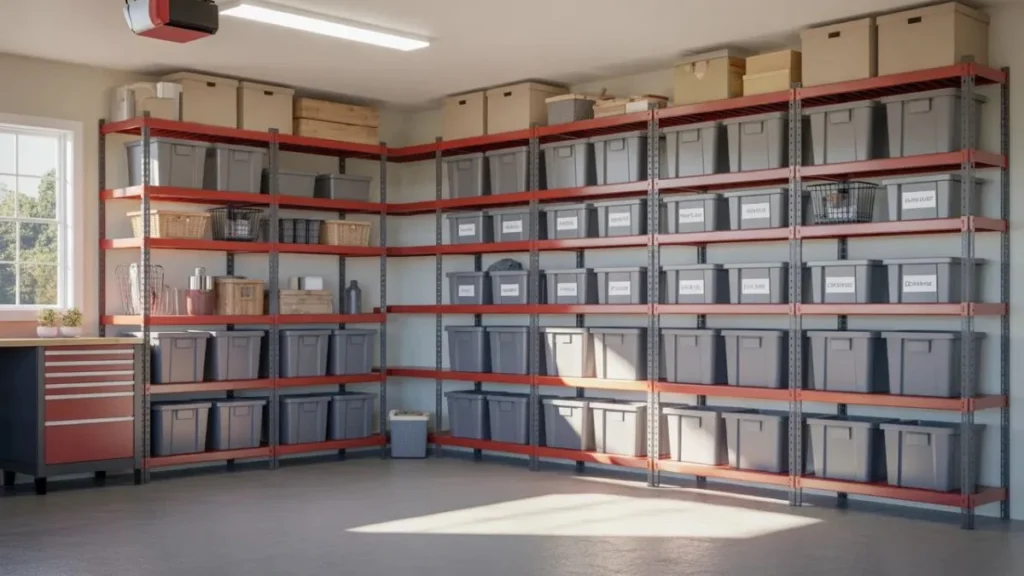
If you’re short on floor space, the answer is right in front of you — or rather, above you. Floor-to-ceiling shelving is one of the smartest garage shelf ideas for anyone who needs maximum storage without sacrificing square footage.
Deep shelves that run from the floor all the way up give you room for plastic storage bins, heavy tools, and seasonal items. The key is to put heavy things on lower shelves and lighter, rarely used items up top. It keeps things accessible without making your garage feel cramped.
Metal shelving units work especially well here because they’re sturdy, moisture-resistant, and built to last. Many come in adjustable styles so you can customize the spacing as your needs change.
Pro tip: Use the top shelves for holiday décor and camping gear — things you only grab a couple of times a year.
2. Install Wall-Mounted Shelves for Everyday Access
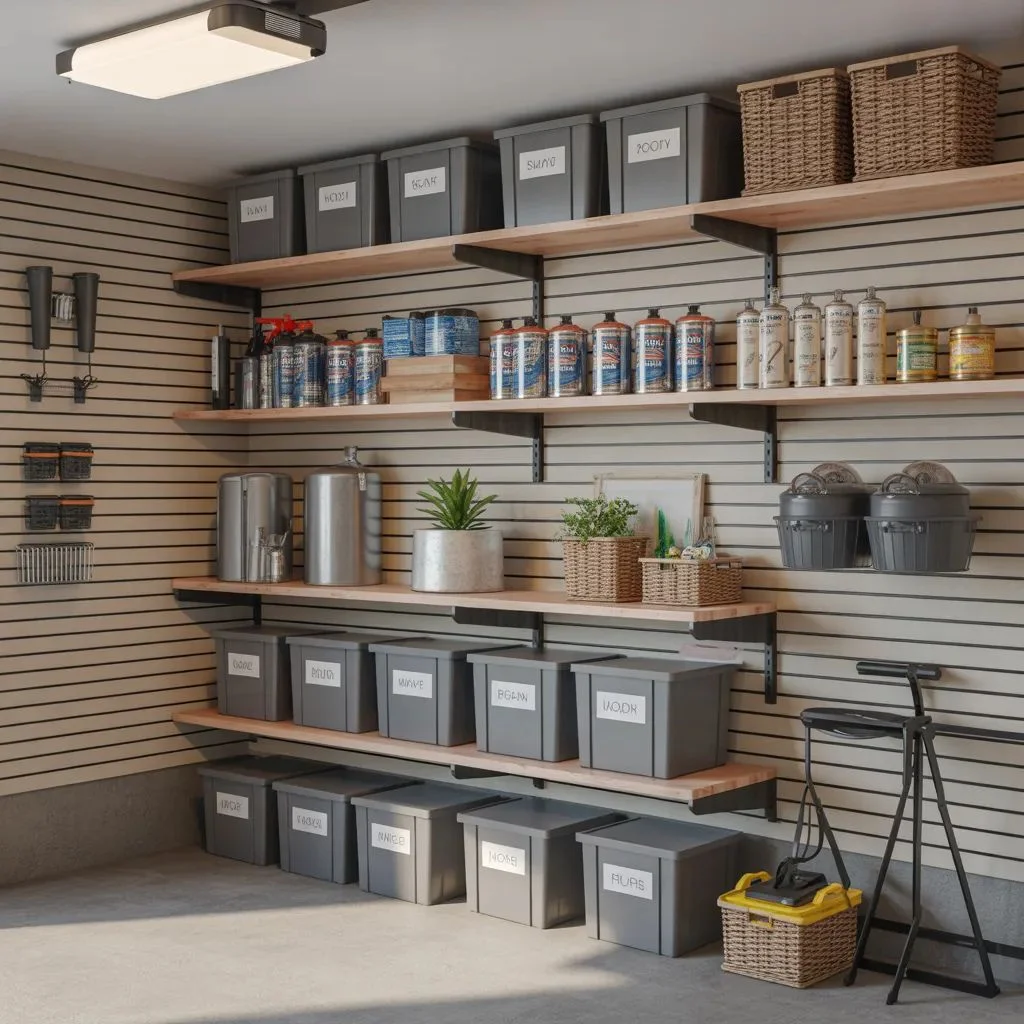
Wall-mounted shelves are a classic for a reason. They’re affordable, easy to install, and incredibly effective at getting items off the floor while keeping them easy to grab.
You can mount shelves directly onto studs, or — even better — add a layer of three-quarter-inch plywood over your drywall first. This gives you a continuous mounting surface so you can place shelves and hooks exactly where you need them, not just where the studs happen to be.
Wall-mounted shelves work great for spray cans, garden supplies, and small tool bins. Pair them with baskets or wire containers for a tidy, cohesive look that’s actually functional.
Smart move: Group similar items together on nearby shelves to create mini zones within your garage.
3. Use Overhead Ceiling Racks to Reclaim Floor Space
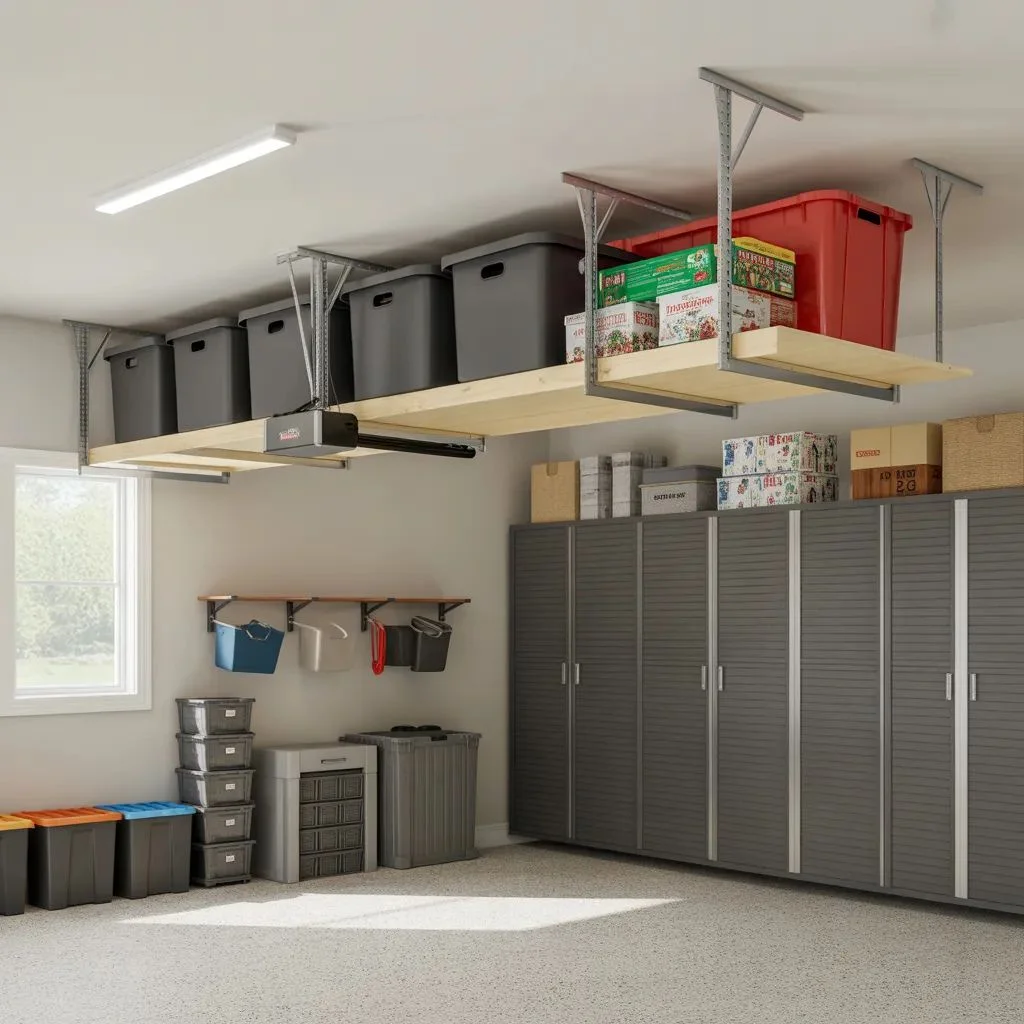
Look up — there’s a whole lot of wasted space above your head. Overhead ceiling racks are one of the most underrated smart garage shelf ideas out there, especially if your garage has high ceilings.
Ceiling-mounted racks are perfect for seasonal items like holiday bins, luggage, spare tires, or camping gear. These are things you don’t need every day, but they take up precious floor space when left at ground level. Move them up top and suddenly your garage feels twice as big.
Some systems even use pulleys to lower bins down to you — no climbing ladders required. Look for products like Faber Overhead Garage Shelving, which are designed to sit safely above garage doors or in rafters without interfering with your daily routine.
Best for: Seasonal décor, camping gear, luggage, spare tires, and anything you use once or twice a year.
4. Set Up a Slatwall System for Total Flexibility
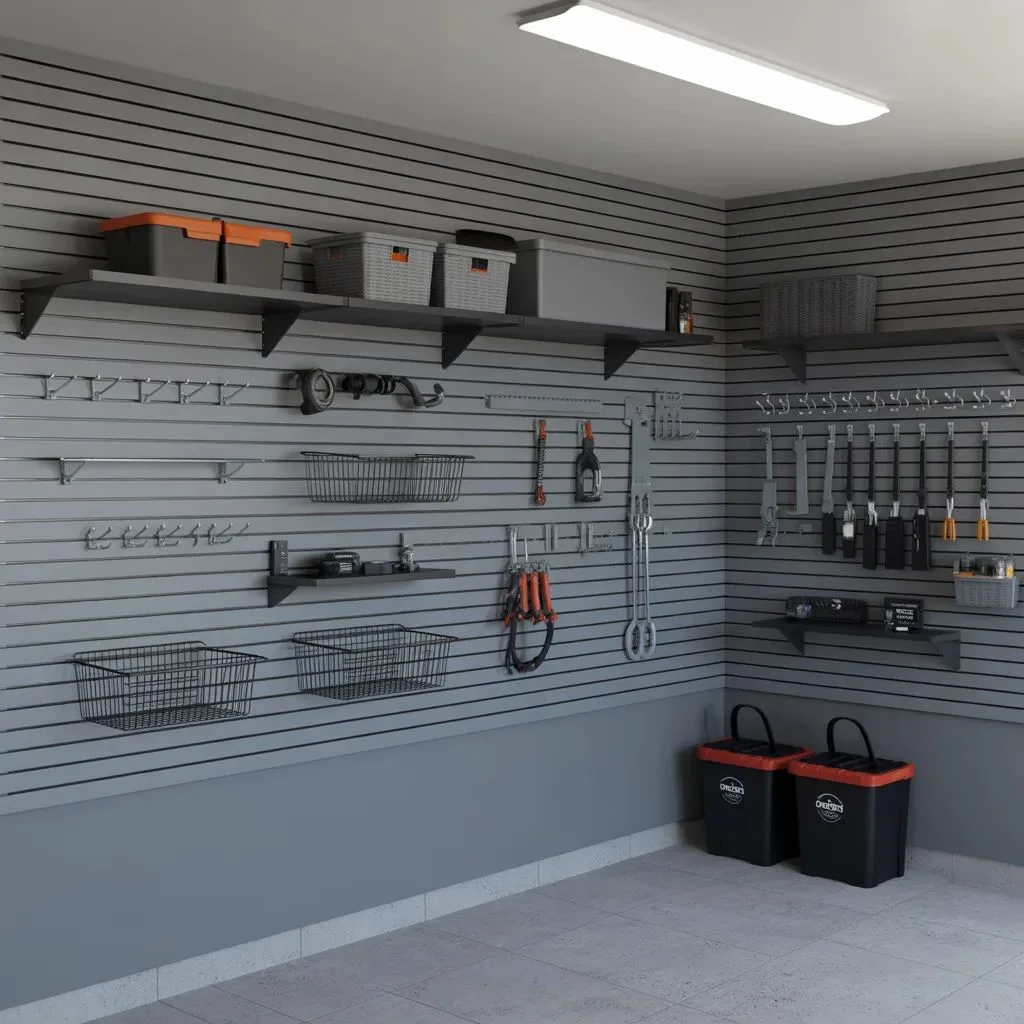
If you want a garage shelving system that grows with you, slatwall panels are the answer. These modular panels feature horizontal grooves that hold hooks, shelves, baskets, and bins — and you can rearrange everything in minutes without tools.
Today’s slatwall systems have come a long way. They’re sleek, durable, and can even be color-matched to your garage cabinets. PVC and metal options are both widely available, and they work beautifully above epoxy garage floors for a high-end, polished look.
You can use slatwall to organize bikes, garden tools, sports equipment, and utility items — all on a single wall. The flexibility means your storage system evolves as your life does.
Power tip: Combine a slatwall panel with a fold-down workbench for a space-saving mini workshop.
5. Build Zone-Based Shelving for a Logical Layout
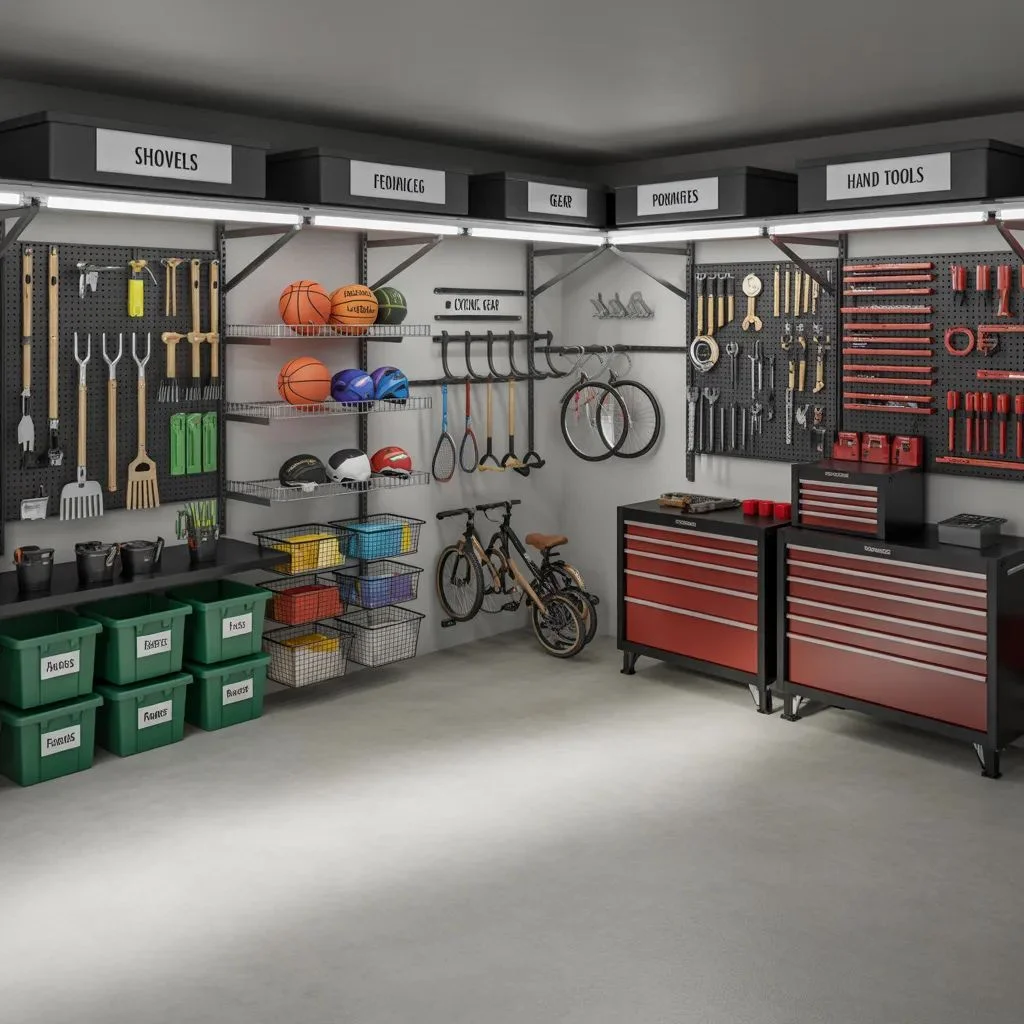
One of the smartest organizational moves you can make in any garage is to stop treating it as one big dumping ground. Instead, divide your space into dedicated zones — and let your shelving support each zone.
Think about it this way: a lawn and garden zone near the side door, a sports equipment zone by the back wall, a tools zone near the workbench, and a seasonal storage zone near the ceiling. When everything has a home, putting things away becomes automatic.
Zone-based shelving also makes it easier to involve kids. Assign a dedicated shelf or cubby to each child’s gear, and they’re much more likely to actually use it. Clearly labeled bins within each zone take organization to the next level.
Key rule: Plan your zones before buying a single shelf. Know what goes where first, then shop for storage to match.
6. Add Rolling Shelves for Portable, Flexible Storage
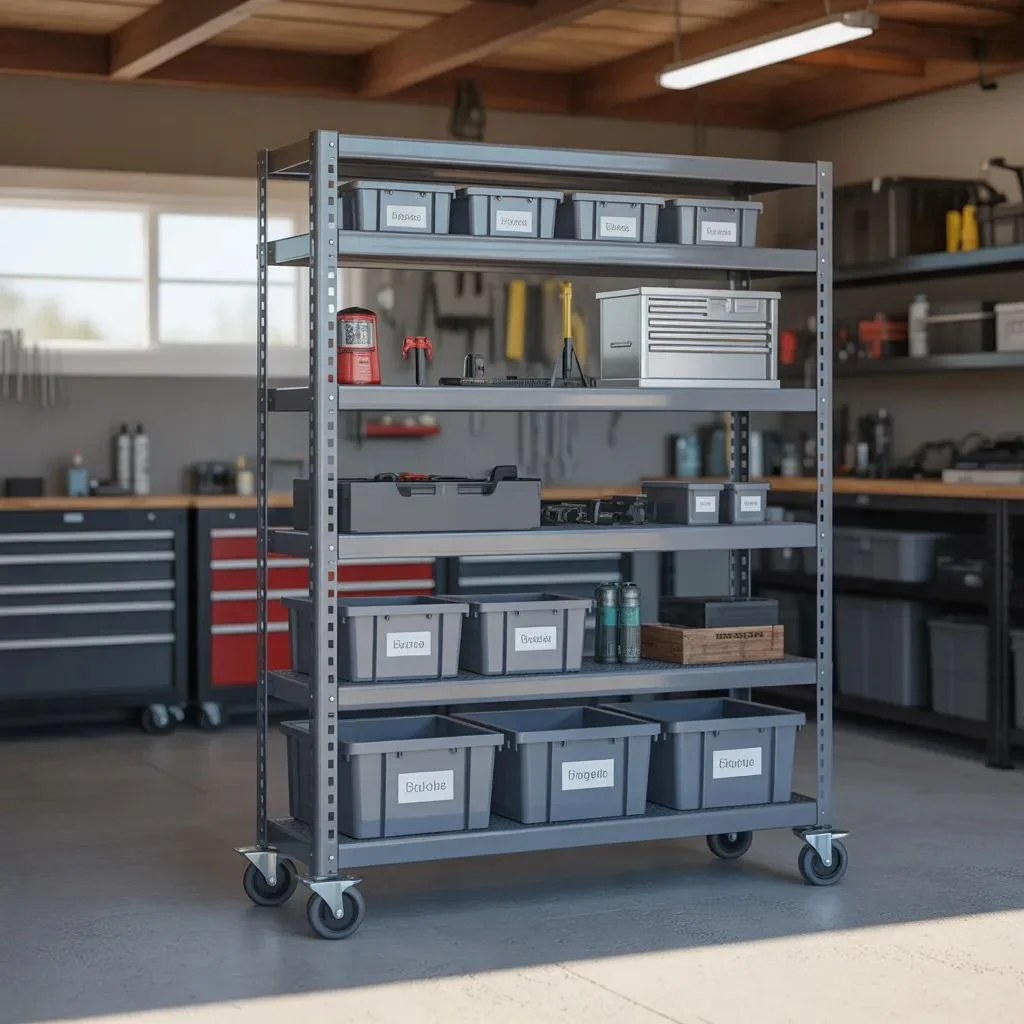
Not everything in your garage needs to be bolted to a wall. Rolling shelf units offer incredible flexibility — especially useful in garages that double as workshops or hobby spaces.
You can move rolling shelves around depending on what project you’re working on, or roll them out of the way when you need more floor space for a car or guest parking. DIY versions built from basic lumber are surprisingly sturdy and cost just a fraction of retail options.
For heavier loads, look for metal rolling shelves with locking casters. These are great for storing bulky power tools, paint cans, and automotive supplies that you regularly need to access from different angles.
Bonus idea: Store a lawnmower or wheelbarrow underneath a tall rolling shelf unit by removing the bottom section — it keeps them neatly tucked away without wasting any space.
7. Use Pegboards for Small Tool Organization
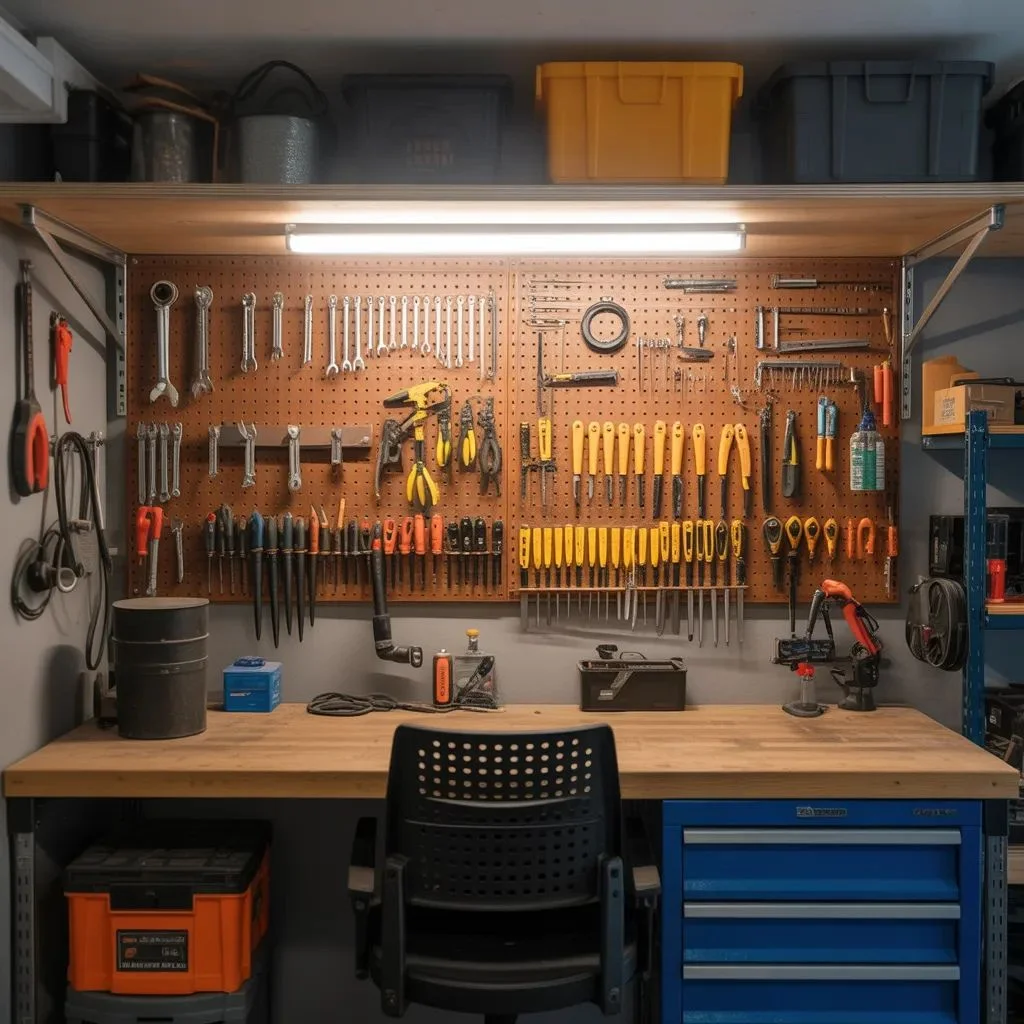
Ask any homeowner who’s organized their garage and they’ll tell you the same thing: pegboards are a total game-changer for small tool storage. They’re inexpensive, highly customizable, and make it easy to see every tool at a glance.
Mount a pegboard above your workbench and suddenly your most-used tools are always within arm’s reach. Rearrange the pegs whenever your needs change — no screwdrivers required. Add magnetic strips alongside your pegboard for small metal items like drill bits, screws, and paintbrushes.
Pegboards pair beautifully with a fold-down workbench for a complete, space-efficient DIY station. If you want to go even more organized, outline each tool’s silhouette on the board so you always know where it goes — and when it’s missing.
Style note: Pegboards aren’t just functional — painted in a bold color, they can make your garage wall look intentionally designed.
8. Store Seasonal Items in Clear, Labeled Stackable Bins
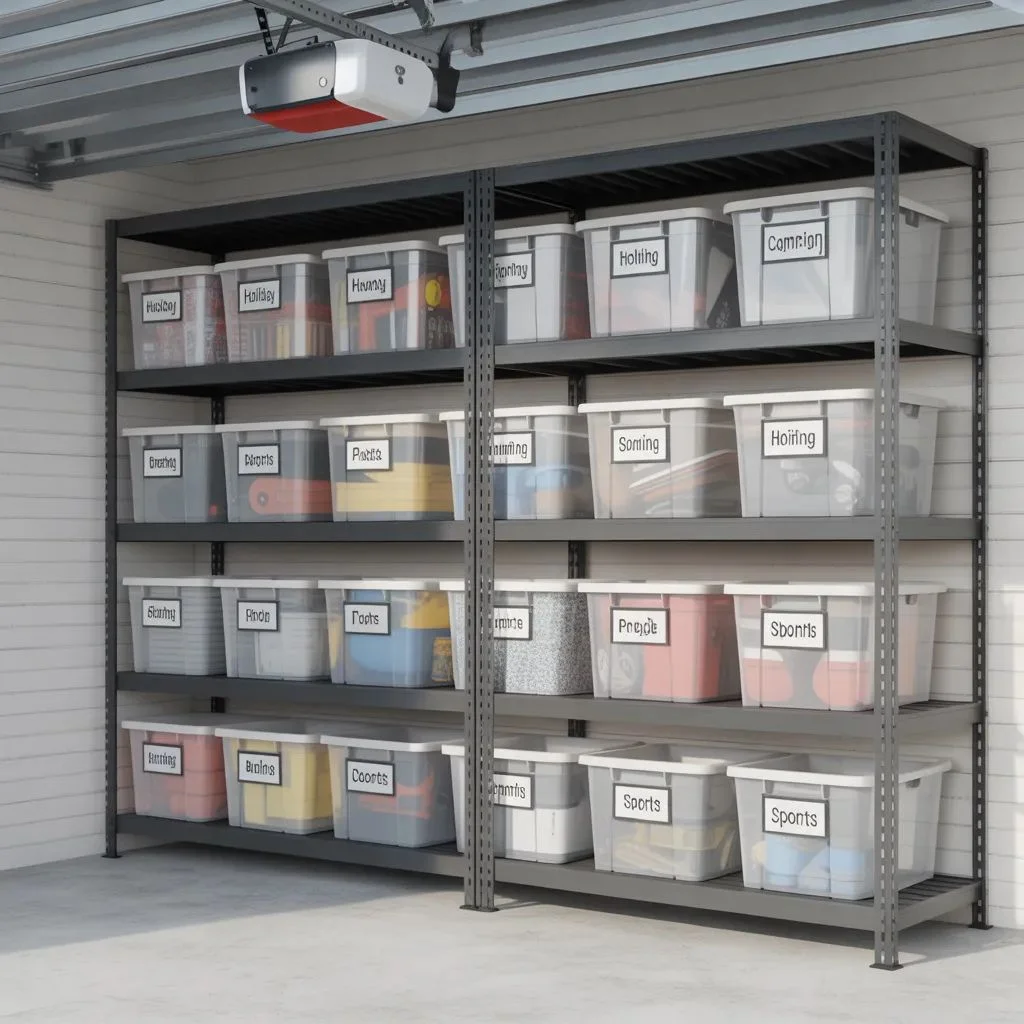
Not all your garage storage is used equally. Seasonal items sit untouched for months — and that’s fine, as long as they’re stored smartly. Clear, stackable bins with labels are one of the simplest smart garage shelf ideas you can implement this weekend.
Transparent bins let you spot what’s inside without pulling everything down. Stack them on your tallest shelves or ceiling racks since you won’t need them often. Labels on the front — whether handwritten or printed — make it effortless to find what you need during holidays or seasonal transitions.
For a cohesive, clean look, invest in matching bins in one or two colors. It sounds small, but a consistent bin system makes even a busy garage feel more intentional and put-together.
Smart tip: Store leftover paint in clearly labeled stackable kitchen containers to save space and prevent rust damage.
9. Maximize Corner Space with Angled or Corner Shelves
Corners are the most underused spaces in any garage. Most people just pile things there and forget about them. But with the right shelves, corners can become some of the most valuable storage real estate in your garage.
Corner shelves — either triangular or L-shaped — fit snugly into tight spaces and work beautifully for paint cans, small bins, or frequently used cleaning supplies. Modular slatwall panels can even be trimmed to fit tight corners, giving every nook a functional purpose.
If you’re building custom shelving, corner units are a great DIY weekend project. Use the same lumber and hardware as your main shelves to create a seamless, built-in look throughout your entire garage.
Design trick: Place your brightest or most colorful bins on corner shelves — they draw the eye naturally and make the space feel curated rather than cluttered.
10. Create a Dedicated Hazardous Storage Zone with Locked Shelving
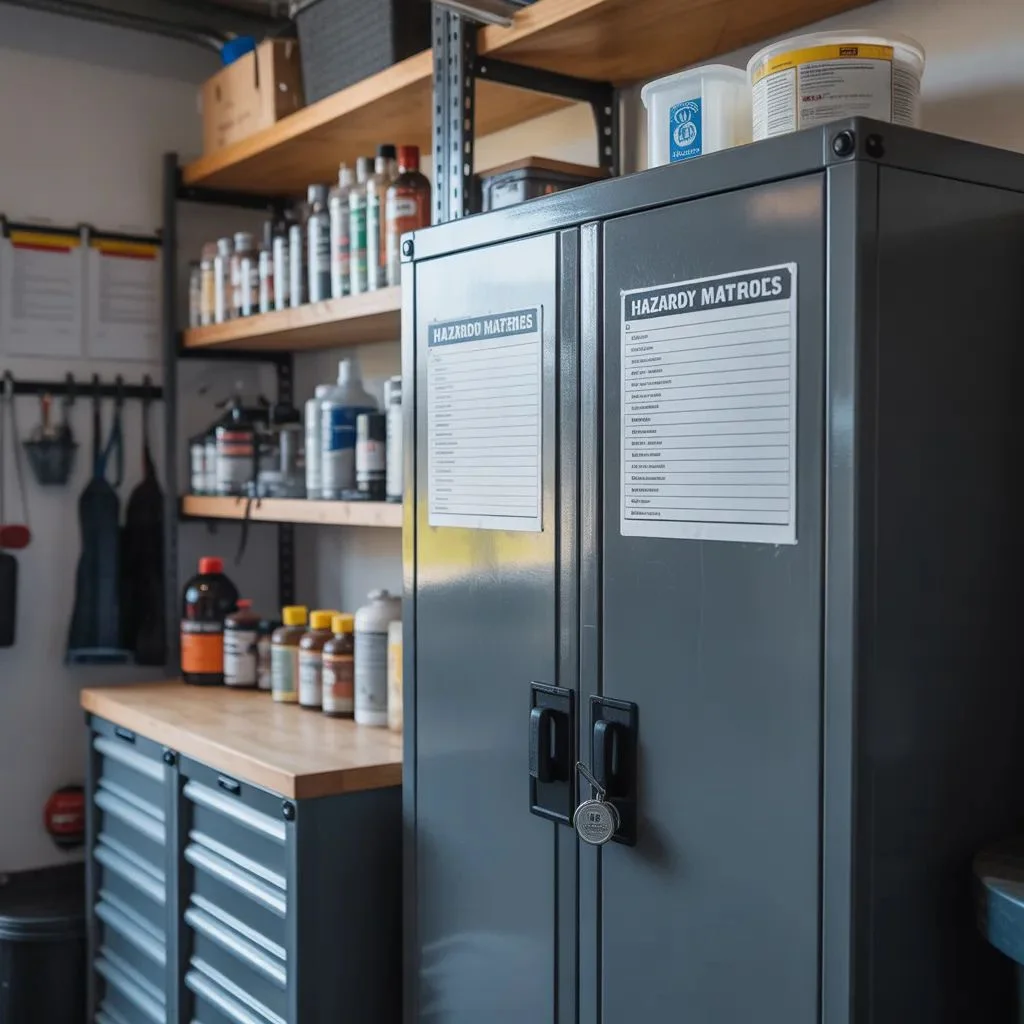
Organization isn’t just about tidiness — it’s also about safety. One of the most important smart garage shelf ideas is creating a dedicated, clearly labeled zone for flammable, toxic, or hazardous materials.
Paint thinner, pesticides, gasoline, and cleaning chemicals should all be stored in a single, secured cabinet or high-walled shelf — ideally with a lock if children or pets have access to your garage. Keeping these together also means you always know where to check before starting a project.
Label both the cabinet and each individual container clearly. This simple system prevents dangerous mix-ups and reduces the risk of accidental spills or access. Safety and smart organization absolutely go hand-in-hand.
Extra step: Add a small whiteboard or label sheet to the front of the cabinet listing what’s stored inside — especially useful for emergency situations.
Ready to Transform Your Garage?
Your garage doesn’t have to be a chaotic catch-all space. With these smart garage shelf ideas, you have everything you need to turn it into an organized, efficient room that works for your life.
Start with one zone, one wall, or one weekend project. Pick the idea that solves your biggest frustration first — whether that’s overhead racks for seasonal clutter or a pegboard for your overflowing toolbox. Small wins build momentum fast.
Which garage shelf idea are you trying first? Drop your plans in the comments — we’d love to know!
Editors Pick: 10 Clever Bike Storage Garage Ideas to Free Up Space and Stay Organized.
Frequently Asked Questions
Q: What are the best smart garage shelf ideas for a small garage?
A: For small garages, go vertical. Floor-to-ceiling shelving, overhead ceiling racks, and wall-mounted systems with hooks and baskets will give you maximum storage without eating up precious floor space. Rolling shelves are also great since you can move them when you need to park.
Q: How do I organize a garage with a lot of different items?
A: Zone-based organization is your best friend. Divide your garage into dedicated areas — tools, garden, sports, seasonal, automotive — and assign shelving to each zone. Label everything clearly, and always put items back in their zone after use.
Q: What type of garage shelving is the most durable?
A: Metal and welded steel shelving units offer the best durability for garage use. They’re resistant to moisture and temperature changes, hold heavy loads, and last for decades. For wall-mounted systems, look for industrial-grade brackets rated for at least 200–300 lbs per shelf.
Q: Can I build garage shelves myself without experience?
A: Absolutely. Simple plywood shelves and wall-mounted brackets are beginner-friendly projects you can complete in a weekend. Start with a basic frame using 2×4 lumber and plywood sheets, and follow beginner tutorials for step-by-step guidance. No welding or complex carpentry skills required.
Q: How do I keep my garage shelves organized long-term?
A: The secret to long-term organization is having a system everyone in your household understands. Use clear labels, keep a donate-and-discard bin in an accessible corner, and do a quick reset every season. When everything has a dedicated spot, tidying up takes minutes — not hours.