Outdoor spaces are no longer just an extra part of the home. They are places where we slow down, breathe, and reconnect with nature. That is where Japandi Patio Ideas truly shine. This style blends the warmth of Scandinavian design with the calm simplicity of Japanese aesthetics. The result is a patio that feels peaceful, practical, and deeply connected to nature.
Japandi design focuses on balance. Nothing feels crowded or empty. Every item has a purpose, and every texture adds comfort. When applied outdoors, this approach creates a patio that feels like a quiet retreat rather than a decorated space. If you are looking for simple ways to create a calm outdoor area, these nature-inspired Japandi Patio Ideas can guide you step by step.
What Makes Japandi Style Perfect for Patios
Japandi style works beautifully outdoors because it is rooted in nature. It values natural materials, soft colours, and clean lines. Instead of bold patterns or bright shades, it uses muted tones that feel restful.
Scandinavian design brings comfort and function, while Japanese design adds mindfulness and simplicity. Together, they create a patio that feels warm yet uncluttered. This balance is why Japandi Patio Ideas are becoming popular for modern homes that want peaceful outdoor living.
Japandi patios also age well. Natural wood, stone, and plants develop character over time. Rather than looking worn, they feel more grounded and authentic as years pass.
Neutral Colour Palettes That Calm the Space
Colour sets the mood of a Japandi patio. The goal is to keep everything soft and natural.
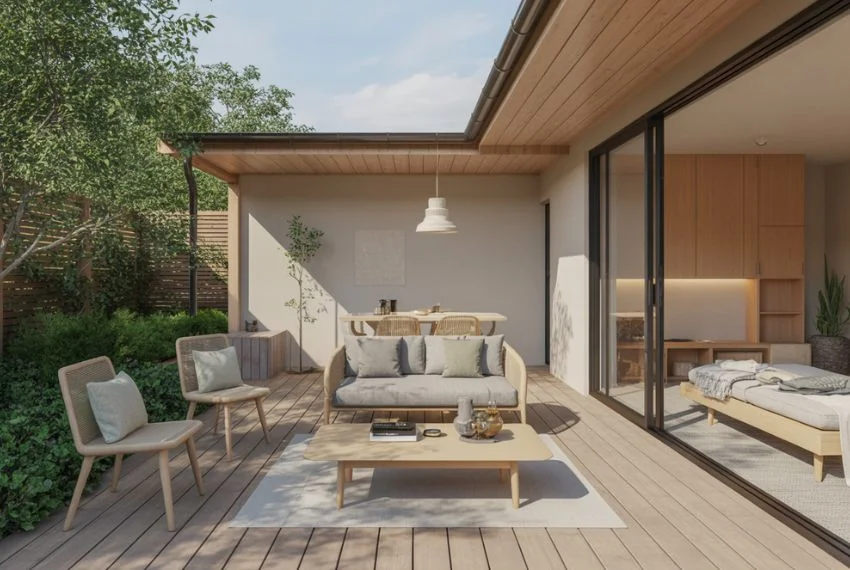
Stick to shades like warm beige, soft gray, stone white, and earthy brown. These colors reflect nature and make the space feel open and airy. Avoid strong contrasts. Instead, layer similar tones for depth.
For example, a light wood deck paired with linen cushions in sand or clay tones creates harmony. This gentle palette is a key part of Japandi Patio Ideas because it helps the mind relax without distraction.

Natural Materials That Add Warmth
Nature-inspired patios rely heavily on texture. Materials should feel real, not polished or artificial.
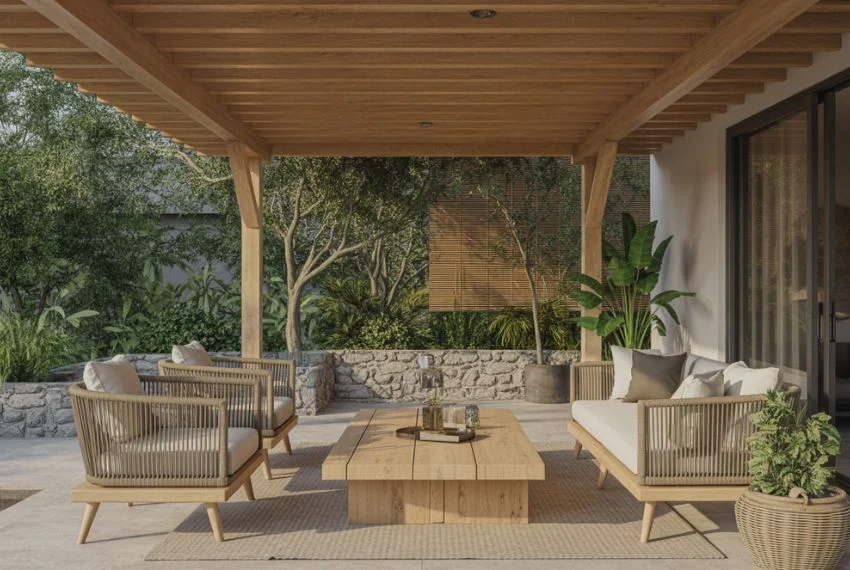
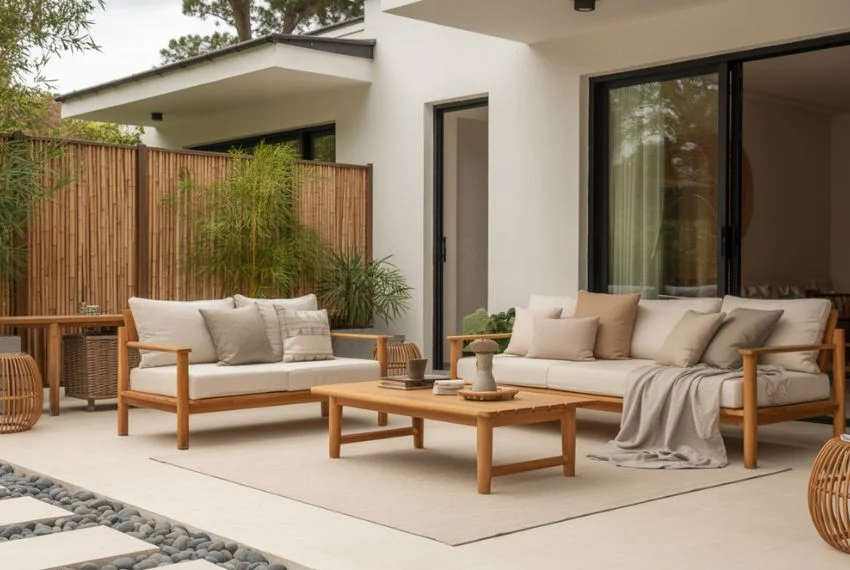
Use wood, bamboo, stone, clay, and linen whenever possible. Wooden furniture with visible grain brings warmth. Stone planters or pebble flooring add grounding energy. Woven elements like rattan or rope soften the look.
These materials connect your patio to the outdoors, which is central to Japandi Patio Ideas. The space should feel like it belongs to nature, not separate from it.
Simple Furniture with Purposeful Design
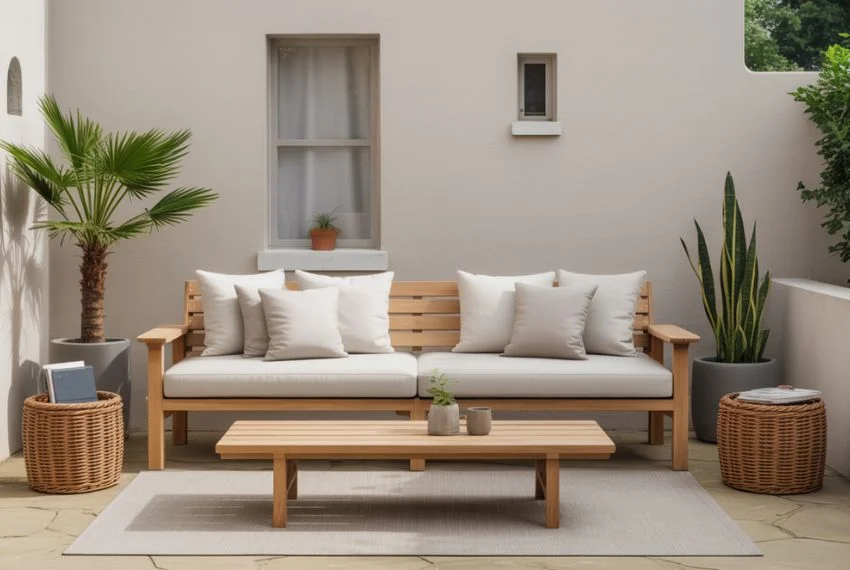
Japandi patios favor fewer pieces, but each one must be useful and comfortable. Low-profile seating is common, inspired by Japanese floor-level living.
Choose benches, lounge chairs, or floor cushions with clean lines. Avoid bulky furniture or heavy detailing. A simple wooden bench with neutral cushions can often replace a full outdoor sofa.
Function matters just as much as appearance. In Japandi Patio Ideas, furniture should invite you to sit, pause, and stay present without overwhelming the space.
Thoughtful Plant Choices for a Natural Look
Plants play a quiet but powerful role in Japandi patios. Instead of filling every corner, choose a few plants with strong shapes.
Bamboo, olive trees, bonsai, grasses, or ferns work well. Their natural forms bring movement and softness without chaos. Use ceramic or stone planters in neutral shades.
Placing plants with intention is one of the most effective Japandi Patio Ideas. A single well-placed plant can feel more peaceful than many scattered ones.
Creating a Sense of Flow and Space
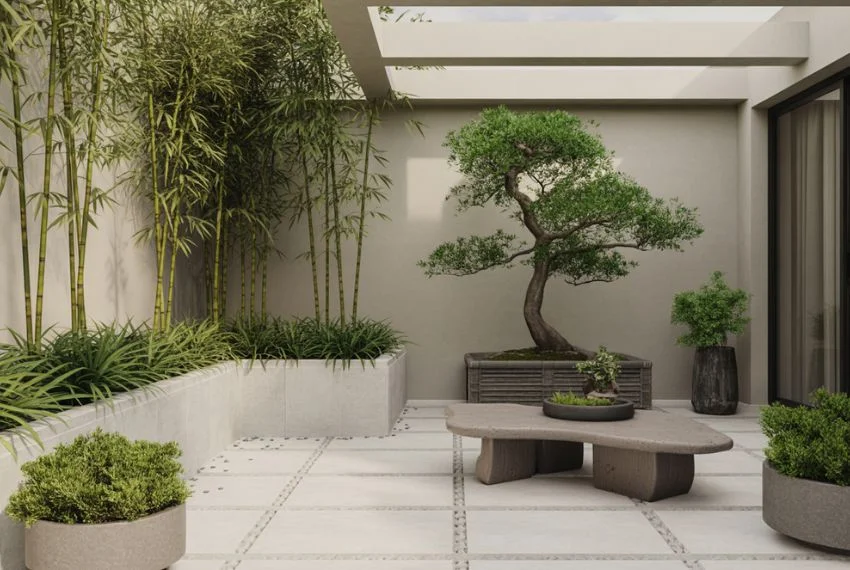
A Japandi patio should feel open, even if it is small. Leave space between furniture pieces so movement feels natural.
Avoid filling every area. Empty space is not wasted space in Japandi design. It gives the eye room to rest and helps the patio feel calm.
Paths made of stepping stones or wood slats can guide movement gently. This sense of flow is essential to Japandi Patio Ideas because it supports a relaxed, mindful atmosphere.

Soft Lighting for Evening Calm
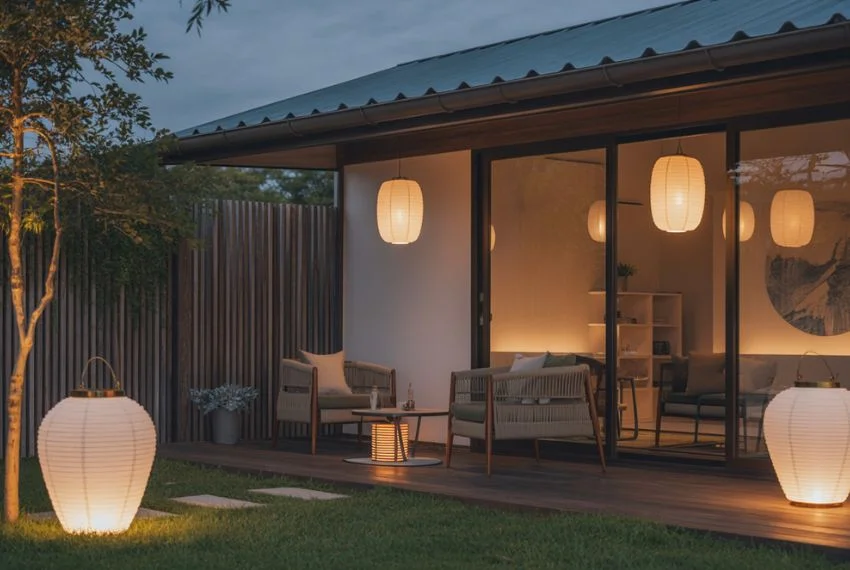
Lighting should be subtle and warm. Bright or harsh lights can break the peaceful mood.
Use lanterns, solar lights, or soft string lighting with warm tones. Paper-style lanterns or wooden-framed lights fit well with Japandi style.
Lighting in Japandi Patio Ideas is about mood, not brightness. The goal is to create a gentle glow that encourages quiet evenings outdoors.
Textiles That Add Comfort Without Clutter
Textiles bring comfort but should be used sparingly. Choose natural fabrics like cotton, wool, or linen.
Neutral cushions, simple outdoor rugs, and light throws can soften seating areas. Stick to solid colours or subtle textures instead of bold patterns.
In Japandi Patio Ideas, textiles should feel inviting yet understated. They should support comfort without drawing too much attention.

Incorporating Water and Stone Elements
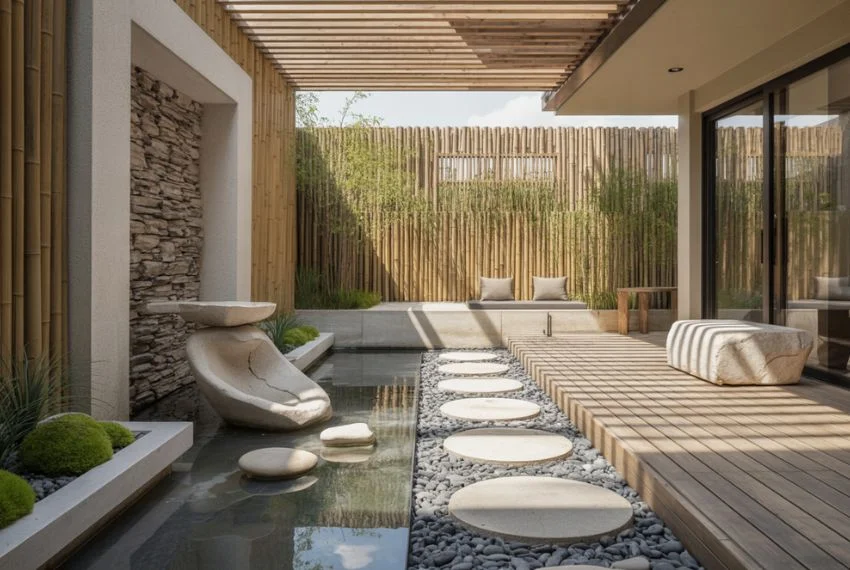
Water features, even small ones, enhance the calming effect of a Japandi patio. A simple stone bowl fountain or a narrow water channel adds gentle sound.
Stone elements like gravel sections, pebble borders, or flat rocks bring balance and grounding. These details reflect Japanese garden traditions and fit naturally with Scandinavian simplicity.
When done right, these features elevate Japandi Patio Ideas without making the space feel busy.
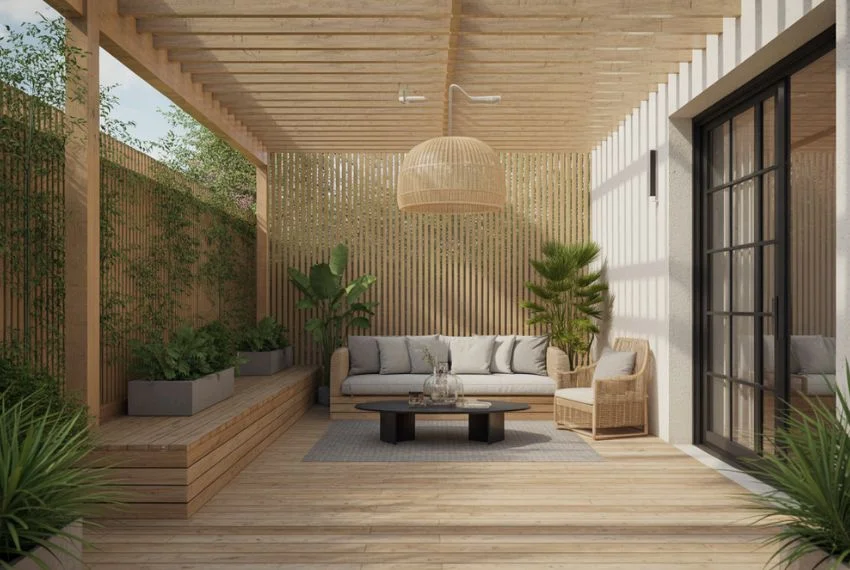
Privacy Through Natural Barriers
Privacy is important for relaxation. Instead of solid walls, use natural solutions.
Wooden slat screens, bamboo fencing, or tall plants can block views while still allowing light and air. These options feel softer and more organic.
Creating privacy in this way supports the calm purpose behind Japandi Patio Ideas, making the patio feel like a personal retreat.
Seasonal Styling the Japandi Way
Japandi patios change gently with the seasons. You do not need full makeovers.
In cooler months, add textured throws or darker-toned cushions. In warmer months, keep fabrics light and breathable. Let plants reflect the season naturally.
This flexible approach is why Japandi Patio Ideas work year-round. The space evolves without losing its core simplicity.
Keeping the Patio Clutter-Free
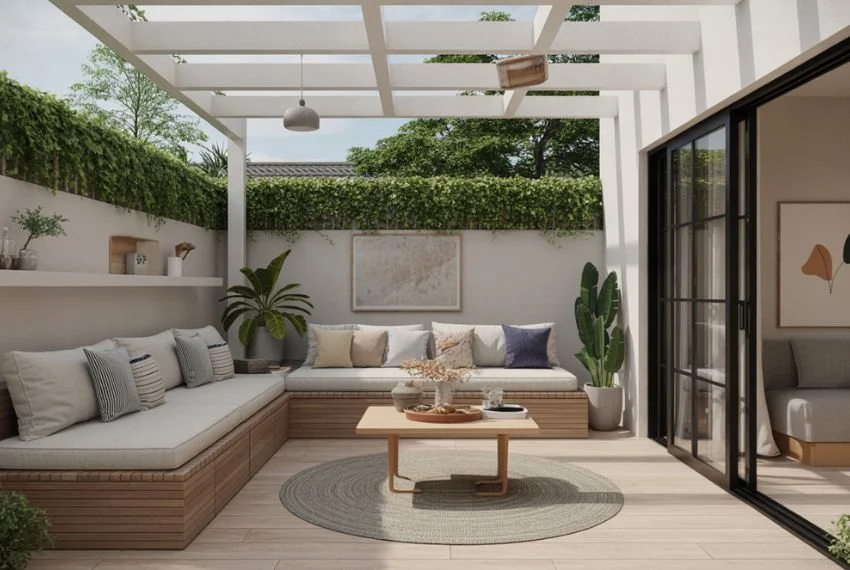
Clutter disrupts calm. Storage should be hidden or minimal.
Use benches with storage, simple wooden boxes, or built-in seating. Only keep items you actually use.
A clean patio is central to Japandi Patio Ideas. The less visual noise, the more peaceful the space feels.
Final Note: A Calm Outdoor Lifestyle
Nature-inspired Japandi Patio Ideas are not about decoration. They are about creating a space that supports calm living. By focusing on natural materials, simple furniture, soft colours, and thoughtful details, you can turn any patio into a quiet retreat.
This style encourages you to slow down, enjoy the outdoors, and live with intention. Whether your patio is large or small, Japandi principles can help you create a space that feels balanced, warm, and timeless.
Also read about Simple DIY Duck Pond Projects for Every Garden.
FAQs
What colors work best for Japandi patios?
Neutral tones like beige, soft gray, warm white, and natural wood shades work best. These colorus support a calm and natural look.
Can Japandi Patio Ideas work in small spaces?
Yes. Japandi design is ideal for small patios because it focuses on simplicity, open space, and purposeful furniture.
What materials should I avoid?
Avoid glossy finishes, plastic-heavy furniture, and overly bright colors. These break the natural and calm feel.
Are Japandi patios expensive to create?
Not necessarily. Choosing fewer, well-made pieces and natural materials often reduces long-term costs.
How do I maintain a Japandi patio?
Keep it clean, uncluttered, and seasonal. Regular care of wood and plants helps maintain the natural look.