A calm space can change how you move, breathe, and reset after a long day. Creating a Peaceful Yoga Room at home is not about copying a studio look. It is about shaping an area that helps your body slow down and your mind feel safe. When your space feels right, showing up on the mat becomes easier and more consistent.
Whether you have an entire spare room or just a quiet corner, thoughtful choices can turn it into a personal sanctuary. Light, color, layout, and texture all play a role. Even small changes can make a noticeable difference in how grounded you feel during practice.
This guide walks you through practical, realistic ideas to help you design a yoga space that supports calm, focus, and balance. Each section is easy to adapt based on your home size, budget, and lifestyle.
Choose a Quiet and Intentional Location
The first step in creating a Peaceful Yoga Room is selecting the right spot. The location sets the tone for everything else. Ideally, choose an area with minimal foot traffic and noise. A spare bedroom, attic space, sunroom, or even a screened porch can work well.
If a full room is not an option, a quiet corner of your bedroom or living room can still feel intentional. Use a folding screen, curtain, or bookshelf to separate the area visually. This small boundary helps your mind switch into relaxation mode.
Natural light is a bonus, but not required. What matters more is that the space feels calm and undisturbed. Once your body associates that spot with movement and breath, it becomes easier to unwind the moment you step in.
Use Soft, Grounding Color Palettes
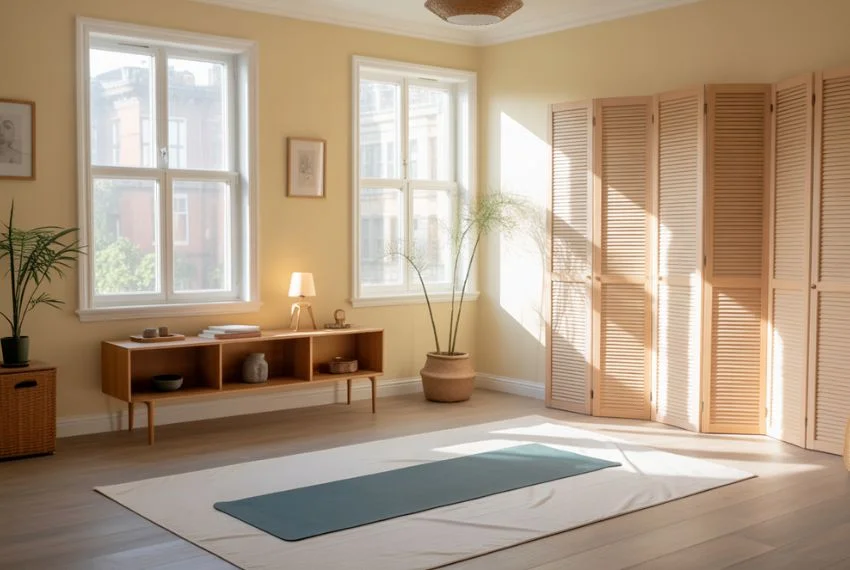
Color has a strong effect on mood. A Peaceful Yoga Room benefits from soft, muted tones that help the eyes relax. Shades like warm white, light beige, sage green, soft clay, pale blue, or muted gray work well.
Avoid bold contrasts or overly bright colors. They can feel energizing, which may distract from slower practices like yin or meditation. If painting the walls is not possible, introduce calming colors through rugs, curtains, or cushions.
Natural finishes also help. Wood tones, linen fabrics, and clay accents add warmth without feeling heavy. Keeping the palette simple allows your focus to stay on your breath and movement rather than visual clutter.
Let Natural Light and Air Flow In
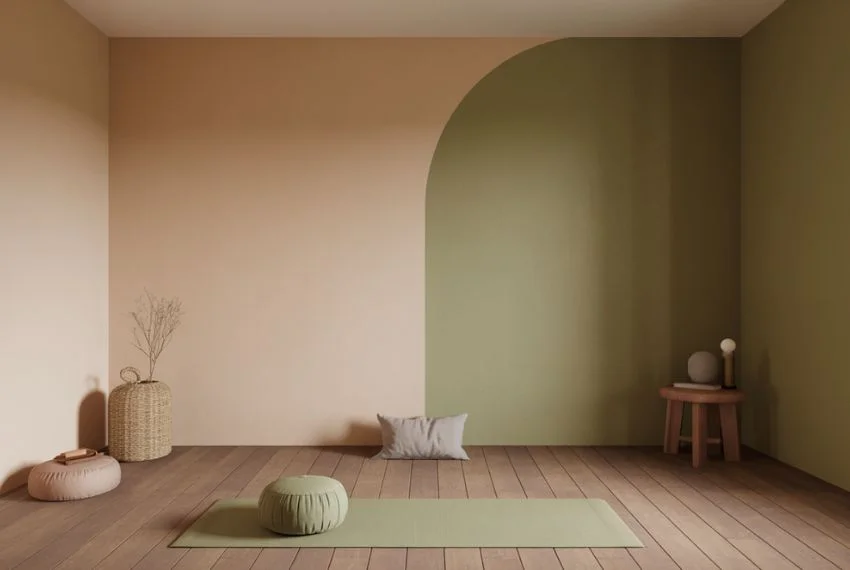
Fresh air and daylight instantly lift the mood of a Peaceful Yoga Room. If your space has windows, keep them unobstructed. Use sheer curtains instead of heavy drapes to let soft light filter through.
When possible, open windows before practice. Even a few minutes of fresh air can help you feel more alert and grounded. If the room lacks windows, consider a daylight-style bulb that mimics natural light without harsh glare.
Air quality matters too. Keep the room clean and dust-free. A small indoor plant or a simple air purifier can improve how the space feels, especially during longer sessions.
Keep Furniture Minimal and Purposeful
Less furniture creates more mental space. A Peaceful Yoga Room should feel open enough for full movement without obstacles. Stick to essentials only.
A low bench, a small shelf for props, or a meditation cushion may be all you need. Avoid bulky cabinets or unnecessary décor that crowds the room. Every item should serve a purpose, whether functional or calming.
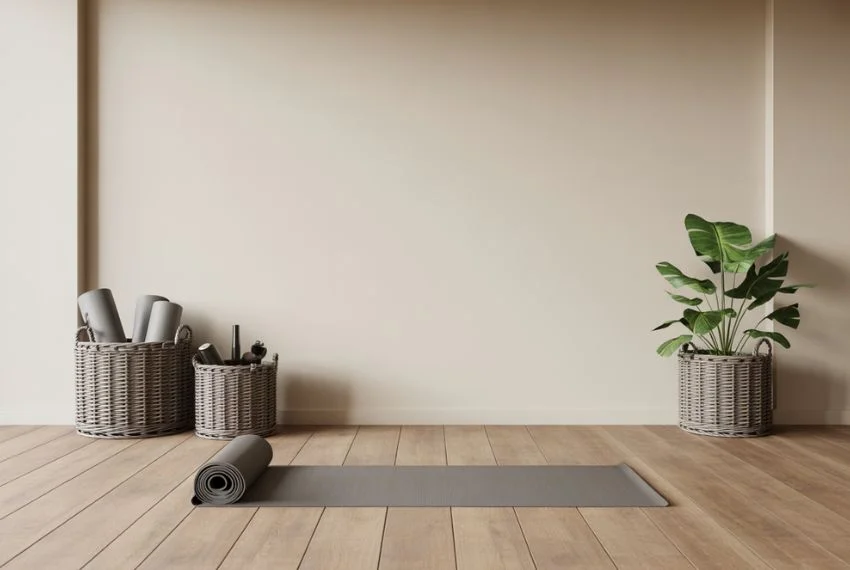
If storage is needed, choose closed baskets or drawers to keep items out of sight. Visual simplicity helps the mind stay present and focused during practice.
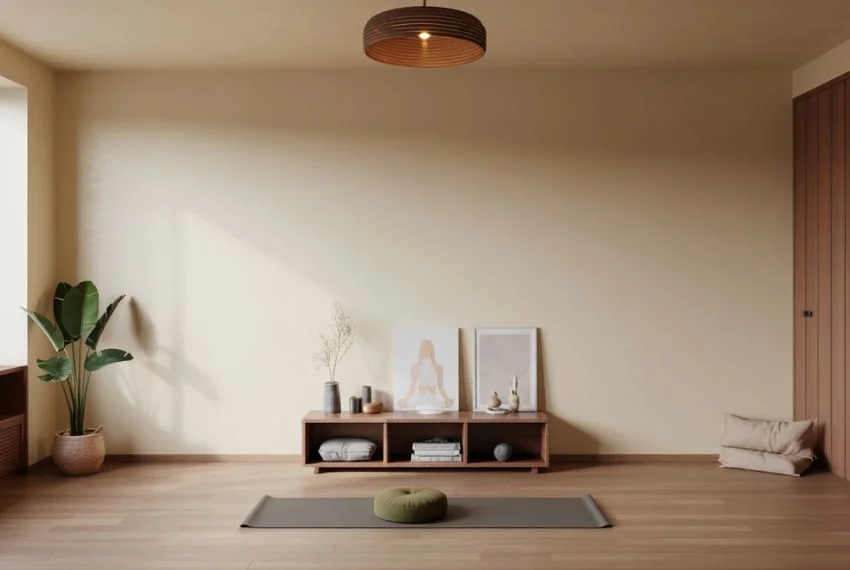
Create a Comfortable and Supportive Floor Setup
The floor is the foundation of your yoga space. A Peaceful Yoga Room should feel comfortable the moment you step onto the mat. Choose a high-quality yoga mat with enough grip and cushioning for your practice style.
Layering can add warmth and sound absorption. Place a soft rug under or near the mat, especially if the floor feels cold or hard. This also helps define the yoga area visually.
If you practice barefoot, make sure the floor is clean and smooth. Comfort underfoot supports longer holds and deeper relaxation.
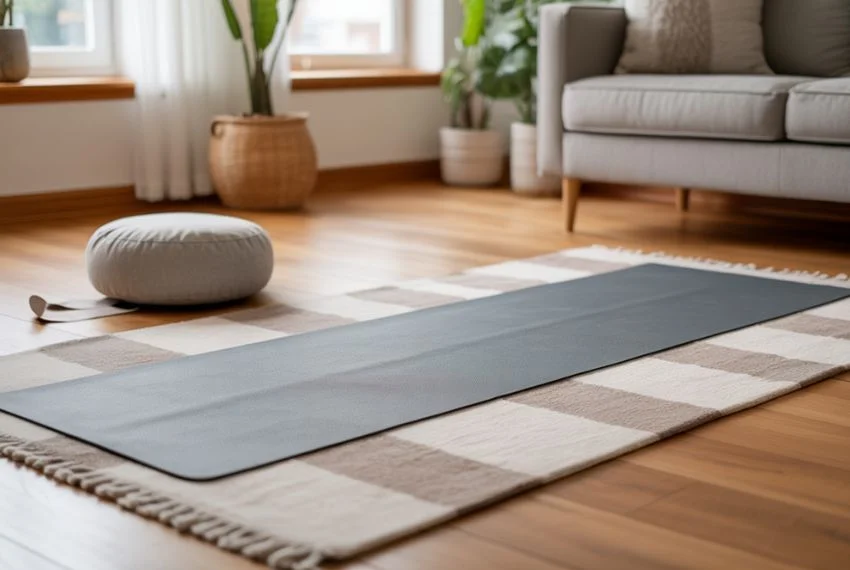
Add Natural Elements for a Calming Effect
Bringing nature indoors strengthens the calming feel of a Peaceful Yoga Room. Plants are an easy place to start. Low-maintenance options like snake plants, pothos, or peace lilies work well in most homes.
Natural materials also matter. Choose wood, stone, cotton, jute, or clay over synthetic finishes when possible. These textures add warmth and subtle grounding energy.
Even small touches help. A wooden incense holder, a stone sculpture, or a woven basket can quietly enhance the space without overwhelming it.
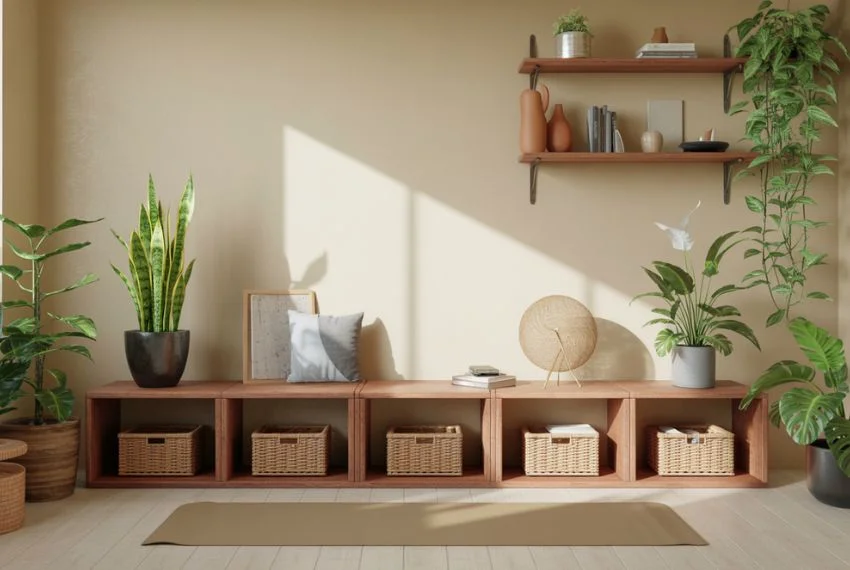
Use Gentle Lighting for Early Morning or Evening Practice
Lighting can change how the room feels throughout the day. A Peaceful Yoga Room benefits from adjustable light sources. Soft lamps, wall sconces, or dimmable ceiling lights allow you to control brightness.
For evening sessions, warm light is more soothing than cool white bulbs. Candles can also add a sense of ritual but always place them safely and never leave them unattended.
Avoid harsh overhead lighting during practice. The goal is a glow that supports relaxation rather than stimulation.
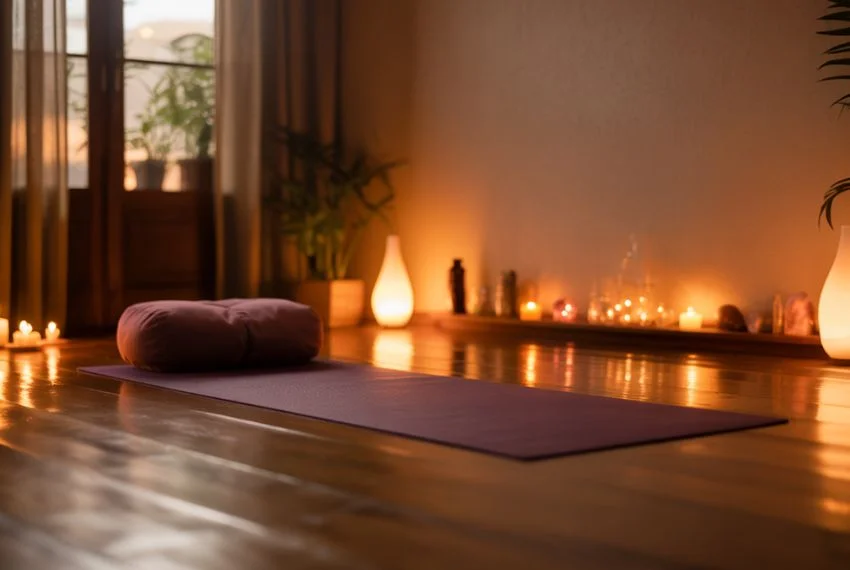
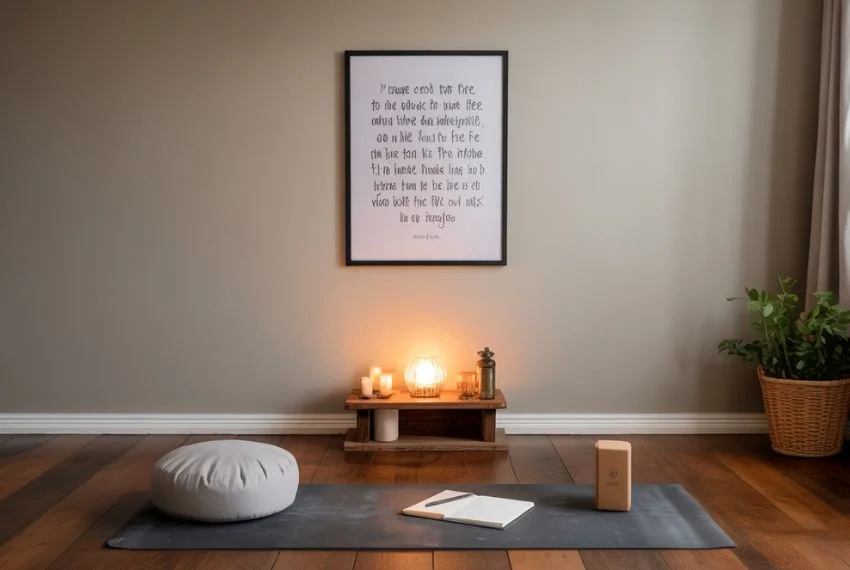
Incorporate Meaningful, Personal Touches
Personal elements give your Peaceful Yoga Room emotional depth. Choose items that support intention, not decoration for decoration’s sake.
This might include:
- A framed quote that reminds you to slow down
- A small altar with items tied to your practice
- A journal for reflections after sessions
Limit the number of personal objects so the space stays uncluttered. When each item holds meaning, the room feels more grounding and authentic.
Keep the Space Clean and Easy to Reset
A clean space supports a calm mind. Make it easy to reset your Peaceful Yoga Room after each practice. Roll up your mat, return props to their place, and wipe down surfaces regularly.
Avoid turning the room into storage for unrelated items. When the space is always ready, you remove one more barrier to practice. Even five-minute sessions feel more inviting when the environment is prepared.
Simple routines help maintain the peaceful feeling over time.
Adapt the Space for Your Practice Style
Every yoga practice is different. A Peaceful Yoga Room should reflect how you move and rest. If you enjoy slow flows or yin, focus on comfort and warmth. If you practice dynamic styles, prioritize open floor space and ventilation.
Meditation-focused spaces may need extra cushions and softer lighting. Sound elements like a small speaker for guided sessions or calming music can also help.
Let the room evolve with your needs. Adjusting the setup over time keeps the space aligned with your body and routine.
Final Thoughts
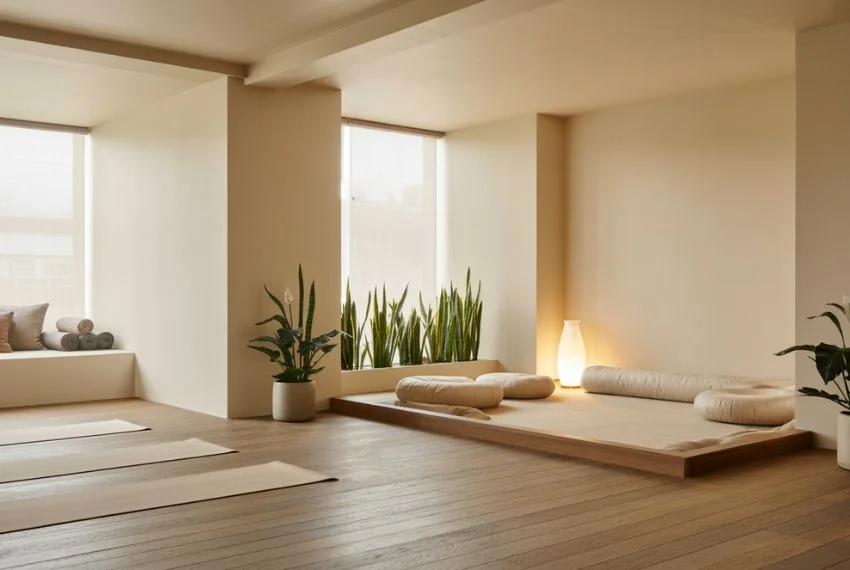
Designing a Peaceful Yoga Room is less about perfection and more about intention. When your space feels calm, open, and supportive, practice becomes something you look forward to rather than another task on your list.
By choosing a quiet location, soft colors, minimal furniture, and natural elements, you create an environment that encourages consistency and ease. Small details, when chosen thoughtfully, can turn any space into a personal sanctuary.
Your yoga room does not need to be large or expensive. It only needs to feel right for you.
Also read about Luxury Spa Bathroom Ideas That Redefine Comfort and Self-Care at Home.
FAQs
How big should a yoga room be?
A yoga room can be as small as the space needed to lay out your mat and stretch comfortably. Even a corner works if it feels calm and intentional.
Can I create a yoga space in a shared room?
Yes. Use rugs, screens, or lighting to visually separate the area. Consistency helps your mind recognize it as a practice zone.
What colors work best for a calming yoga room?
Soft neutrals, earthy tones, and muted greens or blues are ideal. These colors support relaxation and focus.
Do I need special décor for a yoga room?
No. Choose only items that support your practice or bring calm. Fewer meaningful pieces are better than many decorative ones.