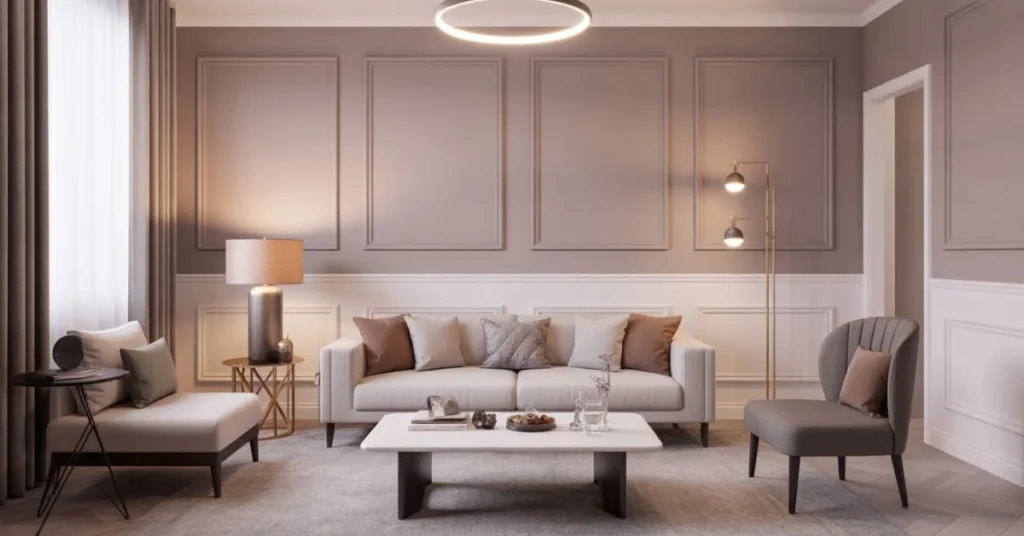
Half wall panelling, also known as wainscoting, is a timeless interior design element that can instantly transform plain walls into elegant, structured features. In modern homes, this technique is both functional and decorative, providing protection for walls while adding depth and texture. The concept is simple: the lower portion of the wall—typically 80–120 cm high—is covered with panels, while the upper portion remains painted or wallpapered. This approach adds architectural interest without overwhelming the room, making it suitable for a variety of spaces and styles.
One of the key advantages of half wall panelling is its versatility. It can be adapted to traditional, coastal, farmhouse, or contemporary interiors. Functionally, it protects walls from scratches, scuffs, and dirt, which is especially useful in high-traffic areas like hallways, kitchens, and living rooms. At the same time, it enhances the visual appeal by creating a layered, structured look. Modern homeowners often choose half wall panelling as an affordable design upgrade that delivers a designer-made feel without requiring a complete renovation.
Whether you prefer classic wainscoting, bold colors, or creative geometric designs, half wall panelling can be tailored to suit your personal style. It not only improves the aesthetic appeal but also adds value to your home by making walls look carefully designed and intentional.
Classic Wainscoting Panels
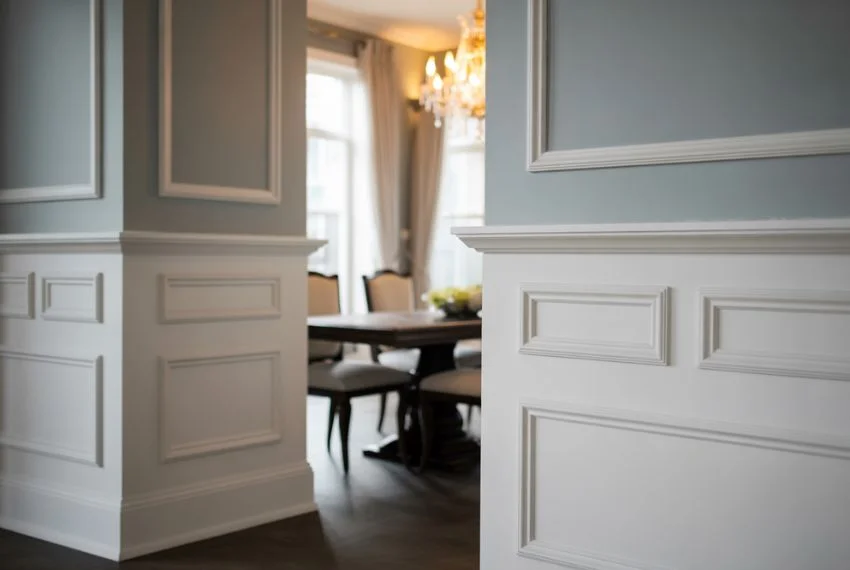
Classic wainscoting panels are the epitome of elegance, offering a timeless look that works well in almost any interior. These panels are typically rectangular or square, framed with decorative molding that enhances the structure and sophistication of the space.
- Best spaces: Dining rooms, hallways, and entryways
- Materials: Wood, MDF, polyurethane, or painted plywood
- Design tips: White or cream panels paired with soft neutral upper walls create a balanced and refined appearance. Darker upper wall colors can also work for a bolder contrast, adding more drama and depth.
The major advantage of classic wainscoting is its adaptability. It complements both traditional and modern interiors, providing a polished look for formal areas like dining rooms while adding subtle elegance to hallways. Adding a thin top molding can further enhance the visual appeal and create additional depth. The panel size, color, and molding thickness can be adjusted according to room dimensions, ceiling height, and desired style. Classic panels can even be combined with artwork or small decorative elements for a personalized touch.
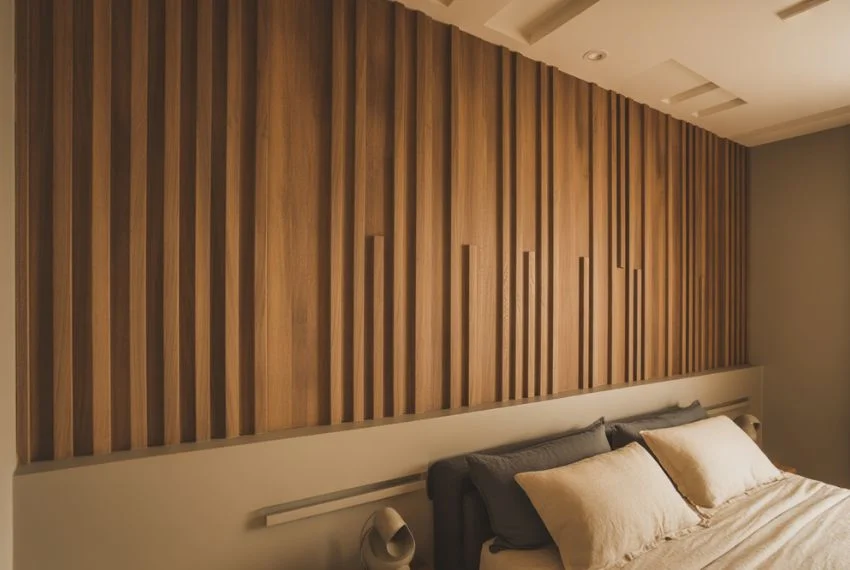
Vertical Wood Slat Panelling
Vertical wood slats are a modern, sleek alternative to traditional panels. Thin wooden strips run vertically along the lower half of the wall, creating the illusion of taller ceilings and longer walls. This style is particularly popular in contemporary interiors for its minimalist yet impactful design.
- Best spaces: Bedrooms, living rooms, and home offices
- Materials: Oak, walnut, MDF slats, or reclaimed wood
- Design tips: Choose a finish that complements your furniture and flooring. Light-colored walls above the slats will highlight the vertical pattern, making the room feel airy and spacious.
The charm of vertical slat panels lies in their ability to provide texture and sophistication without the heavy look of traditional molding. They create a subtle statement wall that blends seamlessly with modern furniture and décor. In bedrooms, vertical slats behind the bed make an elegant focal point, while in living rooms, they provide structure without overwhelming the space. For added interest, the gaps between the slats can be slightly varied, or alternating wood tones can be used for a more dynamic effect.
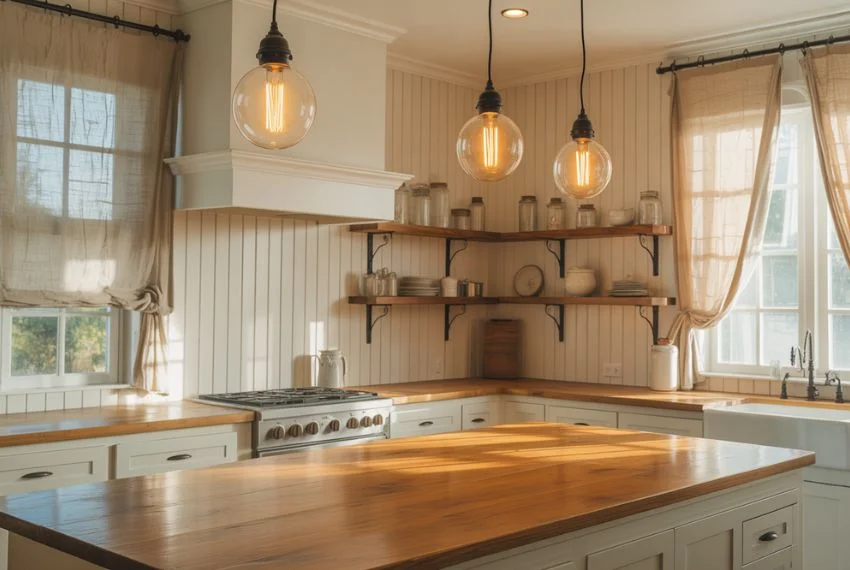
Shiplap Half Wall
Shiplap panels are horizontal boards with slight gaps between them, offering a rustic yet refined aesthetic. Commonly associated with farmhouse and coastal interiors, shiplap adds texture and depth to walls while maintaining a clean and structured appearance.
- Best spaces: Kitchens, bathrooms, and living areas
- Materials: Painted wood, MDF, or reclaimed wood
- Design tips: White shiplap creates a fresh and airy feel, while soft greys, muted blues, or sage greens add warmth and character.
Shiplap panels are easy to install and provide a relaxed yet polished look. In kitchens, shiplap can be used below countertops or around islands to add architectural interest. In bathrooms, half wall shiplap provides a durable, moisture-resistant finish while creating visual layering. Pairing shiplap with light paint or subtle wallpaper on the upper walls ensures the space feels open and inviting, balancing texture with simplicity.
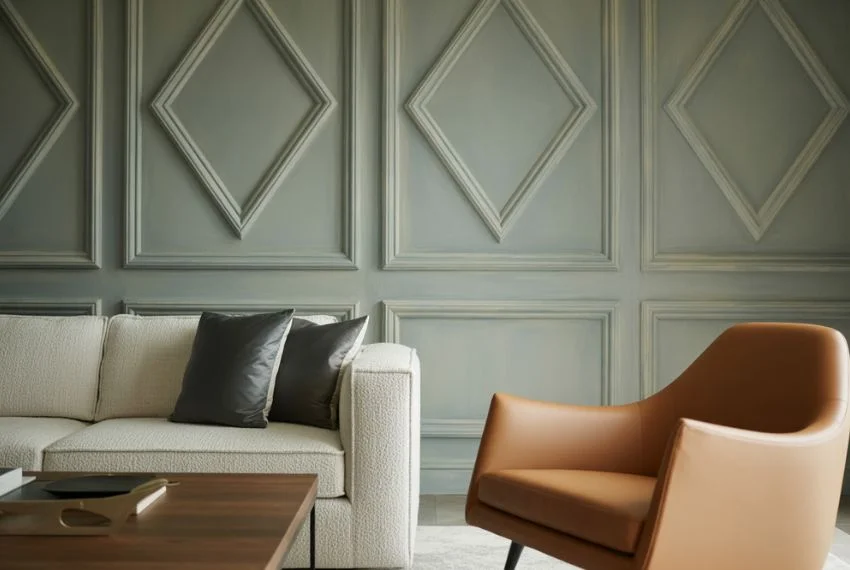
Geometric Panel Designs
Geometric panelling is ideal for homeowners seeking a bold, contemporary statement. Panels can be designed in diamond, square, or abstract line patterns, adding artistic flair and visual interest to the lower half of a wall.
- Best spaces: Living rooms, feature walls, and home offices
- Materials: MDF, plywood, painted wood, or polyurethane
- Design tips: For subtle elegance, choose tones similar to the upper wall color. For a dramatic effect, use contrasting shades that make the patterns pop.
Geometric designs are perfect for modern interiors where walls act as feature elements. They enhance minimalist furniture arrangements, creating depth without clutter. While the installation requires careful measuring, the end result is a striking and unique wall that can serve as the focal point in a room. This approach works particularly well in spaces with open layouts, where a geometric accent can define a section of the room while maintaining overall harmony.
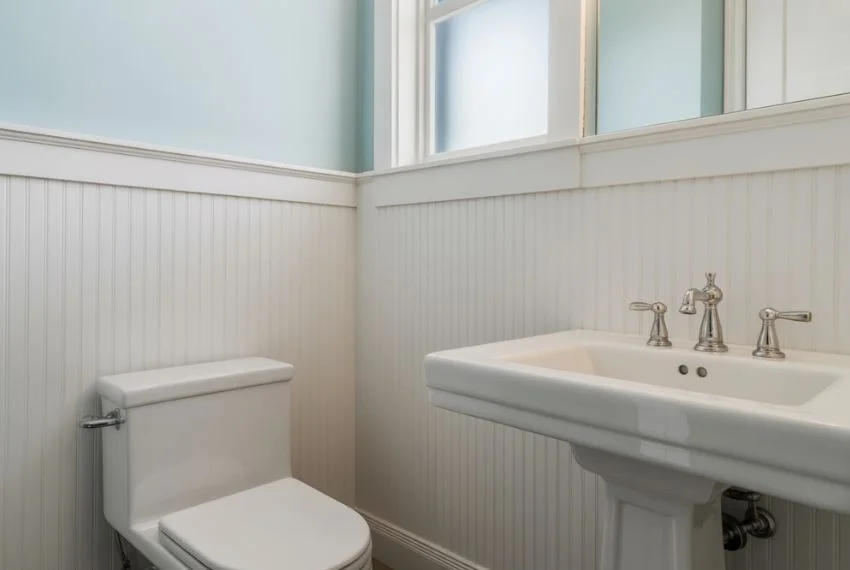
Beadboard Panels
Beadboard panels feature narrow vertical grooves, providing classic charm with a subtle texture. This style is lightweight, easy to install, and especially suitable for smaller rooms or utility areas.
- Best spaces: Bathrooms, kitchens, and mudrooms
- Materials: Wood, MDF, or PVC
- Design tips: White beadboard enhances a bright and airy feel, while pastel colours add soft warmth and coziness.
Beadboard works exceptionally well in high-traffic areas, offering a durable and low-maintenance wall solution. Bathrooms benefit from moisture-resistant beadboard, and kitchens can use it below countertops for functional style. Its simple texture allows it to blend with both traditional and modern interiors, and it pairs beautifully with various wall colours and finishes. Accessories like framed art or small shelves can further personalize the look.
Half Wall with Bold Paint
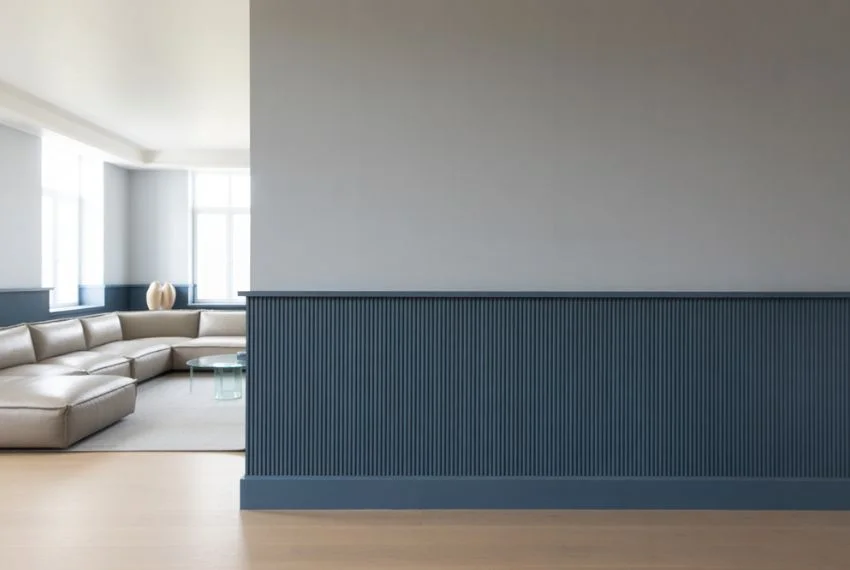
Painting the lower half of a wall in bold, deep colours is a modern approach that adds sophistication and drama. Navy, forest green, charcoal, or burnt orange can make a striking impression without overpowering the room.
- Best spaces: Living rooms, bedrooms, and dining rooms
- Materials: Latex, enamel, or semi-gloss paints
- Design tips: Keep the upper walls light to maintain balance, and coordinate furniture and accessories with complementary shades.
Bold-painted panels create contrast and depth, transforming ordinary walls into eye-catching design features. Living rooms with dark lower walls paired with light-colored sofas and rugs achieve a harmonious, stylish effect. Bedrooms with deep tones feel cozy and intimate, and dining areas can appear more dramatic and formal. This approach is ideal for homeowners who want statement walls without complex molding or extra materials.
Half Wall with Wallpaper Above
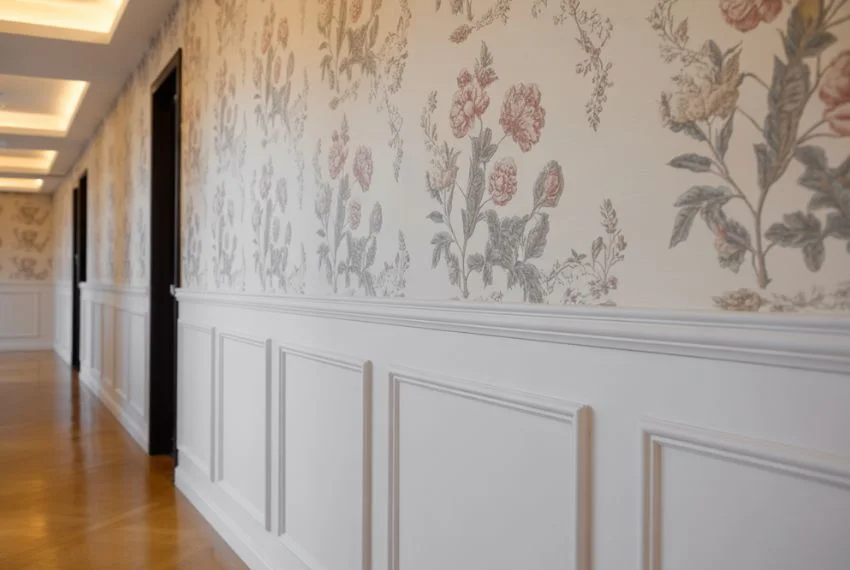
Combining panelling with patterned wallpaper above adds both personality and structure. This method allows for creativity while maintaining a well-defined, polished look.
- Best spaces: Hallways, powder rooms, and bedrooms
- Materials: Vinyl, textured, or eco-friendly wallpaper
- Design tips: Use subtle paneling below and bolder patterns above to prevent the space from feeling cluttered.
This combination is ideal for creating designer-level accent walls. Hallways can feel vibrant and stylish without overwhelming, and powder rooms become lively yet cohesive. In bedrooms, pairing paneling with patterned wallpaper offers a focal point that balances pattern, texture, and structure. This method also allows homeowners to incorporate trends or seasonal designs while keeping the space classic and organized.
Half Wall with Shelf Cap
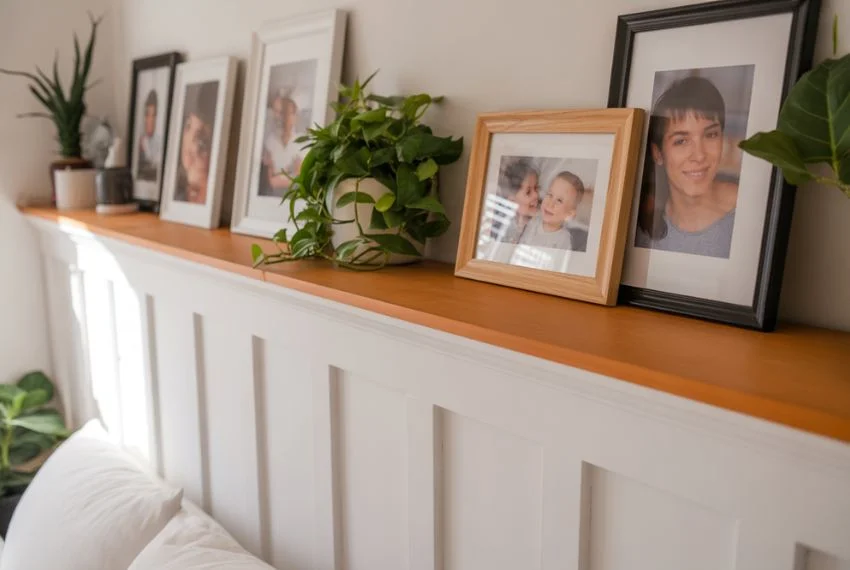
Adding a thin wooden ledge or shelf on top of half wall panelling introduces both functionality and style. Shelves allow for display of artwork, plants, photos, or décor items, enhancing the wall’s visual appeal.
- Best spaces: Bedrooms, living rooms, and entryways
- Materials: Solid wood, MDF, or laminate
- Design tips: Match the shelf finish to the panel colour for a cohesive look and arrange décor items in a balanced way.
Shelf caps turn functional panelling into a practical feature, providing space for personalization without clutter. In bedrooms, this can showcase framed photos and small décor, while living rooms can use it for plants or decorative objects. Even entryways benefit from a shelf cap for keys, mail, or seasonal displays, adding both aesthetic charm and practical use.
Tips for Choosing the Right Half Wall
- Height: Typically 80–120 cm; higher ceilings may allow 120–140 cm.
- Material: MDF for cost-effective solutions, solid wood for durability, PVC for moisture-prone areas.
- Colour: White is classic, bold colours add impact, and complementary upper wall colours maintain balance.
- DIY vs Professional: Simple beadboard or MDF panels are DIY-friendly; complex geometric or custom molding may need professional installation.
- Maintenance: Smooth finishes are easy to clean; use mild soap and water, avoid harsh chemicals.
Final Thoughts
Half wall panelling is a versatile and stylish solution for modern homes. From classic wainscoting and shiplap to bold-painted panels and geometric designs, it enhances aesthetics while providing protection and structure. These ideas allow homeowners to transform plain walls into focal points, adding texture, depth, and sophistication. Whether used alone or paired with wallpaper or shelves, half wall panelling elevates the interior and brings a designer-made feel to any room.
Also read about Half Wallpaper Half Paint Ideas That Make Plain Walls Look Designer Made.
FAQs
Q1: Can I install half wall panelling myself?
Yes, simple MDF, beadboard, or shiplap panels are DIY-friendly. Complex designs with molding may require professional installation.
Q2: Will half wall panelling make my room feel smaller?
No. Lighter colours above the panel maintain depth and proportion, enhancing the perception of height.
Q3: Can I mix materials?
Yes, combining wood, MDF, and PVC can add texture and visual interest.
Q4: Is it expensive?
Costs vary. Simple panels are affordable, while solid wood or custom geometric designs are higher end.
Q5: How do I clean half wall panels?
Dust regularly and wipe with a damp cloth. Avoid harsh chemicals on painted or wood finishes.