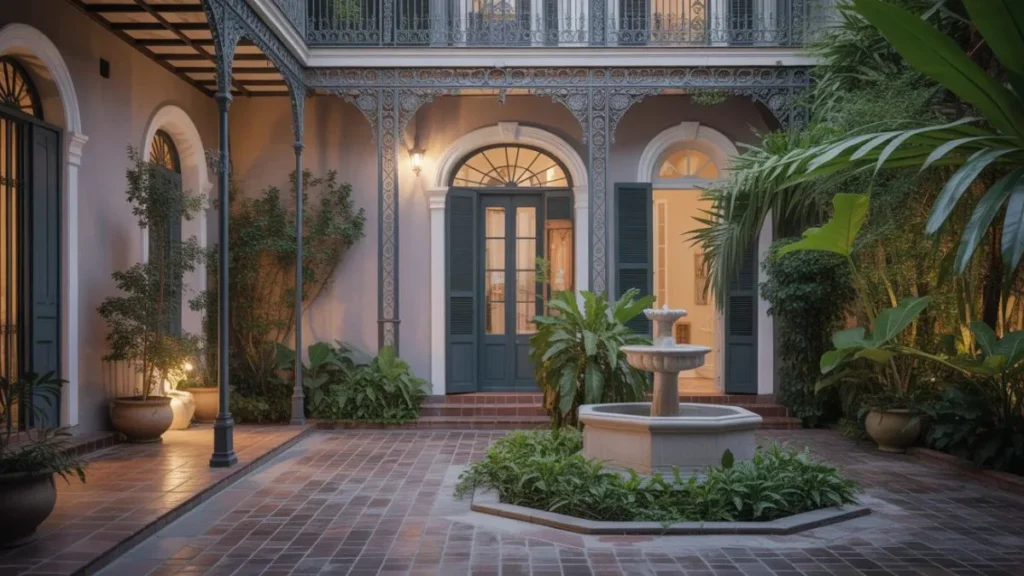
New Orleans courtyards have a look that feels private, romantic, and deeply lived in. That mood did not happen by accident. In the French Quarter, the style grew from a mix of French, Spanish, Creole, and American influences, with cast-iron details, walled courtyards, carriage passages, and hidden rear gardens becoming defining features of the area’s homes.
After major fires in 1788 and 1794, Spanish-era rebuilding pushed many structures closer to the street and helped create the intimate pattern of continuous facades, arched passageways, and secluded courtyards that people still associate with historic New Orleans today.
That history is exactly why New Orleans Style Courtyard Ideas work so well today. They are not about making your yard look like a movie set. They are about creating a tucked-away outdoor room with texture, shade, age, and charm. Think old brick underfoot, a soft fountain in the center, iron details overhead, layered greenery around the edges, and furniture that feels collected over time instead of bought in one afternoon.
The best part is that you do not need a grand estate to borrow this feeling. A small patio, side yard, or narrow backyard can still capture the spirit. The goal is intimacy, not size. When you focus on enclosure, materials, planting, and atmosphere, you can turn an ordinary outdoor area into a courtyard that feels like it belongs behind the walls of a historic Southern home.
The signature look of a historic Southern courtyard
At the heart of New Orleans Style Courtyard Ideas is the idea of surprise. From the street, many historic homes in the French Quarter look formal and close to the sidewalk. But once you pass through a gate, carriageway, or narrow side opening, the space opens into something softer and greener. That contrast is a big part of the magic. It makes the courtyard feel protected from noise, sun, and rush. In New Orleans, visitors still connect the city’s historic architecture with hidden courtyards, decorative ironwork, and rooms arranged around private outdoor space.
To recreate that feeling at home, start by treating your courtyard as an outdoor room instead of an open yard. Give it visual boundaries. Use walls, fencing, tall planters, vines, or even slim trees to shape the edges. Then add one element that draws the eye inward, such as a fountain, a bench, an urn, or a bistro table. Historic courtyards often feel memorable because they do not reveal everything at once. You step in, pause, and notice the layers. That is the mood you want to build.
Enclose the space with brick walls and hidden entries
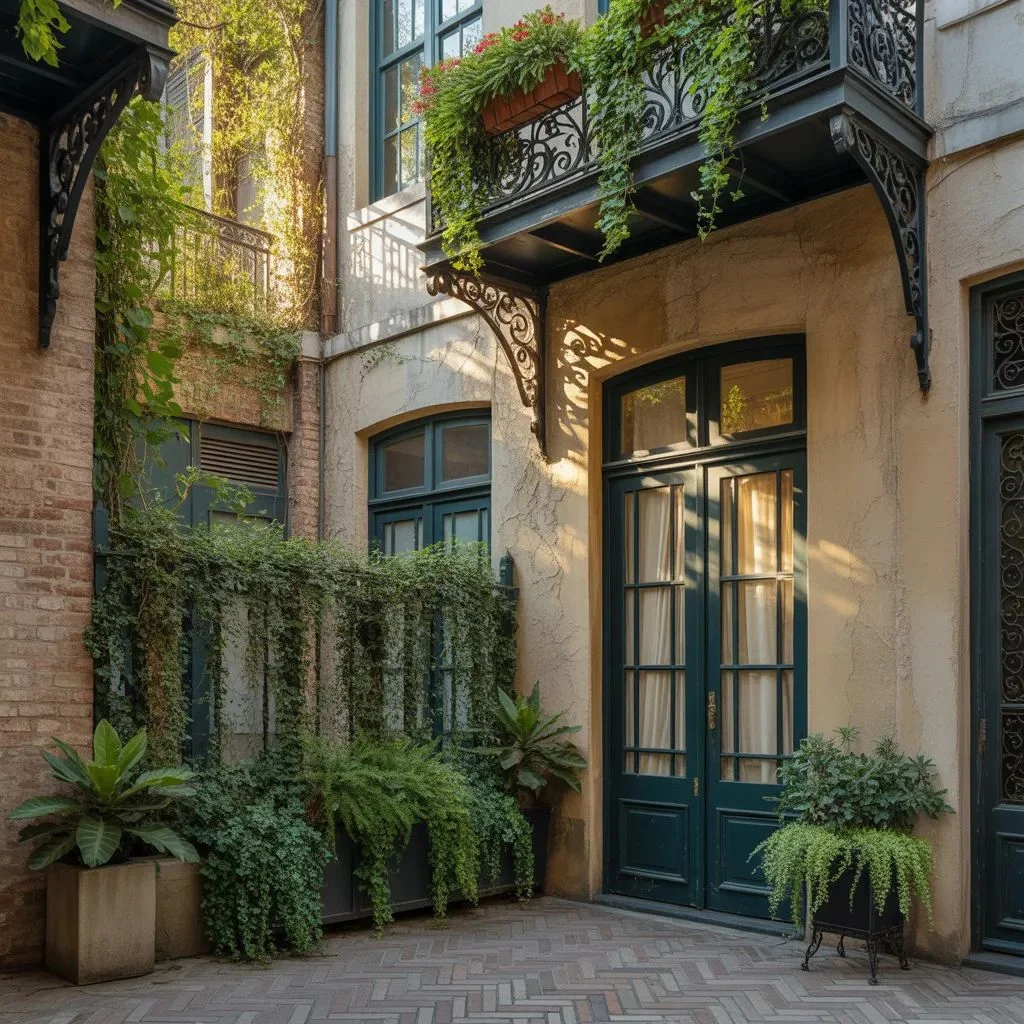
One of the easiest ways to make New Orleans Style Courtyard Ideas feel authentic is to create enclosure. In the Spanish-influenced rebuilding of the French Quarter, buildings were placed close together and near the street, with rear gardens and courtyards hidden behind the main facade. That pattern gave New Orleans homes their intimate and secretive quality. Historic examples like the Perrilliat House show how central courtyards sat inside connected buildings rather than out in the open.
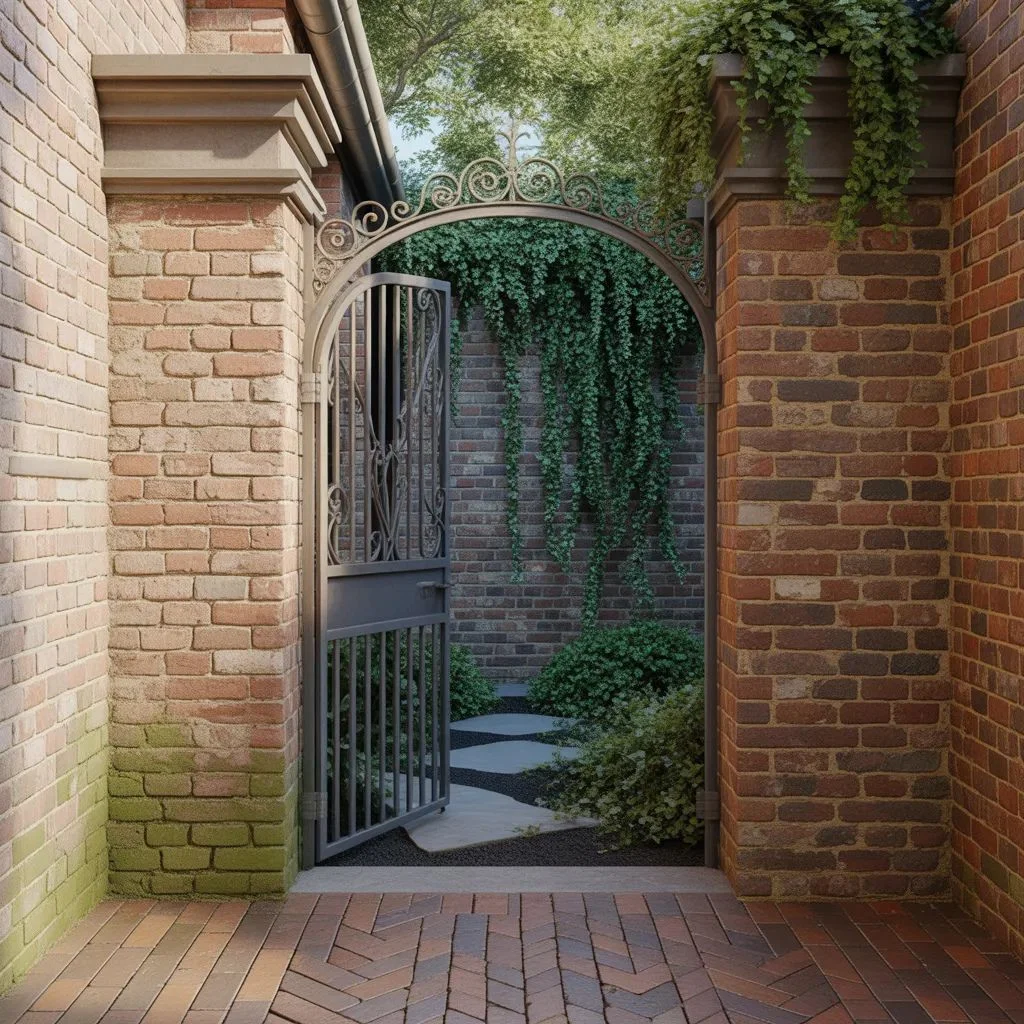
You can bring that idea home in a simple way. A full brick wall is beautiful, but it is not the only option. Painted stucco walls, reclaimed brick panels, wood fencing covered with ivy, or tall hedge lines can all create the same tucked-away effect. Add a gate, narrow walkway, or arch to make the entrance feel intentional. Even in a small yard, that one move changes everything. It tells the eye that this space is meant to be discovered.
For flooring, aged brick is hard to beat. It instantly gives warmth and history. Brick laid in herringbone, basketweave, or a simple running bond all work well. If true old brick is not practical, choose brick-look pavers in mixed tones instead of flat uniform color. A little variation makes the ground feel more believable and less new.
Bring in wrought iron stone and old world texture
Historic New Orleans architecture is famous for its ironwork. The French Quarter is widely recognized for cast-iron balconies, ornate metal details, and narrow passageways leading toward inner courtyards. These features are part of what gives the neighborhood its layered, romantic character.
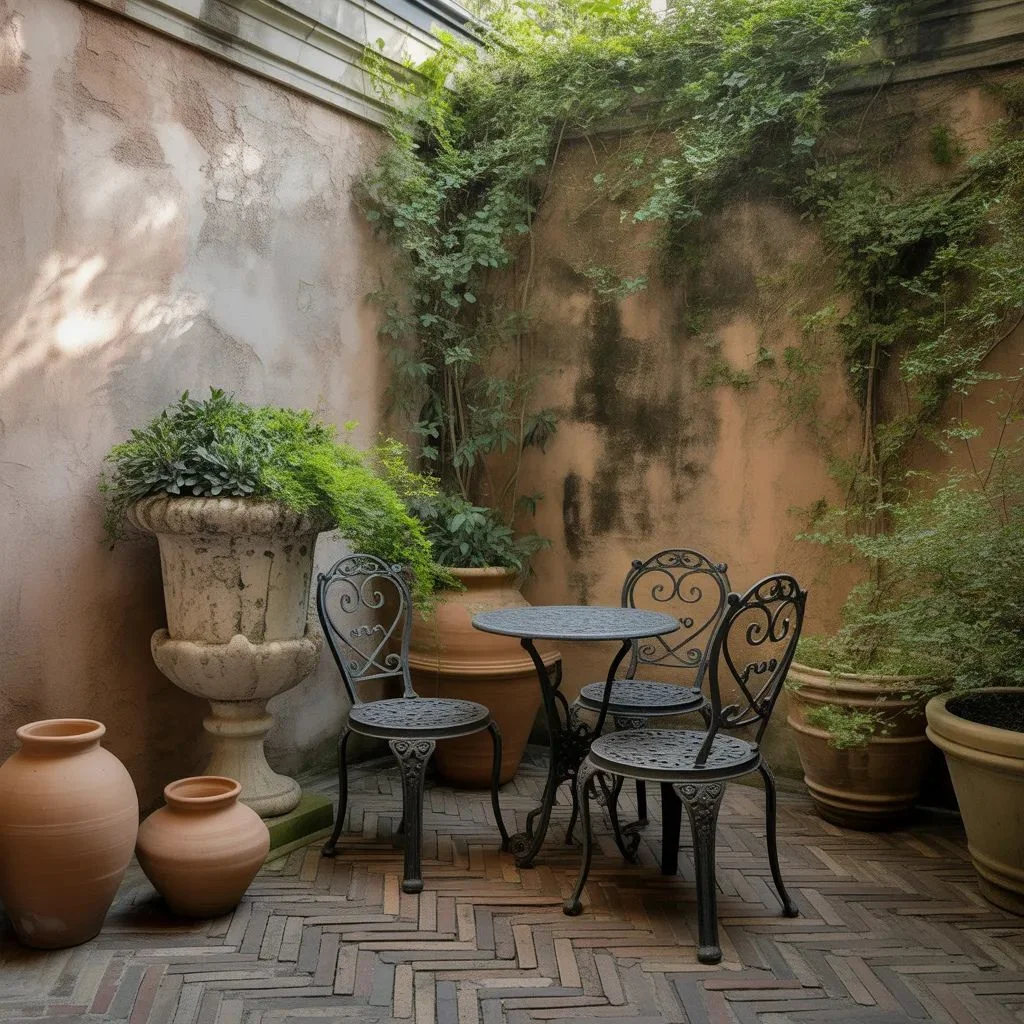
That does not mean your courtyard needs heavy decoration. In fact, restraint usually looks better. Add iron where it has purpose. A gate, railing, plant stand, lantern bracket, café chair, or small table can be enough. Let the lines be elegant and slightly detailed, not fussy. Mix those pieces with natural materials that age well, such as limestone, old brick, weathered wood, clay pots, or stone urns. The contrast between dark iron and soft, worn surfaces is what makes the space feel old and settled.
Try to avoid anything that looks too shiny or factory-perfect. Historic Southern courtyards usually feel softened by time. Matte finishes, chipped edges, patina, and uneven surfaces all help. This is one reason antiques, salvage finds, and reproduction pieces with a worn finish often work better than sleek modern patio sets. Texture tells the story before color ever does.
Make water greenery and shade the heart of the courtyard
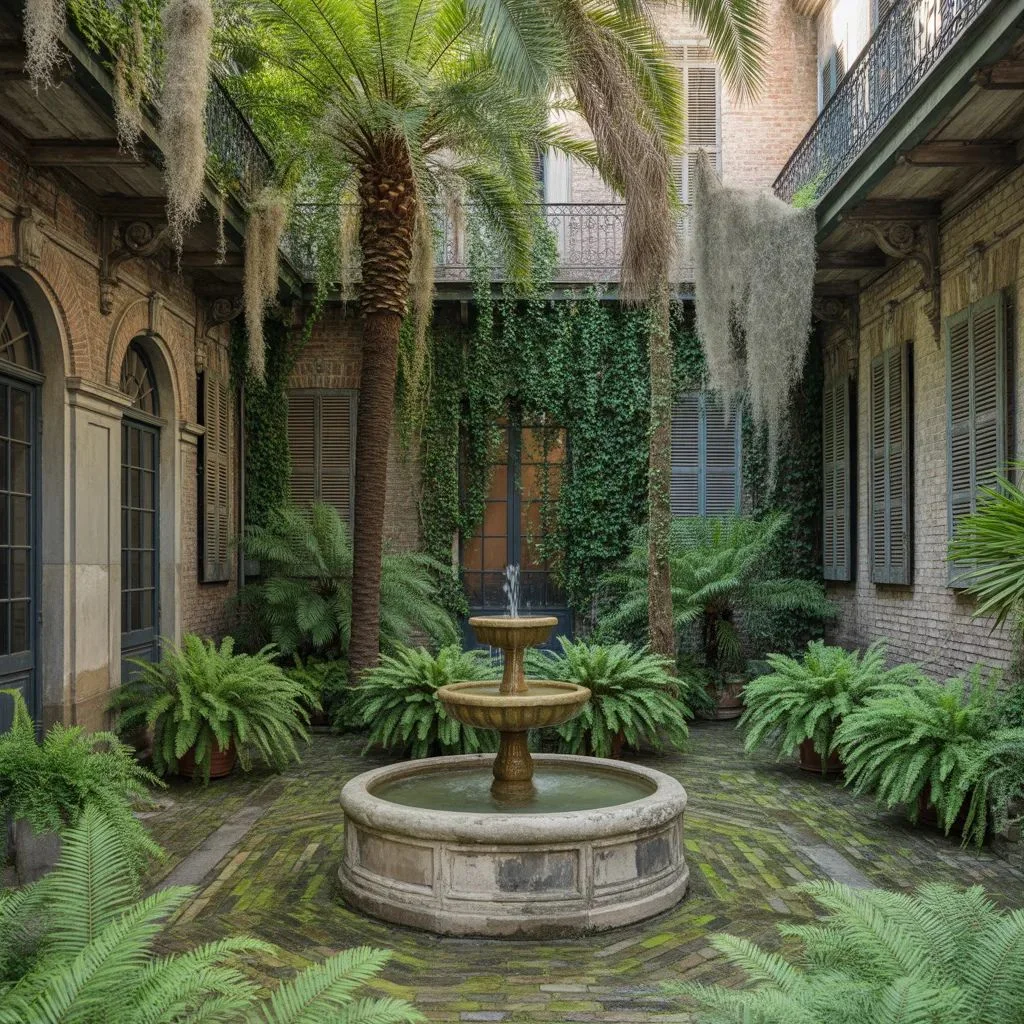
New Orleans garden spaces are often remembered for lush greenery, hidden courtyards, and a climate that supports abundant plant growth. The city’s garden tours and architecture features continue to highlight hidden courtyards alive with color, year-round horticulture, and tropical-looking plant life behind walls. Historic images of places like Brulatour Courtyard also show brick, stairs, and greenery working together as one scene rather than as separate decorative pieces.
That is why a fountain is such a strong choice for New Orleans Style Courtyard Ideas. It is not only decorative. It adds sound, coolness, and movement. A modest wall fountain, cast stone bowl, or tiered basin can become the center of the whole space. Around it, keep the planting loose and layered. Ferns, trailing vines, clipped shrubs, palms, and potted greenery create that soft courtyard edge people associate with New Orleans.
Shade matters too. The prettiest courtyard will still feel harsh if the sun is too strong. Use pergolas, vines, umbrellas in muted tones, or small trees in planters to break the light. The goal is dappled shade, not darkness. When sunlight hits brick, leaves, and water in small patches, the whole courtyard feels cooler and more alive.
Choose furniture that feels layered and lived in
Many historic courtyards were working spaces before they became places for gathering. The Brulatour Courtyard, for example, began as a service area for domestic workers and later became a creative and social hub tied to the Arts and Crafts Club of New Orleans. That shift is a useful lesson for decorating today: the best courtyards are flexible. They can hold quiet coffee in the morning, conversation in the evening, and practical daily life in between.
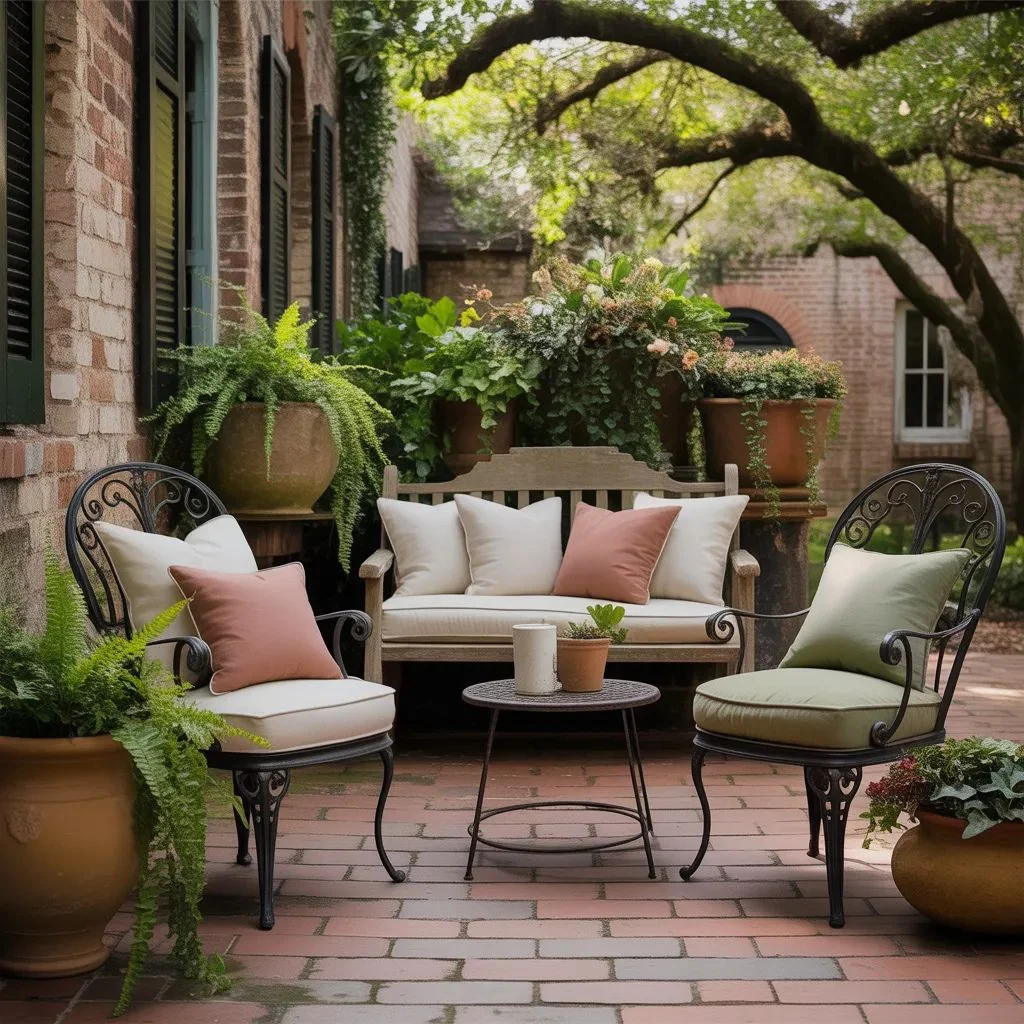
So instead of filling the courtyard with one large matching patio set, build it in layers. Start with a small table and two or four chairs. Add a bench against a wall. Bring in one accent stool or garden seat that can move where needed. Use cushions, but keep the colors calm and slightly faded. Stripes, botanical prints, soft white, moss green, deep blue, rust, and muted gold all feel at home here.
This is also a good place to mix materials. A wrought iron chair beside a wooden bench looks more believable than six identical chairs lined up in a row. A courtyard should feel like it has grown over time. Collected furniture creates that story. Matching furniture often ends it too early.
Use lighting color and accessories with restraint
A historic-looking courtyard rarely depends on bright color or lots of accessories. Its beauty usually comes from mood. In New Orleans, that mood is shaped by warm walls, iron shadows, soft light, and greenery against masonry. Because the architecture already carries so much personality, the best decorating choices are often the quiet ones.
For color, think earth and age. Soft white stucco, faded terracotta, weathered charcoal, muted green, deep blue, and warm brick tones all work beautifully. Then repeat those shades in planters, cushions, and painted woodwork. One or two richer accents, such as oxblood, mustard, or dark teal, can add depth without making the space feel busy.
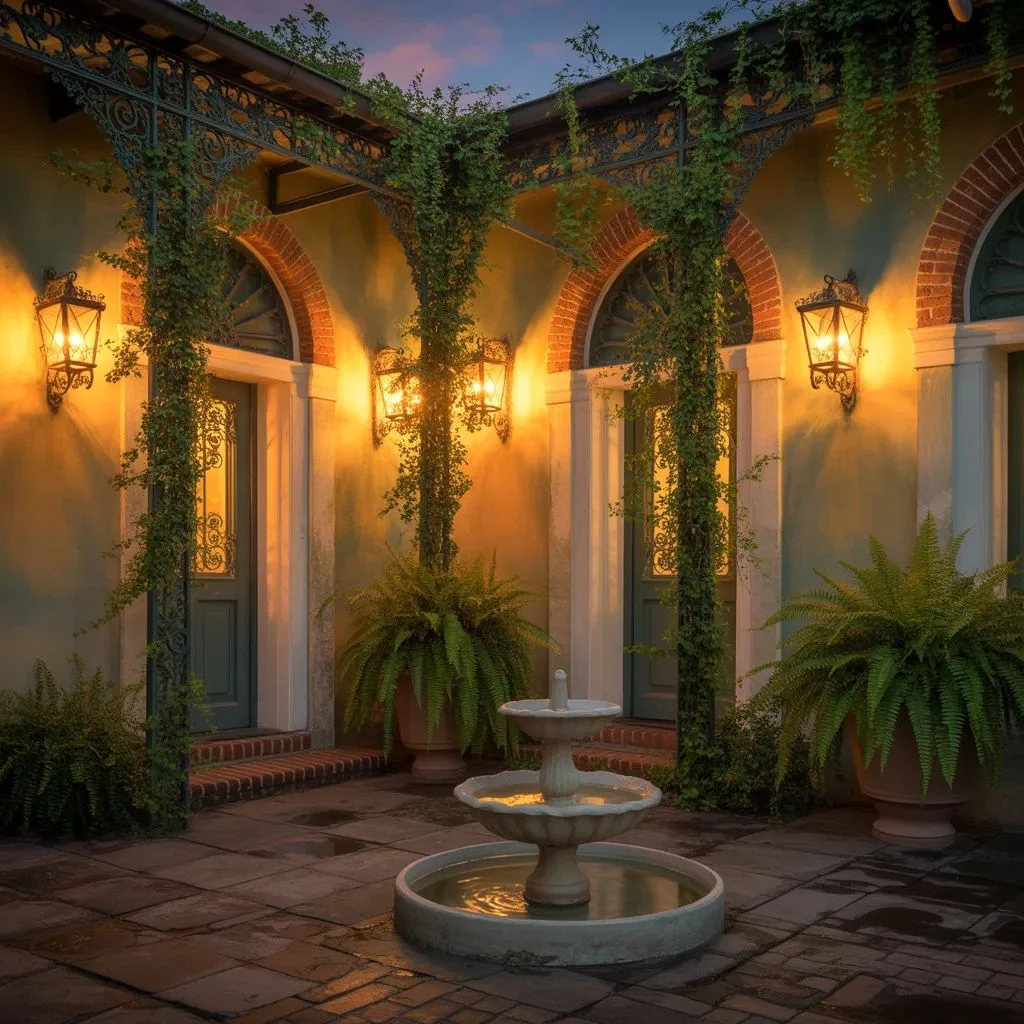
Lighting should stay warm and low. Wall lanterns, candle-style sconces, string lights hidden in vines, and table lanterns all fit the look. Avoid bright blue-toned lighting, oversized floodlights, or anything that feels too modern and exposed. At night, a New Orleans-inspired courtyard should feel like a secret. You want glow, not glare.
Accessories should follow the same rule. A few clay pots, one antique-style mirror, a pair of urns, or a statue in the corner can work well. Too many themed pieces will make the space feel staged. The style is rich, but it is never loud.
Blend modern comfort without losing the historic mood
One smart way to approach New Orleans Style Courtyard Ideas is to treat history as guidance, not a costume. The National Park Service’s rehabilitation standards emphasize keeping a property’s historic character and avoiding unnecessary removal or alteration of the materials, features, spaces, and spatial relationships that define it. Even when you are not restoring a true historic property, that mindset is useful. It reminds you to protect what gives a space its soul.
In practice, that means modern upgrades should stay quiet. Use outdoor fabrics that resist weather but choose classic patterns. Add better drainage but hide it within the paving plan. Install a ceiling fan or heater if needed but pick a style that does not fight with the setting. Use updated lighting and irrigation but keep hardware discreet. When something must be replaced, look for materials that echo the original spirit rather than copy it too literally.
This approach also helps smaller homes. You may not have a true carriage passage or original masonry walls, but you can still borrow the principles: enclosure, texture, shade, water, and layered seating. That is what makes the style timeless. It is less about owning a historic home and more about building a space that feels private, graceful, and rooted.
A courtyard that feels timeless
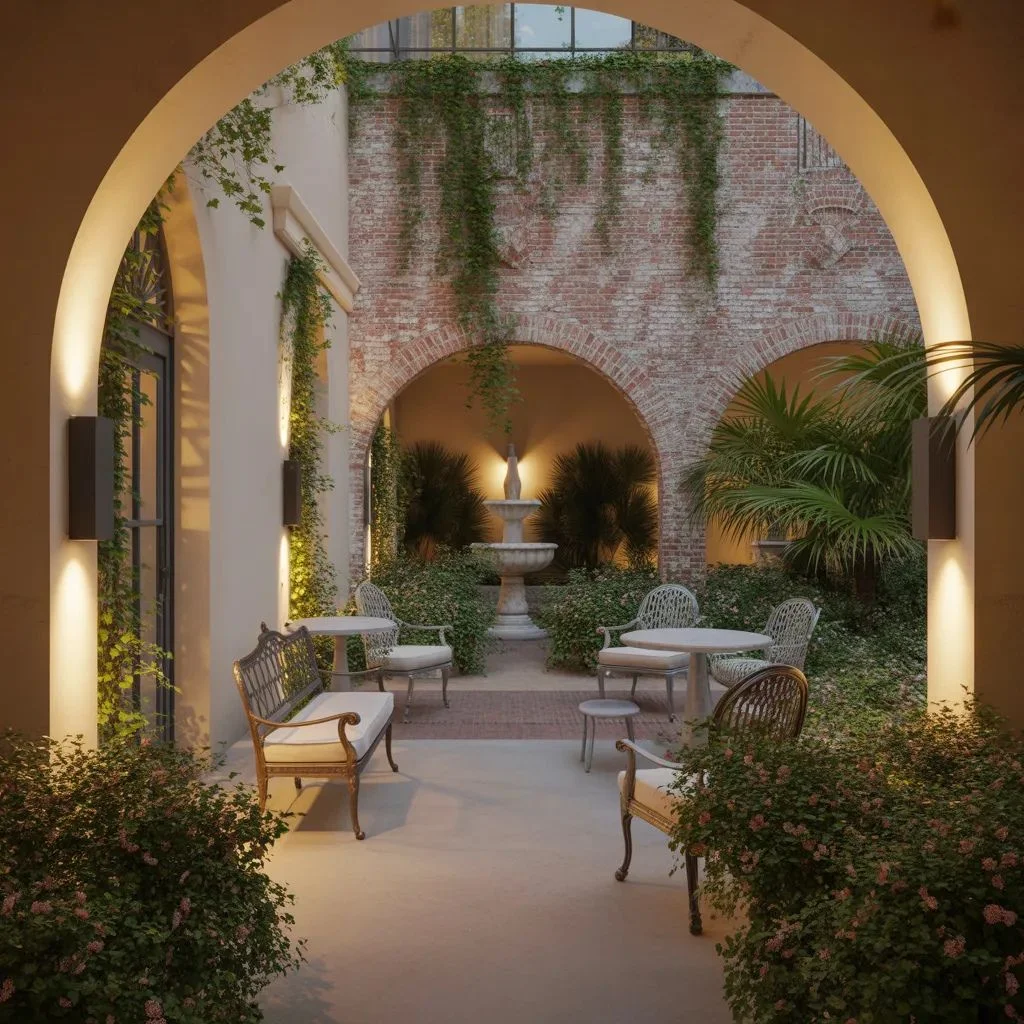
The beauty of New Orleans Style Courtyard Ideas is that they invite you to slow down. They are not flashy. They are atmospheric. They ask for brick that looks a little worn, plants that spill and soften, furniture that seems collected, and lighting that makes people want to stay longer.
When you borrow from historic Southern homes, focus on mood first. Let the courtyard feel enclosed. Add one graceful focal point. Use iron, brick, stucco, stone, and greenery in layers. Keep the palette warm and the details restrained. Done well, the space will not just look beautiful in photos. It will feel calm, cool, and deeply welcoming in real life.
That is the real charm behind New Orleans Style Courtyard Ideas. They turn an outdoor area into a hidden room with history in the air, even when the home itself is brand new.
Recommended: Bali Interior Design Ideas for a Peaceful Tropical Home Makeover.