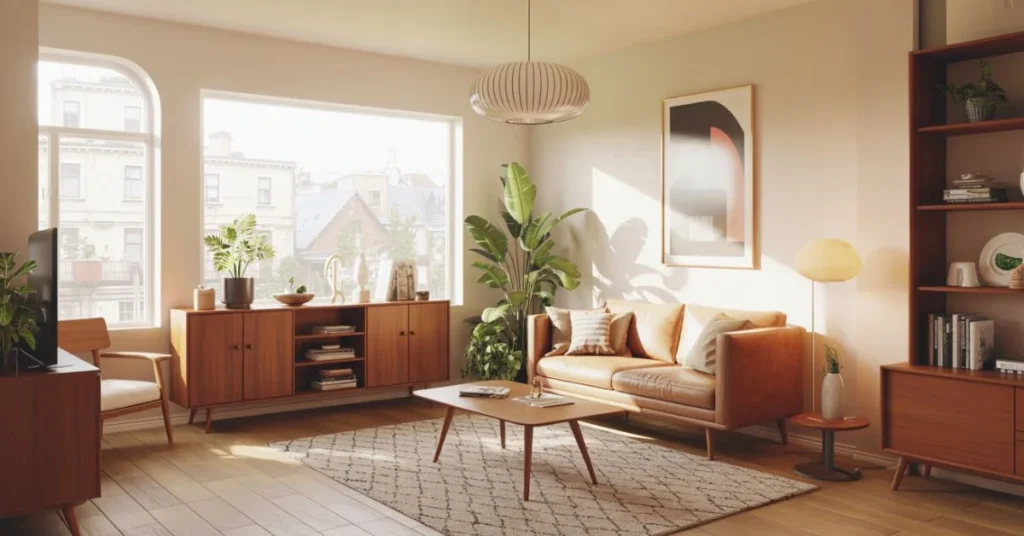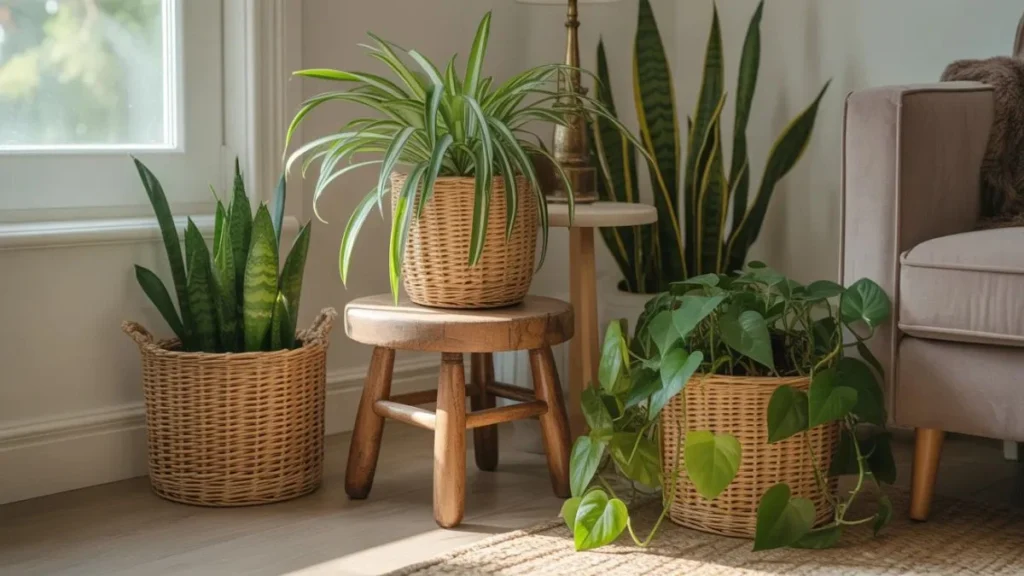
Empty corners often feel awkward. They collect random items, stay ignored, and make a room look unfinished. The good news is that you do not need custom shelves or expensive ceramic pots to fix that. Some of the best Indoor Plant Corner Ideas are built with simple things you may already have at home, like a stool, a basket, a spare lamp, or a side table.
A budget-friendly plant corner works because it adds life, shape, and softness without asking for a full room makeover. It also gives you a focused place to enjoy your plants instead of scattering them across every surface. If you are new to indoor gardening, easy houseplants like pothos, snake plant, spider plant, ZZ plant, and heartleaf philodendron are often recommended for beginners, and experts also warn that overwatering is a more common problem than forgetting to water once or twice.
Read the Corner Before You Buy Anything
The smartest Indoor Plant Corner Ideas begin with one question: how much light does that corner really get? A dim corner beside a north-facing window is very different from a sunny spot next to glass. A useful rule from the Royal Horticultural Society is this: if there is enough natural light for you to read a book there, you can usually grow a houseplant in that space. Lower-light spaces also tend to dry out more slowly, which means plants there may need water less often. Illinois Extension adds that low-light plants usually grow more slowly and often need less water, but they still need the right plant in the right place.
Before shopping, stand in the corner at three points in the day: morning, afternoon, and evening. Notice whether the light is direct, bright but filtered, or soft and dim. That quick check can save money because you are less likely to buy a plant that struggles right away. When the corner is darker, think of snake plant, ZZ plant, heartleaf philodendron, or greener pothos types. When the corner gets brighter indirect light, spider plants and fuller trailing vines usually perform better.
Build Height With What You Already Own
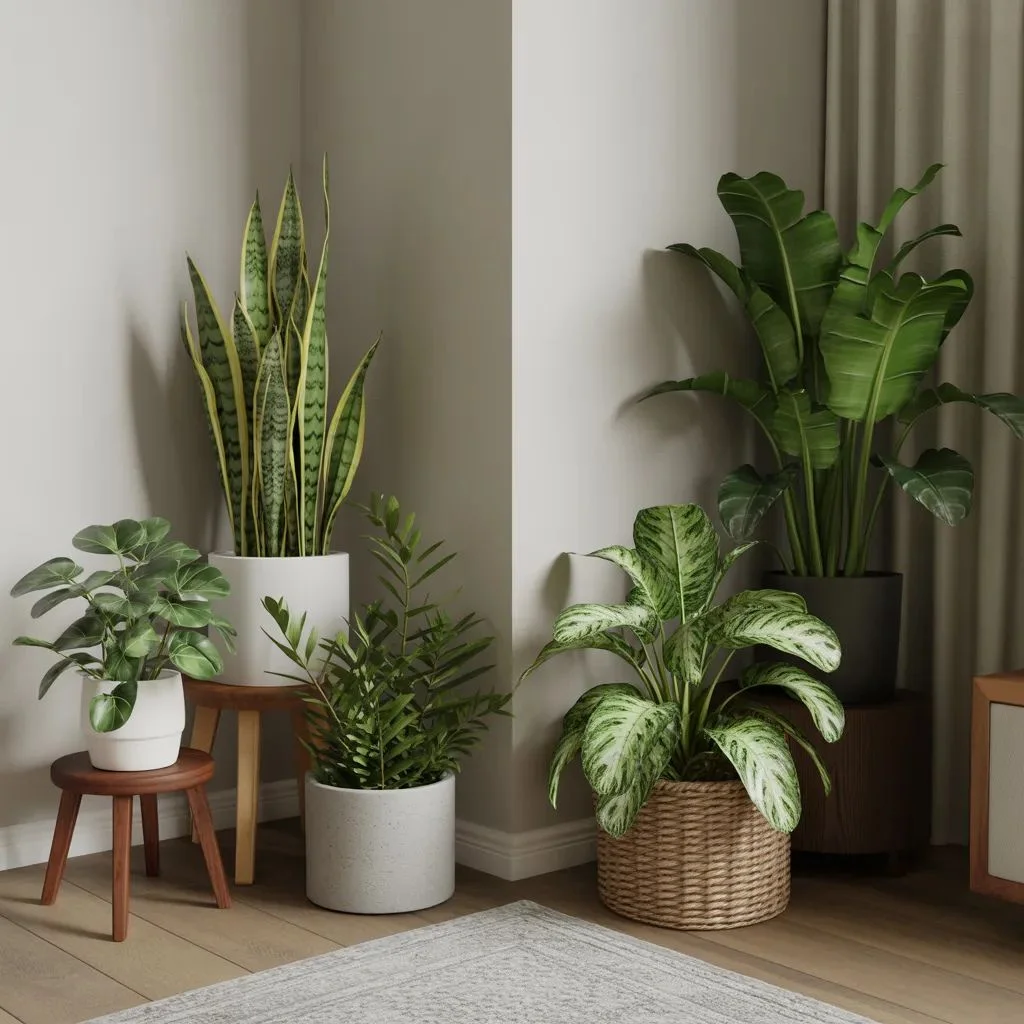
One reason plant corners look flat is that everything sits at the same level. A cheap fix is to create layers. Use a low crate, a small stool, a stack of sturdy books, or an old side table to lift one or two plants higher. That little change makes the corner feel styled rather than accidental.
A good setup is one tall shape, one medium shape, and one trailing shape. For example, place a snake plant on the floor, a pothos on a stool, and a small table plant beside it. This mix keeps the eye moving and makes the corner feel fuller without needing many plants. Snake plants are especially useful for this because they handle low light, low humidity, and normal indoor temperatures well, while pothos and philodendron can soften the space with vines and heart-shaped leaves.
The best part is that height tricks make a corner look expensive without actually being expensive. Instead of buying five small pots, start with two or three plants and vary the levels. Fewer plants arranged well often look better than many plants crowded together.
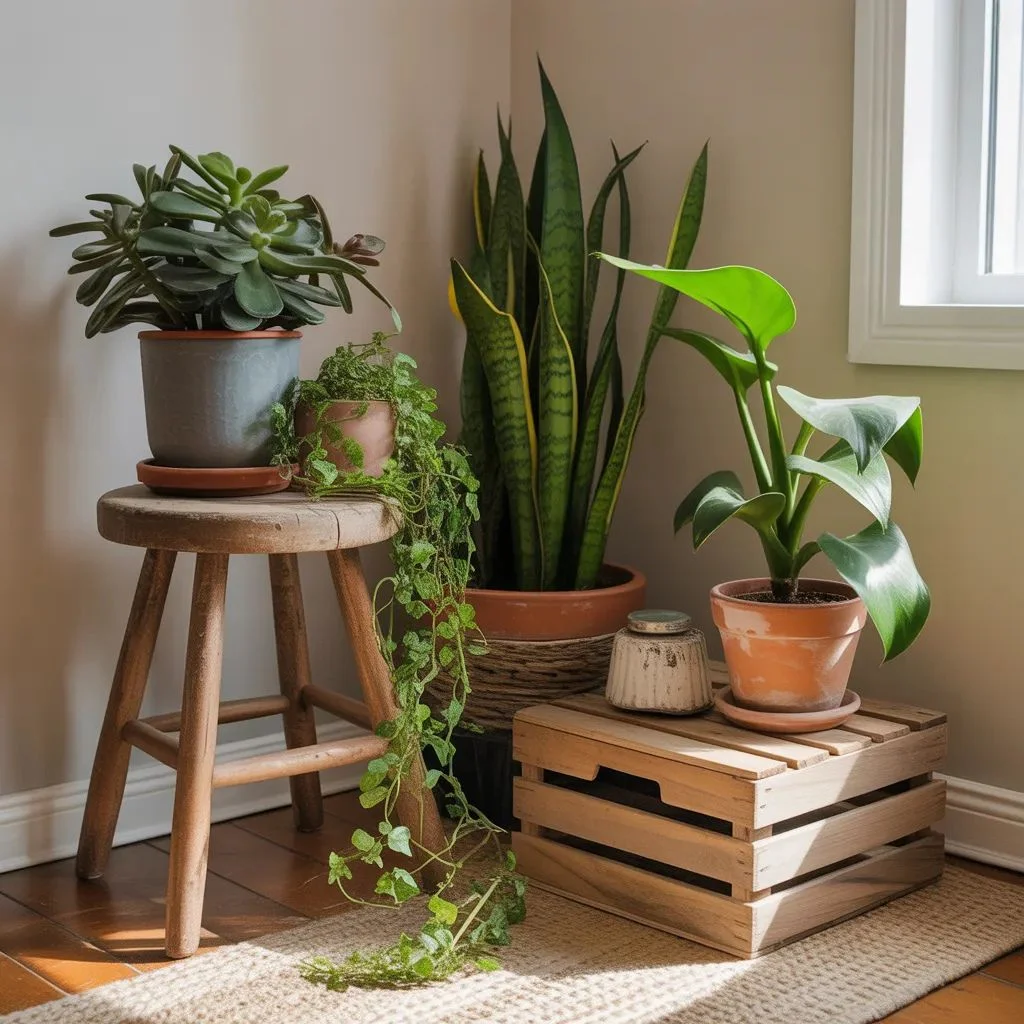
Keep the Nursery Pot and Hide It Beautifully
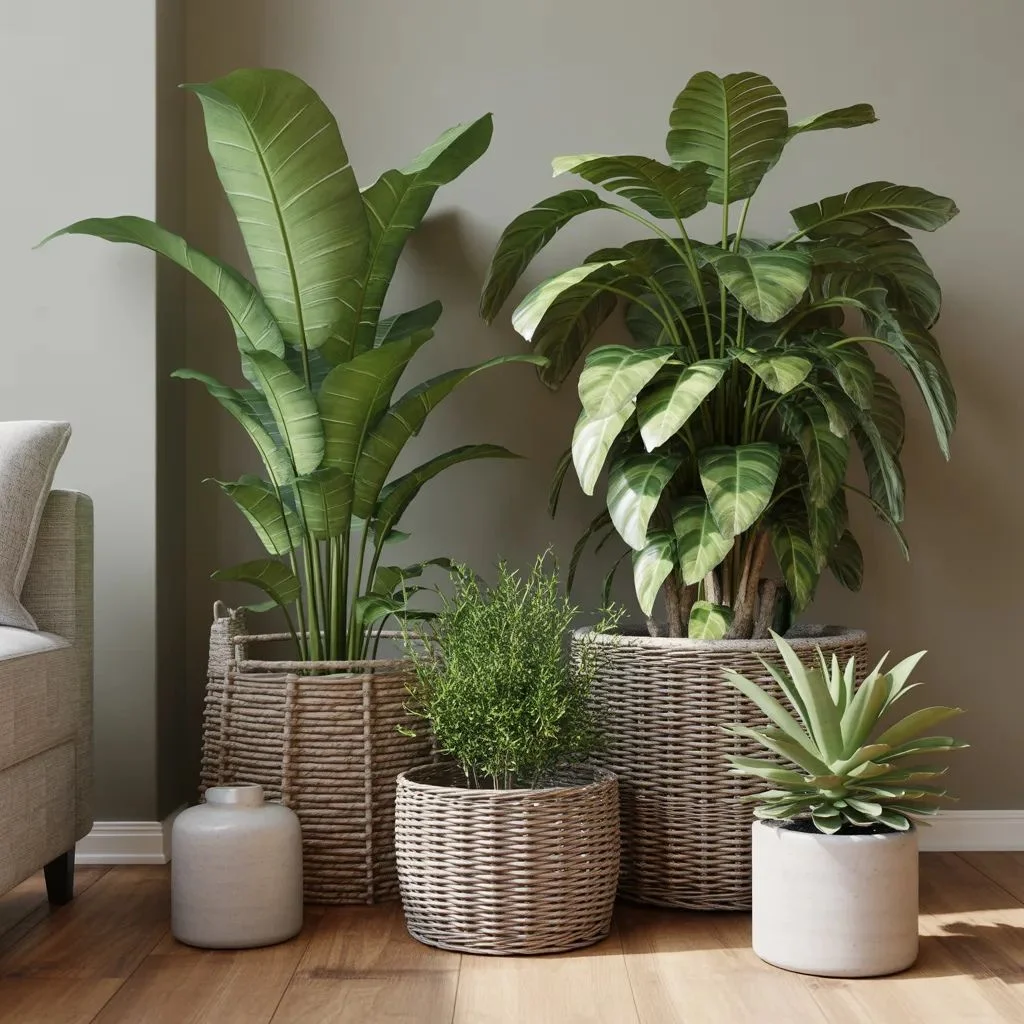
A lot of people spend too much money on decorative pots too early. A smarter move is to keep the plant in its nursery pot and place that pot inside a basket, metal bucket, woven bin, or decorative container. This gives you the finished look without risking poor drainage.
Mississippi State University notes that drainage holes matter because they let excess water leave the container and help prevent waterlogged soil and root rot. The same guidance explains that many decorative containers are better used as outer covers rather than direct planting containers. In other words, the prettiest pot in your room does not always need to be the pot your plant lives in.
This is one of the easiest Indoor Plant Corner Ideas for renters, students, and anyone decorating on a small budget. Thrift stores, discount shops, and even laundry baskets can work. Choose textures that warm up the room, such as cane, jute, terracotta, or matte black metal. When the containers feel connected, even a mixed group of inexpensive plants starts to look intentional and polished.
Make One Trailing Plant the Star
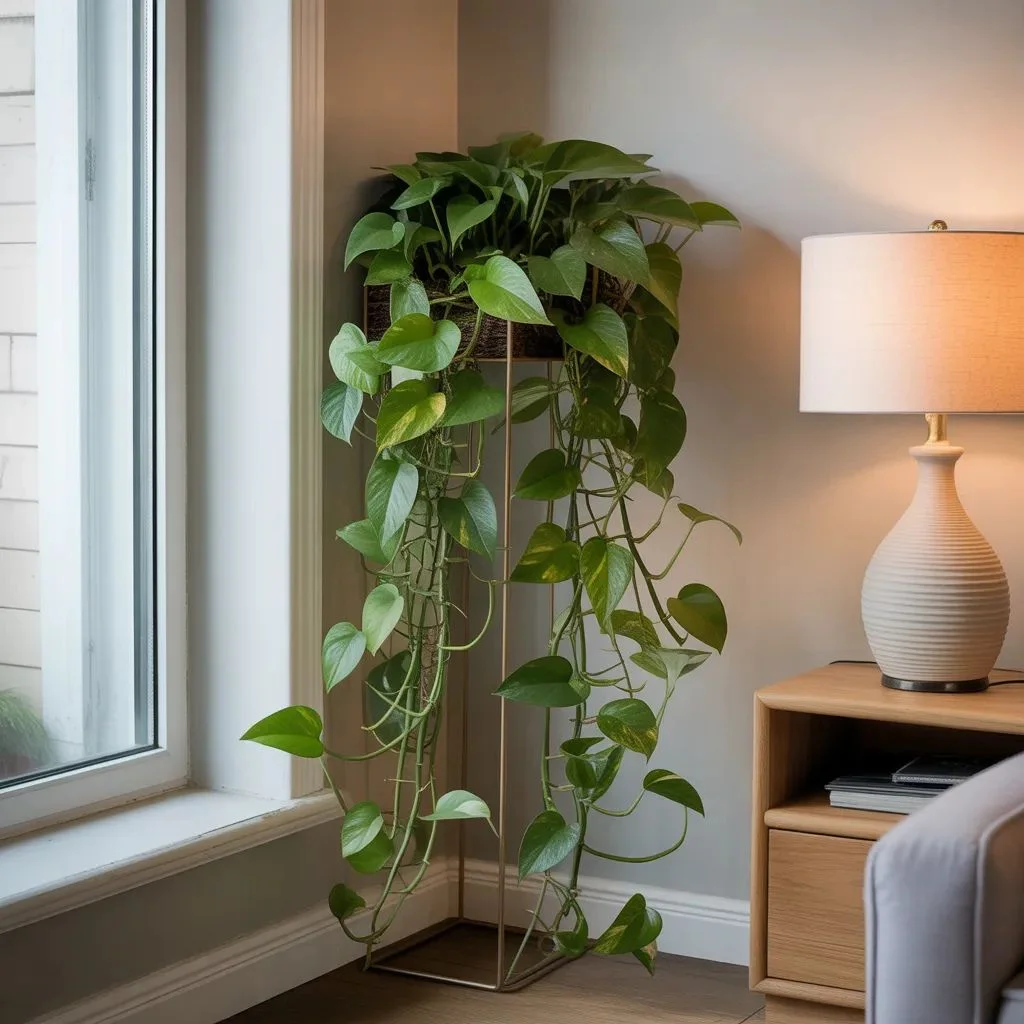
Not every corner needs a big collection. Sometimes one trailing plant can do all the work. Put a pothos or heartleaf philodendron on a stool, floating shelf, or plant stand and let the vines fall naturally. That gives you movement, softness, and a relaxed lived-in look.
This works especially well in small apartments because it adds visual interest without using much floor space. Pothos prefers bright indirect light but can manage in lower-light areas too, though low light may reduce variegation. Heartleaf philodendron handles a range of lighting from diffused light to shade, as long as you keep it out of harsh direct sun.
To make this idea look fuller on a budget, do not rush to buy a second large plant. Let one vine grow long, then wrap part of it around the stand or shelf edge. You can also place a framed print or a slim lamp behind it so the leaves stand out more. It is simple, but it looks thoughtful.
Turn a Hanging Corner Into a Soft Green Feature
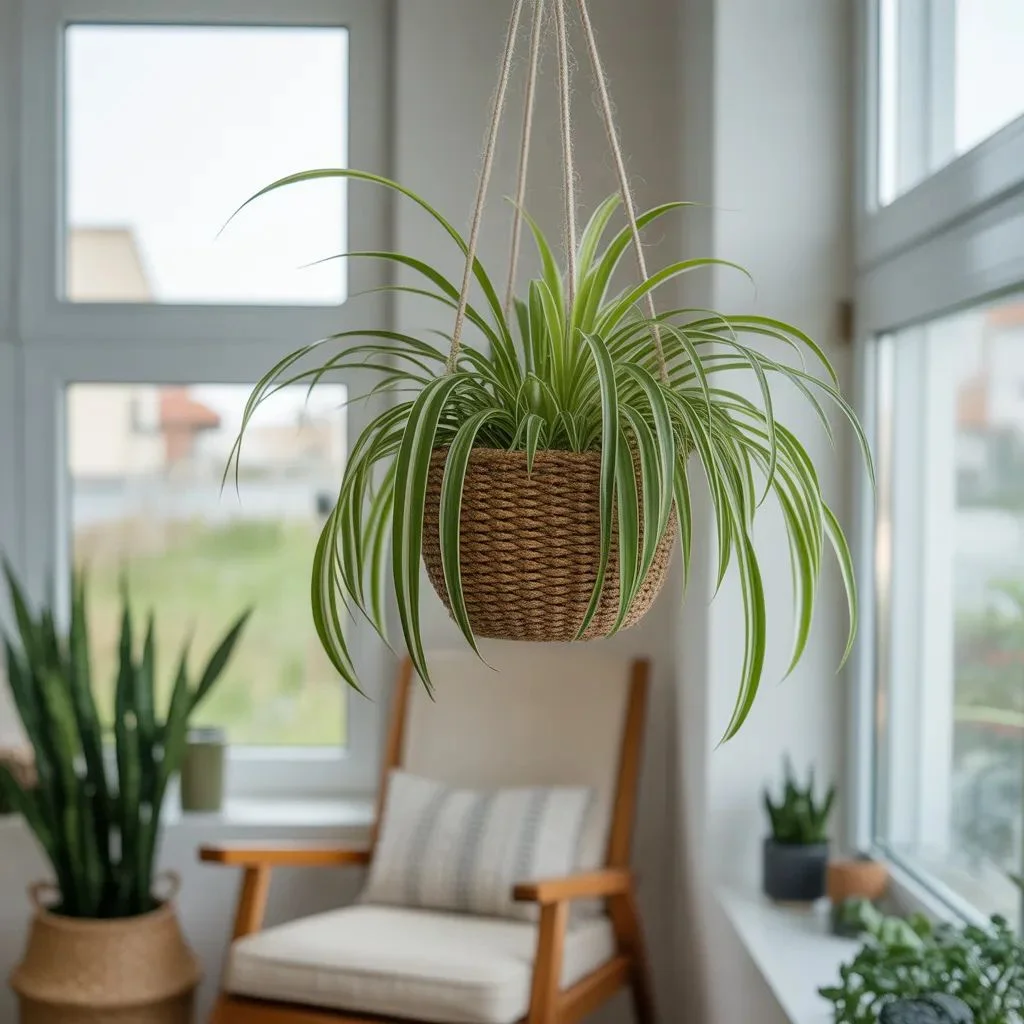
If floor space is tight, go upward. A hanging spider plant or pothos can transform a dead corner near a window. Hanging planters are often cheaper than floor stands, and they make use of vertical space that usually goes unnoticed.
Spider plants are a great fit for this kind of setup because they are well suited to hanging baskets and produce baby plantlets that spill over the edges. They like indirect to moderate light and prefer the soil to dry somewhat between waterings. Pothos also adapts well to this style, especially in kitchens, bedrooms, and small home offices where you want greenery without crowding the floor.
For a budget look that still feels warm, choose a plain hanging pot and focus on the plant itself. You can even use a basic hook and a neutral cord hanger. When the leaves start to arch and trail, the whole corner feels softer and more finished. Add one small floor basket or a book stack below it and the space will feel complete.
Grow Your Decor From Cuttings
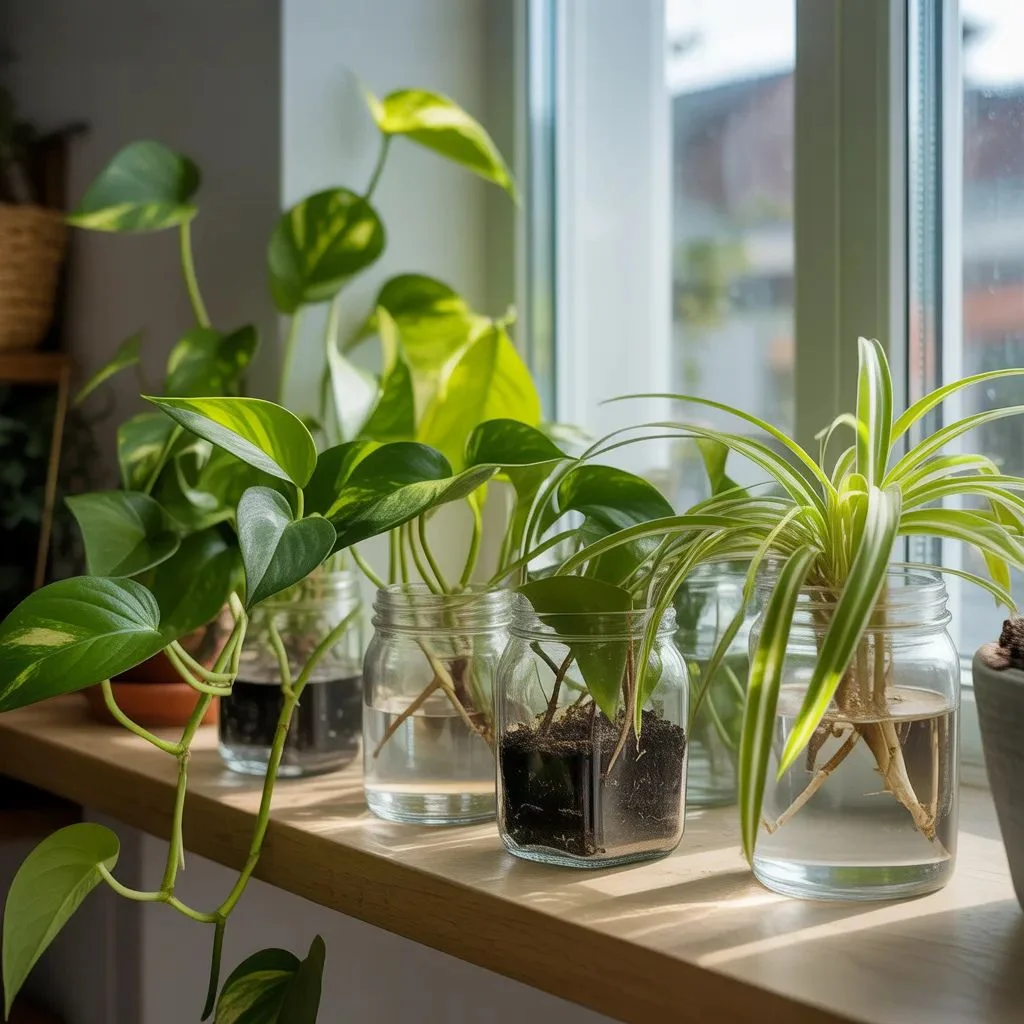
One of the most practical Indoor Plant Corner Ideas is also the cheapest: build part of your corner from cuttings. Propagation lets you turn one healthy plant into several smaller plants over time. That means your corner can grow with you instead of needing a big upfront budget.
Pothos is especially easy for beginners because it roots from cuttings quite well, and Wisconsin Horticulture notes that rooted cuttings are often grouped together in one pot for a fuller look. Spider plants are even more generous. They produce baby plantlets that can be rooted while still attached or potted once roots begin to form. Extension guidance also recommends propagating houseplants while they are actively growing for the best results.
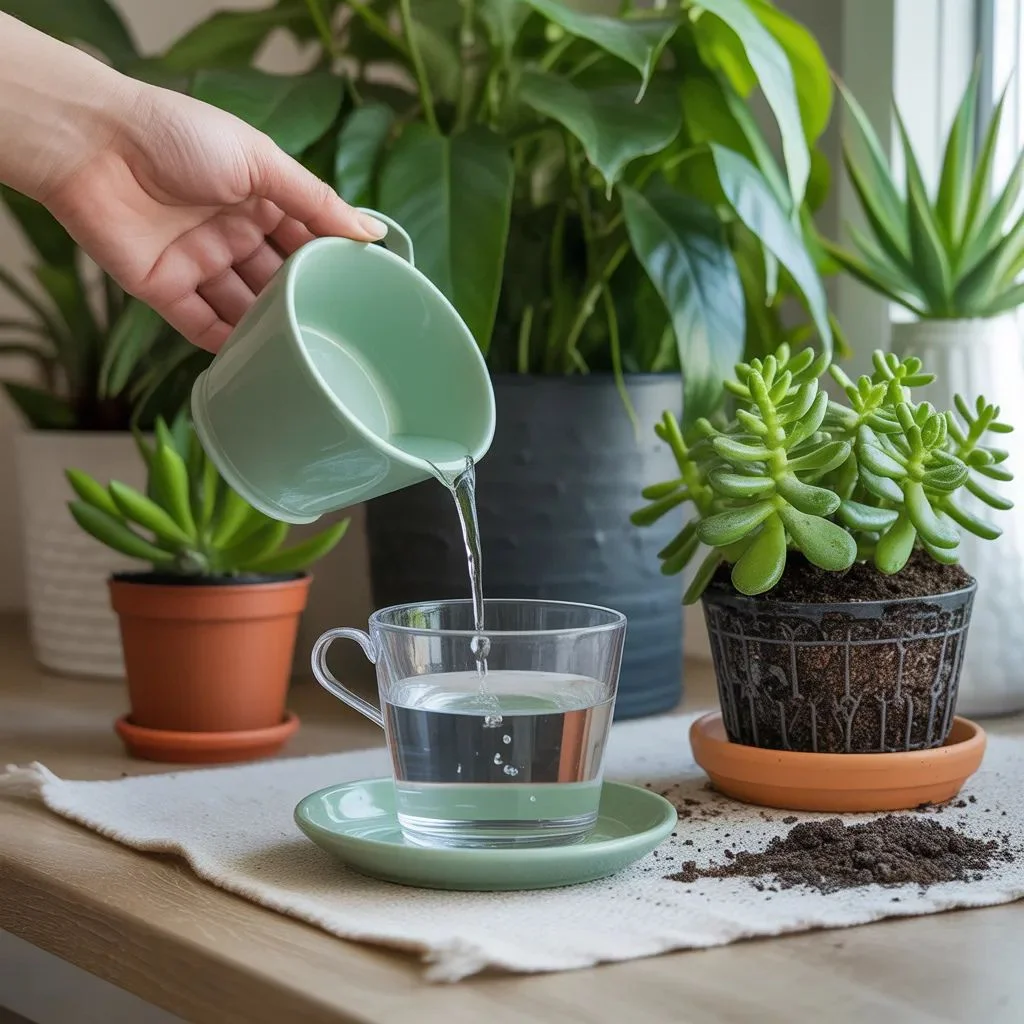
This idea works beautifully on a shelf or windowside corner. Use recycled jars, clear glasses, or plain propagation tubes if you like a cleaner look. Over time, your corner starts to tell a story. It feels personal because you grew part of it yourself, and that gives the space more charm than buying everything in one trip.
Choose Easy Plants That Match the Mood of the Room
Not every plant gives the same feeling. Some corners need clean lines. Others need softness. If you want a calm modern corner, start with a snake plant or ZZ plant. If you want something more relaxed and cozier, go with pothos, philodendron, or spider plant.
University and extension sources consistently recommend easy growers such as pothos, snake plant, spider plant, ZZ plant, and heartleaf philodendron for beginners. Snake plant handles very low to bright indirect light and prefers drier conditions. ZZ plant also does well in low indirect light. Heartleaf philodendron tolerates shade better than many houseplants, while spider plants and pothos are reliable choices for bright indirect to moderate light.
A simple way to style this is to match leaf shape to furniture shape. Tall upright leaves look good near clean-lined furniture. Soft trailing vines work well beside rounded chairs, baskets, and warm wood. That balance makes the corner feel designed, even when the total cost stays low.
Add One Warm Extra So the Corner Feels Like Home
Plants alone can sometimes look unfinished. The easiest fix is to pair them with one warm extra: a lamp, a framed print, a candle tray, a folded throw, or a small stack of books. The goal is not to clutter the corner. It is to make the plants feel connected to the room.
This is where many Indoor Plant Corner Ideas become more beautiful. A lamp can bounce light onto glossy leaves at night. A wooden stool can make even a basic plastic pot look more styled. A thrifted frame behind a plant adds depth without stealing attention. You do not need many objects. You just need one or two pieces that echo the colors and textures already in the room.
Try thinking in threes: one plant shape, one support piece, one soft decor item. That formula works almost every time. It keeps the space calm, easy to maintain, and much harder to overdecorate.
Keep the Corner Easy to Care For
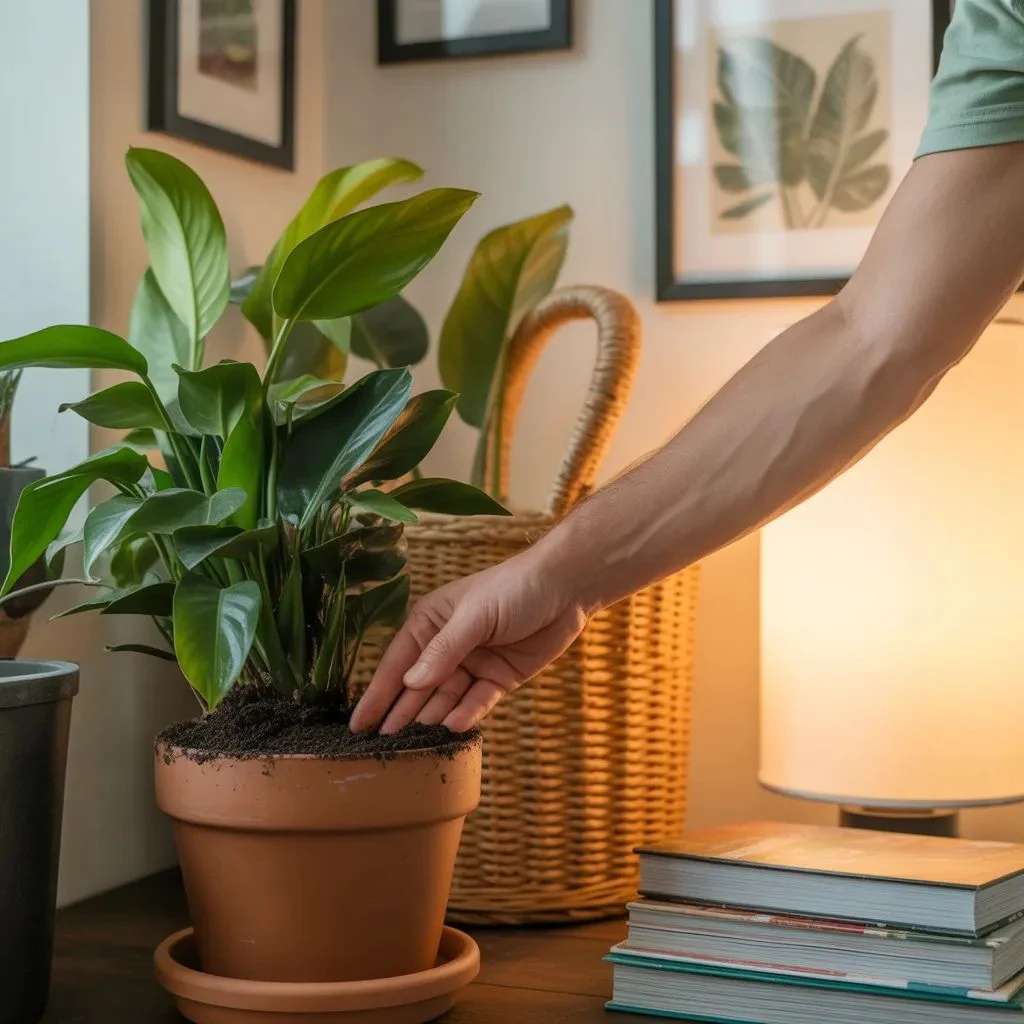
A budget-friendly corner stops being budget-friendly when plants keep failing. Good care matters more than expensive styling. University sources recommend checking soil before watering instead of watering on a fixed schedule. For many houseplants, you should water when the top inch or two of soil feels dry, then water thoroughly until excess drains out. Empty the saucer afterward and never let the pot sit in water. Experts also stress that overwatering causes more indoor plant problems than underwatering.
It also helps to choose the right container. Drainage holes are one of the biggest differences between a plant that lasts and one that struggles. Decorative outer pots are fine, but the inner growing pot still needs to drain well. Clay pots dry faster, while plastic and glazed pots hold moisture longer, so your watering rhythm may change depending on the container.
If you want your Indoor Plant Corner Ideas to stay fresh, keep the routine simple: check light, check soil, rotate the pots now and then, and wipe dusty leaves when needed. That small rhythm keeps the corner alive and looking cared for.
A Final Thought
The best Indoor Plant Corner Ideas are not always the biggest or most expensive ones. They are the ones that fit your room, your light, and your routine. Start with one good corner, two or three easy plants, and a few simple layers. Hide the nursery pots, use what you already own, and let the corner grow slowly.
That slower approach usually looks better anyway. It feels real. It feels lived in. And most of all, it gives you a green corner you will enjoy every day.
Also Read About Trendy Plant Aesthetic Living Room Styling Ideas for a Relaxing Home.