A beautiful staircase can do more than connect two floors. It can shape the whole mood of a home. That is why Curved Staircase Designs keep showing up in luxury interiors, modern remodels, and classic homes that want a softer, more refined focal point. Unlike L-shaped or winder stairs, a true curved stair follows a continuous bend with no landing, which gives it a smoother, more sculptural look.
That sculptural quality is a big reason designers keep returning to curved stairs. Recent Architectural Digest features highlight staircases as major design moments, from sinuous plaster forms to wood-and-metal rail details that create movement, depth, and flow. They also note that a curved staircase works just as well in a traditional home as it does in a contemporary one.
Why Curved Staircase Designs Feel So Elegant
A curved stair has a natural sense of motion. Straight stairs feel direct and practical. Curved stairs feel welcoming. They guide the eye upward in a softer way, which makes an entry hall, living room, or double-height foyer feel more polished. Designers often use that curve to echo other rounded shapes in the home, such as arched doorways, rounded furniture, plaster walls, or a circular chandelier.
Another reason they feel luxurious is that they are harder to ignore. A straight staircase can blend into the background, but a curved one usually becomes part of the architecture itself. Architectural Digest’s recent staircase coverage shows this clearly: the strongest examples are not treated like simple circulation pieces, but as visual anchors that define the whole interior.
Grand Sweeping Entry Staircase
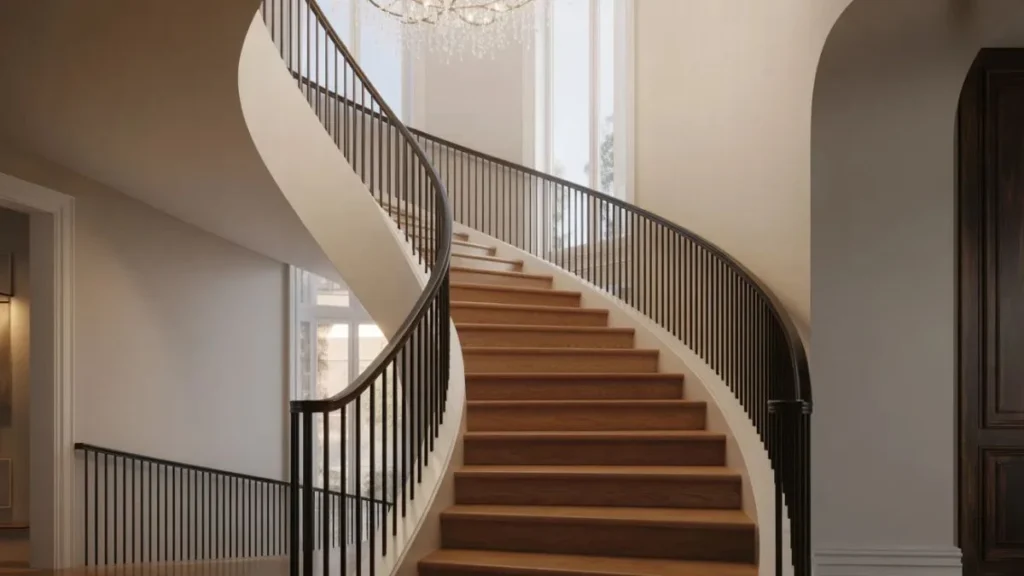
The most classic version of Curved Staircase Designs is the sweeping entry stair. This style works best in homes with generous ceiling height and enough floor area for the curve to breathe. The stair should not feel squeezed into a corner. It should have room to unfold naturally, with a railing profile that feels graceful from every angle.
For a stylish result, keep the base palette calm. White walls, warm oak treads, and a dark handrail or metal balusters create a look that feels timeless without becoming heavy. If you want a more formal finish, a runner can soften the stair and add texture. True curved stairs are continuous by nature, so the beauty comes from the flow of the line rather than extra decoration.
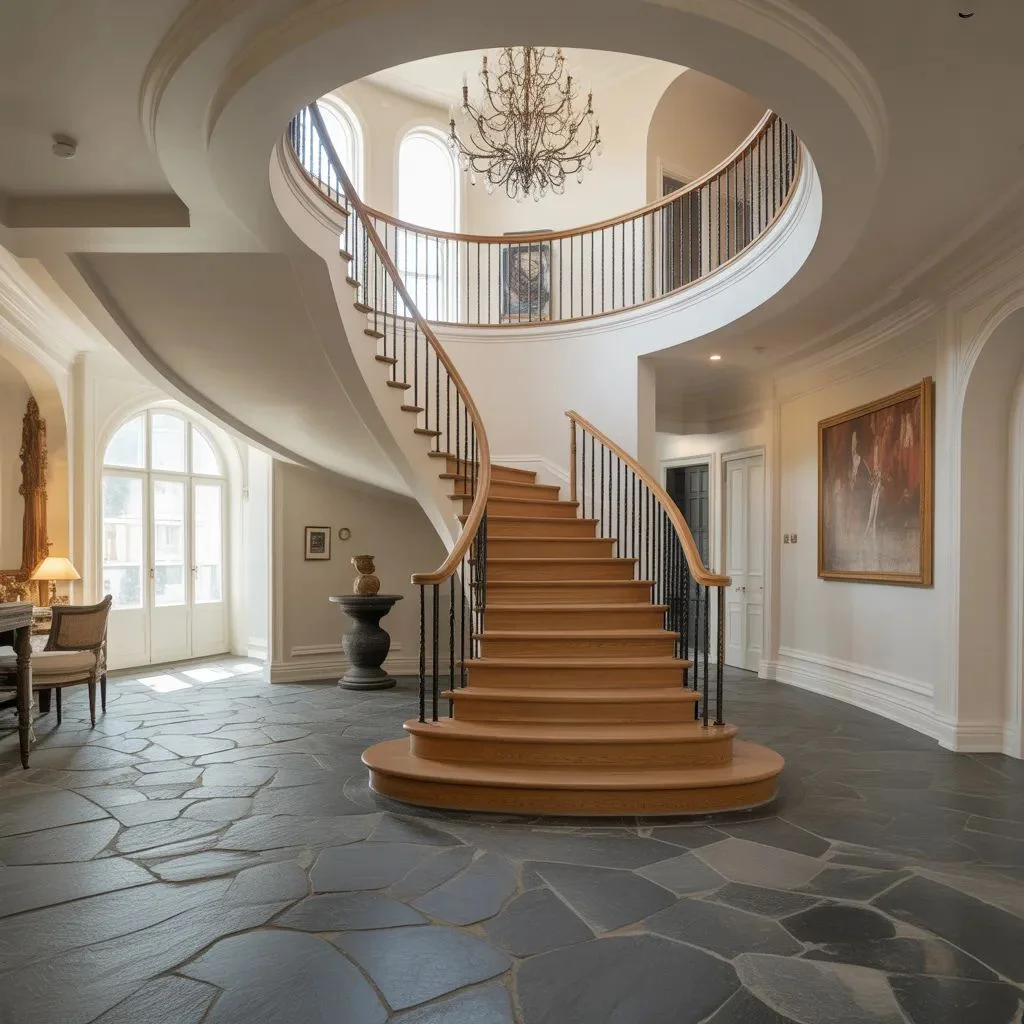
Floating Wood and Glass Curve
One of the freshest takes on Curved Staircase Designs is the floating wood-and-glass combination. This look is clean, airy, and ideal for modern homes that want impact without visual weight. Open risers help light move through the space, while glass railings reduce visual clutter and make the curve feel lighter.
This approach works especially well with pale woods like maple or white oak. According to This Old House, maple suits high-traffic areas, while white oak offers better moisture resistance than red oak. If you choose glass, laminated glass is the safer benchmark in many code frameworks because it improves glass retention if breakage happens and is widely referenced for guard systems.
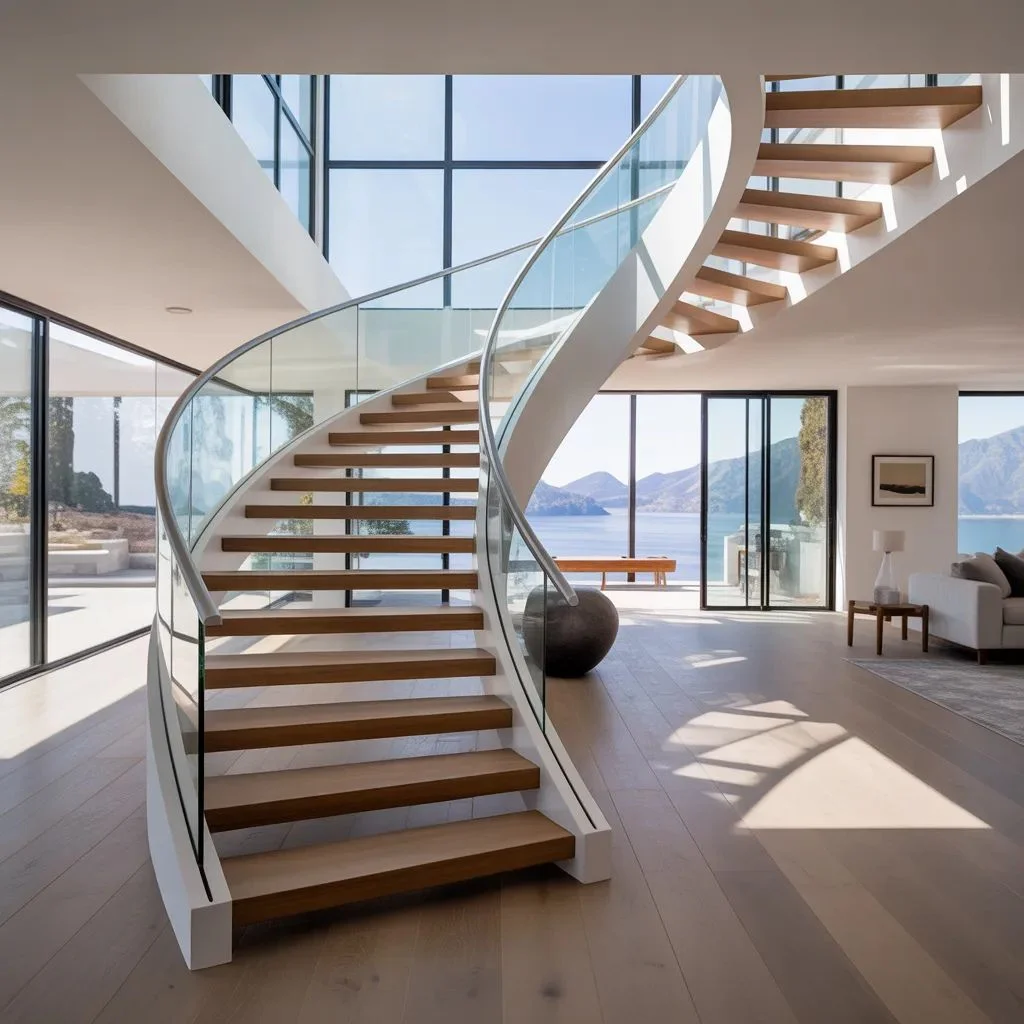
Sculptural White Plaster Staircase
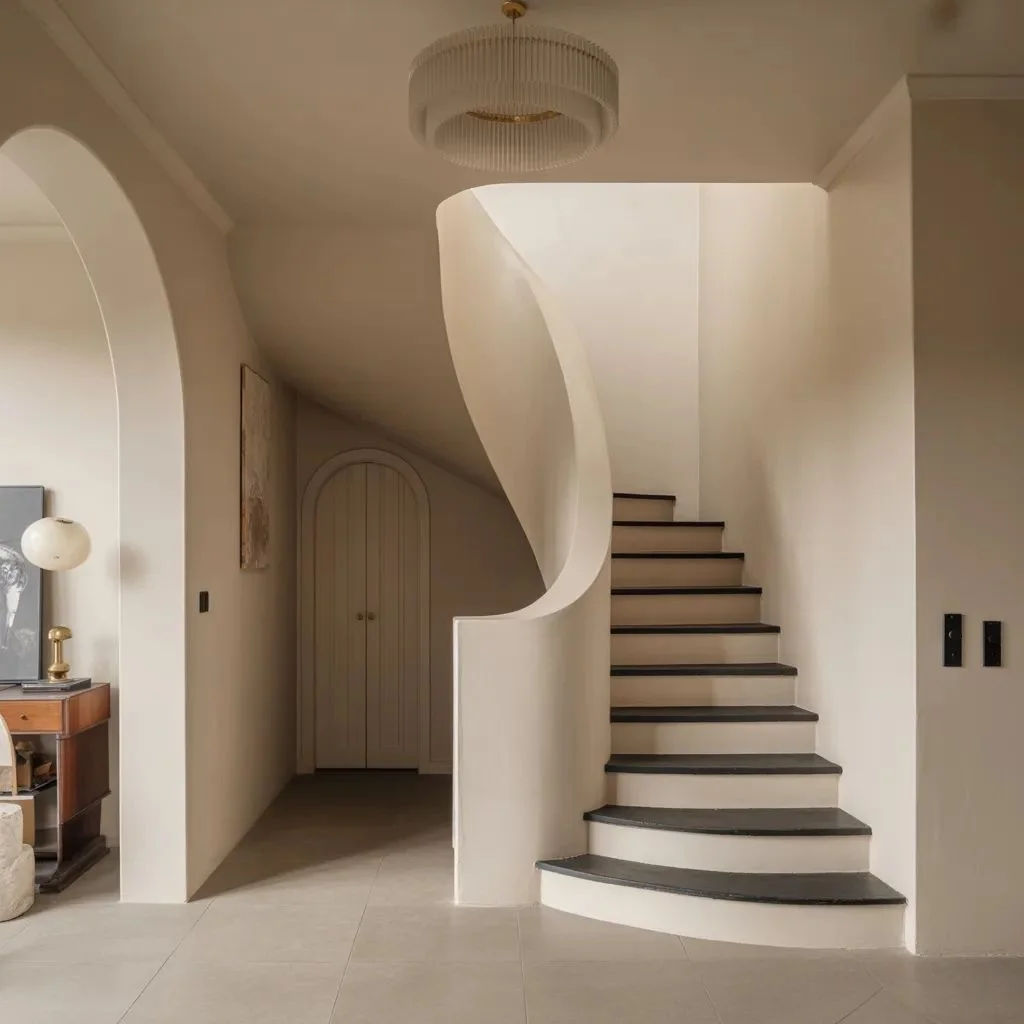
If you want a staircase that feels like architecture rather than furniture, a plaster-finished curve is a strong choice. This style strips away extra ornament and lets the shape do the work. The result is calm, modern, and almost gallery-like. It pairs beautifully with limewash walls, light stone flooring, and quiet lighting.
A recent AD feature on standout staircases from 2025 pointed to a sinuous plaster stair in Beverly Hills as a model of “unfussy elegance.” That phrase captures the appeal well. This design is bold, but not loud. It gives the home a custom, high-end feel without relying on too many materials or competing details.
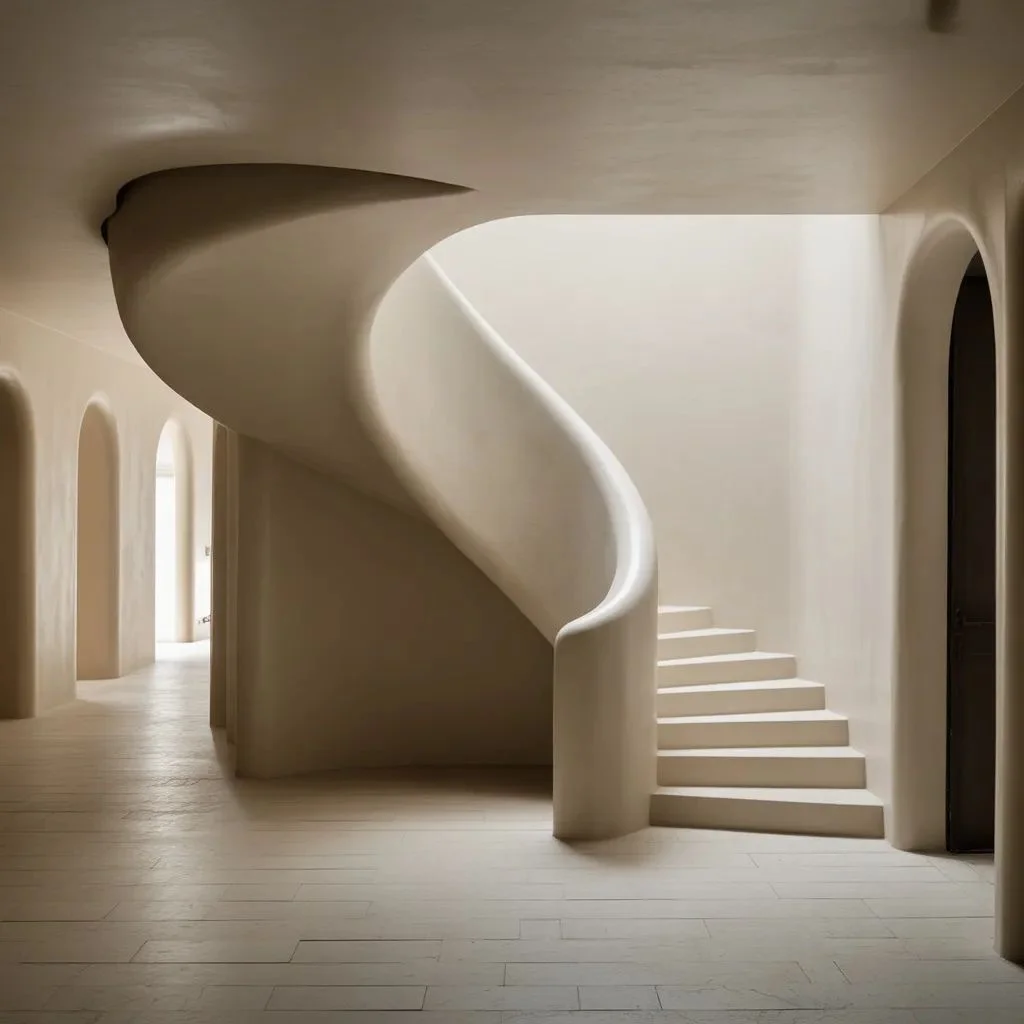
Traditional Curve with Wrought Iron Details
Not every stylish home wants a minimalist staircase. Some homes look better with richer detail, and a traditional curved stair with wrought iron balusters is still one of the most beautiful options. It feels established, elegant, and full of character. This is especially true in homes with paneling, coffered ceilings, stone floors, or classic millwork.
Architectural Digest recently highlighted a curved staircase with Spanish Revival–style iron balusters and noted how the railing’s movement created depth and flow. That is the key here. Good ironwork should not fight the curve. It should follow it. Choose patterns that feel rhythmic and clean, not overly busy, so the staircase looks refined instead of dated.
Black Wood and Metal Contrast Stair
For homes that lean modern, transitional, or slightly dramatic, black-and-wood contrast works extremely well. Black railings ground the staircase and give the curve a sharper outline, while natural wood keeps the space warm. This mix feels current without looking trendy in a way that will age quickly.
AD’s railing coverage shows how contrast can make a staircase stand out even when the structure itself is simple. Black rails against white walls, or dark treads paired with lighter surroundings, create crisp definition. You can also powder-coat metal details for a more custom look and cleaner finish. Add warm wall sconces and the whole staircase becomes a strong evening focal point.
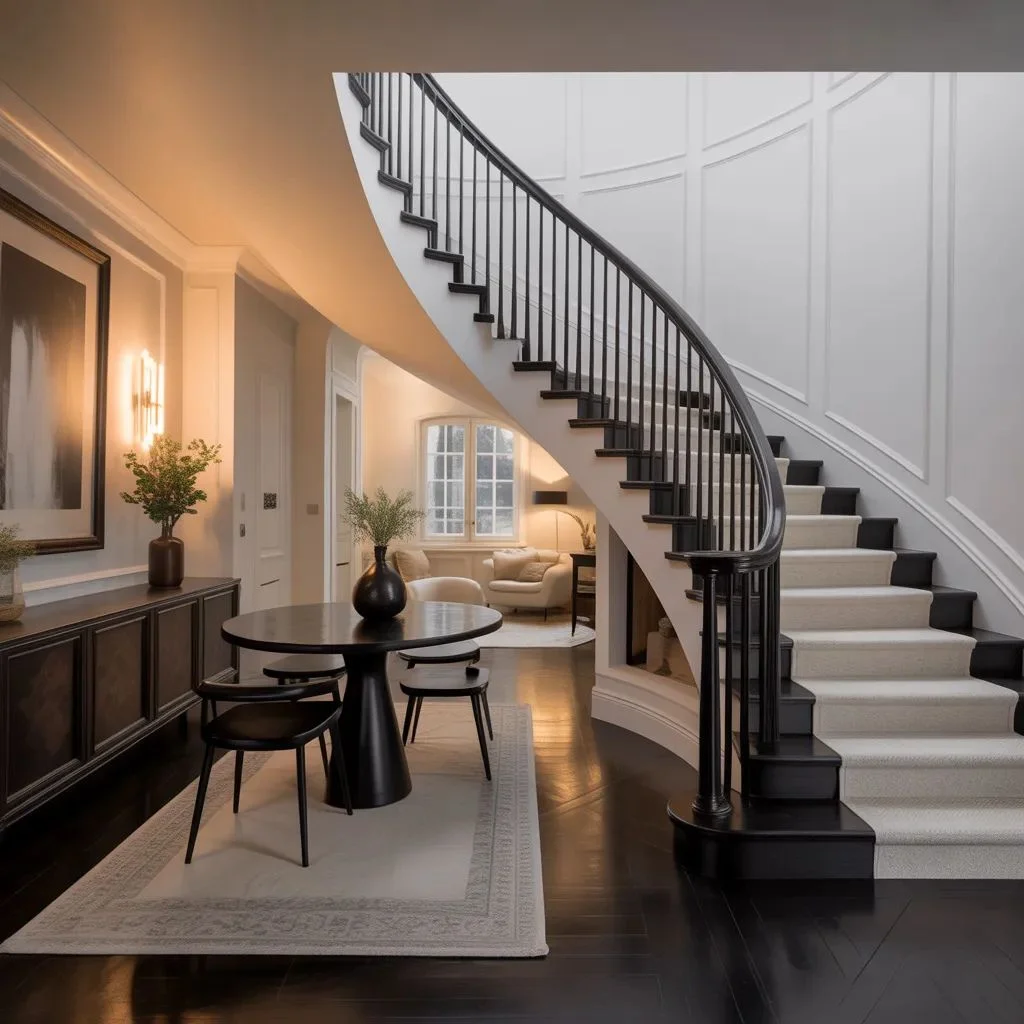
Open-Riser Curve with Natural Light
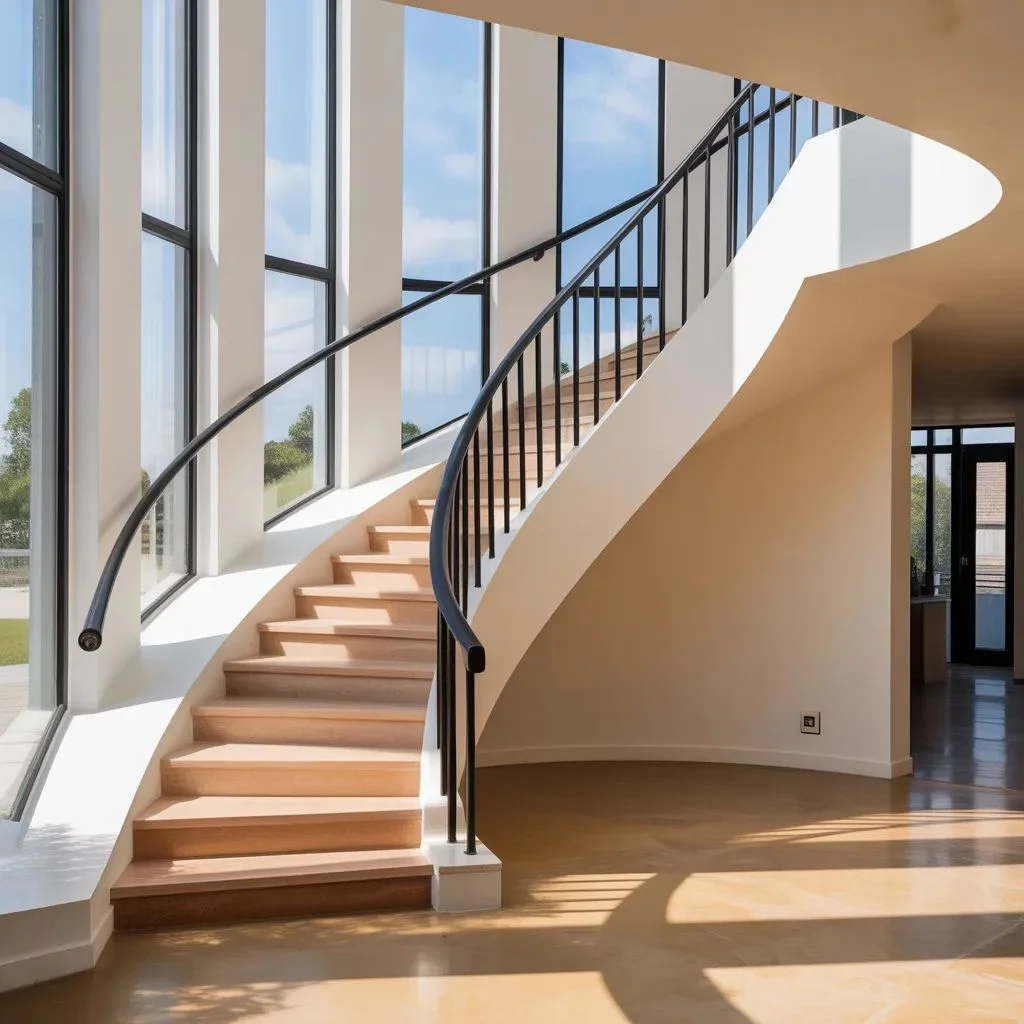
Some of the best Curved Staircase Designs are not oversized. They just use light well. An open-riser curved stair near tall windows, clerestory glazing, or a skylight can feel very expensive because it stays visually light. Instead of blocking views, it frames them.
This look is especially effective in homes that want a modern but approachable feel. AD has featured airy staircase solutions using wood slats, open sides, and simpler railing treatments to make stairs feel eye-catching without becoming too formal. Glass industry guidance also notes that interior glass railings enhance visibility and daylighting, which is one reason this style feels so open in practice.
Split or Bifurcated Staircase for Large Homes
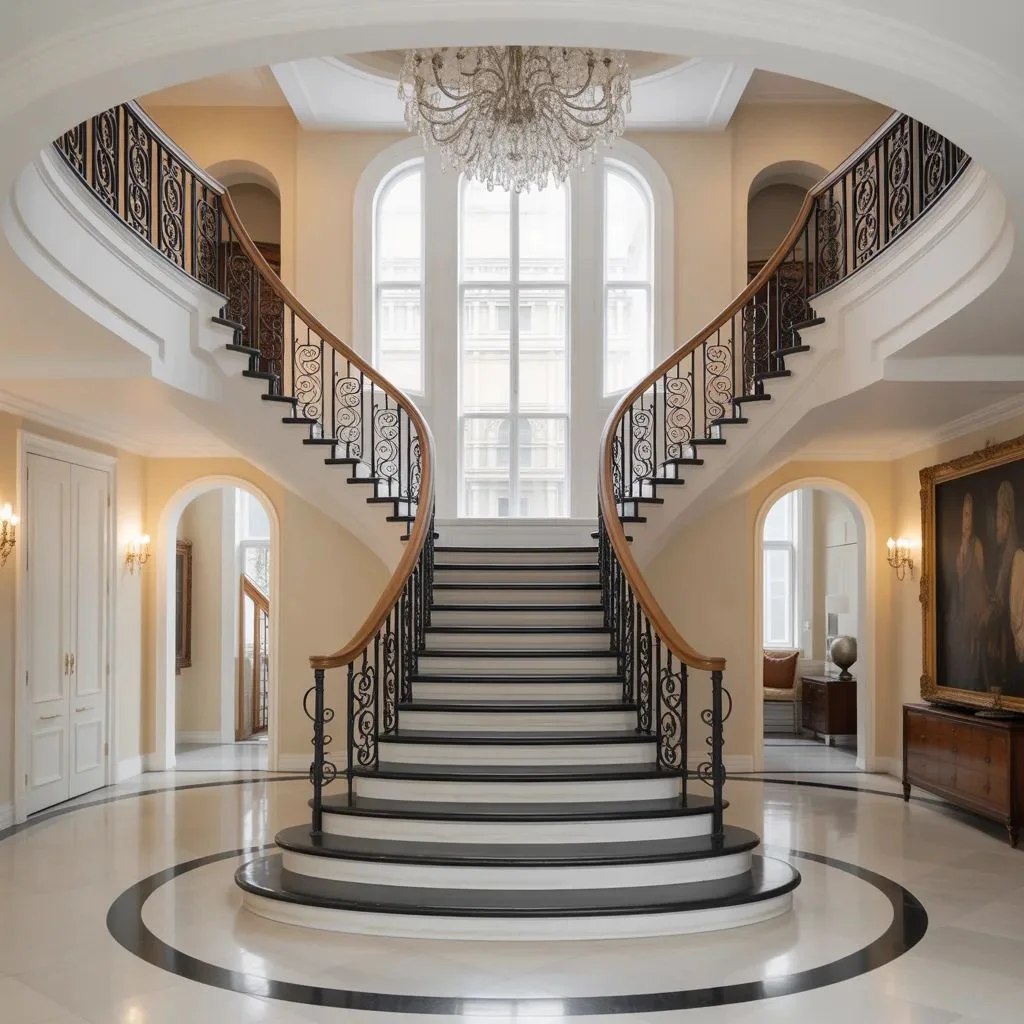
If the home is large enough, a bifurcated stair is the most dramatic option in the curved family. This is the classic “grand staircase” idea: one wider lower run that splits into two smaller upper flights. It is formal, cinematic, and best reserved for homes with a truly generous entry sequence.
Architectural Digest describes bifurcated stairs as the grandest of all staircase types, and that makes sense. They are designed for arrival, not just circulation. To keep the result stylish instead of heavy, simplify the material palette. Let the shape be the drama. Clean plaster, white oak, dark bronze, or glass can keep the staircase impressive without feeling old-fashioned.
How to Choose the Right Curved Staircase Designs for Your Home
Start with space, not mood boards. Curved stairs usually need more room than straight stairs, and they also cost more. HomeAdvisor places arched or curved stairs around $10,000 to $20,000, while floating stairs are often estimated at $8,000 to $12,000. Their data also notes that curved stairs tend to appear in larger homes because of the footprint they require.
Then focus on proportions and safety. Common residential references based on the IRC show a minimum stair width of about 36 inches, minimum headroom of 6 feet 8 inches, handrail height of 34 to 38 inches, a maximum riser height of 7 3/4 inches, and a minimum tread depth of 10 inches. Exact requirements can vary by jurisdiction, so treat these as planning baselines and confirm with your local professional before building.
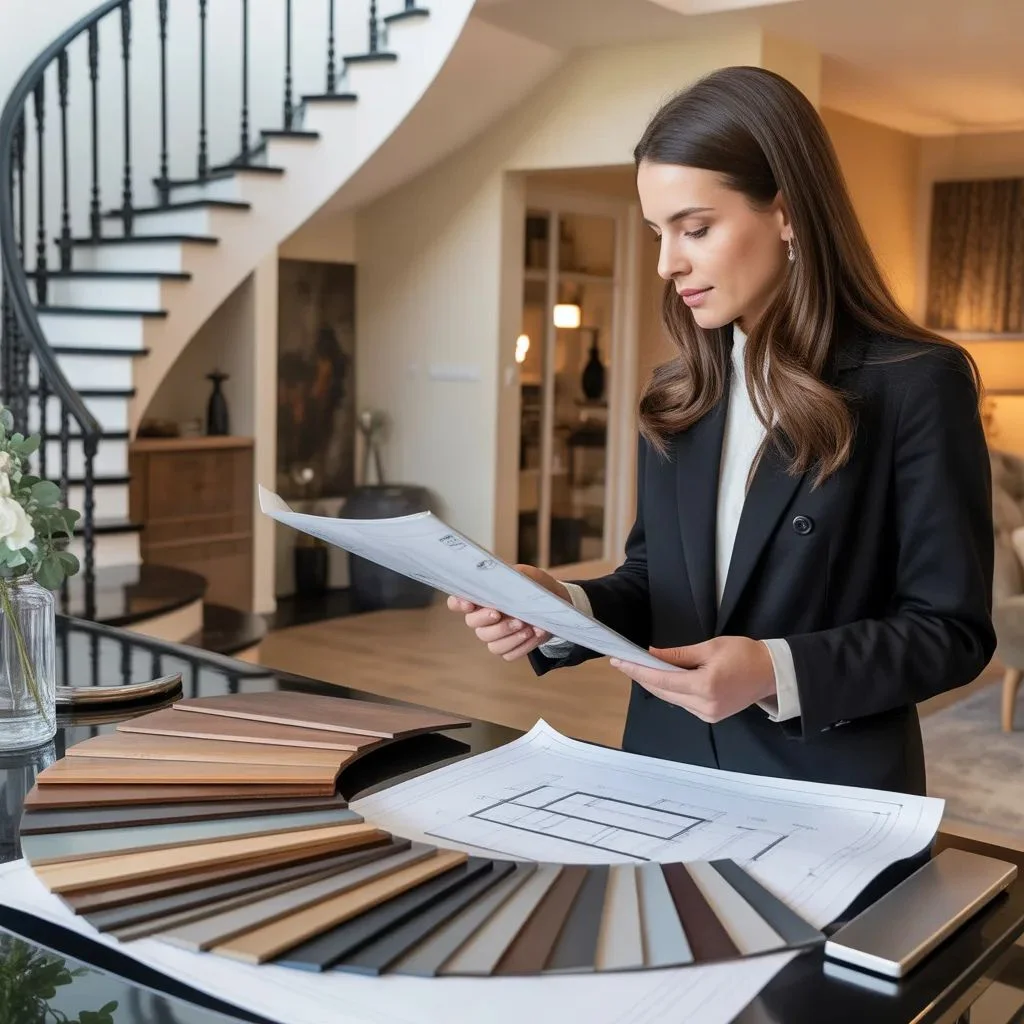
Material choice matters too. Oak and maple are practical for busy households, while white oak and Brazilian walnut can push the staircase toward a more premium look. If you want a softer visual feel, add a runner. If you want a lighter look, consider glass with a slim rail. If the home is smaller, a true curved stair may not be the smartest fit; a winder stair can deliver a similar sense of movement while saving space.
A Final Word on Style
The best Curved Staircase Designs do not rely on decoration alone. They work because the line of the stair feels smooth, balanced, and intentional. Whether you prefer plaster minimalism, warm traditional wood, airy glass, or dramatic black contrast, the goal is the same: make the staircase feel like it belongs to the home’s architecture, not like an afterthought. That is what gives it lasting style.
Also Read About French Chateau Inspired Decor Essentials for a Classic European Look.