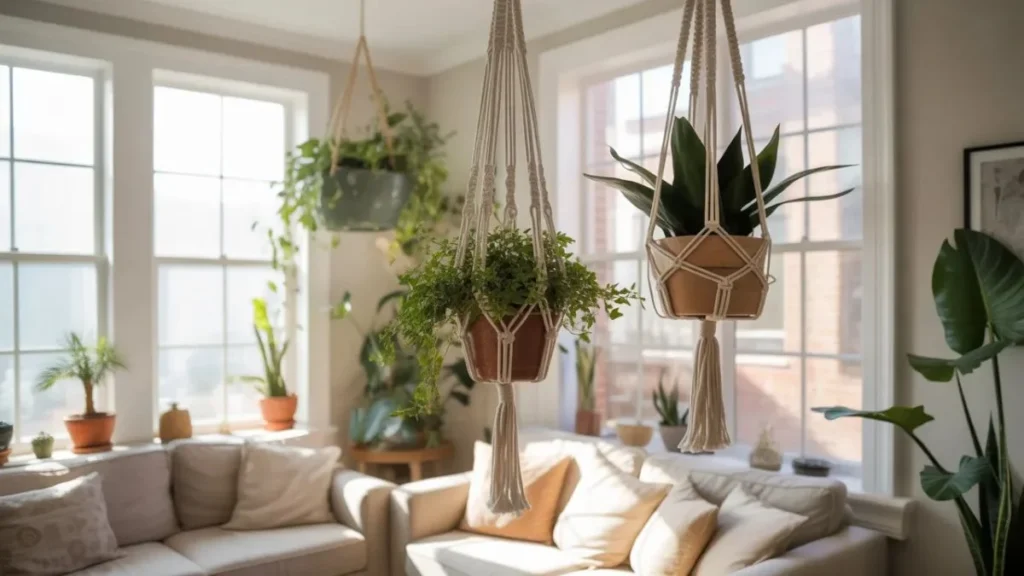
There’s something almost magical about a plant that hangs from the ceiling. It draws the eye upward, fills empty vertical space, and brings life into a room in a way that floor pots simply can’t match. But not every plant is built for life up high. The wrong pick droops, dries out too fast, or just looks sad within weeks.
If you’ve been searching for the best plants suitable for ceiling hanging, this guide is your shortcut. These are varieties that genuinely thrive when suspended — trailing beautifully, tolerating indoor light, and forgiving the occasional missed watering.
Why Ceiling-Hanging Plants Work So Well Indoors
Most people think of plants as something that sits on a shelf or the floor. Hanging plants flip that entirely. They use vertical real estate that would otherwise go to waste, especially in small apartments or rooms with high ceilings.
There are a few practical reasons they work:
- Better airflow around the leaves reduces fungal issues
- Elevated position means they stay out of reach of pets and kids
- Natural trailing growth looks intentional rather than forced
- They soften hard edges in modern or minimal spaces
The trick is matching the plant to the conditions — light level, humidity, and how often you realistically water.
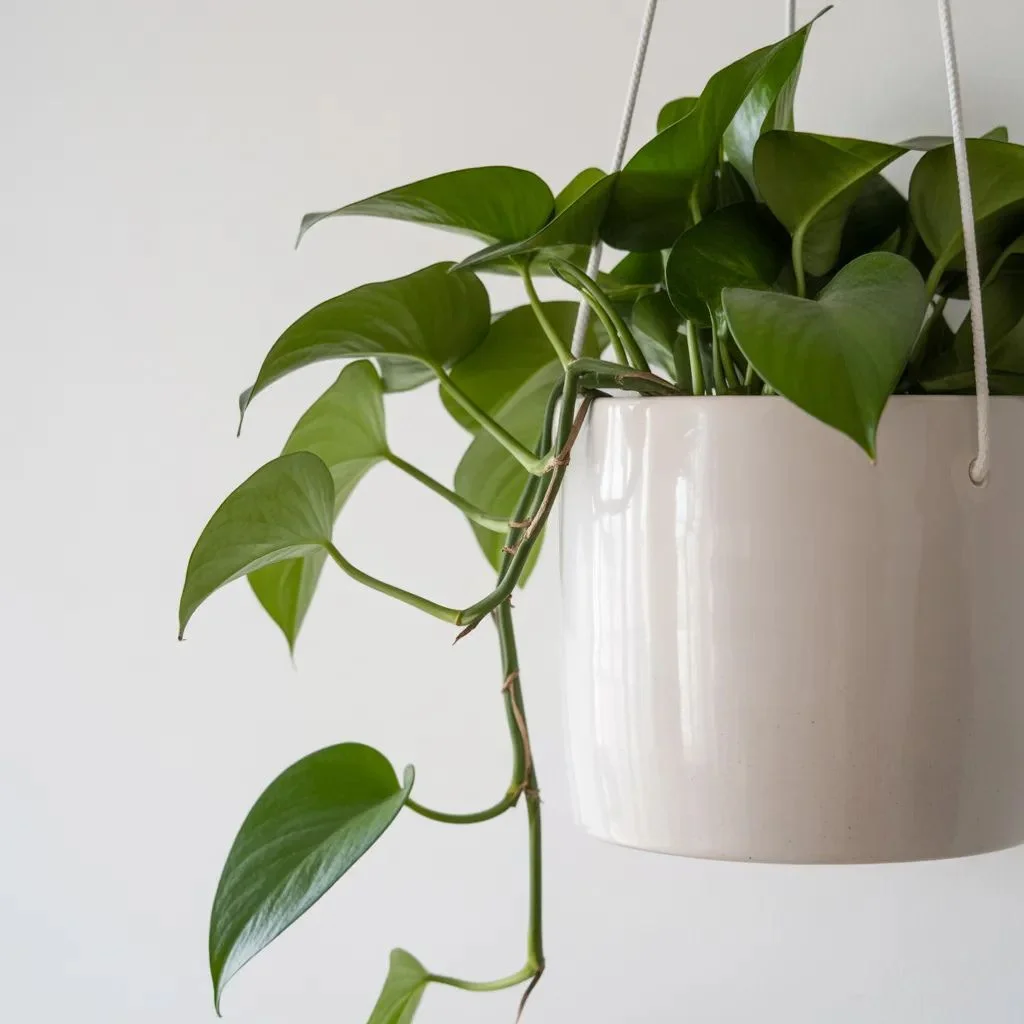
1. Pothos (Epipremnum aureum) — The Classic Trailing Favorite
Pothos is the plant most people start with — and for good reason. It’s one of the most forgiving plants suitable for ceiling hanging you’ll find. Vines can trail two to three feet in a single growing season, creating a dramatic cascade.
Why It Works Up High
Pothos adapts to low, medium, and bright indirect light. It handles irregular watering well, going several days without water before showing any stress. The variegated varieties — like Golden Pothos or Marble Queen — look especially striking against white or neutral ceilings.
Care tip: Water when the top inch of soil feels dry. Wipe leaves occasionally to keep them glossy and dust-free.
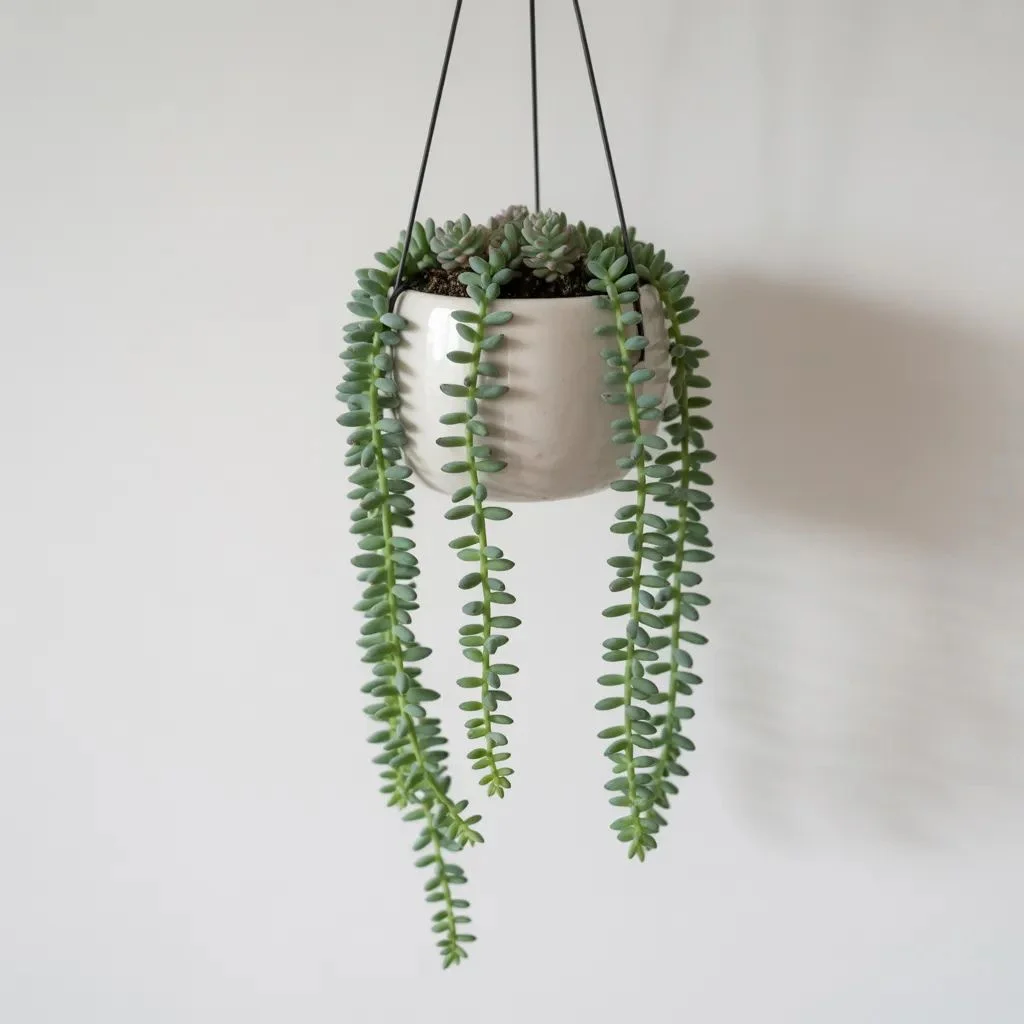
2. String of Pearls (Senecio rowleyanus) — Sculptural and Unusual
If you want something that genuinely stops people mid-conversation, String of Pearls is it. The tiny bead-like leaves look unlike anything else in the plant world. Hung from the ceiling, those trailing strands create a curtain effect.
Bright Light Only
This one needs more light than most — ideally near a south- or east-facing window. It’s technically a succulent, so it stores water in those little pearls. Overwatering is the most common way to kill it. Let the soil dry out completely between waterings.
Care tip: Use a well-draining cactus or succulent mix. Never let it sit in standing water.
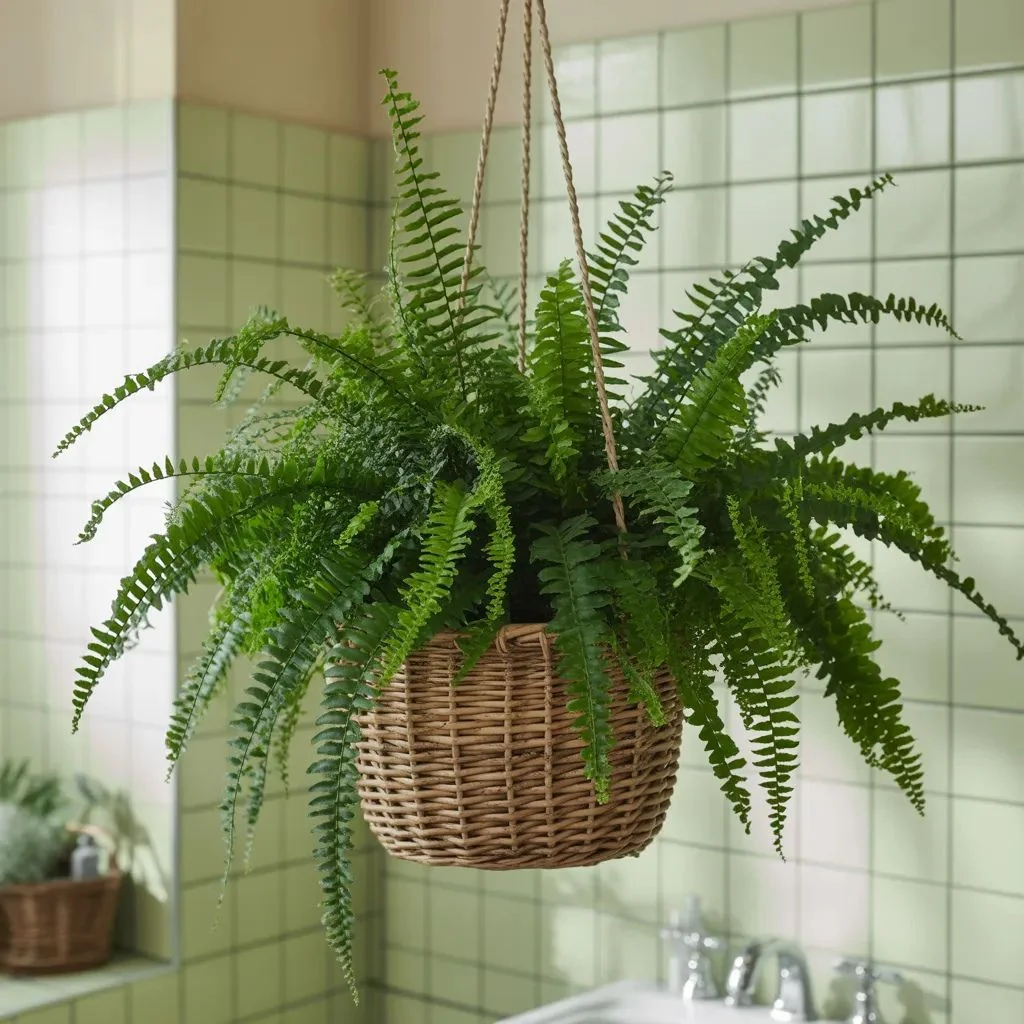
3. Boston Fern (Nephrolepis exaltata) — Classic Full Volume
For sheer volume and classic good looks, the Boston Fern remains one of the most popular ceiling hanging plants in homes and porches alike. Those long, feathery fronds arch outward naturally — looking exactly the way you’d want a hanging plant to look.
Loves Humidity
Boston Ferns prefer indirect light and fairly consistent moisture. They do especially well in bathrooms where steam and humidity from showers keep them happy. If you place one in a drier room, mist it every couple of days or use a pebble tray with water below the pot.
Care tip: Don’t let the soil dry out completely. A slightly damp root zone keeps the fronds lush and green.
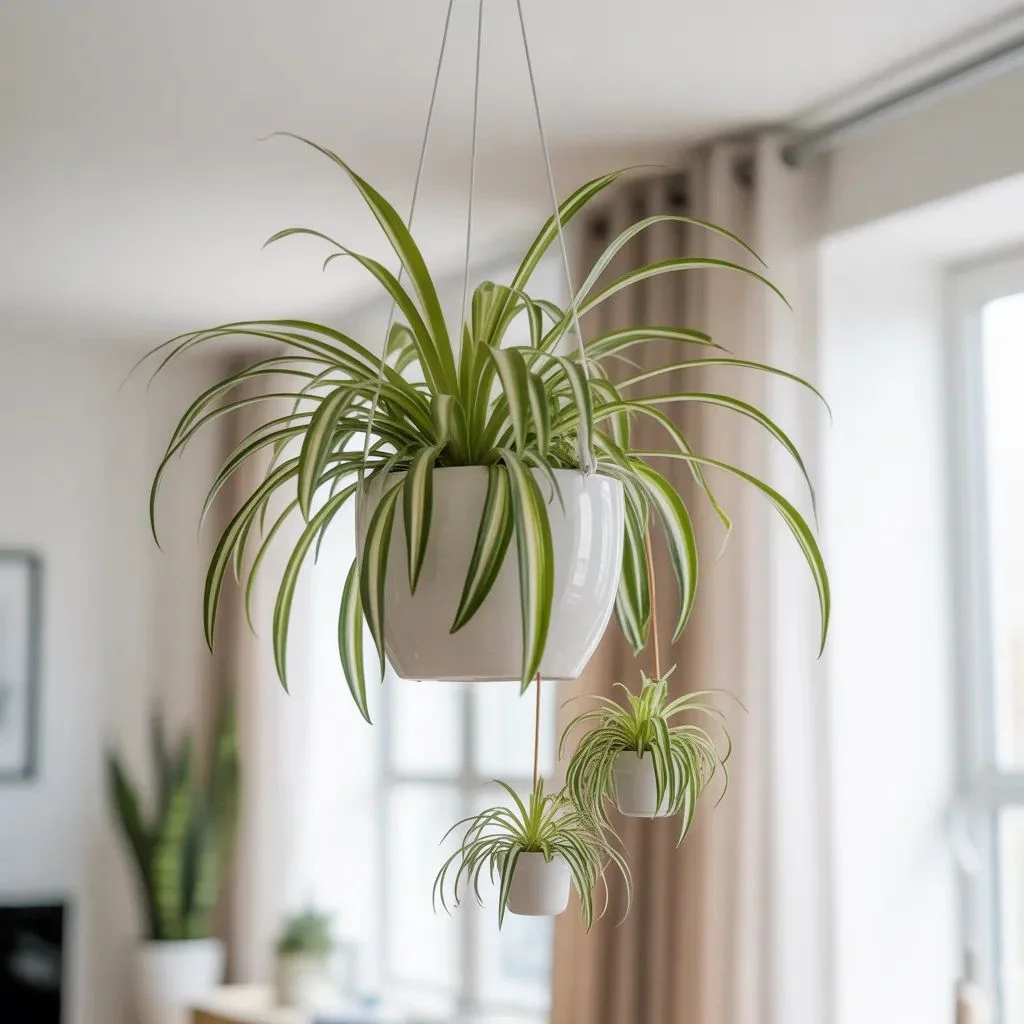
4. Spider Plant (Chlorophytum comosum) — Easy and Fast-Growing
Spider plants are practically indestructible. They grow quickly, adapt to a wide range of light conditions, and produce long arching leaves that eventually send out little ‘babies’ — tiny plantlets that dangle from the mother plant on thin runners. Hung from the ceiling, those babies create a playful, layered look.
Great for Beginners
These plants tolerate low light surprisingly well, though they grow faster and produce more babies in bright indirect light. They prefer to dry out slightly between waterings, making them far more forgiving than ferns.
Care tip: Repot once roots start crowding the pot. Snip the babies and root them in water for free new plants.
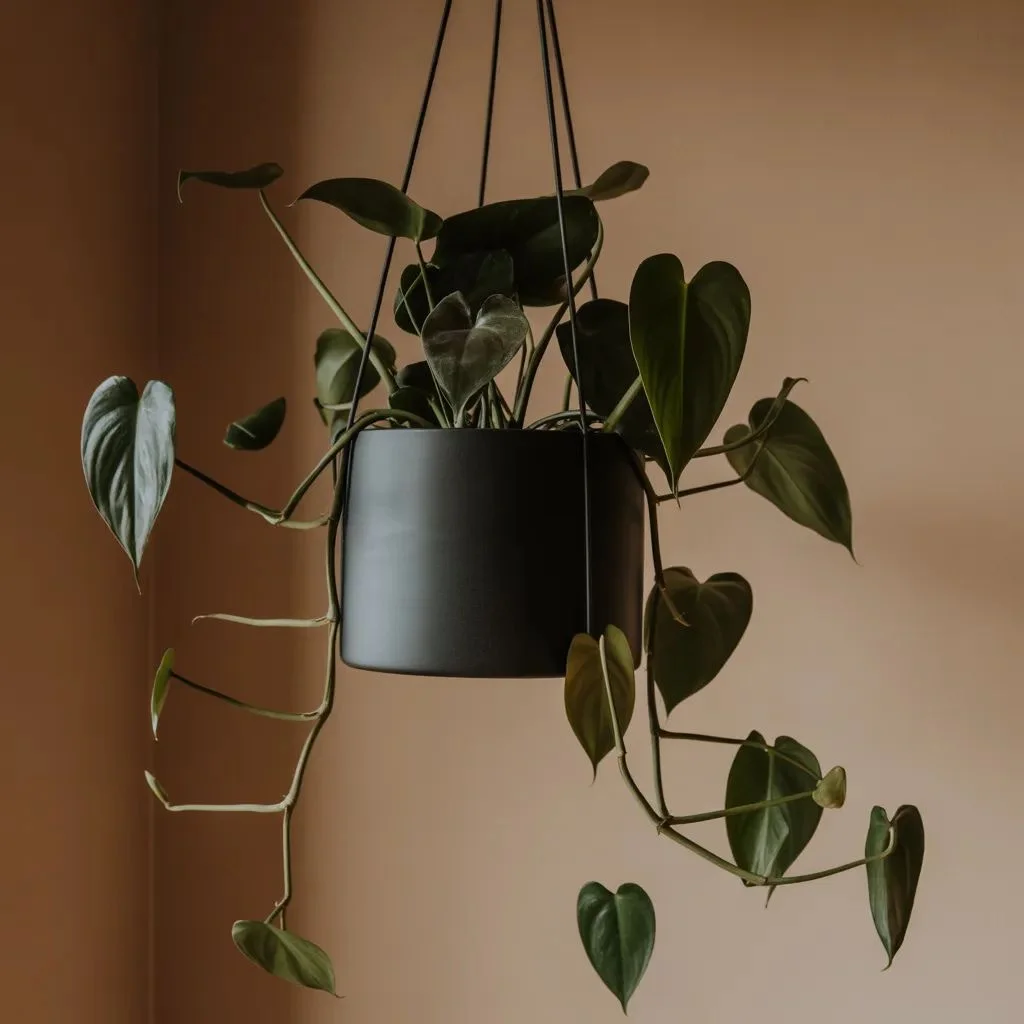
5. Heartleaf Philodendron (Philodendron hederaceum) — Lush and Low-Maintenance
Often confused with pothos, the Heartleaf Philodendron has its own distinct charm — deeper green leaves with a subtle velvet texture when young. It’s another excellent choice for ceiling hanging plants because of its naturally vining habit and relaxed growing pace.
Prefers Indirect Light
Heartleaf philodendron does well in medium to bright indirect light. It handles lower light but grows more slowly. Water when the top inch of soil feels dry — about once a week in most indoor conditions.
Care tip: Wipe down the leaves every few weeks. Dusty leaves affect how well plants photosynthesize.
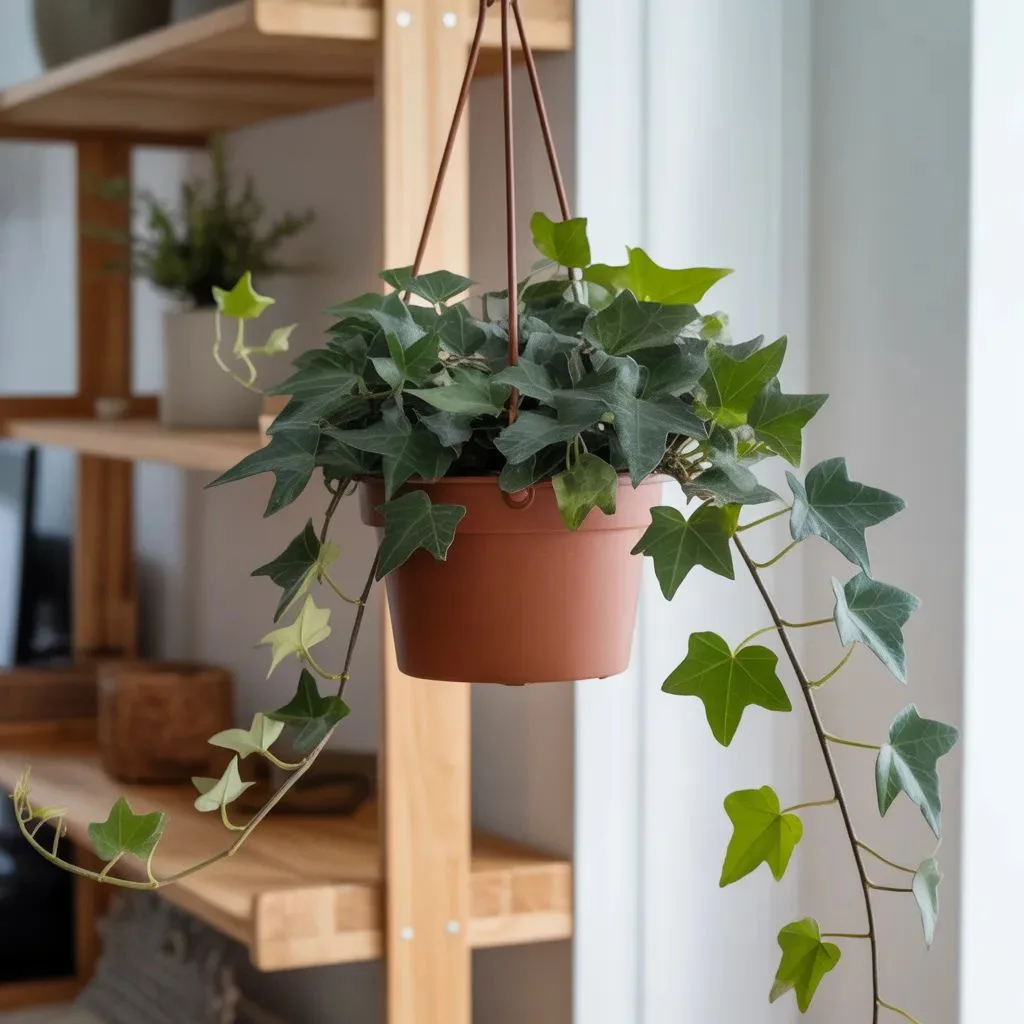
6. English Ivy (Hedera helix) — Elegant and Fast-Trailing
English Ivy has been used in interior spaces for decades — and for good reason. The classic lobed leaf shape looks both formal and natural, making it work in traditional and modern interiors alike. It trails quickly, filling a room with greenery fast.
Keep It Cool and Bright
Ivy prefers cooler temperatures and bright indirect light. It struggles in hot, dry rooms. Keep the soil evenly moist but not soggy. Ivy is also good at filtering indoor air, which is a nice bonus.
Care tip: Watch for spider mites — they love ivy. A regular misting of the leaves helps keep pests away.
7. String of Hearts (Ceropegia woodii) — Delicate and Romantic
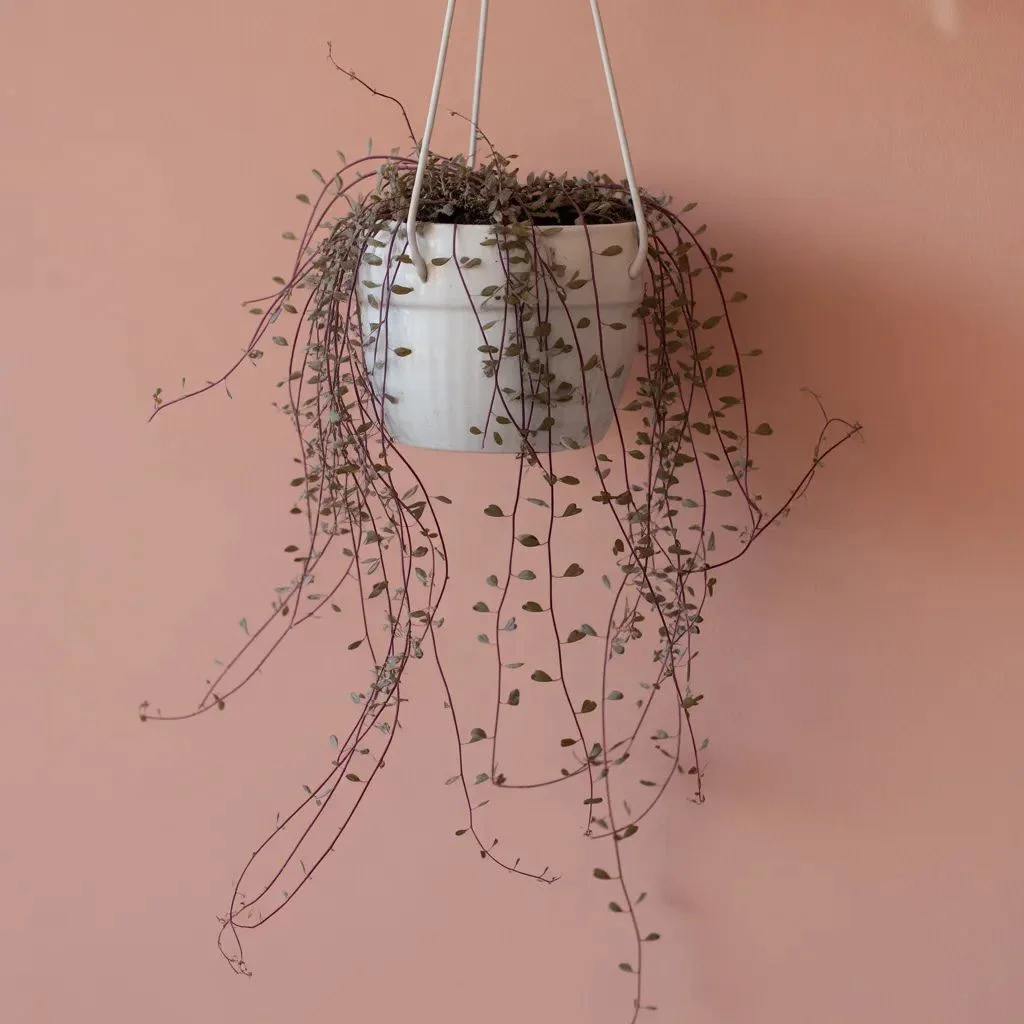
String of Hearts is a plant people fall in love with immediately. The tiny heart-shaped leaves on those long, thread-thin vines look almost too pretty to be real. Hung near a window, the trailing vines can reach impressive lengths, creating a dreamy curtain of greenery.
A Succulent at Heart
Like String of Pearls, this is a semi-succulent that stores water in its leaves and roots. It prefers bright light and infrequent watering. Let it dry completely between watering sessions — it hates soggy soil.
Care tip: Bright indirect light keeps the leaf color deep and the variegation vivid. Direct midday sun can scorch the leaves.
How to Choose the Right Plant for Your Space
Before picking a plant, run through these questions:
- Light level: Does the ceiling spot get bright indirect light, or is it further from a window? Pothos and spider plants handle lower light. String of Pearls and Ivy need more brightness.
- Humidity: Bathrooms and kitchens have natural humidity — great for Boston Ferns. Dry rooms suit succulents and pothos better.
- Watering frequency: Be honest with yourself. If you tend to underwater, lean toward succulents. If you’re prone to overwatering, stick to pothos or philodendron.
- Trailing length: How much drape do you want? String of Hearts trails thin and long. Boston Ferns spread wide and full.
Getting the match right upfront saves a lot of frustration — and a lot of plants.
Hanging Pot Tips That Make a Real Difference
The plant is only half the equation. How you hang it matters just as much.
- Use a swivel hook so you can easily rotate the pot for even light exposure.
- Choose a pot with drainage and use a drip saucer or a pot-within-pot setup to avoid water staining ceilings.
- Macramé hangers add texture and are adjustable in height — great for styling a room.
- Anchor into a ceiling joist or use a proper toggle bolt. Hanging plants are heavier than they look when the soil is wet.
A plant that’s watered well can easily weigh 3–5 kg. Don’t cheap out on the hardware.
Start Small, Then Build Your Canopy
You don’t need a dozen hanging plants to make an impact. Pick one or two from this list, find the right spot, and watch how quickly they change the feel of a room. Most of these plants are fast-growing and forgiving — so even if the first few months involve some trial and error, you’ll get there.
The ceiling is prime real estate you’re probably not using. Time to change that.
Want more plant styling ideas? Browse our home décor section for room-by-room inspiration.
Recommeded: Space-Aware Toilet Tank Decor Ideas That Make Every Inch Count.