Your basement has potential you haven’t even tapped yet. The right basement TV wall ideas can turn a forgotten lower level into the most-used room in your home — a spot so inviting that movie nights, game days, and lazy Sunday mornings all migrate downstairs for good.
Whether you’re drawn to warm, rustic textures or clean-lined modern setups, there’s a TV wall design that fits your style, your budget, and your space. This guide covers everything from statement shiplap walls and cozy fireplace combos to sleek built-ins and clever cord-hiding tricks — all the inspiration you need to build a basement you’re proud to show off.
Why Your Basement TV Wall Deserves More Attention
Most basements get one treatment: drywall, a flat screen on a mount, and maybe a hand-me-down couch. It functions. But it doesn’t feel like anything.
A thoughtfully designed basement TV wall changes that entirely. It becomes the focal point that anchors the whole room — the thing that makes guests say “wow” when they reach the bottom of the stairs. More than decoration, it gives your basement an identity.
The good news? You don’t need a full renovation budget. Many of the best basement TV wall ideas are surprisingly DIY-friendly and budget-conscious. Let’s walk through the ones making the biggest impact right now.
Shiplap & Wood Paneling: Texture That Does the Heavy Lifting
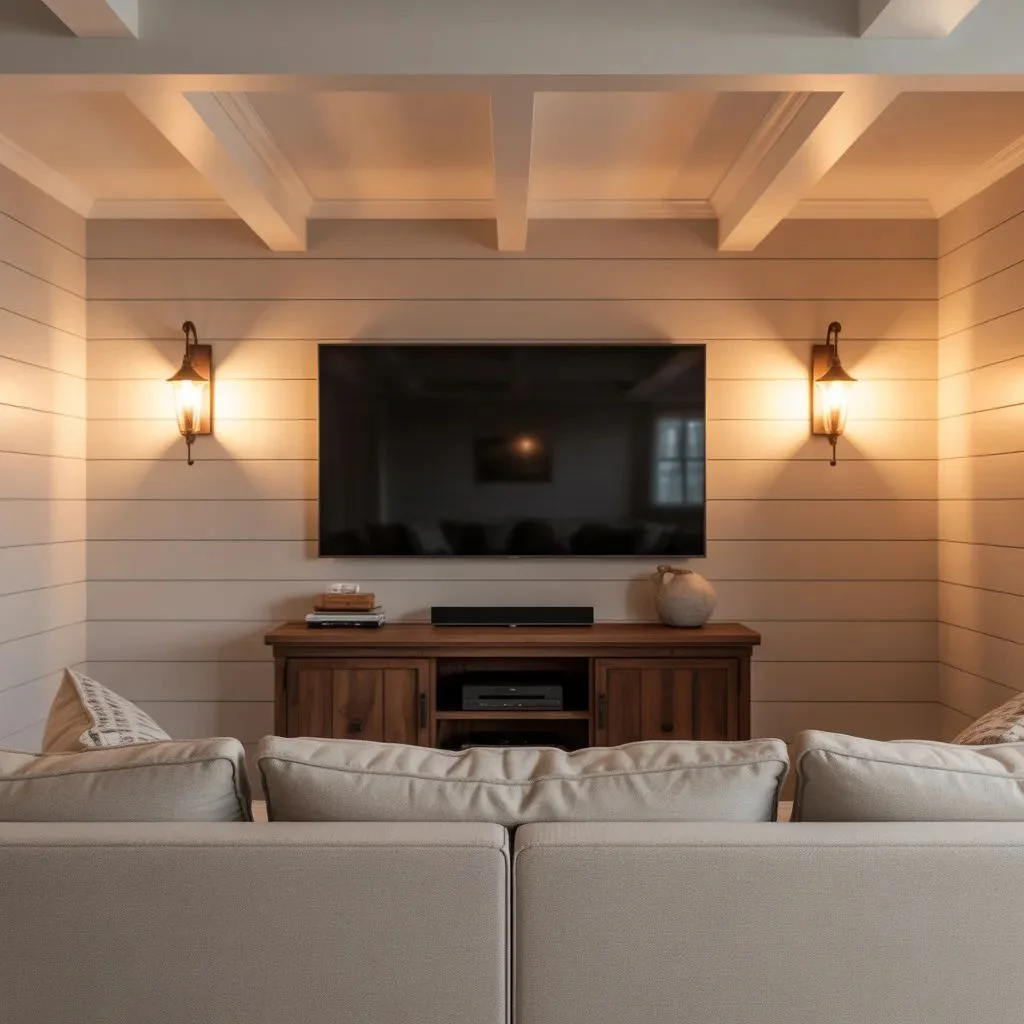
If there’s one material that consistently transforms a basement TV wall from forgettable to intentional, it’s shiplap. Horizontal white or warm-toned shiplap behind a mounted TV adds depth, texture, and that quiet confidence that makes a room feel designed — not decorated by accident.
Best shiplap colors for basements:
- Warm white (not a cold, crisp white) — brightens low-ceiling spaces without feeling clinical
- Greige or pale taupe — pairs beautifully with wood accents and leather furniture
- Dark charcoal or black — moody and dramatic for a dedicated media room
Wood paneling takes a similar approach but with more warmth. Natural oak or walnut panels create a rich, organic backdrop that works in both rustic and contemporary basement spaces. Slat wood panels — thin vertical strips with subtle grooves — are one of the most trending basement accent wall looks right now, especially when paired with a matte black TV mount and concealed cords.
For low-ceiling basements especially, light-colored shiplap is one of the best visual tricks you can use — the horizontal lines draw the eye outward, making the room read as wider and taller.
The Electric Fireplace + TV Wall Combo
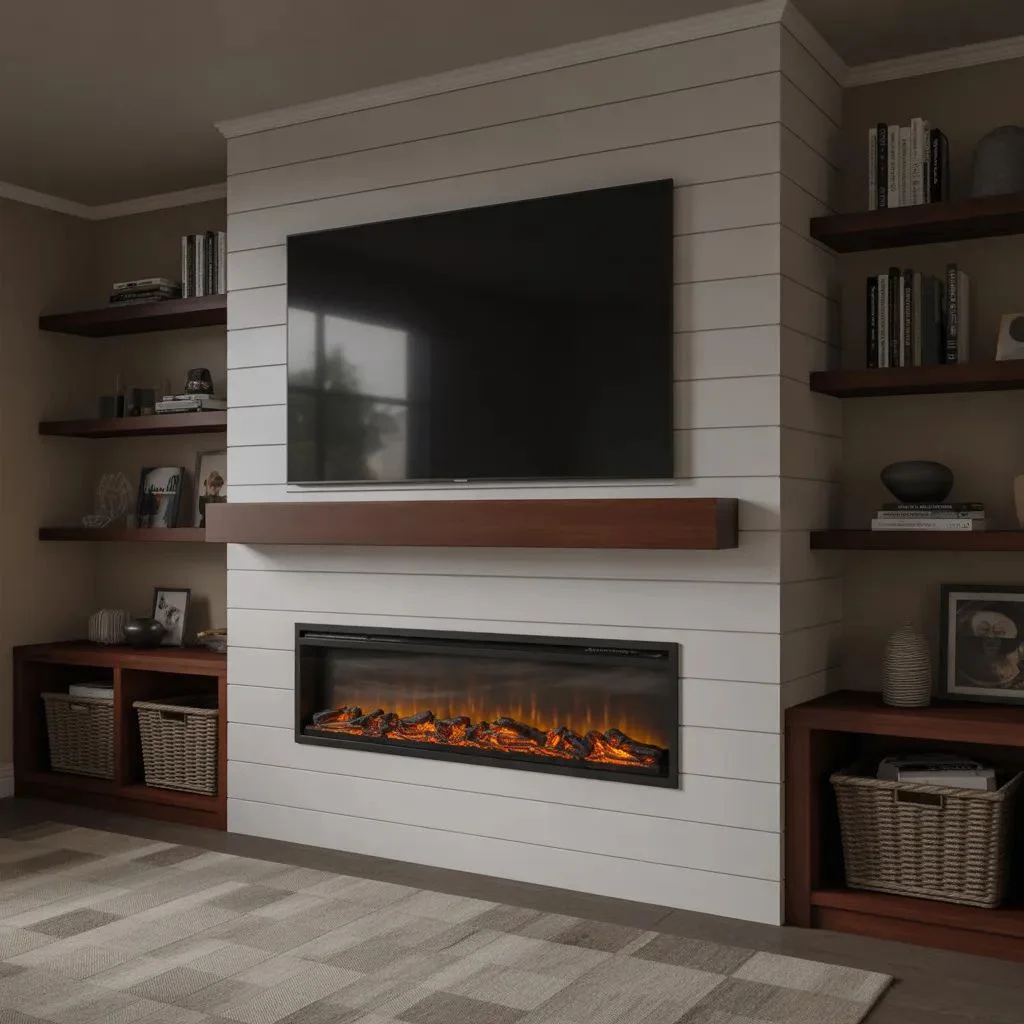
This is the basement TV wall idea that keeps appearing on every design board — and for good reason. Pairing an electric fireplace insert with a mounted TV creates a feature wall that isn’t just beautiful, it’s functional, cozy, and looks like something out of a custom home build.
Linear electric fireplaces — typically 50″ to 72″ wide — work best below a wall-mounted TV. Set into a simple framed built-in or a stone-faced surround, they add both physical warmth and that soft, flickering ambiance that makes any basement feel like a private retreat.
Design tips for the fireplace + TV combo:
- Keep at least 8–12 inches of clearance between the top of the fireplace and the bottom of the TV
- Frame the whole unit in drywall with a stone, tile, or shiplap facade for a built-in look
- Choose an electric fireplace with adjustable flame color — some modern units go from amber to blue, which gives you full control over the room’s mood
- If a built-in isn’t in the budget, a freestanding media console with an integrated fireplace achieves almost the same visual impact
Not ready for a fireplace? A stone or brick-look wallpaper panel behind the TV mimics that anchored, architectural look without any construction — a great shortcut for renters or anyone working with a tighter timeline.
Built-In Shelving: Storage Meets Statement
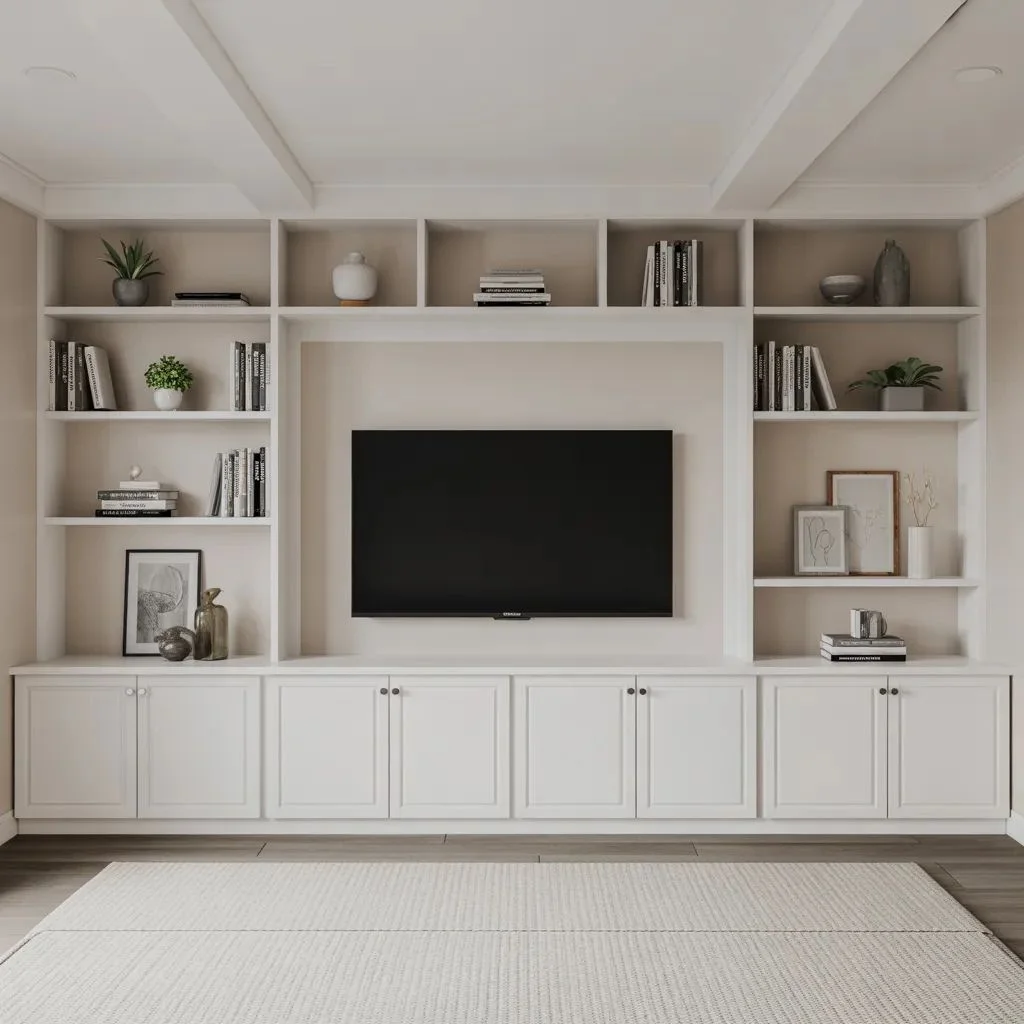
Custom built-ins are the gold standard of basement TV wall ideas — and with a little planning, they don’t have to cost a fortune. Flanking your TV with floor-to-ceiling built-in shelves instantly makes the wall look intentional, architecturally finished, and visually expansive.
The standard approach: build a center niche recessed slightly into the wall for the TV, then add symmetrical shelving on either side. Lower cabinets with doors hide gaming consoles, remotes, routers, and all the gear you don’t want on display. Upper open shelves are for books, plants, decorative objects, and the things you do.
Built-in style options:
- Classic white with crown molding — timeless, works in any basement style
- Dark navy or charcoal — moody and sophisticated, especially with brass or gold hardware
- Natural wood finish — warm, organic, pairs well with plants and linen textures
- Two-tone — white upper shelves with dark lower cabinets is having a major moment
Don’t have the budget for custom cabinets? IKEA BILLY bookcases hacked with custom fronts and trim can achieve a nearly identical look at a fraction of the cost — one of the most popular DIY approaches in the basement entertainment room space.
Dark Accent Walls That Actually Work Downstairs
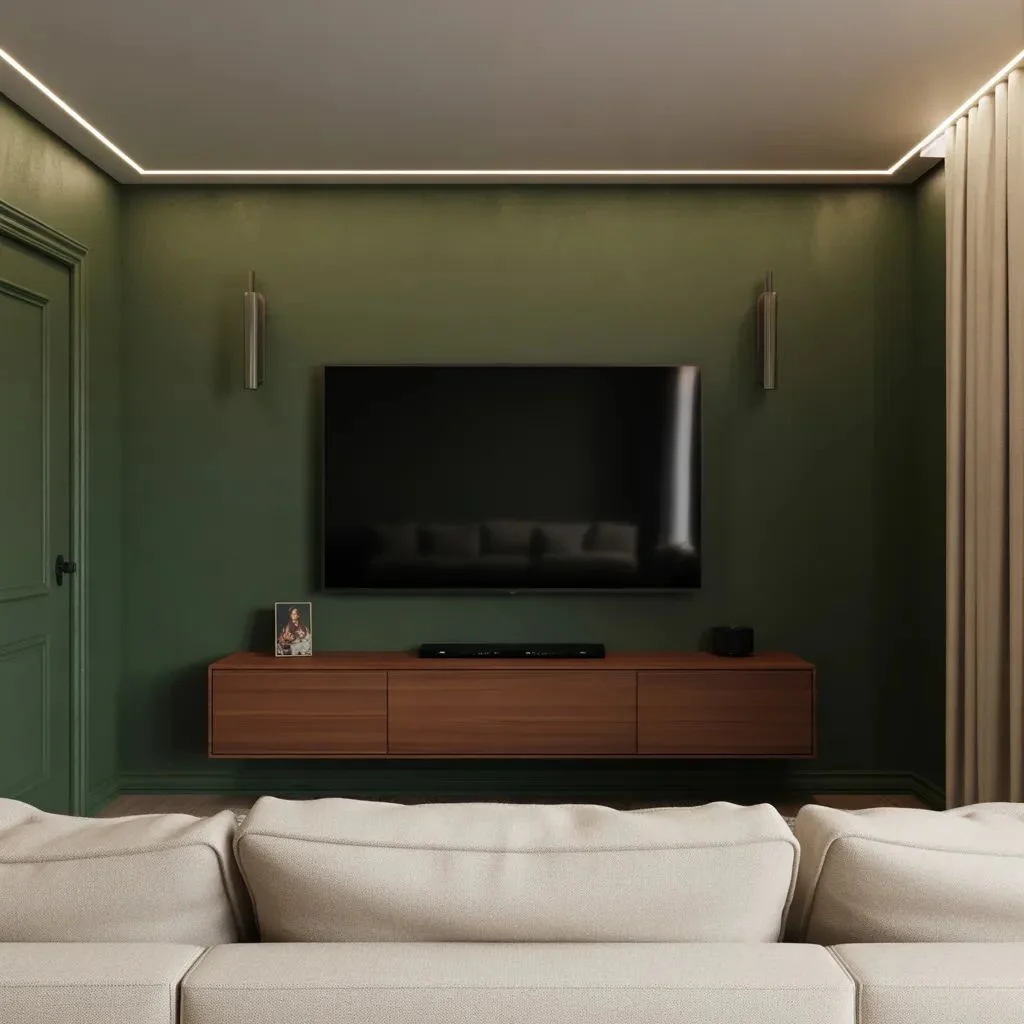
Dark walls and basements sound like a recipe for a cave — but when done right, they’re stunning. The trick is intention. A deep, rich wall color behind your basement TV wall creates contrast, makes the TV essentially disappear when it’s off, and gives the space a cinematic, moody atmosphere that’s perfect for late-night movie sessions.
Forest green, navy, charcoal, deep burgundy — all of these work brilliantly as basement accent wall colors when paired with the right lighting. The key is to layer light sources: recessed ceiling cans, LED strip lighting behind or under shelves, and at least one warm lamp or sconce to balance out the depth.
Top dark paint picks for a basement TV wall:
- Sherwin-Williams Tricorn Black SW 6258 — dramatic, pairs with everything
- Benjamin Moore Hale Navy HC-154 — sophisticated and rich without going full black
- Sherwin-Williams Pewter Green SW 6208 — earthy and incredibly on-trend
- Benjamin Moore Wrought Iron 2124-10 — the perfect deep charcoal with warmth in it
Pair any of these with warm-toned wood accents, cream or tan upholstery, and plenty of soft lighting, and your dark basement TV wall will feel cozy and dramatic — not dark and oppressive.
Floating Media Consoles for a Clean, Modern Look
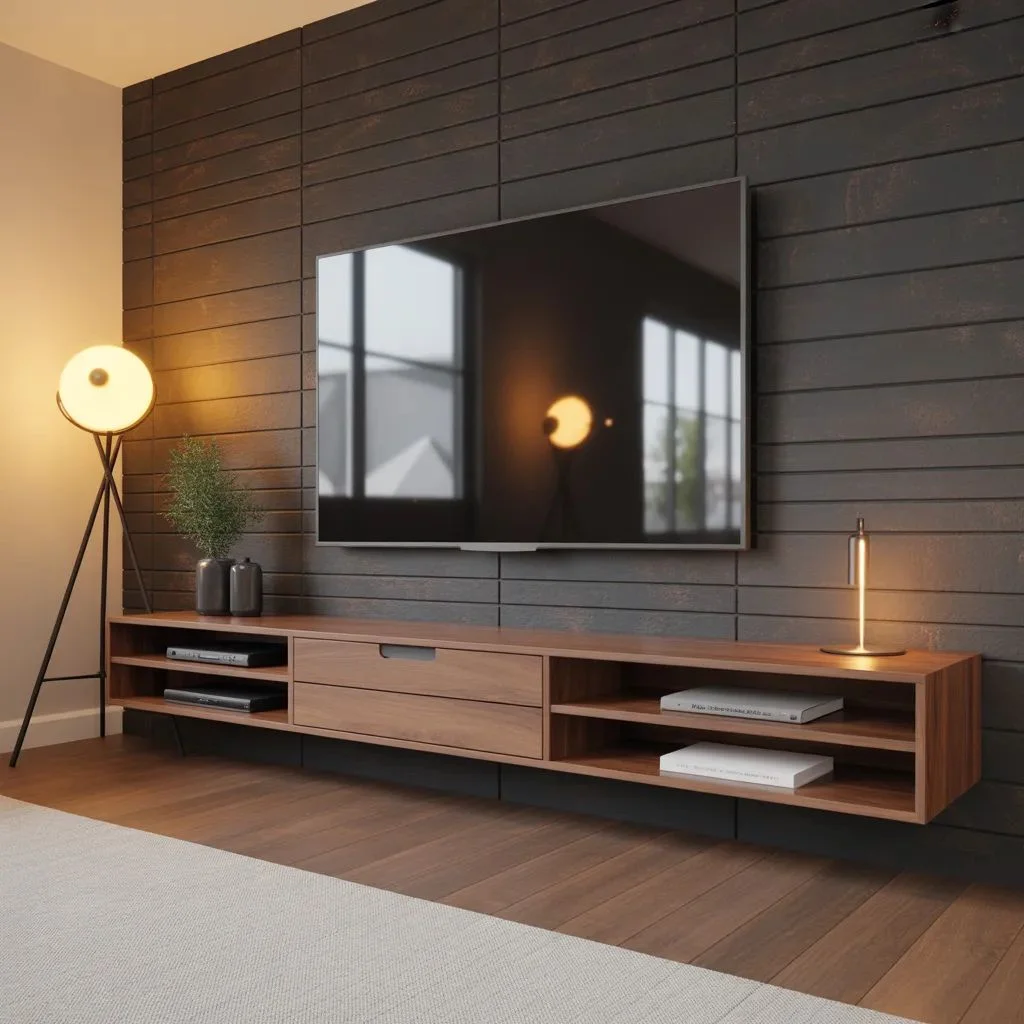
One of the simplest swaps that makes the biggest visual difference? Replacing a floor-standing TV unit with a floating media console. Wall-mounted about 16–20 inches off the ground, a floating console does something clever: it reveals the floor underneath, making the room read as larger and more open.
It’s the same reason floating vanities make bathrooms feel bigger — your eye travels across the visible floor space, and the room expands. In a basement entertainment room where square footage can feel tight, this is a genuinely useful design trick.
Best floating console styles for basements:
- Walnut-toned wood — warm, natural, works beautifully against dark or white walls
- Matte black — sleek and modern, nearly disappears against a dark accent wall
- White gloss — clean and minimal, best for contemporary or Scandinavian-style basements
- Two-tone with open shelf — mix of closed storage and open display, practical and stylish
Pair your floating console with a matching set of wall-mounted shelves at varied heights on either side of the TV for a cohesive, gallery-like look that doesn’t require a full built-in installation.
Board & Batten and Wainscoting TV Walls
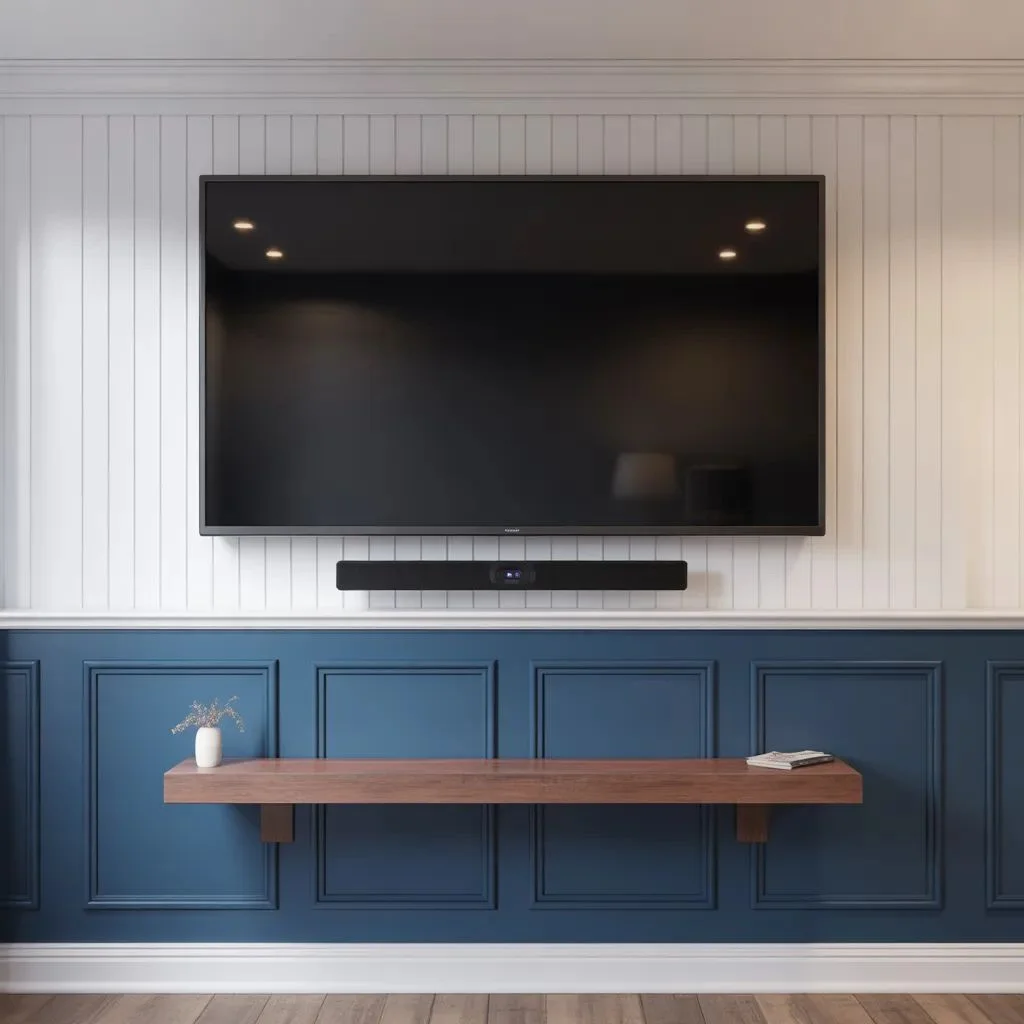
Board and batten is one of those design elements that looks far more expensive than it is. Applied to your basement TV wall, it adds instant architectural character — structured vertical lines that make any wall feel like it was designed with intention.
Traditional wainscoting (raised or flat panel) works beautifully in basement spaces that lean more classic or transitional. Run it at chair-rail height (roughly 32–36 inches) and paint above and below the same color for a seamless, custom look, or go two-tone with a darker lower half for contrast.
DIY tips for board & batten:
- Use 1×4 pine boards and a nail gun — total material cost for a standard wall runs $150–$300
- Space battens 12–16 inches apart for a classic look; 8–10 inches for a more contemporary feel
- Caulk every seam before painting — this is what separates a polished finish from one that looks DIY
- Mount the TV directly on the board and batten wall using a low-profile mount for the cleanest result
How to Hide Cords on a Basement TV Wall
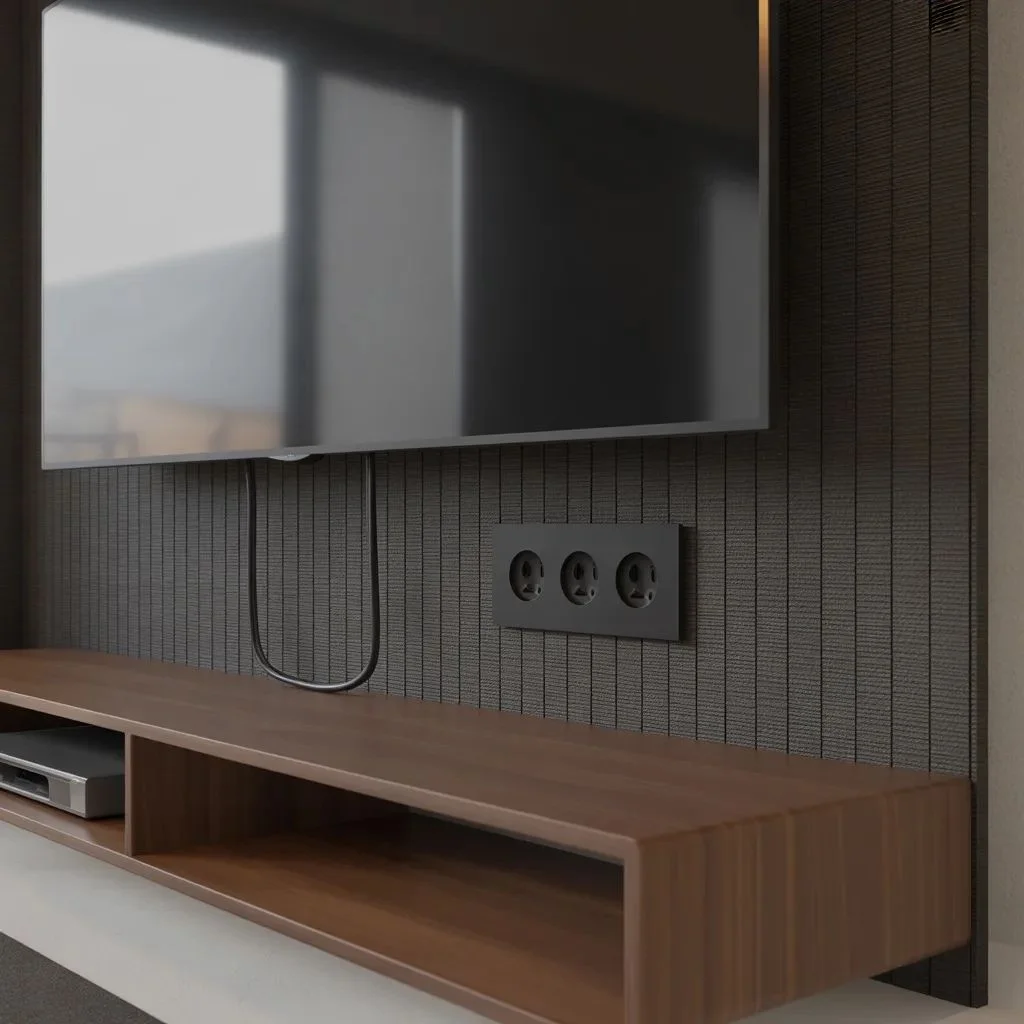
A gorgeous basement TV wall can be completely undone by a tangle of cords running down the wall. Cord management isn’t just a detail — it’s what separates a DIY setup from one that looks professionally finished.
Best cord-hiding solutions:
- In-wall cord kit — the cleanest option; runs cables through the wall cavity from TV to outlet. Takes about an hour to install and costs $25–$60
- Recessed outlet behind the TV — eliminates the visible power cord entirely; best done during a renovation when the wall is open
- Cable raceway — paintable plastic channel that runs along the wall; not invisible but much cleaner than loose cords
- Built-in media niche — all equipment and cords live inside a framed recess; the TV wall looks completely bare from the front
- Floating console with wire management — choose a console with a rear cable pass-through and built-in cable tie system
If you’re doing a full basement feature wall build with shiplap or built-ins, plan your cord routing before the wall goes up. Running conduit inside the wall cavity at the framing stage costs almost nothing extra and makes cord management effortless forever.
Lighting Your TV Wall Like a Pro
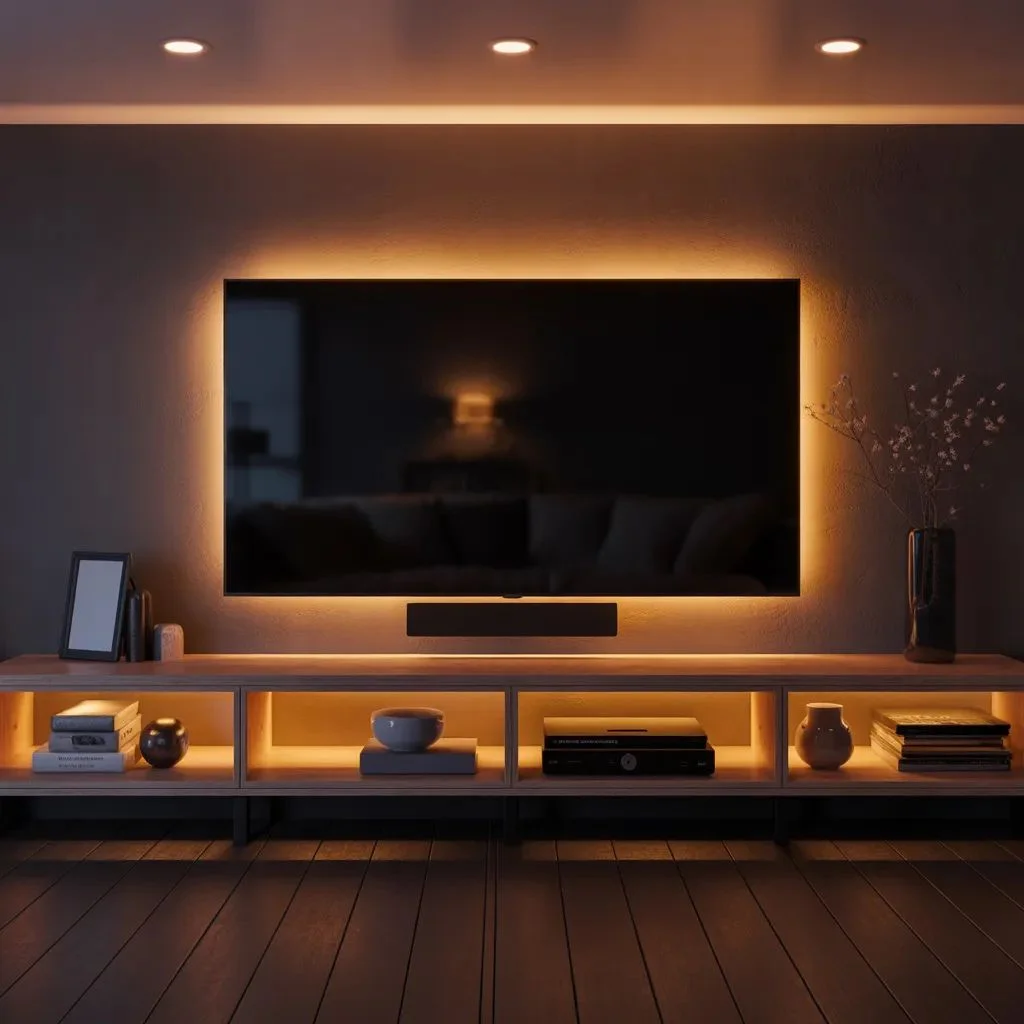
Lighting is the element most people get wrong — and it’s the one that matters most. The right lighting around your basement TV wall doesn’t just improve the room’s look, it reduces eye strain during viewing and makes the whole space feel more polished.
Layered lighting approach for a basement TV wall:
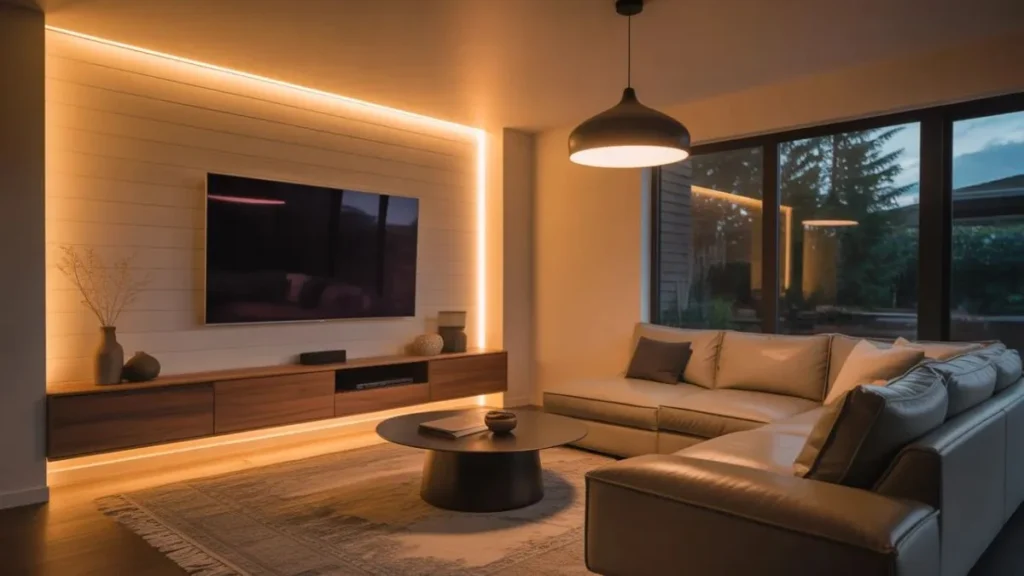
- Bias lighting — LED strip lights behind the TV cast a soft glow on the wall, reduce contrast, and make late-night viewing much easier on the eyes. Choose a 2700K–3000K warm white for a cozy feel
- Recessed lighting — 4″ or 6″ can lights positioned to wash the TV wall with light; dimmer switches are essential
- Under-shelf LED strips — illuminate the media console and lower cabinets while adding depth to the wall
- Wall sconces — flanking the TV with swing-arm or plug-in sconces adds warmth and architectural interest without hardwiring
For a basement home theater setup, consider smart bulbs or a smart switch for the recessed lights so you can dim them with a voice command or phone tap — no getting up during the opening credits.
Your Basement Is the Destination — Now Make It Look Like One
The best basement TV wall ideas aren’t just about the wall — they’re about how the whole room feels when you walk into it. Whether you go full built-in with custom shelving or simply swap a floor console for a floating one and add bias lighting behind the TV, every deliberate choice adds up to a space that feels finished, cozy, and completely yours.
Pick one idea from this list and start there. The basement feature wall of your dreams doesn’t have to happen all at once — it just has to start.
Recommended: How to Decorate the Wall Going Up the Stairs: 15 Stunning Ideas That Transform Your Home.