The right area rugs for small living rooms can completely transform a tight space — making it feel pulled together, more open, and intentionally styled. The wrong one, though? It can shrink the room, throw off your furniture arrangement, and leave the whole space feeling off.
If you’ve ever stood in a rug shop — or scrolled endlessly through listings — wondering whether to go bold or neutral, big or small, patterned or plain, this guide is exactly what you need. We’re breaking down the best picks, the common mistakes to avoid, and the styling rules that work in compact spaces.
Why Rug Size Is Everything in a Small Living Room
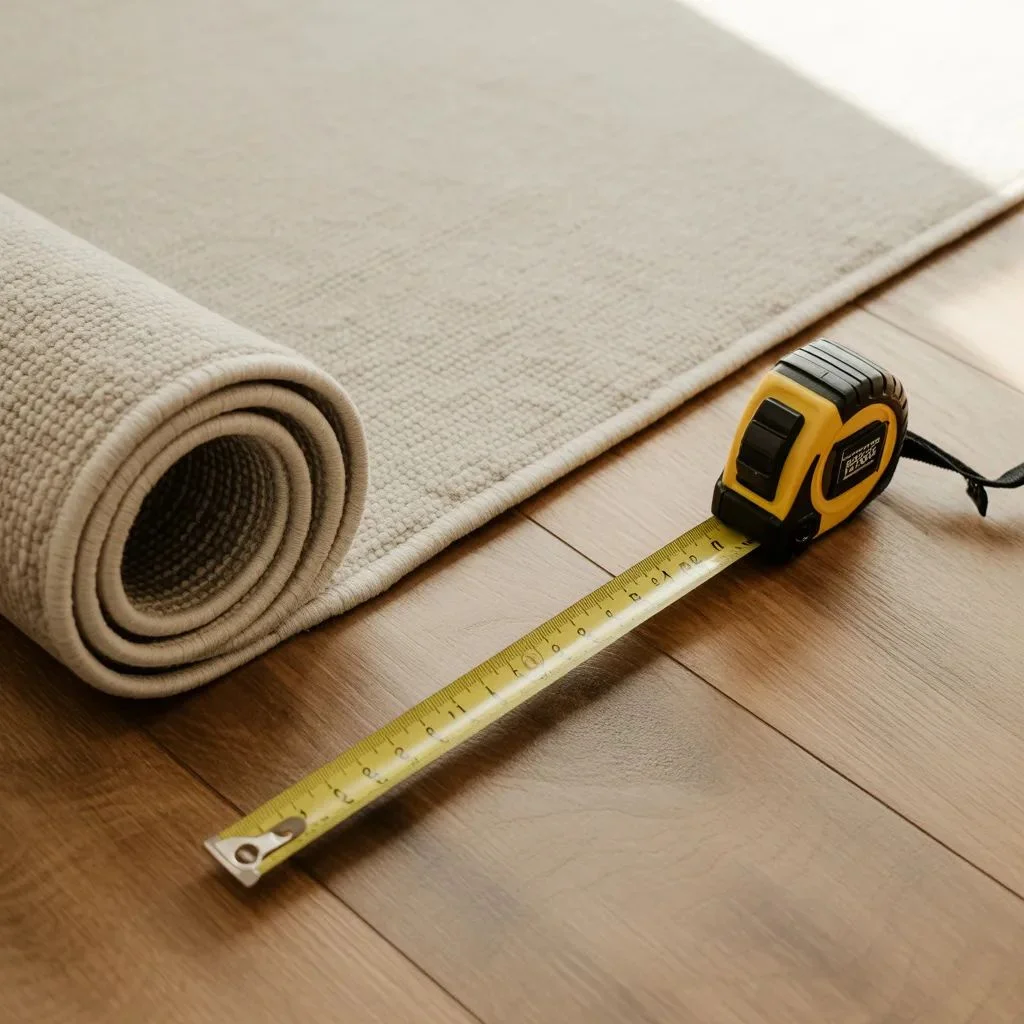
Before you even think about color or pattern, size is your most critical decision when shopping for area rugs for small living rooms. Get this wrong and even the most beautiful rug will feel awkward — like a bathmat dropped into a room that deserved more.
The most common mistake people make is going too small. A tiny rug floating in the middle of your seating area makes a small room feel even more disjointed. In contrast, a well-sized rug anchors the furniture, creates visual boundaries, and makes your space feel larger than it is.
Think of the rug as the foundation of your seating zone. It should visually define the space — not disappear beneath the coffee table. For a small living room, this means your rug should be large enough that at least the front legs of your sofa and chairs rest on it. That single rule changes everything.
The Best Rug Sizes for Small Living Rooms
When it comes to the best area rugs for small living rooms, the sweet spot in sizing almost always falls between a 5×8 and a 6×9. These are the workhorses of smaller spaces — big enough to anchor your seating arrangement, small enough not to overwhelm the room.
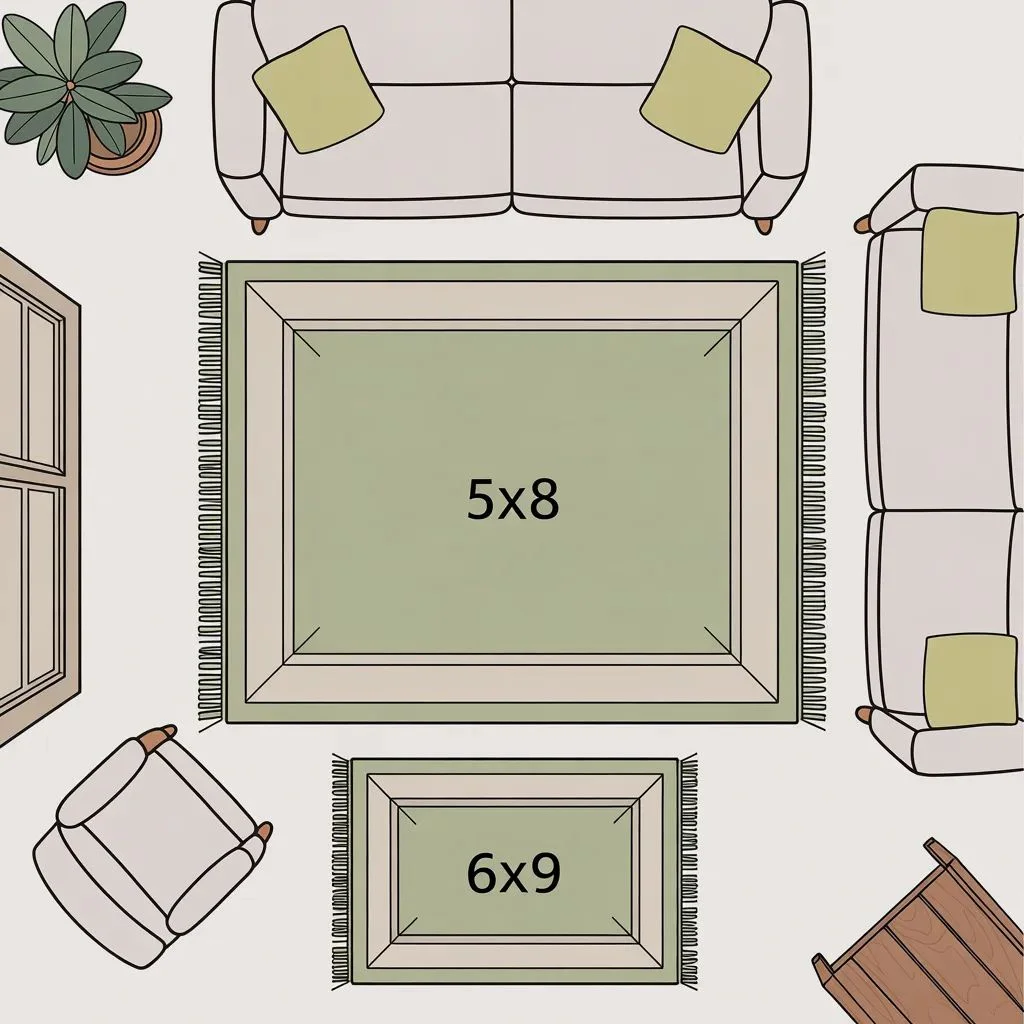
5×8 Rug: The Small Room Essential
A 5×8 rug (60″x96″) is an ideal starting point for living rooms that measure roughly 10×12 feet or under. It comfortably seats the front legs of a standard sofa and two chairs and still leaves breathing room around the edges. This size works best when your furniture sits closer to the walls.
6×9 Rug: The Compact Room’s Best Friend
Step up to a 6×9 and you get noticeably more coverage — roughly one to two extra feet on each side — which allows better furniture anchoring without the rug looking oversized. This is the most recommended size for small living rooms that have a defined sofa + coffee table layout. It also leaves that essential 12–18 inches of exposed floor between the rug edge and the wall, which keeps the room from feeling carpeted wall-to-wall.
A Quick Size Cheat Sheet
- Room under 10×12 ft → Go with a 5×8 rug
- Room around 11×13 ft → A 6×9 rug is your match
- Apartment living room with floating furniture → Try a 6×9 or layer a 4×6 over a larger base
- Narrow or galley-style living room → Consider a runner or 4×6 turned lengthways
Pro tip: Before ordering, lay painter’s tape on your floor in the exact dimensions of the rug you’re considering. It takes five minutes and saves you from an expensive return.
What to Buy: Colors, Patterns & Materials That Work
Once you’ve nailed the size, the fun starts. Here’s what to look for in terms of color, pattern, and material when choosing area rugs for small living rooms.
Colors That Open Up a Space
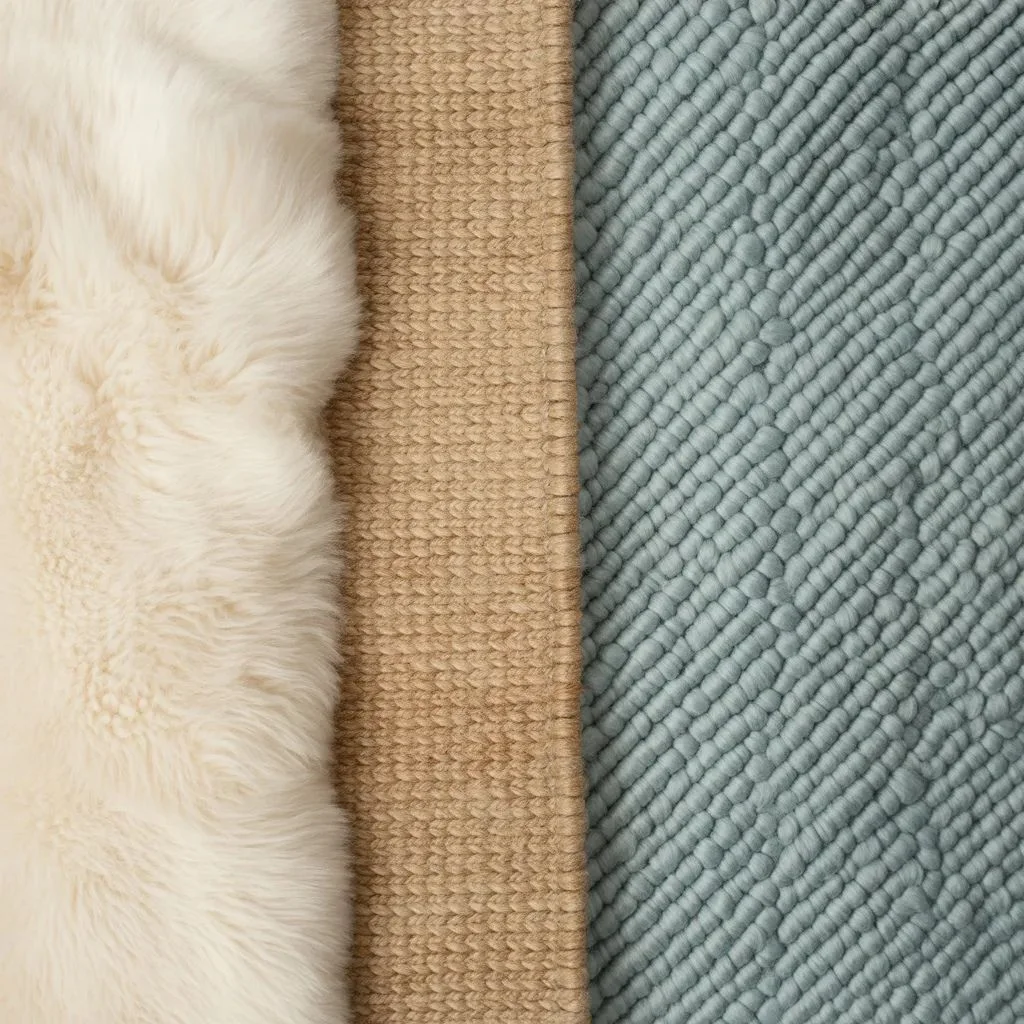
Light, warm neutrals — cream, ivory, oat, sand, warm white — are your best friends in a compact living room. They reflect light, keep the room feeling airy, and don’t compete with other elements in the space. If your walls and furniture are already neutral, a rug in a slightly warmer or cooler shade adds depth without visual clutter.
That said, don’t be afraid of color entirely. A soft terracotta, dusty blue, or sage green rug can add personality without overwhelming a small room — especially when the rest of the palette stays calm. The 60-30-10 rule is your guide here: your dominant color takes 60% of the room, a secondary shade 30%, and your accent (which could be the rug) just 10%.
Patterns: What Works and What Doesn’t
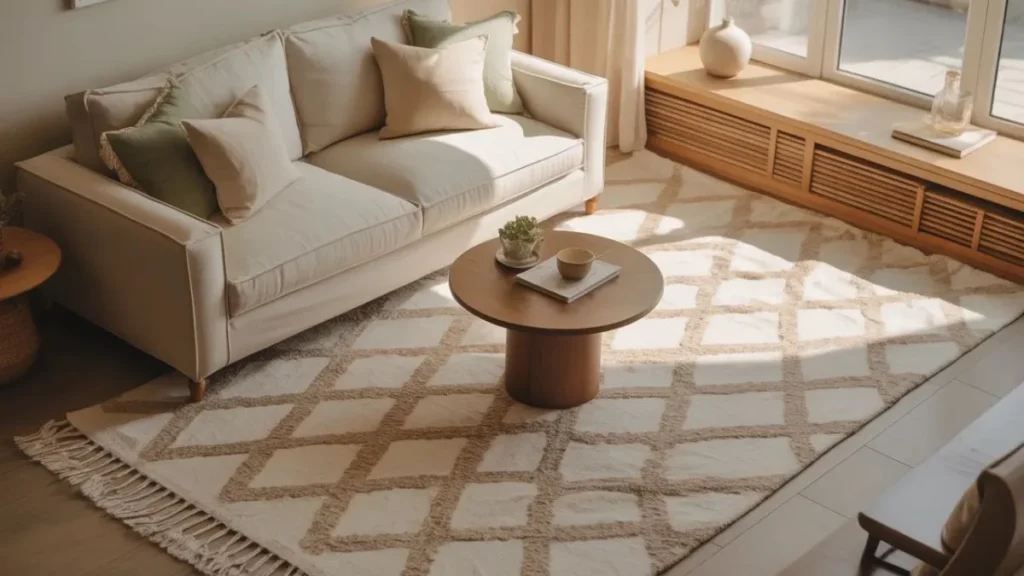
Contrary to popular belief, patterns are not off-limits in small spaces. A subtle geometric, a tone-on-tone diamond, or a low-contrast abstract can draw the eye outward and make a room feel larger. The key is keeping the scale of the pattern proportional to the rug. Very large, bold medallion prints can feel crowded in a tight room.
Bonus: darker rugs and busy patterns are more forgiving with stains and daily wear — a practical win for high-traffic small living rooms where every square foot gets used.
Best Materials for Small Living Rooms
- Wool: Durable, naturally stain-resistant, and feels luxurious underfoot. It’s the long-term investment option that pays off for busy rooms.
- Jute/Sisal: Perfect as a base layer if you’re doing a layered rug look. Adds texture and warmth without visual weight.
- Low-pile synthetics (polypropylene, polyester): Budget-friendly, easy to clean, and available in every color. Great for high-traffic small living rooms.
- Flatweave: Slim profile, easy to vacuum, and ideal for spaces where a thicker rug might feel bulky.
A quick note on pile height: medium-pile rugs strike the best balance between comfort and practicality in a living room. High-pile or shag rugs can feel plush but tend to show furniture indentations more and are harder to maintain in tight, busy spaces.
What to Skip: Common Rug Mistakes in Small Spaces
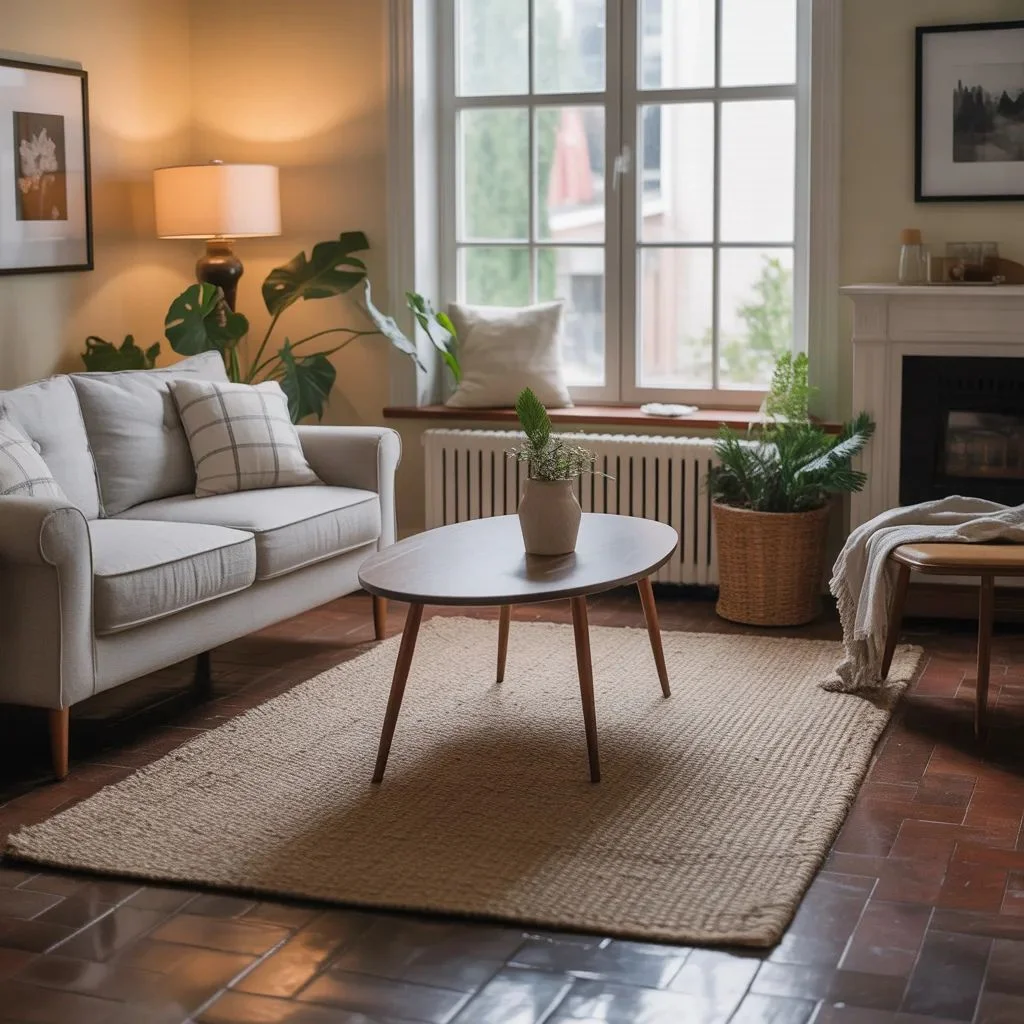
Knowing what not to do is just as important as knowing what works. Here are the most common rug missteps in small living rooms — and why they’re worth avoiding.
- Too-small rugs: If your rug looks like it belongs in a hallway, it’s the wrong size. A rug that doesn’t reach the front legs of your furniture makes the whole room feel mismatched and oddly proportioned.
- Multiple small rugs: Layering two or three small rugs in a compact space creates visual chaos. A single, well-sized rug always reads as more intentional.
- Dark, heavy rugs in low-light rooms: A very dark rug in a room that lacks natural light will absorb what little light exists and make the space feel dense and closed in.
- Oversized rugs pushed to the walls: A rug that nearly touches all four walls mimics wall-to-wall carpet — and not in a good way. Always leave 12–18 inches of exposed floor around the edges.
- Ignoring rug pads: A rug pad isn’t just about safety — it adds cushion underfoot, protects your floors, and keeps the rug from bunching or shifting. In a small room, a creeping rug is both a hazard and an eyesore.
- Matching the rug perfectly to your sofa: A matchy-matchy approach flattens the room. Go for complementary — not identical — and let the rug add a contrasting layer of texture or tone.
Placement Rules That Make Small Living Rooms Feel Bigger
Even the perfect area rugs for small living rooms need to be placed correctly to do their job. Placement is what ties the whole room together.
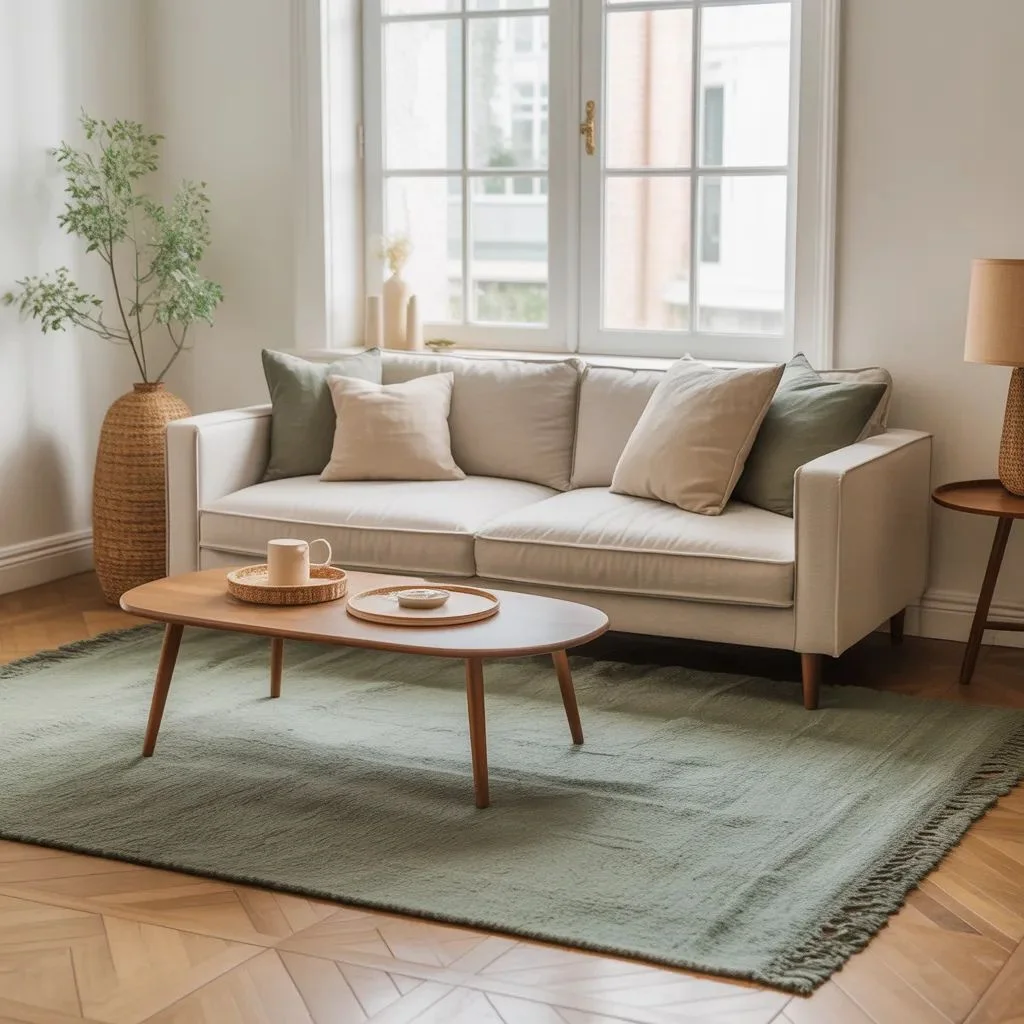
The Front-Legs-On Rule
This is the most popular and practical placement for small spaces. Place the front legs of your sofa and chairs on the rug, leaving the back legs off. This approach visually anchors the seating group without requiring a massive rug — and it’s the reason a 6×9 works so well in compact rooms.
All-Legs-On (When Space Allows)
If your room has a floating furniture arrangement — meaning no pieces are pushed against the wall — you can place all furniture legs on the rug for a cohesive, unified look. This works particularly well in open-plan spaces where the rug also helps define the living zone from the dining or kitchen area.
Leave Breathing Room from the Walls
In a small living room, aim to leave at least 18 inches of exposed floor between the rug edge and the wall. This framing effect makes the floor feel intentional and gives the room a sense of spaciousness that a wall-to-wall style doesn’t provide.
Center It Under the Coffee Table
For very small rooms or minimalist setups, centering the rug squarely beneath the coffee table (with furniture off the rug) creates a styled accent look. This works best as a deliberate design choice rather than a sizing compromise — and pairs beautifully with a smaller 4×6 or 5×7 rug.
How to Style Area Rugs for Small Living Rooms Like a Designer
Styling goes beyond placement. These are the finishing touches that take your small living room rug ideas from “it works” to “who designed this?”
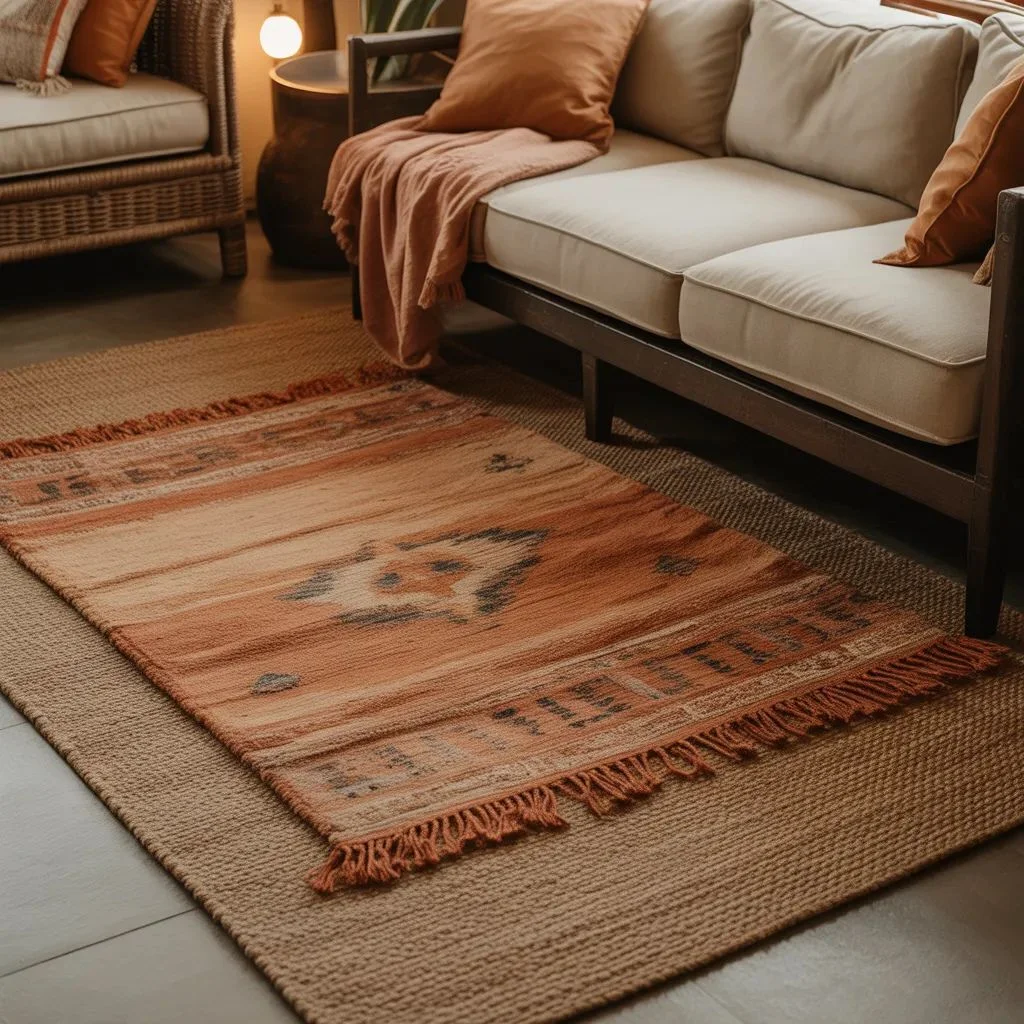
Layer Rugs for Depth
Layering is one of the best tricks for achieving the right size coverage on a budget. Start with a larger, affordable natural-fiber base rug — jute or sisal are classics — and layer a smaller patterned or textured rug on top. The result is a curated, designer look that also gives you seasonal flexibility.
Use Round Rugs to Soften Angular Rooms
If your living room is very square or boxy, a round rug can break up the geometry beautifully. Pair a round rug with a round or oval coffee table for a cohesive effect. In very small spaces, this also avoids the rug competing with straight-edged furniture.
Let the Rug Lead the Color Story
In a small room, a rug can be the anchor of your entire color palette. Pick your rug first, then build your cushion, throw, and accent colors from it. This is especially effective when you’re working with neutral walls — the rug becomes the room’s personality.
Always Use a Rug Pad
A rug pad matched to the thickness and material of your rug prevents slipping, adds cushion, and keeps your rug looking its best for longer. In a high-traffic small living room, this is a non-negotiable detail.
The Final Word on Rugs That Work Hard in Small Spaces
Choosing the right area rugs for small living rooms isn’t about following rigid decorating rules — it’s about understanding what each decision does to the perception of your space. Size, color, placement, and material all play a role, and once you understand how they work together, the choices become a lot less overwhelming.
Start with the right size (a 5×8 or 6×9 in most cases), lean toward lighter colors if you want the room to breathe, put at least the front legs of your furniture on it, and always use a rug pad. From there, you can add personality through pattern, layering, and texture — all without the space feeling crowded.
Small living rooms deserve rugs that make them feel intentional — not like an afterthought. With the right piece, even the coziest space can feel like it was designed with purpose, warmth, and style.
Editor Pick: Persian Rugs That Make Your Living Room Look Luxurious and Cozy.