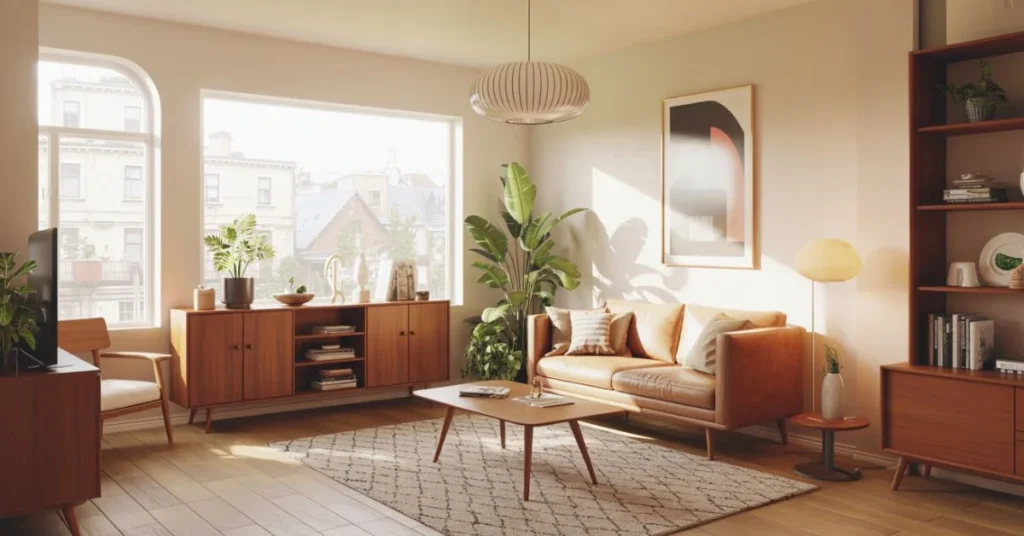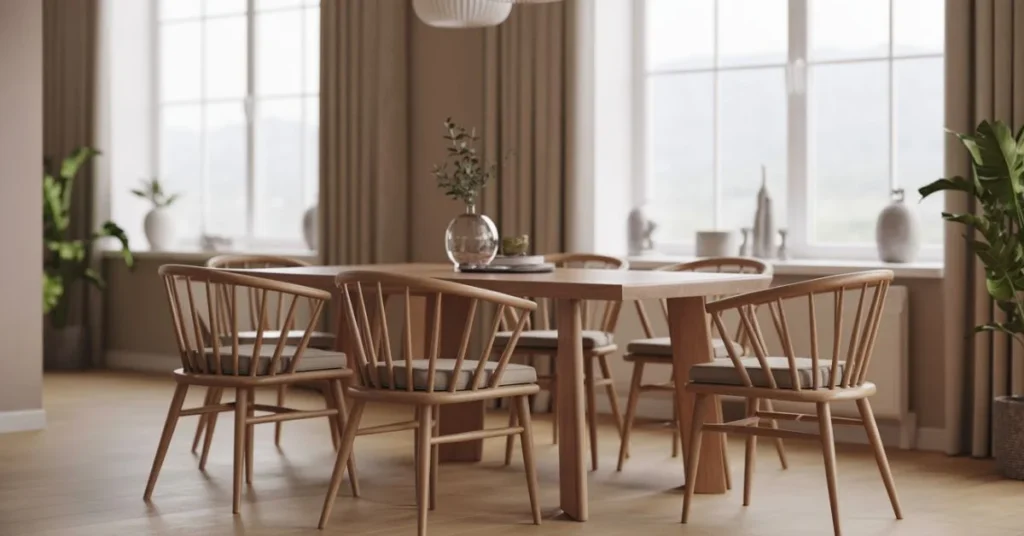
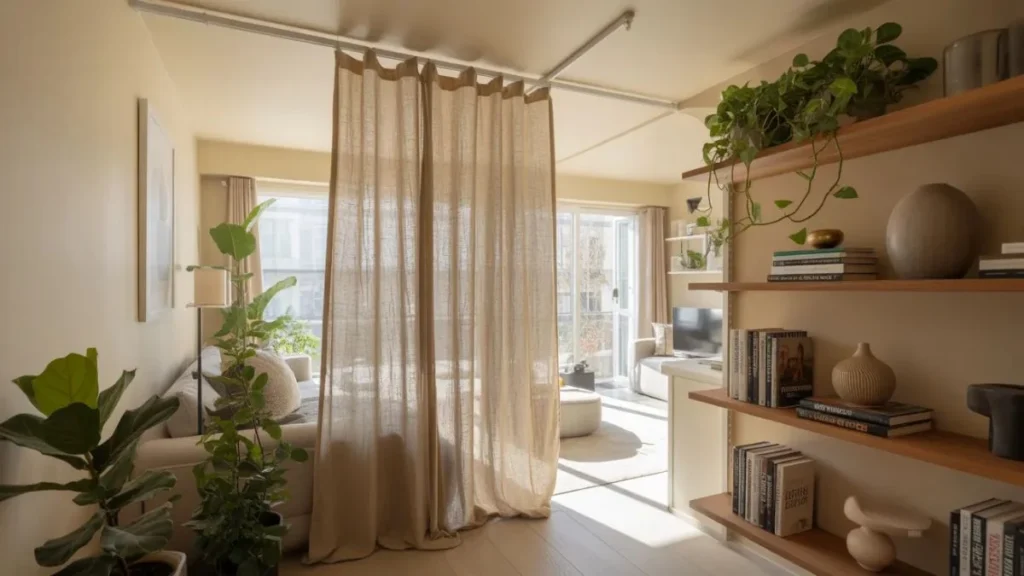
Open layouts can feel bright and spacious, but they do not always feel private. A bed in the corner of a studio, a desk in the living room, or a shared bedroom with no clear boundary can quickly start to feel messy and uncomfortable.
- Start With the Privacy Problem, Not the Project
- Hang Curtains for the Easiest Flexible Divider
- Use a Folding Screen When You Want Zero Commitment
- Turn a Bookcase Into a Divider That Also Stores More
- Build a Slatted Wood Divider for a Clean Modern Look
- Try a Pegboard Divider for Privacy With Function
- Make a Plant Wall for Soft Natural Separation
- Use a Wardrobe or Cabinet When You Need Real Coverage
- Choose the Right Divider for Your Space
- A Smarter Way to Create Privacy at Home
- FAQs
That is why a good DIY room divider can make such a big difference. You do not need to build a wall, start a renovation, or spend a fortune to create separation. Curtains, shelves, folding screens, wood slats, and even plants can all divide a room while keeping it flexible and stylish. Design guides from HGTV, Better Homes and Gardens, The Spruce, and House Beautiful all point to the same idea: the best dividers create privacy while still preserving light, flow, and function.
In this guide, you will find the best DIY room divider ideas for privacy without renovation, along with tips to help you choose the right one for your space.
Start With the Privacy Problem, Not the Project
Before you build anything, decide what kind of privacy you actually need. Some rooms need visual separation only. Others need a stronger barrier that hides clutter, creates a sleep zone, or gives a work area more focus.
This matters because not every DIY room divider works the same way. Open shelving keeps the room airy and bright, while curtains provide softer and more complete coverage. Wood slats offer a modern look and allow light through, and folding screens are easy to move when your layout changes. Recent design coverage also highlights sheer materials, slatted dividers, bookcase-style separators, and drapery as some of the most useful ways to divide a space without fully closing it off.
A simple rule helps here: the more privacy you need, the more solid your divider should be. The lighter you want to keep, the more open your divider should stay.
Hang Curtains for the Easiest Flexible Divider
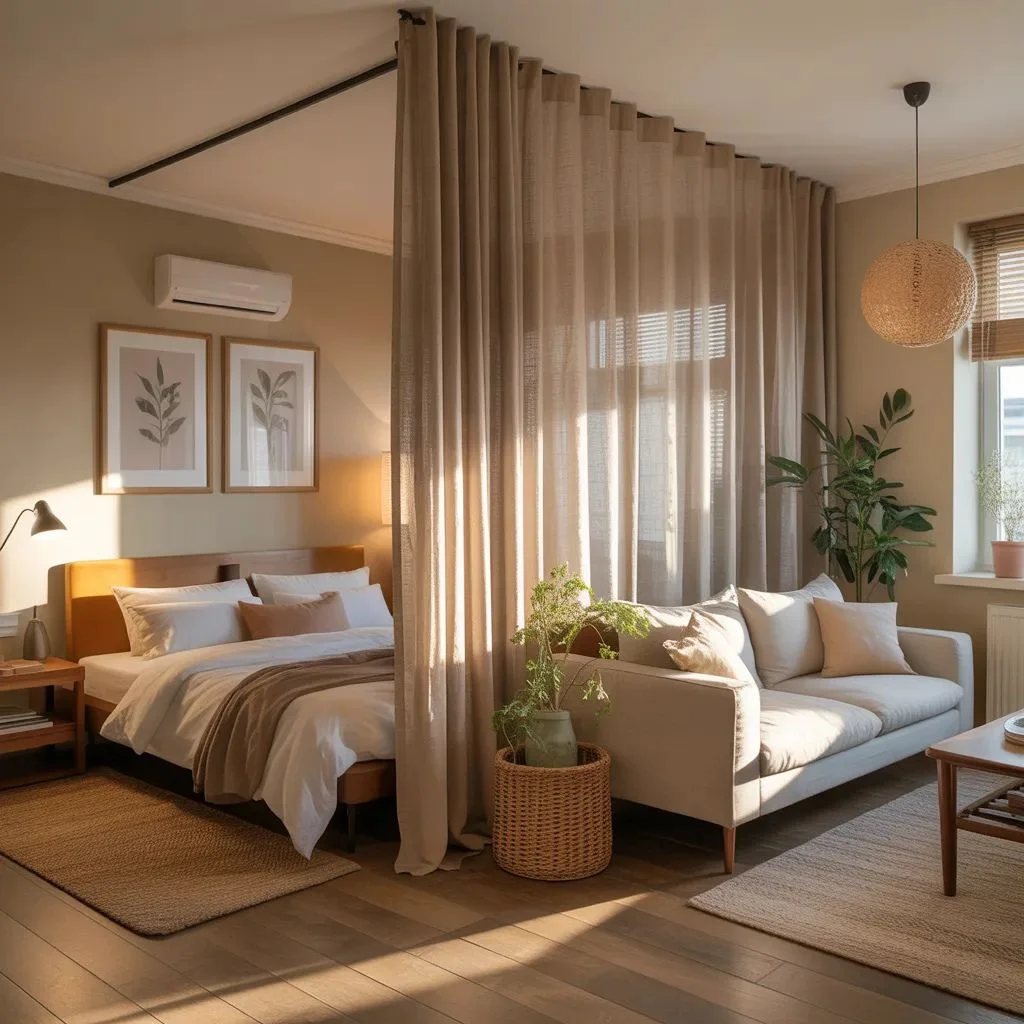
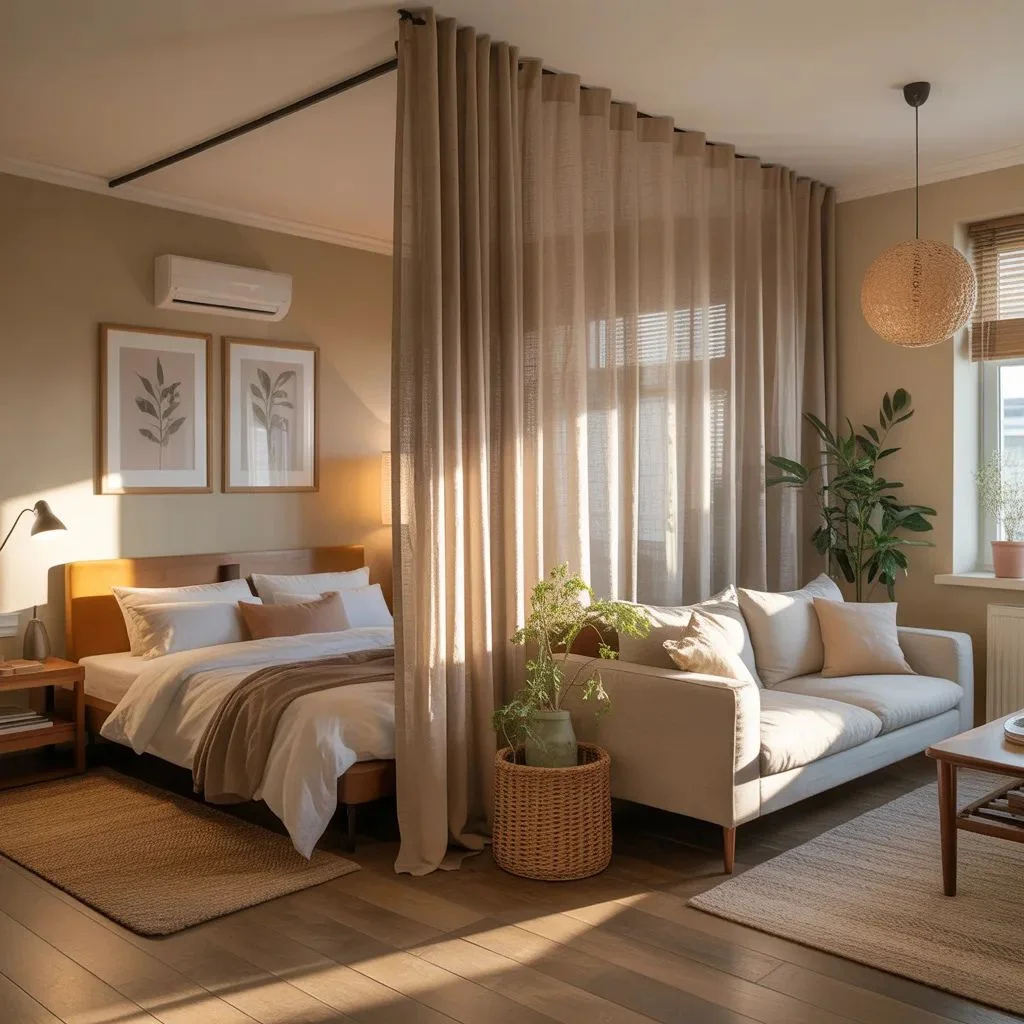
If you want the quickest win, curtains are hard to beat. They are affordable, soft-looking, and easy to open when you want the room to feel larger again. HGTV notes that curtains are a budget-friendly way to add privacy and separation, and that even studio renters can use them without giving up their deposit when installed on a tension rod.
This is one of the best DIY room divider options for bedrooms in studio apartments, shared rooms, or living room office setups. Choose sheer curtains if you want filtered light or use linen-look panels for more coverage. For a cozy sleeping nook, layered curtain panels can make the area feel more intentional and restful.
There is one thing to watch: lightweight no-drill setups work best with lighter fabrics. Apartment Therapy’s 2025 testing of no-drill curtain methods found renter-friendly options useful, while another Apartment Therapy example noted that tool-free rods may only handle very light sheers rather than heavy velvet or blackout panels.
Use a Folding Screen When You Want Zero Commitment
A folding screen is the most flexible DIY room divider idea on this list. It works especially well if you move often, like to refresh your layout, or need privacy only at certain times of day.
Better Homes and Gardens points out that classic folding screens are easy to move, can serve multiple purposes, and can be stored when not in use. HGTV also highlights foldable, easy-to-move screens as a smart option for glare control and privacy in small spaces.
You can make your own version by connecting three lightweight panels with hinges. Use plywood, cane webbing, fabric-covered frames, or even painted MDF. This kind of divider looks more finished when you treat it like decor instead of a temporary fix. Paint it a warm neutral, add arches to the frame, or cover the panels in textured fabric.
For renters, this is one of the safest choices because nothing needs to be mounted. It is also perfect for awkward corners where a curtain track or shelf would feel too permanent.
Turn a Bookcase Into a Divider That Also Stores More
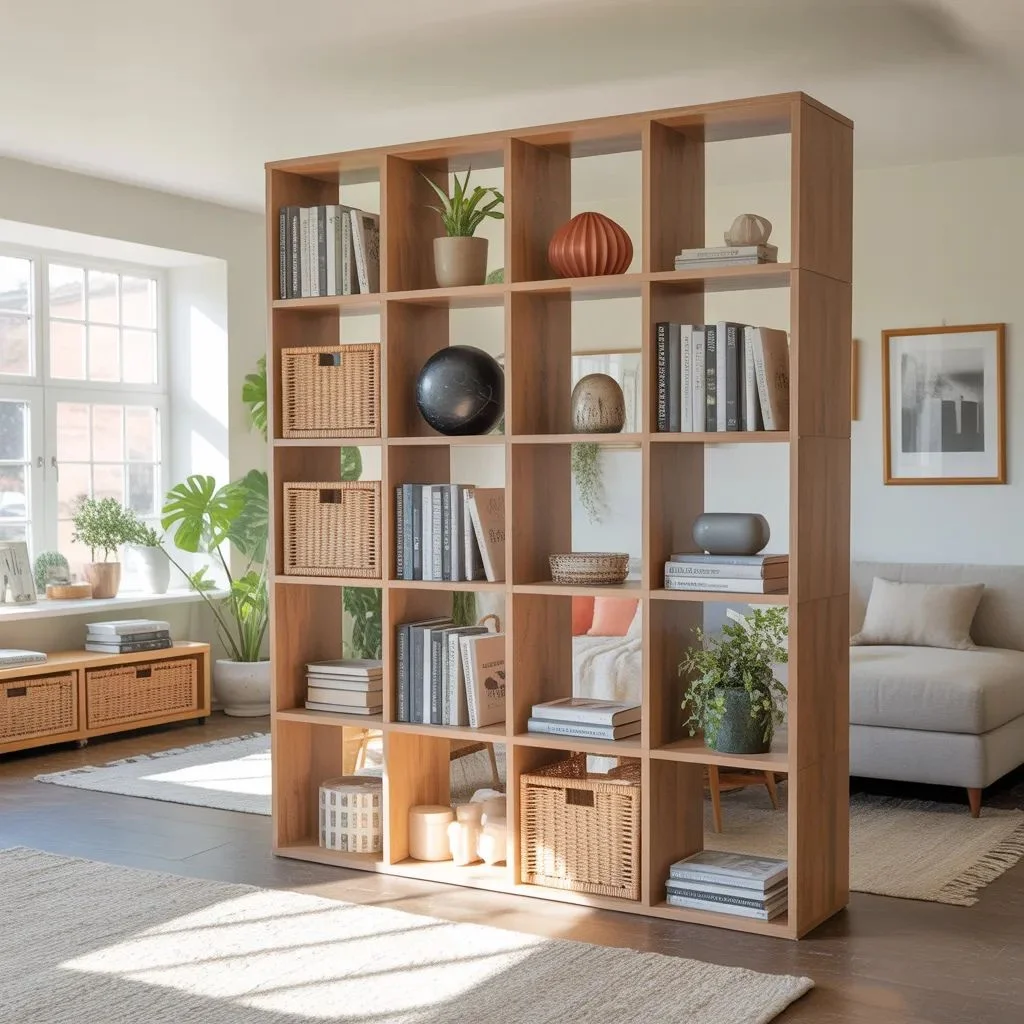
A bookshelf is one of the smartest ways to divide a room because it gives you privacy and storage at the same time. This works beautifully in studios, shared bedrooms, entry areas, and open-plan living rooms.
HGTV recommends using a large piece of furniture like a bookshelf to create a defined floor plan while adding extra storage. The Spruce also notes that open shelving and bookcases can separate sleeping and living zones, extend hallways, or create an entry area without fully blocking light or sightlines.
That makes the bookshelf-style DIY room divider ideal for people who need the divider to work hard. You can style one side with books and baskets, then keep the other side cleaner and more decorative. If you want the room to stay bright, use open cubes instead of a solid-backed cabinet.
This idea looks best when you avoid overcrowding the shelves. Leave some cubbies empty, mix storage boxes with decor, and keep the visual weight balanced on both sides.
Build a Slatted Wood Divider for a Clean Modern Look
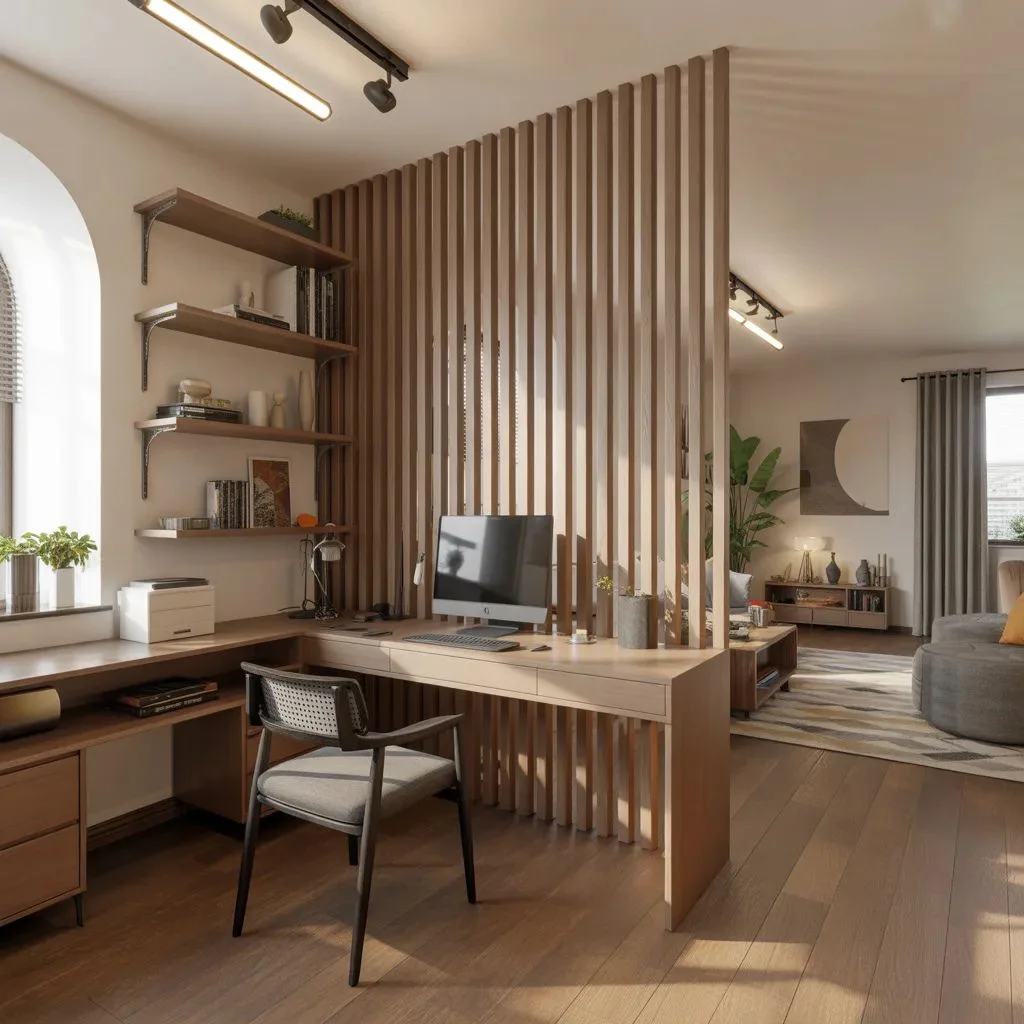
If you want something more architectural without renovating, a slatted wood divider is a beautiful option. It adds shape and privacy but still allows light to move across the room.
The Spruce notes that wood slat walls have come back into style and can be customized as room dividers through stain, paint, and board spacing. House Beautiful also recently highlighted slatted room dividers to maintain natural light while creating separation.
A slatted DIY room divider works well between a living space and dining area, around a workspace, or beside a bed in a studio apartment. You can build one as a freestanding frame or anchor it more securely if your setup allows. Wider spacing gives a more open effect. Tighter spacing gives more privacy.
This style works best when the wood tone matches something else already in the room, like a desk, side table, or floor tone. That small detail helps it look intentional instead of added later.
Try a Pegboard Divider for Privacy With Function
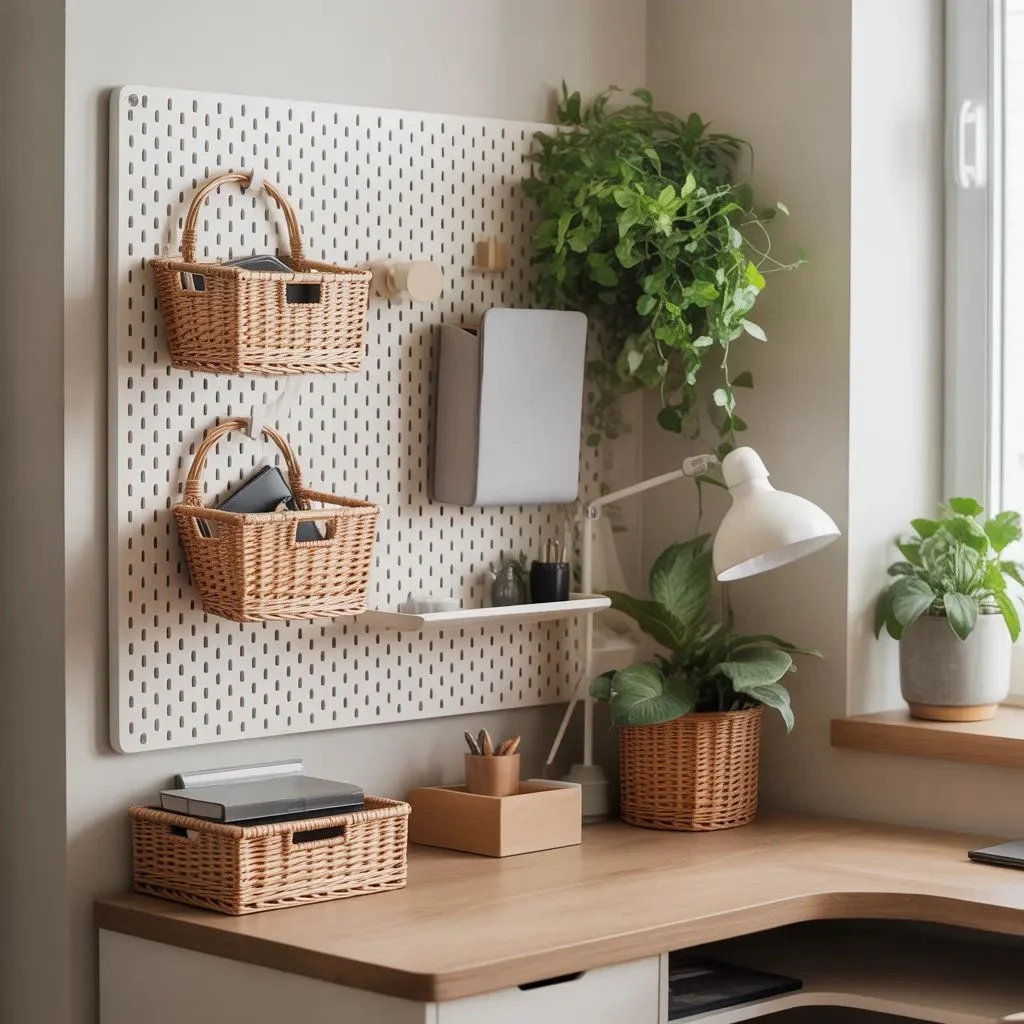
Pegboard is usually used for tools or craft storage, but it can also become a surprisingly useful divider. It gives you partial privacy while adding places to hang baskets, hooks, notes, or small planters.
The Spruce recently featured pegboard in a DIY propagation display, showing how hooks and small vases can be arranged across the panel to create something functional and visually appealing.
That makes pegboard a creative DIY room divider for home offices, craft corners, or study zones in shared rooms. One side can hold office supplies, headphones, and small shelves. The other side can stay clean or display lightweight decor.
This idea is especially good in small homes because it solves two problems at once. It separates the space and reduces clutter. When your divider also organizes the room, the entire area feels calmer.
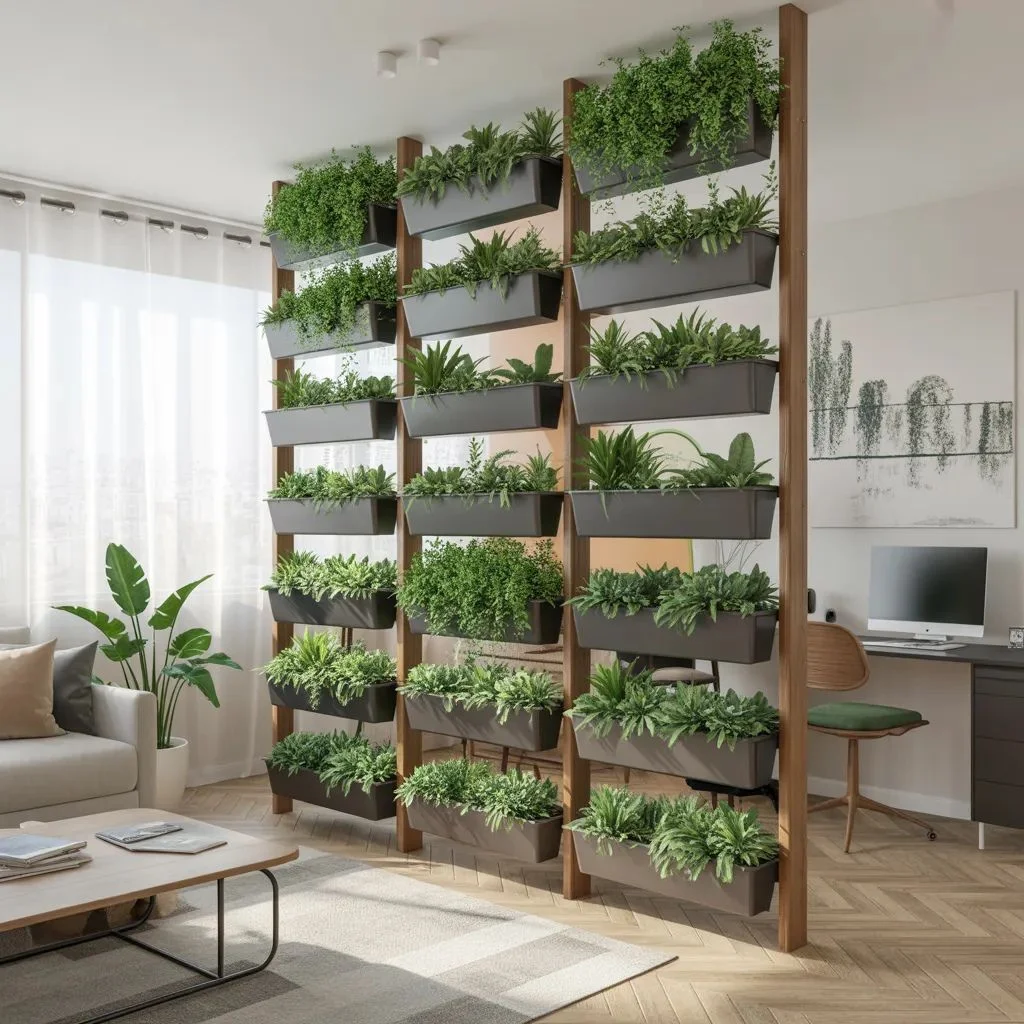
Make a Plant Wall for Soft Natural Separation
Not every divider has to feel solid or heavy. A plant-based screen gives privacy in a lighter, more relaxed way. It works best when you want to define a zone without making the space feel boxed in.
HGTV features a living partition made from wood and mesh rebar, designed to divide indoor or outdoor space while adding greenery. Better Homes and Gardens also include plant walls among its practical divider ideas for privacy and flow.
A plant-style DIY room divider can be as simple as a row of tall planters, or as custom as a freestanding frame with hanging pots. Trailing plants soften the structure, while upright plants like snake plants create stronger screening. If you do not want the maintenance of a full living wall, mix real and faux plants for a lower-effort look.
This idea feels especially good in rooms that need warmth. It breaks up a space without making it feel strict or closed.
Use a Wardrobe or Cabinet When You Need Real Coverage
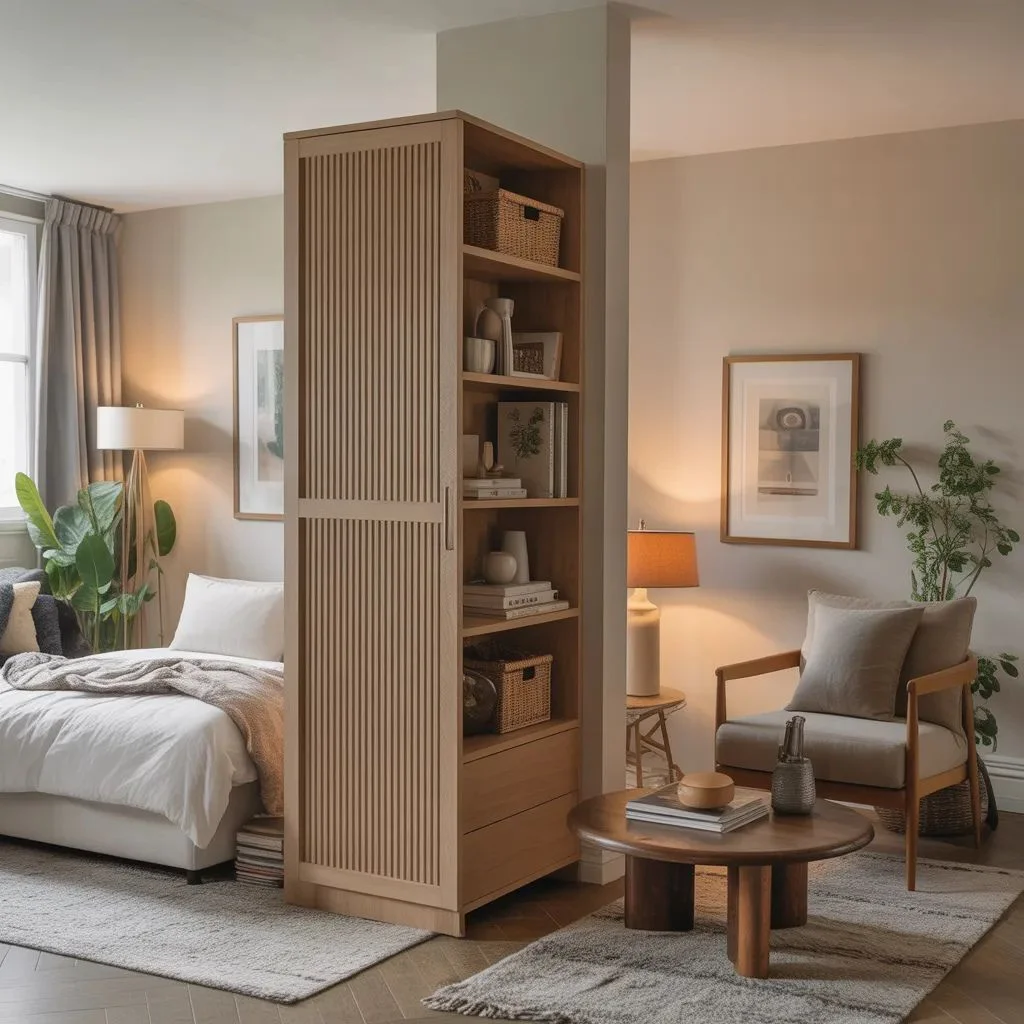
Sometimes a lightweight divider is not enough. If you need stronger visual privacy, a wardrobe, cabinet, or tall storage unit can do the job better than a screen or curtain.
The Spruce notes that one large freestanding storage piece, including wardrobes, can divide a room while doubling as practical storage. Better Homes and Gardens also highlight storage-focused room dividers that separate spaces without going fully to the ceiling, allowing some light and sound to pass through.
This type of DIY room divider is ideal if you need to hide clothing, office supplies, or general household clutter. It is more substantial, so it works best in larger rooms or studio apartments where one section clearly needs to feel like a separate room.
To keep it from looking bulky, choose a piece with legs, lighter finishes, or some open display space. That helps it feel like furniture, not a wall dropped in the middle of the room.
Choose the Right Divider for Your Space
The best DIY room divider is the one that solves your actual problem. If you want something renter-friendly and fast, start with curtains or a folding screen. If you need storage too, use a bookshelf or cabinet. If your goal is style first, slatted wood and plant dividers often look the most elevated.
It also helps to think about daily life. Do you need to move the divider often? Does the room need daylight on both sides? Will the divider collect clutter? A beautiful setup can become frustrating if it blocks circulation or makes cleaning harder.
Measure the footprint before buying materials and mark the divider line with painter’s tape on the floor first. That tiny step can save you from building something that feels too deep, too dark, or too wide for the room.
A Smarter Way to Create Privacy at Home
A wall is not the only way to create privacy. In many homes, it is not even the best way. A well-planned DIY room divider can define a bedroom corner, create a work zone, hide storage, or make a shared room feel more comfortable without any major renovation.
The most successful room dividers do two things at once. They improve privacy, and they make the room work better. That is why curtains, shelves, slatted screens, and plant partitions continue to show up in current design advice. They are practical, flexible, and easy to adapt to different budgets and styles.
Start with the simplest version that fits your space. You can always upgrade later. Even a small divider can make a room feel more organized, more useful, and much more like home.
Editor Choice: Practical Ikea Eket Ideas for Modern Home Organization.
FAQs
What is the easiest DIY room divider for renters?
Curtains on a tension rod or a folding screen are usually the easiest renter-friendly options. They require little to no drilling, are easy to move, and can be removed without major damage.
Which DIY room divider gives the most privacy?
A tall wardrobe, cabinet, or dense curtain setup usually gives the strongest visual privacy. Open shelving and slatted dividers separate space well, but they still allow some visibility through them.
How can I divide a room without making it darker?
Use sheer curtains, open bookcases, or slatted wood panels. These options keep light moving through the room while still creating a sense of separation.
Is a bookshelf a good room divider?
Yes. A bookshelf is one of the most practical divider choices because it defines zones and adds storage at the same time. It is especially useful in studios and open-plan rooms.