A good breakfast nook can change the whole mood of a kitchen. It gives you a place to drink coffee, answer a few emails, feed the kids, or sit for ten quiet minutes before the day gets loud. And when the look is coastal, that little corner feels even better. Current coastal kitchen inspiration still leans toward airy layouts, soft sand and sea colours, natural wood, woven textures, and lots of light, which makes the style a strong fit for both compact kitchens and open-plan homes.
- Why this look works so well in smaller homes
- Start with seating that saves space
- Pick a table that lets the room breathe
- Keep the palette light but not flat
- In open kitchens, create a zone without closing it off
- Add storage and softness at the same time
- The finishing touches that make it feel personal
- A few common questions
The best part is that Coastal Breakfast Nooks do not need a giant beach house to work. Design editors continue to show them in apartment kitchens, galley layouts, unused corners, and open rooms where a nook helps create a more personal zone inside a larger space. A built-in bench, a small table, and the right color story can turn an awkward corner into the spot everyone uses most.
Why this look works so well in smaller homes
Small spaces need design that feels light, calm, and useful. Coastal style does that naturally. Soft whites, sandy beige, pale blue, and driftwood tones help bounce light around a room instead of making it feel closed in. Natural materials like rattan, wicker, linen, and light wood add warmth without heavy visual weight. In open kitchens, that balance matters because the nook has to feel cozy without looking separate in a bad way.
That is why Coastal Breakfast Nooks are such a smart choice for open kitchens. They bring in texture and personality, but they still stay easy on the eyes. A dark formal dining set can sometimes stop the flow of a room. A lighter coastal nook usually does the opposite. It softens hard kitchen lines, keeps the room feeling relaxed, and makes the eating area feel more lived-in and welcoming.
In real homes, this matters more than people think. The corner beside a window, the end of an island, or the strip of wall between the kitchen and living room often turns into wasted space. A small nook gives that spot a job. It becomes a place to eat, chat, work, or simply pause. That kind of everyday usefulness is a big reason breakfast nooks keep showing up in current design inspiration.
Start with seating that saves space
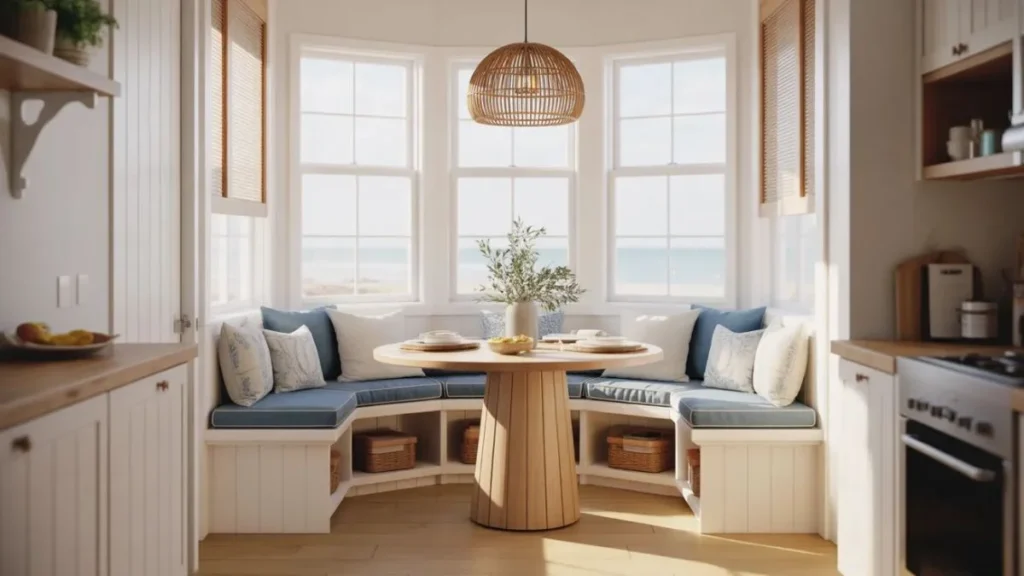
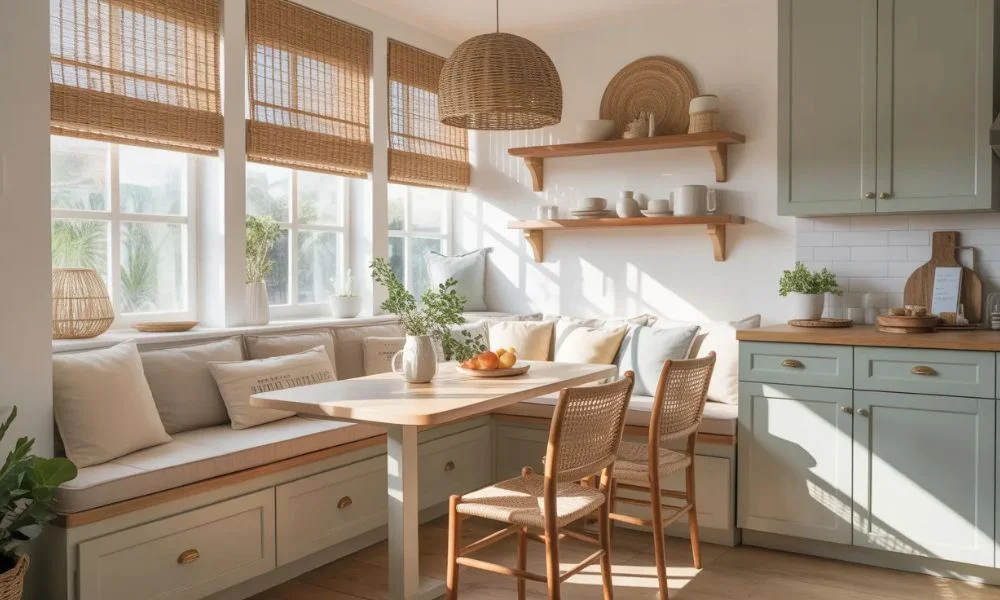
If you want the nook to work hard, start with the bench. Built-in or banquette seating is one of the best moves for a small kitchen because it can fit more people into a tighter footprint than loose chairs. It also turns a plain corner into something intentional. Several current and recent design guides highlight wraparound benches and built-ins as a smart way to add both seating and storage in compact eating areas.
For Coastal Breakfast Nooks, the bench does not need to feel stiff or custom in a fancy way. A simple painted bench in warm white, soft gray, or pale blue can do the job. Add a seat cushion in a washable striped fabric, a few textured pillows, and suddenly the space feels relaxed instead of rigid. If you are working with an open kitchen, keep the back profile clean and not too bulky so the nook does not block views across the room.
Storage under the bench is where this idea really wins. Lift-up seats or drawers can hold placemats, kids’ art supplies, small appliances, or seasonal table linens. That is a big help in smaller homes where every inch has to earn its place. If your nook is not built in, even a slim storage bench with a coastal-style cushion can still give you that same feeling.
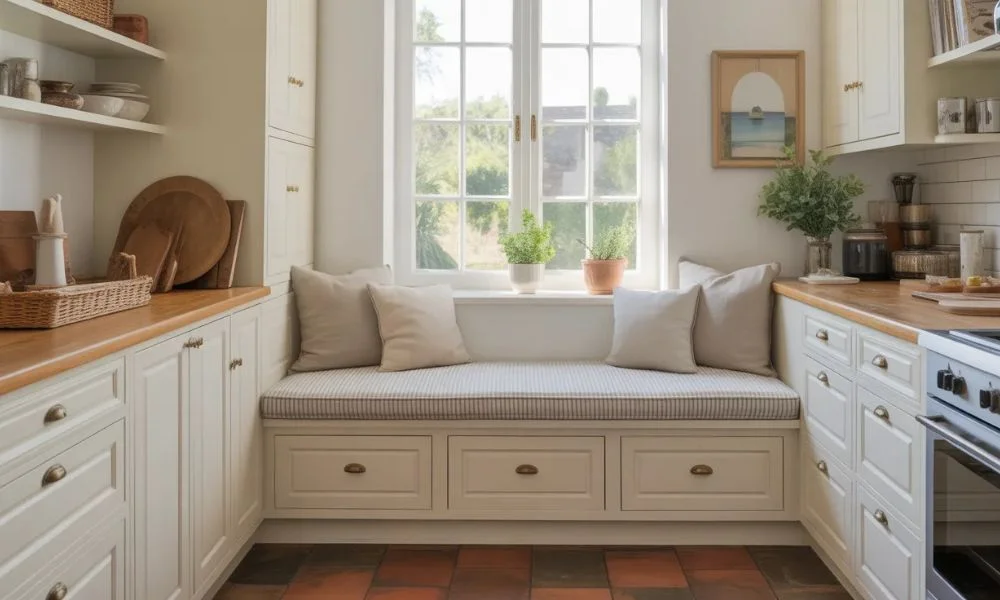
Pick a table that lets the room breathe
The table shape can make or break the nook. In a tight kitchen, a round table usually feels easier than a square one because there are no sharp corners cutting into the path of movement. A pedestal base helps too. It gives legs more room and makes it easier to slide in and out, especially when one side of the table sits near a bench. Architectural Digest has long pointed to pedestal tables as a strong breakfast nook choice, and that advice still holds up well in small layouts.
If you are planning from scratch, keep circulation in mind. Reference sizing guides for breakfast nook layouts commonly suggest comfortable bench proportions and enough clearance so the area feels usable rather than squeezed. You do not need to chase perfect numbers, but you do want enough space to sit down, stand up, and walk by without turning sideways every time.
For the coastal look, stick with finishes that feel easy and natural. White oak, light maple, painted white wood, or a soft weathered finish all fit well. A glossy heavy table can look out of place here. Think simple, practical, and sun-washed. In open kitchens, the table should quietly connect with nearby cabinets, flooring, or island stools so the nook feels like part of one story.
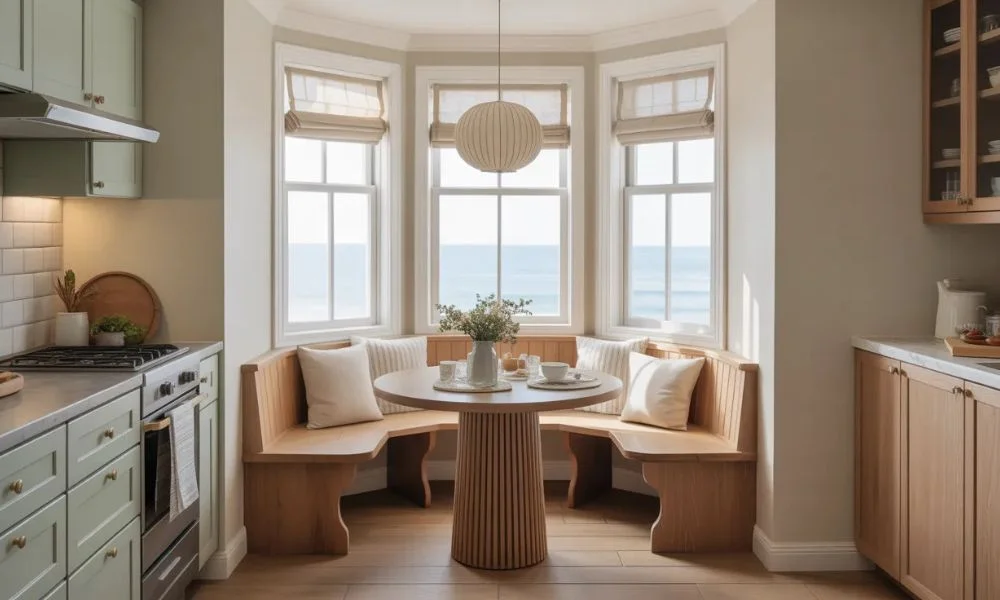
Keep the palette light but not flat
Colour is where many people get coastal style wrong. They either go too themed with navy anchors and seashell overload, or they stay so pale that the space feels sleepy. The better version of Coastal Breakfast Nooks uses a light base and then layers in small moments of colour and texture. Benjamin Moore’s coastal palette guidance centers on sandy neutrals, soft blues, easy whites, and occasional soft yellow, paired with natural fibers and clean lines. That mix feels beachy without trying too hard.
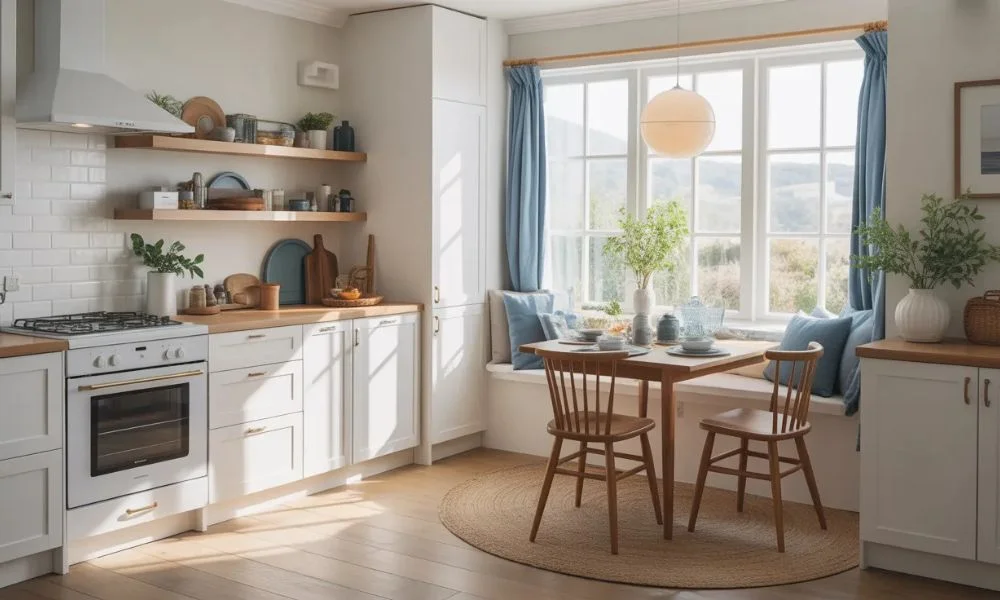
A simple formula works well here: white or warm ivory on the walls, pale wood on the table, one soft blue or sea-glass green on cushions or art, and woven texture in lighting or chairs. Then add one grounding detail like matte black hardware or a medium-tone wood frame so the nook has some shape. This keeps the room calm but not washed out.
Wallpaper can also work beautifully in a small nook, especially if the rest of the kitchen is simple. A quiet stripe, grasscloth look, or tiny coastal-inspired print can make the nook feel special without taking over the room. Design roundups still show wallpaper, cheerful colour and playful lighting as easy ways to give breakfast corners more identity.
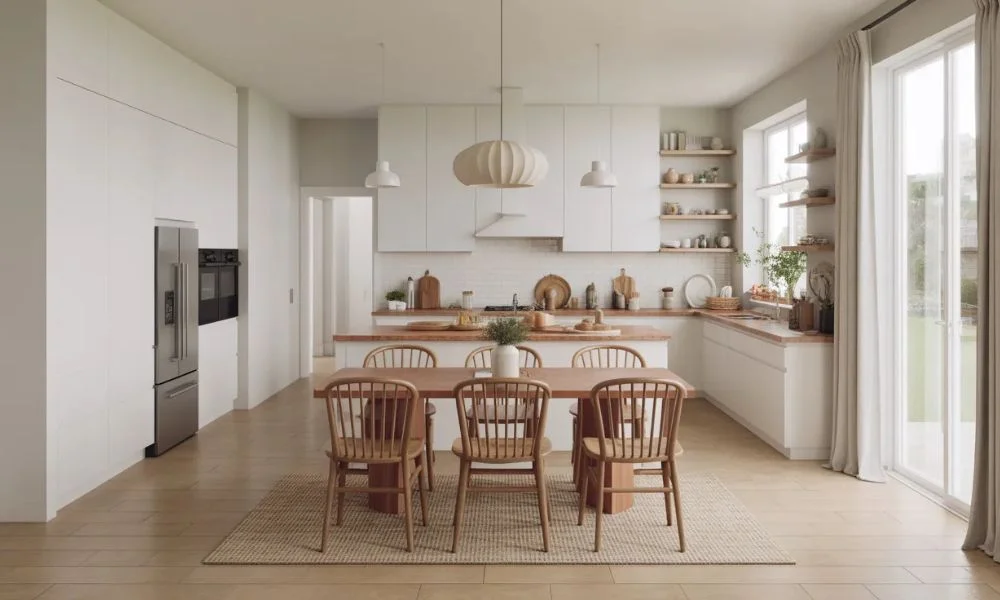
In open kitchens, create a zone without closing it off
Open kitchens need little visual boundaries. Without them, the breakfast nook can feel like furniture floating in the middle of nowhere. The goal is to define the nook while keeping the room open. Good open-plan advice often comes back to the same idea: create “rooms within the room” using sightlines, lighting, rugs, and subtle shifts in texture.
One of the easiest ways to do this is with a pendant light over the table. That single move tells the eye, “This is a place.” A rug can help too, as long as it is easy to clean and large enough to feel intentional. Even a change in wall treatment, like beadboard, wallpaper, or a framed art grouping, can help the nook feel defined. Architectural Digest’s current breakfast nook coverage also points to upholstery and art as good ways to separate a nook from the rest of the room.
Keep the sightlines clear while you do this. Avoid tall chairs, bulky hutches, or oversized decor that cuts across the room. In a small open kitchen, low-profile seating and a lighter palette make the space feel bigger. That is the sweet spot: the nook feels like its own corner, but the room still breathes as one open space.
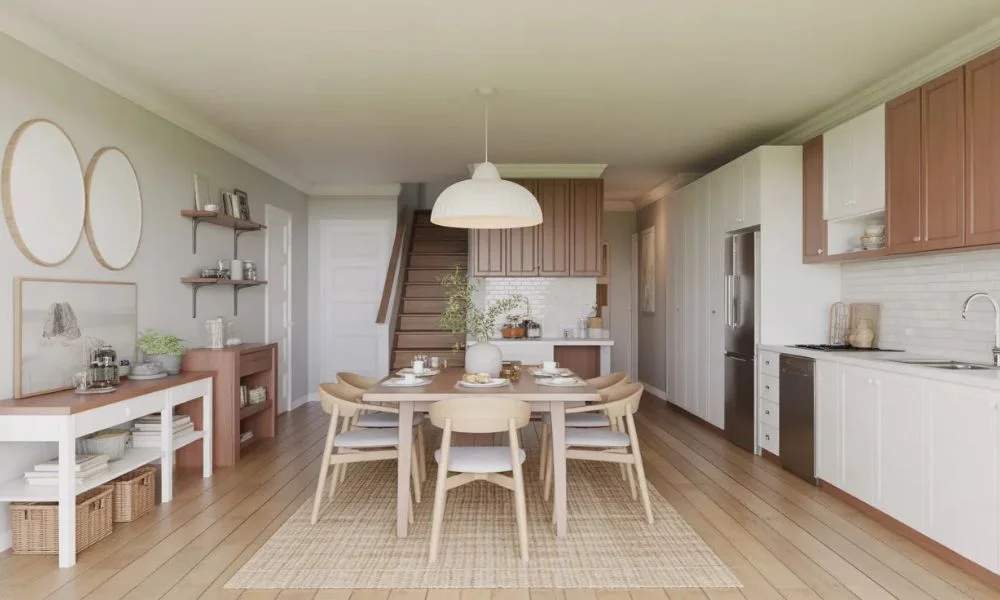
Add storage and softness at the same time
The smartest Coastal Breakfast Nooks do two jobs at once. They look warm and calm, but they also hide clutter. That is why bench storage, wall shelves, and a nearby slim cabinet are so useful. Current breakfast nook inspiration keeps coming back to built-ins because they make casual eating spaces work harder without adding extra furniture.
Softness matters too. A nook should not feel like a waiting bench at a train station. Cushions, washable upholstery, a textured throw, or one or two pillows can make even a tiny dining corner feel settled. If your kitchen already has hard finishes everywhere, think of the nook as the place where you bring in the softer side of the room. Woven shades, linen seat covers, and a small framed coastal print can do a lot.
And do not forget function beyond breakfast. Many recent design stories point out that nooks often become homework spots, laptop stations, reading corners, or casual hangout areas. That means durable fabrics, easy-clean surfaces, and hidden storage are not just nice extras. They are what make the space worth having every day.
The finishing touches that make it feel personal
Once the main pieces are in place, keep the styling simple. A ceramic bowl of lemons, a small vase with loose greenery, a striped seat cushion, or a framed beach sketch is enough. Coastal style feels best when it is edited. You want the room to hint at the shore, not copy a souvenir shop.
This is also where scale matters. In small kitchens, one good pendant makes more impact than five tiny decorations. One large piece of art can feel calmer than a crowded gallery wall. And one bench with built-in storage is usually better than trying to fit four separate chairs around a table that is too big. That quiet restraint is what gives Coastal Breakfast Nooks their easy charm.
When it all comes together, the nook does more than fill an empty corner. It gives the kitchen a softer center. It makes open layouts feel more human. And it turns a small daily habit, like toast and coffee, into something that feels a little slower and nicer. That is the real reason this look lasts.
Also Read About Creative Coastal Dresser Decor Ideas for a Clean Beach Inspired Look.
A few common questions
Are Coastal Breakfast Nooks good for very small kitchens?
Yes. Many recent design examples show breakfast nooks working in compact corners, galley kitchens, and other small footprints, especially when they use built-in seating and a compact table.
What table shape works best in a compact nook?
A round table is often the easiest choice because it softens movement in a tight area, and a pedestal base helps with leg room and access.
How do I make a nook feel coastal without making it look themed?
Use a light palette, natural textures, pale wood, soft blues or sandy tones, and simple decor. Skip obvious beach props and focus on calm color and texture instead.