
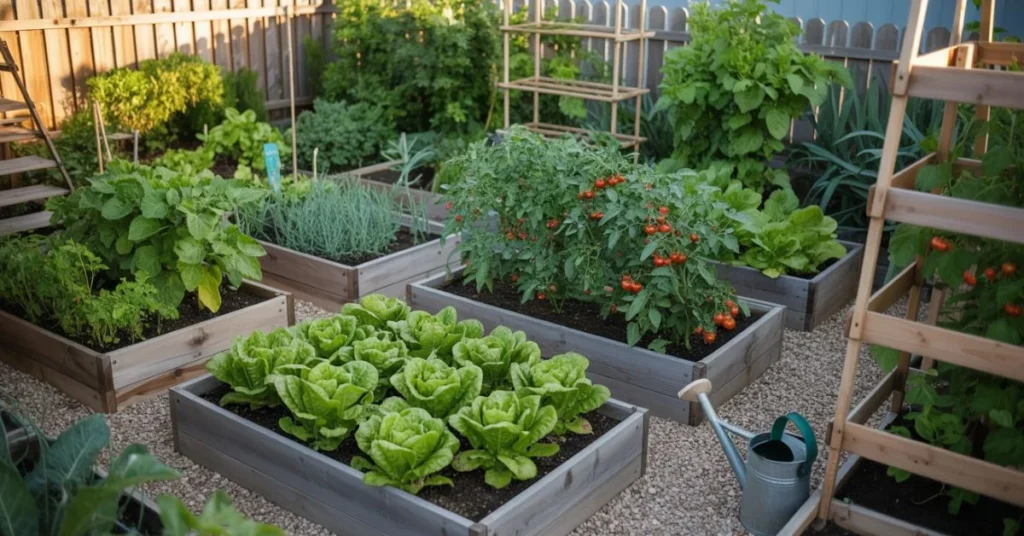
Starting a backyard vegetable garden can feel overwhelming, especially for beginners or those with small spaces. But with a well-thought-out Backyard Vegetable Garden Layout, you can grow a productive, attractive garden without stress.
The key is planning your space carefully. A small backyard doesn’t have to limit your harvest. By choosing the right layout, using vertical solutions, and practicing companion planting, you can make the most of every square foot. Whether you want a compact garden for your family’s fresh produce or a visually appealing green space, these ideas will guide you step by step.
Raised Bed Layouts for Small Yards
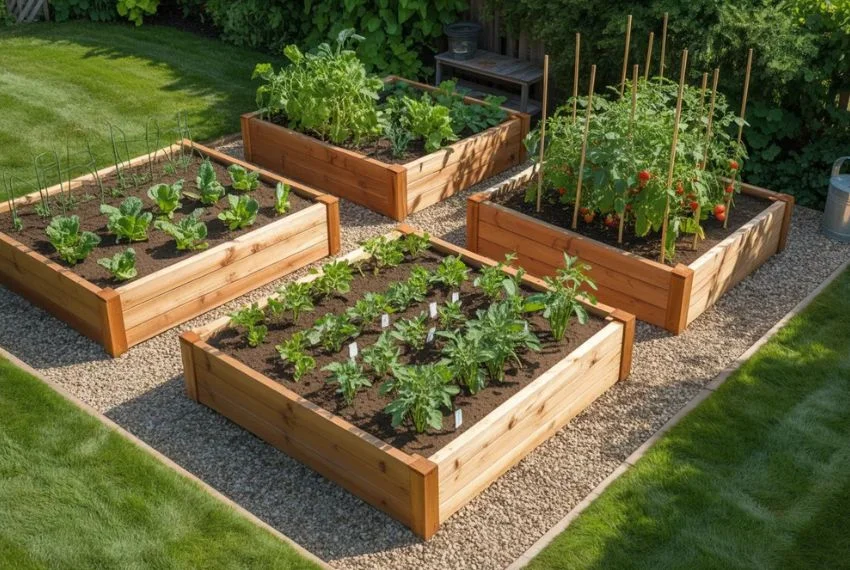
Raised beds are one of the easiest ways to organize a small backyard garden. They provide better soil control, reduce weeds, and improve drainage. A beginner-friendly Backyard Vegetable Garden Layout can use raised beds arranged along fences or in a grid pattern.
- Decide on the bed size — 4×4 ft or 3×6 ft is ideal for small yards.
- Place taller plants like tomatoes and peppers at the back and shorter crops in front to maximize sun exposure.
- Mix herbs or flowers between vegetables to improve pollination and reduce pests.
- Mulch pathways between beds to prevent weeds and make maintenance easier.
Raised beds also let you add nutrient-rich soil, which is crucial if your backyard soil is poor. With proper planning, you can grow tomatoes, lettuce, carrots, and even strawberries in just a few small beds.
Square Foot Garden Layout
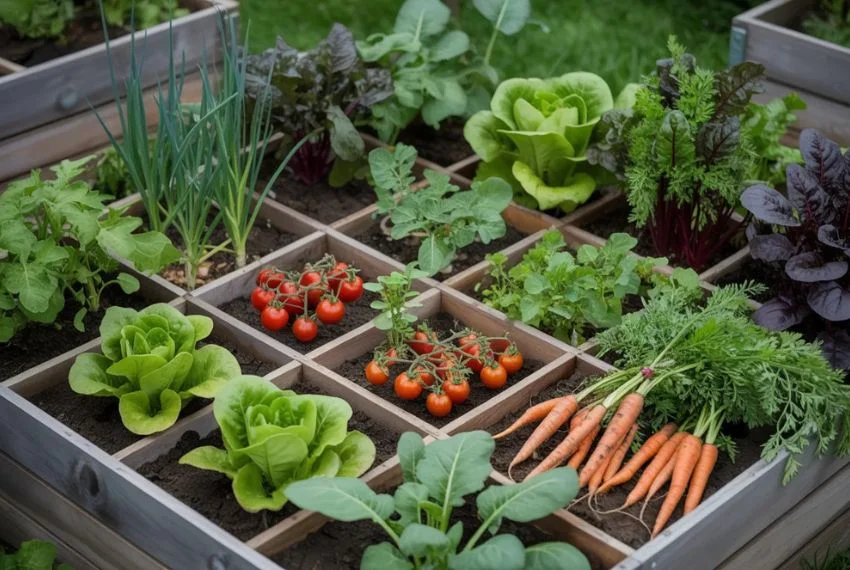
Square foot gardening is perfect for beginners who want a simple yet productive Backyard Vegetable Garden Layout. By dividing a bed into one-foot squares, you can plant a variety of crops efficiently.
- Mark your raised bed with a grid of 12-inch squares.
- Plant one vegetable per square, or multiple small plants like radishes in the same square.
- Rotate crops seasonally to maintain soil health.
- Water evenly and check regularly for pests.
This layout reduces wasted space and simplifies planning. You can grow leafy greens, root vegetables, and compact herbs all in one raised bed. For beginners, square foot gardening makes spacing, watering, and harvesting much easier.
Vertical Gardening for Maximum Space
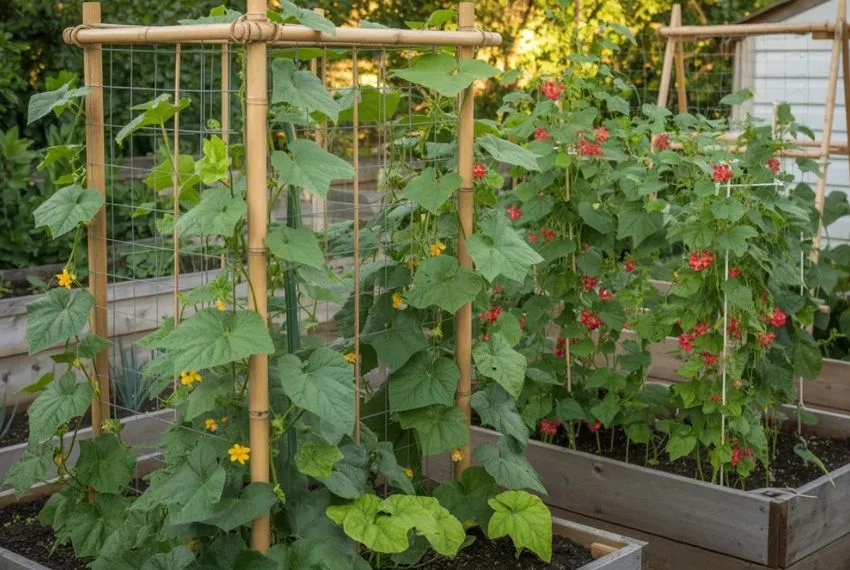
Vertical gardening is a lifesaver for small yards. Instead of spreading out, your garden grows upward using trellises, cages, hanging baskets, or wall-mounted planters.
- Identify plants that climb, like cucumbers, beans, peas, and tomatoes.
- Install trellises or cages along fences or walls.
- Train plants gently to climb supports to prevent damage.
- Use hanging planters for herbs or compact greens.
Vertical gardening keeps vegetables off the ground, reducing disease and pest problems. It also creates a visually interesting Backyard Vegetable Garden Layout that feels larger than it is. Even a tiny backyard can grow a surprising variety of vegetables this way.
Companion Planting Layout
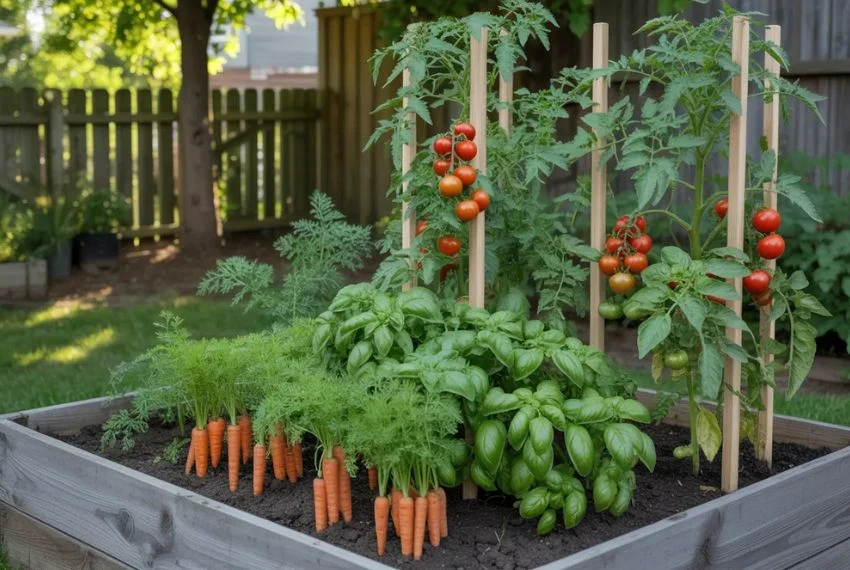
Companion planting improves plant health, maximizes space, and reduces pests. Thoughtful pairing of crops is a key element in a productive Backyard Vegetable Garden Layout.
- Identify plant companions, e.g., tomatoes with basil, carrots with onions, cucumbers with radishes.
- Plant herbs between vegetables to repel pests naturally.
- Rotate plant positions each season to prevent soil depletion.
- Add flowering plants like marigolds to attract beneficial insects.
Companion planting also adds variety and color to your garden, making it more enjoyable to work in. Beginners will find that this approach makes pest management easier and supports healthy growth without chemicals.
Circular and Mandala Garden Layouts
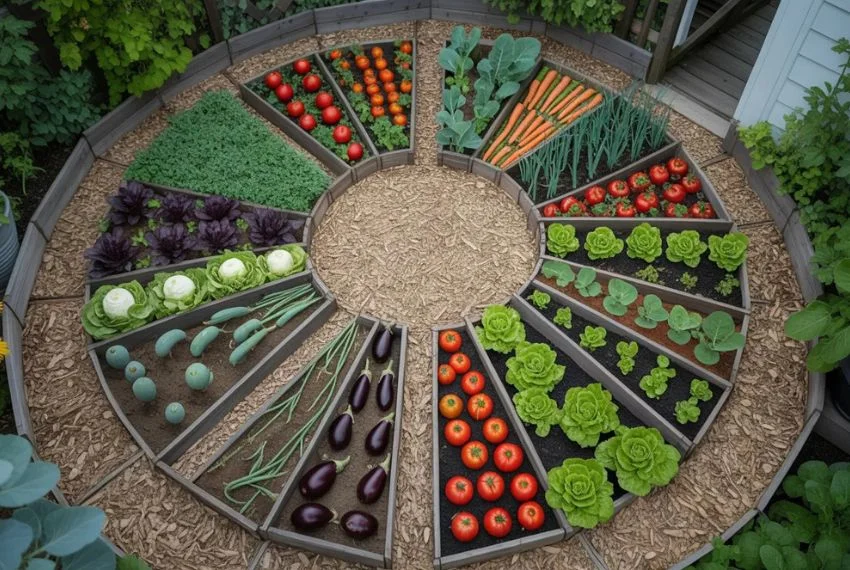
Circular or mandala layouts are not only space-efficient but also visually striking. This layout has pathways radiating from the centre, giving access to all plants without stepping on soil.
- Create a central planting circle for larger crops.
- Build outward rings for smaller vegetables and herbs.
- Use mulch or stones to define paths.
- Plant taller crops in the centre and shorter ones on the edges.
This approach makes harvesting easier and creates a compact, decorative Backyard Vegetable Garden Layout that is easy to maintain, especially in small yards. Beginners will appreciate the accessibility and neat design.
Container Garden Layout
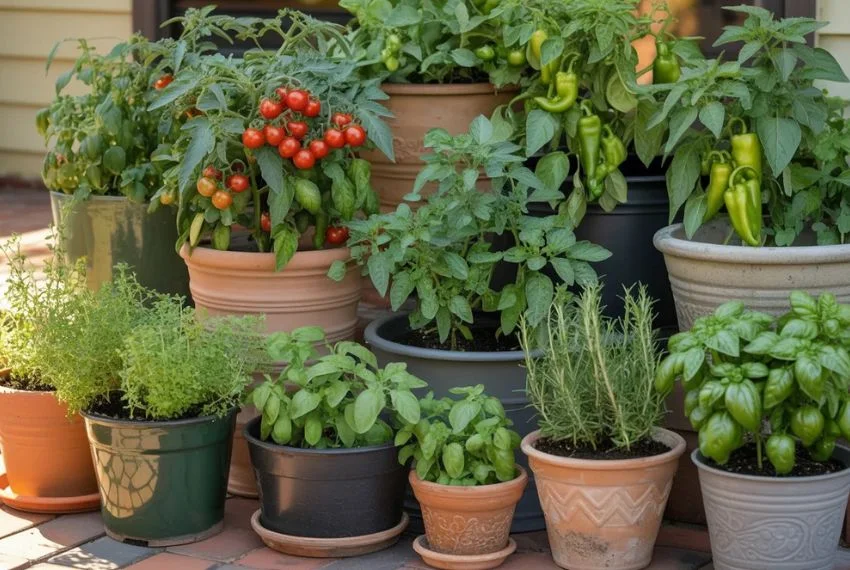
Containers are ideal for patios, decks, or yards with poor soil. They’re flexible and beginner-friendly, making them a smart choice for a compact Backyard Vegetable Garden Layout.
- Choose containers with good drainage.
- Fill with high-quality potting soil.
- Plant vegetables suited for pots, like lettuce, cherry tomatoes, peppers, and herbs.
- Group containers for easier watering and care.
Containers allow you to move plants to optimize sunlight exposure. This flexibility is perfect for beginners who are learning about light requirements and watering needs. You can even grow a full vegetable garden in a small space using only containers.
Pathway Planning and Accessibility
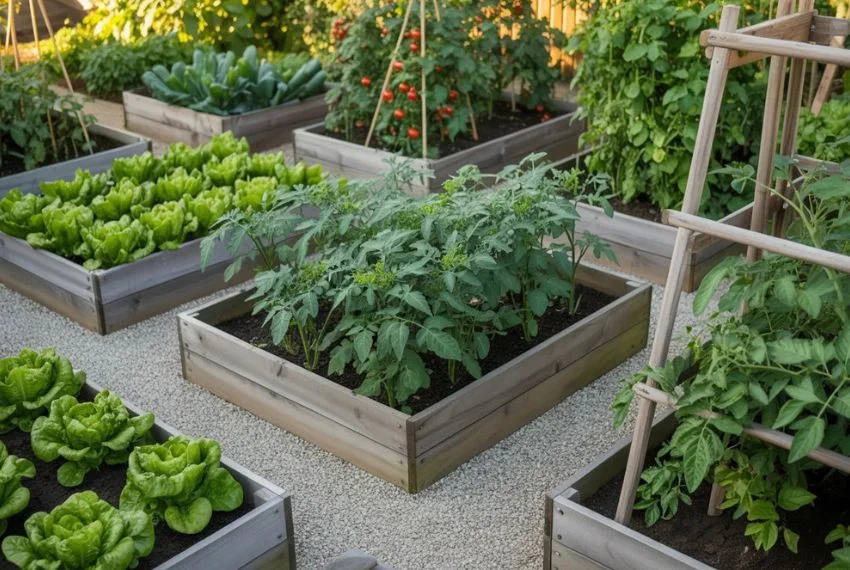
Well-planned paths are crucial in any Backyard Vegetable Garden Layout, even for small spaces. Clear pathways prevent soil compaction, reduce accidents, and make maintenance easier.
- Use stepping stones, mulch, or gravel to define paths.
- Ensure pathways are wide enough for a wheelbarrow or garden cart if needed.
- Place raised beds or containers strategically to maximize sunlight and airflow.
- Keep frequently harvested crops close to the entrance for convenience.
Good pathways not only make gardening practical but also visually pleasing. Beginners will find it easier to navigate, water, weed, and harvest without damaging plants.
Final Thoughts
Creating a thriving backyard vegetable garden is easier than you might think. With these expanded Backyard Vegetable Garden Layout ideas, beginners and small yard owners can grow abundant, healthy vegetables in a visually appealing garden.
Whether you choose raised beds, square foot gardening, vertical solutions, containers, or companion planting, planning is the key to success. Combine layout strategies with smart maintenance, and you’ll enjoy a productive backyard garden that provides fresh food all season long.
Also Read About Charming Nancy Meyers Backyard Ideas to Create a Cozy, Cinematic Outdoor Space.
FAQs
Q1: What is the easiest vegetable to grow for beginners in a small backyard?
A1: Lettuce, radishes, spinach, cherry tomatoes, and herbs are excellent for beginners due to their fast growth and low maintenance.
Q2: How much space do I need for a small vegetable garden?
A2: Even a 4×4 ft raised bed can produce enough vegetables for a small family when you plan your Backyard Vegetable Garden Layout efficiently.
Q3: Can I grow vegetables vertically in a small backyard?
A3: Absolutely! Trellises, cages, and wall-mounted planters allow vertical growth and maximize limited space.
Q4: How do I prevent pests in a small backyard vegetable garden?
A4: Companion planting, mulching, regular inspection, and natural deterrents like marigolds can keep pests under control without chemicals.