A ceiling does more than cover a room. It shapes the mood, reflects light, and quietly tells your eye whether a space feels finished or forgotten. That is why Beadboard Ceiling Ideas stay popular year after year. Beadboard adds texture without making a room feel busy, and it works across styles that seem very different at first glance, from farmhouse and coastal to classic, cottage, and even clean modern spaces. Beadboard itself is commonly available in wood, MDF, and PVC, and it can be used on ceilings as well as walls. Some ceiling plank systems are also designed to install directly over existing drywall, plaster, or even popcorn ceilings, which makes this look easier to achieve than many people expect.
The best part is that you do not need a grand old house to make it work. In real homes, beadboard often shines most in simple places: a small bathroom, an entry hall, a breakfast nook, a porch, or a plain bedroom that needs one strong design detail. Below, you will find practical, stylish, and easy-to-picture Beadboard Ceiling Ideas that can help you upgrade your interior design without making the room feel overdone.
A Bright White Finish That Never Fails
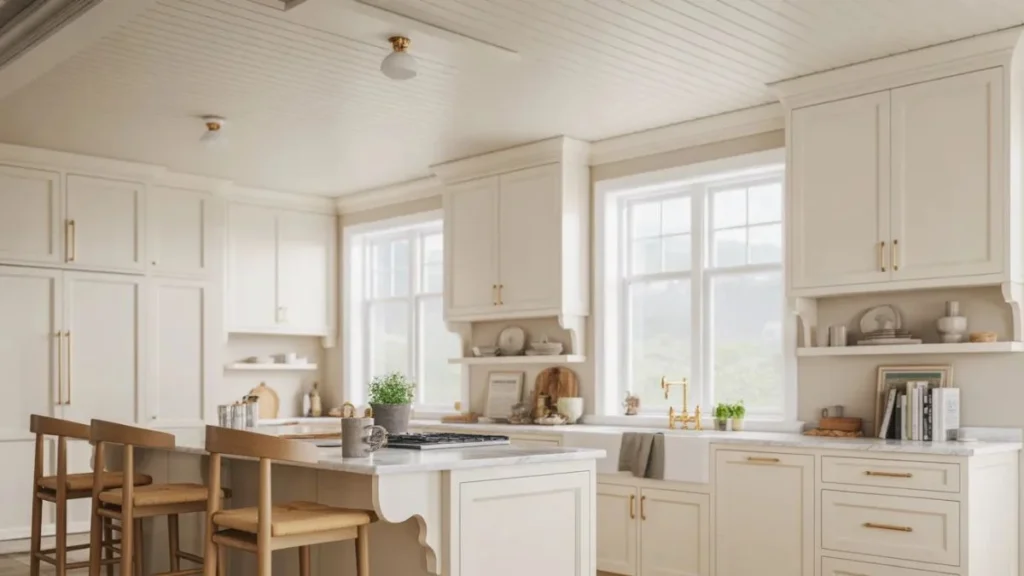
One of the easiest starting points is a classic white beadboard ceiling. This look works because it adds pattern and charm while still feeling light. If your room is small or lacks strong daylight, a white ceiling can help the space feel more open. Benjamin Moore notes that white ceilings can make smaller spaces feel larger, while Sherwin-Williams highlights how white reflects light back into the room. That makes white beadboard especially strong in kitchens, hallways, laundry rooms, and breakfast areas where you want brightness without a flat, plain finish.
A warm white version feels even better when you want softness instead of stark contrast. Try pairing the ceiling with creamy trim, pale taupe walls, and natural wood shelves. That combination gives you texture overhead without shouting for attention. Among all Beadboard Ceiling Ideas, this is the safest choice if you want a timeless result that will still look right after you change wall color, furniture or decor later.
Soft Color for a Subtle Statement
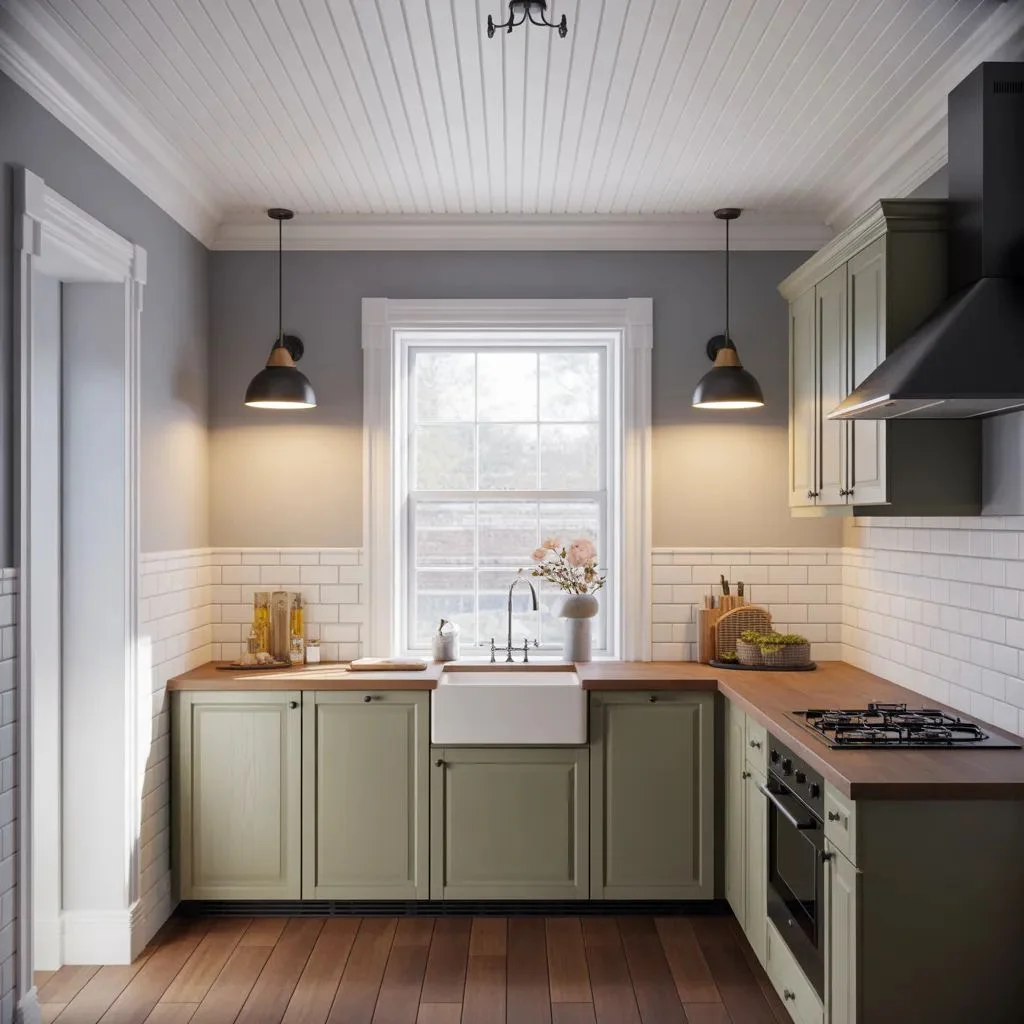
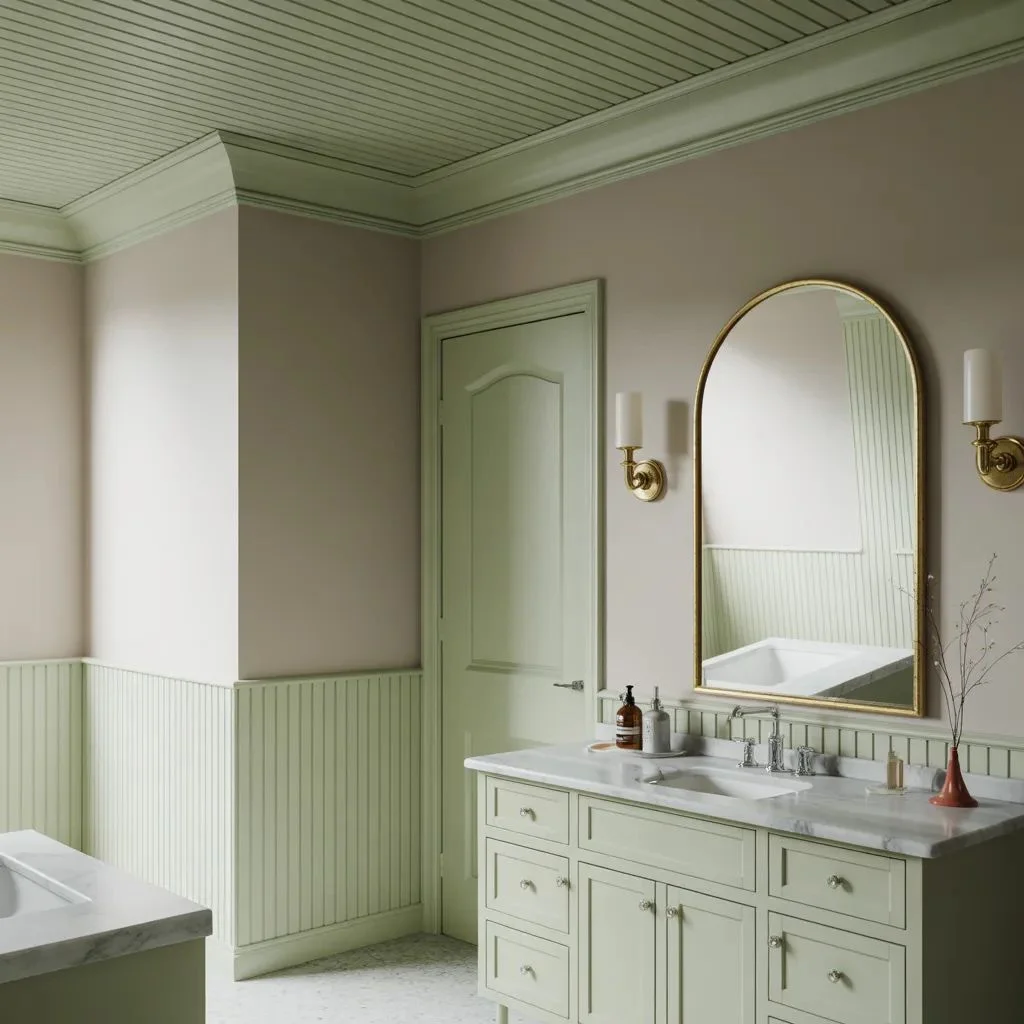
If white feels a little too expected, use beadboard as a quiet place for color. A pale blue ceiling in a bathroom can feel airy and fresh. A muted sage ceiling in a dining nook can feel calm and grounded. A soft gray-beige ceiling in a bedroom can make the whole room feel more tailored. Benjamin Moore describes ceilings as the “fifth wall,” and both Benjamin Moore and Sherwin-Williams suggest that ceiling color can add personality, depth, and atmosphere when chosen with the room’s lighting and wall tone in mind.
This is one of those Beadboard Ceiling Ideas that works best when the color stays restrained. Think dusty blue, green-gray, warm ivory, blush clay, or a pale tone drawn from your wallpaper, rug, or curtains. You can also paint the beadboard the same color family as the walls for a soft color-drenched effect. Sherwin-Williams notes that matching walls and ceilings can make a small room feel restful, while Benjamin Moore points out that lighter ceiling colors can help visually lift the room.
Layout Tricks That Change the Feel of a Room
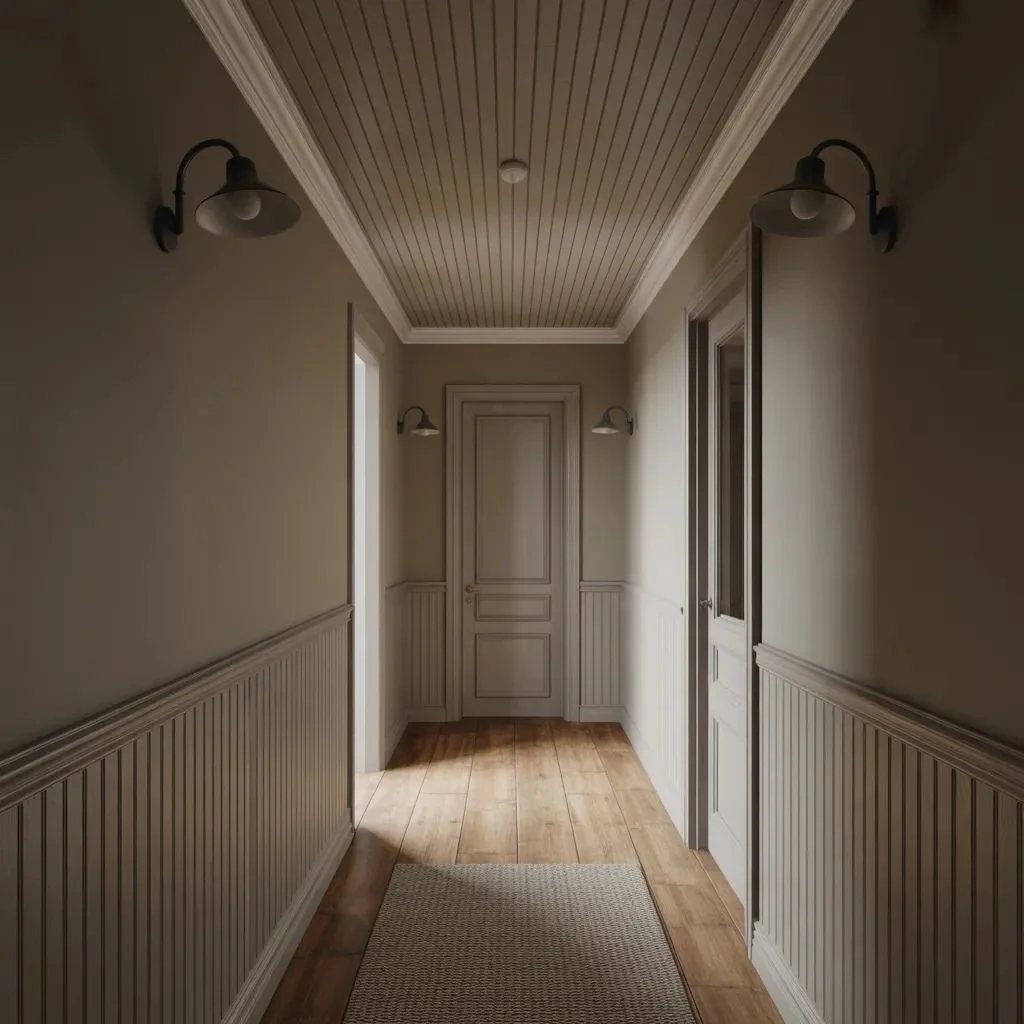
Not every upgrade needs a new color. Sometimes the biggest change comes from how the boards are laid out. In a long hallway or galley kitchen, running beadboard lengthwise can pull the eye forward and make the room feel more intentional. In a small square room, it can create a neat sense of rhythm that makes the ceiling look less empty. This is more of a design move than a hard rule, but it can change how a room reads at first glance.
You can also use beadboard to define a zone without changing the full room. Add it only over a breakfast table, reading corner, entry drop zone, or built-in bench area. That approach works well in open layouts because it gives the eye a visual stopping point. Some of the most effective Beadboard Ceiling Ideas are not about covering every inch. They are about putting texture exactly where the room needs character.
Trim and Beams That Add Instant Character
Beadboard looks even better when it has a clean edge. One easy idea is to frame it with simple trim around the room’s perimeter. That little border makes the ceiling feel finished and custom instead of purely DIY. In more traditional rooms, you can go a step further with crown molding. In simpler spaces, even a flat painted trim board can do the job and still look polished.
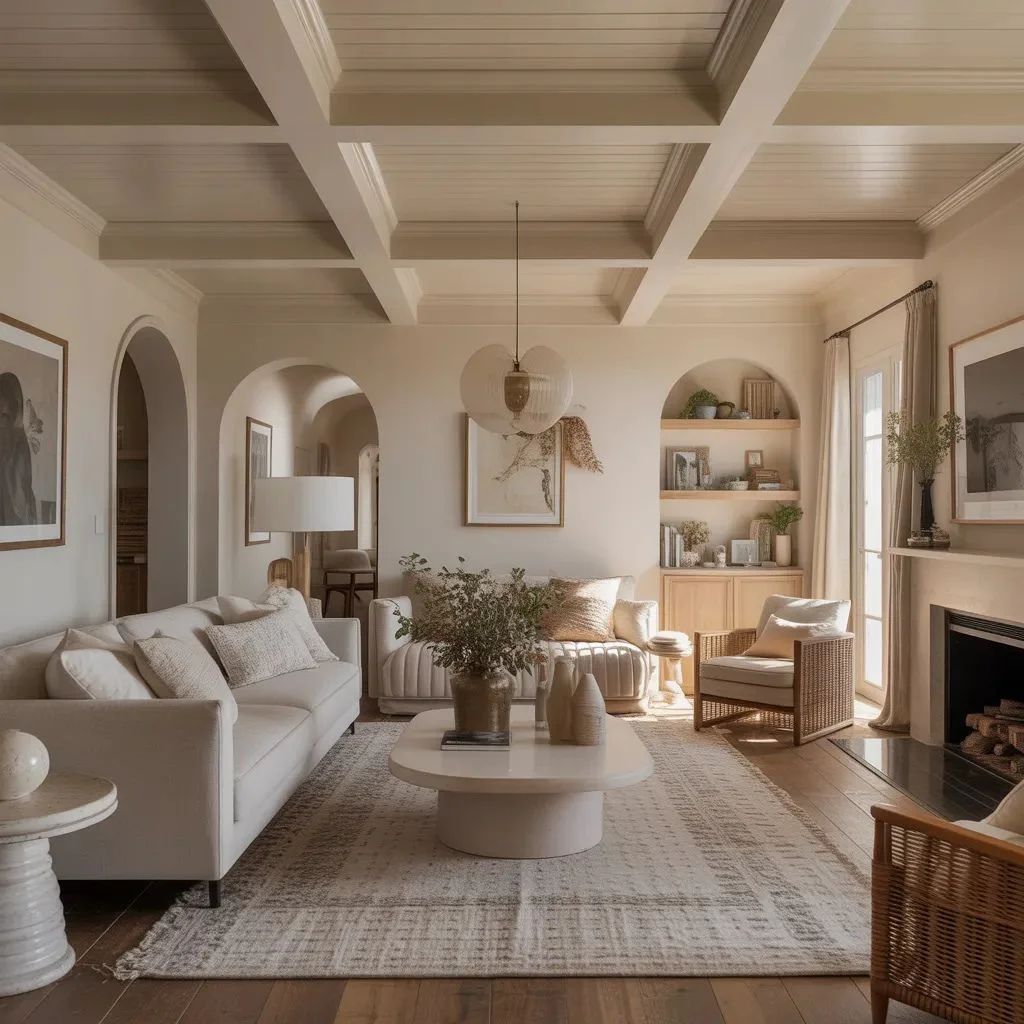
If you want more architectural presence, pair beadboard with faux beams. Sherwin-Williams notes that false beams can help hide patched cracks or wires, and that beadboard panels can also cover an unattractive ceiling surface. Together, they create depth and give the room a stronger shape. This is one of the smartest Beadboard Ceiling Ideas for living rooms, family rooms, and larger bedrooms where the ceiling feels too blank. The result can lean rustic, coastal, classic, or even modern depending on the beam finish and paint color.
Smart Room by Room Applications
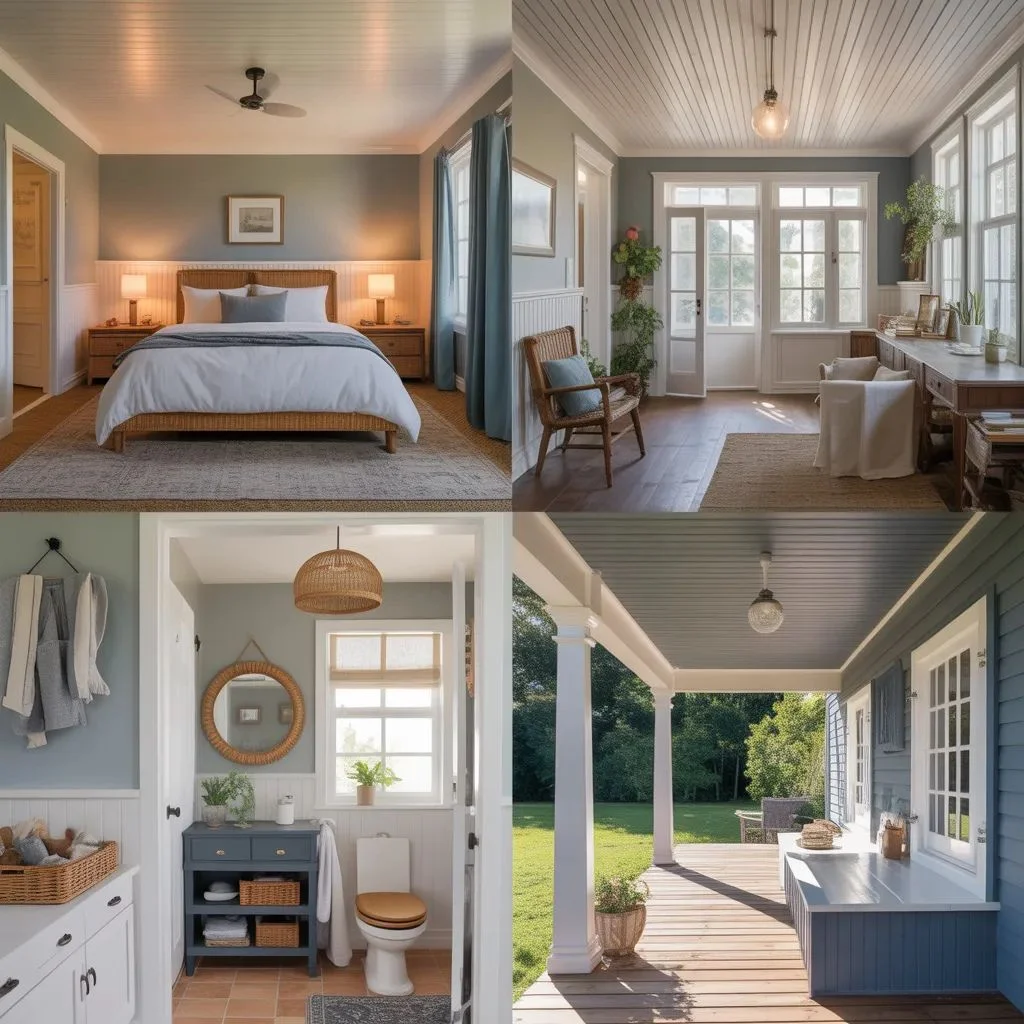
A kitchen is the most obvious place to start, but beadboard can do more than that. In a bedroom, it adds just enough detail to make the room feel layered and cozy. In a mudroom or entry, it gives a practical space more style. In a covered porch or sunroom, it adds that classic painted ceiling look people love in older homes. On a basement ceiling, it can soften a space that might otherwise feel cold or unfinished. Armstrong notes that some direct-apply plank systems are meant to cover damaged drywall, plaster, popcorn ceilings, or even an old basement ceiling grid while keeping ceiling height largely intact.
Bathrooms need a little more care with material choice. This Old House explains that wood offers the most traditional look but can react to moisture over time, MDF is smooth and paint-friendly but not the best fit for high-humidity areas, and PVC is especially moisture-resistant, making it a strong option for bathrooms, basements, and other damp spaces. That means some Beadboard Ceiling Ideas are not just about style. They are also about choosing the right panel for the room you are working on.
A Few Easy Finish and Installation Choices
If you want the easiest route, sheet panels can be a good option for straightforward ceilings. If you want a more traditional feel, individual planks or tongue-and-groove styles tend to look more custom. Armstrong’s product guidance shows that direct-apply ceiling planks can be installed in several ways, including over existing surfaces, and that some beadboard-style planks are paintable. That flexibility is a big reason so many homeowners now consider beadboard for ceiling upgrades rather than only for walls.
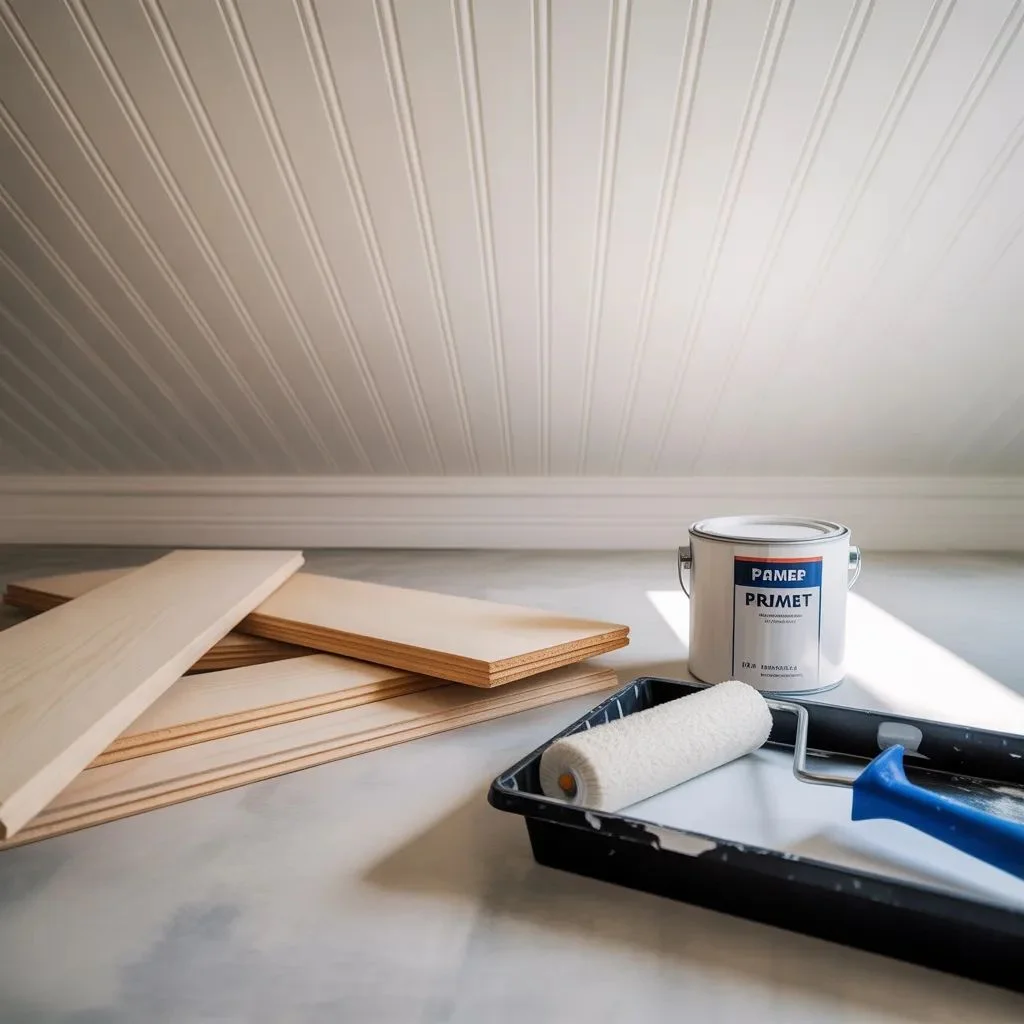
Before installing, This Old House recommends letting beadboard acclimate in the room for at least 48 hours so expansion and contraction are reduced later. The same guide also recommends priming and sealing all sides, especially with wood and MDF, to help protect against moisture. When it comes to the final coat, ceiling paint is often a smart choice because Sherwin-Williams says it is formulated to help prevent drips and usually comes in a flat finish that reduces glare and minimizes visible imperfections.
For painted beadboard, keep the finish simple. Flat or ultra-flat looks soft and hides flaws well, while a low-sheen finish can be useful in areas that need easier wipe-downs. In bathrooms and porches, proper sealing matters more than chasing the perfect color. Maintenance is also straightforward. This Old House recommends gentle dusting, occasional wiping with a damp cloth and mild soap, annual checks for moisture damage or loose boards, and paint touch-ups when needed.
The Finishing Touch
The reason Beadboard Ceiling Ideas work so well is simple: they add texture, shape, and warmth in a place most rooms ignore. A plain ceiling fades away. A beadboard ceiling finishes the room. It can stay quiet in white, feel soft in color, look custom with trim, or take on more personality with beams and contrast. You do not need to do anything dramatic. Often, the best move is the easiest one: a painted beadboard ceiling that makes the room feel complete the moment you walk in.
If you are deciding where to start, choose the room that feels the most unfinished overhead. That is usually where beadboard makes the biggest difference.
Editor Pick: Top Curved Staircase Designs for Stylish Homes.