
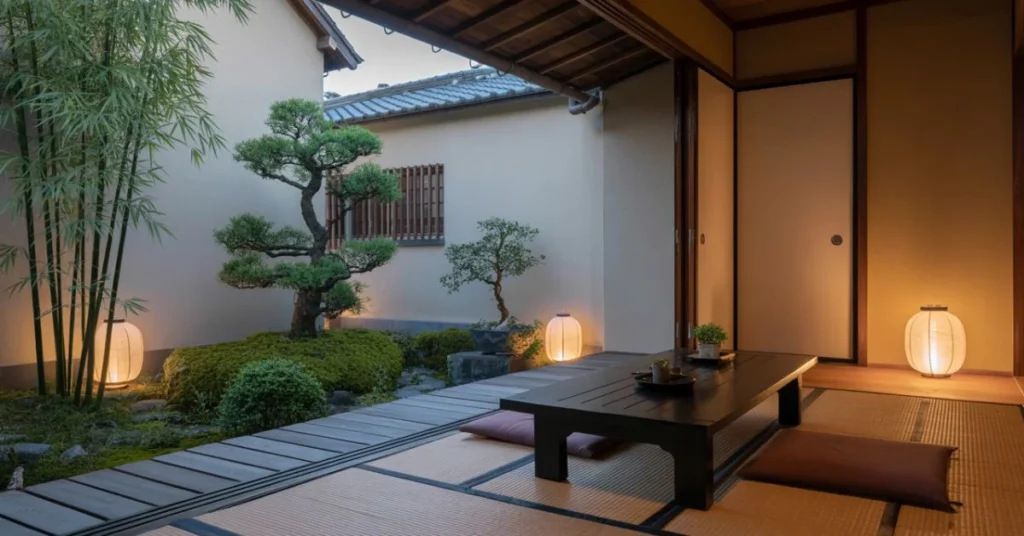
Transforming your balcony into a serene outdoor retreat can completely change how you experience your home. Japanese style balconies are all about simplicity, harmony, and a connection to nature, offering a perfect escape from the daily hustle. Whether you have a small city balcony or a spacious outdoor area, these Japanese Style Balcony Decor Ideas can help you create a tranquil space for relaxation, meditation, or a quiet cup of tea.
Imagine stepping out onto a balcony that feels like a calm sanctuary—soft natural textures, minimal furniture, and the gentle rustle of bamboo leaves. This article will guide you step-by-step to bring a touch of Japan into your outdoor space, combining style, functionality, and serenity.
Embrace Minimalist Design
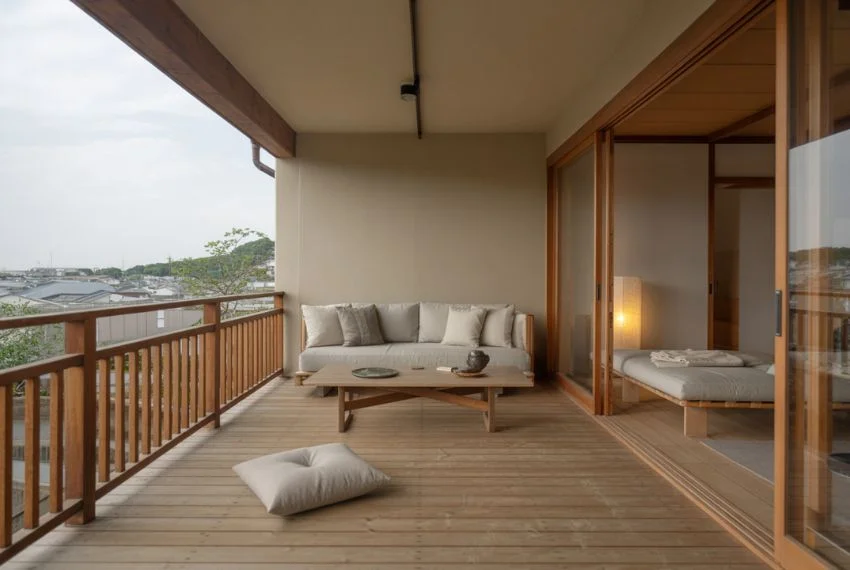
The foundation of any Japanese-style balcony is minimalism. Keep the space clutter-free by selecting only essential furniture and décor. Focus on clean lines and neutral colours like beige, soft gray, and warm wood tones.
Start by removing unnecessary items that make your balcony feel cramped. Choose compact furniture pieces, like a small table and low seating, instead of bulky chairs. Minimalist design not only makes your balcony look more spacious but also encourages calmness and mental clarity.
A simple wooden deck with a few floor cushions and a single plant can transform the space into a peaceful retreat. Remember, less is more—every element should have a purpose and contribute to the overall harmony of the balcony.
Incorporate Natural Elements
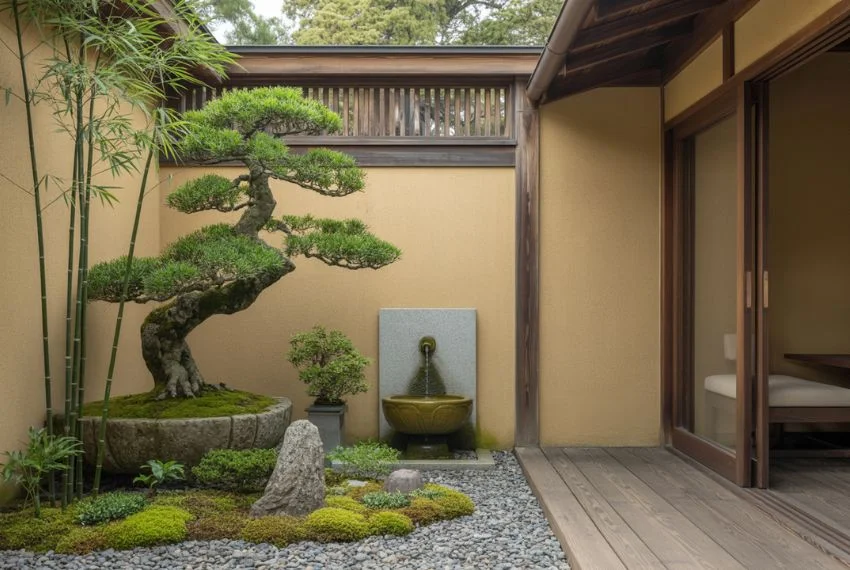
Nature plays a central role in Japanese décor. Adding plants and natural materials instantly brings tranquillity. Bamboo, bonsai trees, ferns, and moss gardens are excellent choices for balconies. You can even add a small water fountain or stone feature to introduce soothing sounds of flowing water.
Consider using natural materials for furniture and décor. Bamboo blinds, wooden flooring, and stone accents create an organic, calming vibe. Position plants strategically to provide privacy and a sense of being enveloped by greenery, even in urban settings.
Even a single bonsai on a low table can anchor the space and make it feel authentically Japanese. Pair it with a small rock garden or a pebble mat to enhance the natural aesthetic.
Choose Japanese-Inspired Furniture
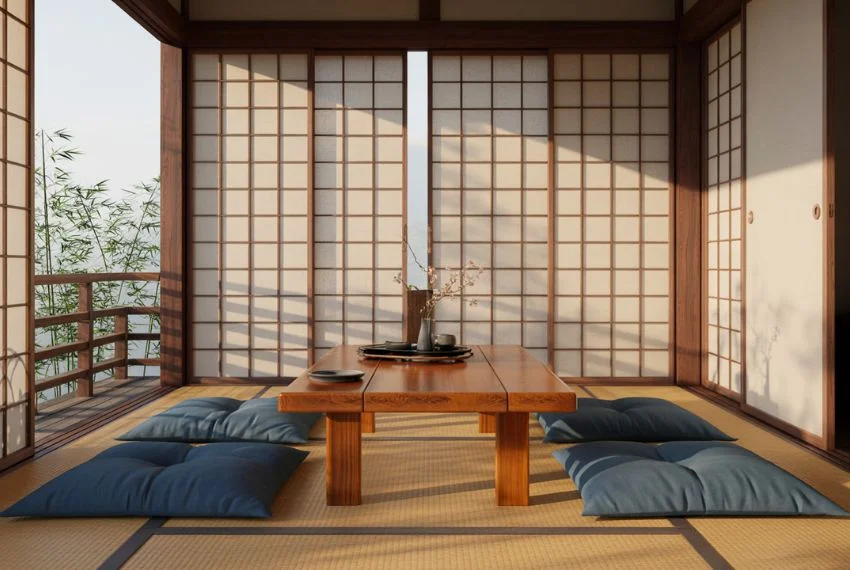
Furniture selection is key to achieving a Japanese balcony style. Opt for low tables, floor cushions (zabuton), and small futons. This seating arrangement keeps the balcony open and inviting, perfect for tea or quiet reflection.
For privacy, consider folding screens or shoji panels. These lightweight, wooden-frame panels provide subtle separation without blocking light or airflow. Multi-functional furniture like foldable tables and stackable cushions works best for small spaces.
Remember, furniture should be simple, natural, and proportionate to the balcony’s size. Avoid overcrowding; every piece should enhance relaxation rather than distract from it.
Add Ambient Lighting
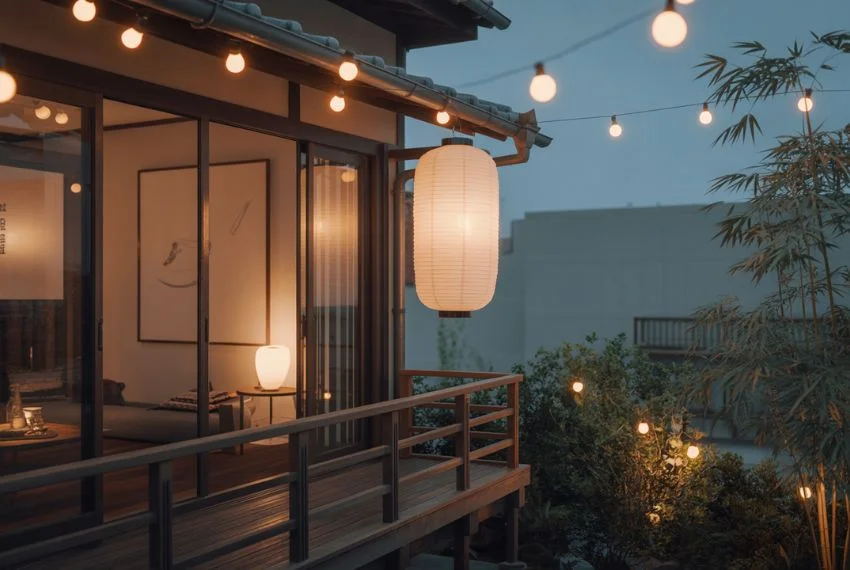
Lighting sets the mood on your balcony. Japanese-style balconies benefit from soft, ambient lighting rather than harsh overhead lights. Paper lanterns, LED candles, and subtle string lights create a warm and inviting atmosphere.
Place lanterns near plants or corners to highlight greenery and décor. The soft glow not only looks beautiful but also encourages relaxation in the evening. For added effect, combine different light sources at varying heights, creating depth and intimacy.
Even a small balcony can feel magical at night with the right lighting. Think of it as painting your balcony with gentle shadows and warm tones.
Integrate Decorative Accents
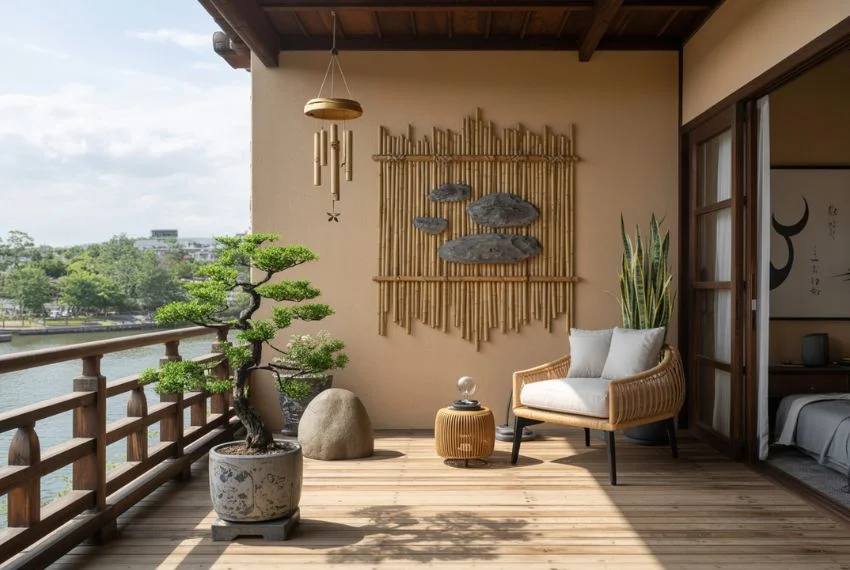
Decorative accents in Japanese style are minimal yet meaningful. Stone sculptures, bonsai pots, hanging bamboo art, and wind chimes can add personality without cluttering the space.
Keep decorations simple and natural. A hanging bamboo planter or a single stone ornament can add elegance and authenticity. Avoid over-accessorizing; one or two carefully chosen pieces will make a bigger impact than many small items.
These small touches not only enhance visual appeal but also create subtle sensory experiences—sound, texture, and natural beauty—all contributing to a serene atmosphere.
Create a Meditation or Tea Corner
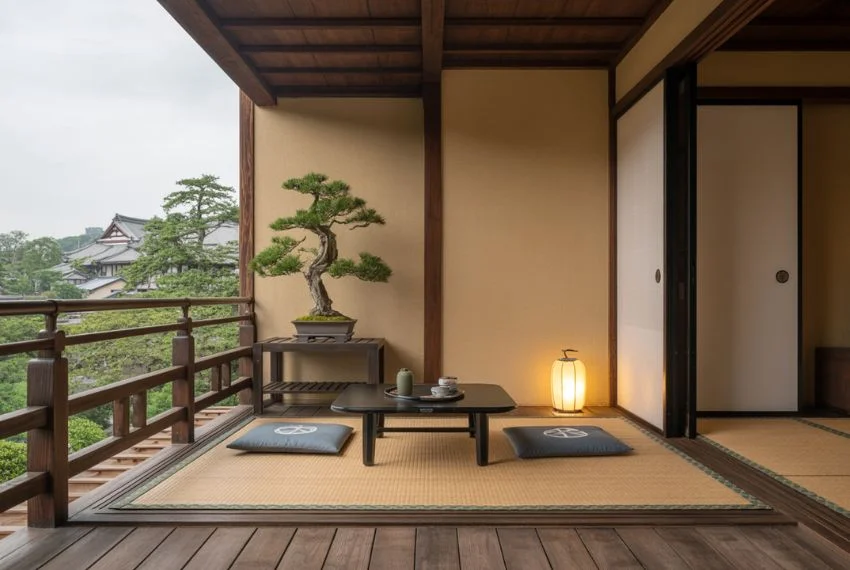
A Japanese-style balcony isn’t complete without a dedicated meditation or tea corner. Use tatami mats or floor cushions for seating. A small low table can serve as a tea station or a spot for quiet reflection.
Add elements like bonsai trees, small water features, or simple lanterns to enhance the ambiance. This corner becomes your personal sanctuary, perfect for practicing mindfulness, reading, or enjoying a cup of tea at sunrise or sunset.
Even if your balcony is tiny, a single cushion and a bonsai tree can establish a meaningful meditation space. Consistency in natural materials, colors, and simplicity is key.
Final Note
Japanese Style Balcony Decor Ideas focus on simplicity, nature, and harmony. By embracing minimalism, incorporating natural elements, selecting authentic furniture, adding ambient lighting, and integrating subtle décor, your balcony can become a peaceful retreat.
No matter the size of your balcony, these ideas can help you create a personal haven inspired by Japanese aesthetics. Start small, focus on quality over quantity, and enjoy a serene space that refreshes your mind and soul.
Also read about Low-Maintenance Balcony Trees for a Green Outdoor Retreat.
FAQs
Q1: What plants are best for a Japanese-style balcony?
Bamboo, bonsai trees, ferns, moss, and small flowering plants work well. Choose plants that thrive in your climate and balcony lighting conditions.
Q2: How can I create a zen atmosphere in a small balcony?
Use minimal furniture, neutral colours, natural materials, and a few decorative accents like bonsai or stone ornaments.
Q3: What furniture works best for Japanese balcony décor?
Low tables, floor cushions, small futons, and folding screens are ideal for maintaining an open, minimalist layout.
Q4: How to incorporate lighting for a peaceful balcony?
Soft ambient lighting using paper lanterns, LED candles, and string lights enhances relaxation and highlights plants and décor.