
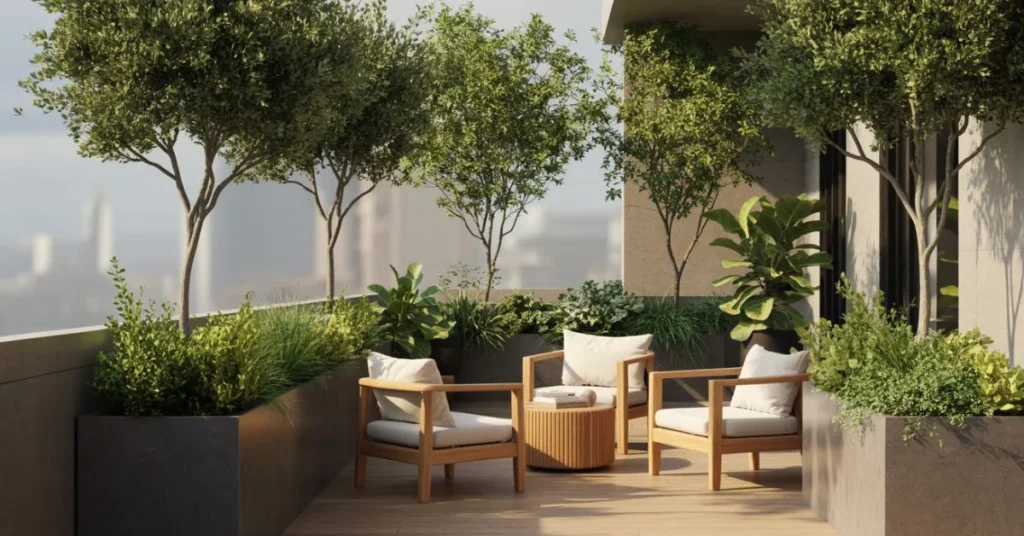
Living in an apartment doesn’t mean you have to give up on greenery. With the right balcony trees, even a small outdoor space can feel calm, fresh, and connected to nature. The best part? You don’t need advanced gardening skills or hours of care. Many trees grow well in containers and thrive with minimal attention, making them perfect for busy homeowners.
- What Makes Balcony Trees Low-Maintenance?
- Best Low-Maintenance Balcony Trees for Apartments
- Balcony Trees That Thrive With Minimal Watering
- Balcony Trees for Privacy Without Constant Care
- How to Style Balcony Trees for a Relaxing Outdoor Retreat
- Simple Care Tips to Keep Balcony Trees Healthy
- Common Mistakes to Avoid With Balcony Trees
- Final Thoughts
- FAQs
This article focuses on low-maintenance options that look beautiful year-round while staying easy to manage. If your goal is a peaceful green retreat without daily effort, these balcony-friendly trees are a smart place to start.
What Makes Balcony Trees Low-Maintenance?
Not every tree is suitable for container living. Low-effort trees share a few key traits that make them ideal for balconies.
First, they grow slowly and stay compact, which means less pruning and no constant repotting. Second, their root systems adapt well to pots, reducing stress on the plant. Many low-care balcony trees also tolerate wind, varying temperatures, and occasional missed watering.
When choosing a tree, look for varieties that are drought-tolerant, pest-resistant, and comfortable in partial sun. These qualities reduce upkeep while keeping your balcony green and inviting.
Best Low-Maintenance Balcony Trees for Apartments
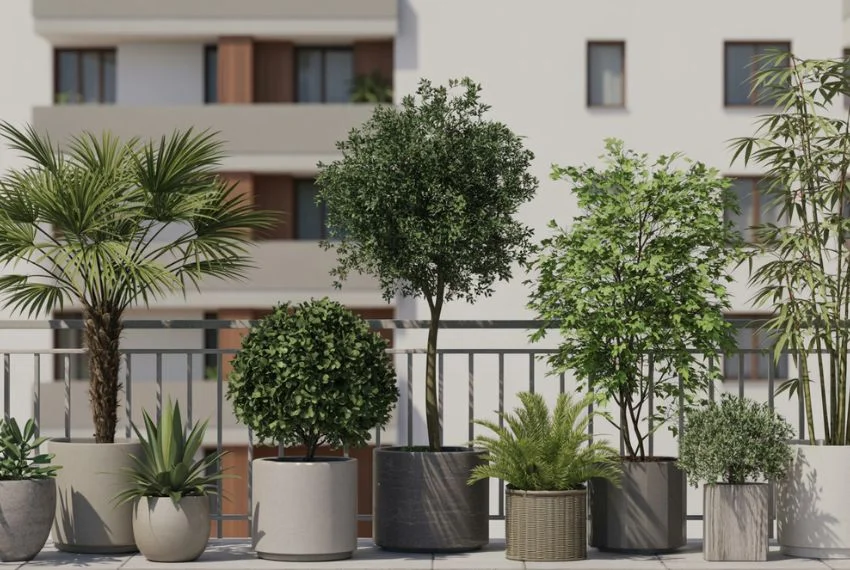
Below are some reliable choices that work well in containers and don’t demand constant care.
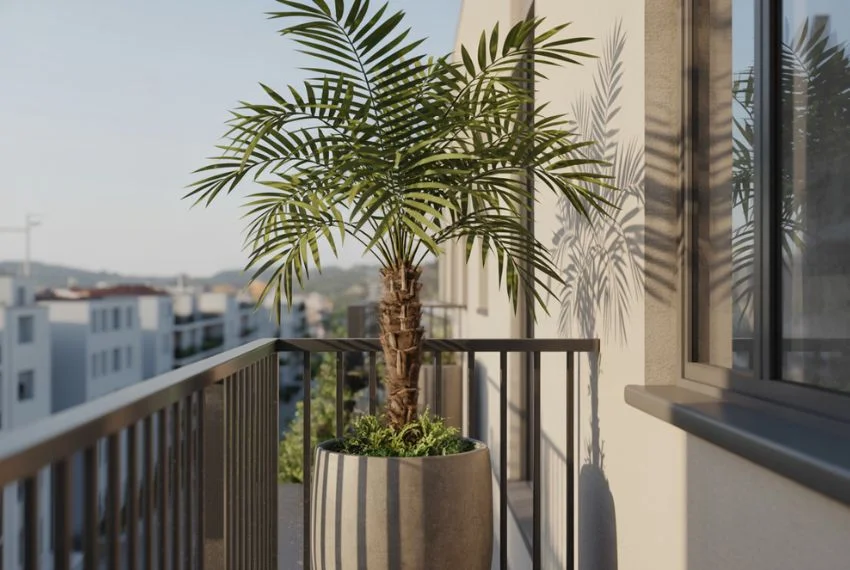
Areca Palm
Areca Palm is a popular choice for apartment balconies because it grows upright without spreading too wide. It prefers bright, indirect light and only needs watering when the soil feels dry. Among decorative balcony trees, this one adds a relaxed, tropical feel with very little effort.
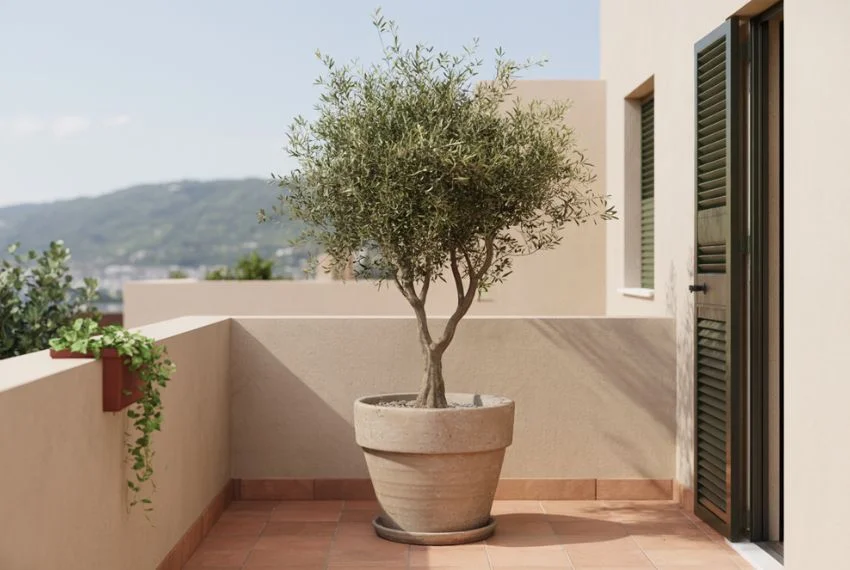
Dwarf Olive Tree
Dwarf olive trees are slow-growing and surprisingly hardy. They handle sun well and don’t require frequent watering once established. Their soft green leaves add a Mediterranean touch, making them one of the most stylish balcony trees for modern apartments.
Ficus (Compact Varieties)
Ficus trees adapt easily to container life and hold their shape with minimal pruning. They prefer consistent light and occasional watering. If you want neat, structured greenery, ficus is one of the easiest balcony trees to maintain indoors or outdoors.

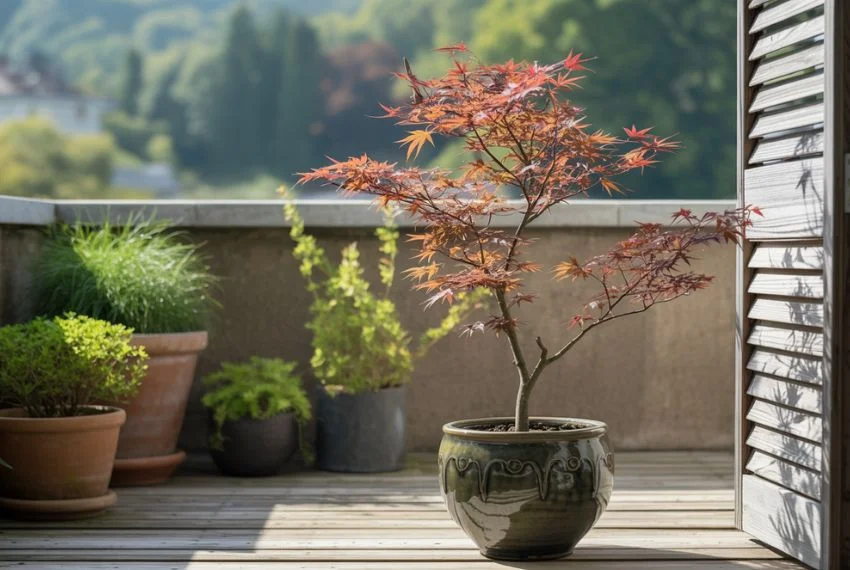
Japanese Maple
Japanese Maple grows slowly and stays manageable in a large pot. It doesn’t need frequent trimming and adds seasonal colour to your space. For shaded or semi-shaded balconies, this is one of the most visually striking balcony trees available.
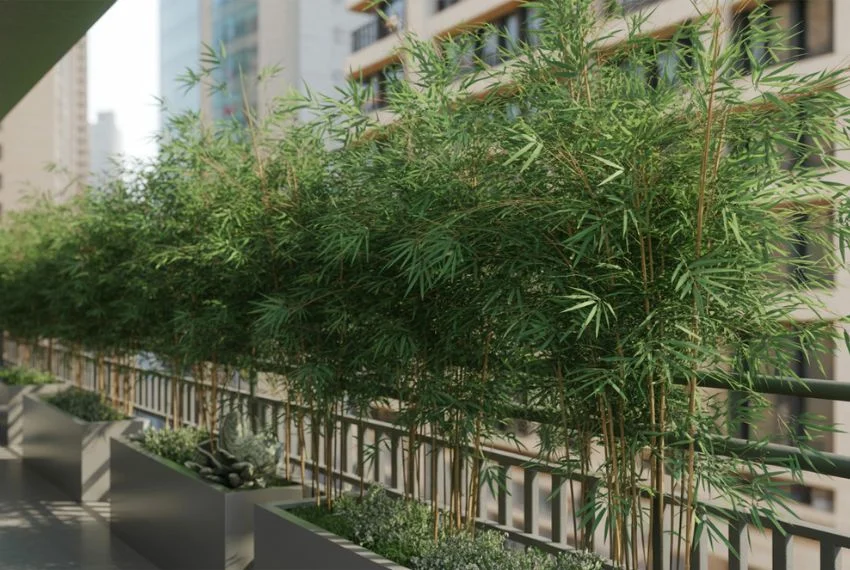
Clumping Bamboo
Clumping bamboo varieties are ideal for balconies because they don’t spread aggressively. They require moderate watering and grow upright, making them perfect for privacy. These balcony trees work especially well along railings.
Balcony Trees That Thrive With Minimal Watering
If you prefer plants that forgive the occasional missed watering, focus on drought-tolerant varieties. Trees like olive, ficus, and rubber plant store moisture efficiently and adapt well to warmer balconies.
Using deep planters with proper drainage also helps retain moisture longer. Mulching the topsoil can further reduce water loss, keeping your balcony trees healthy with less effort.
Balcony Trees for Privacy Without Constant Care
Privacy is a common reason people choose trees for balconies. Tall, narrow trees create a natural screen without taking up much floor space.
Clumping bamboo, ficus, and areca palm are excellent options. Once placed correctly, these trees require little maintenance while offering shade and visual separation from neighbour’s.
Position them along the railing or in corners to maximize coverage and maintain airflow.
How to Style Balcony Trees for a Relaxing Outdoor Retreat
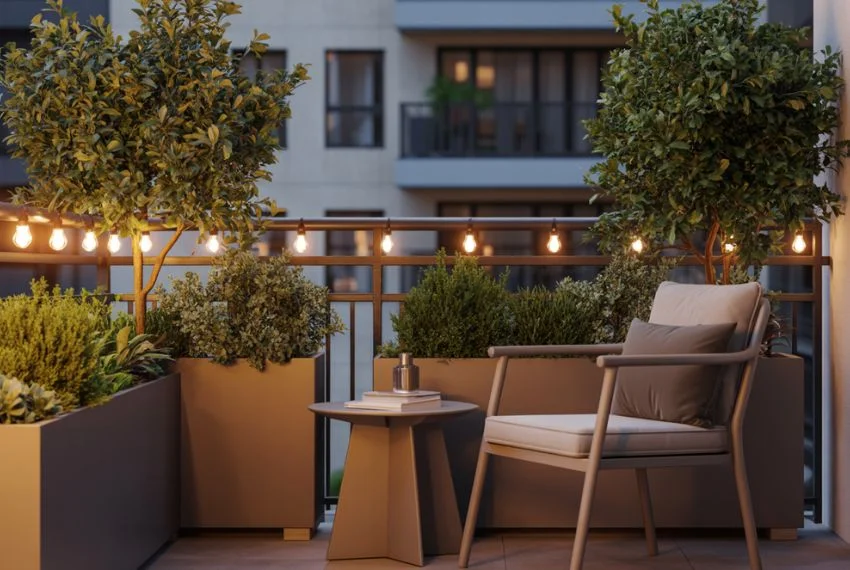
Styling matters just as much as plant selection. Use tall planters to elevate smaller trees and create visual balance. Neutral pots suit modern spaces, while textured or clay planters work well for natural themes.
Pair trees with compact furniture, outdoor rugs, and soft lighting to create a calm retreat. Mixing one tree with low-maintenance ground plants keeps the space full without feeling crowded.
Simple Care Tips to Keep Balcony Trees Healthy
Even low-maintenance trees need basic care. Water only when the top layer of soil feels dry and avoid letting pots sit in standing water. Fertilize lightly every few months during the growing season.
Occasional leaf cleaning helps trees absorb light better. With these simple steps, your trees will stay healthy without becoming a chore.
Common Mistakes to Avoid With Balcony Trees
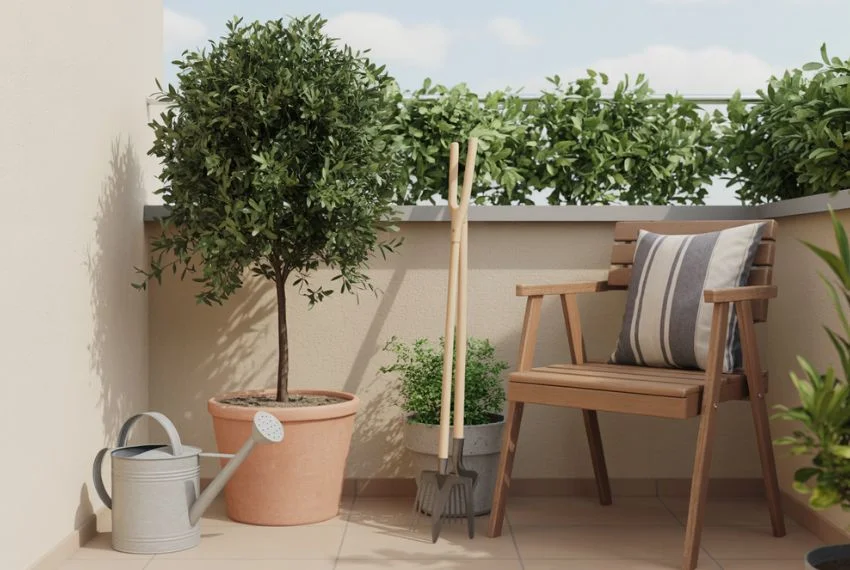
A common mistake is choosing trees that grow too fast or too tall. These quickly outgrow containers and demand constant attention. Poor drainage is another issue that leads to root rot.
Ignoring sunlight needs can also weaken balcony trees, making them more prone to pests. Matching the tree to your balcony’s conditions prevents most problems before they start.
Final Thoughts
Creating a calm outdoor space doesn’t require endless maintenance. With the right low-care balcony trees, you can enjoy greenery, shade, and privacy with minimal effort. Start with one well-chosen tree, give it the right container and light, and let nature do the rest.
A small balcony can still feel like a peaceful retreat—simple choices make all the difference.
Also read about Budget-Friendly Indoor Plants That Actually Thrive in Low Light for your apartments or small house.
FAQs
Are balcony trees hard to maintain?
No, many balcony trees are designed for container growth and need only basic care.
Which balcony trees need the least attention?
Dwarf olive, fiscus, areca palm, and clumping bamboo are among the easiest.
How often should balcony trees be watered?
Most need watering only when the topsoil dries out.
Can balcony trees grow in small spaces?
Yes, many varieties stay compact and grow well in pots.