If your mornings feel rushed, heavy, or a little dull, one bright corner can change more than you expect. A breakfast nook does not need a huge kitchen or a fancy remodel. It just needs good light, comfortable seating, and a setup that makes you want to sit down for ten calm minutes before the day takes over. Current design advice from Better Homes and Gardens points out that bright direct sunlight suits breakfast nooks especially well, while light colors, reflective surfaces, and soft window treatments help keep that brightness useful instead of harsh.
- Let The Window Lead The Layout
- Choose Seating That Feels Relaxed, Not Formal
- Use A Table Shape That Keeps The Corner Open
- Bring In Colours And Textures That Glow In Daylight
- Soften Strong Sun Without Losing The Glow
- Add Small Details That Support Real Mornings
- A Bright Corner Can Change The Whole Tone Of Your Day
The best breakfast nooks feel easy. They are not stiff like a formal dining room, and they are not overloaded with decor. They hold a mug, a plate, the morning paper, or a laptop for twenty quiet minutes. They can also work in small kitchens, awkward corners, bay windows, and narrow areas that would otherwise go unused. Designers keep coming back to banquettes, round tables, and soft filtered light because those choices make a small nook feel warmer and more practical at the same time.
Let The Window Lead The Layout
A sunny nook works best when you stop fighting the light and start designing around it. Look at where the sun falls in the morning. That is where your seating should go. If you already have a corner near a window, a simple bench plus a small table may be enough. If the space feels awkward, that is not a problem. Many of the best breakfast nooks are tucked into odd corners, under windows, or beside kitchen traffic paths that seemed too small at first. Better Homes and Gardens and House Beautiful both show how corners, bay windows, and even tricky leftover spaces can turn into comfortable breakfast spots when the furniture is scaled well.
Try to keep the window area visually open. Do not crowd it with tall shelving, heavy side chairs, or bulky decor. A low bench, slim table, and one or two movable chairs usually feel lighter. I have seen small kitchens feel twice as friendly just because the family stopped treating the sunny corner like storage overflow and gave it a clear purpose. That shift matters. The nook starts to say, “sit here,” instead of “walk past this.” And when a space invites you to slow down, mornings feel easier almost right away.
Choose Seating That Feels Relaxed, Not Formal
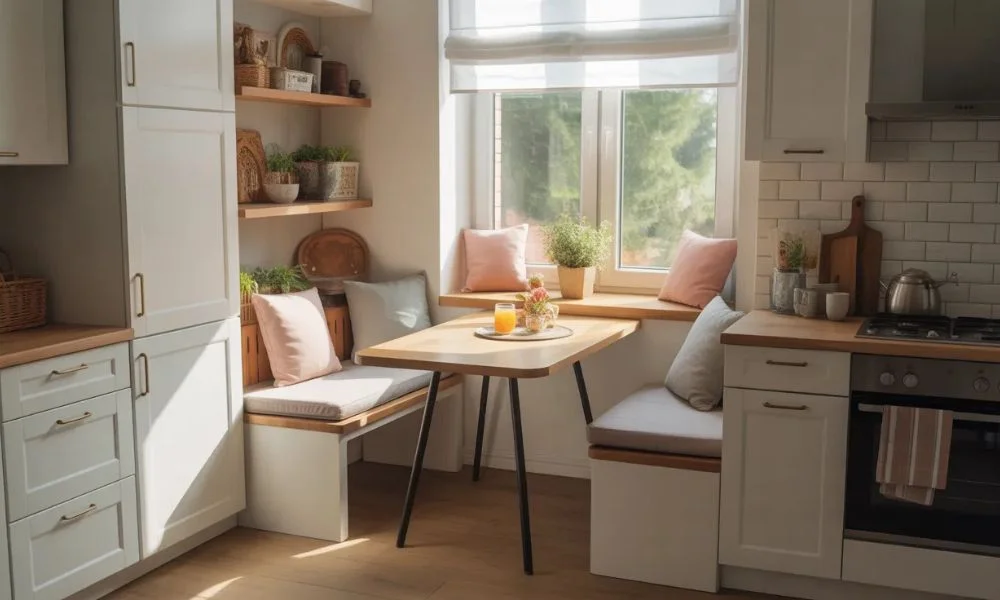
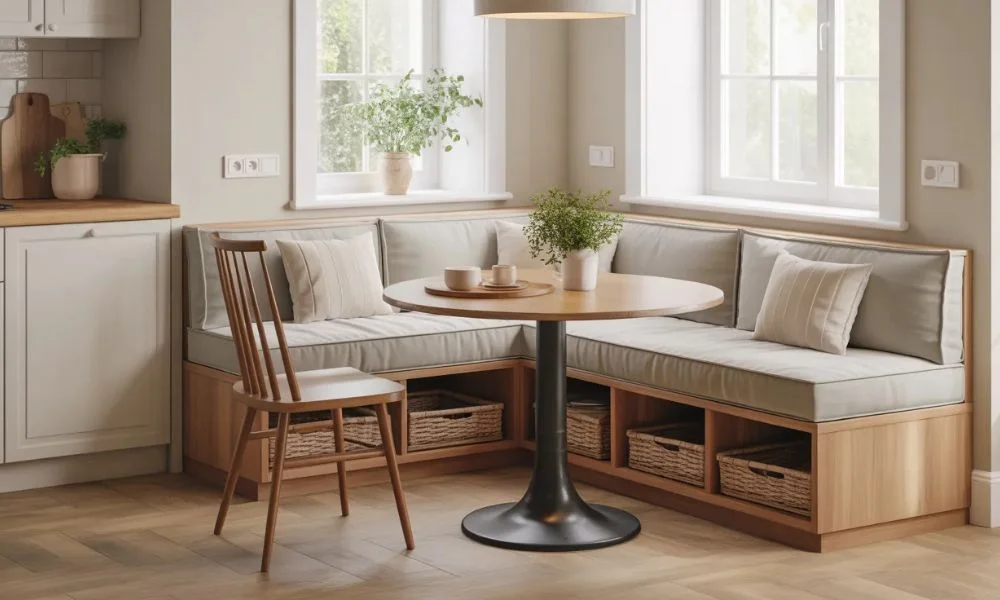
If you want your nook to feel better in real life, focus on comfort before style. Banquette seating keeps showing up for a reason. Recent design coverage notes that banquettes are space-saving, can fit more people than separate chairs, and often include hidden storage. They also make meals feel more intimate and calmer, which is exactly what a breakfast nook should do.
That does not mean you need custom built-ins. A storage bench against the wall can create the same cozy feel for less effort. Add a seat cushion that is thick enough to support a slow cup of tea, not just a five-minute snack. If kids use the space, or if this corner will double as a homework spot, choose an easy-clean material. Better Homes and Gardens recently recommended performance fabrics for banquettes because they are made for stains, spills, and heavy everyday use. If you like a softer look, you can still get it with washable cushion covers, a textured pillow, and one chair in wood or rattan to keep the nook from feeling too boxed in.
The goal is simple: when you sit down, your body should relax. That is what makes a nook feel different from the rest of the kitchen.
Use A Table Shape That Keeps The Corner Open
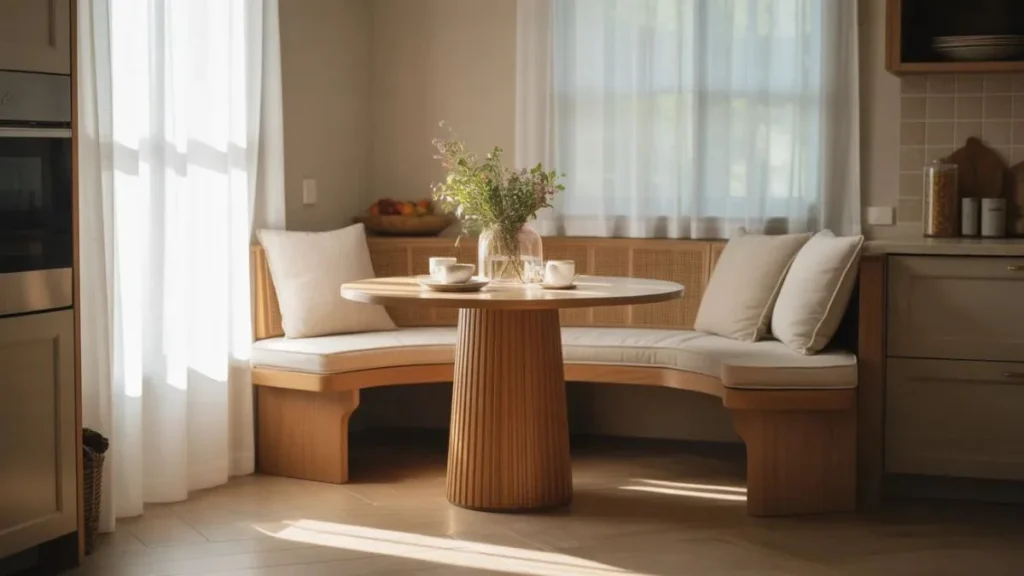
Table shape changes everything in a small nook. If you are working with a tight corner, a round or oval table usually works better than a rectangle. Better Homes and Gardens says oval tables help traffic move more easily in small dining spaces, while circular and pedestal tables are a smart fit for tight rooms because they improve legroom and flow. House Beautiful also points to the round-table-and-banquette pairing as one of the most efficient ways to turn a bare corner into a functional eating area.
This matters more than people think. Mornings are full of small movements. Pulling out a chair, passing behind someone, reaching for the coffee pot, grabbing a school bag. Sharp table corners can make all of that feel annoying. A round table softens the space and makes the nook easier to move around. It also feels more social because everyone faces each other more naturally.
For a very small nook, choose a pedestal base if you can. It removes the leg clutter under the table and gives the whole setup a cleaner look. If you want the area to feel even more open, skip oversized centerpieces. A small tray, a bud vase, or a fruit bowl is enough. Your nook should look ready for breakfast, not ready for a staged photo shoot.
Bring In Colours And Textures That Glow In Daylight
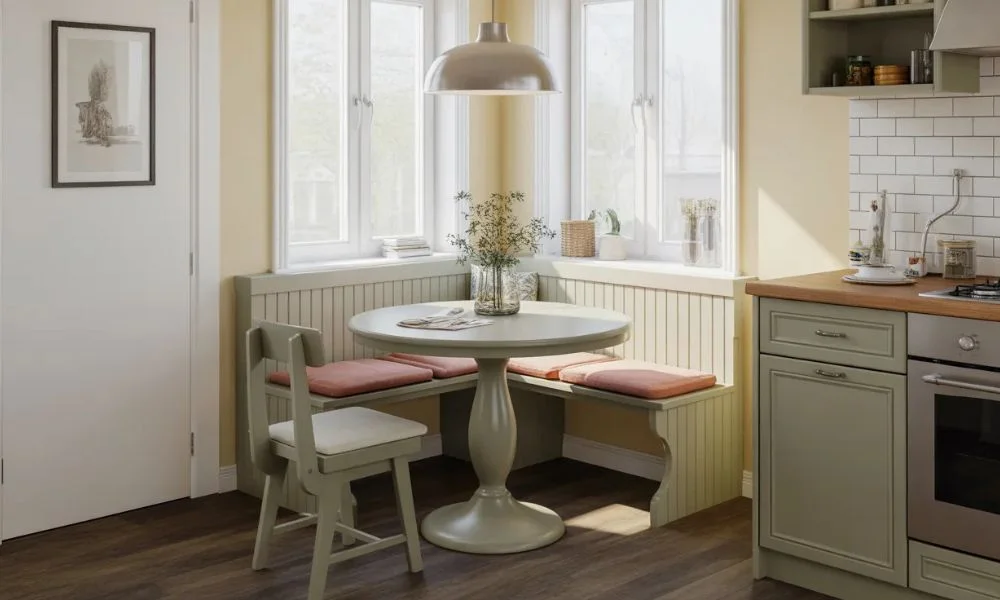
Sunlight changes colour in a room, so your materials should work with it. Better Homes and Gardens recommend light paint colours with higher reflectance to help bounce daylight through a space, and its recent morning-room guidance also leans toward soft creams, muted greens, and pale blues for a calm start to the day. Mirrors and reflective accents can also help spread light and make a compact nook feel larger.
That does not mean everything has to be white. A sunny nook often looks better with a little warmth. Light oak, natural wood, woven textures, linen, soft striped cushions, and brushed metal details all catch daylight in a way that feels alive. If your kitchen already has white cabinets, the nook is a great place to add a quiet accent color. Sage, dusty blue, butter yellow, clay, or soft terracotta can all feel gentle in morning light without turning the corner dark.
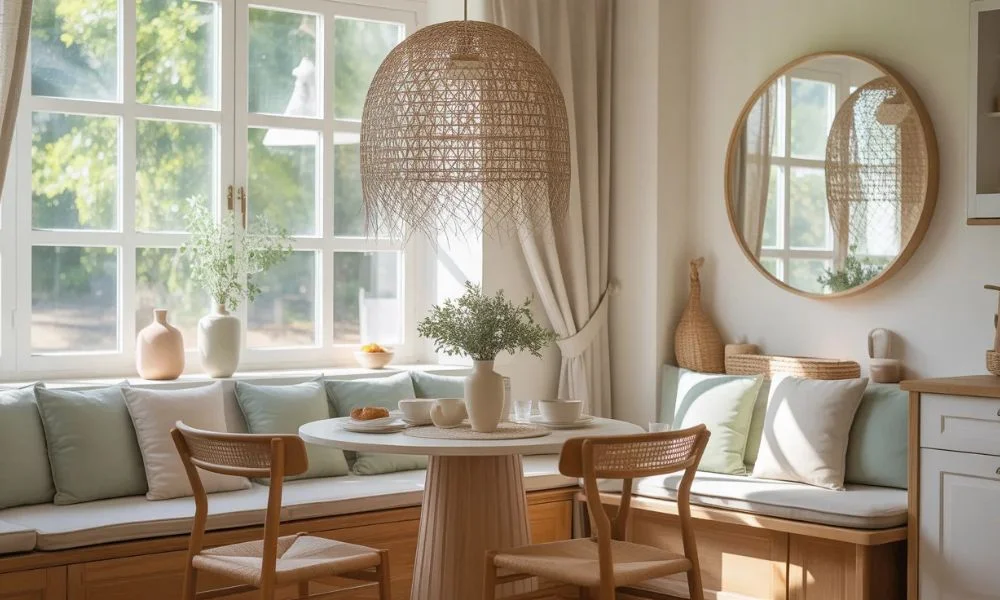
Think about texture as much as color. A flat space rarely feels cozy. Try one woven pendant, one washable rug, one cushion with a subtle pattern, and curtains with some movement. When the sun hits those layers, the nook starts to feel softer and more personal. That is what makes it memorable. It is not just bright. It feels lived in and loved.
Soften Strong Sun Without Losing The Glow
A sunny nook should feel bright, not blinding. The easiest fix is a soft window treatment. The Spruce notes that sheer panels diffuse light while keeping the room airy, and dining-room window treatment advice from the same source describes sheers as a good middle ground that gives coverage without feeling heavy. Better Homes and Gardens also recommends replacing heavy drapes with lighter window treatments when the goal is to increase usable natural light.
This matters for comfort, but it also matters for maintenance. The Spruce warns that prolonged direct sunlight can fade furniture and fabrics, and it specifically suggests working at the window level with curtains or glazing to help reduce sun damage. It also mentions UV-filtering curtains as a smart way to keep the benefits of daylight while protecting furnishings.
So, if your breakfast corner gets very strong sun, use light-filtering curtains, café curtains, or a simple shade that can be adjusted through the day. Keep the fabric pale so the nook still feels open. Also do the boring but useful things: clean the windows and trim plants outside if they block too much light. Better Homes and Gardens calls out both steps as simple ways to improve brightness indoors.
A good nook does not force you to choose between sunshine and comfort. You can have both.
Add Small Details That Support Real Mornings
The best Sunny Breakfast Nook Ideas are not only pretty. They make daily life smoother. That is why the finishing touches matter. A corkboard or pinboard above the nook can hold grocery notes, school reminders, and family photos. House Beautiful has shown breakfast nooks that use a cork wall to make the corner more useful and personal, while other dining nook examples show the same space shifting easily from breakfast to light work or meetings.
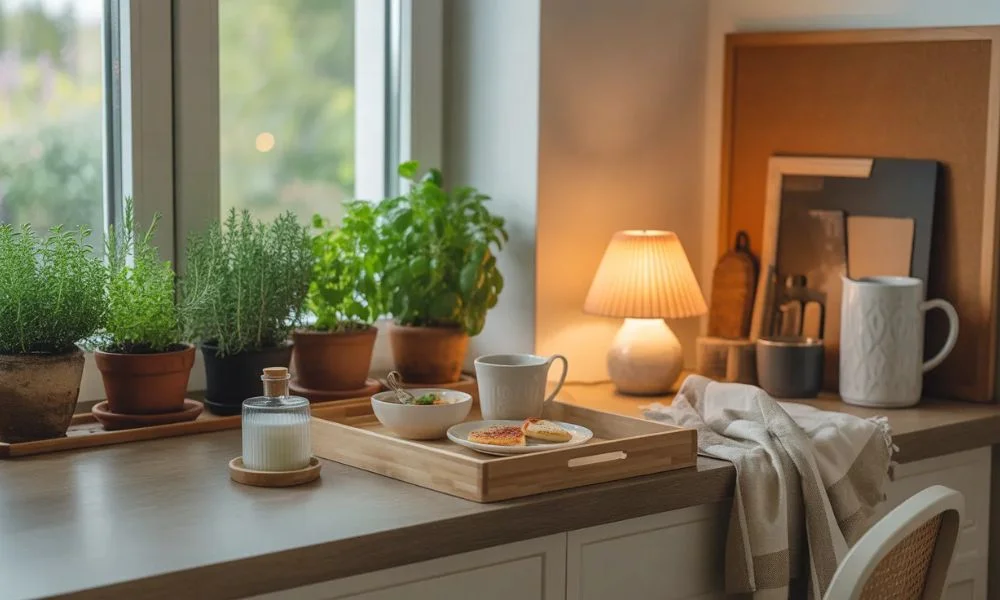
Plants can also help the nook feel fresher, especially if the window gets good sun. The Spruce recommends sunny south- or west-facing windows for indoor herb gardens and highlights rosemary, thyme, hyssop, and sage as good choices for sunny windowsills. For gentler light, it notes that many plants that like bright indirect light do well with eastern exposure.
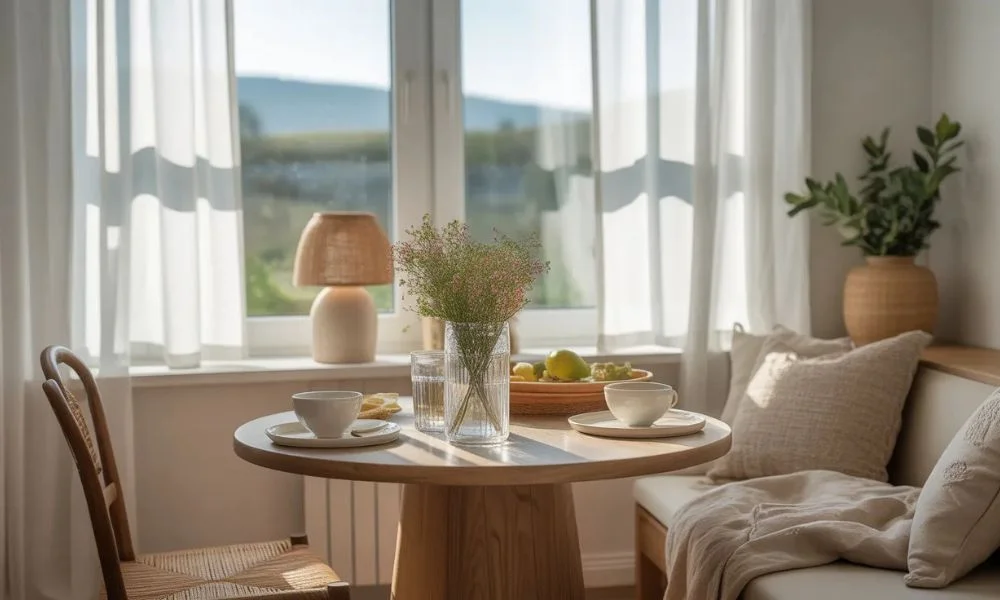
So, think beyond furniture. Add a tiny lamp for gray mornings. Keep a basket nearby for napkins or placemats. Use a tray for honey, salt, jam, and spoons. Hang one cheerful piece of art that catches the eye before the phone does. These are small moves, but they change the mood of the space. Suddenly the corner feels ready for breakfast, journaling, prayer, reading, or a quiet chat before everyone heads out.
That is when a nook starts doing more than filling an empty corner. It starts shaping the rhythm of the house.
A Bright Corner Can Change The Whole Tone Of Your Day
The most effective Sunny Breakfast Nook Ideas are usually the simplest ones. Put the nook where the morning light already falls. Choose seating that feels soft and easy. Use a round or oval table if space is tight. Add colours that glow in daylight, not colors that fight it. Filter strong sun when needed and finish the area with details that support real life, not just photos.
A breakfast nook does not have to be perfect to make mornings feel better. It just has to feel welcoming. Even one bench, one small table, and one bright window can do a lot. The moment that corner becomes a place you enjoy, your morning routine starts to feel less like a rush and more like a reset.
If you are building your own version, start with comfort and light. Style can come after that. The glow is already doing half the work.
Also Read About Coastal Breakfast Nooks for Small Spaces and Open Kitchens.