Basement Lighting Solutions matter more in this room than almost anywhere else in the house, because a basement rarely gets a second chance at natural light. Every fixture has to work harder down here, filling in for the sun that never reaches the space. Get the layering right, though, and a windowless lower level can feel just as inviting as any sunlit room upstairs.
Finding the right Basement Lighting Solutions for a specific layout starts with understanding what makes basements difficult in the first place. Low ceilings, concrete walls, and the occasional exposed duct all make basements tricky to light well. Shadows pool in corners, single overhead bulbs cast a flat, clinical glow, and dark paint or flooring soaks up whatever brightness does exist. None of that is fixable with one pendant in the middle of the ceiling.
The fixes below cover ten different approaches, from ceiling-level solutions to smart controls, so a finished basement ends up bright, warm, and genuinely usable in every corner.
Recessed Ceiling Lighting for a Seamless Low-Ceiling Look
Credit: omnihomeideas / Instagram
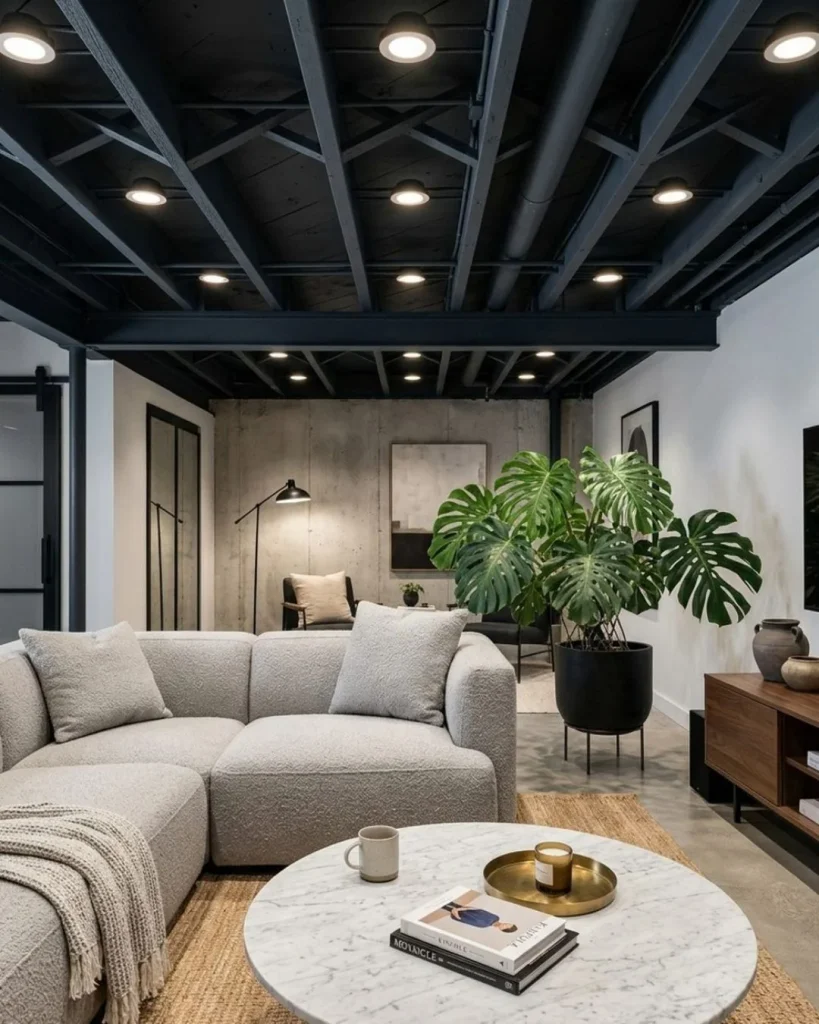
Basement Lighting Solutions almost always start at ceiling height, and recessed cans are the fixture most basements are built around. They sit flush with the drywall, which matters when headroom is already tight, and a grid of them spreads light evenly instead of leaving one bright pool in the centre of the room.
Spacing is the detail people get wrong. A common mistake is placing recessed lights on a single centred row, which leaves the perimeter of the room dim. Splitting them into two or three rows, roughly four feet apart, keeps brightness consistent from wall to wall.
Warm white LED trims (2700K–3000K) suit basements better than cool daylight bulbs, which can make concrete and grey flooring feel colder than they already do. This is why it works: warmer colour temperatures visually soften hard, unfinished-feeling surfaces that basements tend to have.
Track Lighting Brings Flexible Brightness to Awkward Corners
Credit: mintlighting_design / Instagram
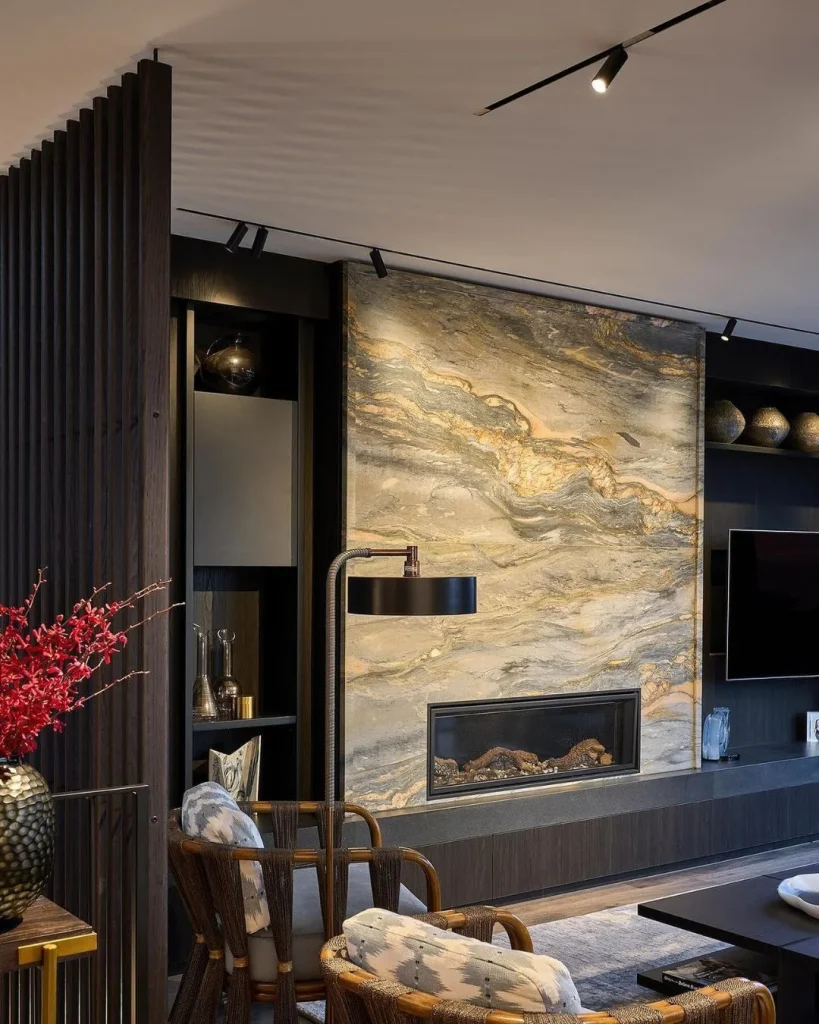
Basements are rarely one open rectangle. Support columns, low ductwork, and odd nooks under the stairs all interrupt the layout, and track lighting handles that unevenness better than fixed recessed cans.
Among Basement Lighting Solutions built for retrofits, track systems stand out because each head can be angled independently, so one fixture can light a reading corner, a workbench, and a hallway without three separate wiring runs. That flexibility also makes tracks a practical retrofit option in a basement that already has drywall up, since a single junction box can feed the whole track.
Matte black or brushed nickel finishes tend to read as more intentional than builder-grade white tracks, especially in a basement styled as a lounge, gym, or home office rather than pure storage.
Floor Lamps and Torchieres Add Height Without Rewiring
Credit: Shan Nir / Pexels
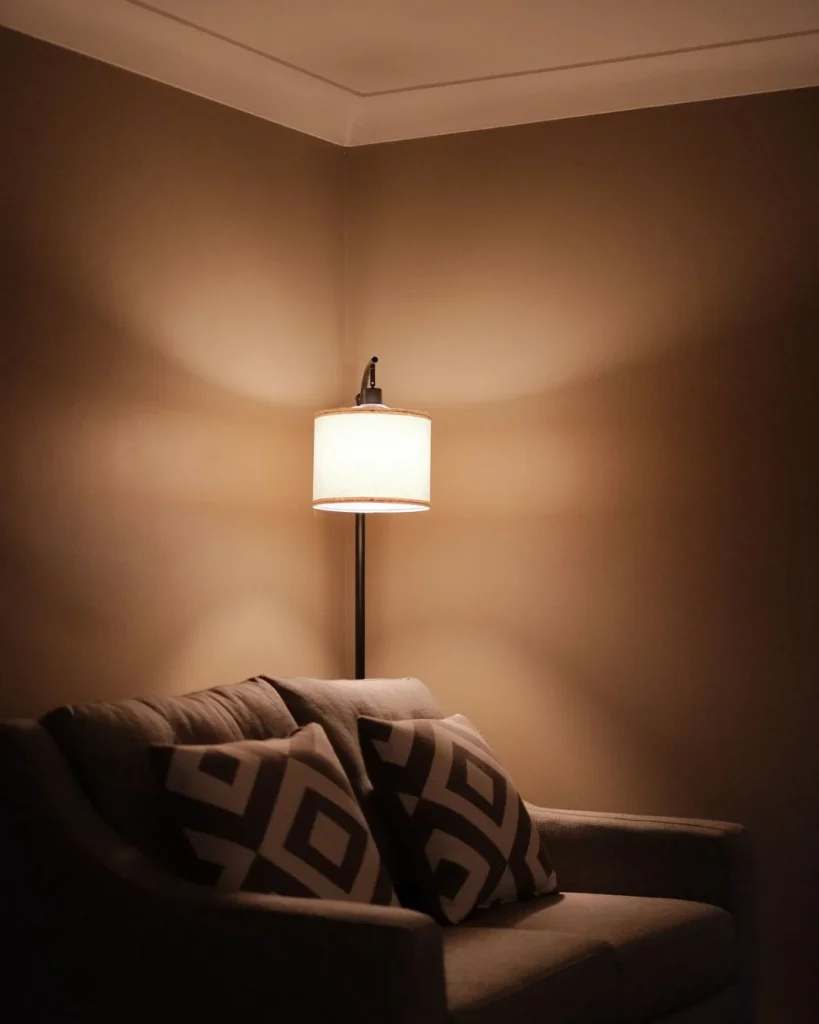
Not every one of these Basement Lighting Solutions needs an electrician. Torchiere floor lamps bounce light off the ceiling, which softens the flat, cave-like quality that low basement ceilings tend to create, and they plug straight into an existing outlet.
Placing one in each corner of a large room does more for perceived brightness than a single bright lamp in the centre, because it removes the dark corners that make basements feel smaller than they are. A tall lamp beside a sectional or reading chair also adds a warm pool of light exactly where it’s used, rather than lighting the whole ceiling for one seat.
This approach suits renters and anyone finishing a basement in stages, since lamps move with the furniture and need no rewiring at all.
LED Strip Lighting Under Stairs and Shelving
Credit: birddog_lighting / Instagram
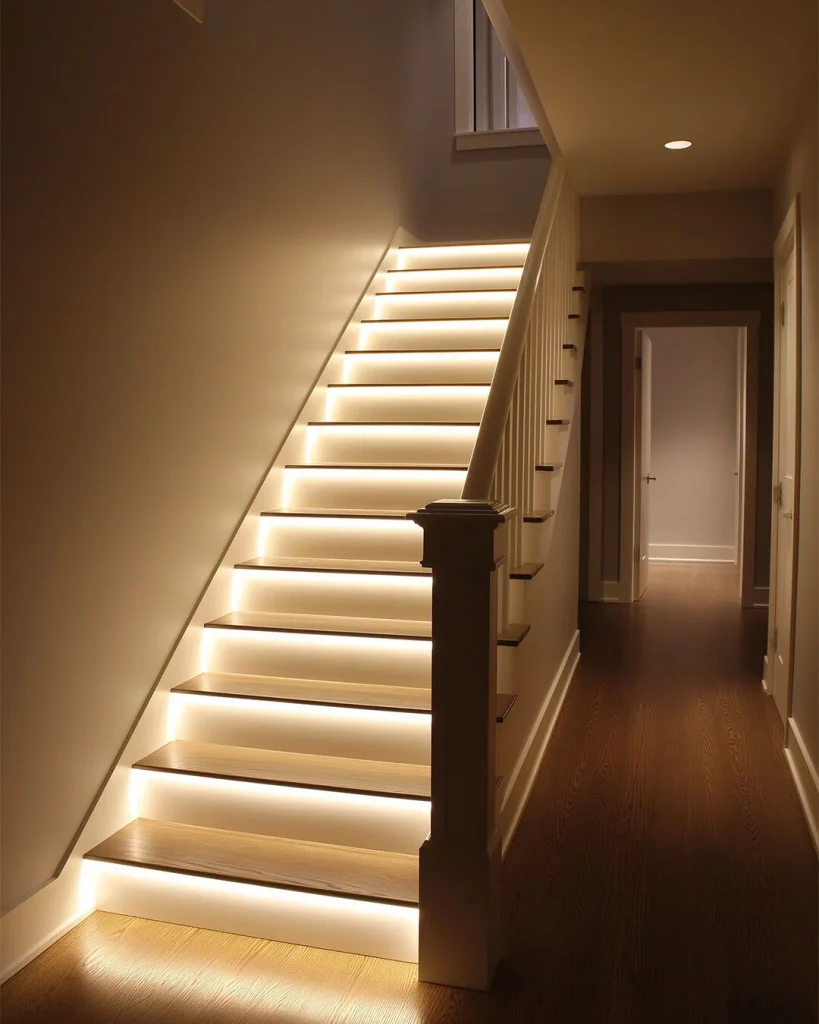
Stairwells are one of the most overlooked spots for Basement Lighting Solutions, and they’re also one of the easiest to fix. A slim LED strip run along the underside of each stair tread, or tucked behind a handrail, turns a dark stairwell into a safer, better-lit transition space.
The same strips work well under open shelving, behind a home bar’s back bar, or along a media console, where the light source stays hidden and only the glow shows. Warm white strips in the 2700K–3000K range match recessed and lamp lighting elsewhere in the basement, so the whole space reads as one coordinated scheme rather than a patchwork.
Battery-powered, motion-activated strips are a genuinely useful option for stairs specifically, since they light up automatically the moment someone starts down.
Pendant Lighting Warms Up a Basement Home Bar
Credit: Rachel Claire / Pexels
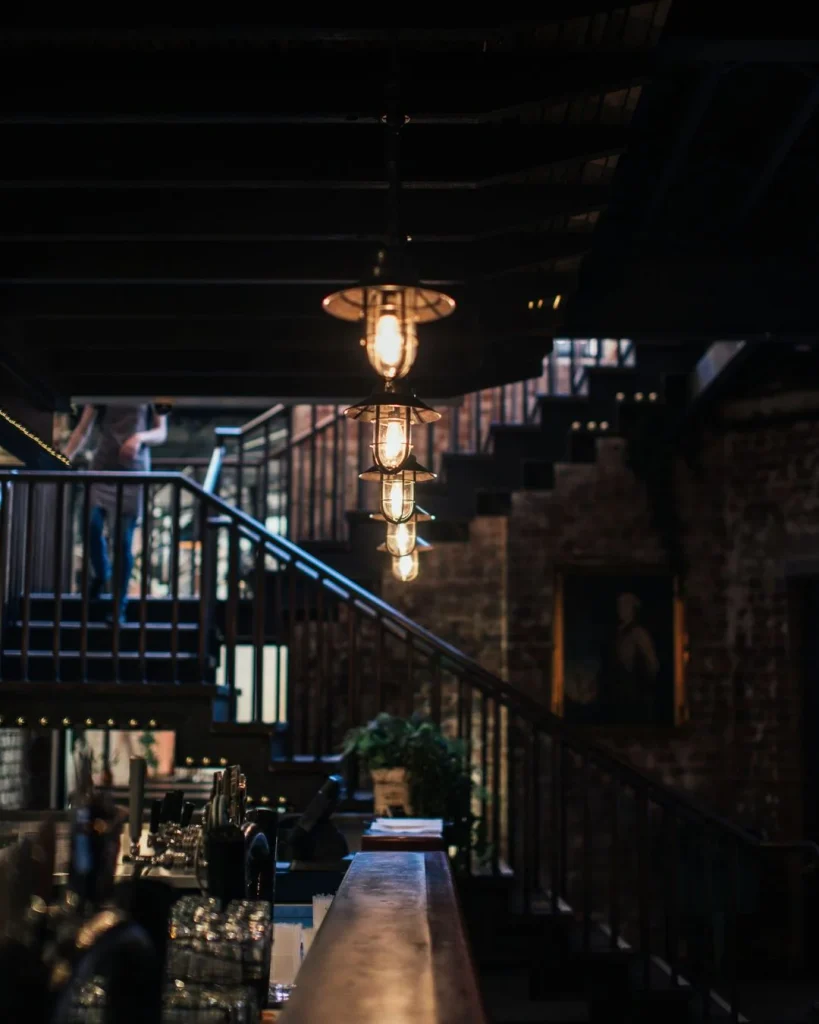
A basement bar or entertaining nook benefits from Basement Lighting Solutions that feel distinct from the rest of the room, and pendants deliver that instantly. Hung at counter height, two or three matching pendants over a bar or island create a focal point the way they would in a kitchen upstairs.
Amber or smoked glass shades add warmth and a slightly moody, evening feel that suits a space used mostly after dark anyway. Dimmable pendants let the same fixture handle a bright game-night setting and a low, ambient one for movie nights.
Pairing pendants with under-cabinet or shelf lighting behind the bar fills in the task lighting that overhead pendants alone can’t provide for pouring drinks or reading labels.
Media Room Lighting That Balances Screen Glare and Comfort
Credit: accent_walls_gta / Instagram
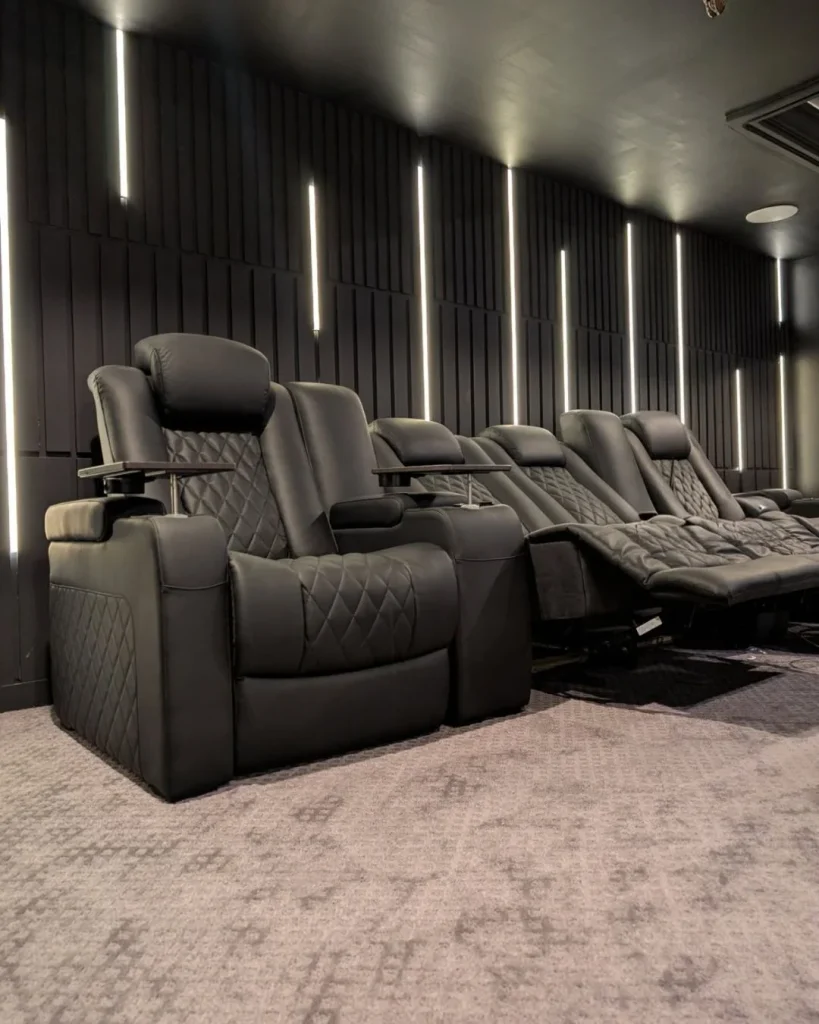
A basement media or theatre corner has the opposite lighting problem to most of the house: too much light, not too little, ruins the experience. Bright overhead fixtures wash out a screen and cause glare, so this zone calls for indirect, low-level lighting instead.
Bias lighting behind the television — a thin LED strip mounted on the back of the screen — reduces eye strain during dark scenes without lighting the room itself. Floor-level sconces or a single dimmable lamp beside the seating area give enough light to navigate the room without competing with the screen.
Smart bulbs set to a warm, low-brightness scene during viewing and a brighter one for cleaning up afterward save the household from constantly adjusting fixtures by hand.
Workshop and Utility Zones Need Bright Task Lighting
Credit: sarah_elizabeth_pgh / Instagram
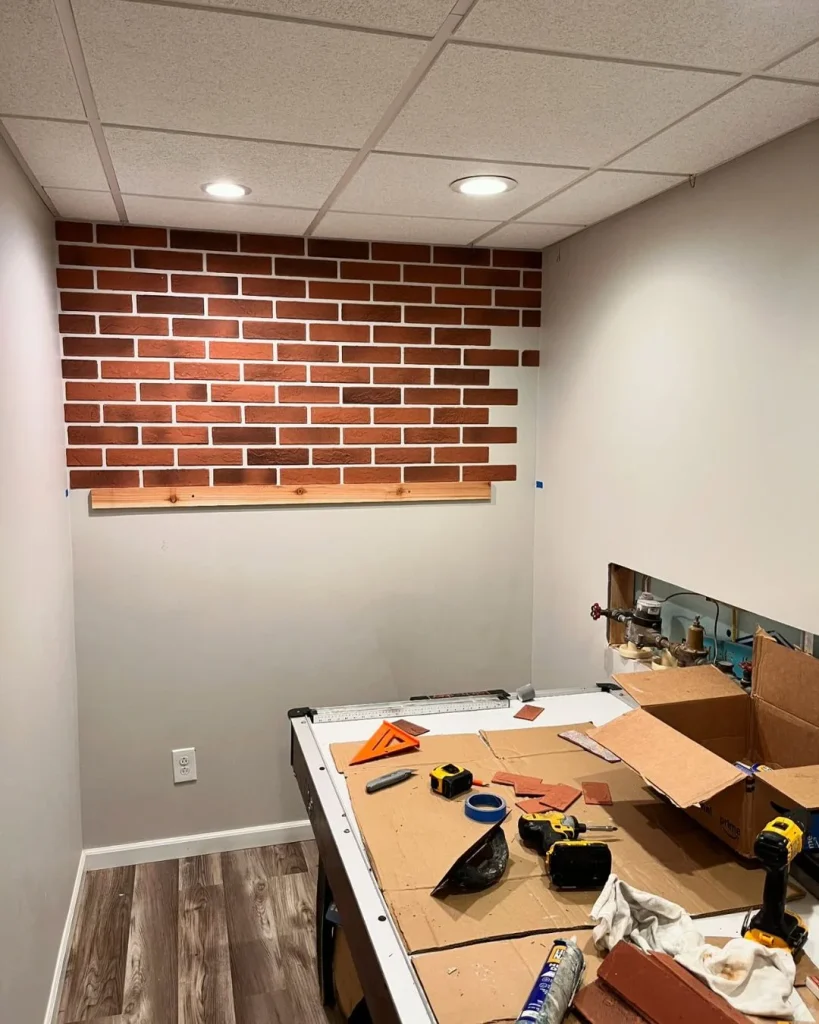
Not every one of these Basement Lighting Solutions is about mood. Laundry areas, workbenches, and mechanical zones need flat, even, genuinely bright light to work safely, and this is where a lot of finished basements fall short by carrying decorative fixtures into a purely functional space.
Linear LED shop lights, mounted directly to joists or a drop ceiling grid, deliver far more usable light per fixture than a single decorative flush mount, and they’re inexpensive enough to run several in a row. Cool white bulbs (4000K–5000K) actually suit this zone better than the warm tones used elsewhere, since task accuracy matters more than ambience next to a workbench or sewing table.
Motion-sensor switches are worth adding here specifically, since utility areas are the rooms most likely to get left lit accidentally for hours.
Wall Sconces Soften Windowless Basement Walls
Credit: Eliezer Muller / Pexels
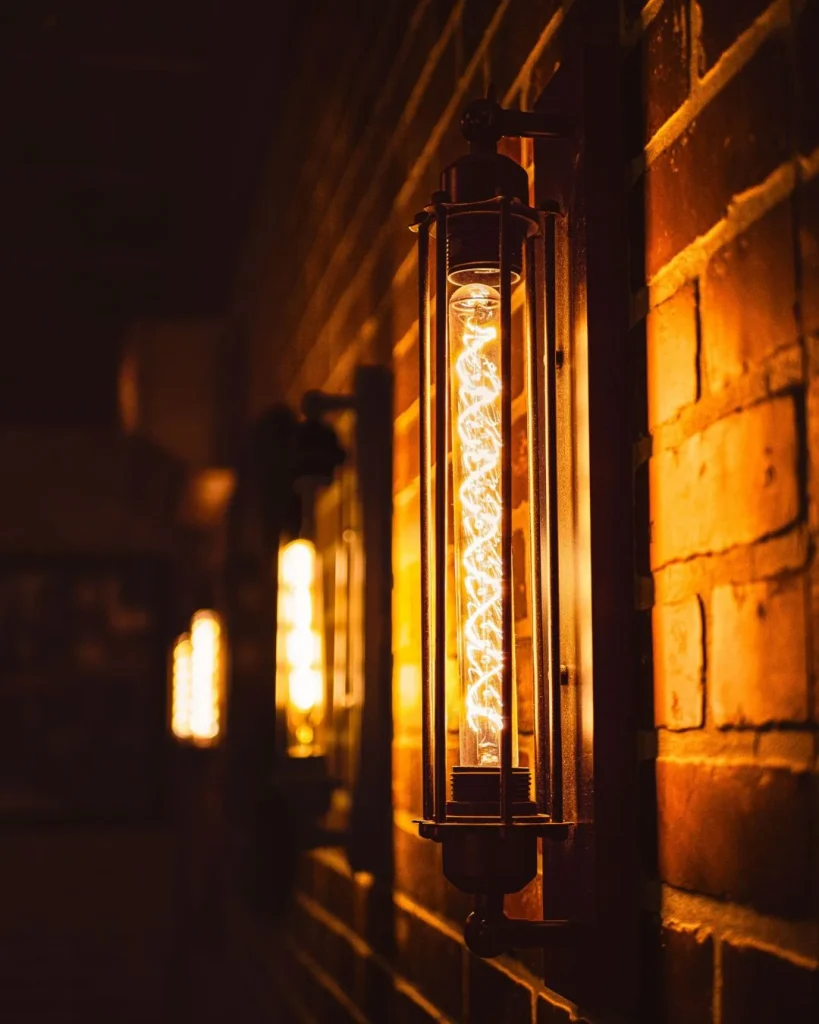
Among wall-mounted Basement Lighting Solutions, sconces solve a problem that ceiling fixtures alone can’t: they add light at eye level, which is exactly where a windowless basement feels its coldest and flattest. Spaced evenly along a long wall, sconces break up bare drywall and add visual interest even when they’re switched off.
Up-and-down sconces — the style that throws light both toward the ceiling and toward the floor — do double duty by brightening the room generally while also highlighting texture on a wall, whether that’s shiplap, exposed brick veneer, or a gallery of framed art. Along a basement hallway or staircase landing, sconces also reduce the number of dark, light-switch-free stretches a person has to walk through.
Because sconces sit lower than most basement ceilings allow for pendants, they’re one of the few fixture types that work regardless of how much headroom the space actually has.
Daylight-Mimicking Bulbs Trick the Eye Into Natural Light
Credit: Pramod Tiwari / Pexels
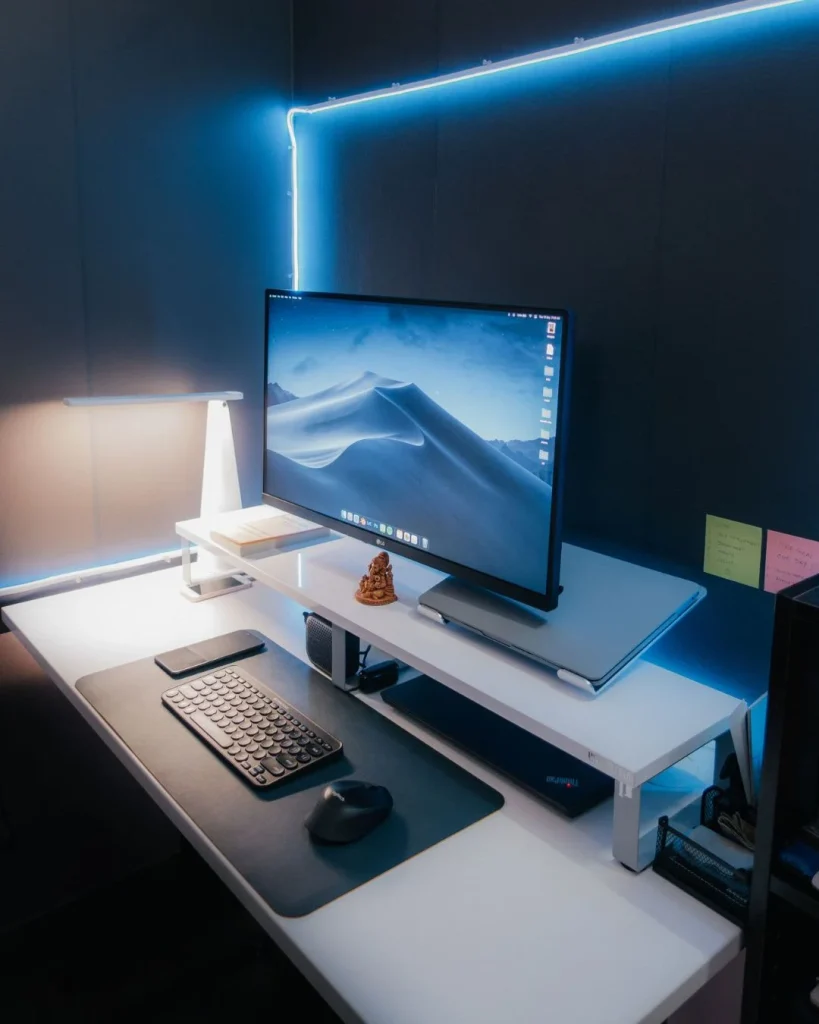
A windowless basement can borrow a surprising amount of the feel of daylight without an actual window, and full-spectrum LED bulbs are the tool that makes it possible. These bulbs are engineered to mimic the colour and intensity of natural daylight, which measurably affects how bright and alert a room feels compared with a standard warm bulb.
Circadian or “daylight” bulbs, often rated around 5000K, work especially well in a basement home office or gym, where the goal is alertness rather than relaxation. Some smart versions shift colour temperature through the day automatically, running cooler and brighter in the morning and warmer by evening, echoing the pattern of actual sunlight even though none is coming through a wall.
Pairing one daylight fixture with warmer ambient lighting elsewhere in the same open room lets a single basement serve both a focused workspace and a relaxed lounge area without feeling mismatched.
Smart Dimmers and Zoned Circuits for Mood Control
Ten different Basement Lighting Solutions across one lower level only work well together if they can be controlled independently, and that’s where zoned circuits and smart dimmers earn their keep. Wiring the recessed lights, sconces, and accent strips to separate switches — or separate smart-bulb groups — means a movie night, a workout, and a laundry chore can each get exactly the lighting they need.
Smart dimmer switches retrofit onto most existing basement wiring without a full rewire, and app-based scenes let a whole zone dim or brighten with one tap instead of adjusting fixture by fixture. This is why it works: a basement typically hosts more different activities than any single room upstairs, and one fixed lighting setting can’t serve a gym, a bar, and a guest bedroom equally well.
Voice control adds a practical safety benefit too, since basement stairs are exactly the spot where hands-free lighting matters most.
Bringing the Glow Downstairs
A basement doesn’t need a single window to feel warm, bright, and genuinely liveable — it needs the right mix of fixtures for the way each corner gets used. Recessed cans and track lighting handle the ambient layer, floor lamps and sconces fill in the corners a ceiling fixture misses, and task lighting keeps workshops and laundry zones properly usable. Add a daylight-mimicking bulb or two and a set of smart dimmers, and even the darkest lower level starts to feel like one of the best-lit rooms in the house.
Editor Choice: Trendy Basement Living Room Designs That Maximize Comfort and Style.
Common Basement Lighting Questions
What are the best Basement Lighting Solutions for a basement with no windows?
A layered mix works best: recessed or track lighting for ambient brightness, warm-white bulbs (2700K–3000K) to soften cold concrete surfaces, and at least one daylight-mimicking fixture (around 5000K) in any zone used for work or exercise.
How many lumens does a basement need?
General guidance is roughly 20 lumens per square foot for a basement used as a living space, rising to 50 lumens per square foot in workshop, laundry, or utility zones where task accuracy matters more than ambience.
Can regular ceiling light fixtures be used in a basement?
Standard fixtures work, but low ceiling height often makes flush-mount or recessed options a better fit than anything that hangs down, since basements typically have less headroom than rooms above ground.
What colour temperature works best for basement lighting?
Warm white (2700K–3000K) suits lounge, bar, and bedroom zones, while cooler daylight bulbs (4000K–5000K) suit workshops, laundry areas, and home offices where visibility matters more than atmosphere.