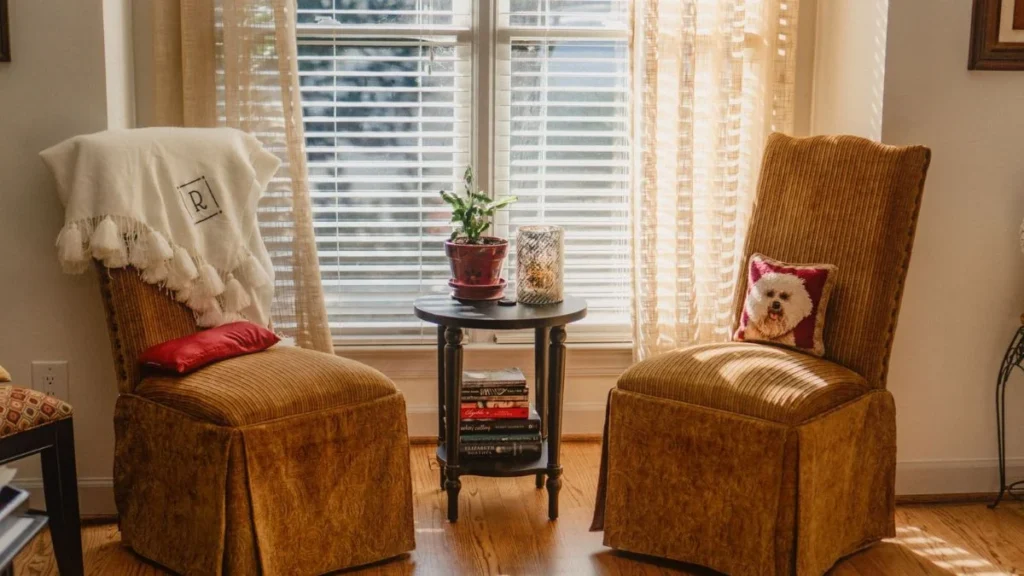
A window dressed in only one layer rarely earns its keep, however good the fabric or the slats might be. Pairing curtains with blinds instantly adds depth, warmth and far better control over light, in a bedroom, a living room, or both.
The two aren’t rivals fighting for the same job. A blind does the practical heavy lifting, filtering daylight and holding privacy in place, while the curtain softens the room and sets the mood once evening comes.
Whether the goal is a bedroom that stays properly dark past sunrise or a living room that looks considered at every hour, these curtain and blind pairings work across styles, budgets and window shapes.
Quick Style Notes Before You Start Layering
- Split the job: blinds handle daily light and privacy, curtains bring softness and atmosphere.
- Bedrooms: blackout curtains layered over blackout blinds give a genuinely dark room, not just a dim one.
- Small rooms: matching tones between curtain and blind feel calmer; bold rooms can take more contrast.
- Easiest starting point: sheer curtains over a plain roller blind works in almost any room, in almost any style.
Sheer Curtains Layered Over Roller Blinds For Everyday Softness
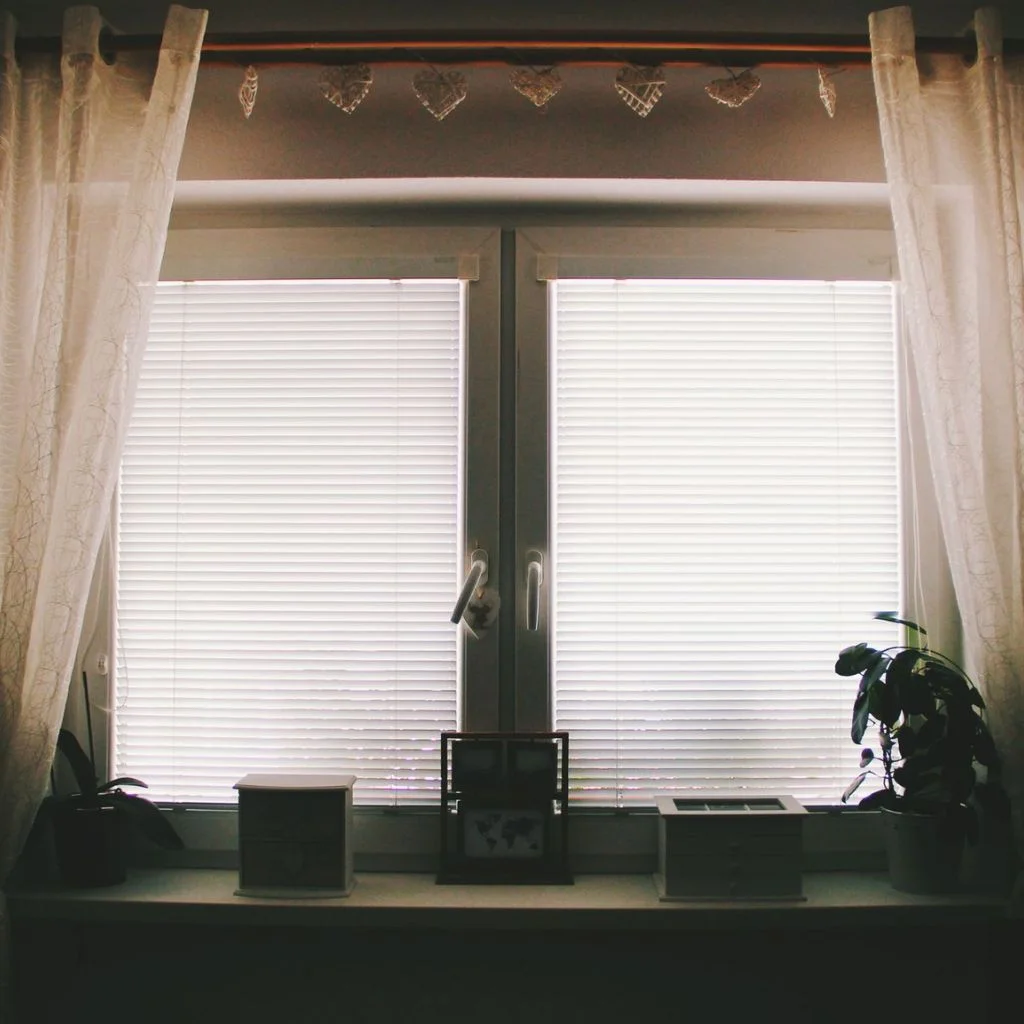
Hanging a sheer or lightweight linen-look curtain outside a plain roller blind is the most forgiving of all curtains with blinds ideas, and the easiest to get right first time.
The blind stays down through the brightest part of the day, filtering harsh light without blocking the view entirely, while the sheer curtain adds a gentle frame that keeps the window from feeling bare when the blind is raised in the evening.
Why this works: sheers carry almost no visual weight, so they never compete with the blind underneath. The pairing suits rented flats and first homes just as well as a finished living room, since nothing about it feels permanent or heavily committed.
Blackout Curtains With Blackout Blinds Keep Bedrooms Genuinely Dark

A bedroom window rarely needs two decorative layers, it needs one layer that blocks light. Blackout curtains hung over a blackout roller or cellular blind close the gaps that either treatment leaves on its own, particularly at the sides and along the top of the frame.
This combination matters most in rooms facing east, in city bedrooms under streetlight, or for anyone who works shifts and sleeps through daylight hours. On its own, a blind still lets a thin edge of light through; the curtain closes that gap completely once drawn.
Why this works: the blind sits close to the glass and blocks the main body of light, and the curtain overlaps the frame by several inches on every side, catching what the blind alone cannot reach.
A Bay Window Living Room Wrapped In Three Soft Layers
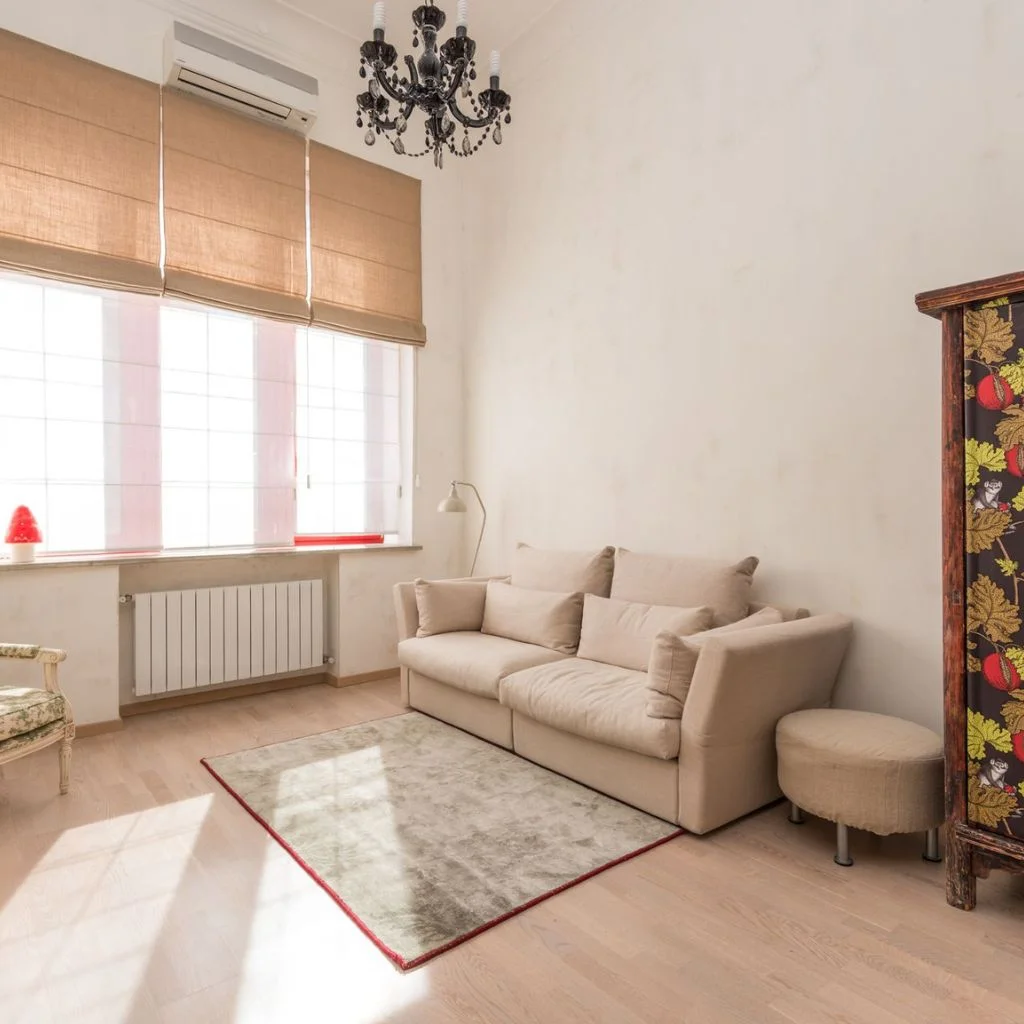
Picture a living room with a deep bay window, the kind that floods a room with afternoon sun but also puts every passer-by at eye level with the sofa. A single treatment rarely satisfies both problems at once.
A three-layer answer works well here: a fitted blind on each pane for daytime privacy and light control, a sheer curtain across the whole bay for softness, and a heavier drape at each end that can be drawn fully closed at night. Each layer in this curtains with blinds arrangement has its own job, so none of them has to compromise.
Why this works: bay windows are really several windows acting as one, and treating them with a single flat curtain often looks stiff. Layering lets the room read as one considered scheme instead of three separate windows dressed identically.
Two Tones One Window Dark Curtains Against Pale Wooden Blinds
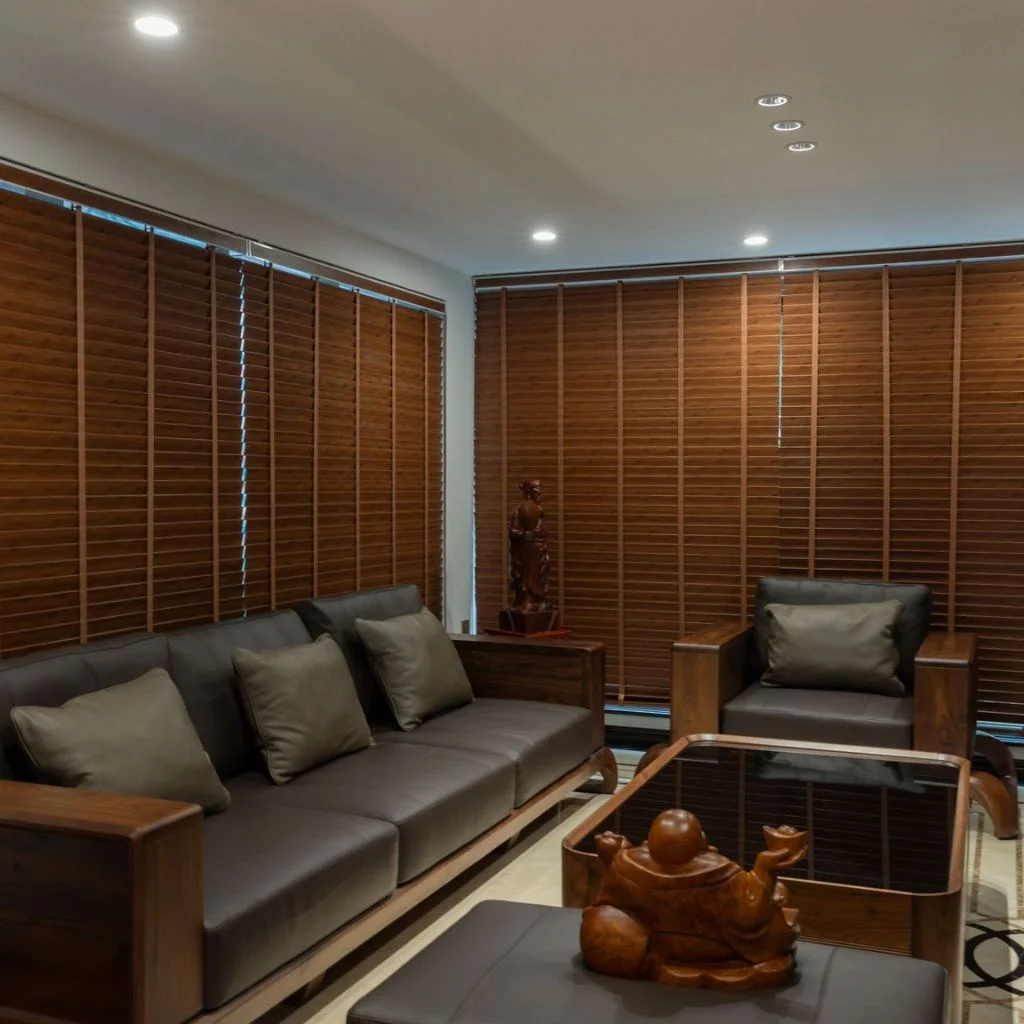
Contrast is the fastest way to make a plain window feel designed rather than default. A pale wooden venetian blind against a wall in a similar neutral tone can disappear into the background, which is exactly where a strong curtain colour earns its place.
Charcoal, forest green or a deep rust curtain hung either side of a light wooden blind creates a clear two-tone effect without touching the walls or the furniture. It reads as a deliberate styling choice rather than a mismatched pairing, especially when the curtain colour is picked up elsewhere in the room, in a cushion or a piece of art.
Why this works: the eye is drawn to contrast before it is drawn to colour itself, so a dark curtain against a pale blind gives the window presence even in a room that is otherwise kept neutral.
Roman Blinds Sit Neatly Under Tailored Linen Curtains

Roman blinds already look tailored on their own, which is exactly why they sit so well underneath a curtain rather than competing with one. In a formal or semi-formal living room, a linen curtain in an unlined or lightly lined weight adds softness above the crisp folds of the blind.
Keep the curtain fabric a shade lighter or darker than the blind rather than matching it exactly, so the two layers still read as separate elements when the light changes through the day.
Why this works: both treatments share a tailored, structured quality, so nothing about the pairing feels accidental. It suits period living rooms and new-build spaces equally well, since the formality comes from the shapes rather than the age of the building.
Cellular Shades With Café Curtains Solve Awkward Small Windows
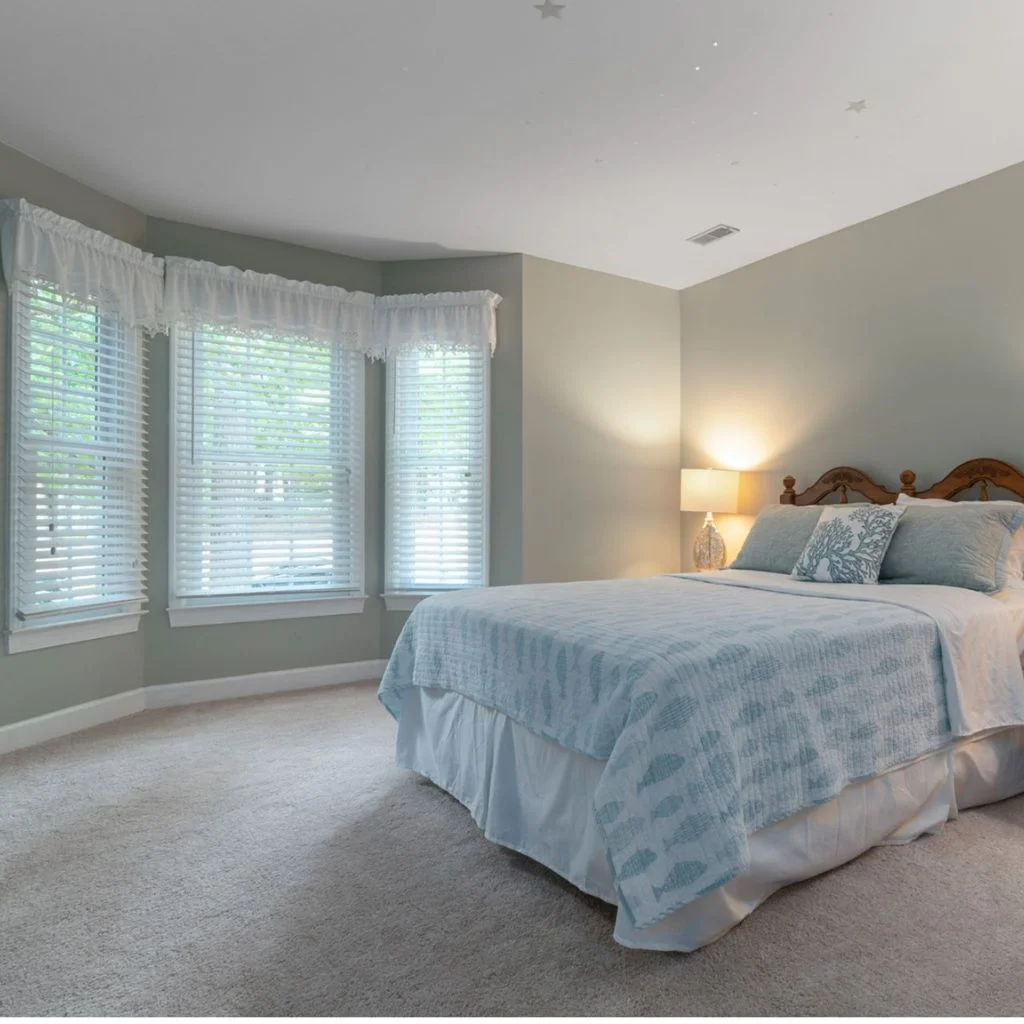
A small bedroom window often has too little wall space either side for full-length curtains to hang properly, which is where a cellular or honeycomb shade fitted inside the recess earns its keep. It controls light and insulation without eating into the room.
A café curtain, hung from a slim rod across only the lower half of the window, adds the softness a plain shade lacks, without needing the width a full-length curtain with blinds pairing usually asks for.
Common mistake worth avoiding
Fitting a full-length curtain to a narrow bedroom window and letting it puddle against the wall is the fastest way to make a small room feel more crowded, not more finished. In tight spaces, a half curtain paired with a fitted shade almost always looks calmer than forcing in a full drape.
Teenager’s Bedroom Gets A Grown Up Pattern Clash
A teenager’s bedroom is one of the few rooms where a bolder pattern earns its place, and layering gives a way to introduce it without overwhelming the space. A plain venetian or roller blind in a single flat colour becomes the quiet base.
Over that, a patterned curtain in a bold print, checked, botanical or geometric, can be as loud as the room can take, because the blind underneath keeps the window calm whenever the curtains are open. This is one of the more flexible curtains with blinds ideas for a room that needs to grow with its occupant.
Why this works: the plain blind acts as a reset button. The pattern can be swapped out for a plainer curtain later without needing to replace anything else in the window treatment.
What Happens When Curtains And Blinds Match Exactly
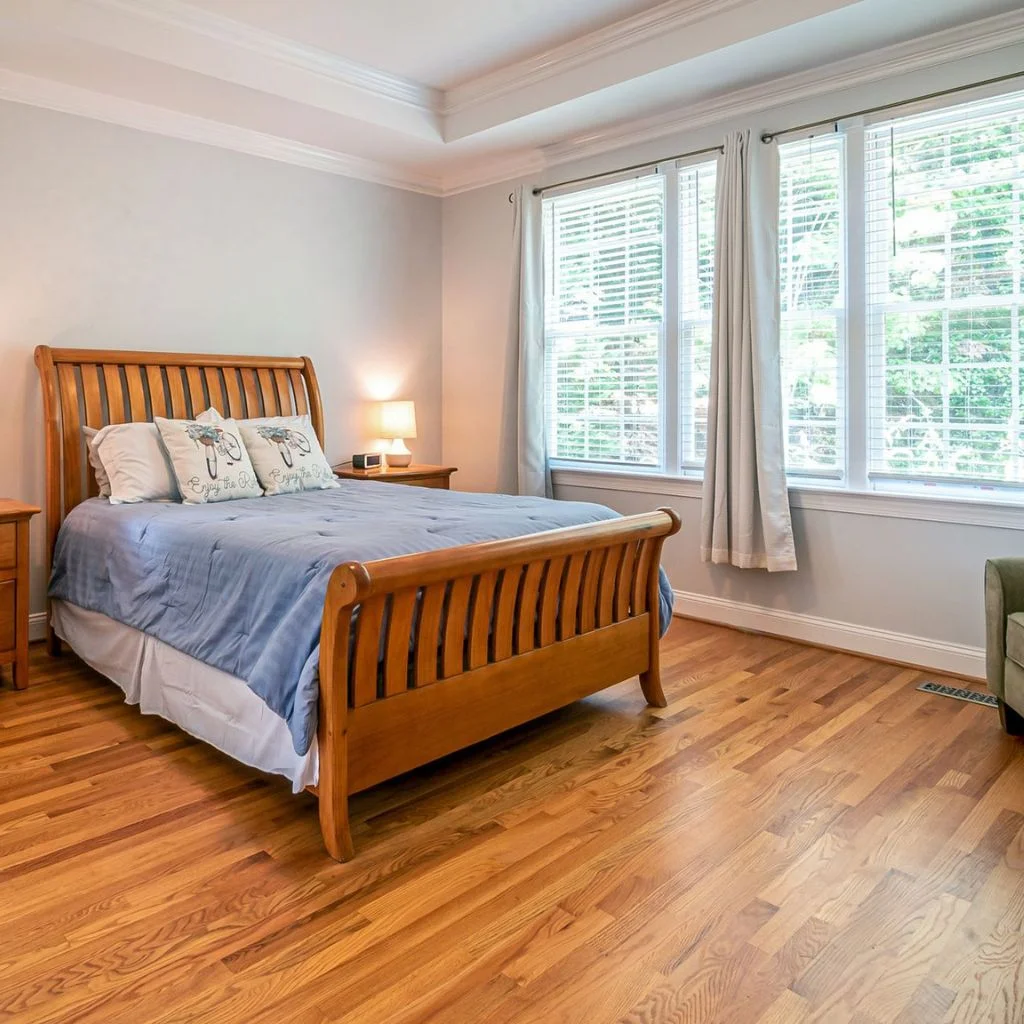
Matching the curtain fabric to the blind, in colour or in a closely related pattern, is a quieter approach than contrast, but it is not the same as choosing one treatment and duplicating it twice.
The texture still needs to differ. A woven wooden blind under a curtain in a similar tan or oatmeal tone works because wood and fabric catch light differently, so the eye still reads two distinct layers even though the colour palette is unified.
Why this works: matched tones lower the visual noise in a room, which is particularly useful in an open-plan living space where several windows are visible at once and a mix of bold pairings would start to compete with each other.
Vertical Blinds Softened With Airy Curtains In Busy Family Rooms
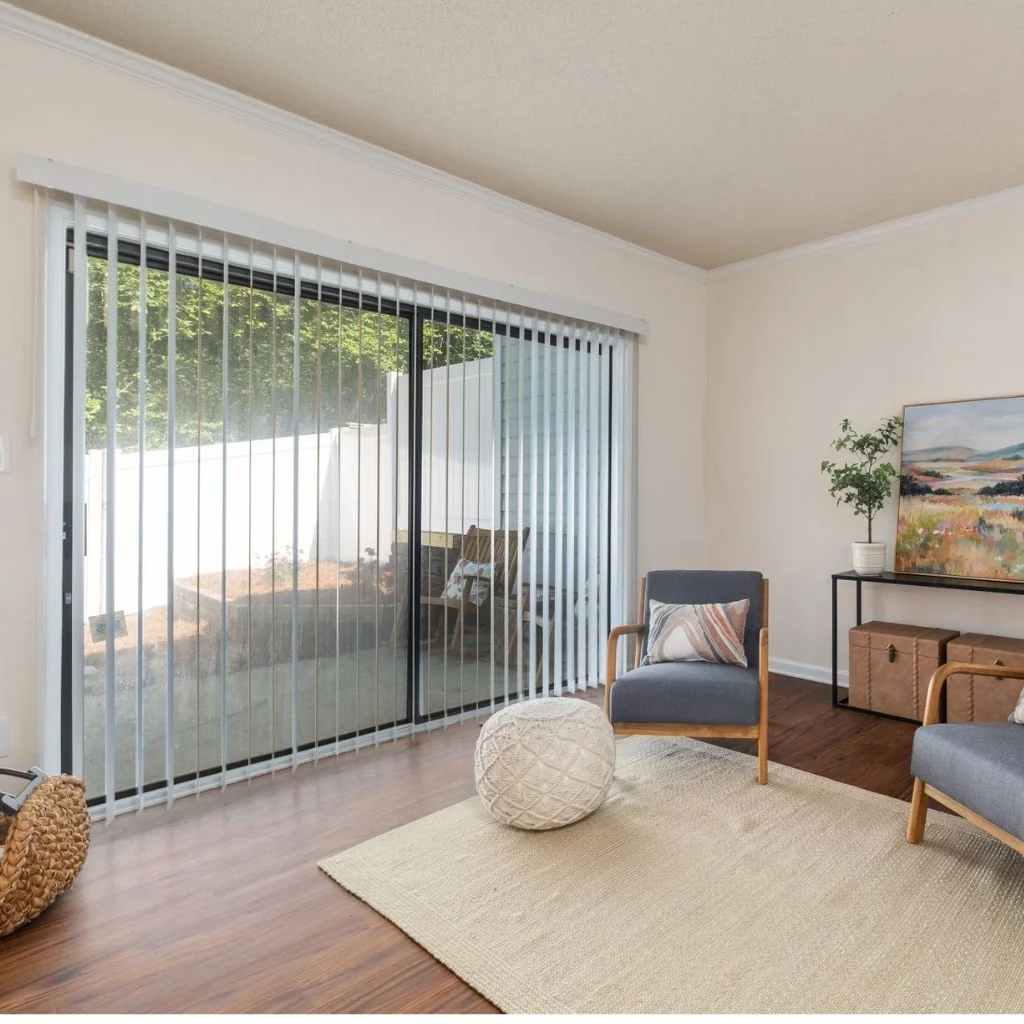
Vertical blinds have a practical reputation, well suited to wide sliding doors and large family living room windows, but they can look severe on their own. A curtain either side, even one that is rarely drawn, changes that entirely.
A linen or cotton curtain in a soft neutral, hung loosely at each side of a vertical blind, breaks up the straight lines without interfering with how the blind actually functions. It is one of the more practical curtains with blinds combinations for households with children or pets, where the blind takes the daily wear and the curtain stays mostly decorative.
Why this works: the curtain never has to be closed to do its job, it is doing all its work simply by framing the door, which keeps the pairing low maintenance for a busy family room.
Neutral Layering Makes A Small Bedroom Feel Considerably Larger

A small bedroom benefits more from a considered neutral palette than from any single trick of furniture placement, and the window treatment plays a bigger part in that than it usually gets credit for.
A light roller or Roman blind in an off-white or soft putty tone, paired with a curtain one or two shades warmer in the same neutral family, keeps the eye moving past the window rather than stopping at it. Hung close to the ceiling rather than just above the frame, the curtain and blind combination draws the eye upward and makes the ceiling feel higher than it is.
Why this works: a single tonal family removes visual breaks in the room, and a taller apparent window line does more for a small bedroom than a brighter colour ever could.
Making The Two Work As One
None of these ideas depend on a big renovation or a single correct answer. A window can move between several of these pairings over the years, from a plain sheer-and-roller starting point to a fuller, layered look once the rest of the room catches up.
The rooms that feel most finished are rarely the ones with the most expensive fabric, they are the ones where the curtains with blinds have each been given a clear job to do, one for light and privacy, the other for softness and mood.
Recommended Reading: Closet Curtain Ideas That Replace Bulky Doors Entirely.