living room rarely has just one wood finish, and that’s exactly the point. Between the flooring, the coffee table, the bookshelf, and the vintage chair passed down from a grandparent, most rooms already mix wood tones whether anyone planned it or not.
The real challenge with how to mix wood tones in a living room isn’t avoiding the mix. It’s guiding it so the space reads as curated rather than accidental. A handful of simple rules around undertone, ratio, and connection make the difference between a room that feels layered and one that feels like a furniture showroom had a mix-up.
Here’s a doable formula for mixing wood tones with confidence, plus a couple of real living room pairings worth borrowing directly.
The Short Version, If You’re Short on Time
- Three wood tones is the practical ceiling for most living rooms: one light, one medium, one dark.
- Undertone (warm versus cool) matters more than exact shade when pairing wood finishes.
- One tone should dominate roughly 60 percent of the visible wood in the room, with the rest as accents.
- Metal, textile, and rug layers bridge wood tones that don’t naturally sit together.
Undertones Decide Whether Wood Pairings Feel Cohesive or Chaotic
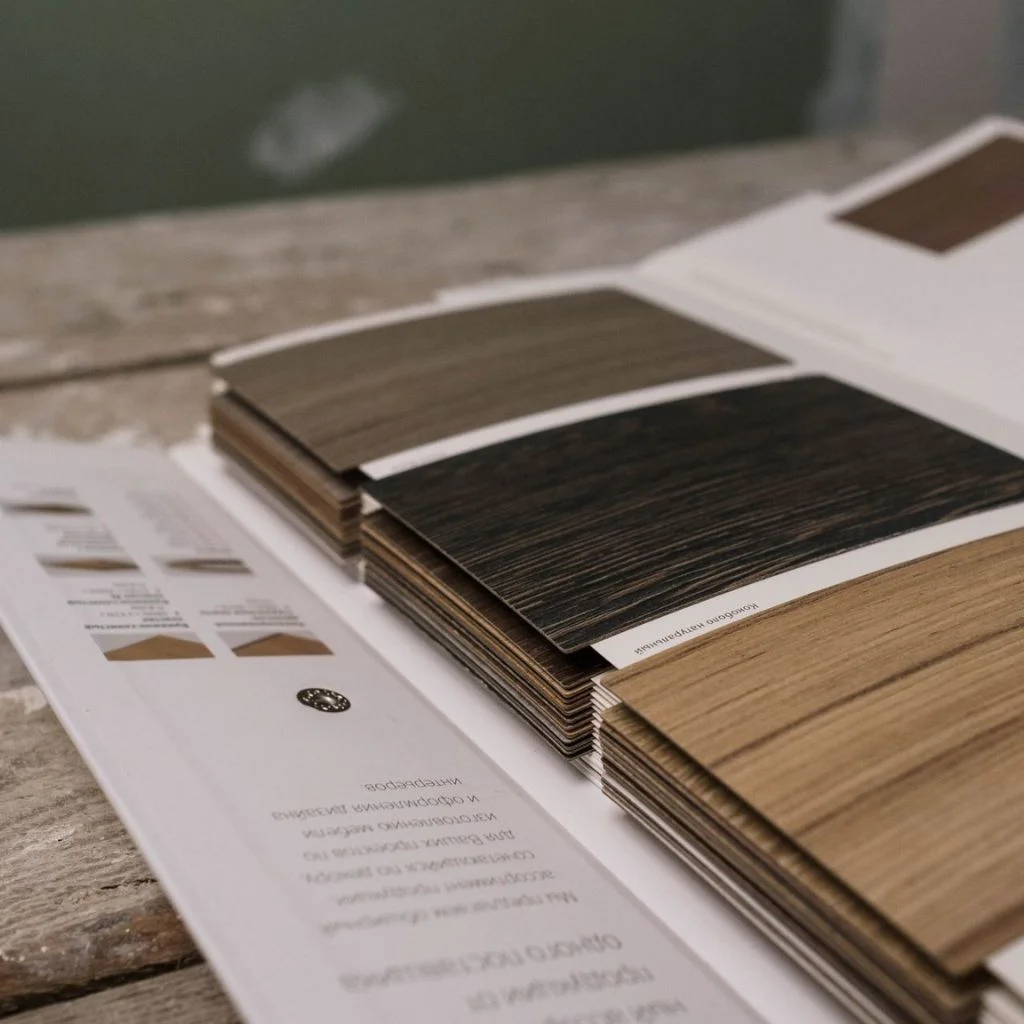
Undertone is the first thing to check, before shade or grain. Every wood finish leans either warm (yellow, red, or orange, as in oak, cherry, or golden pine) or cool (grey or ash, as in whitewashed oak or weathered driftwood finishes).
Two pieces can be the exact same lightness and still clash badly if one is warm and the other is cool. A honey-toned oak floor and a grey-washed coffee table are close in value but opposite in temperature, and that’s usually what makes a room feel off without an obvious reason why.
Why this works: the human eye reads temperature contrast faster than it reads shade contrast, so a warm-cool clash draws attention even when the individual pieces are attractive on their own. Hold two wood samples side by side in daylight before committing, since undertone is far easier to spot in person than under warm indoor bulbs.
Three Wood Tones Is the Sweet Spot for Most Living Rooms
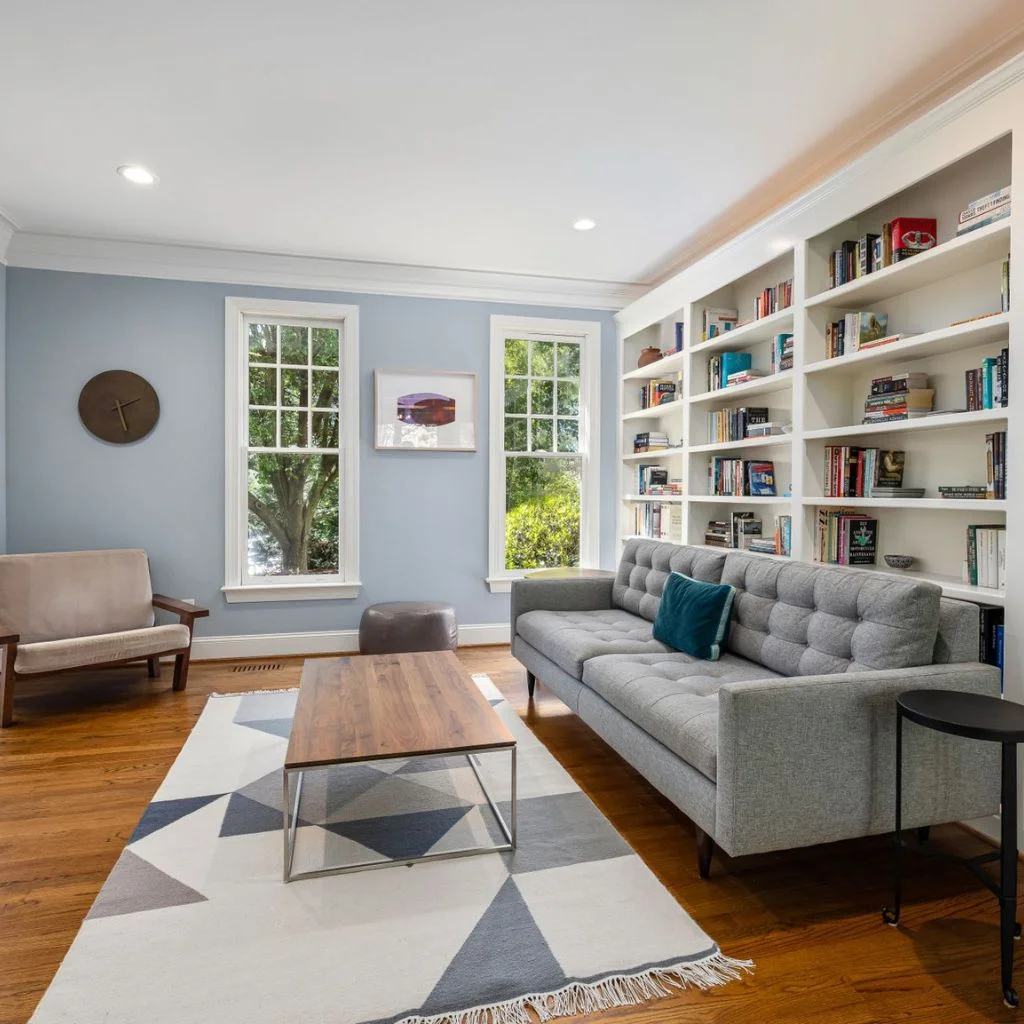
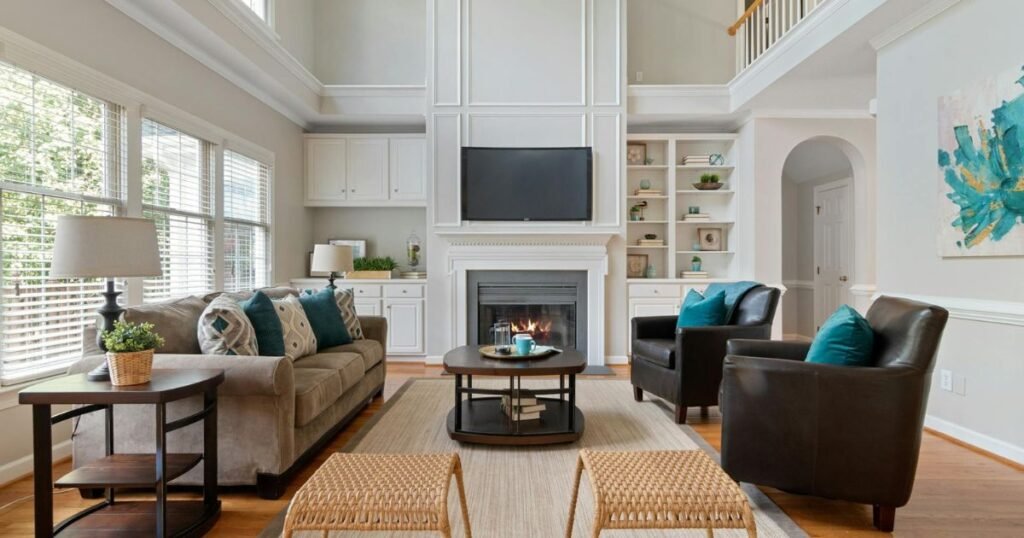
A useful starting framework when mixing wood tones is light, medium, and dark, each doing a different job in the room. The floor or largest furniture piece usually sets the medium or dominant tone, a second piece introduces contrast, and a small accent (a tray, a picture frame, a stack of stools) carries the third.
Beyond three distinct tones, most living rooms start to look unplanned rather than eclectic, because the eye no longer has enough repetition to register a pattern. If a room already has four or five wood finishes in it, the simplest fix is often to repaint or reupholster the least important piece rather than add anything new.
Dominant Tone Keeps the Whole Room Anchored
Choosing a dominant wood tone gives every other decision in the room somewhere to point back to. This is typically whichever finish takes up the most visual real estate, which in a living room is almost always the flooring, then the largest seating piece or media console.
A rough 60-30-10 split works well: 60 percent of the visible wood in the dominant tone, 30 percent in a secondary tone that shares its undertone, and 10 percent in a contrasting accent tone for interest. Rooms that skip this step and give every wood surface equal visual weight tend to feel busy no matter how nice the individual pieces are.
Picture a Small Living Room With Oak Floors and a Walnut Console
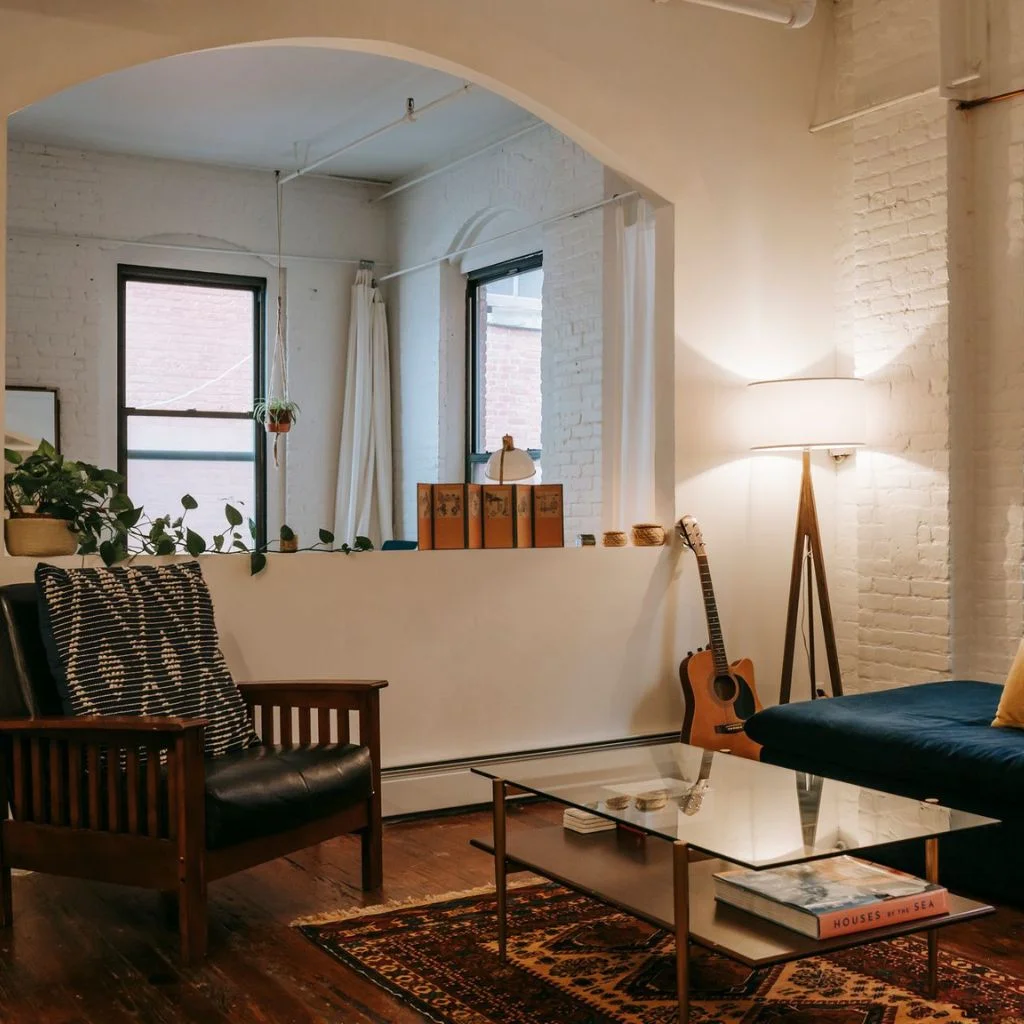
A compact living room with pale oak floors, a mid-tone rattan-and-oak sofa frame, and a deep walnut media console shows the formula in miniature. The floor sets the dominant light tone, the sofa frame repeats it at a slightly warmer pitch, and the walnut console becomes the single dark accent that keeps the room from feeling flat.
Because the space is small, restraint matters even more than in a larger room. A second dark piece, such as a walnut coffee table next to the walnut console, would tip the balance and make the room feel heavier than its square footage can support.
Undertone Clashes Are the Mistake Worth Avoiding First
The most common misstep in mixing wood tones isn’t using too many finishes. It’s pairing an orange-leaning pine with a grey-leaning oak and expecting the shared “wood” category to be enough to make them work together. It rarely is.
A personal-style note: when a mixed-wood living room isn’t working and it’s hard to say why, undertone clash is worth checking before anything else. It’s an easy thing to miss while shopping piece by piece, because a single item photographed alone rarely shows its undertone clearly, and swatches under retail lighting can be misleading.
Metal and Textile Accents Bridge the Gap Between Finishes
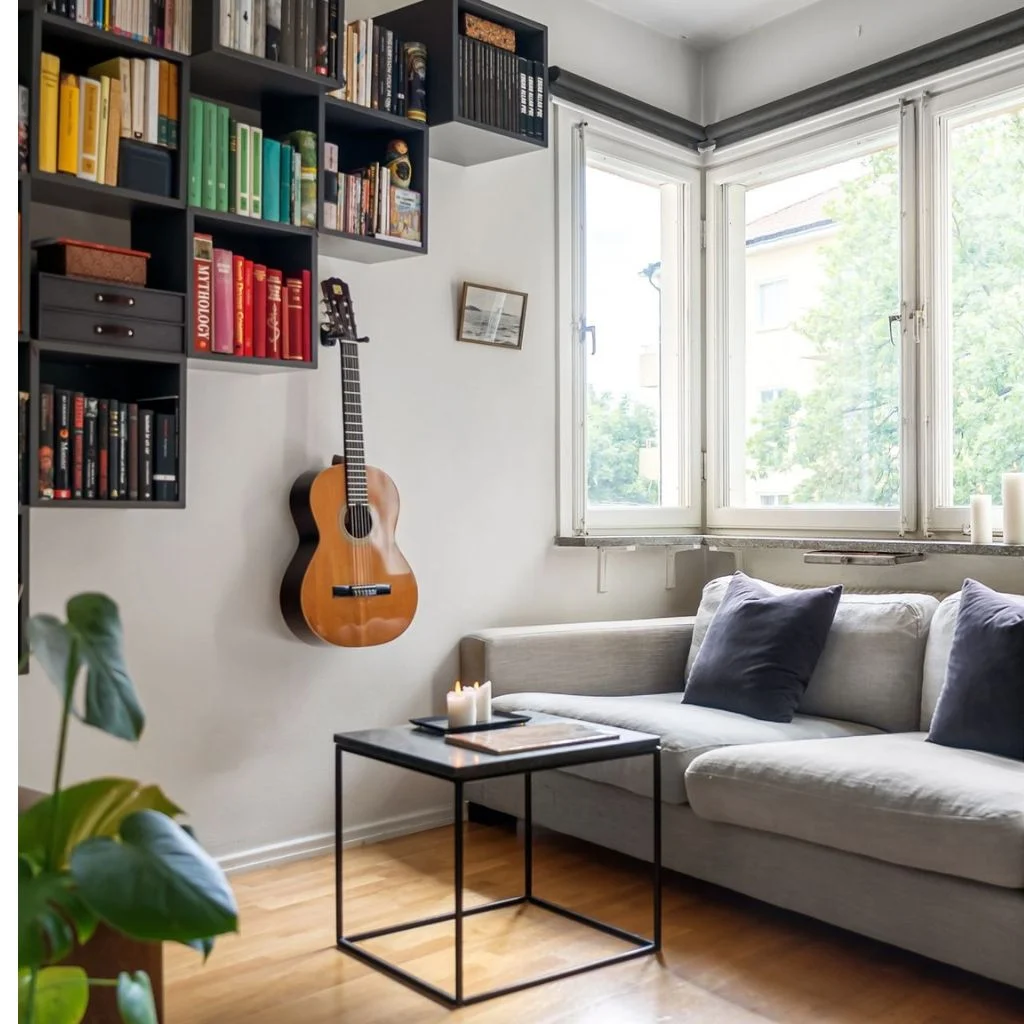
When two wood tones need to coexist but don’t share an undertone, a connecting material can do the diplomatic work. Black metal legs, brass hardware, woven jute, linen upholstery, and leather all sit neutral to wood and can visually separate two clashing finishes rather than forcing them into direct contact.
A black-framed coffee table between a warm oak sofa and a cool-toned bookshelf, for instance, gives the eye a resting point instead of registering the two wood tones side by side. This is also the easiest fix for a living room that already has mismatched furniture and isn’t ready for a full refresh.
What Ratio of Light to Dark Wood Actually Reads Well
Beyond undertone, the balance of light to dark wood changes how a room feels overall. A living room with mostly light wood and a single dark accent feels airy and Scandinavian-leaning, while one with mostly dark wood and a light accent feels grounded and traditional.
An even split of light and dark wood, without a clear dominant side, is the hardest version to pull off and usually needs a strong neutral wall colour or a large rug to hold the room together. For a first attempt at mixing wood tones, leaning clearly toward one side is the safer, more forgiving choice.
Layering Rugs and Art Softens Every Transition
A large rug placed under the main seating group does more for a mixed-wood living room than most people expect, because it gives the floor tone somewhere to rest without competing with every other wood surface in the room.
Framed art and mirrors add a similar buffer at eye level. A gallery wall in mixed wood or black frames breaks up long stretches of any single wood tone and gives the room a reason for the eye to travel, rather than settling on a wood-to-wood comparison.
Living Room That Pairs Espresso Beams With Honey Oak Flooring
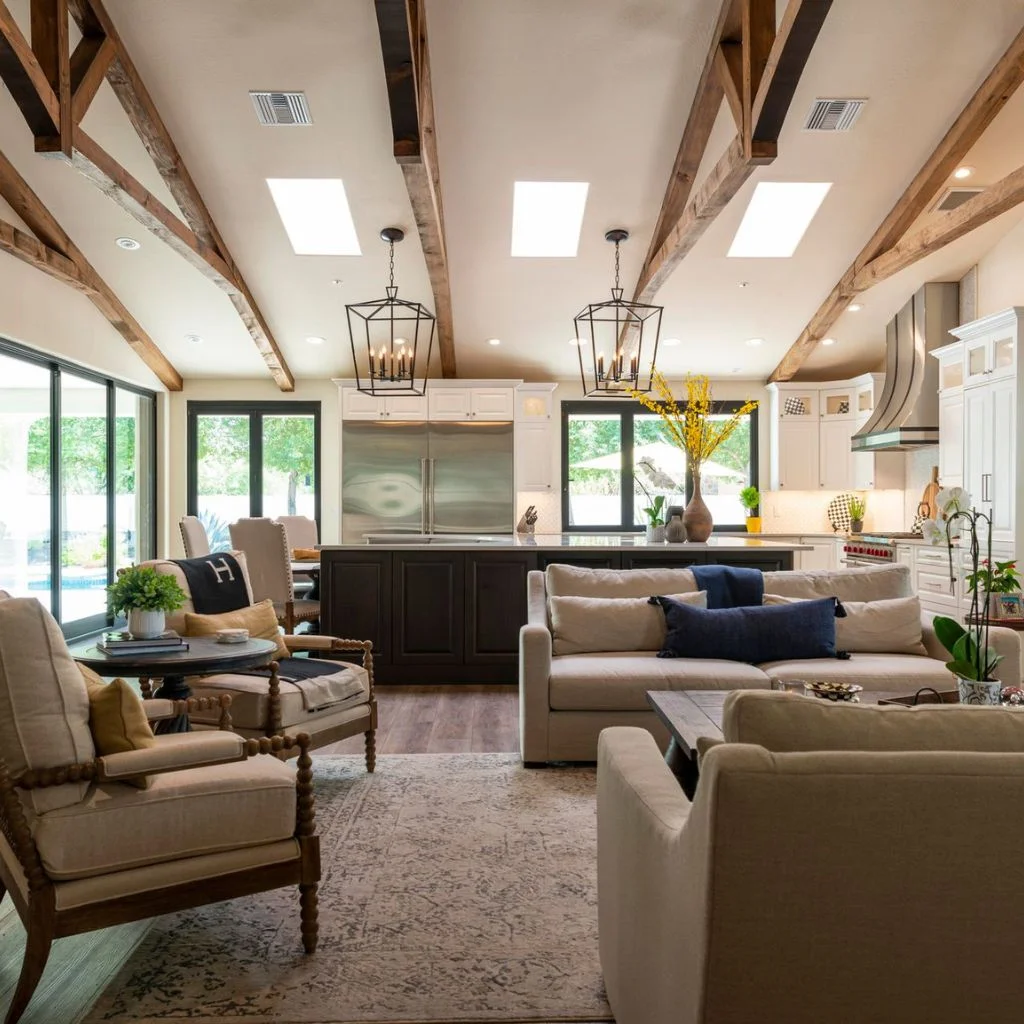
A more rustic example: a living room with exposed espresso-stained ceiling beams, honey oak flooring, and a mid-tone rattan armchair. The beams set a dark dominant tone overhead, the floor answers with a warm light tone underfoot, and the rattan chair sits comfortably in between as the medium accent.
This pairing works because the extremes (very dark beams, very light floor) are separated by ceiling height and never sit directly next to each other, while the furniture in between shares the same warm undertone as both. It’s a useful layout to borrow for any room with statement millwork or beams already in place.
Making Peace With a Room That Was Never Going to Match Perfectly
Mixing wood tones in a living room isn’t about finding pieces that match. It’s about choosing pieces that agree on temperature, giving one tone room to lead, and letting metal, textiles, and rugs handle the rest. Once that framework is in place, a room with three or four different wood finishes reads as gathered over time rather than mismatched by accident.
Start with whichever wood tone already takes up the most space and build outward from there one piece at a time.
Editor Choice: Ten Fall Living Room Updates That Feel Instantly Autumnal.