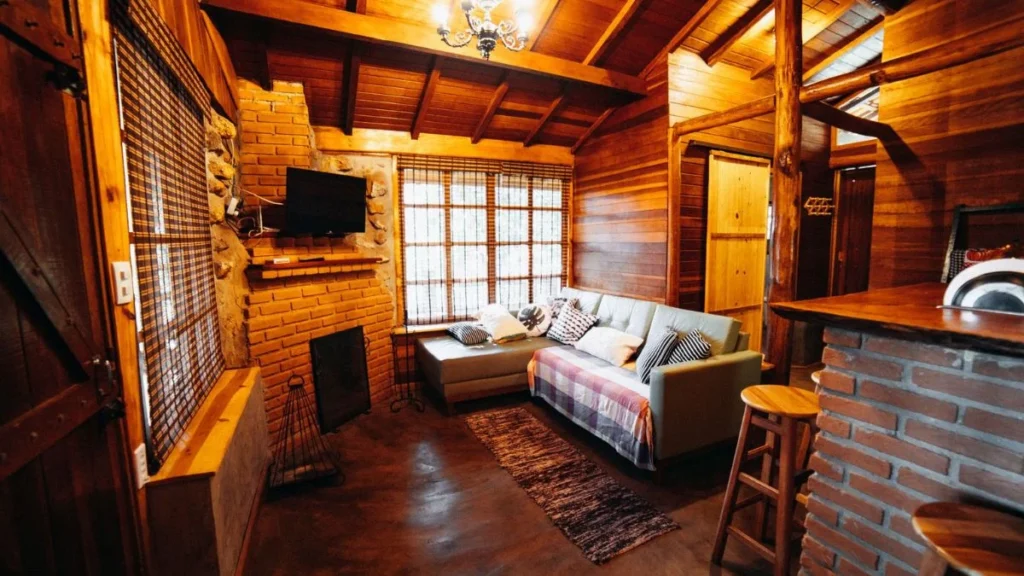
A little cabin living room does more with less. Every log wall, wool throw and flickering flame pulls double duty in a compact footprint, so nothing in the space is there by accident. This is the room where a getaway home stops feeling like plywood and paint and starts feeling like an escape built by hand. Whether the cabin sits beside a lake or backs onto pine forest, the same warm, woodsy instincts carry the whole scheme: solid materials, soft layers and lighting that glows rather than glares. None of it needs to be expensive, and very little of it needs to be new; a cabin room is one of the few spaces where reclaimed, weathered and slightly imperfect is exactly the look worth chasing.
Cabin Comforts
• Natural timber and stone keep a little cabin living room grounded rather than gimmicky.
• Layered textiles and warm lighting do more for cosiness than square footage ever will.
• Furniture scaled to the room, not the trend, keeps a small cabin genuinely liveable.
• Watch for the clutter trap: too many rustic props can undo a cosy, considered scheme fast.
Natural Timber Tones Ground the Little Cabin Living Room
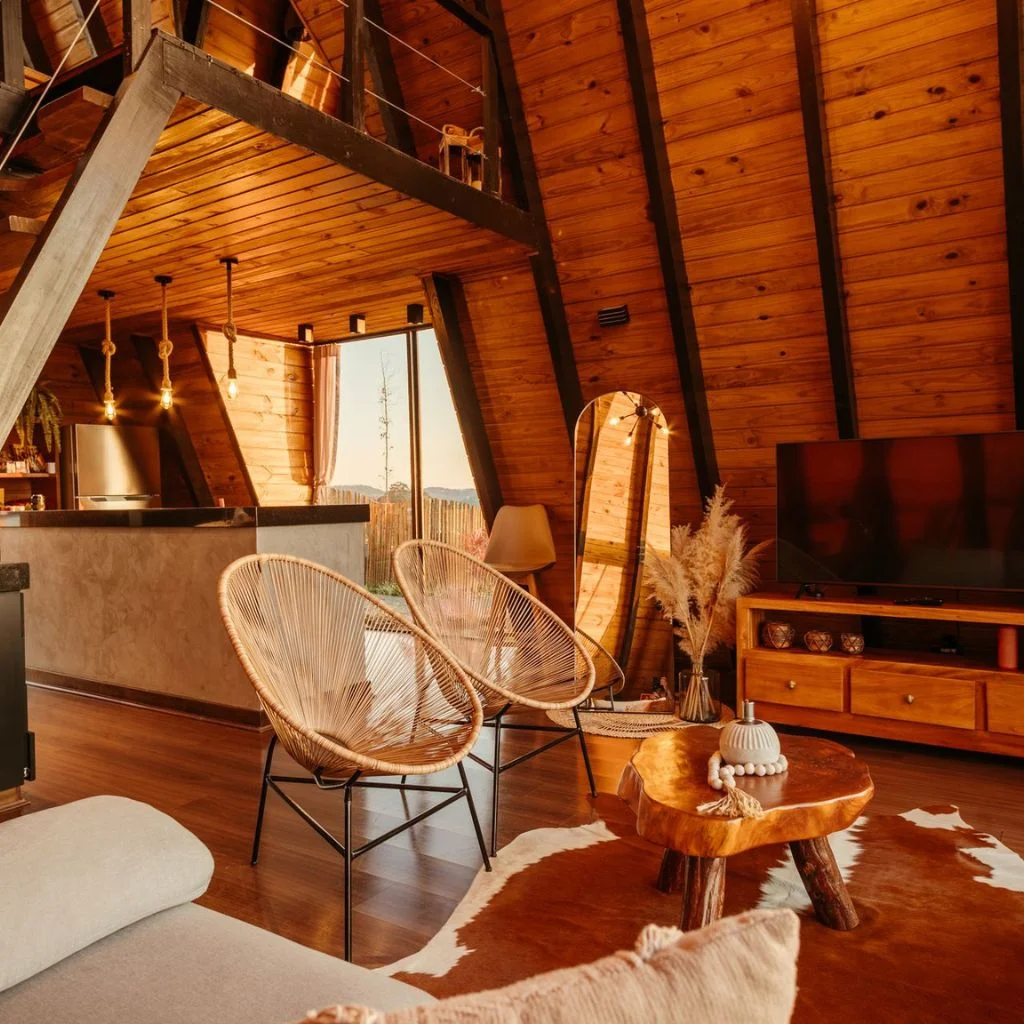
Wood is the backbone of any cabin scheme, and it earns that role by doing the most visual work for the least effort. Exposed beams, tongue and groove panelling or a single feature wall of reclaimed board bring texture and warmth without adding a single extra object to the floor. Choose timber with visible grain and honest knots rather than a uniform, factory-smooth finish, since the imperfections are what read as authentic rather than staged.
Pairing two wood tones, one lighter for the walls and one deeper for the furniture, stops the room from reading as one flat block of brown. A pale ash floor under a walnut coffee table, for instance, gives the eye somewhere to land, and a darker window frame or door trim helps anchor the lighter surfaces around it. This layering is why the look works even in a genuinely small footprint: contrast does the job that extra square metres would otherwise need to do.
If the walls themselves are unfinished or painted plasterboard rather than exposed log, a single timber accent wall behind the sofa or television can deliver most of the same warmth without a full renovation. Even a run of timber shelving along one side of the room adds enough grain and texture to shift the whole space toward cabin rather than generic holiday let.
Reading Nook Tucked Beside the Window
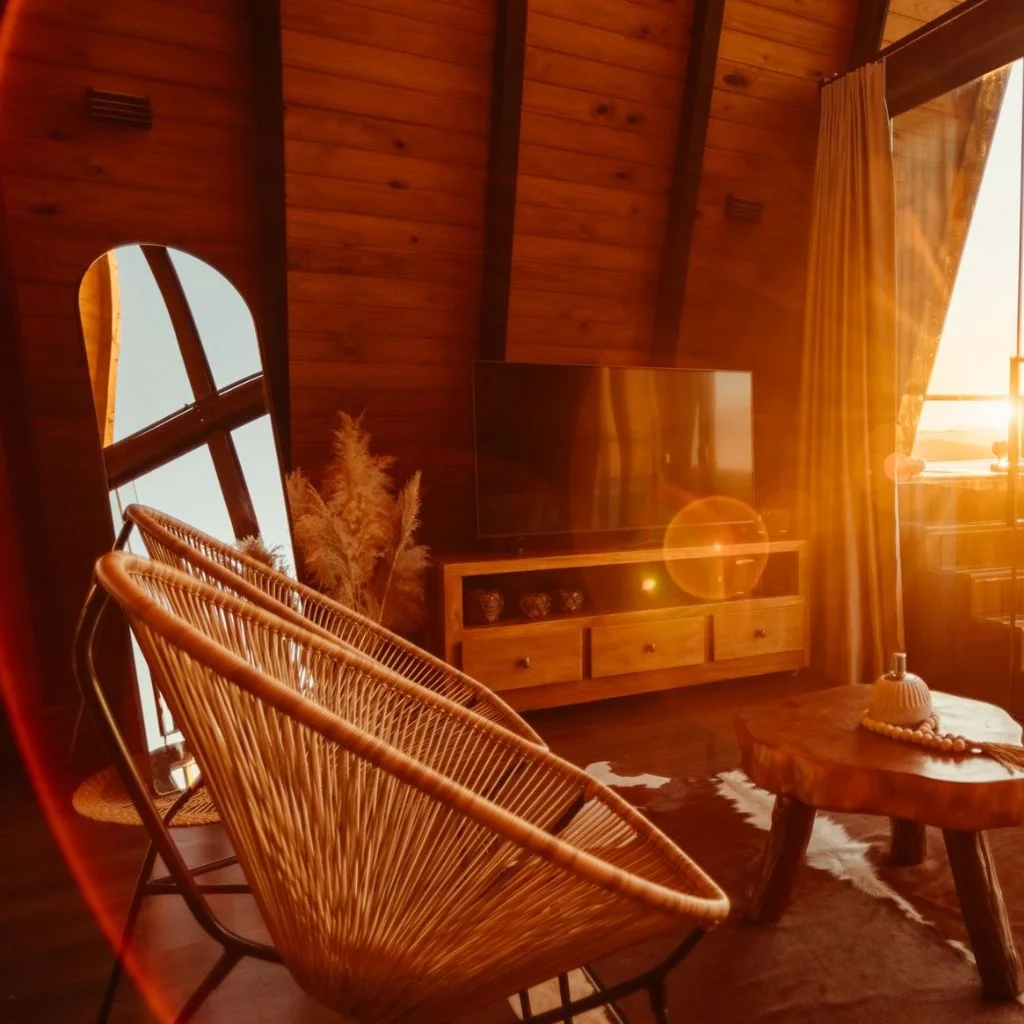
Picture a deep armchair angled into the corner where the morning light lands first, a wool blanket folded over one arm and a stack of paperbacks on the sill. In a little cabin living room, this kind of nook rarely needs its own dedicated space; it simply borrows a window and a few square feet nobody else was using.
A small side table, a floor lamp with a warm bulb and a sheepskin underfoot turn an unused corner into the spot everyone fights over. What makes this work is restraint: one chair, one light source, one soft surface. Over furnishing a nook defeats the purpose, since part of its charm is how little it asks of the room around it.
If the window looks out onto trees, water or hills, resist the urge to dress it with heavy curtains that block the view during the day. A simple roman blind or a light linen panel pulled to one side keeps the outlook as part of the decor, which matters more here than in almost any other room of the cabin.
Stone Fireplace Anchors the Whole Space
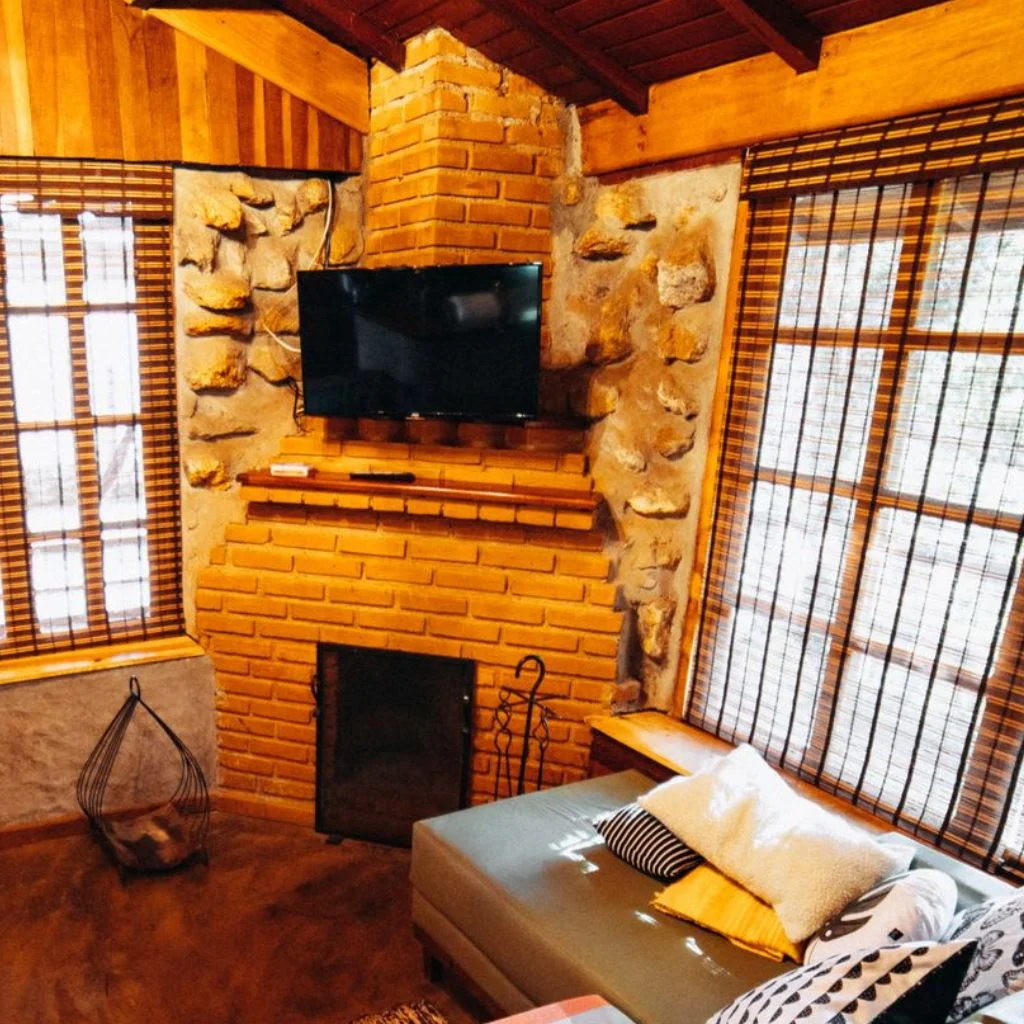
Nothing states “cabin” faster than exposed stone around a working hearth, and in a little cabin living room, the fireplace usually earns its place as the visual centre of the whole layout. Rough-cut fieldstone or stacked river rock both read as authentic, while a smooth cultured-stone veneer gives the same warmth with an easier install for anyone renovating rather than building from scratch.
Keep the mantel simple. A single piece of driftwood, one lantern and a small stack of firewood say more than a shelf crowded with ornaments. The fireplace should feel like the room’s quiet centre of gravity, not a display case competing for attention with everything else in the space.
Where a real fireplace isn’t possible, a wood-burning stove on a stone or slate hearth pad gives much the same focal point in a fraction of the footprint, and the visible flue pipe running up to the ceiling can even become a feature in its own right against a timber wall.
Seven Lighting Choices That Soften a Cabin Interior
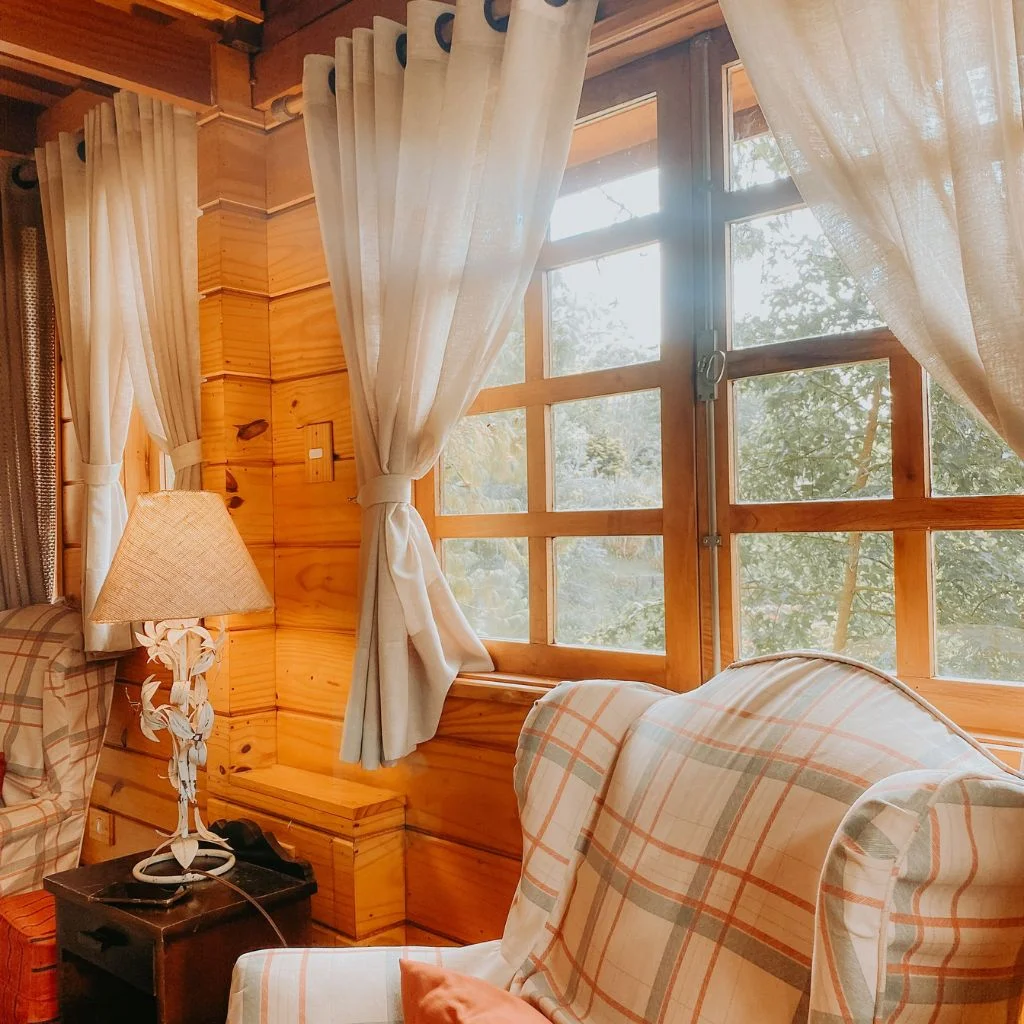
Lighting decides whether a little cabin living room feels cosy or simply dim, and layering several soft sources beats relying on one bright overhead fixture every time.
- Warm-white Edison bulbs in exposed fittings, for a soft amber glow
- A wrought-iron chandelier hung low over a central seating area
- Table lamps with linen or burlap shades either side of the sofa
- Wall sconces flanking the fireplace to balance the firelight
- A floor lamp angled into the reading nook
- Flameless candles grouped on the mantel or a low table
- String lights woven along an exposed beam for a soft background glow
Dimmer switches are worth the small extra cost, since a cabin living room typically needs full brightness for cleaning and reading, then a much lower, flatter glow once the fire is lit and the evening settles in. Sticking to one colour temperature across every fixture matters too; mixing a cool white bulb into an otherwise warm-lit room is enough to make the whole space feel clinical rather than cosy.
Does Your Cabin Living Room Need More Layers
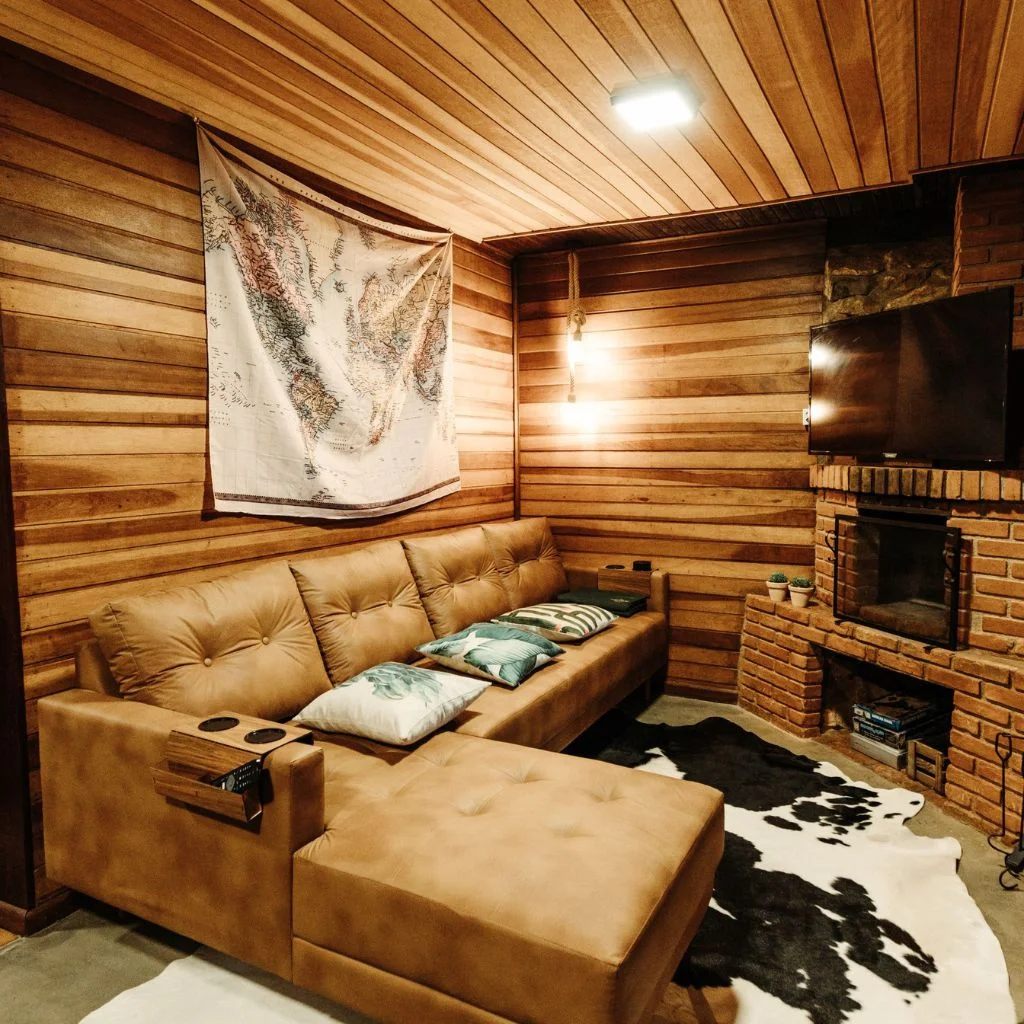
Bare wood and stone can tip into feeling cold rather than cosy without something soft to counter them, which is where textiles earn their keep. A chunky knit throw over the sofa arm, a wool rug underfoot and linen cushions in two or three tonal shades add warmth that hard surfaces cannot provide on their own.
Mixing textures matters more than matching colours here. A sheepskin, a woven wool blanket and a linen cushion can all sit in the same neutral palette while still feeling layered rather than flat. This is one of the fastest, lowest-cost ways to make a little cabin living room feel finished, since textiles can be swapped seasonally without touching a single piece of furniture.
A wool or jute rug layered over a smaller vintage-style runner adds the same depth underfoot that the cushions and throws bring to the seating, and it helps break up a large expanse of timber flooring that might otherwise feel bare.
Furniture Picks That Suit a Little Cabin Living Room
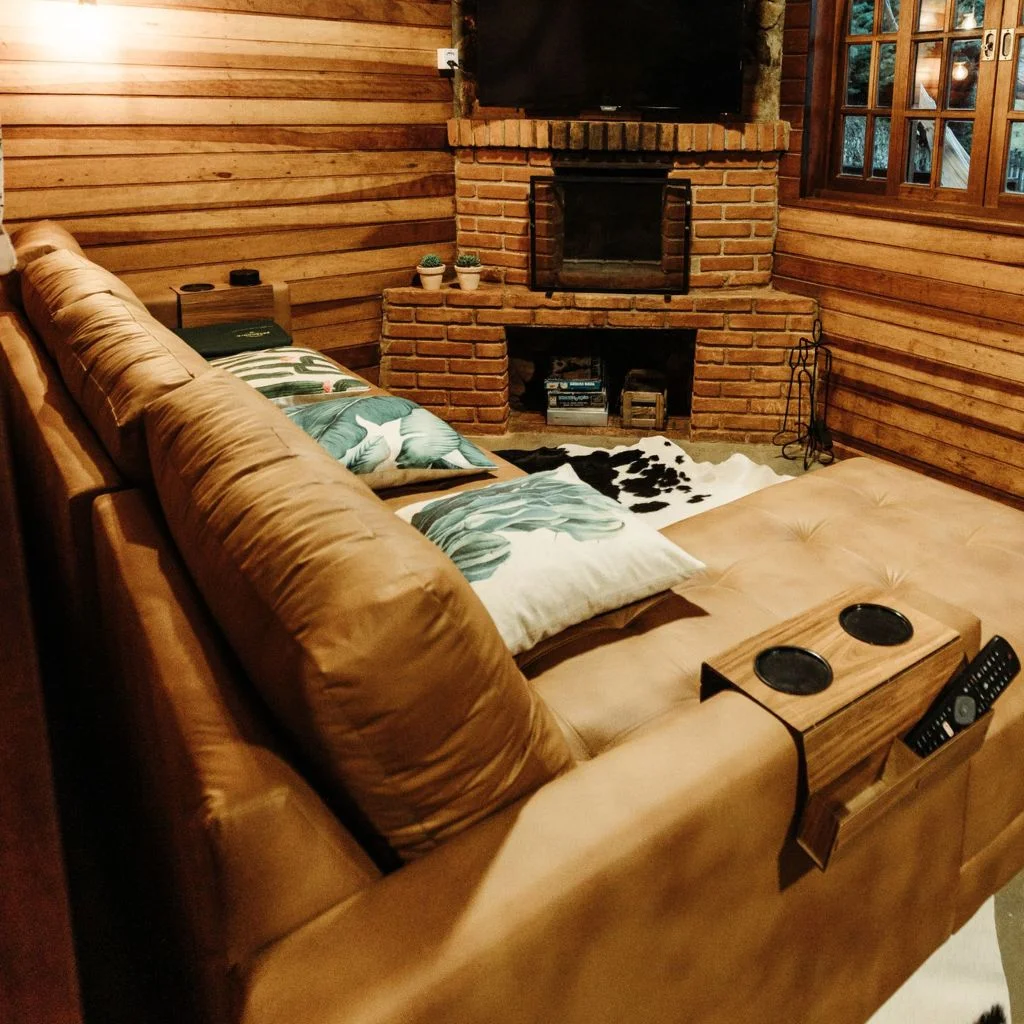
Furniture works hardest when every piece is scaled to the room rather than borrowed from a much larger space. A low-profile sofa in a durable weave, a pair of leather or canvas armchairs and a solid wood coffee table with rounded edges cover most of what the room actually needs.
Look for pieces with visible joinery and a slightly worn, lived-in finish over anything glossy or brand new looking. Multi-purpose furniture earns its place too: a storage trunk that doubles as a coffee table, or a bench that adds seating without the bulk of another armchair, both keep the floor plan open in a room that rarely has square footage to spare.
Where floor space is genuinely tight, nesting side tables or a slim console behind the sofa give extra surface area that disappears when it isn’t needed, which matters far more in a cabin than in a full-size family home.
Cluttering Mistake That Undoes a Small Cabin
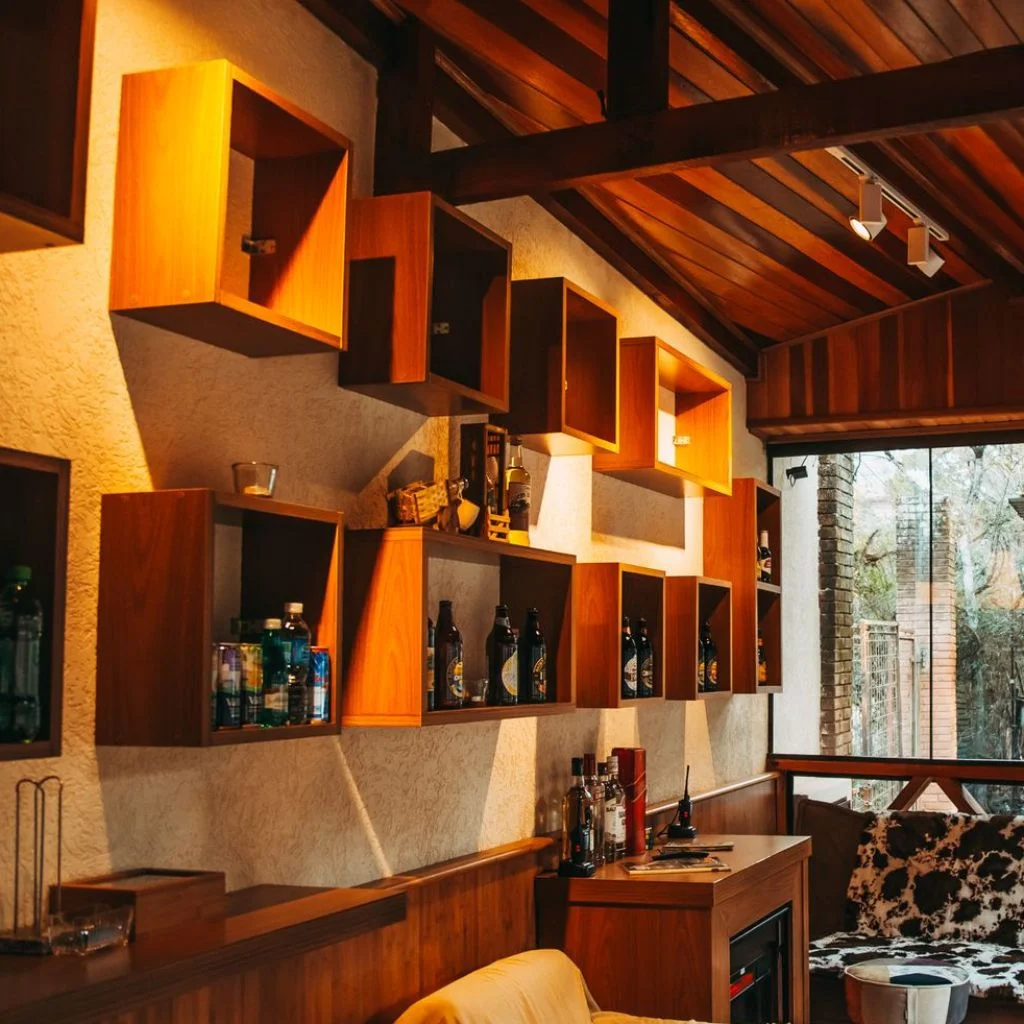
The most common misstep in a little cabin living room is treating “rustic” as a licence to add everything at once: antlers, lanterns, plaid throws, vintage signage and a dozen candles all competing for the same wall. In a small space, this reads as cluttered rather than cosy, and it makes the room feel smaller than it is.
A better approach is to pick two or three signature materials — timber, stone and wool are usually enough — and repeat them consistently rather than introducing a new texture or motif in every corner. Editing down to a handful of well-chosen pieces almost always looks warmer in photographs and in person than a room with twice as many objects competing for attention.
It helps to walk the room with a critical eye every few months and remove one thing for every new item brought in. A cabin fills up faster than most homes simply because so many of its natural materials are decorative on their own, which makes it easy to keep adding without noticing the room has tipped from cosy into cramped.
Bringing the Outdoors In Without Overdoing It
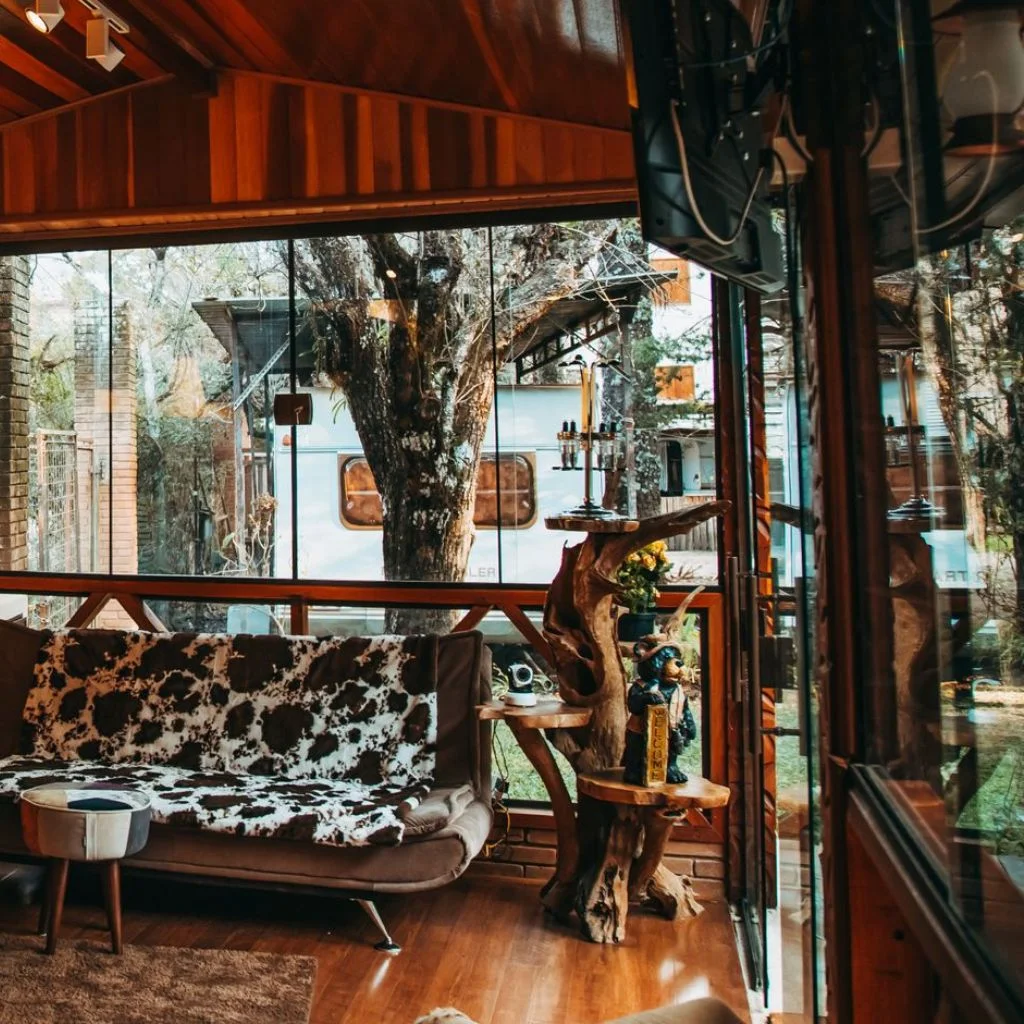
Greenery softens all that hard timber and stone, and a little cabin living room benefits from a few well-placed plants far more than it needs a full indoor garden. A large potted fig or olive tree in one corner, paired with a smaller trailing plant on a shelf, brings in enough life without competing with the room’s other textures.
Dried elements work just as well as live ones and need none of the upkeep: a bundle of dried eucalyptus, a few pampas grass stems in a stoneware vase or a woven basket of pinecones all nod to the surrounding landscape. The goal is a room that feels connected to the woods outside the window, not a greenhouse squeezed into a cabin footprint.
A single well-placed branch or a small collection of foraged pieces from the property itself, arranged simply in a plain vessel, often does more for the room than a shop-bought arrangement, and it costs nothing beyond the walk to find them.
Colour Palettes That Keep a Little Cabin Living Room Cosy
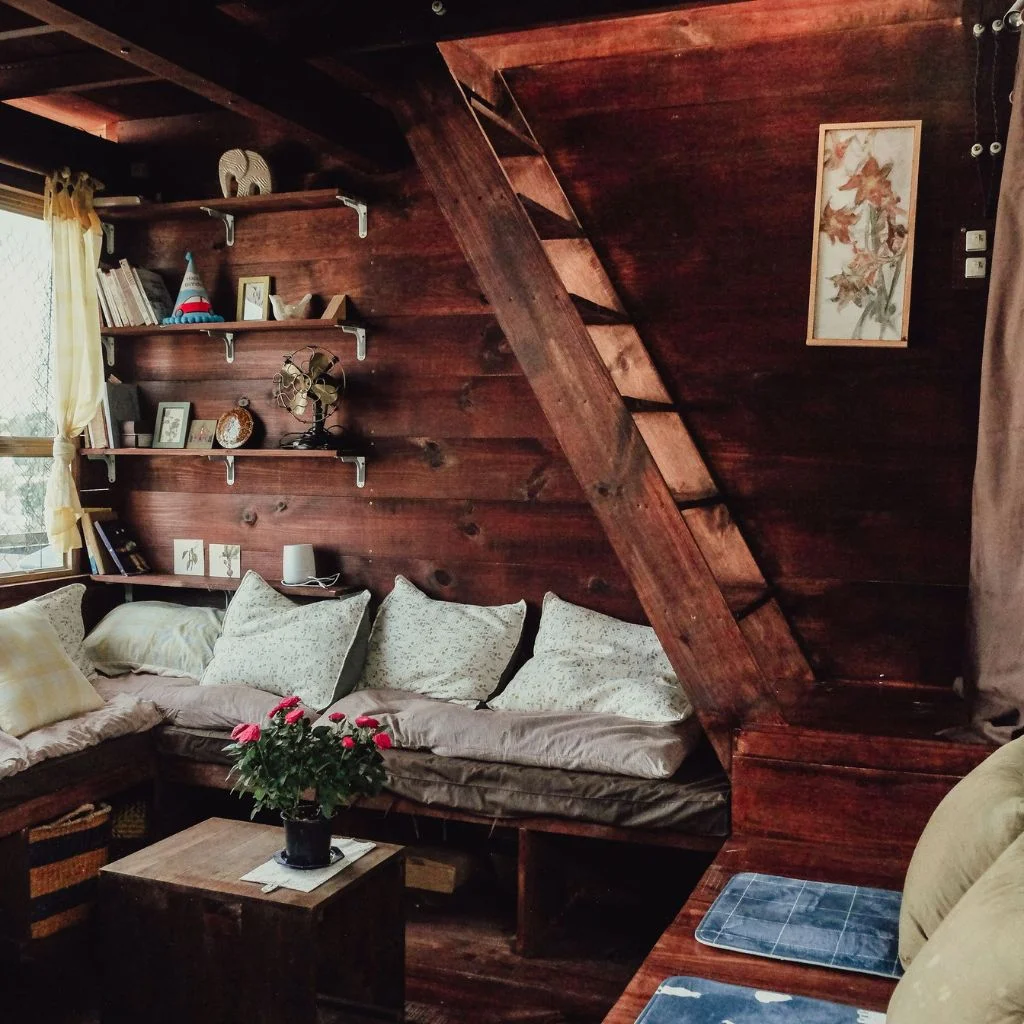
Warm neutrals do more heavy lifting here than almost any other design choice. Cream, oatmeal, warm grey and soft terracotta all sit comfortably alongside natural wood without fighting it, while a true white or cool grey can make the same timber look flat and slightly out of place.
A single deeper accent — forest green, rust or a deep plaid pattern on one cushion or throw — adds contrast without overwhelming the palette. Keeping the wall colour close to the wood tone, rather than in high contrast with it, is why this scheme reads as calm and unified instead of busy, even in a living room with several different materials on show.
If the ceiling is also timber, painting the walls a shade or two lighter than the floor keeps the room from feeling boxed in, which matters most in cabins with lower ceiling heights or smaller windows than a typical main house.
Your Own Corner of the Woods
A little cabin living room rarely needs more furniture, more colour or more decoration than it already has room for; it needs the right materials, layered with restraint, doing their job well. Timber and stone set the tone, textiles and lighting soften it, and a little editing keeps the whole space feeling like a retreat rather than a storage unit for rustic props. Start with two or three of these ideas rather than all nine at once, live with them for a season, and the room will feel considered rather than themed.
Our Pick: Classic Fall Porch Trio Ideas for Traditional Homes.

