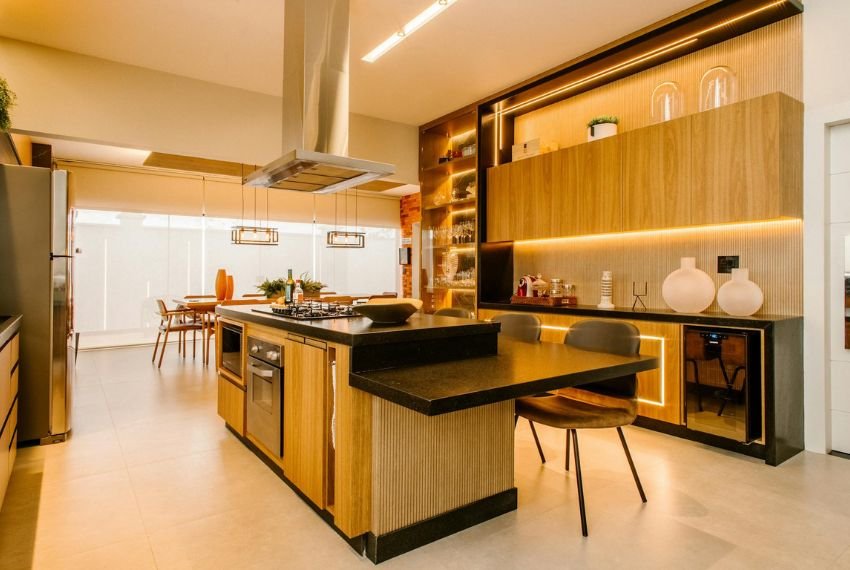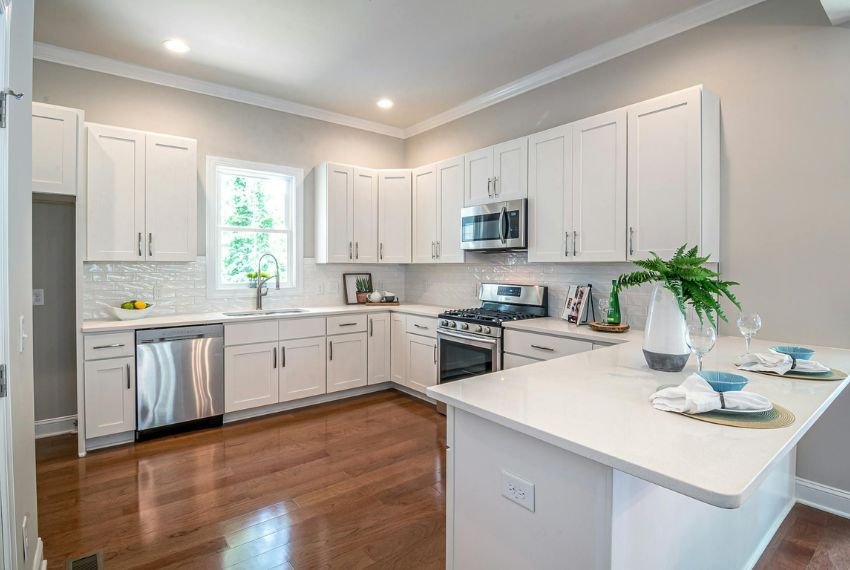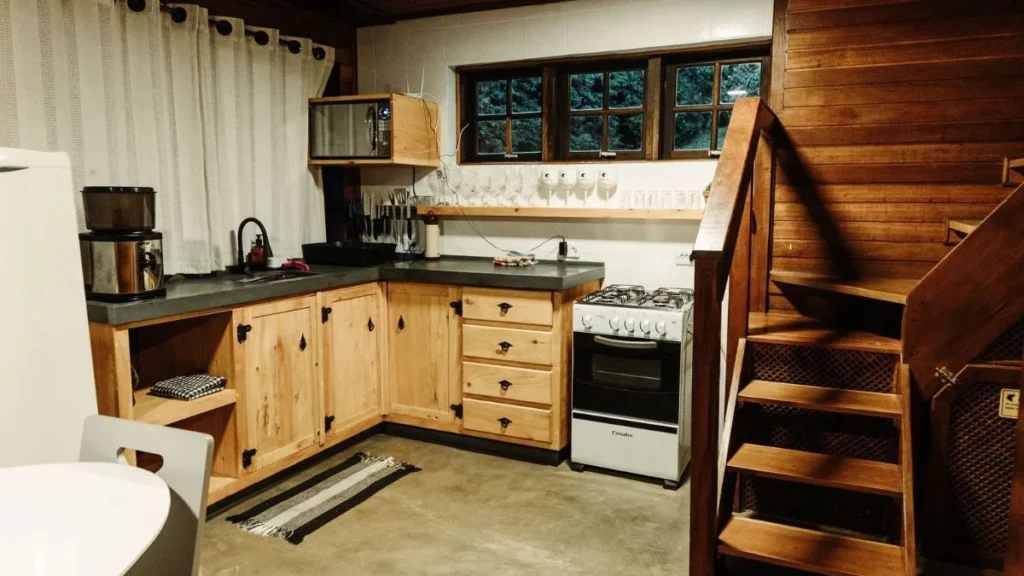
little cabin kitchen packs more warmth into its walls than most sprawling modern builds ever manage. Every surface earns its place, and every detail adds to a room that feels alive whatever the season.
Whether you’re decorating an actual cabin retreat or borrowing the look for a cottage-style home, a little cabin kitchen thrives on texture, natural materials, and a lived-in glow rather than square footage. This guide walks through the details that make the difference, from wood tones to window herb gardens.
None of these ideas need a full renovation budget. Most come down to swapping a few materials and finishes and letting the room fill up gradually with pieces that mean something rather than a matching set bought all at once.
Quick Hits
- Warm wood, natural textiles, and vintage metals do most of the heavy lifting in a little cabin kitchen.
- Open shelving and a compact layout make small spaces feel intentional rather than cramped.
- Firelight-friendly finishes like copper and brass keep the room glowing once the sun goes down.
- A few living touches, such as herbs on the sill or a plaid throw on a stool, stop the space feeling staged.
Warm Wood Tones Anchor The Whole Room
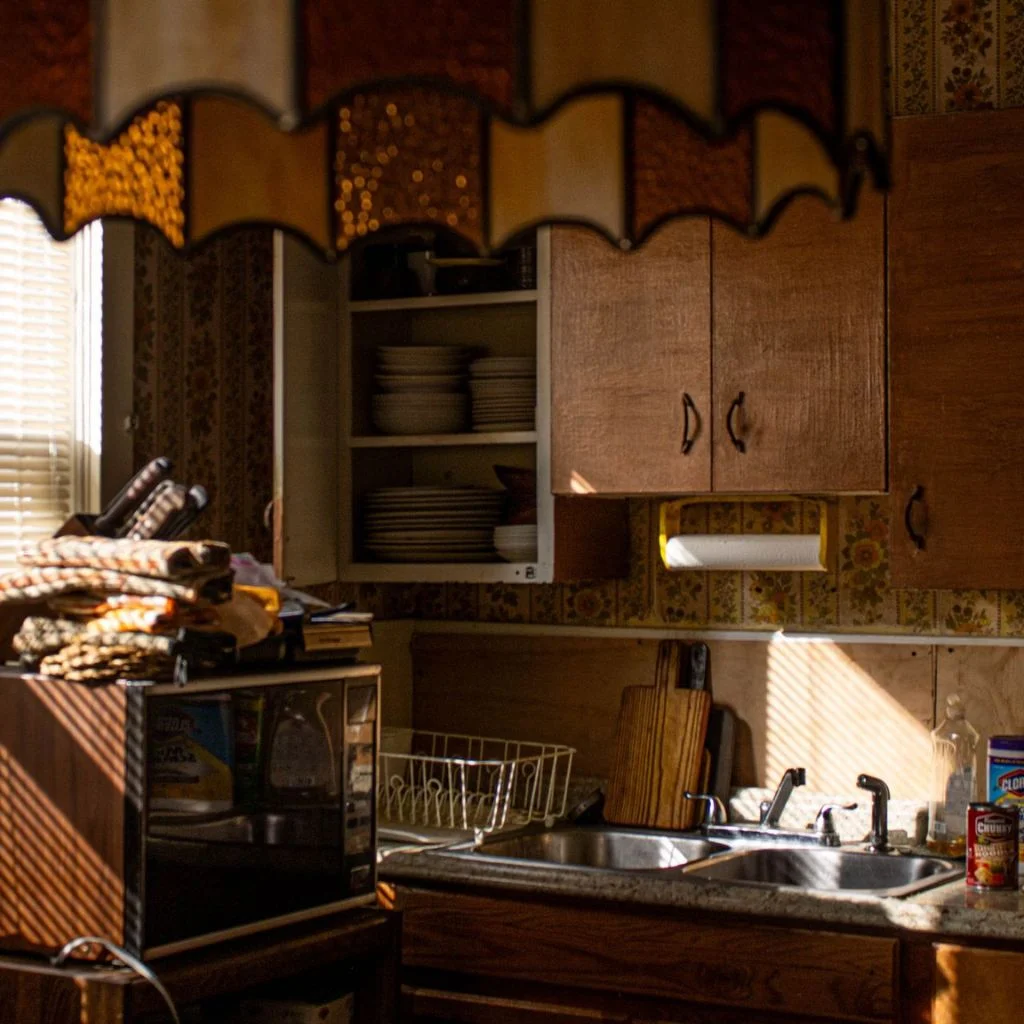
Walk into any well-loved little cabin kitchen and the first thing that registers is the wood. Not a single matched set, but a mix — reclaimed beams overhead, a butcher block counter, maybe a set of open shelves in a slightly different shade than the cabinets below.
That mismatch is the point. Cabin kitchens were rarely built from a single order at a lumber yard; they grew over time, and that layered warmth is what modern kitchens spend a fortune trying to fake. Stick with mid-to-dark tones for cabinetry and let a lighter countertop or open shelf break things up.
A common trap is over-matching everything to the same stain, which flattens the room instead of giving it depth. Two or three related wood tones, sitting close but not identical, read as intentional rather than mismatched.
Open Shelving Turns Everyday Items Into Decor
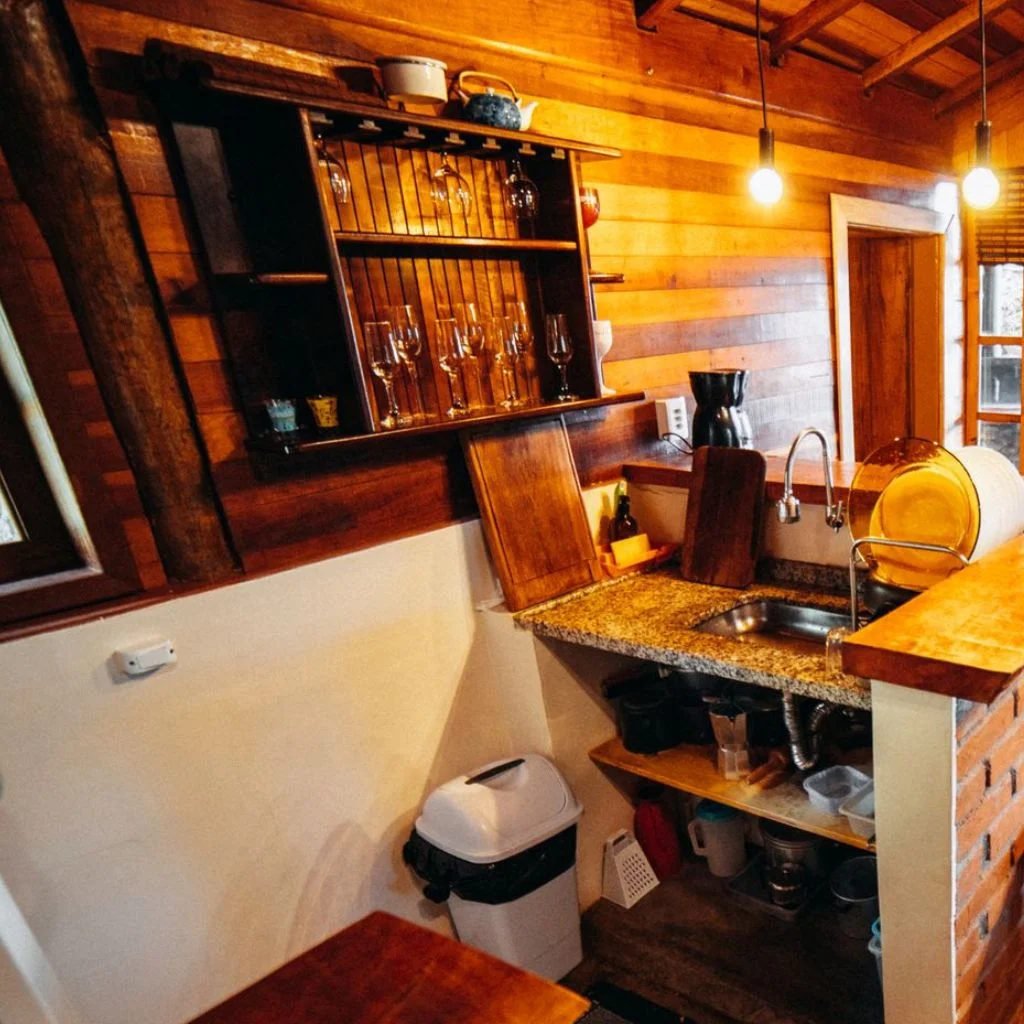
A common mistake in small cabin-style kitchens is hiding everything behind closed doors, which only makes the room feel more clinical. Open shelving does the opposite — it puts the things you already own to work as decoration.
Stack plain white or cream plates, group a few mismatched mugs, and leave enough breathing room between items that the shelf doesn’t read as cluttered. A little cabin kitchen with open shelving also tends to photograph better for Pinterest, since the layers of texture read clearly even in a small frame.
Keep one shelf lighter than the rest — a spot for glassware or pale ceramics — so the eye has somewhere to rest between the heavier wood and iron pieces elsewhere in the room.
Compact Wood Stove Corner Adds Instant Character
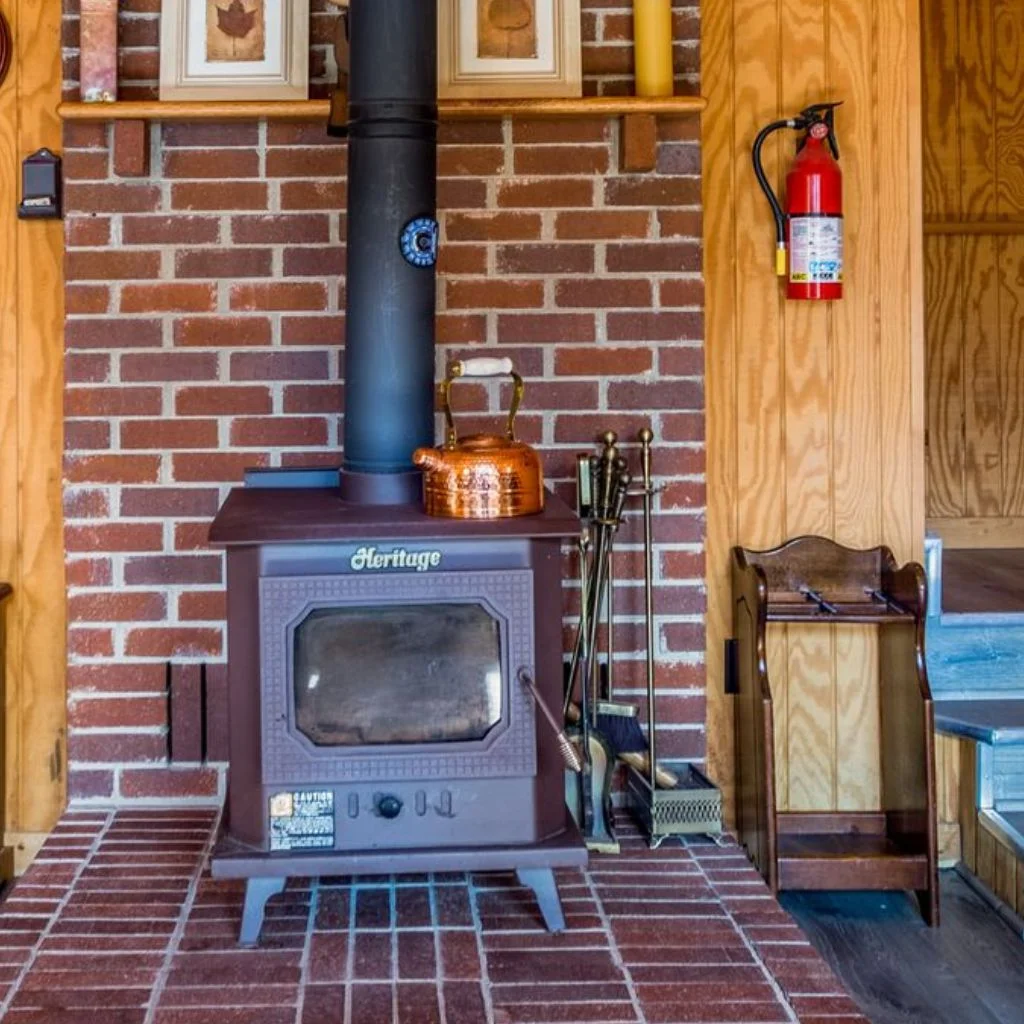
Not every cabin kitchen has room for a full wood-burning stove, but even a small one tucked into a corner changes the entire feel of the space. It becomes the natural focal point, and everything else — the seating, the shelving, the lighting — can be arranged around it.
If a real stove isn’t practical, a stove-style vent hood in blackened iron or a cast-iron kettle left permanently on the hob borrows the same visual weight without the installation.
A small basket of split logs beside the stove, even a decorative one in a kitchen that doesn’t burn wood, reinforces the cabin feel and gives the corner a sense of purpose rather than looking staged.
Vintage Enamelware Brings Colour Without Clutter
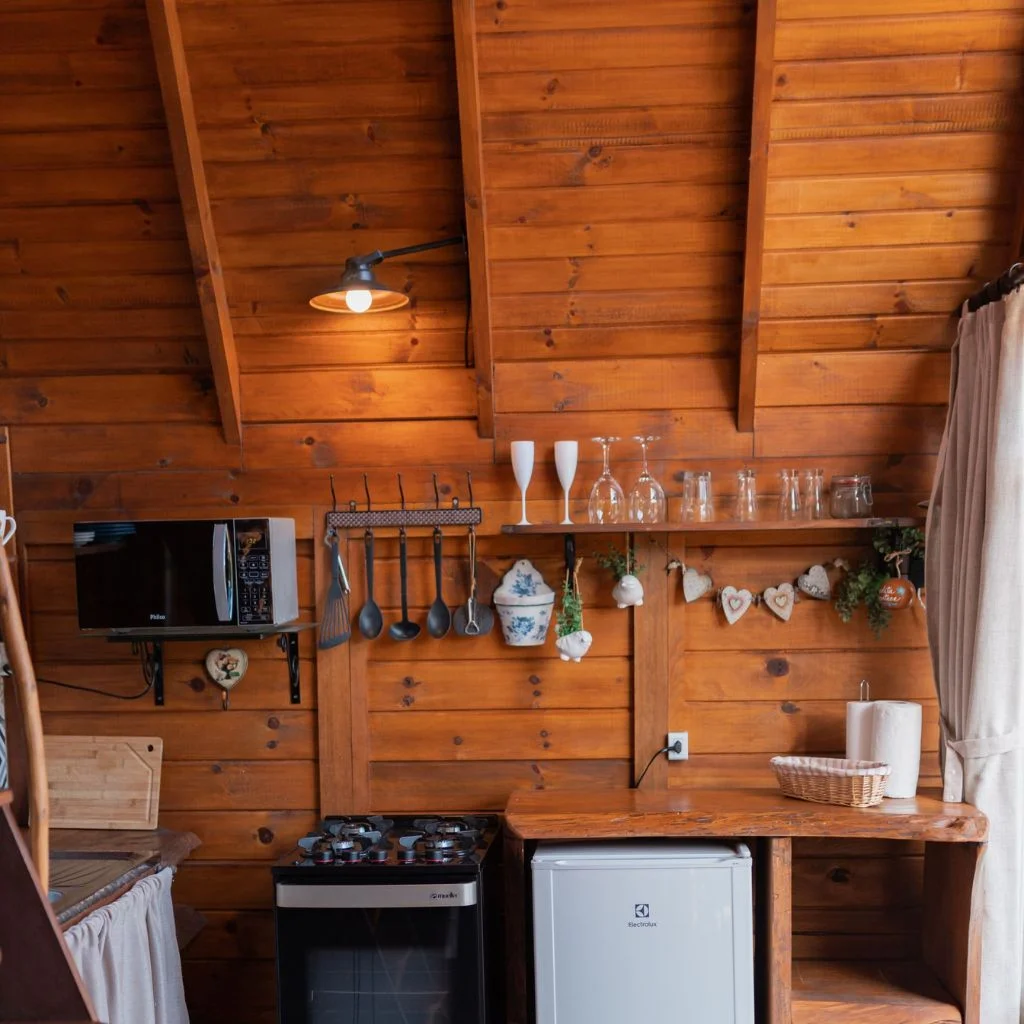
Cabin kitchens tend to stay in a narrow, earthy palette, which makes a single pop of colour go a long way. Vintage enamelware — a red coffee pot, a speckled blue mixing bowl, a cream bread bin — adds that colour without pulling the room away from its rustic base.
Charity shops and car boot sales are the best hunting ground here. Enamelware only gets better with a few chips and scratches, so there’s no pressure to find pristine pieces.
Group pieces in twos or threes rather than scattering single items across every surface. A cluster on one shelf reads as a collection; the same pieces spread thin around the room just look misplaced.
Checked And Plaid Textiles Soften Hard Surfaces
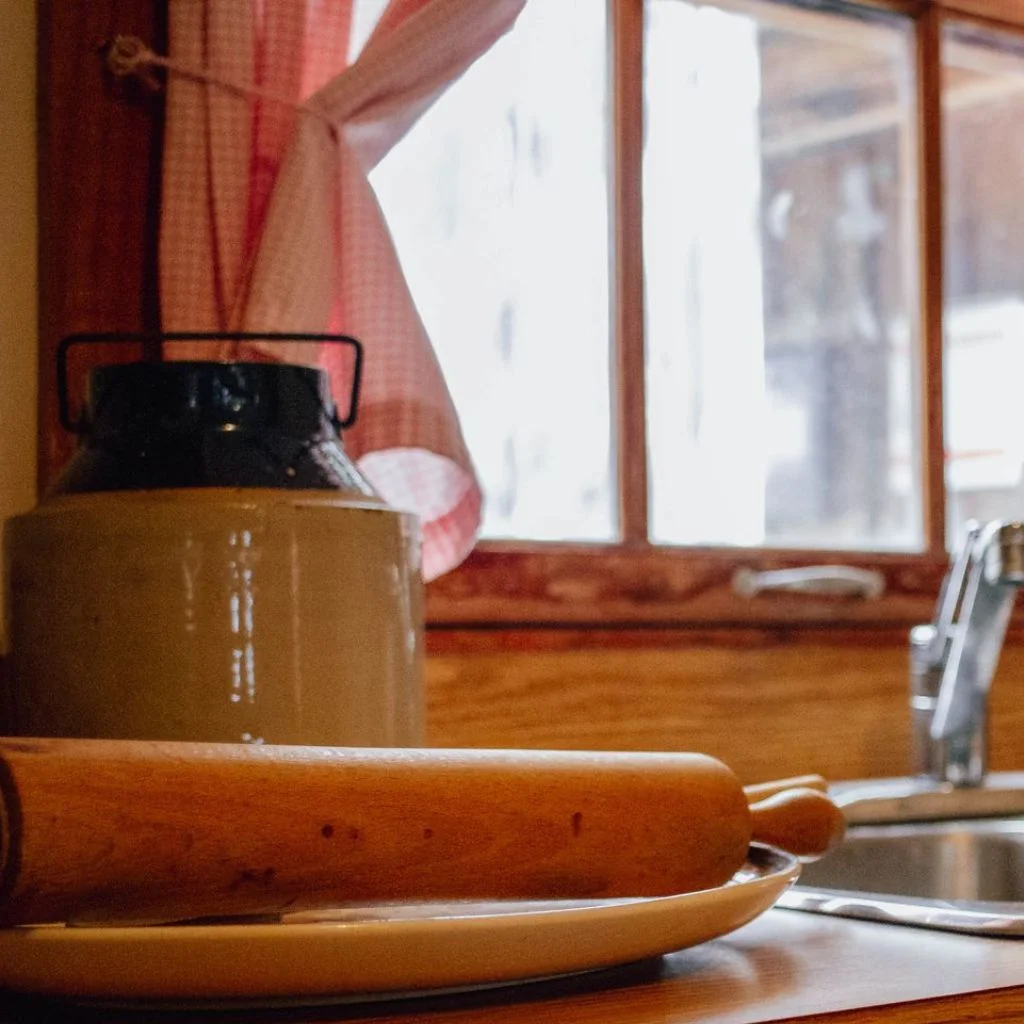
A little cabin kitchen is full of hard surfaces by nature — wood, stone, iron — so textiles are what stop the room feeling cold. A buffalo check curtain over the sink, a plaid runner on a small table, or tea towels in a muted tartan all do the job.
Keep the palette to two or three colours across the whole kitchen so the textiles feel chosen rather than scattered. Reds, forest greens, and mustard tend to sit well against natural wood.
Swapping textiles seasonally is an easy way to keep a little cabin kitchen feeling current without touching a single fixed surface — heavier wool checks in winter, lighter cotton gingham once the weather turns.
Butcher Block Counters Age Beautifully In Cabin Kitchens
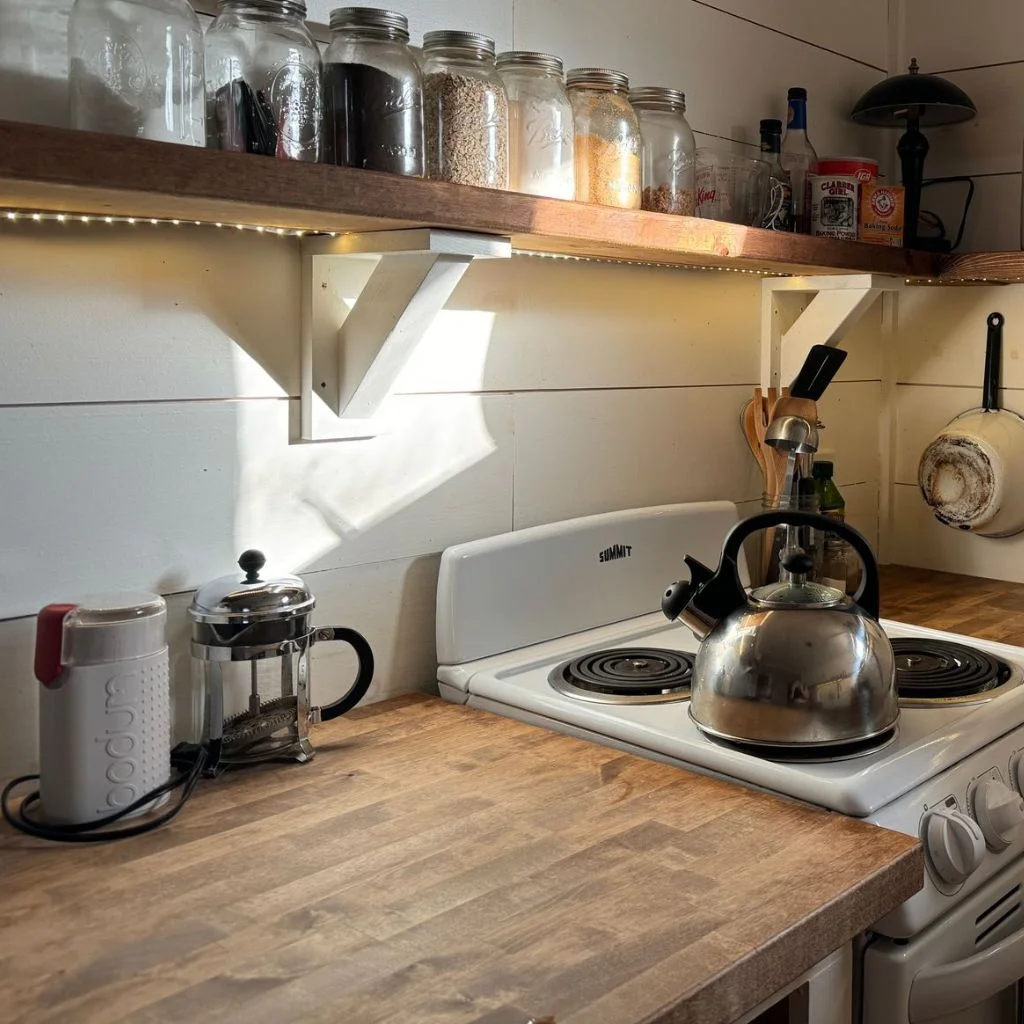
Stone counters look sleek, but they can feel out of place in a cabin setting. Butcher block warms the room instantly and, unlike stone, actually improves with age — knife marks and water rings become part of the character rather than a flaw to hide.
A monthly rub with food-safe mineral oil keeps the wood from drying out and deepens the colour over time, which is exactly the patina a little cabin kitchen is going for.
For anyone hesitant about full-room butcher block, a single island or a small run beside the stove is enough to introduce the material without a full renovation budget.
Pale, tightly grained woods like maple tend to show stains more than darker options such as walnut, so it’s worth weighing how the kitchen actually gets used before settling on a species.
Copper And Brass Accents Catch The Firelight
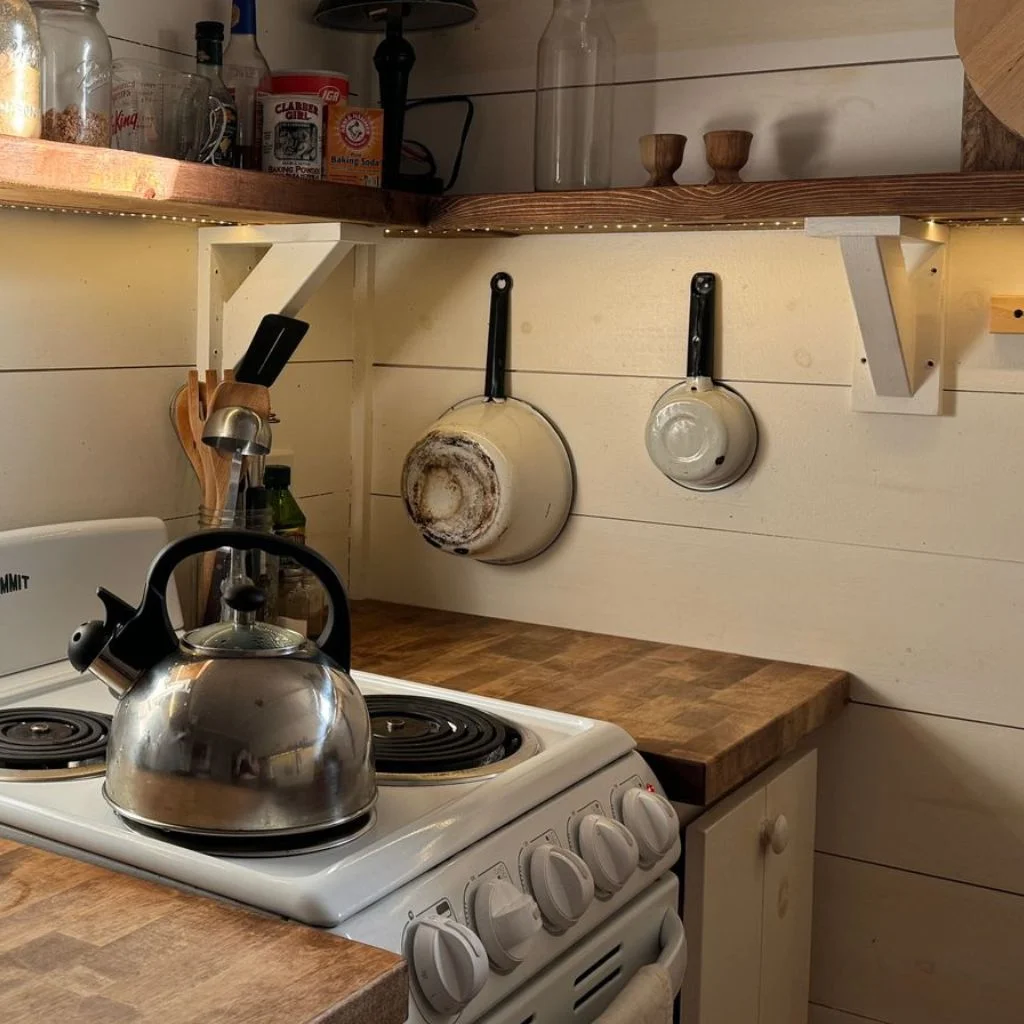
Stainless steel reflects light in a flat, clinical way. Copper and brass do the opposite — they pick up warm light from a stove, a pendant lamp, or a window at golden hour and throw it back around the room.
A few hanging copper pans, brass cabinet pulls, or a single statement light fitting are usually enough. Mixing metals is fine as long as warm tones dominate over cool ones.
Older, unlacquered copper develops a soft patina over time rather than staying mirror-bright, which suits a little cabin kitchen far better than anything kept factory-new.
Window Herb Gardens Keep The Space Feeling Alive
A row of potted herbs on the windowsill above the sink is a small addition that does a lot of work. It adds greenery without needing a garden, softens the transition between the kitchen and the view outside, and it’s genuinely useful for cooking.
Terracotta pots or old tin cans suit the aesthetic far better than glossy ceramic planters. Rosemary, thyme, and mint are forgiving choices for a kitchen windowsill that doesn’t get constant direct sun.
If the sill gets little natural light, a single trailing plant like ivy does a similar job of softening the window without needing much upkeep at all.
Layered Lighting Makes Small Kitchens Feel Bigger At Night
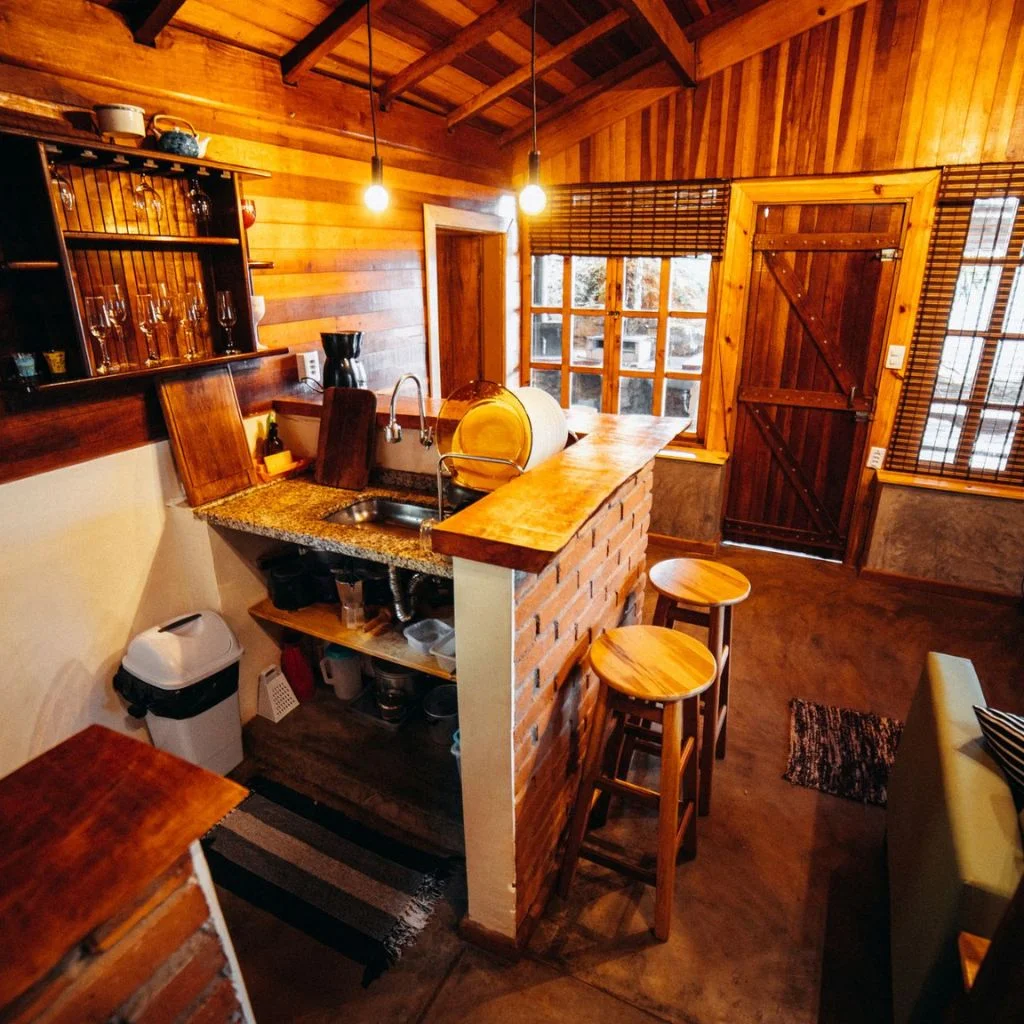
A single overhead bulb flattens a small kitchen and makes it feel smaller after dark. Layering light sources — a pendant over the sink, a couple of wall sconces, maybe a string of warm bulbs along a shelf — gives the room depth once the sun goes down.
Stick to warm white bulbs throughout. Cool white lighting is one of the fastest ways to make a little cabin kitchen feel like a hotel corridor instead of a retreat.
Dimmer switches, even on just the main pendant, make it easy to shift the room from a bright cooking space during the day to something closer to candlelight in the evening.
Open Pantry Baskets Keep Dry Goods On Display
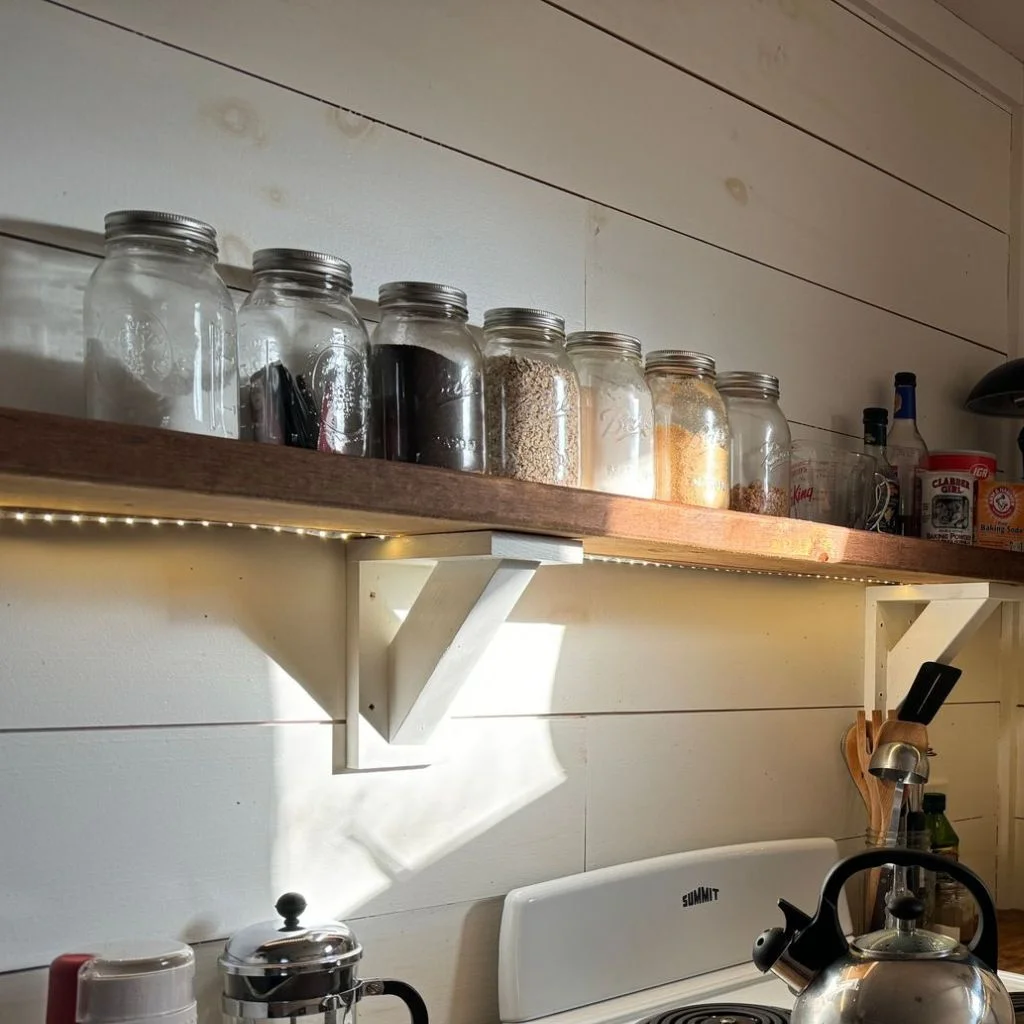
Plastic containers and branded packaging are two of the fastest ways to break the mood of a little cabin kitchen. Swapping them for woven baskets, glass jars, and simple linen sacks keeps the same dry goods on hand without the visual clutter.
A narrow open shelf or a wall-mounted rack near the stove works well for this, since it keeps flour, oats, and pasta within reach while still looking deliberate rather than like a stockroom.
Labelling jars by hand, even with a plain pencil on a wooden tag, adds a small personal touch that a printed label never quite manages in a space built around handmade character.
Small Breakfast Nook Makes The Room Feel Finished
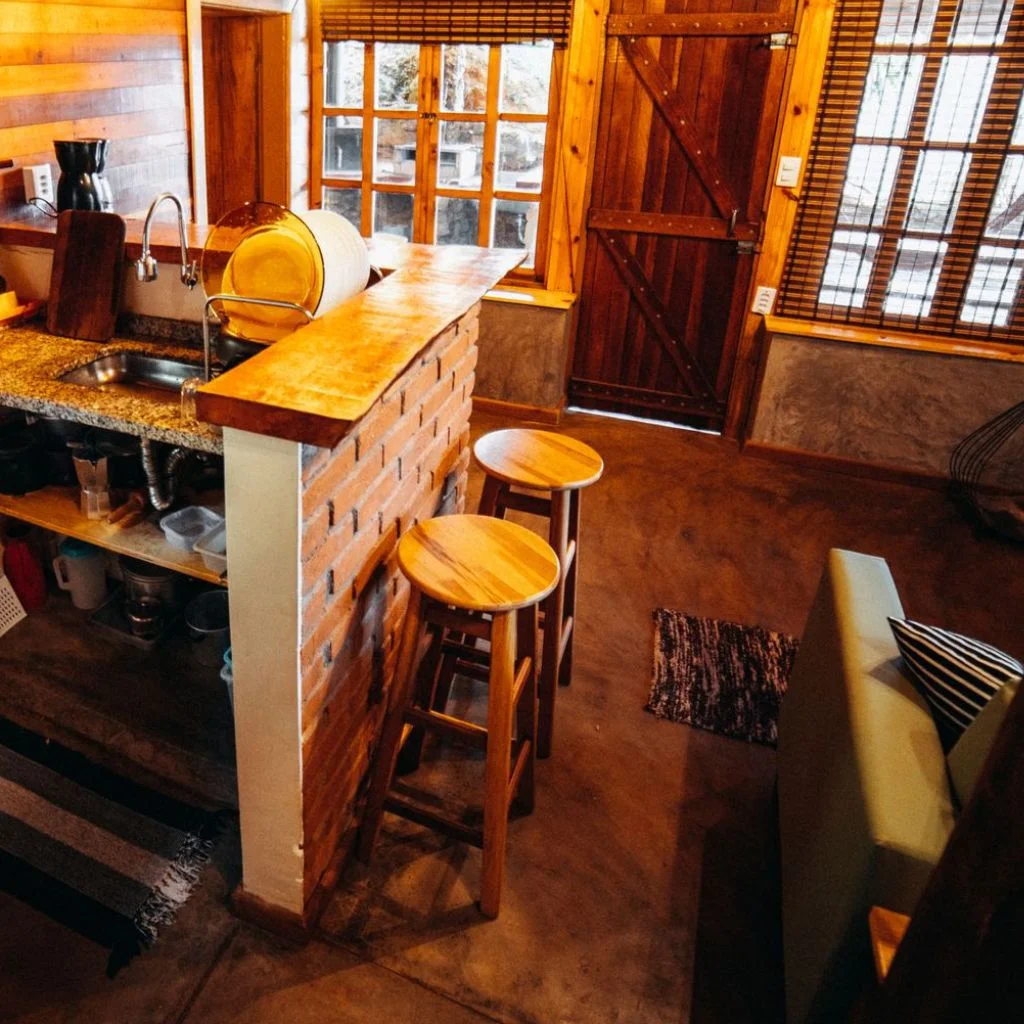
Even a single bench and a small round table beside the window turns a little cabin kitchen from a place you cook in to a place you spend time in. It doesn’t need to seat six — a two-person nook does the job in a tight footprint.
Reclaimed wood benches, a woven seat cushion, and a small stack of books or a candle on the table are usually enough to make the corner feel considered rather than an afterthought.
This is often the easiest spot to bring in a personal touch, whether that’s a favourite mug left out or a small stack of postcards pinned above the table. It’s the detail visitors tend to remember.
What Actually Makes It Feel Like Home
The little cabin kitchens that feel right aren’t the ones copied precisely from a catalogue. They’re the ones with a chipped enamel jug someone picked up on holiday, a shelf that’s slightly uneven because it was built by hand, and a kettle that’s always warm.
A friend who renovated her own cabin kitchen last year said the room didn’t come together until she stopped buying things to fill it and started using pieces she already had — an old bread bin from her grandmother, mismatched mugs collected over a decade. The catalogue-perfect version she’d been chasing was never going to feel as lived-in as the one built from what was already lying around.
Start with one or two changes from this list rather than all ten at once. A butcher block counter and a row of herbs on the sill will already shift the feel of the room, and the rest can be added slowly as pieces are found rather than bought all at once.
Editors Choice: Little Cabin Living Room Ideas for a Warm Woodland Retreat.