Dog corner ideas rarely account for the parts of a home that do not fit anything else — the wedge under a staircase, the dead space beside a cabinet, the alcove too narrow for furniture. Most inspiration boards show a dog bed placed in the middle of an already spacious room, which is not much help to anyone working with a genuinely awkward layout. This list flips that, turning ten of the trickiest leftover spaces in a house into corners a dog will want to use.
Quick Style
| Under-stairs and closet nooks work best for dogs that like enclosed, den-like spaces. |
| Window nooks and stair landings suit dogs that prefer to watch the room rather than hide from it. |
| Kitchen and hallway corners need washable, low-profile setups that stay out of foot traffic. |
| Blind corners and cabinet gaps are often the easiest awkward spaces to convert without any renovation. |
Built-In Nook Under The Stairs Becomes A Cosy Den
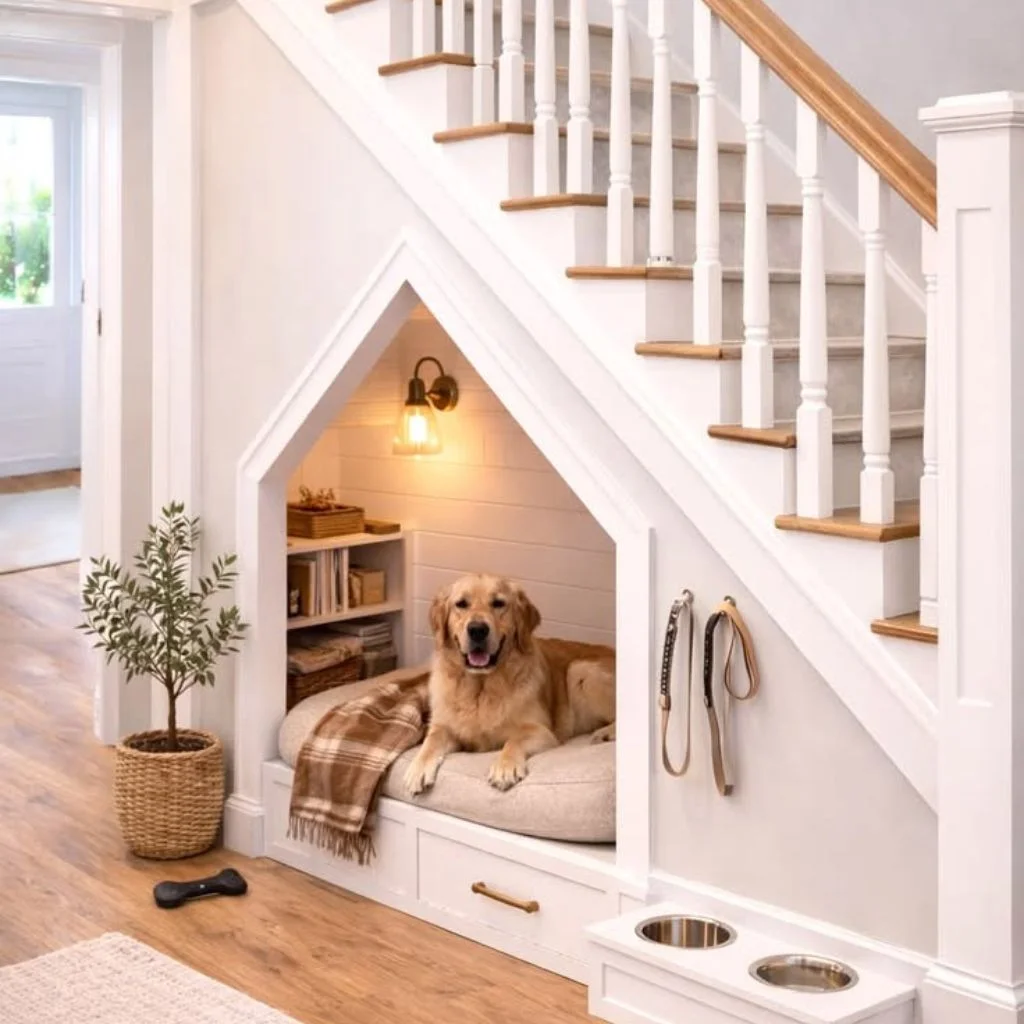
Photo Credit: spacespng / Instagram
Triangular gap beneath a staircase is one of the most awkward shapes in any home, which is exactly why it suits a dog corner so well — most dogs prefer a den-like space with a low ceiling and walls on more than one side over an open bed in the middle of a room. Fitting a low bed or cushion into the tallest part of the wedge, with the sloped ceiling overhead, mimics the enclosed feel dogs naturally gravitate towards.
This works especially well in hallways or entryways where the space would otherwise sit empty or become a dumping ground for shoes and bags. A warm rug underneath and a soft throw draped over the opening turn the nook into something that reads as a design feature rather than a leftover triangle. Farmhouse and traditional homes suit this look particularly well, since the enclosed, slightly rustic feel of an under-stair nook echoes the rest of the decor rather than standing out.
Repurposed Alcove Turns Into A Framed Retreat
Alcoves beside a fireplace or built into a wall are usually too narrow for furniture but are the perfect width for a dog bed, and the recessed shape naturally frames the space the way a piece of art would. Painting the back wall of the alcove in a slightly deeper shade than the surrounding room draws attention to it in a flattering way, turning what used to be dead space into a deliberate focal point.
This style suits living rooms with existing architectural detail — picture rails, panelling, a fireplace surround — where the alcove already reads as part of the room’s structure rather than an afterthought. A woven basket or low platform bed keeps the look tidy, and the recessed walls do the job of containing mess that an open corner cannot.
Corner Baskets Soften An Odd Angle
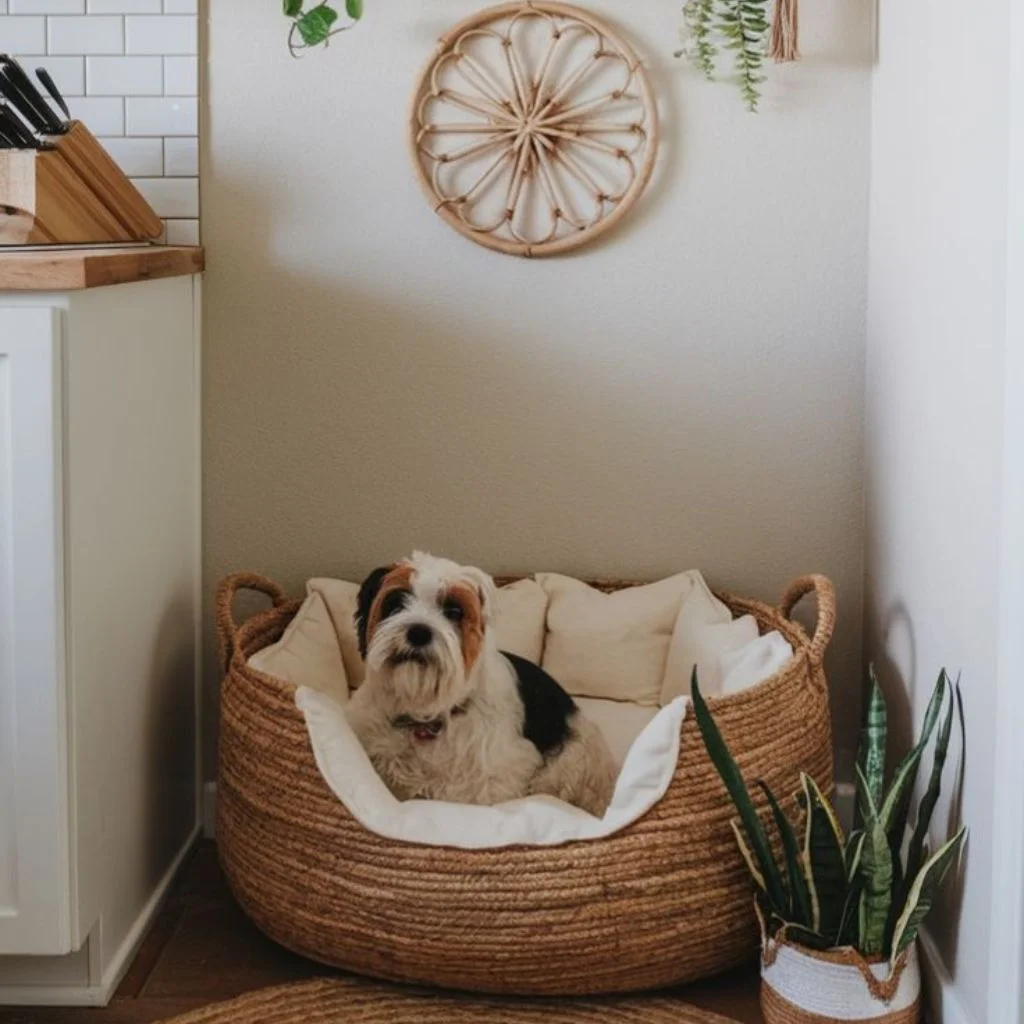
Photo Credit: Pinterest
Not every awkward space is a gap — sometimes it is simply an odd angle where two walls meet at less than a right angle, common in older or oddly renovated homes. A round or oval woven basket bed sits naturally in these spaces in a way a square bed cannot, since it does not fight the angle the way a straight-edged piece of furniture would.
Works well in bohemian or eclectic interiors, where a textured basket already fits the room’s material palette of rattan, jute and natural fibres. The rounded shape also reads as softer and more intentional than a bed simply wedged into a corner, which matters in rooms where the dog’s space is visible from the main seating area.
Window Nook Doubles As A Sunny Lookout Spot
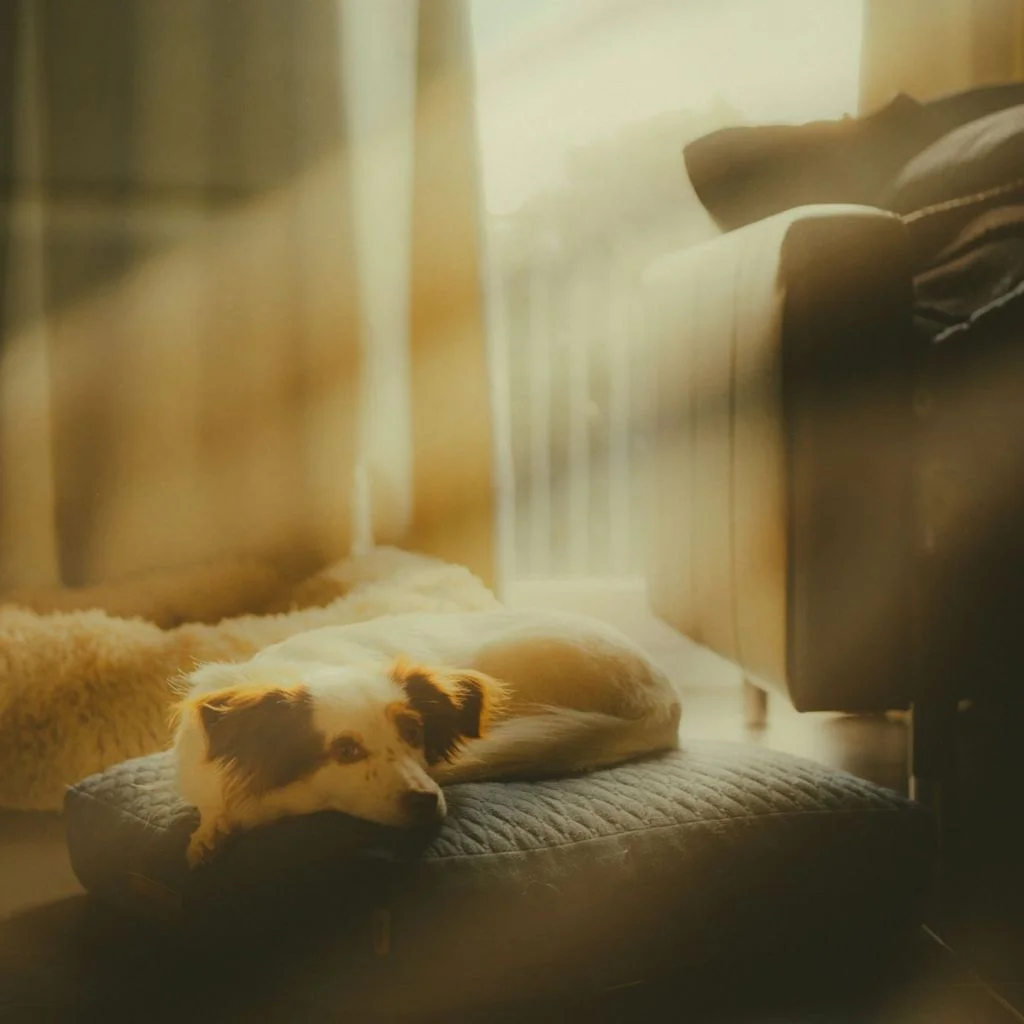
Photo Credit: Ricardo Oliveira / Pexels
Awkward spaces are not always dark corners — a narrow strip of floor beneath a window is often too shallow for furniture but ideal for a low dog bed, especially for dogs that like to watch the street or garden. This suits living rooms and home offices with a window seat that never quite fits a person comfortably but works well at floor height for a dog.
A slim, low-profile bed rather than a bulky one keeps the space from feeling cramped, and placing it directly in a sunbeam’s path makes the spot genuinely appealing rather than just convenient for the owner. Coastal and traditional interiors both suit this look, since a window nook already tends to be one of the brightest, most decorated corners of the room.
Slim Side-Of-Cabinet Gaps Fit A Custom Bed
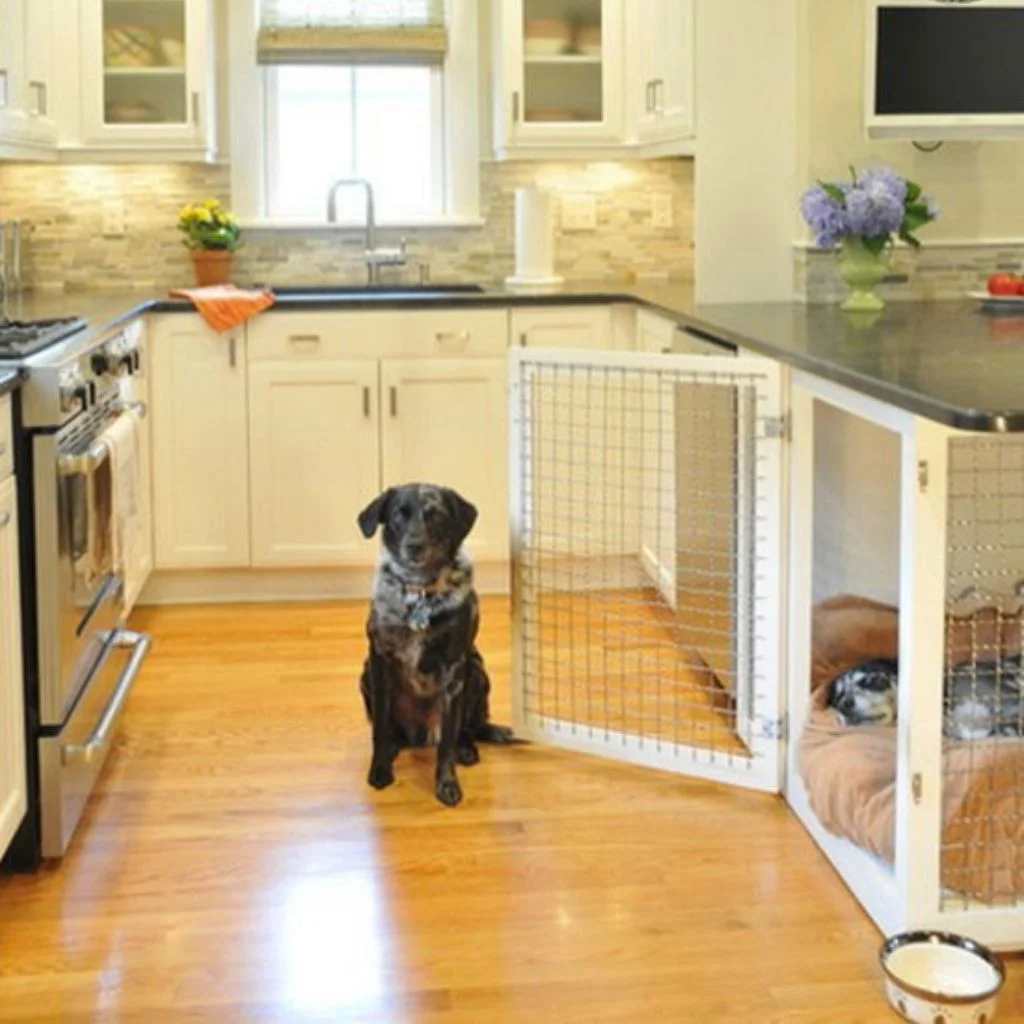
Photo Credit: atticmag.com
The narrow strip of floor beside a kitchen island, bookshelf, or wardrobe is usually too tight for anything except dust, but a slim, made-to-measure bed or cushion fits neatly into gaps as narrow as a foot or two. This works particularly well in kitchens, where a dog corner needs to stay out of the main walking path without disappearing into a separate room entirely.
A washable, low-pile cushion in a colour matching the cabinetry keeps the space visually quiet rather than drawing attention to itself. Modern and minimalist kitchens suit this best, since the goal here is for the bed to blend into the existing lines of the room rather than compete with them.
Hallway Dead Ends Become A Functional Rest Stop
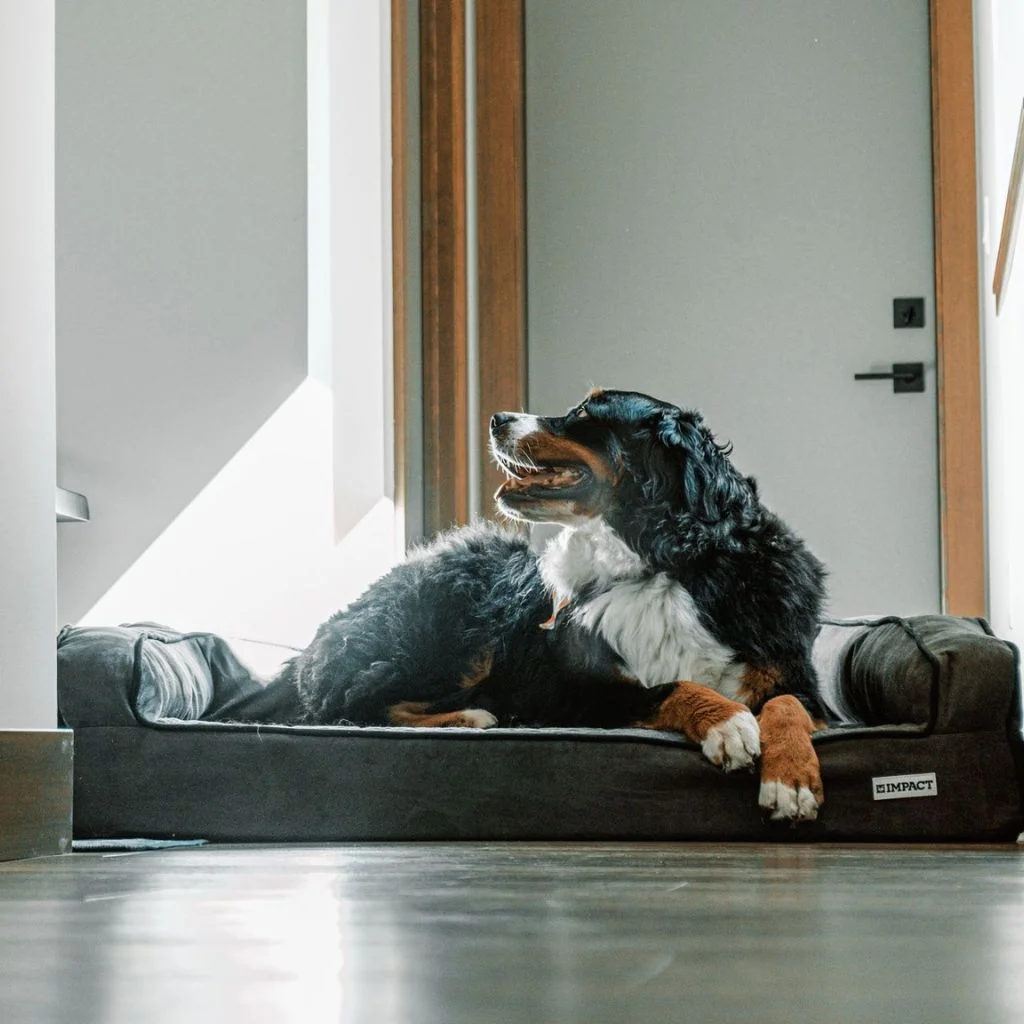
Photo Credit: Impact Dog Crates / Pexels
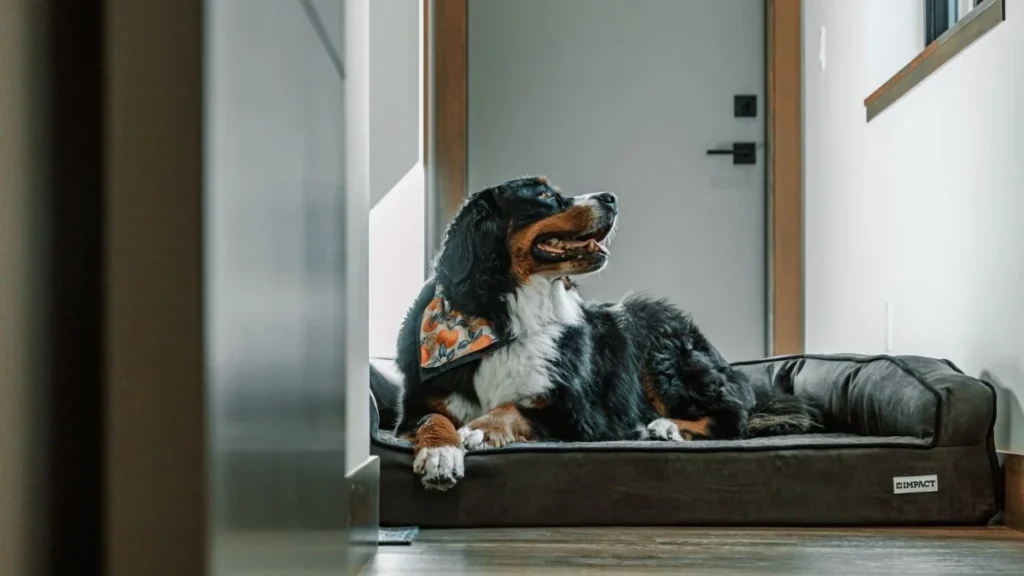
Hallways often end in a short dead stretch of wall before turning a corner, a space too small for furniture and too awkward to decorate conventionally. A fitted bed or cushion at the very end of the hallway makes use of a spot that would otherwise sit empty, and because hallways see regular foot traffic, dogs tend to enjoy resting somewhere central rather than tucked away in a back room.
A low shelf above the bed for leads, treats, or a water bowl turns the dead end into a small functional station rather than just a bed placed at random. This suits transitional and modern farmhouse homes, where hallways already tend to double as storage and drop zones.
Closet Conversions Create A Private Hideaway
An unused closet, or the bottom shelf of a linen cupboard, offers a fully enclosed space that suits anxious or shy dogs far better than an open corner. Removing the closet door or replacing it with a curtain keeps the space from feeling like a locked box while still giving the enclosed, den-like feel many dogs prefer for sleeping.
This idea works well in bedrooms and home offices with an underused closet, particularly in smaller homes where every room needs to multitask. Lining the interior with a soft rug and adding a small battery-powered light makes the space feel considered rather than like storage that happens to have a dog bed in it.
Stair Landing Ledges Turn Into Elevated Perches
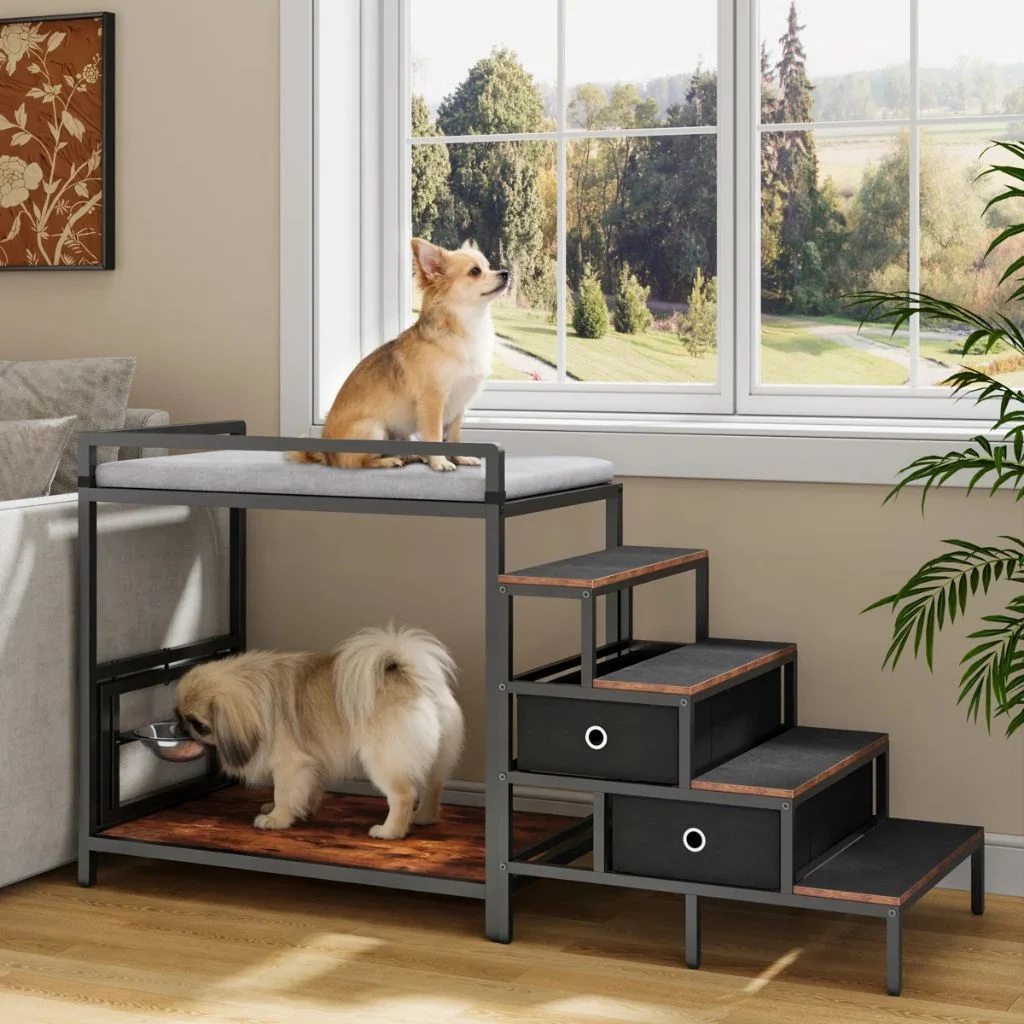
Photo Credit: wayfair.com
A wide stair landing or the flat top of a half-wall beside a staircase is an odd space for furniture but works surprisingly well as an elevated dog perch, especially for dogs that like to survey a room from above. A built-in or freestanding platform with a low guard rail keeps the spot safe while giving the dog a vantage point most floor-level corners cannot offer.
This suits homes with open staircases or split-level layouts, where the landing already functions as a small transitional space rather than a room. It is a less common idea than most on this list, which also makes it one of the more distinctive choices for anyone styling with Pinterest in mind.
Kitchen Corner Nooks Blend Into Cabinetry
The corner where two runs of kitchen cabinetry meet is often left empty because it is awkward to fit standard units into, which makes it a natural, ready-made spot for a dog bed instead. Building or buying a bed sized to match the cabinetry’s toe-kick height keeps the whole setup looking like part of the kitchen’s original design rather than an addition.
This works particularly well in modern and Scandinavian kitchens, where clean, integrated lines matter and a mismatched plastic dog bed would stand out for the wrong reasons. A washable cushion cover in a tone pulled from the cabinetry or flooring keeps the corner cohesive with the rest of the room.
Living Room Blind Corners Get A Stylish Upgrade
Every living room has at least one blind corner — behind a sofa, beside a media unit, in the gap next to a bookshelf — that is awkward to furnish and often ends up empty or cluttered. A structured dog bed with clean lines, rather than a soft shapeless cushion, gives the corner a sense of purpose and turns it into a small, deliberate feature rather than leftover space.
This suits contemporary and eclectic living rooms alike, since the bed itself becomes an accent piece the way a side table or plant stand would. Positioning it where the dog can still see the main activity of the room, rather than facing a wall, tends to get more actual use out of the corner.
Awkward Spaces Make The Best Dog Corners
The nooks and gaps most homes try to hide are often exactly what a dog is looking for — enclosed, low to the ground, and tucked slightly out of the main path of the room. Under-stairs triangles, closet corners, and slim cabinet gaps all solve the same basic problem: space that a person cannot use comfortably but a dog can use perfectly well.
The easiest place to start is the space already being ignored, whether that is a dead-end hallway or the blind corner behind a sofa, since it usually needs the least amount of rearranging to become the dog’s favourite spot in the house.
Our Pick: DIY Dog Play Ground Backyard Setups That Keep Dogs Busy All Day.