Steel gets called cold before anyone actually lives with it. Walk up a good one and the whole house changes its mind.
Most people picture a steel staircase as a factory leftover — grey, hard, and a little unfriendly.
That’s the wrong picture. modern steel staircase design is quieter than that: thin black lines, wood you want to touch, glass that lets the light through, and a staircase that feels like furniture, not machinery.
Twenty ideas follow, from floating treads to painted steel, and none of them needs a warehouse loft. Pick the one that fits your hallway, and the stairs stop being a way up and start being the room.
Start with the steel itself — everything else follows from that one choice.
Let the Steel Speak First
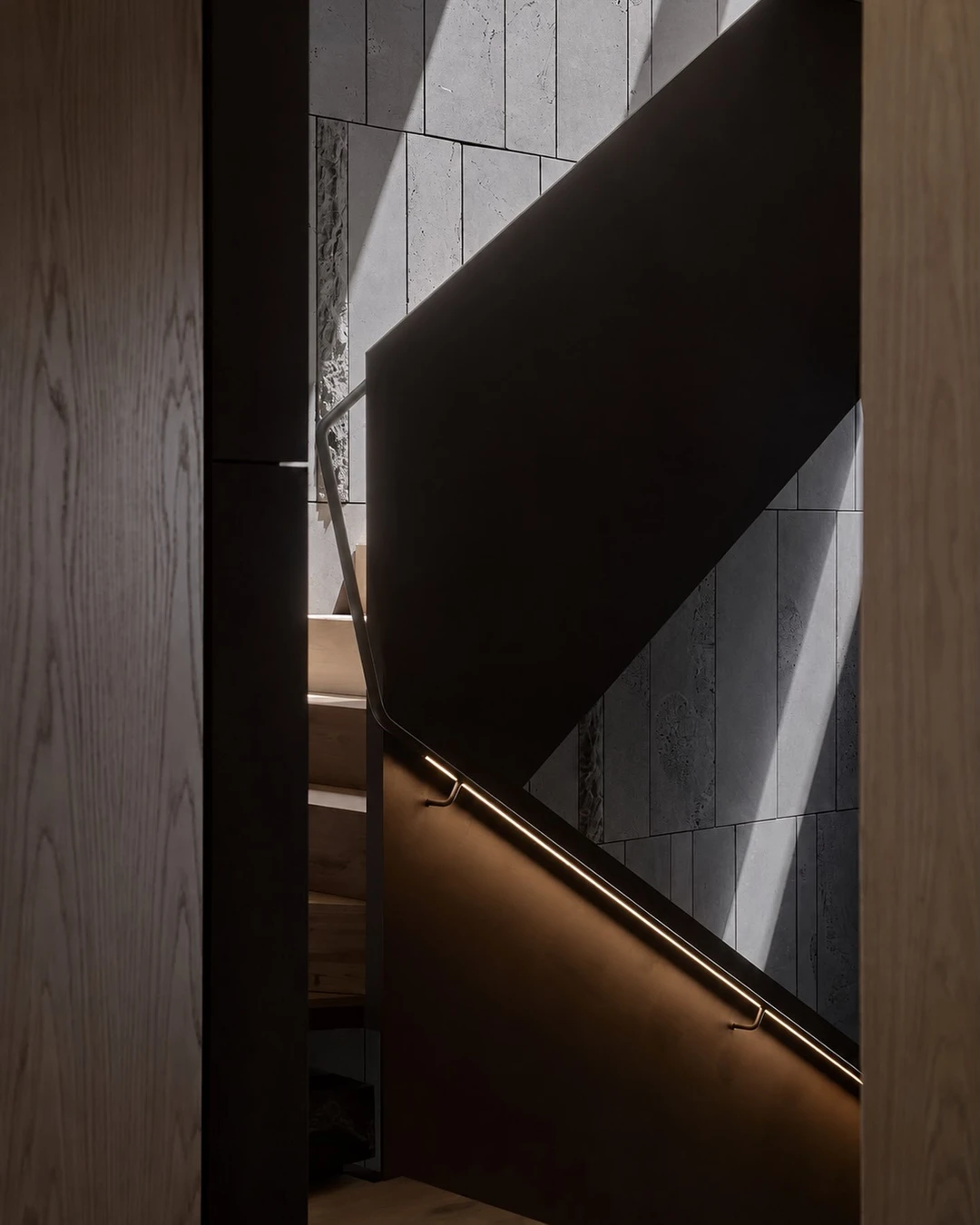
Steel doesn’t need to apologise for being steel. A matte black plate stringer running diagonally up the wall is a line drawn with confidence, and the wood treads and the LED strip along the wall are there to serve it, not hide it.
One black plate stringer does more than hold the treads up — it gives the whole hallway a spine. Keep the wall behind it plain and the stringer becomes the artwork; clutter the wall and the staircase disappears into noise.
The practical point: Choose the stringer first, before the treads or the rail — it sets the character of the whole staircase.
Why Blackened Steel Feels Warm, Not Cold
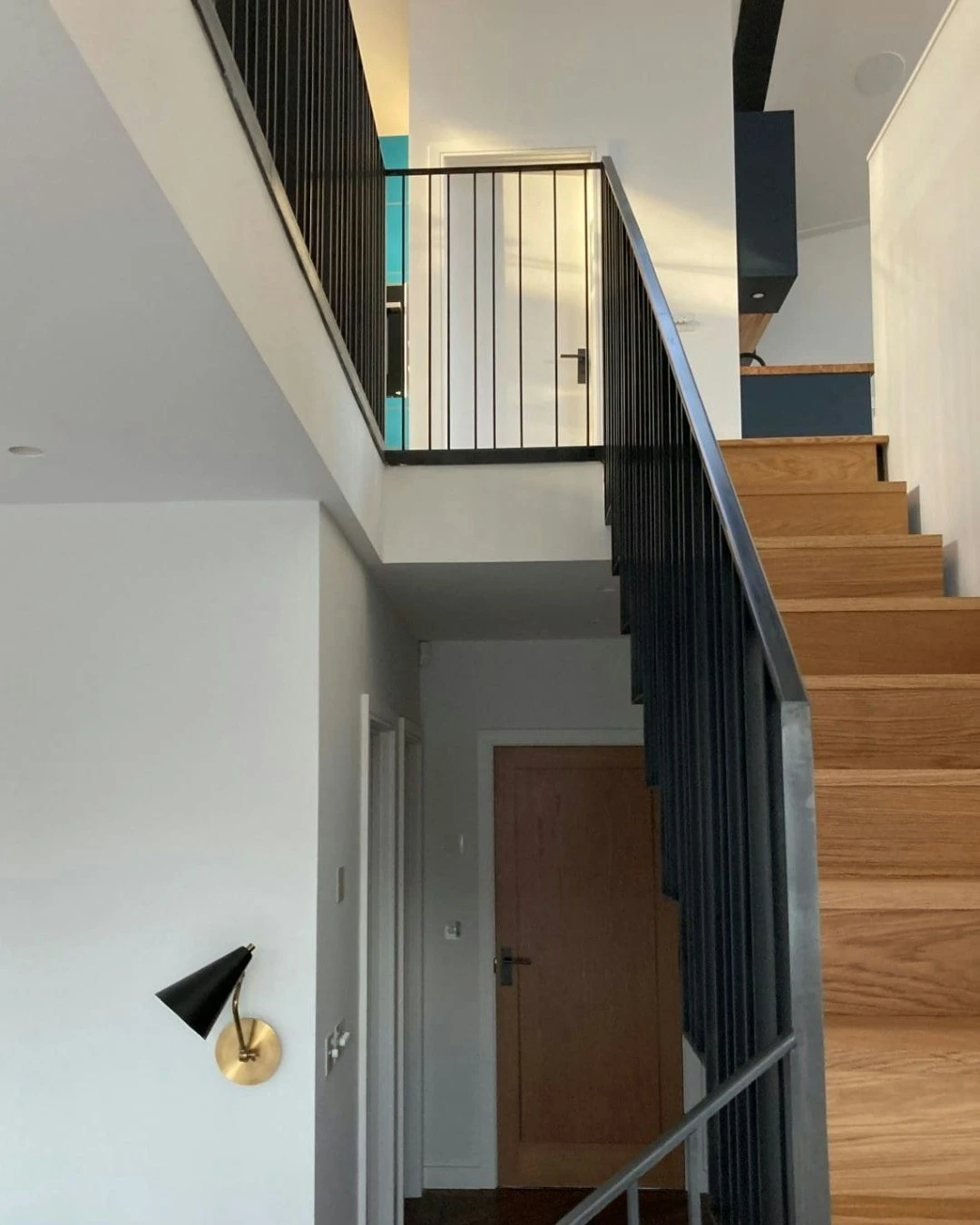
Blackened steel sounds like a cold material until you stand next to it. The finish is soft, almost velvety, and it catches light the way a dark suit catches light — quietly, without glare.
Oak treads do half the warming here, and the white hallway and the brass sconce do the rest. Warmth in a staircase comes from what sits next to the steel, not from the steel itself, and this hallway proves it.
The practical point: Rub the steel with a dry cloth before you judge the finish — fingerprints make blackened steel look patchy until you do.
Floating Treads, Zero Clutter
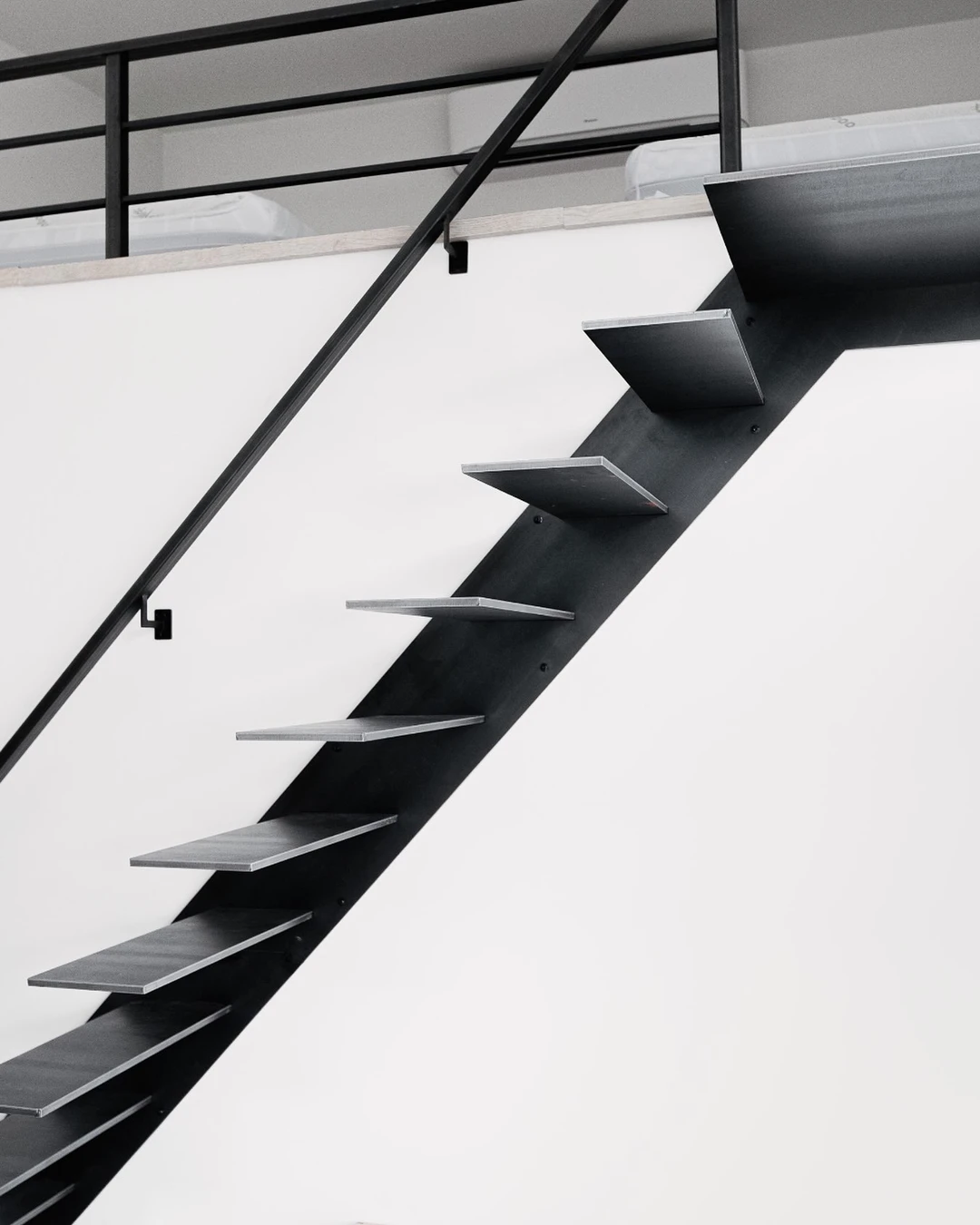
Cantilevered treads look like they shouldn’t work, and that’s exactly why they do. Thin steel plates reach out from the wall, the treads sit on them, and everything underneath stays empty — no stringer, no shadow, no visual weight.
Nothing underneath means nothing to dust around and nothing to bump into. The trade-off is engineering: the wall has to be solid, the fixings have to be serious, and the treads have to be thick enough not to flex underfoot.
The practical point: Keep the wall behind floating treads completely plain — any picture or shelf fights with the floating effect.
Why a Glass Rail Keeps the Light Moving
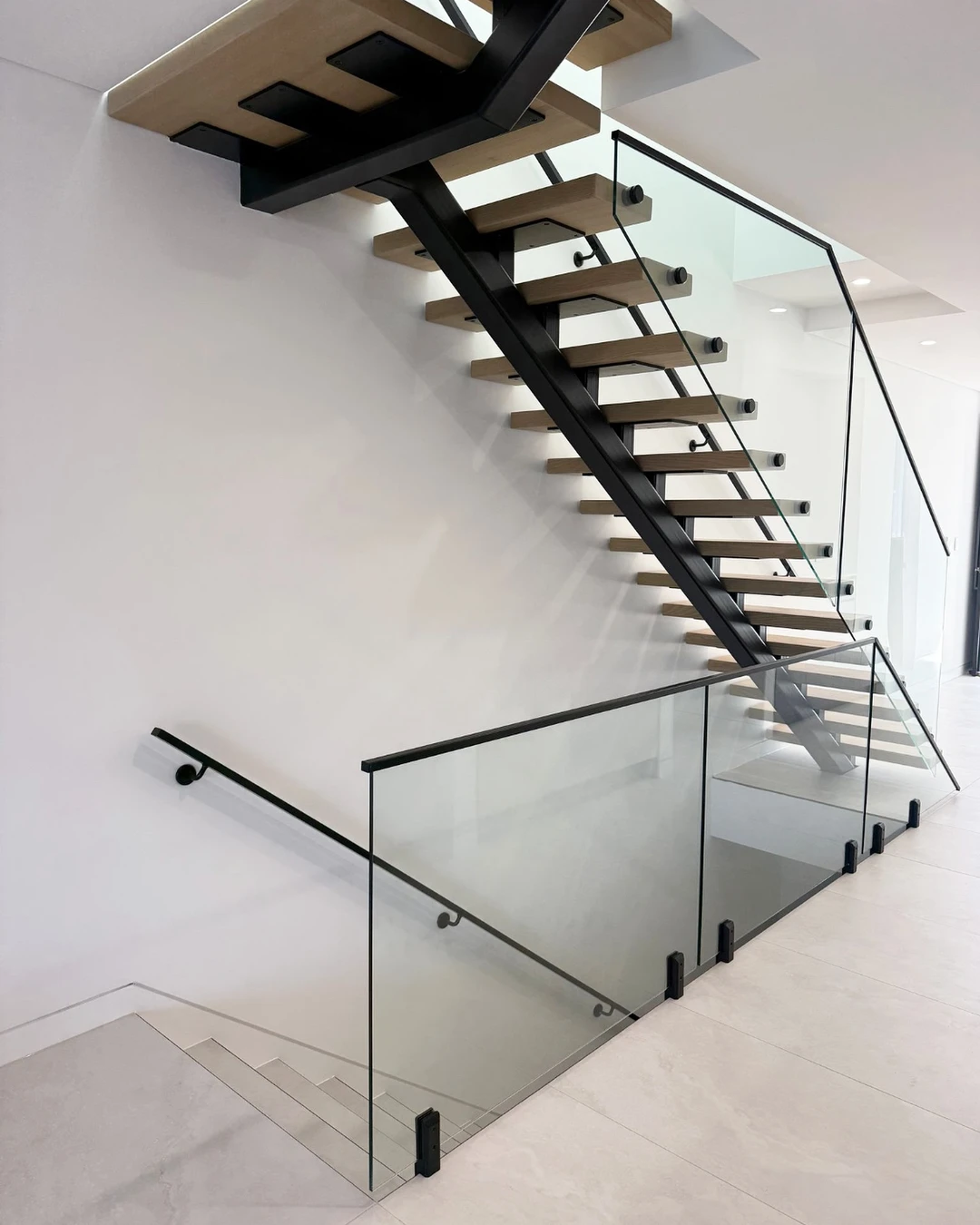
Glass railings get blamed for fingerprints, and the blame is fair. But what they give back is light — a glass panel lets the window light travel across the whole floor instead of stopping at the staircase.
Frameless panels with a black top rail are the honest version. The glass disappears, the black rail draws the line, and the wood treads carry the warmth. Clean the glass once a week and the fingerprints stop being a story.
The practical point: Wipe the glass with a microfibre cloth and water only — glass cleaner leaves a film that shows in sunlight.
Match the Metal to the Room, Not the Trend
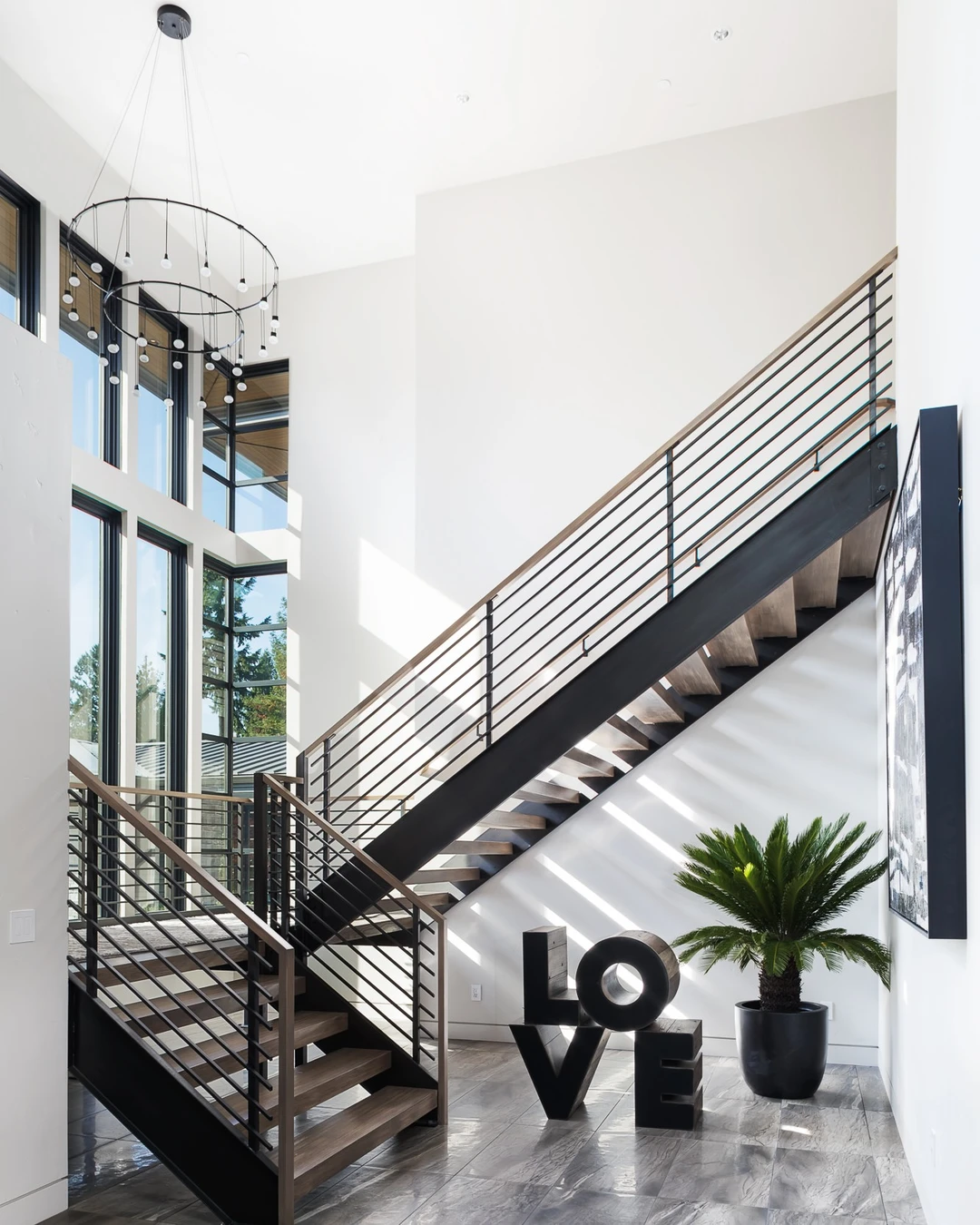
Steel picks up whatever is around it, so the room decides the finish. Black stringers and cable rails sit naturally beside black window frames, and the whole staircase reads as part of the house instead of a feature dropped into it.
Black window frames are the clue here. The steel matches them, the wood treads match the floor, and the big LOVE sculpture and the potted plant at the foot of the stairs give the whole thing a human scale. Trends fade; matching the room doesn’t.
The practical point: Photograph the room at midday before choosing a finish — steel that matches in the morning can clash by afternoon.
Thin Profiles Make Small Halls Feel Bigger
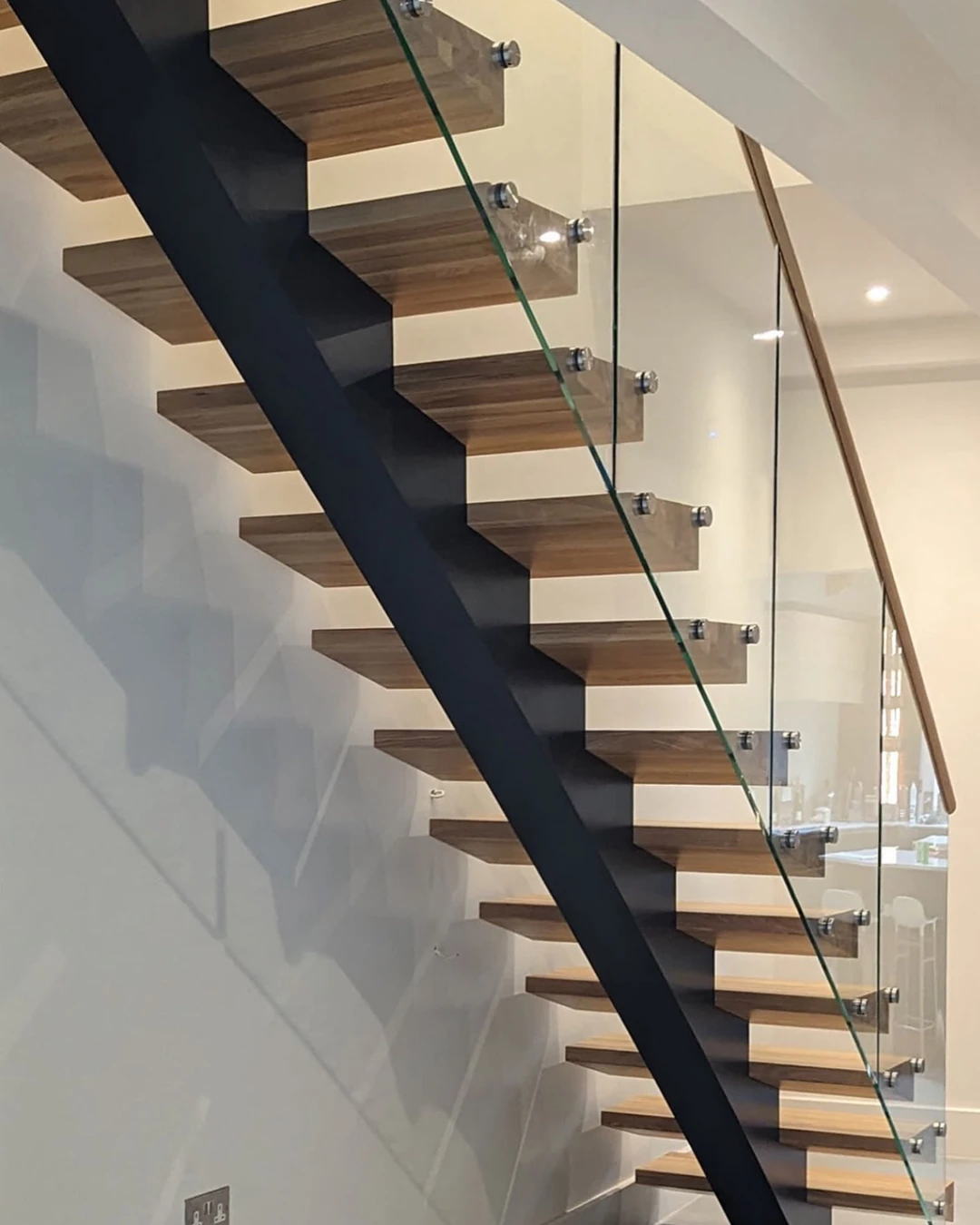
Thick staircases eat small hallways alive. A single spine stringer, thin as a beam, carries the whole flight on one line and leaves the rest of the hallway to breathe.
One spine stringer and a glass balustrade is the lightest a staircase can get without floating. The white walls help, the tall window helps more, and the wood treads keep it from feeling like a laboratory.
The practical point: Measure the hallway width before you commit — a thin staircase in a narrow hall still needs thirty-six inches of clear tread.
Wood Treads Soften the Whole Staircase
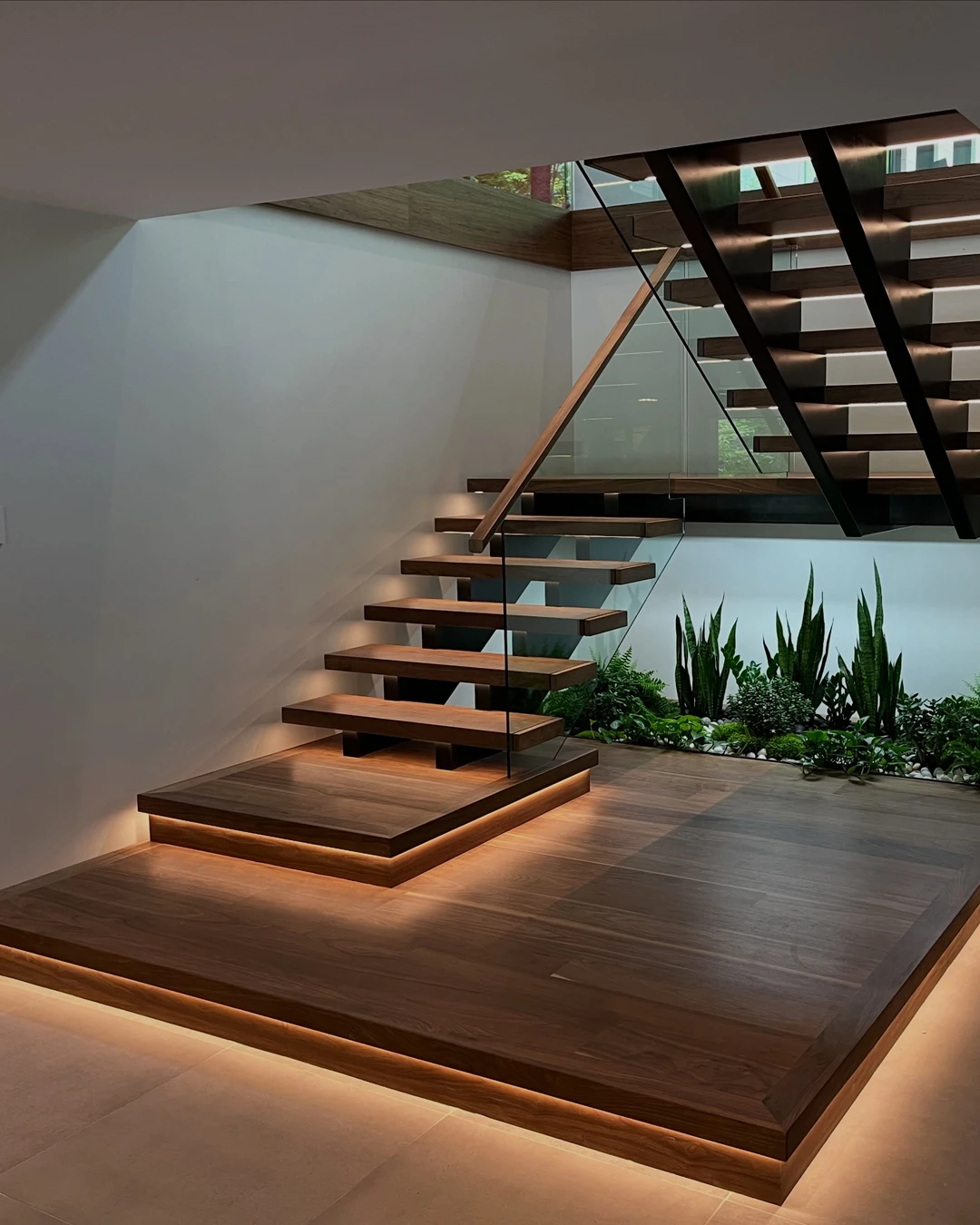
Wood is the peace treaty between steel and the rest of the house. Thick treads, warm underfoot, turn a metal staircase into something you want to walk on barefoot.
Thick treads matter more than the species. A chunky tread reads solid and safe; a thin one reads like a diving board. The LED strip under each step in this one is a bonus — it turns the staircase into a lamp after dark, and the indoor garden below it does the rest.
The practical point: Oil the treads twice a year — dry wood next to steel shows every scratch, oiled wood hides most of them.
Spiral Steel That Earns Its Floor Space
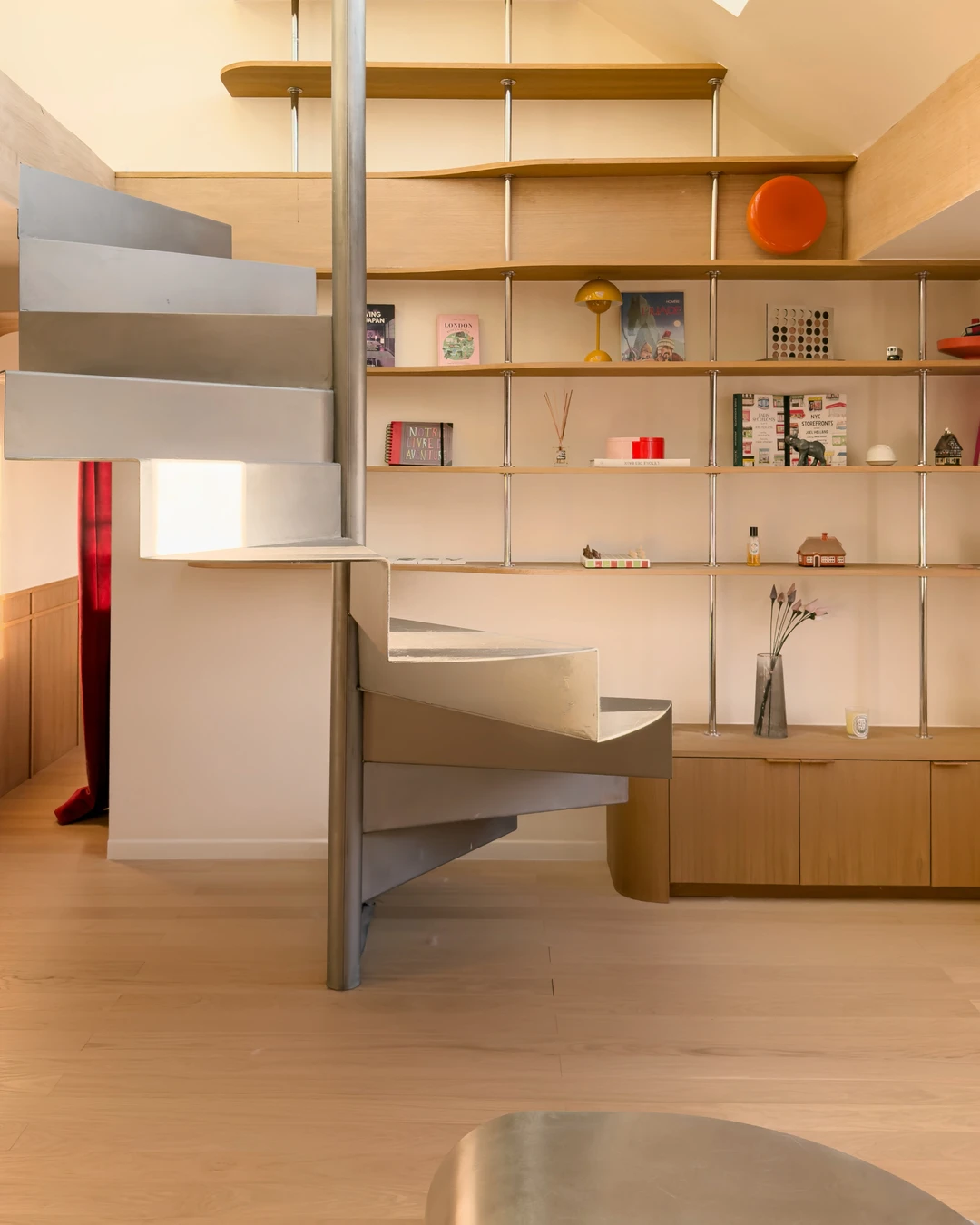
Spirals get a bad reputation from the ones that wobble. A well-built steel spiral doesn’t wobble — it stands in the middle of the room like a sculpture that happens to go upstairs.
White paint is the trick here. It turns a steel spiral into a piece of the room instead of a machine in it, and the open shelves behind it make the whole corner feel like a library that grew a staircase.
The practical point: Walk the spiral before you buy it — a spiral that feels tight on the showroom floor feels tighter at home.
Keep the Underside Honest
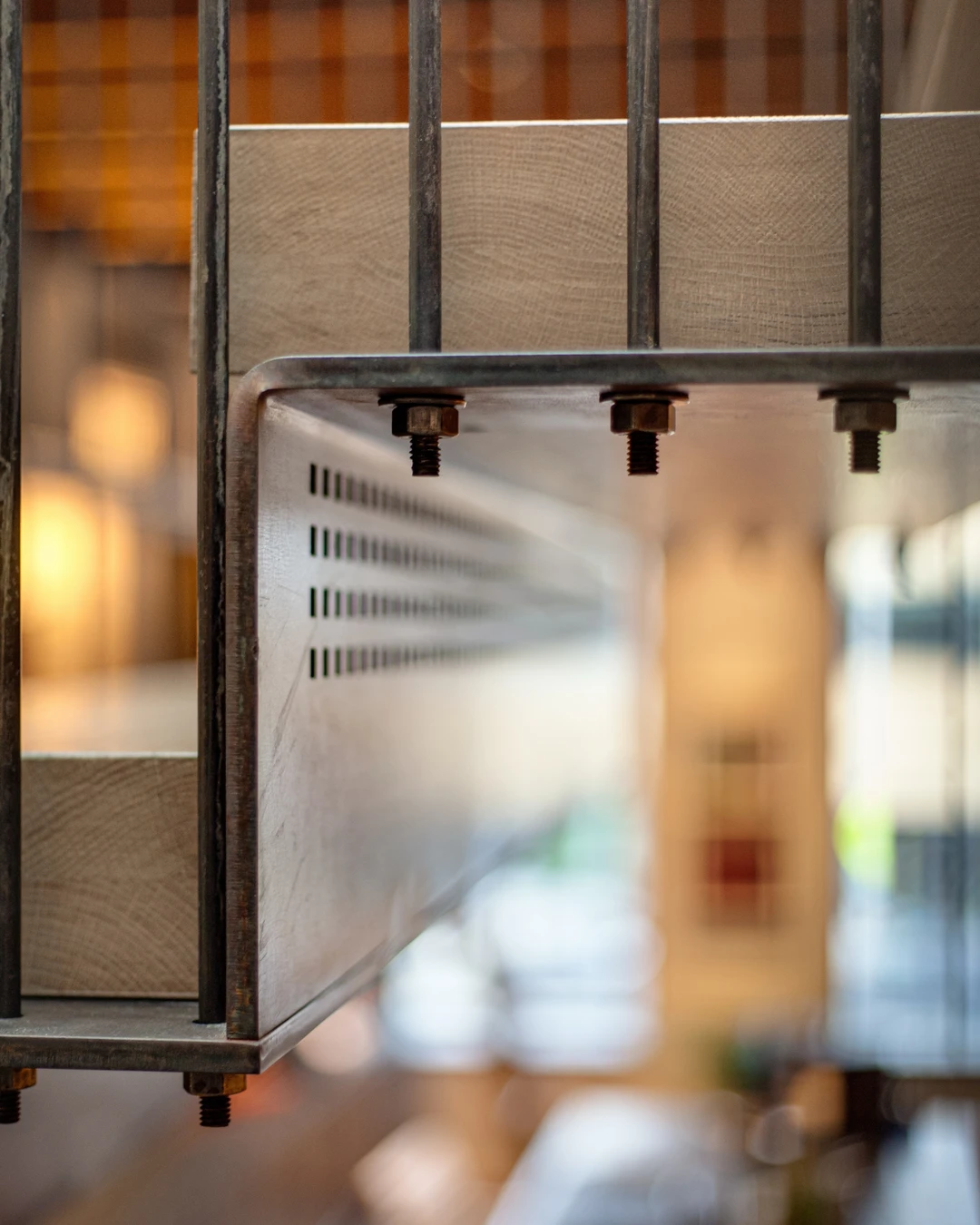
Nobody photographs the underside of a staircase, and that’s the point. Plates, bolts and hex nuts are the honest part — the engineering that holds everything up — and this close-up shows them without apology.
Plates, bolts and hex nuts look good when they’re meant to be seen. Paint them the same colour as the steel and they disappear; leave them raw and they become the detail. Either way, the space under the stairs deserves the same honesty — see How to Design a TV Unit Under a Staircase Without Visual Clutter.
The practical point: Paint the underside the same colour as the stringer — a different colour underneath makes the staircase look unfinished.
Lighting the Steps from Below
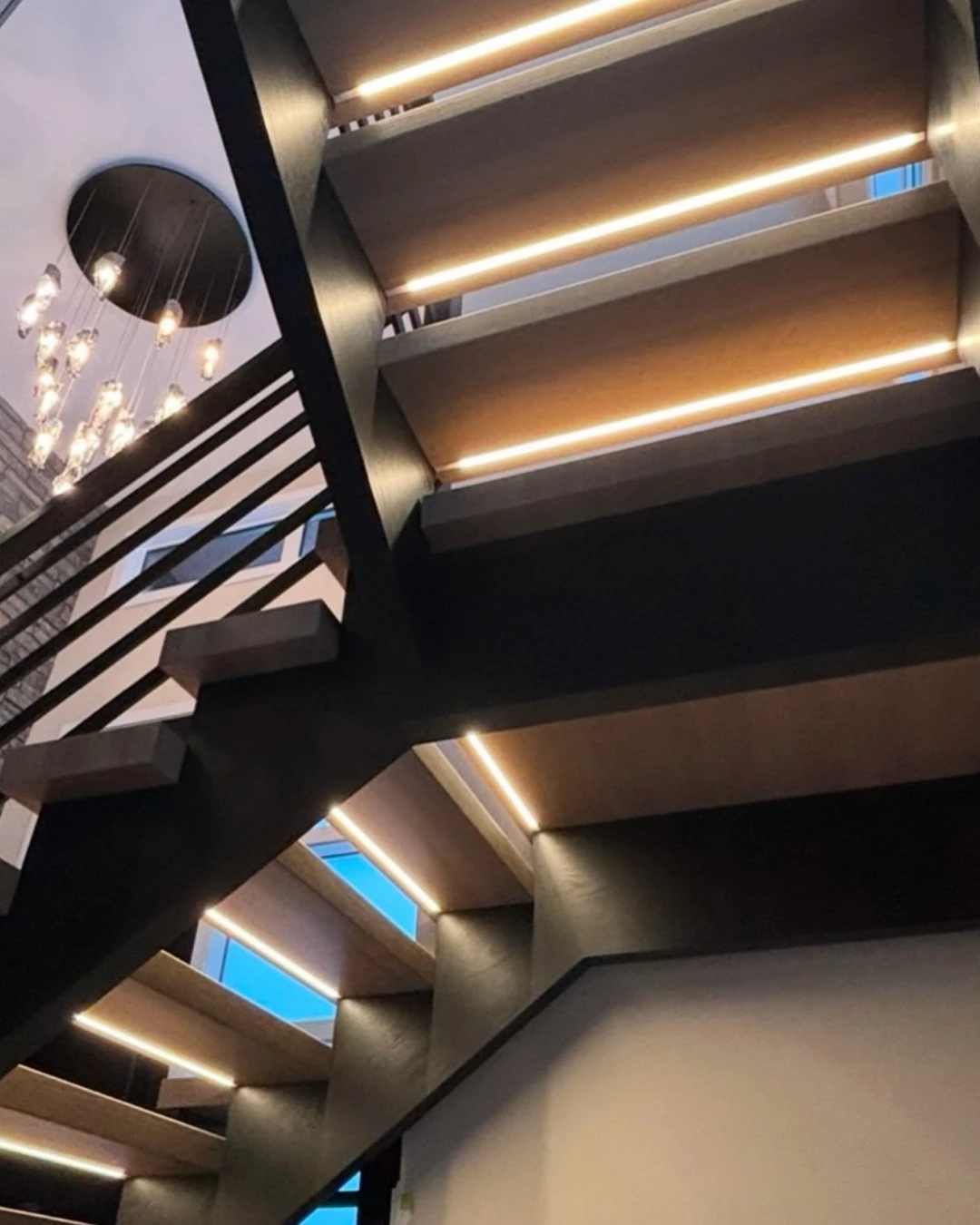
LED strips under each tread turn a staircase into a runway. The light washes the step below, the dark stringer disappears into the shadow, and the whole flight glows without a single visible bulb.
Warm white is the only colour that works here. Cool white turns wood grey and steel blue, and the whole effect goes from evening to operating theatre. Warm light, low and under the tread, is the difference.
The practical point: Put the LEDs on a dimmer and a motion sensor — full brightness at night is blinding, and nobody wants to find a switch in the dark.
Steel Staircase in a White Room
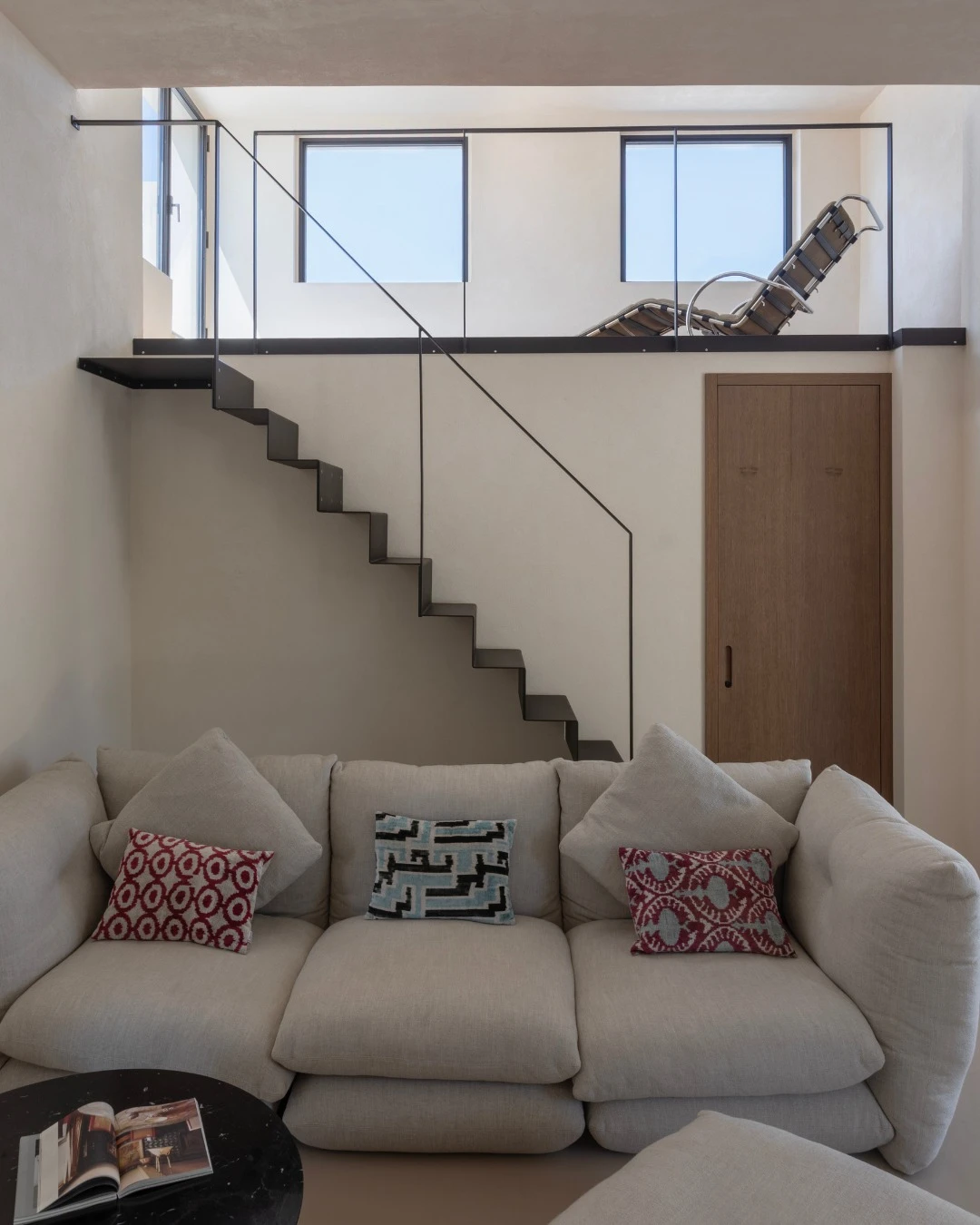
White walls make steel look sharper, not colder. The black staircase reads like ink on paper, and the white room gives it the space to be the one bold thing in it.
That sofa sitting under the stairs is doing quiet work too. It tells you the staircase is part of the living room, not a corridor piece, and the glass mezzanine above it keeps the light moving between the floors.
The practical point: Keep the wall white and the sofa pale — colour anywhere else in the room fights the staircase for attention.
Industrial Doesn’t Have to Mean Rough
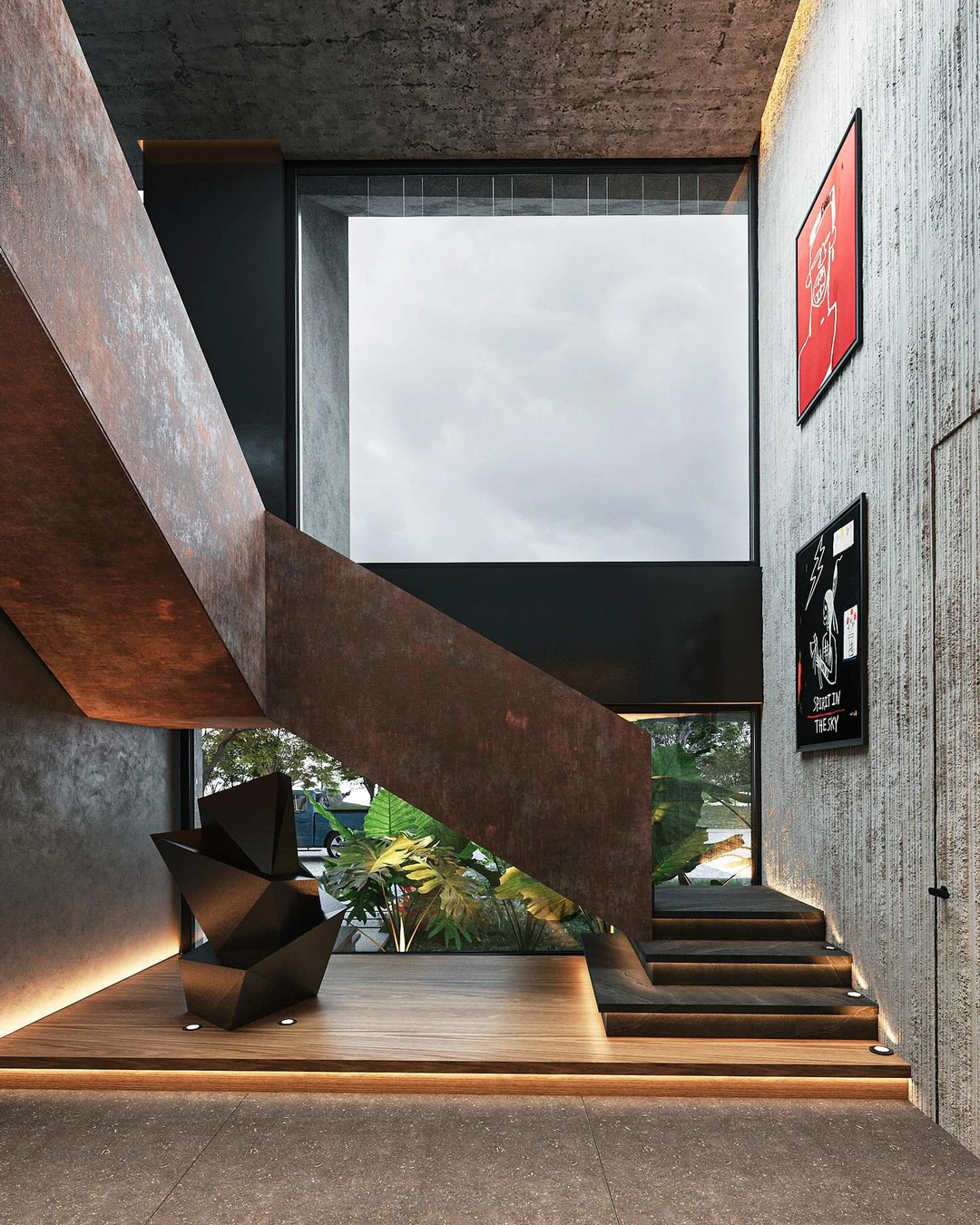
Rust-coloured steel, raw concrete and warm lighting — this staircase is industrial, but nothing about it is rough. The finish is deliberate, the edges are clean, and the warmth comes from the light, not from hiding the material.
Warm lighting is what saves industrial from feeling like a building site. One warm lamp at the foot of the stairs changes the whole mood, and the wooden platform at the top gives your feet somewhere soft to land.
The practical point: Seal raw steel with a clear matte coat — unsealed steel marks everything it touches, including your hands.
Open Risers and the View Through Them
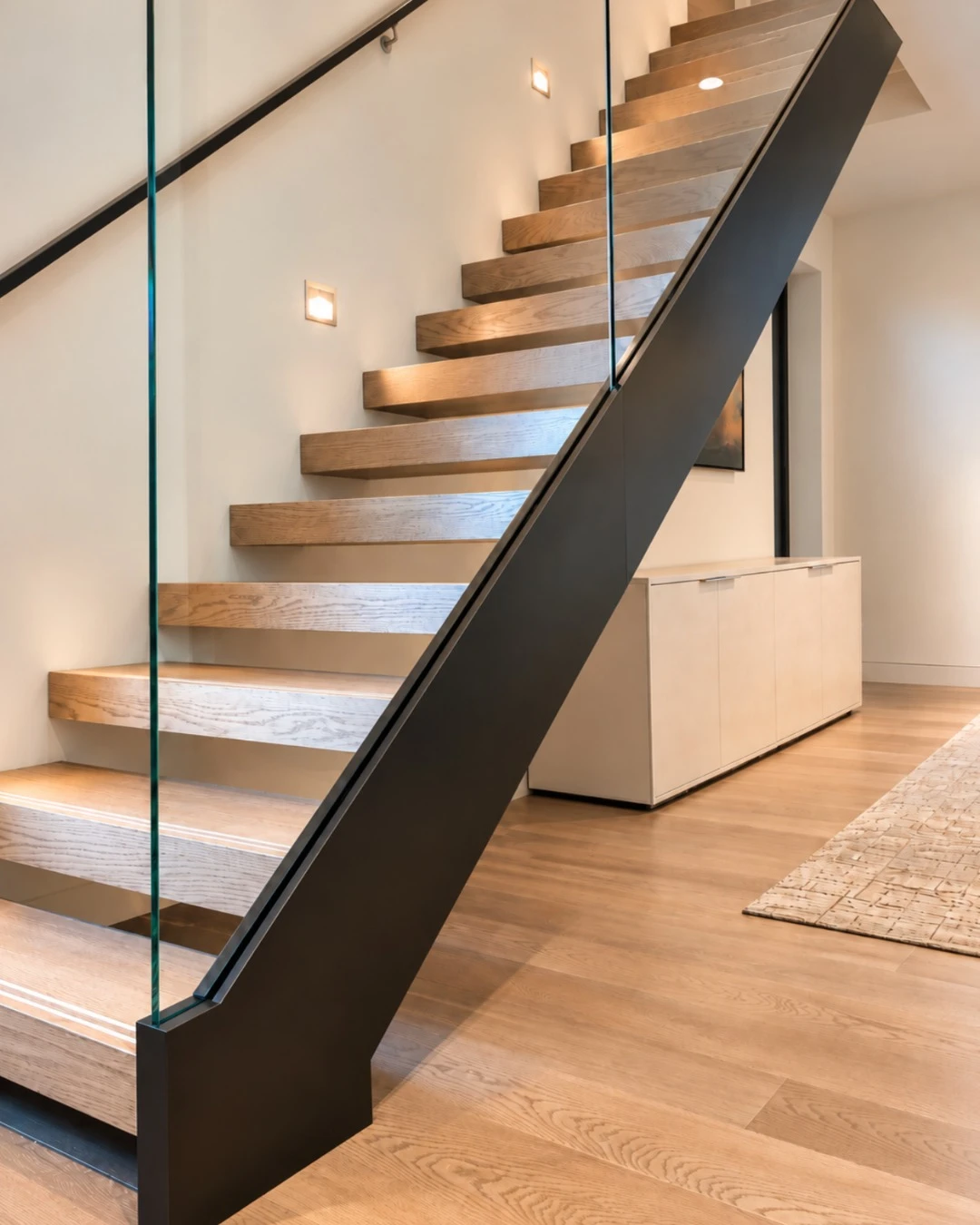
Open risers divide people like nothing else in stair design. Half the world sees a trip hazard; the other half sees the room through the stairs, and the room gets bigger for it.
Glass keeps the view while answering the safety question. The light wood treads stay warm, the black stringer stays slim, and the recessed wall lights mean you can see every step after dark.
The practical point: Check your building code before choosing open risers — some places limit the gap, and small children change the maths entirely.
Paint It — Steel Takes Colour Beautifully
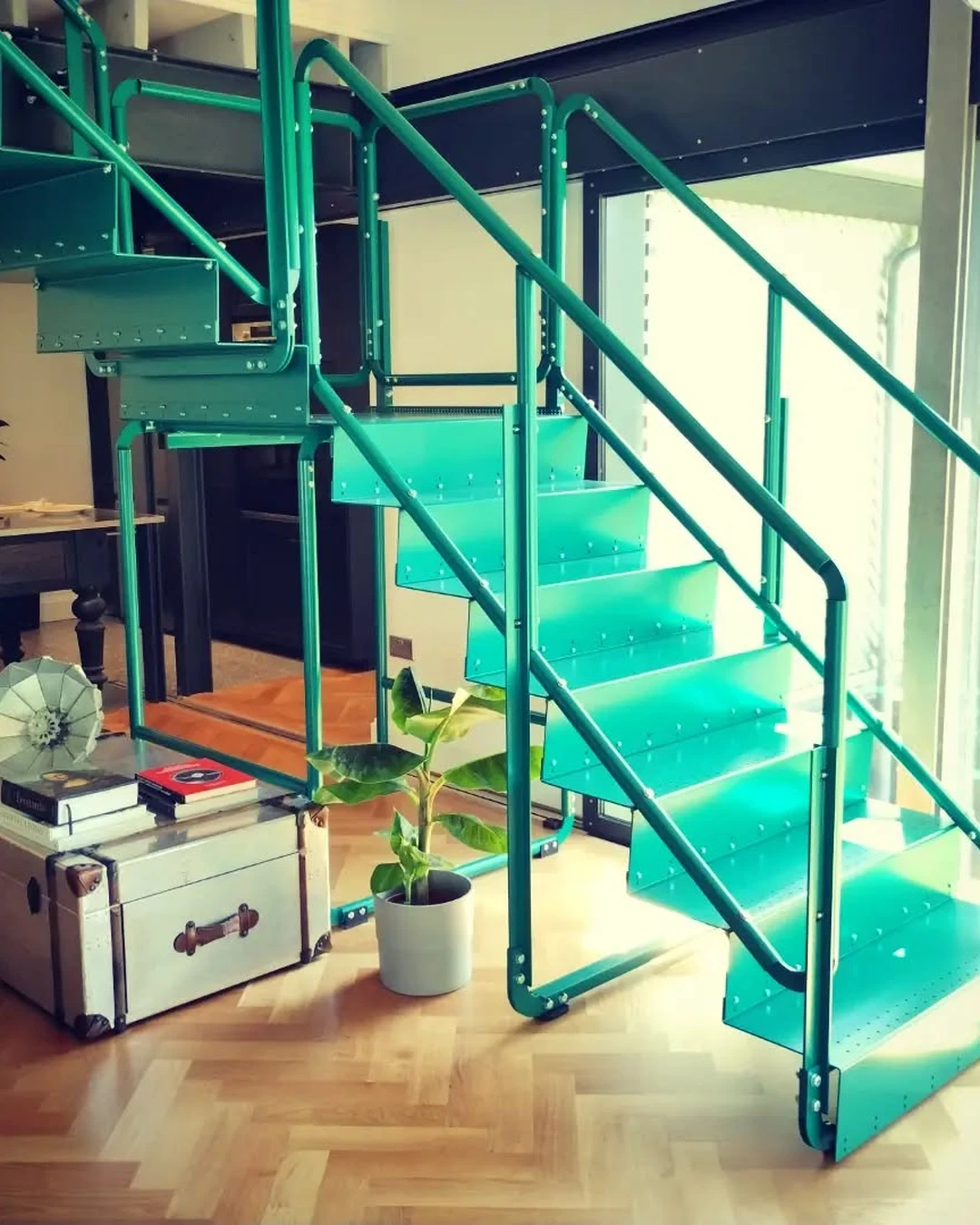
Teal-green steel is not a safe choice, and that’s why it works. The colour turns a staircase into a decision, and the open risers and tubular railings keep it light enough that the colour never feels heavy.
Paint changes the whole conversation about steel. It stops being industrial and starts being yours, and the sunlit room around it means the colour reads fresh instead of loud.
The practical point: Use a metal primer first and a hard-wearing top coat — paint on bare steel chips within a year without the primer.
Landings That Work as Hard as the Stairs
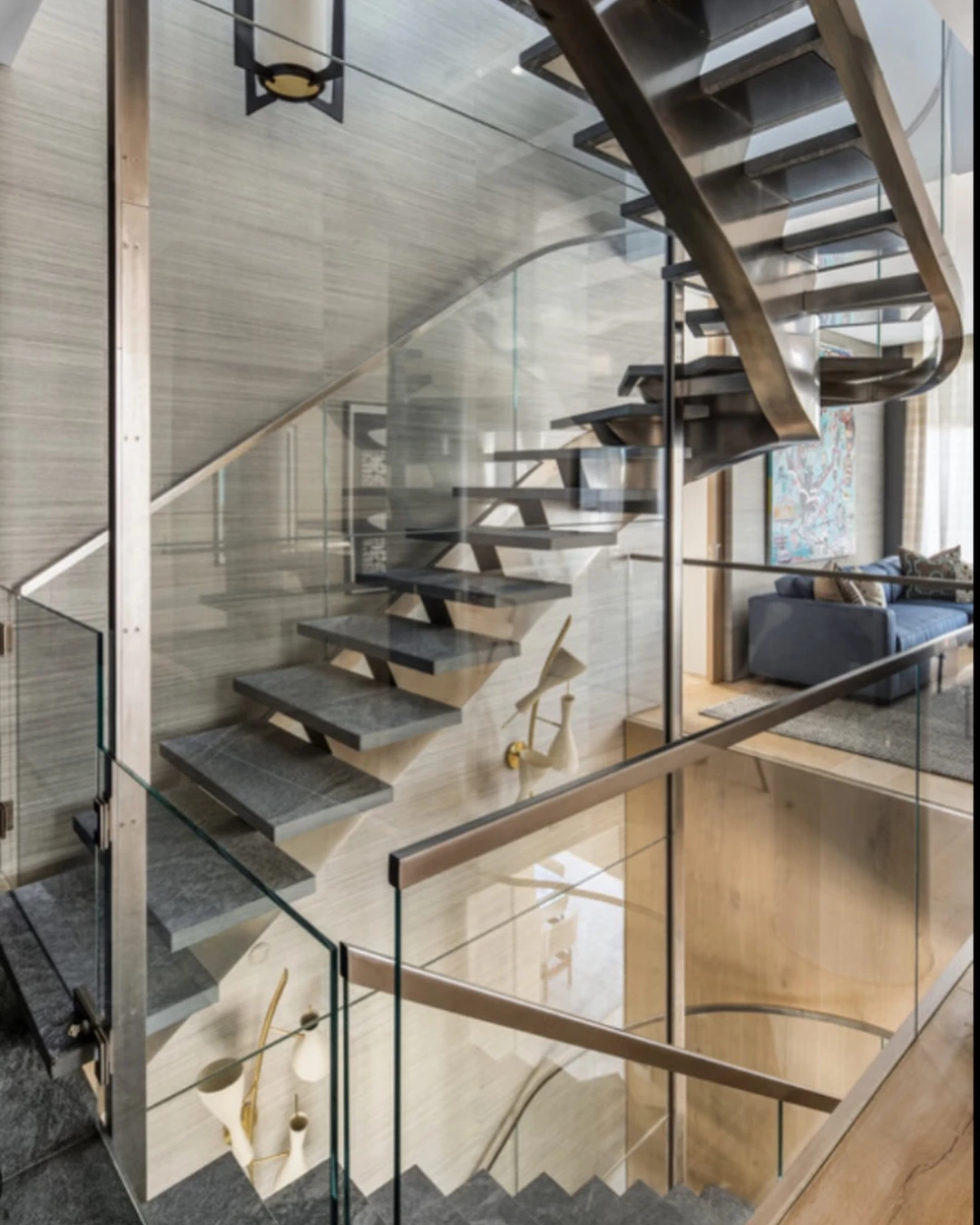
Landings get ignored until you stand on one. This one, seen from above, is a room in its own right — dark stone treads, a curved metal stringer, glass balustrades, and light coming down from somewhere you can’t quite see.
Looking down from this landing shows you what the staircase is really doing. The curve of the stringer, the rhythm of the treads, the glass that keeps the view open — a landing is where you finally see the design whole.
The practical point: Light the landing separately from the stairs — one without the other leaves a dark patch exactly where you turn.
Slim Handrails, Strong Grip
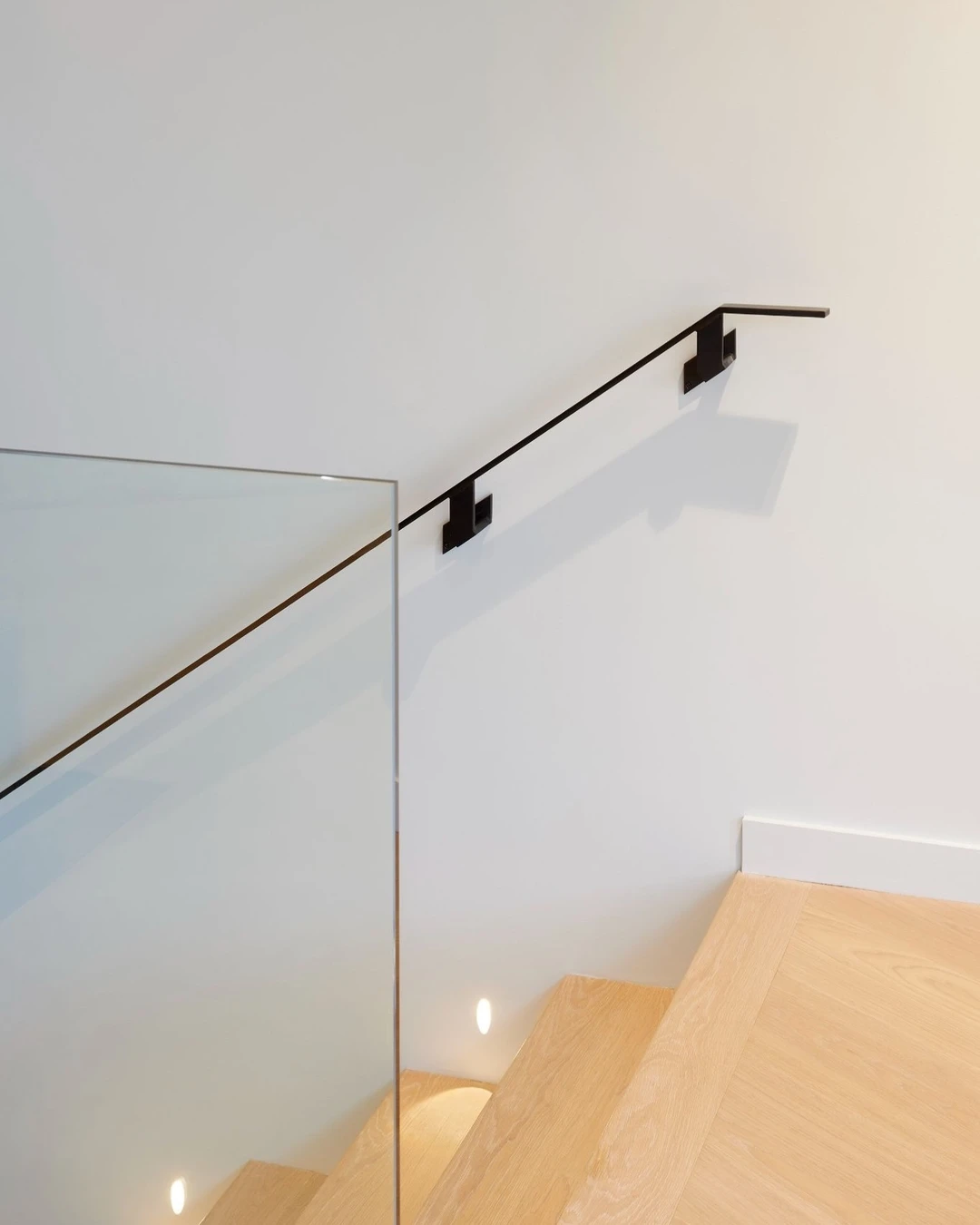
Handrails are the part of a staircase you actually touch, and slim ones get it right. A black wall-mounted rail, thin as a pencil line, gives your hand somewhere to go without shouting about it.
Wall-mounted rails work best when the wall is plain. The glass guard does the safety work, the wood treads do the warmth, and the rail just sits there, quiet, until you need it.
The practical point: Test the grip with wet hands before you commit — a rail that slips when wet is worse than no rail at all.
When the Staircase Is the Only Decor
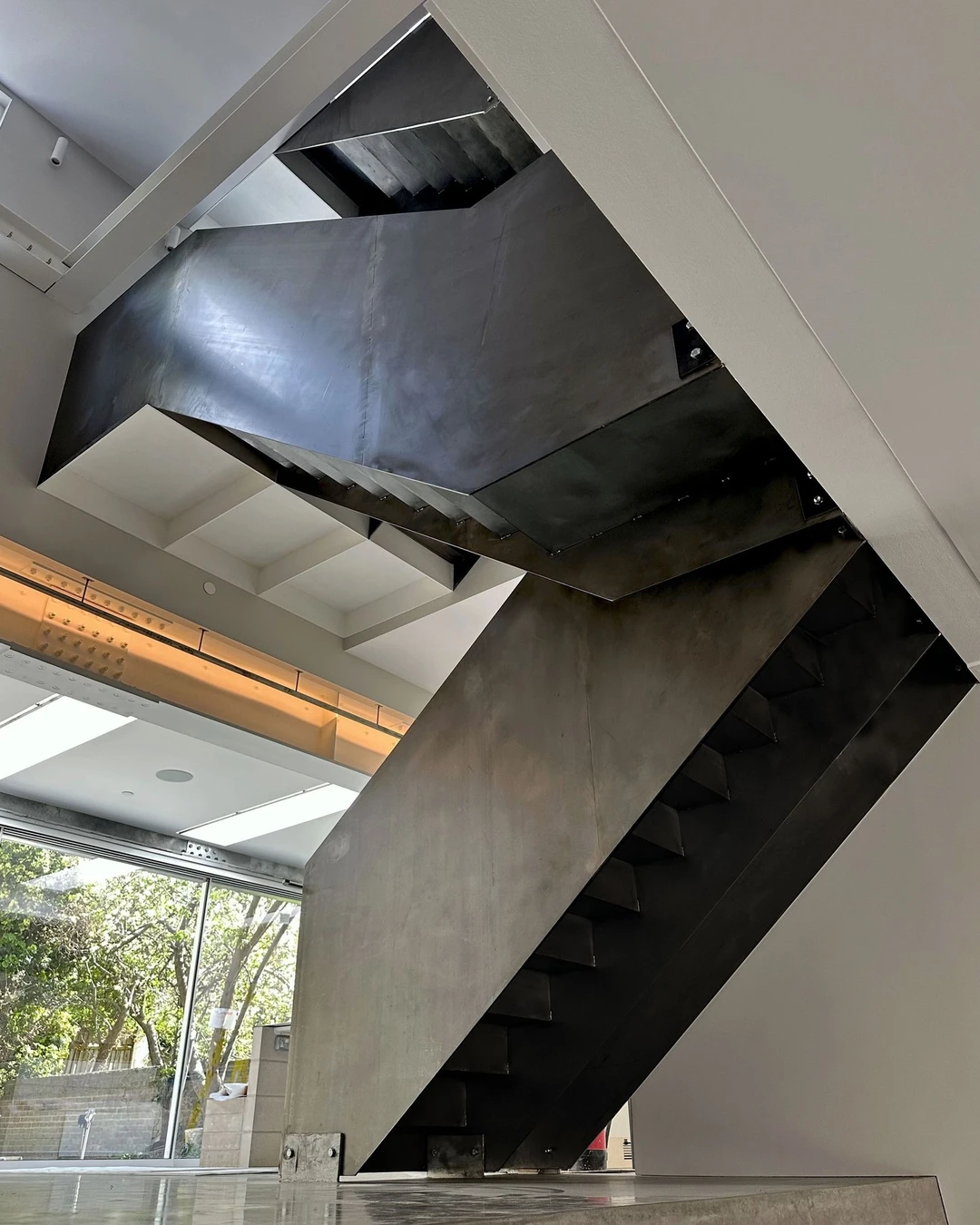
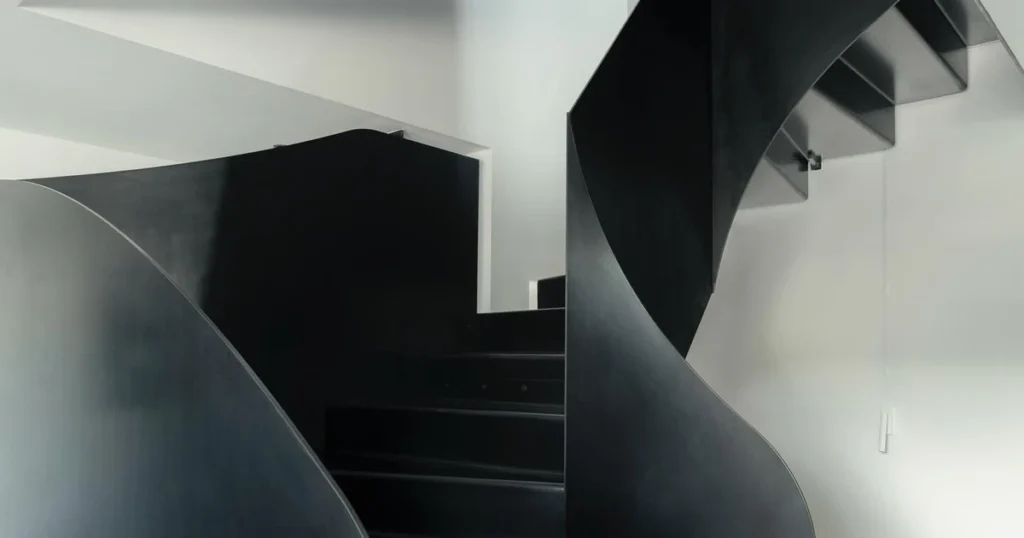
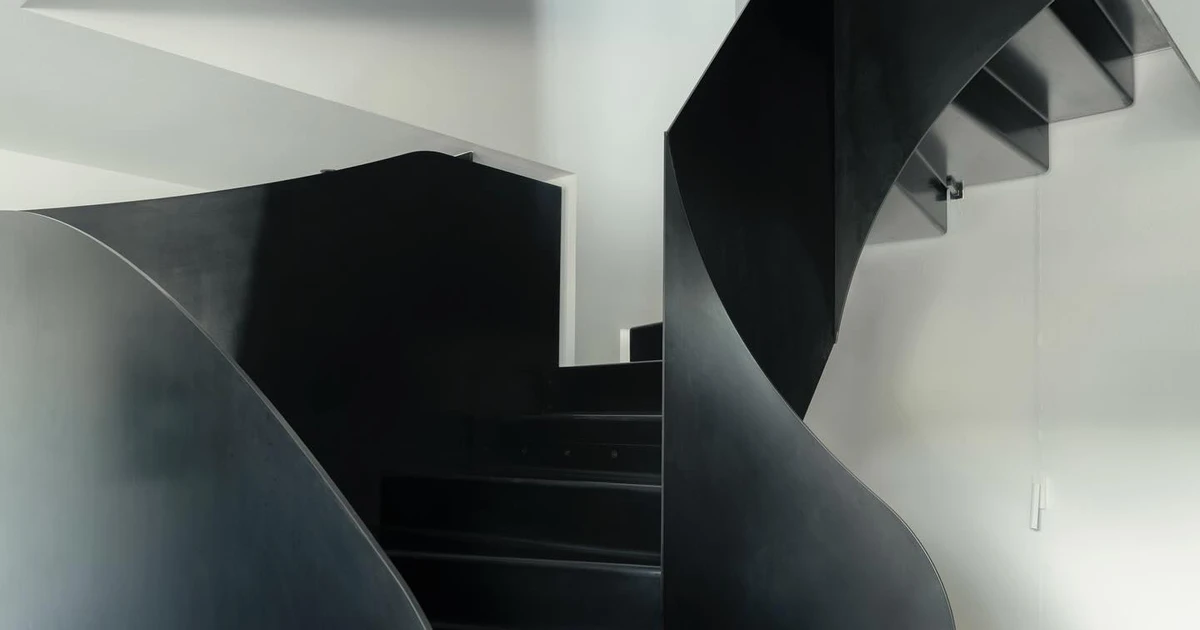
Some rooms need nothing else. Dark folded steel against white walls, no pictures, no plants, no rug — the staircase is the decor, and it doesn’t need help.
Dark folded steel against white is a contrast that carries a whole room. The angles do the talking, the shadows do the rest, and anything you add to the walls would only argue with it.
The practical point: Resist the urge to decorate around a sculptural staircase — one picture on the wall halves its impact.
Pair Steel with Stone, Not More Steel
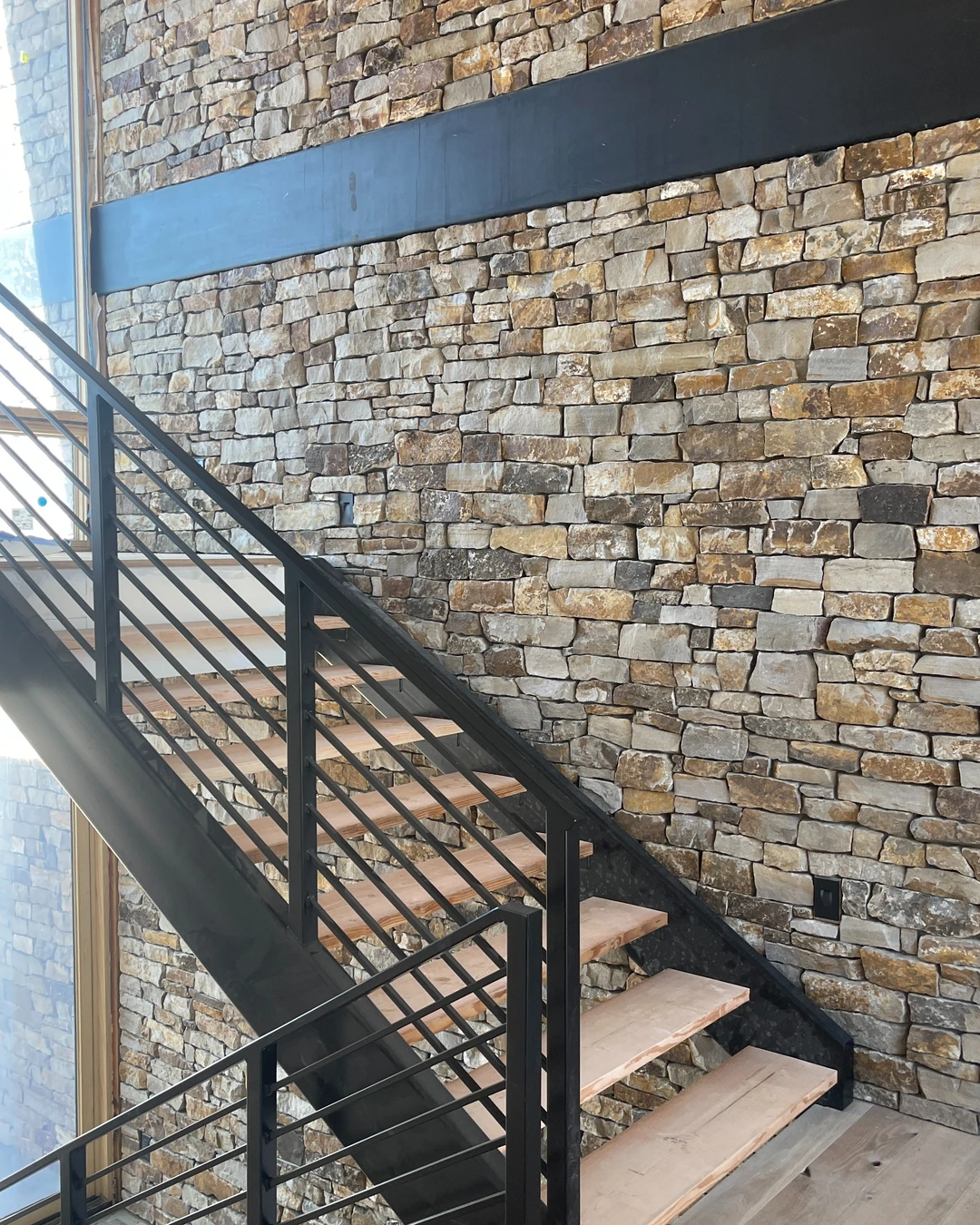
Steel on steel can feel like a showroom. Steel against stone feels like a house — the rough wall gives the smooth metal something to push against, and both look better for it.
Stacked stone gives the steel a weight it can’t get from glass or paint. The black stringer reads sharper against the stone, the wood treads read warmer, and the whole staircase feels anchored instead of floating in a white box.
The practical point: Match the stone to the room’s other stone, not to the steel — two stones that disagree look like a mistake.
Small Homes, Big Staircase Energy
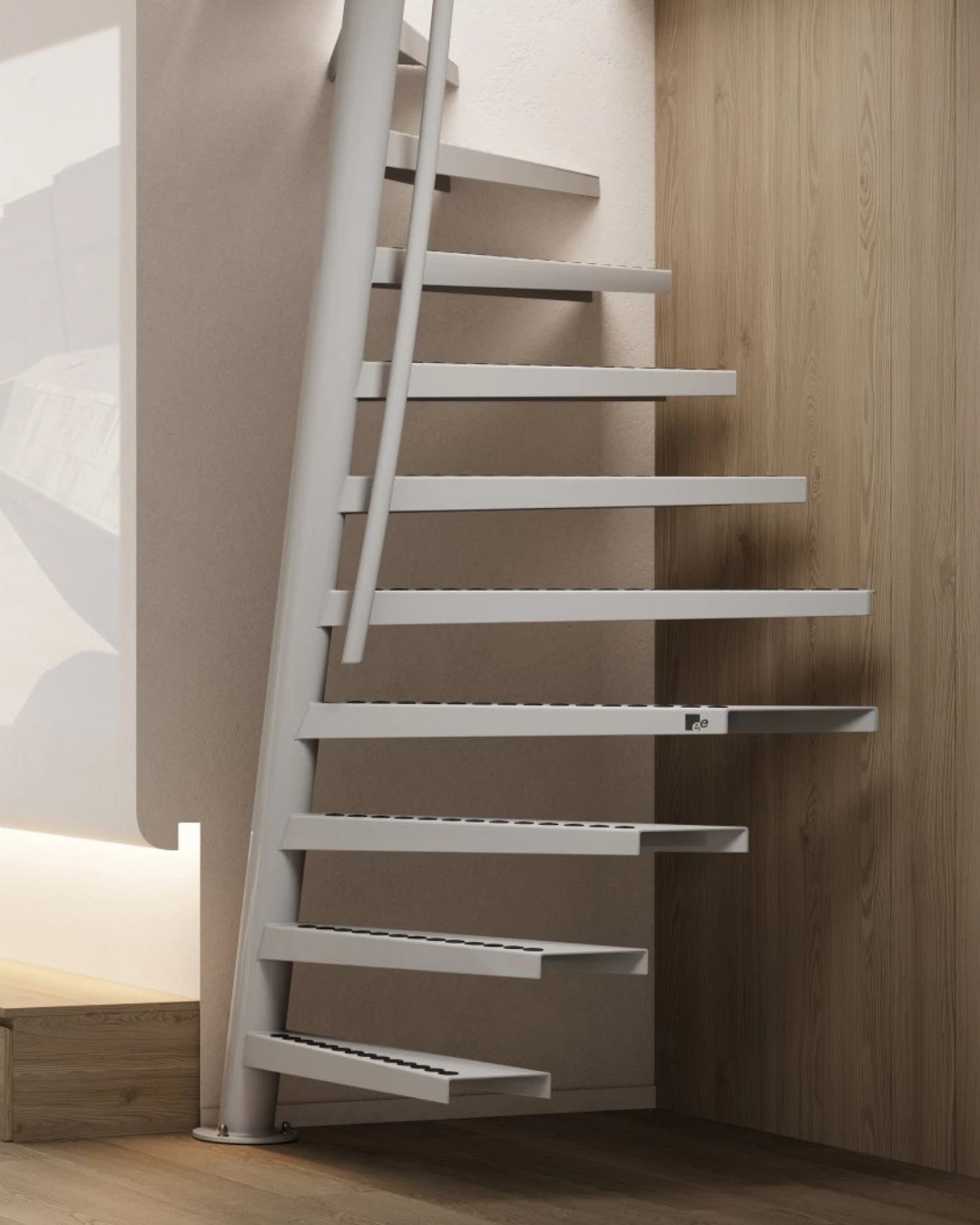
Small homes get told to hide their staircases. This one does the opposite — a white spiral that takes up one square metre and gives the whole room its personality.
This one-square-metre spiral is the proof. White steel, floating treads, a central pole, and a room that suddenly has a centrepiece instead of a corner it apologises for. Small doesn’t mean timid.
The practical point: Measure the footprint twice — a spiral’s circle is easy to underestimate, and an inch too wide blocks a door.
Steel Staircases Age Better Than You Think
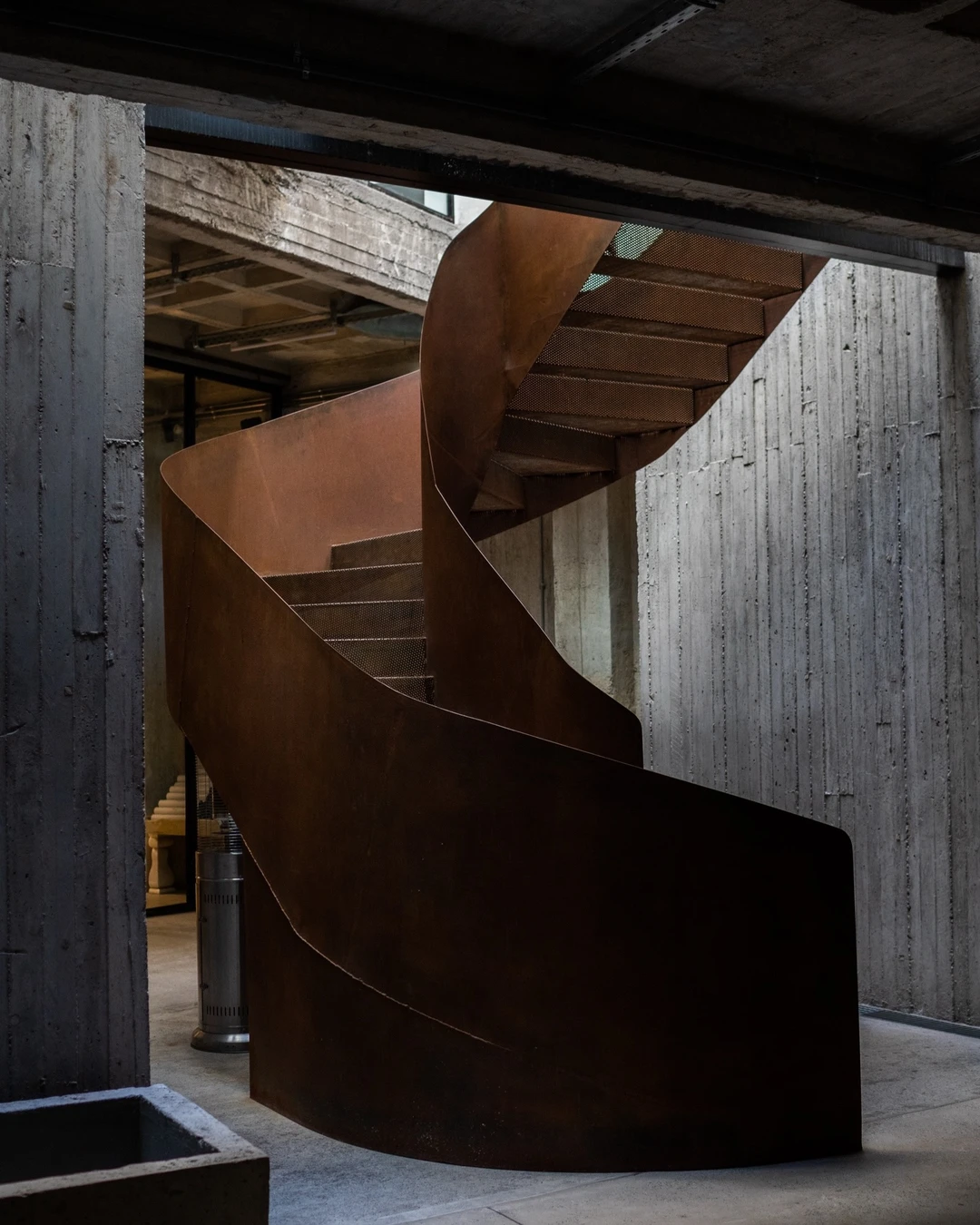
Corten steel starts out looking raw and gets better. The rust patina deepens, the edges soften, and a staircase that looked industrial on day one looks like it has always been there by year five.
Scratches tell the same story on steel as they do on wood — they add character instead of damage. A corten spiral in a raw concrete room doesn’t need protecting from age; age is the finish.
The practical point: Let the patina develop on its own — sealing corten freezes it at the colour it is today, and today is its least interesting colour.
Modern Steel, Made Yours
Twenty ideas, and the thread through them is simple: thin lines, honest materials, light that moves, and one material repeated with confidence. Steel doesn’t need to shout to be elegant — it just needs to be chosen on purpose.
Which one fits your hallway? Start with the steel, then add the wood — and if the hallway itself needs the same thinking, see 16 Christmas Entryway Decorating Ideas with a Warm Welcome.