Wood remembers every step you take on it. That’s why a wooden staircase feels like the house itself, not just a way up.
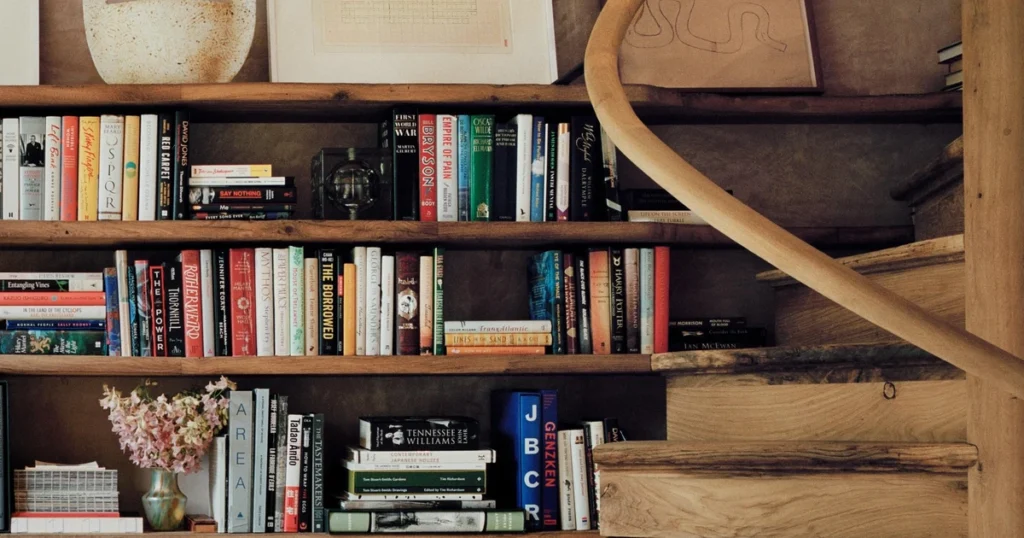
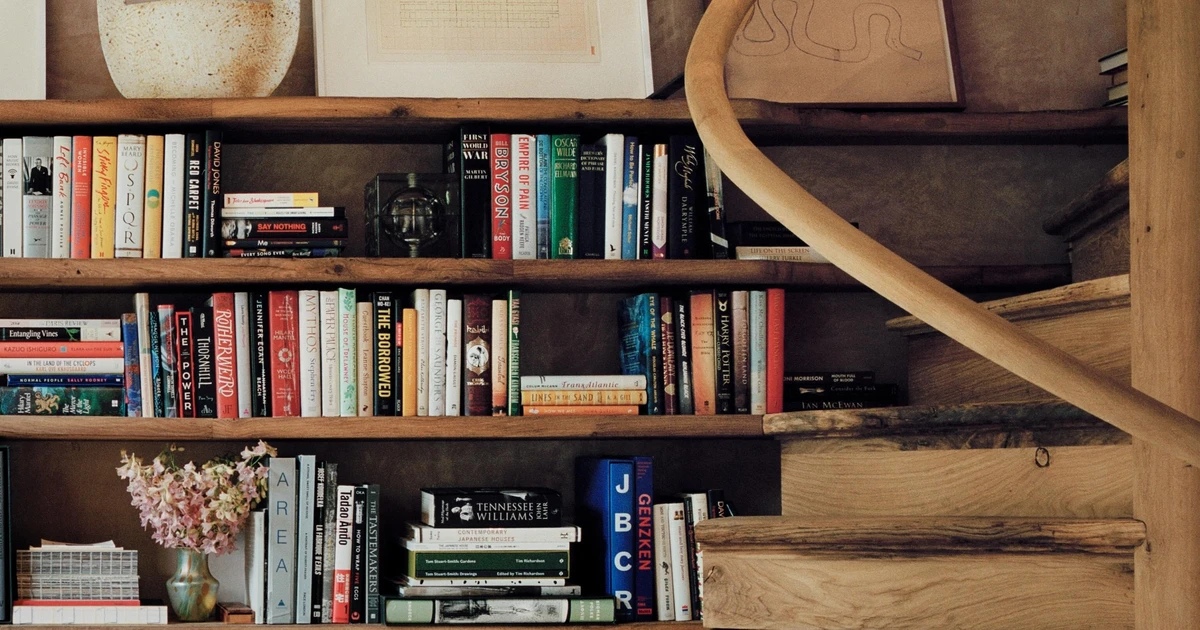
Most wooden staircases are an afterthought — a way up that nobody looks at twice. The one in the photo above proves the opposite: a spiral of live-edge wood beside shelves full of books, the kind of staircase you notice before you even climb it.
Here’s the truth: wooden staircase ideas don’t need a mansion or a carpenter’s budget — they need wood with a story, a finish you can touch, and one detail that makes you look twice.
Ten ideas follow, from oak that still wins to old wood given a second life. Pick the one that fits your hallway, and the stairs start carrying the character of the whole house.
Start with the wood — everything else follows from that one choice.
Let the Wood Do the Talking
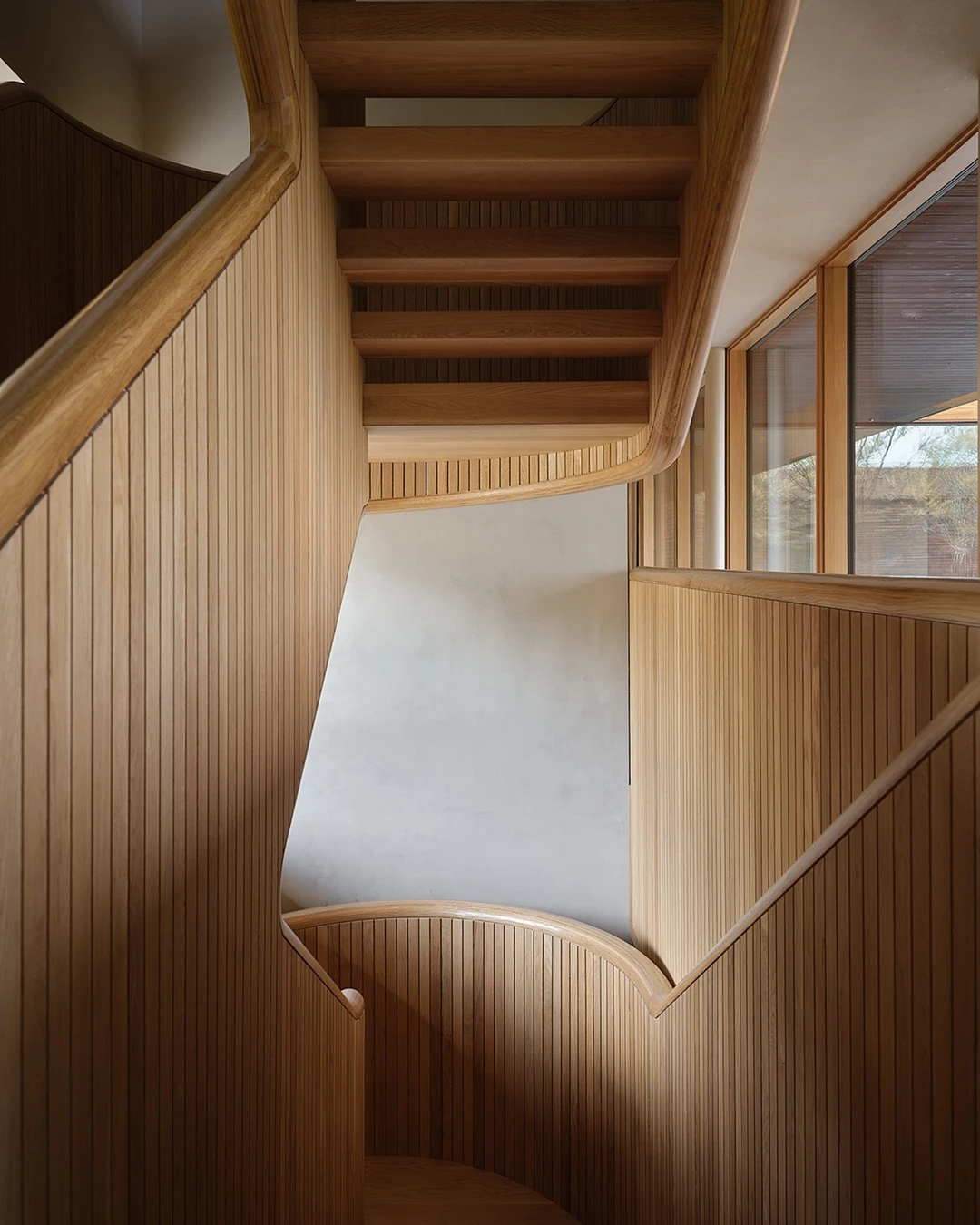
Light wood, a curved balustrade and a view from above — this staircase doesn’t need decoration, because the wood is the decoration. Grain, curve and light do all the talking.
Curves are the giveaway here. A curved balustrade costs more than a straight one, and you can feel the difference in your hand — smooth, continuous, made by someone who took their time.
Handrails tell the same story as the balustrade. A handrail that follows the curve without a joint is the mark of a carpenter who measured twice — a jointed one is the mark of someone who didn’t.
The practical point: Choose the wood before the paint or the runner — the species sets the colour of everything else.
Why Oak Still Wins
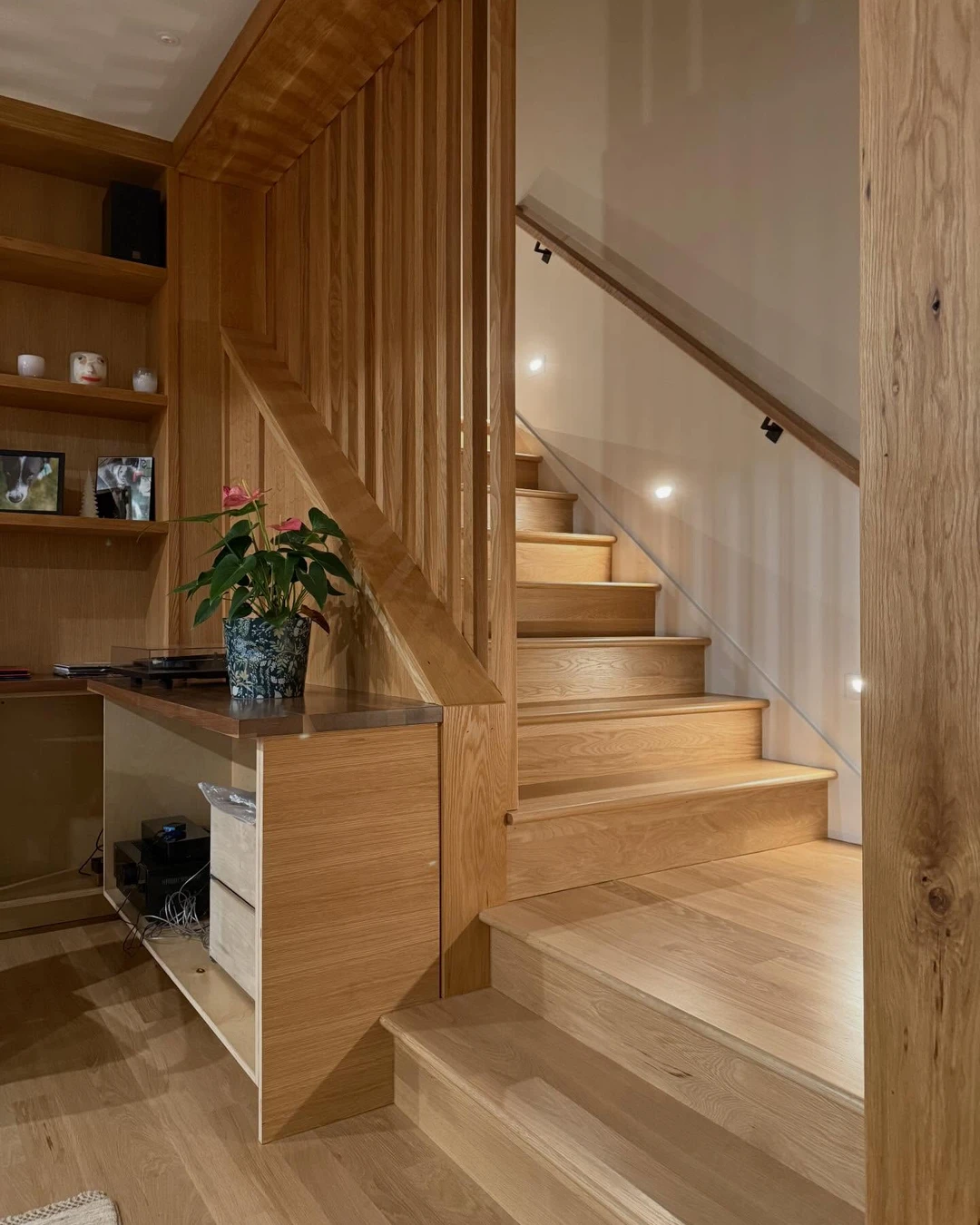
Oak has outlasted every trend in stair design, and it’s not nostalgia. Oak is hard enough for daily traffic, pale enough to keep a hallway bright, and it ages into a honey colour that no stain can fake.
Under-step lighting is the quiet luxury here. It turns the staircase into a lamp after dark, and the oak shelves beside it make the whole wall feel like one piece of furniture.
Grain is the other thing oak does better than cheaper woods. Wide, calm grain hides scuffs and takes oil evenly; busy grain shows every mark and fights the finish.
The practical point: Oil oak, don’t varnish it — varnish chips on treads within a year, oil sinks in and can be topped up.
Painted Stairs, Honest Wood
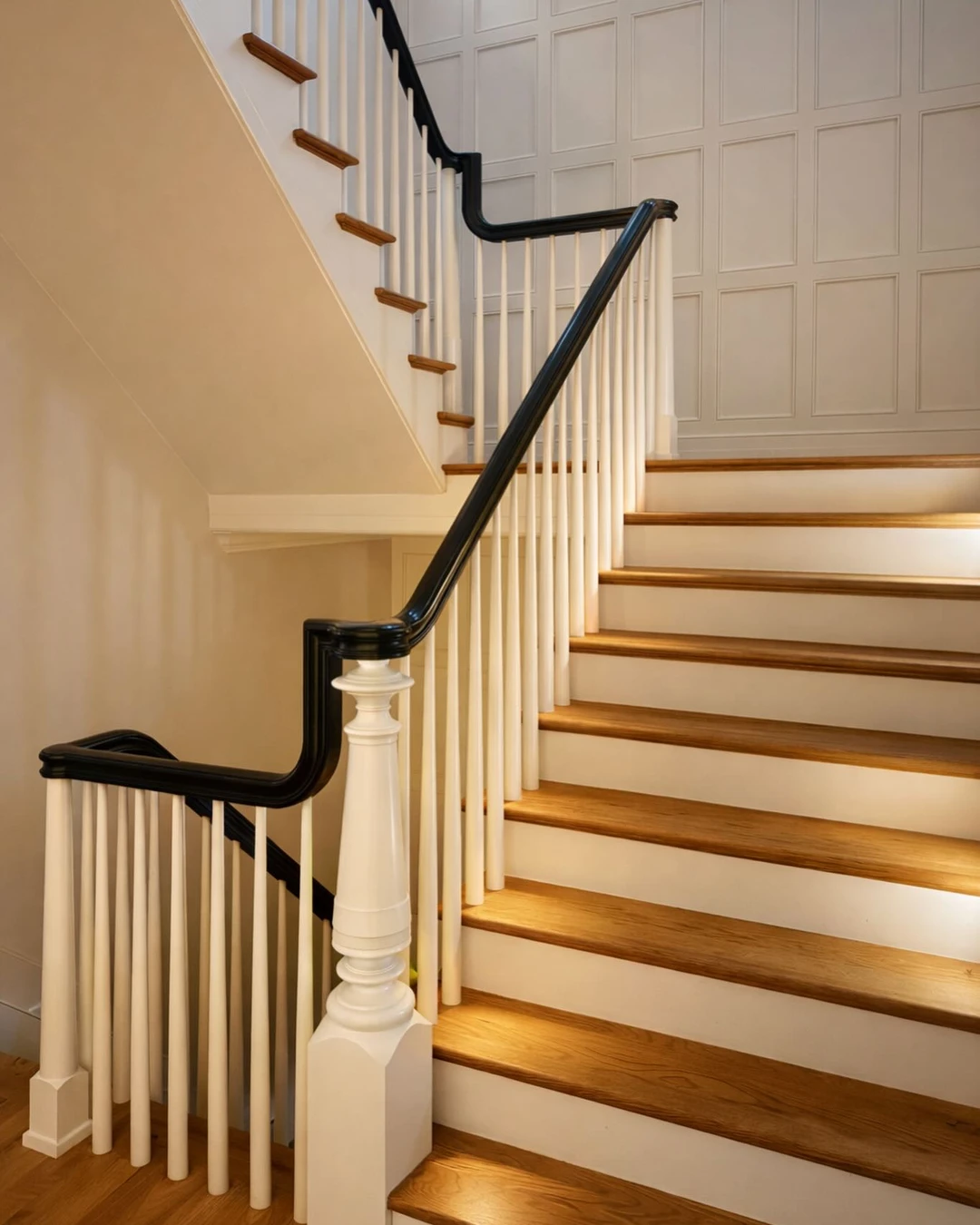
Painted risers get a bad name from the ones that chip. Done well, white risers make the wood treads look richer, not cheaper — the contrast is the whole point.
Honey-wood treads do the honest work here. They carry the colour, the white risers carry the light, and the black handrail draws the line between them. Paint hides nothing when the wood is this good.
Black handrails are the risk in this scheme. Too thick and they dominate the white risers; too thin and they look lost. A slim, square profile is the safe middle.
The practical point: Use a hard-wearing paint on risers and a different finish on treads — one product for both always fails on one of them.
Why a Runner Changes Everything
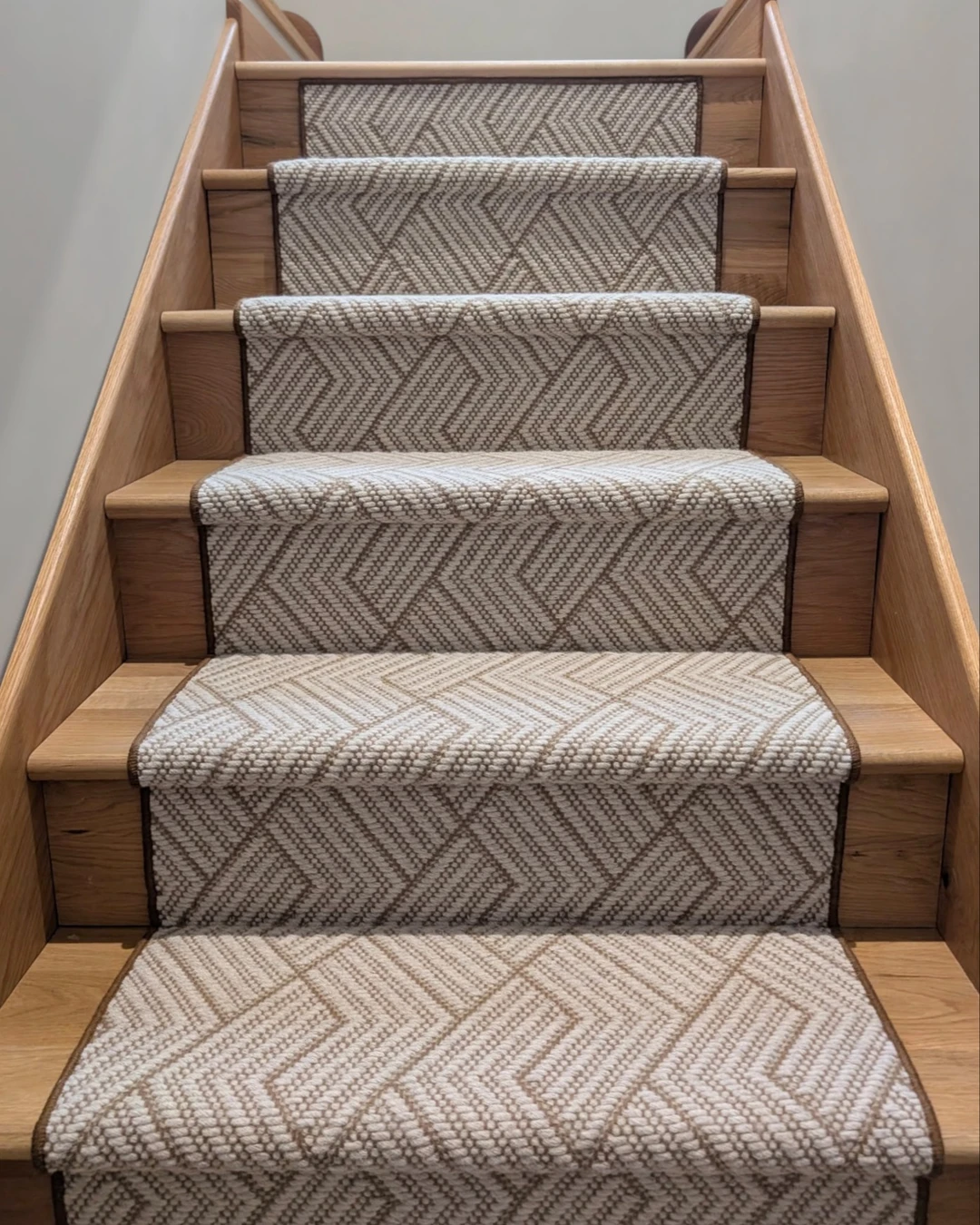
Runners are the cheapest way to change a staircase completely. A cream geometric runner turns plain light wood into a pattern you notice from the hallway, and it softens every step underfoot.
Geometric pattern is the right choice for a straight flight. It lines up with the treads, it hides dust between cleanings, and it doesn’t fight with the wood the way a floral would.
Quiet patterns age better than loud ones on a runner. A bold diamond will look dated in five years; a soft geometric reads classic, and it hides the wear between cleanings.
The practical point: Fit the runner with rods or tacks, not glue — glue makes the runner impossible to remove without damaging the treads.
Turned Balusters Are Back
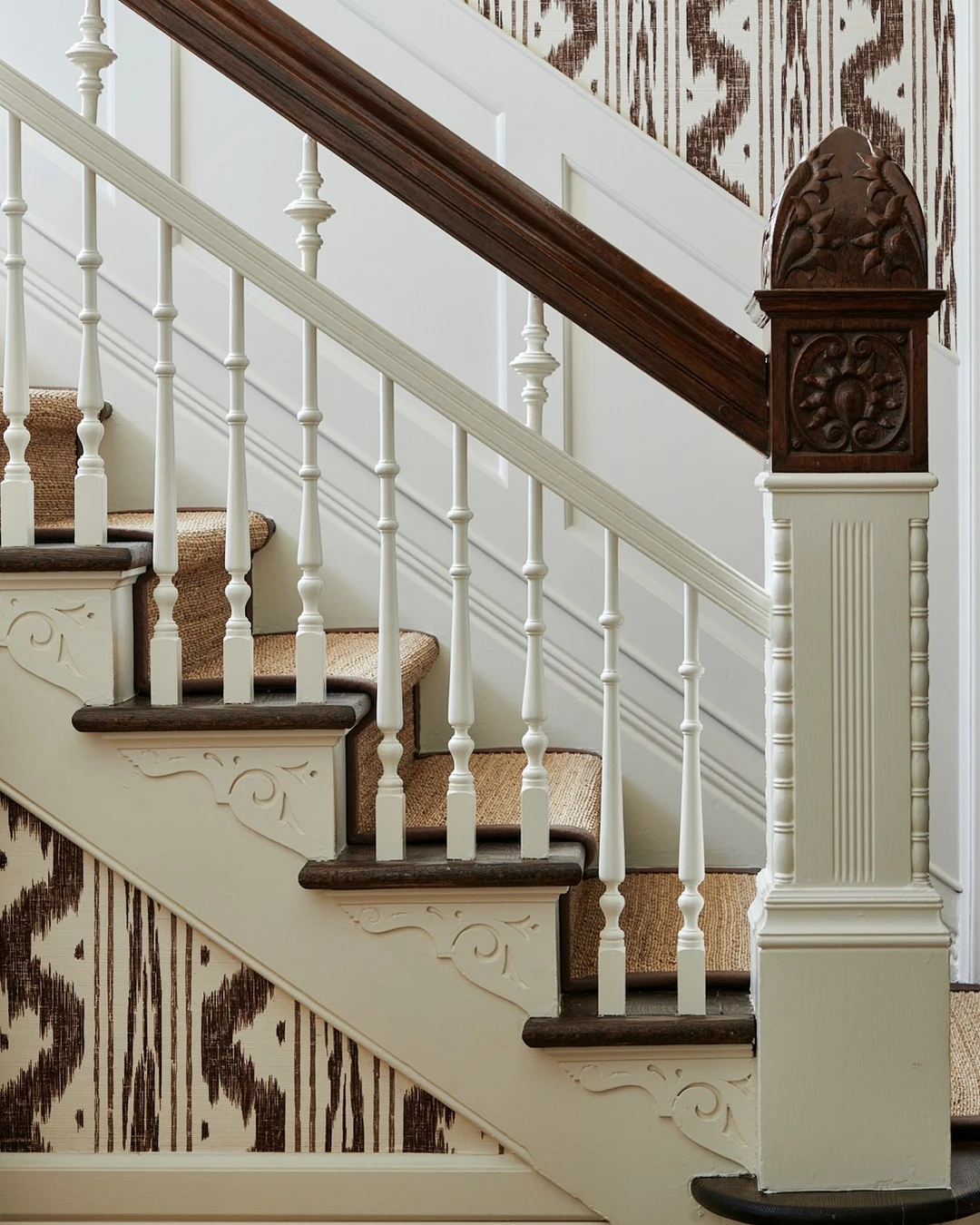
Turned balusters were written off as old-fashioned, and then everyone remembered why they lasted two hundred years. They catch the light, they feel good in the hand, and they make a staircase look made, not assembled.
White paint is what brings them back. It turns a traditional shape into a fresh one, and the dark treads and the woven runner keep the whole thing from feeling like a museum piece.
Newel posts carry the design weight of a turned balustrade. A carved newel anchors the whole flight; a plain one makes the balusters look like decoration instead of structure.
The practical point: Count the balusters before you order — two per tread is the rule, and a missing one shows immediately.
Dark Wood, Light Walls
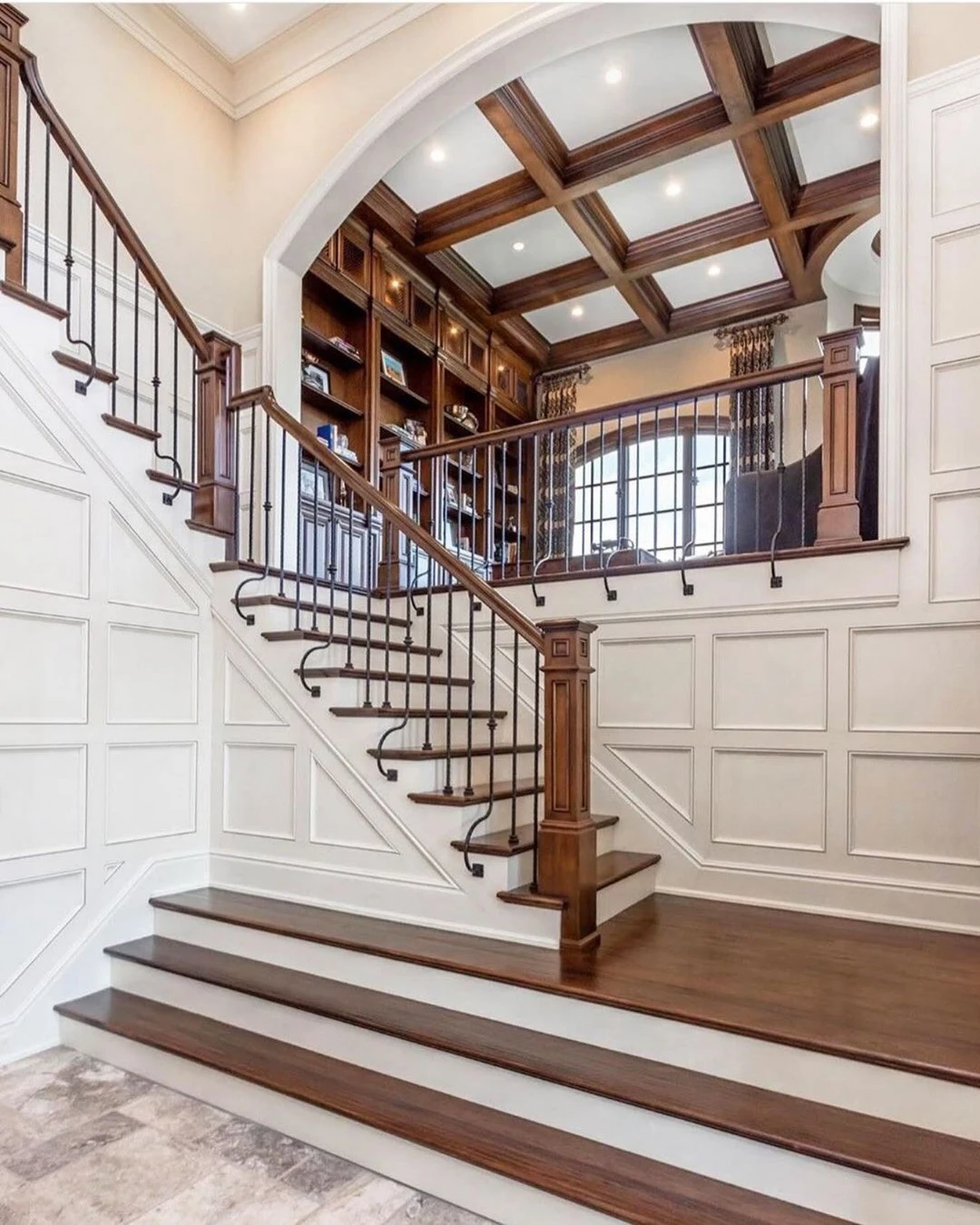
Dark treads against white walls are the boldest simple choice in stair design. The contrast does all the work, and the staircase becomes the one dark line in a pale room.
White panelling does the heavy lifting here. It keeps the room bright while the dark wood does the drama, and the library beyond the landing makes the whole staircase feel like it belongs to a house that reads.
Coffered ceilings help a dark staircase feel intentional. The library beyond this landing isn’t an accident — dark wood wants dark books and warm light, not a bare white room.
The practical point: Keep the walls pale and the treads dark — reverse it and the staircase disappears into the shadows.
Storage Under the Stairs, Done Right
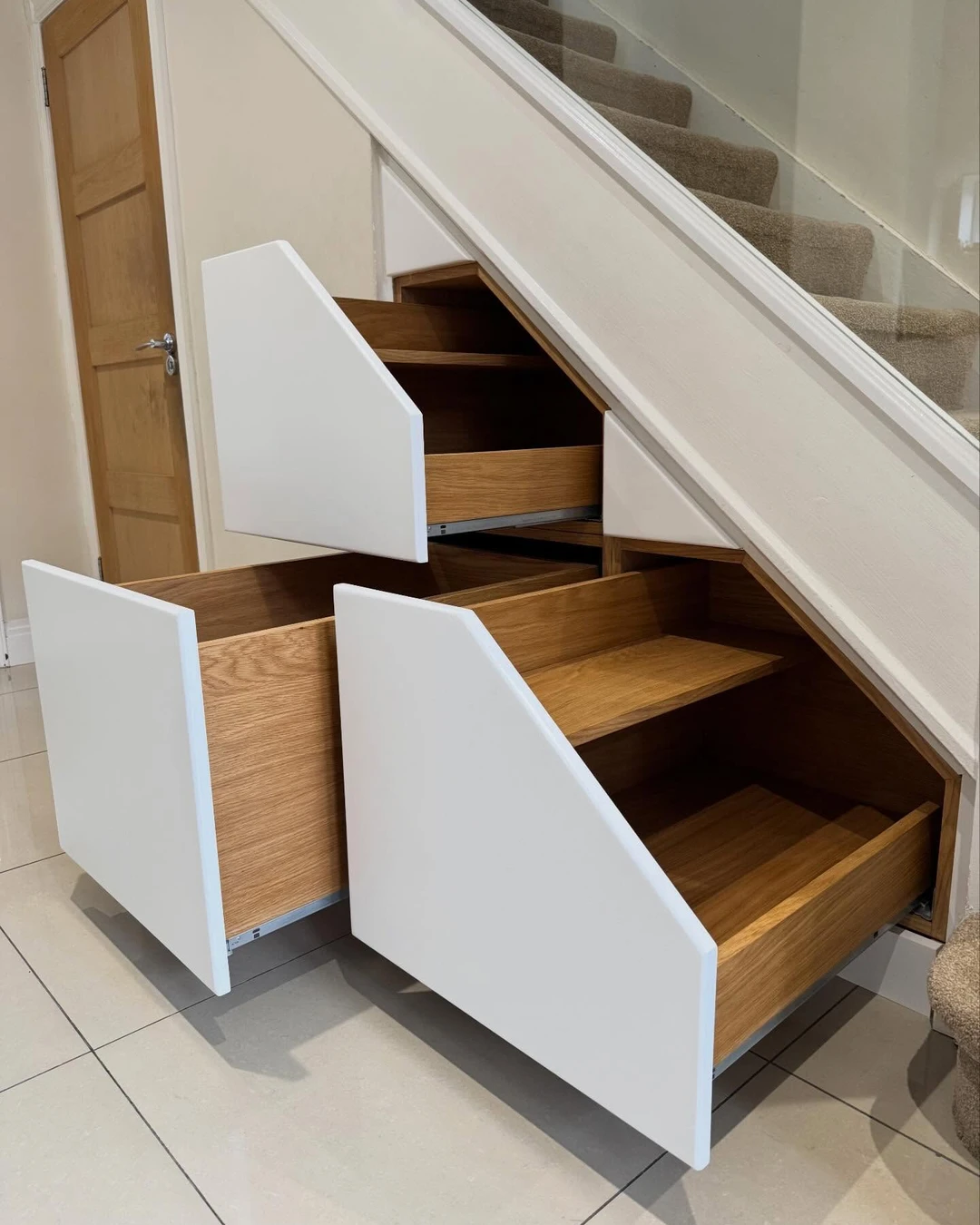
Dead space under the stairs is the most wasted square footage in a house. Pull-out drawers turn it into the best storage in the hallway — deep, easy to reach, and invisible when closed.
Pull-out drawers are the honest version of under-stair storage. No crouching into a cupboard, no lost things at the back — the drawer comes to you. And the space under the stairs earns its keep — see How to Design a TV Unit Under a Staircase Without Visual Clutter.
Soft-close runners are worth the money on under-stair drawers. A drawer that slams shut under the stairs rattles the whole flight, and the fixings loosen within a year.
The practical point: Measure the slope before you build — a drawer that is too deep for the slope will never close properly.
Mix Wood with a Little Black Metal
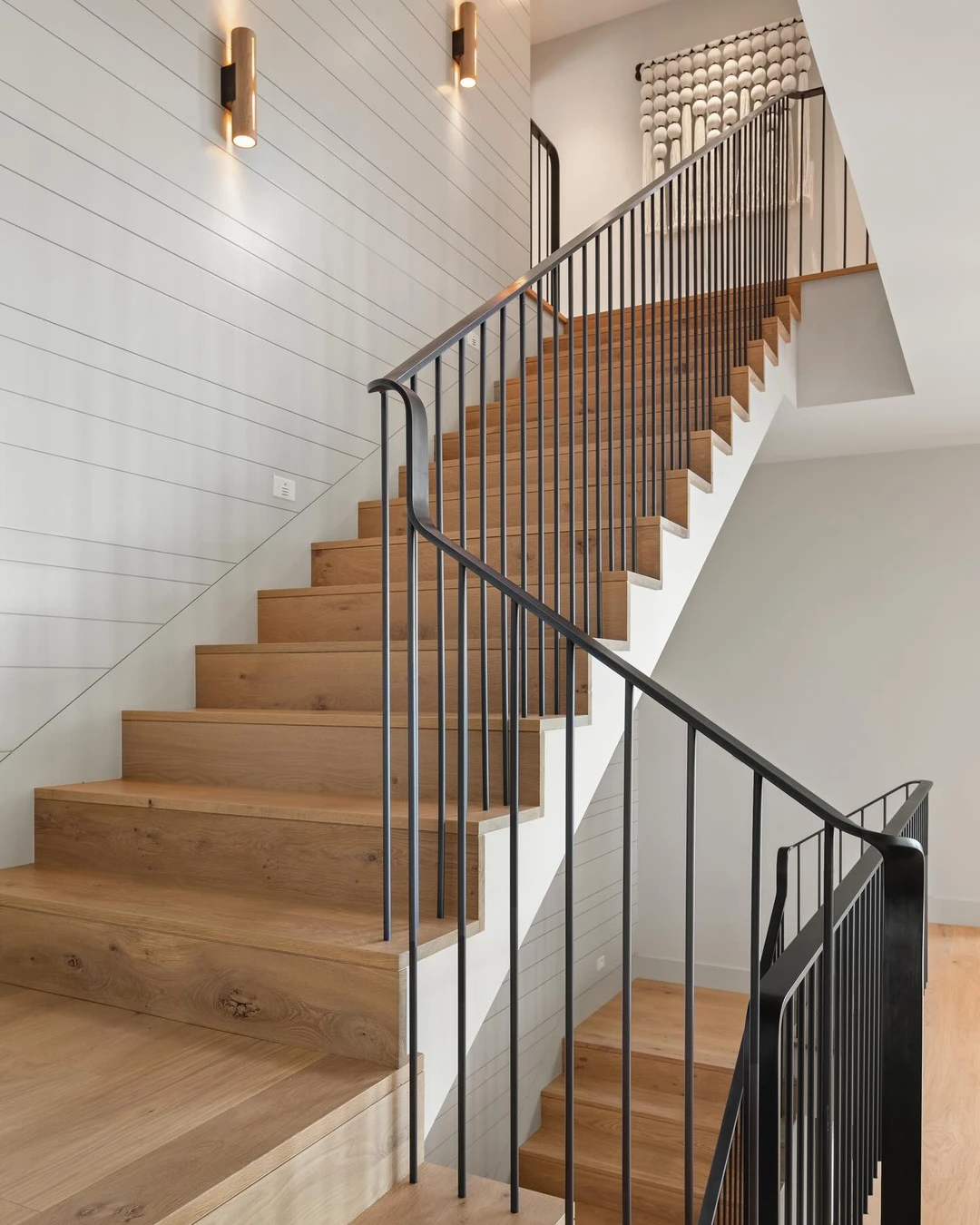
Wood and black metal are the pairing that never gets old. Warm treads, a sleek black railing, white shiplap behind it — each material makes the others look better.
Vertical balusters keep the look calm. They draw straight lines against the wood grain, and the macramé hanging near the top of the stairs is the room’s soft touch, the one thing that isn’t a straight line.
Shiplap is the quiet partner in this scheme. It gives the black metal something pale to sit against without competing, and it hides the wall’s imperfections better than flat plaster.
The practical point: Keep the metal matte, not glossy — gloss shows fingerprints on a handrail within a day.
Spiral Wood That Feels Handmade
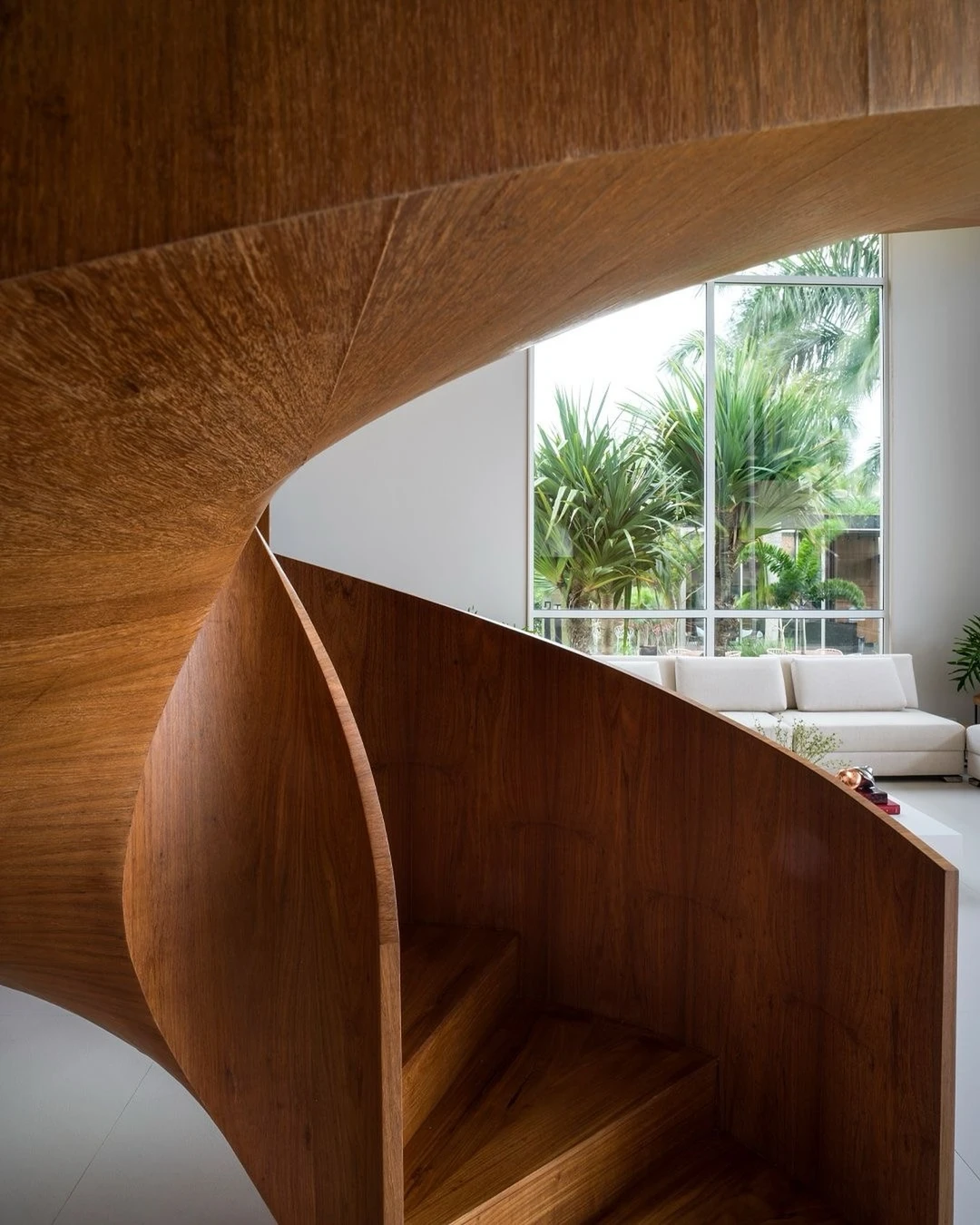
Wooden spirals feel handmade in a way steel spirals never do. Curved wood panels, a handrail that follows the curve, and a staircase that looks grown rather than built.
Curved panels are the craft here. Bending wood to a spiral takes time and skill, and you can see it in the smooth, unbroken curve — no joints, no shortcuts, just wood doing what wood does best.
Treads need grip on a spiral, where the step narrows to nothing at the centre. A smooth, polished tread looks beautiful and sends you sliding — a light oil finish keeps the grip.
The practical point: Walk it barefoot before you commit — a wooden spiral that feels smooth underfoot is worth more than one that only looks smooth.
Old Wood, New Life
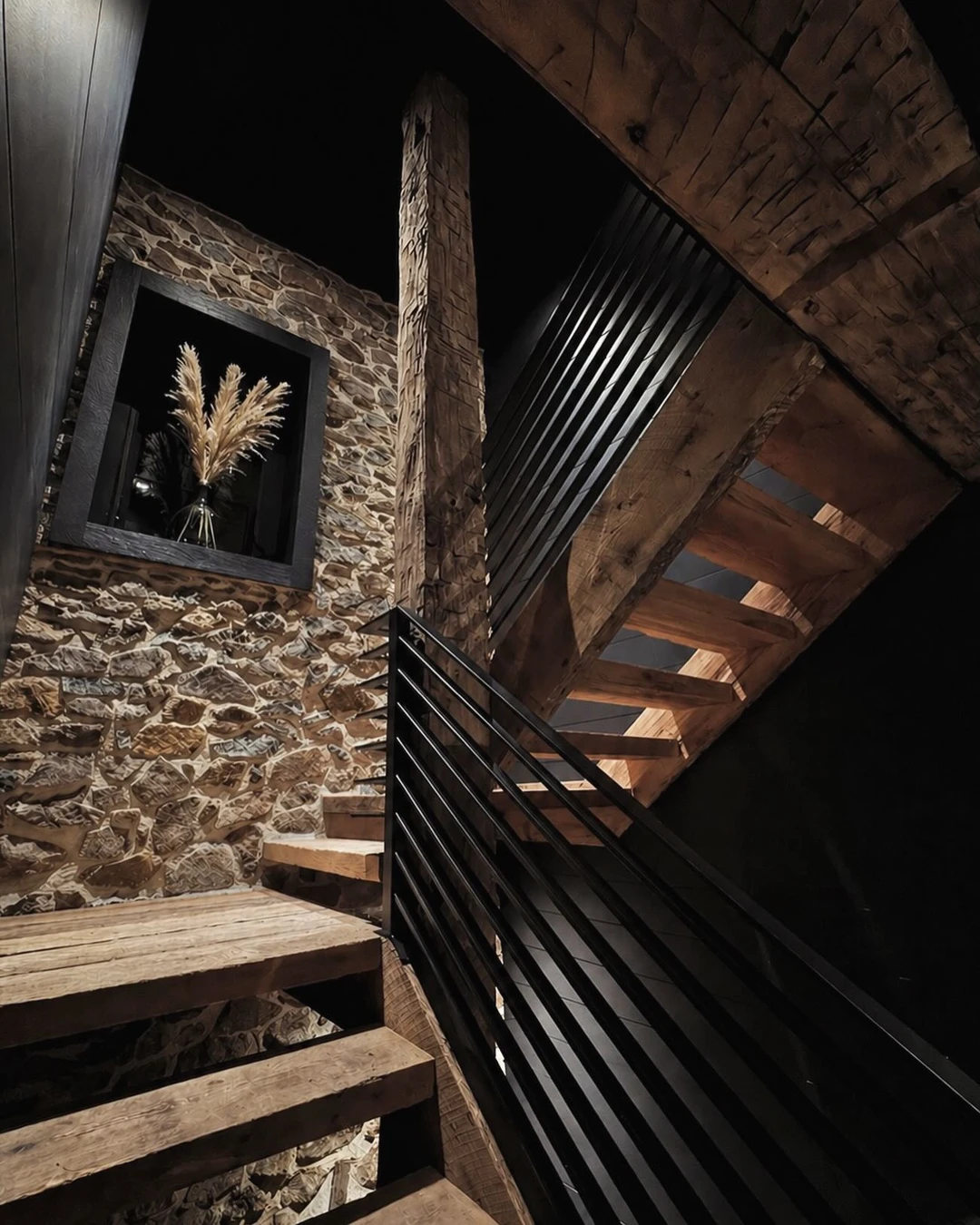
Reclaimed wood carries its history on its face — nail holes, saw marks, a colour that only comes from a hundred years of use. A staircase built from it doesn’t need to try to have character; it arrives with it.
Thick treads, black cable rail and a stone wall — the old wood does the talking, and everything else stays quiet. The framed dried-flower art on the wall is the only decoration, and that’s enough.
Cable rails keep the old wood visible. A solid balustrade would hide the reclaimed treads; cables disappear, the stone wall stays in view, and the old wood does all the talking.
The practical point: Seal reclaimed wood before you install it — old timber can hold dust and damp that a new staircase would never bring indoors.
Your Staircase, Full of Character
Ten ideas, and the thread through them is simple: wood with a story, a finish you can touch, and one detail that makes you look twice. A wooden staircase doesn’t need to be grand — it just needs to be honest.
Which one fits your hallway? Start with the wood, then add the detail — and if steel is more your language, see Modern Steel Staircase Can Be Surprisingly Elegant.