Glass makes a staircase disappear — and that’s exactly the point. But one wrong choice, and you’re cleaning fingerprints forever.
Most glass railings fail quietly. The glass is too thin, the fixings are wrong, or the hallway turns into a fingerprint gallery.
Here’s the truth: a glass staircase railing is a system, not a single purchase — glass, hardware, handrail and the staircase itself all have to agree.
Seventeen details follow, from glass thickness to the day the fitter arrives. Get them right before you order, and the railing looks effortless for years.
Start with the glass — everything else follows from that one choice.
Frameless or Framed — Which Glass Suits Your Stairs?
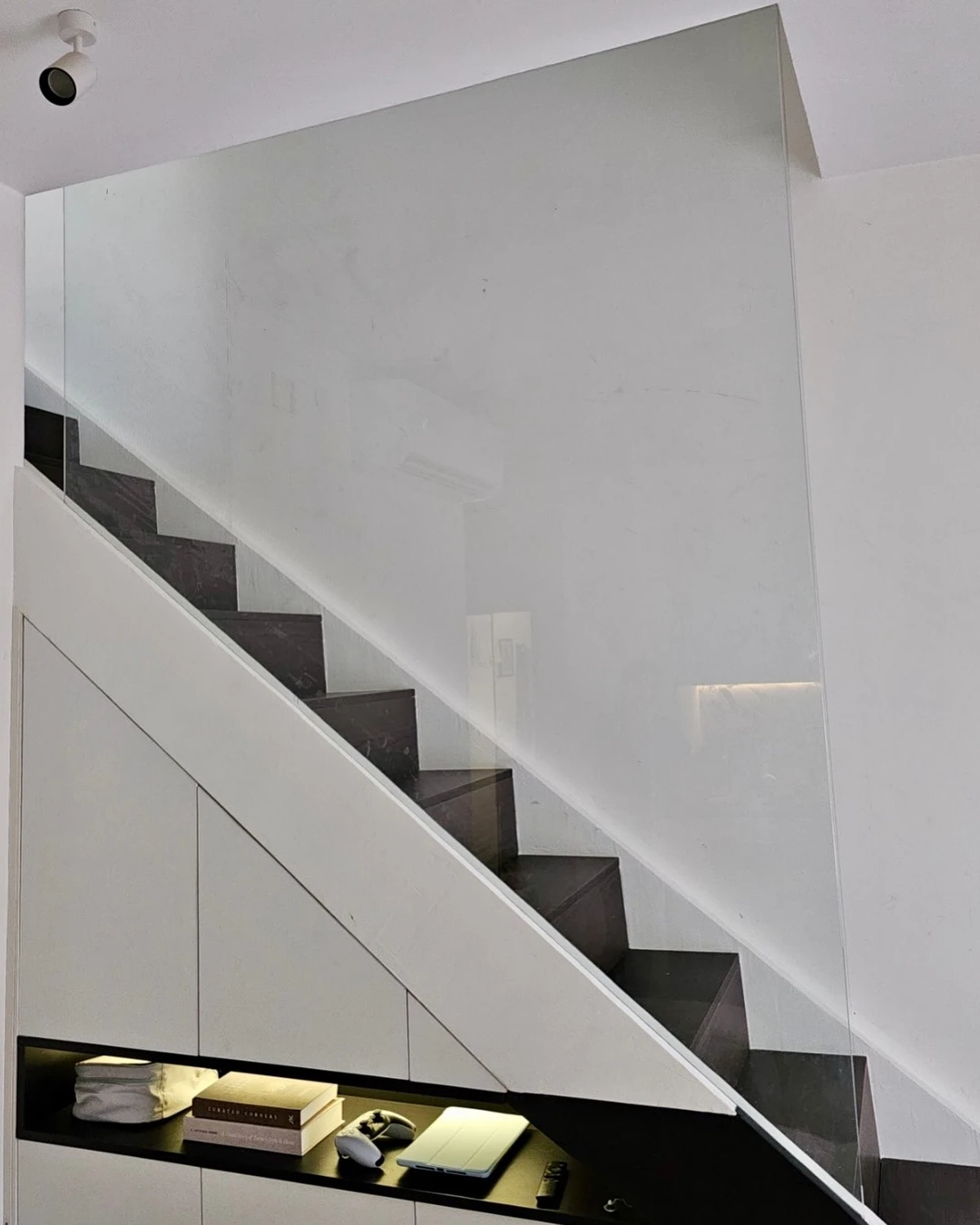
Frameless glass is the look everyone asks for first. One clear panel, no posts, no top rail — the staircase floats and the room feels twice as big.
Framed glass costs less and forgives more. Posts and a handrail take the load, so the panels can be thinner, and a wobble in the wall never shows.
Price is where the two part company. Frameless needs thicker glass, precision fixings and a fitter who measures twice — framed lets the hardware do the work.
The practical point: Choose frameless for the view, framed for the budget — never order frameless on a framed budget.
How Thick Should the Glass Be?
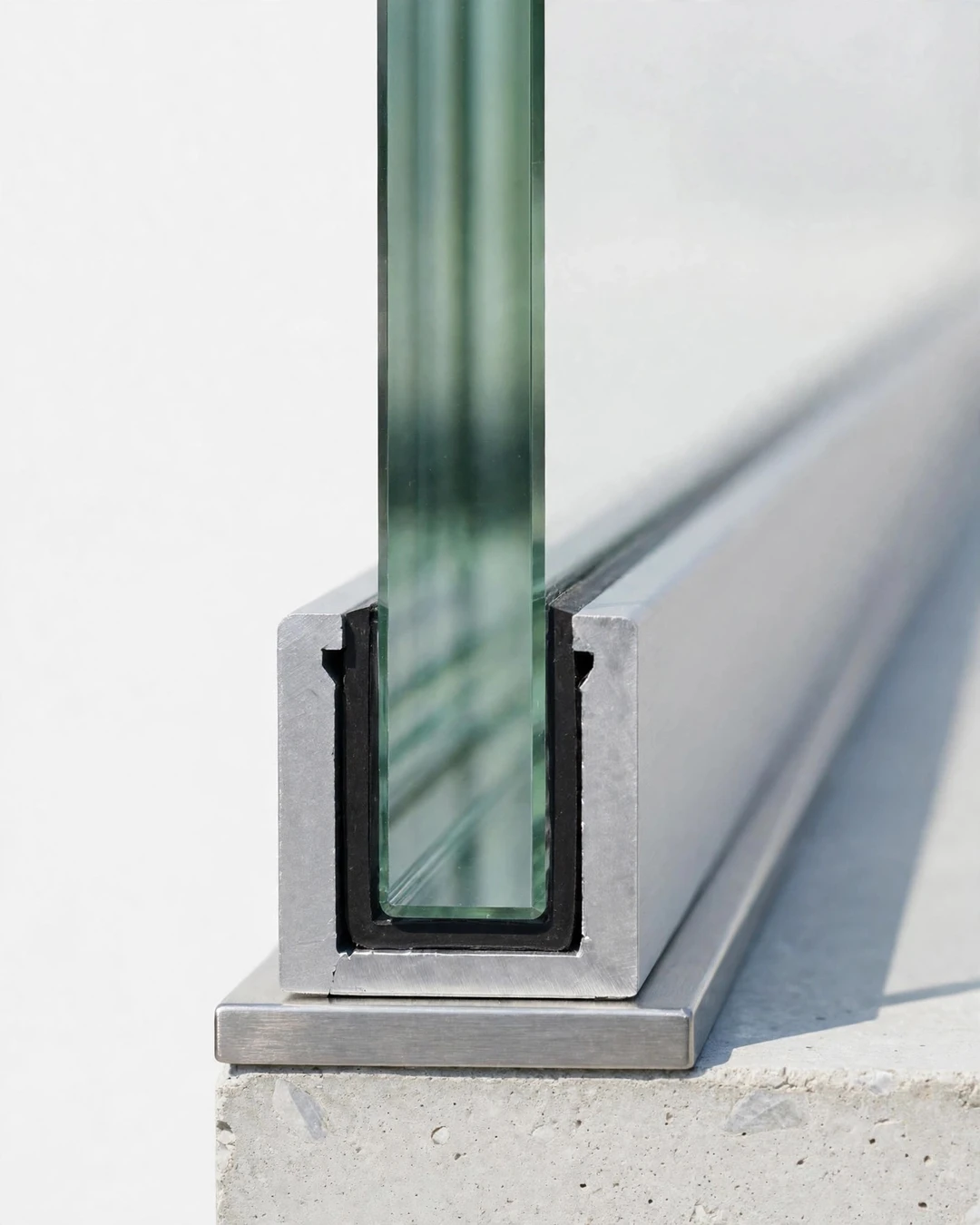
Thickness is the first number your supplier will ask about, and it’s the one that decides safety. Ten millimetres is the usual minimum for a staircase panel; twelve is the calm choice for a long run.
Longer panels need thicker glass. A short panel between two posts can be 10mm; a frameless panel spanning a full flight wants 12mm or more, or it flexes when you lean on it.
Glass in the photo sits in a U-shaped channel, and you can see the thickness in the edge — green, solid, unmistakable. If the edge looks thin, the panel is thin.
The practical point: Ask for the thickness in writing before you pay — a verbal ‘thick glass’ has no meaning on an invoice.
Why Laminated Glass Is the Safer Choice
Laminated glass is two panes with a plastic layer between them. Break it and the pieces stay stuck to the layer instead of falling down the stairs.
Tempered glass is strong, but it shatters into small pieces when it fails. On a staircase, those pieces fall where people walk — laminated glass stays in the frame.
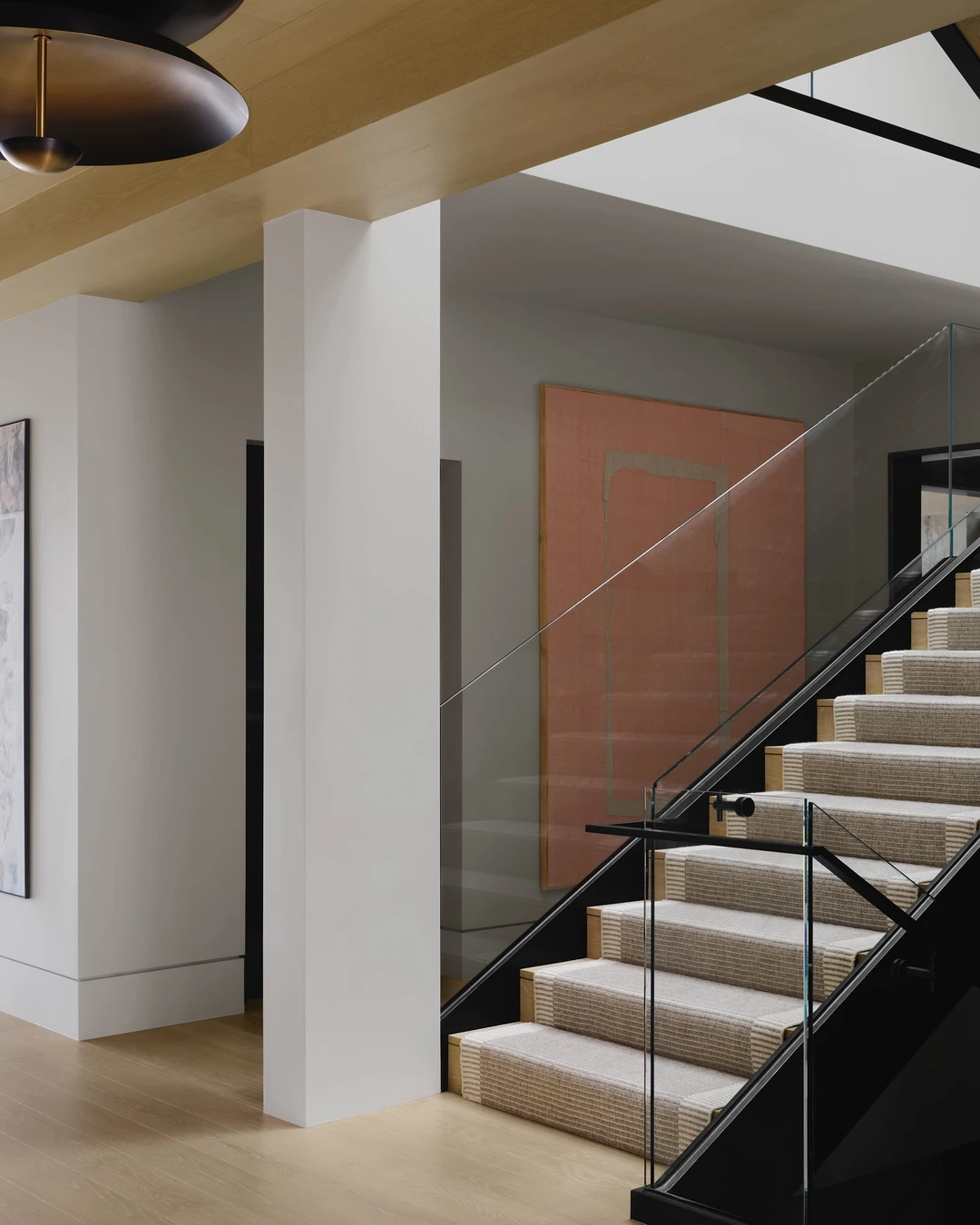
Lived-in homes show the difference best. Carpeted treads, a black handrail, glass doing its quiet job every day — safety you never notice is safety that works.
The practical point: Choose laminated for any staircase children or guests use — the extra cost is the cheapest insurance in the whole job.
Clamps, Channels and Standoffs — How Glass Is Held
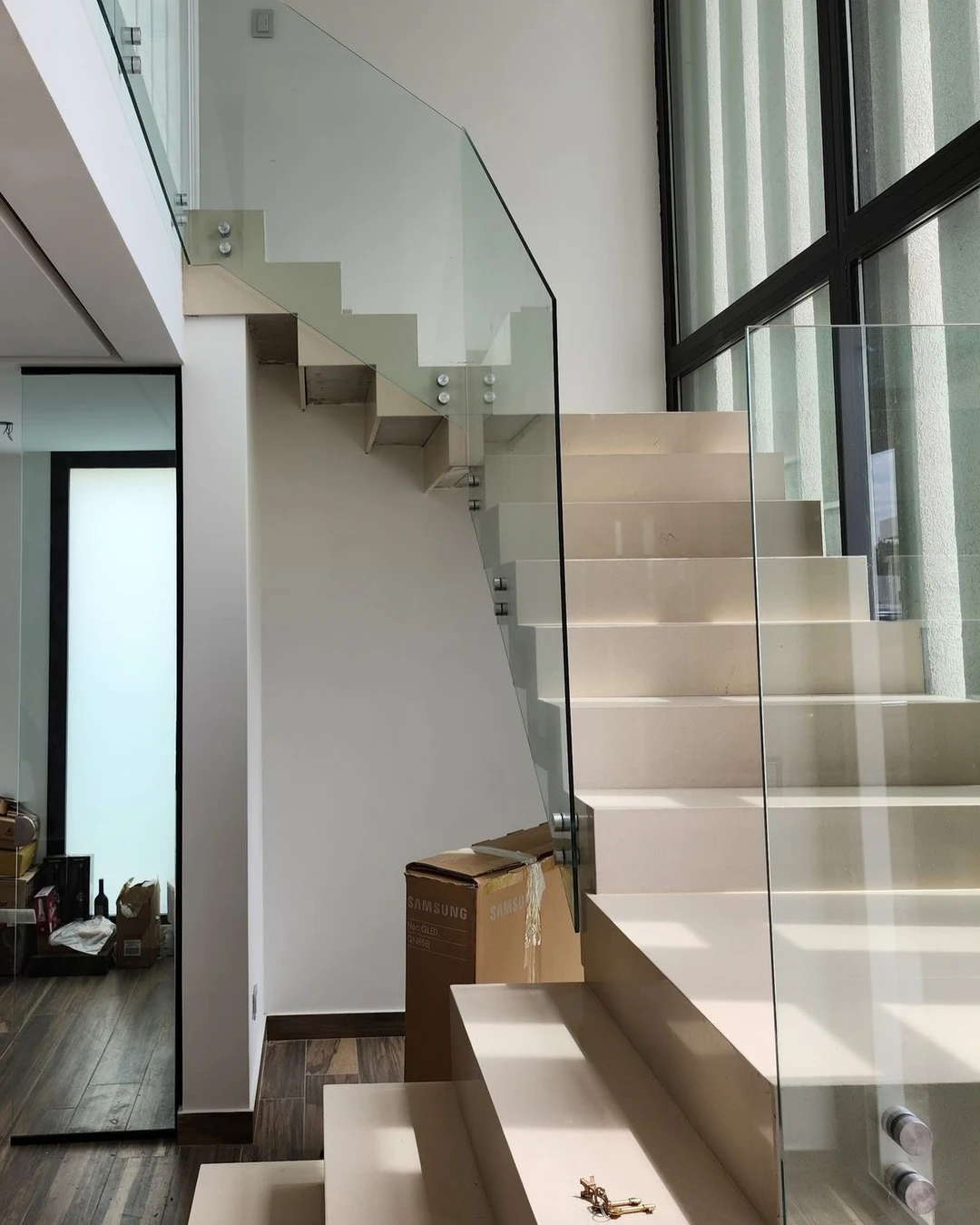
Standoffs are the round discs that hold this glass to the staircase. Each one bolts through the panel, and together they carry the whole balustrade without a post in sight.
Channels hide the fixing completely. The glass drops into a U-shaped base channel at the tread, and all you see is glass rising from the step.
Clamps sit in the middle. They grip the edge of the panel with a small black jaw — visible, honest, and easy to tighten if the glass ever settles.
The practical point: Match the fixing to the staircase — standoffs for floating treads, channels for a clean base, clamps when you want the hardware to show.
With or Without a Top Handrail?
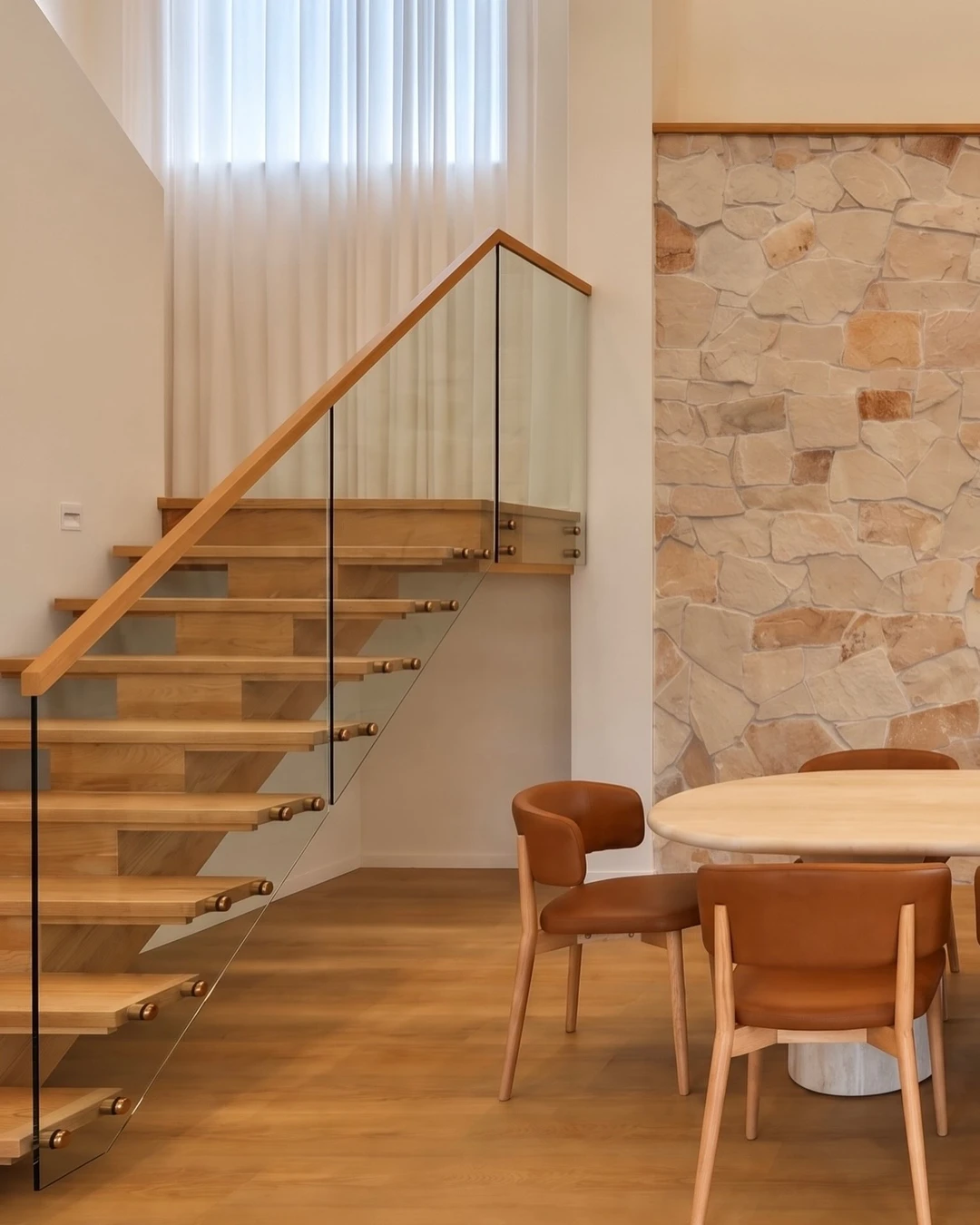
Wooden handrails over glass are the warmest version of this railing. The wood gives your hand something to hold, and the glass stays invisible below it.
No handrail looks cleaner, but it asks more of the glass. The panel edge becomes the handrail, and it needs to be polished smooth and thick enough to grip.
Dining rooms show the trade-off. A handrail over glass frames the staircase like furniture; without one, the staircase disappears into the room.
The practical point: Put a handrail on any staircase your family uses daily — the clean look is not worth a hand with nothing to hold.
Measure Twice — the Run Decides Everything
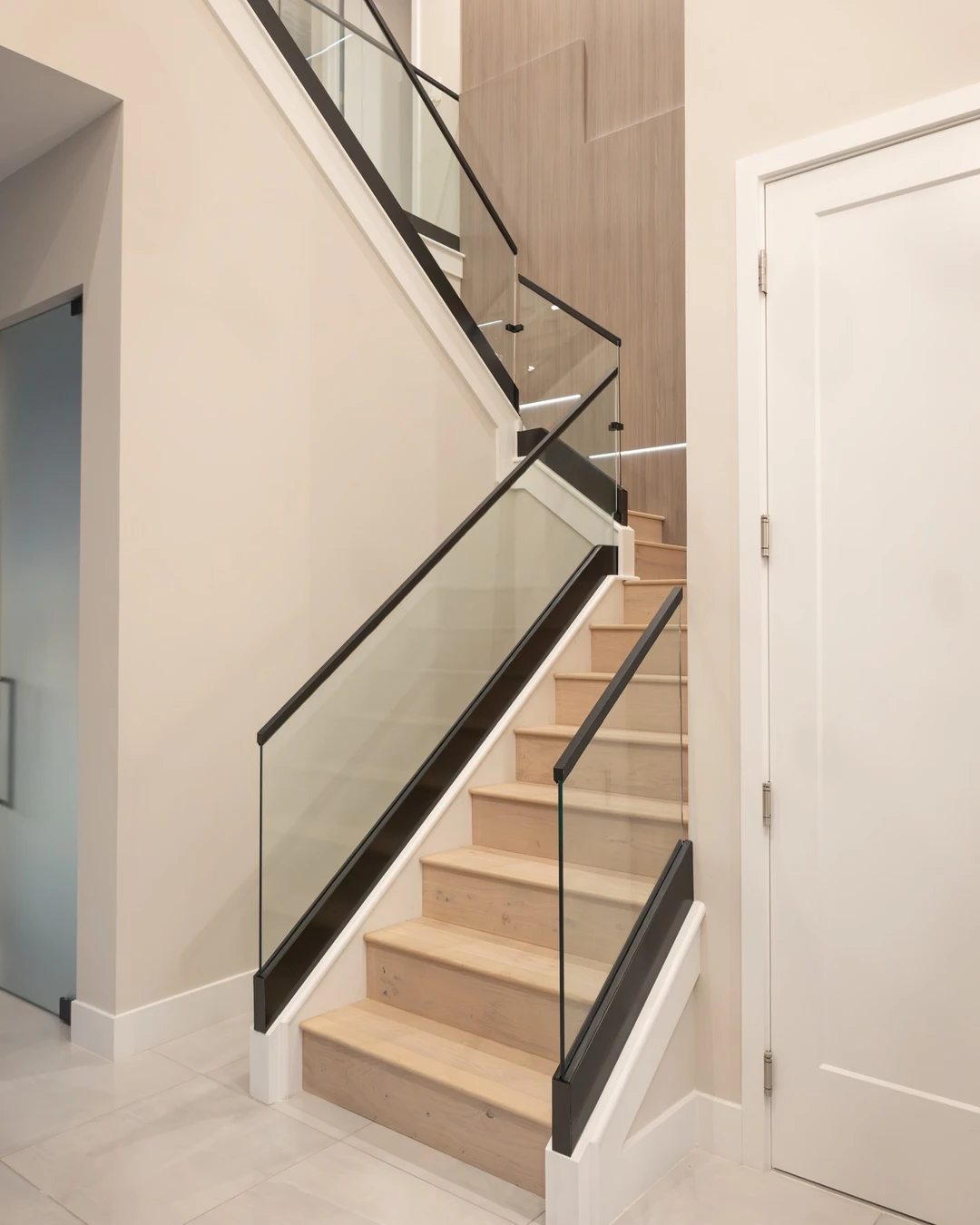
Glass panels are cut to order, and glass doesn’t forgive a wrong number. Measure the run — the full length of the flight — twice, from two different points.
Stairs are rarely as straight as they look. A wall that leans two millimetres over a flight will leave a gap at the top panel that no amount of sealant hides.
Long straight flights show why it matters. Every panel in a row has to line up, and one short panel makes the whole flight look crooked.
The practical point: Measure the run at the tread, at the handrail height and at the wall — three numbers that must agree before you order.
One Side Glass, One Side Wall
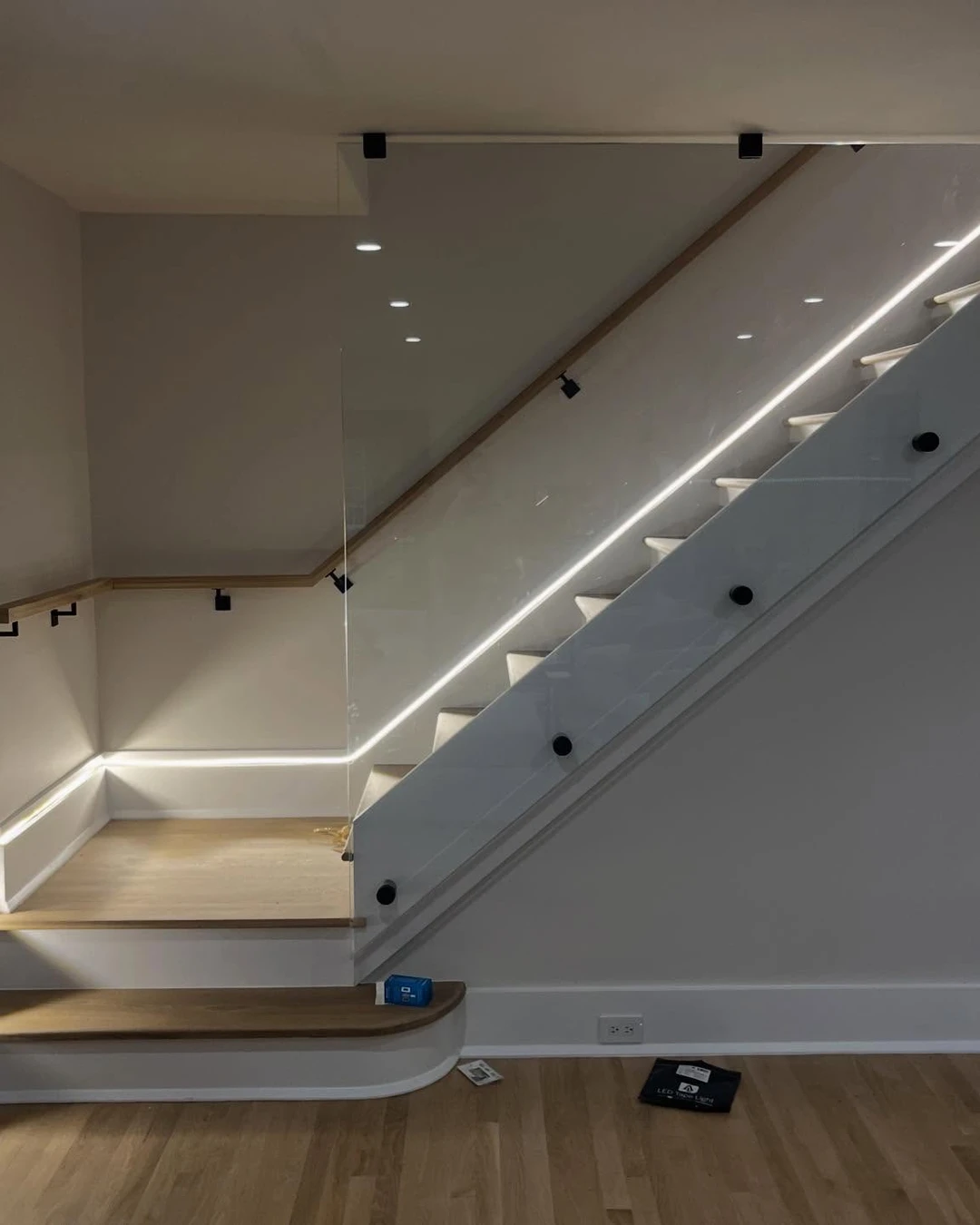
One side glass, one side wall is the most common glass railing in real homes. Glass on the open side, a wooden handrail on the wall side — the staircase feels open without losing its grip.
Walls do half the work here. The handrail bolts straight into the studs, the glass carries only its own side, and the whole system costs less than glass on both sides.
Installation leftovers tell the story of this photo — a small blue box on the bottom tread, an LED strip packet on the floor. The railing is finished; the room is still catching up.
The practical point: Glass on the open side only, handrail on the wall — the cheapest way to get the glass look without paying for two glass runs.
Fingerprints, Dust and Water Marks — the Cleaning Reality
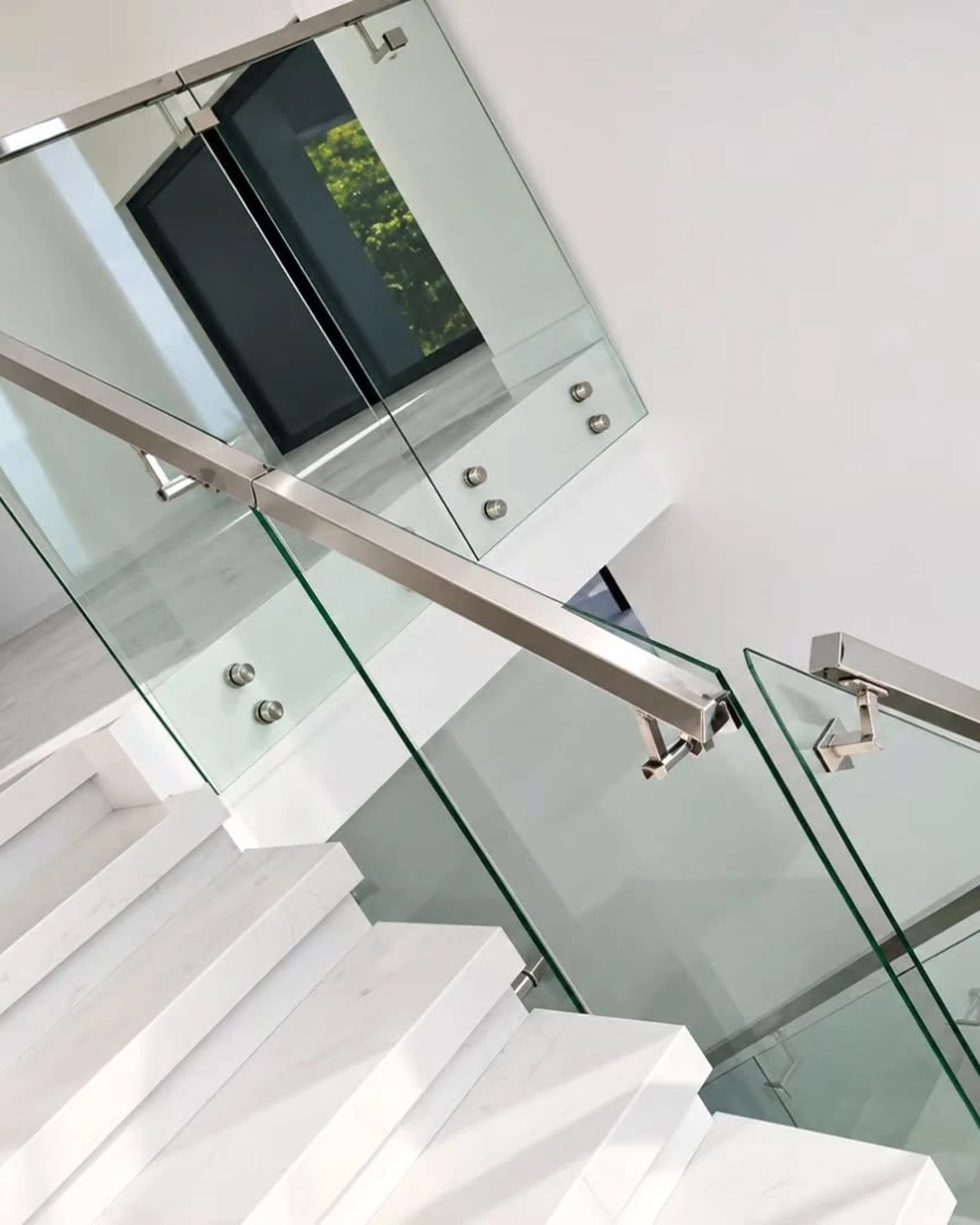
Clean glass is the whole point of this railing, and clean glass is the job. Fingerprints show on every panel at hand height, and dust settles on the top edge within a week.
Water marks are the quiet enemy. A splash from a mop, a wet hand on the panel — the marks dry white and show in sunlight long after the water is gone.
Marble stairs and big panels show the scale of it. The glass here is the dominant surface in the room, so the cleaning is the dominant job too — squeegee, microfibre, no shortcuts.
The practical point: Keep a squeegee and a microfibre cloth by the stairs — five minutes a week beats an hour of scrubbing once a month.
What Glass Does to a Dark Hallway
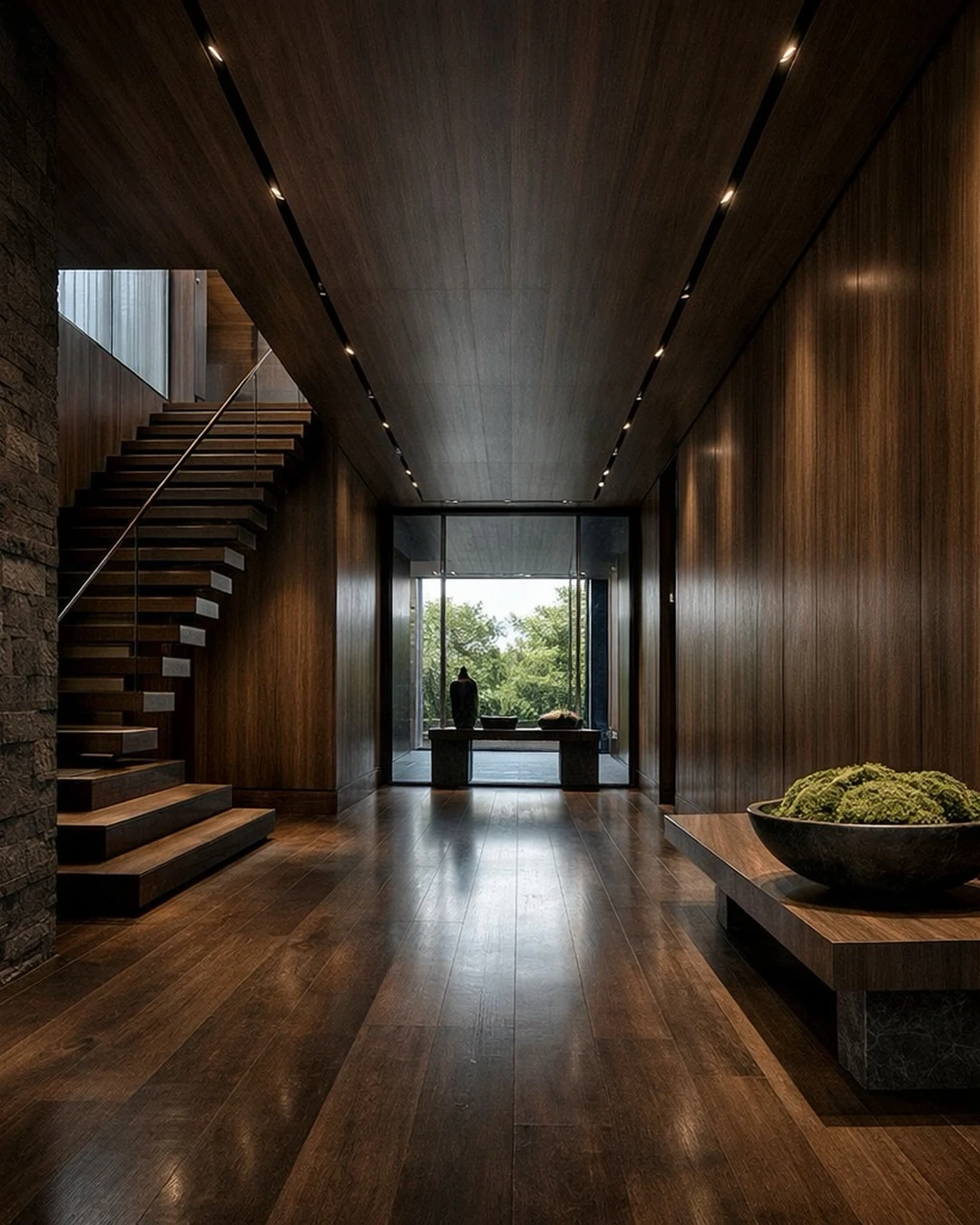
Dark hallways are where glass earns its keep. Wood panels swallow light; glass lets it travel, and a bright door at the far end suddenly reaches the whole hall.
Floating stairs help the effect. Light passes under the treads as well as through the glass, so the hallway reads brighter from every angle.
Bright doors at the end of a hall are the giveaway. With a solid balustrade, the light stops at the stairs; with glass, it walks the whole hallway.
The practical point: Put glass on the staircase of a dark hallway before you buy another lamp — the light you already have is enough.
Safe for Kids and Pets? What to Check
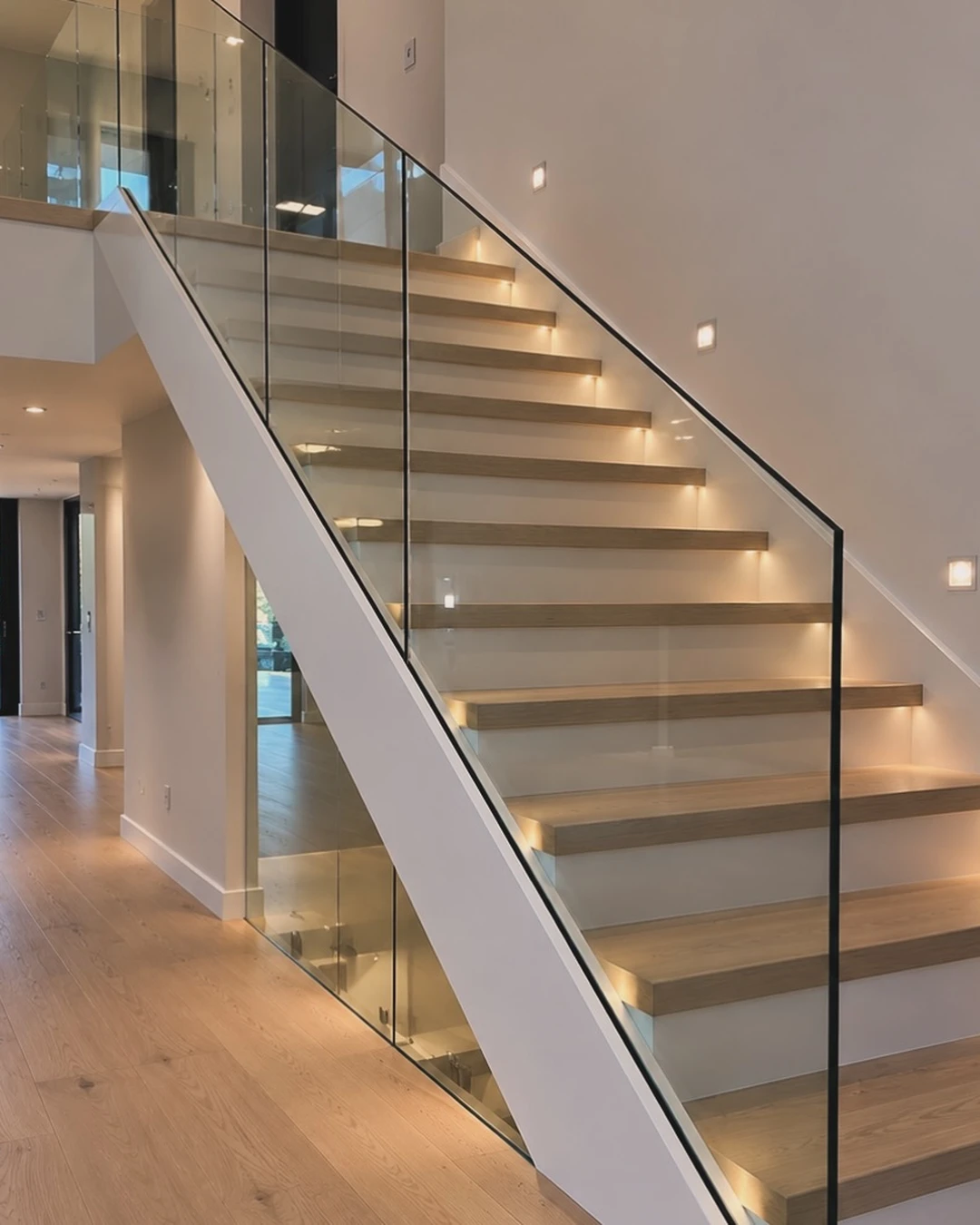
Enclosed glass is the safest balustrade for a house with children. No gaps to climb through, no spindles to get stuck between — just a solid panel from tread to handrail.
Under-step lighting does more than look good here. It marks every tread edge after dark, so small feet and old feet both find the step.
Gaps are what to check. Run your hand along the bottom of the panel — if a small hand or a paw fits through, the fixing is wrong, whatever the brochure said.
The practical point: Check the bottom gap before you sign off — a panel that meets the tread properly is the whole safety story.
Where Glass Meets the Tread
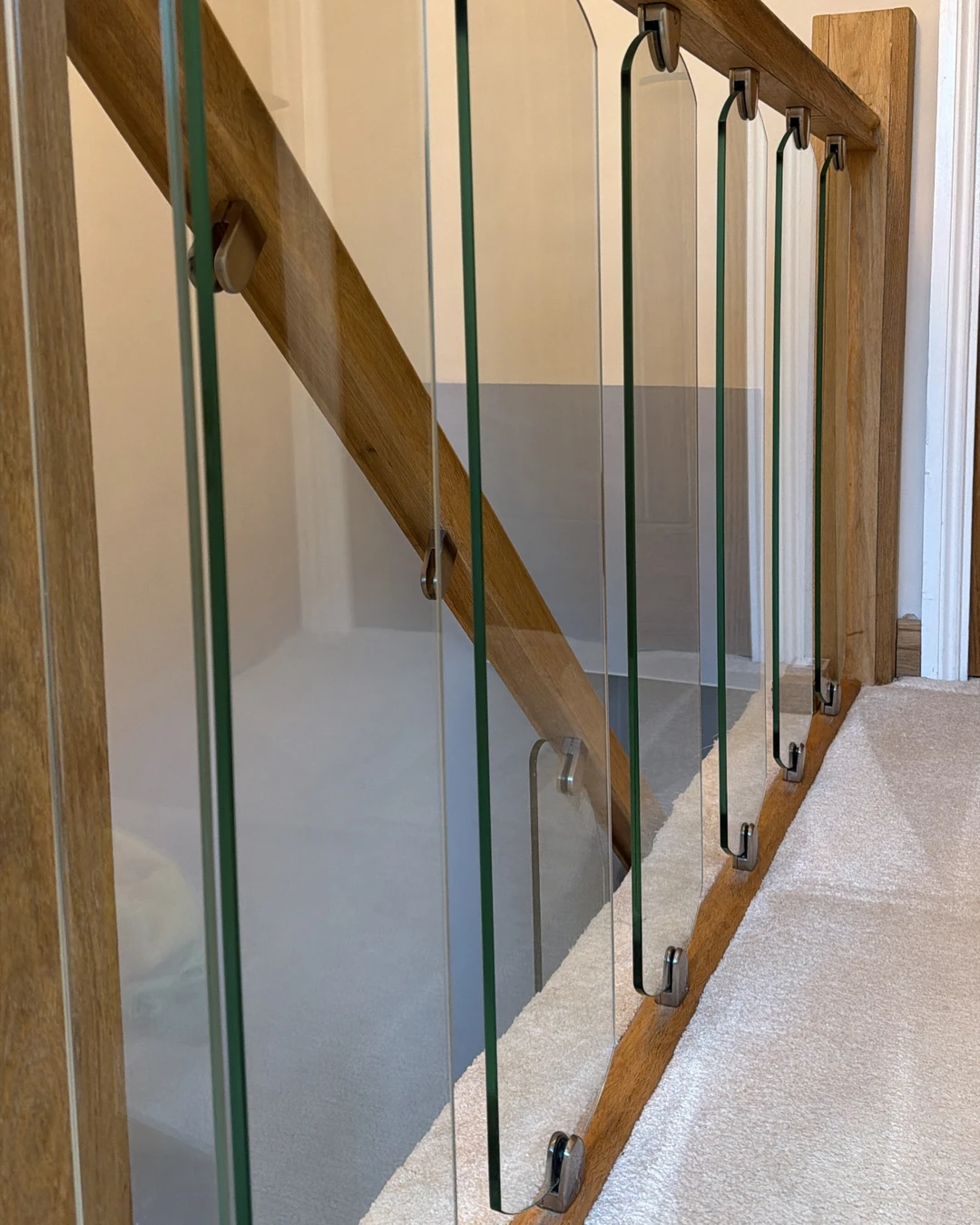
Glass meets the tread at a bracket, and the bracket is the whole detail. Metal jaws grip the panel, the panel sits on the oak rail, and nothing else holds it up.
Green edges are normal on tempered glass. The thicker the panel, the greener the edge looks — it’s the iron in the glass, not a defect.
Carpeted stairs change the fixing. The bracket has to bite through the carpet to the tread below, or the panel rocks the first time someone leans on it.
The practical point: Look at the fixing, not the glass — a railing is only as good as the bracket that holds it to the tread.
Matching Glass to Wood, Steel and Concrete
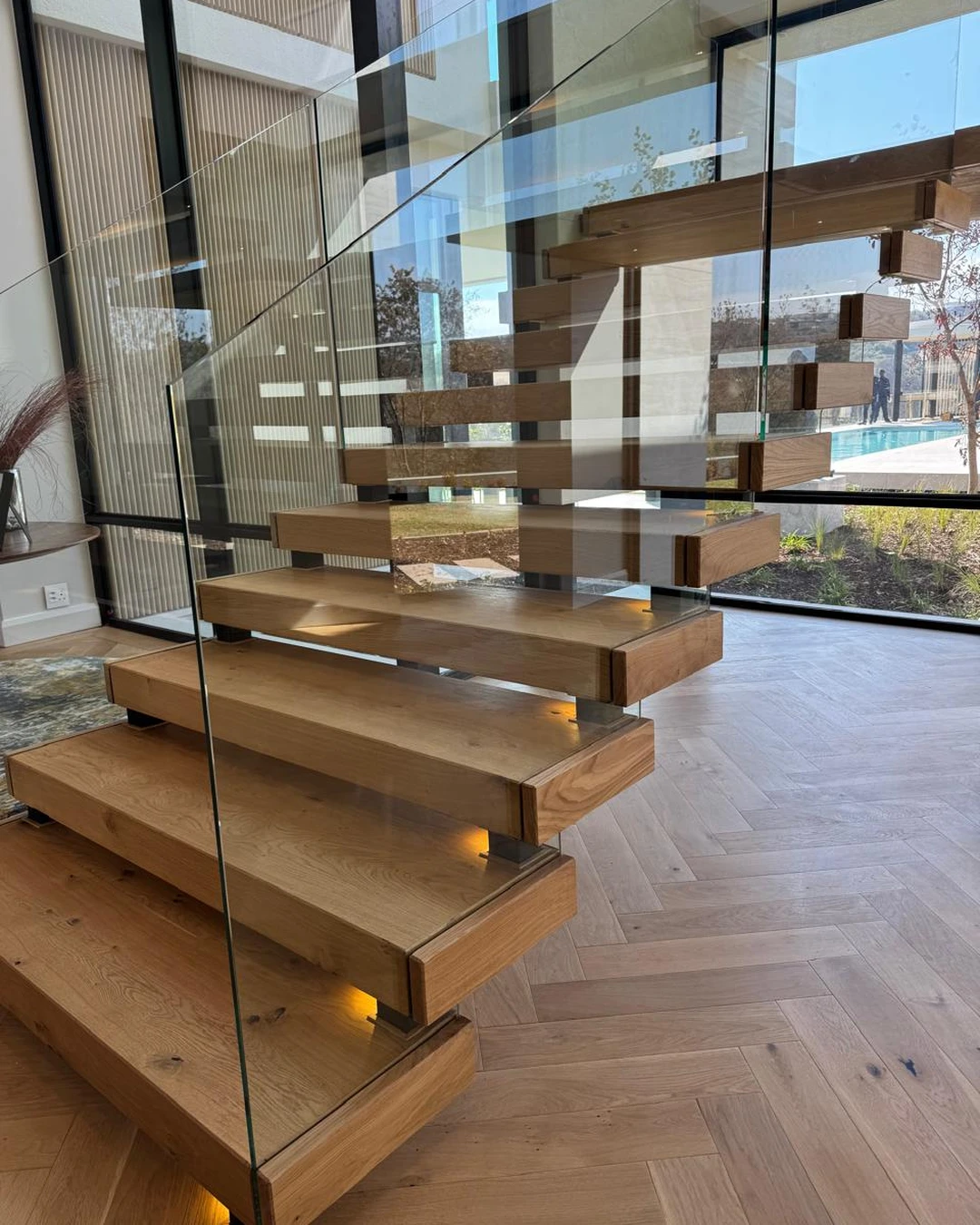
Wood and glass are the easy pairing. Warm treads, clear panels, a herringbone floor that echoes the wood — the glass disappears and the timber does the talking.
Steel wants a different glass. Black metal frames and side-mounted panels suit steel stairs — see Modern Steel Staircase Can Be Surprisingly Elegant — and the glass needs to be thick enough to sit in the steel channel without rattling.
Concrete is the boldest match. Smooth grey walls and a glass balustrade turn a staircase into sculpture — but the fixings have to be drilled, not screwed, and that takes a specialist.
The practical point: Match the fixing to the material first — the glass is the same, the hardware is what changes.
Frosted or Tinted — Privacy Without Losing Light
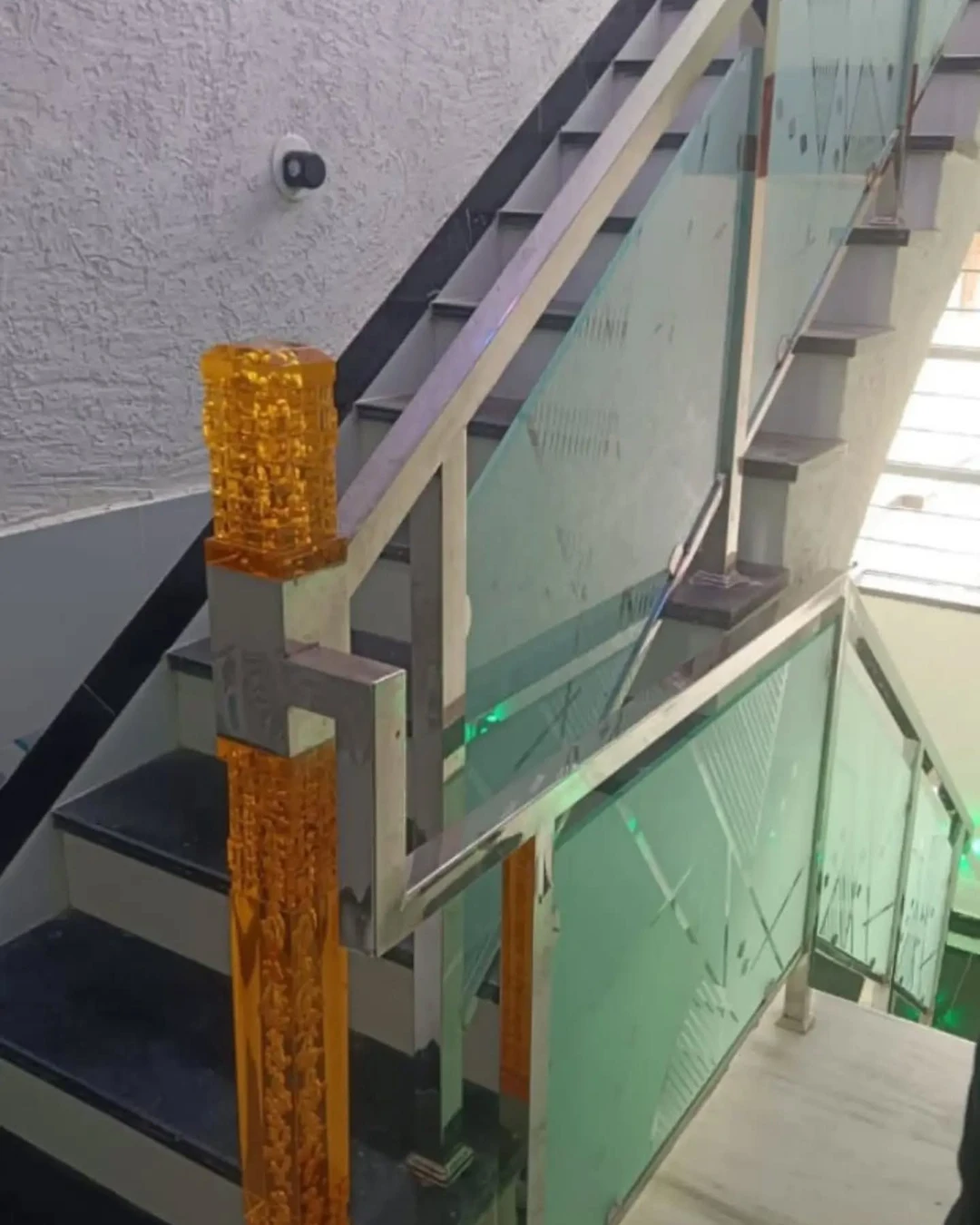
Frosted glass is privacy you can still see light through. The etched pattern blurs what’s behind the panel while the daylight walks straight through it.
Tinted glass does the same job darker. Dark panels cut glare and hide the staircase from the room — useful when the stairs face a window that gets the afternoon sun.
Amber newel caps show the small decisions matter. A warm cap on a frosted panel turns a practical choice into a design detail.
The practical point: Choose frosted for privacy, tinted for glare — never frost a panel you need to see through to the stairs.
Where the Money Actually Goes
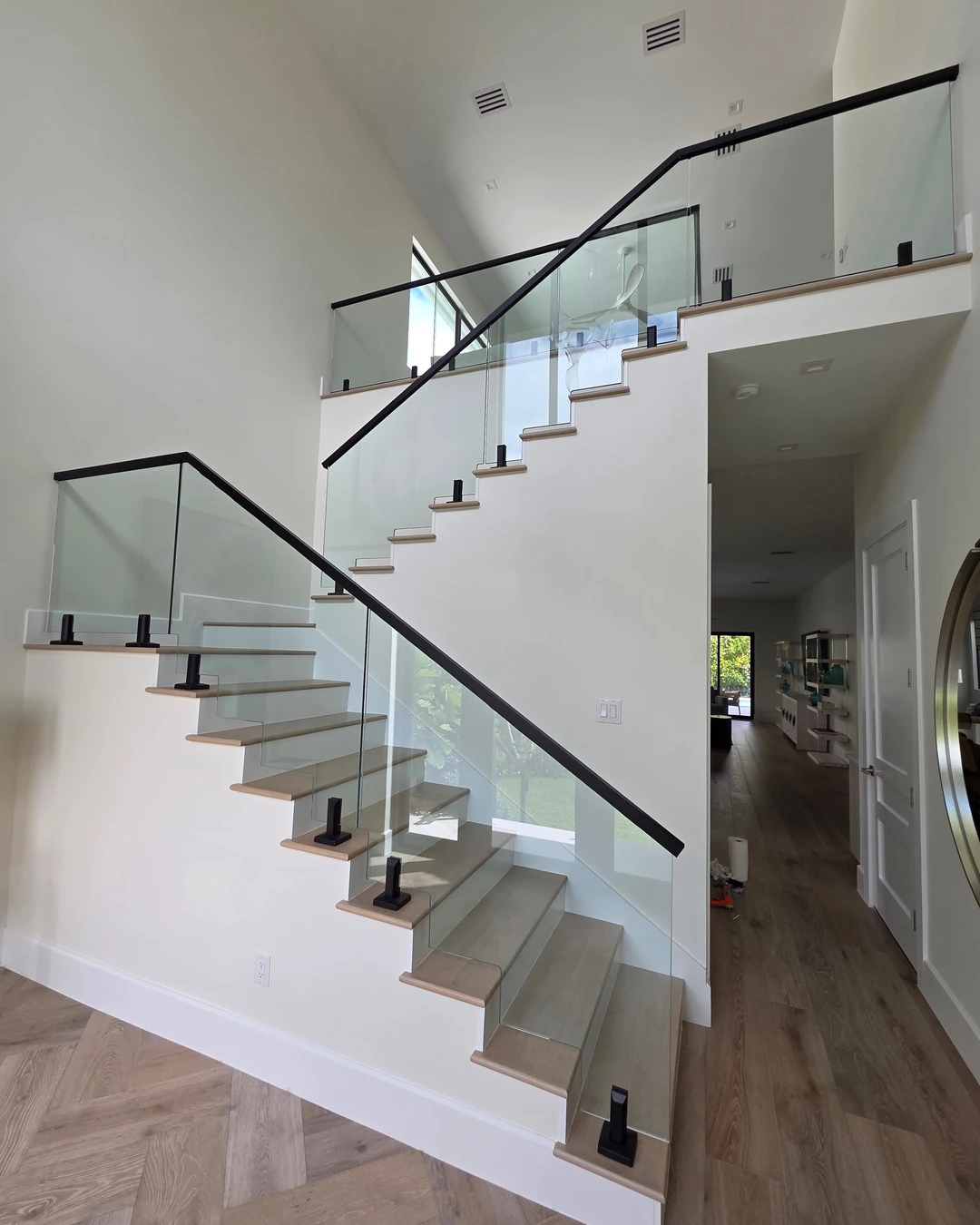
Frameless glass is where the money goes first. Thick panels, precision cutting, black posts and a handrail that spans a double-height room — the system costs more than the staircase it guards.
Hardware is the second spend. Posts, standoffs, channels and clamps add up fast, and cheap hardware is the first thing that fails — a rattling panel is a hardware problem, not a glass problem.
Light is the free part. A double-height ceiling and natural light make the glass look expensive without spending a penny more — the glass itself does the work.
The practical point: Budget the hardware before the glass — the panels are the visible spend, the fixings are the one that breaks.
What the Fitter Needs from You on Installation Day
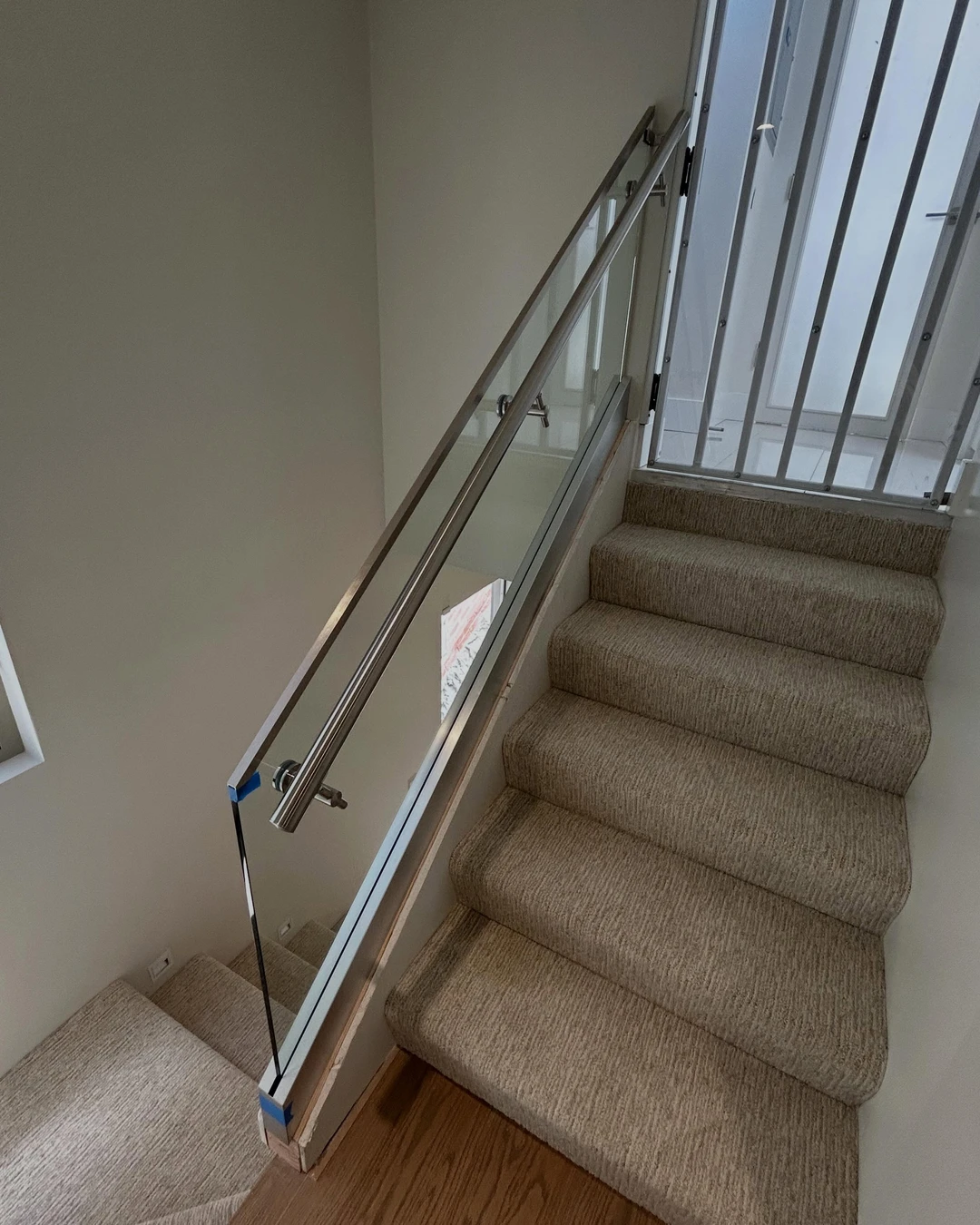
Blue tape on the posts and a safety gate at the top landing — this railing was installed yesterday, and the room is still in installation mode. That’s normal, and it’s your job to keep it that way until the fitter leaves.
Clear the stairs completely before the fitter arrives. Every box, shoe and plant off the treads — the fitter measures, drills and sets glass, and anything in the way costs you an hour.
Children and pets stay out of the room on installation day. Glass panels lean against walls, drills run all day, and a staircase with no railing yet is not a staircase anyone should climb.
The practical point: Let the fitter work — clear the stairs, keep the room empty, and installation day goes twice as fast.
Codes and Permits — Check Before You Order
Building codes decide the height, the gap and the strength of your railing — not your taste. Most codes want the handrail between 900 and 1000 millimetres high, with no gap a small child can pass through.
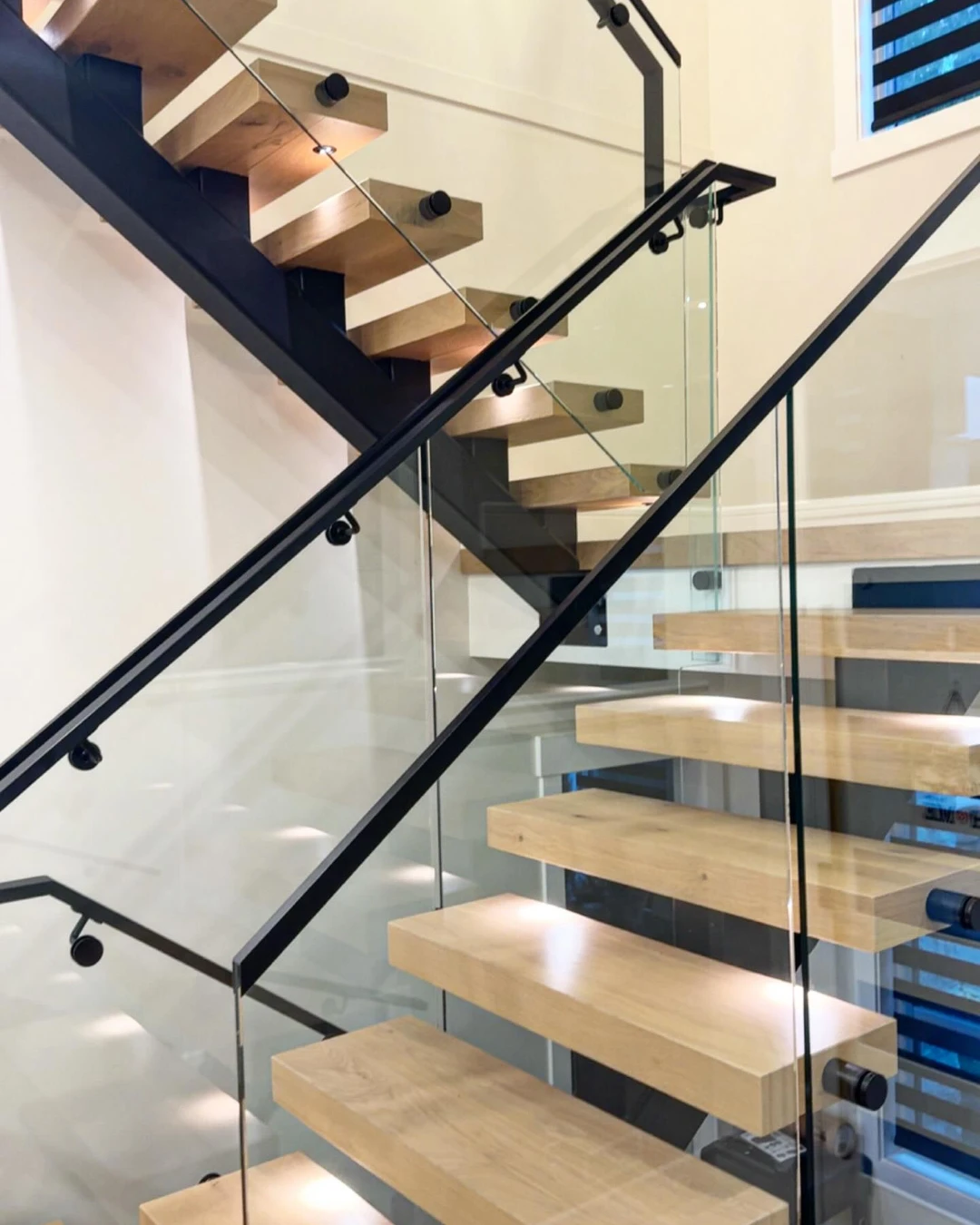
Floating treads with glass on black standoffs look effortless, but the fixing has to pass the same load test as any railing. A panel that looks fine and fails the push test is a failed railing.
Permits are the boring part nobody budgets for. Some councils want a permit for a new balustrade, some don’t — the answer depends on your street, so ask before you order the glass.
The practical point: Check the code and the permit before you pay a deposit — glass cut to order cannot be returned.
Keeping Glass Looking New
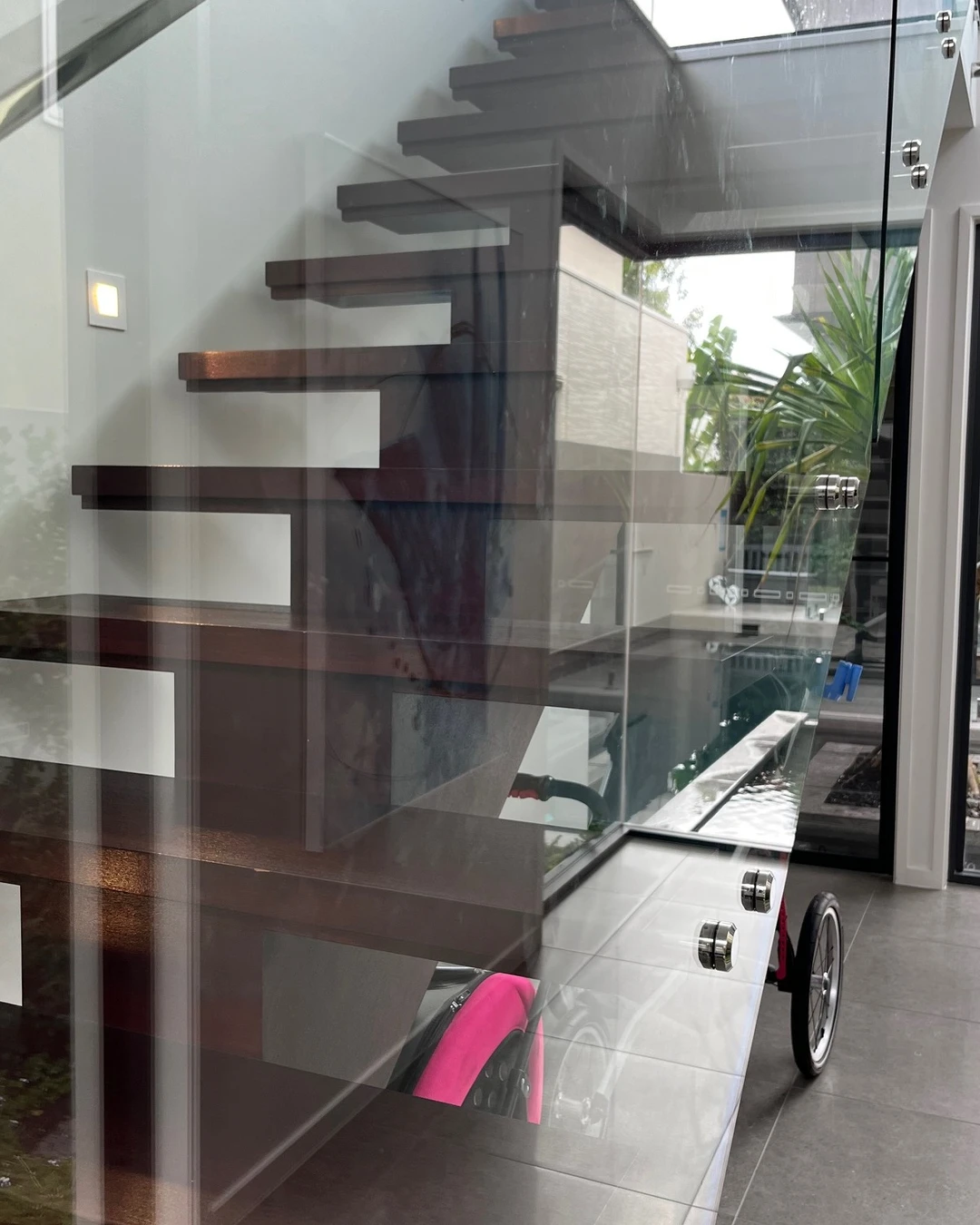
Spotless glass is a habit, not a product. Dark floating treads and a bright room make every mark visible, so the cleaning has to be regular, not heroic.
Sunlight is the honest judge. A panel that looks clean at night shows every streak at noon — check the glass in daylight, not under the hallway lamp.
Real life shows in this photo — an empty stroller parked under the stairs. Homes with glass railings are lived in, and the railing has to survive real life, not just the photoshoot.
The practical point: Clean in daylight, check in sunlight — a panel that passes the noon test stays new for years.
Your Glass Railing, Done Right
Seventeen details, and the thread through them is simple: thick glass, honest hardware, and a fitter who measures twice. A glass railing doesn’t need to be the most expensive thing in the house — it just needs to be the most carefully chosen.
Which detail will you check first? Start with the glass, then the fixing — and if wood is more your language, see Wooden Staircase Ideas That Bring Character to Every Step.