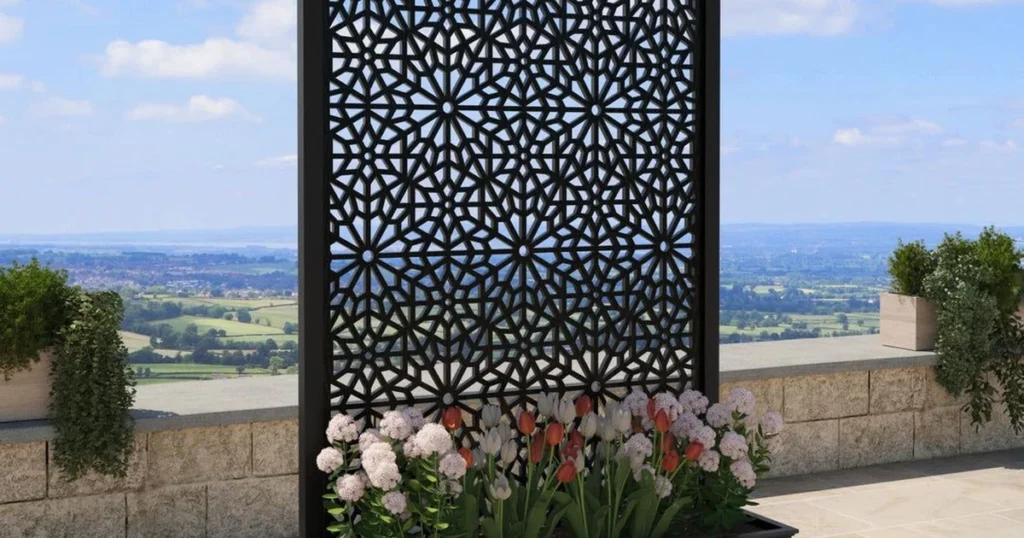
You love your garden — you just don’t love performing for the neighbours. Good news: privacy doesn’t have to mean a dark, boxed-in yard.
That feeling when you step outside with your morning coffee and realise the house next door has a perfect view of your chair. You did not buy a garden to live in a goldfish bowl, and you should not have to choose between fresh air and feeling watched.
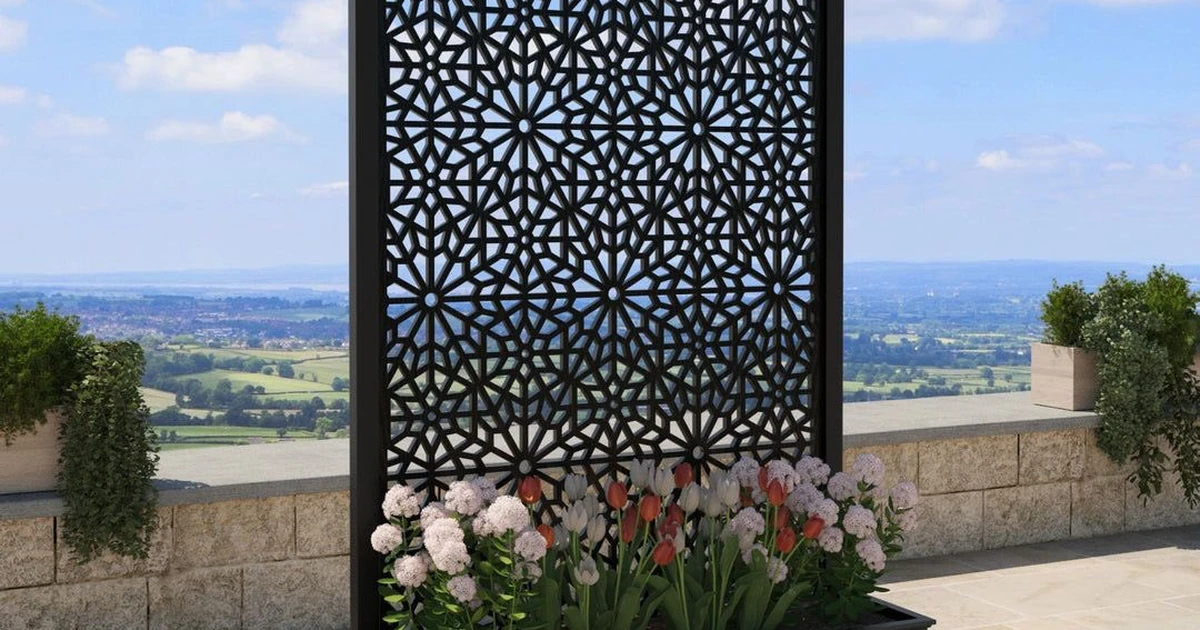
Learning how to block a neighbour’s view is really about choosing the right screen for the right sightline — not building the tallest wall you can afford. Every fix below keeps the sun coming in while the view out stays yours.
Some fixes take an afternoon. Others grow into place over a season or two. All thirteen work outdoors — on a garden boundary, a patio, or a balcony — and none of them turns your brightest space into a dark corner.
Here are 13 ways to screen your garden or balcony — from bamboo in planters to a sail overhead — and how to pick the one that fits your space.
Tall Planters with Bamboo — a Living Screen
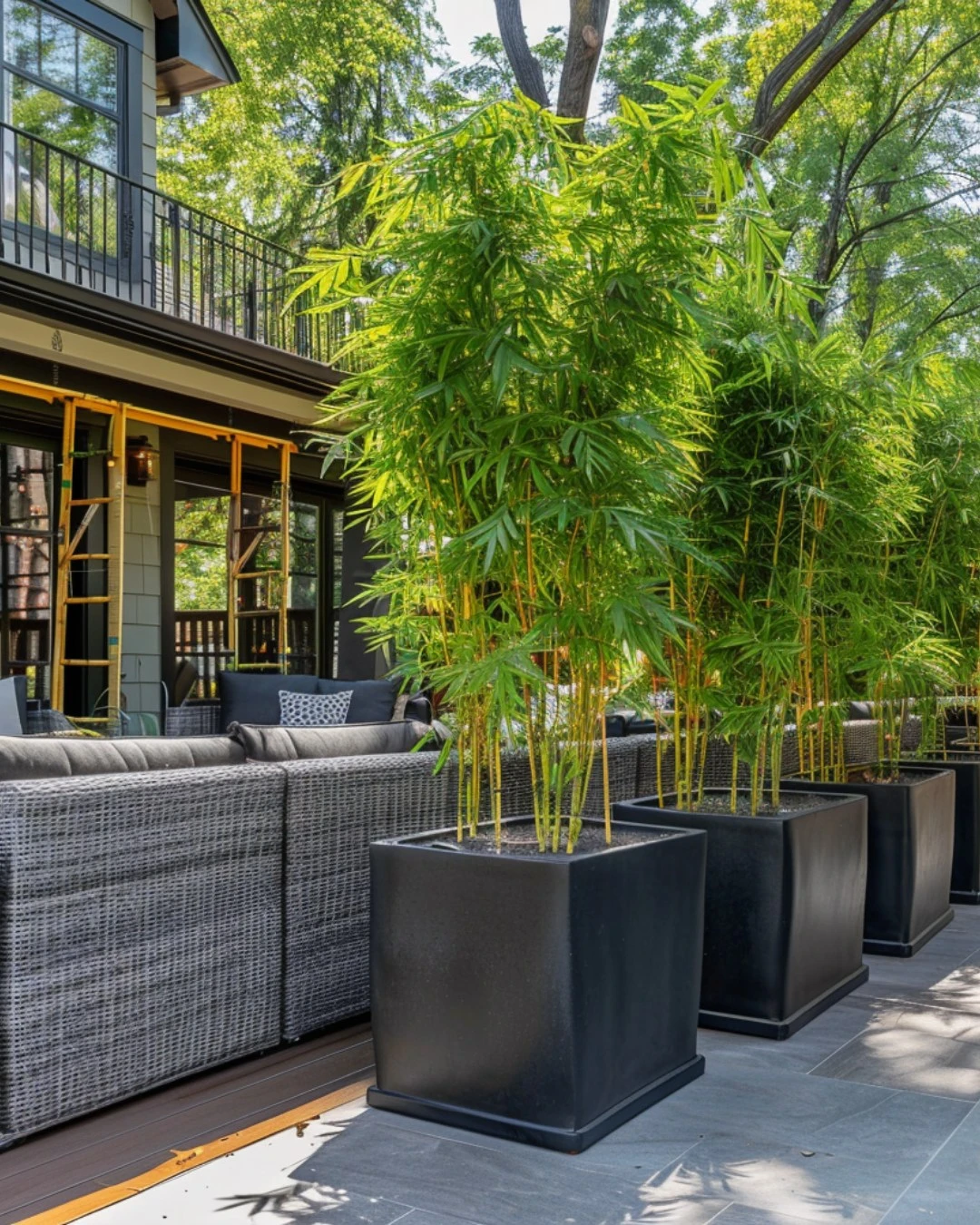
Bamboo in big planters is the fastest living screen you can buy. Clumping varieties like Fargesia reach six to eight feet in a single season, and because they grow in pots they never run wild into the neighbour’s garden the way planted bamboo does.
Place the planters where the sightline actually is — along the boundary your neighbour looks across, not all the way around the garden. Leave gaps between groups of pots and the light still slips through, while the rustling leaves make the whole patio feel calmer than a fence ever could.
Potted bamboo dries out fast in summer, so water deeply and feed in spring. Choose heavy planters — concrete or thick ceramic, at least 24 inches square — or the first strong wind will lay your new screen flat on the lawn.
The practical point: Clumping bamboo in a heavy 24-inch planter gives you a seven-foot screen in one season, without touching the neighbour’s fence at all.
How Much Light Does a Slatted Screen Really Let Through?
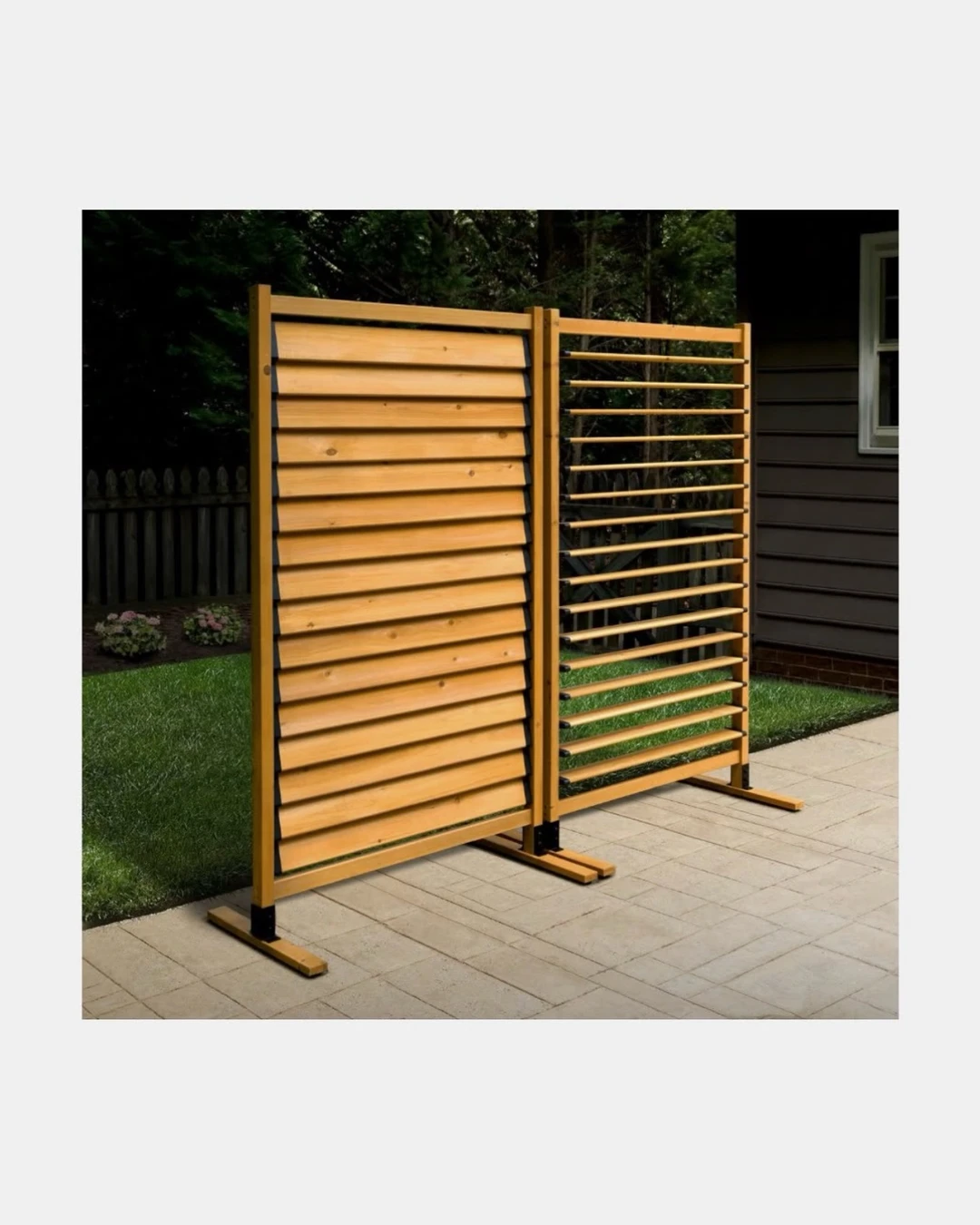
Slats with gaps are the whole trick of this article in one photo. One-inch gaps between three-inch slats block a direct view from a standing neighbour, yet sun and breeze pass straight through — your patio stays bright and the air keeps moving.
Look at the two panels side by side: one close-set, one open. That is exactly how to plan it — close-set slats where the neighbour’s window is, open slats where you want the afternoon sun. Horizontal slats read modern, vertical slats make a small patio feel taller.
Cedar weathers to a soft silver and needs nothing; pressure-treated pine wants a stain every couple of years. Freestanding panels need proper feet or posts sunk eighteen inches deep, or they become kites in the first autumn storm.
The practical point: Aim for a gap ratio of roughly 30 to 40 percent — it blocks the sightline from a standing neighbour while keeping the patio bright.
Outdoor Curtains That Soften a Pergola
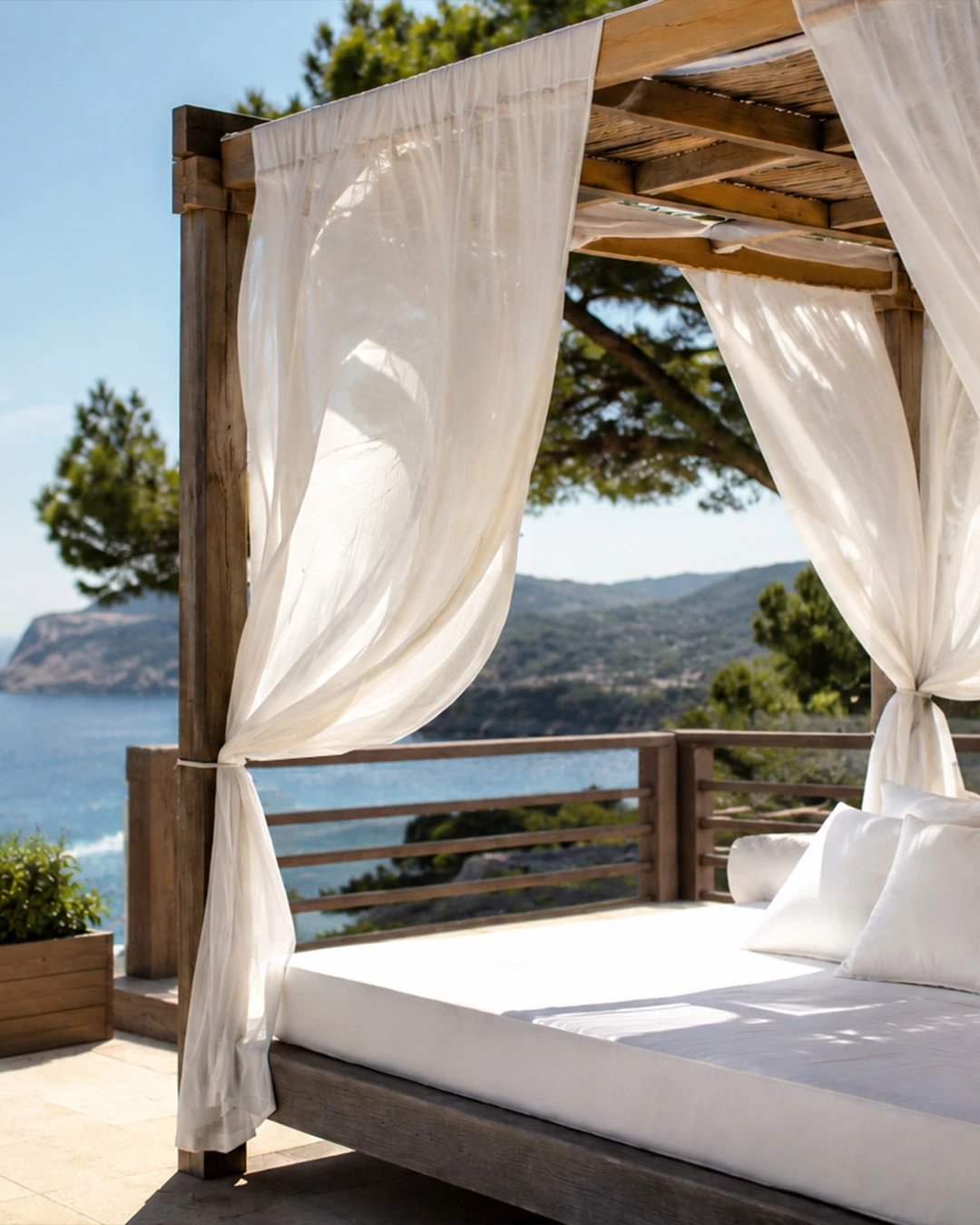
Sheer outdoor curtains turn a pergola from a frame into a room — a soft one. Tie them back in the morning and the space is wide open; draw them at dusk and the neighbour’s view stops at the fabric while the breeze still comes through.
Fabric moving in a breeze does something a solid screen never will: it makes privacy feel gentle. In this photo the white curtains around a daybed read as a soft wall, not a barrier, and the sea view beyond is still right there when you look past them.
Buy fabric made for outdoors — polyester or solution-dyed acrylic, never indoor cotton, which mildews in a week. Rods and rings need to be stainless or powder-coated, and weighted hems stop the curtains billowing into dinner.
The practical point: Sheer outdoor curtains cut the view by about half and cut the glare by more — and you can tie them back in seconds.
Give a Trellis Time and It Pays You Back
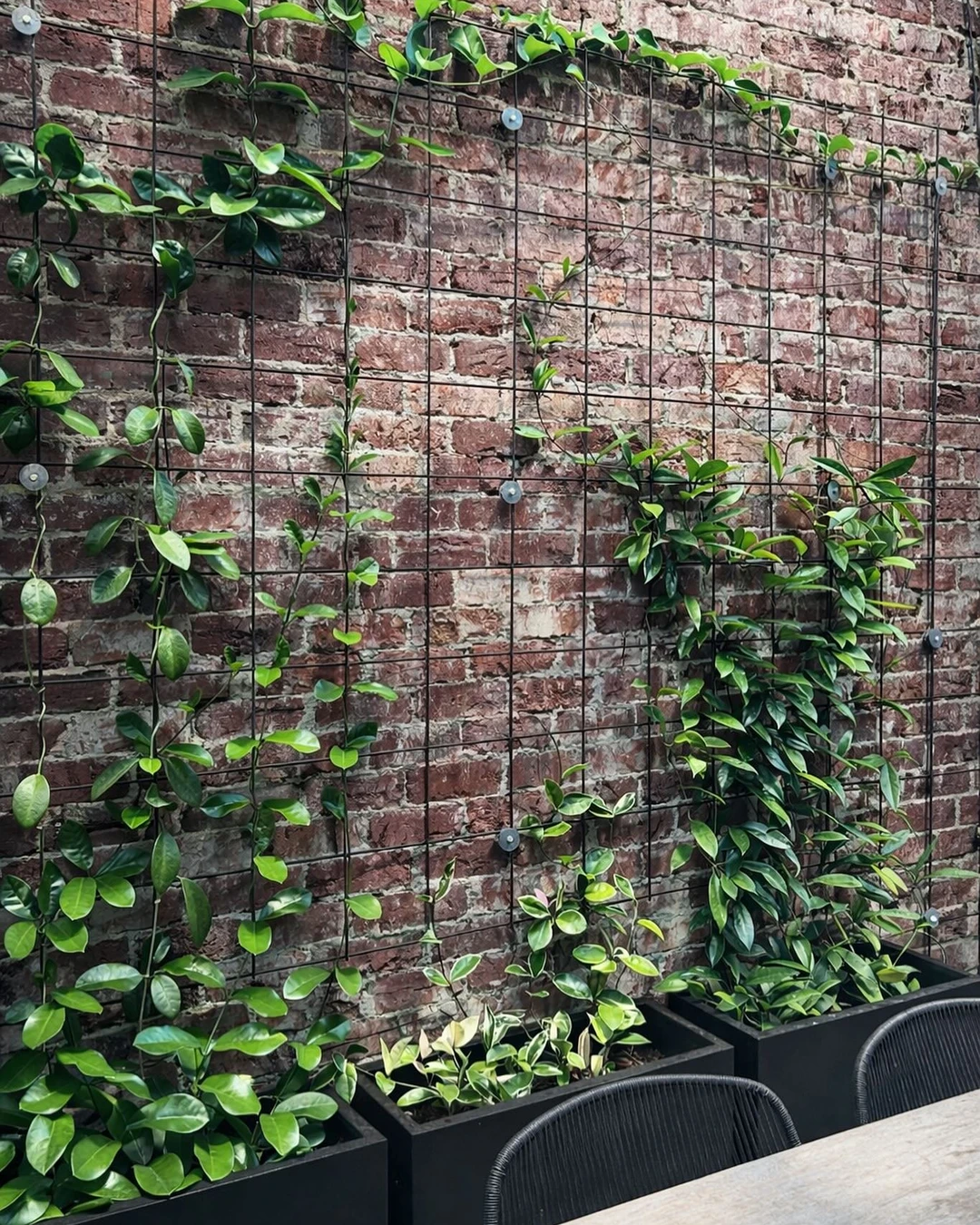
No screen in this list rewards patience quite like a trellis. First year it sleeps, second year it creeps, third year it leaps — and by then the wall itself has become the garden, with a dining table sitting underneath it.
Here a black metal grid sits on old brick while a vine works its way up, leaf by leaf. It is not a finished screen yet, and that is the honest point: a trellis is a promise, not a product, and the payoff is a green wall no fence panel can imitate.
Metal trellises last decades; wooden ones rot at the base within five to eight years. Fix the grid two inches off the wall so air moves behind it and the brick stays dry, and pick a climber that suits your climate — star jasmine where winters are mild, clematis where they are cold.
The practical point: Plant a fast climber on a metal trellis and you have a green wall by year two — the slowest screen here, and the one people love most.
Frosted Glass on a Balcony — Light In, Eyes Out
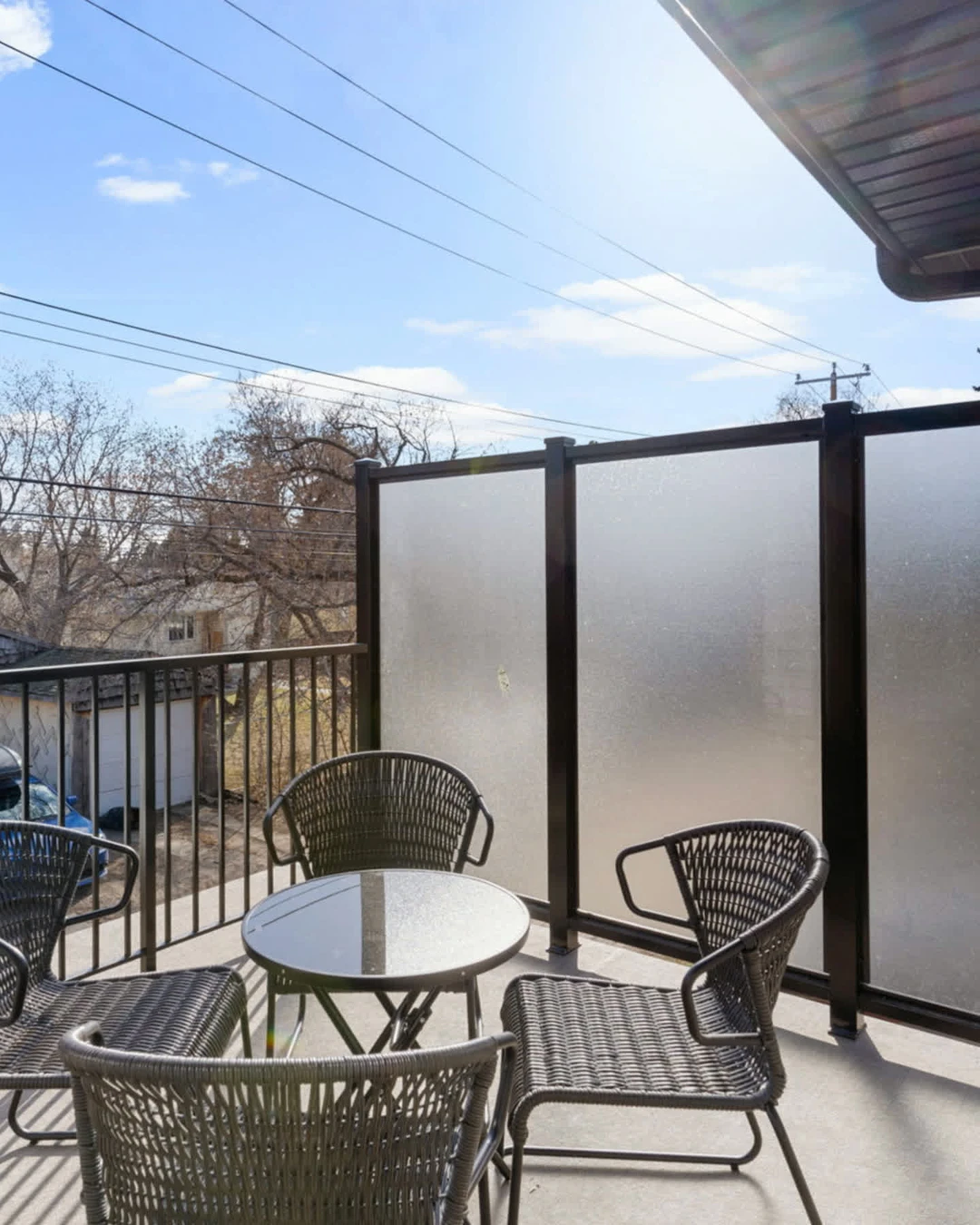
Balconies are the hardest place to get privacy, because every solid fix steals the sky. Frosted glass solves it neatly: the panels on this balcony keep the sun and the open feeling, while the neighbour’s view stops at a soft blur.
Notice how bright the whole balcony still is. Frosted glass does not block light the way a solid panel does — it scatters it, so the table and wicker chairs sit in daylight all afternoon and the space never feels boxed in.
You have three ways in. Laminated frosted glass is the proper job — safe and permanent. Adhesive frosted film is the renter’s version: cheap, applied in an afternoon, and it peels off clean when you move. Acrylic panels sit in the middle — light and affordable, though they scratch more easily.
The practical point: Frosted film costs a fraction of new glass and comes off clean when you move — try the film before you commit to panels.
What a Sail Shade Does to the View from Above
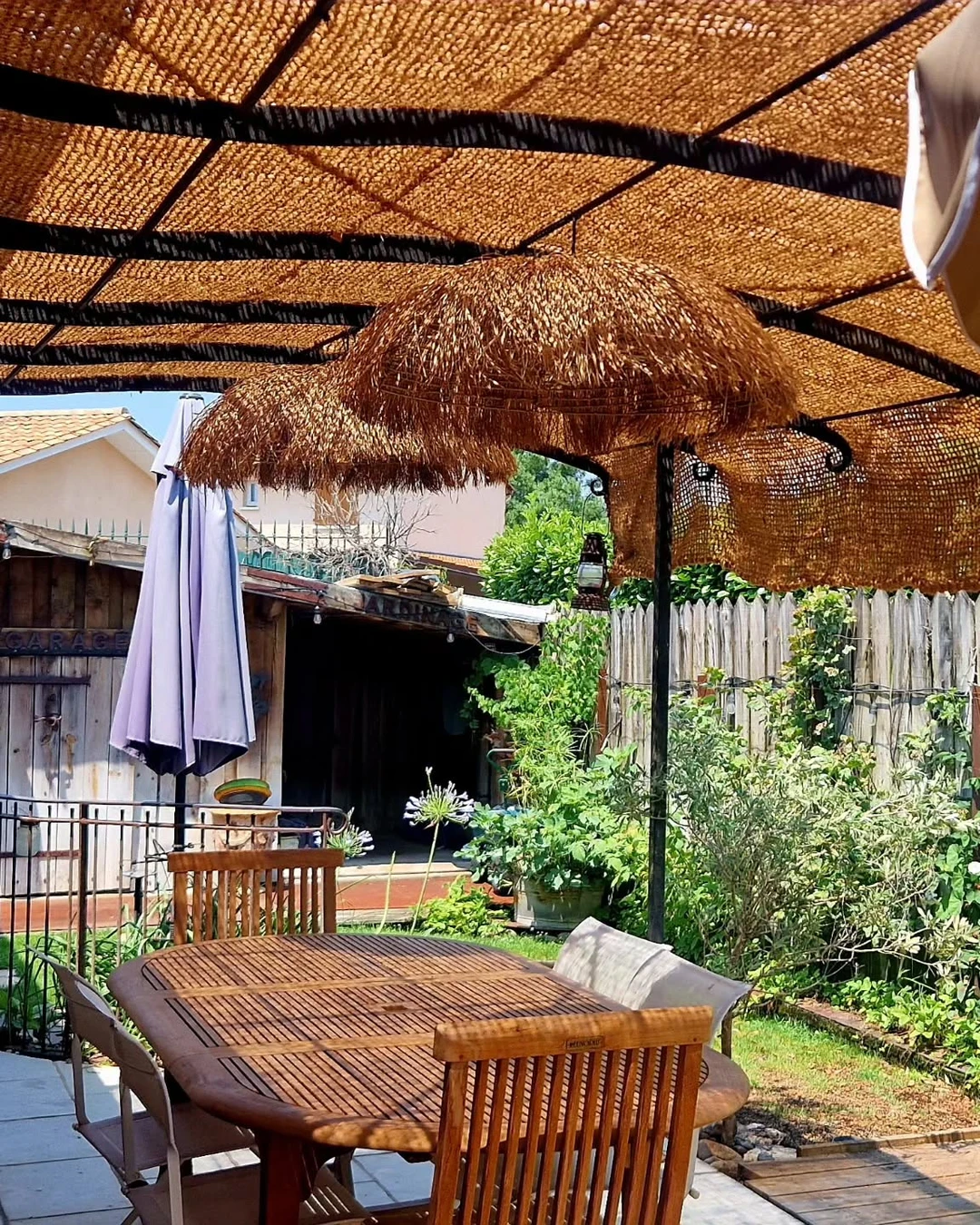
Some neighbours look down on you — an upstairs window, a deck one floor up. No fence helps there. A sail overhead does: it blocks the downward view while every side of the patio stays completely open.
Woven shade cloth is the better choice for most gardens. It filters the light instead of blocking it, and rain passes through instead of pooling. Solid fabric blocks more sun but holds water, so it needs a slope to drain — and a sagging sail full of rainwater is a mess nobody wants over a dining table.
Anchor it to the house wall and two solid posts, and pull it drum-tight. Three to four metres across is the sweet spot for a dining table, and angling it high on the house side and low on the garden side sheds rain and still shades lunch.
The practical point: Angle the sail high on the house side and low on the garden side — it sheds rain, shades lunch, and blocks the view from above. Three jobs, one piece of cloth.
Grasses in Pots That Move with the Breeze
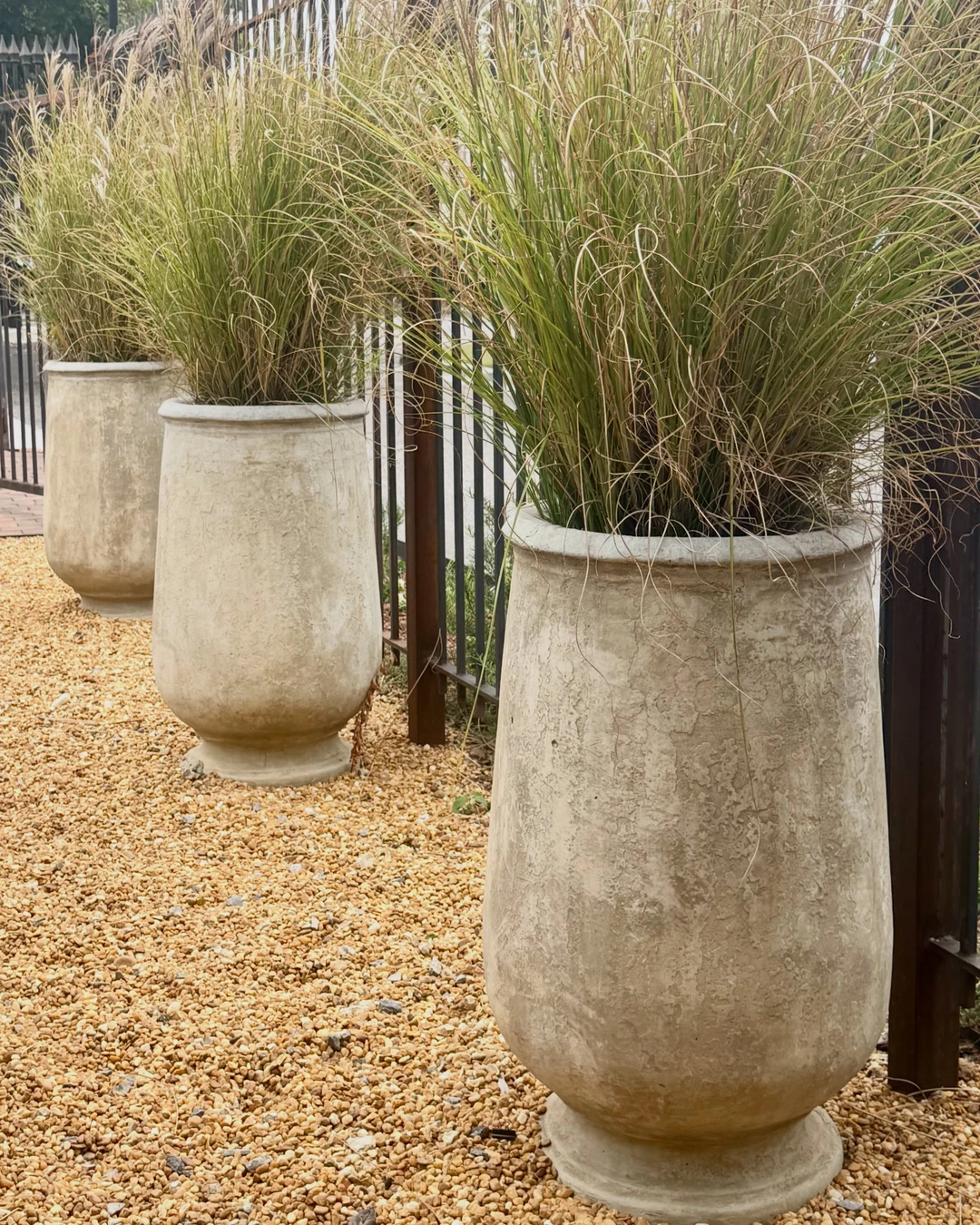
Tall ornamental grasses — miscanthus, pennisetum, calamagrostis — screen a garden without ever feeling like a wall. They rustle, they sway, and the feathery plumes catch the light in a way no solid panel can copy.
Three stone planters in a row on gravel: that row is the whole idea. One pot reads as decoration; three in a line read as a screen, and six feet of garden disappear behind them. Match the pots and the effect doubles — mismatched pots look like a collection, not a boundary.
Grasses in pots need more water than the same grass in the ground, and a cut-back in late winter before new growth appears. Divide the clumps every three years or the pot fills solid and the grass sulks.
The practical point: Three matching pots in a row screen a six-foot stretch — one pot alone never does.
When a Lattice Panel Is the Quickest Fix
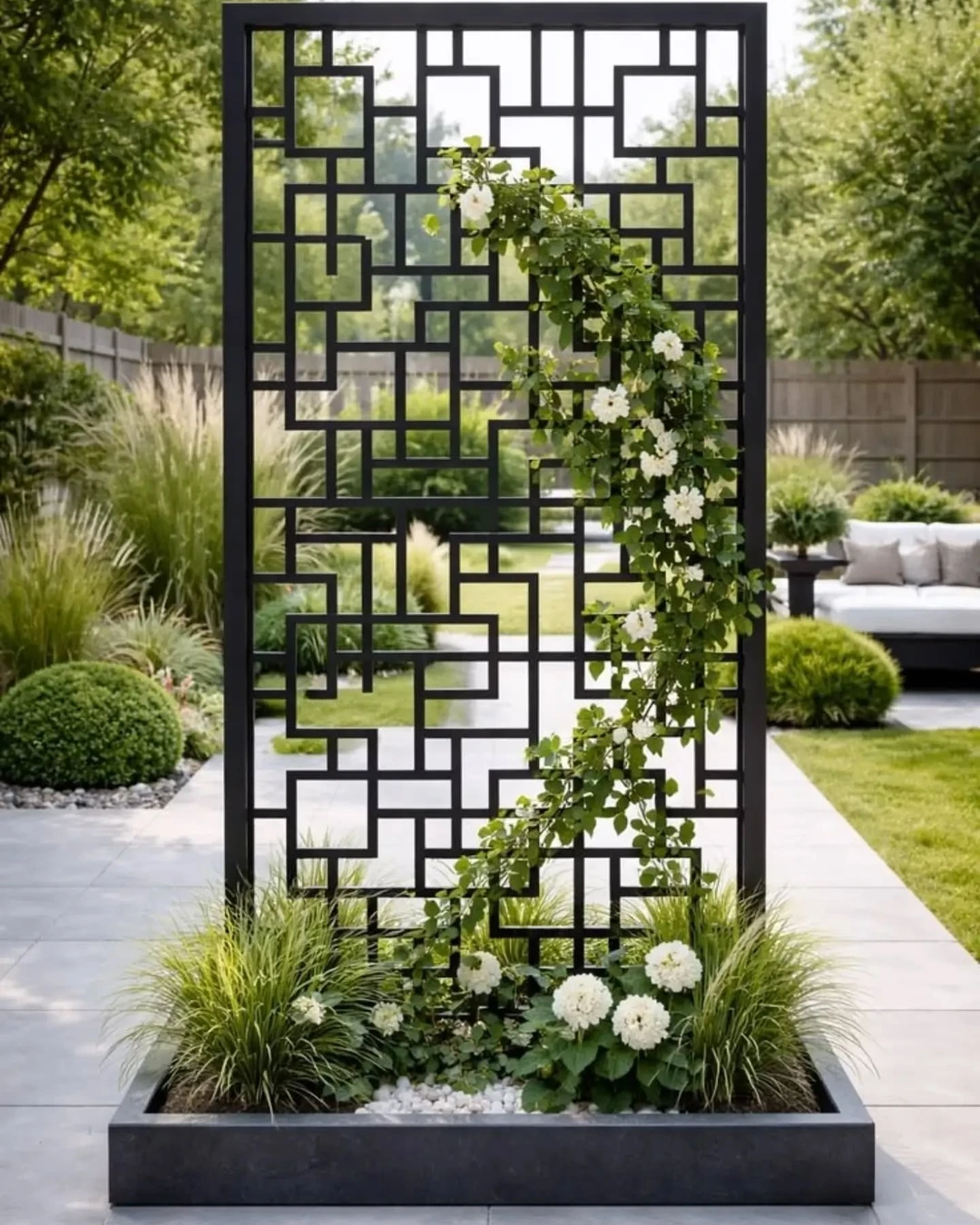
Some privacy jobs need doing by lunch, not by next season. A freestanding lattice panel is exactly that: buy it, stand it up, and the neighbour’s view is gone before the kettle boils.
Look for one with a planter box at the base, like this black geometric panel with white roses climbing one side. The weight of the soil anchors it, the roses soften it, and within a year the panel has disappeared into the garden entirely.
Some versions even come on wheeled planter boxes, so you can roll the screen to wherever the neighbour happens to be sitting that evening. Whatever you buy, the base needs to be at least a third as deep as the panel is tall, or the first strong wind will lay it flat.
The practical point: Give a freestanding panel a base at least a third as deep as it is tall — otherwise the first strong wind lays it flat.
Hang Planters at Eye Level, Not Overhead
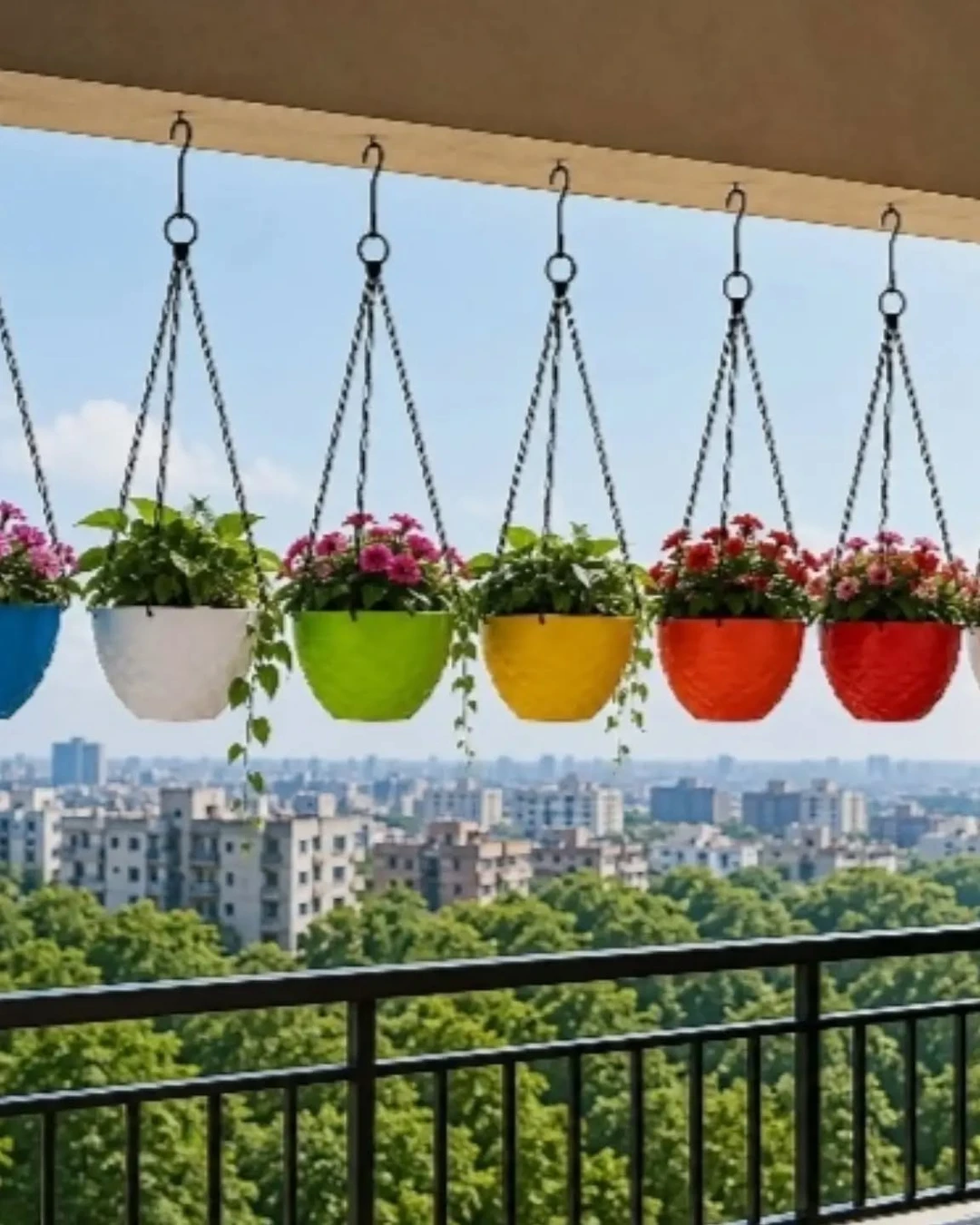
Your neighbour’s view of you is at eye level — so that is where the screen belongs. Hang planters there and the sightline stops at the flowers, while the sky stays completely open above them.
Seven bright pots in a row under a balcony overhang do two jobs at once: they block the view across, and the colour lifts the whole balcony. Trailing plants fill the gaps between pots fast — pothos and string of pearls are the workhorses here.
Wet soil is heavy, so this is not a job for adhesive hooks. Screw proper hooks into joists or a solid beam, and hang the row at five to five-and-a-half feet — your eye level, not the ceiling — so the screen works the moment you step outside.
The practical point: Hang the row at five to five-and-a-half feet — your eye level, not the ceiling — and the screen works the moment you step out.
Slatted Roof, Slatted Wall — One Pergola, Two Jobs
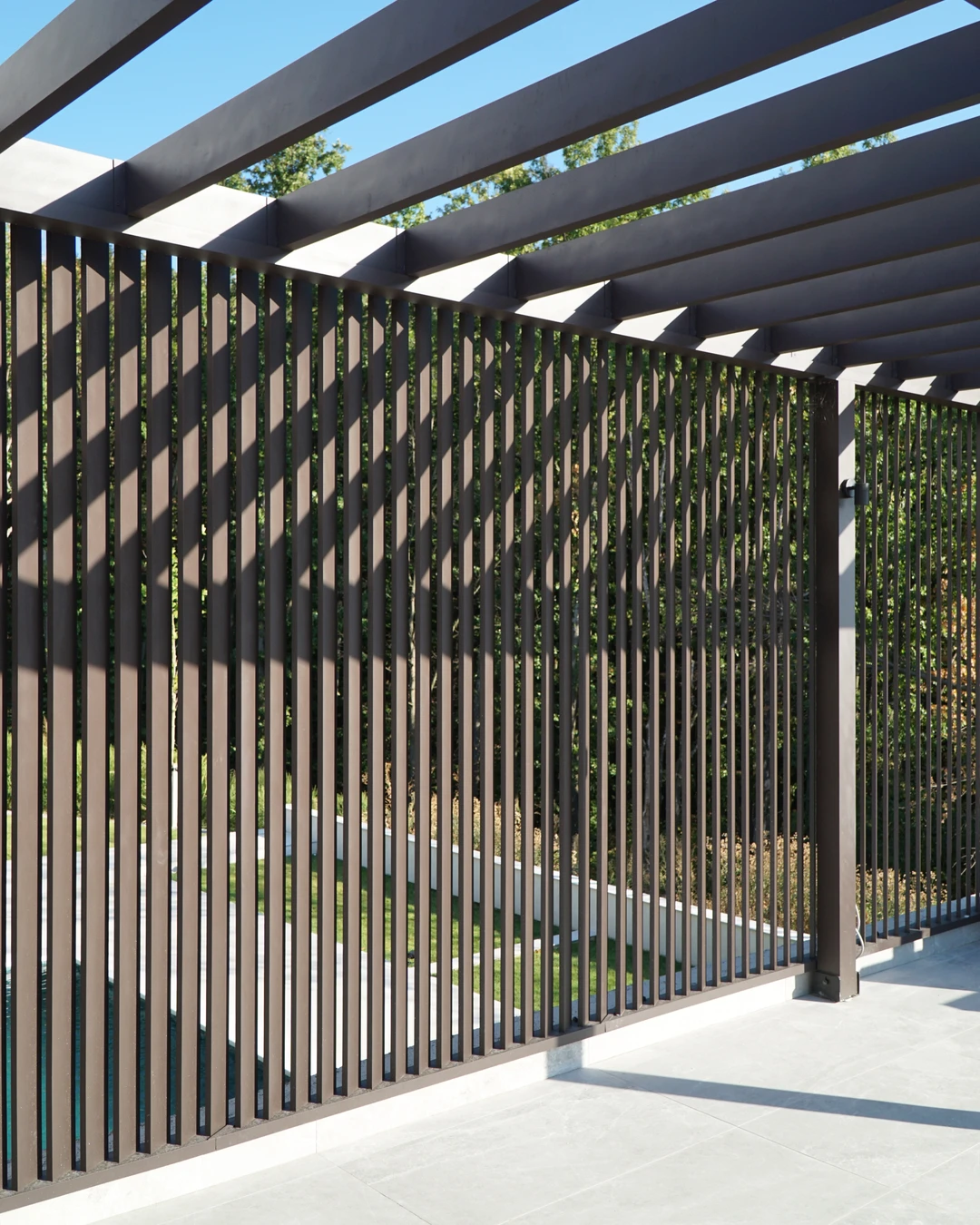
With a slatted roof overhead and a slatted wall on the side, one pergola does two jobs at once. This photo shows both in one frame — striped shadows on the patio floor, and a solid-looking wall of vertical slats on the neighbour’s side.
Spacing is the whole game. Roof slats two inches apart with one-inch gaps give dappled shade that still lets the sky in; the side wall wants closer spacing, because that is where the eyes are. Dark metal reads modern and never needs staining; wood is warmer but wants a coat every two years.
Put the slatted wall on the neighbour’s side only. Three open sides keep the pergola feeling like a garden, not a room — and check the posts are set in concrete, not just bolted to pavers, or the whole structure leans within a year.
The practical point: Put the slatted wall on the neighbour’s side only — three open sides keep the pergola feeling like a garden, not a room.
Why a Row of Pleached Trees Works So Well
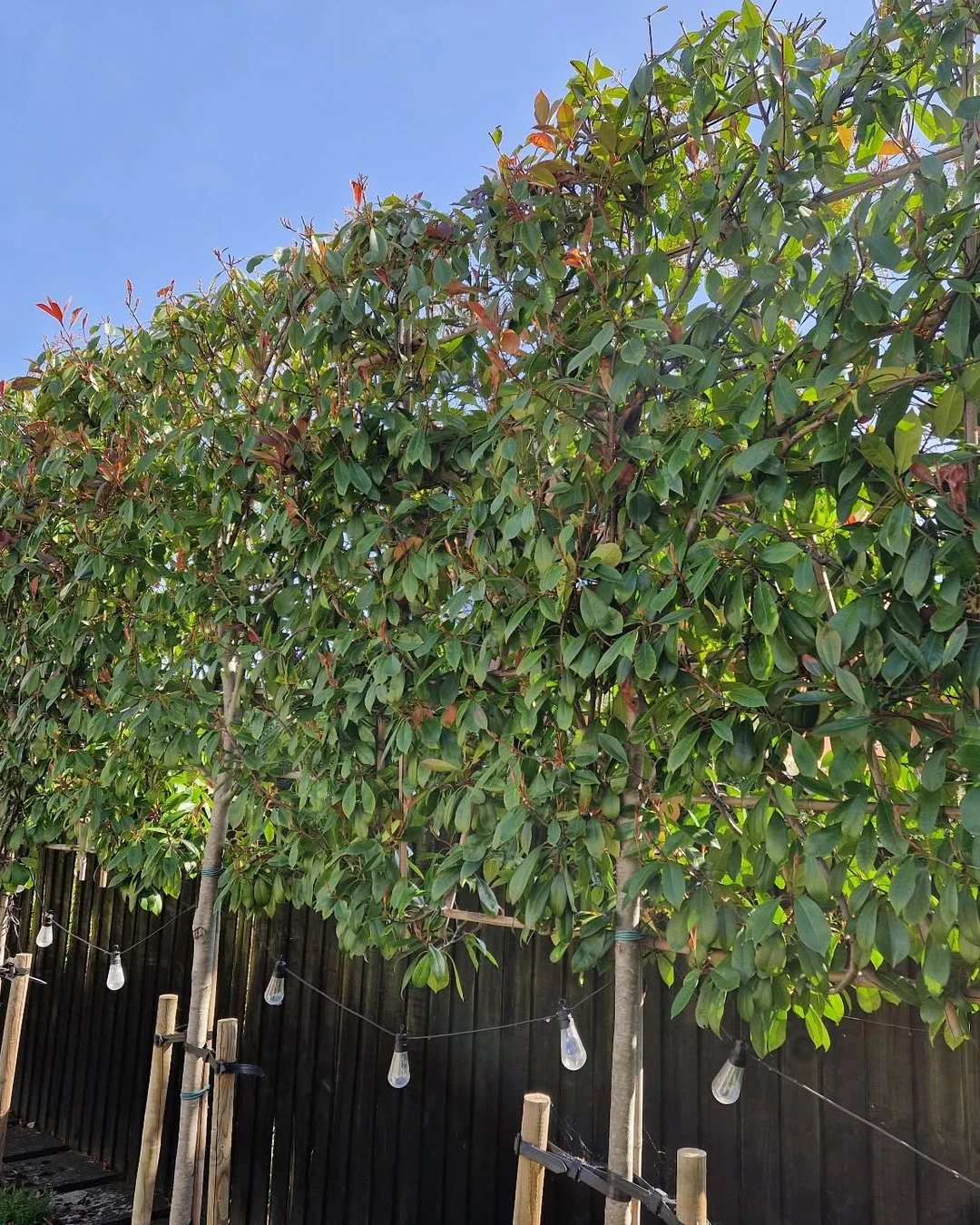
Pleached trees are trees trained flat on a frame, and a row of them grows a green wall above your fence — right where no fence is ever allowed to go. This row, with its reddish new growth, is a solid screen eight to ten feet up, and there is nowhere to see through it.
Buy them already pleached, three or four years old, or be ready to wait five. They need a frame to train on and a trim twice a year, and the string lights underneath show the trick: the trees screen, the lights keep the garden feeling like yours, not a fortress.
Pleached trees cost more than a fence panel, and they ask for patience. What they give back is height no panel can match and a screen that gets better every year instead of weathering worse.
The practical point: Pleached trees cost more than a fence panel, but they screen eight to ten feet up — where no fence is allowed to go.
Pattern That Hides Without Darkening the Garden
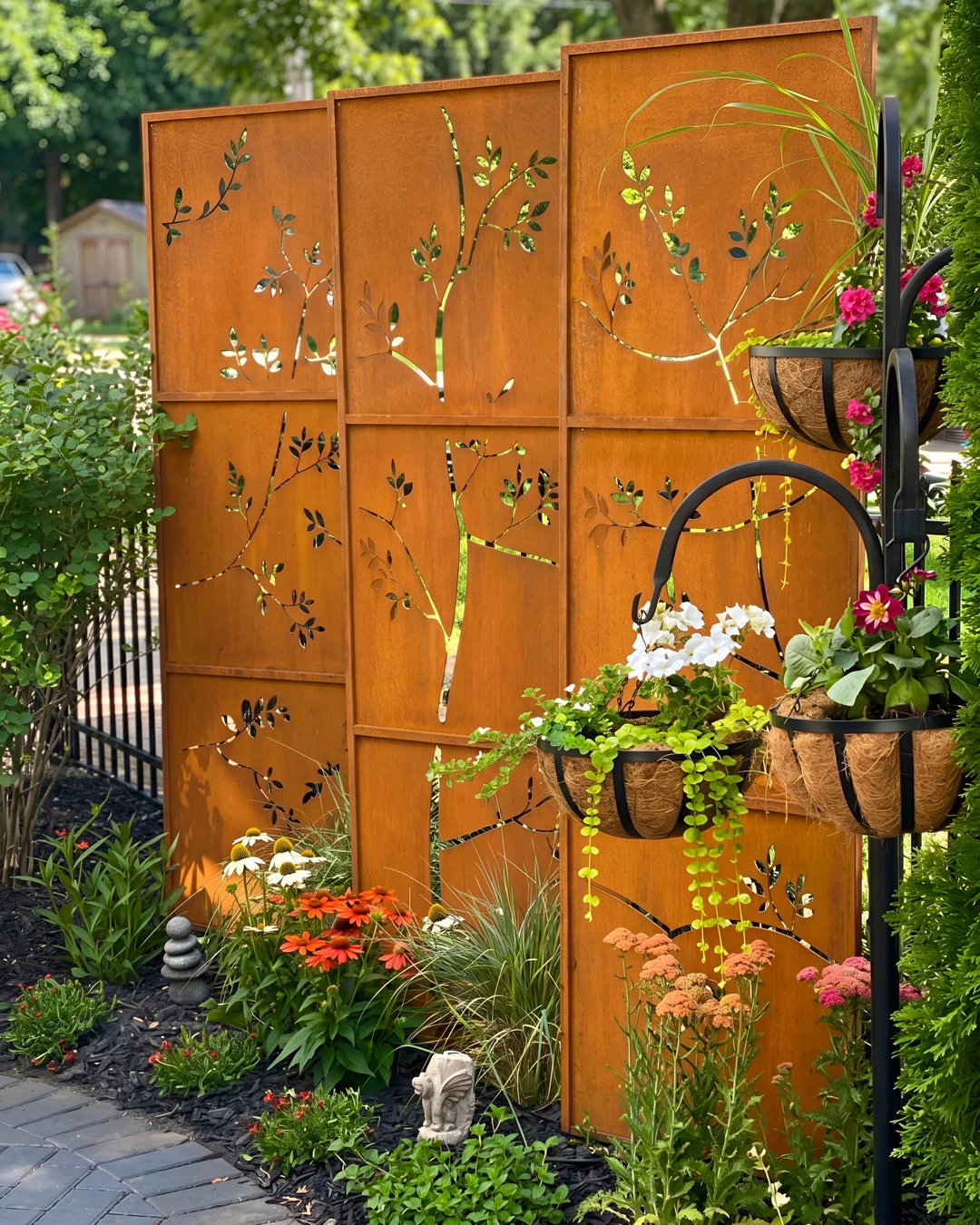
Laser-cut metal screens are the prettiest way to say no. These three rust panels, cut with branch and leaf patterns, glow in the sun — and the light coming through the cut-outs throws leaf-shaped shadows across the flower beds in front.
Pattern size matters more than the pattern itself. Small, dense cut-outs block more of the view; big open shapes let in more light — and more eyes. Choose the pattern for the sightline you are blocking, not just for the look you love in the photo.
Rust — corten steel — weathers to a stable orange-brown and never needs paint. Black powder-coat stays crisp but shows every speck of dust. Both need a solid base or posts, and both look better with planting in front of them than standing bare.
The practical point: Hold the panel up and look through it at arm’s length — if you can read a newspaper through it, so can the neighbour.
Layer Your Planting and the Privacy Builds Itself
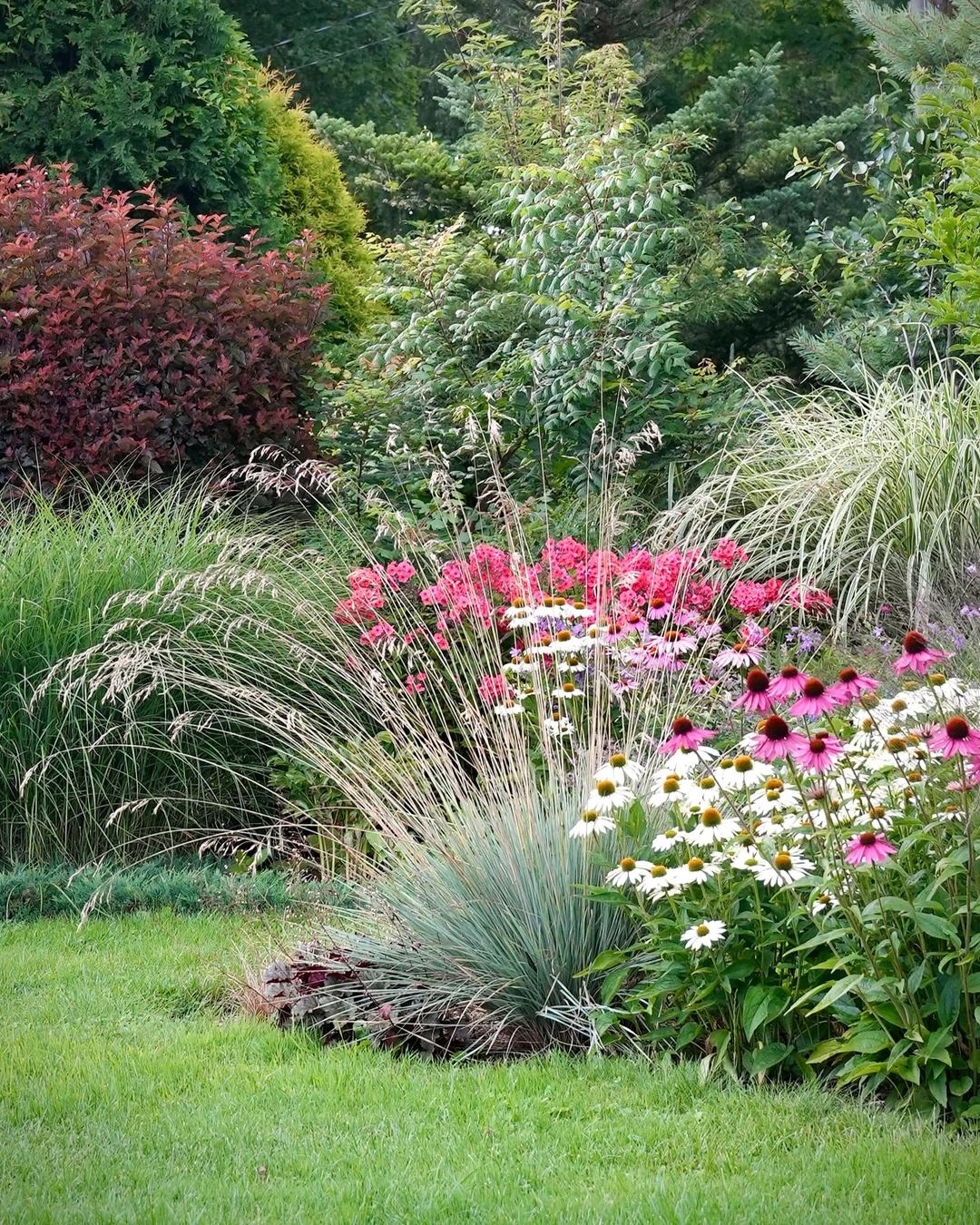
One plant never screens a garden — layers do. Tall grasses at the back, shrubs in the middle, flowers in front: this border does the whole job in about six feet of depth, and it looks like a garden that happens to be private, not a privacy project.
That is the real charm of layering. The eye stops at the coneflowers, not at the fence, and the garden still feels big because the front stays open to the lawn. Nothing here is a wall, yet nothing beyond the border is visible from the patio.
Plan it back to front: tallest at the back at six to eight feet, mid-height perennials at three to four, low planting at one to two feet in front. Each layer a foot or two taller than the one in front of it, and the view is blocked from every angle without a single solid surface.
The practical point: Three layers, each a foot or two taller than the one in front, block the view from any angle without a single solid wall.
Your Garden, Private but Still Full of Light
Privacy is not about shutting the garden away — it is about choosing what you share and what you keep. Every idea above keeps the sun and takes the audience away, and that is the whole point: a garden you actually use, instead of one you avoid when the neighbours are home.
Start with the sightline that bothers you most — one panel, one row of pots, one sail — and add the next layer only if you still feel watched. And if the porch is where you actually sit most evenings, A Pet Friendly Porch Starts with More Than a Cozy Bed pairs a private garden with a porch that works for the whole household.