Bold patterns shout for attention. Small polka dots just quietly make a room feel finished.
And once you notice them, you start seeing where they belong everywhere.
A small dot is the gentlest pattern a wall can wear. It adds rhythm without noise, colour without commitment, and character without shouting over the furniture.
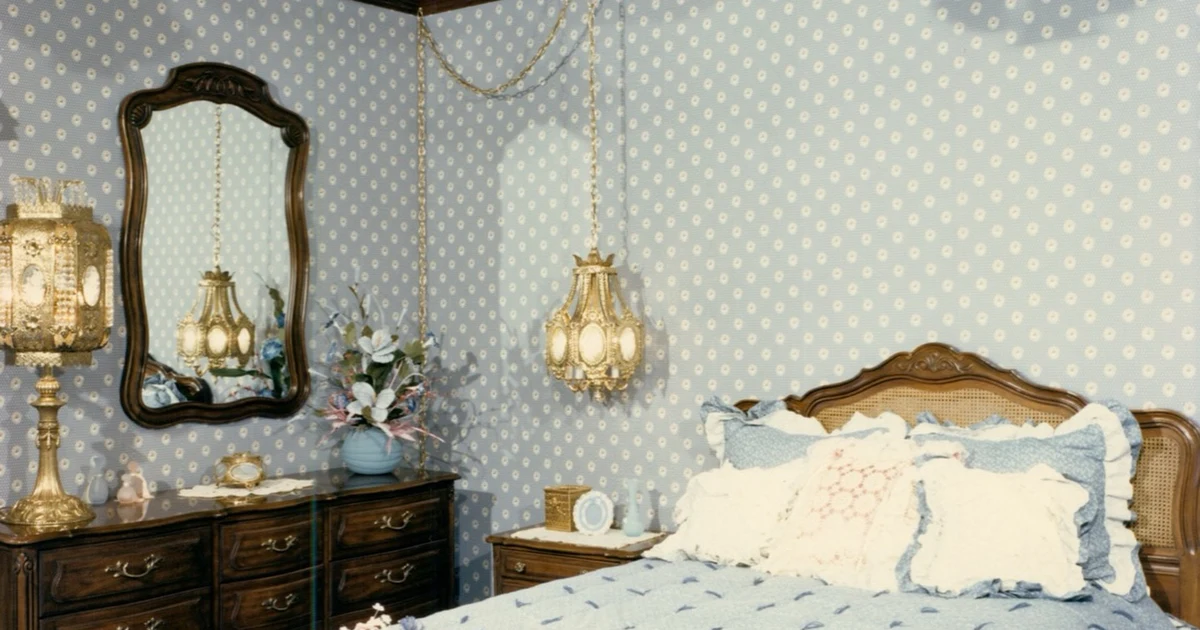
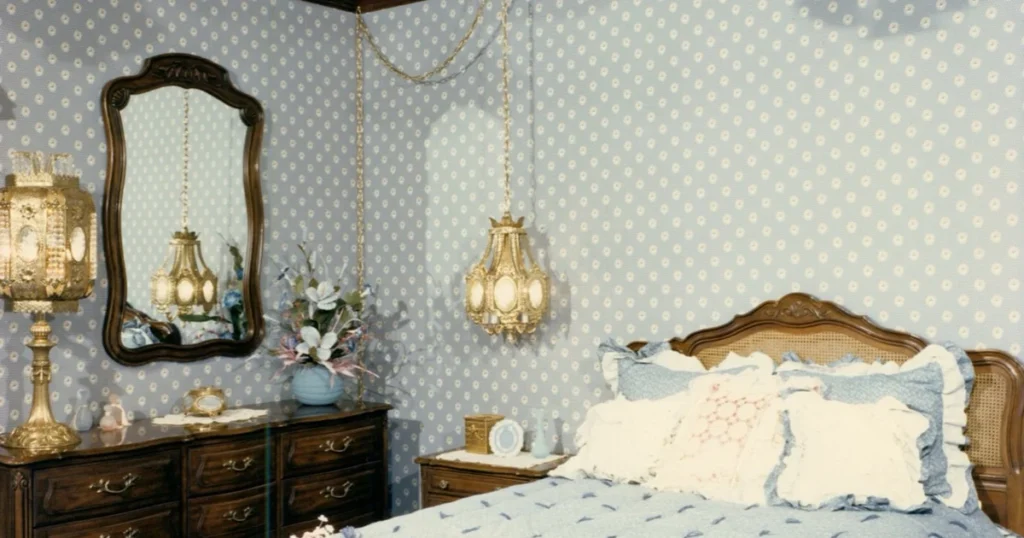
These small polka dot wallpaper ideas work in the rooms where calm matters most — bedrooms, nurseries, powder rooms, hallways — and they ask for almost nothing in return. No bold commitment, no loud colour, no pattern that fights the furniture.
Small dots suit small rooms, but they suit large ones too. A powder room takes the full pattern on every wall; a bedroom takes one wall behind the bed and lets the rest breathe. The dots do the same job in both — they give a plain wall a pulse.
Here are 13 small polka dot wallpaper ideas for quiet, charming rooms — pick the one that fits your room, and let the dots do the talking.
A Small Dot Accent Wall Behind the Bed
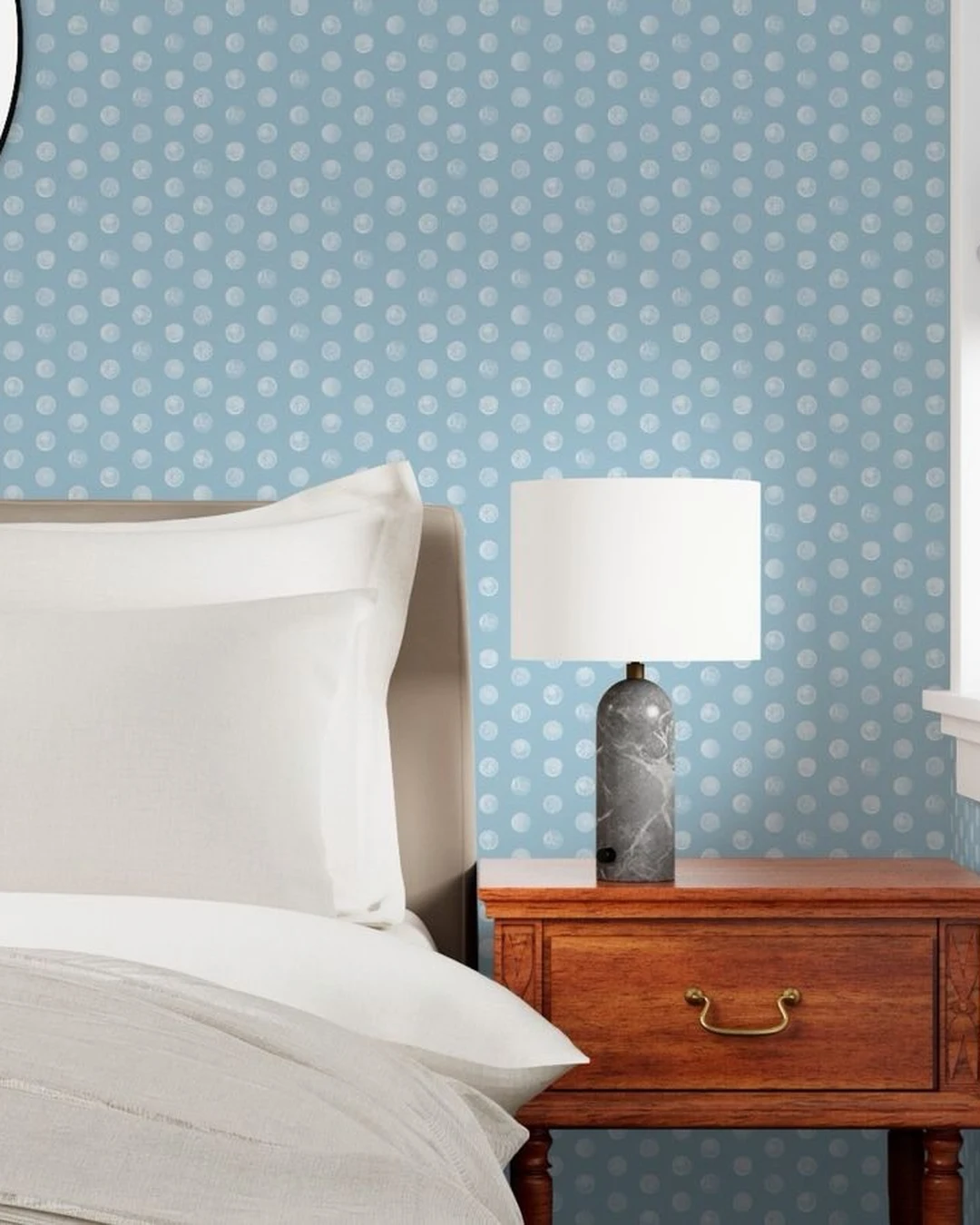
A bed needs a wall that holds it, and a small-dot accent wall does exactly that. Soft blue wallpaper patterned with tiny white dots runs directly behind the bed here, with white linens, a light upholstered headboard and a wooden nightstand with a lamp beside it.
One wall is enough. The dots are small enough that the pattern reads as texture from across the room, not as a print — which is why it works behind a bed, where you look at it last thing at night and first thing in the morning. A full room of dots can feel busy; one wall feels deliberate.
Keep the bedding plain and let the wall carry the pattern. White or cream linens, a simple headboard, one lamp — the wall is the decoration, so everything else can stay quiet. If the dots ever feel like too much, a plain headboard breaks the pattern at exactly the right height. For more ways the pattern works beyond the wall, this look at polka dot interior design shows it on rugs, curtains and chairs too.
The practical point: One dotted wall behind the bed, bedding kept plain, headboard breaking the pattern — the accent wall does the decorating, nothing else has to.
Polka Dots on the Nursery Wall
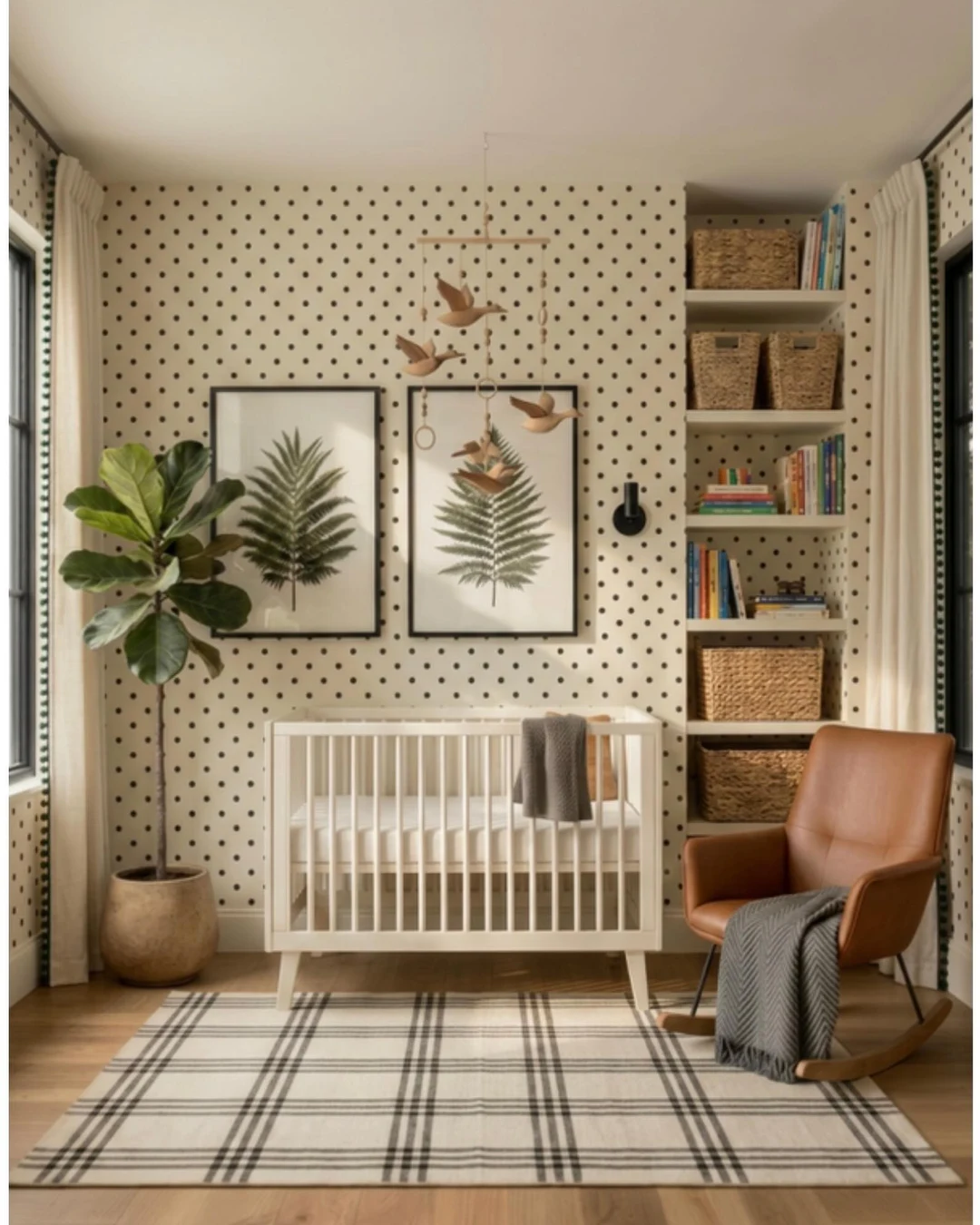
Nurseries need pattern that soothes, not pattern that shouts, and small black dots on a cream wall get the balance right. A bright modern nursery shows the idea here: cream wallpaper with tiny black polka dots, a white wooden crib, two framed fern prints above it, a wooden bird mobile and a brown leather chair.
Black dots on cream are the calmest version of this pattern. The contrast is soft — dark enough to give the wall rhythm, light enough that the room still feels airy at night. The crib sits empty against the dotted wall, and the fern prints and mobile do the rest of the decorating.
Choose dots small enough that they read as texture from the doorway. Large dots turn a nursery wall into a toy; small dots turn it into a backdrop. A plaid rug and a leather chair warm the room up, and the dots stay in the background where they belong.
The practical point: Small black dots on cream, crib against the dotted wall, everything else soft — the pattern soothes instead of shouting.
Why the Powder Room Loves Small Dots
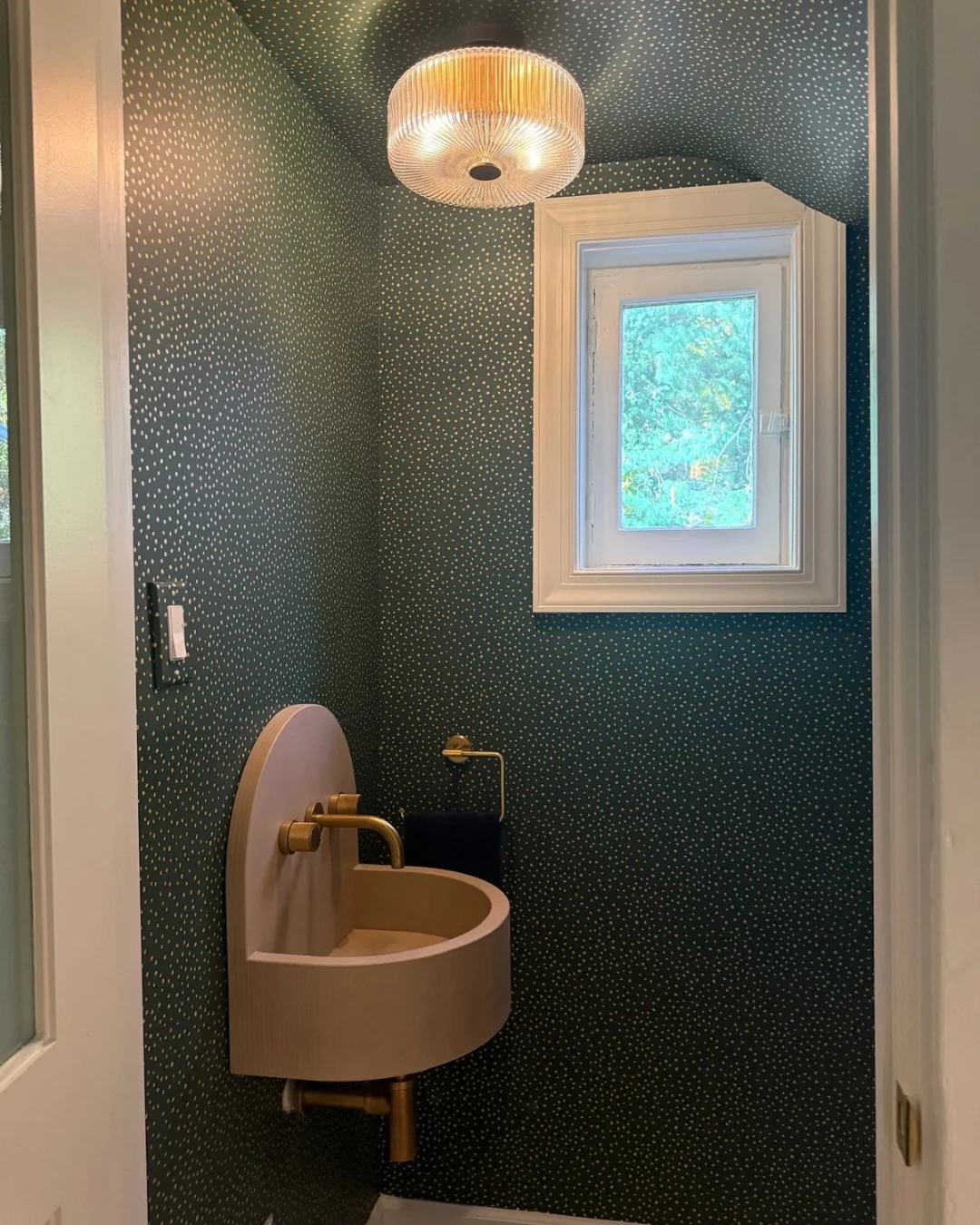
Powder rooms are the one room where you can take a pattern all the way — walls, ceiling, every surface — because nobody spends an hour in one. Dark teal wallpaper with dense small white dots covers the walls and the ceiling here, with a pink wall-hung basin and brass fixtures.
Small rooms take big pattern better than large rooms do. The dots are dense and tiny, so the teal reads as a texture rather than a print, and the ceiling disappears into the same pattern instead of cutting the room in half. A pink basin against the teal is the colour surprise that makes the room feel designed rather than decorated.
Keep the fixtures simple and let the walls do the talking. Brass taps, one small window, one light — a powder room this patterned needs nothing else. The trade-off is honest: a dark, fully papered powder room feels dramatic at night and smaller in daylight, so a good light and a mirror matter more here than in any other room.
The practical point: Dense small dots on every surface, fixtures kept simple, one good light — the smallest room takes the boldest pattern.
Tiny Dots in the Hallway
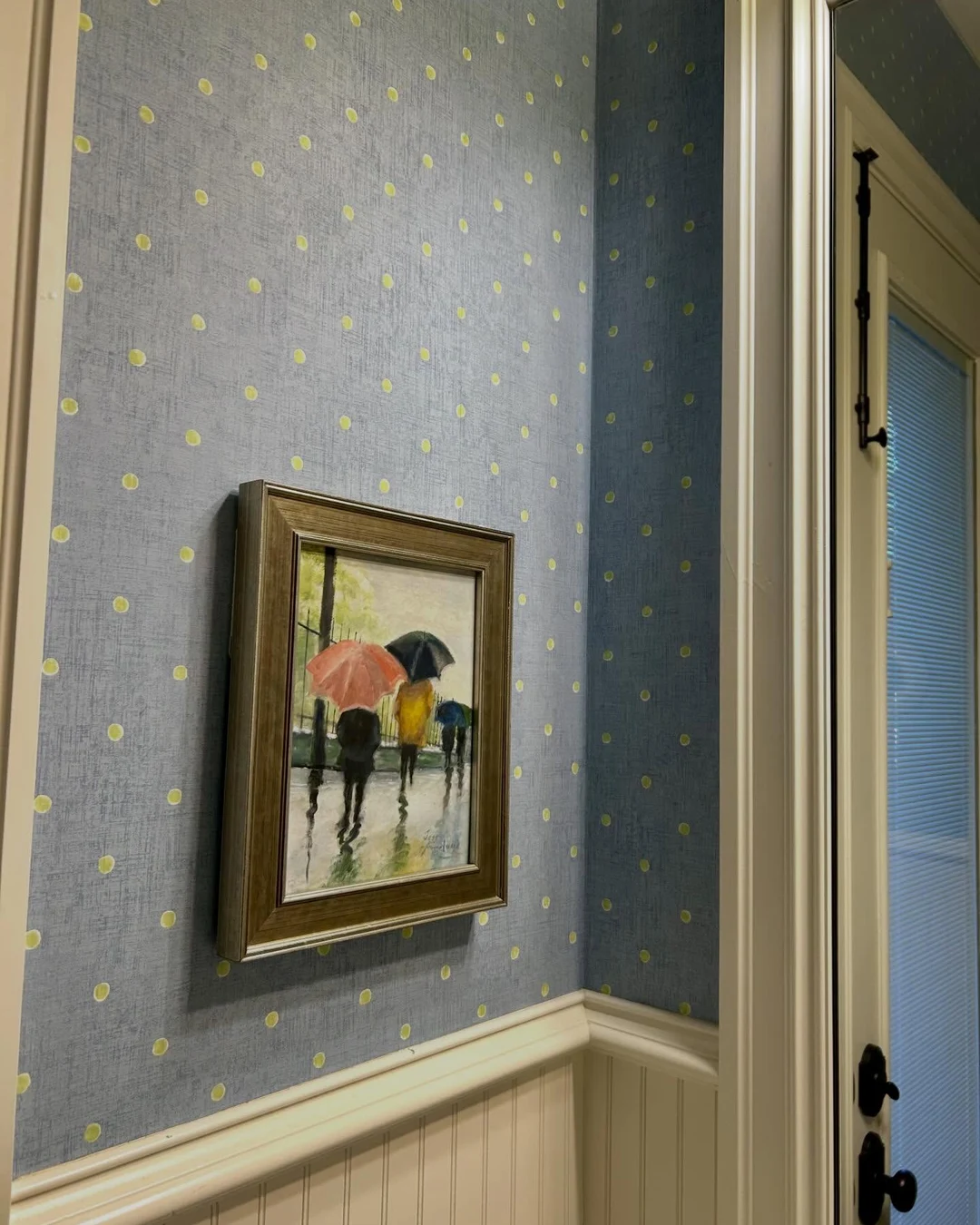
Hallways are the rooms nobody decorates, which is exactly why a quiet dotted wall changes how the whole house feels. Light blue-gray wallpaper with small yellow dots runs above white beadboard wainscoting here, with a framed painting of two figures walking in the rain with umbrellas and a glass-paneled door.
Beadboard does half the work. Plain wainscoting below and dotted wallpaper above gives the hallway a rhythm — the dots stop at the chair rail, the white boards carry the rest of the wall, and the whole passage feels taller than it is. Yellow dots on blue-gray are the gentlest colour combination in this list.
Hang one framed picture and stop. A hallway with dots on the walls needs almost nothing else — the painting is the pause, the door is the destination. Keep the floor clear and the lighting warm, and the hallway stops being a passage and starts being a room.
The practical point: Dots above the chair rail, beadboard below, one framed picture — the hallway becomes a room, not a passage.
Polka Dot Wallpaper in a Reading Nook
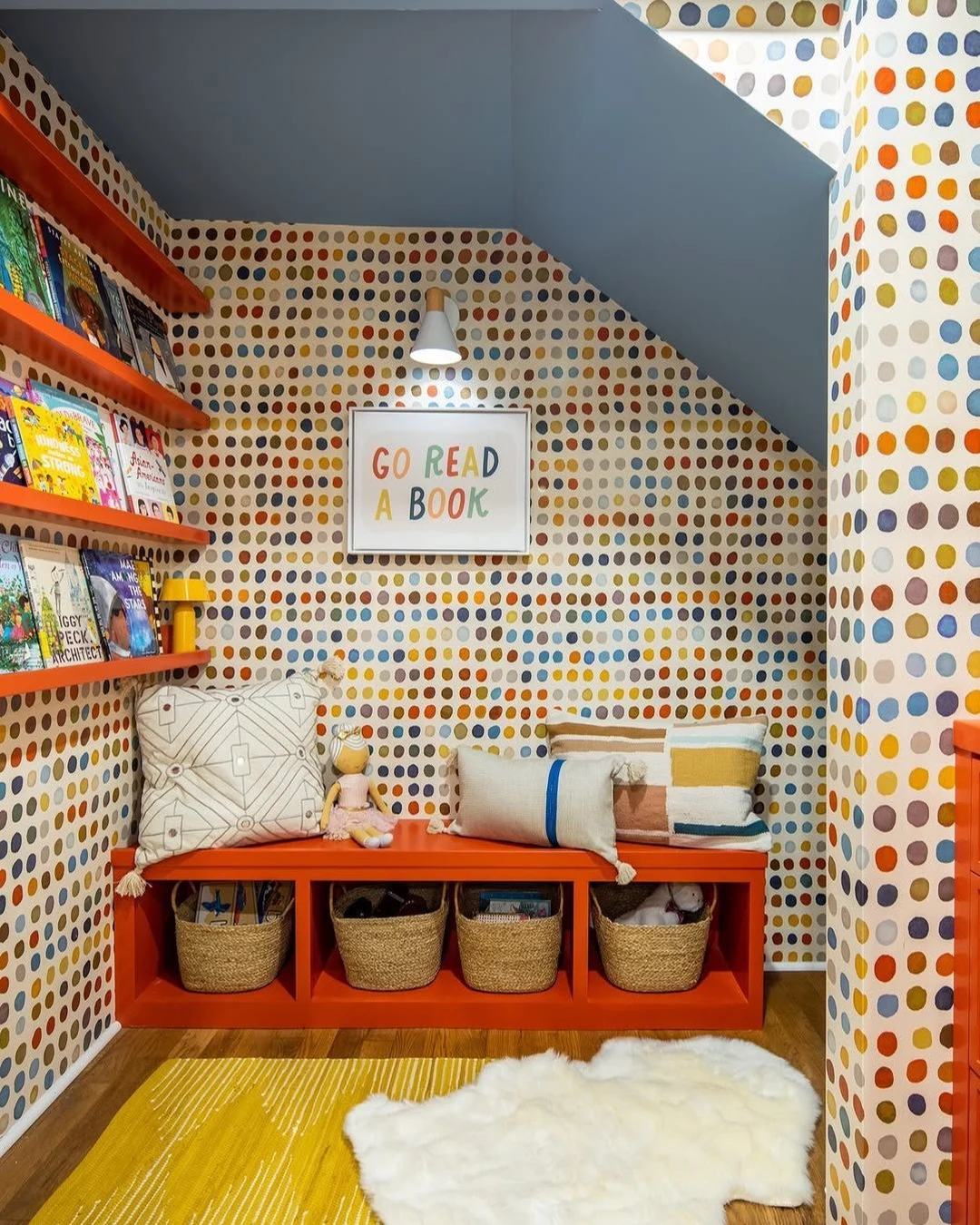
Reading nooks are small by definition, and small dots are the pattern that fits them. An under-stairs nook shows the idea here: walls covered in small multicoloured polka dots, bright orange floating shelves holding picture books, an orange bench with woven baskets below, cushions and a sheepskin rug.
Multicolour dots work here because the nook is tiny. The dots are small enough that the colours read as confetti rather than clutter, and the orange shelves pull one colour out of the wall and repeat it in the furniture. A framed sign on the wall reads “go read a book” — the nook’s only decoration, and the only one it needs.
Keep the shelves low and the books facing out. A reading nook lives or dies on whether a book can be reached without standing up, and the dots on the wall make the little space feel like a place rather than a leftover corner. The trade-off is real: multicolour dots are the loudest in this list, so they suit a nook you visit, not a bedroom you sleep in.
The practical point: Small multicolour dots, one colour repeated in the shelves, books within reach — the nook feels like a place, not a leftover corner.
Dots on the Ceiling
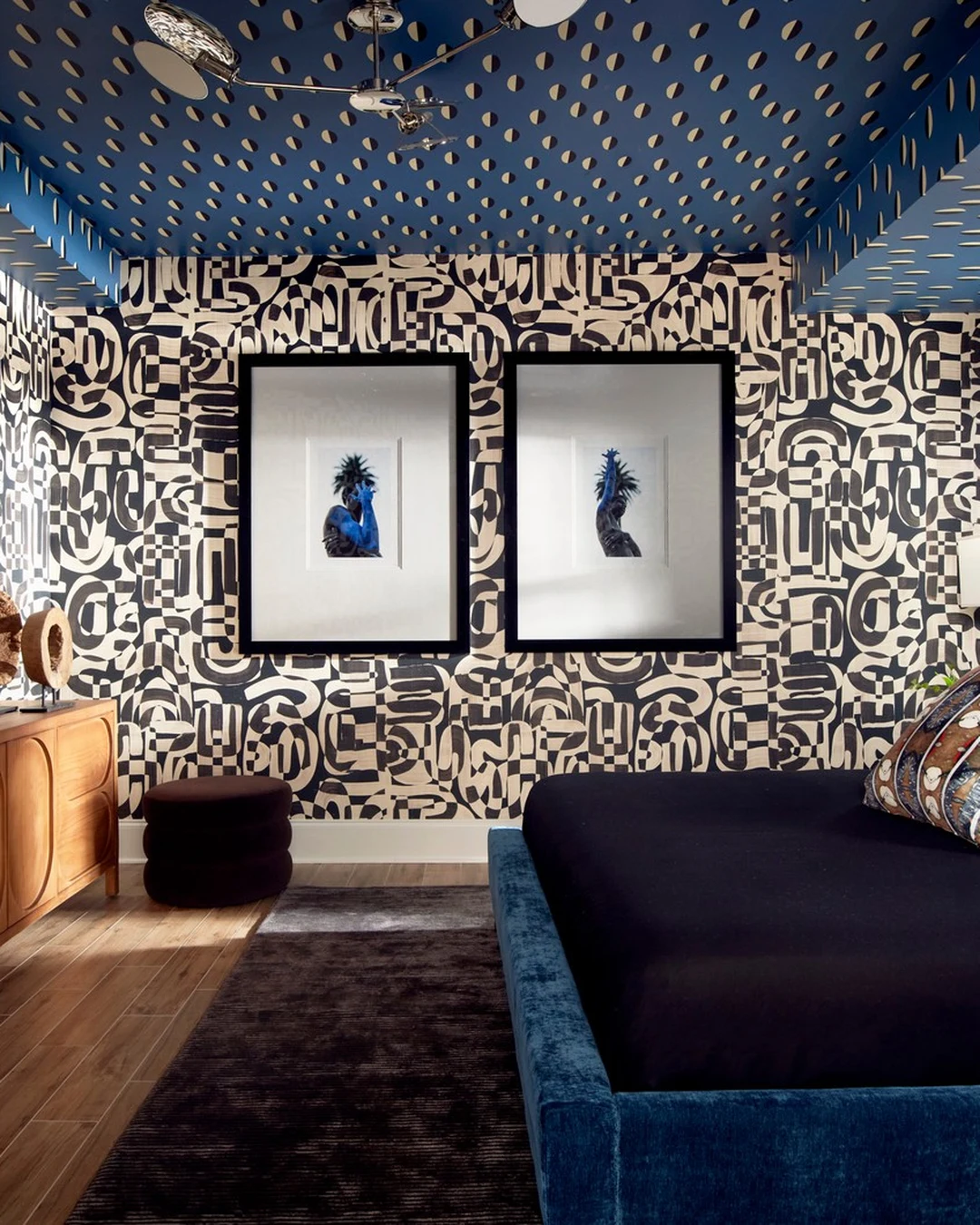
Ceilings are the one surface a pattern can own completely, and small dots on a ceiling are the quietest way to do it. A modern bedroom shows the idea here: a deep blue ceiling covered in small white cut-out dots, under a contemporary chandelier — and the dots are on the ceiling only.
Be honest about what the photo shows: the walls carry a bold black-and-white abstract wallpaper, not dots. The ceiling is where the polka dots live, and that is the whole idea — the pattern belongs overhead, where you see it lying in bed and nowhere else. A dotted ceiling changes the room at night, when the lights are low and the ceiling is the surface you actually look at.
Keep the ceiling dots small and the colour deep. White dots on deep blue read as stars; large dots on a pale ceiling read as a mistake. The chandelier matters too — a light that throws the pattern’s shadows across the room doubles the effect without a second roll of paper.
The practical point: Small white dots on a deep blue ceiling, walls left to their own pattern — the dots live overhead, where you see them lying in bed.
A Polka Dot Feature Wall in the Dining Room
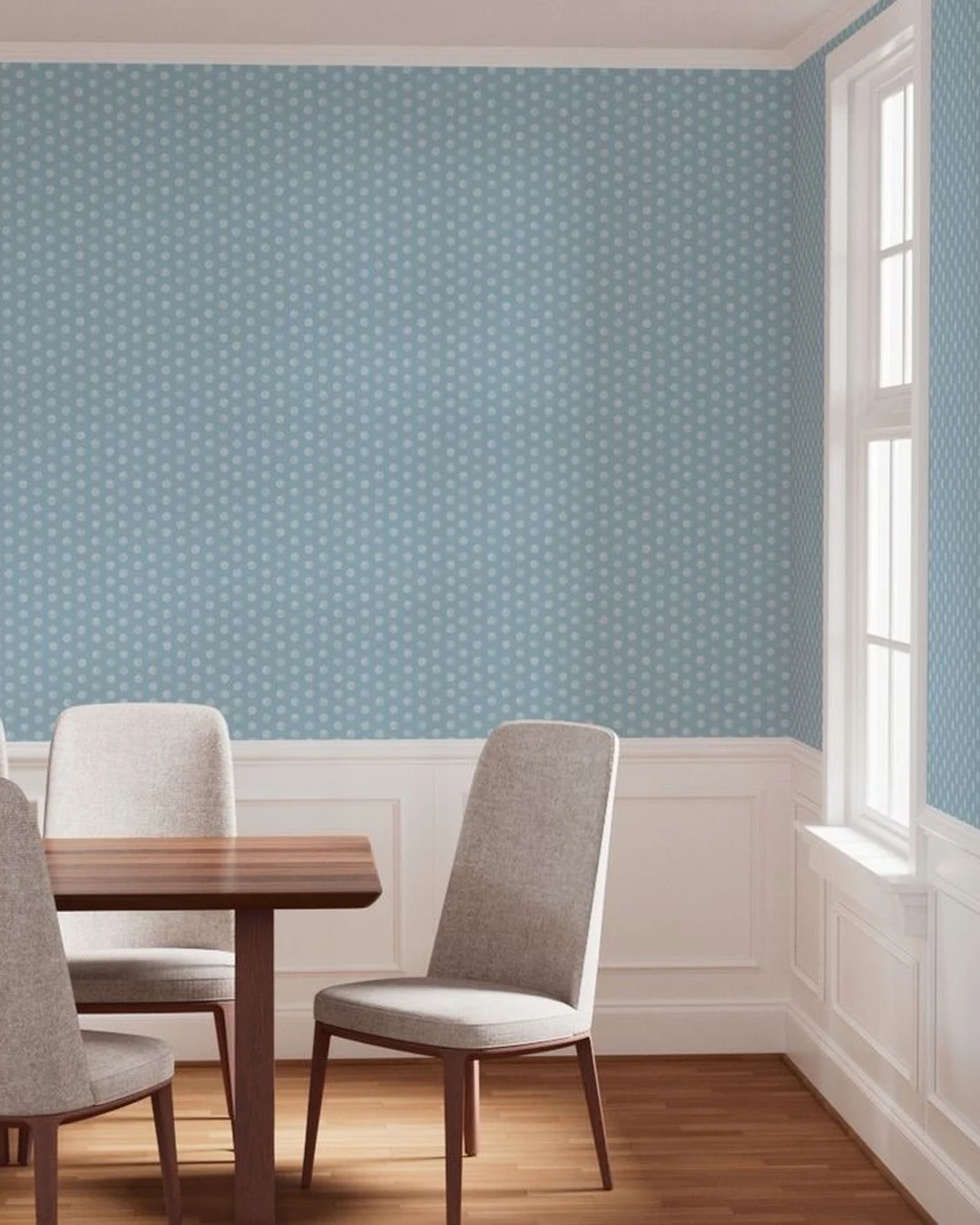
Dining rooms need one wall that earns the table, and a small-dot feature wall does it without stealing the meal. Light blue wallpaper with tiny white dots covers the walls above white wainscoting here, with a rectangular wooden table, four modern grey upholstered chairs and light hardwood flooring.
Wainscoting is what makes this work. Dots above, plain white boards below — the pattern stops at chair height, so the wall feels calm at the table and patterned above it. A dining room with dots on every wall would fight the food; a feature wall with wainscoting lets the table be the centre.
Keep the chairs plain and the table wood. Grey upholstery and a wooden table let the blue dots be the only colour in the room, and natural light from a tall window does the rest. The dots are small enough that they read as texture over dinner, not as a print competing with the plates.
The practical point: Dots above the wainscoting, plain boards below, chairs kept grey — the wall earns the table without stealing the meal.
Polka Dots in a Home Office
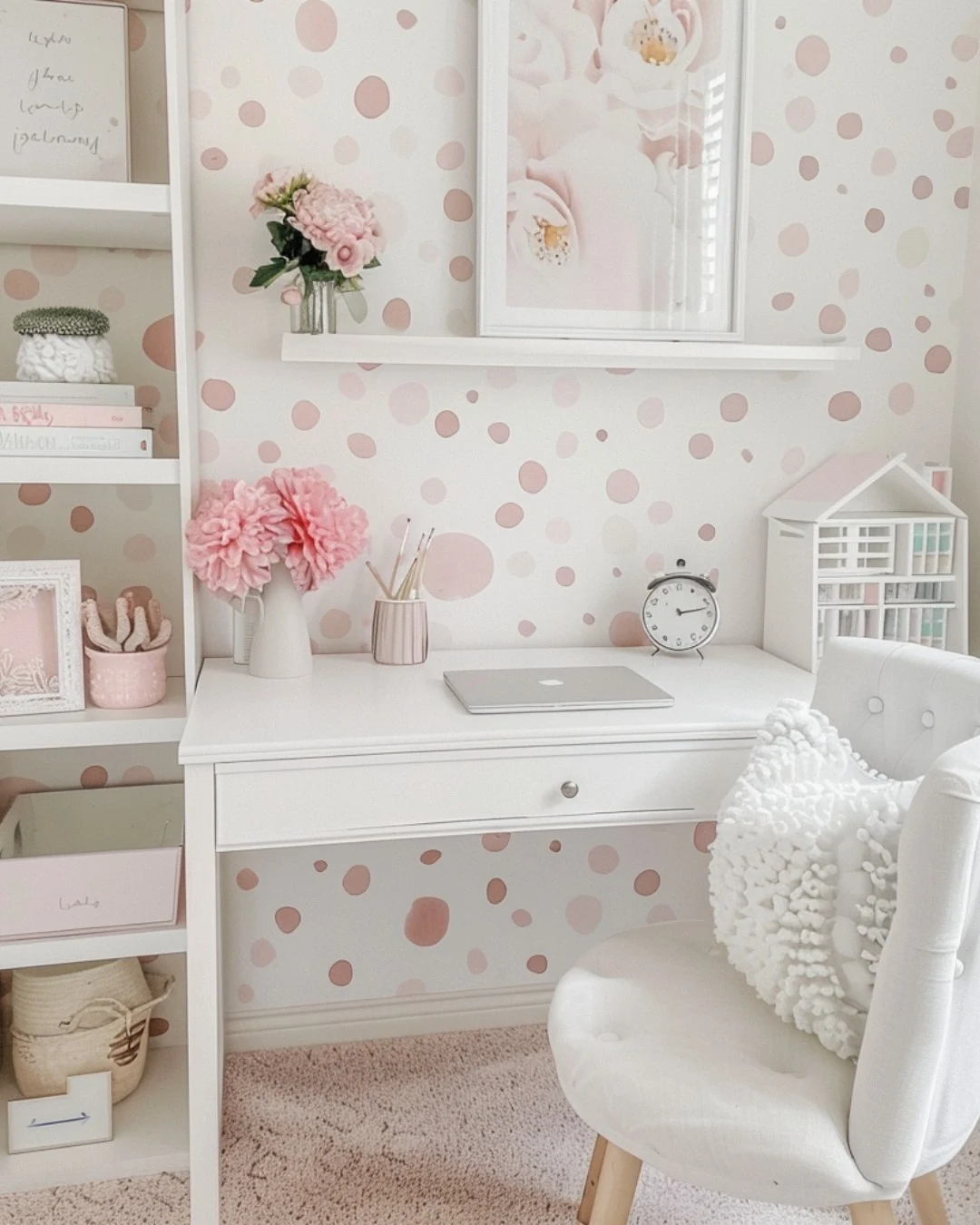
Home offices need pattern that keeps you awake without distracting you, and polka dots on the wall behind the desk do exactly that. A bright office shows the idea here: a white desk against pink and beige polka-dot wallpaper, a closed silver laptop, a small alarm clock, a vase of pink flowers and a floating shelf with a framed floral print.
The dots here are mixed sizes — many small, several medium-large pink circles — and that is worth saying plainly. The pattern still reads as polka dots, and the room is unmistakably an office, but if you want the quietest version of this idea, choose a paper where every dot is the same small size. Mixed sizes feel playful; uniform small dots feel calm.
Keep the desk white and the shelf light. A white desk against a pink dotted wall lets the pattern be the colour in the room, and the flowers on the desk repeat the pink without adding a second pattern. The trade-off is honest: a dotted wall behind a desk is wonderful on video calls and slightly busier than a plain wall when you are trying to concentrate.
The practical point: White desk, light shelf, dots behind the screen — the pattern keeps the office awake without stealing your attention.
Polka Dot Wallpaper in a Children’s Bedroom
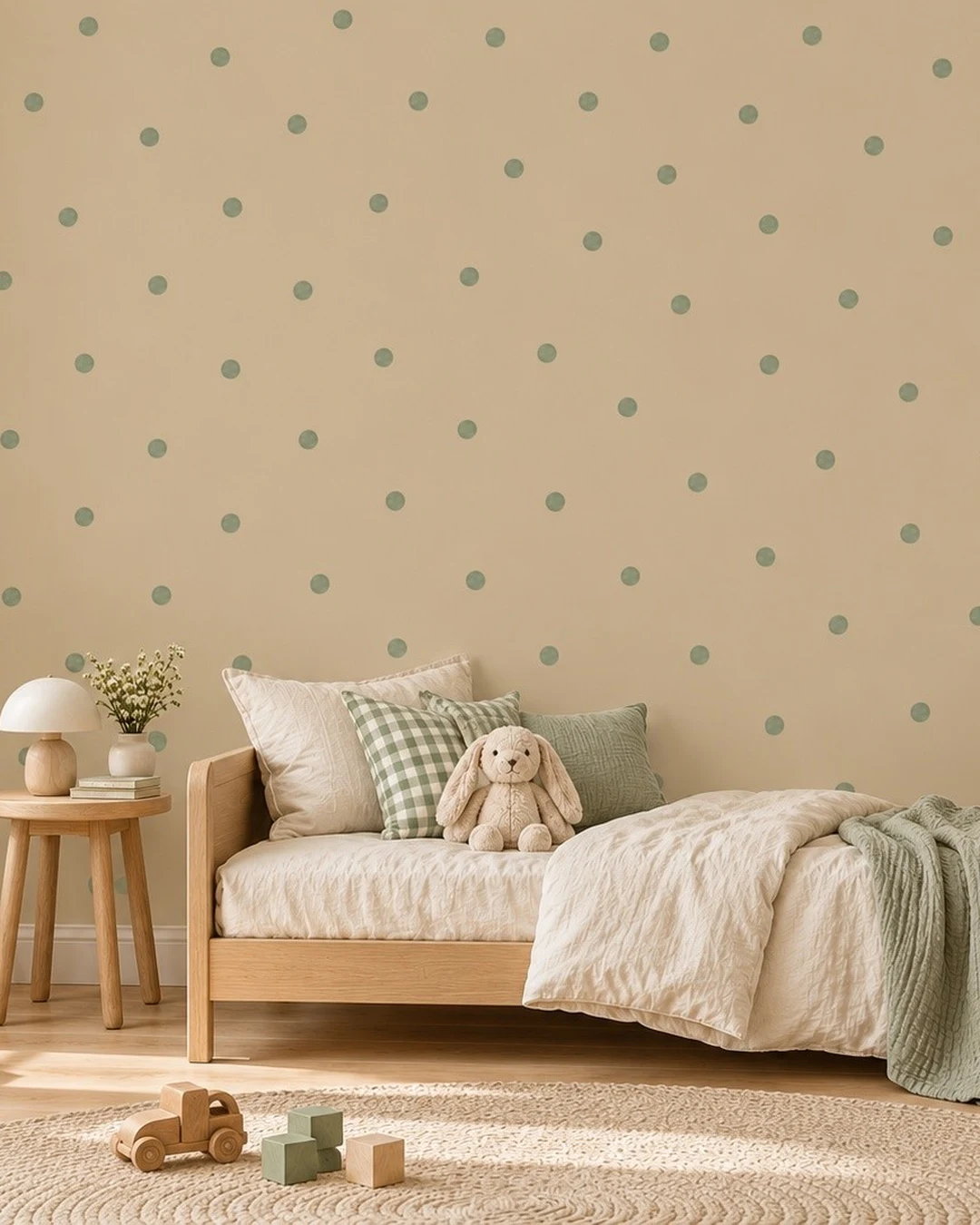
Children’s bedrooms are where polka dots feel most at home, and small dots are the version that grows with the room. A beige wall covered in small green polka dots sits behind a light wood daybed here, with white bedding, green accent pillows, a plush bunny, a small wooden side table and a woven rug — the room only, no child in frame.
Small green dots on beige are the calmest children’s-room pattern there is. The dots are small enough that the wall reads as a backdrop, not a theme — which matters, because a themed wall dates fast and a dotted wall does not. The daybed, the bunny and the toy truck and blocks on the floor are the room’s personality; the dots are just the background.
Choose dots that work with the bedding, not against it. White bedding and green accent pillows pick up the dot colour without matching it exactly, and light wood furniture keeps the room warm. The dots will still suit the room when the toys move out — that is the whole point of a pattern this quiet.
The practical point: Small dots as the backdrop, toys and bedding as the personality — the pattern outlasts the toys.
Dots Paired With Plain Cream Bedding
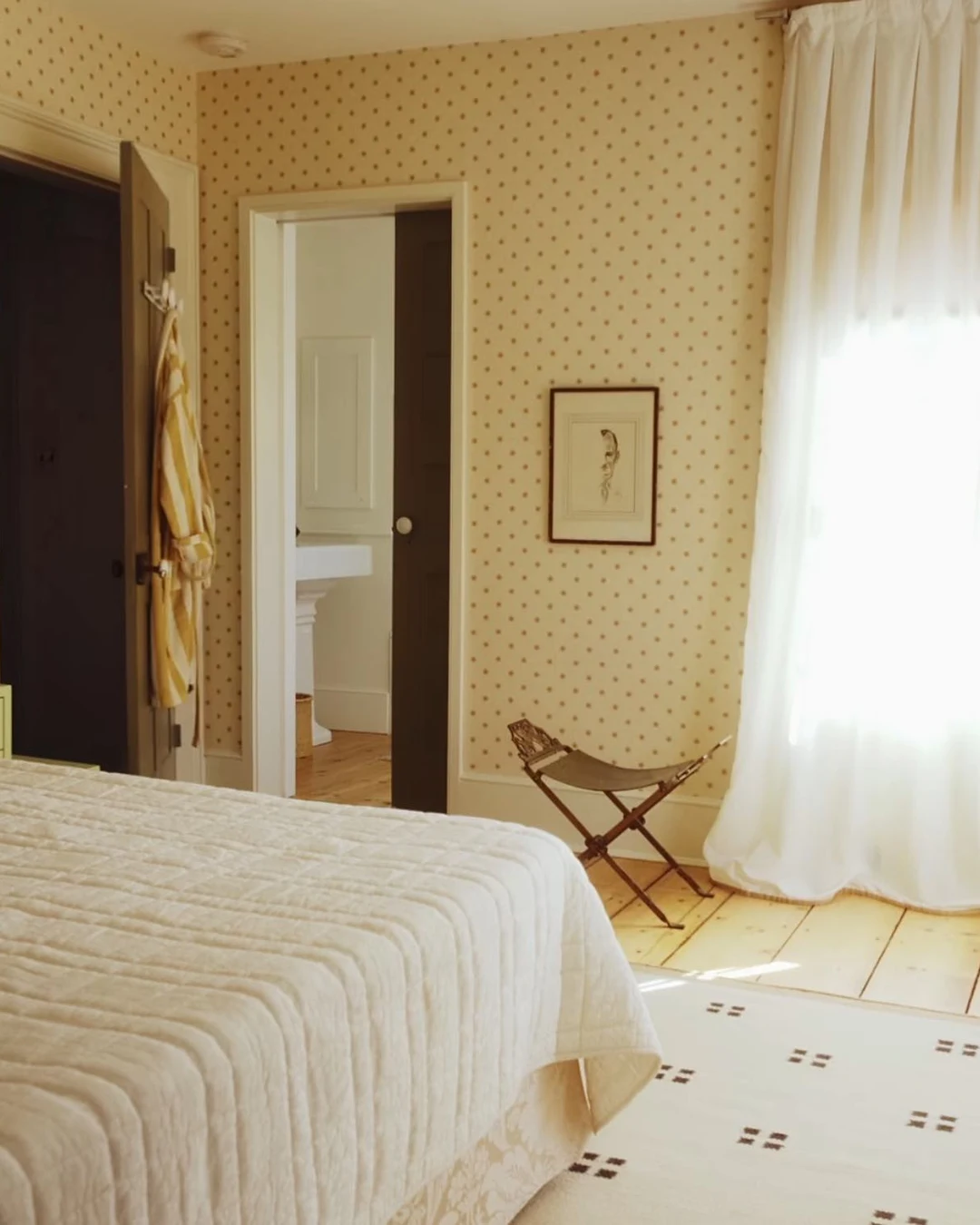
Dotted wallpaper asks for plain bedding the way a loud shirt asks for plain trousers — the pattern needs something quiet beside it. A sunlit bedroom shows the pairing here: light yellow wallpaper with small brown polka dots, a plain cream quilted coverlet, light wood flooring and sheer white curtains.
The coverlet is cream, not pure white — and that matters. Cream against pale yellow dots is warmer than white would be, and the quilted texture gives the bed its own quiet pattern without competing with the wall. A plain coverlet lets the dots be the only print in the room.
Keep the rest of the room plain too. Sheer curtains, a light wood floor, one framed print — the dots are doing the decorating, so the furniture can stay simple. The trade-off is that plain bedding shows every wrinkle, so a quilted coverlet is the forgiving choice: the quilting hides the creases the dots would otherwise draw attention to.
The practical point: Plain cream bedding, quilted for forgiveness, everything else simple — the dots are the only print in the room.
A Dotted Wallpaper Border
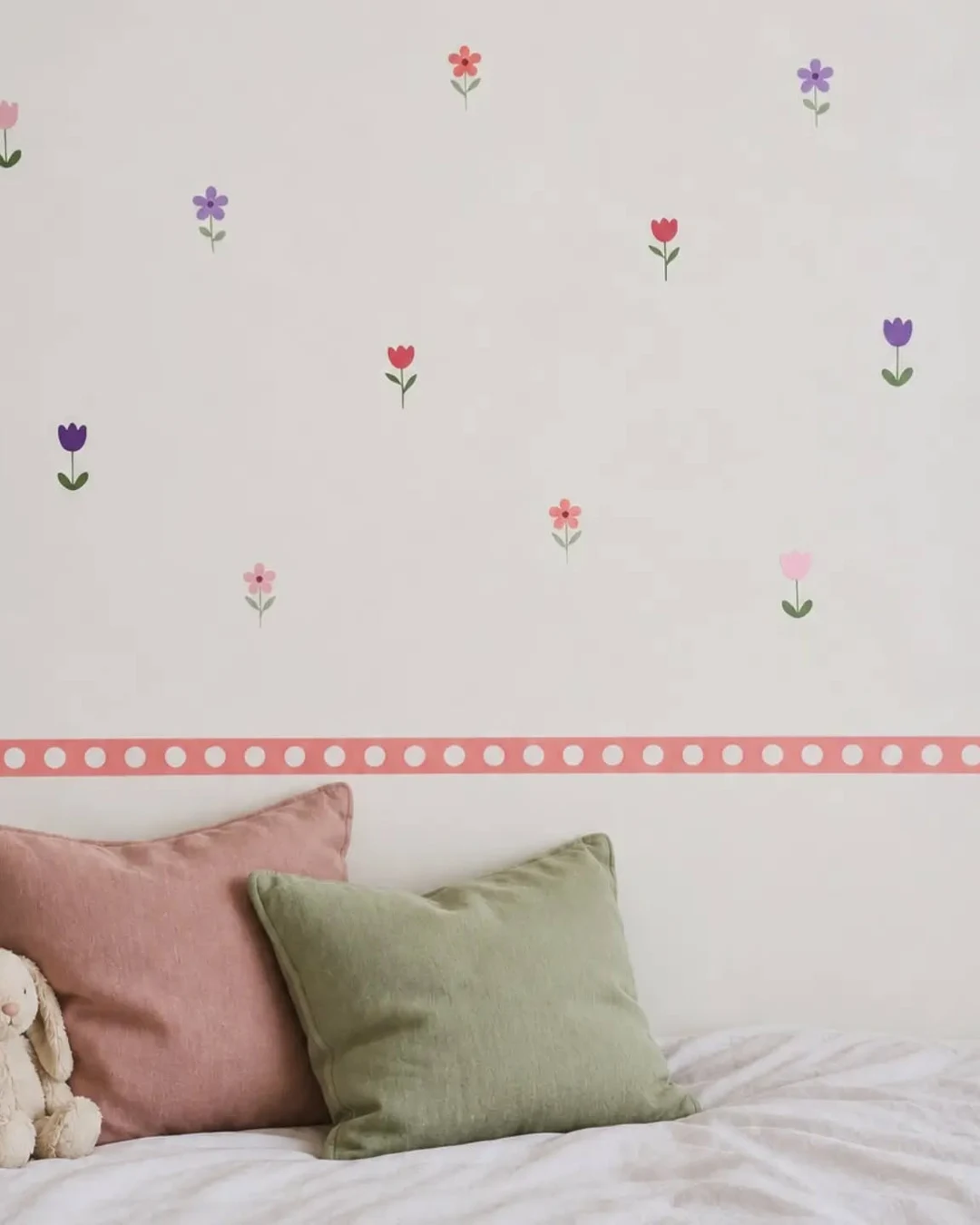
A border is the smallest commitment in this list — one strip of dotted paper, and the room changes. A pink band with white polka dots runs horizontally across the wall just above the headboard here, with white bedding, pink and sage throw pillows and a plush bunny on the bed.
The border works because it is a line, not a field. It draws the eye across the wall at exactly the height a headboard ends, so the bed and the wall read as one piece. Small flower decals float on the wall above the band — they are not the idea, but they show how a border leaves the rest of the wall free for whatever else you love.
Hang the border at headboard height and keep it level. A border that sags or tilts is the one thing the eye catches, so a level and a steady hand matter more than the paper itself. The beauty of a border is that it comes down in an afternoon if you change your mind — the smallest risk in this list, and the quickest win.
The practical point: One dotted band at headboard height, hung level, the rest of the wall left free — the smallest commitment, the quickest win.
Polka Dots in a Rental-Friendly Peel and Stick
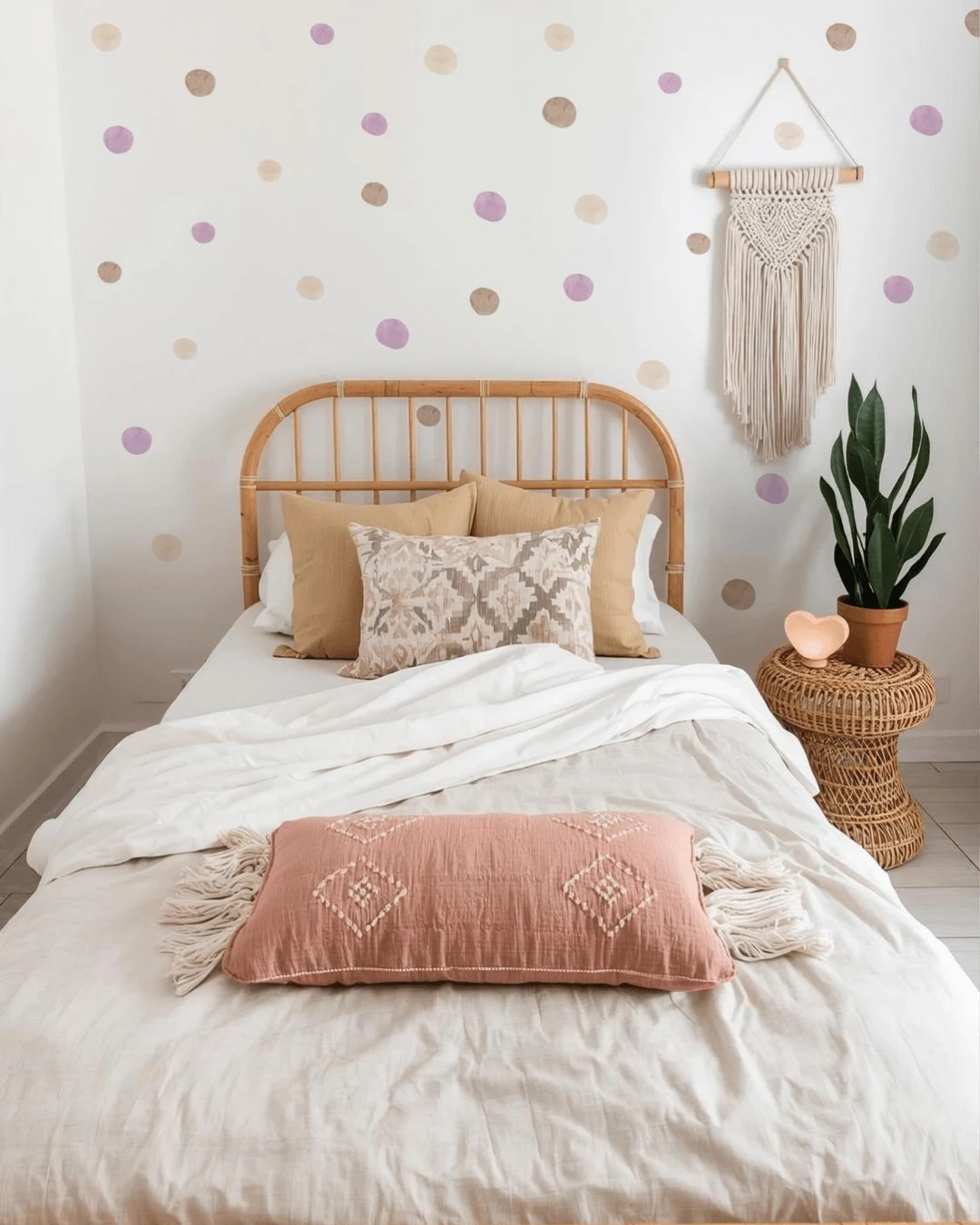
Renters get the same dots without the commitment, because peel-and-stick decals come off clean. A bedroom shows the idea here: a white wall decorated with scattered polka-dot decals in muted pink, tan and purple, a bed with white linens, a light wood rattan headboard, a macramé wall hanging and a potted plant.
Scattered decals are not the same as full wallpaper, and that is the point. You place each dot where you want it, leave gaps where you don’t, and peel them off when the lease ends — no paste, no steamer, no landlord’s permission. The muted colours keep the wall calm; bright decals would turn the same idea into a party.
Test one decal behind the headboard first. Some paints hold decals for years, others let go in a month — one hidden test tells you which yours is before you cover the wall. If your walls are freshly painted, wait a month before sticking anything down, or the decal will take the paint with it when it comes off. For the full version of the trick, here is how to make peel and stick wallpaper look expensive.
The practical point: One test decal first, muted colours, nothing stuck on fresh paint — the dots come off clean when the lease ends.
Tiny Dots With Wooden Furniture
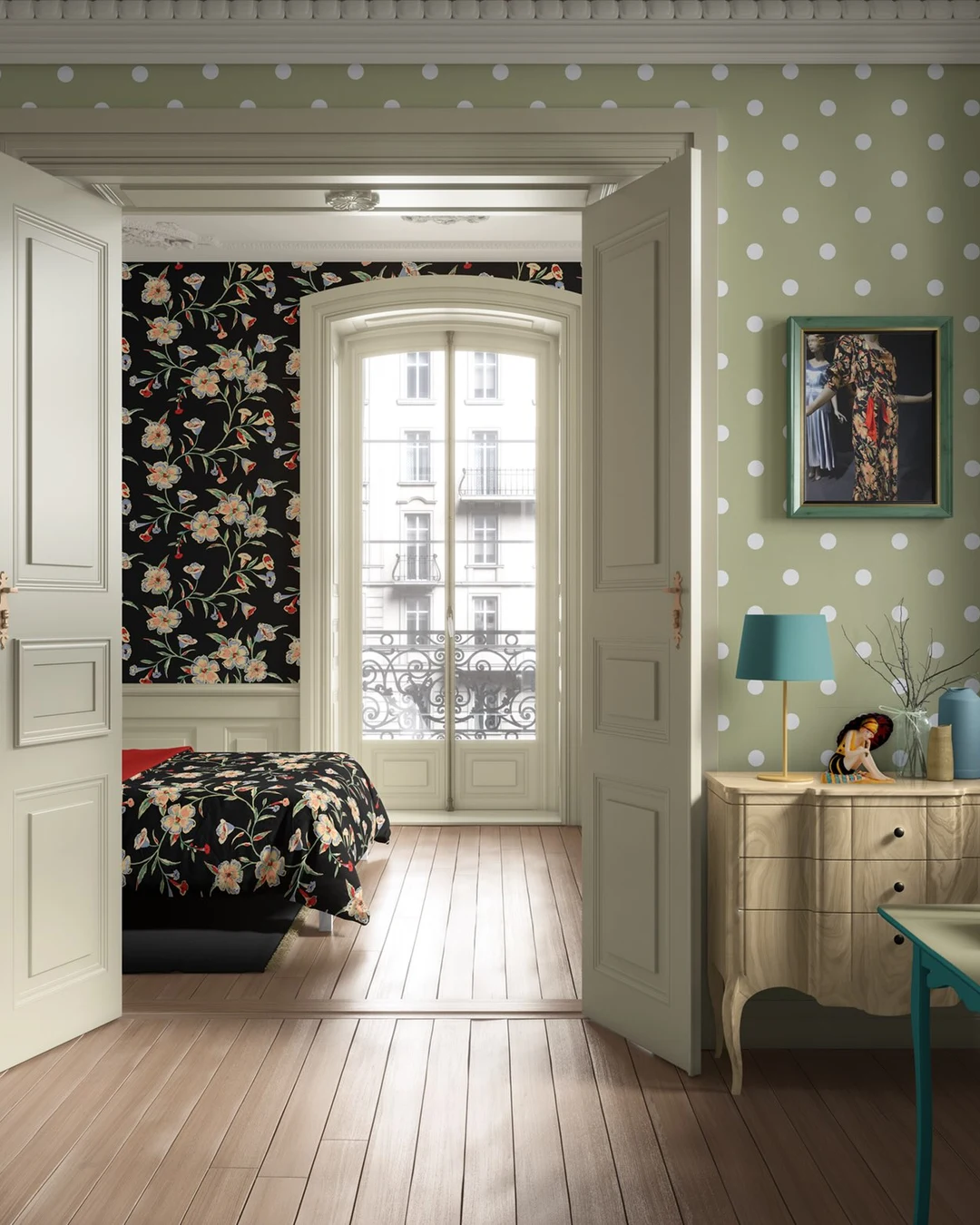
Tiny dots and light wood belong together — the dots soften the wood, the wood warms the dots. A view through open double doors shows the pairing here: sage-green walls covered in small white polka dots in the foreground room, a light wood dresser with a turquoise lamp, wood flooring and a framed picture above the dresser.
Look at the photo honestly: the dotted walls are in the foreground room, and the bedroom beyond the doors has dark floral wallpaper. That is the idea, not a flaw — the dots live in the room you enter through, and the floral bedroom beyond is a second pattern you glimpse, not one you live with. The light wood dresser is the bridge between the two.
Keep the wood light and the dots tiny. Pale wood against sage-green dots reads calm; dark wood against the same dots would read heavy. A turquoise lamp is the one colour surprise — one small accent is enough when the walls already carry a pattern.
The practical point: Light wood, tiny dots, one colour surprise — the dots warm the wood and the wood warms the dots.
The Quietest Pattern in the Room
A small polka dot does not ask to be noticed. It sits quietly on the wall, gives the room a pulse, and lets the furniture, the light and the people in it do the talking.
Start with one wall — behind the bed, above the beadboard, on the ceiling. Put the paper up, live with it for a week, and see whether the room feels finished. Chances are, you will wonder why the wall was ever plain.