You know the sound — the front door swings open, keys jingle onto the nearest flat surface, a bag thuds against the wall, shoes get kicked off in three different directions, and before you’ve taken two steps inside, the hallway already looks like a small storm passed through it.
Every home has a version of this moment, and every version ends the same way: things pile up where they land, and nobody can find anything in the morning. That pile is not a discipline problem, though — it is a design problem, and a small one. A few hooks in the right place, a bench that holds shoes, one dish that always holds the keys, and suddenly the whole entryway works for you instead of against you.
These 15 functional drop zone ideas cover the things that never make it past the door — coats, bags, keys, shoes, leads, umbrellas — and give every one of them a home it can actually reach.
Map the Mess Before You Buy a Single Hook
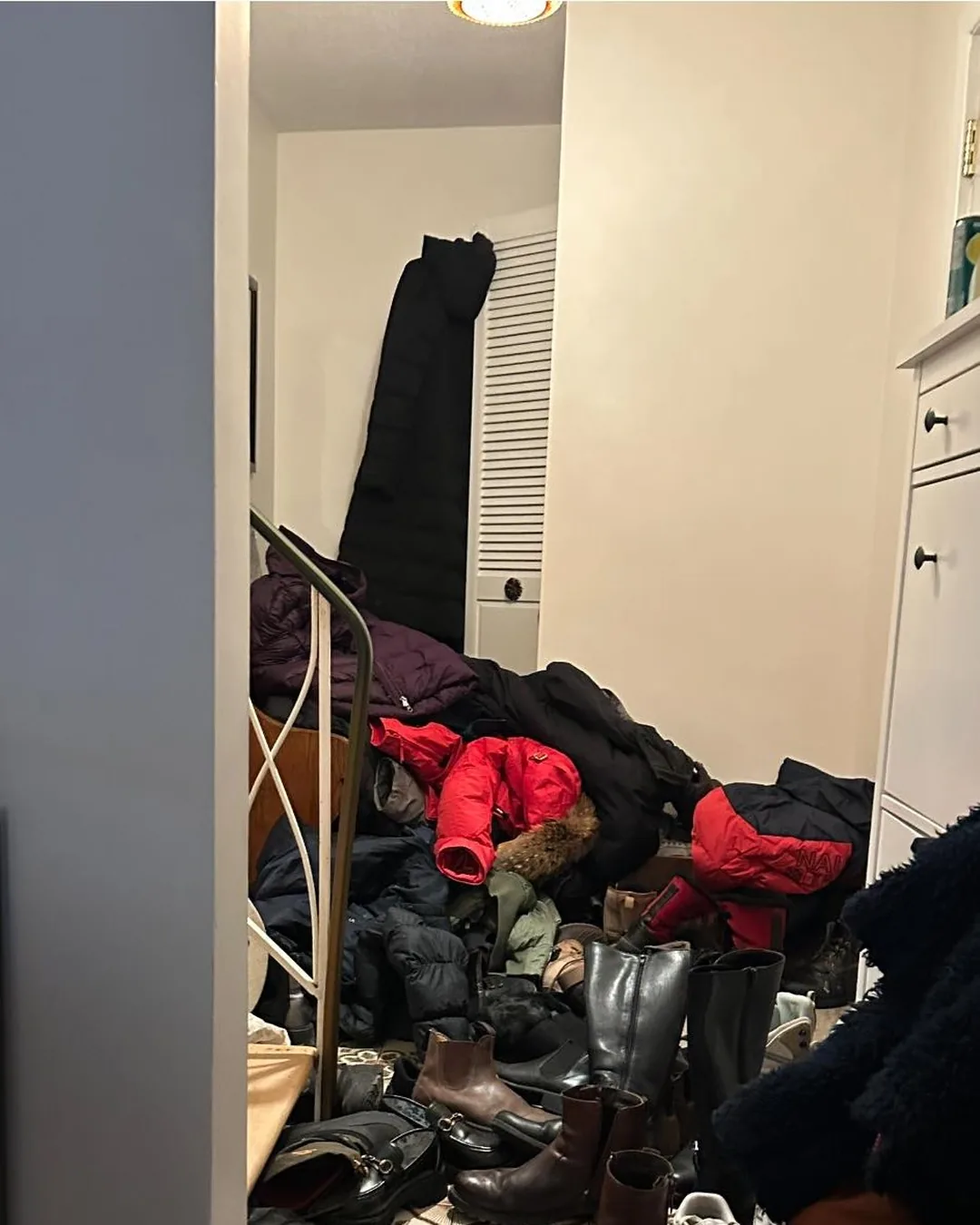
Look at the photo: winter coats heaped on the stairs, boots and shoes scattered across the tiles, a red jacket with a fur-trimmed hood slumped over the rest. That is a real entryway on a real evening, and it is the best starting point you will ever get — because the mess shows you exactly where things want to land.
Before you buy a single hook, spend a week watching. Notice where coats actually get dropped (usually the stair rail), where shoes end up (by the door, never in the cupboard), and where keys land (the nearest flat surface). Write it down. Your drop zone has to serve those habits, not the tidy ones you wish you had.
The practical point: watch for one week, note the three landing spots, and build the drop zone around them — a hook where coats already land beats a beautiful hook nobody uses.
Why the Wall Beside the Door Works Harder Than Any Table
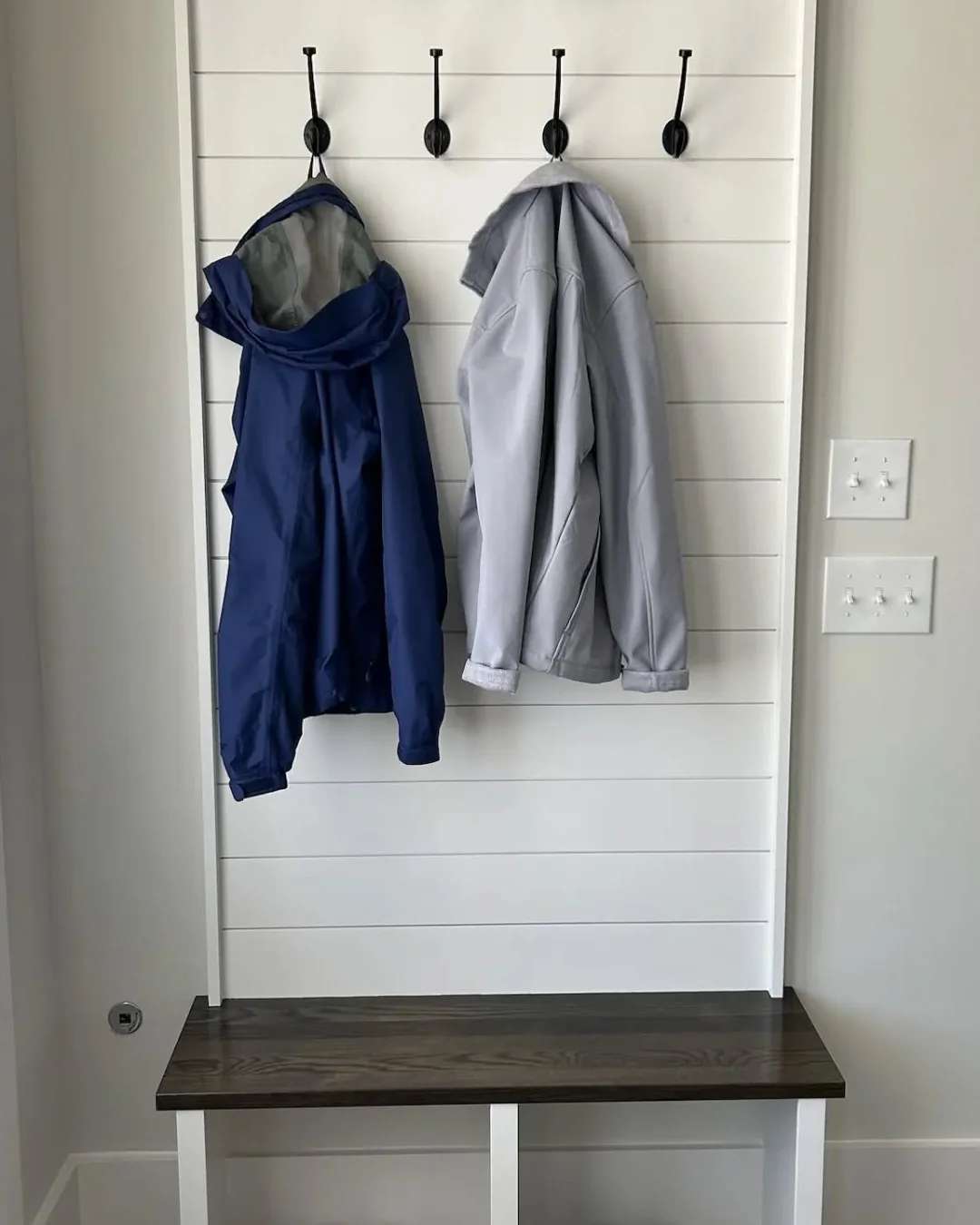
In the photo, a white shiplap wall carries four black hooks above a dark-wood bench — two jackets hanging, nothing else. No table, and that is the whole point. A table beside the door becomes a shelf for everything: post, parcels, things that belong in another room entirely. A wall with hooks can only hold what hangs, so it stays honest.
Hang the rail where hands naturally reach it — about 60 to 66 inches for adults, with a lower rail at 48 inches if children hang their own coats. Leave a clear stretch of wall beside the door itself, not behind it, so the hooks are the first thing a hand meets on the way in. The bench below does double duty: somewhere to sit, and a visual line that says shoes go here.
The practical point: give the wall the job, not a table — hooks at 60 to 66 inches, a bench below, and nothing flat for clutter to colonise.
Give Every Person One Hook and One Cubby
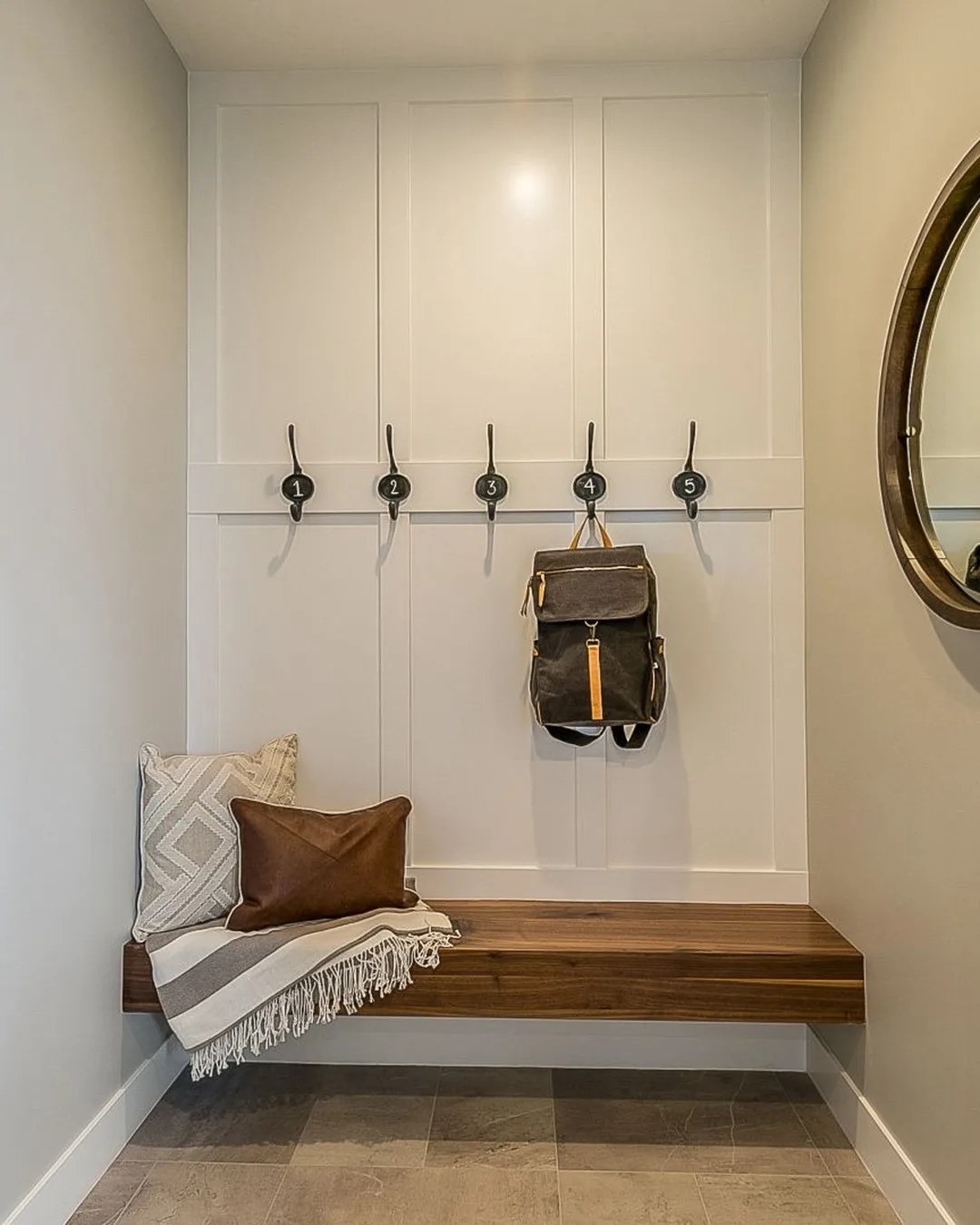
Five hooks, numbered 1 to 5, a dark backpack hanging from hook 4, a floating bench below. Numbers end arguments — nobody has to ask whose hook is whose, and nobody can claim they didn’t know where their coat goes. The photo shows the hooks; the cubby half is the partner piece, one basket or cubby per person tucked under the bench, holding whatever the hook can’t.
Keep one hook spare for guests, and say so — a guest who finds an empty hook feels welcome, and a guest who finds five full ones hangs their coat on a chair. If you want the same thinking inside the house, Guest Room Decorating Ideas Inspired by Beautiful Weekend Retreats covers how a spare corner makes visitors feel at home.
The practical point: one numbered hook and one cubby per person, plus one spare for guests — when everyone owns a spot, nobody’s coat ends up on the floor.
Choose a Bench Slim Enough to Sit On and Store Shoes
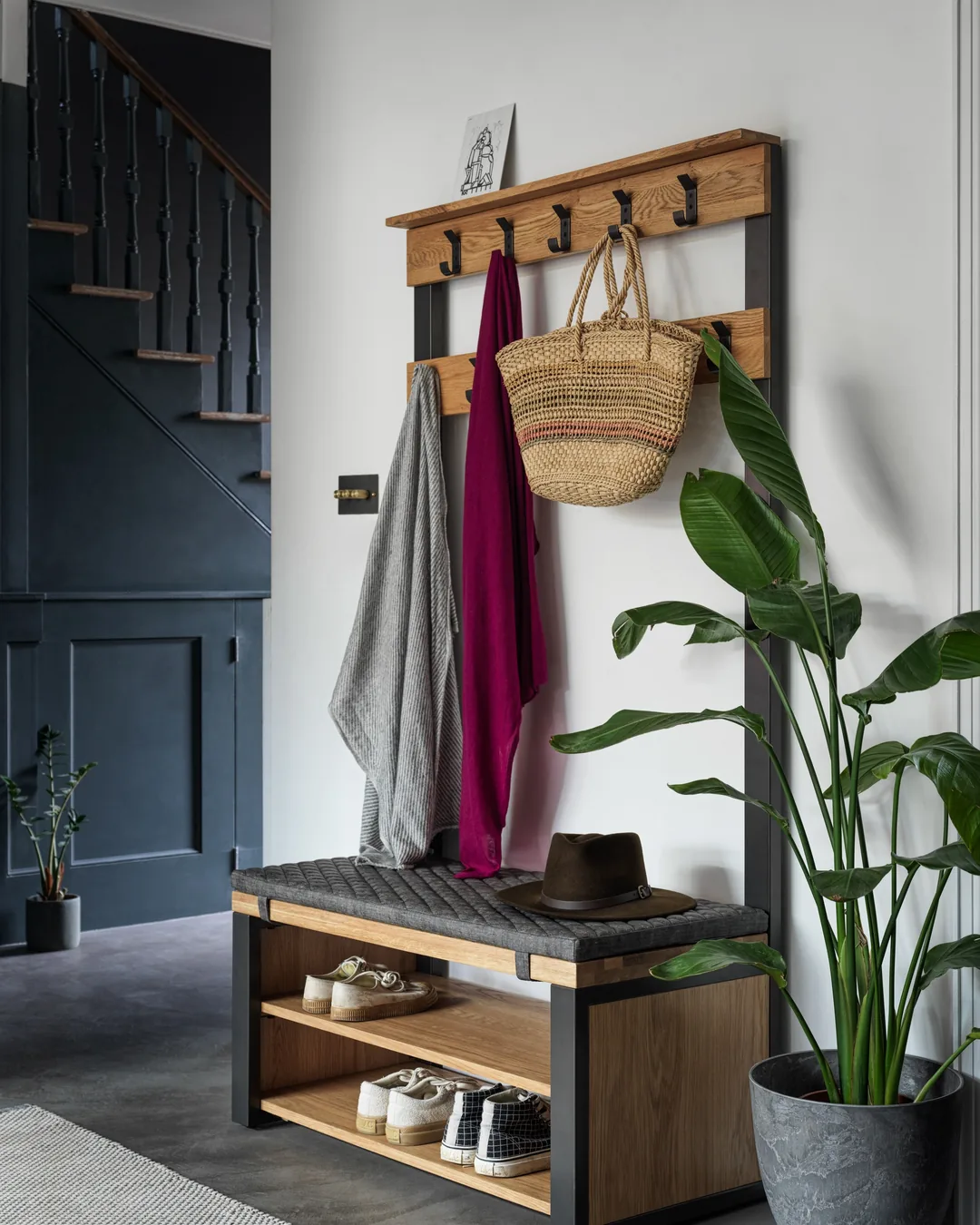
A wood-and-black-metal hall tree, a grey cushion on the seat, three pairs of shoes lined up on the open shelves below, hooks above holding a throw, a scarf and a straw bag. That is the whole drop zone in one piece of furniture — sit, store, hang — and it works because the bench is slim.
Depth is the number that matters: 14 to 16 inches is enough to sit on comfortably and deep enough for shoes, while anything over 18 inches starts eating the walkway. Measure your entry before you shop, and leave at least 36 inches of clear passage in front of the bench, or every trip through the door becomes a sideways shuffle.
The practical point: pick a bench 14 to 16 inches deep with open shoe shelves below — deep enough to sit and store, slim enough to keep 36 inches of walkway clear.
Where Do the School Bags Actually Land?
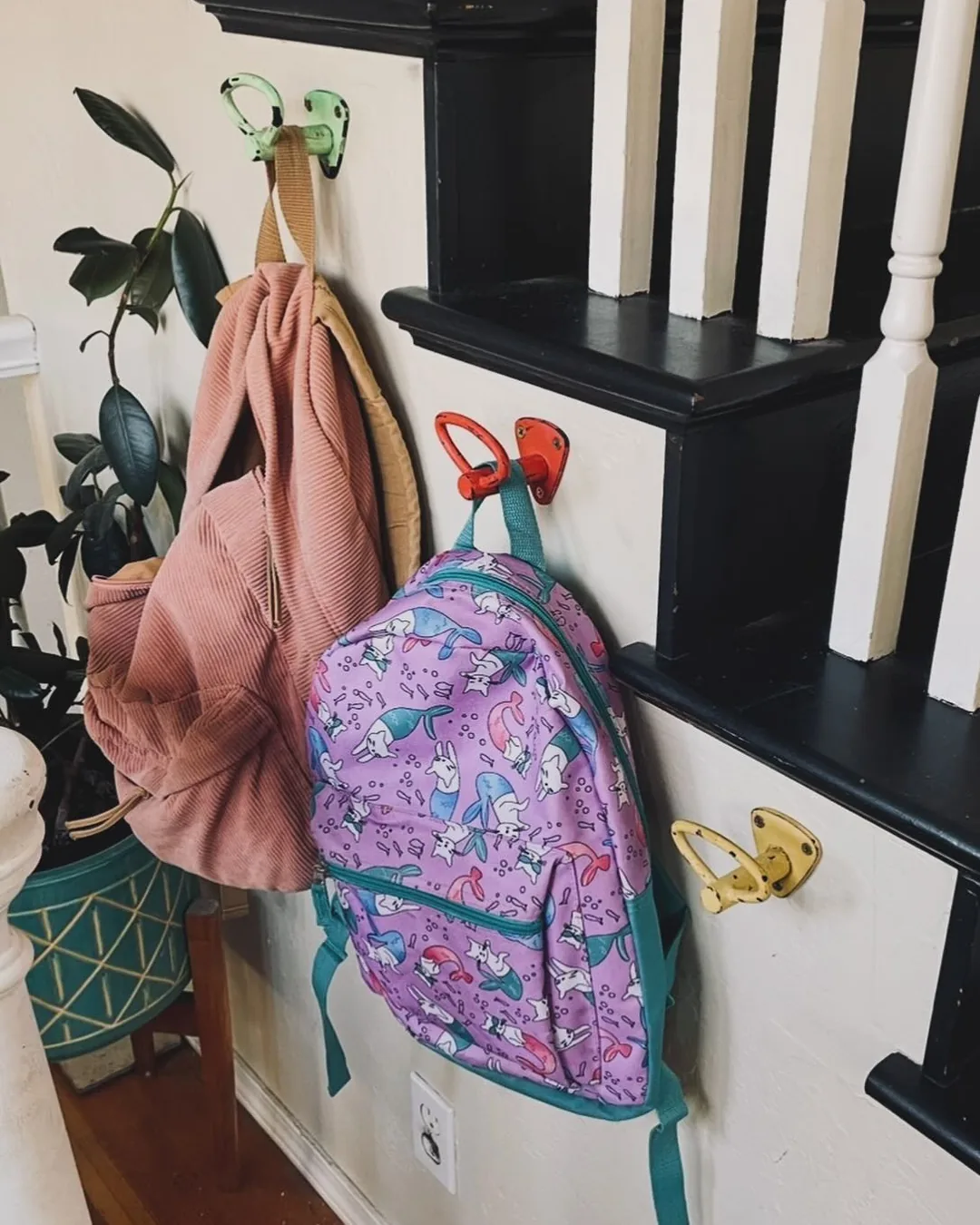
Two small backpacks hang from colourful hooks beside a staircase — a dusty-pink corduroy pack and a purple one printed with mermaids, a potted plant at the left. Bags land where the hooks are, not where the plan says they should. Put the hooks where the bags already get dropped, and the problem mostly solves itself.
Height decides whether it works: hooks at about 48 inches let children hang their own bags, while adult-height hooks mean bags end up on the floor waiting for someone taller. One hook per bag, not one hook per child — a child with a school bag, a sports bag and a lunch bag needs three hooks, and pretending otherwise just moves the pile to the floor.
The practical point: hang the hooks where bags already land, at 48 inches for children, one hook per bag — a hook a child can reach is a hook that gets used.
Trays, Bowls and One Small Dish for Keys
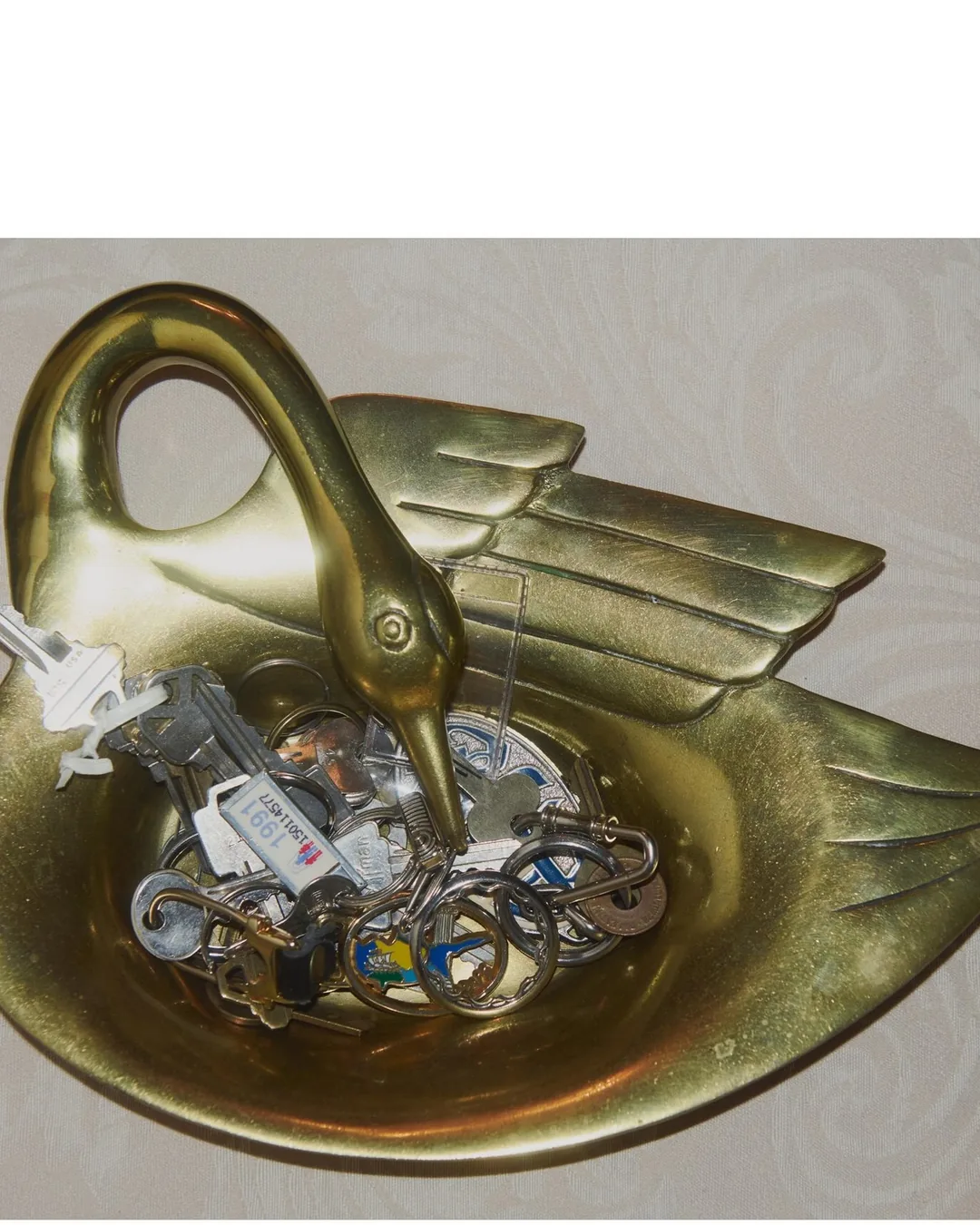
A polished brass swan dish, its hollow body full of keys and key rings — that is the whole system. Keys have exactly one home, and it never moves. No hunting through coat pockets, no patting down yesterday’s jeans, no shouting down the hallway about who has seen your keys.
Size the dish to the household: big enough for everyone’s keys plus a couple of chunky keychains, small enough to sit on the console without taking it over. Put it where hands already go — right beside the door, at hip height — and make it the only place keys are allowed to live. A tray works the same way if you prefer flat to deep; the rule is the same either way.
The practical point: one dish, always in the same spot, big enough for every set of keys — the moment keys have one home, the morning search disappears.
Hang the Calendar Where the Keys Already Live
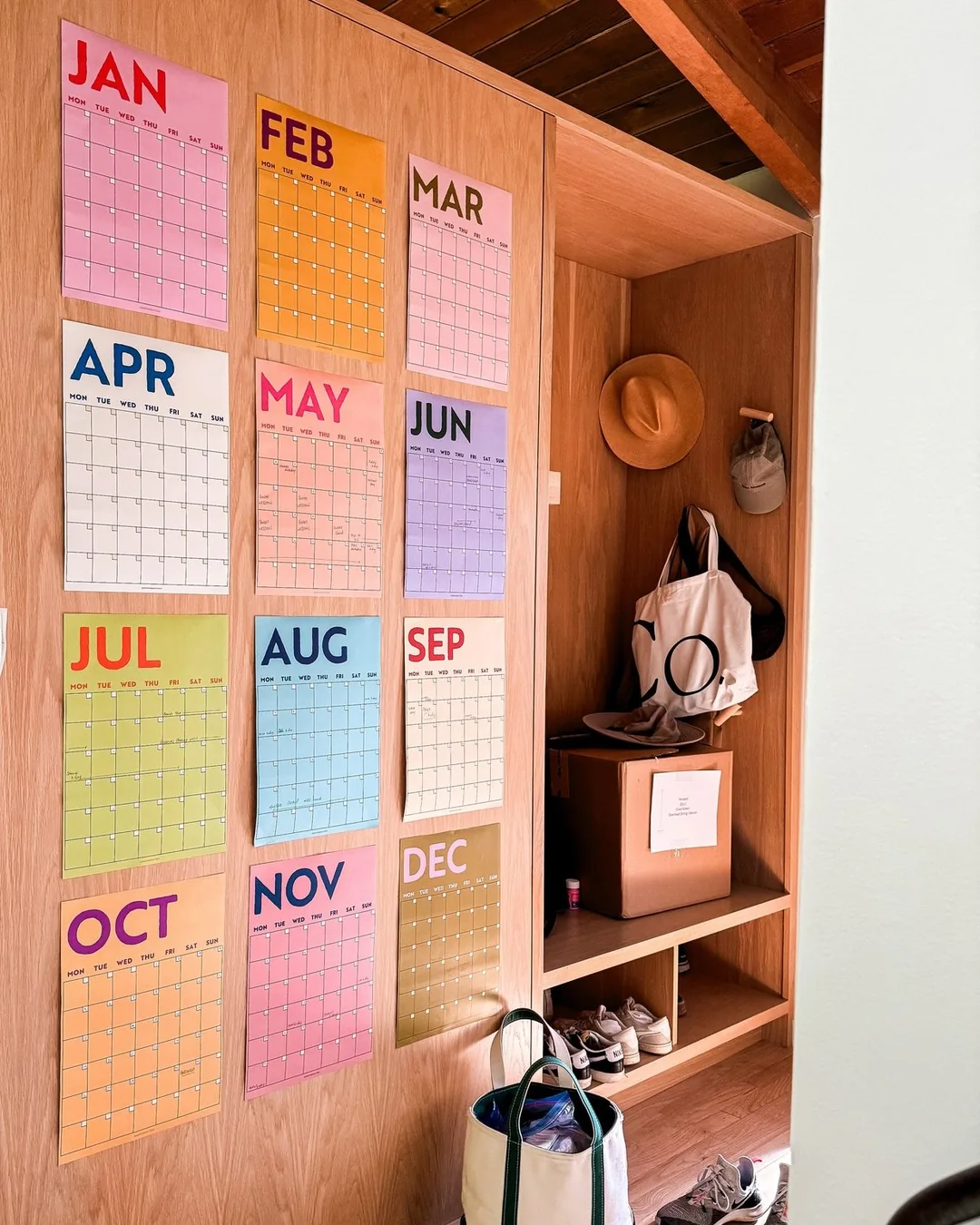
Twelve big colourful month pages — JAN through DEC — pinned to a light-wood wall beside an open cubby holding a hat, a tote and sneakers. The calendar hangs where the day starts: by the door, at eye level, where the person leaving the house can’t miss it.
That placement is the trick. A calendar in the kitchen gets glanced at over breakfast and forgotten by the door. One beside the hooks and the cubby gets seen at the exact moment it matters — permission slips, practice times, the bin going out. Keep it big enough to read from two steps away, and keep a pen hanging beside it, or the entries never get written.
The practical point: mount the calendar at eye level beside the hooks, big enough to read from the door, with a pen on a string — a calendar you pass every morning is a calendar that gets used.
What Belongs in the Drop Zone — and What Does Not?
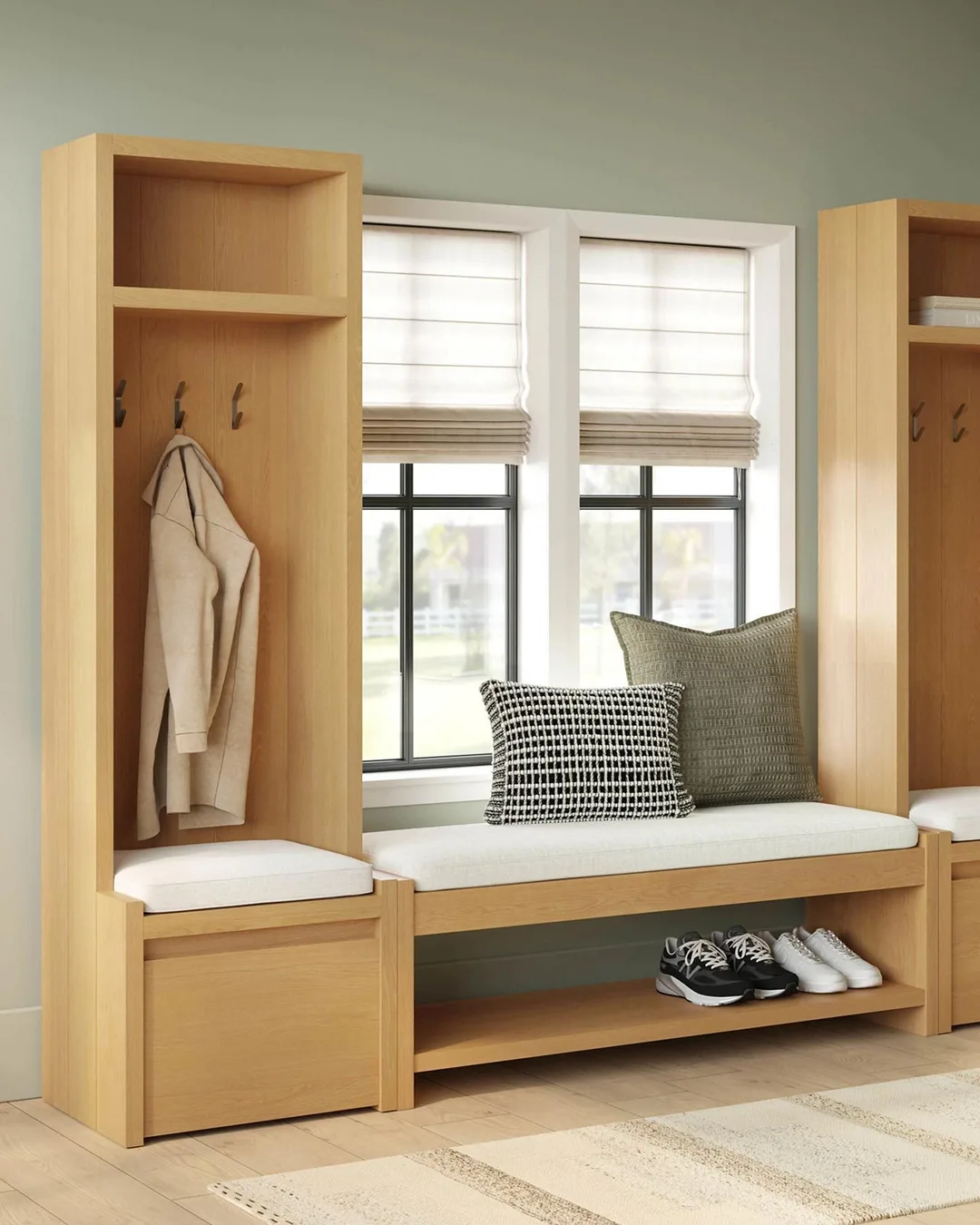
One beige coat on a hook, a window seat with two pillows, two pairs of sneakers on the open shelf under the bench, a striped rug, nothing on the floor. That tidy built-in passes the test every drop zone needs: everything in it is something someone reaches for on the way out the door.
Belongs: the coat you wear today, the bag you carry, the keys, the shoes you actually wear. Does not belong: last season’s coats, the post pile, sports gear for next month, anything that lives there because it has no other home. Once a month, pull everything out and ask of each thing whether it earned its spot this week — if it didn’t, it moves.
The practical point: apply the way-out test — if you don’t reach for it on the way out the door, it doesn’t live in the drop zone; clear it out once a month.
Hang a Mirror That Makes a Narrow Entry Feel Wider
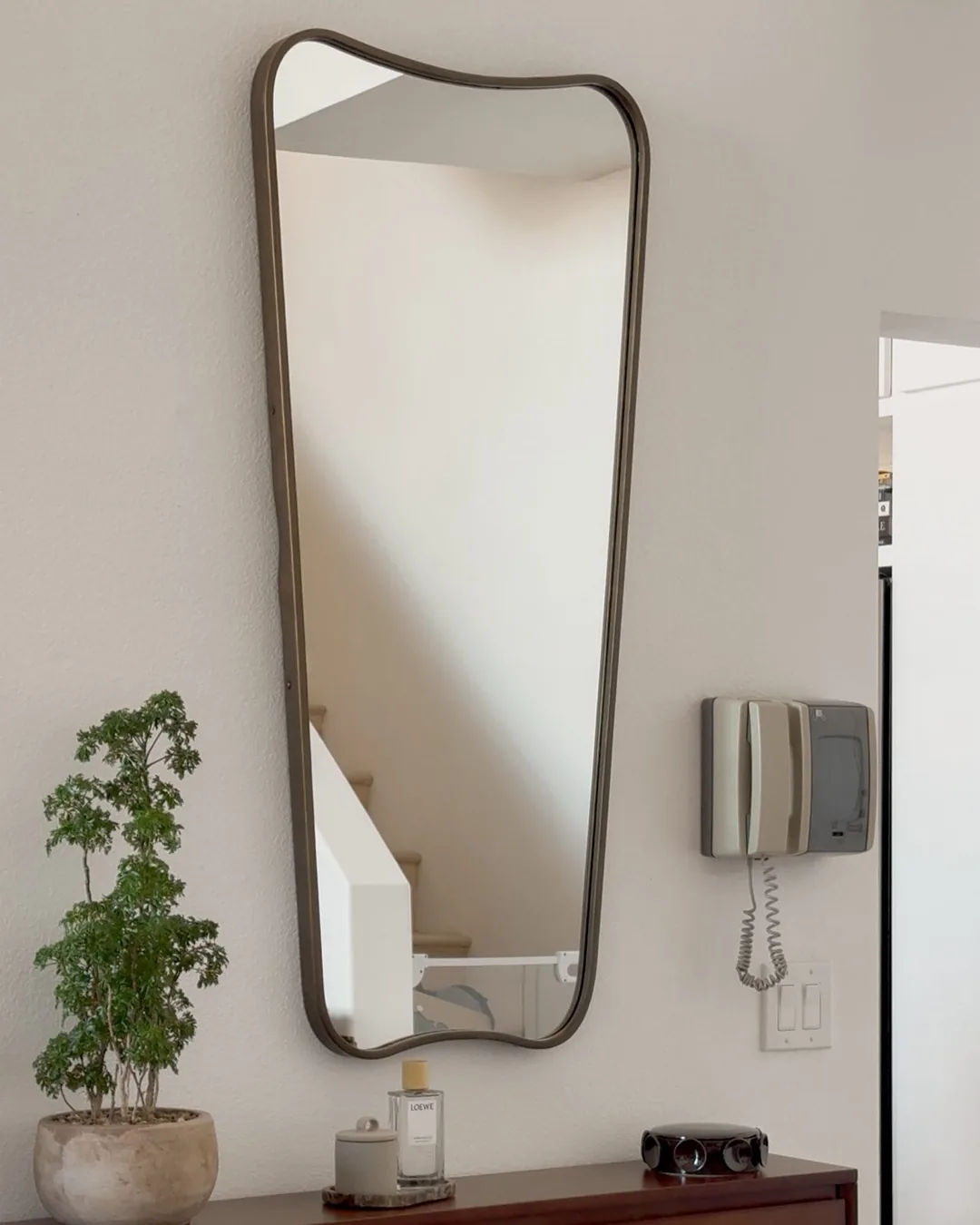
A large wavy mirror hangs above slim dark cabinets in a narrow entryway, a potted plant at one side, the wall pale and plain around it. A mirror does two jobs at once in a tight entry: it bounces light around, and it gives the eye somewhere to go beyond the wall, so the whole space reads wider than it is.
Hang it where it catches the door’s light, not facing a blank wall, and go full-length if you can — a last look at the whole outfit beats a face-only check. The same thinking that makes a small room feel bigger works here too, and Ways to Make a Small Bedroom Look Bigger Than Its Square Footage covers it room by room — light, order and clear surfaces do more than square footage does.
The practical point: hang the mirror where it catches the door’s light, full-length if it fits — light and a longer view make a narrow entry feel twice as wide.
Baskets Under the Bench for the Overflow
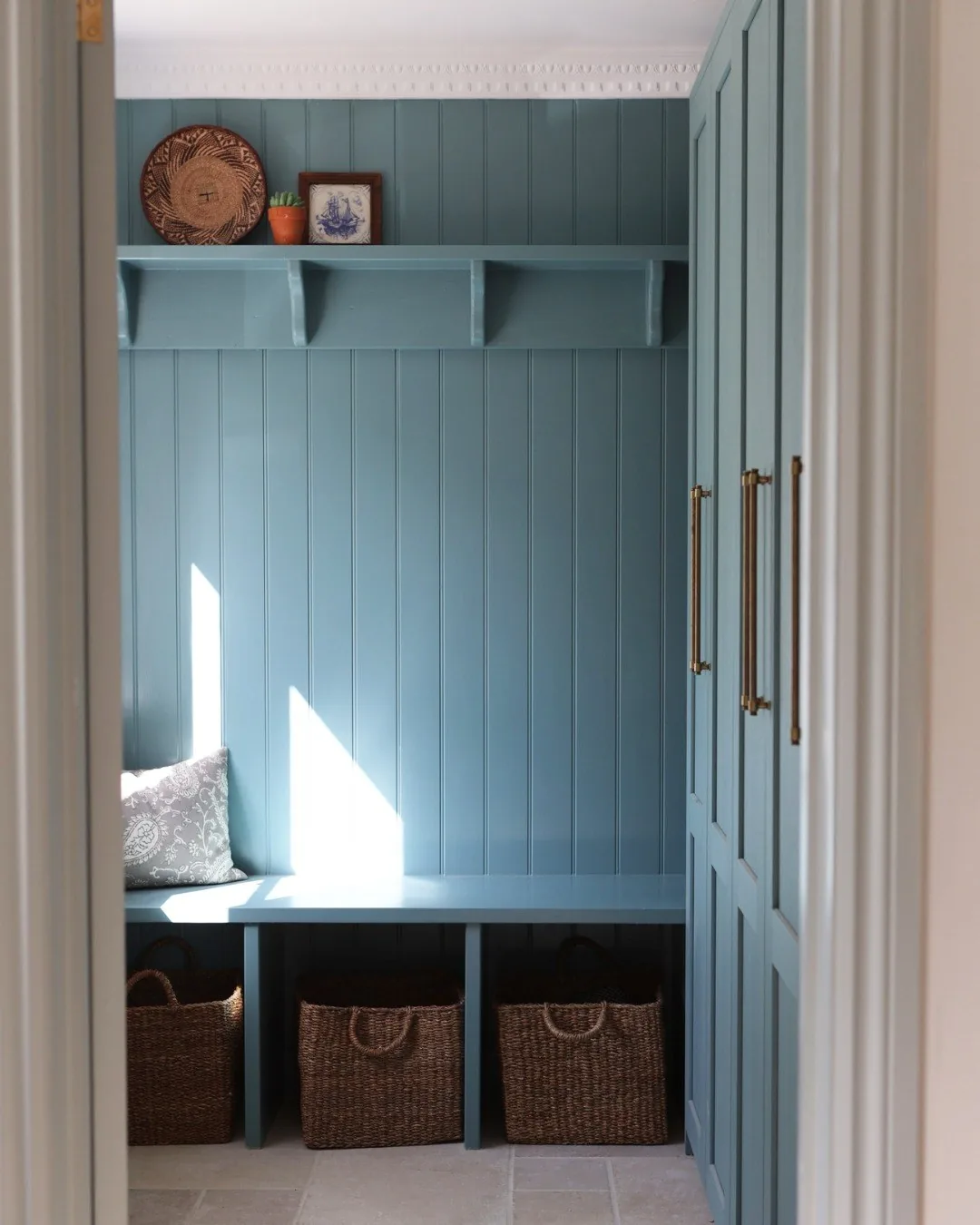
A teal built-in bench with three large woven baskets underneath — that is the overflow, given a home. Baskets swallow the things that don’t deserve a hook: spare scarves, gloves, the dog’s spare lead, the reusable bags that multiply by the door.
One basket per person or one per category — either system works, but pick one and stick to it, or the baskets become three more junk drawers. Woven baskets breathe, which matters for damp gloves and shoes, and they slide out easily when you need what’s inside. Measure the gap under the bench before you buy, and leave a finger’s width of clearance, or the basket will scrape every time it moves.
The practical point: one basket per person or per category, measured to the gap under the bench — overflow with a home never becomes clutter on the floor.
Keep Dog Leads and Umbrellas by the Door, Not in a Cupboard
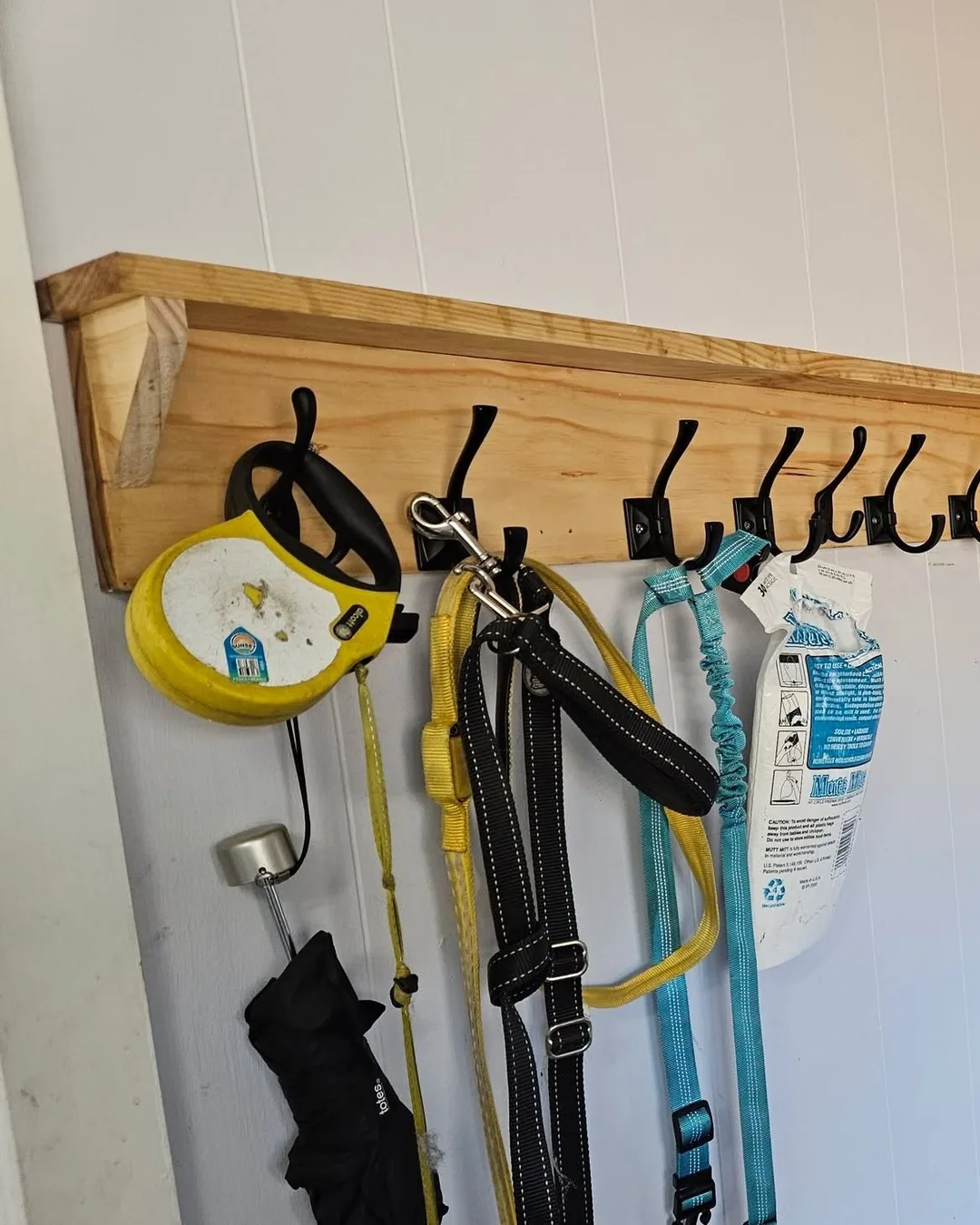
Two wooden racks on white panelling hold a jumble of dog leads — yellow, black, turquoise — a waste-bag pack, and a closed black umbrella hanging from a hook at the left, while the second rack’s four hooks sit empty. Leads and umbrellas are the two things you need in a hurry, in the rain, with a dog pulling at the door — and a cupboard is the worst place for both.
Hang leads at hand height, where you can grab one without looking, and give umbrellas a hook where they can drip-dry — or a tray below if the floor minds the water. The empty hooks on the second rack are not wasted space; they are the spare capacity for the second dog, the guest’s umbrella, the lead you buy next month.
The practical point: leads on a hook at hand height, umbrellas where they can drip — the things you grab in a hurry must never live behind a cupboard door.
Label the Cubbies So Nobody Has to Ask
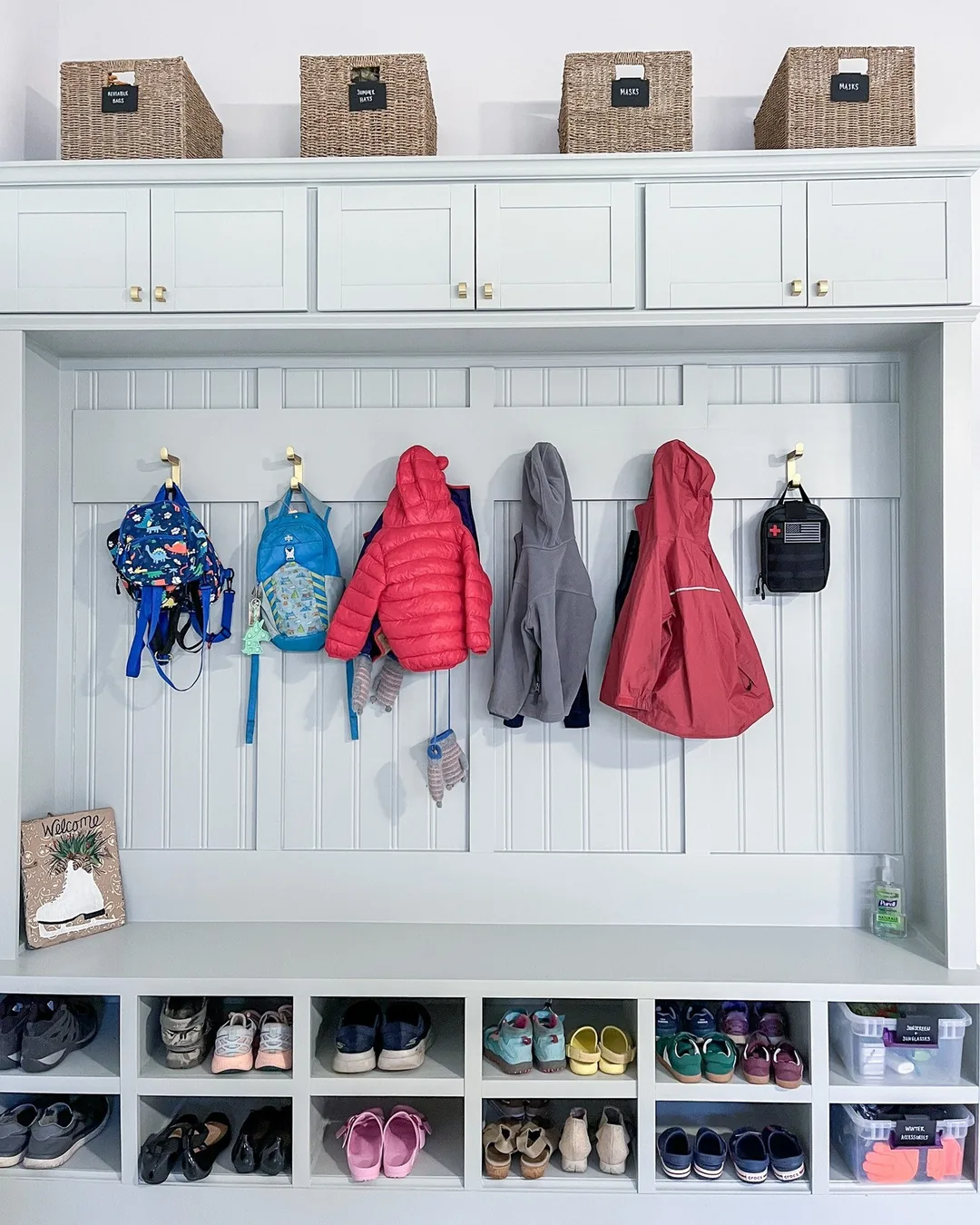
Four woven baskets sit on top of a built-in entryway unit, each with a chalkboard label — REUSABLE BAGS, SWIM & HATS, MASKS, MASKS — and below them, hooks hold children’s backpacks and jackets, shoe cubbies underneath. The labels name categories, not people, and that is exactly why they work: anyone can read them, anyone can put things back.
Make the labels big enough to read from the door and honest about what’s inside — a label that says bags on a basket full of hats teaches everyone to ignore labels. Chalkboard labels can be rewritten when the contents change; printed ones can’t, so use chalk where the seasons change what’s stored. Keep the wording short: two words beats a sentence nobody reads.
The practical point: label by category in words big enough to read from the door — a label everyone can read is a label everyone follows.
Can a Drop Zone Work Without a Hallway?
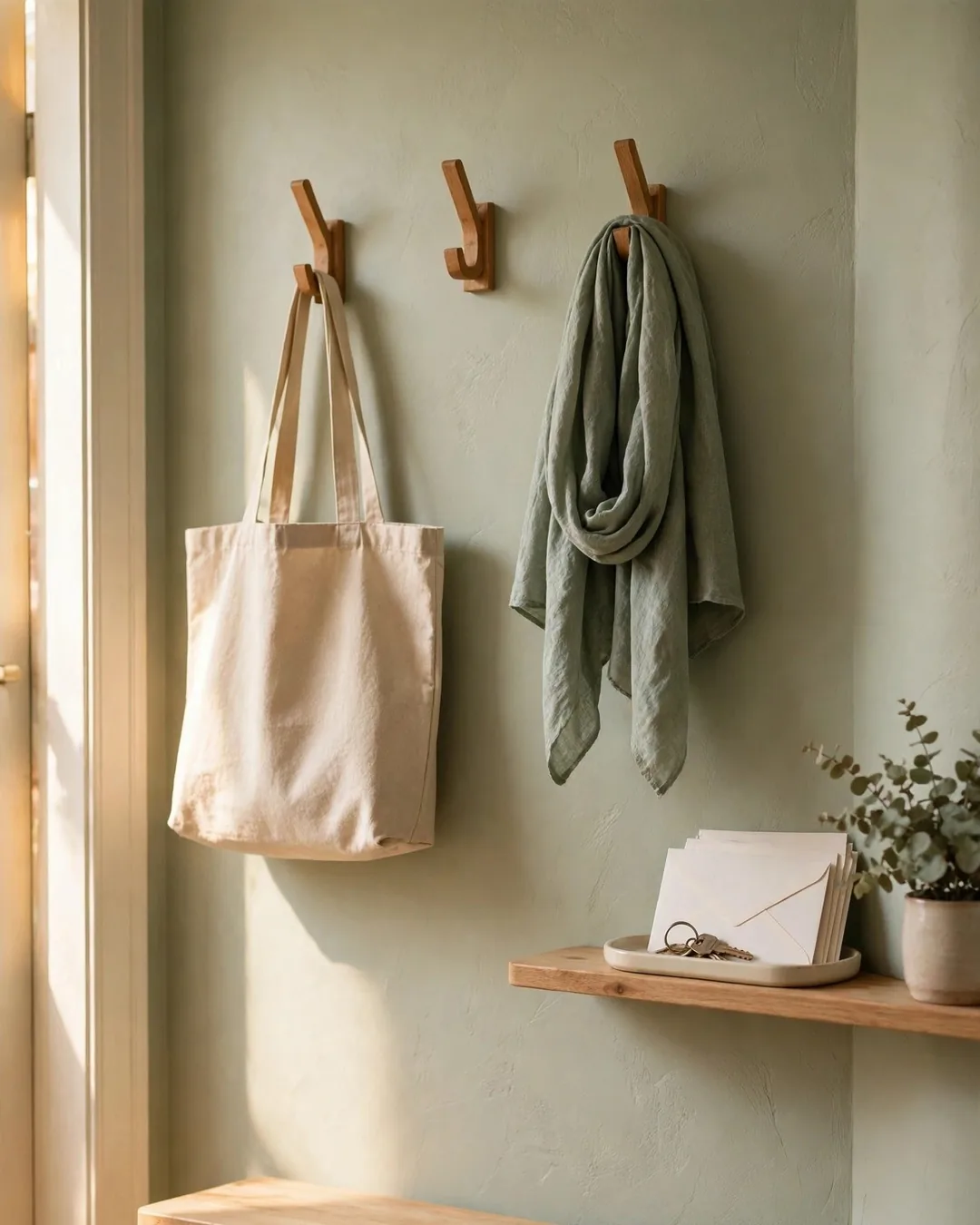
Yes — and the photo proves it. A sunlit corner holds the whole system: three wooden hooks with a tote and a scarf, a floating shelf with keys and blank envelopes, a bench over a wicker basket of shoes, a door edge at the far left. No hallway at all, just one corner of a room doing the job.
It works as a system, not a room. Any wall near the door you actually use will do — the side of a staircase, the end of a kitchen counter run, a stretch of wall beside the front door. The test is the same: hooks at hand height, a shelf for keys, somewhere for shoes, all within two steps of the door. If you can reach everything without walking across the room, it works.
The practical point: pick the wall nearest the door you actually use — hooks, a key shelf and a shoe spot within two steps, hallway or not.
Lighting That Finds Your Keys at Midnight
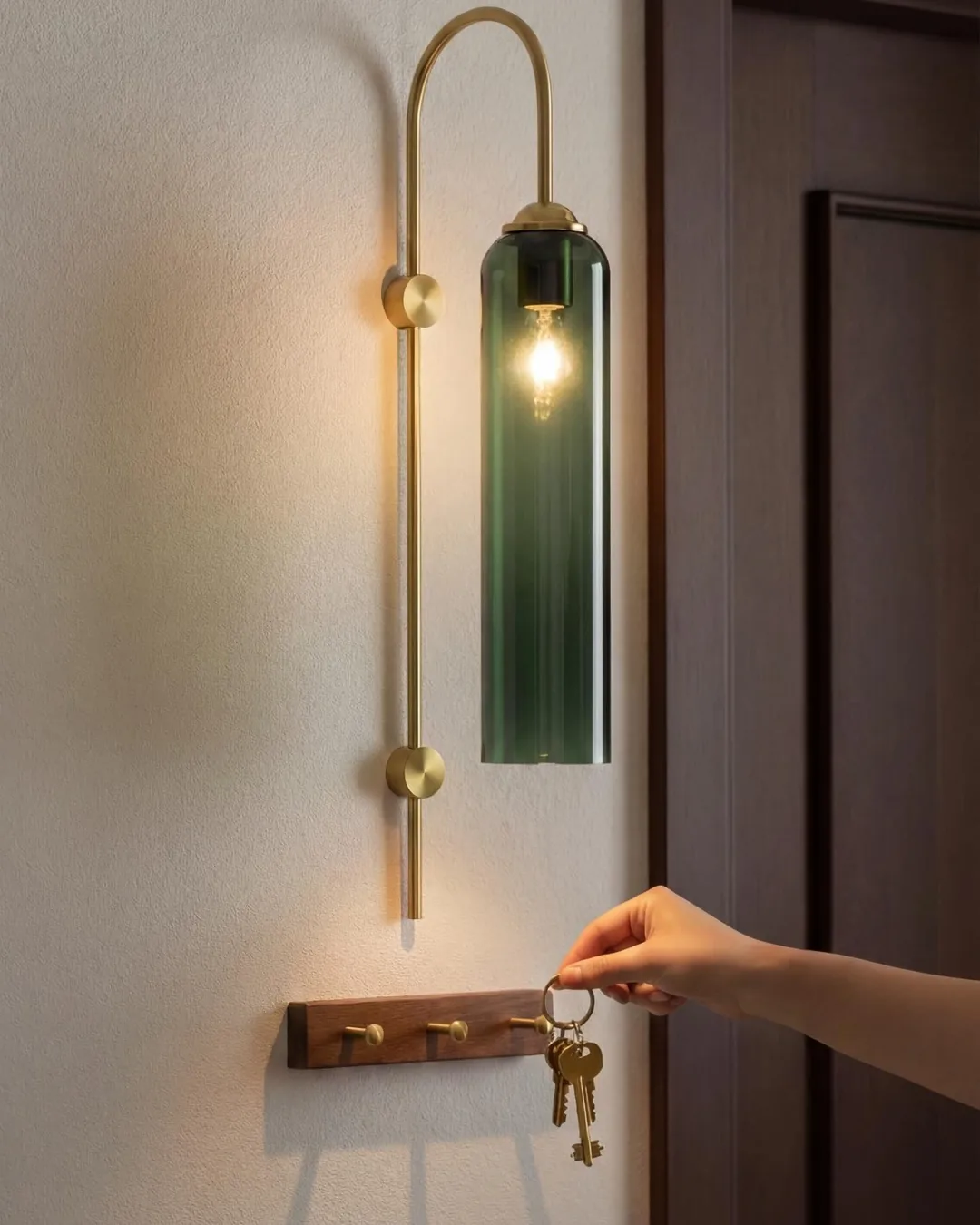
A brass sconce with a green glass shade glows warm above a wooden key strip, and an adult hand hangs a set of brass keys on the rightmost hook. That glow is the difference between finding your keys and fumbling for them — a drop zone you can’t see in the dark is a drop zone that fails half the time.
Warm light, about 2700K, on a switch right by the door — or a motion sensor, so it lights itself when hands are full. One small sconce or a short LED strip under the shelf is enough; the entry doesn’t need stadium lighting, it needs enough light to read a key hook and find a bag. Wire it before the bench goes in, or use a rechargeable sconce if you’d rather not cut into the wall.
The practical point: one warm light over the key strip, on a switch by the door or a sensor — light you can find your keys by is the cheapest upgrade a drop zone gets.
Leave One Hook Empty, On Purpose
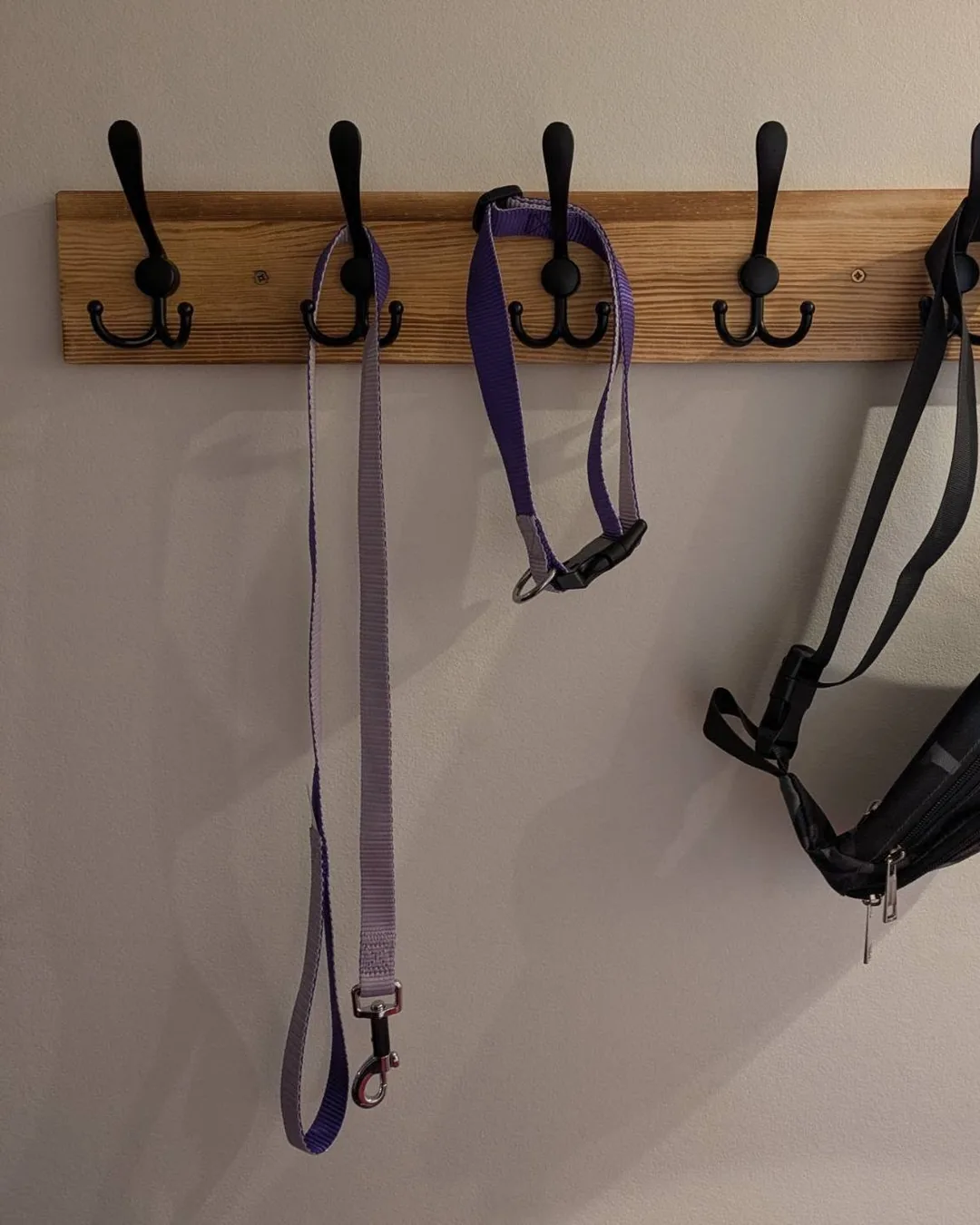
A wooden board with five black hooks: hook 1 empty, a purple leash on hook 2, a harness on hook 3, hook 4 empty, a fanny pack on hook 5. Two empty hooks among the used ones, and they are not wasted — they are the breathing room that keeps the whole system working.
Every household gains things: a guest’s coat, a new bag, a hat bought on holiday, a lead for the dog you haven’t got yet. If every hook is full on day one, the overflow lands on the floor, and the floor is where the clutter starts. One empty hook absorbs all of it, and it is the only hook that never needs reorganising. Defend it — the moment it fills up, the system has no slack left.
The practical point: leave one hook empty and defend it — it is the difference between a drop zone that stays tidy and one that fills up by the second week.
Out the Door, On Time
That is the whole test of a drop zone: not how much it cost or how clever it looks, but whether everything has a place and everyone can leave on time. Map the mess first, give every person a hook and a cubby, keep the keys in one dish, and leave one hook empty. Do that, and the smallest corner of your home becomes the one that saves you five minutes every single morning.