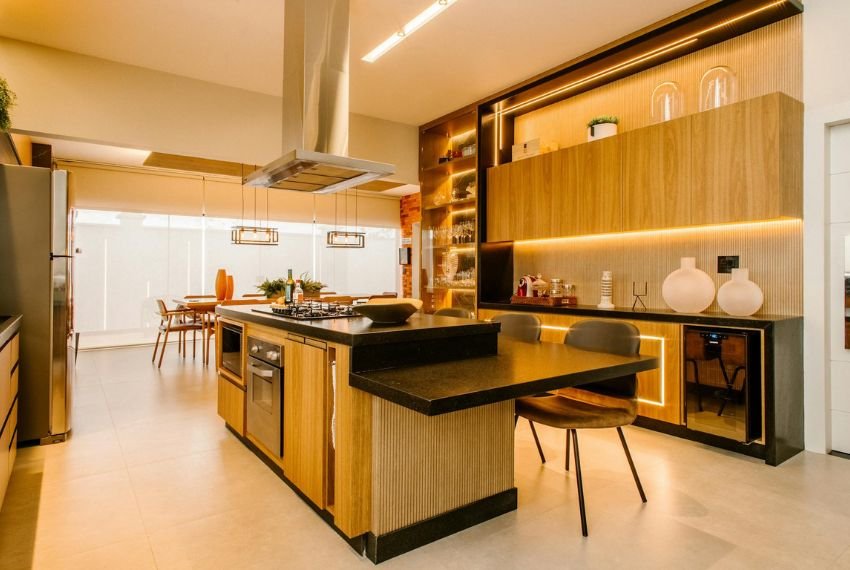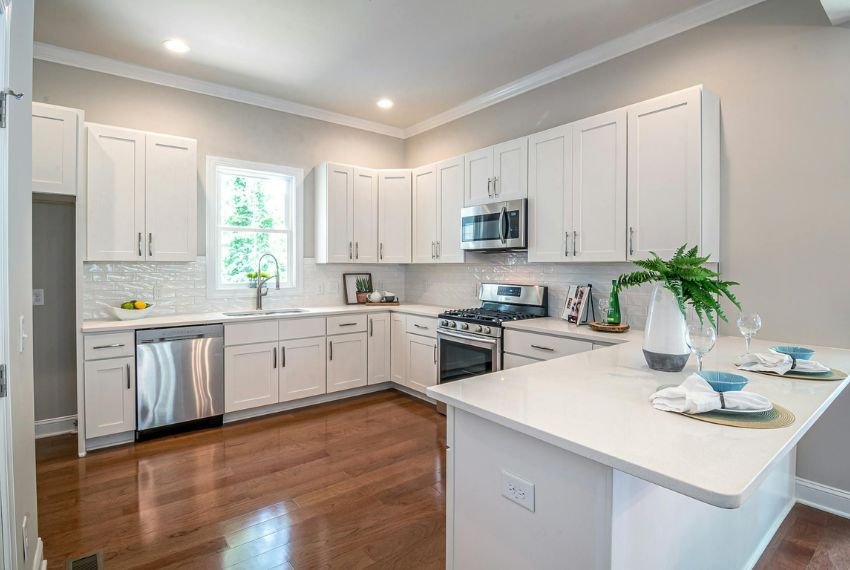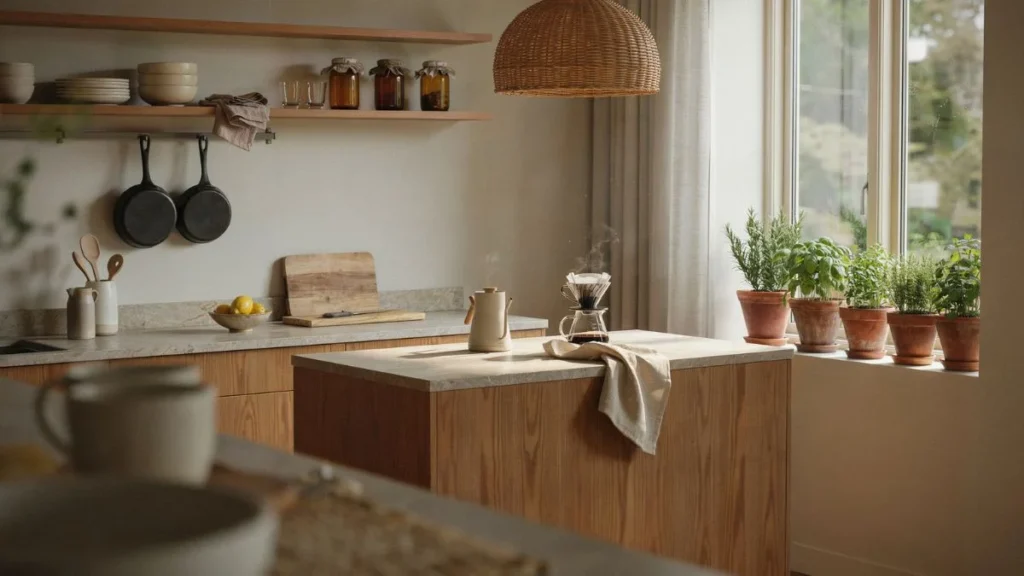
Your kitchen does not have to feel chaotic, cold, or cluttered — it can be a place where you want to slow down. Warm zen kitchen decor is about designing a space that breathes: one that uses natural materials, honest textures, and generous open space to create a room that calms the moment you walk in.
Zen-inspired kitchens are gaining serious momentum in 2026, and for good reason. Homeowners are craving environments that feel intentional rather than overwhelming. This guide covers the ideas, materials, and layouts that make a warm zen kitchen work — whether you are starting fresh or rethinking what you already have.
The Core Philosophy Behind Zen Kitchen Design
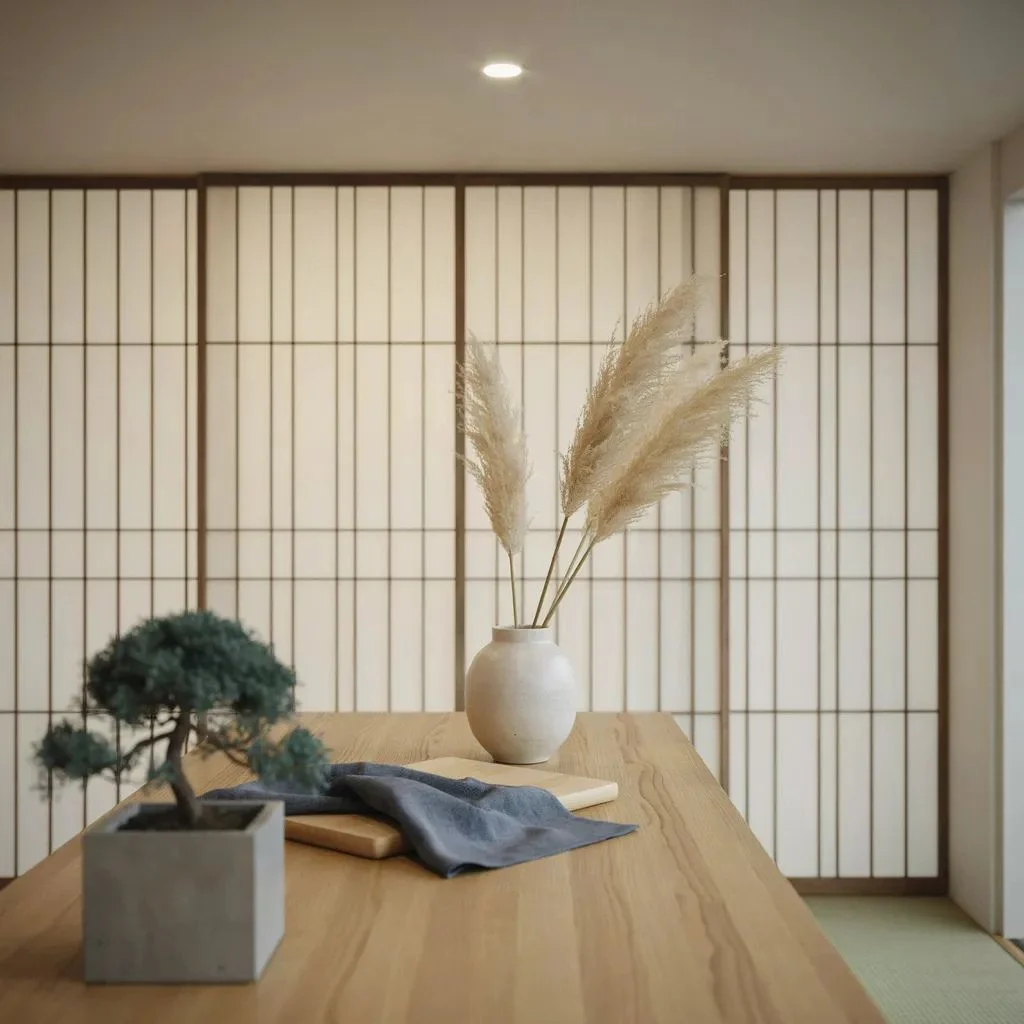
Zen design is not about emptiness for its own sake — it is about purposeful simplicity. Every object in a zen kitchen earns its place. Clutter, by definition, disrupts the flow of a space, and in a kitchen that already deals with daily activity and mess, the design has to work harder to hold that calm energy.
The central idea is wabi-sabi: finding beauty in imperfection, in the worn grain of a wooden countertop, the slight variation in a handmade ceramic bowl, the honest texture of a linen curtain. Warmth in zen design does not come from adding more — it comes from choosing materials that have inherent soul.
A warm zen kitchen decor approach means making deliberate trade-offs. Fewer finishes. Fewer colours. More breathing room between objects. The result feels abundant in a quieter way — like the space has been curated by someone who genuinely thought about how they want to feel while cooking.
Natural Materials That Define the Warm Zen Look
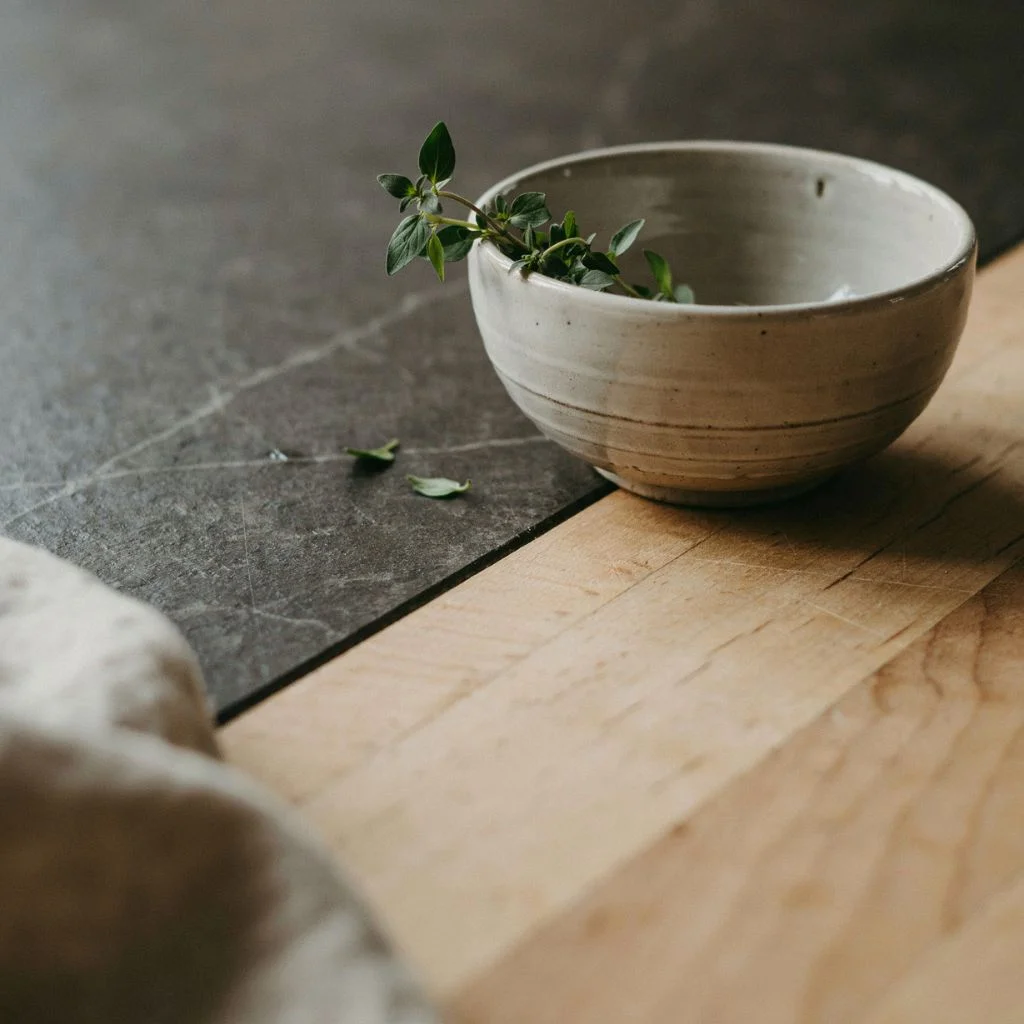
Natural materials are the backbone of zen kitchen design. They introduce organic texture, warmth and a sense of grounded ness that manufactured finishes simply cannot replicate.
Wood in Every Form
Raw wood, oiled wood, reclaimed wood — all of them belong in a zen kitchen. Use it for open shelving, countertops, cabinet fronts, or even a floating breakfast bar. The variation in grain is not a flaw; it is the whole point. Teak, walnut, and white oak are strong choices because they age gracefully and hold warmth even in cool-toned rooms.
Stone and Concrete Surfaces
Soapstone, honed marble, and concrete countertops add a raw, grounded quality that polished granite cannot touch. Honed finishes over glossy ones — they absorb light rather than reflect it, keeping the room feeling soft. A concrete sink paired with wooden shelves is one of the most effective material pairings in zen kitchen design.
Rattan, Bamboo, and Woven Textures
Rattan drawer pulls, bamboo utensil holders, and woven pendant lamp shades bring an artisanal, handcrafted quality that mass-produced kitchens almost never have. These materials read as natural without overwhelming — they layer beautifully with wood and stone without competing.
Ceramic and Clay
Handmade ceramic canisters, a matte clay fruit bowl, unglazed tile backsplash — ceramic and clay elements give a zen kitchen its human touch. Look for pieces with irregular edges, muted glazes, or intentional imperfections. They tell a story that factory-perfect pieces never will.
Colour Palettes That Create Instant Calm
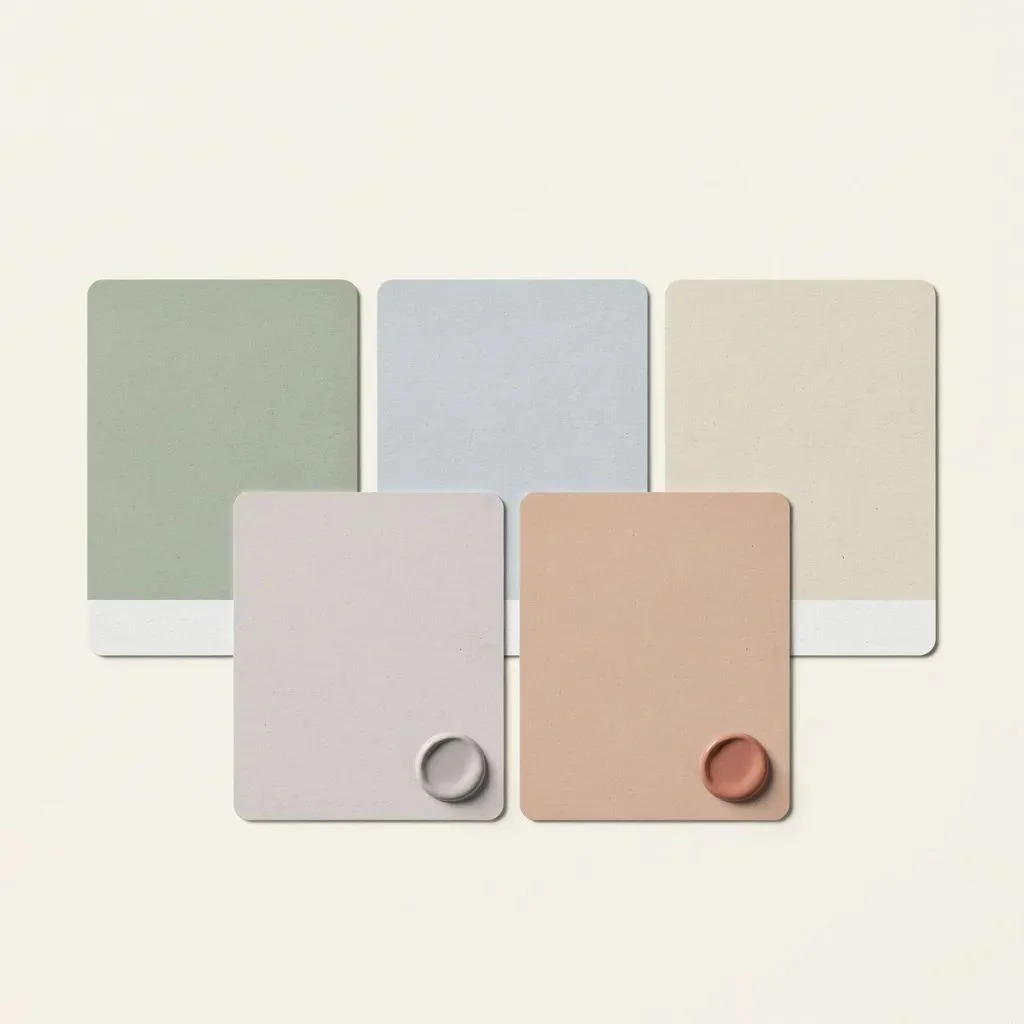
Colour is one of the fastest ways to shift the emotional temperature of a room. In warm zen kitchens, the goal is a palette that recedes — one that does not announce itself but simply holds the space.
Warm neutrals are the starting point: sand, oat, warm white, stone grey, terracotta, and soft caramel. These colours work because they reflect the tones found in natural materials. A warm white cabinet next to a walnut open shelf and a cream linen window covering does not feel plain — it feels curated.
Accent colours, if used at all, should be drawn from nature. Deep forest green, dusty sage, muted rust, and aged navy all complement a warm neutral base without disrupting the calm. One rule of thumb: if a colour looks like it belongs on a paint-by-number kit, it probably does not belong in a zen kitchen.
Avoid: stark white, high-gloss black, bright primary accents, and competing multicolour palettes. Monochromatic warmth — different shades of the same undertone — is far more powerful than colour variety.
Open Space Layout Principles
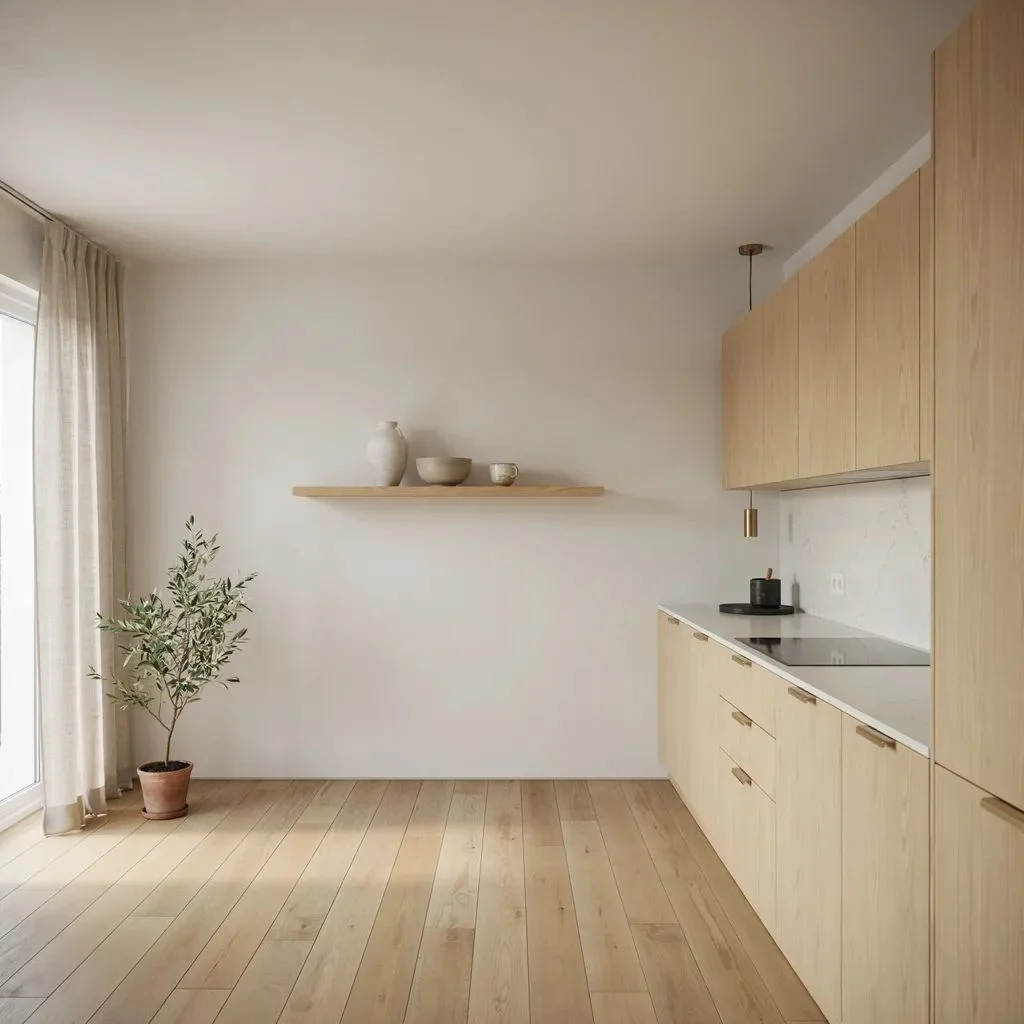
Open space is not wasted space in zen design — it is active breathing room. A kitchen that feels peaceful almost always has more negative space than you initially think it needs. The visual eye needs places to rest.
Start with the countertops. In most kitchens, they collect everything — appliances, mail, charging cables, random objects that have no other home. A zen kitchen keeps countertops edited to a minimum: a kettle, a cutting board, a small plant. Everything else finds a home behind a door or inside a drawer.
The Triangle Flow Principle
The classic kitchen work triangle — sink, stove, refrigerator — applies here, but in zen kitchens it becomes about flow rather than efficiency. You want to move through the kitchen without visual or physical obstacles. Furniture should not block natural paths; islands should not crowd walkways.
Lower Upper Cabinets, or Remove Them
One of the most impactful moves in warm zen kitchen decor is reducing or removing upper cabinets in favour of open shelving or no storage at all on certain walls. Upper cabinets box in a space visually. Open walls with a single shelf or two create instant height and lightness. This works especially well in smaller kitchens where visual heaviness is the main problem.
Integrated Appliances and Hidden Storage
Panel-ready refrigerators, integrated dishwashers, and appliance garages all serve the same function: they keep the eye moving smoothly around the room without interruption. Every appliance face that matches its surrounding cabinetry removes one more visual stop.
Lighting as a Design Tool, Not an Afterthought
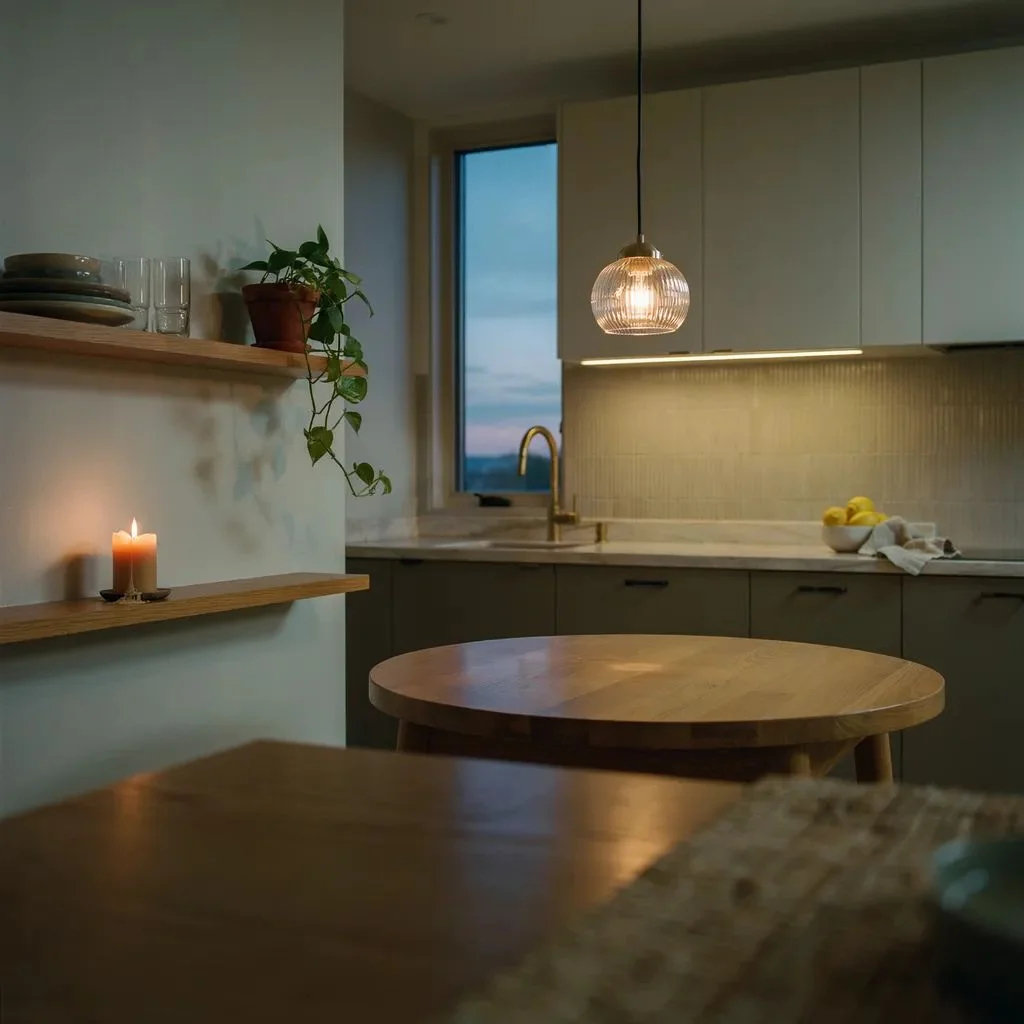
Lighting makes or breaks a zen kitchen. Warm-toned lighting — in the 2700K to 3000K range — is non-negotiable. Cool fluorescent light flattens textures, washes out natural materials, and makes even the most carefully designed room feel clinical.
Layer the lighting across three levels: ambient (overall ceiling or recessed light), task (under-cabinet strips over work surfaces), and accent (a pendant over an island or a small lamp on an open shelf). This layering allows you to dial in exactly the mood you want — bright for prep work, warm and dim for evening hours.
Pendant lights are one of the most visible design decisions in any kitchen. In a zen space, the right pendant does double duty: it provides focused light and acts as a sculptural element. Woven rattan pendants, ribbed glass globes, and matte ceramic shades all work well. Avoid overly industrial or overly ornate options — they fight the calm.
Natural light, wherever available, should be maximized. Keep window treatments minimal — sheer linen panels or nothing at all. Let the kitchen breathe with the time of day.
Mindful Storage and Surface Editing
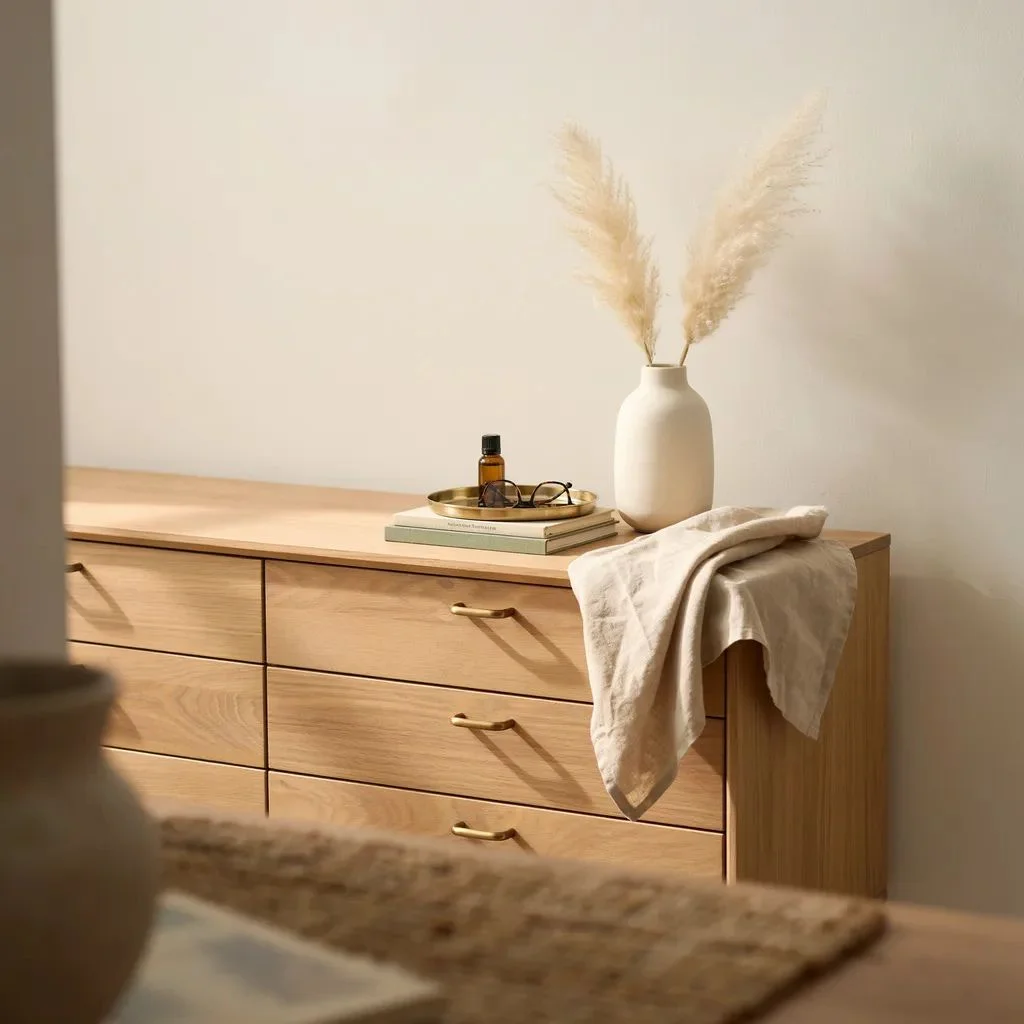
A mindful approach to storage is what separates a zen kitchen from a merely minimalist one. The goal is not to hide everything — it is to make conscious decisions about what is visible and why.
Open shelving is one of the most discussed elements of zen kitchen design, and with good reason. When styled well, open shelves display only what you genuinely use and love: matching ceramic mugs, a few beautiful bowls, a small stack of linen napkins. The discipline required to maintain open shelves is part of the philosophy — it keeps you honest about what deserves space.
For items that do not need to be on display, deep drawers beat upper cabinets every time. A well-organized deep drawer with inserts — one for spices, one for utensils — is far more functional and far less visually disruptive than a wall of closed doors above the countertop.
Surface editing means returning to your countertops regularly and removing anything that does not need to live there. This is a habit, not a one-time decision. The maintenance of open space is as important as the initial design.
Textures and Organic Details That Add Warmth
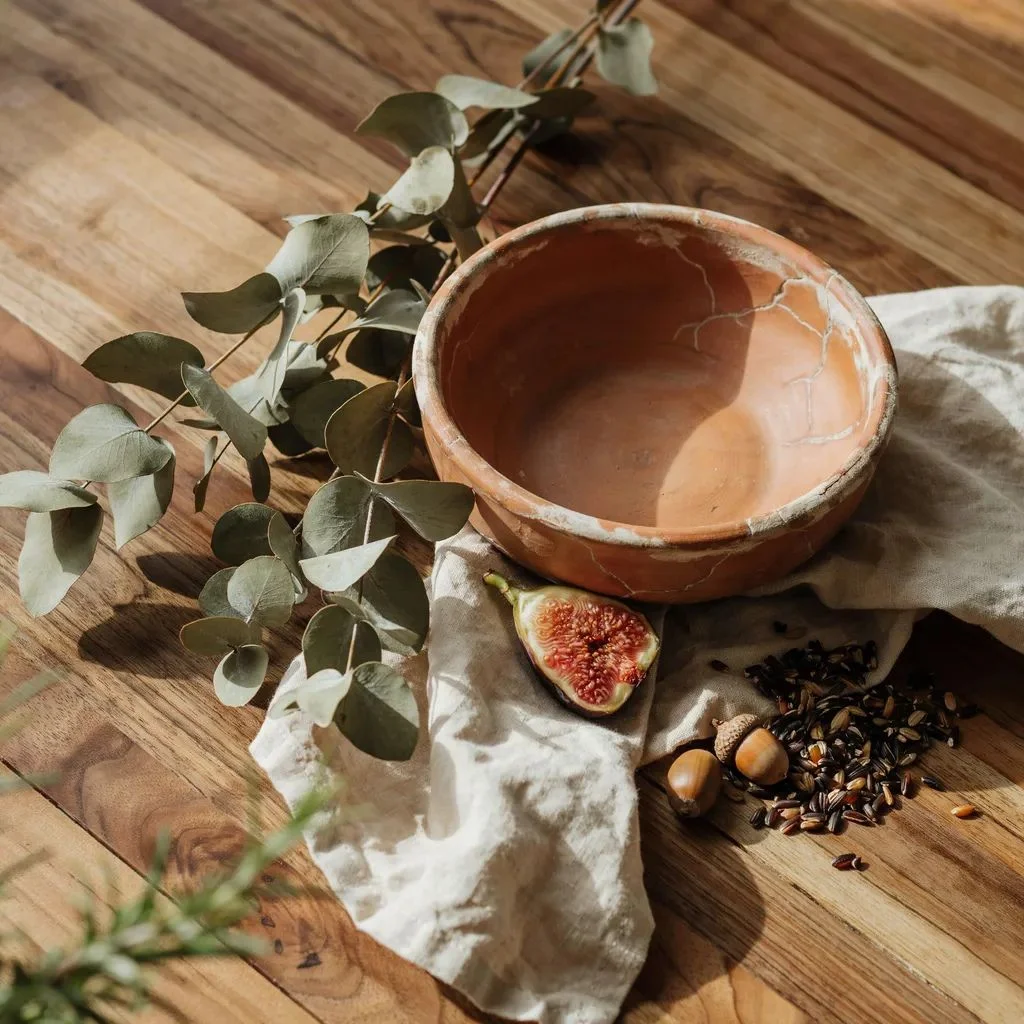
Zen does not mean cold. One of the most common mistakes people make when attempting a minimalist kitchen is stripping out all texture to look clean. The result is a room that feels sterile rather than calm. Warmth lives in texture.
Layer textures deliberately: a rough linen roman blind next to smooth plaster walls; matte ceramic hardware against a satin wood cabinet; a rough-edged stone countertop beside a smooth stainless steel sink. The contrast between textures creates visual interest without needing extra objects or colour.
Small organic details matter enormously at close range. A wooden spoon resting on a ceramic spoon rest. A bundle of dried lavender hanging from a cabinet hook. A single lemon in a shallow bowl. These micro-details give a zen kitchen its soul — they signal that real life happens here, and that it is beautiful.
Plants and Living Elements in a Zen Kitchen
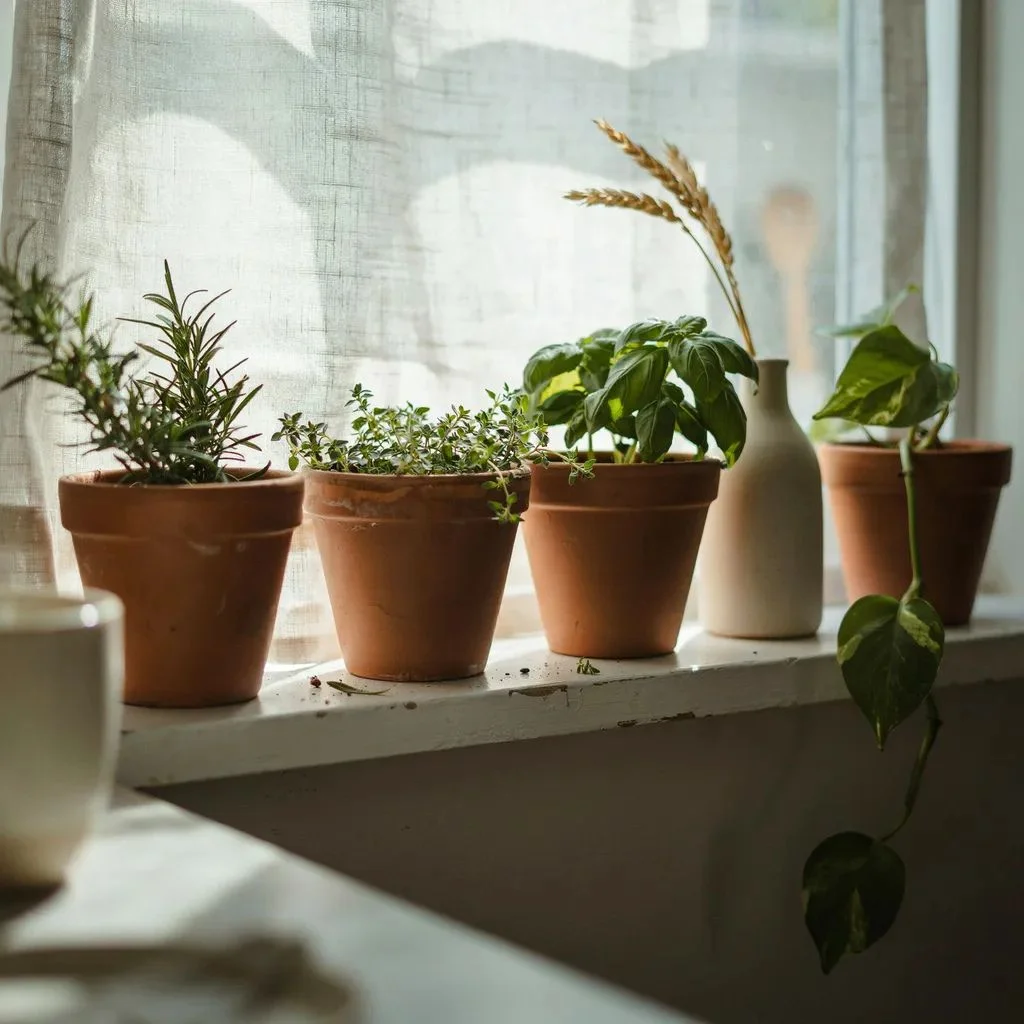
Nothing activates a warm zen kitchen faster than plants. They introduce life, color, and movement in a way that objects simply cannot. A trailing pothos on an open shelf, a small herb garden on the windowsill, a single stem of eucalyptus in a bud vase on the counter — each one connects the interior to the natural world outside.
Herb gardens are particularly well-suited to kitchens because they serve dual purposes: they are functional and beautiful. A row of terracotta pots with rosemary, thyme, and basil on a sunny windowsill is one of the most effective warm zen kitchen decor moves you can make.
For larger kitchens, a statement plant — a fiddle leaf fig in a woven basket, a large monstera in a ceramic pot — can anchor a corner and give the room a sense of organic scale. Keep the pot itself natural: terracotta, stone, woven fiber, or matte ceramic over plastic or bright glazed options.
Japandi Influence: Where Japanese Minimalism Meets Scandinavian Warmth
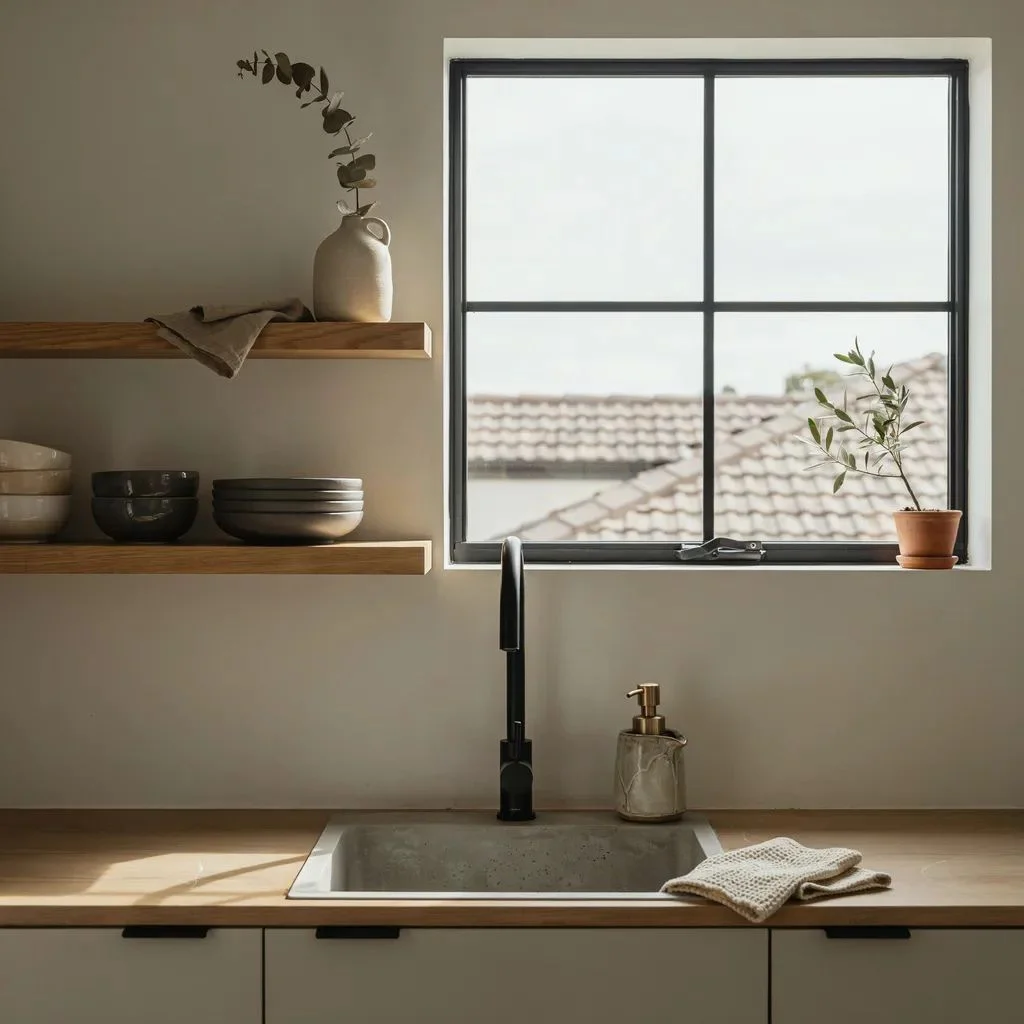
Japandi design — the cross-cultural design philosophy that merges Japanese minimalism with Scandinavian warmth — is arguably the most influential trend shaping warm zen kitchen decor right now.
Japanese design brings the wabi-sabi philosophy: imperfection, restraint, and respect for natural aging. Scandinavian design brings hygge: the emphasis on cozy warmth, quality materials, and spaces that invite you to slow down. Together, they create an aesthetic that is minimal without being cold, warm without being fussy.
In practical terms, Japandi kitchen elements look like this: flat-front shaker cabinets in warm white or greige, walnut or ash open shelving, integrated appliances, matte black hardware as a quiet accent, woven textures in pendants and placemats, and a consistent neutral palette punctuated only by the warmth of wood grain and ceramic.
The Japandi kitchen does not trend — it ages beautifully. That timelessness is a core part of its appeal.
Small Zen Kitchen Ideas That Punch Above Their Size
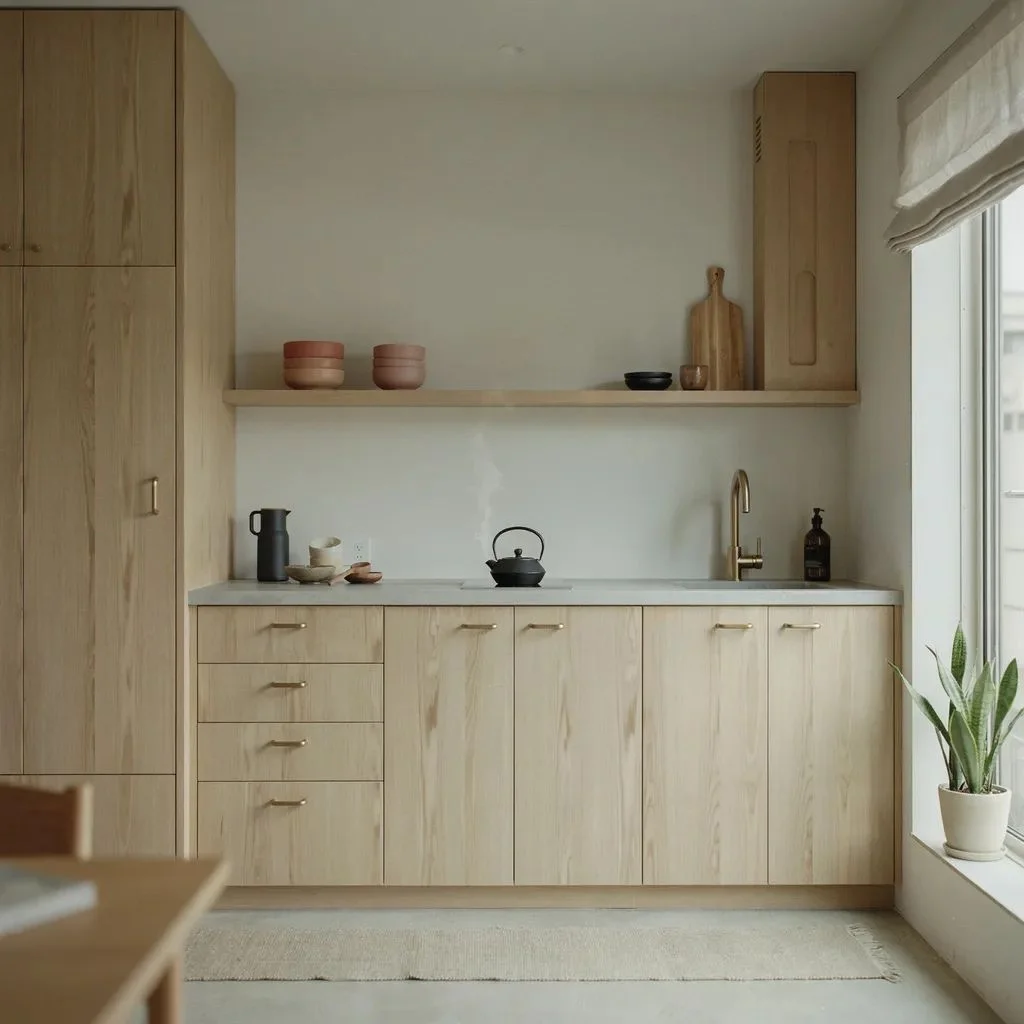
Zen design principles become more powerful in smaller kitchens, not less. The discipline required to maintain open space and edited surfaces is exactly what a small kitchen needs.
Start with vertical space: a single floating shelf high on the wall creates storage and draws the eye upward without consuming floor or counter space. Light-toned cabinetry makes the room feel larger — warm white, cream, or soft greige always beats dark colours in tight spaces.
Reflective elements — a mirror-fronted cabinet, a glossy tile backsplash in a matte-dominated room — can be used sparingly to bounce light and create depth. A small kitchen with great natural light, a clean countertop, and one beautiful plant will always feel more spacious than a cluttered one twice its size.
In a small zen kitchen, hardware choices matter more because every detail is visible at close range. Matte black, brushed brass, and antique bronze all work well. Avoid polished chrome — it reads as cold in warm-toned spaces. Even drawer pulls carry the design philosophy forward.
A Kitchen That Gives Back to You
A warm zen kitchen is not about achieving a specific look — it is about designing a space that works with your nervous system instead of against it. When the materials are honest, the space is generous, and the objects are chosen with care, the kitchen becomes something rare: a room you genuinely look forward to being in.
Start with one decision — clear the countertops, replace a pendant, add a wooden shelf. Zen design is cumulative; each honest choice builds on the last. The kitchen you want is closer than you think.
For more inspiration on calm, intentional interiors, explore our guide to sage green living room decor and bohemian bedroom design ideas on The Decor Trends.
Recommended: Zen Fireplace Mantel Decor Ideas for a Calm, Clutter-Free Living Room.