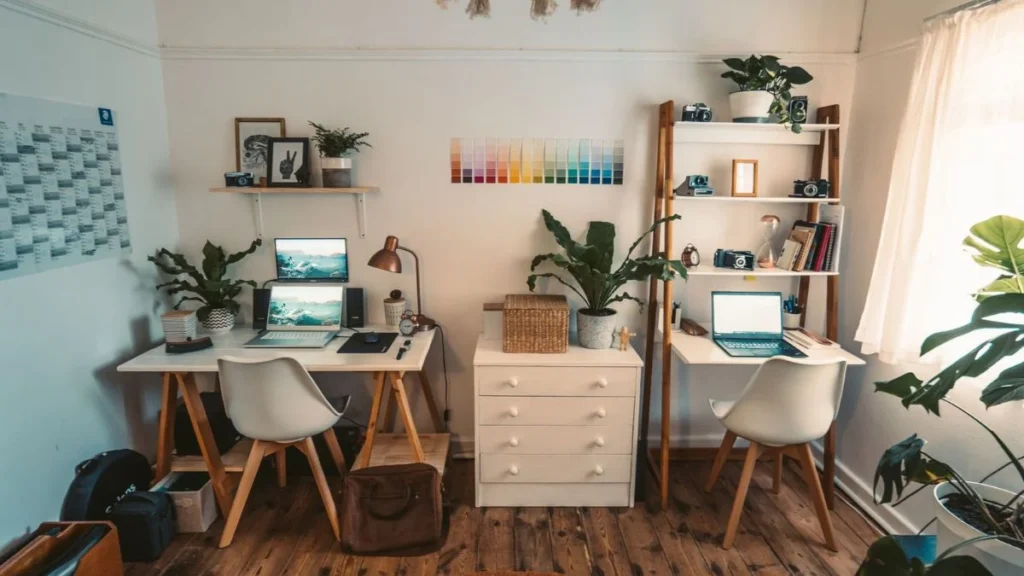
Tiny apartment doesn’t rule out a proper workspace; it encourages you to make smarter furniture choices that empower your productivity. IKEA home office hacks have become the go-to solution for renters and small-space dwellers who need a real desk setup without giving up precious square footage. From wall-mounted desks to pegboard organisers, a handful of budget-friendly pieces can turn even the smallest corner into a genuinely productive station.
This guide walks through practical, tested IKEA home office ideas built specifically for tight floor plans, studio flats, and shared rooms where a dedicated office isn’t an option. To help you visualize your space, consider how these ideas can be adapted to different layouts or personal needs, making the solutions more flexible and achievable for your unique situation.
What sets these IKEA home office hacks apart from generic small-space advice is that every piece mentioned is modular. A desk, a shelf or a drawer unit can be added on its own, moved later or combined with another piece once budget allows — nothing here requires committing to a full office fit-out in one go. This flexibility helps you feel confident in customizing your space as your needs evolve.
Quick Wins Before You Shop
• Vertical storage saves more floor space than any single furniture swap.
• Foldable and wall-mounted desks suit studios under 500 square feet best.
• Multi-purpose pieces like KALLAX and IVAR double as room dividers and storage.
• Small details — cable management, task lighting — make compact setups feel intentional rather than cramped.
Wall-Mounted Desks Free Up Every Inch Of Floor
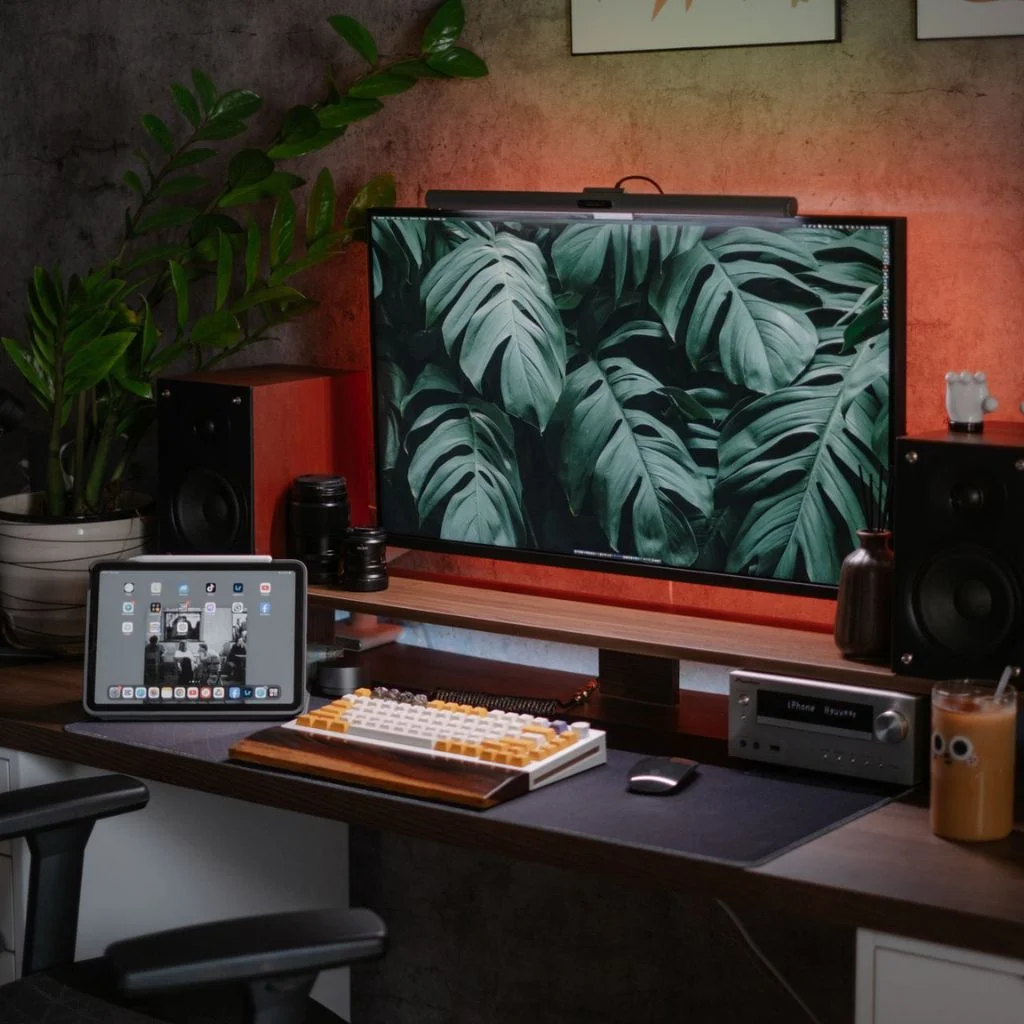
Floor space is the scarcest resource in a tiny apartment, and a wall-mounted desk solves that problem directly. The BEKANT wall-mounted desk folds flat against the wall when not in use, giving back the floor completely at the end of the working day.
This approach suits studio apartments where the desk shares a wall with a sofa or bed. Because the desk has no legs, cleaning underneath takes seconds rather than minutes, and the room reads as open even with the desk deployed.
Why this works: removing floor-standing legs eliminates the visual clutter that makes small rooms feel smaller, while still providing a full working surface during the day. A folded desk also means guests never have to navigate around a permanent workstation. Of all the IKEA home office hacks covered here, this is the one worth trying first in a genuinely tiny room.
Floating Shelves Replace Bulky Bookcases
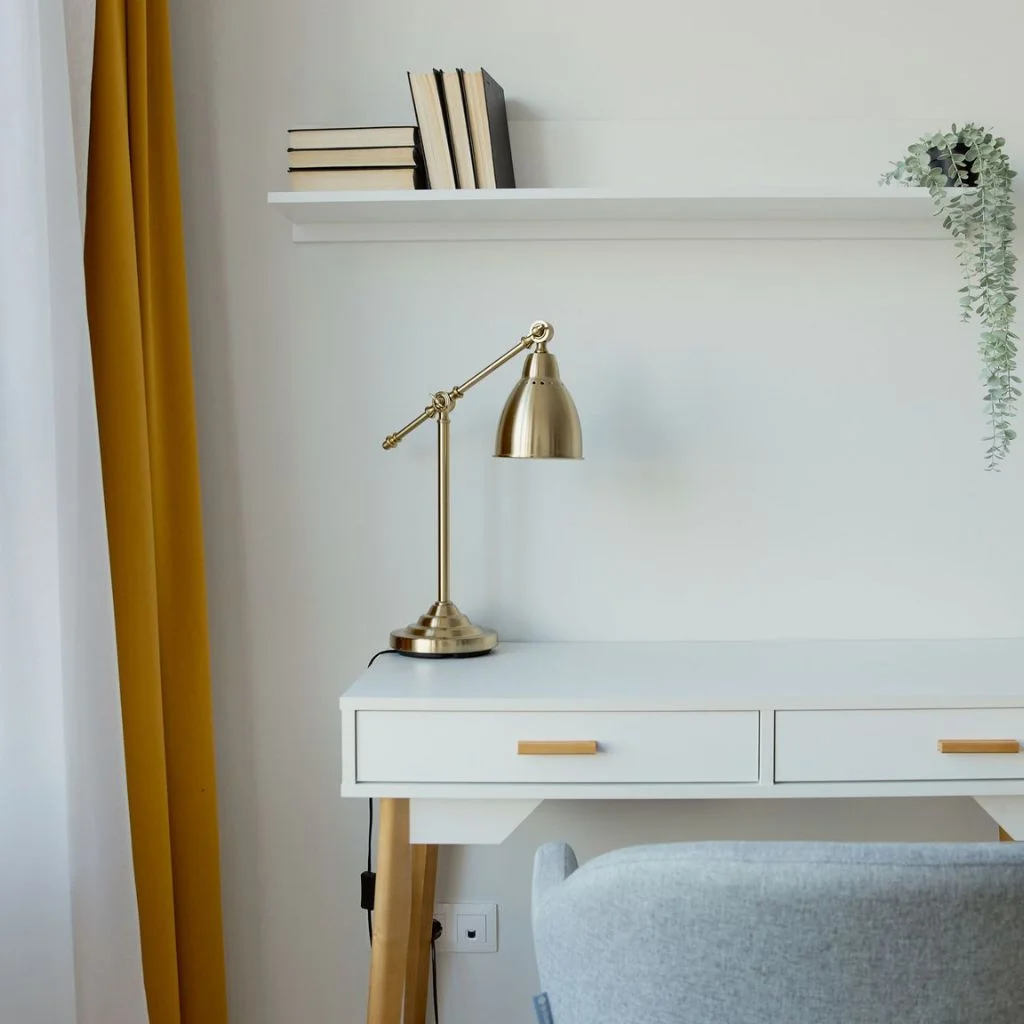
Traditional bookcases eat into floor space that a tiny apartment can’t spare. LACK floating shelves mounted above the desk hold books, files, and decor without touching the ground at all.
Staggering shelves at different heights creates storage capacity without a boxy, heavy look. Three or four shelves usually replace an entire bookcase’s worth of space, and the wall below stays free for a chair to tuck fully under the desk.
This swap also keeps sightlines open across the room, which matters more in small apartments than most people expect — a floor cleared of furniture legs genuinely reads as bigger to the eye.
Rolling Drawer Units Tuck Away Instantly
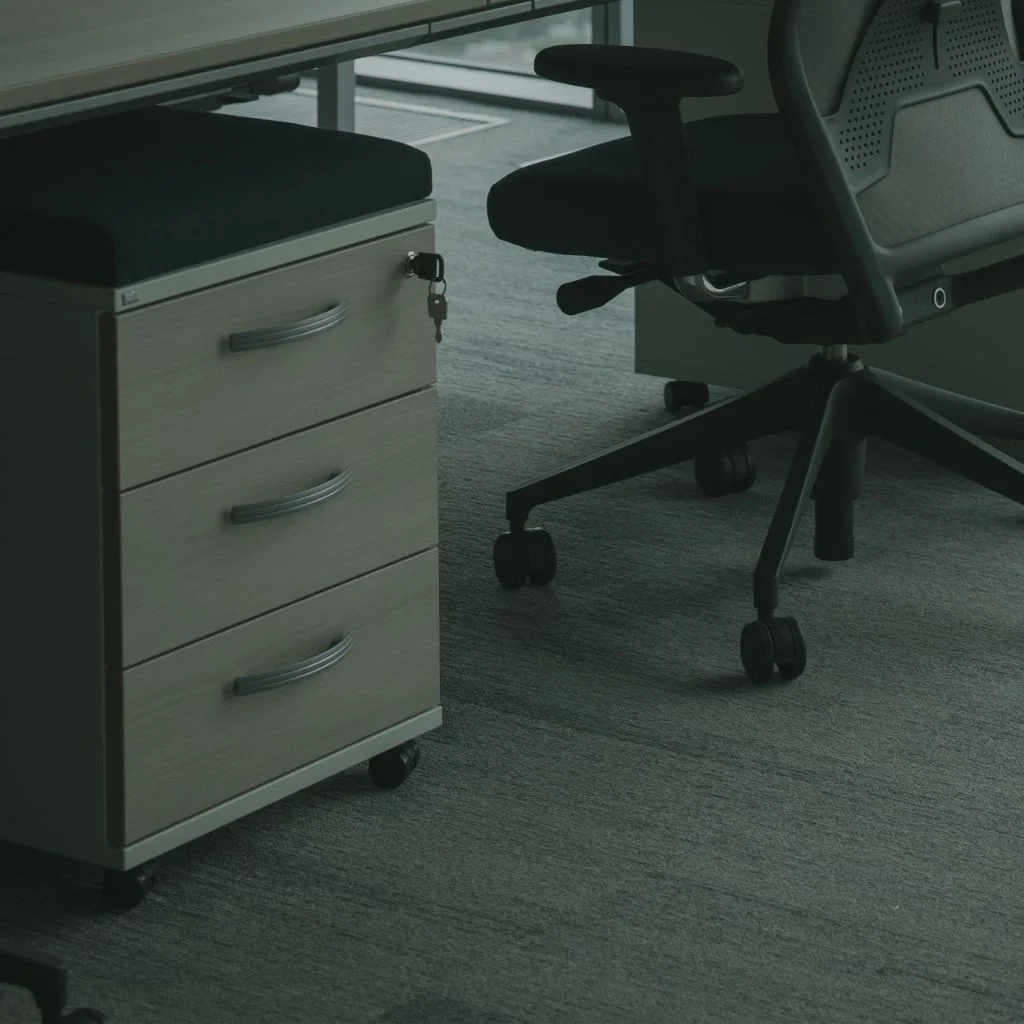
A fixed filing cabinet is one of the biggest space traps in a compact home office. The ALEX drawer unit rolls on castors and slides directly under most desks, disappearing once the working day ends.
Because it’s mobile, the same unit can shift rooms entirely — genuinely useful in a studio where the “office” corner doubles as a dining spot in the evening. Rolling it against a wall for dinner takes moments.
Stacking two units side by side under a wider desk adds extra storage without needing a separate cabinet at all, which keeps the overall footprint of the workspace to a single wall.
Corner Desks Claim Awkward Dead Space
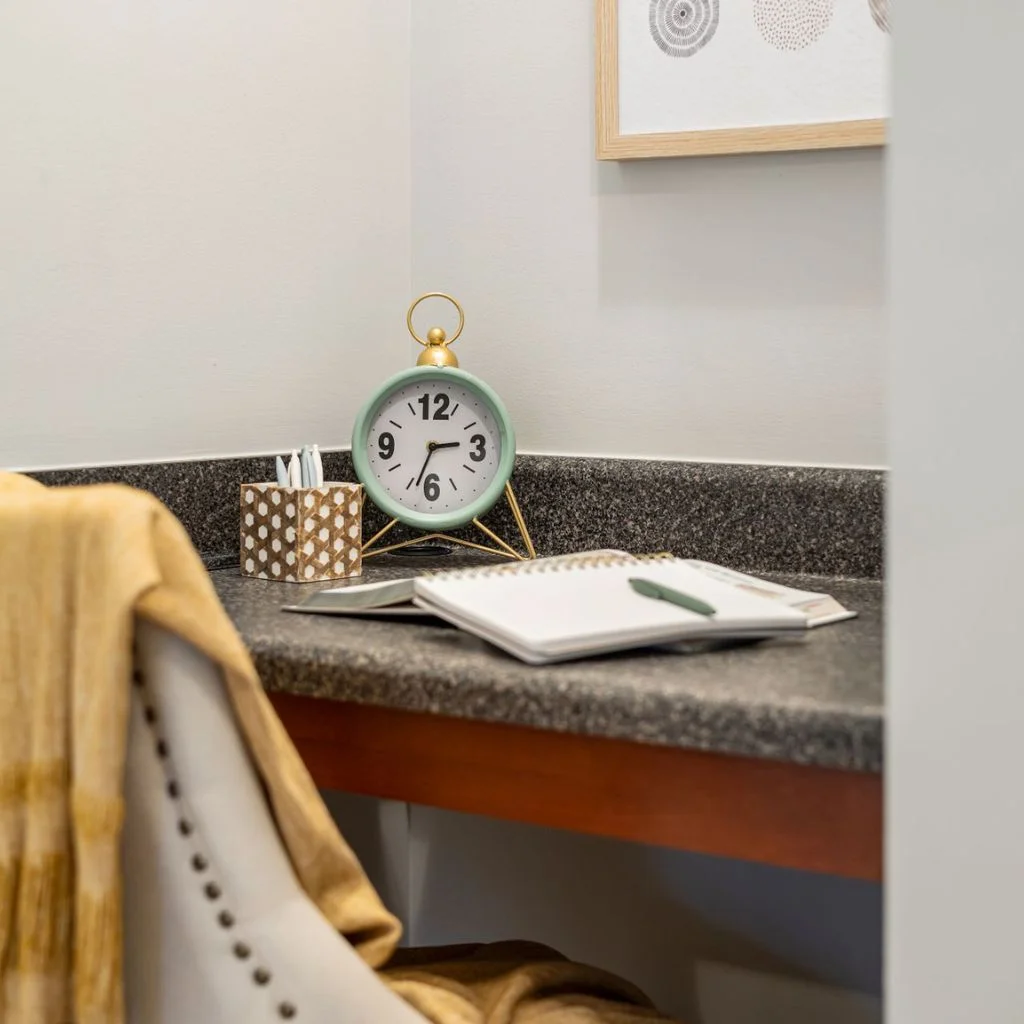
Every small apartment has one awkward corner that never quite gets used. A MICKE corner desk is shaped specifically to fill that gap, turning dead space into a full workstation.
Corner placement also means the desk doesn’t interrupt the main walking path through the room, which keeps the rest of the apartment feeling open rather than divided by furniture.
Pairing a corner desk with a slim, armless chair keeps the whole footprint tight enough for rooms under 100 square feet and leaves enough clearance to walk past without squeezing by.
Pegboards Turn Blank Walls Into Storage
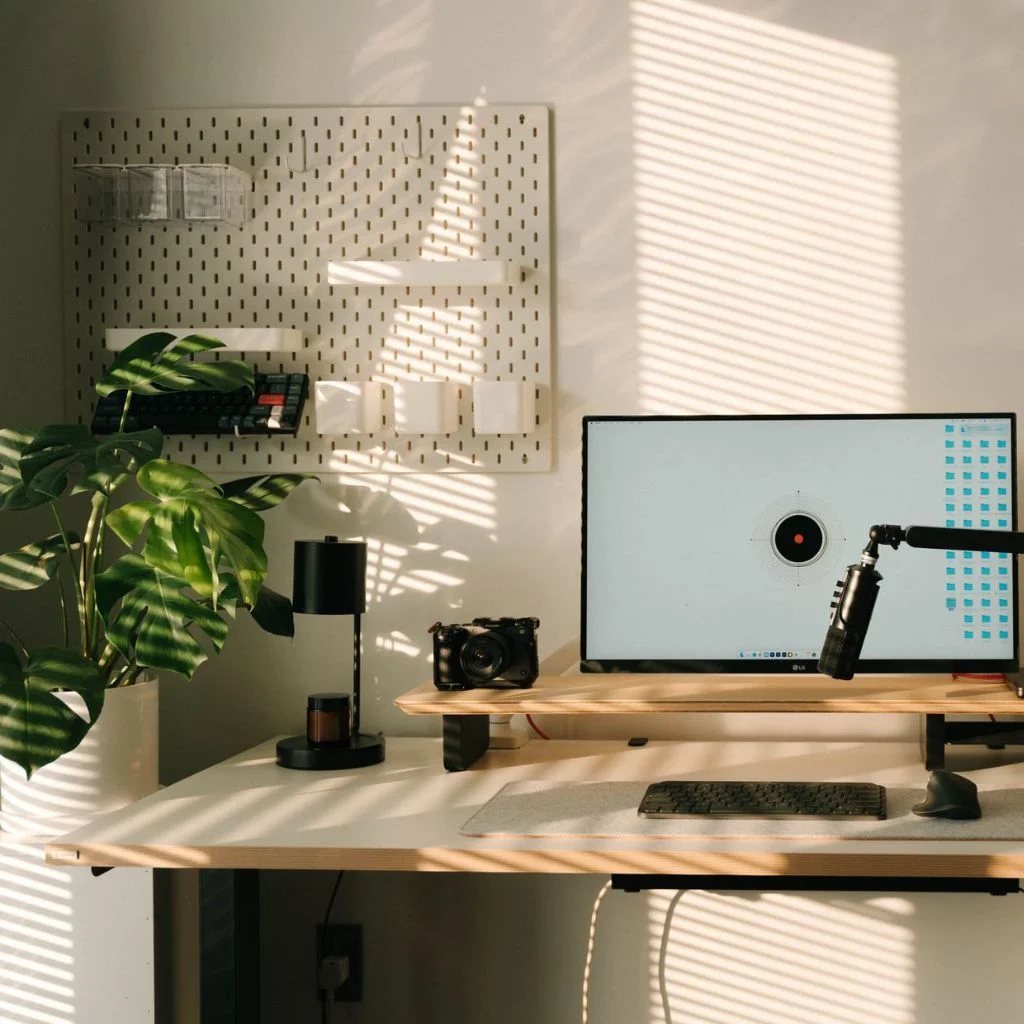
Desk drawers fill up fast in a tiny apartment, but a SKÅDIS pegboard mounted above the desk moves supplies onto the wall instead. Hooks, small baskets, and shelves clip into the holes wherever they’re needed.
This system also makes reorganising simple — nothing is fixed in place, so the layout can change as work habits change, without drilling a single extra hole.
A pegboard doubles as a spot for a small calendar, notes, or a plant hook, keeping the actual desktop clear enough to work comfortably on a laptop and notepad side by side.
Among space-saving IKEA home office hacks, a pegboard tends to have the best cost-to-storage ratio, since a single board and a handful of accessories replace what would otherwise need a dedicated cabinet.
Room Dividers Create A Defined Work Zone
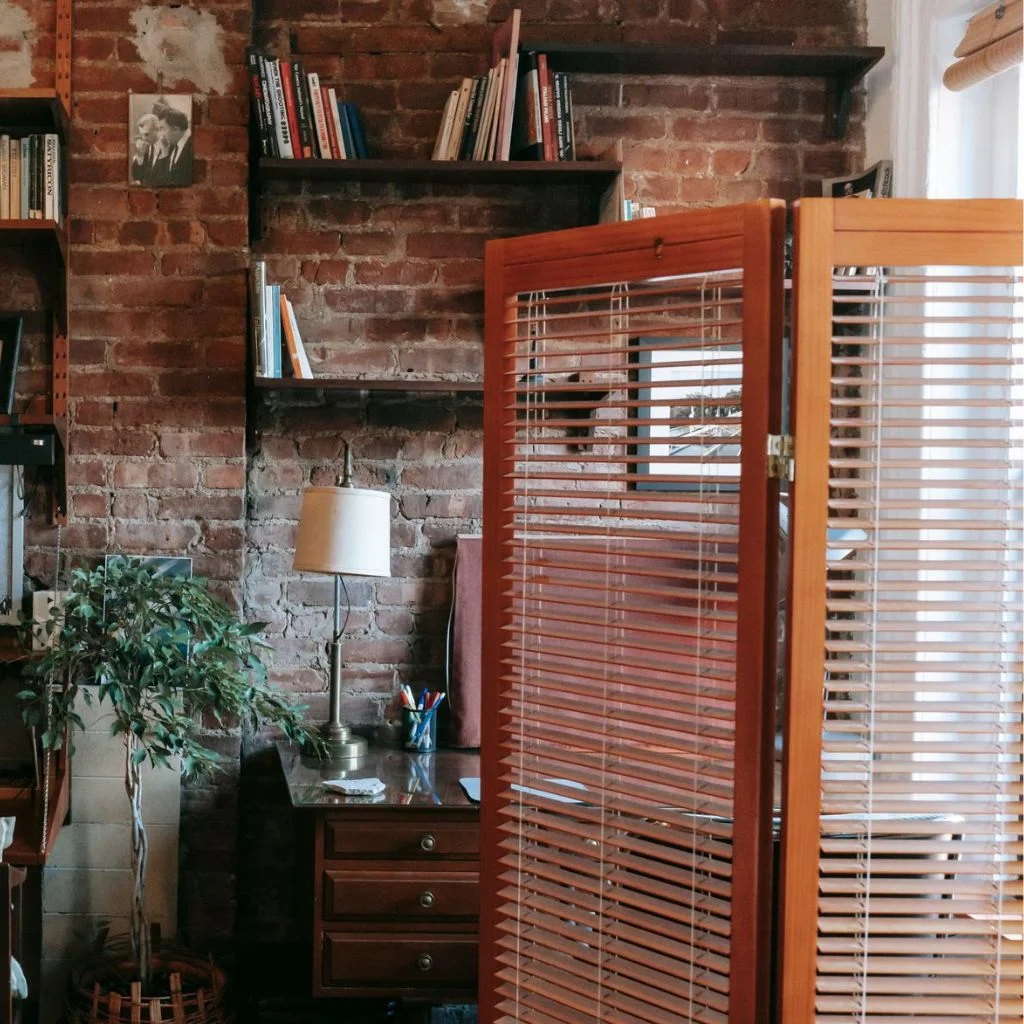
Open-plan studios often lack any visual separation between “living” and “working.” A KALLAX shelving unit placed perpendicular to a wall creates a soft divider without blocking light the way a solid partition would.
Storage cubes can face the work side while decor or plants face the living side, so one piece of furniture serves two rooms at once — a genuinely efficient use of a tiny footprint.
This is one of the more common requests for studio layouts, and in practice, it works better than a curtain divider, which tends to feel temporary rather than intentional. It’s also one of the easiest IKEA home office ideas to reverse later, since the unit moves back against the wall if the layout changes.
Foldable Systems Hide The Office Completely
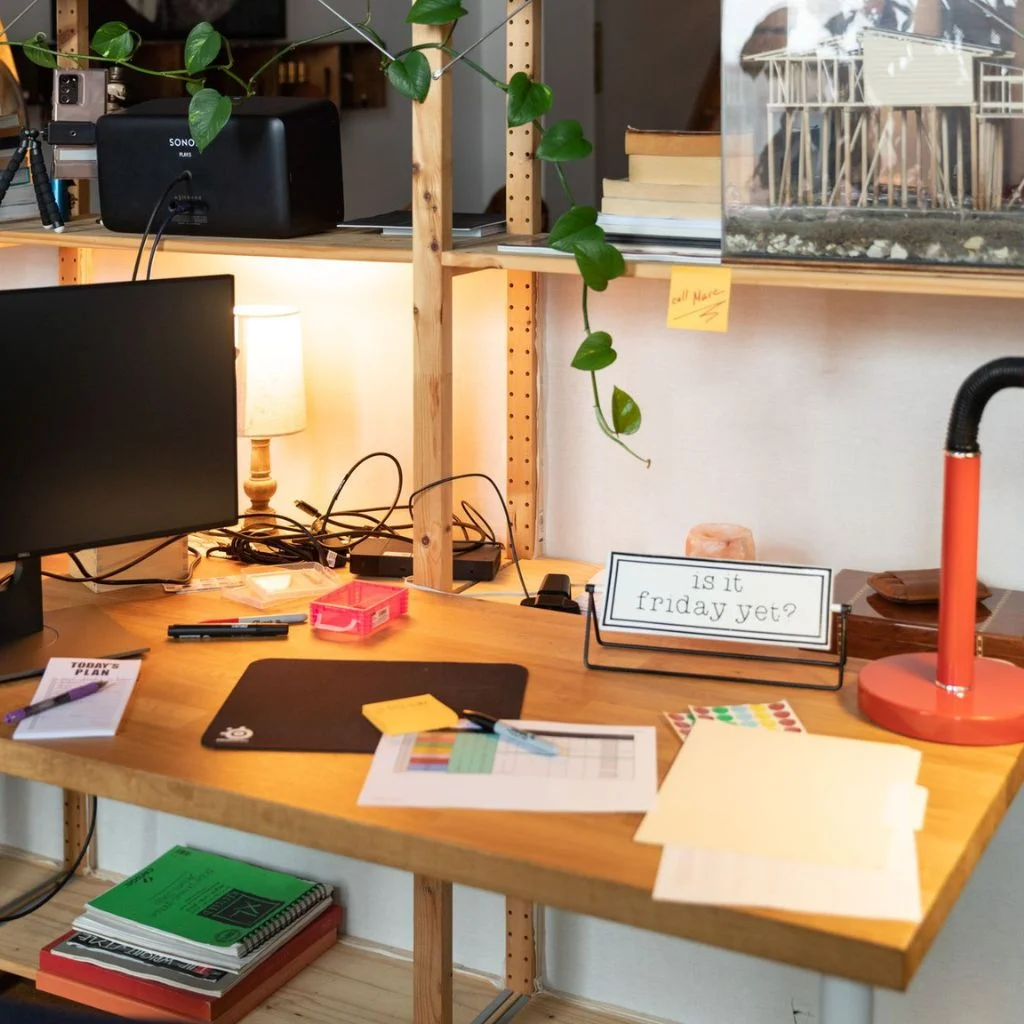
For apartments where the workspace needs to disappear entirely outside office hours, a foldable IVAR cabinet system with a drop-down desk front conceals the whole setup behind closed doors.
This works particularly well in a bedroom, where a visible desk can make the space feel less restful at night. Closing the cabinet effectively switches the room from “office” to “bedroom” in seconds — one of the more dramatic IKEA home office hacks on this list.
Because the cabinet closes fully, monitor cables and paperwork stay hidden without needing a full tidy-up every evening, which matters when the same room serves more than one purpose.
Task Lighting And Cable Management: Complete The Setup
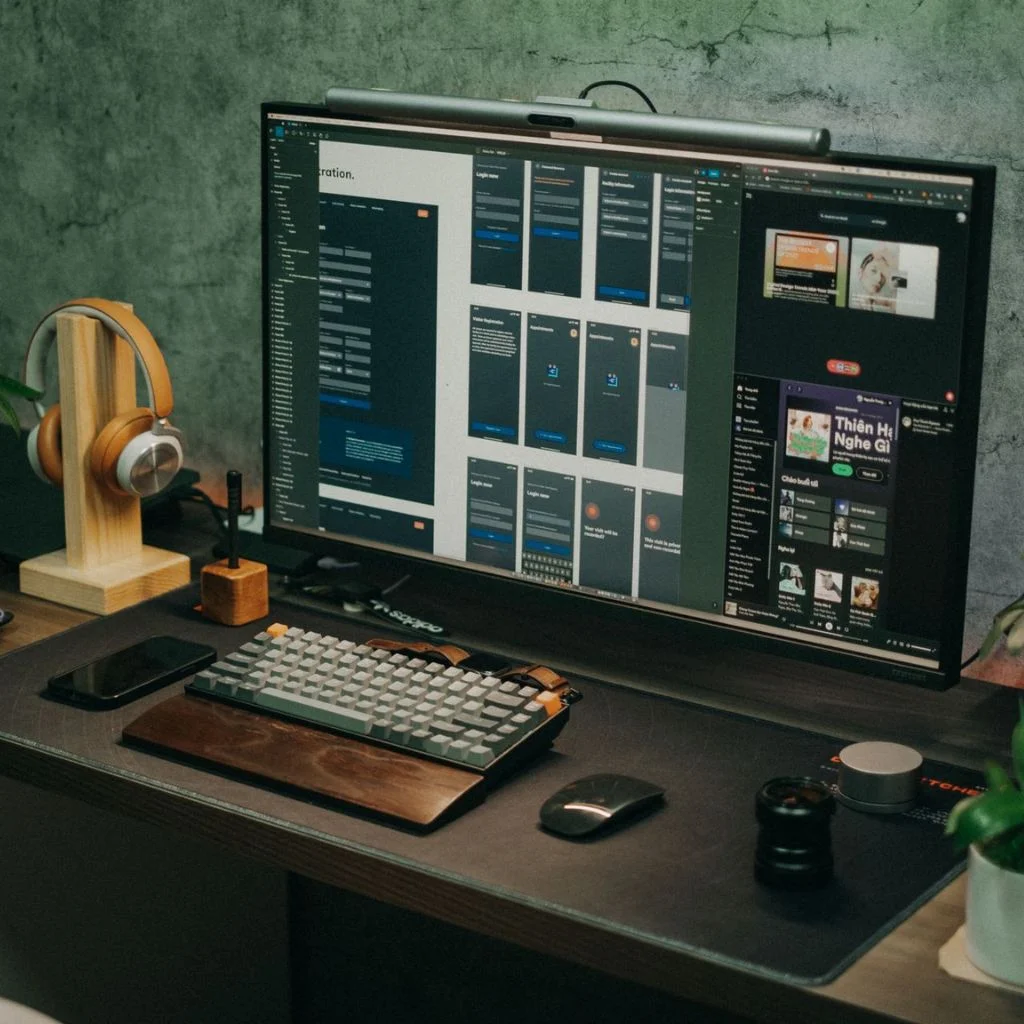
A small desk still needs proper lighting, and a clamp-style task lamp frees up desktop space that a traditional base-heavy lamp would otherwise take. Clipping it to a shelf edge or the desk itself keeps the surface clear for actual work.
Cable management matters more in a tiny apartment than a large one, simply because there’s nowhere to hide a tangle out of sight. Adhesive clips run along the back of the desk or up the wall, keeping cords away from foot traffic.
Why this works: small, deliberate details like tidy cables and a properly angled lamp make a compact setup look considered rather than improvised, which changes how the whole room feels day to day.
Budget-Friendly Desk Alternatives Suit Renters Best
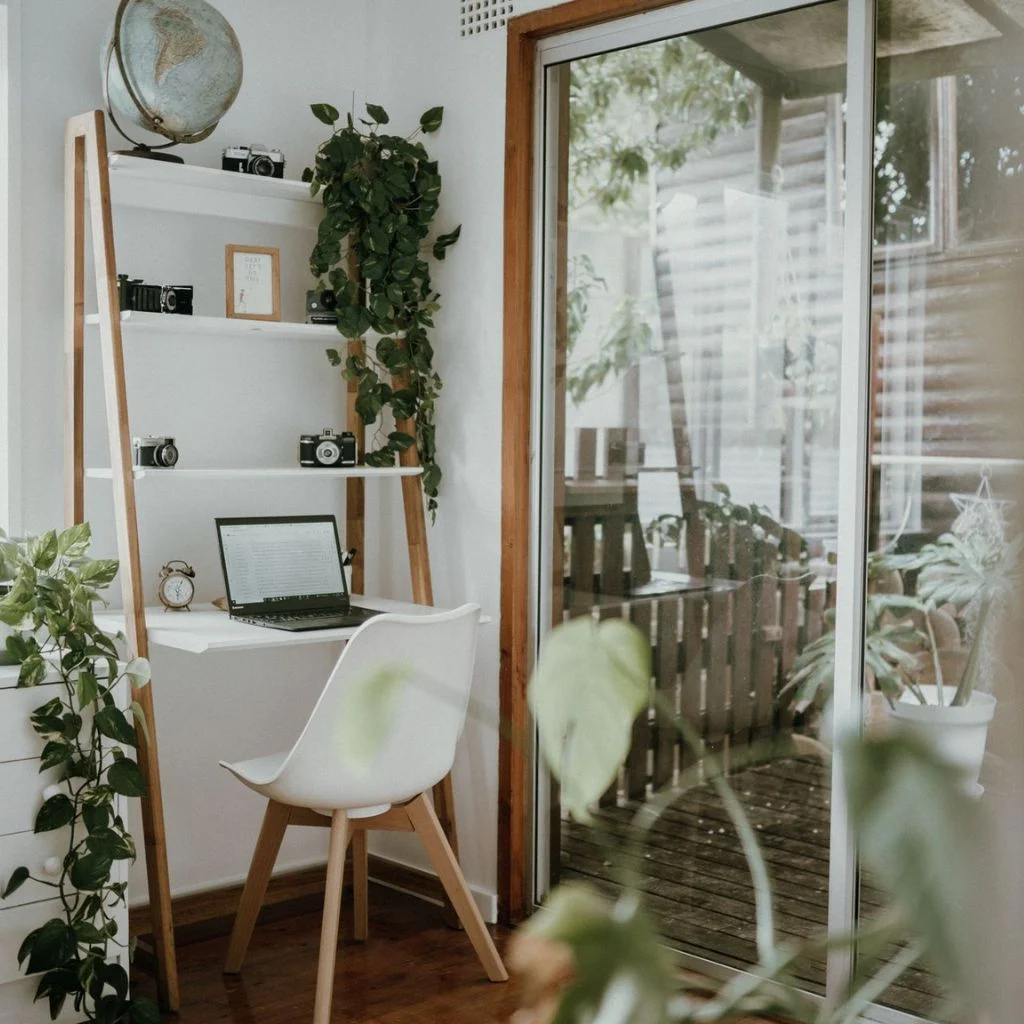
Renters often hesitate to invest in a large desk that they might not be able to take with them. Smaller IKEA home office pieces like the LINNMON tabletop paired with ADILS legs solve this neatly, since both parts pack flat and reassemble in minutes at a new address.
This combination also costs a fraction of a fitted or built-in desk, which matters when a tiny apartment’s budget is already stretched across rent, storage, and basic furniture.
Choosing a tabletop slightly narrower than the wall gap it sits in avoids the boxed-in feeling that a desk cut too close to both walls can create, even in a genuinely small room.
This kind of budget-first thinking runs through most of the IKEA home office ideas in this list — none of them require a large upfront spend, which suits a renter’s budget far better than a single custom-built desk would.
Multi-Functional Furniture Saves Space Twice Over
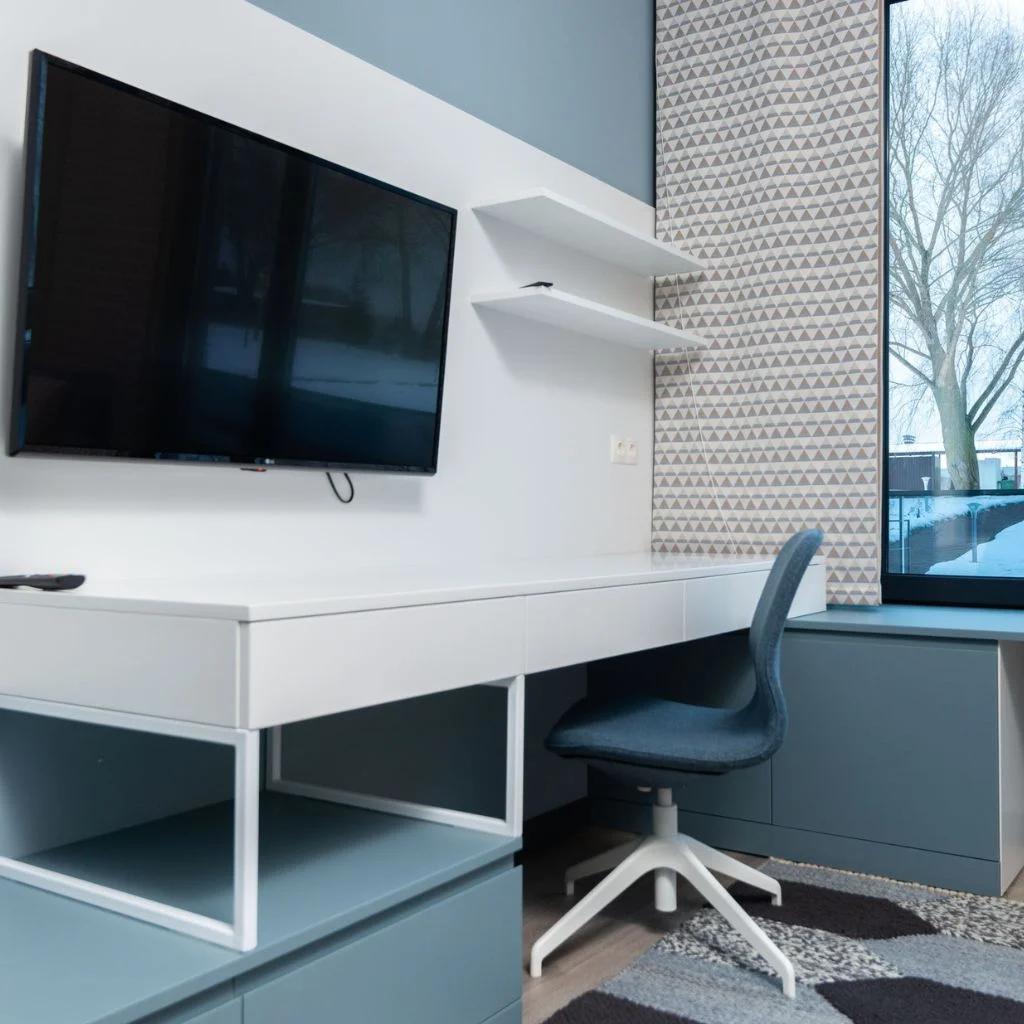
A tiny apartment rewards furniture that does two jobs at once. A storage ottoman doubles as extra seating for a video call, while a slim console table can serve as a printer stand by day and a plant shelf by night. This kind of thinking sits at the heart of nearly every practical IKEA home office setup built for a compact room.
Among the most versatile IKEA home office hacks is using a daybed instead of a permanent sofa in a studio, since it converts the same footprint from a seating area during work hours into a guest bed when needed.
Why this works: multi-functional pieces reduce the total number of items a small room has to hold, which is often more effective than swapping one piece of furniture for a smaller version of the same thing.
Slim Chairs Matter As Much As The Desk Itself
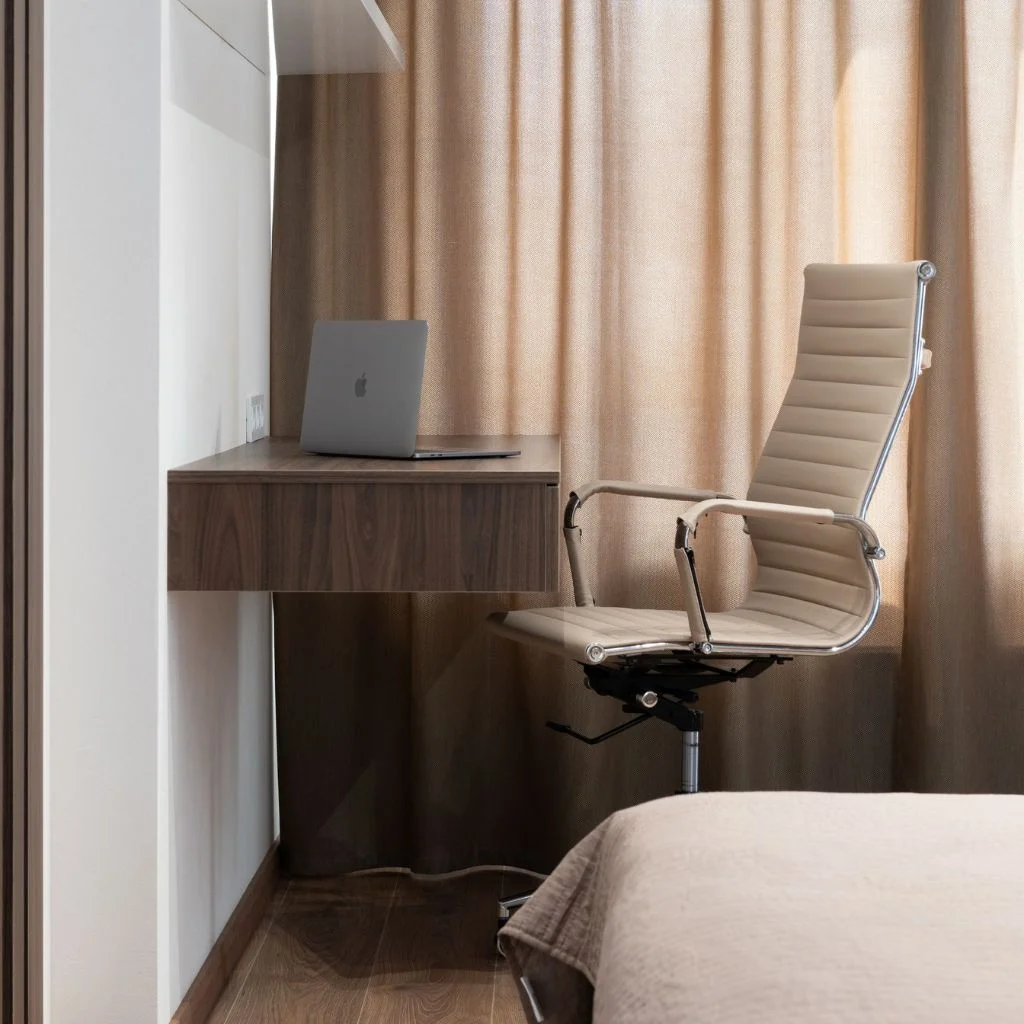
A bulky, armed office chair can undo the space savings of even the best wall-mounted desk. Choosing a slim, armless chair — or a folding stool that stores against a wall when not in use — keeps the walking path around a small desk genuinely clear.
Many of the IKEA home office ideas covered above assume a chair that can tuck fully under the desk surface, since a chair left pulled out in a tiny room quickly becomes an obstacle rather than a seat.
A lighter chair also makes it easier to shift the whole setup around for cleaning, for hosting guests, or for turning the corner back into a reading nook on a day off.
Common Mistake To Avoid Overloading One Corner
The most frequent misstep in small-space setups is piling every function — desk, shelving, filing, and decor — into a single corner. It looks organised on day one and becomes overwhelming within a fortnight.
Spreading storage across a wall instead — shelves here, a pegboard there, a slim drawer unit elsewhere — keeps the eye moving and the room feeling larger than its actual dimensions.
A rule worth following from personal experience with small rented rooms: if a corner needs more than three pieces of furniture to function, at least one item belongs somewhere else in the room.
Making Small-Space Working Actually Work
A tiny apartment doesn’t need a compromise on comfort or productivity — it needs furniture chosen for its footprint rather than its features alone. These IKEA home office hacks show that a wall-mounted desk, a few floating shelves, and one well-placed pegboard can do more for a compact room than a single large furniture purchase ever could.
Start with one or two changes rather than a full overhaul and expand the setup only once the first pieces have proven their worth in daily use. A workspace built this way tends to last far longer than one assembled in a single weekend rush.
Whether the goal is a full corner conversion or a single wall-mounted desk, the underlying principle behind every one of these IKEA home office hacks stays the same: choose furniture for the footprint it needs, not the footprint it looks like it needs in a catalogue photo.
Our Pick: Stunning Ikea Media Center Hacks for a Living Room Glow Up.