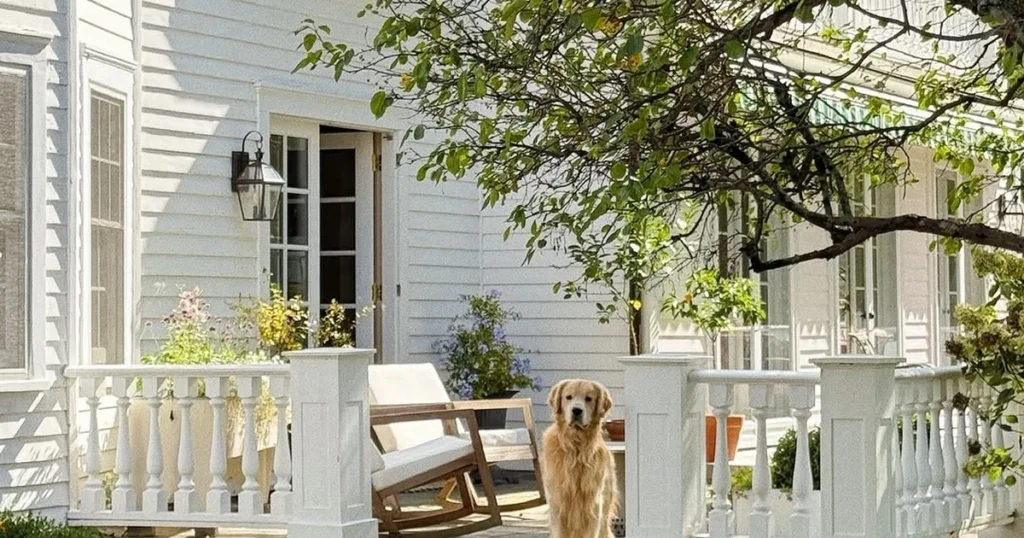
A pet friendly porch is not a porch with a bed on it — it is a porch your pet can actually use and almost everything on this list is a small, cheap change, not a renovation.
Most porches are built for people: chairs for sitting, a rug for looks, steps for climbing. A dog or a cat has to work around all of it — a hot floor in the sun, a steep step, nowhere to drink.
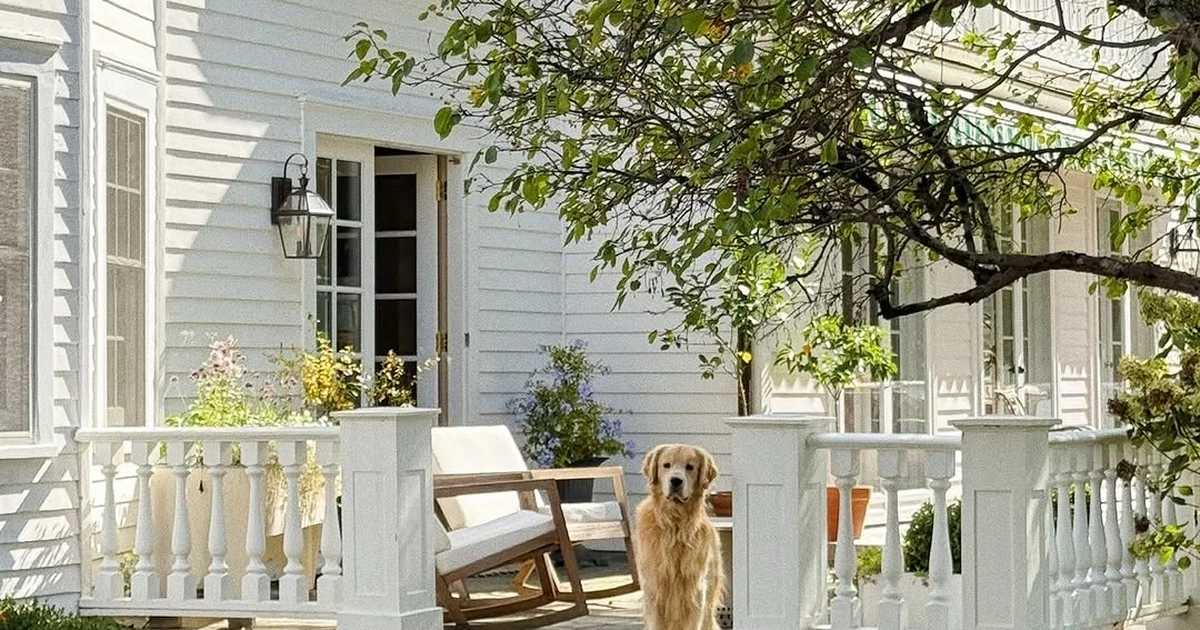
These pet friendly porch ideas fix the porch for the animal that uses it most. A bed in a sheltered corner, a rug that does not slip, a ramp instead of steep steps, shade for hot afternoons, a water bowl by the door.
There are ideas for dogs and for cats, for old pets and young ones, for hot days and chilly evenings. Nothing here needs a builder or a big budget — most of it is a mat, a hook, a basket or a blanket in the right place.
Here are 16 pet-friendly porch ideas — beds, ramps, shade, water, plants and doors — that make the porch a place your pet chooses, not just a place they pass through.
1. A Cozy Bed in a Sheltered Corner
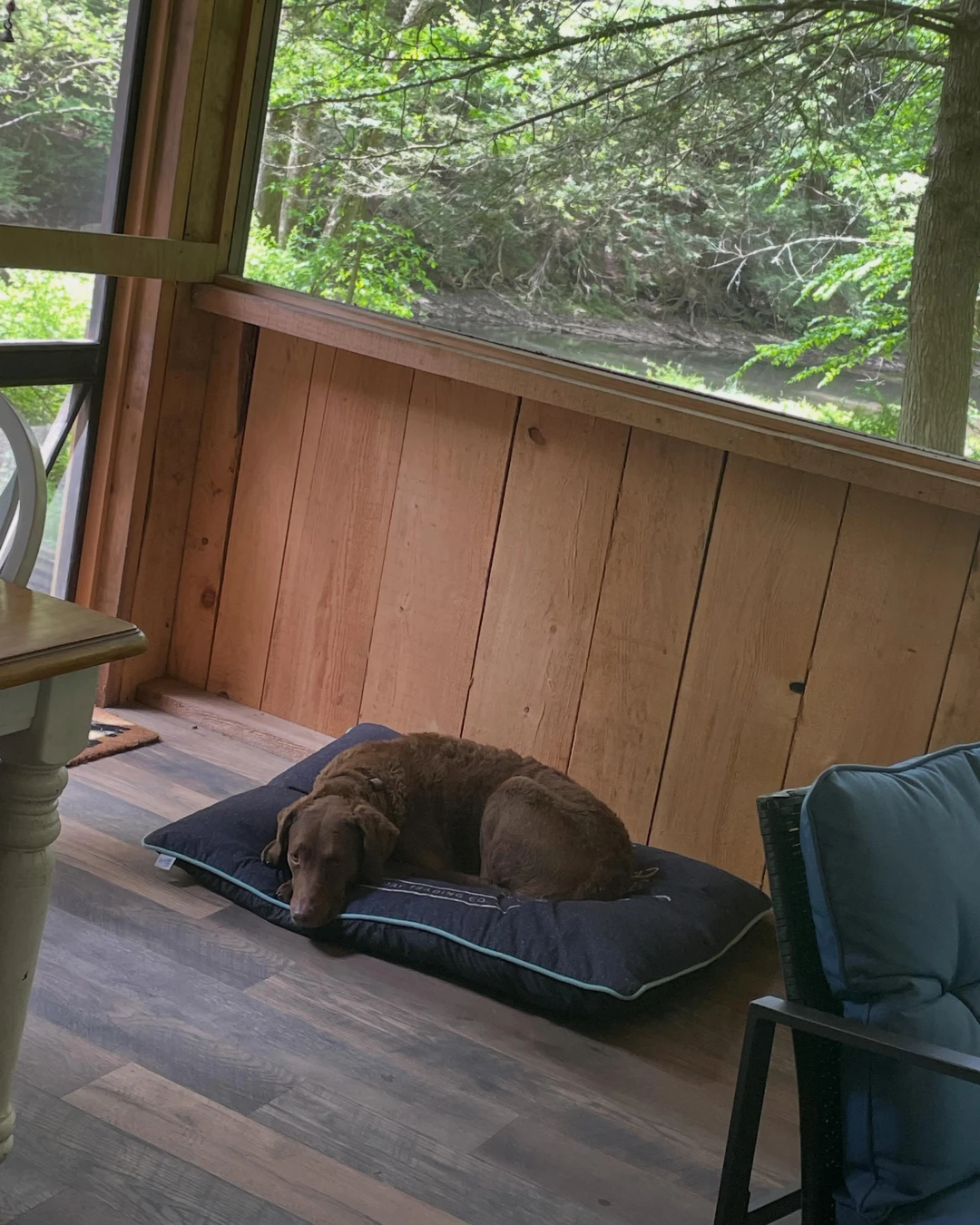
A chocolate-brown dog sleeps curled up on a dark blue bed in the corner of a screened porch, tucked against the wooden wall with green trees beyond the screens. The bed is low and flat, the kind a dog can step onto without climbing, and it sits out of the walkway, in the quietest corner of the porch.
That corner matters more than the bed. A bed in the middle of the porch gets stepped around and tripped over; a bed in a sheltered corner becomes the dog’s own spot, out of the sun and out of the way. The screened walls keep the bugs off and the breeze coming, so the dog sleeps there instead of on the hard floor.
The practical point: Put the bed against a wall or in a corner, not in the middle of the floor. A bed that blocks the walkway gets moved, and a bed that gets moved never becomes the dog’s spot.
2. A Durable Outdoor Rug Underfoot
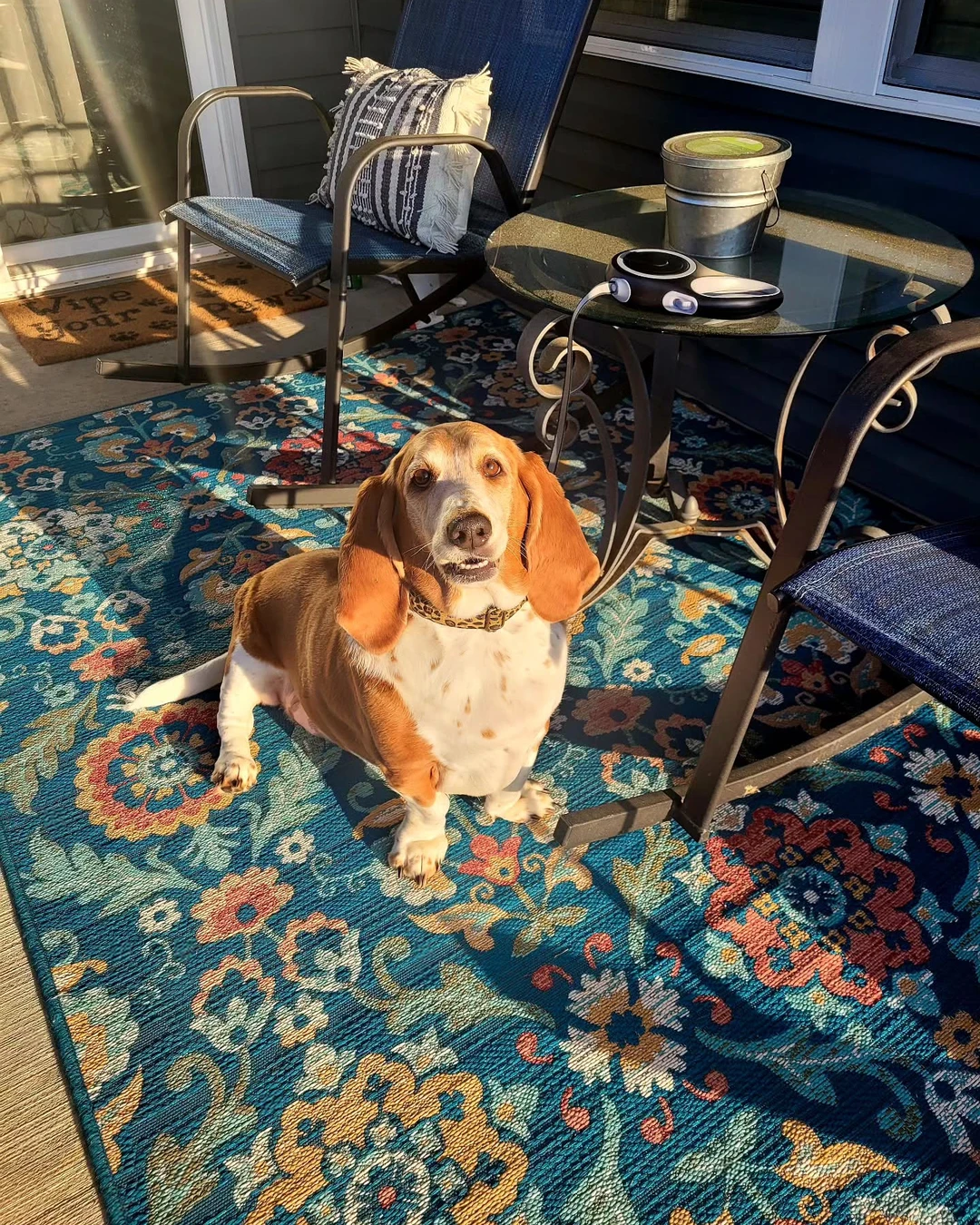
A basset hound sits on a blue floral outdoor rug that fills the frame, with a glass-top table and blue chairs behind it. The rug is thick and flat, with a tight weave that paws do not snag on, and it covers the hard deck so the dog is not sitting on hot wood or cold concrete.
An outdoor rug does two jobs on a pet porch: it gives the dog a soft place to lie, and it gives old or clumsy paws grip on a slippery deck. A rug that slides around is worse than no rug, so the backing matters as much as the pattern.
The practical point: Choose a rug with a rubber or non-slip backing, and pick a dark pattern that hides muddy paw prints. A light rug looks clean for a day; a patterned one looks clean all week.
3. A Water Bowl Station by the Door
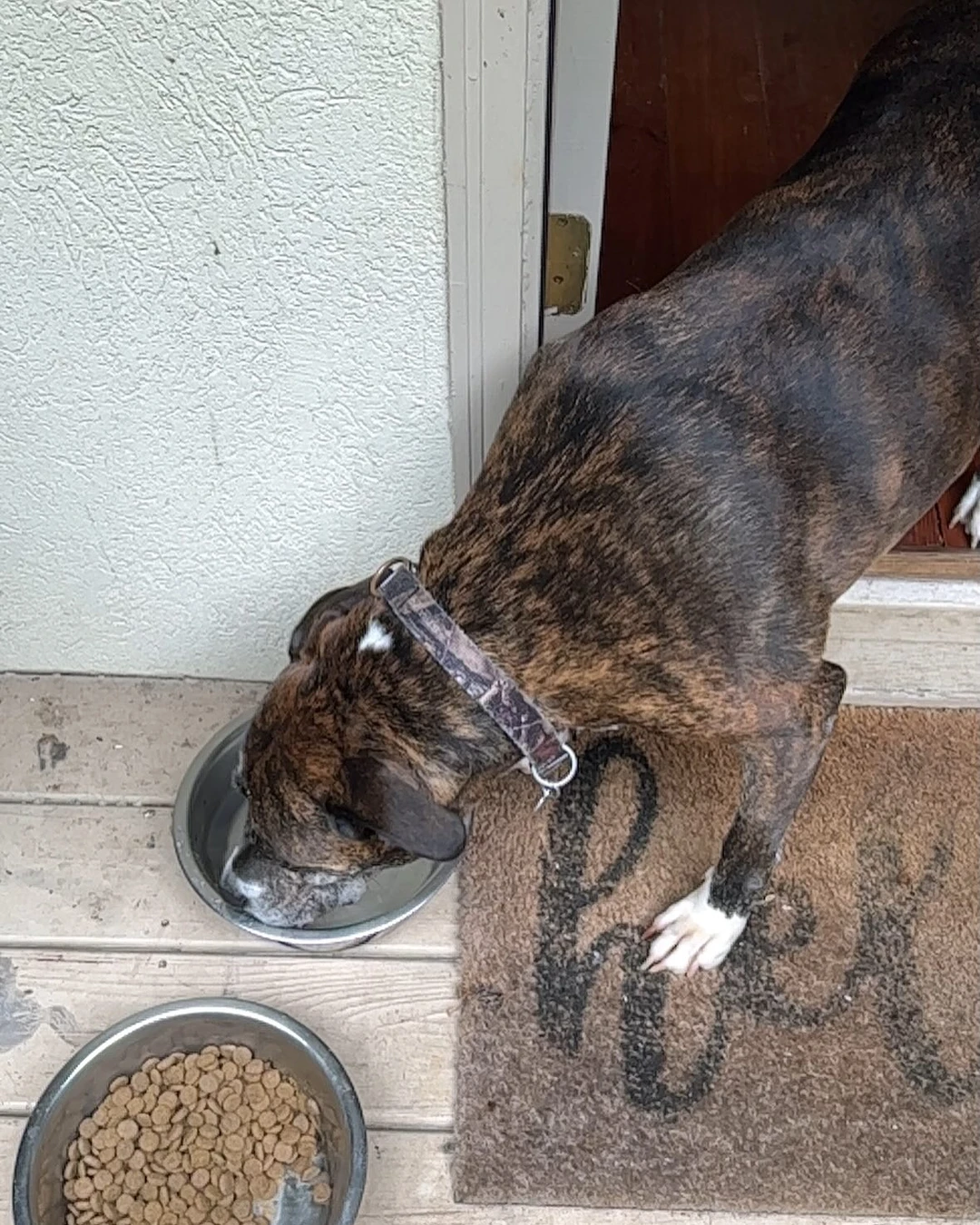
A brindle dog drinks from a steel water bowl on the porch boards, right by the open door, with a second bowl of kibble beside it. The bowls sit on the deck where the dog comes in and out, so water is the first thing the dog finds after a walk and the last thing before going back out.
A water station by the door works because it is where the dog already stops. A bowl tucked in a far corner gets forgotten; a bowl by the door gets refilled because you see it every time you pass. Steel bowls are the right choice — they do not tip, they do not chew apart, and they wash clean.
The practical point: Use a heavy steel bowl and put a small mat under it. A mat catches the splashes, and a heavy bowl stays put when a big dog drinks from it.
4. Shade for Hot Afternoons

A black dog lies flat on a blue patterned mat under a big sunflower-print umbrella, stretched out in the shade with the sunny deck all around it. The umbrella is the whole idea: a patch of cool air on a hot afternoon, made by one piece of fabric on a pole.
This photo is a deck rather than a porch, but the idea is the same on either one — shade that moves with the sun. A fixed roof shades the same patch all day, while an umbrella can be moved to where the dog actually lies. On a hot afternoon, a dog will always choose the shaded patch over the sunny boards.
The practical point: Put the shade where the dog already lies, not where it looks best. Watch where your dog settles on a hot day, then put the umbrella over that spot.
5. A Ramp Instead of Steep Steps
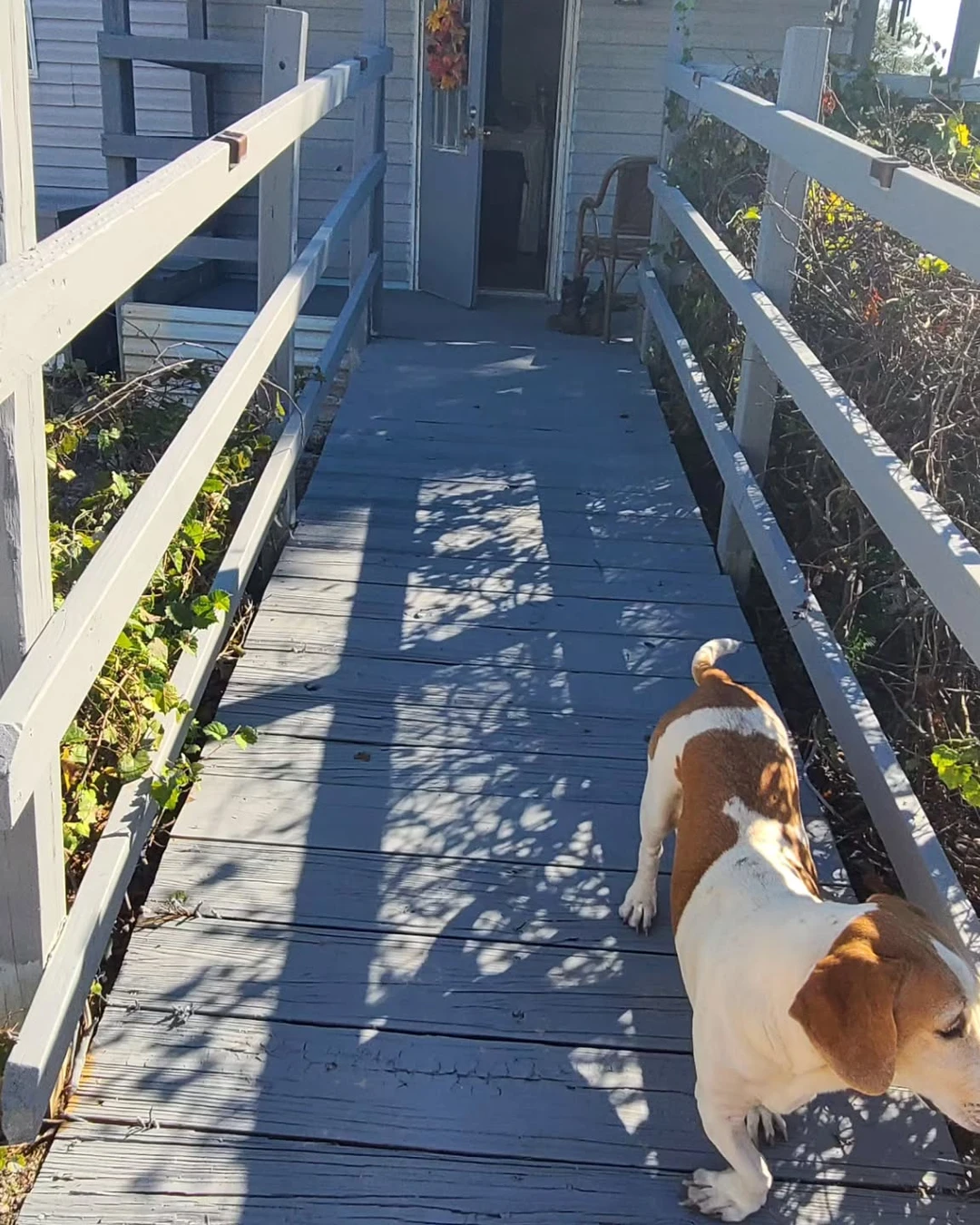
A white and tan dog walks down a long wooden ramp with rails on both sides, leading from the yard up to the front door. The ramp is wide and steady, with a gentle slope, and the dog uses it the way a person uses a path — without thinking about it.
Steep steps are hard on old dogs, small dogs and any dog with sore joints. A ramp takes the climbing out of the porch entirely, and the rails keep a wobbly dog from stepping off the edge. It does not need to be fancy — boards, rails and a non-slip surface are enough.
The practical point: Keep the slope gentle — about one foot of rise for every four feet of length — and add a non-slip strip or outdoor carpet on the surface. A steep ramp is just steps with extra work.
6. Pet-Safe Plants Around the Porch
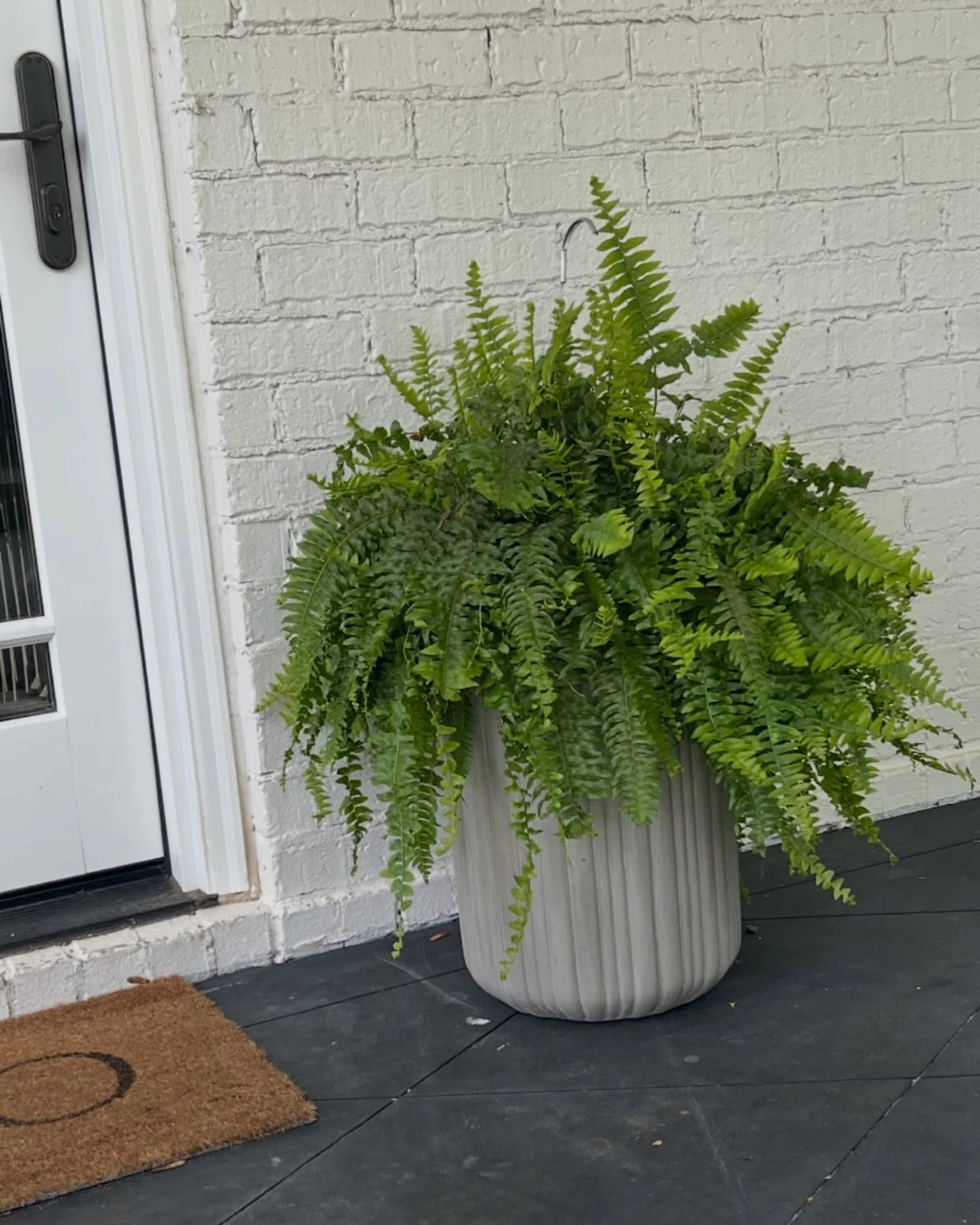
A big Boston fern in a ribbed grey planter stands by the front door, its fronds spilling over the sides onto the dark porch floor. The fern is lush and full, and it softens the white brick wall behind it without taking up any floor the dog needs.
The plant matters because dogs and cats chew leaves. A lot of porch plants are toxic to pets — lilies, sago palm and oleander are all dangerous — so the safe list is the whole point of this idea. Boston ferns are on the ASPCA’s non-toxic list for dogs and cats, which is why this planter works on a pet porch.
The practical point: Check every porch plant against the ASPCA’s toxic-plant list before it goes on the porch. A pretty plant that makes your pet sick is not decoration.
7. A Gated Play Area on the Porch
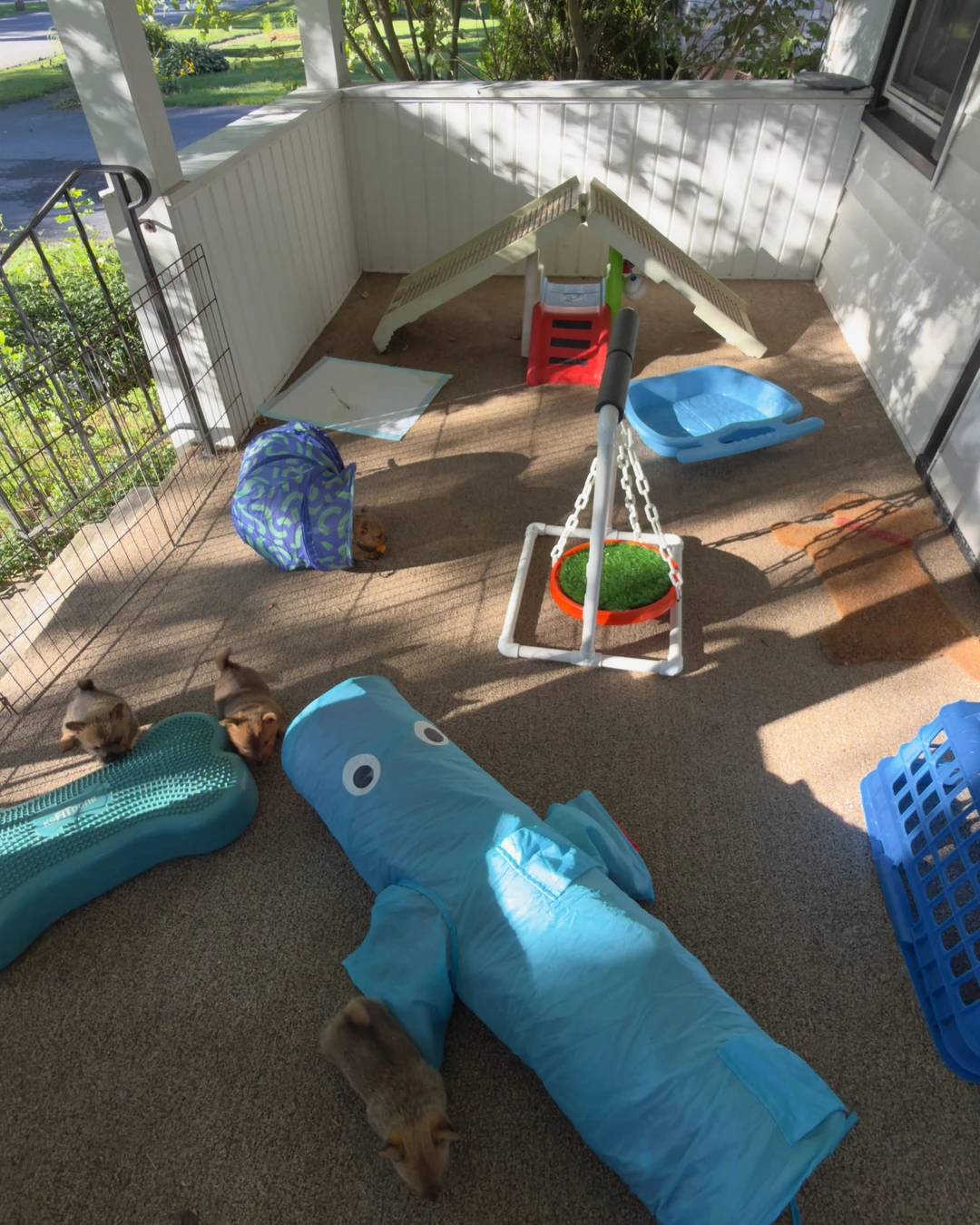
A screened porch is set up as a puppy play area: a blue tunnel, a small ramp, a swing, chew toys and a water bowl spread across the floor, with two small puppies exploring it. A gate closes off the left edge of the porch, so the play area has a boundary even though the puppies have the whole floor.
A gated area lets a puppy play outside without wandering off the porch. The gate is only at one edge here, and that is enough — the porch walls and screens do the rest of the containing. The toys are the other half: a puppy with nothing to chew will chew the porch instead.
The practical point: Gate the opening, not the whole porch. One gate across the steps or the open side is enough, and it leaves the rest of the porch free for people.
8. A Washable Cushion on the Bench
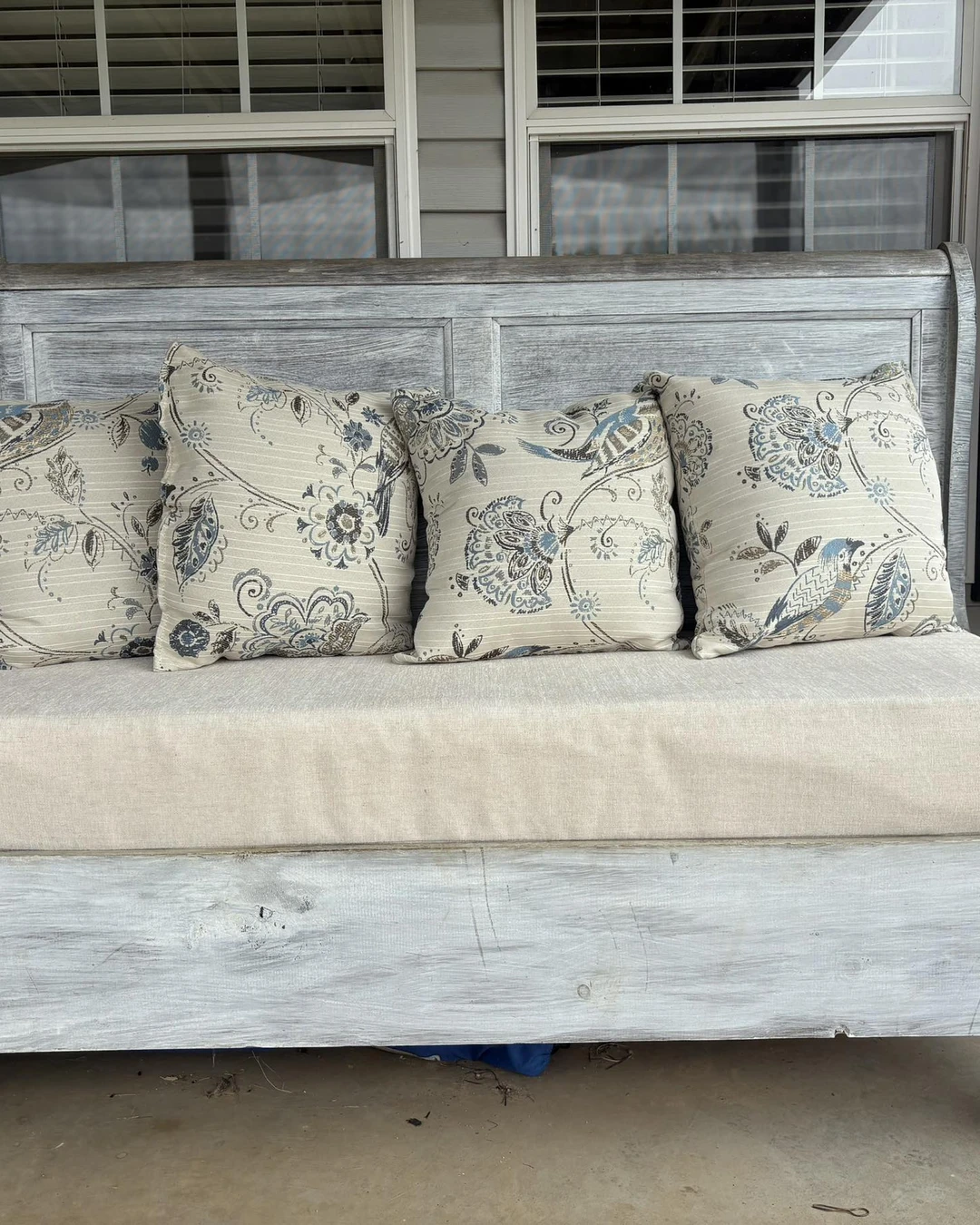
A bench made from a whitewashed bed frame holds a thick beige cushion and four floral pillows, sitting on a covered porch. The cushion is deep and soft, the kind a dog can curl up on, and the bench is low enough for a dog to climb onto without help.
A washable cover is what makes this a pet idea instead of just a bench idea. Dogs bring mud, hair and wet paws to a cushion, and a cover that cannot be washed will be ruined in a month. The cushion here is plain beige, which shows dirt — a darker or patterned cover would hide it better.
The practical point: Use a cushion with a removable, machine-washable cover, and keep a spare. When one cover is in the wash, the bench still has a cushion on it.
9. A Toy Basket by the Door
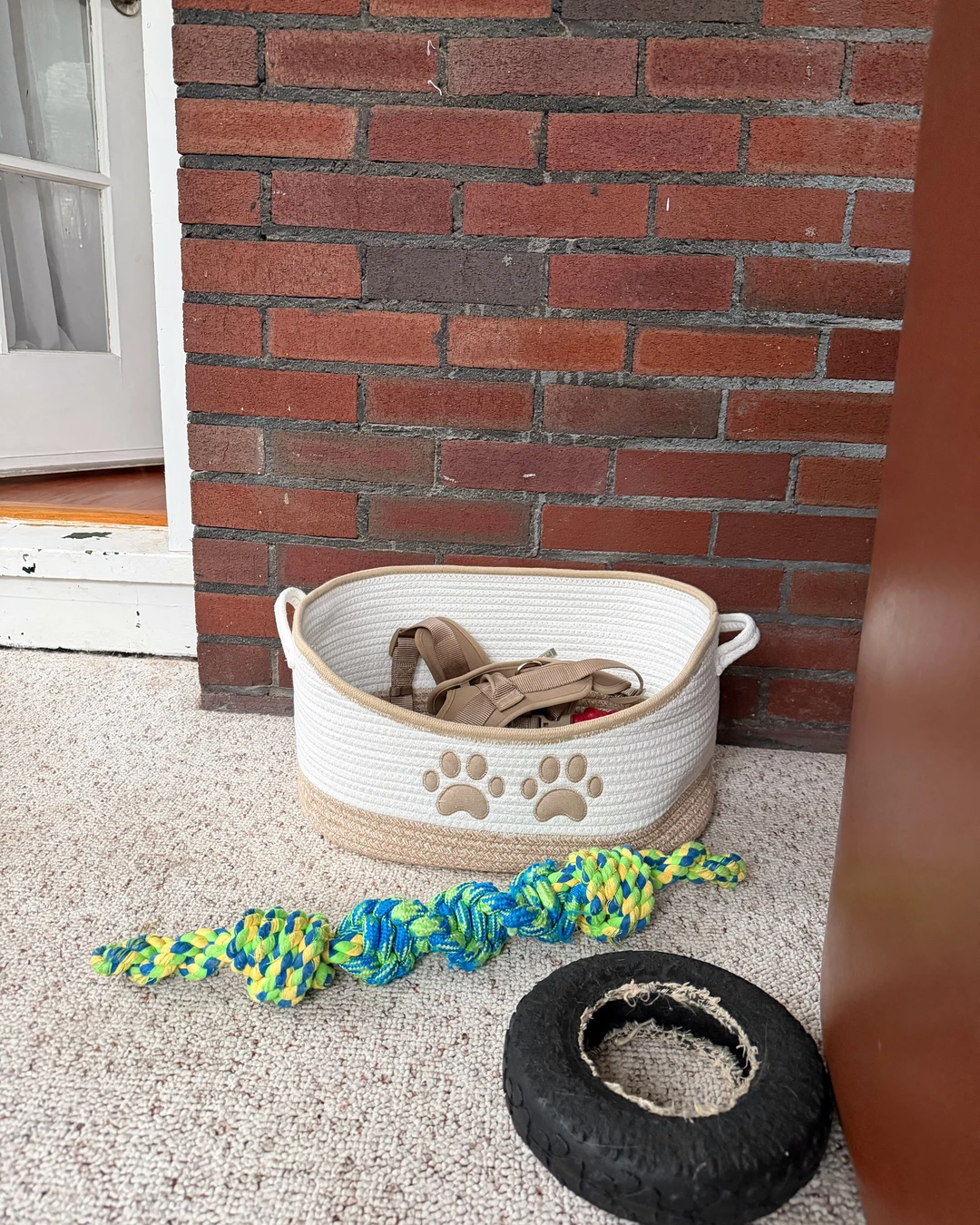
A cream rope basket with paw prints sits on the carpet beside a door frame, holding a rope toy and a chew, with a colourful knotted rope and a black rubber ring lying on the floor in front of it. The basket is the toy box: everything the dog plays with lives in one place, by the door, where the dog comes in from the yard.
A basket by the door works because toys left on the porch floor get rained on, stepped on and lost under the furniture. The basket keeps them dry and together, and the dog learns where the toys live — which means fewer toys scattered across the porch and fewer chewed cushions.
The practical point: Pick a basket with low sides that a dog can reach into on its own. A deep basket keeps the toys tidy but the dog cannot get them out without help.
10. A Raised Feeding Station
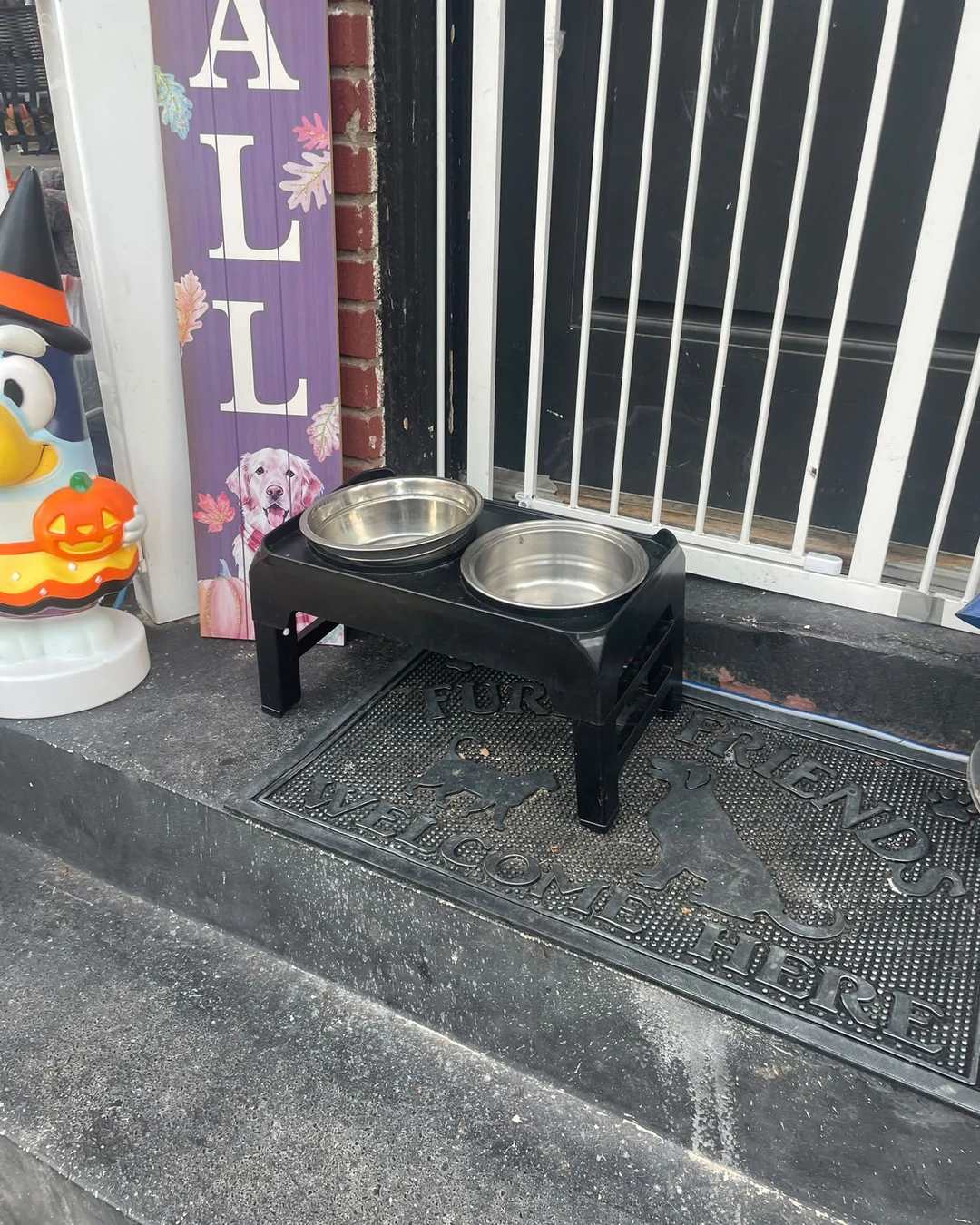
A black raised feeder with two steel bowls sits on the porch doormat by the front door, with a tall fall sign and a pumpkin figure beside it. The bowls are up off the floor at the dog’s chest height, so the dog eats without bending its neck down to the ground.
A raised feeder is kindest to old dogs and big dogs, whose necks and joints feel every bend. On a porch it also keeps the bowls off the floor, where rain and dirt collect, and the mat underneath catches the splashes. The fall sign beside it is just porch decor — the feeder is the idea.
The practical point: Set the bowls at your dog’s chest height, not higher. A feeder that is too tall makes the dog stretch up to eat, which is as bad as bending down.
11. A Cooling Mat for Hot Days
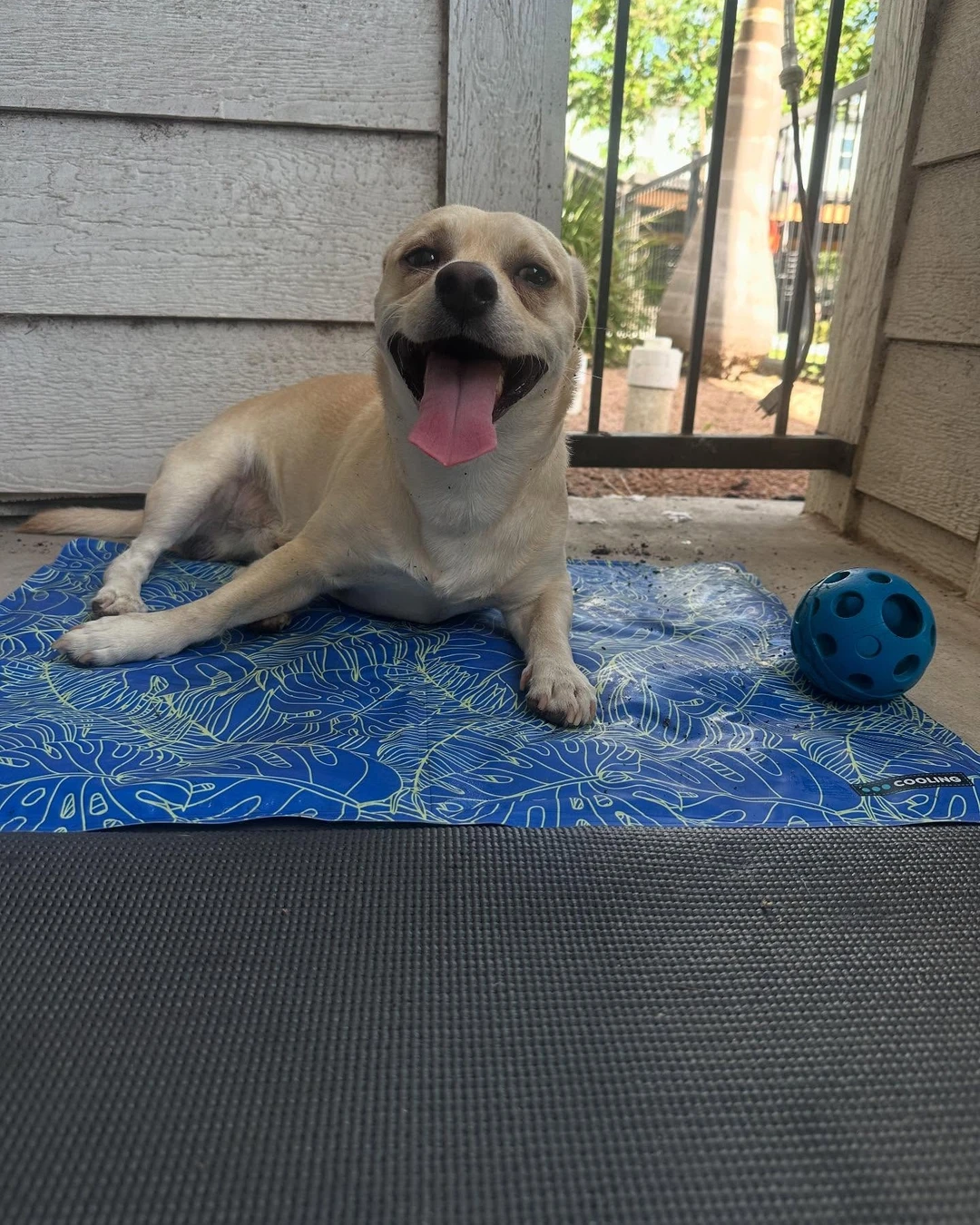
A tan dog lies flat on a blue patterned cooling mat on the porch, tongue out and smiling, with a blue ball beside it. The mat is thin and flat, laid right on the porch floor, and the dog has chosen it over the bare boards around it.
A cooling mat works by pulling heat away from the dog’s body — most are filled with a gel that stays cool without water or power. On a hot day, a dog on a sunny porch will overheat fast, and a mat in the shade is the simplest fix there is. It folds up when summer ends, so it costs nothing to store.
The practical point: Put the mat in the shade, not in the sun. A cooling mat in direct sun warms up and stops working — shade is what makes it cool.
12. A Leash Hook by the Door
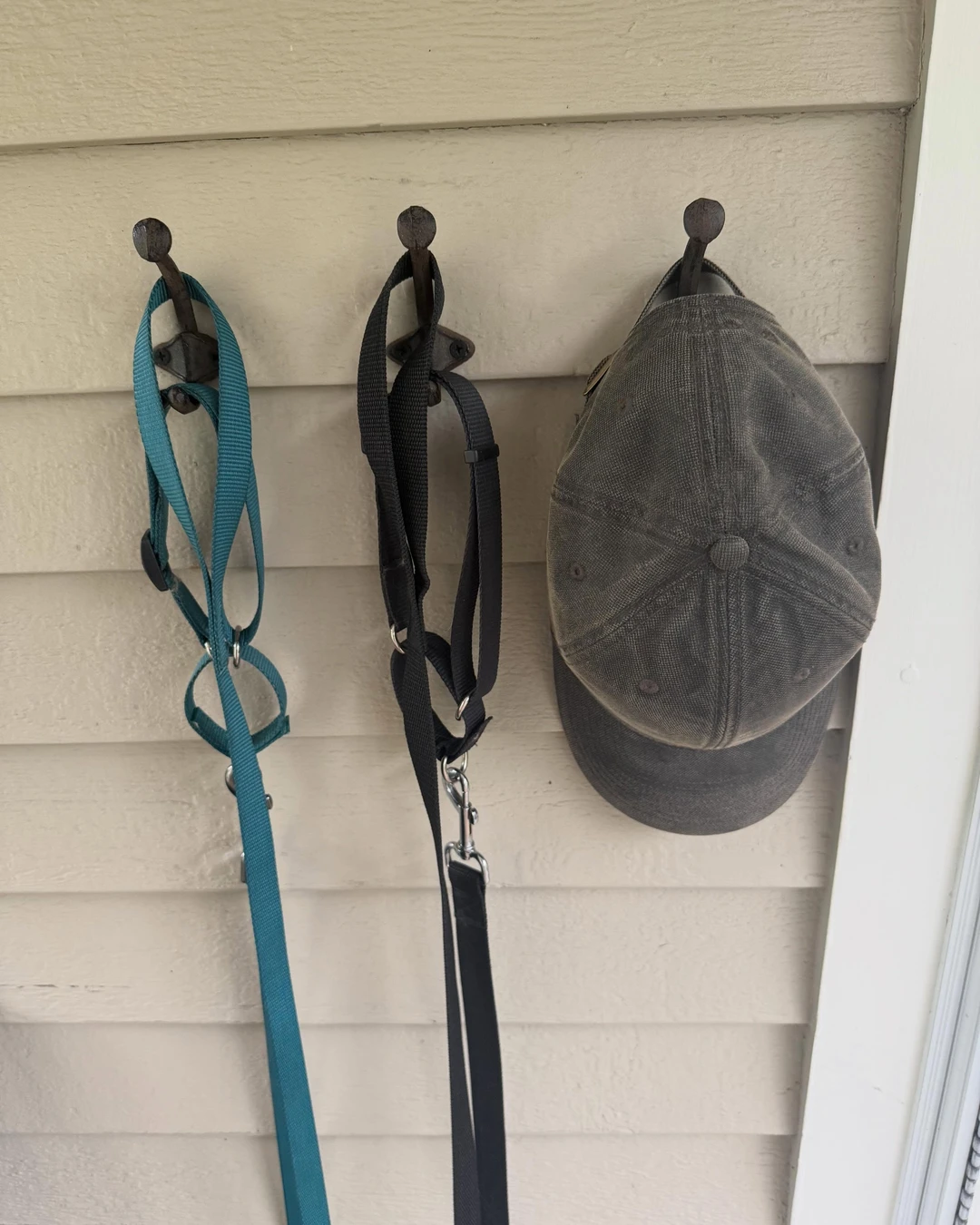
Three dark hooks on the house siding by the door hold two leashes and a cap, all hanging within arm’s reach of the door. The hooks are plain and sturdy, screwed into the wall, and the leashes hang straight down without tangling.
A hook by the door ends the daily search for the leash. The leash lives where the walk starts, so nobody hunts through a drawer or a closet while the dog waits at the door. It also keeps the leash off the floor, where it would get muddy and chewed.
The practical point: Screw the hooks into a stud or use proper wall anchors. A hook that pulls out of the siding the first time a big dog lunges is worse than no hook.
13. A Cat Perch with a View
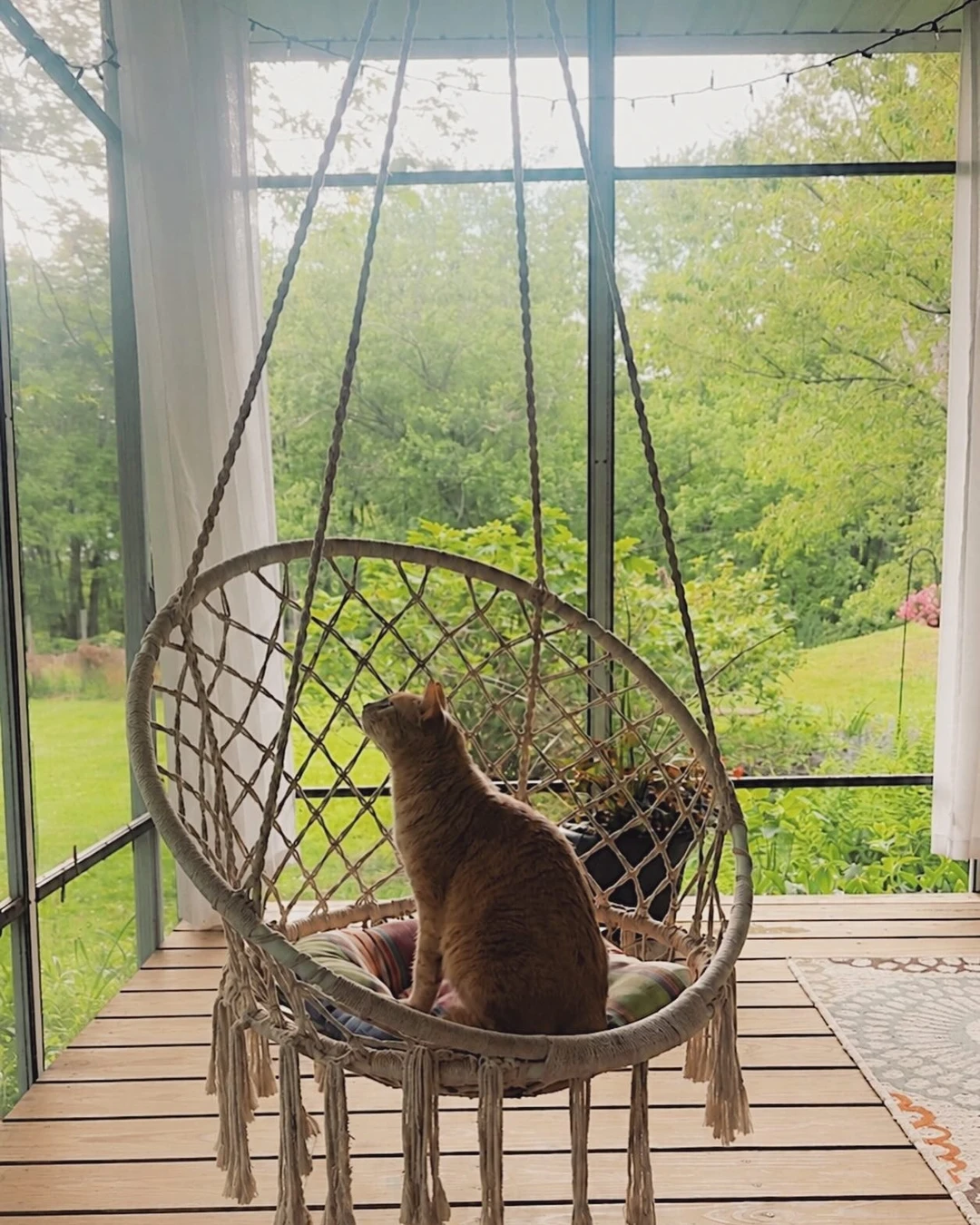
An orange cat sits in a hanging macramé egg chair on a screened porch, looking out over a green garden through the screens. The chair hangs from the porch ceiling and swings gently, and the cat has the best seat on the porch — high up, with a view of everything.
Cats want height and a view, and a porch chair gives them both without letting them out of the porch. The screens keep the cat in and the bugs out, while the garden beyond gives the cat something to watch all afternoon. A perch like this is the cat version of the dog’s bed in the corner: a spot that is theirs.
The practical point: Hang the chair from a ceiling joist, not just the porch roof boards. A cat plus a chair is heavier than it looks, and a chair that falls is a scared cat that never uses it again.
14. Non-Slip Mats for Older Pets
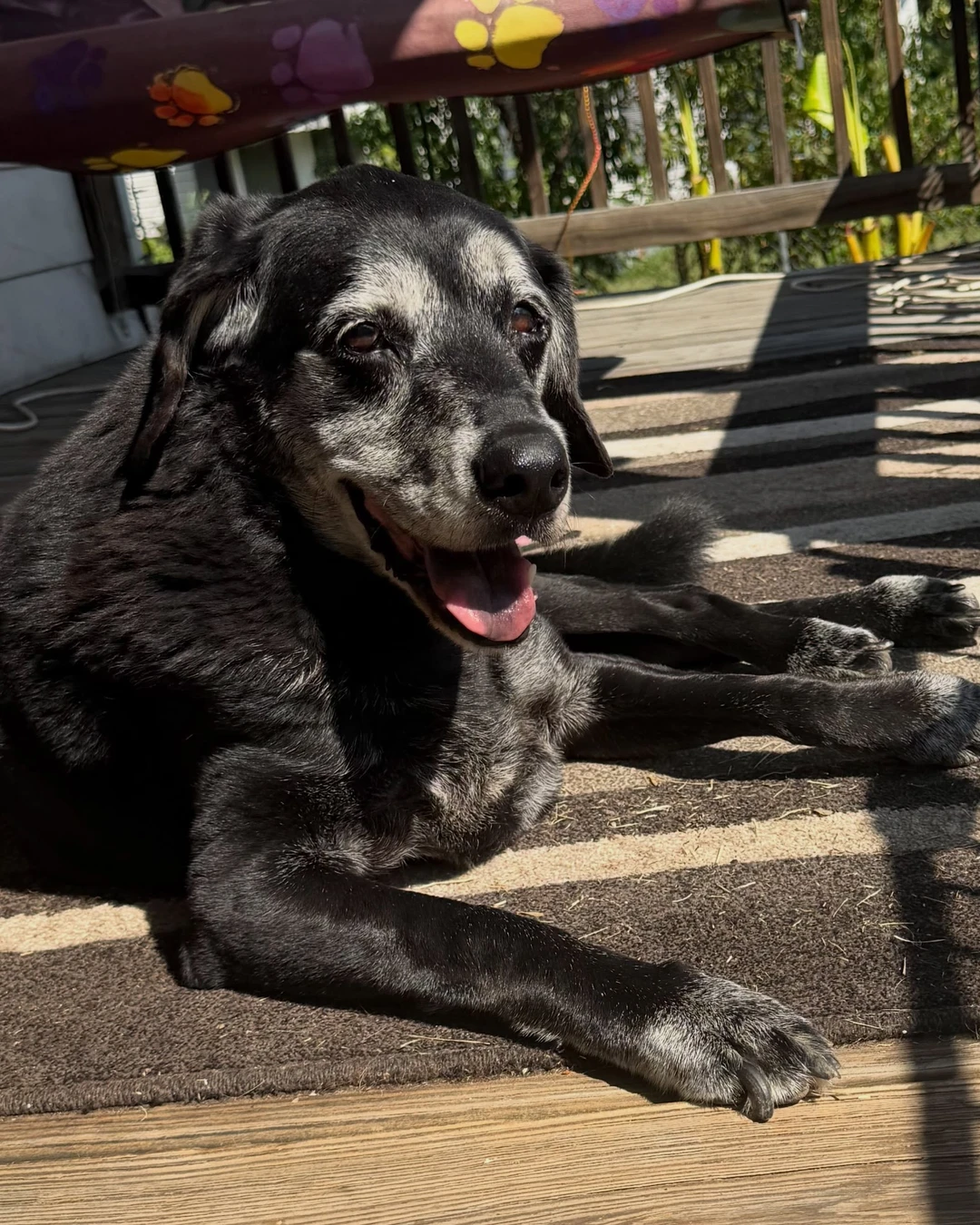
An old black dog with a grey muzzle lies on a striped rug on a wooden porch, stretched out in the sun with its paws on the boards. The rug is flat and wide, and the dog’s weight holds it in place — a steady surface under an old dog that does not trust its footing anymore.
Old dogs slip on bare wood, and a slip can end an old dog’s porch days entirely. A mat with a non-slip backing gives arthritic paws grip, and it gives the dog a soft place to lie that is warmer than the boards. The rug here is a regular striped rug — the point is the backing, not the pattern, so check that any rug you use has a grip underside or a non-slip pad beneath it.
The practical point: Put a non-slip pad under any rug on a smooth porch floor, and tape down the edges. A rug that slides when a dog steps on it is more dangerous than bare boards.
15. A Warm Blanket for Chilly Evenings
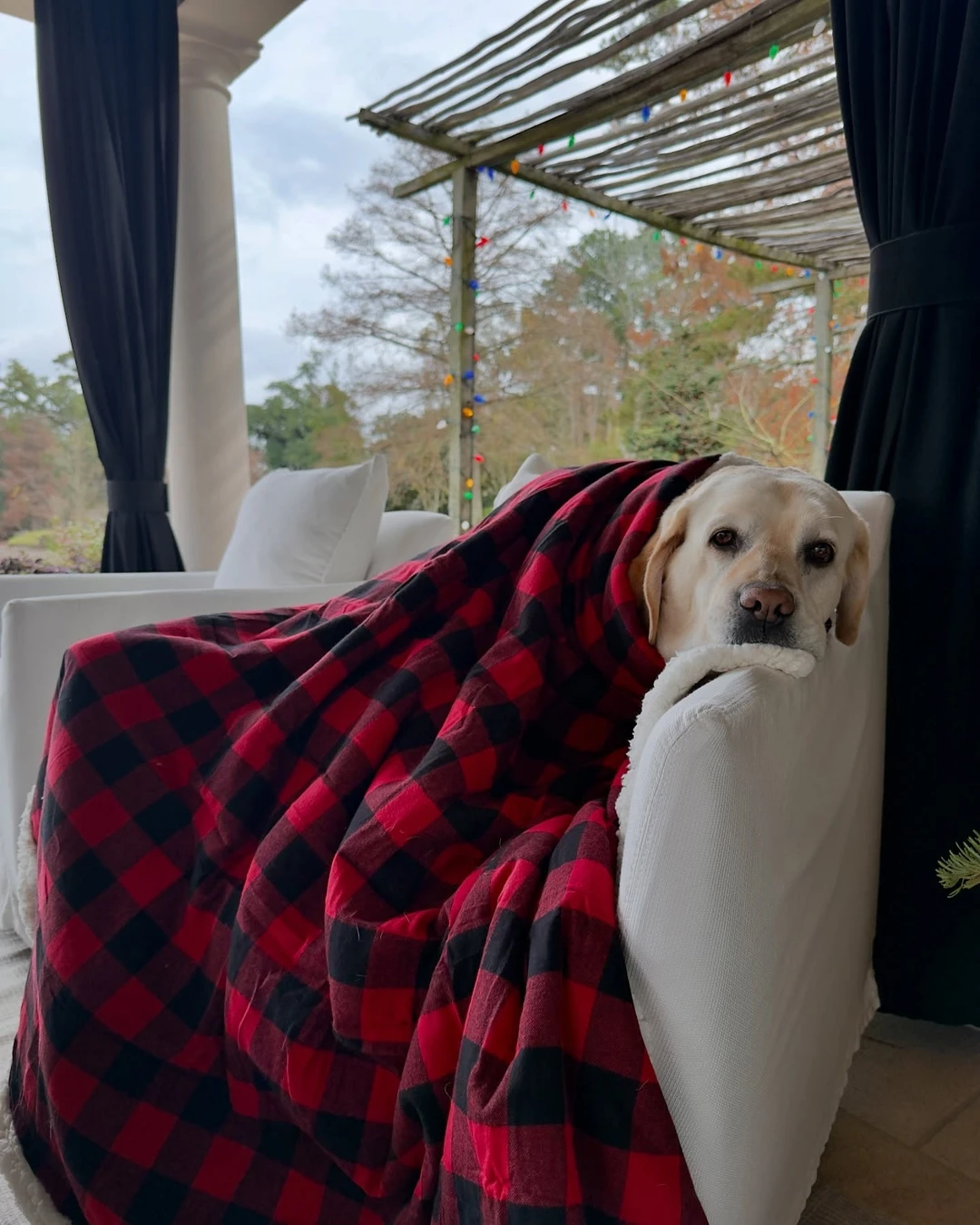
A yellow lab sits on an outdoor sofa under a pergola, wrapped up to its chin in a red and black buffalo-plaid blanket, with string lights and dark curtains behind it. The blanket is thick and soft, and the dog is clearly not in a hurry to go back inside.
A blanket on the porch extends the porch season by weeks. On a chilly evening, a dog that would have gone inside stays out with the family — and a blanket that lives on the porch sofa is always there when the temperature drops. A washable fleece or wool-blend blanket is the right choice; a decorative throw will not survive the dog.
The practical point: Keep the blanket on the sofa, not folded in a basket. A blanket that has to be fetched will not get used — one that is already on the sofa gets pulled over the dog without thinking.
16. A Pet Door for Easy Access
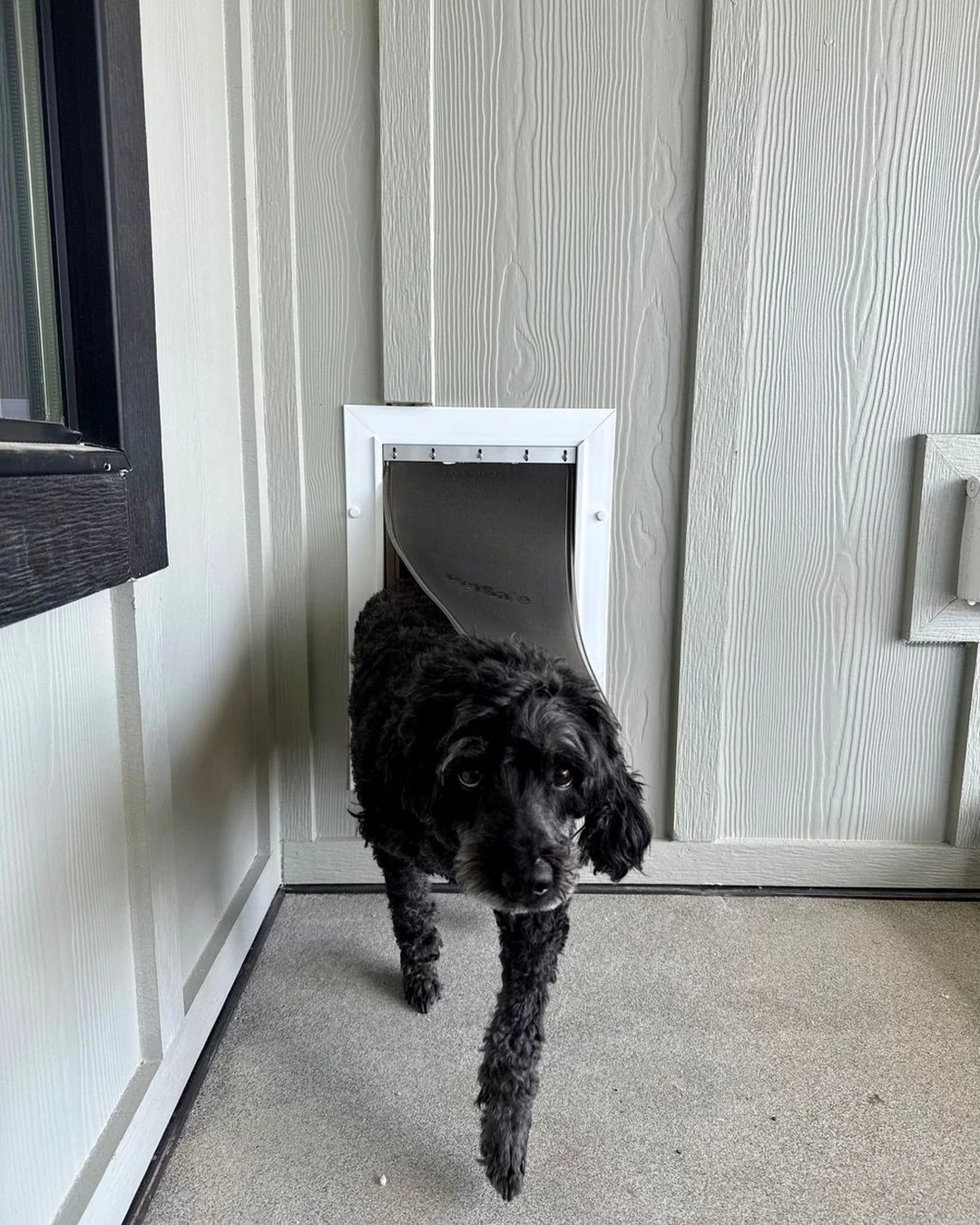
A small black dog steps through a white pet door set into the house wall, out onto the porch floor. The flap is lifted, the dog is halfway through, and the porch is right there — no waiting for someone to open the door, no barking at the back door.
A pet door gives the dog the porch on its own schedule. The dog goes out when it needs to and comes back in when it is done, and nobody has to be the doorman. The door here is set into the wall beside the main door, with a locking flap, so it can be closed at night.
If the doorway needs more than a pet door — a curtain, a screen or a different way to cover it — see Clever Ways to Cover a Doorway Without Installing a Door.
The practical point: Fit the door to your dog, not to the catalogue. A flap that is too small makes the dog squeeze through, and a flap that is too big lets in draughts and rain.
A Porch Your Pet Chooses
A pet-friendly porch is not a list of products — it is a porch where the animal can drink, rest, play and get in and out without help. A bed in the corner, a rug underfoot, shade in the afternoon, water by the door, a ramp for old legs and a door the dog can use on its own.
Start with the two things your pet needs most — water and a place to lie — and add the rest one at a time. A porch your pet chooses is a porch you will use more too, because the dog is already out there waiting for you.
Watch where your pet settles on the porch this week, and put the next thing there. The porch will tell you what it needs.