Interior doors are easy to overlook, yet they appear in almost every room of a home. Paint them all the same forgettable white and they disappear; paint them with intention and they quietly tie the whole house together. Interior door paint colors work best when they relate to the walls, floors, and trim around them, rather than competing with them. The twelve colors below are shown on real doors in real hallways and rooms, so you can see how each one behaves in place, not just on a swatch.
A note on the photos in this guide: where a caption names a paint for the doors shown, the text says so. Otherwise the text describes the color shown on the door, since most posts do not name a paint brand or shade. Either way, the advice is what you should shop by: undertones, finish, hardware pairings, and how each color works with the rooms around it.
01. Classic White
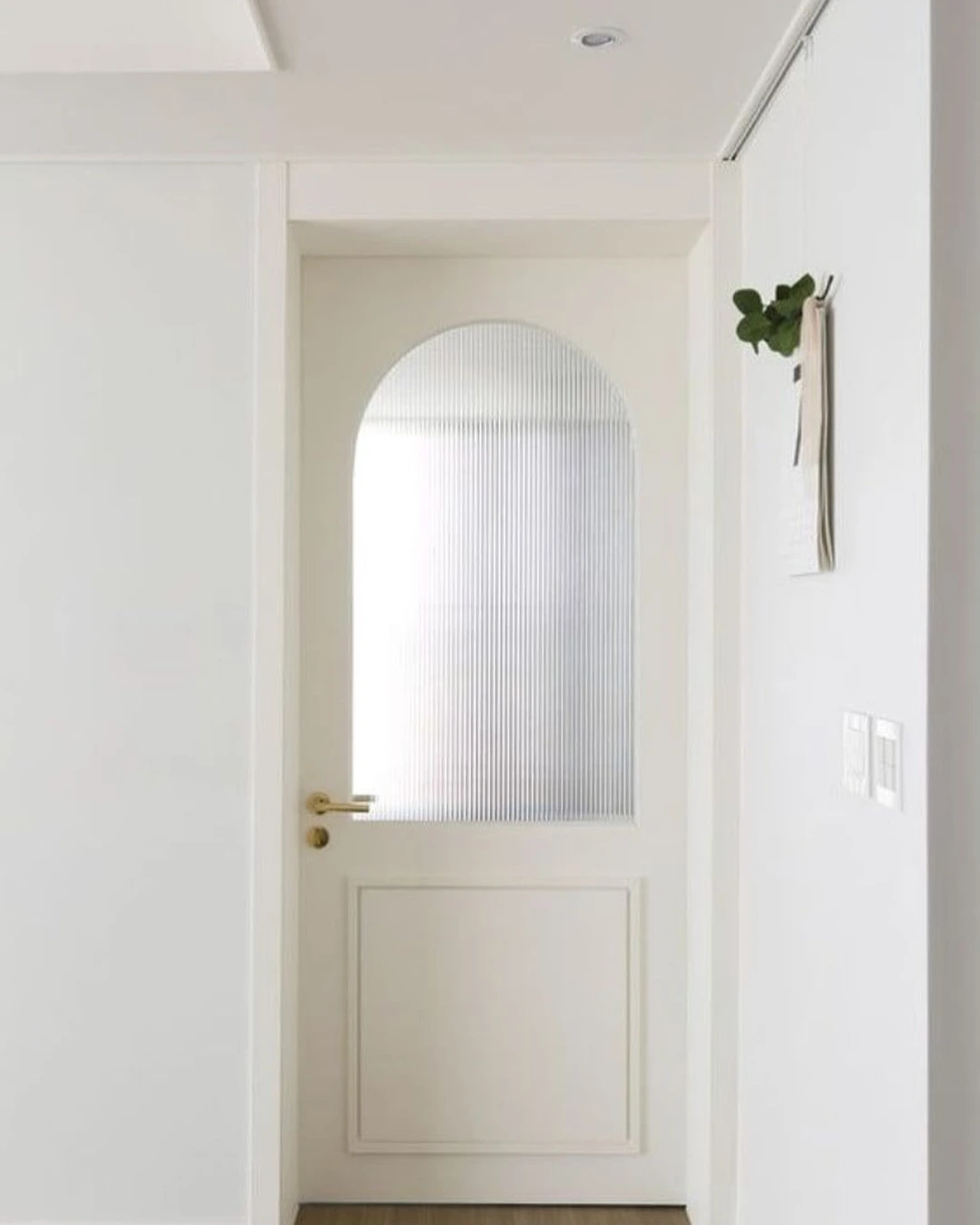
Photo by @ruparu05
A white interior door with a large arched frosted-glass panel, a gold lever handle, and white trim shows classic white at its most useful: bright, clean, and able to suit any hallway. The frosted glass softens the door and lets light pass between rooms while keeping privacy, and the gold handle adds a small warm accent against all that white. Clean white is the point of this choice, because it reflects light, matches any wall color, and never dates.
White doors are the safest whole-house choice, especially in small or dim hallways where a dark door would feel heavy. They work with every hardware finish, from chrome to brass to matte black, and they let the wall color carry the personality of each room. For a more considered look, keep the trim the same white as the door so the whole opening reads as one clean unit. For more ideas on door styles, see Trending Door Panelling Ideas To Upgrade Interior Doors.
02. Black
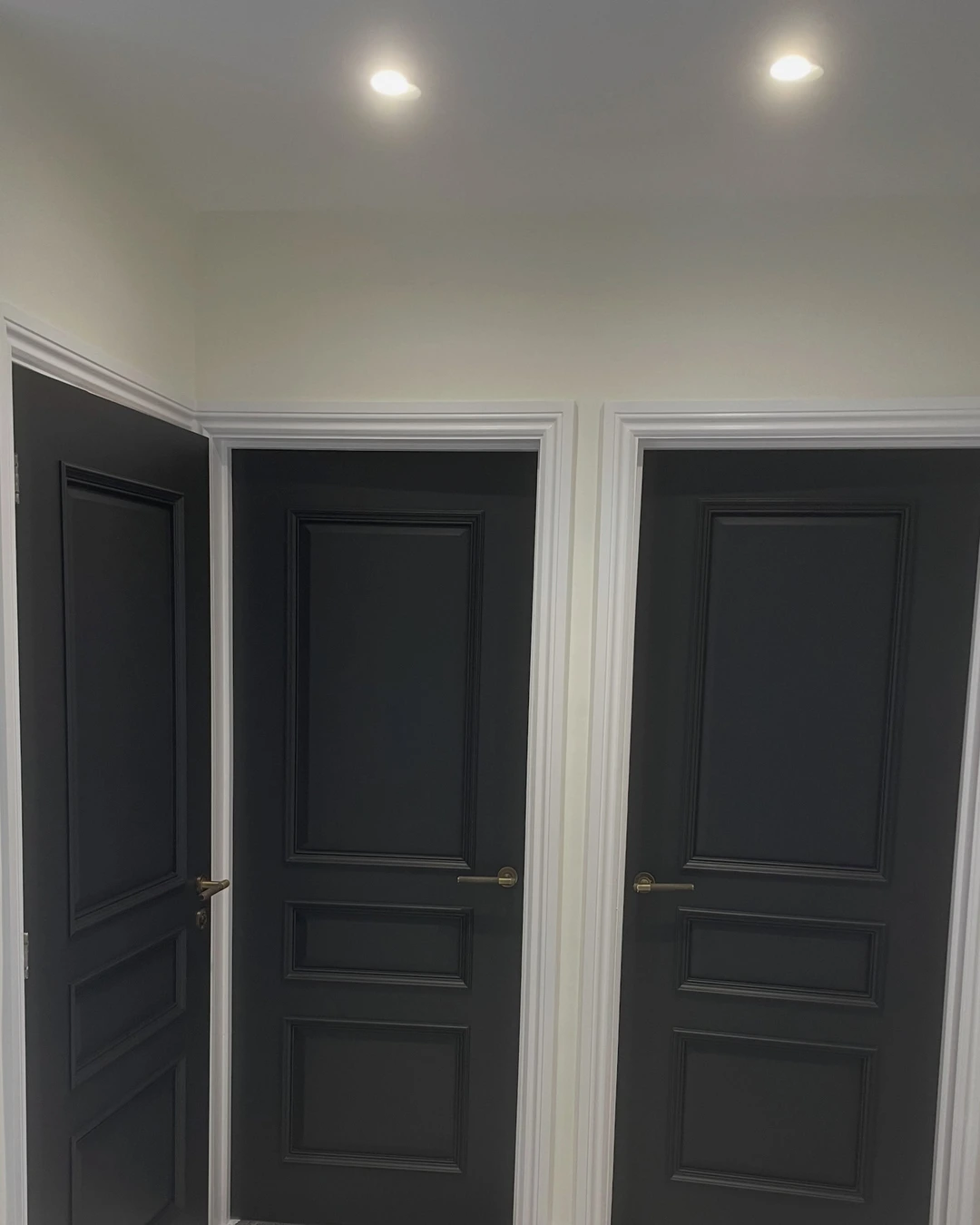
Photo by @weerlala1
Three matte black paneled doors with white trim and brass lever handles show how black doors can look tailored rather than harsh. The white frames give each door a crisp outline, and the brass handles warm the whole composition, so the black reads as a deliberate design choice instead of a dark hole in the wall. Matte black is the key finish here, because a flat or eggshell black looks soft and architectural, while a high-gloss black can show every fingerprint and scuff.
Black doors suit hallways and rooms that already have some contrast, such as white walls, light floors, or black picture frames and light fixtures. They work best when they repeat elsewhere in small doses, like a black console table or black stair rail, so the doors feel connected to the room rather than isolated. In a very small, windowless hallway, paint the trim white and keep the walls light, so the black doors anchor the space without closing it in. For more on using black well, see Dramatic Black Accent Walls For A Bold Modern Home.
03. Navy Blue
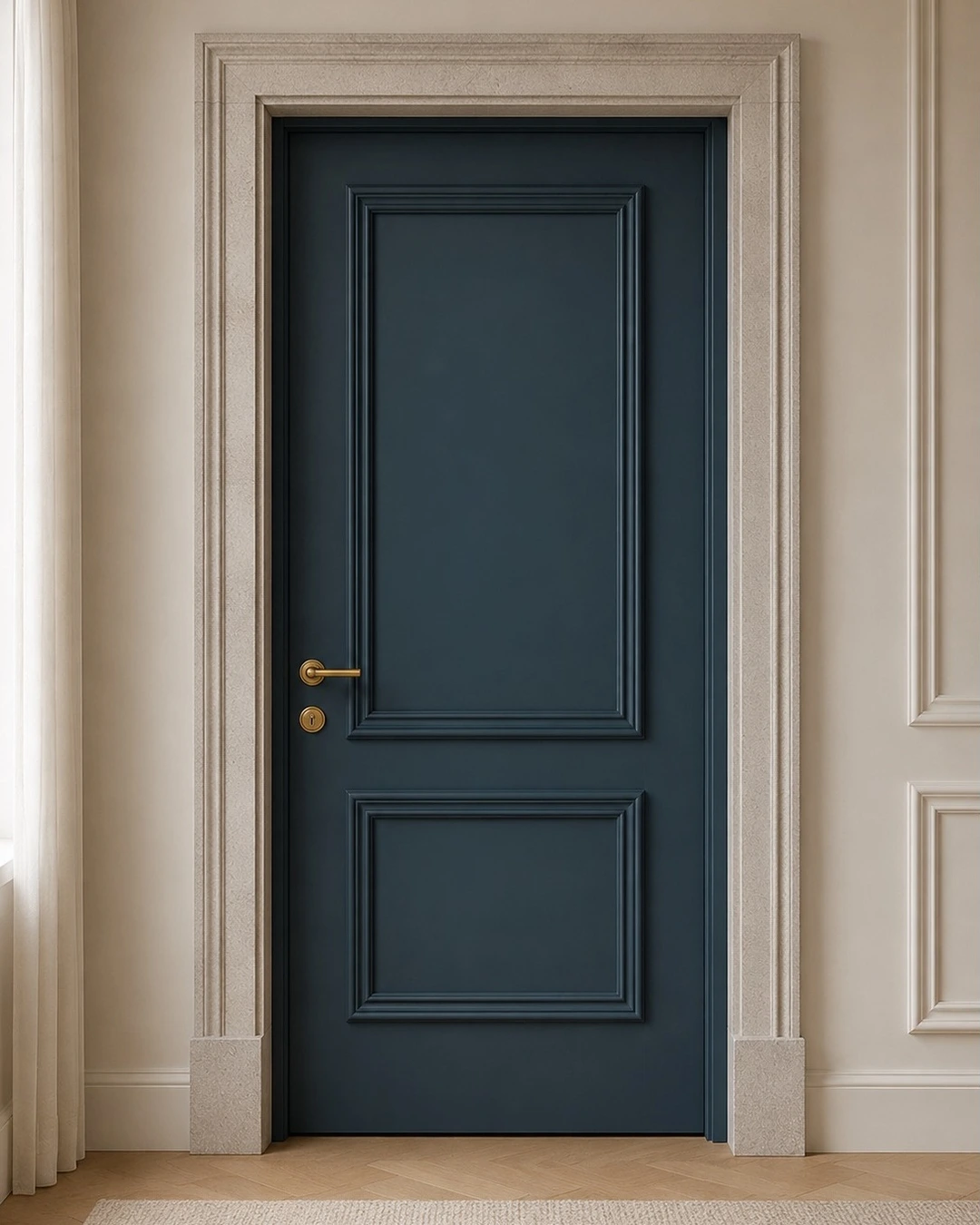
Photo by @craftmerchantt
A tall navy blue paneled door with a gold lever handle, set in a stone-look surround against cream walls with panel molding, shows navy as a rich, grown-up color for doors. The deep blue holds its own against the pale walls without shouting, and the gold hardware gives it a classic, almost tailored feel. Deep navy is what makes this work, because the color is dark enough to feel substantial but blue enough to stay lively, unlike a flat black.
Navy doors suit traditional and transitional homes, bedrooms, studies, and dining rooms, especially alongside cream walls, warm wood floors, and brass. They pair well with white or cream trim, which keeps the doorway crisp, and they look particularly good as a repeated color, for example on several doors along one hallway. Because navy is dark, it benefits from good lighting and pale surroundings; in a dim corridor, a lighter wall color and a brass handle will keep it from feeling heavy.
04. Sage Green
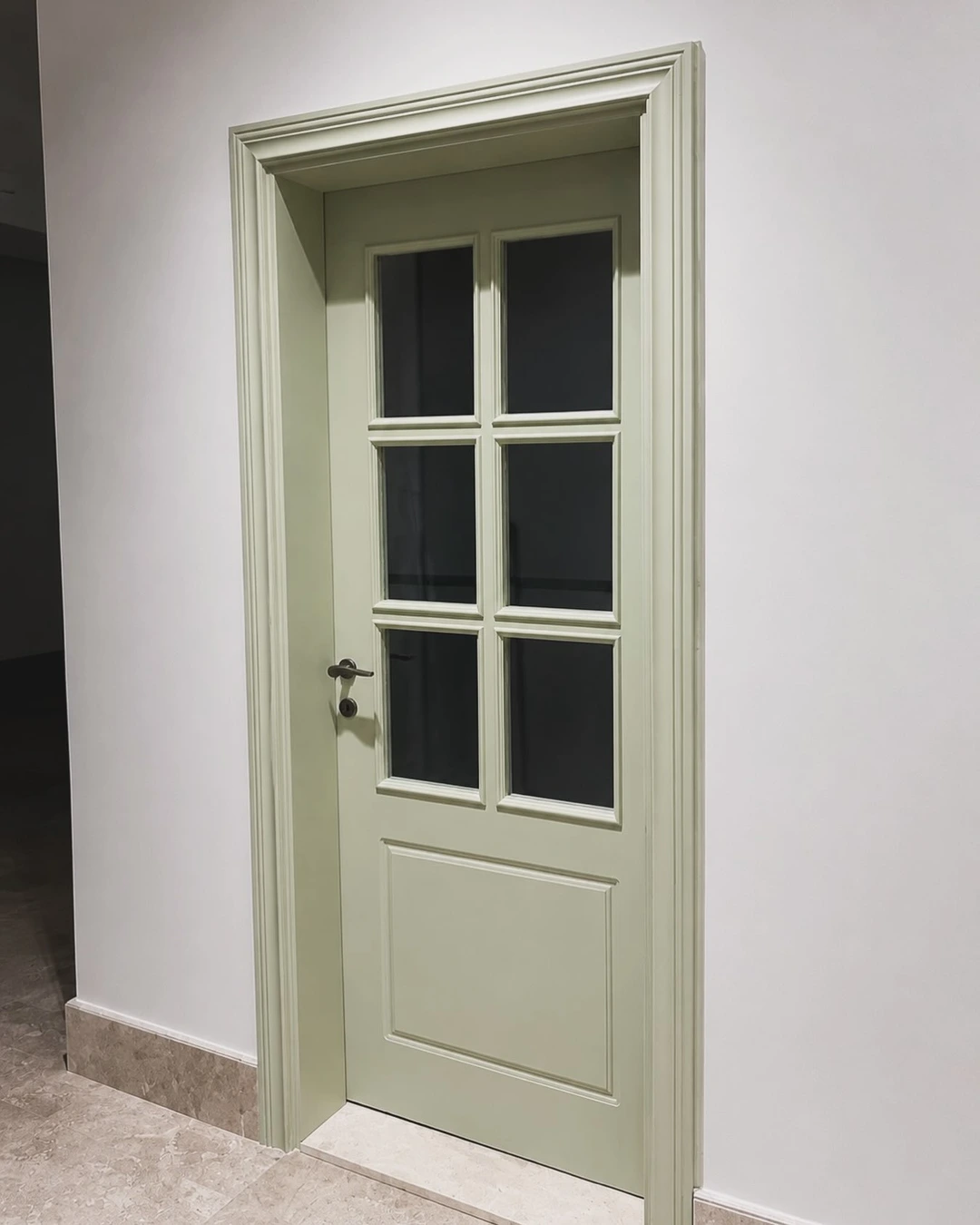
Photo by @sahil_das555
A sage green door with six glass panes in the upper two-thirds and a solid panel below, set in a matching sage frame with decorative molding, shows how sage softens a doorway. The glass panes keep the door from feeling solid and closed, while the muted green reads calm and natural against the white wall and beige marble floor. Muted sage is the character of this color, because it is green without being loud, and gray enough to behave like a neutral.
Sage doors work well in bedrooms, bathrooms, and hallways where a gentle, nature-inspired feeling is welcome. They pair naturally with white trim, warm wood, plants, and linen textures, and they look good alongside both warm and cool wall colors. Because sage sits between green and gray, check it against your flooring in your own light: warm wood floors pull out its warmth, while cool gray floors can make it read grayer.
05. Charcoal Gray
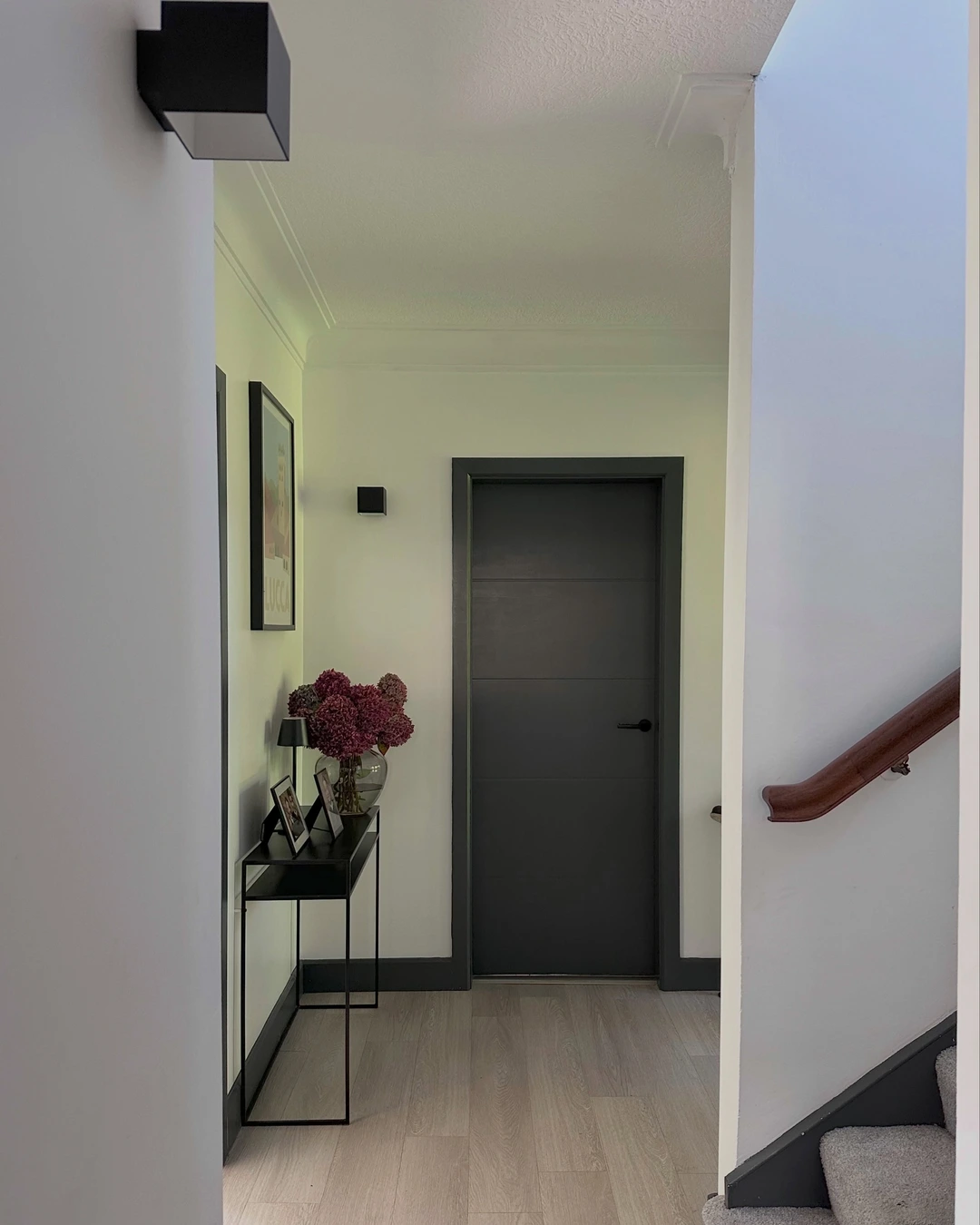
Photo by @architect_v_engineer
A dark charcoal gray door with matching charcoal trim and skirting, set at the end of a bright hallway with white walls, light wood flooring, and a black console table, shows charcoal as a softer alternative to black. The door is clearly dark, but the gray keeps it from feeling severe, and the matching trim makes the whole opening read as one intentional unit. Dark charcoal is the right description, because this color gives drama while staying warmer and more forgiving than jet black.
Charcoal doors suit modern and transitional homes, hallways, and rooms where black feels too stark. They work with white walls, light floors, and black or brass hardware, and they are a good choice when you want contrast without the full commitment of black. As with any dark door, keep the surrounding walls light and the trim either matching or white, so the doorway stays crisp rather than muddy.
06. Greige
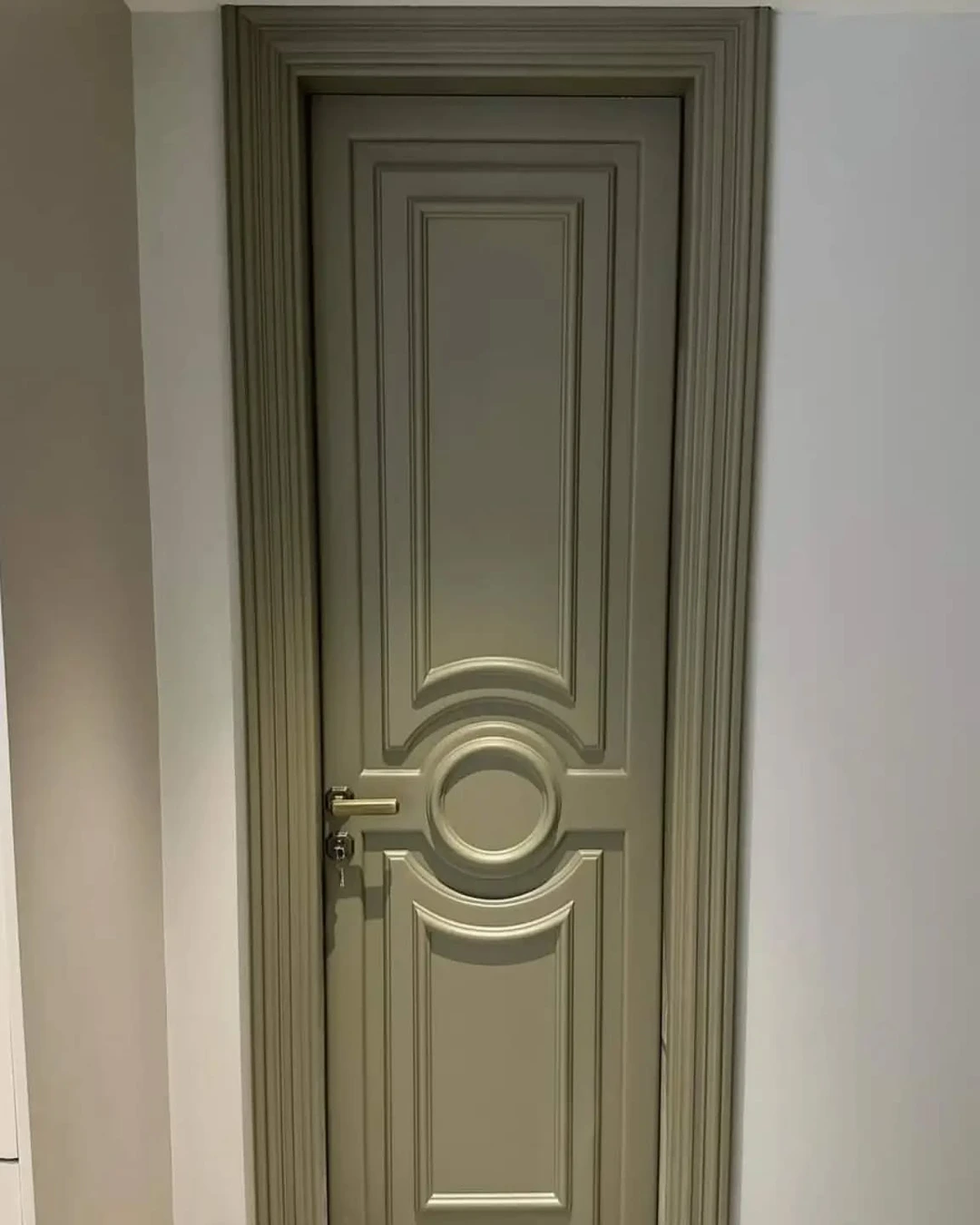
Photo by @dy3885980
A door in a muted gray-beige tone with elaborate raised paneling, a circular motif at its center, and a matching grooved frame shows greige as the in-between color it is: neither fully gray nor fully beige. In this photo the shade leans slightly toward sage-gray, which is worth knowing, because greige shifts with light and surroundings more than most neutrals. Warm gray-beige is the idea behind greige, and its appeal is that it connects warm wood tones and cool gray finishes in the same hallway.
Greige doors are a good whole-house choice when your home mixes warm and cool elements, since the color does not commit hard to either side. They suit hallways, bedrooms, and living rooms, and they pair well with white trim, warm wood floors, and both brass and matte black hardware. Test a sample beside your flooring and wall color before committing, because a greige that looks warm in one home can read cooler next to gray tile or stone.
07. Cream
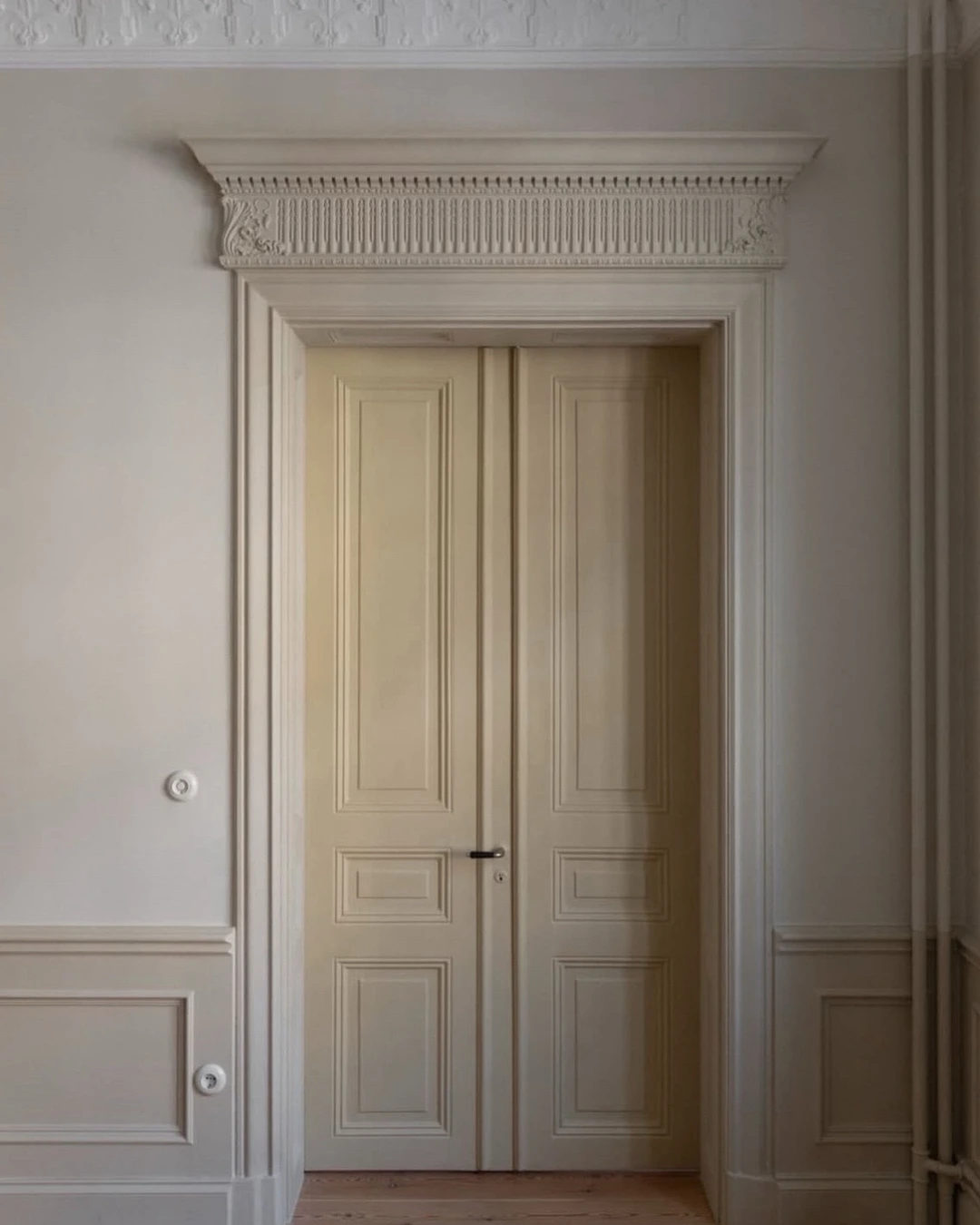
Photo by @le_cime
A pair of cream paneled double doors set in an ornate frame with classical dentil molding and crown detailing shows cream as a warmer, softer alternative to white. The doors read clearly creamy against the neutral walls and wainscoting, and the warm tone suits the traditional setting far better than a stark white would. Warm cream is the defining quality, because it carries a yellow warmth that makes a doorway feel welcoming rather than clinical.
Cream doors suit traditional rooms, bedrooms, and hallways where comfort matters more than crispness. They pair beautifully with brass hardware, warm wood floors, and soft wall colors, and they are a good choice when white doors look too cold against warm walls or woodwork. Keep the trim in the same cream family rather than bright white, so the doorway does not end up with two competing whites.
08. Dusty Blue
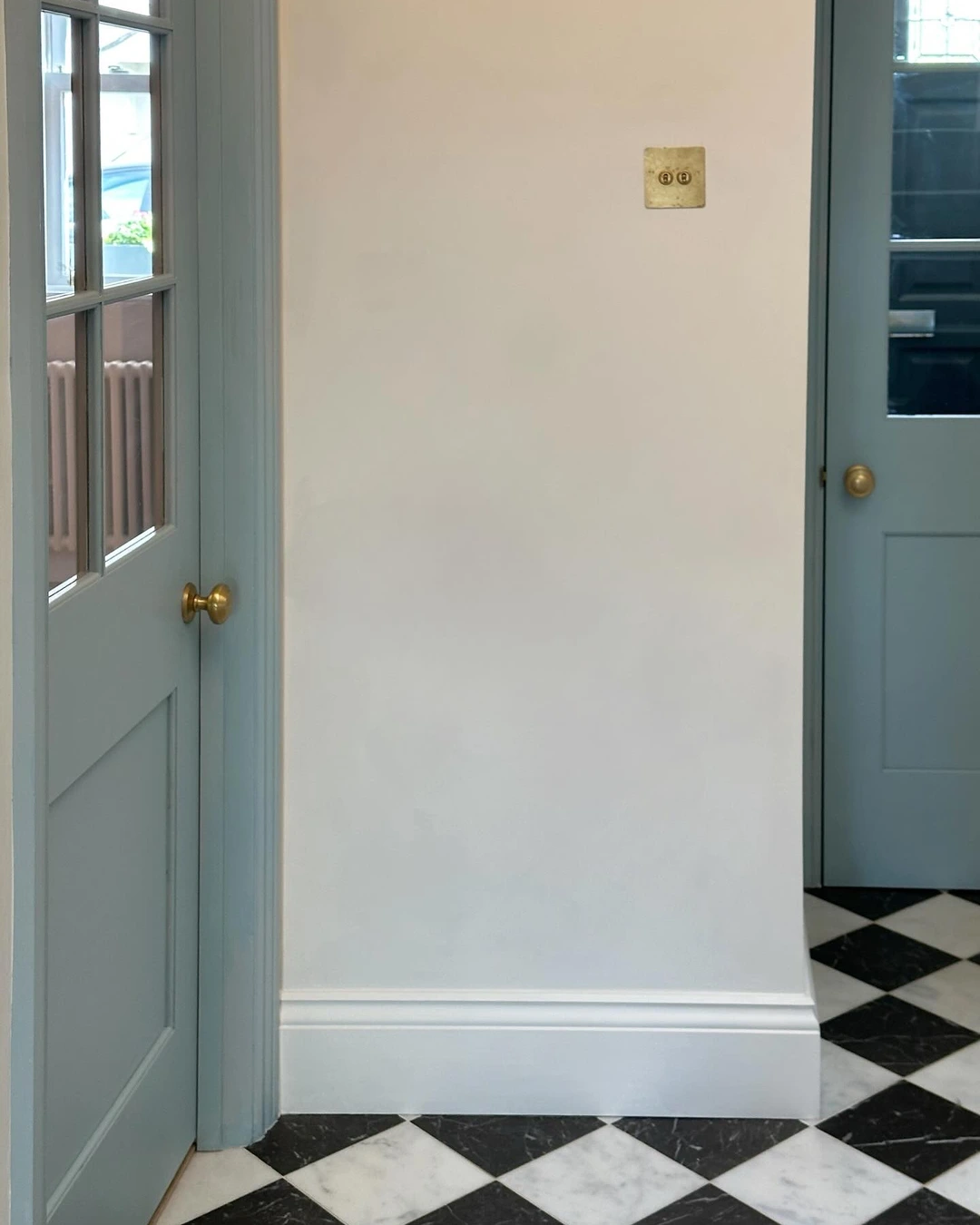
Photo by @atnumbereighteen
Two paneled doors in a soft, muted blue-gray, with round brass doorknobs, white skirting, and a black-and-white diamond marble floor, show dusty blue as a gentle way to add color to a hallway. The blue is clearly present but softened by gray, so it feels calm rather than playful, and the brass knobs give it a classic finish. Soft blue-gray is the right description, and the caption for this photo names the paint used on the doors as Coat Paints ‘Lie In’.
Dusty blue doors suit hallways, bedrooms, and bathrooms, especially in homes with white or pale walls, marble or light tile floors, and brass details. They pair well with white trim and pale walls, which let the blue read clearly without competing with it. Because the color is muted, it works as a repeated hallway color without overwhelming the house, and it is a good choice when navy feels too dark but white feels too plain.
09. Forest Green
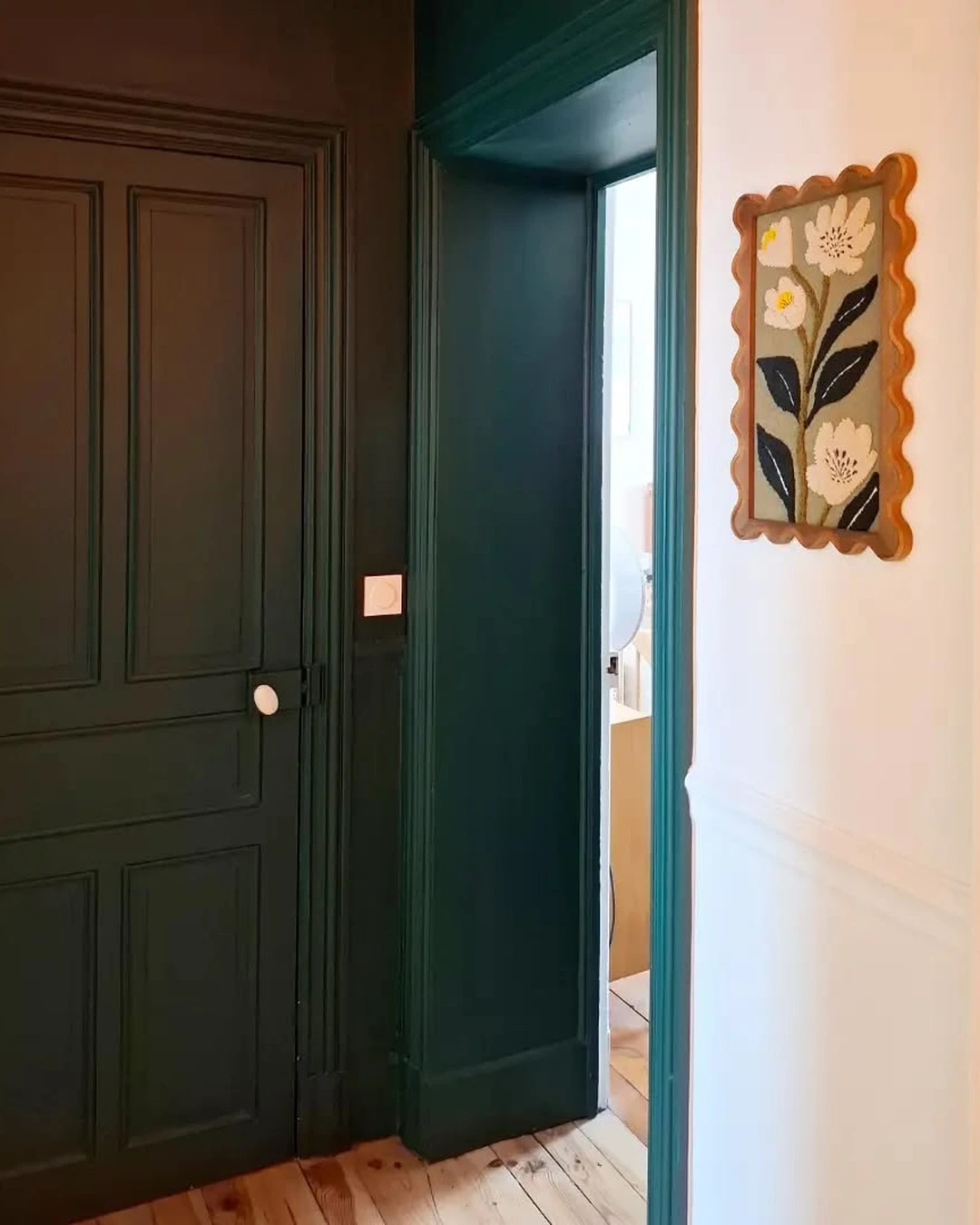
Photo by @_chez.margot_
A deep forest green paneled door with a round white doorknob, set in matching green trim beside an open doorway framed in the same green, shows forest green as a rich, enveloping door color. The green is deep and warm rather than bright, and the matching trim makes the doorway feel like part of the architecture rather than an afterthought. Deep forest green is the character here, because the color has enough depth to feel luxurious without turning black in low light.
Forest green doors suit studies, libraries, dining rooms, and hallways where a moody, grounded feeling is welcome. They pair well with warm wood floors, brass or white hardware, and cream or warm white walls, which keep the green from feeling heavy. In a small or dim hallway, use the green on the doors and keep the walls pale, so the color adds depth without shrinking the space.
10. Terracotta
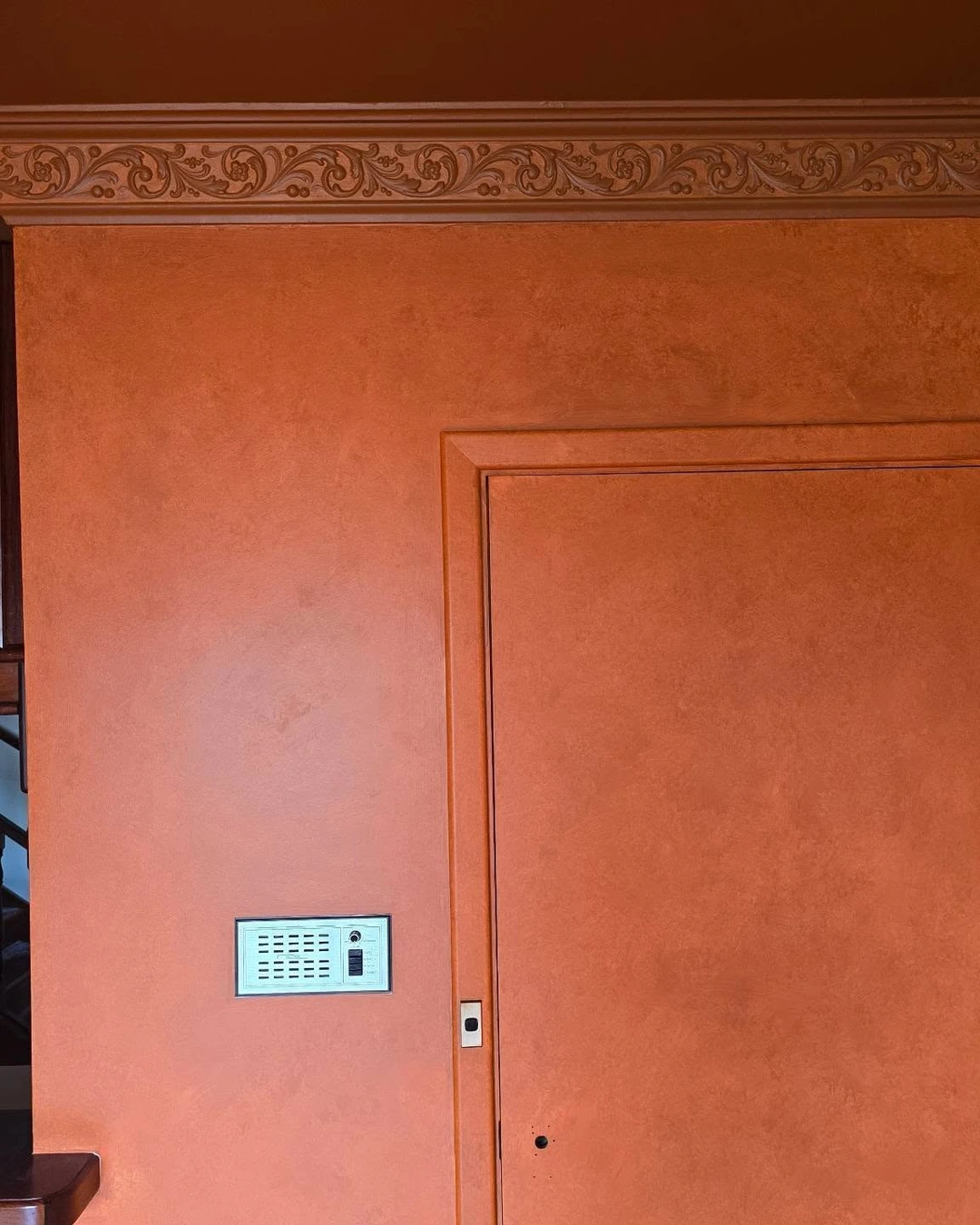
Photo by @genglandpainting
A flush terracotta door painted the same warm rust color as the wall around it, with ornate carved crown molding also painted to match, shows terracotta used as a full, confident color statement. The monochromatic wall-and-door treatment makes the doorway feel built-in rather than pasted on, and the warm rust tone gives the whole corner a sun-baked, welcoming feeling. Warm rust is the heart of terracotta, because it sits between orange and brown and carries the warmth of both.
Terracotta doors suit entryways, living rooms, and Mediterranean or warm modern homes, especially alongside dark wood, warm neutrals, and natural textures. They work best when the surrounding palette stays calm, since the door itself is already doing the talking, and they pair well with brass or dark bronze hardware. Because terracotta is strong, it usually works best on one or two doors rather than every door in the house.
11. Warm Taupe
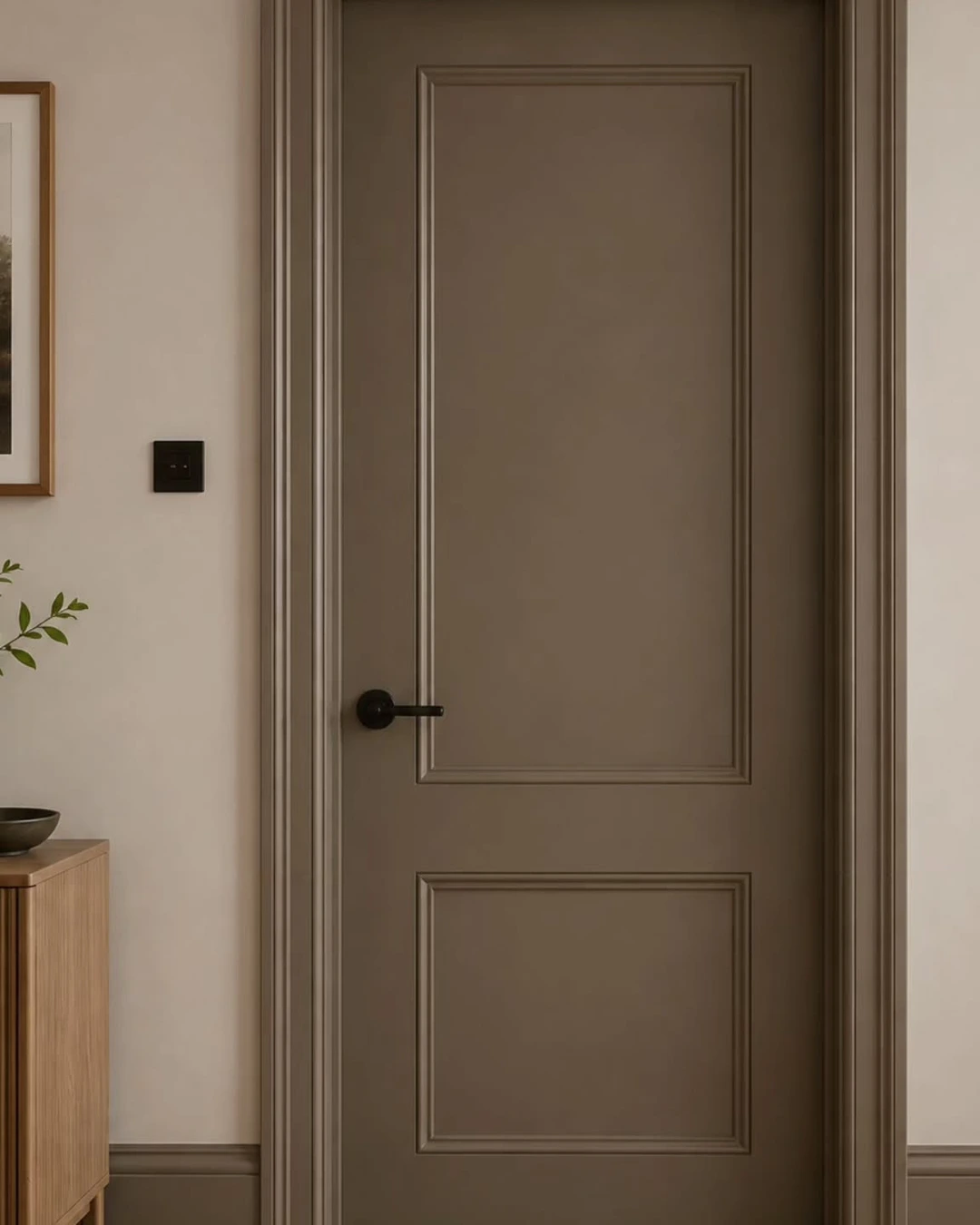
Photo by @ourfothergilllaugharne
A warm taupe two-panel door with a matching taupe frame and skirting, a matte black lever handle, and a light wall with framed artwork beside it, shows taupe as a quiet, tailored door color. The door and its frame share the color, which gives the opening a bespoke, built-in look, and the black handle provides just enough contrast. Warm taupe is the defining note, because the color is brown-gray rather than yellow-beige, and that depth keeps it from looking washed out.
Taupe doors suit hallways, bedrooms, and living rooms where a soft, grounded neutral is needed. They pair well with warm wood floors, light walls, and matte black or brass hardware, and they are a good choice when gray feels too cold and beige feels too pale. The caption for this photo discusses painting all the woodwork taupe instead of traditional white, which is a useful idea: matching doors, frames, and skirting in taupe makes a hallway feel cohesive without a single bold color.
12. Deep Teal
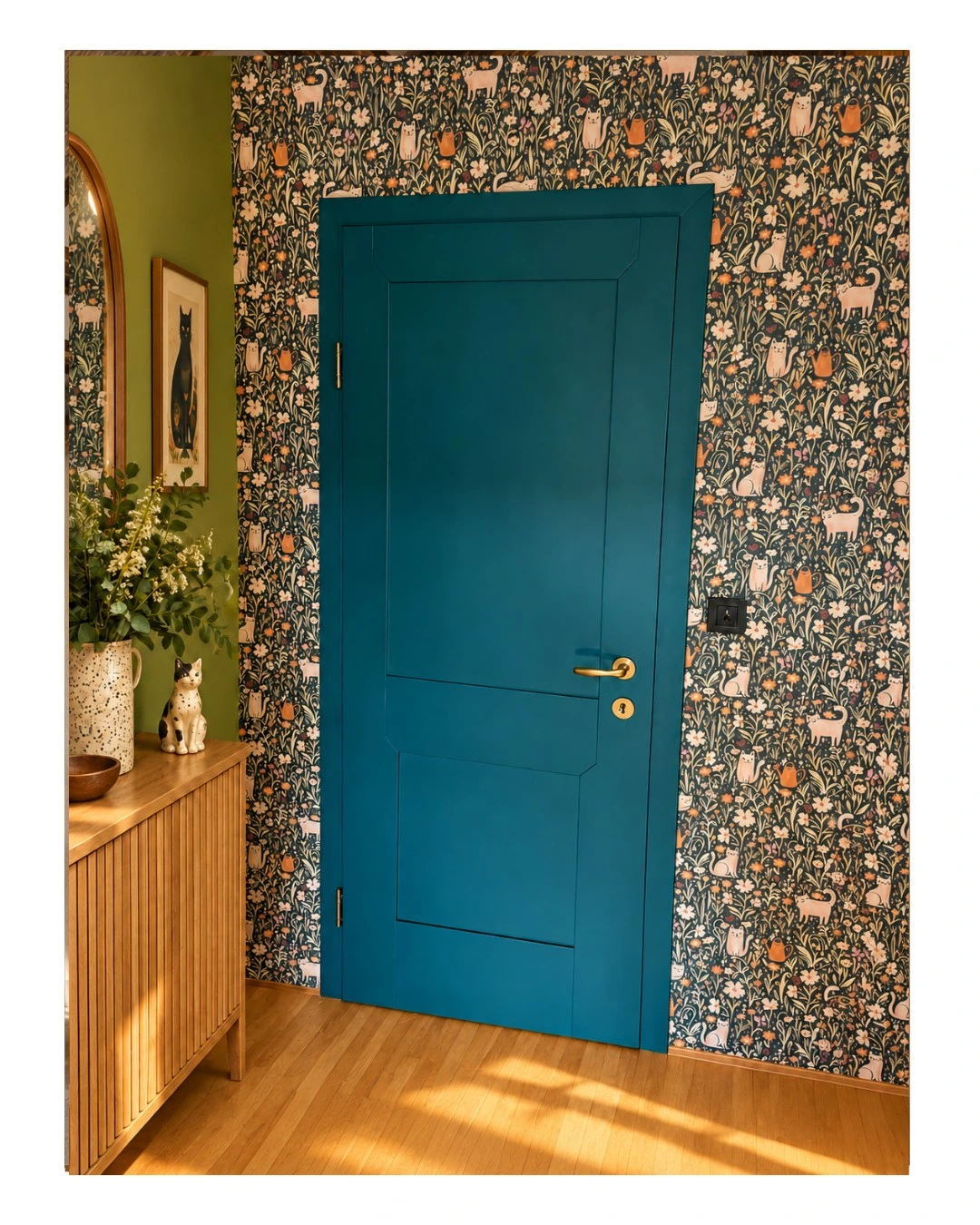
Photo by @meludoors
A deep teal paneled door with a brass handle, set against busy patterned wallpaper with a wooden sideboard beside it, shows deep teal as a confident, personality-filled door color. The teal is clearly blue-green, deep rather than bright, and it holds its own against the patterned wall instead of disappearing into it. Deep teal is the key distinction, because the color is saturated enough to be a feature but dark enough to behave like a neutral in a hallway.
Deep teal doors suit hallways, bedrooms, and creative spaces where a bold but livable color is welcome. They pair well with brass hardware, warm wood floors, and both plain and patterned walls, as this photo shows, and they look good alongside warm whites and natural textures. Because teal is strong, it benefits from good light and a calm floor color, so the door reads as a feature rather than a clash.
Choose the Interior Door Paint Color That Ties Your Home Together
The most cohesive choice is rarely the loudest one. Repeat your door color through the house, or at least along one hallway, so the doors read as a family rather than a collection of one-off decisions. Keep the trim either matching or clean white, choose hardware that repeats elsewhere in the room, and test your color beside your floors and walls in your own light before committing. A door color that survives your light, your hardware, and your daily traffic is the one that will still look right years from now.