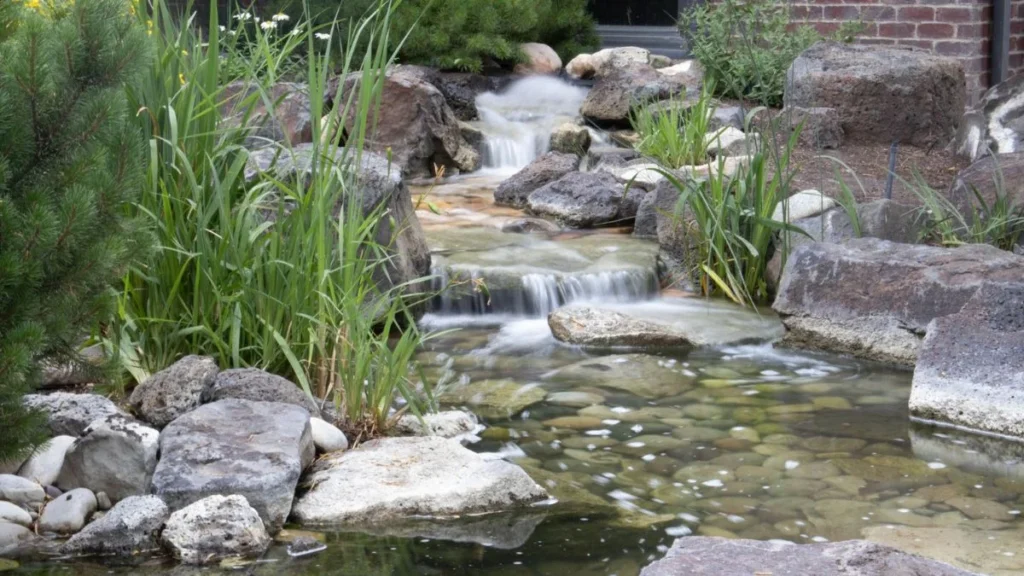
Single grey rock sat in the corner of my sister’s postage-stamp garden for two years before she finally added six more and completely transformed the space. That’s the quiet power of boulder landscaping ideas for small yards — they turn awkward corners and bare patches into something that looks deliberate, not accidental.
If your outdoor space still feels flat despite a few plants and a tidy lawn, thin flower beds and one lonely shrub probably won’t fix it. Boulders will. Used well, they add height, texture, and a sense of permanence that small gardens often lack.
This list covers boulder landscaping ideas that work specifically for tight spaces, along with the one placement mistake that makes most small-yard rock gardens look cluttered instead of curated.
The Short Version
- One large statement boulder usually looks better in a small yard than several scattered small ones.
- Odd-numbered groupings (three or five) read as natural; even numbers tend to look staged.
- Pairing boulders with low groundcover or ornamental grass softens hard edges and stops them looking dumped in place.
- Scale matters more than quantity — one well-placed rock beats a dozen mismatched ones.
Single Statement Boulder As A Corner Anchor
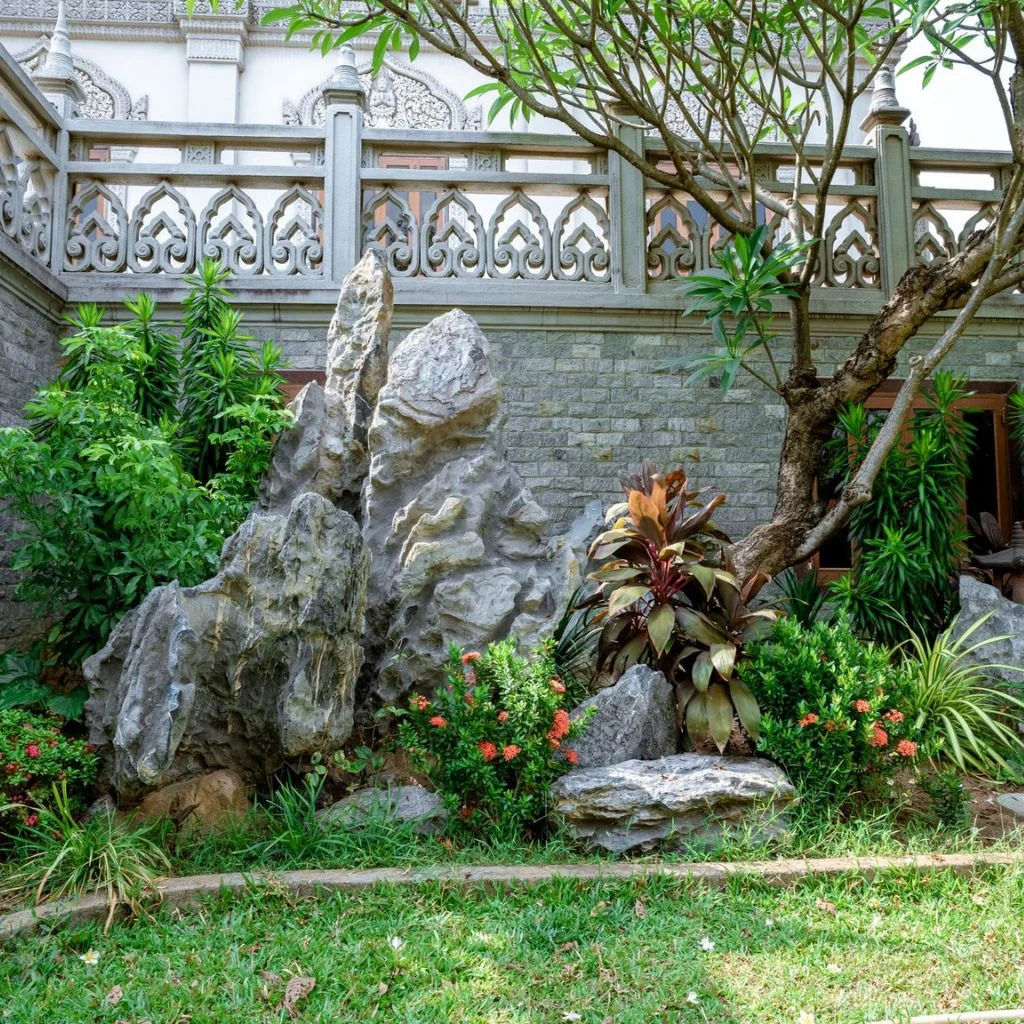
Small yards often have one awkward corner that nothing seems to fill — too narrow for a shrub, too small for furniture. A large, single boulder solves this instantly.
Choose one that sits roughly knee to hip height and place it slightly off centre rather than dead in the corner. Why this works: one bold rock reads as intentional design, while several small stones in the same spot look like leftover rubble from a building project.
Surround the base with low groundcover such as creeping thyme or Irish moss to soften the edge and stop it looking as though it was simply dropped there.
Layered Boulder Clusters Along A Garden Bed
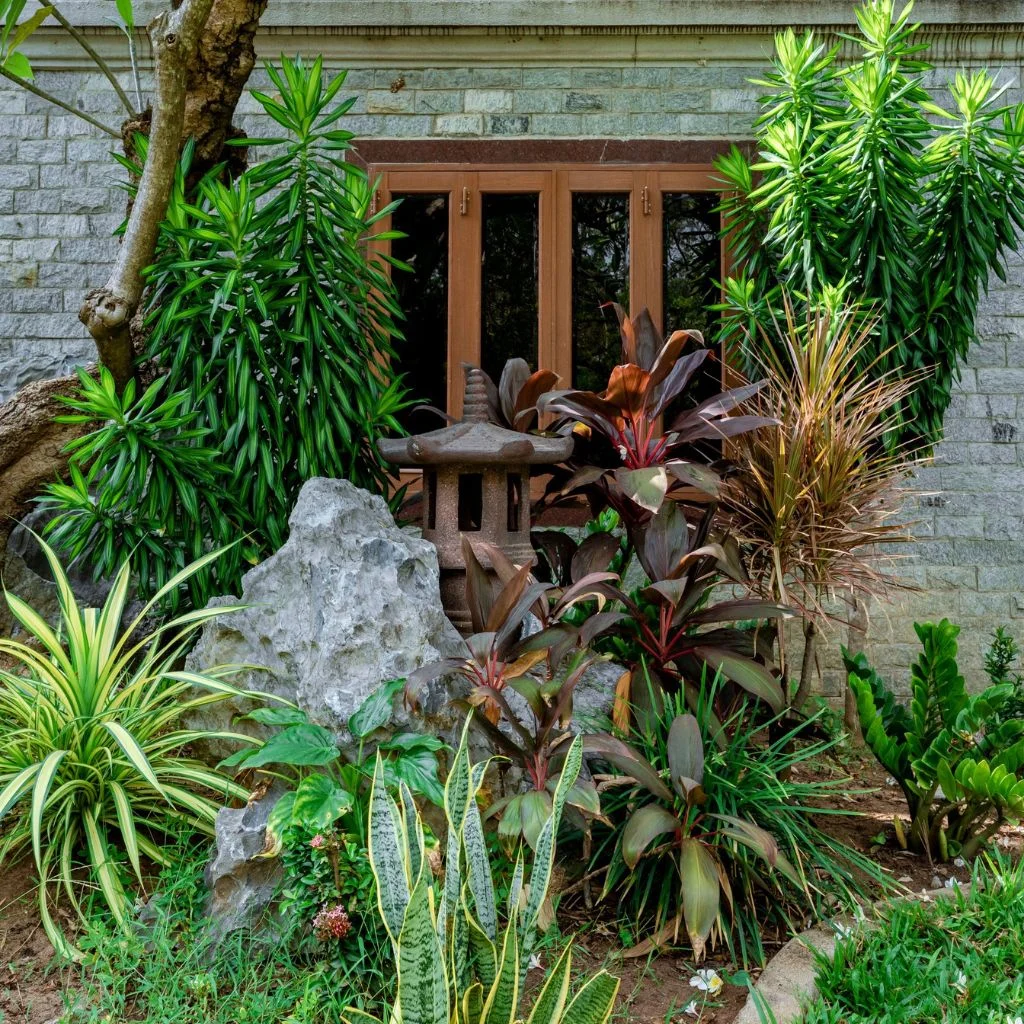
Rather than one boulder, group three of varying sizes along the edge of a flower bed. Odd numbers and mismatched sizes are what make this look like something nature arranged, not a person with a wheelbarrow.
Set the largest boulder first, then nestle the smaller two at slightly different depths so they overlap when viewed from the house. This layering trick is one of the simplest boulder landscaping ideas for adding depth to a bed that would otherwise read as flat.
A common finishing touch is tucking low-growing sedum between the gaps, which fills the empty soil without competing with the stone for attention.
Boulders Framing A Narrow Pathway
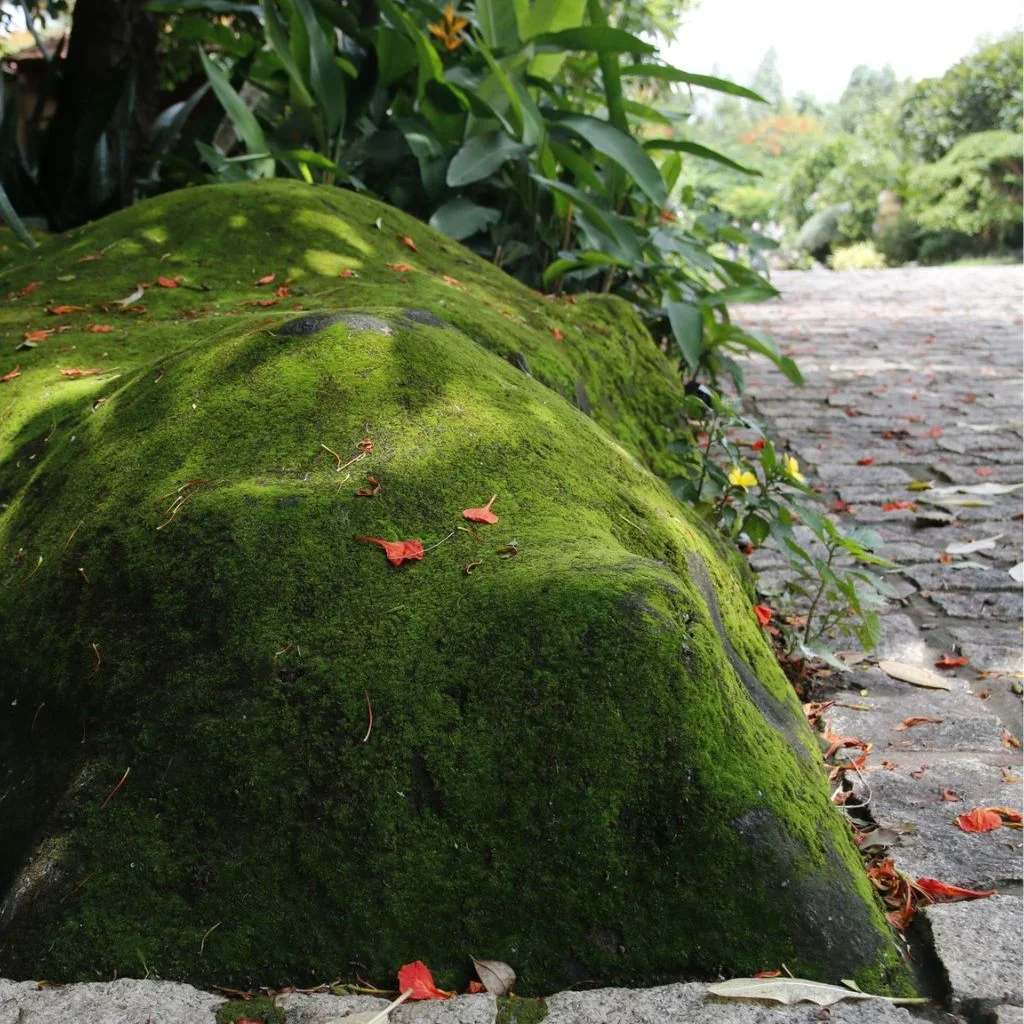
A tight path between the house and fence can feel like a corridor rather than a garden feature. Placing a boulder on each side, staggered rather than mirrored, breaks up that tunnel effect.
Keep the stones lower than knee height here so the path still feels open rather than boxed in. A personal note: I’ve found that uneven staggering, rather than a matching pair, is what stops this from looking like a driveway entrance rather than a garden path.
Low-growing thyme or dwarf mondo grass planted at the base blurs the line between path and border, which makes a narrow space feel a little wider than it is.
Dry Creek Bed Scattered With Boulders
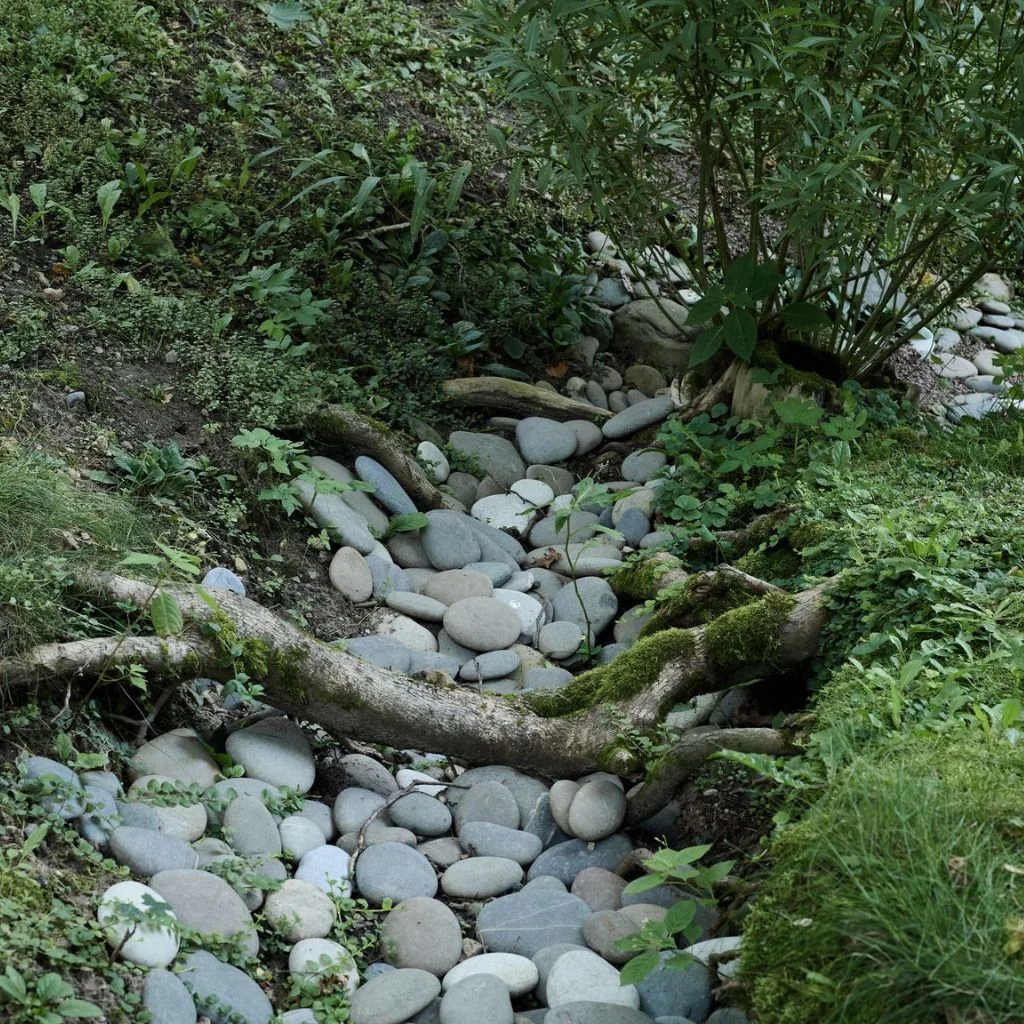
Dry creek beds are one of the most practical boulder landscaping ideas because they solve a drainage problem while looking deliberately designed. A shallow, curved channel lined with river rock and dotted with a few larger boulders mimics a natural stream bed.
This works particularly well in small yards that pool water after rain, since the channel gives runoff somewhere to go instead of collecting on the lawn.
Vary the boulder sizes along the curve and avoid placing them in a straight line — real creek beds never run perfectly straight, and neither should this one.
Boulder And Ornamental Grass Pairings
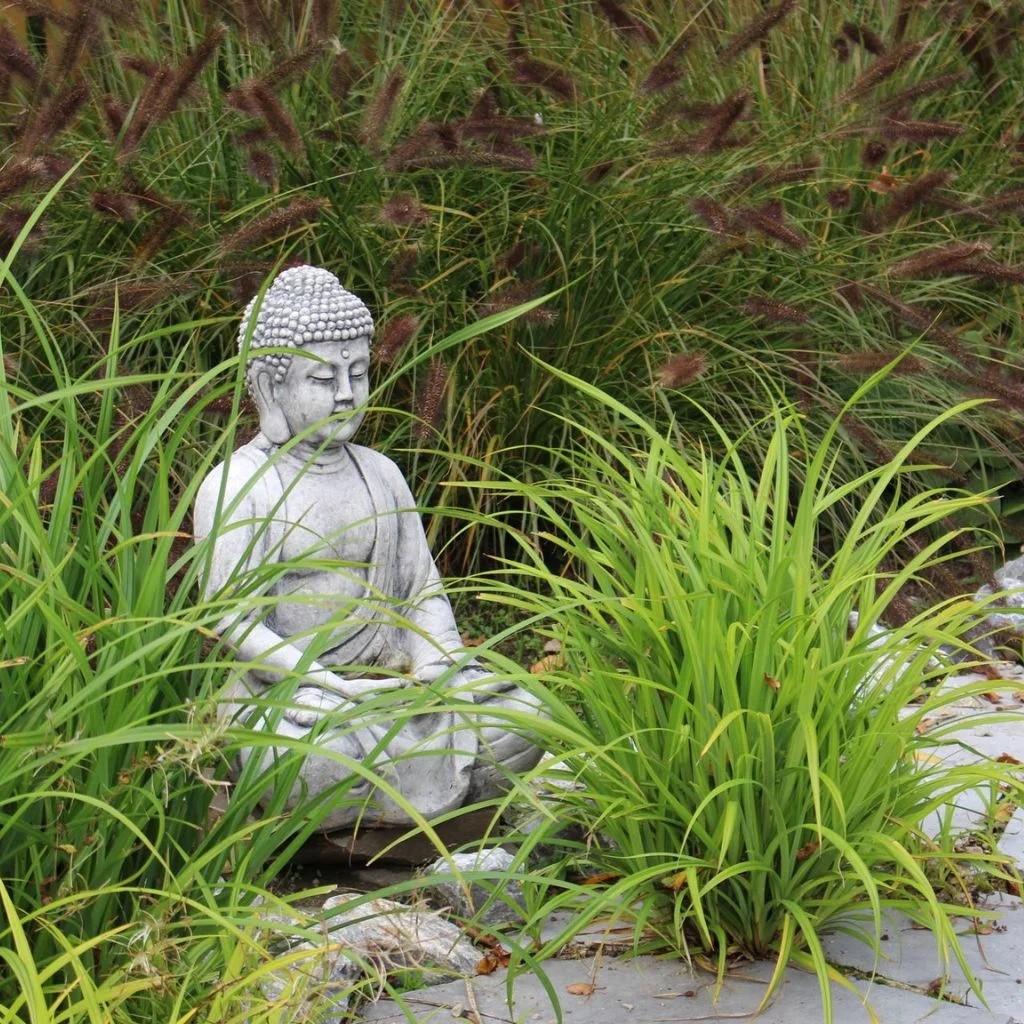
Hard stone against soft, moving grass is one of the most reliable contrasts in garden design. Planting feather reed grass or blue fescue directly behind a boulder gives the eye something to bounce between texture-wise.
In a small yard, this pairing does double duty: the grass adds height and movement without taking up much ground space, while the boulder keeps the overall look grounded rather than wild.
Three grasses of varying heights behind one mid-sized boulder tends to look more considered than a single grass clump on its own.
Tiered Boulder Wall On A Sloped Yard
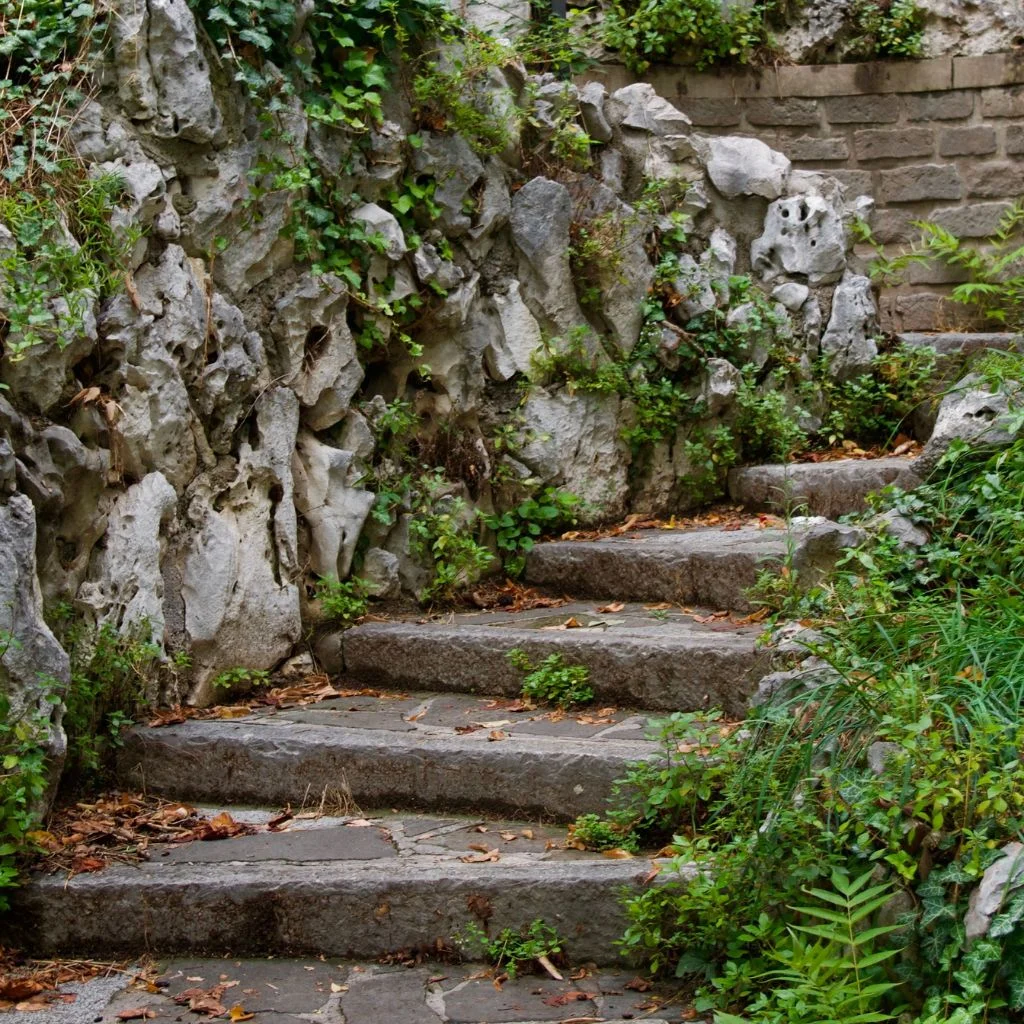
Sloped small yards are notoriously awkward to landscape because there’s rarely room for a full retaining wall. Stacking boulders in two or three loose tiers instead of building a solid wall keeps the slope stabilised while looking far less industrial.
Each tier can hold a narrow planting strip, so the whole thing functions as terraced flower beds rather than a plain retaining structure. Why this works: it turns a drainage and erosion problem into the most visually interesting part of the garden.
This is a heavier project than the others on this list, so it’s worth checking the weight and placement with a landscaper if the slope is steep.
Boulders Surrounding A Small Water Feature
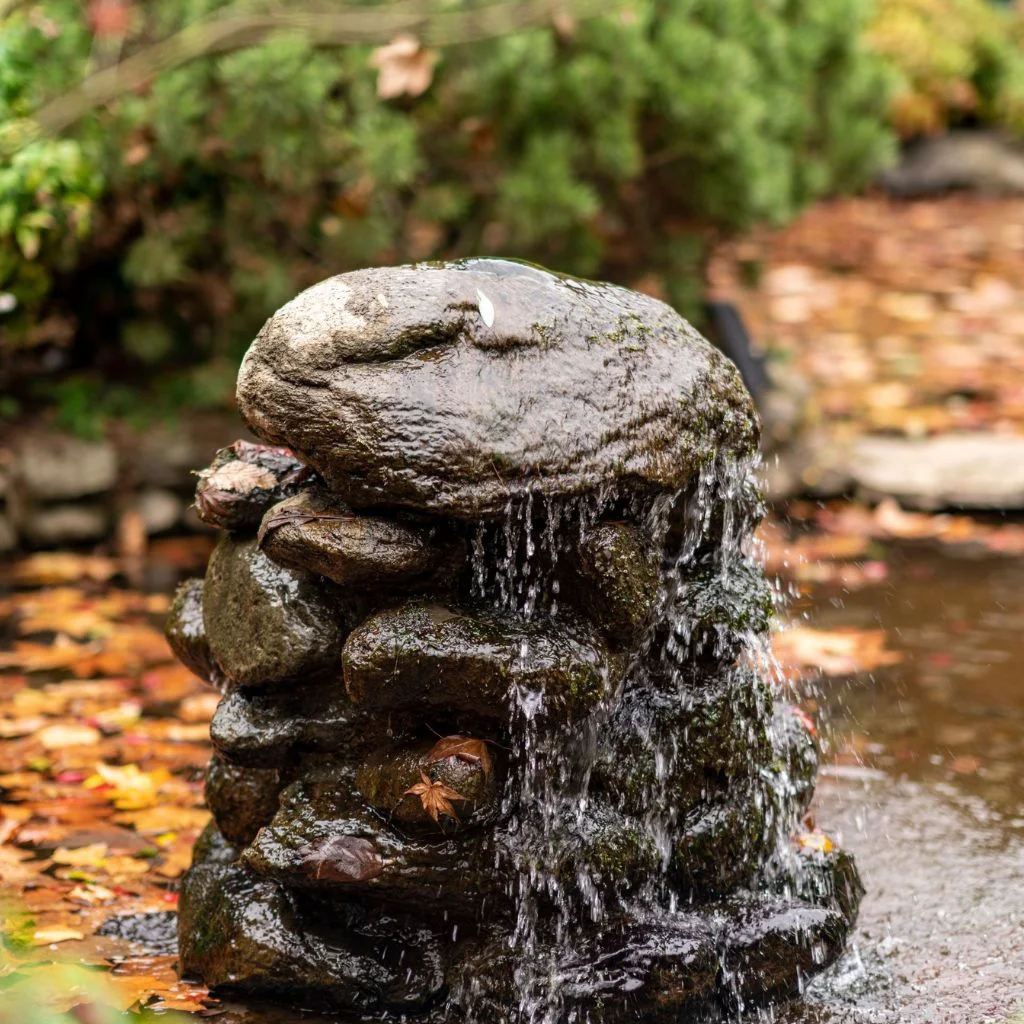
Even a modest solar-powered fountain or small pond looks unfinished without something anchoring its edges. Two or three boulders placed around the rim hide the equipment and give the feature a sense of permanence.
Choose stones with a flat top on at least one side so they double as a spot to rest a drink or a pair of garden gloves without the whole arrangement toppling.
This is a favourite among small-yard owners who want a water feature but don’t have room for a full pond border of plants and edging.
Boulder Seating Nook For Tiny Patios
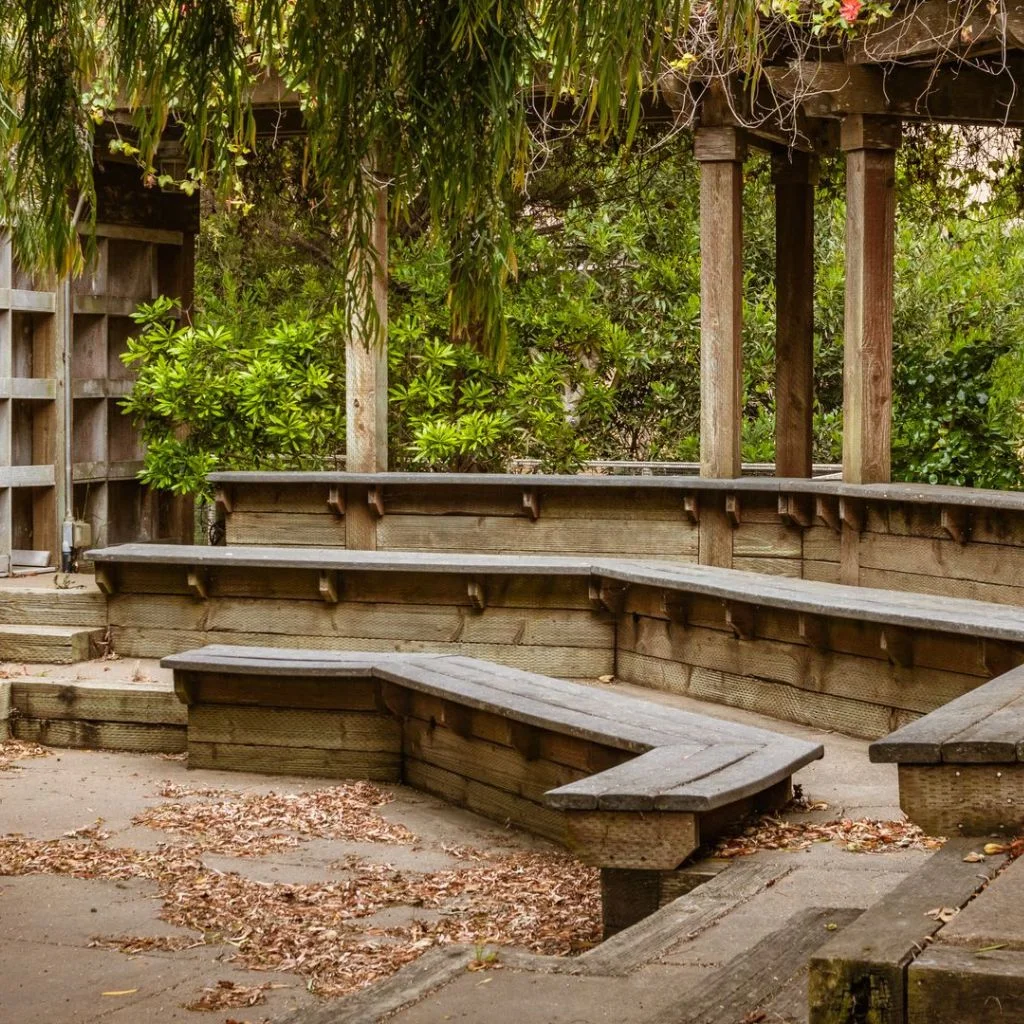
Flat-topped boulders can genuinely double as seating, which matters when a patio is too small for a full outdoor furniture set. Arrange two or three around a low fire bowl or a small side table.
This idea works best with stones that have a naturally level surface — forcing a rounded boulder into a seat rarely looks comfortable or intentional.
It’s also one of the more budget-friendly boulder landscaping ideas on this list, since it removes the need to buy separate garden chairs altogether.
Mixed Gravel And Boulder Ground Cover
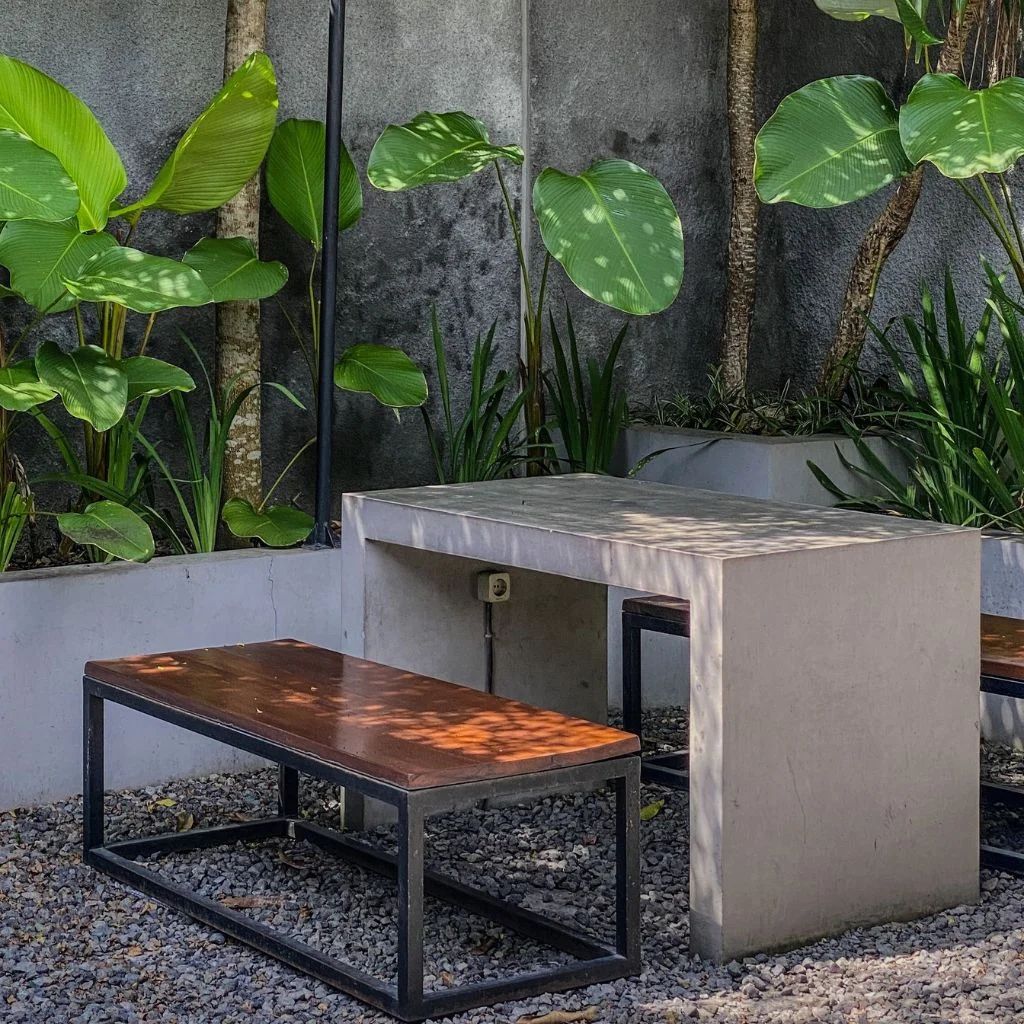
Replacing a strip of struggling lawn with gravel and a scattering of boulders is a low-maintenance option that still looks styled rather than neglected. Choose a gravel shade that contrasts with the stone, such as warm buff gravel against grey boulders.
Keep the boulders slightly off-grid rather than evenly spaced, and let two or three sink partway into the gravel as though they’ve settled there over time.
This approach suits small front yards especially well, since it needs no mowing and holds up in both drought and heavy rain.
Boulder Accents Near The Entryway Or Mailbox
The entrance to a home is one of the highest-impact spots for a small landscaping change. A single well-placed boulder beside the front steps or at the base of a mailbox post reads as tidy and intentional rather than an afterthought.
Pair it with a low, evergreen shrub such as dwarf boxwood so the spot still looks presentable through winter when other planting has died back.
This is often the cheapest entry point into boulder landscaping ideas, since it typically needs only one stone and a small amount of planting to finish.
The Placement Mistake Most Small Yards Make
The most common error I see in small-yard rock gardens is burying the boulder too shallow, so it looks like it’s sitting on top of the soil rather than emerging from it. A boulder that hasn’t been partially sunk into the ground almost always looks fake, no matter how good the stone itself is.
As a rule of thumb, aim to bury roughly a third of the boulder’s height. This single adjustment does more for realism than any amount of careful planting around it.
The second frequent mistake is matching every boulder to the same size and shape. Real stone fields are never uniform, and a small yard has even less room to hide that uniformity than a large one.
Small Space, Big Impact
None of these boulder landscaping ideas require a large budget or a large yard — most need a single well-chosen stone, correct depth, and a little restraint on quantity. The gardens that look most convincing are rarely the busiest ones.
Start with one boulder in the spot that bothers you most, get the depth and angle right, and build outward from there rather than trying to fill the whole yard at once.
Ready to plan your layout? Sketch your yard on paper first and mark where a single boulder could anchor the space before you buy anything.
Our Pick: Moody Elegance Black Nouveau Bedroom Inspiration For Bold Home.