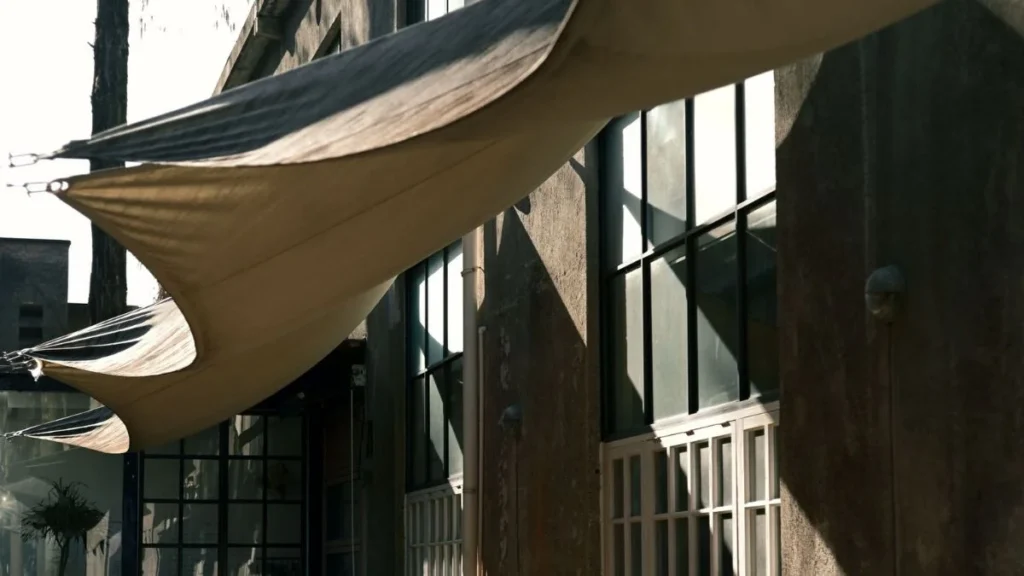
A leaking gazebo tarp and a sun-scorched garden chair taught me more about patio covers than any renovation show ever could. Cheap patio cover ideas exist for exactly this reason, and they prove that comfortable outdoor living doesn’t need a contractor’s quote to get started.
Rain-soaked cushions and blistering afternoon heat are the two problems every patio owner eventually faces. The good news is that a working, weatherproof shade solution can be built from materials that already sit in most hardware stores, salvage yards, or even a neighbour’s garage.
This guide to cheap patio cover ideas covers budget-friendly options that block both sun and rain, ranging from ready-made canopies to repurposed building materials. Each option below includes what it costs, how it holds up in weather, and why it earns its place on a tight renovation budget.
Before You Start Building
- Retractable awnings and shade sails cost less than a solid roof and can be repositioned as needs change.
- Waterproof coverage matters more than shade alone, so check a material’s water rating before buying.
- Reusing pallets, fencing offcuts, or old tarps keeps costs near zero for anyone willing to build by hand.
- A slight slope in any cover design stops pooling water from collapsing the structure.
Retractable Canvas Awnings for Flexible Shade

Retractable canvas awnings sit among the most practical cheap patio cover ideas because they fold away entirely when not needed. A basic hand-crank model mounted to an exterior wall typically costs a fraction of a fixed roof, yet still blocks direct sun and light showers effectively.
The canvas fabric used on modern awnings is treated to resist water absorption, so a sudden rain shower rarely soaks through before someone gets the crank turned. Retracting the awning during heavy storms protects the fabric from wind damage, which extends its lifespan considerably.
Why this works: the adjustable angle lets the cover follow the sun through the day, something a fixed roof simply cannot do. That flexibility is often worth more than the extra durability of a permanent structure.
Second-hand awnings, taken down from shopfronts or previous homes, often turn up on local classifieds for very little. Checking the crank mechanism and fabric condition before buying secondhand avoids paying for a frame that needs a full recover anyway.
Shade Sails Stretched Across Existing Posts
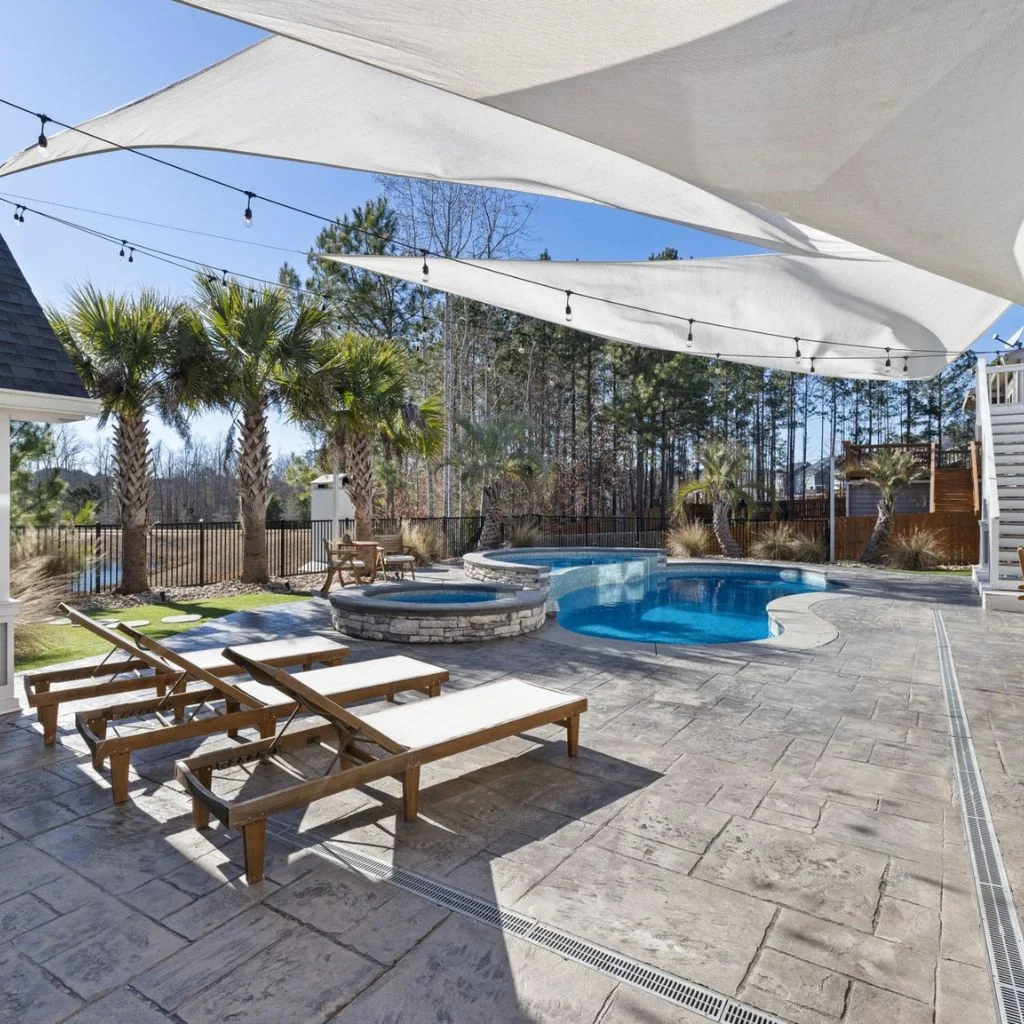
Shade sails have become one of the most photographed cheap patio cover ideas on outdoor renovation pages, and the appeal is obvious once the price is compared with a timber pergola. A single sail anchored to a fence post, the house wall, and one freestanding pole can cover an entire seating area.
Waterproof sail fabric, rather than the breathable mesh type sold for pure sun shade, is the version to buy if rain protection matters. Checking the water-resistance rating before purchase avoids the common disappointment of a sail that shades well but leaks steadily during a downpour.
Why this works: the taut, angled surface sheds water to one side rather than pooling, which is exactly the physics that keeps a tent dry in a storm.
Steel carabiners and marine-grade rope hold up far longer than the basic hardware bundled with budget sail kits. Swapping the included fittings for stainless versions early on saves an awkward mid-season repair once rust sets into cheaper metal.
Bamboo and Reed Roll-Up Blinds
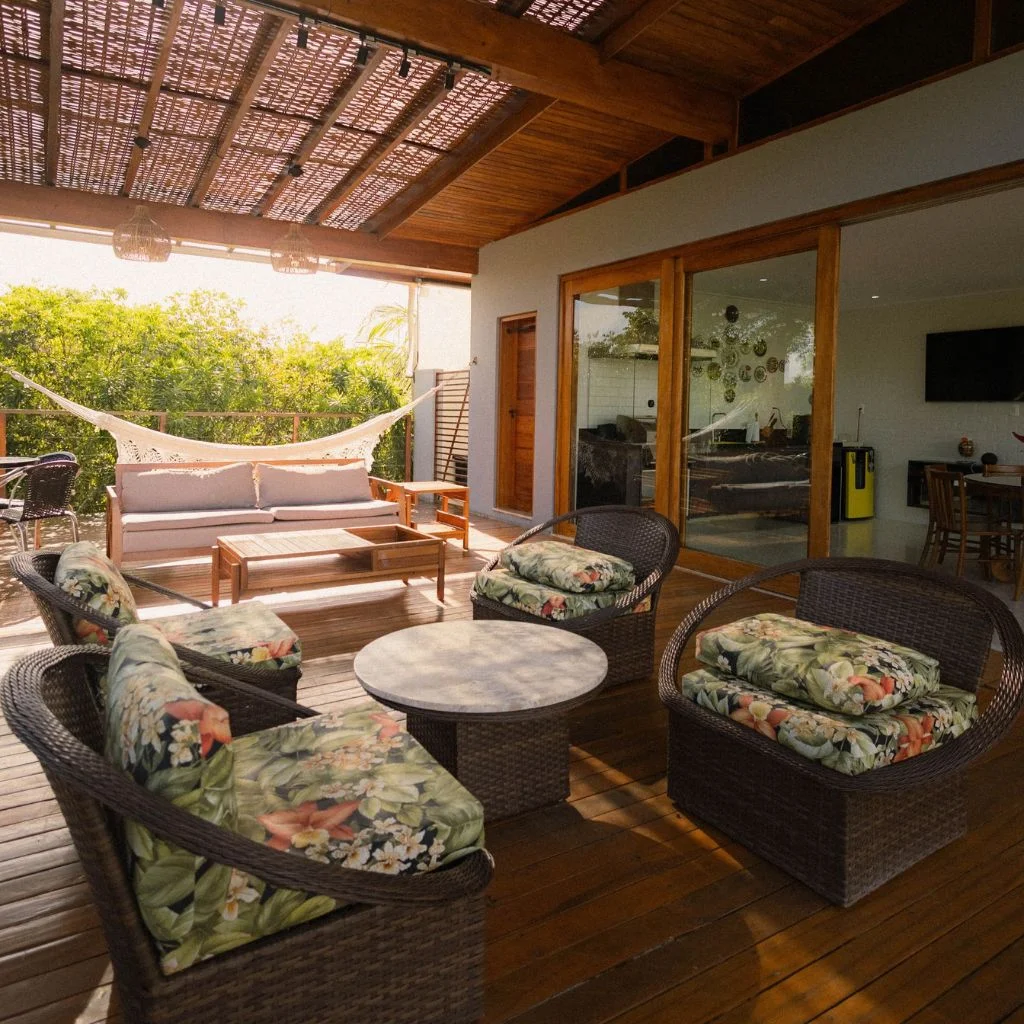
Roll-up bamboo blinds, usually sold for privacy screening, double surprisingly well as an overhead patio cover when mounted horizontally across a pergola frame or exposed beam. They rank among the simplest cheap patio cover ideas to install without power tools, and worn sections are easy to replace on their own.
On their own, bamboo blinds shade more than they waterproof, so pairing them with a clear plastic sheet underneath turns this into a genuine rain solution without losing the natural look. The plastic layer stays hidden above the blind and does the real waterproofing work.
Why this works: the combination keeps the visual warmth of natural bamboo while quietly solving the one weakness the material has on its own.
Corrugated Polycarbonate Roofing Panels

Polycarbonate panels are the material most self-build cheap patio cover ideas rely on once cost per square metre gets compared against glass or standard roofing tiles. Sold in various tints, from clear to opaque grey, they let filtered daylight through while blocking rain completely.
Installing panels over a simple timber frame is straightforward enough for a confident DIYer to finish in a weekend. Overlapping each panel correctly at the joints is the detail that separates a leak-free roof from one that drips at every seam during heavy rain.
Why this works: polycarbonate is UV-stabilised and impact-resistant, so it survives hail, falling branches, and years of sun exposure better than cheaper plastic sheeting.
Twin-wall panels insulate better and muffle rain noise more than single-layer sheets, which matters for anyone using the patio as a quiet reading spot. The price difference between the two is usually modest compared with the overall project cost.
Repurposed Pallet Wood Roof Cover
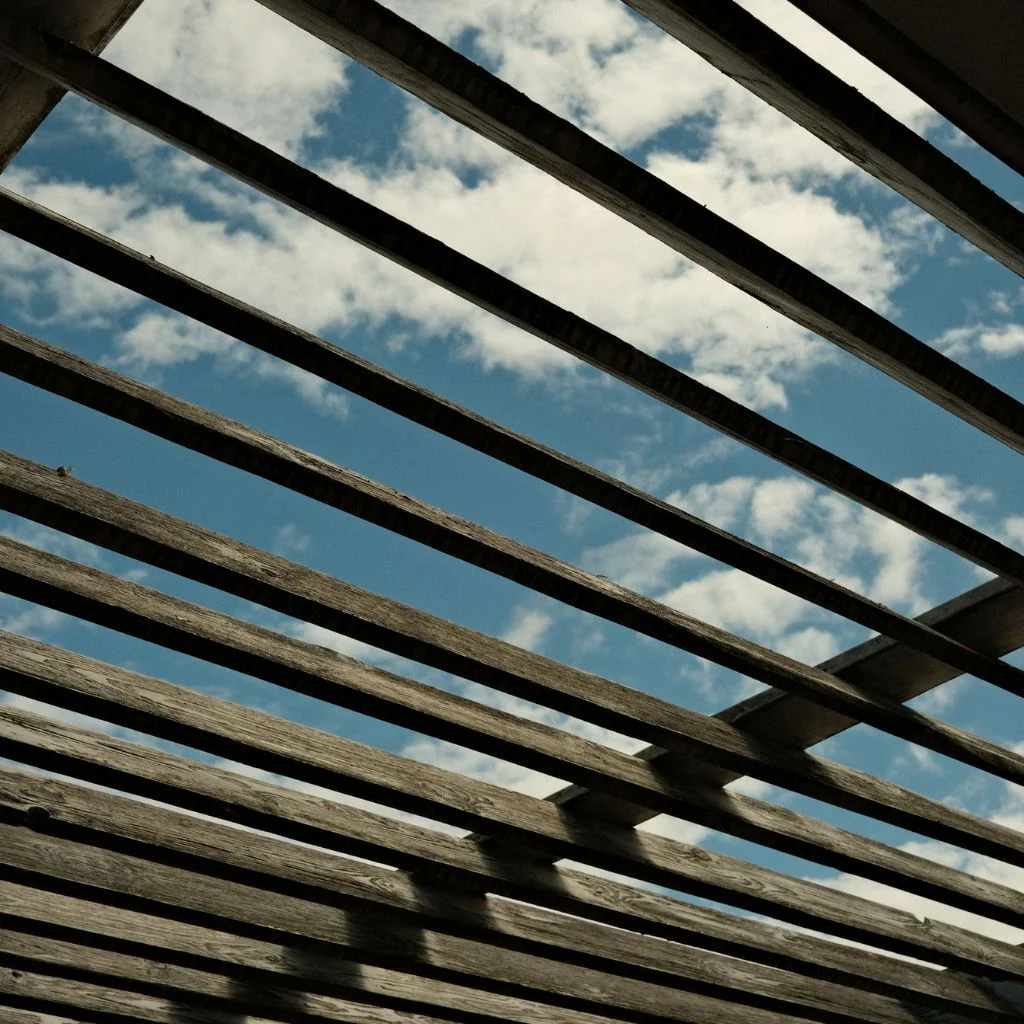
Wooden pallets, often available free from local businesses, can be broken down and reassembled into slatted roof panels for a rustic-style patio cover. This is one of the few cheap patio cover ideas where the material cost can realistically drop to nothing beyond nails, screws, and a waterproof sealant.
A slatted pallet roof alone will not stop rain, so a corrugated sheet or heavy-duty tarp fixed above the visible pallet slats is essential for genuine weatherproofing. Sanding down rough edges and treating the wood before installation prevents splinters and slows down rot.
Why this works: the layered approach gives a handmade, characterful appearance from below while the hidden top layer handles the actual weather protection.
Heat-treated pallets, marked HT rather than MB on the stamped block, are the safer choice for anything built close to seating or food areas. Sourcing these from grocers or furniture shops rather than industrial sites usually means less chemical residue to worry about.
Heavy-Duty Outdoor Curtains Layered with Shade Cloth
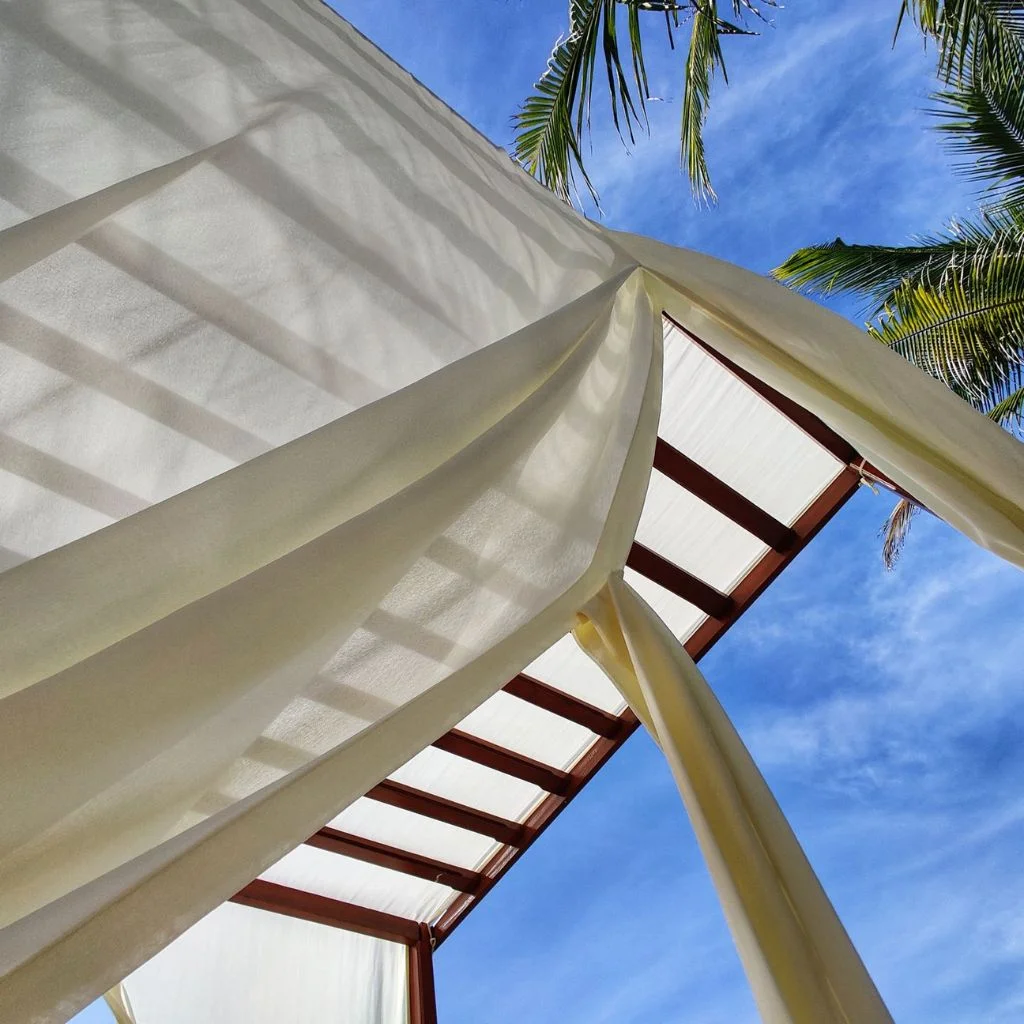
Outdoor curtains, hung from a simple rod or wire strung between two posts, add adjustable side protection to any existing patio structure. Among cheap patio cover ideas, they work particularly well against low-angle afternoon sun and light, wind-driven rain that a straight overhead cover cannot fully block.
Choosing a water-repellent, UV-treated fabric rather than standard indoor curtain material makes the difference between a decorative touch and a genuinely useful weather barrier. Fabric alone won’t stop overhead rain, which is why curtains work best paired with one of the roofing solutions above rather than as a standalone cover.
Why this works: the softness of fabric against a harder roofing material creates a cover that feels finished rather than improvised.
Vinyl Tarp Cover on a Simple Timber Frame
A basic timber frame topped with a heavy vinyl tarp remains one of the fastest cheap patio cover ideas for getting full rain coverage over a patio. Builders’ merchants sell tarps by the square metre, and a frame built from inexpensive treated timber can be assembled in an afternoon with basic tools.
Angling the frame slightly, even a gentle five-degree slope, stops rainwater from pooling on the tarp and sagging the whole structure over time. Grommeted tarp edges, pulled taut and tied down at each corner, keep the cover from flapping loose in wind.
Why this works: this is the closest a low-budget build gets to a genuine flat roof, and the vinyl material is fully waterproof rather than merely water-resistant.
Darker tarp colours absorb more heat and can make the space underneath uncomfortably warm on bright afternoons. A lighter grey or sand-coloured vinyl reflects more sunlight while still blocking rain just as effectively.
Large Cantilever or Cluster Umbrellas
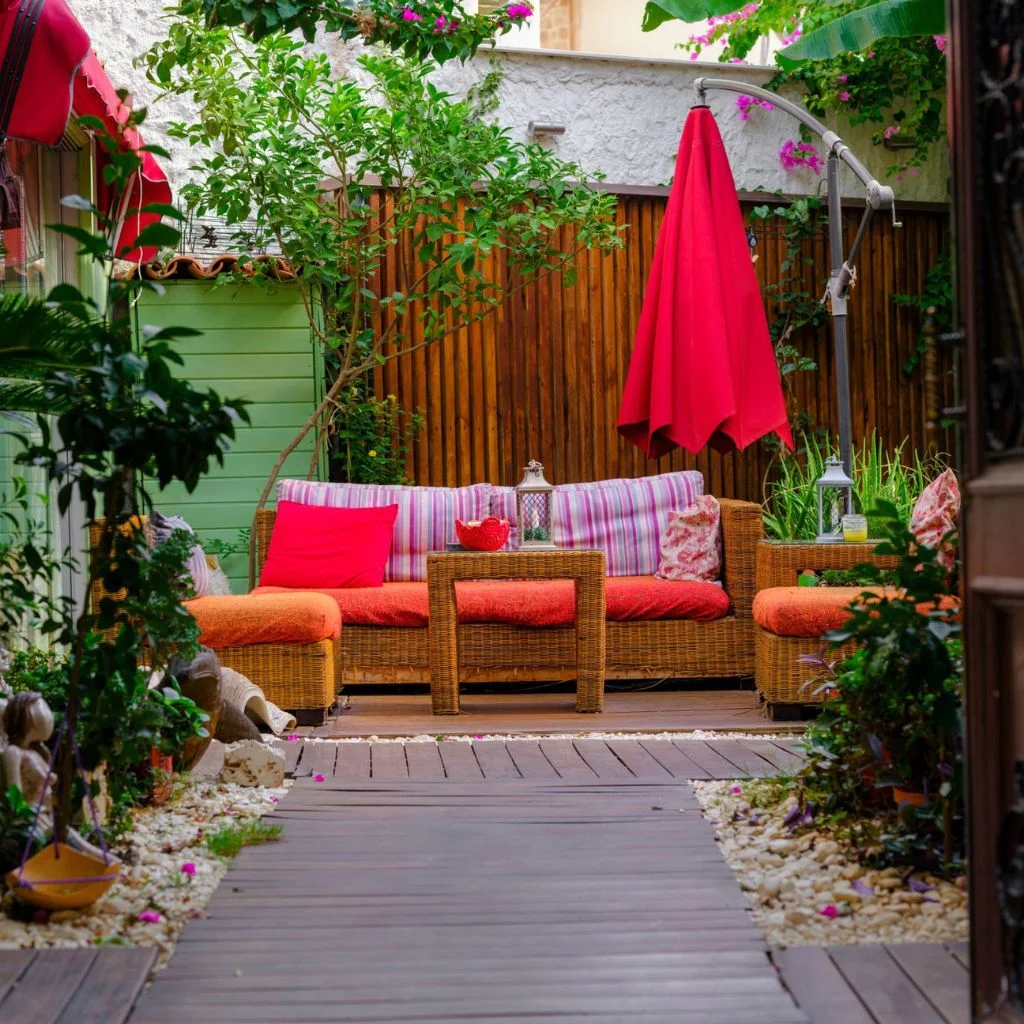
For patios where a permanent structure isn’t practical, a large cantilever umbrella or a cluster of smaller market umbrellas ranks among the more flexible cheap patio cover ideas for sun and rain alike. The offset pole design of a cantilever model keeps the base clear of seating space entirely.
Buying a model with a vented canopy top prevents the umbrella from catching wind like a sail during storms, which is the main failure point of cheaper models. Weighted bases, rather than the umbrella pole alone, are what keep the whole setup upright in gusty weather.
Why this works: umbrellas offer the flexibility to reposition shade throughout the season and require no permits or fixed installation.
Buying end-of-season stock, usually discounted heavily once autumn arrives, is one of the simplest ways to get commercial-grade quality without paying the full summer price. Storing the canopy indoors over winter extends its usable life by several years.
Vine-Covered Trellis for Natural Shade

A wooden or metal trellis planted with a fast-growing climber such as wisteria or grapevine creates a living patio cover that costs little more than the trellis frame and a few plants. Over one or two growing seasons, the canopy thickens enough to block a meaningful amount of direct sun.
This option shades better than it waterproofs, so adding a clear corrugated panel above the trellis gives full rain protection while the greenery fills in and does the visual work. The plants also cool the immediate area more than any solid material can.
Why this works: it’s the only cover on this list that improves with time rather than wearing down, and the shade quality only gets better each year.
Fast-establishing climbers such as Virginia creeper or hops fill in noticeably quicker than slower vines, which suits anyone who wants coverage within a single season rather than waiting several years. Regular pruning also keeps the growth directed over the frame rather than sprawling sideways.
Common Mistake to Avoid When Building a Cheap Patio Cover
The mistake seen most often in budget patio builds is skipping the slope. A flat cover, whatever material sits on top, collects rainwater in the centre until the weight either tears the fabric or bows the frame enough to cause real structural damage.
Even a small five to ten degree tilt toward one edge, built into the frame from the start, solves this permanently and costs nothing extra beyond a slightly different cut on the support posts. Checking drainage direction before the first heavy rainfall is worth the extra ten minutes it takes.
A second common error is mixing materials without checking compatibility, such as fixing a plastic tarp directly against galvanised metal fittings that can wear through the material within a season. A rubber washer or fabric buffer at each contact point avoids this entirely.
A third mistake worth flagging is underestimating post depth. Support posts set too shallow work loose within a year or two, especially in gardens with soft or sandy soil, so digging slightly deeper than feels necessary pays off long after the first storm season.
Making the Most of a Budget Patio Cover
Every idea on this list proves that cheap patio cover ideas don’t have to mean a flimsy or short-lived result. The materials that work best, polycarbonate, vinyl, treated timber, and UV-stabilised fabric, are the same ones used in higher-priced builds, just applied with a smaller footprint and less labour cost.
Starting with whichever option matches the tools and time already on hand is the simplest way to begin. A single weekend, a slight slope, and the right waterproof layer are usually all that separate a soggy garden chair from a genuinely comfortable outdoor space.
Save this list and pick the idea that fits your budget and space — most of these builds can be finished in a single weekend.
Editor Choice: Ceramic Vase Ideas Perfect For Minimalist Décor Lovers.