Crochet table runners turn a bare table into a seasonal scene with nothing more than yarn, a hook and a good eye for colour. Swap the stitch pattern and palette, and one dining table can host a harvest supper, an Easter brunch and a candlelit Christmas dinner without a single new piece of furniture.
Handmade texture also photographs beautifully, which explains why these runners keep turning up on Pinterest boards all year round. Nine looks follow across autumn, Christmas and Easter, with practical notes on yarn, sizing and styling slip-ups along the way.
Autumn Crochet Table Runners in Rust, Mustard and Oatmeal
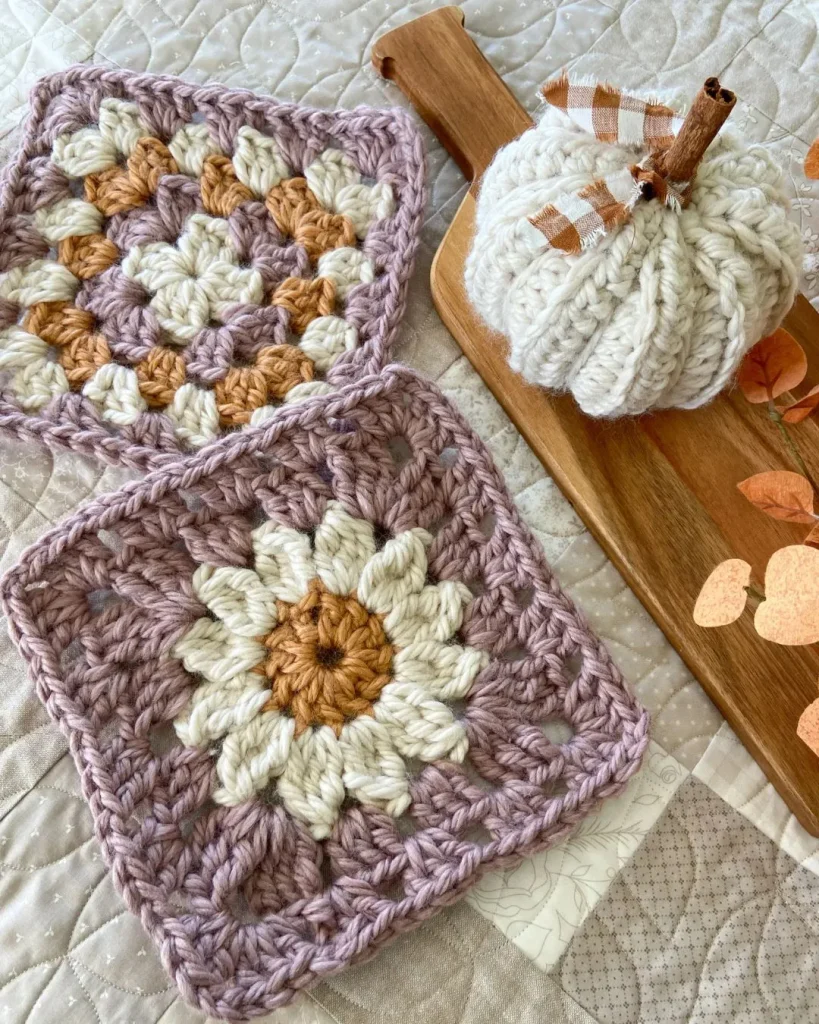
Photo Credit: carriedawayquilting
Autumn is the season where chunky texture earns its place. Warm colours and tactile stitches suit low light, wooden tables and the first cosy suppers of the year.
Harvest Granny Squares
Rows of granny squares in rust, ochre, olive and cream make a runner that reads more like a patchwork quilt than a doily. Cream borders joining the squares keep the busy colours calm, and the grid sits neatly beneath pumpkins and pillar candles. Plain white or stoneware plates let the colour work take centre stage.
Chunky Aran Cables
Cable-style texture worked in oatmeal or toffee aran yarn gives a runner real weight and shadow, like a favourite jumper laid along the table. It suits farmhouse and Scandinavian rooms, especially beside matte ceramics. Bumpy stitches can make glasses wobble, so flat wooden trays under vases and candle holders keep everything steady.
Falling Leaf Lace
Fine cotton worked in a repeating leaf motif, in burnt orange or deep plum, gives a dining table an airy, almost botanical look. Leaves repeat neatly down the length, so the pattern scales up easily for longer tables. Dark wood underneath lets the open lace show clearly.
Christmas Tables Dressed in Snowflake Lace and Berry Red
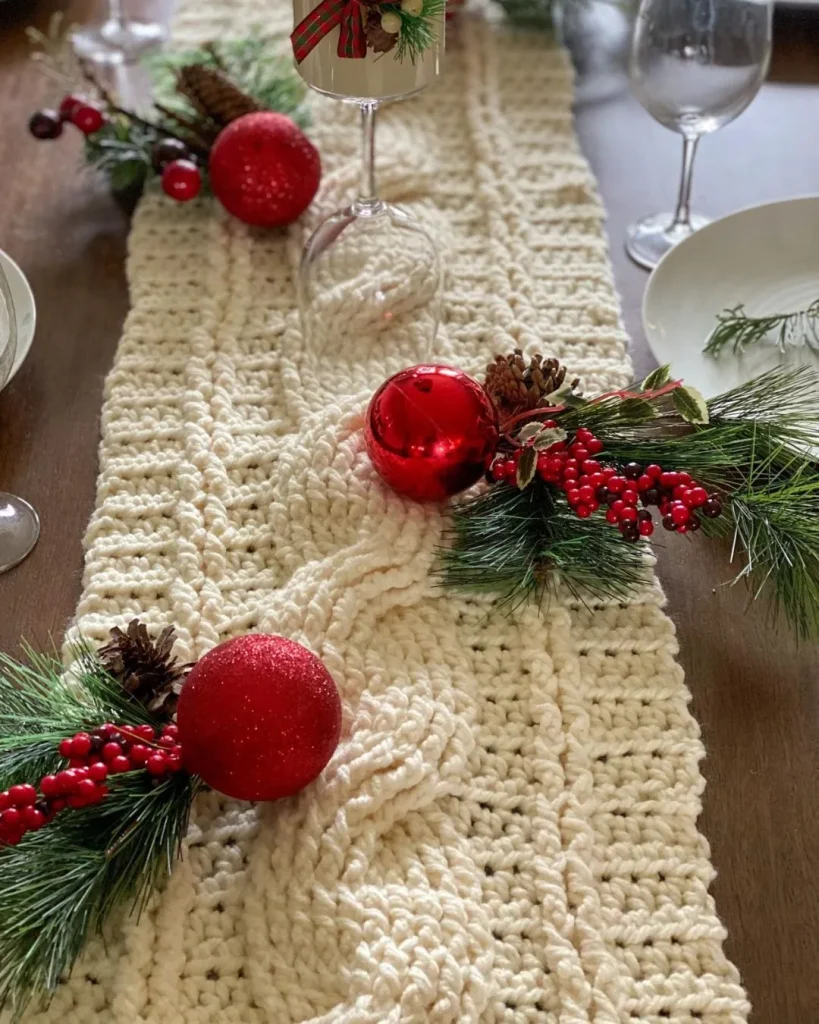
Photo Credit: seeloveshare
Christmas calls for contrast: crisp white against dark wood, red against green, gold against deep neutrals. Crochet brings all three together with a handmade softness that shop-bought runners seldom match.
Snowflake Lace in White
Fine white cotton worked into snowflake motifs looks best on a dark table, where the lace reads like frost on a window pane. Lay it beneath a low line of white candles and silver baubles for a cool, wintry mood. Careful blocking keeps the snowflake points crisp and stops the edges from curling.
Red and Green Granny Stripes
Granny-stripe runners in cranberry, forest green and cream bring a classic Christmas feel with a cheerful, retro edge. Stripes are also friendly for newer crocheters, so this is the look most likely to be finished before the first guests arrive. Little pinecones or ribbon bows in the same green finish it off.
Neutral Winter Texture With Greenery
For a quieter table, cream or stone-coloured chunky stitch topped with eucalyptus, rosemary sprigs and brass candlesticks feels calm and Scandinavian. Fresh greenery brings the Christmas scent without any red at all. Glass trays under damp stems protect the yarn from marks.
Soft Pastels and Scalloped Edges for the Easter Table
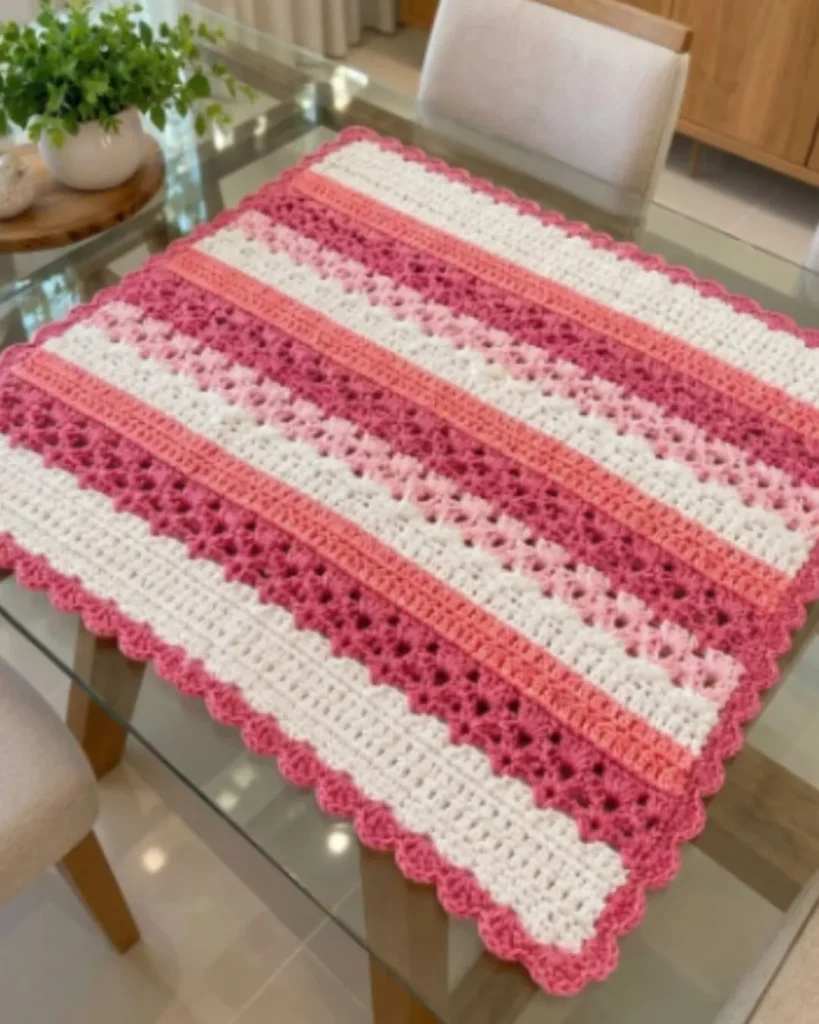
Easter styling leans on fresh colour and a little playfulness. Crochet suits it perfectly, because scallops, flowers and pompoms are natural parts of the craft.
Pastel Scallop Border
Mint, buttermilk and blush stripes finished with a shell-scallop edge feel tailored and sweet at the same time. Keep the body simple and let the edge do the talking, then add ceramic egg cups and a small jug of tulips. Plain white plates stop the pastels from looking sugary.
Daisy Chain Motifs
Small daisy motifs joined in a line make a runner that looks like a garden path across the table. White petals with yellow centres on a sage or pale blue base pair easily with gingham napkins or natural linen. Varying the flower sizes slightly gives a more organic, picked-by-hand feel.
Egg-Colour Ombré Stripes
Stripes that shift from lilac through pink to butter yellow echo painted eggs without needing a single egg. It is a forgiving way to use up spare yarn, and the gradient works with plain white tableware. Tiny pompom or tassel trims at the ends add a playful finish.
Which Yarn Suits Which Season?
Mercerised cotton suits most dining tables all year, while wool blends and chunkier yarns belong to cold season looks and fine thread is the route to delicate lace. Weight matters as much as fibre: Yarnspirations describes lace weight, also sold as 10-count crochet thread, as very thin yarn for lacy projects such as doilies, and calls worsted the most used weight.
| Yarn type | Best for | Look and feel | Practical note |
| Mercerised cotton | Christmas lace, Easter pastels, year-round runners | Smooth with a slight sheen and crisp stitch definition | Holds its shape well; follow the ball band for washing |
| Cotton aran or worsted | Autumn and casual dining | Matte, substantial texture with good drape | Heavier, so check that the runner lies flat |
| Wool or wool blend | Autumn and winter cable looks | Warm, soft and cosy | Often needs gentle hand washing; check the label |
| Acrylic | Budget projects and scrap-yarn stripes | Wide colour range | Melts under heat, so keep candles and hot dishes away |
Matching fibre to season keeps a runner practical as well as pretty. Cotton lace stays crisp for Christmas and Easter, whereas wool-blend cables bring the warmth that autumn tables want.
Getting the Length and Width Right
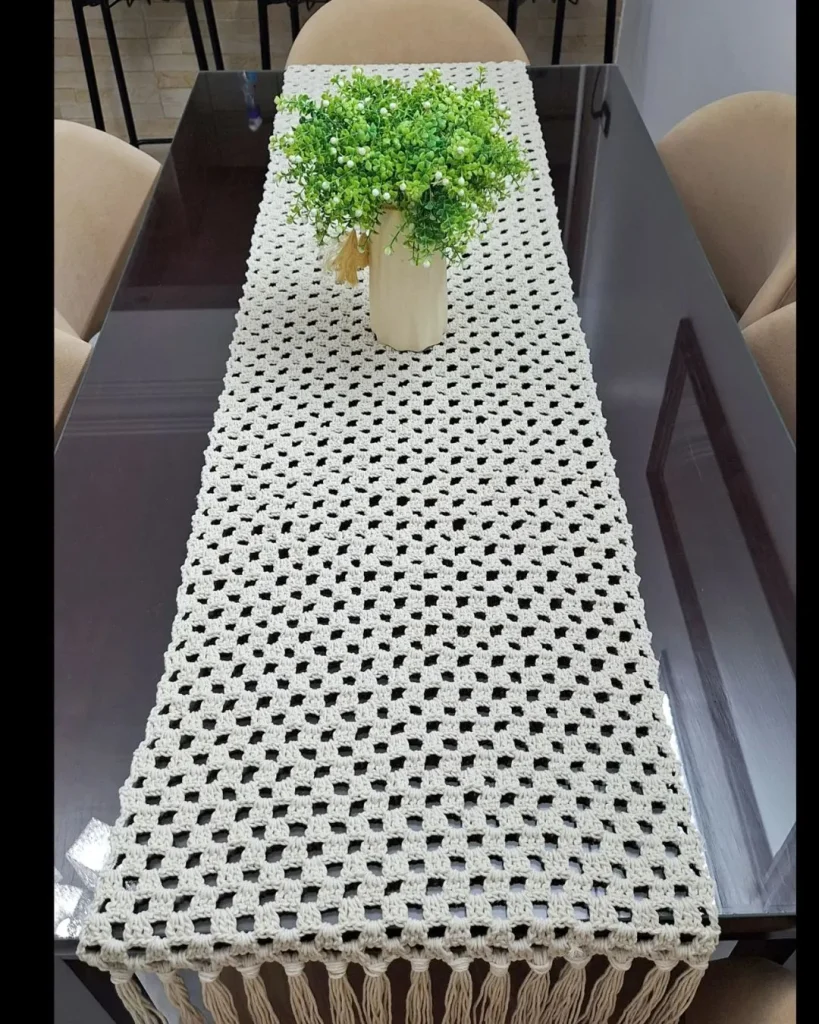
Designers often suggest a runner roughly one third of the table width, with a drop of around 15 to 25 cm (6 to 10 inches) at each end. That proportion leaves room for place settings on either side while still showing off the stitch pattern.
Round tables take a runner straight across the centre, or a pair of shorter runners set in a cross. Motif-based designs such as granny squares and daisies grow in whole units, so counting motifs against the table length is more reliable than aiming for an exact measurement.
Three Styling Slip-Ups Worth Dodging
Even a beautiful runner can let a table down when the details go wrong. All three of these are easy to spot and easy to fix.
- Flames too close to yarn. Yarn of any fibre and open flames make poor companions, and acrylic also melts under heat. Tealights in glass holders on a tray, or flameless LED candles, keep the glow without the risk.
- Bumpy stitches under glassware. Cables and chunky textures can tip a vase or wine glass. Flat trays, wooden boards or coasters create a steady base.
- Skipping the final press. Unblocked edges can curl and scallops lose their definition. Cotton and wool respond well to a light steam or damp block, while acrylic reacts badly to direct heat, so check the label first.
Beyond the Dining Table: Sideboards, Coffee Tables and Mantels
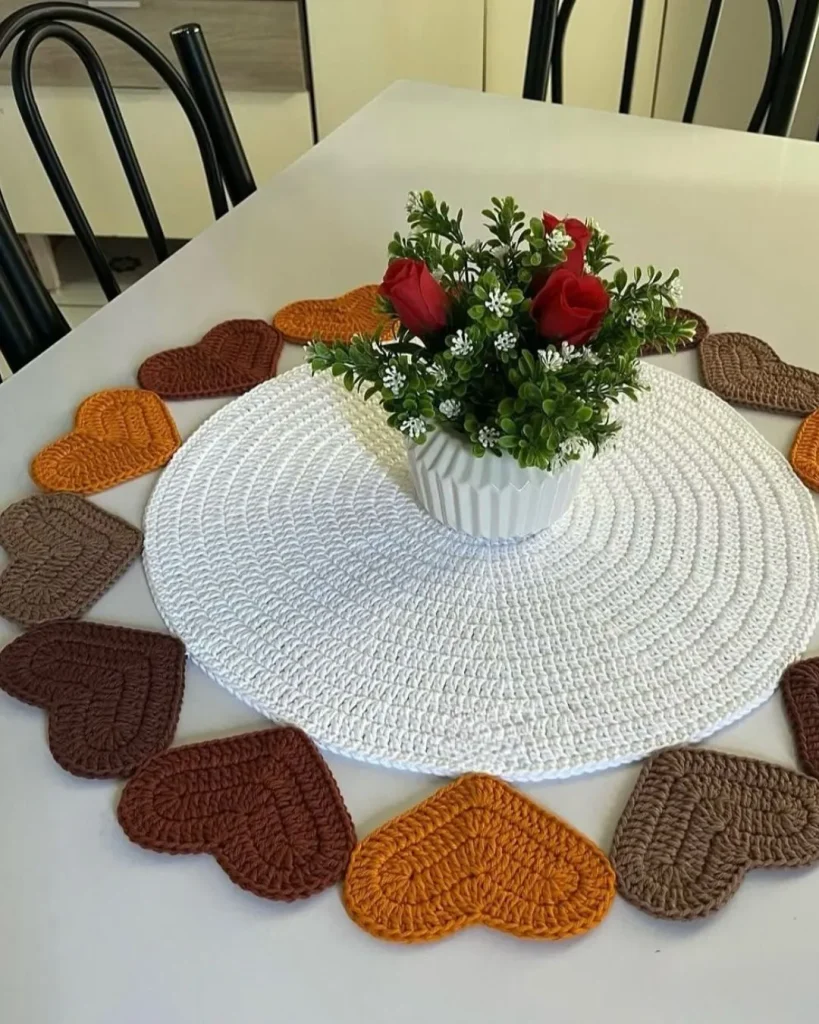
Photo Credit: crochet.by.jasmeen
Short autumn runners along a sideboard, with a lamp, a stack of books and a bowl of conkers, make a hallway feel settled without a full table setting.
Snowflake lace or cream cable runners laid down a coffee table give a Christmas tray and a cluster of lanterns something soft to sit on, while a narrow pastel strip on a console table suits a few bud vases at Easter. Matching the runner width to the depth of the furniture keeps every look tidy.
Handmade Warmth Across Three Seasons
Each season asks for something different from a runner: texture and earthy colour in autumn, contrast and fine detail at Christmas, soft colour and playful edges at Easter. Choosing yarn, size and styling to match that mood does more than any single stitch pattern.
Pick the look that suits the next table on the calendar, leave room for a few safe candle holders, and the handmade texture will take care of the rest.
Editor Choice: Bookshelf Wallpaper Ideas for IKEA Billy and Other Budget Bookcases.
Questions Hosts and Crafters Often Ask
Can crochet table runners be washed?
Cotton runners can usually be hand washed or put through a gentle machine cycle, but the ball band instructions come first. Wool blends often prefer hand washing, and drying flat helps any runner keep its shape.
Which stitch patterns suit a first table runner?
Granny stripes, simple shell rows and repeating motifs are friendly starting points, because the pattern repeats quickly and slips are easy to spot. Fine lace thread is better saved for a second project.
How much yarn does a table runner need?
Quantity depends on length, width, stitch and yarn weight, so the yardage listed in the pattern is the best guide. Thicker yarn and dense stitches use more, and buying everything from the same dye lot avoids colour mismatches.
Can one runner work for all three seasons?
Yes. Cream or natural cotton lace makes a neutral base, and the seasonal change can come from candles, napkins, greenery and ceramics instead.