A Joanna Gaines bathroom feels calm the moment you walk in.
And you do not need a full renovation, a big budget, or a farmhouse to get that feeling.
Joanna Gaines built her look on Fixer Upper, the HGTV show she hosted with her husband Chip. Her bathrooms mix shiplap, warm wood, and vintage finds, and they always look lived in rather than staged.
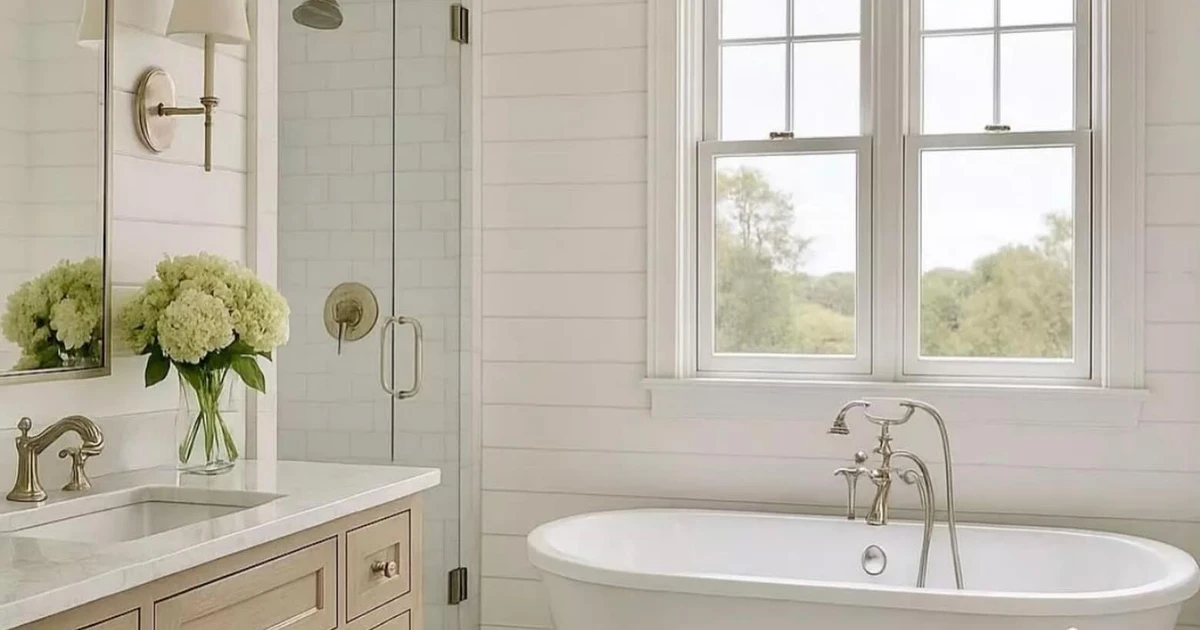
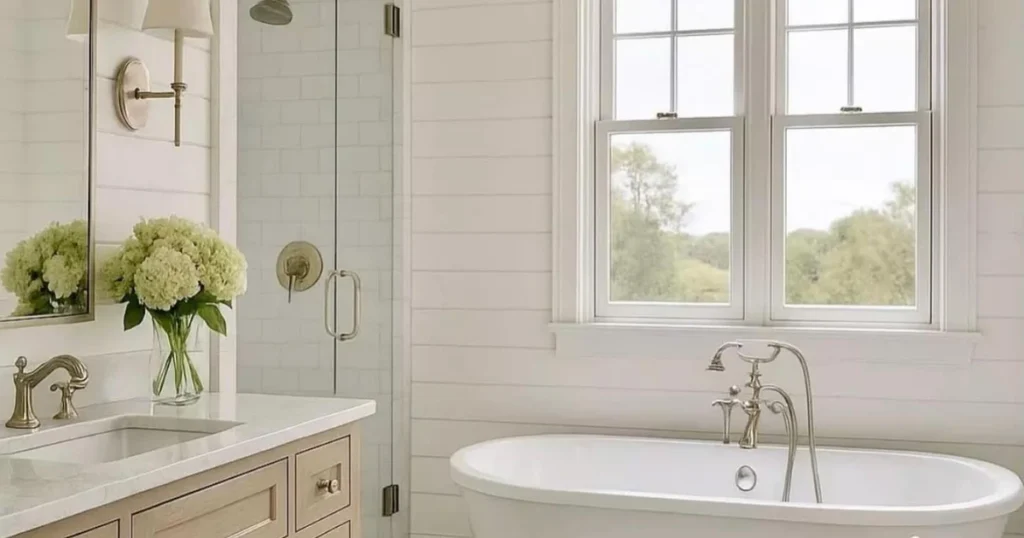
Her bathrooms are the calmest version of modern farmhouse. White walls, a freestanding tub, a vanity that looks like furniture, and black fixtures that read as punctuation, with greenery and candles that keep the room from feeling brand new.
Picture a white tub under a tall window, a wood vanity that could sit in a living room, and a basket of rolled towels within reach. None of it is fussy, and all of it is easy to copy one detail at a time.
These 15 ideas for a Joanna Gaines bathroom explain why the look never dates, with a photo for every idea and a practical point at the end of each one.
Freestanding Tub as the Centrepiece
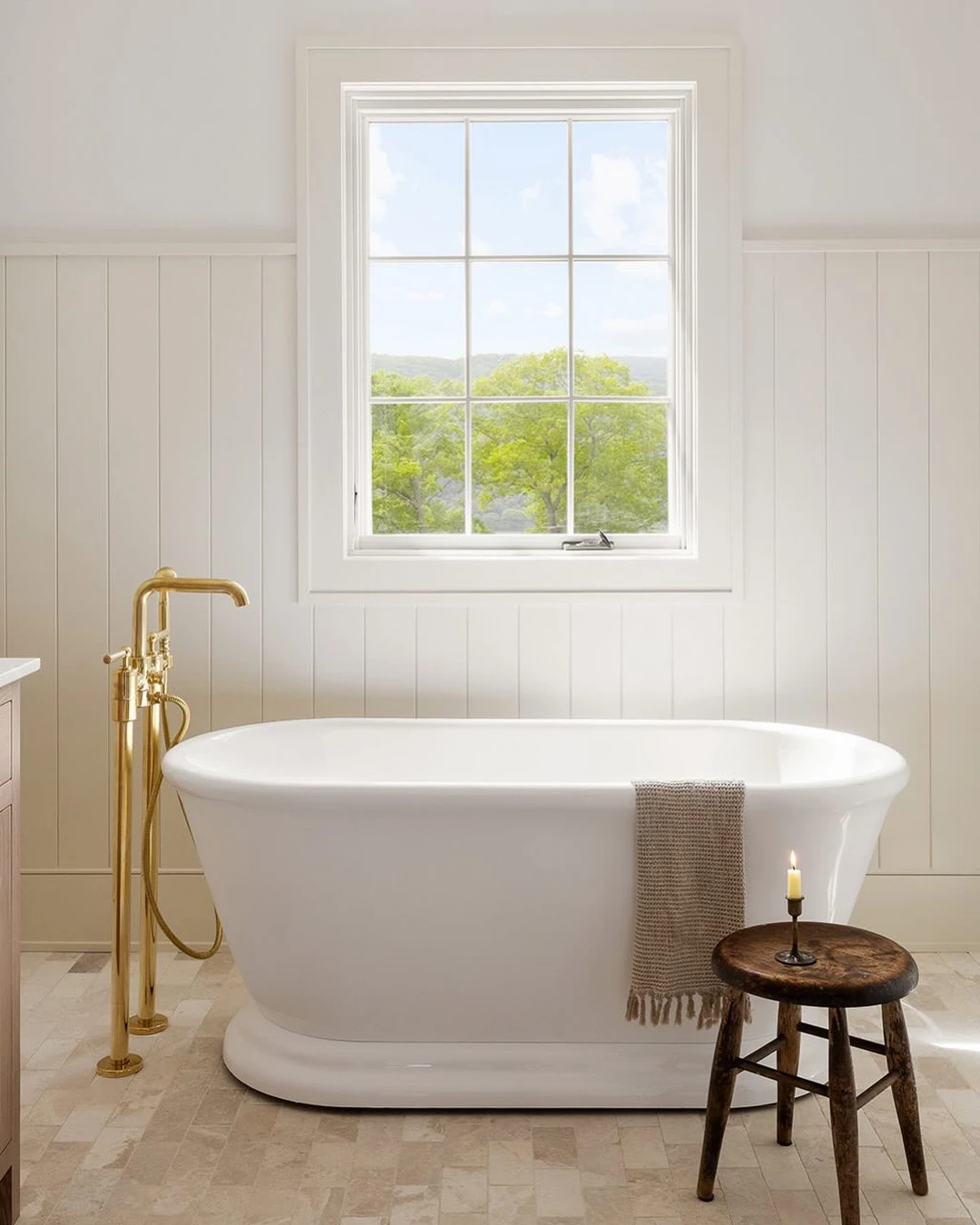
A freestanding tub is the centrepiece of a Joanna Gaines bathroom, and this one could not make the point clearer. The white oval tub sits centred under a multi-pane window, with a brass floor-mounted filler on the left, a textured towel draped over the tub edge, and a rustic wooden stool holding a lit taper candle at the right. Vertical shiplap covers the walls, and the edge of a wood vanity is just visible at the left, so the tub belongs to a real room rather than a showroom. The window does most of the work here: daylight falls straight onto the tub, and the brass filler catches it. Nothing else competes for attention, and that is the point — one beautiful tub, placed where the light is. The practical point: put the tub where the window is, because a freestanding tub against a blank wall looks like furniture in storage, and one under a window looks like the reason the room exists.
White Shiplap on the Walls
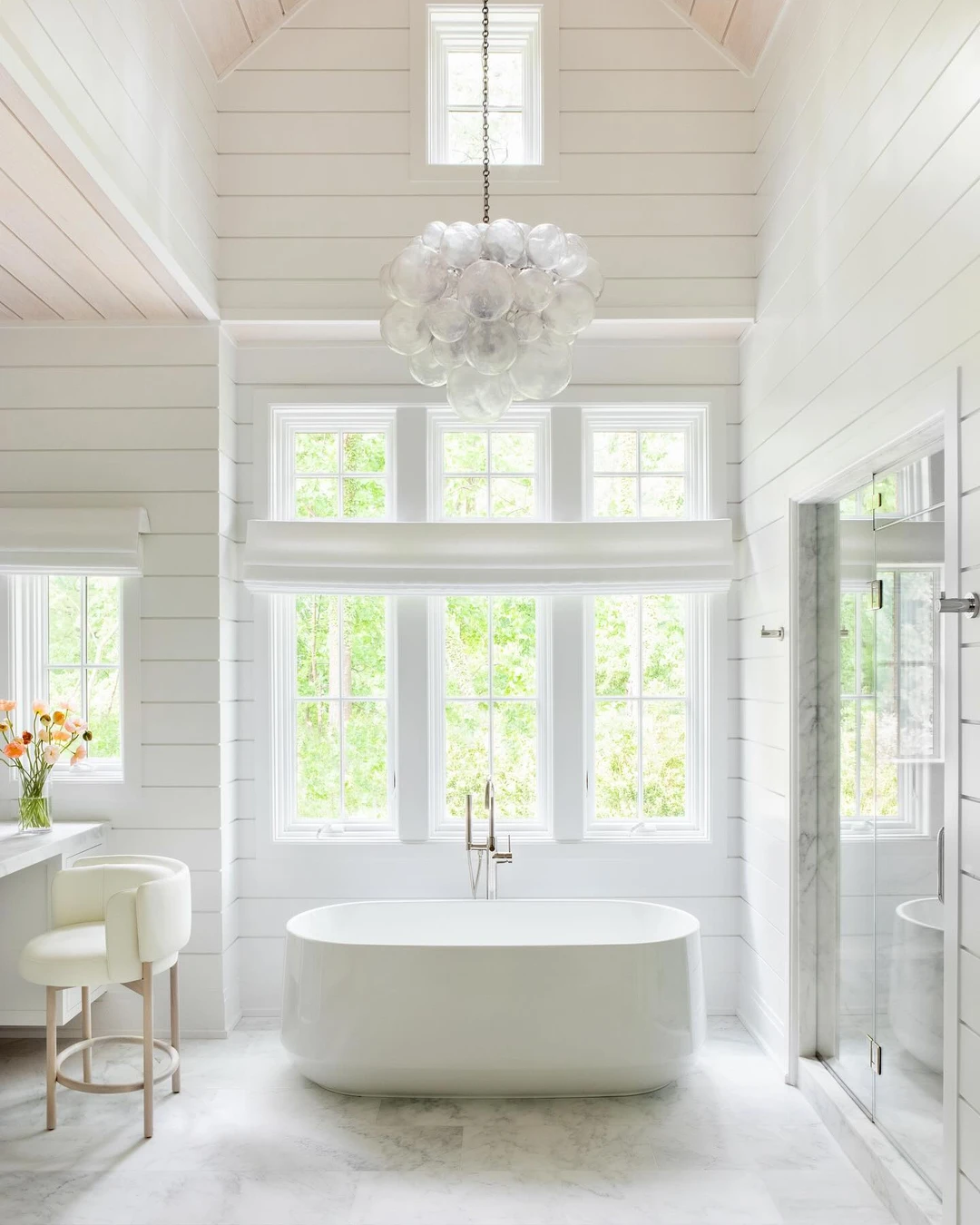
White shiplap is the surface Joanna Gaines is known for, and this room takes it further than most. Shiplap covers the walls and the vaulted ceiling, so the whole room is wrapped in it, and a freestanding tub sits under three tall windows with a bubble-glass chandelier hanging above. A white stool and a vase of poppies sit at the left, and a glass shower runs down the right wall, but the shiplap is the dominant surface in every direction. The boards are painted a clean white rather than left raw, which is what keeps the room bright instead of barn-like. The windows break the pattern just enough that the walls never feel flat. The practical point: run the shiplap up the ceiling too, because shiplap on the walls alone reads as an accent, and shiplap overhead makes the whole room feel built, not decorated.
Wood Vanity That Looks Like Furniture
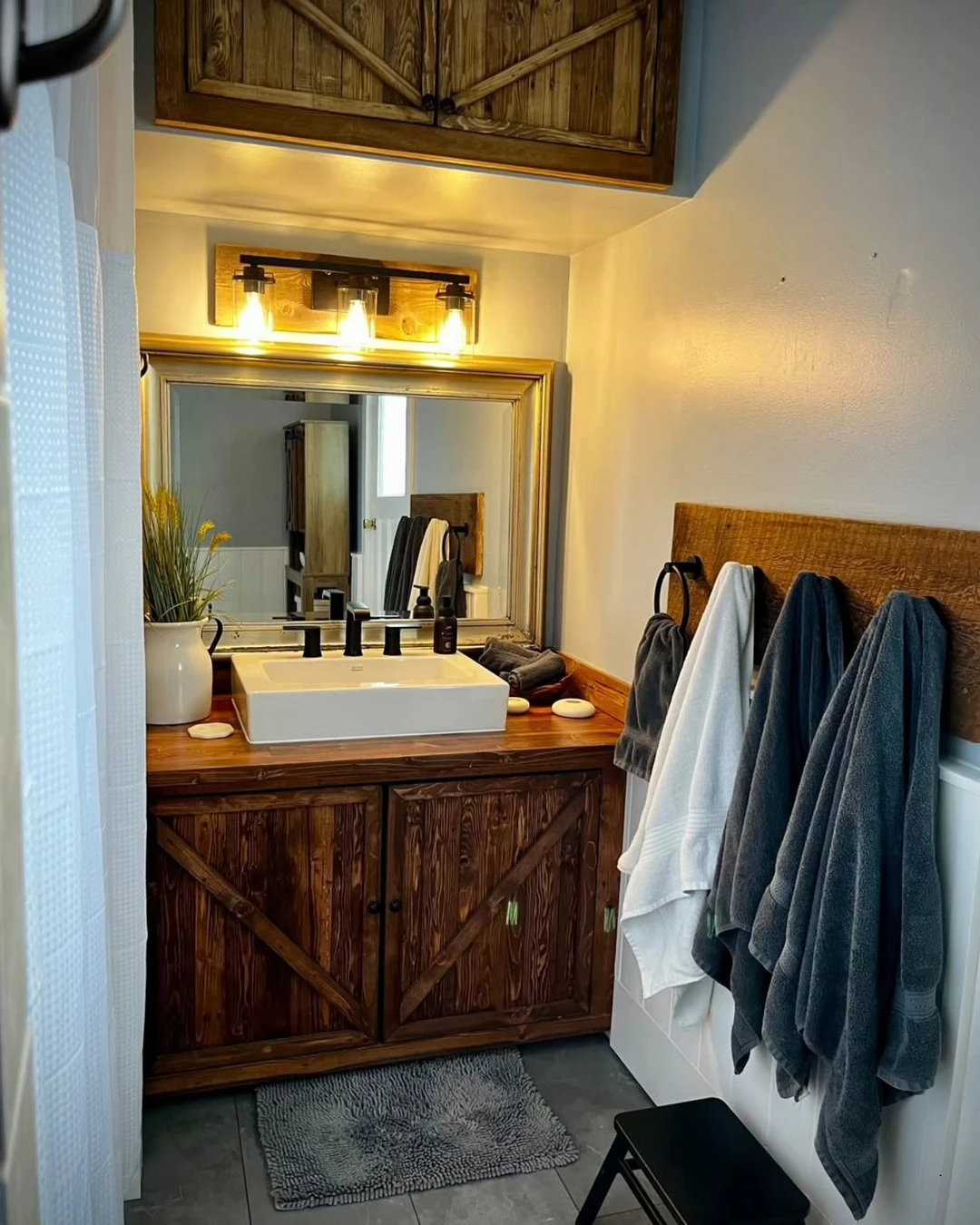
A wood vanity that looks like furniture is the most Joanna detail a bathroom can have, and this one is a cabinet first and a sink second. The vanity is a barn-door style wooden cabinet with X-braced doors, a white vessel sink, and black faucets, with a large gold mirror above and a matching barn-door wall cabinet higher still. Towels hang on a wood peg board beside it, and the whole piece reads like a rustic sideboard that happens to hold a sink. The wood is warm and worn, which is what stops the white walls and white sink from feeling cold. Nothing about it says “bathroom fixture” — it says furniture, and that is exactly the idea. The practical point: choose a vanity that could pass as a cabinet in any other room, because a vanity that looks like a bathroom cabinet ages fast, and one that looks like furniture never does.
Black Fixtures Against White Tile
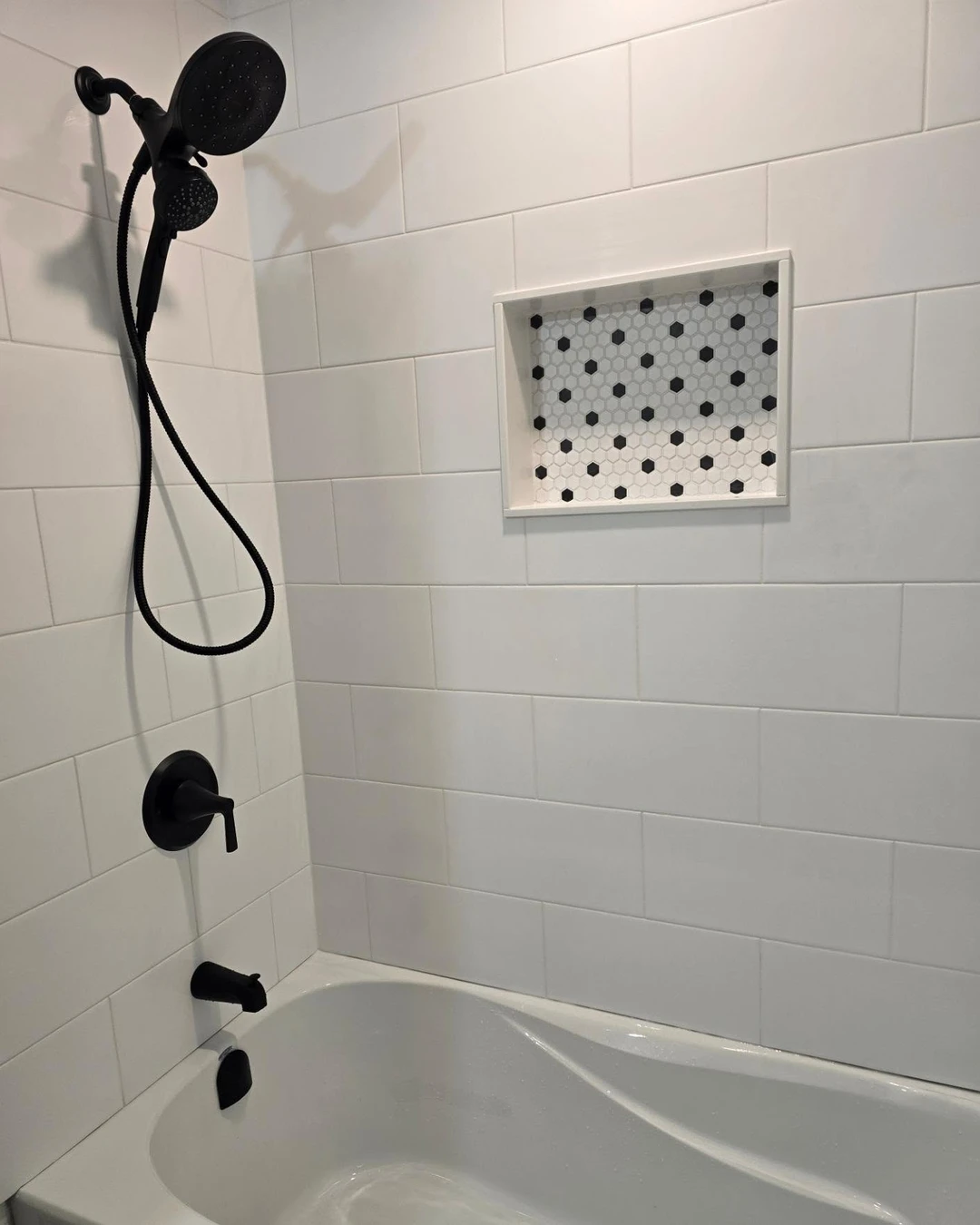
Black fixtures against white tile is the simplest contrast in the Joanna playbook, and this shower corner shows it at its clearest. White subway tile covers the tub and shower surround, and matte black does the rest: a rain shower head, a handheld shower, a tub filler, and a valve, all in the same flat black finish. A small hex-tile niche with a black-and-white pattern sits in the wall, echoing the fixtures without adding a new colour. The white tile is the base and the black is the punctuation — nothing else in the frame competes. This is a working shower corner rather than a styled room, which makes the point even better: the contrast works without any decoration at all. For more on making a shower the smartest part of the room, see Why Pony Wall Showers Are a Smart Choice for Modern Bathrooms. The practical point: keep every black fixture in the same finish, because mixed blacks — matte, gloss, and oil-rubbed — read as a mistake, and one consistent black reads as a decision.
Vintage Mirror Over the Sink
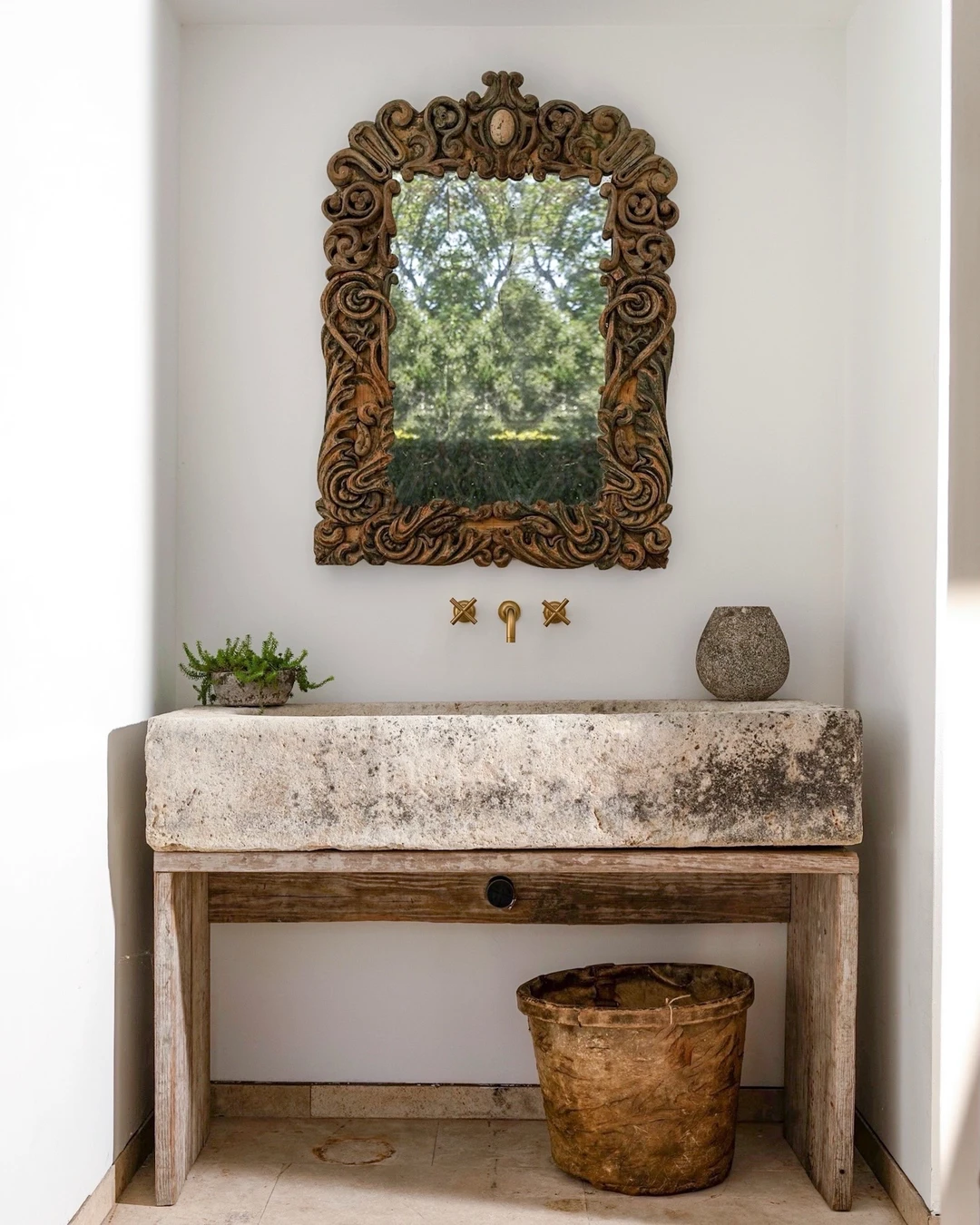
A vintage mirror over the sink is the fastest way to give a plain bathroom a past, and this one is unmistakably antique. The mirror is huge, with a heavily carved wooden frame full of scrolls and curves, and it hangs over a stone trough sink on a rustic wood stand, with brass wall taps below it. A small plant and a stone vase sit on the sink, and the walls are plain white, so the mirror carries the whole room. The room is spare — almost austere — and that is what makes the mirror work: there is nothing else to look at, so the carving gets the full attention it deserves. The mirror glass reflects green trees from the window opposite, which softens the heavy frame. The practical point: let the mirror be the only statement in the room, because a carved antique mirror plus a busy wall plus patterned tile all fight each other, and one bold mirror with plain walls wins every time.
Subway Tile With Dark Grout
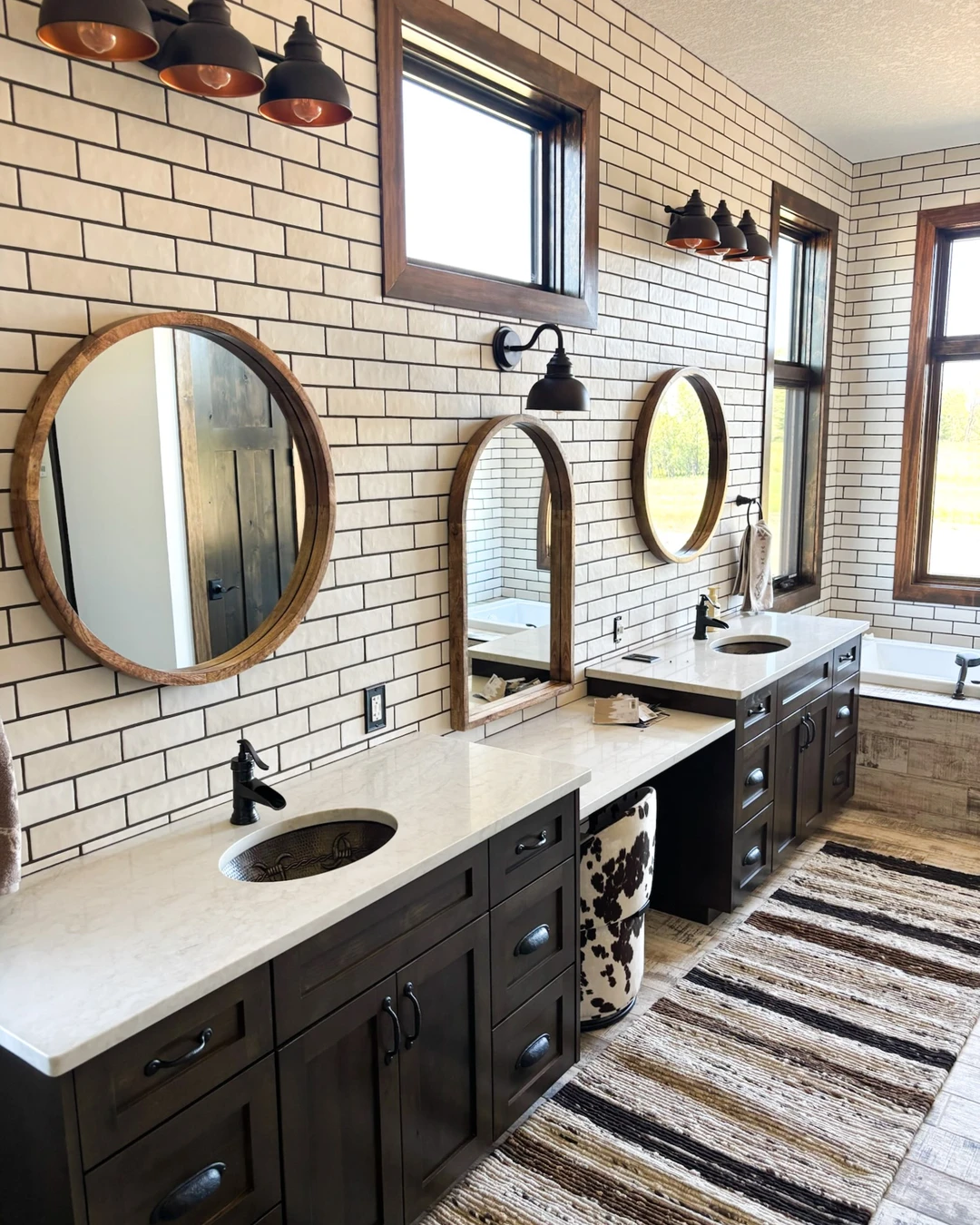
Subway tile with dark grout is the detail that turns a plain white wall into a pattern, and this room shows the whole wall doing it. White subway tile with bold dark grout covers the wall from end to end, behind a double vanity with dark wood cabinets, light stone counters, and black faucets. Three round wood-framed mirrors hang in a row, black sconce lights sit above them, and a soaking tub waits under tall windows at the right, with a striped rug on the floor. The grout lines are the pattern here — they grid the entire wall, and that grid is what makes the room feel designed rather than tiled. A small stack of papers sits on the counter and a patterned bin stands under it, so this is a working bathroom, not a styled set, and the grout still holds the room together. The practical point: seal dark grout when it is new, because dark grout shows water marks and soap film faster than white grout, and a sealed grid stays crisp for years.
Open Shelves With Rolled Towels
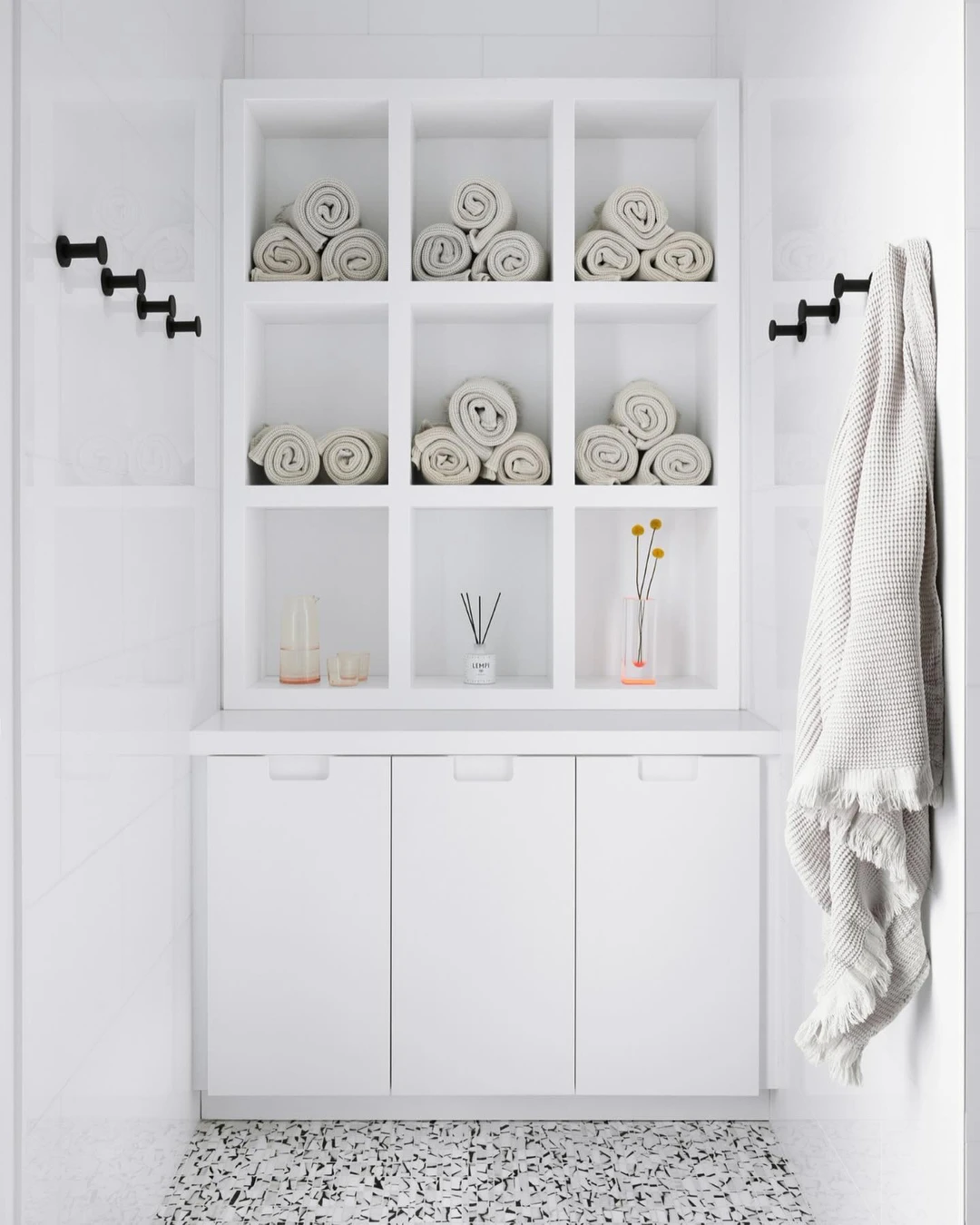
Open shelves with rolled towels are the Joanna answer to bathroom storage, and this built-in unit shows why rolling beats folding. A white built-in unit holds nine open cubbies, and six of them hold neatly rolled light-beige towels in stacks of three, with a glass carafe, a reed diffuser, and a vase of yellow billy buttons on the bottom row. Black hooks sit on the side walls, a waffle towel hangs at the right, and a terrazzo-look floor runs below. The rolled towels read as decoration as much as storage — their soft beige colour warms the white unit, and the stacks look intentional rather than stuffed. Everything is visible, which is the whole idea: open shelves only work when what is on them is worth showing. The practical point: roll the towels instead of folding them, because folded stacks slide and slump on open shelves, and rolled towels stay put and look like a spa display.
Brass Faucet That Warms the Room
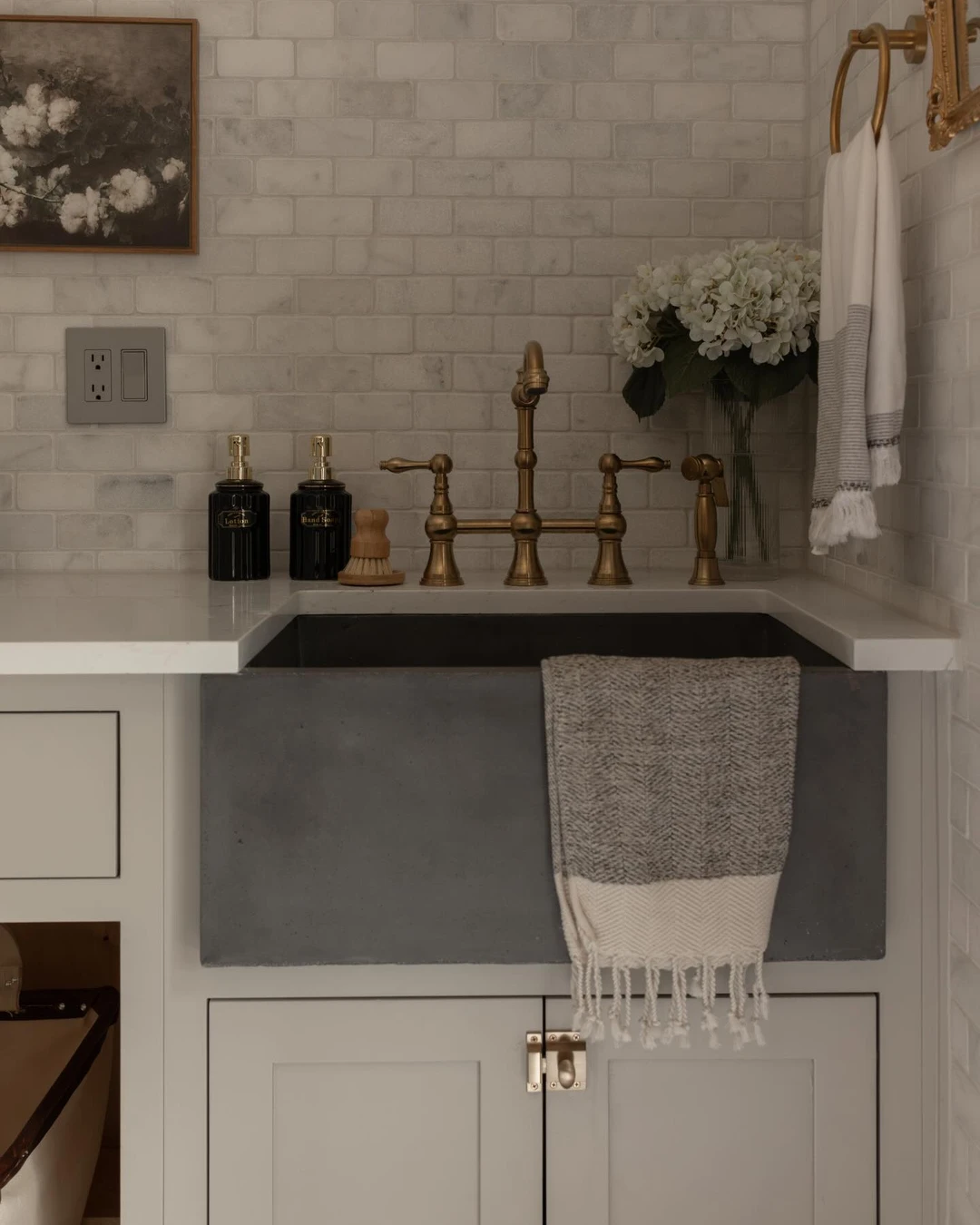
A brass faucet warms a bathroom the way a brass lamp warms a living room, and this one is the clear hero of its sink. An antique-style brass bridge faucet with lever handles and a side sprayer stands over a dark gray concrete farmhouse sink, with a white marble subway-tile backsplash behind it, white hydrangeas in a vase, and black soap dispensers on either side. A gray and white towel drapes over the sink front, and a laundry hamper is partly visible at the bottom left, so this is a real working sink rather than a display. The brass is warm against the cool gray concrete and the white tile, and that single warm note is what keeps the whole corner from feeling cold. The practical point: choose unlacquered brass if you like a living finish, because it darkens and softens with use, and a faucet that ages with the room always looks more at home than one that stays shiny forever.
Greenery in a Humid Room
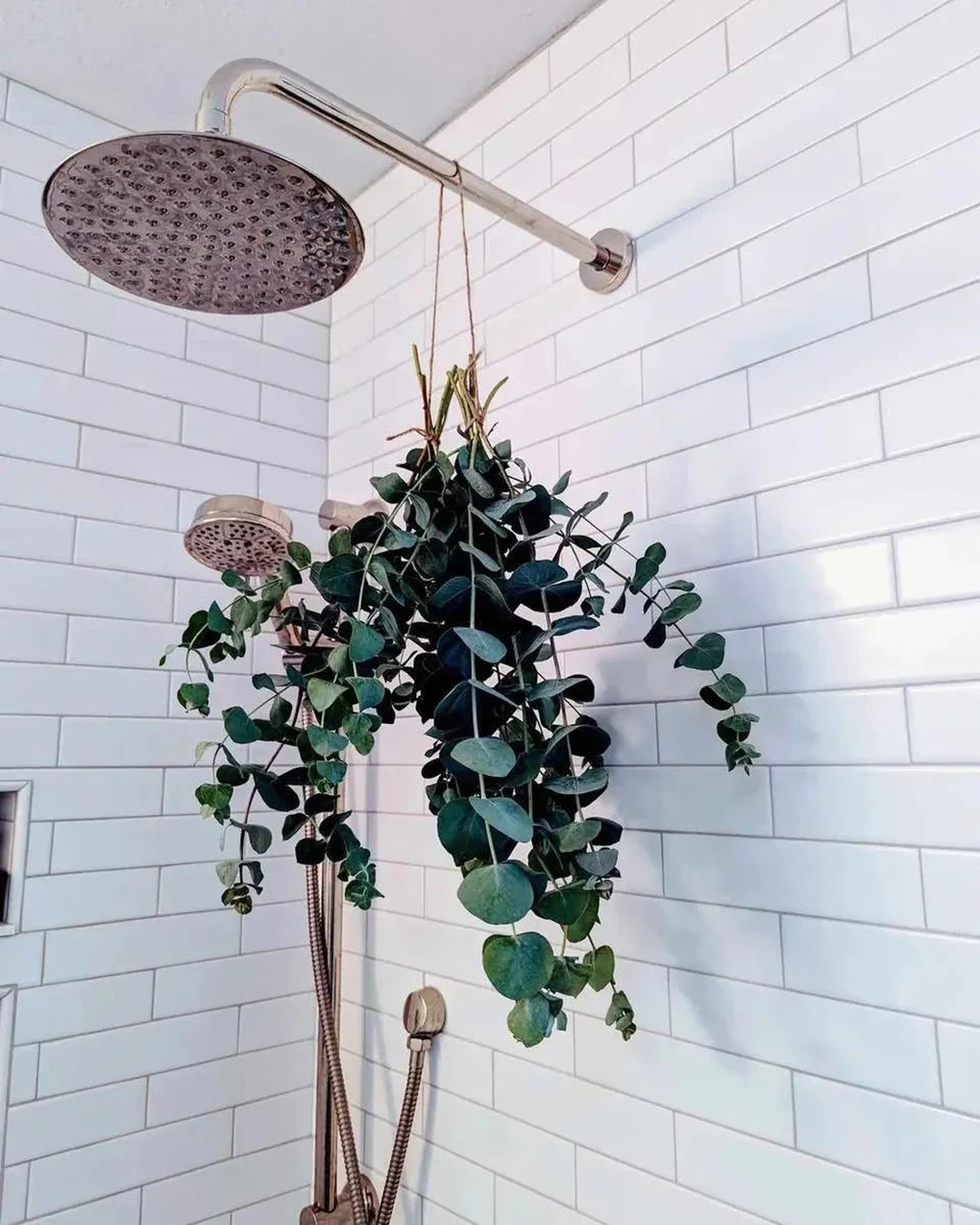
Greenery in a humid room is the easiest idea in this whole article, and it costs almost nothing. A fresh eucalyptus bundle hangs by twine from the shower arm in a white subway-tiled shower, with a large rain showerhead above and a handheld shower below. The eucalyptus is literally the subject of the photo — green leaves against white tile, with the steam from the shower doing the rest. Eucalyptus loves humidity, and the shower gives it exactly what it wants, so the bundle lasts for weeks and scents the room every time the water runs. The showerhead shows a few water spots, which is honest proof this shower gets used, and the greenery is what makes the corner feel cared for rather than just clean. The practical point: hang the eucalyptus where the steam hits it, because a bundle on a dry shelf is just decoration, and one in the shower releases its scent every single morning.
Rug That Softens the Tile Floor
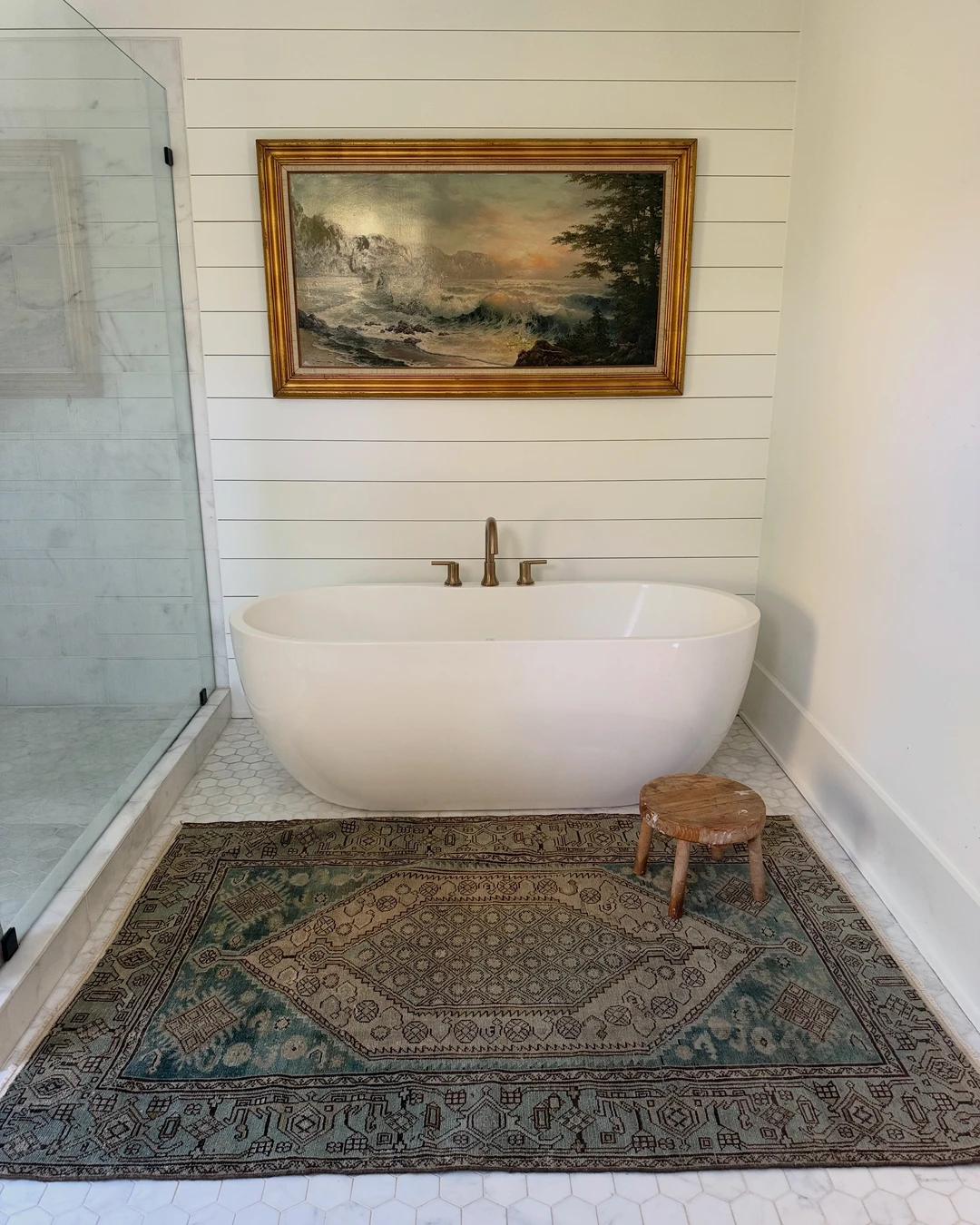
A rug softens a tile floor in two ways at once — underfoot and to the eye — and this one does both. A large vintage Malayer rug in muted teal, beige, and brown, with a geometric medallion design, lies fully visible on white hexagonal tile in front of a freestanding white tub with a brass faucet. White shiplap covers the wall, a large gold-framed seascape painting hangs above the tub, a glass shower stands at the left, and a small wooden stool sits on the rug. The rug is the clear foreground subject: its muted colours warm the white tile without competing with it, and its pattern gives the plain floor a centre. The stool on the rug proves the point — the rug is a place to stand, not just a picture on the floor. The practical point: choose a rug you can wash or that hides water spots, because a bathroom rug gets wet every day, and a rug that shows every splash becomes a chore instead of a comfort.
Lantern Pendants Over the Vanity
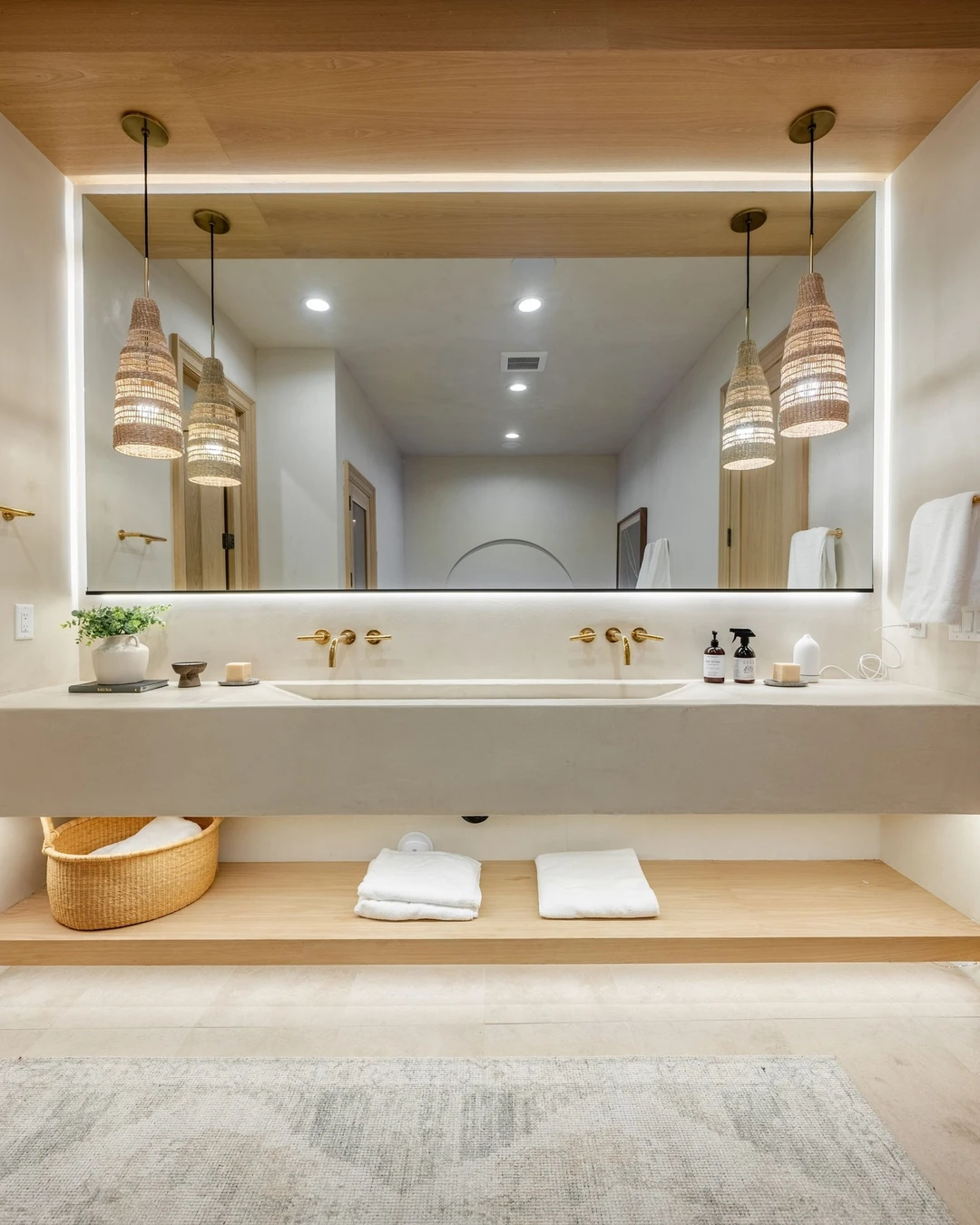
Lantern pendants over the vanity are Joanna’s softer answer to bathroom lighting, and these two are lit and unmistakable. Two woven cone-shaped lantern pendants hang in front of a huge backlit mirror over a long floating concrete double vanity with gold wall-mounted faucets, with a wood ceiling above, white towels below, and a wicker basket on the lower shelf. The pendants are also visible as reflections in the mirror, so the room shows four lantern shapes — two real and two reflected — which doubles the warmth without adding a fixture. The woven texture is the key: it softens the concrete vanity and the glass mirror, and the warm light inside the lanterns is what makes the whole wall glow. The practical point: hang the pendants low enough to light your face and high enough to see the mirror, because pendants hung too high light the ceiling, and ones hung too low block the view you actually need.
Built-In Niche for Everyday Bottles
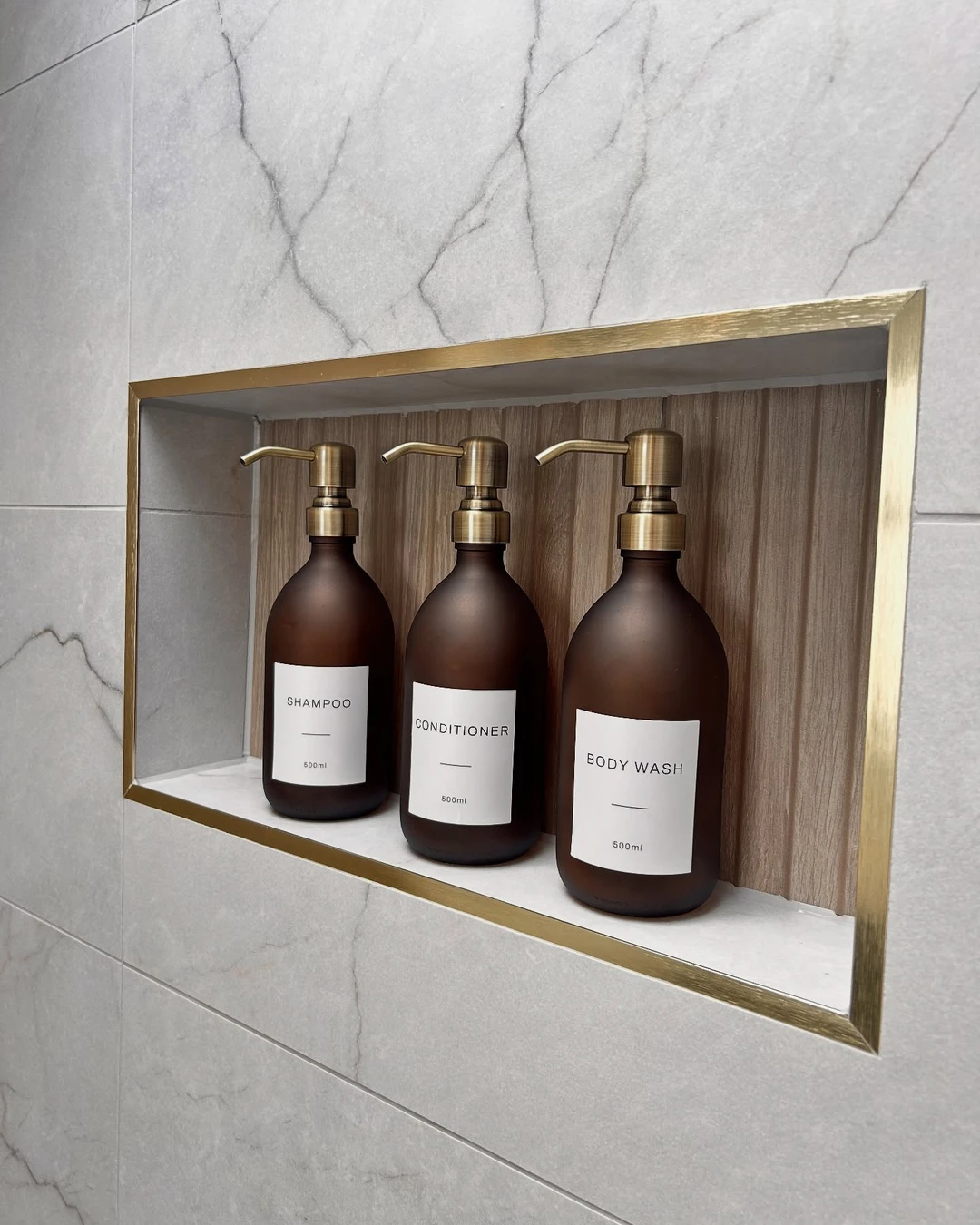
A built-in niche for everyday bottles is the detail that keeps a shower tidy without a single caddy or shelf, and this one is the whole subject of its photo. A recessed niche with a gold trim and a wood-grain backing holds three amber pump bottles, labelled shampoo, conditioner, and body wash, with brass pumps to match the trim. The niche is the entire frame — no tub, no shower head, no extra tile — which is fitting, because the niche is the idea. The amber glass and the brass are warm against the white tile, and the wood backing is what makes it feel like furniture rather than a hole in the wall. Three bottles is the right number: enough for the everyday routine, few enough that the niche never looks crowded. The practical point: build the niche at shoulder height inside the shower, because a niche near the floor means bending for every bottle, and one at eye level puts the shampoo exactly where your hand already is.
Wicker Baskets for the Clutter
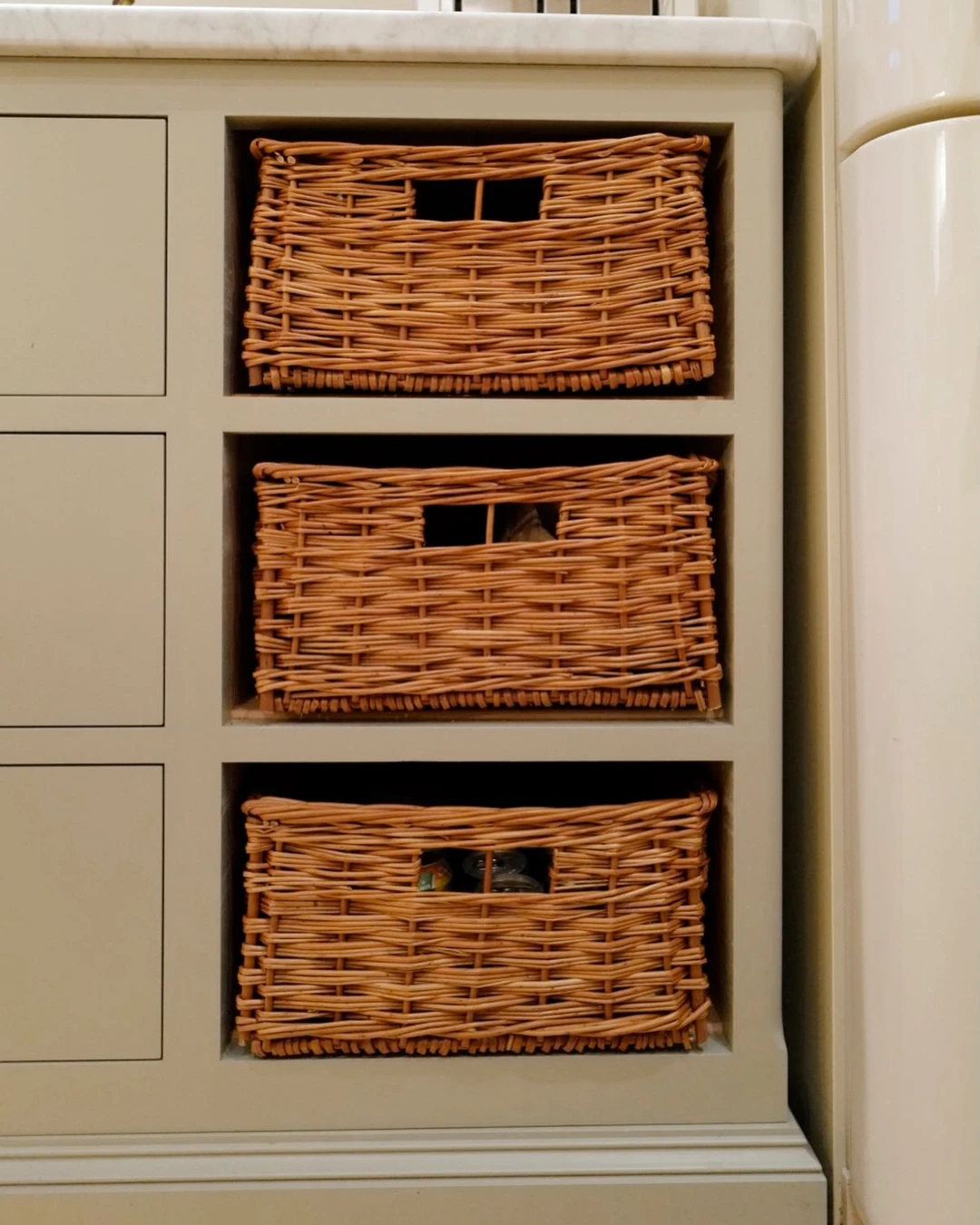
Wicker baskets are the Joanna answer to bathroom clutter, and this cabinet shows them doing their job. Three rectangular wicker baskets sit fitted into the open cubbies of a light bathroom cabinet, one per cubby, with nothing else on show. The baskets are the subject — literally wicker baskets for the clutter — and their warm woven texture is what keeps the pale cabinet from looking flat. A tiny bit of clutter is visible through the bottom basket’s handle hole, which is honest proof the baskets are used, not staged. The cabinet itself is plain and pale, so the baskets carry all the warmth in the frame. The practical point: give every person in the house one basket, because a basket per person keeps the clutter sorted without a single label, and a shared basket becomes a junk drawer within a week.
Candles Beside the Tub
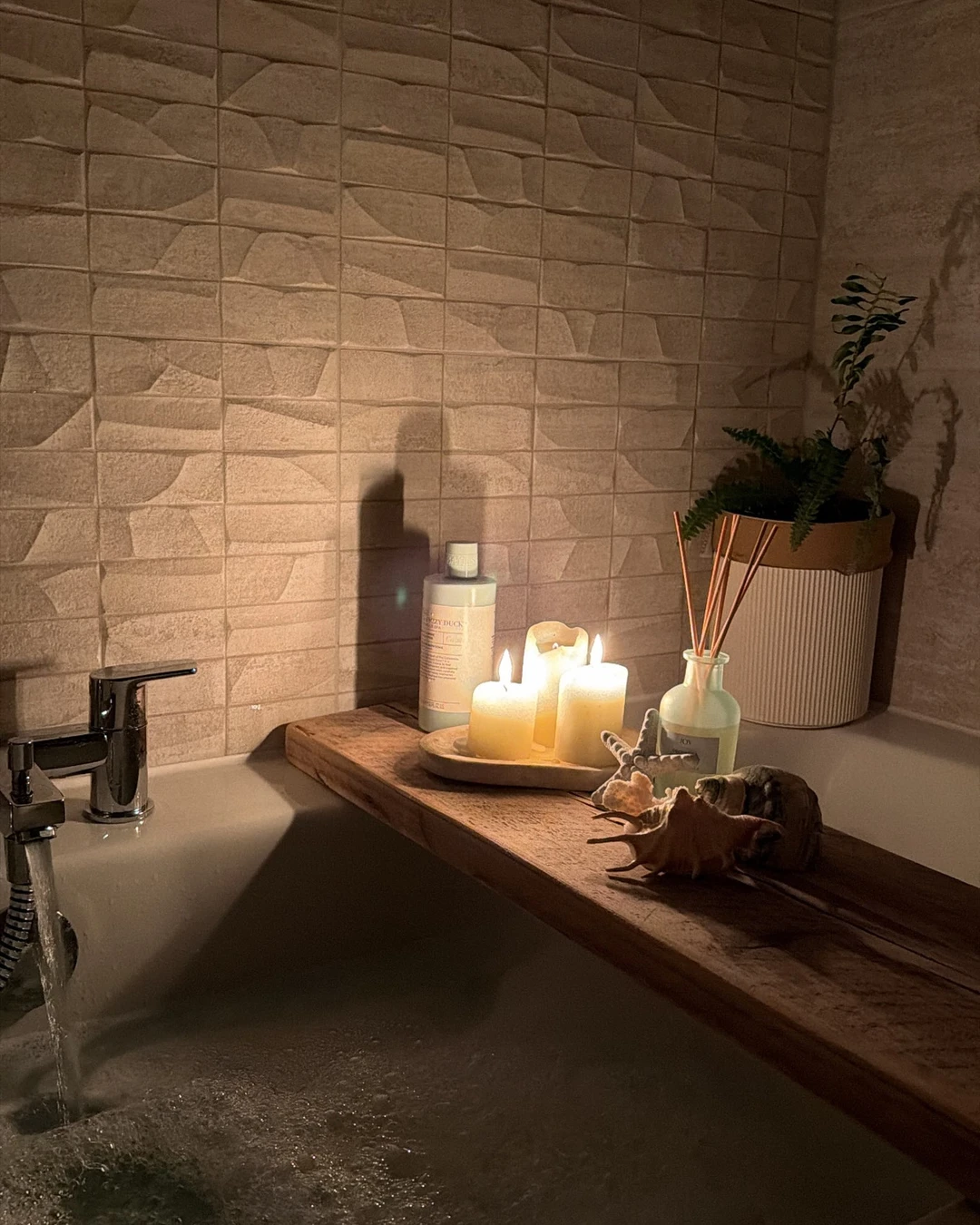
Candles beside the tub are the oldest trick in the Joanna book, and this night shot shows why they still work. A rustic wooden bath caddy rests over a filling tub, holding three lit pillar candles on a tray, a reed diffuser, a fern in a pot, and a few seashells and a starfish. The candles are large in the frame and clearly beside the tub, and their warm light is the only light in the room — the rest of the bathroom falls away into darkness. The shells give the caddy a slightly coastal feel, but the candles are the idea: three flames, one tray, and a tub filling with water. It is a scene built for one evening, not a permanent display, and that is what makes it feel special rather than staged. The practical point: keep the candles on a tray and never loose on the tub edge, because a tray catches the wax and holds the candles steady, and a loose candle beside a filling tub is one elbow away from the water.
Windows That Let the Light In
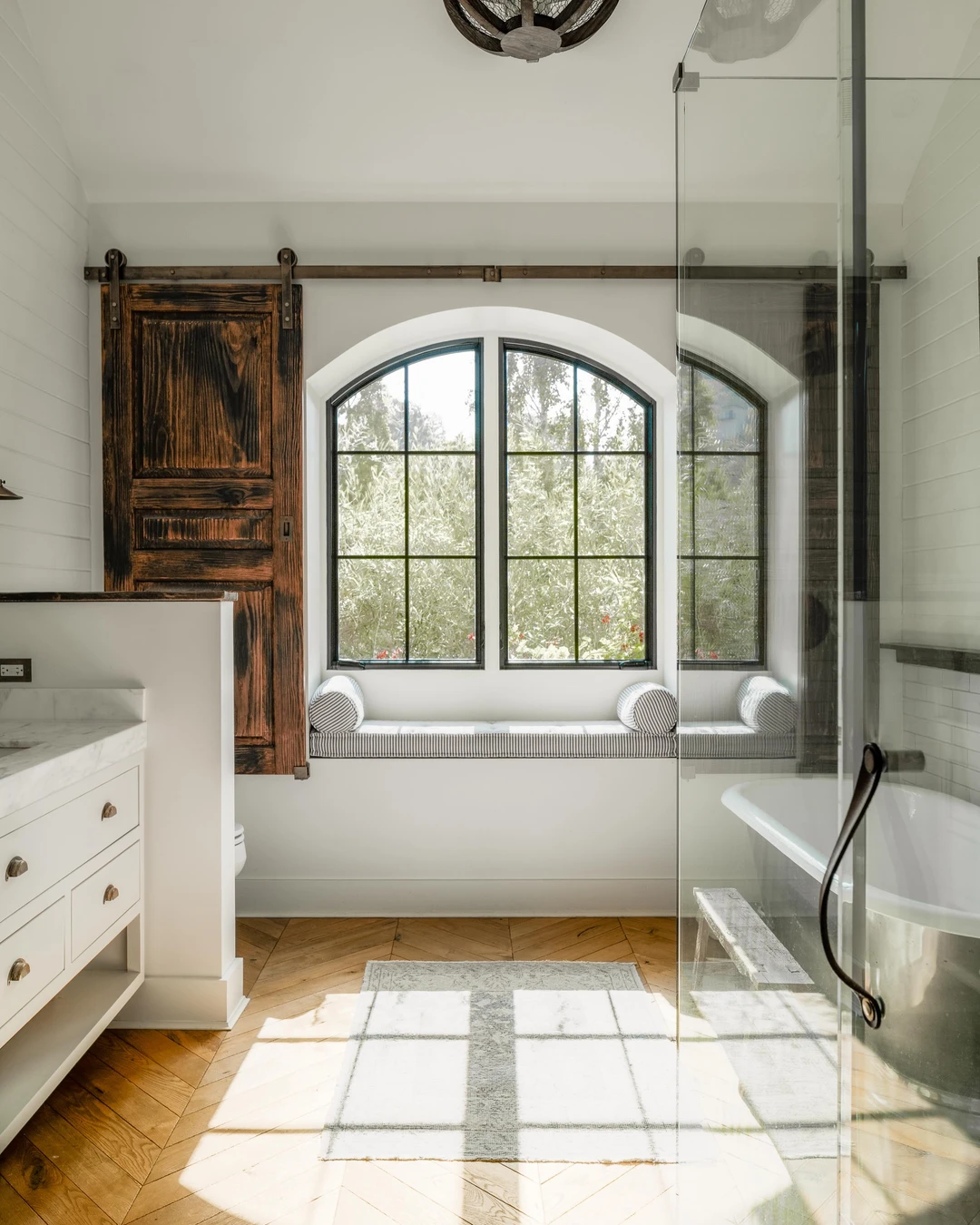
Windows that let the light in are the boldest choice in a Joanna bathroom, and this room makes the case for them. Large arched black-framed windows fill the far wall, with a window seat below them — a striped cushion and bolster pillows — and sunlight streaming across the herringbone wood floor, throwing the window pattern onto the rug. A dark-stained barn door slides beside the windows, white shiplap covers the walls, and a glass shower panel at the right reflects the light back into the room. The windows and the light are the dominant subject of the photo, and the room is bright because nothing on the glass gets in their way. A chandelier is cut off at the top of the frame, which is fine — the windows are the light fixture here. The practical point: keep the window wall free of tall storage, because a cabinet in front of a window steals the light the window was built to give, and a bare window wall makes the whole bathroom feel twice as big.
Timeless Because Every Detail Earns Its Place
A Joanna Gaines bathroom never goes out of style because every detail in it earns its place. The tub sits where the light is, the vanity looks like furniture, the mirror is old, the grout is dark, and the windows are bare — and the room is calm because nothing in it is trying to impress anyone. Start with the detail that fits the bathroom you already have: the eucalyptus in the shower, the rug on the tile, or the candles beside the tub. Add the next detail when the right piece turns up, and let the room grow the way these rooms did — slowly, and one honest piece at a time. If you love this style in the rest of the house too, see The Design Details That Define Joanna Gaines Kitchens for the same look in the kitchen. A bathroom that grows slowly looks more like home than one that arrives all at once.