Most bathrooms look fine. A marble shower makes yours look intentional. There’s a reason high-end hotels and designer homes keep coming back to stone — marble shower ideas carry a visual weight that no ceramic tile can replicate. The veining, the light play, the seamless slab-to-slab flow: it signals a bathroom that was built, not assembled from a showroom catalog.
The challenge is knowing how to use it. Marble is a material with real rules — it’s porous, it’s heavy, and it demands the right pairing of finish, grout, and fixture. Get those choices right and your shower becomes the one feature every guest notices. Get them wrong and you’re left with a high-maintenance surface that never quite looks the way you imagined.
This guide breaks down the best marble shower ideas for every bathroom size and budget — from full floor-to-ceiling slabs to accent strips that do a lot with a little. Whether you’re starting a full remodel or rethinking a single wall, you’ll find exactly what you need here.
Why Marble Works So Well in a Shower
Before picking tiles, it helps to understand what makes marble shower ideas so consistently compelling — and why the material has survived every design trend for centuries.
No Two Pieces Are the Same
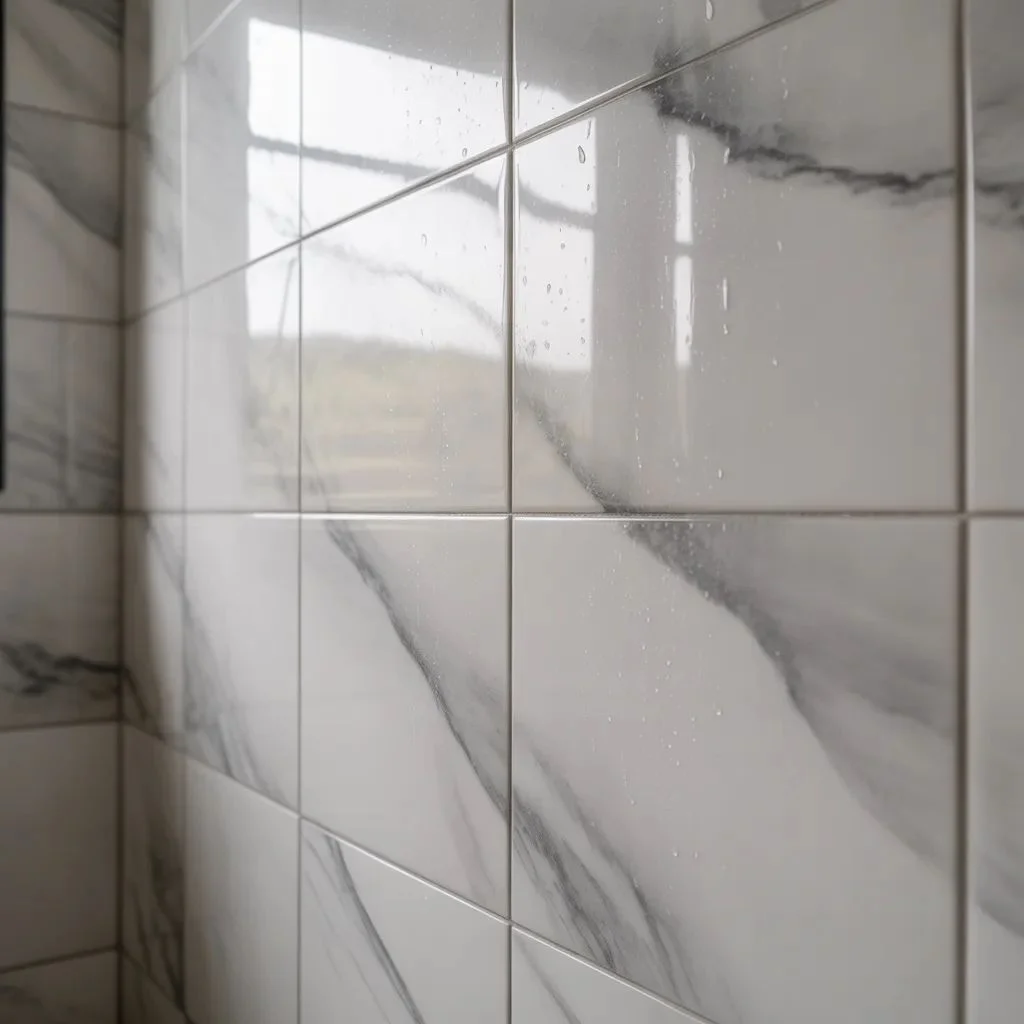
Each marble slab is unique. The veining, the tone, the subtle movement within the stone — these are produced by geological pressure over millions of years, not a factory press. That means your marble shower is, by definition, one of a kind. No other material offers that level of natural exclusivity.
Light Reflection That Flatters Any Space
Polished marble reflects light in a way that makes a shower feel brighter and more spacious than it is. Even in compact bathrooms, a well-chosen marble with a high-gloss finish can visually double the sense of depth. It’s one of the most effective design tricks in small-space architecture.
A Material That Ages Gracefully
Marble isn’t just beautiful on installation day. When properly sealed and maintained, it develops a gentle patina over time that only adds character. Unlike porcelain, which can look sterile or flat after years of use, marble tends to deepen in richness as it ages.
Versatility Across Every Style
From minimalist Japanese-inspired baths to grand traditional ensuite designs, marble shower ideas work across virtually every aesthetic. White Carrara reads quiet and classic. Calacatta Gold feels bold and editorial. Nero Marquina is dramatic and modern. The stone adapts to the story you’re telling.
Choosing the Right Type of Marble for Your Shower
Not all marble is the same. The type you choose will define the mood, maintenance requirements, and overall look of your marble shower. Here are the most popular options and what each one brings to the space.
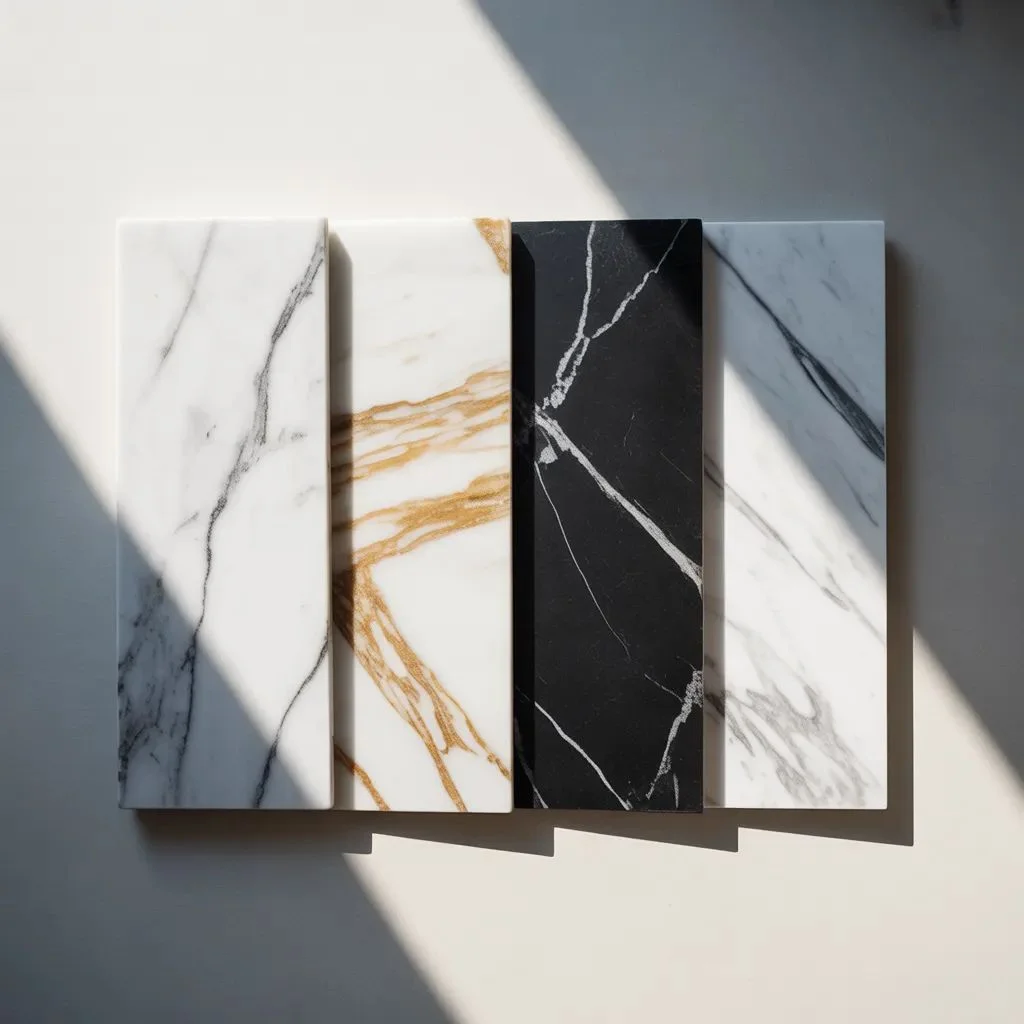
Carrara White — The Classic Foundation
Carrara is the most widely used marble in residential design for good reason. Its soft white background with feathery gray veining is understated, versatile, and works in both modern and traditional bathrooms. It’s more affordable than other marble types and widely available in tile, slab, and mosaic formats. If you want a clean, timeless marble shower without the risk of a bold design decision, Carrara is the safe bet that never disappoints.
Calacatta Gold — The Statement Piece
Calacatta is denser and rarer than Carrara, with bolder veining and a creamier background. The gold undertones make it especially striking under warm lighting, and the dramatic movement in the stone means even a simple tile layout reads as high-design. Best used in larger showers where the pattern has room to breathe.
Nero Marquina — For Those Who Want Drama
Deep black with crisp white veining, Nero Marquina is one of the boldest marble shower ideas you can execute. It reads as sophisticated and editorial — especially paired with matte brass fixtures and frameless glass. Because it’s such a strong statement, it works best used on a single feature wall or the shower floor, balanced by lighter surrounding tiles.
Statuario — The Designer’s Choice
Statuario sits between Carrara and Calacatta — slightly more dramatic than the former, slightly cooler-toned than the latter. Its sharp, contrasting veining makes it ideal for large-format slabs where the pattern can flow uninterrupted across a full shower wall.
Honed vs. Polished: Which Finish to Choose
Polished marble is reflective and glamorous but shows water spots and fingerprints more readily. Honed marble has a matte, soft surface that hides moisture and feels more casual — though it’s more porous and requires more frequent sealing. For shower walls, polished is generally the lower-maintenance option. For the floor, honed or tumbled finishes offer better slip resistance.
Marble Shower Wall Ideas That Look Architectural
The walls are the biggest canvas in your shower. How you tile them determines whether your marble shower looks like a thoughtful design choice or a basic renovation. These are the approaches that work.
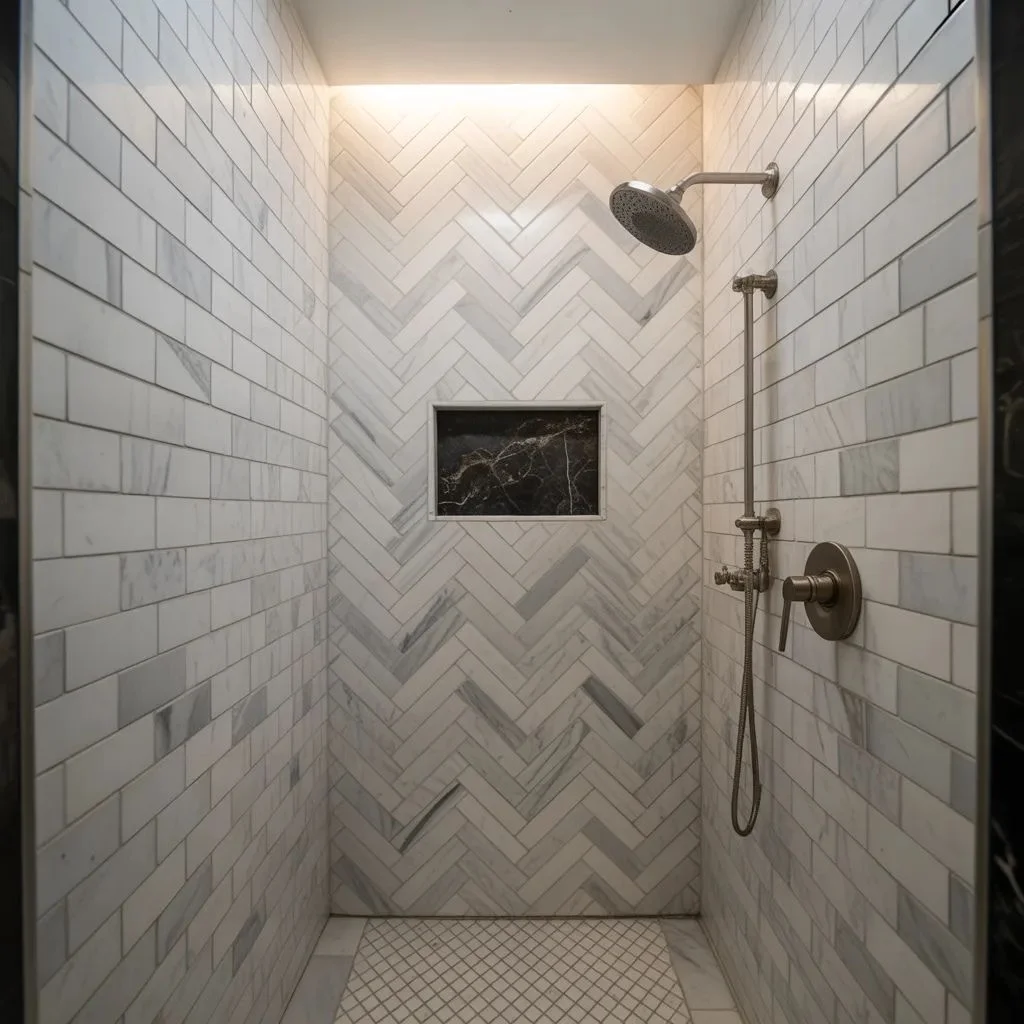
Full Floor-to-Ceiling Marble Slabs
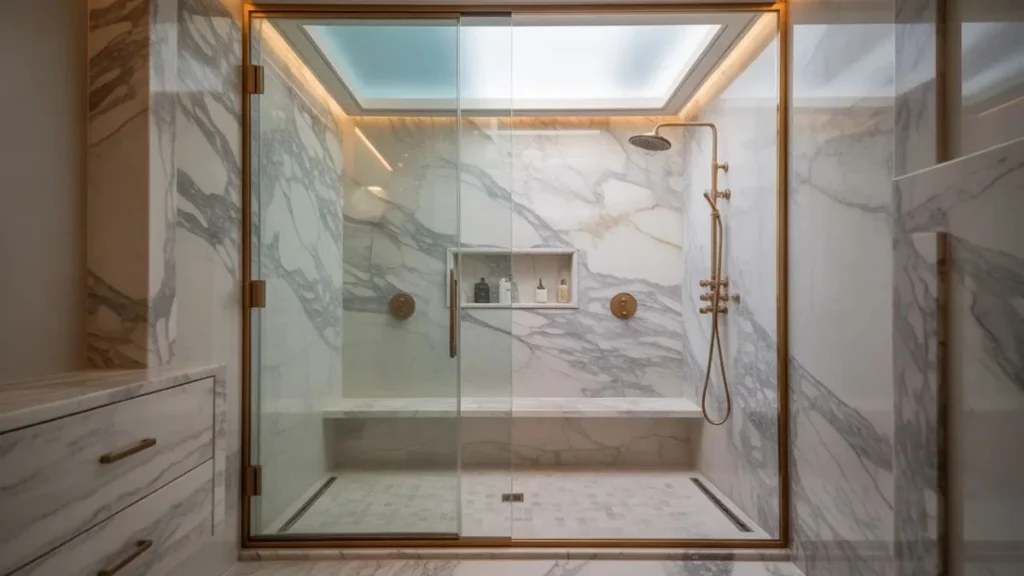
Large-format marble slabs with minimal grout lines are the gold standard for a custom-built look. The continuous surface lets the veining flow uninterrupted from floor to ceiling, creating a cohesive, architectural effect that reads as intentional and expensive. This works best with Calacatta, Statuario, or any marble with strong, directional veining.
For the most seamless result, ask your tile supplier about book-matching — a technique where two mirrored slabs are placed side by side so the veining creates a symmetrical butterfly effect. It’s one of the most striking marble shower ideas you can execute and immediately signals a custom-built bathroom.
Subway Tile Marble — Classic Elevated
Marble subway tiles bring a familiar format into luxury territory. Laid in traditional horizontal brick patterns, they read as understated and refined. Lay them vertically to add height to a shorter shower. Or use a herringbone arrangement to add visual rhythm without switching materials. The result is a shower that feels rich without being showy.
Accent Wall with Contrasting Marble
You don’t need to marble every surface. Designating a single shower wall — typically the one directly facing the showerhead — as a marble feature wall gives the room a focal point without the full cost or visual weight of an all-marble enclosure. Pair it with large-format porcelain in a coordinating neutral on the remaining walls for a grounded, custom feel.
Marble Shower Niche as a Design Moment
A built-in recessed shelf in the same marble as your walls goes from functional to architectural in one move. When the marble shower niche is lined in a contrasting stone — say, a dark Nero Marquina inset against white Carrara walls — it creates a composed detail that makes the whole shower look considered and custom.
Marble Shower Floor Ideas That Anchor the Design
The floor is often the most overlooked element in marble shower ideas — and one of the most impactful. A well-chosen floor tile grounds everything above it and can tie disparate wall materials into a cohesive whole.
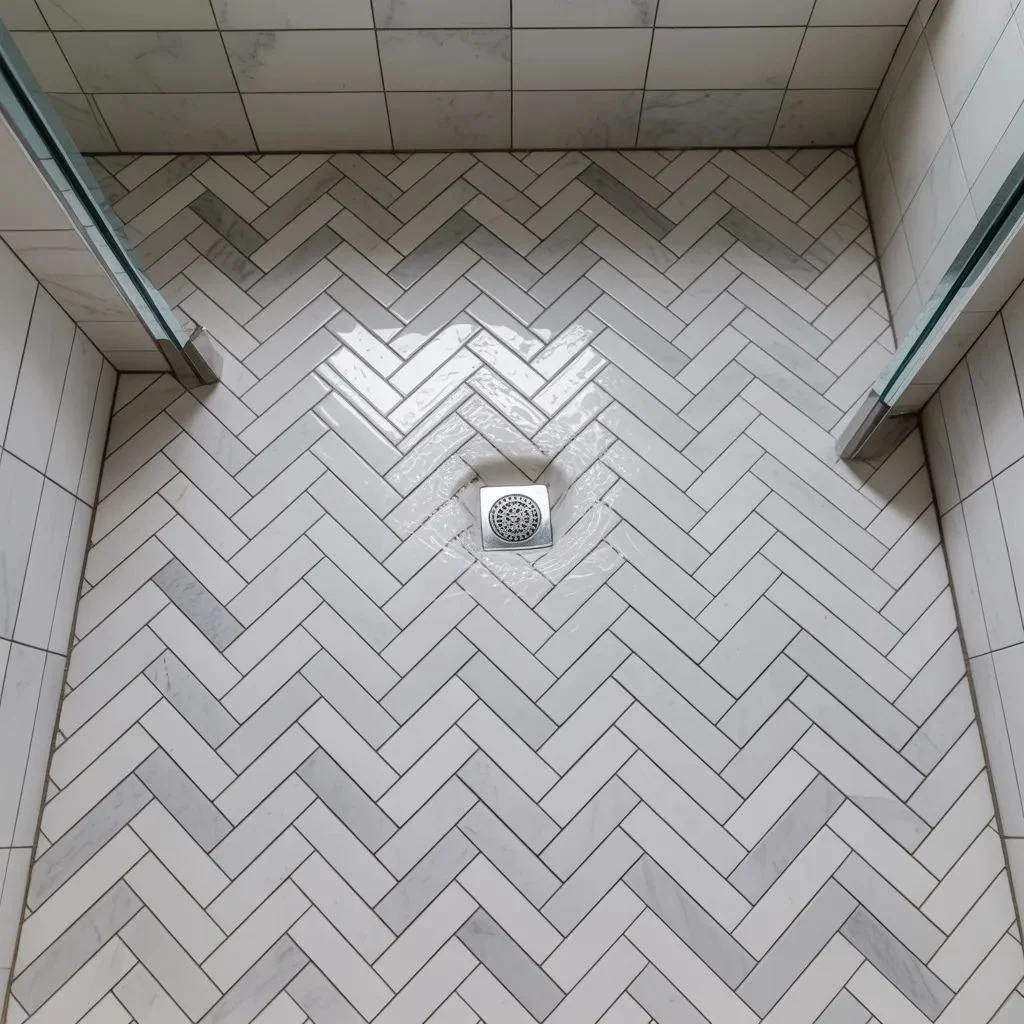
Herringbone Marble Mosaic
A herringbone marble floor is one of the most requested patterns in high-end bathroom design. The angled brick layout creates visual energy and a sense of craftsmanship that flat tile layouts simply can’t match. Use it with small-format Carrara or Calacatta tiles in the 1×4 or 2×4 inch range for maximum effect. The tight pattern also provides natural slip resistance from the additional grout lines — practical and beautiful.
Penny Round Mosaics
Small circular marble mosaics on the shower floor create an almost artisanal look — the kind you associate with a craftsman who took real time over every detail. They’re also among the most slip-resistant marble floor options, making them a smart choice for families or older users. White marble penny rounds against a charcoal grout line create a crisp, graphic pattern that holds up beautifully over time.
Large-Format Marble Floor Tiles
Going with large marble tiles on the floor — 12×24 or 24×24 inches — creates a sleek, contemporary look that feels spa-like and modern. Fewer grout lines mean a cleaner surface and easier maintenance. This approach works especially well in walk-in marble shower ideas where the floor extends beyond the shower pan into the broader bathroom space, creating visual continuity.
Contrasting Floor to Frame the Space
Using a darker marble on the floor against lighter wall tiles is one of the most effective ways to add depth and definition. A Nero Marquina floor paired with Carrara walls creates a composed contrast that makes the shower feel more three-dimensional — like a real architectural space rather than a tiled box.
Small Bathroom Marble Shower Ideas That Don’t Feel Cramped
Working with a compact footprint doesn’t mean scaling back your ambition. Some of the most impressive marble shower ideas are specifically designed for smaller spaces — and the material’s reflective quality makes marble one of the best choices for tight bathrooms.
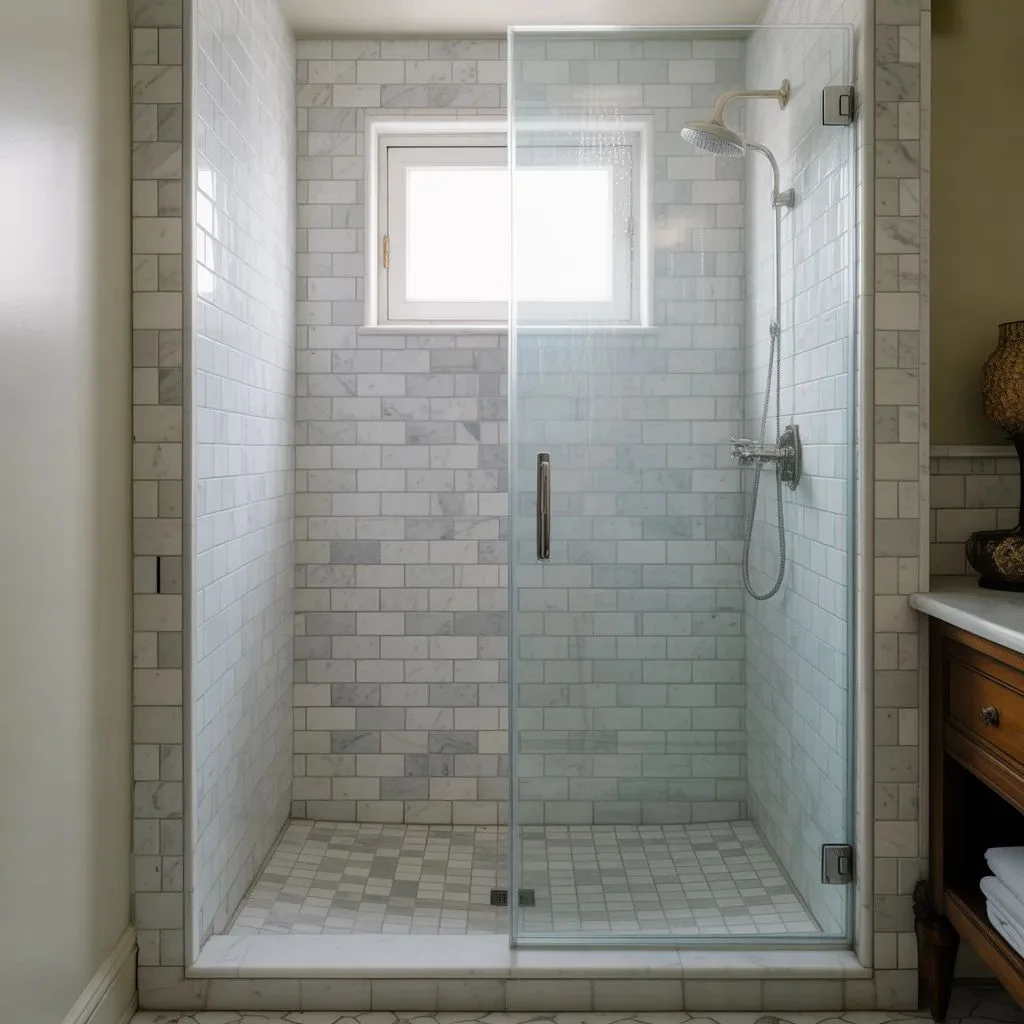
Go Light on Colour, Bold on Veining
In a small shower, a light-toned marble — white Carrara, creamy Calacatta, soft grey Bardiglio — keeps the walls from closing in while still delivering the visual richness marble is known for. The key is choosing a stone with strong, clear veining so the surface reads as dynamic without being dark or heavy.
Use Large Tiles to Reduce Visual Noise
More grout lines mean more visual interruption. In small spaces, fewer, larger tiles create a calmer surface that recedes rather than advances. A 12×24 marble wall tile with minimal grout in a matching tone will make a compact shower feel more spacious than a mosaic format with dozens of lines per square foot.
Extend Marble Beyond the Shower
Carrying the same marble tile from the shower wall onto the surrounding bathroom floor is one of the single most effective tricks for making a small bathroom feel larger. When the material flows without interruption from inside to outside the shower, the eye doesn’t stop at the threshold — it reads the entire room as one continuous space.
Frameless Glass + White Marble
Frameless glass doors remove the visual barrier of a shower surround without sacrificing enclosure. Combined with white marble walls, the effect is an almost completely transparent shower space — where the stone is the decoration, and nothing interrupts it. This combination is one of the most popular marble shower ideas in contemporary bathroom design precisely because it solves the small-space problem elegantly.
Fixtures and Hardware That Elevate a Marble Shower
The stone is half the job. The fixtures and hardware you pair with your marble shower determine whether the finished space looks custom-built or just expensive. Here’s how to get the pairing right.
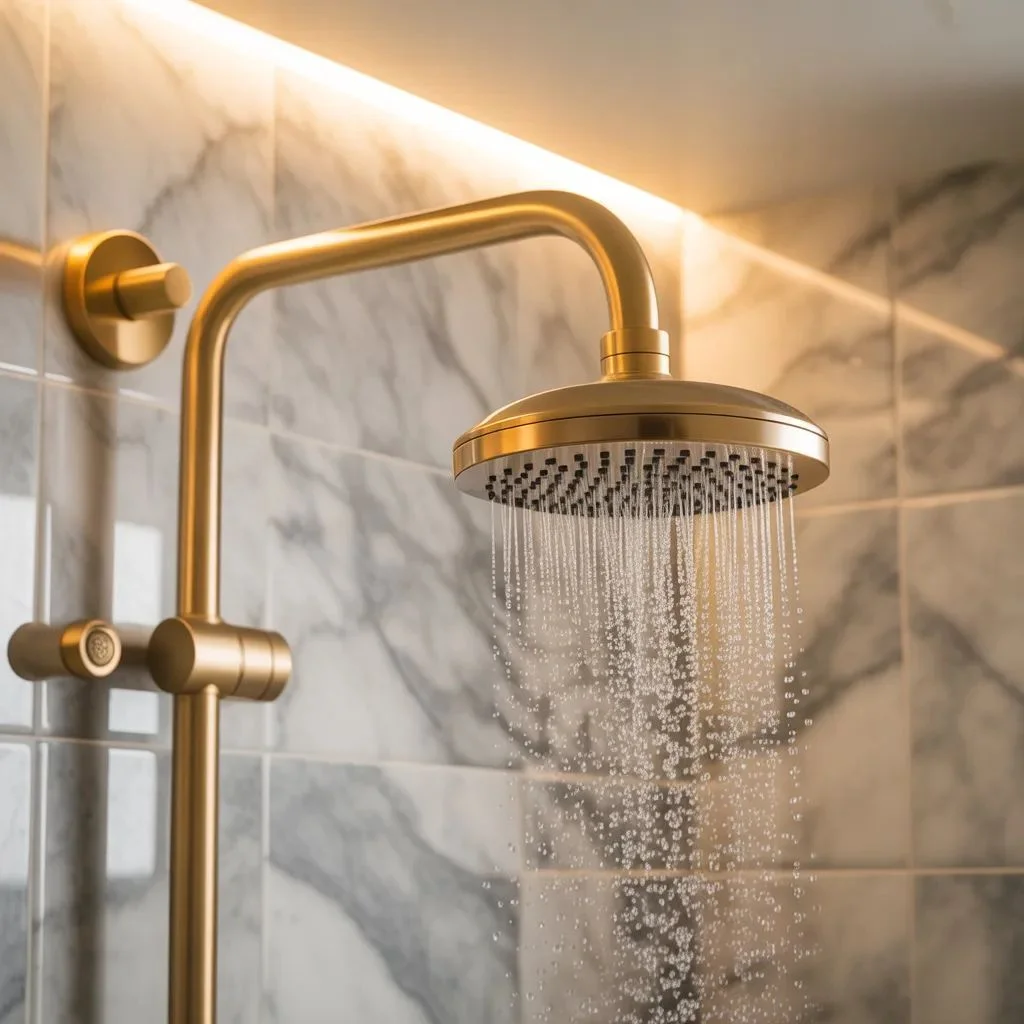
Brushed Gold — Warm and Editorial
Brushed gold fixtures against white or cream marble create an editorial contrast that reads as intentional and high-design. The warm metal tone picks up the gold undertones in Calacatta or Botticino marble and grounds the whole design. Use it consistently — showerhead, hand sprayer, valve trims, towel hooks, and niche shelves — for a cohesive look that feels commissioned, not cobbled together.
Matte Black — Sharp and Modern
Matte black against white marble is one of the sharpest contrasts in interior design. The black provides structure and weight that white marble alone can’t carry. It works especially well in contemporary bathrooms with frameless black-framed glass doors — the hardware and the frame become a unified graphic element against the softer stone background.
Brushed Nickel — The Safe Universalist
If you’re unsure which metal finish to commit to, brushed nickel works with virtually every marble type and tone. It’s cooler than gold, softer than chrome, and less committal than black. For a classic marble shower that won’t look dated in a decade, brushed nickel is the safest and most versatile choice.
The Importance of a Consistent Finish
Whatever finish you choose, use it everywhere — shower valve, faucet, towel bar, hooks, and even drain cover. Mixing finishes in a marble shower dilutes the custom-built effect. Every metal surface should read as part of the same intentional specification.
Marble Shower Bench and Built-In Feature Ideas
The details that separate a custom-built marble shower from a standard tile job are almost always the built-in elements — the bench, the niches, the shelves. These features require planning before installation but deliver an outsized design return.
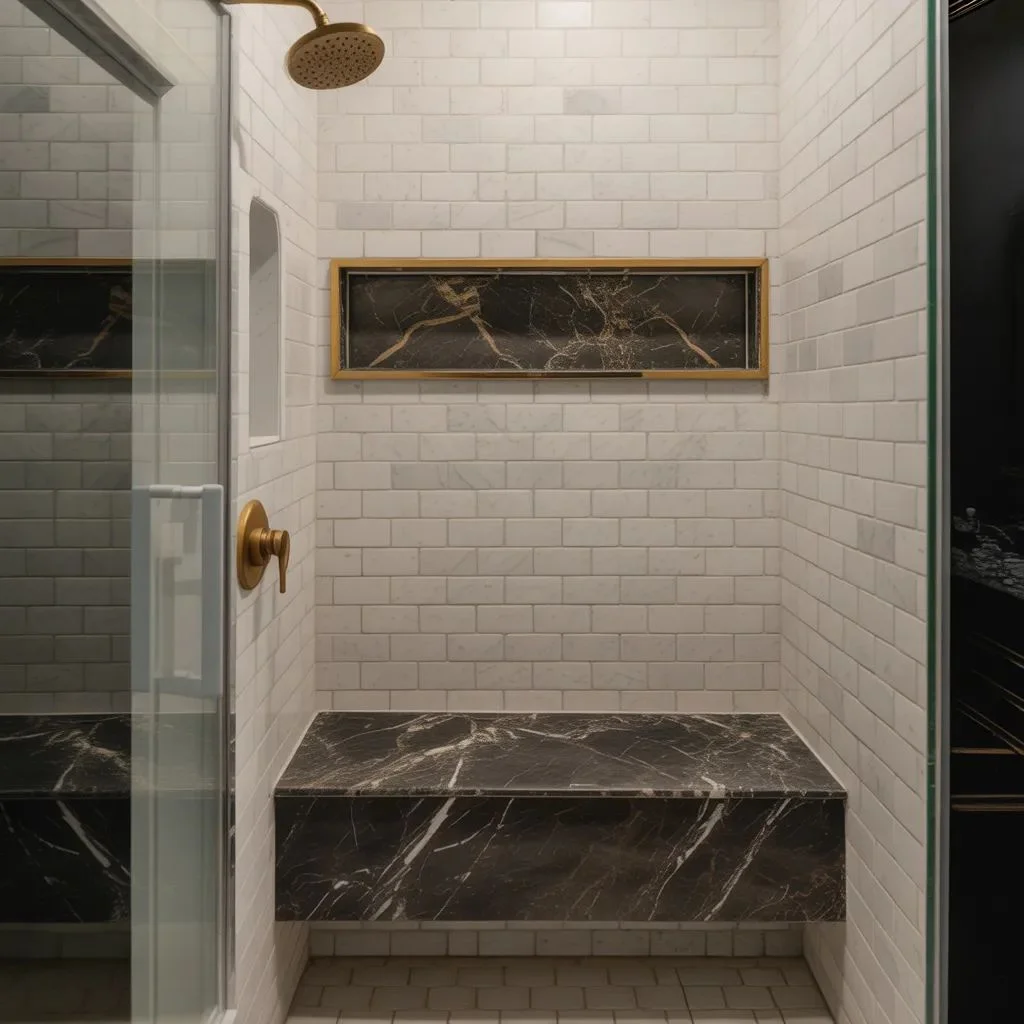
Built-In Marble Bench Seat
A marble shower bench built into the corner of a walk-in shower adds both function and architecture. Clad in the same marble as the walls, it reads as part of the room’s structure rather than an afterthought. For added design interest, use a contrasting marble slab on the bench surface — a dark marble seat in a white marble shower creates a composed, layered detail that signals careful design.
Recessed Niche with Contrasting Stone
A built-in recessed shower niche clad in a contrasting marble — Nero Marquina behind a white Carrara shower, for example — creates a framed, intentional moment within the design. Size it to hold your products without looking cluttered. A horizontal niche at shoulder height works better functionally and visually than a vertical inset.
Double Niches with Marble Shelves
For larger showers shared by two people, double stacked niches are both practical and visually satisfying. The symmetry reads as architectural. Clad the interiors and shelves in a complementary marble and use the same finish as your fixtures for the edge trim.
Floating Marble Shelf
A single slab of marble — thick-cut, with a sharp bullnose edge — cantilevered from the shower wall as an open shelf is one of the most impressive yet understated marble shower ideas you can build. It functions as a display shelf, a soap ledge, and a design detail all in one, and it requires no additional hardware to look intentional.
How to Seal and Maintain a Marble Shower
Even the most beautiful marble shower ideas fall flat without a maintenance plan. Marble is a natural stone and therefore porous — it absorbs moisture and staining agents if left unprotected. But the care requirements are far less demanding than most people assume.
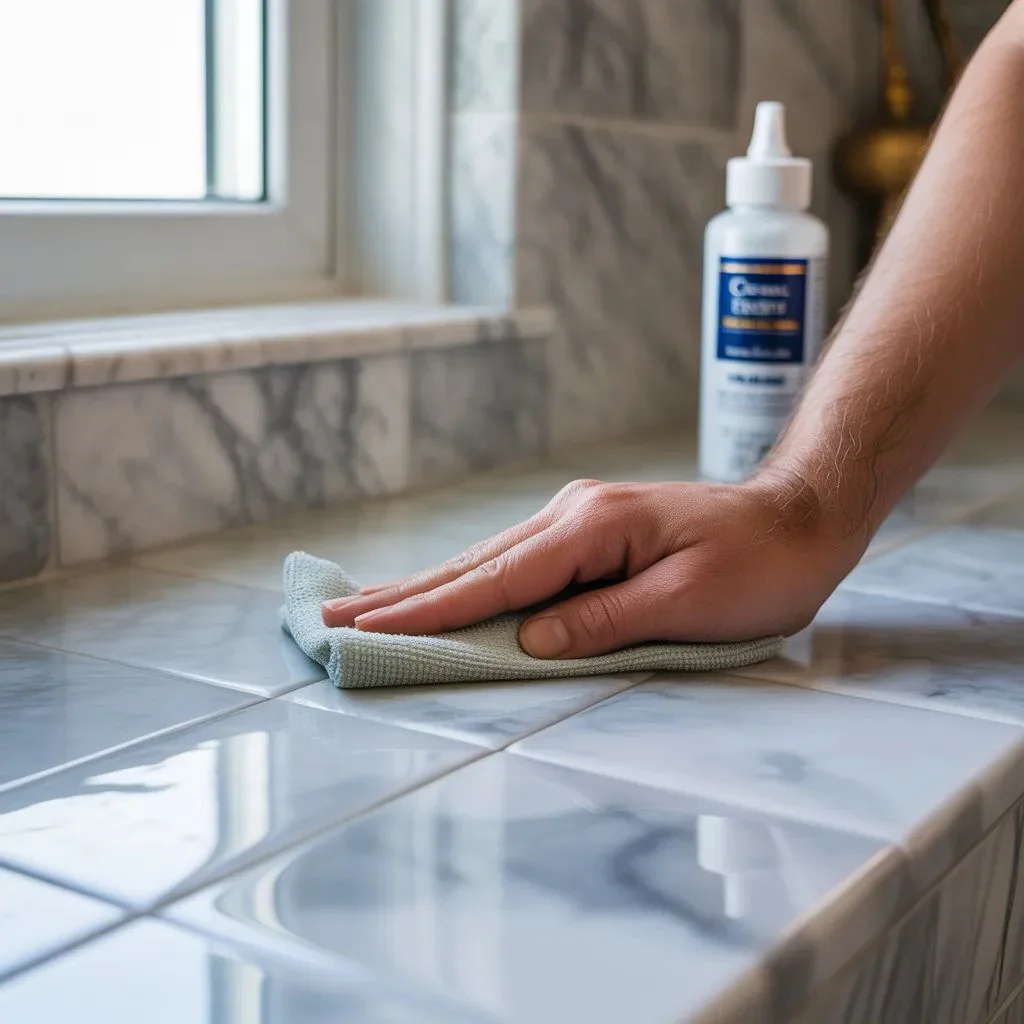
Seal Before First Use
Apply a penetrating stone sealer before any water contacts the marble. Most professionals recommend a high-quality impregnating sealer — one that bonds within the pores of the stone rather than sitting on the surface. This protects against water absorption and staining without affecting the appearance of polished or honed finishes.
Re-Seal Annually
A standard rule for marble shower maintenance is to re-seal every 12 months. You can test the seal by placing a few drops of water on the surface: if the water beads up, the sealer is intact. If it absorbs within a few seconds, it’s time to reseal.
Daily Habits That Preserve the Stone
- Use a squeegee on the walls after each shower to remove standing water and prevent mineral deposits.
- Avoid acidic cleaners — vinegar, citrus, or anything pH-below-7 will etch polished marble permanently.
- Use a pH-neutral stone cleaner rather than general bathroom spray for regular cleaning.
- Address soap scum promptly — it’s easier to wipe away when fresh and harder to remove once it mineralizes.
Grout Colour and Maintenance
Your grout choice affects both the look and the upkeep of your marble shower. White or cream grout with light marble creates a seamless look but shows staining more readily. Dark or grey grout with white marble creates a graphic contrast and hides discoloration better. For any marble shower, use epoxy grout — it’s non-porous, stain-resistant, and doesn’t require sealing.
Marble Shower Ideas by Style: Modern, Traditional, and Transitional
One of the most useful things about marble shower ideas is how adaptable the material is across design styles. Here’s how to approach it depending on the aesthetic you’re working toward.
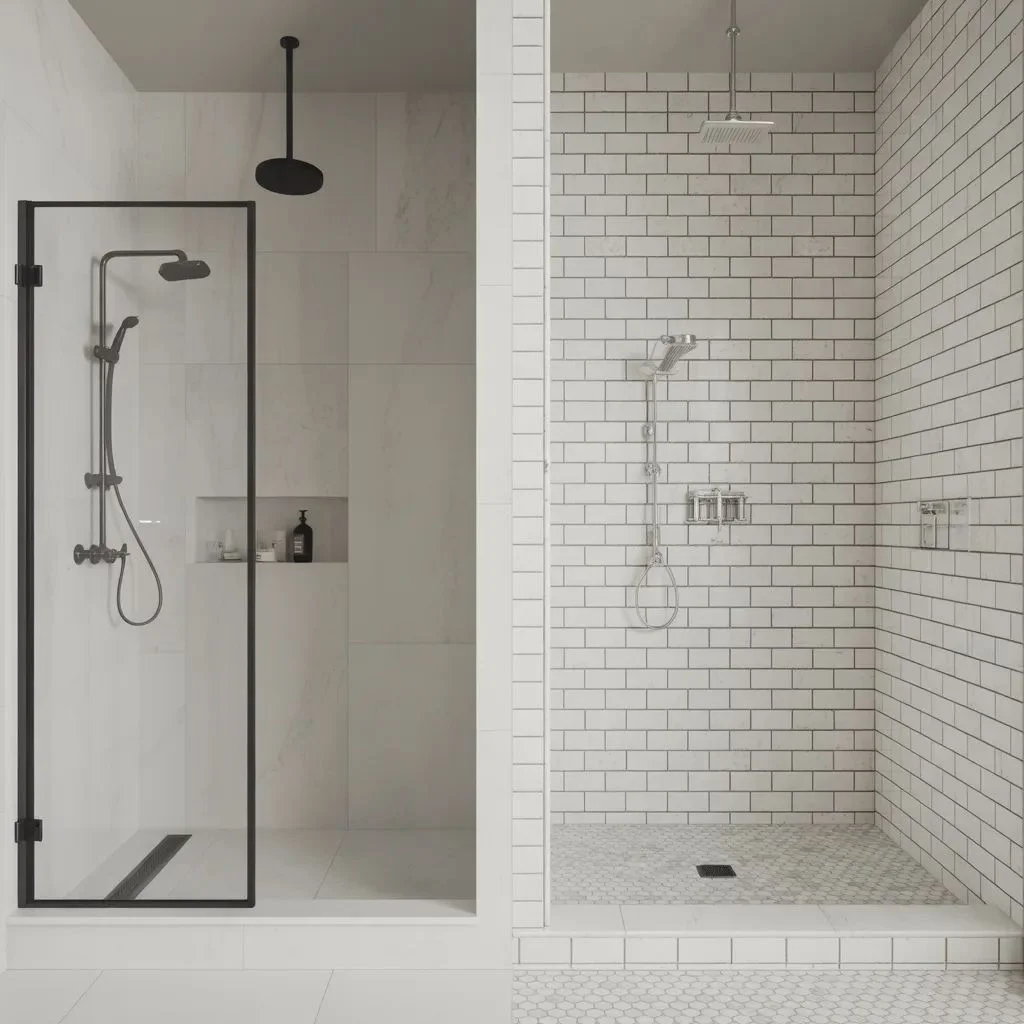
Modern Marble Shower
Large-format slabs, minimal grout, frameless glass, matte black fixtures. The modern marble shower is about restraint. Let the stone do the work — the architecture provides the beauty, not the layering of pattern on pattern. Stick to one marble type throughout and keep accessories to a minimum.
Traditional Marble Shower
Subway tiles in a classic brick pattern, polished chrome fixtures, pedestal-style details. Traditional marble shower design leans into the heritage of the material. Hexagon mosaic floors, decorative border tiles, and warm nickel or antique brass hardware all reinforces the classic reference. Carrara or Botticino marble works best here — the familiar tone connects the stone to its long decorative history.
Transitional Marble Shower
Mix of classic and contemporary — the sweet spot most homeowners land in. Transitional marble shower ideas typically combine a honed marble tile (softer than polished, more relaxed) with clean-lined fixtures in a warm brushed tone. The result is a bathroom that feels timeless without being period-specific: polished enough for a formal house, relaxed enough for an everyday family bathroom.
Spa-Inspired Marble Shower
For a true spa-inspired marble shower, think: a rainhead set into the ceiling above a marble-clad seat, warm neutral stone, concealed fixtures, and soft ambient lighting from a niche. The goal is removal of all visual noise — no exposed pipes, no cluttered shelves, no visible product bottles. Everything integrated, everything quiet.
Marble Shower Cost: What to Budget for a Custom-Built Look
No guide to marble shower ideas would be complete without a clear-eyed look at cost. Marble is a premium material — but the range within that premium is wide, and knowing where to spend versus where to save can make the difference between a project that works and one that runs off the rails.
Marble Tile vs. Marble Slab: The Cost Gap
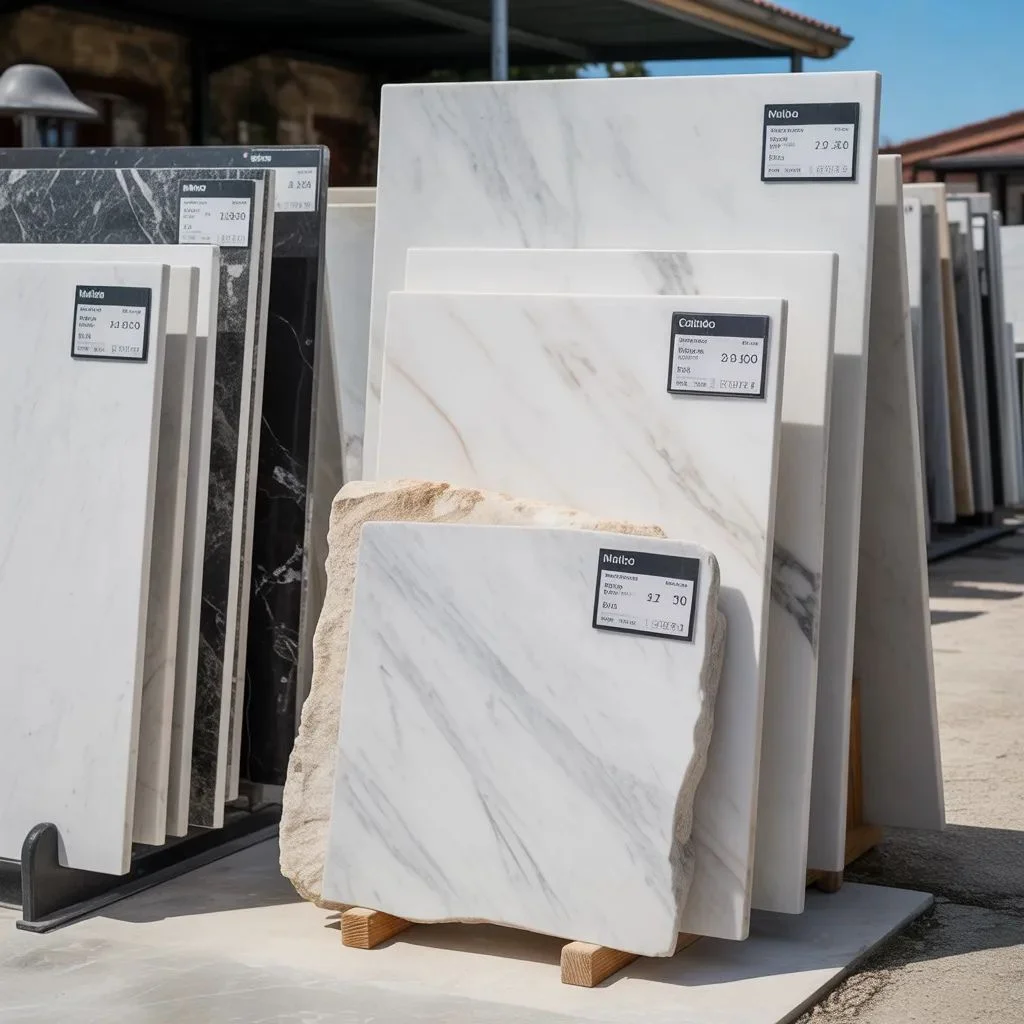
Marble tile (typically 12×12 to 12×24) runs from $8–$25 per square foot for the material, depending on the type and finish. Marble slabs used for a fully seamless shower enclosure start at $50–$100+ per square foot and require professional templating and installation. Tile is the accessible option — and for most residential showers, it delivers 90% of the visual result at a fraction of the cost.
Where to Spend
- The primary wall surface. This is the highest-visibility surface in the shower. Invest in a quality marble with strong veining here.
- The shower floor. Waterproofing and adhesion matter most underfoot. Don’t cut corners on material quality or installation.
- Sealing. A professional-grade penetrating sealer costs little relative to the tile budget but protects a significant investment.
Where to Save
- Secondary walls. The side walls perpendicular to the main sightline can use a simpler, less dramatic marble or a coordinating large-format porcelain that reads as marble from a distance.
- Mosaic accents. Small mosaic insets in niches or floors use minimal material but deliver a high-design signal.
- Marble-look porcelain for surrounding areas. Outside the shower itself, a high-quality marble-look porcelain tile on the bathroom floor creates visual continuity at a significantly lower cost.
Common Mistakes to Avoid in a Marble Shower Design
Even the best marble shower ideas can go wrong without careful planning. These are the most common mistakes homeowners make — and how to avoid them.
- Skipping the sealer. Marble is porous. Even in a shower, moisture, soap, and hard water will stain an unsealed stone within weeks. Seal before first use and maintain annually.
- Using acid-based cleaners. Vinegar, bleach, and citrus cleaners etch polished marble permanently. Use pH-neutral stone cleaner only.
- Mixing too many marble types. Using three or four different marble tones in one shower creates visual chaos. Choose one primary marble and, if desired, one accent stone — and stop there.
- Ignoring grout colour. Grout colour has an outsized effect on the finished look. Test it against your marble sample before committing. A poorly chosen grout can undermine even beautiful stone.
- Under-budgeting for installation. Marble tile requires skilled installation — especially for large-format slabs, book-matched surfaces, or intricate mosaic patterns. Budget for a specialist, not a general contractor.
- Forgetting waterproofing. The membrane beneath your marble matters as much as the stone itself. A failed waterproof barrier will damage both the subfloor and the marble above it. Never skip this step.
Stone-Cold Confidence: Building the Shower That Does the Talking
Marble doesn’t require elaborate staging or expensive staging to make a statement. The material itself — its veining, its weight, its history — does the work. The marble shower ideas that hold up best are the ones built around restraint: one strong marble, well-chosen fixtures in a consistent finish, clean grout lines, and proper sealing from day one.
Whether you’re going full Calacatta slab from floor to ceiling or starting with a single marble feature wall and building from there, the principle is the same: choose the stone carefully, install it correctly, maintain it consistently, and let the material carry the room.
A bathroom built this way doesn’t look renovated. It looks designed. And that distinction — between a room that was updated and a room that was considered — is exactly what marble delivers when you get it right.
Our Pick: Pink Bathroom Decor Ideas That Interior Designers Actually Love.