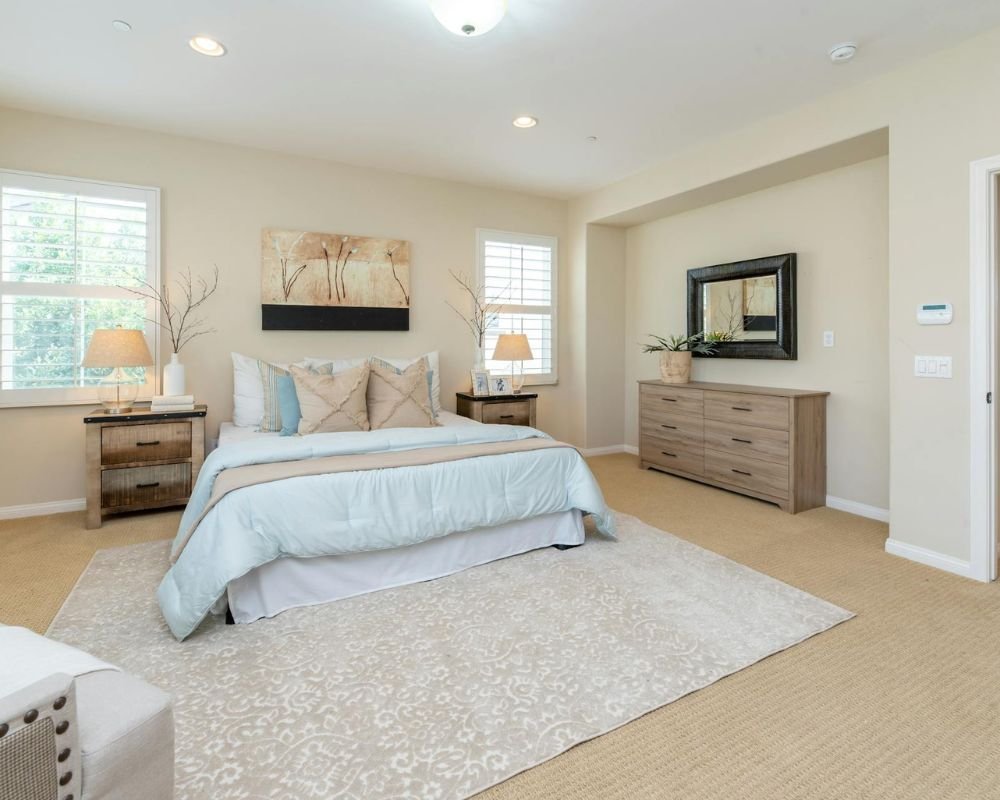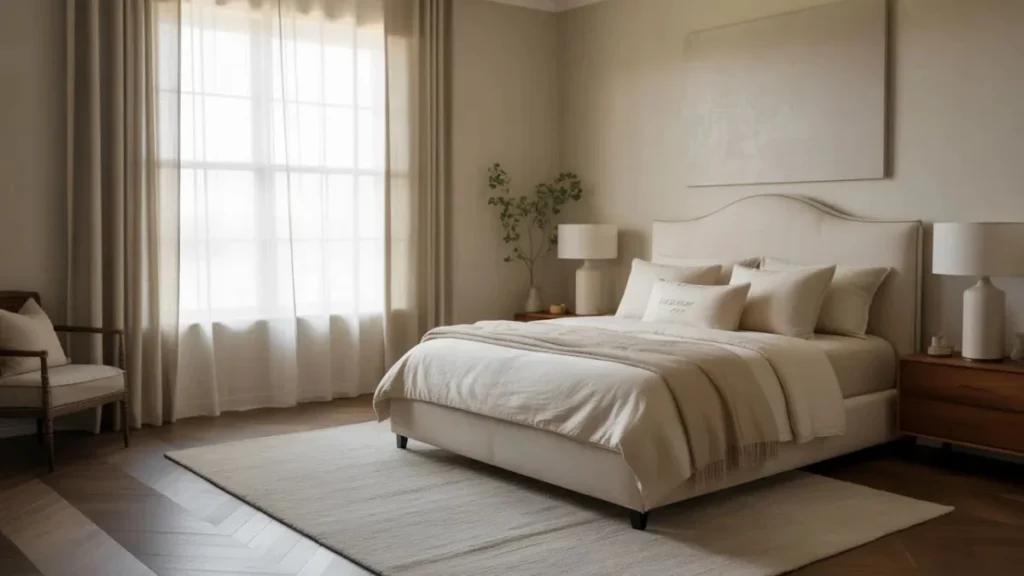
The right rug can make or break a bedroom — and most people get it wrong. Whether your room feels oddly disconnected or you keep second-guessing what size rug for a queen bed works, choosing rugs for bedroom spaces isn’t as complicated as it looks — once you understand the basics.
This guide covers everything: how to size a rug based on your bed, where exactly to position it, which materials wear best, and how to match your rug to your existing style. No guesswork, no expensive mistakes.
Why Bedroom Rugs Matter More Than You Think
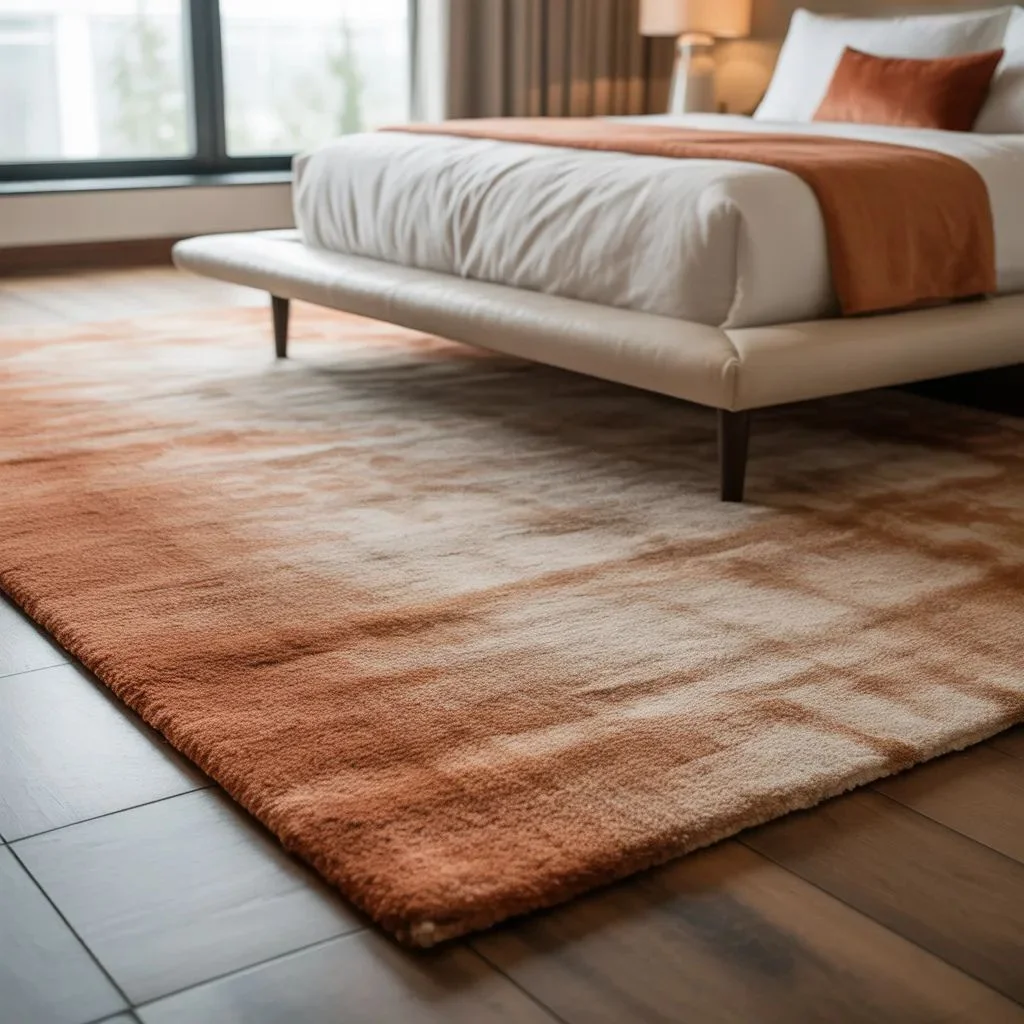
A bedroom without a rug often feels unfinished — like the furniture is just floating on the floor with nothing holding it together. That’s not an exaggeration. Rugs anchor your furniture, create visual warmth, and give your space a sense of intention.
Beyond looks, rugs for bedroom spaces serve real practical functions. They cushion your first steps in the morning, reduce noise from foot traffic, add thermal insulation over hard floors, and define zones in larger primary suites.
Think of the bedroom rug less as a decorative accessory and more as the foundation your entire design sits on. Get it right and the room clicks into place. Get it wrong — usually by going too small — and even beautiful furniture looks off.
How to Choose the Right Rug Size for Your Bed
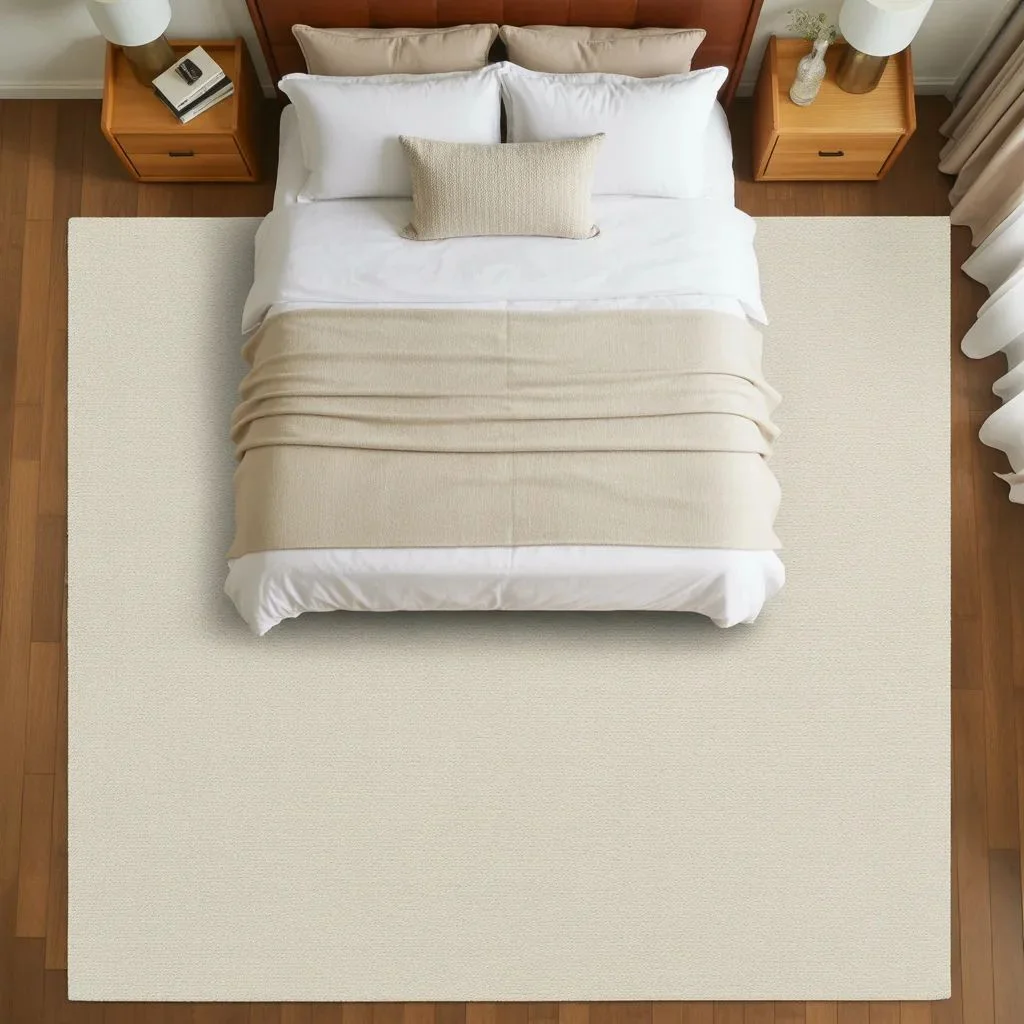
Size is the single most important decision you’ll make about rugs for bedroom placement. Too small and the rug look like an afterthought; too large and it crowds the room. The goal is balance — enough rug to anchor the bed, enough bare floor to let the room breathe.
Here’s a straightforward breakdown by bed size:
Twin Bed
A 5×8 ft rug works well for most twin setups. If you want an accent at the foot of the bed rather than underneath it, a 3×5 ft does the job. These smaller sizes are also ideal for kids’ rooms where open floor space matters.
Full/Queen Bed
The sweet spot for a queen bed is a 6×9 or 8×10 ft rug. These dimensions leave roughly 18–24 inches of rug visible on each side of the bed — enough for a soft landing when you get up, and enough visual weight to anchor the furniture properly.
King Bed
King beds need at least a 9×12 ft rug, with 10×14 being the preferred choice for large primary suites. Anything smaller creates the “floating furniture” effect — where the bed looks like it’s teetering on a tiny island of fabric. The rug should extend 18–24 inches beyond the sides and foot of the bed.
Pro tip: Before ordering, lay painter’s tape on the floor to outline the rug dimensions. This simple step saves you from an expensive return.
The Three Placement Methods That Actually Work
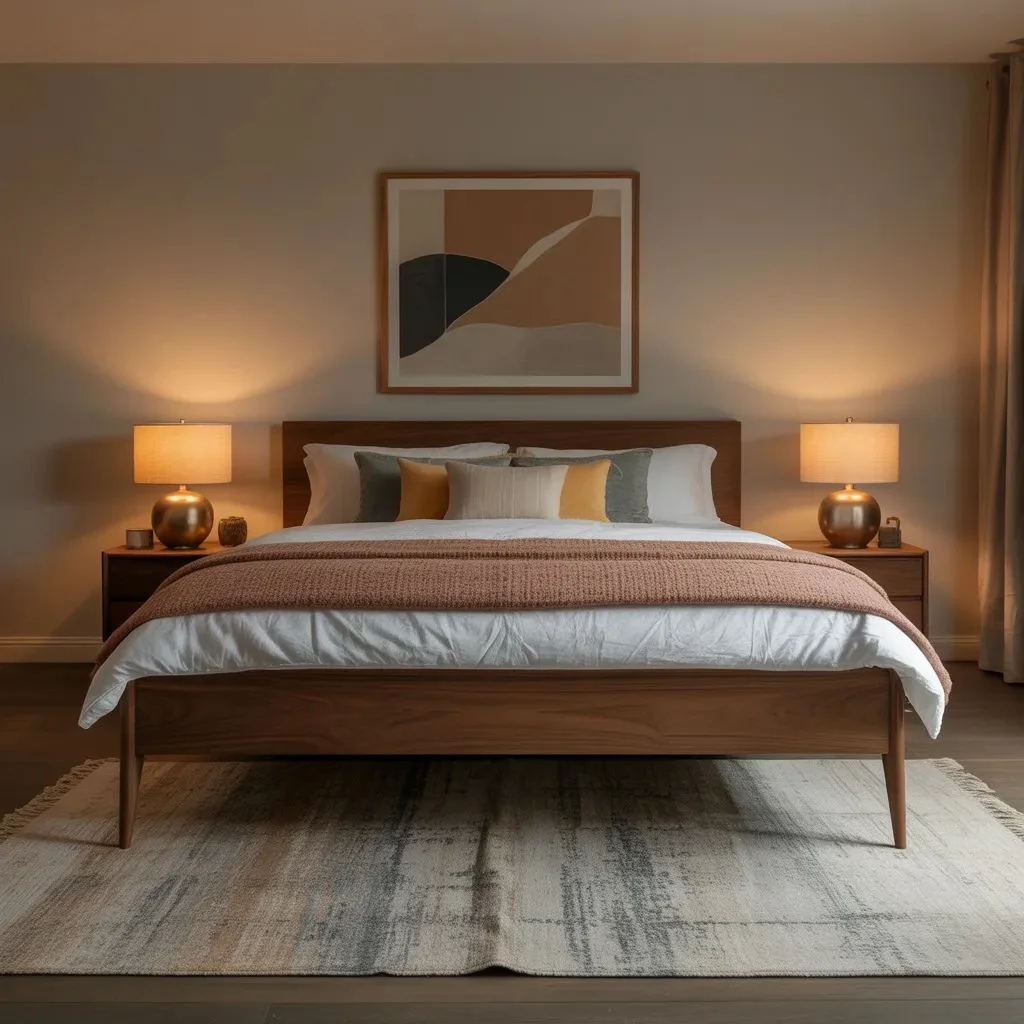
Once you’ve nailed the size, placement is where rugs for bedroom styling either comes together or falls apart. There are three proven approaches — each one works, depending on your room size and personal taste.
Full Coverage (All Furniture on the Rug)
This is the hotel-room look. The bed frame, nightstands, and any bench at the foot of the bed all sit fully on the rug. It’s the most cohesive and luxurious finish, but it requires a generously sized rug — typically 9×12 or larger.
Best for large primary bedrooms where you want everything anchored as one unified zone.
Two-Thirds Under the Bed (The Most Popular Method)
The rug slides under the lower two-thirds of the bed — the head of the bed and nightstands stay on bare floor, while the foot of the bed and sides sit on the rug. This is the designer default for a reason: it works in most standard-sized rooms, delivers a soft landing when you step out of bed, and doesn’t require an oversized rug to pull it off.
Partial Placement (Foot of Bed Only)
Here, only the front legs of the bed rest on the rug, leaving the majority of the flooring exposed. This approach suits small bedrooms and tighter budgets. It visually lightens the room and works particularly well with a bench or ottoman at the foot of the bed — use a 3×5 or 4×6 rug tucked under that piece to anchor it cleanly.
Best Rug Styles for Bedroom Décor
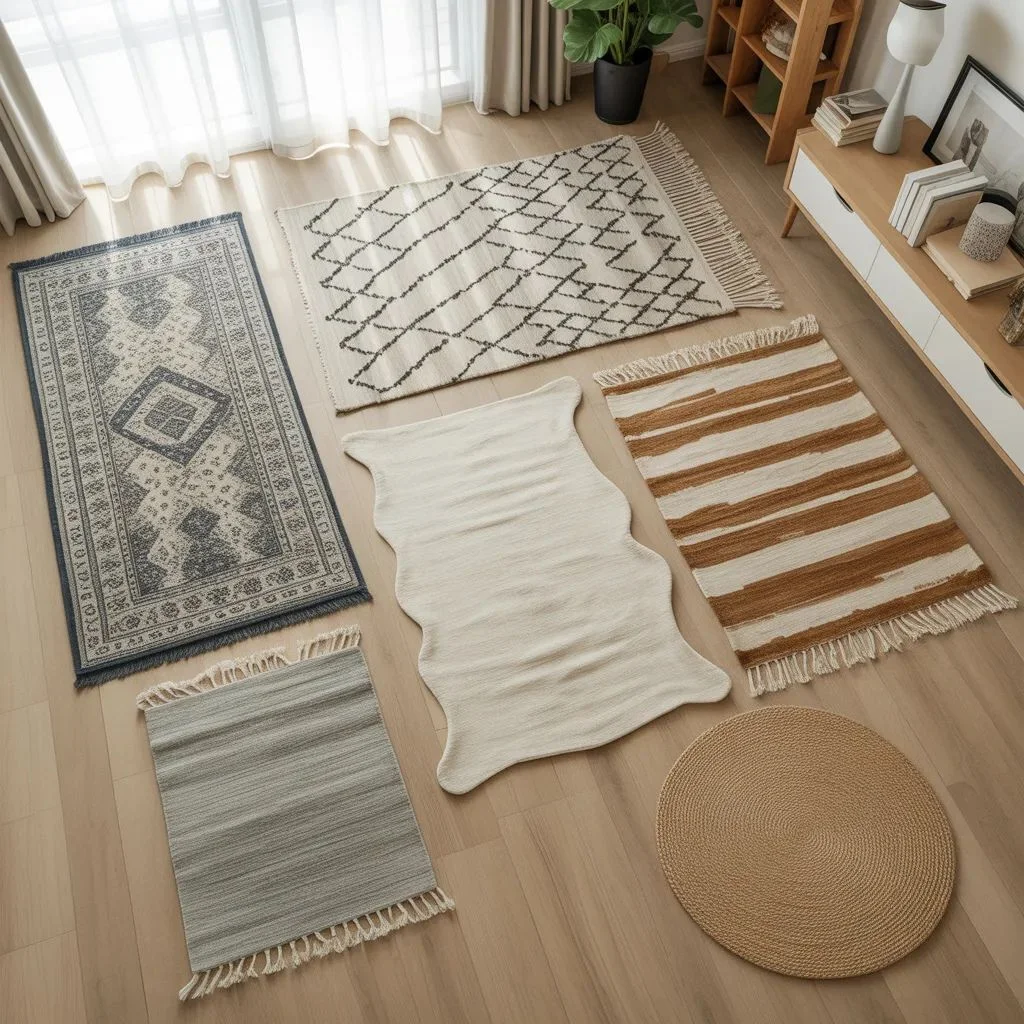
Style matching is where rugs for bedroom choices get personal. The right style depends on your existing furniture, wall colours, and the mood you want the room to carry.
Persian and Traditional Rugs bring rich pattern and color to neutral bedrooms. They work beautifully against white walls or simple upholstered beds and add a collected, timeless quality.
Modern and Geometric Rugs suit contemporary spaces with clean lines. Abstract patterns and bold shapes add visual interest without clutter — especially strong in minimalist rooms.
Solid and Textured Rugs are the most versatile option. A chunky boucle, plush solid wool, or a ribbed flatweave rug works with almost any decor style and allows your bedding and artwork to take center stage.
Vintage and Distressed Rugs add character and warmth, particularly in boho, eclectic, or maximalist bedrooms. The faded tones blend easily and make patterned bedding feel intentional rather than busy.
Natural Fiber Rugs (Jute, Sisal, Seagrass) introduce an earthy, organic texture — ideal for coastal, rustic, or Japandi-inspired spaces. They’re better layered under a softer accent rug if placed directly beside the bed.
Rug Materials: What Works Best in a Bedroom
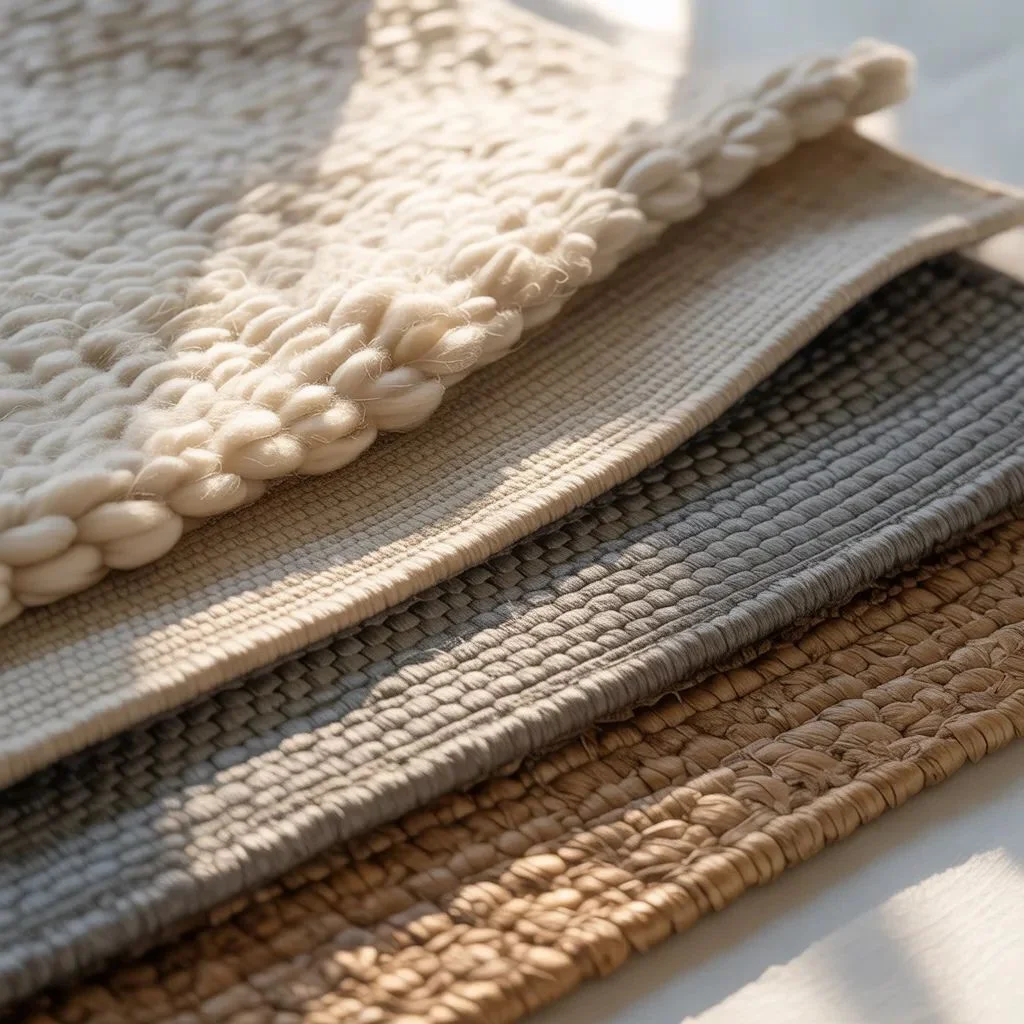
Material determines how a rug feels underfoot, how long it lasts, and how much upkeep it needs. Here’s what to know before you buy.
Wool is the gold standard for bedroom rugs. It’s naturally soft, durable, moisture-wicking, and even helps filter dust and allergens. It costs more upfront but ages beautifully and lasts for decades.
Cotton rugs are lightweight, washable, and easy to refresh seasonally. They work well in casual bedrooms and come in a wide range of flat-woven styles. Not as plush as wool, but great for low-fuss living.
Synthetic (Polypropylene, Nylon) rugs handle real life — pets, kids, and accidental spills — without drama. They’re more affordable, stain-resistant, and widely available in every style. The trade-off: less breathability than natural fibers.
Jute and Sisal are durable and beautifully textured but rougher underfoot. Better used as a base layer in a layered rug setup than placed directly beside the bed where bare feet land every morning.
Colour and Pattern: How to Choose Without Second-Guessing
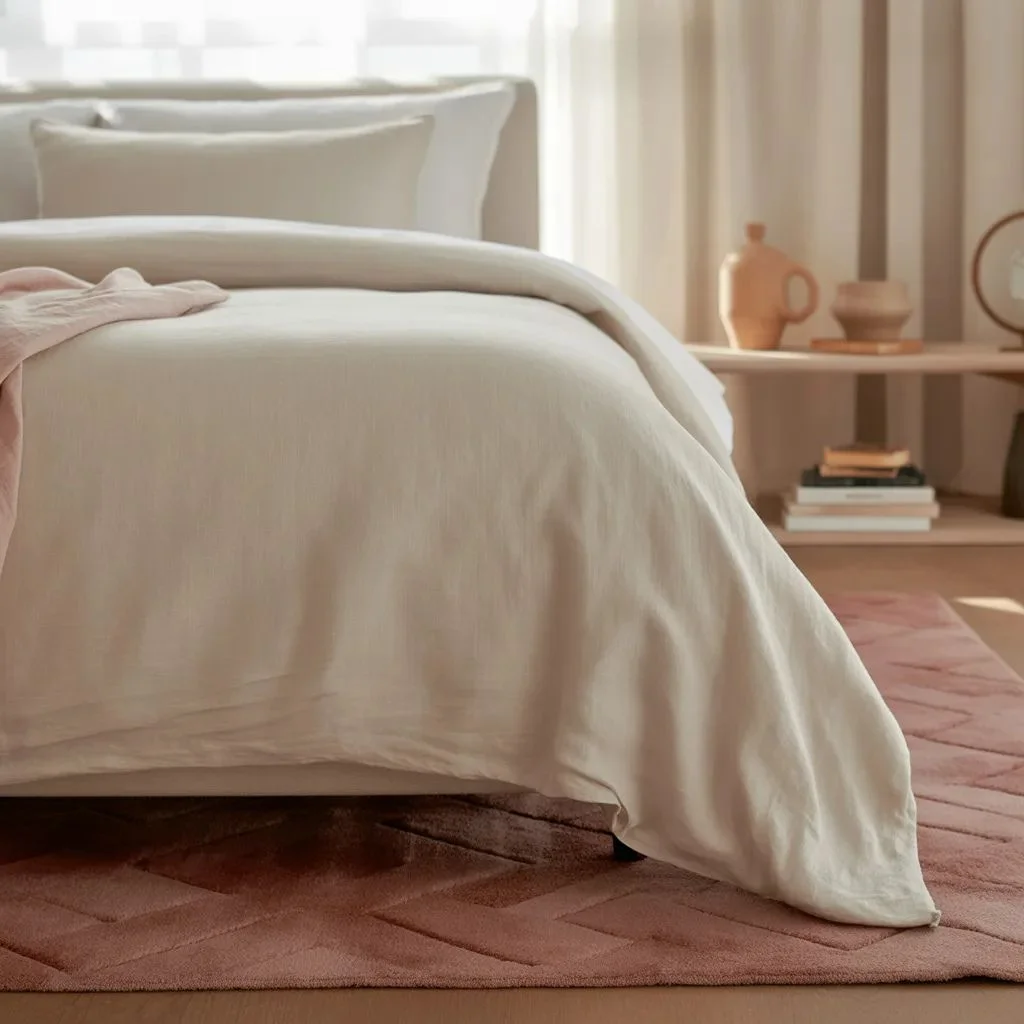
Colour is where most people overthink it. Here’s the shortcut: let your existing room do the talking.
If your bedroom already has pattern in the bedding, curtains, or wallpaper, anchor it with a solid or low-contrast rug. Ivory, taupe, warm grey, and natural tones are the easiest workhorses — they add texture without competing for attention.
If your room is mostly neutral — white walls, simple bedding, minimal decor — a patterned or bolder rug becomes the room’s focal point. This is where Persian-style, geometric, or vintage distressed rugs shine.
For colour matching, pull one of the secondary tones from your bedding or throw pillows and look for a rug that echoes it rather than perfectly matches it. Exact matches look forced; tonal harmony looks intentional.
Light-coloured rugs for bedroom spaces make smaller rooms feel more open. Darker rugs create coziness and intimacy in larger, airier rooms.
Pro Tips for Layering, Rug Pads, and Care
A few finishing details make a significant difference in how long your rug looks good and how well it functions.
Always Use a Rug Pad
A rug pad is non-negotiable. It prevents slipping, adds a layer of cushion underfoot, protects your flooring from friction, and helps the rug wear more evenly over time. Size the pad about an inch smaller than your rug on all sides so it stays hidden.
Layering for Depth
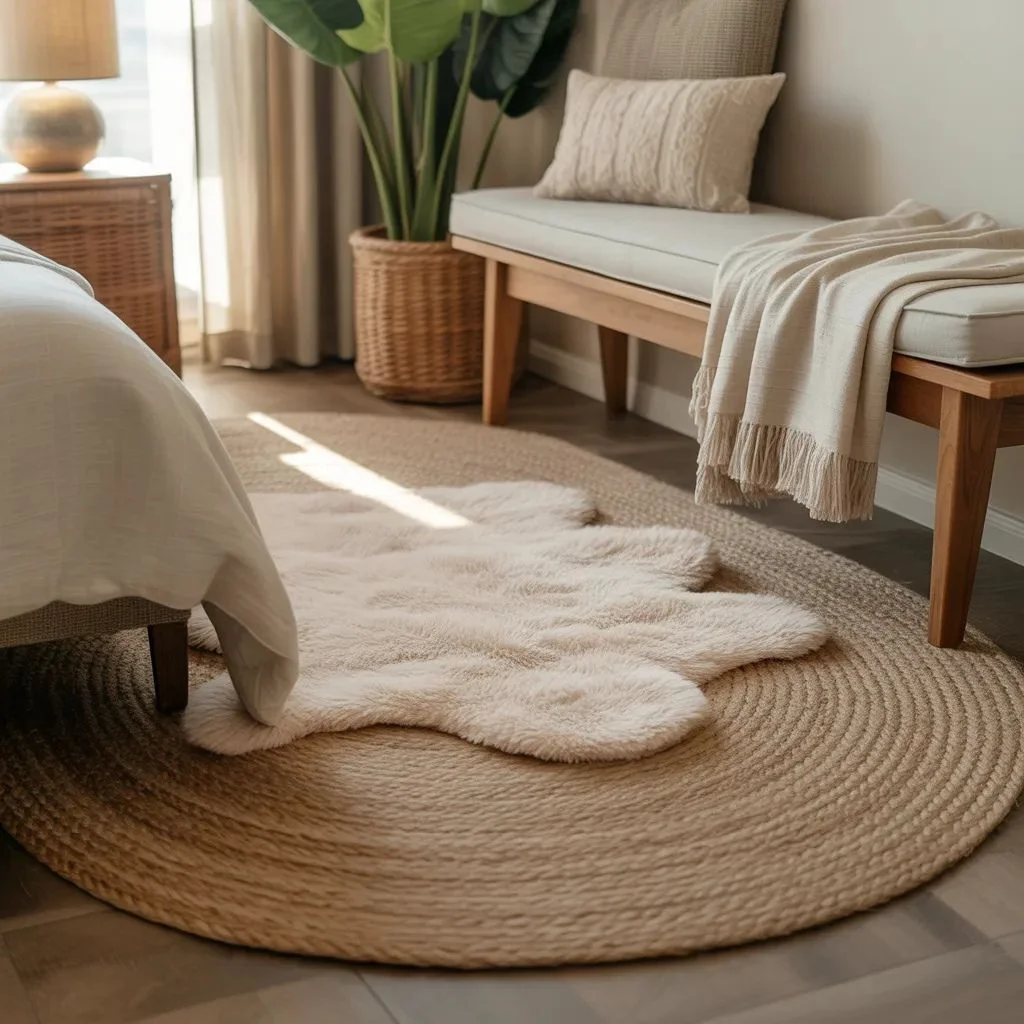
Layering rugs for bedroom styling adds visual depth and lets you experiment without a full commitment. Start with a large neutral base — a flatweave jute or simple wool — then layer a smaller, textured or patterned rug on top. This works especially well at the foot of the bed over a bench or centered in a reading corner.
Cleaning and Care
Vacuum regularly using a low-suction setting (avoid beater bars on handknotted rugs). Rotate your rug every 6–12 months to ensure even wear, especially in areas with natural light that can fade fiber over time. For deep cleaning, follow the manufacturer’s material-specific instructions — wool and synthetic rugs have very different needs.
Your Bedroom Deserves a Better Foundation
Choosing the right rugs for bedroom spaces comes down to three things: getting the size right for your bed, placing it intentionally, and picking a material and style that fits how you live.
You don’t need to spend a fortune or agonize over every detail. Measure your space, use painter’s tape to test your size, and trust your instincts on colour. A well-chosen rug transforms a bedroom from a room you sleep in to a space you want to spend time in.
Start with size, layer from there, and let the rest fall into place.
Editor Choice: Indoor Plant Mural Wall: 15 Stunning Ideas to Bring the Outdoors Inside.