Two kids, one room, and zero interest in matching bedspreads is a design puzzle every parent eventually faces. A well-planned shared kids bedroom does not force siblings to agree on everything; it gives each child a corner that feels entirely their own while still working as a single, cohesive space. The trick is dividing the room visually rather than physically, so personalities stay separate but the layout stays functional.
Whether the siblings are five and twelve, or a boy and a girl who cannot agree on a single colour, these shared kids bedroom ideas prove that compromise is optional when the design does the negotiating instead.
Split The Room With A Bold Colour Line
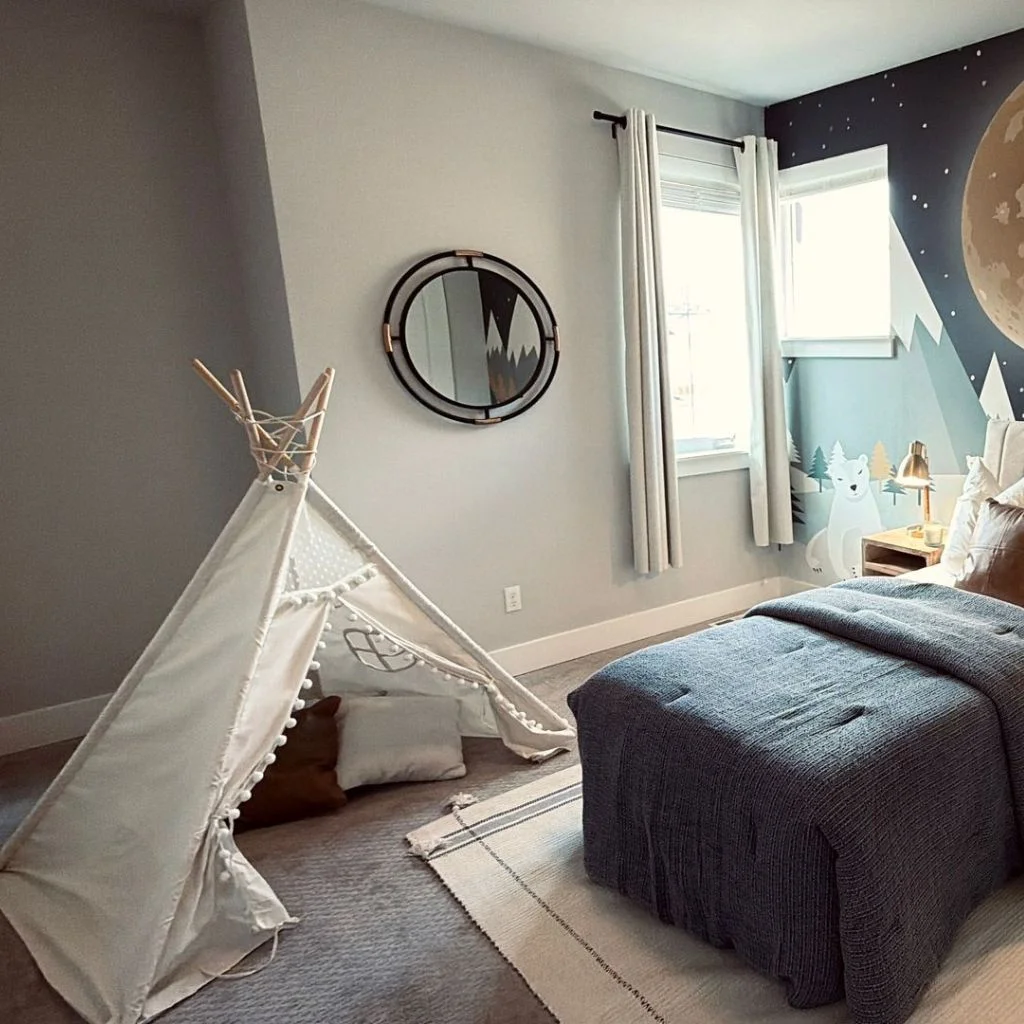
A painted line down the center of the wall is the fastest way to give each child ownership of their half without touching the furniture layout. One side might lean into a moody navy while the other stays soft blush, meeting cleanly at a taped seam or a thin wood trim strip.
This works especially well in a kids bedroom with identical furniture on both sides, since the paint alone does the job of separating two personalities. Add a coordinating rug on each half to reinforce the split from floor to ceiling.
Bunk Beds With Personalized Curtains
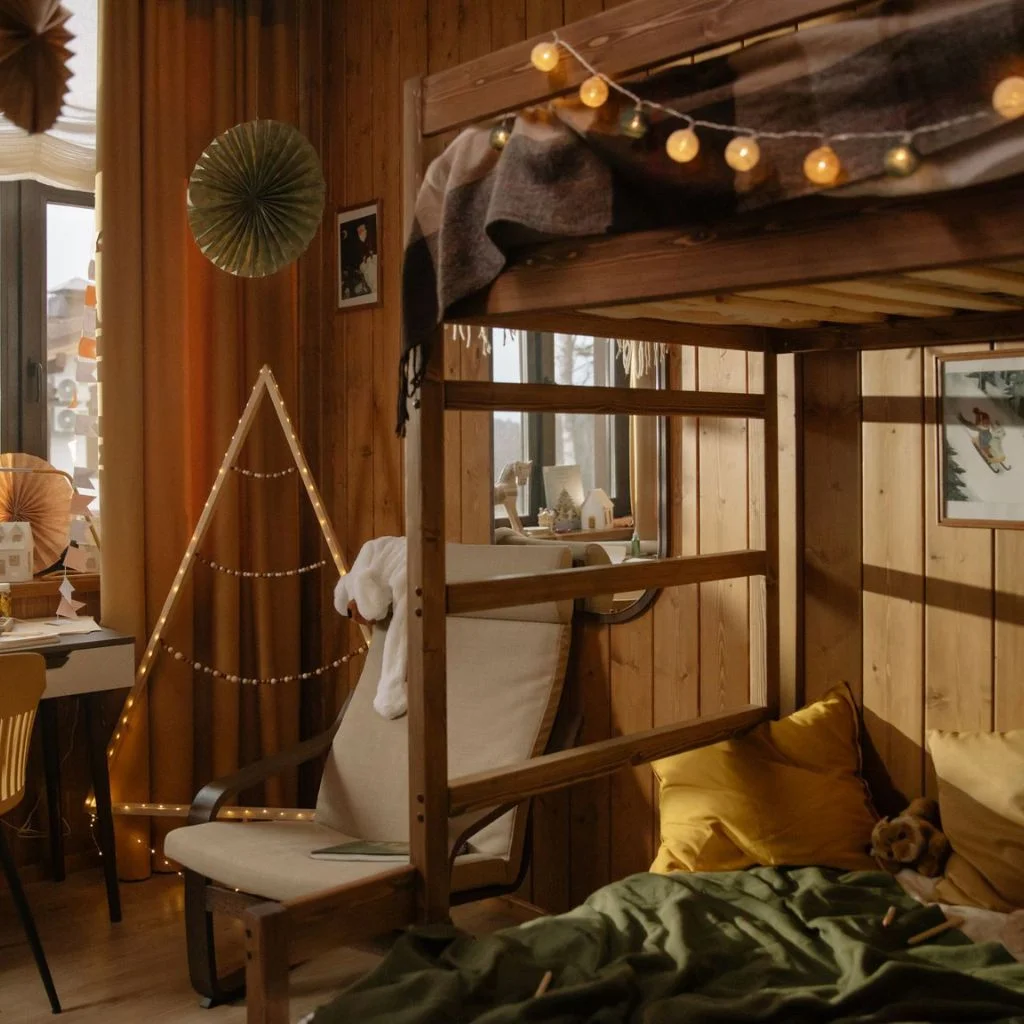
Bunk beds already solve the space problem in a shared kids bedroom, and adding a curtain to each bunk turns them into private little pods. One sibling can hang blackout fabric covered in constellations, while the other picks a breezy floral print, and neither has to see the other’s choice once the curtain is drawn.
Mount the curtain rod on a simple ceiling track so it slides open during the day and closes at night, giving each child a genuine sense of privacy inside a small footprint.
His-and-Hers Zones With A Shared Reading Nook
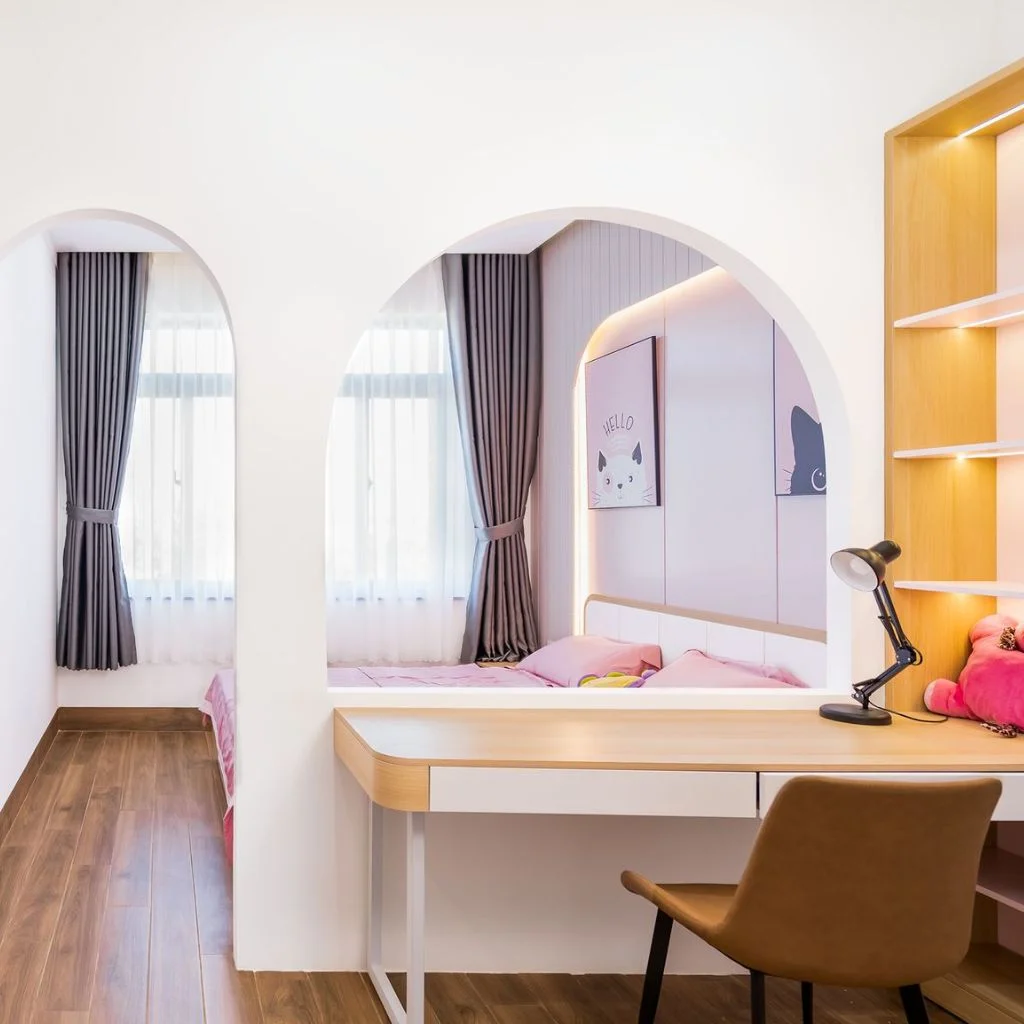
Instead of splitting every inch of the kids bedroom, carve out one neutral zone that belongs to both children equally. A window seat, a floor cushion cluster, or a small shared bookshelf works as common ground where siblings can coexist without stepping into each other’s decorated territory.
Keep this middle zone intentionally plain so it does not compete with either sibling’s personal style and let it act as the buffer between two very different halves of the room.
Matching Furniture, Mismatched Bedding
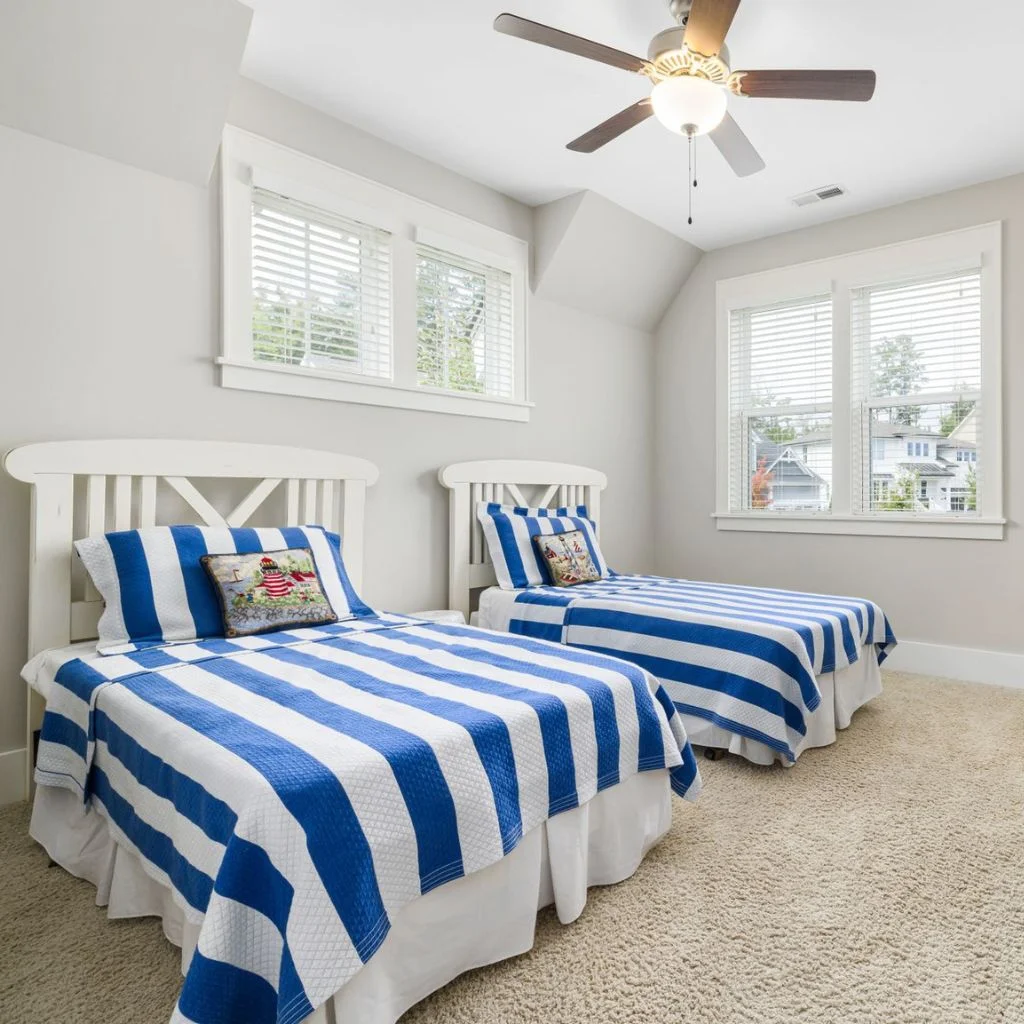
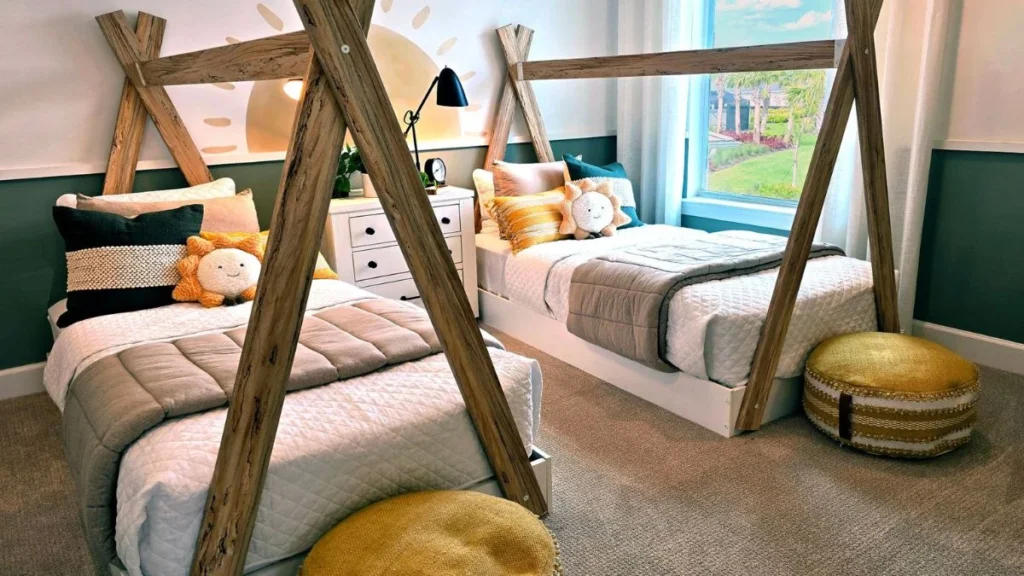
Buying identical beds, dressers, and nightstands keeps a shared kids bedroom from feeling chaotic, even when the siblings have wildly different taste. The furniture provides visual consistency, while the bedding, pillows, and throw blankets are where each child gets to express themselves fully.
This approach is budget-friendly too, since parents only need to shop one furniture set and can let the kids pick their own linens separately, which usually ends arguments before they start.
A Shared Wall Gallery With Individual Frames
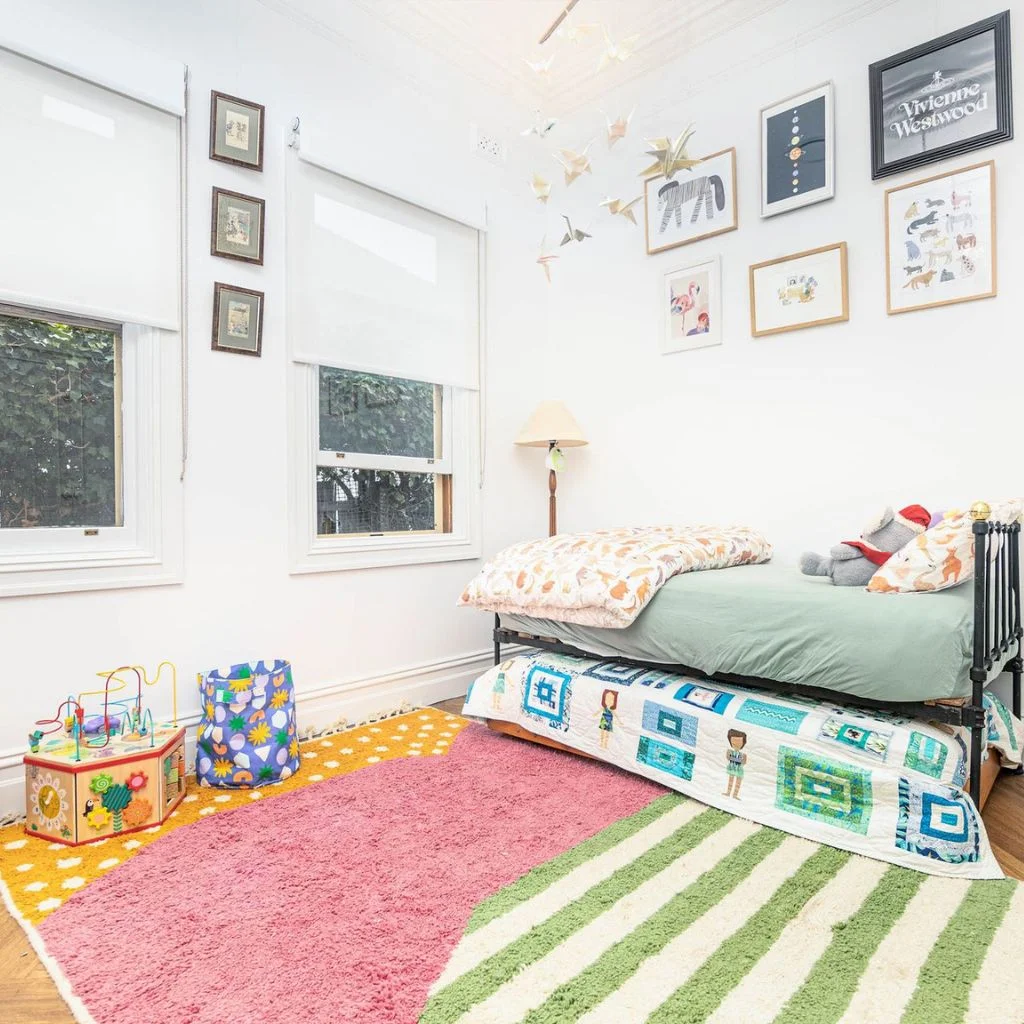
A gallery wall spanning both sides of a shared kids bedroom lets each child contribute their own art, photos, or posters while still reading as one unified feature. Use identical frame styles or colors so the wall feels intentional rather than cluttered.
Let each sibling curate their own half of the gallery, then step back together to hang it. It becomes a rare project both kids enjoy doing side by side.
Divide The Floor With Rugs Instead Of Walls
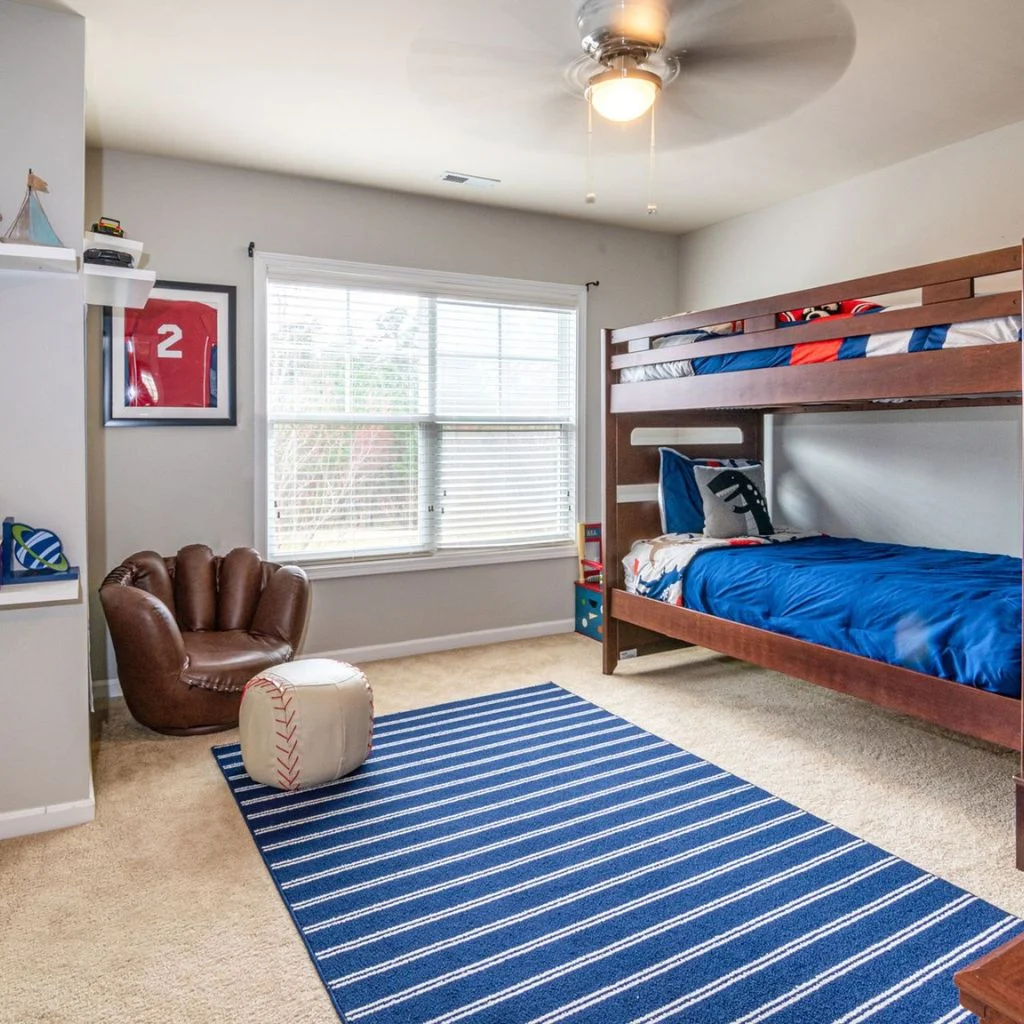
Two distinct rugs placed under each bed area create an invisible boundary that kids understand instantly, without a single wall or curtain involved. A geometric rug on one side and a soft round rug on the other quietly signals where each child’s space begins and ends.
This is one of the easiest shared kids bedroom updates to make in an afternoon, and it works in rentals where painting or built-ins are not an option.
Twin Loft Beds With Separate Study Pods
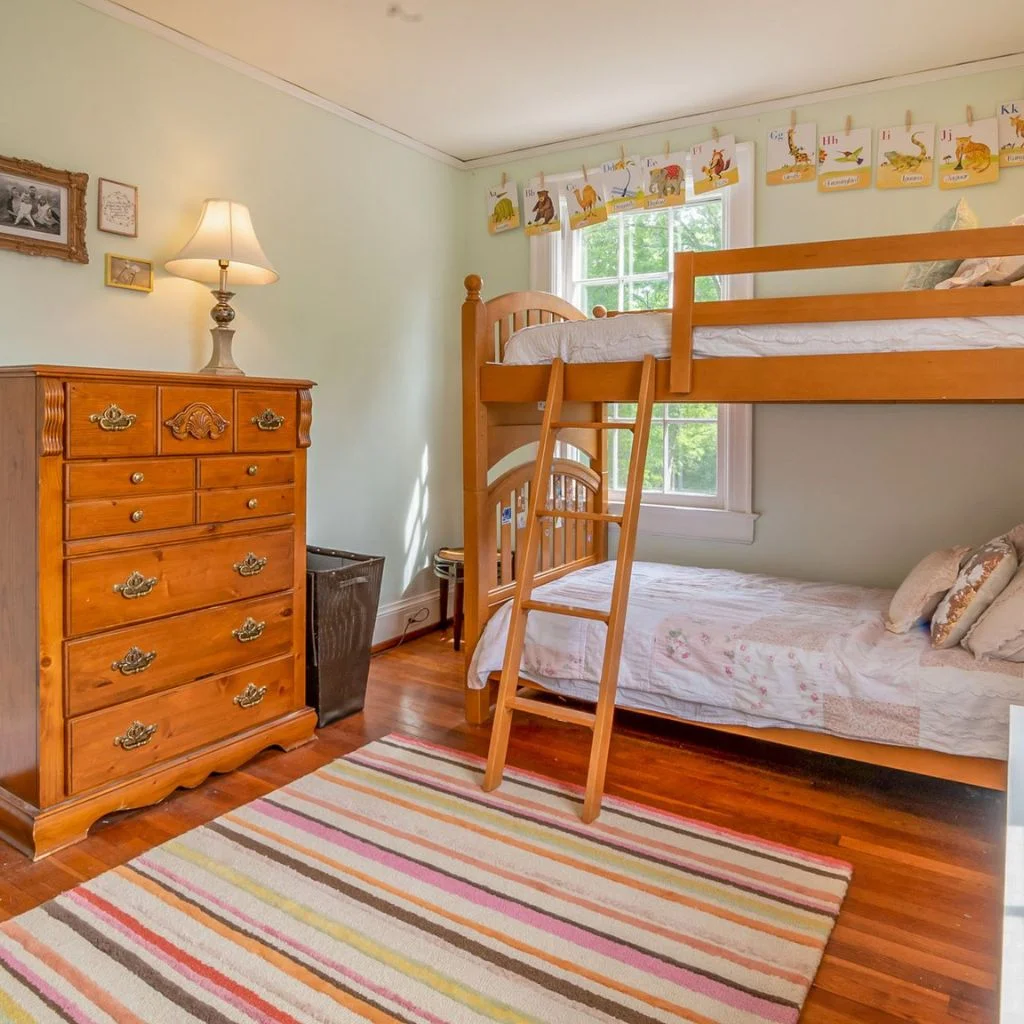
Loft beds free up the entire floor plan of a kids bedroom and building a small desk pod underneath each one gives siblings their own homework corner. One pod can be painted and decorated to match one child’s interests, while the other gets an entirely different treatment.
This layout works particularly well for kids with a wider age gap, since older siblings often need a quiet desk space that a younger sibling’s play area would otherwise interrupt.
Neutral Base Palette With Pops Of Individual Colour
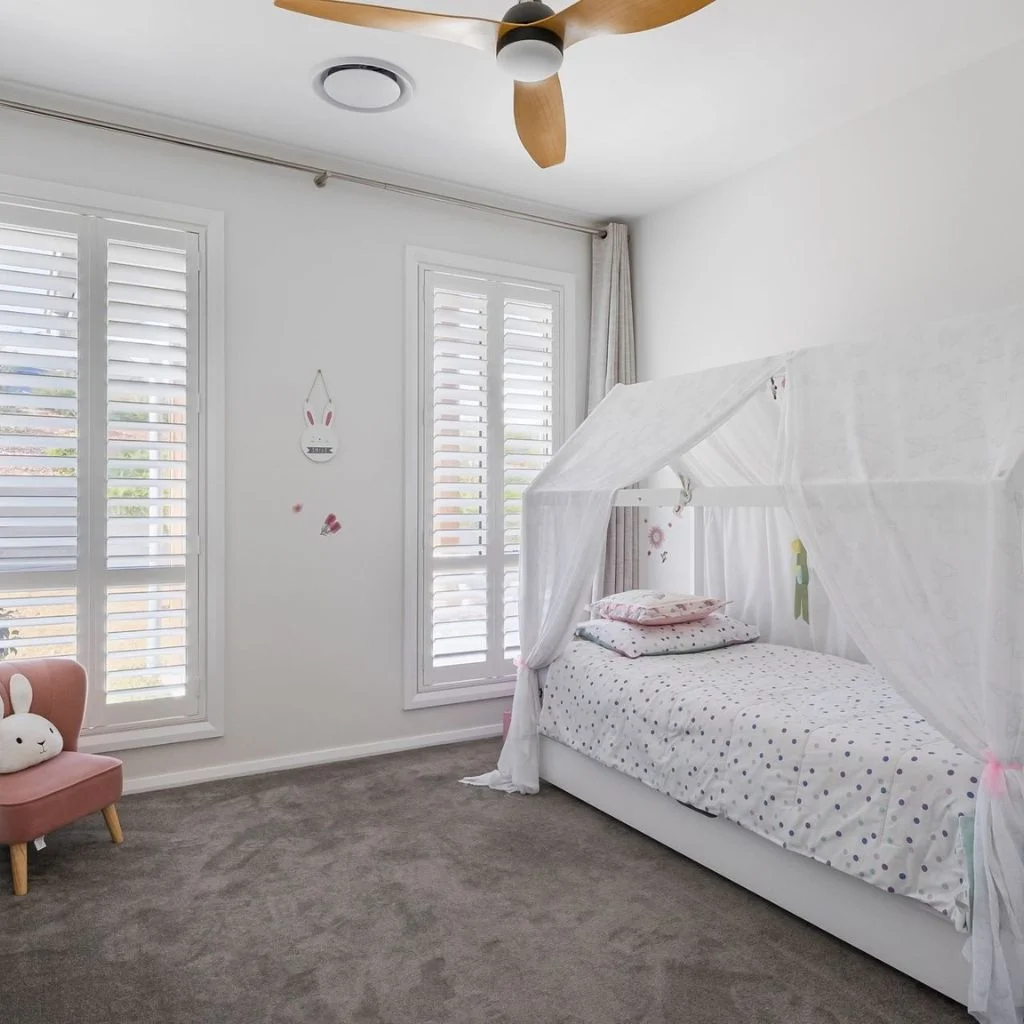
Painting the entire kids bedroom in one calm neutral, like warm white or soft greige, gives parents a flexible canvas that will not clash no matter what each child adds. From there, one sibling can bring in bold colour through bedding and art, while the other keeps things pastel and quiet.
This strategy also means the paint never needs to change as tastes evolve. Only the accessories need swapping out every few years.
Open Shelving Split Down The Middle
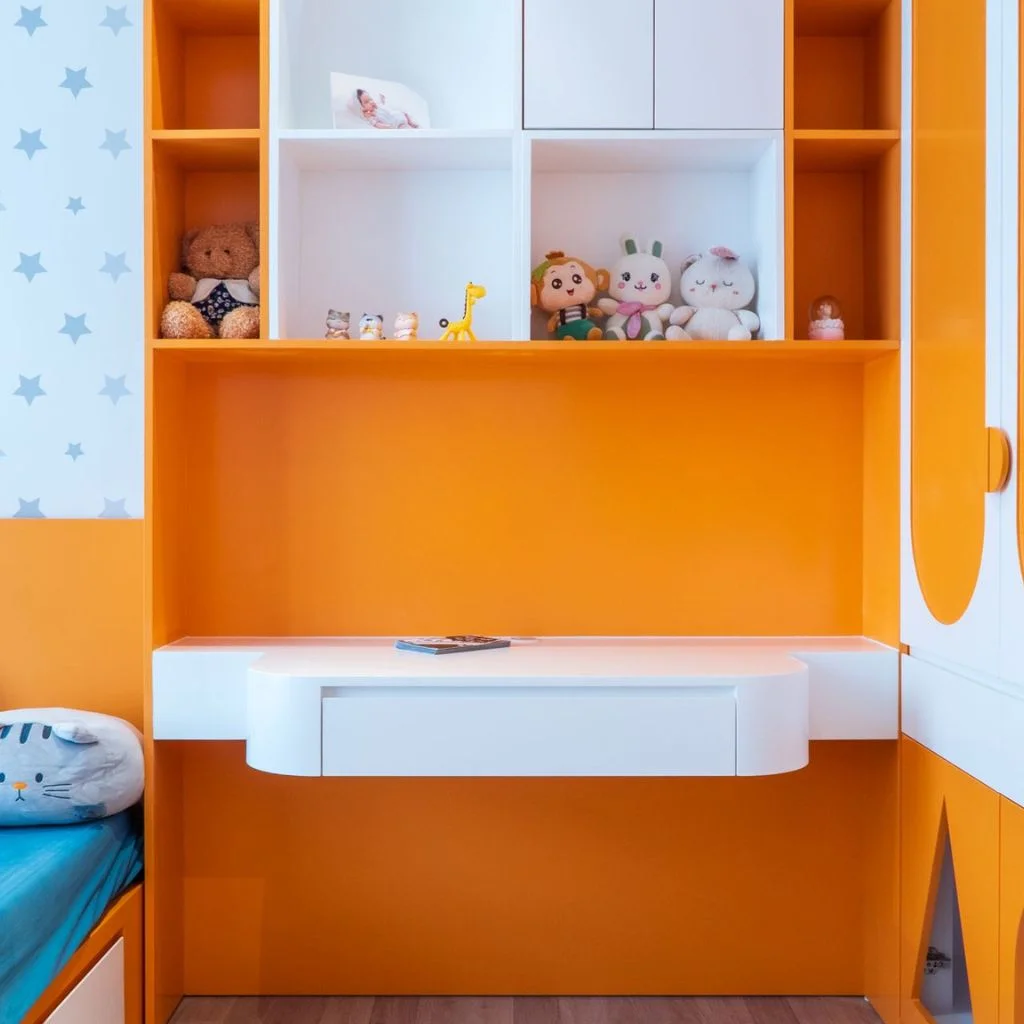
A single long shelving unit that spans the width of a shared kids bedroom can act as both storage and a soft visual divider. Style one half with one child’s books and trinkets and let the other half hold the second child’s collections, so the shelf itself becomes a subtle boundary line.
Open shelving also keeps the room feeling airy compared to a solid partition, which matters in smaller kids bedrooms where every inch of light counts.
Canopy Beds That Create Instant Privacy
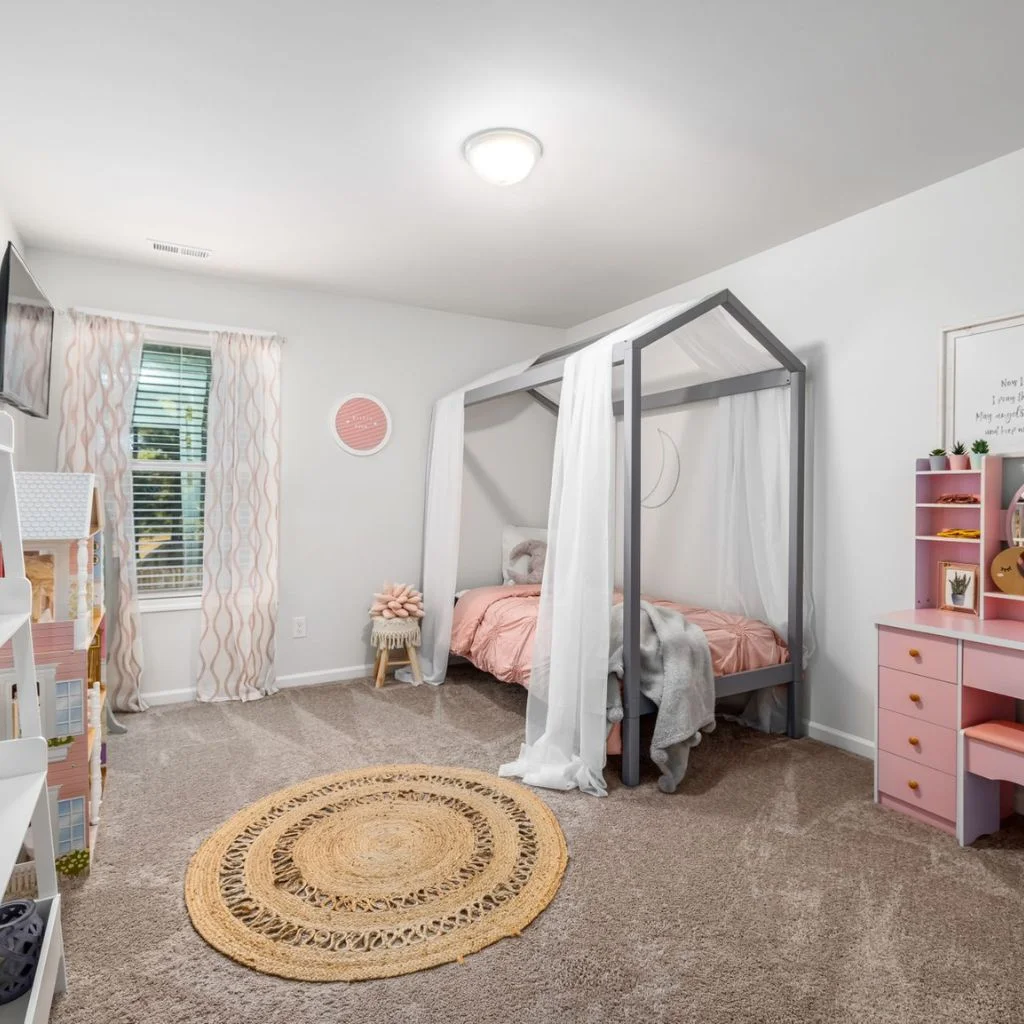
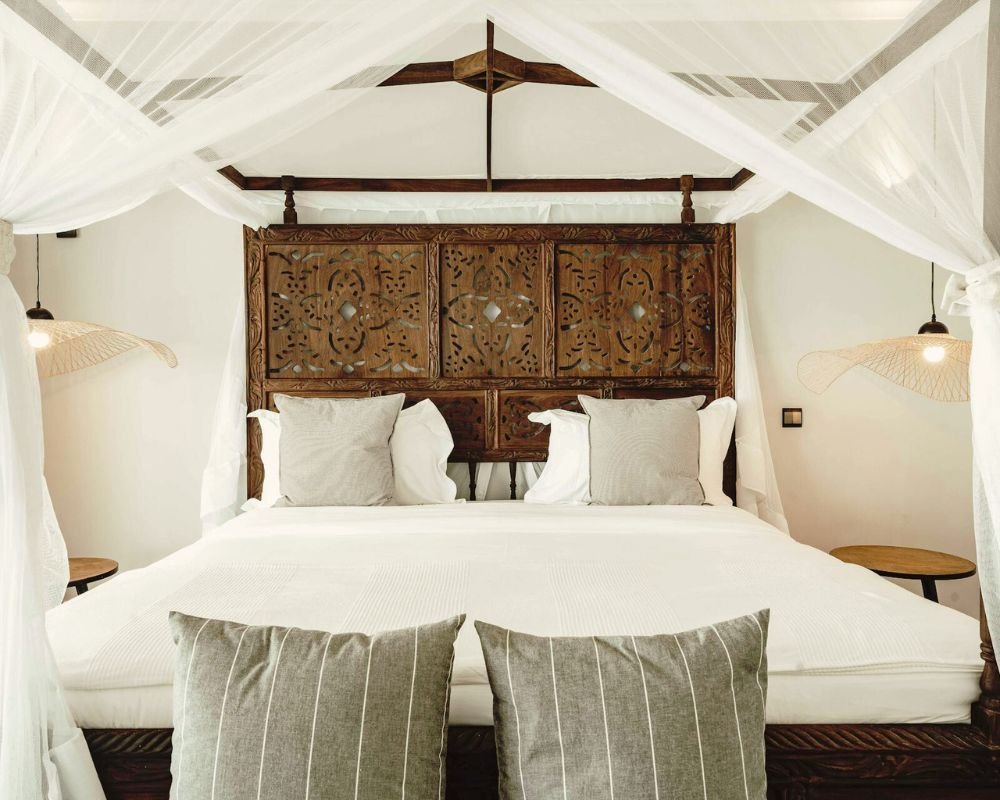
A canopy or four-poster frame with fabric panels gives each child a private little world inside a shared kids bedroom, no construction required. Choose two different canopy fabrics, one sheer and airy, one richly patterned, so each bed instantly reflects its owner’s personality.
Canopies are also fully removable, which makes them a smart pick for families who rearrange the kids bedroom often or plan to eventually split the siblings into separate rooms.
A Shared Theme With Personal Twists
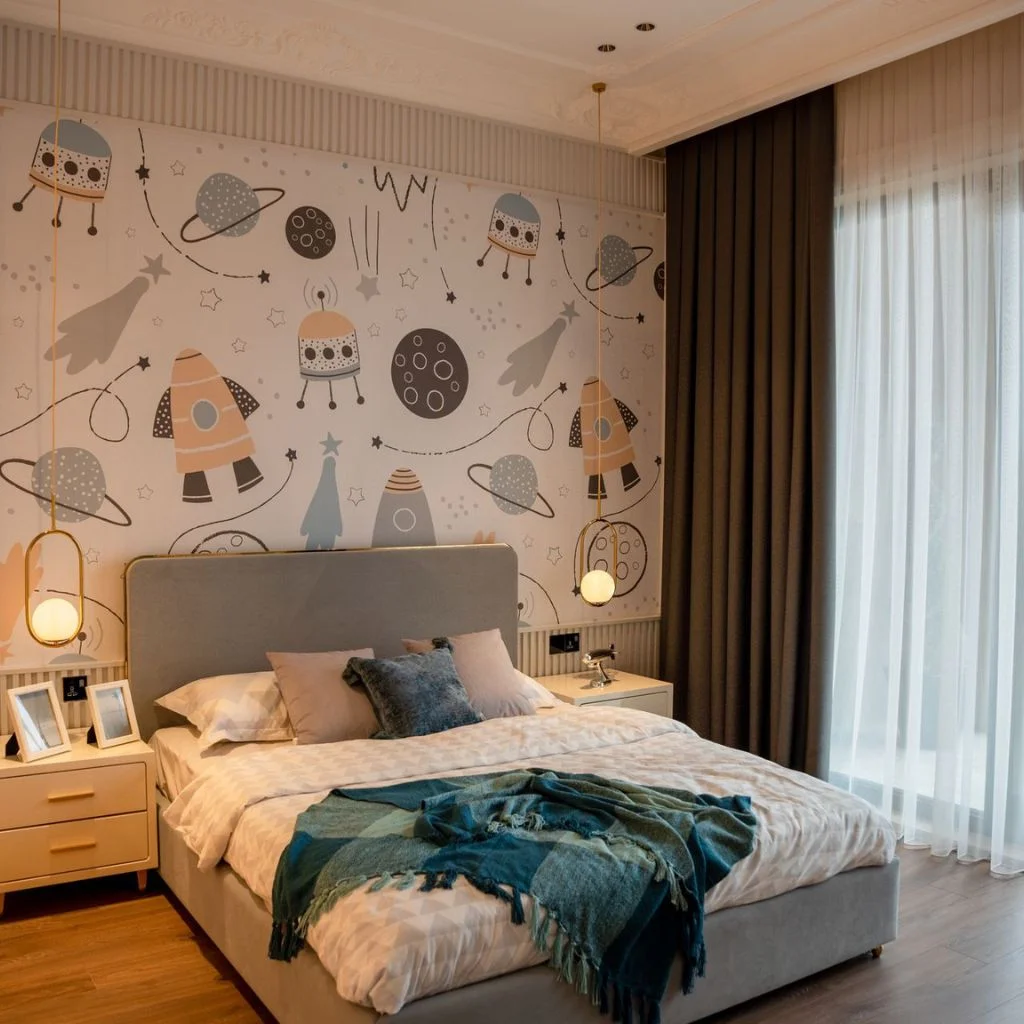
Committing to one broad theme, like outer space, the ocean, or a world map, gives a shared kids bedroom enough unity that it never feels disjointed. Inside that theme, each child can pick their own details: one might choose planets and rockets, while the other prefers stars and constellations.
This approach satisfies parents who want visual harmony and kids who want individuality, since the theme is broad enough to stretch in two directions at once.
Sliding Partition Or Curtain Divider
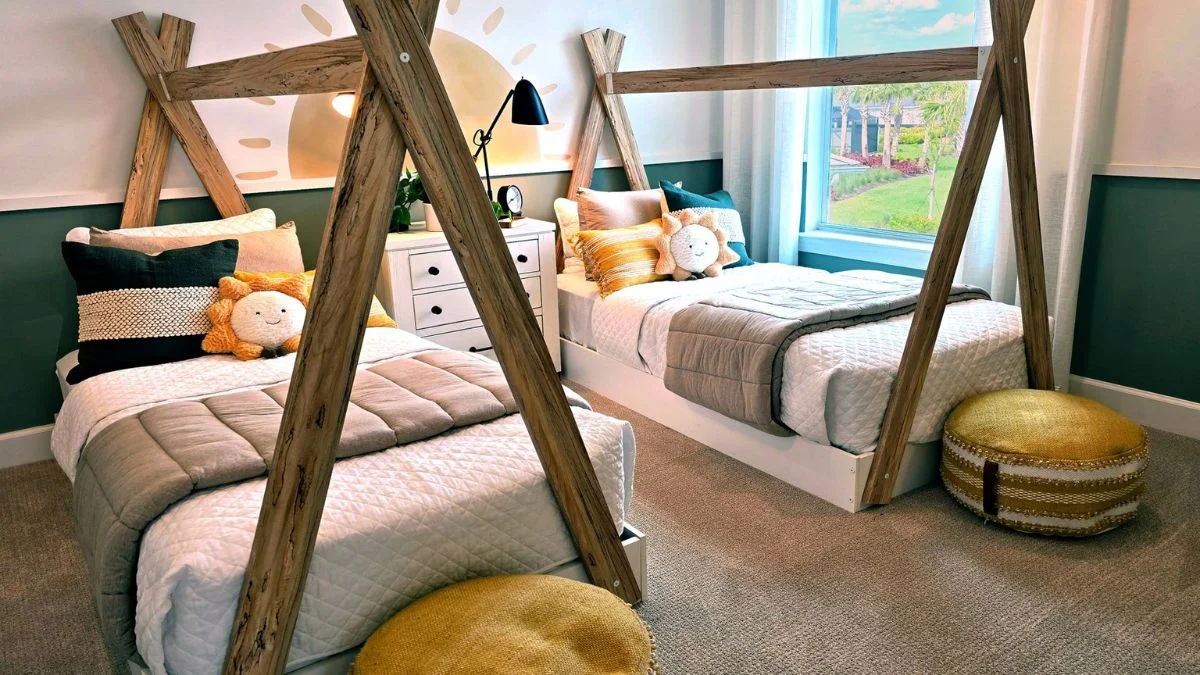
For siblings who need real physical separation, a sliding barn-style partition or a floor-to-ceiling curtain track down the middle of the kids bedroom offers privacy on demand. The divider slides open during play and closes at bedtime or homework time.
This is the closest a shared kids bedroom can get to two separate rooms without any permanent construction, and it works especially well once siblings hit different bedtimes.
Making Two Different Kids Feel At Home In One Room
A shared kids bedroom does not need to erase either child’s personality to function well. The most successful layouts treat the room as two halves of one story, using colour, furniture, or a simple curtain to draw the line between them. Once that boundary exists, whether it is painted, sewn, or built, the compromise stops being a daily negotiation and starts feeling like part of the design.
Start with one idea that fits the room’s size and the siblings’ ages, then layer in personal touches as their tastes grow and shift. A kids bedroom built this way tends to outlast a single season of favourite colours, which makes it a genuinely smart investment for the whole family.
Recommended: Kids Closet Trends Taking Over Nurseries and Playrooms in 2026.