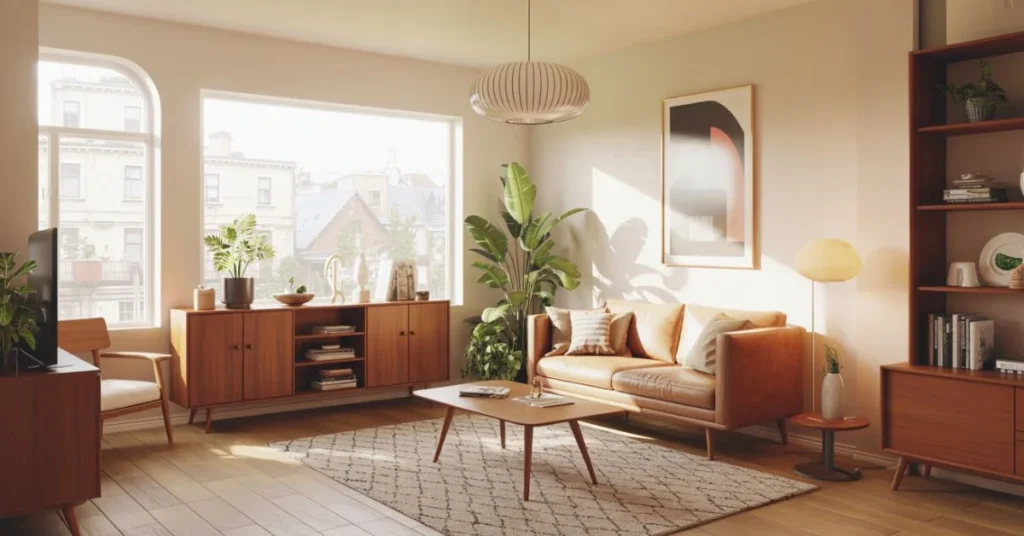
You’ve been staring at the same beige wall for months — and it’s killing your focus. The good news? You might already have the perfect office sitting just a few steps away, and you’ve been using it to store forgotten yoga mats.
Sunrooms are arguably the most underutilized rooms in a home. They’re bright, they’re beautiful, and they’re perfectly positioned to become your most productive workspace. Sunroom office ideas have exploded in popularity as remote work becomes permanent for millions of people — and for good reason. Natural light boosts mood, reduces eye strain, and sharpens focus in ways that no overhead bulb ever will.
This guide covers everything you need: layout strategies, furniture picks, climate control solutions, décor ideas, and tech setups. Whether you’re working with a spacious four-season room or a cozy three-season porch, there’s a sunroom office idea here that fits your space and your workflow.
Why a Sunroom Makes an Exceptional Home Office
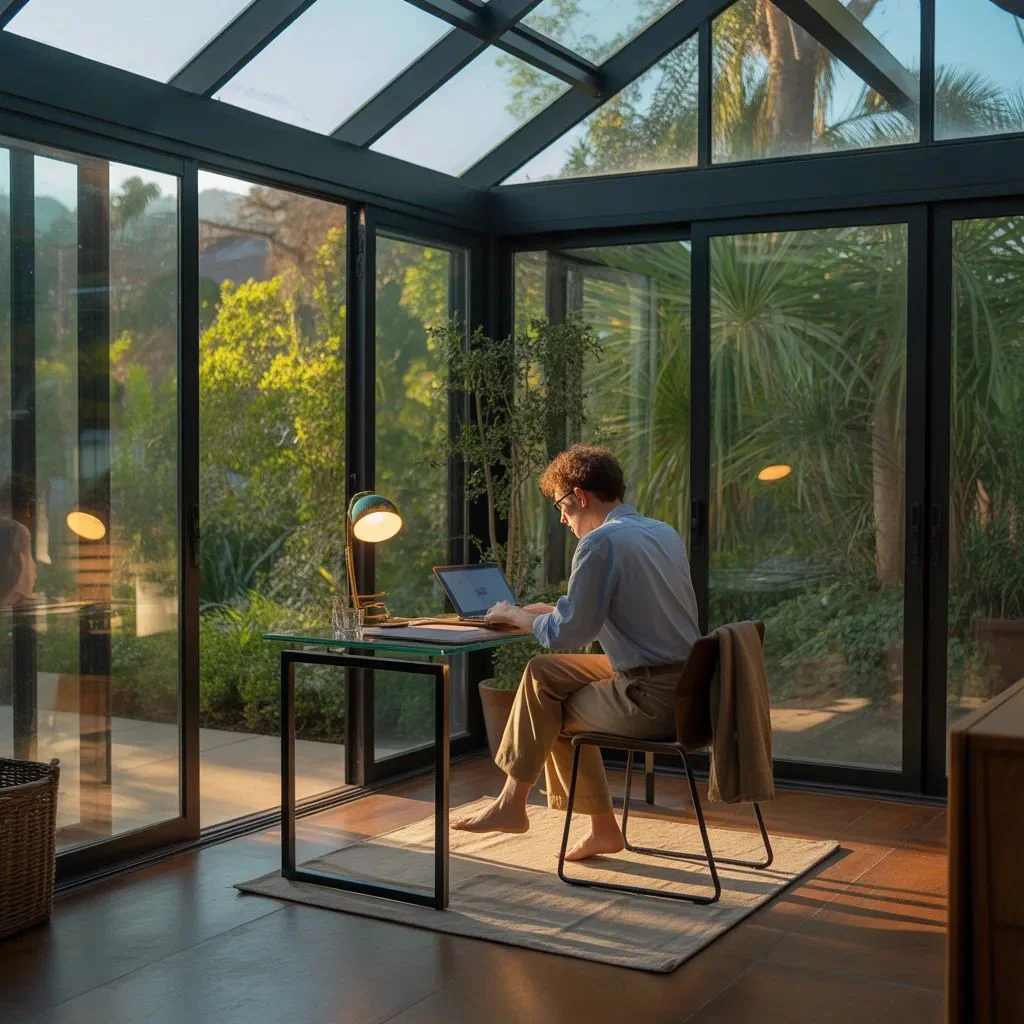
Most home office spaces are carved out of closets, spare bedrooms, or awkward hallway corners. A sunroom flips that entirely. It’s a purpose-built space with natural light already baked in — and that light is doing more work than you’d think.
Studies consistently show that exposure to natural light during working hours improves alertness, regulates sleep cycles, and reduces the afternoon energy crash that plagues most desk workers. When your workspace is lined with glass, you’re not just working in a prettier room — you’re working smarter.
Beyond light, sunrooms offer separation from household noise without requiring a full room addition. The physical boundary signals to your brain that this is a workspace, not a relaxation zone — even when both uses share the same square footage. They also tend to offer better ventilation, garden or yard views that reduce mental fatigue, and a design flexibility that traditional rooms don’t.
Assess Your Sunroom Before You Redesign
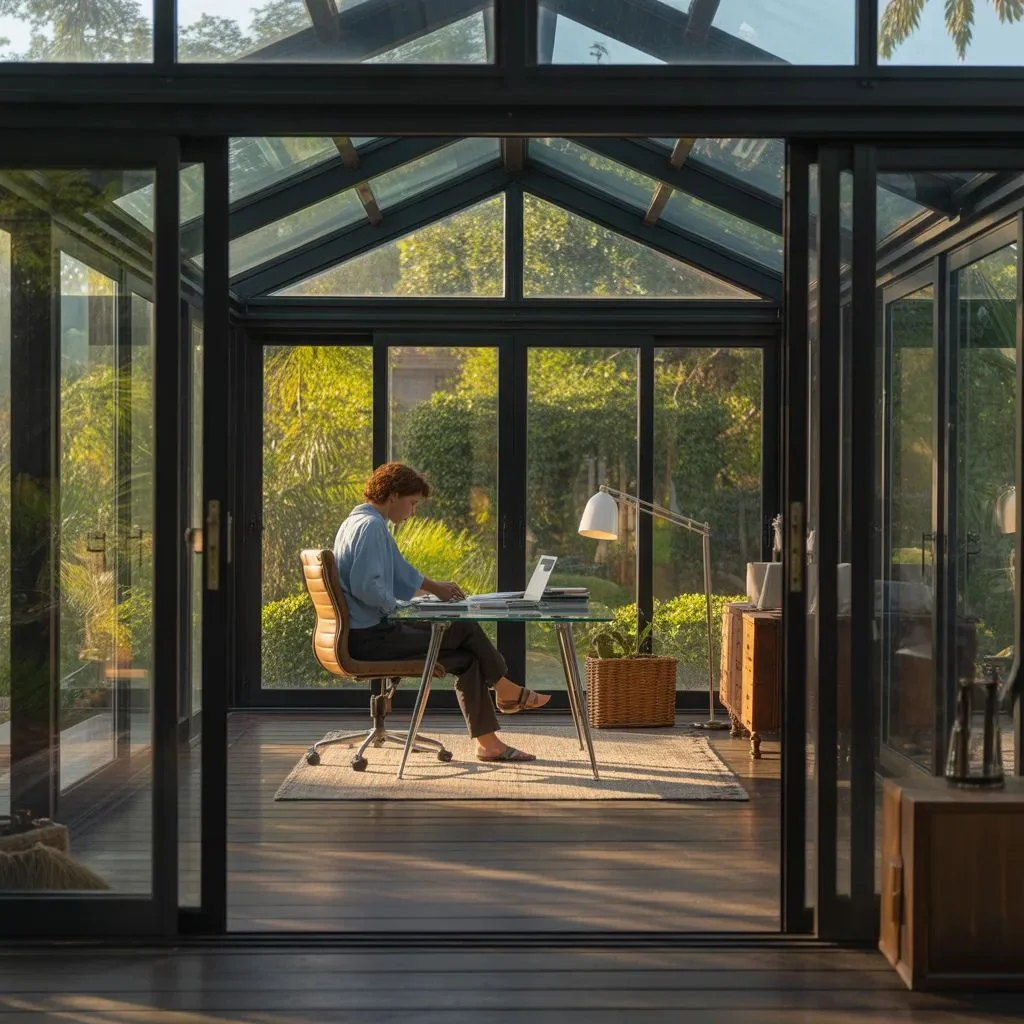
Before ordering furniture or planning a layout, spend a full workday in your sunroom. Sit there from 9am to 5pm and notice where the sun hits, how the temperature shifts, and which areas feel most comfortable. That one exercise will tell you more than any design article.
Ask yourself these questions:
- Which direction does the sunroom face? South-facing rooms get the most consistent light all day. East-facing rooms are bright in the morning, cooler in the afternoon. West-facing rooms can get intense glare in the late afternoon.
- Is it three-season or four-season? Three-season rooms aren’t insulated for extreme cold, which limits year-round use without upgrades. Four-season rooms are built for year-round occupancy.
- Where are the electrical outlets? You’ll need them for your monitor, laptop charger, desk lamp, and any other tech. Knowing this before picking a desk location saves a lot of rearranging later.
- How is the Wi-Fi signal? Sunrooms at the edge of a home sometimes sit at the fringe of your router’s range. Test it now before building your whole setup around it.
Once you’ve done this assessment, you’ll have a clear picture of what needs to be fixed versus what you can work with immediately.
Desk Placement and Layout Strategies
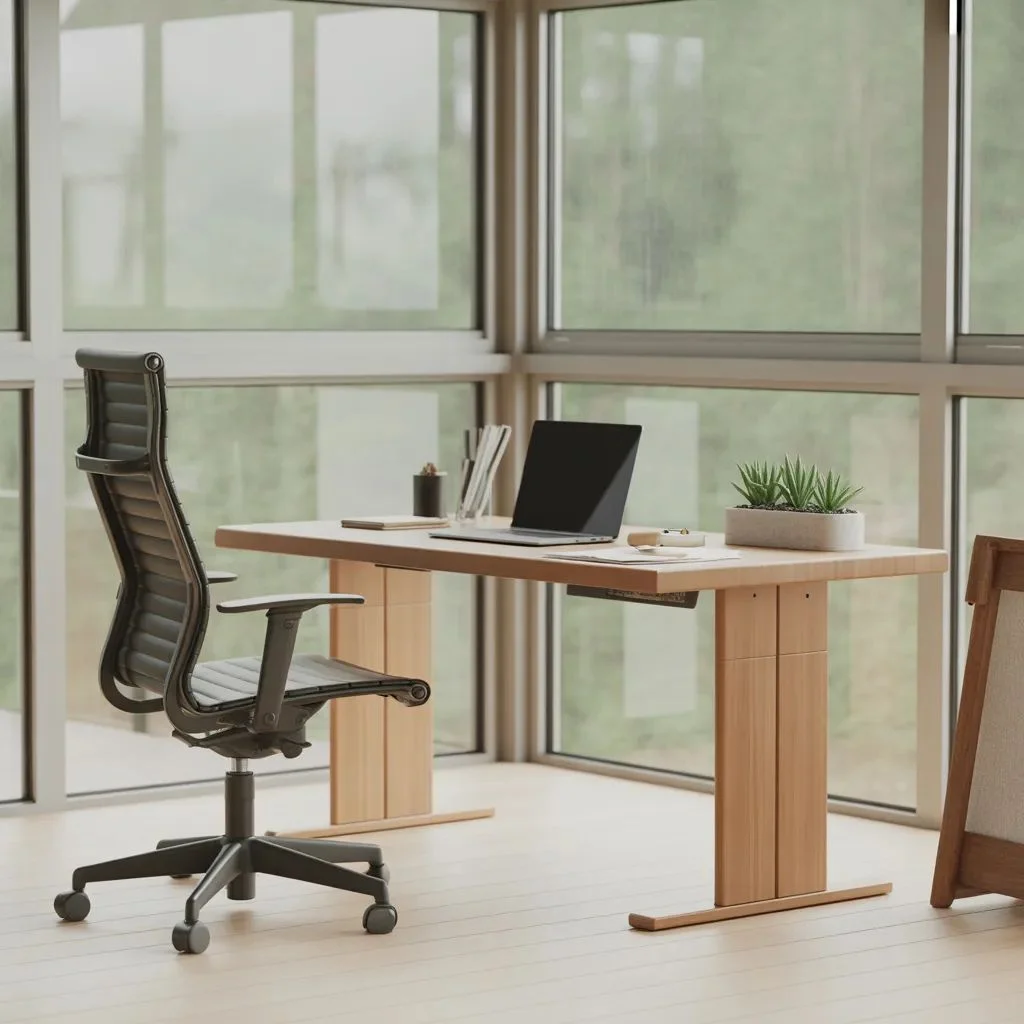
Where you put your desk inside a sunroom makes or breaks the entire setup. The instinct is to push the desk right up against the windows so you can enjoy the view — but in practice, that can create serious glare problems on your screen.
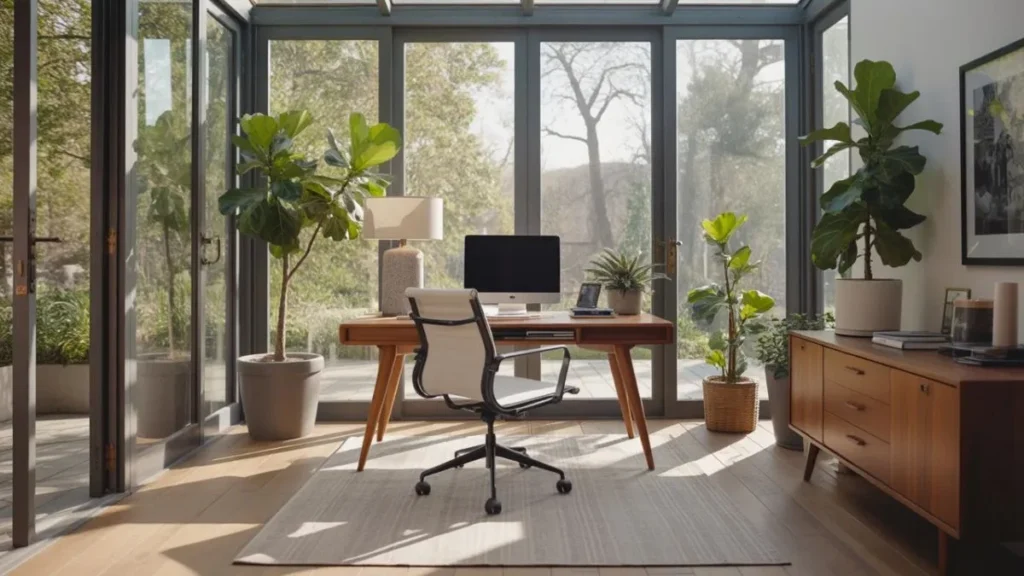
The best position is perpendicular to the window. Place your desk so the light comes in from your left or right side, not directly from behind or in front of you. This gives you the benefit of natural light without the screen-washing glare.
For smaller sunrooms, a floating wall-mounted desk is a space-saver that keeps the floor open and makes the room feel larger. L-shaped desks work beautifully in corner sunrooms, wrapping around two glass walls and giving you a panoramic view to your left while your monitor faces a slightly less reflective angle.
Consider these layout principles:
- Leave a view sightline — position your desk so you can glance up from your screen and see outside. This micro-break habit reduces eye fatigue significantly.
- Keep pathways clear — sunrooms often have multiple entry and exit points. Don’t block natural traffic flow with oversized desk setups.
- Zone the space — if the room is large enough, designate one half for focused work and the other for video calls or breaks, creating two micro-environments within one room.
Furniture That Works Hard and Looks Good
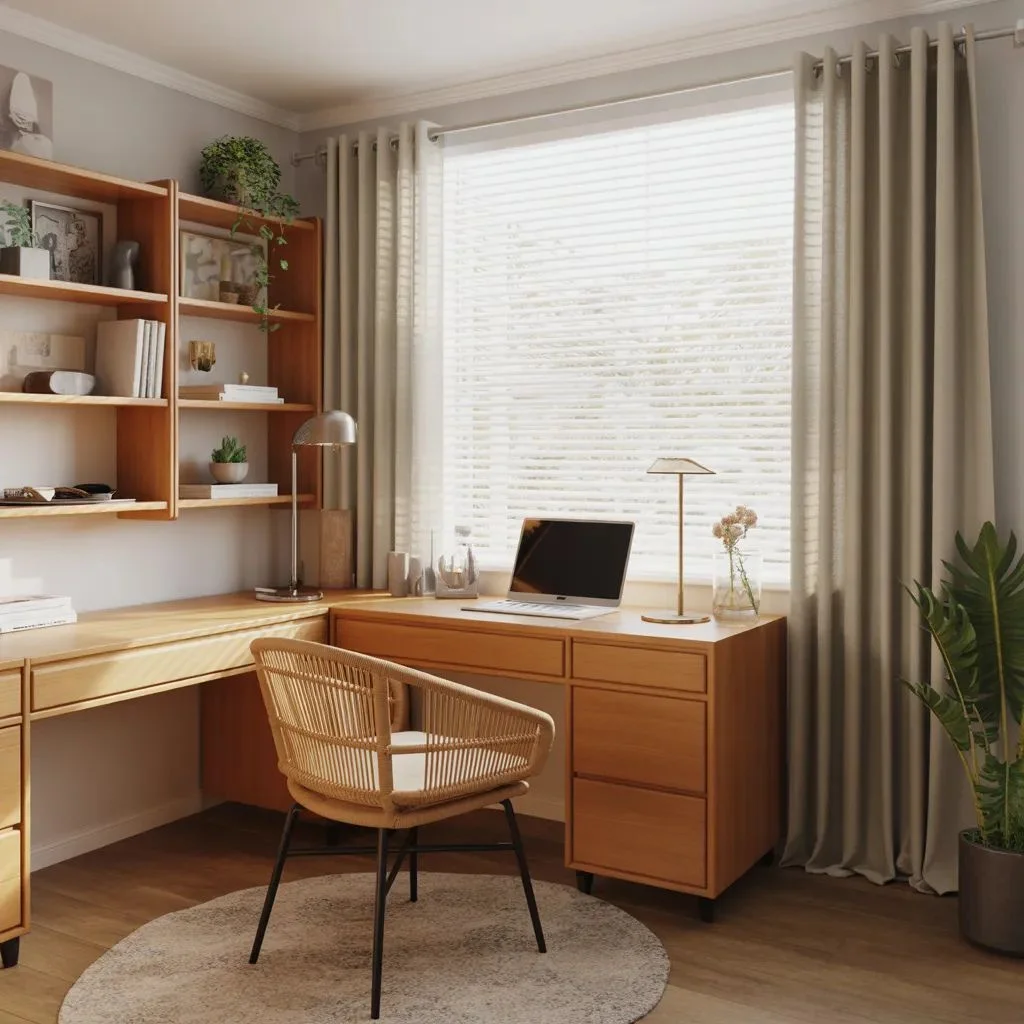
Sunrooms demand furniture that can handle temperature fluctuations, some humidity, and UV exposure over time. Standard office furniture isn’t always designed for those conditions — so material selection matters here more than it does in a typical room.
Desk Choices
Solid wood desks are the most sunroom appropriate. They handle heat and humidity better than particleboard or veneer, and they develop a beautiful patina with UV exposure over time. Light oak, acacia, and bamboo are especially popular for sunroom settings because they echo the natural surroundings outside.
Glass-top desks look sleek and modern, but they can create harsh glare in a sun-heavy room. If you love the look, pair them with a UV-filtering window film on the glass panels.
Chair Selection
An ergonomic chair is non-negotiable for any real work setup. In a sunroom, you also want to think about breathability — mesh-back ergonomic chairs are ideal because they don’t trap heat the way foam and fabric do. Brands like Herman Miller Aeron, Secret lab Titan, and Branch work well in warmer environments.
For a more relaxed aesthetic, a rattan or wicker accent chair paired with a lumbar pillow can serve as a secondary seating option for reading, calls, or thinking time. Just don’t use it as your primary work chair unless you want a backache by noon.
Storage Furniture
Open shelving is the sunroom office’s best friend. It keeps things accessible without visually closing the space off. White or light wood floating shelves mounted on the non-glass walls create storage without blocking light. Look for moisture-resistant materials since sunrooms can get humid, especially in summer.
Climate Control: The Make-or-Break Factor
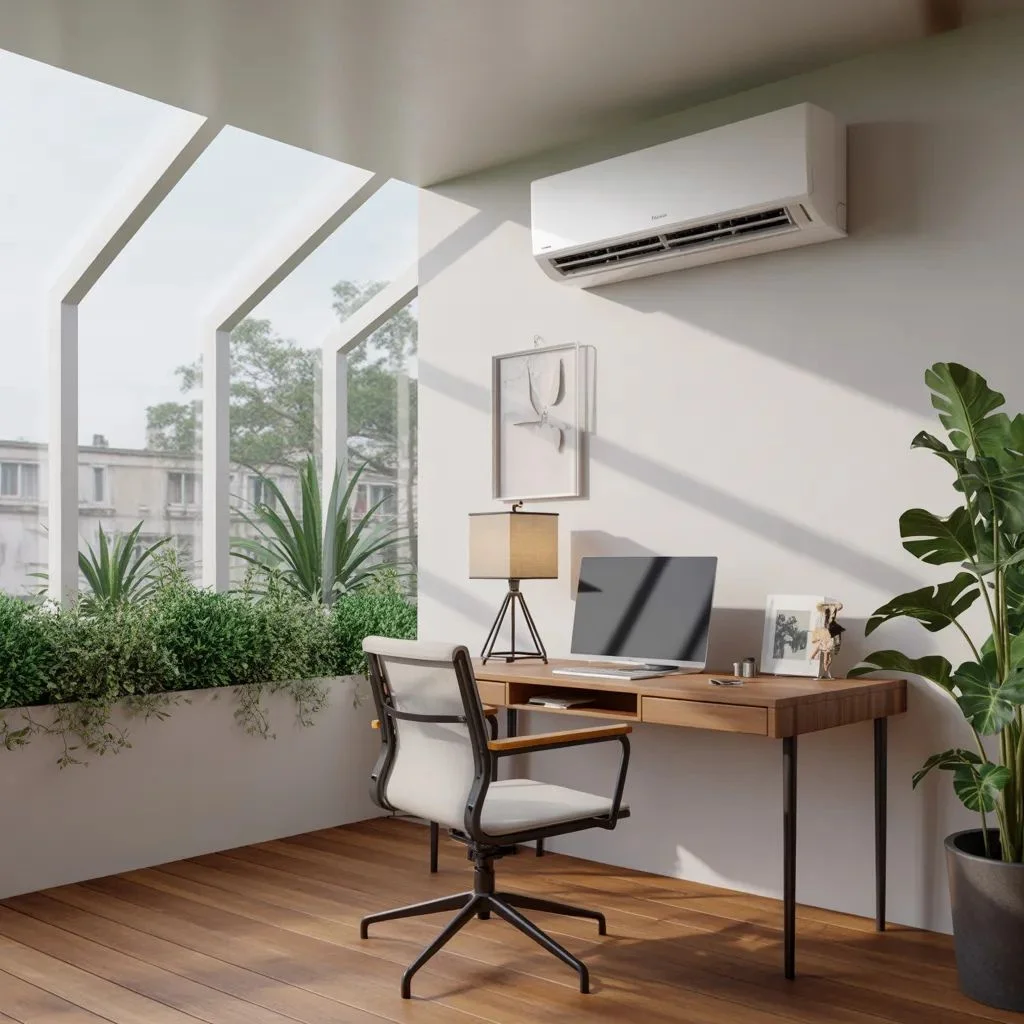
Here’s the hard truth about sunroom offices: they can become a sauna in July and a freezer in January if you don’t plan for climate control. This is the number one reason people abandon their sunroom office before the honeymoon phase is over.
A ductless mini-split system is the gold standard solution. It cools in summer, heats in winter, and doesn’t require major ductwork renovation. Installation runs between $1,500–$4,000 depending on your home and location — but it’s an investment that makes the space genuinely usable year-round.
If a mini-split isn’t in the budget right now, here are interim options:
- Portable AC units — effective for cooling, though they require a window vent and can be noisy. Position them away from your primary work area.
- Ceiling fans — critical for circulating air. They make hot days significantly more bearable and help in winter by pushing warm air down from the ceiling.
- Thermal curtains or cellular shades — these dramatically reduce heat gain in summer and heat loss in winter without permanently altering the room.
- Electric panel heaters — for three-season rooms that get chilly in fall and spring, a flat-panel electric heater is an elegant and unobtrusive solution.
Track the temperature in your sunroom for a week before committing to any solution. You may find that a ceiling fan alone handles 80% of the problem.
Light Management for Screen-Friendly Productivity
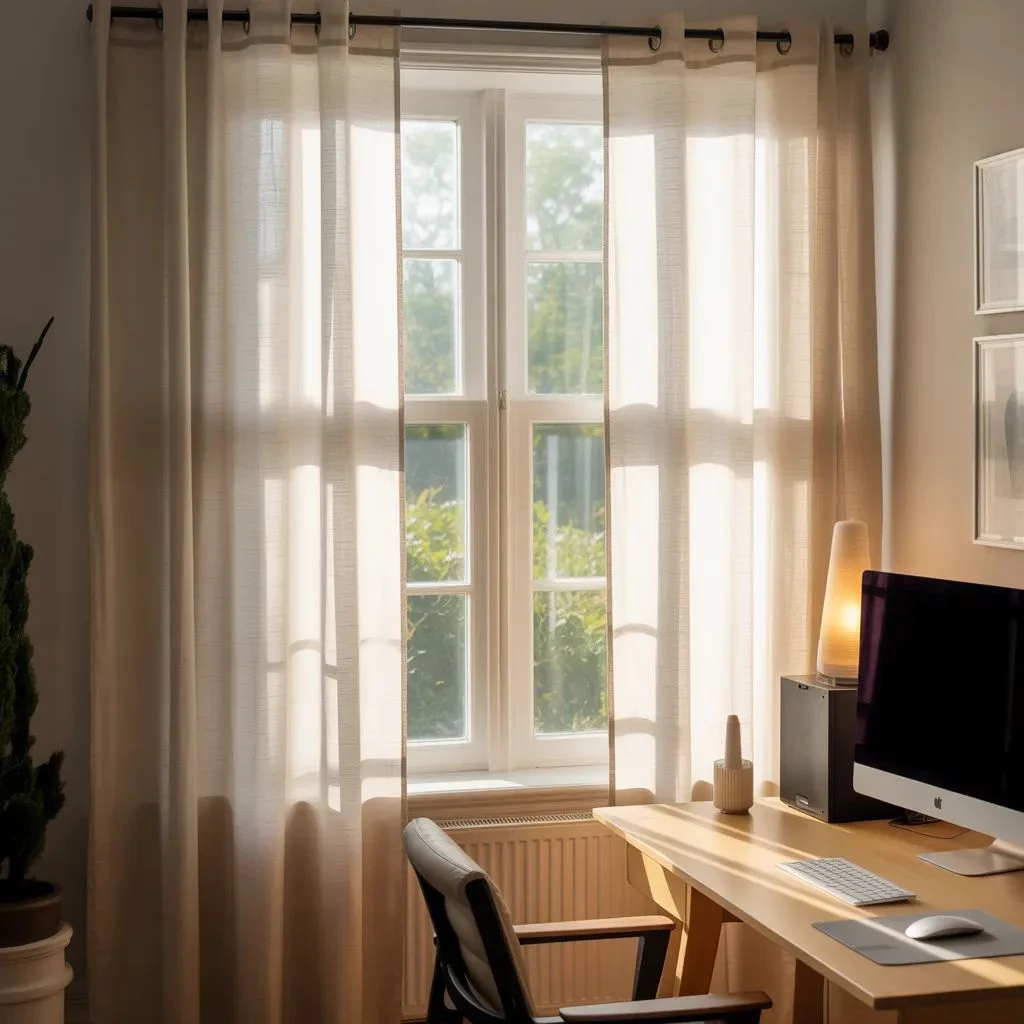
Sunrooms are abundant in natural light — which is exactly why you need a plan for managing it. Too much direct light hitting your screen creates glare that’s harder on your eyes than working under fluorescent lights all day.
Sheer curtains or light-filtering cellular shades are the most practical solution. They diffuse harsh direct sunlight into soft, ambient brightness — the kind that makes a room feel warm without creating screen-washing glare. Linen, gauzy cotton, and fine woven fabrics work best because they maintain the airy feel of the sunroom while doing the filtering work.
Anti-glare monitor screens are worth adding if you face windows in any direction. They’re inexpensive ($20–$50 for most monitor sizes) and eliminate most of the screen reflection problems.
For sunrooms with a south or west orientation, UV-filtering window film is a smart long-term investment. It blocks up to 99% of UV rays, protecting your skin, your furniture finishes, and any artwork or rugs from sun damage — without darkening the room noticeably.
In 2025, smart glass panels have become a popular upgrade for sunroom renovations. They tint automatically based on sunlight intensity, giving you effortless light control without curtains or shades. It’s a premium feature, but one that genuinely transforms a sunroom’s functionality for year-round work.
Plants and Greenery in Your Sunroom Office
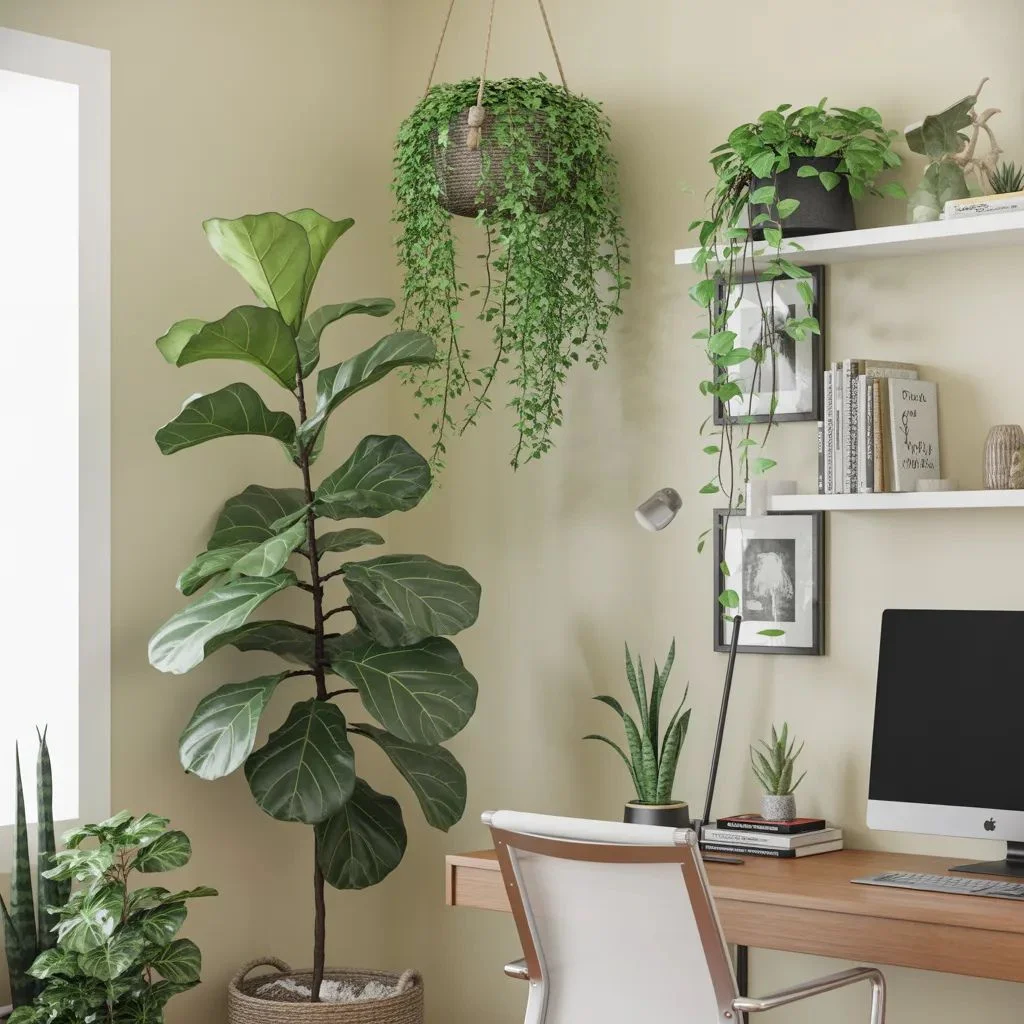
Plants belong in a sunroom office the way coffee belongs in a morning routine. They’re not just decorative — they actively improve the environment you’re working in. Greenery improves air quality, regulates humidity in overly dry spaces, and provides calming visual stimuli that reduce stress and support sustained focus.
The good news is that a sunroom gives you far more plant options than a typical interior room. You can grow species that need direct or bright indirect light — things that would struggle in a standard office.
Best plants for a sunroom office:
- Fiddle-leaf fig — sculptural height, bold presence, thrives in bright indirect light
- Snake plant — tolerates variable watering, handles both direct and indirect light
- Pothos and philodendron — trailing vines perfect for shelves or hanging planters
- ZZ plant — nearly indestructible, looks polished and modern
- Succulents — ideal for windowsills, need minimal attention
- Lavender — small pots near a reading nook offer a subtle, focus-boosting scent
Place larger plants in corners to fill dead space and create a natural room divider between your work zone and any secondary seating. Use varying heights — tall floor plants, medium shelf plants, and small desk accents — to create a layered, intentional look that doesn’t feel like a garden center.
Smart Storage Solutions for a Clutter-Free Setup
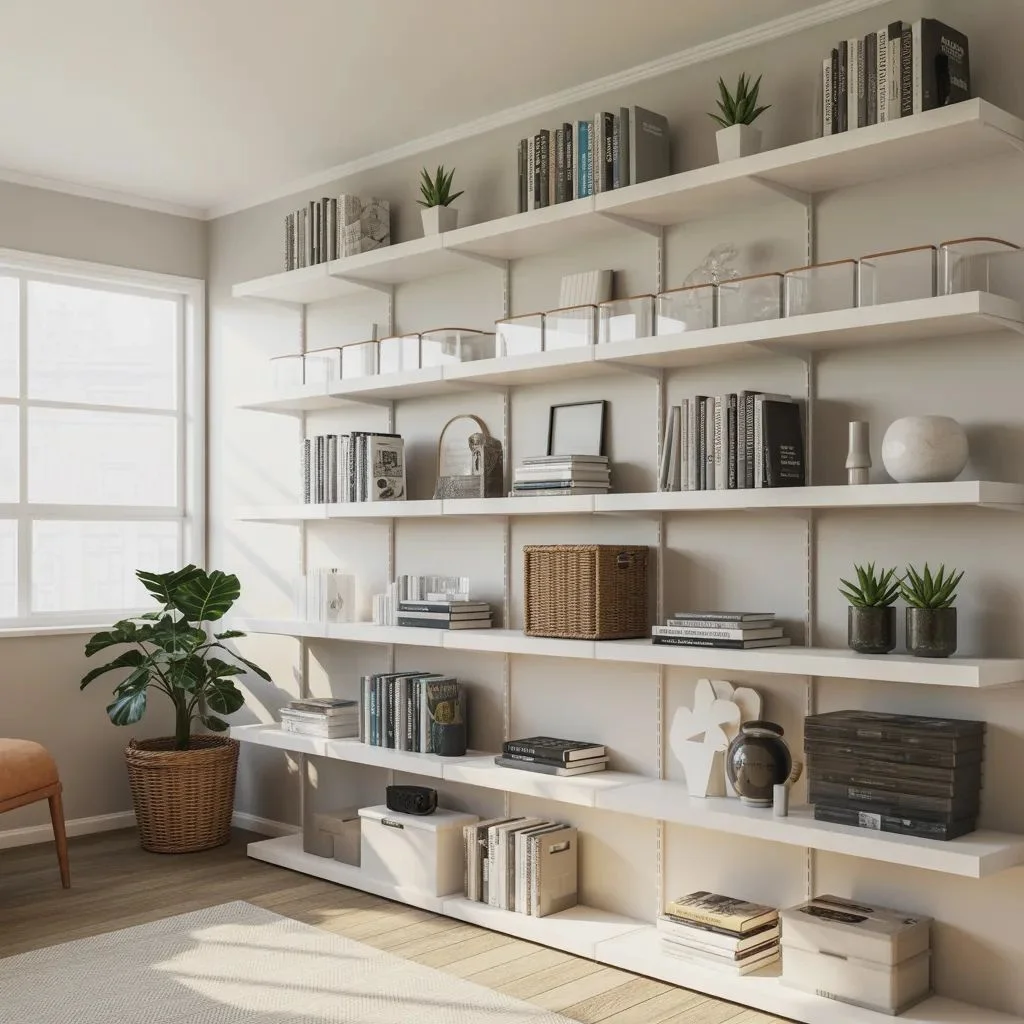
Storage in a sunroom office requires a different mindset than a standard home office. You’re working with glass walls, which means there are fewer surfaces for traditional built-ins. The non-glass walls — usually one or two — have to do a lot of work.
Floating shelves are the most efficient solution. Mount them at desk height and above on any solid wall, and use them for reference books, organizers, and a few well-chosen decorative items. The key is keeping them curated — one overstuffed shelf undoes the airy feeling the whole room is built around.
For desk-level storage, use under-desk drawers or rolling pedestals that you can tuck out of sight when not needed. Clear acrylic organizers or woven baskets both work visually in sunroom settings — one feels modern and crisp, the other adds warmth and texture.
If you need to store a printer, consider a low credenza or storage cabinet against a non-glass wall. Keep it at or below windowsill height so it doesn’t block light or create visual heaviness. A shallow cabinet with clean lines disappears into the space far better than a bulky printer hutch.
Cable management matters more in a sunroom office because the open, light-filled environment makes tangled cords painfully visible. Use cable clips, raceways, or under-desk cable trays to keep everything clean. A wireless keyboard and mouse eliminates a surprising amount of desk clutter at minimal cost.
Colour Palettes That Complement Natural Light
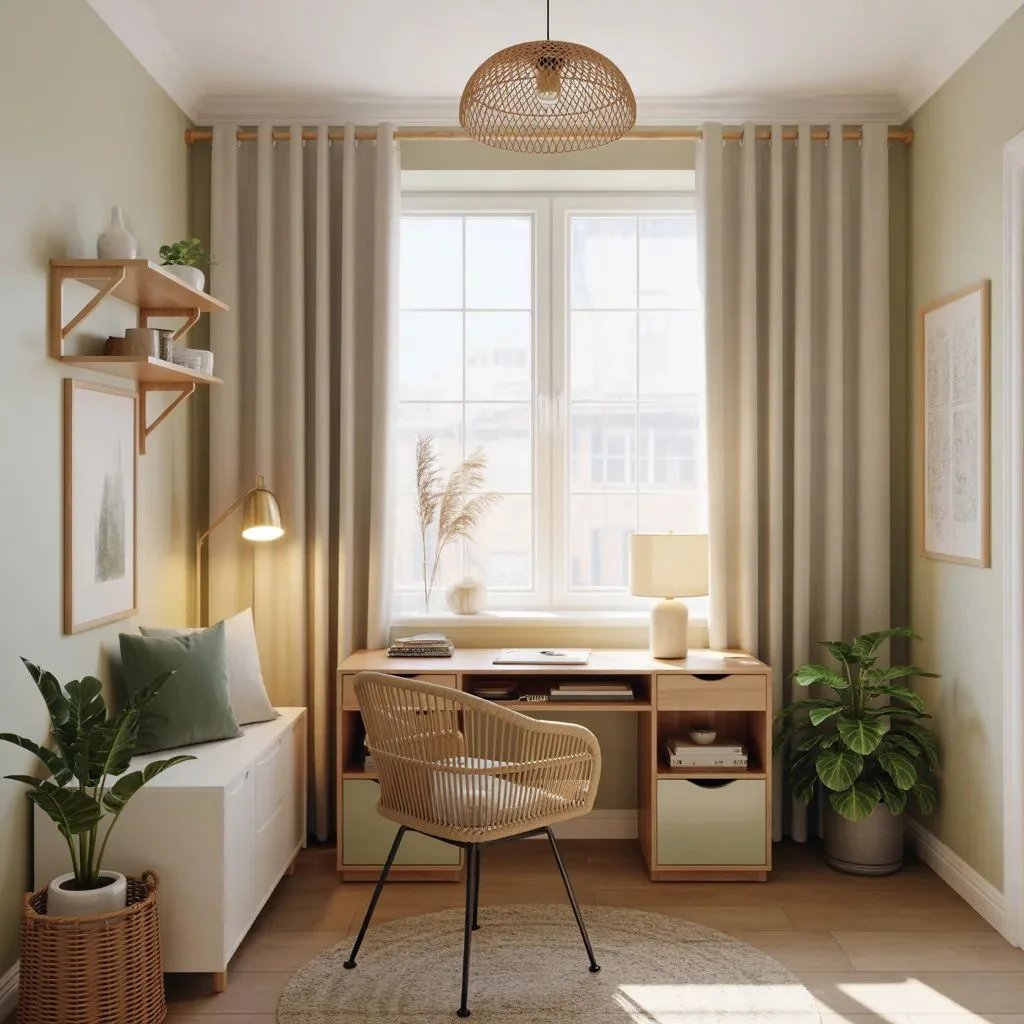
Colour choice in a sunroom office is about partnership with the light, not competition. The colours outside your windows change throughout the day — from cool blue morning tones to warm golden afternoon light. Your interior palette needs to work with all of them.
Soft whites, warm beiges, and pale greens are the most versatile backdrops for a sunroom office. They reflect natural light without washing out, create a calming visual environment, and adapt beautifully to seasonal changes outside. Benjamin Moore’s White Dove, Accessible Beige by Sherwin-Williams, and Sage Green tones are consistently popular choices.
Avoid dark, saturated colors on the walls. In a sunroom, they absorb rather than reflect light, making the space feel heavier and smaller — which works against everything that makes a sunroom special.
You can introduce bolder tones through furniture and accessories:
- Terracotta or rust in a rug or throw pillow adds warmth without overwhelming the space
- Deep forest green in a single accent chair grounds the room
- Navy or indigo in a small piece of artwork adds depth and contrast
The ceiling is often overlooked in sunroom offices. Painting it the same soft tone as the walls (or even a shade lighter) creates a seamless, enveloping feel that makes the room seem taller than it is.
Tech and Connectivity Essentials
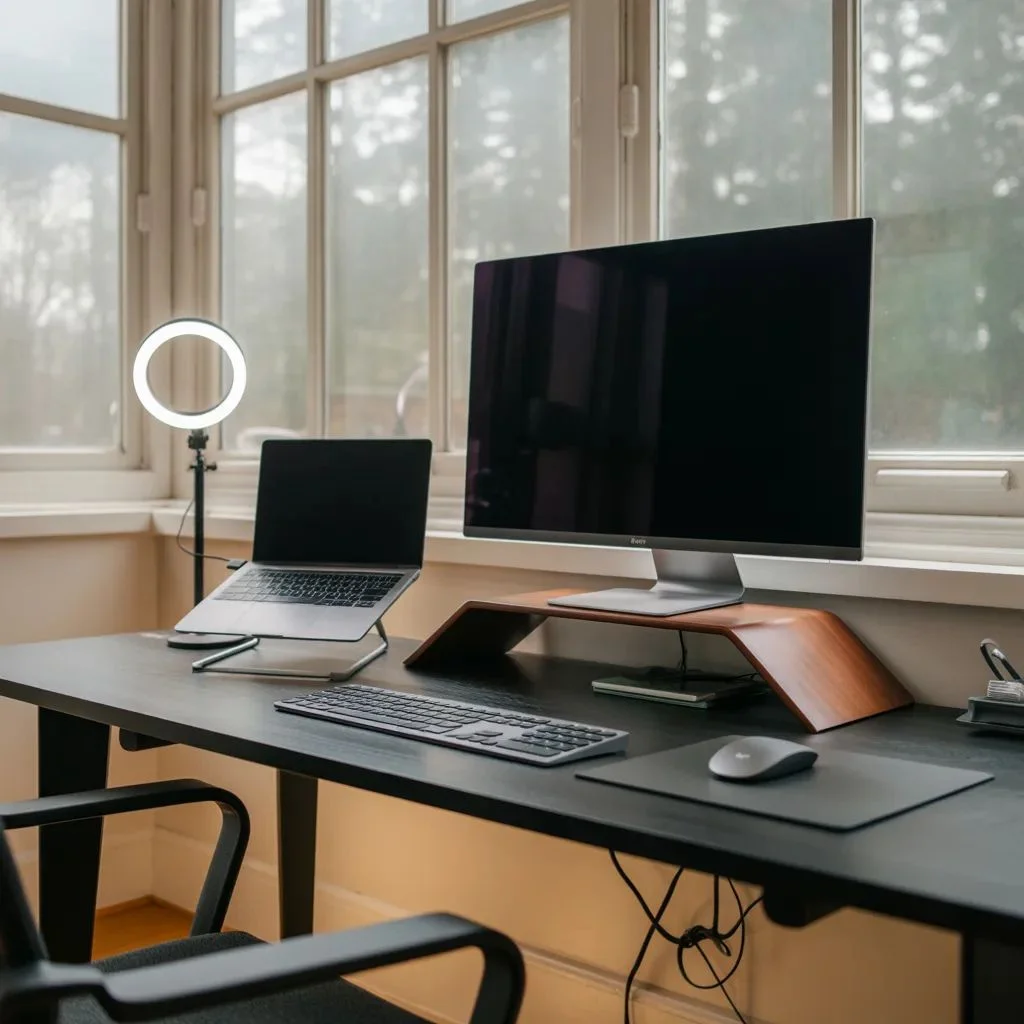
A beautiful sunroom office falls apart fast if the tech setup is an afterthought. Before you start decorating, sort out connectivity — because retrofitting outlets and ethernet into a glass-walled room is genuinely annoying.
Wi-Fi is the first priority. If your sunroom sits at the edge of your home’s Wi-Fi coverage, a mesh network extender (like Eero or Google Nest WiFi Pro) will solve the problem cleanly. Place a node in the room adjacent to the sunroom, and you’ll get reliable signal without running cables.
For video calls — increasingly the backbone of remote work — lighting is critical. A ring light or small LED panel placed in front of you (between you and the camera) gives a clean, even face light that looks professional even when the window behind you is blowing out the background. Pair it with a background privacy screen or position your desk so the window is to your side, not behind you.
Other tech essentials worth planning for:
- Surge-protected power strip — plug everything into one quality strip with surge protection
- Laptop stand and external monitor — elevates your primary screen to eye level, eliminating neck strain from looking down
- Noise-canceling headphones — sunrooms can echo; over-ear headphones with ANC make calls significantly cleaner
- USB-C hub — consolidates laptop connections so you can dock and undock with a single cable
Dual-Purpose Sunroom Office Setups
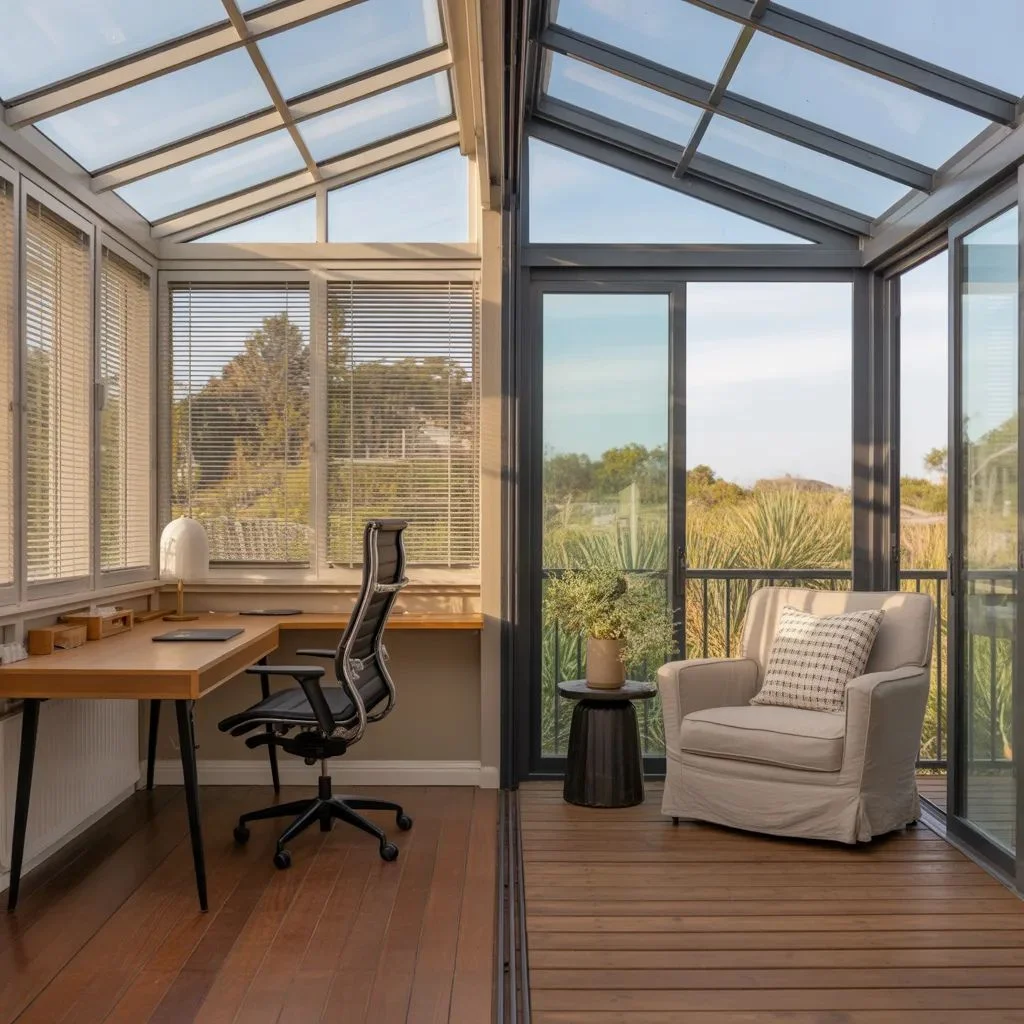
Not everyone has the luxury of dedicating an entire room to a single purpose. A sunroom that doubles as a home office and a personal retreat is one of the smartest setups you can have — as long as the two zones are clearly defined.
Zone your sunroom with rugs. A desk-area rug anchors the work zone, while a separate seating rug defines the relaxation corner. This simple trick creates psychological separation between the two areas without building any walls.
Furniture choices matter for flexibility. A compact writing desk that folds away allows you to close up the office visually when workday ends. A daybed or lounge chair on the opposite side of the room serves as a reading nook by day and a place to disconnect in the evening.
For households with multiple people using the sunroom, room dividers or tall bookshelves create a semi-permanent separation that still lets light flow through. Open-back bookshelves are especially good because they don’t block light the way a solid partition would.
The golden rule for dual-purpose sunrooms: the work zone should be packable. At the end of the day, you should be able to close the laptop, tuck away the chair slightly, and have the room transform back into a relaxing space — not an office that you happen to sit in.
Budget-Friendly Sunroom Office Ideas
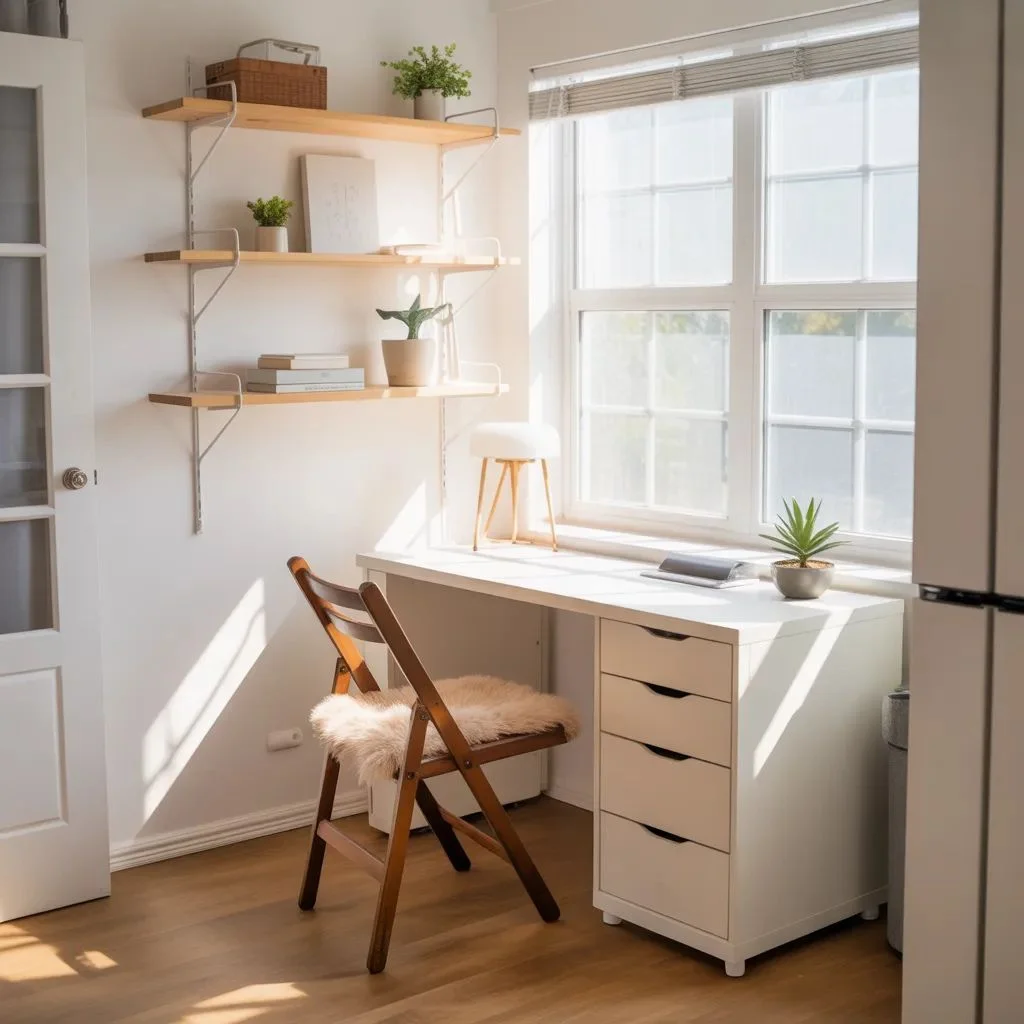
You don’t need to spend thousands to build a functional, beautiful sunroom office. Some of the most effective setups come together for under $500 when you prioritize the right pieces and skip the rest.
Start with the desk and chair. These two pieces carry 80% of your productivity. Spend on an ergonomic chair before anything else — your back will tell you if you skimped. IKEA’s LINNMON/ADILS combination gives a clean, functional desk surface for under $80. The Autonomous Smart Desk Core and Branch Ergonomic Chair both deliver excellent value in the $300–$400 range.
DIY your shelving. Floating shelves from IKEA, Amazon Basics, or your local hardware store cost a fraction of custom built-ins and look nearly identical once styled. Install them on the non-glass wall and fill them intentionally.
Use what you already own. A good desk lamp, an old armchair with a cushion, or a rug from another room can reframe an entire space without spending anything new. The sunroom’s natural light does so much heavy lifting that you need fewer accessories than you’d think.
- Under $100 wins: a quality desk lamp, a plant or two, cable management clips, a sheer curtain panel
- Under $300 wins: a solid ergonomic chair upgrade, a floating shelf kit, a USB-C hub
- Under $600 wins: a proper standing desk, a mesh back ergonomic chair, an anti-glare monitor
Ready to Rethink Your Remote Setup?
Your sunroom isn’t just a pretty space — it’s a genuinely better place to work. With the right desk placement, climate control, light management, and a few thoughtful furniture choices, you can build a sunroom office that outperforms any standard room in your home.
Start small: spend a workday in the space as-is and let the room tell you what it needs. Then make one change at a time. The best sunroom offices aren’t built in a weekend — they’re refined over time until every hour spent working in them feels like a small reward.
Editor Choice: Corner, Wall & Freestanding Sunroom Fireplace Ideas for Every Style.
Save this guide, pin the ideas that speak to you, and start with the one thing that will make the biggest immediate difference in your space.