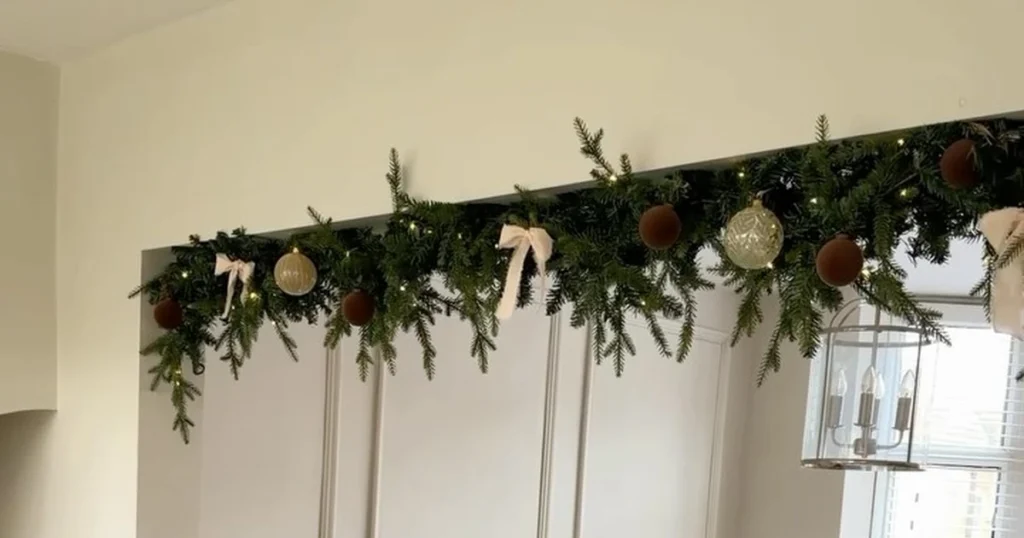
No nails. No hooks. No holes in the wall. Just a rod, a garland, and a doorway that suddenly looks like Christmas.
One tension rod is the cleverest trick in Christmas decorating — a garland that looks nailed up, held by nothing but pressure. No drilling, no damage, no landlord to argue with.
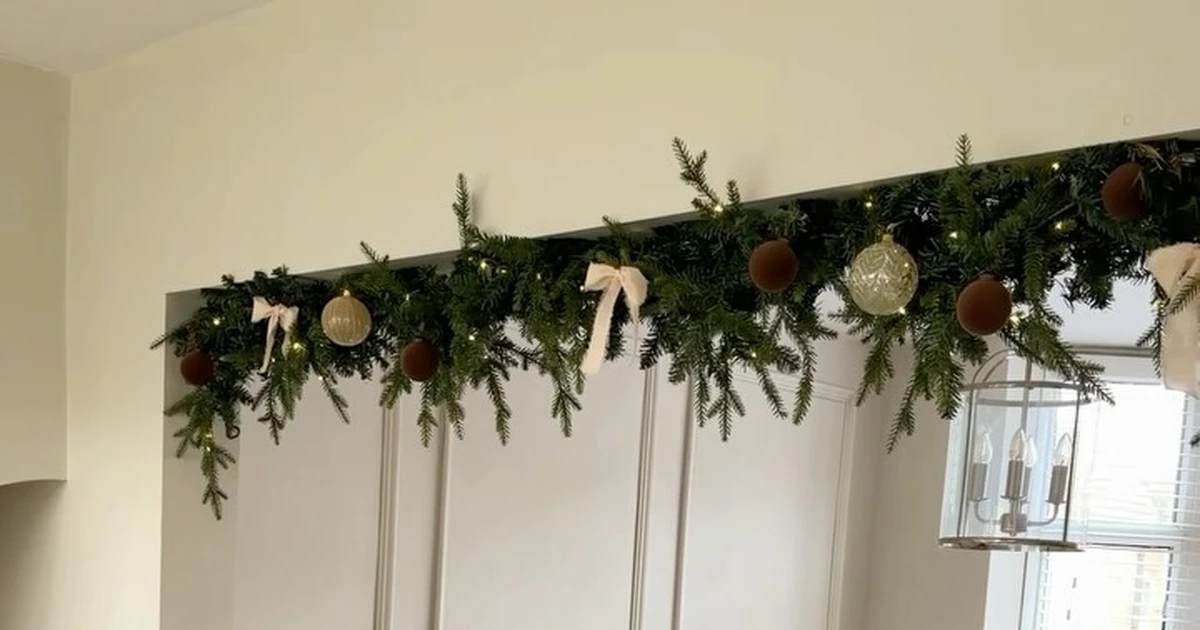
Picture it like this: a garland draped over a rod that grips the doorway on both sides, bows and baubles hanging from it, the whole thing up in ten minutes and down in two — that is what a tension rod garland is.
Start with the doorway you walk through most, and the rest of the house follows. A rod, a garland and a little fluffing are all it takes.
Here are 10 ways a tension rod garland changes Christmas decorating.
Hang a Garland Across a Doorway Without a Single Nail
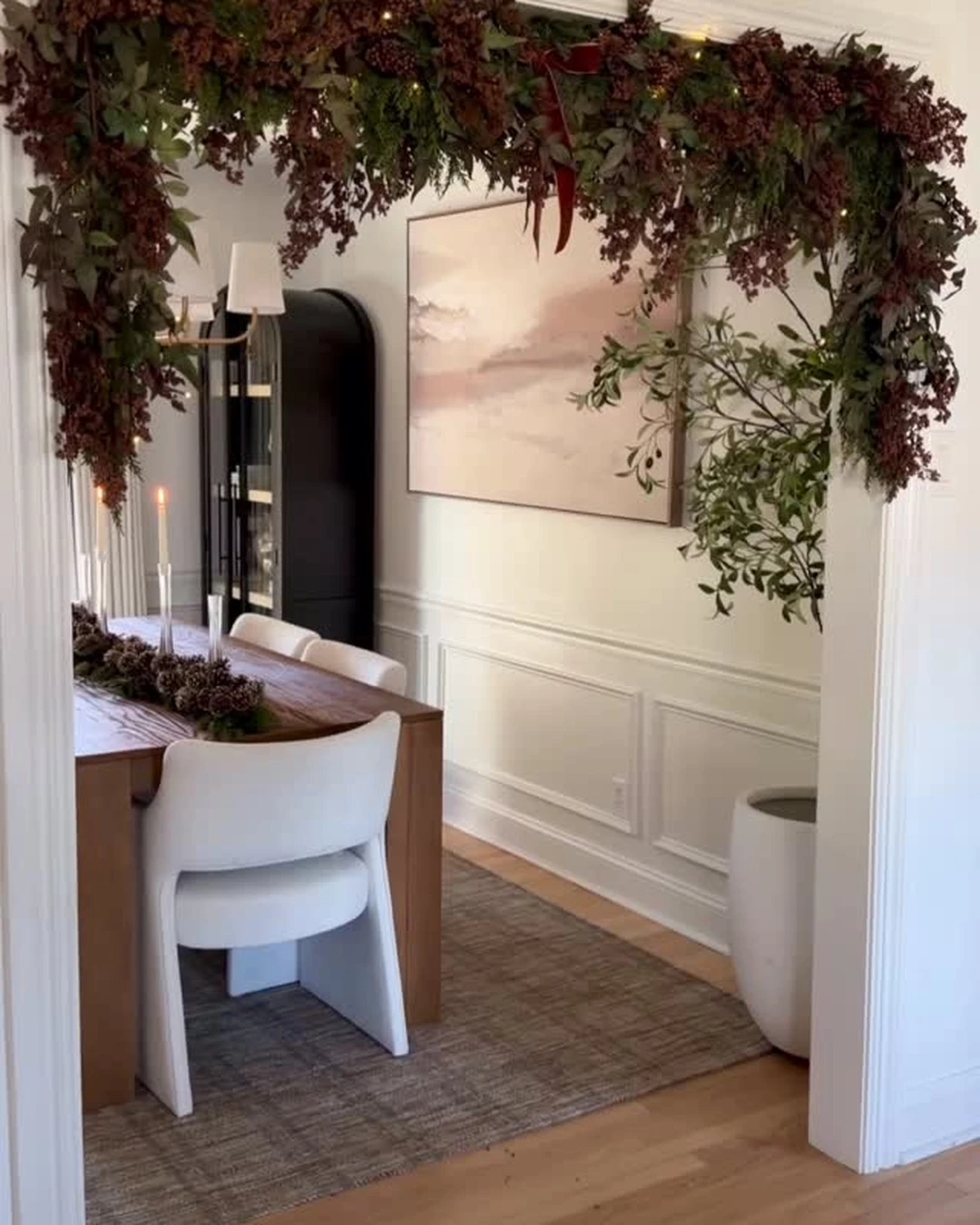
No nails, no hooks, no holes — one tension rod and a garland is suddenly hanging across your doorway. Cedar garland with red berries spanning the opening between a living area and a dining room, and nothing in the wall was touched.
Measure the doorway first, then buy a rod that extends a good inch past the opening on each side — a rod that is only just long enough slips, and a garland slipping at midnight is the sound nobody wants. Twist it until it grips, then hang the garland over it in a loose swag.
Keep the swag shallow so the garland does not block the doorway — people should walk under it without ducking. A cedar garland with red berries needs nothing else: the doorway does the decorating for you.
The practical point: Buy a rod that extends a good inch past the opening on each side — a rod that is only just long enough slips.
Why a Tension Rod Holds More Than You Think
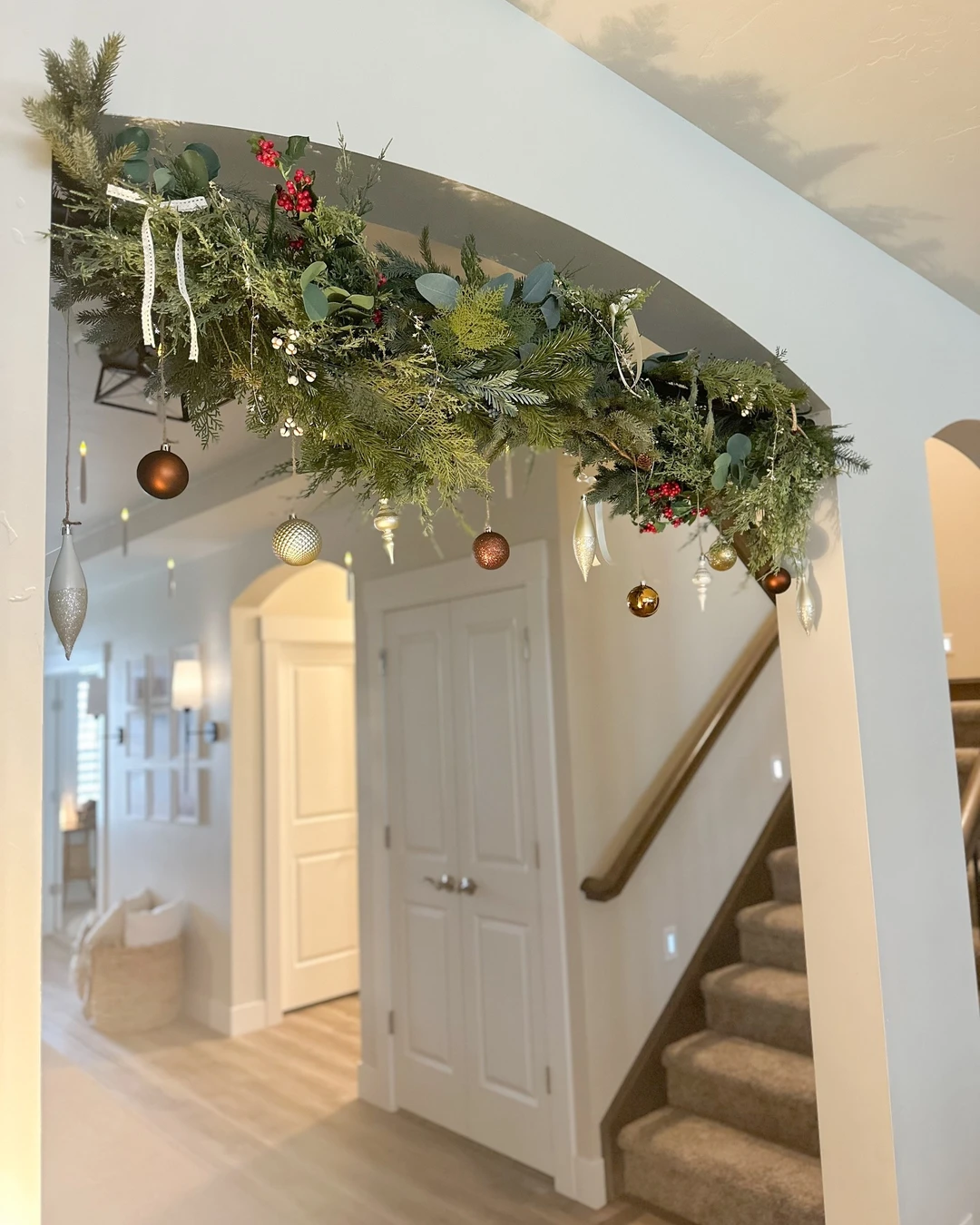
One rod holds more than you think — look at the weight hanging here. A thick mixed-evergreen garland with eucalyptus, red berries and a white ribbon bow spans an arched doorway, and heavy metallic ornaments in gold, bronze and silver hang from it without a wobble.
Tension rods work on pressure, not on screws: the rubber ends grip the wall on both sides, and the wider the rod is compressed, the harder it holds. A cheap rod sags under ornaments; a rod rated for curtains holds a garland and everything you hang on it.
Hang the heaviest ornaments nearest the ends, where the rod is strongest, and keep the middle light. That is the whole trick — weight at the ends, air in the middle, and the rod never complains.
The practical point: Hang the heaviest ornaments nearest the ends, where the rod is strongest, and keep the middle light.
Garland in a Window, No Hooks Needed
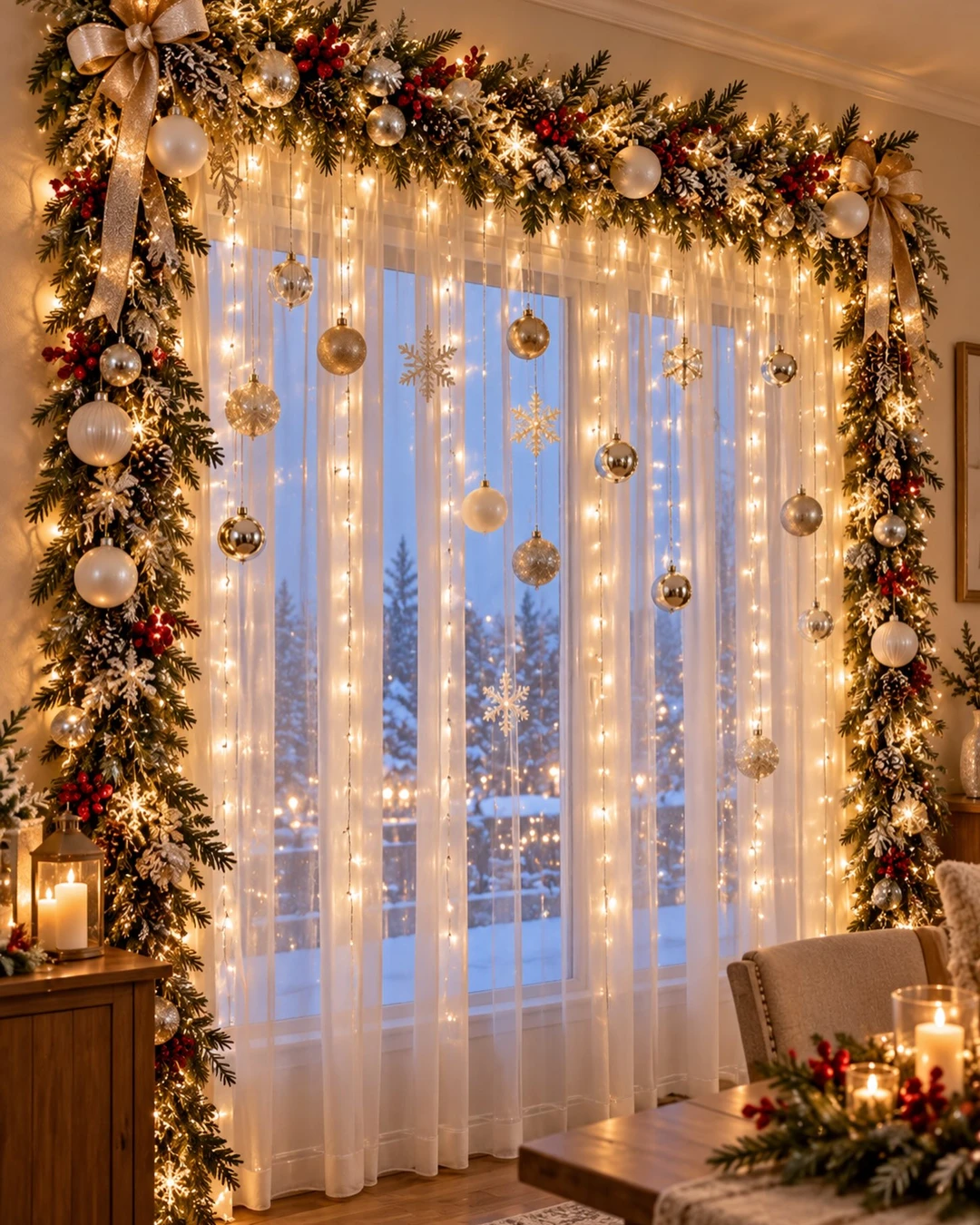
One window, one rod, no hooks at all — and the whole window is framed. A large window framed by sheer white curtains and fairy lights, a garland with red and gold ornaments running around the whole window, a dining table below.
Inside a window frame, a tension rod fits exactly the way it fits inside a doorway: twist it until the rubber ends grip, then drape the garland over it. Sheer curtains behind the garland soften the light, and fairy lights woven through make the window glow after dark.
Keep the garland off the glass — a gap of an inch or two stops condensation from dampening the greenery. The window is the frame, the garland is the picture, and the rod is the part nobody ever sees.
The practical point: Keep the garland an inch or two off the glass — condensation dampens the greenery.
Layer Two Garlands on One Rod
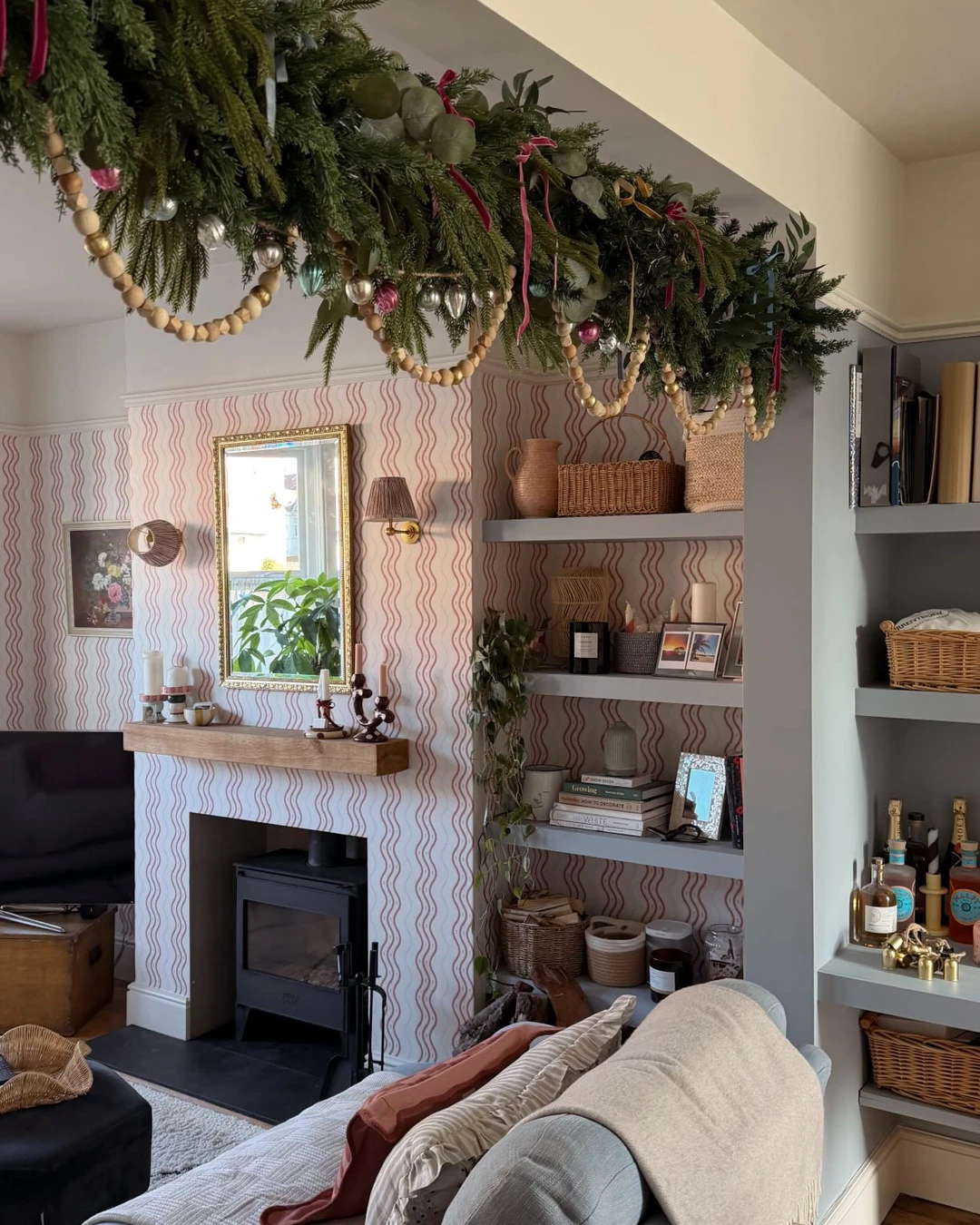
Two garlands on one rod look like three times the work and take ten minutes. A long layered garland — greenery, a wooden bead garland, ornaments — draped along a ceiling beam above a fireplace and shelves, and the layering is what makes it look expensive.
Start with the fuller garland at the back and the thinner one in front, so the beads and ornaments show through the greenery instead of hiding behind it. Tie the two together in three or four places with green wire so they move as one piece.
Mix textures, not colours: pine with eucalyptus, beads with berries, matt with shine. Two garlands in the same green read as one big garland; two garlands with different textures read as a designer did it.
The practical point: Tie the two garlands together in three or four places with green wire so they move as one piece.
Garland Over the Kitchen Doors
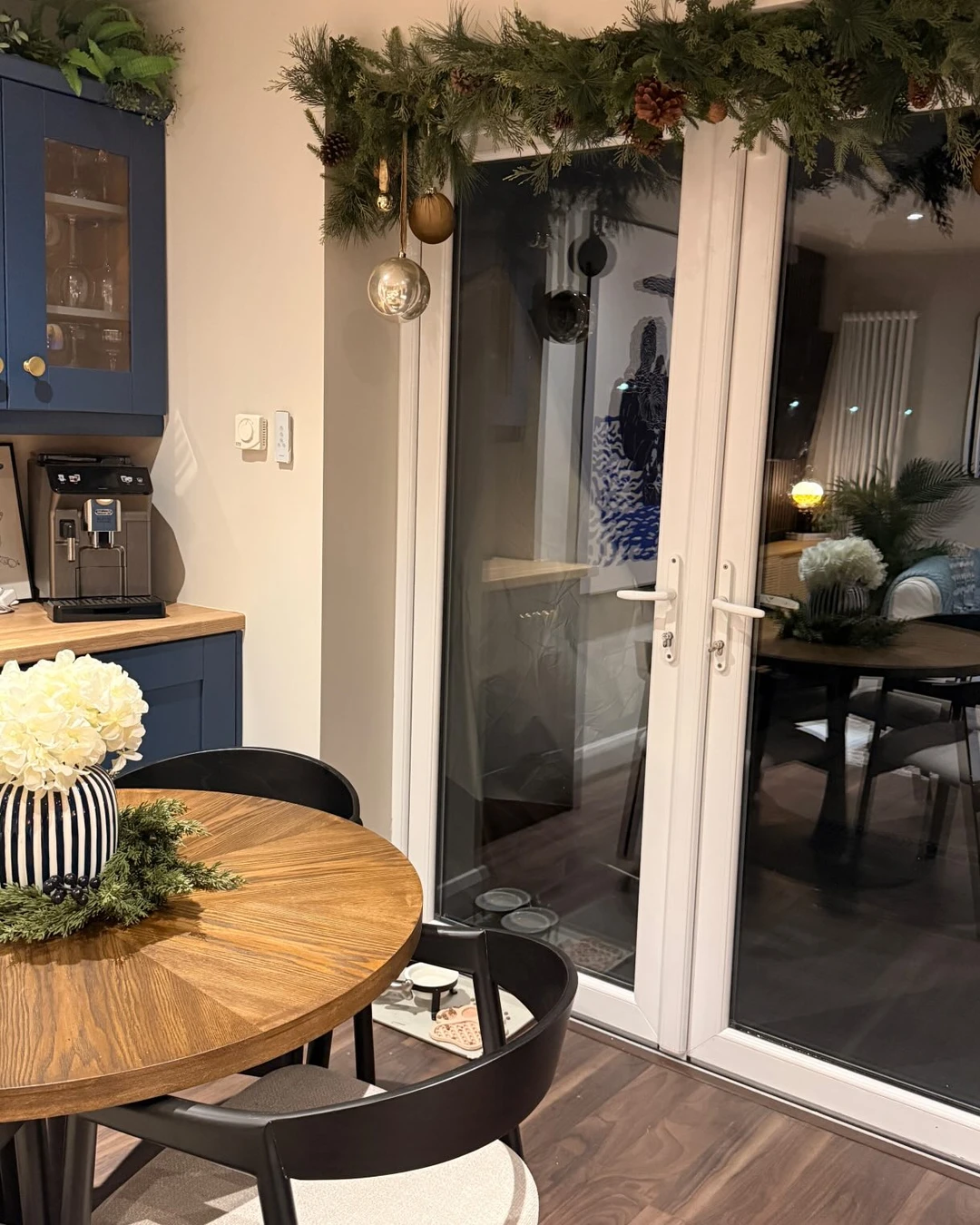
Kitchens get left out of Christmas decorating because nobody knows where the garland goes — here is where it goes: over the doors. A kitchen-dining area with blue cabinets and a round wooden table, a green garland with pinecones and gold baubles draped across the top of glass patio doors.
Glass doors are perfect for a tension rod because the frame is already there — the rod grips the frame, the garland hangs over the top, and nothing touches the glass. Pinecones and gold baubles against blue cabinets is the combination that makes a kitchen feel dressed.
Keep the garland high enough that the doors still open — a rod across the top of the frame, not across the middle of the glass. The kitchen gets its Christmas moment without losing a single cupboard.
The practical point: Run the rod across the top of the door frame, not across the middle of the glass, so the doors still open.
How to Hide the Rod Completely
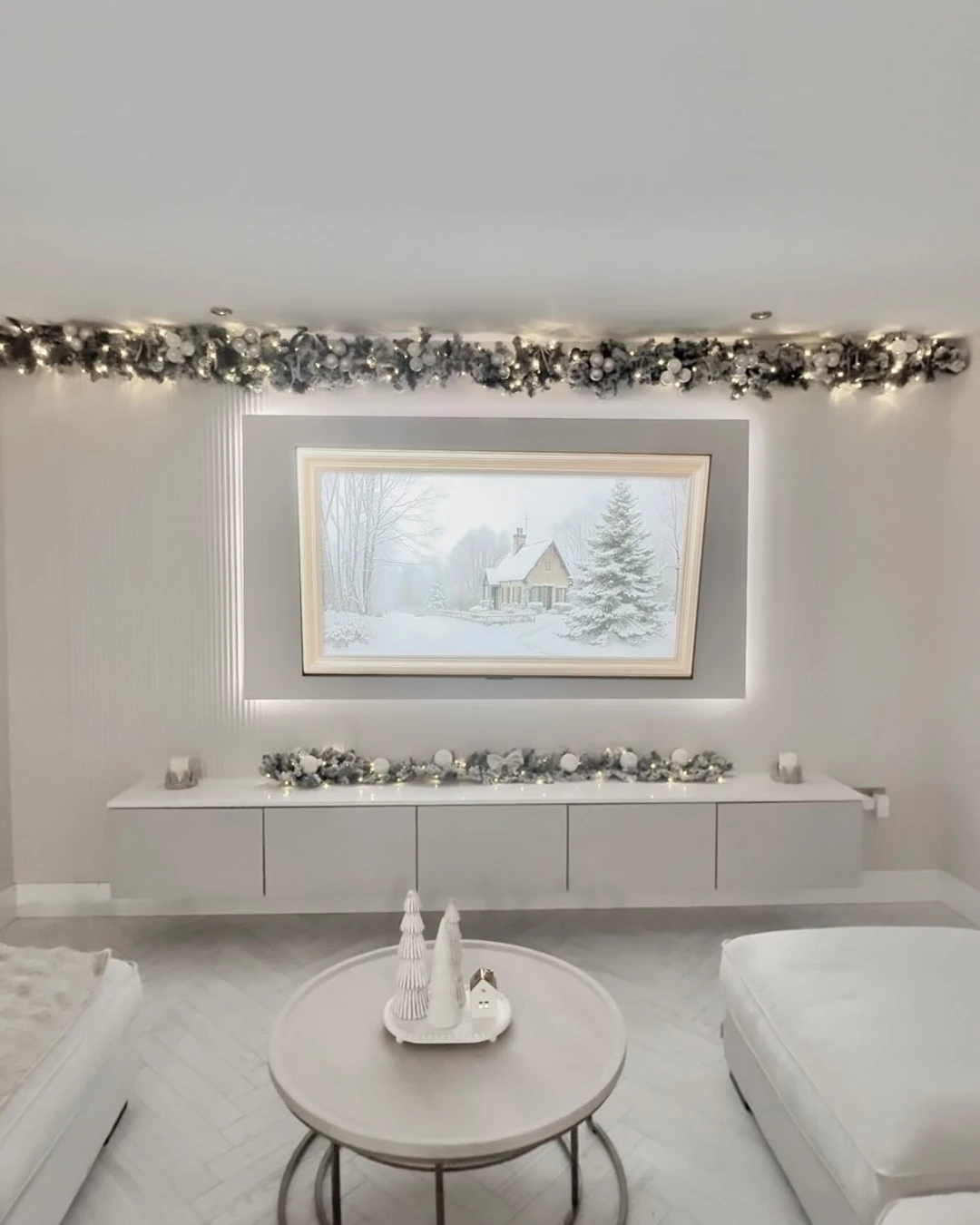
Nobody should ever see the rod — that is the whole point of the trick. A white living room with a frosted garland with fairy lights running along the top of the wall above a large TV, and whatever holds it up is completely invisible.
Fullness hides the rod, not placement: fluff every branch of the garland outwards until the greenery hangs a good two inches below the rod line. Fairy lights woven through the front pull the eye away from the top edge, where the rod sits.
If a sliver of rod still shows, tuck a sprig of eucalyptus or a pinecone over it — one sprig in the right place beats rehanging the whole garland. The rod is a secret, and secrets stay secret when the garland is fuller than it needs to be.
The practical point: Fluff every branch outwards until the greenery hangs two inches below the rod line — fullness hides the rod, not placement.
Let the Garland Span the Whole Opening
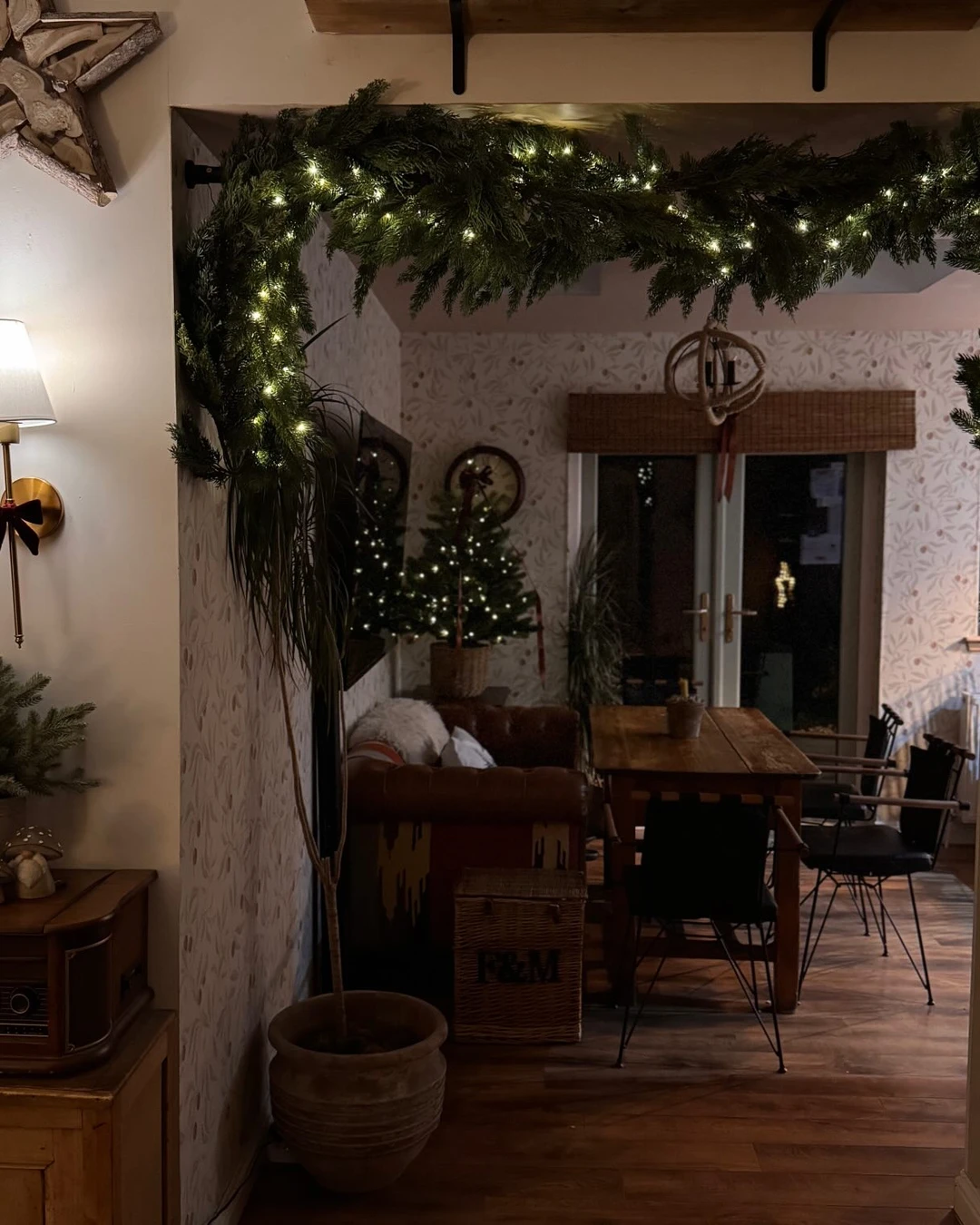
Some openings are too wide for one garland — or so it feels until you see one spanning the whole thing. A finished lit green garland spanning a very wide doorway, warm lights woven through, a dining room with a Christmas tree behind it.
Wide openings need a thicker rod, not a longer trick: a rod rated for heavy curtains holds a garland across six feet without bowing, and two rods end to end hold one across ten. Let the garland dip in the middle — a gentle swag reads as generous, a tight straight line reads as nervous.
Look at the shelf above this doorway and the letters spell JOY — incidental, but the right word for the job. For the rest of the entryway, 16 Christmas Entryway Decorating Ideas with a Warm Welcome carries the welcome further in.
The practical point: Let the garland dip in the middle — a gentle swag reads as generous, a tight straight line reads as nervous.
What to Hang from the Garland
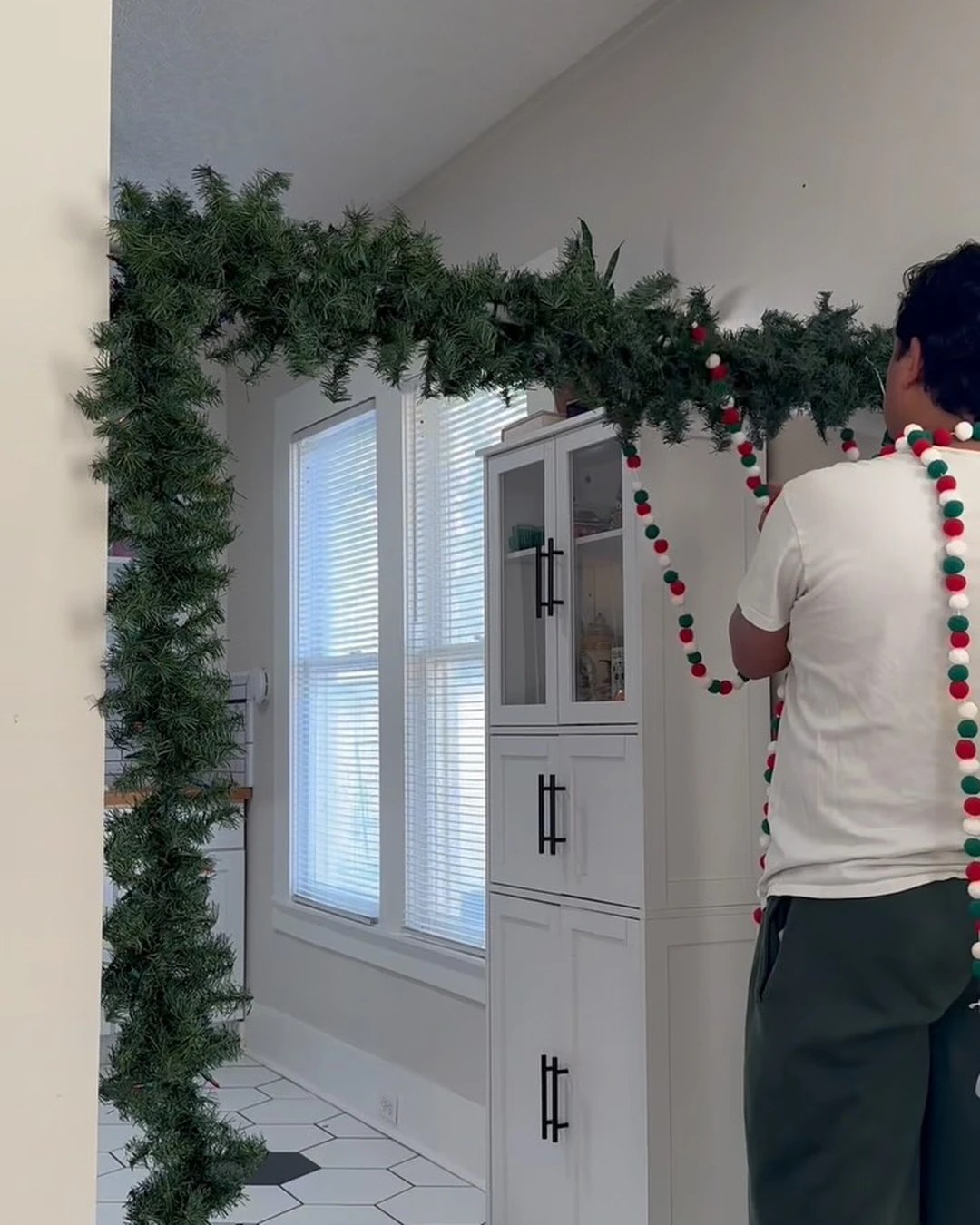
Once the garland is up, the question is what hangs from it — and the answer is whatever you already own. Red, white and green pom-pom strands and small wooden stars being hung on a green garland across a kitchen doorway, by someone whose back is to the camera.
Light things hang best: pom-poms, paper stars, dried orange slices, small wooden shapes. Heavy glass baubles pull the garland down in the middle and show the rod — save those for the tree, where a branch takes the weight.
Hang things at different lengths, not in a row: a long pom-pom strand here, a short star there, and the garland starts to look like it grew that way. Three kinds of hanging decoration is plenty — four starts to look like a shop window.
The practical point: Hang things at different lengths, not in a row — a long strand here, a short star there, and the garland looks like it grew that way.
Renting? A Rod Leaves No Holes at All
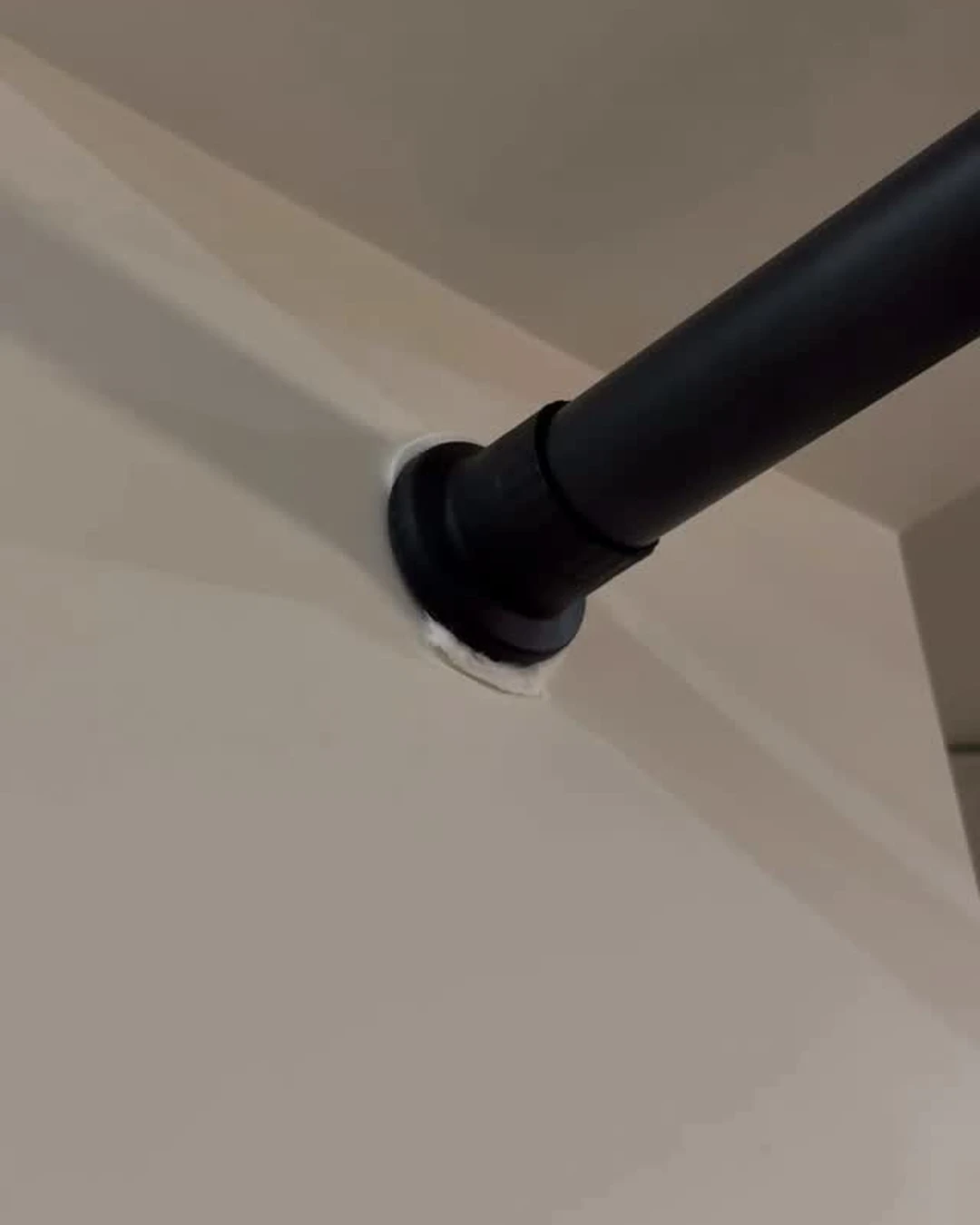
Renters get the best version of this trick, because the whole point is that nothing touches your wall. A close-up of a black tension rod end pressed against a white wall, a white cotton round at the base where it meets the wall — no hole, no hook, no mark left behind.
That white cotton round is the detail that matters: slip one between the rod end and the wall and the rubber never marks the paint. Landlords check walls, not garlands — and when the garland comes down in January, the wall looks exactly as it did in November.
One rubber end, one cotton round, and pressure — that is all that touches your wall. No garland appears in this photo because the garland is not the point here; the point is that a rented wall can hold Christmas without a single hole.
The practical point: Slip a cotton round between the rod end and the wall — the rubber never marks the paint.
Take It Down in Two Minutes
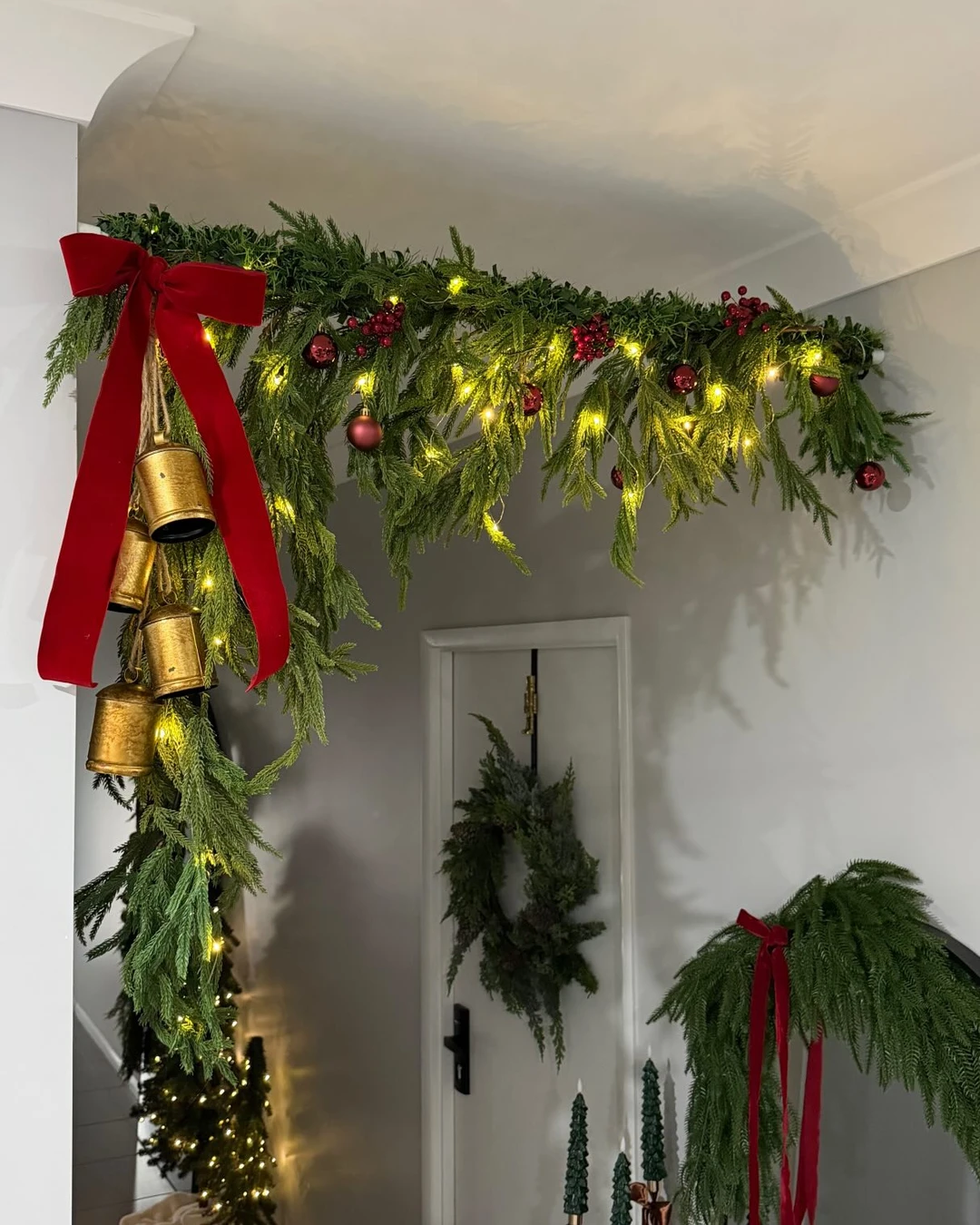
Taking it down is the part nobody photographs — which is why this photo shows the garland still up, a finished garland over a doorway with red berries, a big red bow, gold bells hanging, a wreath on the door below. The take-down is the easy part, and that is the point.
Lift the garland off the rod, twist the rod loose, coil the garland up — two minutes, nothing to fill, nothing to patch, nothing to paint over. A garland that went up without a single hole comes down without a single mark.
Coil the garland loosely and hang it on a hook in the loft, ornaments still on — next December it goes back up in half the time. A decoration that takes two minutes to remove is a decoration you will actually put up again.
The practical point: Lift the garland off the rod, twist the rod loose, coil the garland up — two minutes, nothing to fill, nothing to patch.
Hang It Today, Take It Down in Minutes
Your doorway does not need a nail, a hook or a hole — it needs a rod and a garland, and ten minutes of your evening. A garland that looks nailed up, held by nothing but pressure, is the kind of Christmas trick that feels like cheating and looks like magic.
Start with the doorway you walk through most and let the rest follow. For the table the doorway leads to, 10 Christmas Entryway Table Decor Ideas finishes the welcome — and when January comes, the garland comes down in two minutes, and the wall never knew it was there.