Most people hang records on a wall and call it a day. But vinyl record wall art has quietly become one of the most creative and personalised forms of home decor — and the possibilities go far deeper than a simple nail and a sleeve.
Whether you have a stash of scratched records collecting dust or you’re hunting charity shops for colourful pressings, this guide covers vinyl record wall art ideas that look intentional, curated, and genuinely stunning in a real home.
From melted sculptures to painted canvases, grid galleries to backlit displays, these ideas span every skill level and every interior style. Pick one, mix a few, or build an entire music-themed feature wall that stops anyone who walks in.
Vinyl Record Gallery Wall
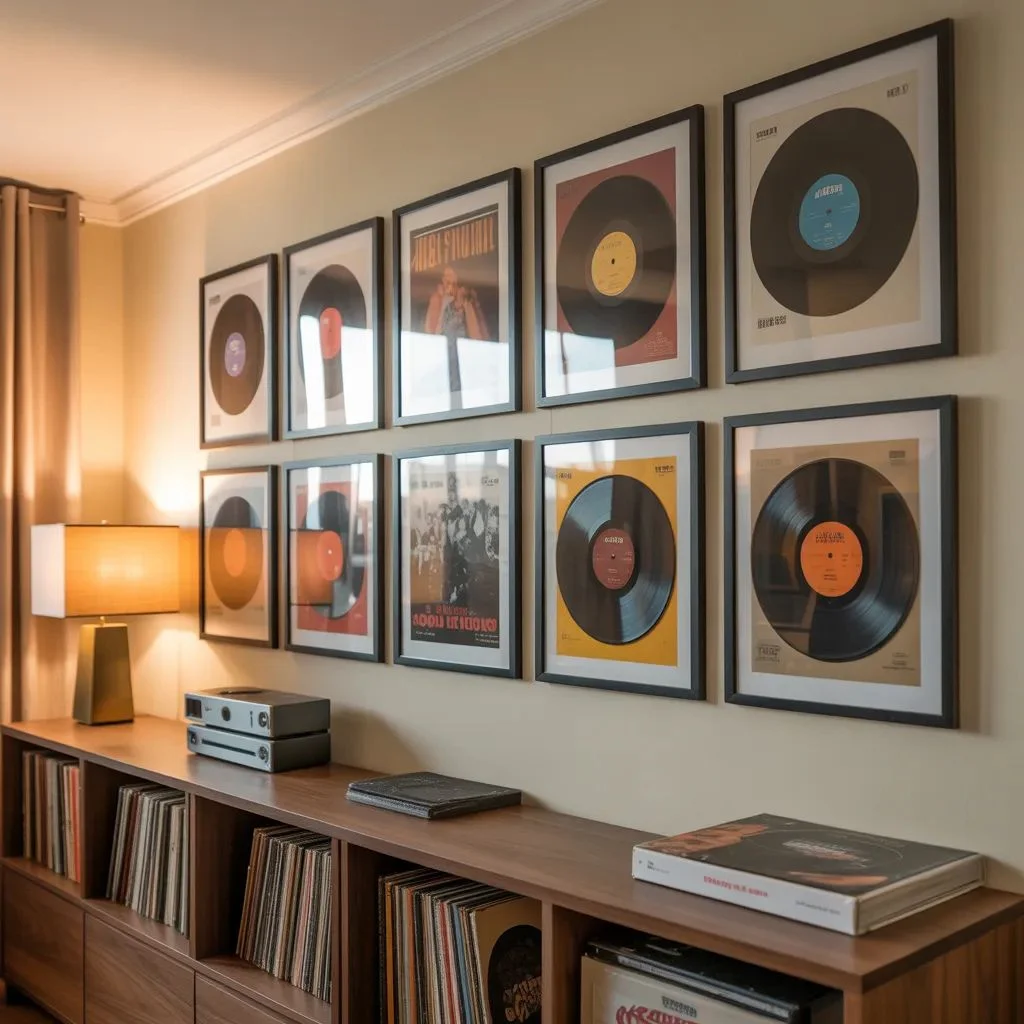
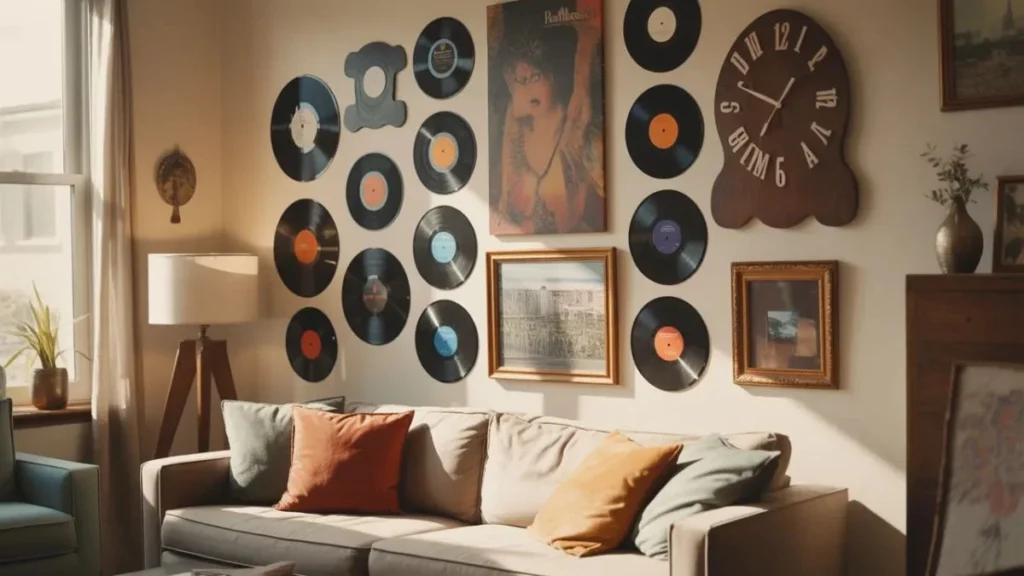
A gallery wall built around vinyl records is one of the easiest ways to make a big visual statement without needing much DIY experience. The key is treating each record as a piece of art rather than just a nostalgic object.
Mix sizes — standard 12-inch LPs alongside 7-inch singles — and hang them at staggered heights. Pair them with concert posters, polaroid prints, and album sleeve covers in matching frames for a layered look that feels collected, not curated.
Stick to a consistent frame colour to tie everything together. Black frames work beautifully against white or grey walls. Brass or gold frames add warmth against deep jewel tones.
- Use picture ledges to display records leaning rather than hung — easier to switch out seasonally.
- Odd numbers (3, 5, 7 records) always balance better than even groupings.
- Start with a paper template on the floor before committing to holes in your wall.
Painted Vinyl Record Canvas Art
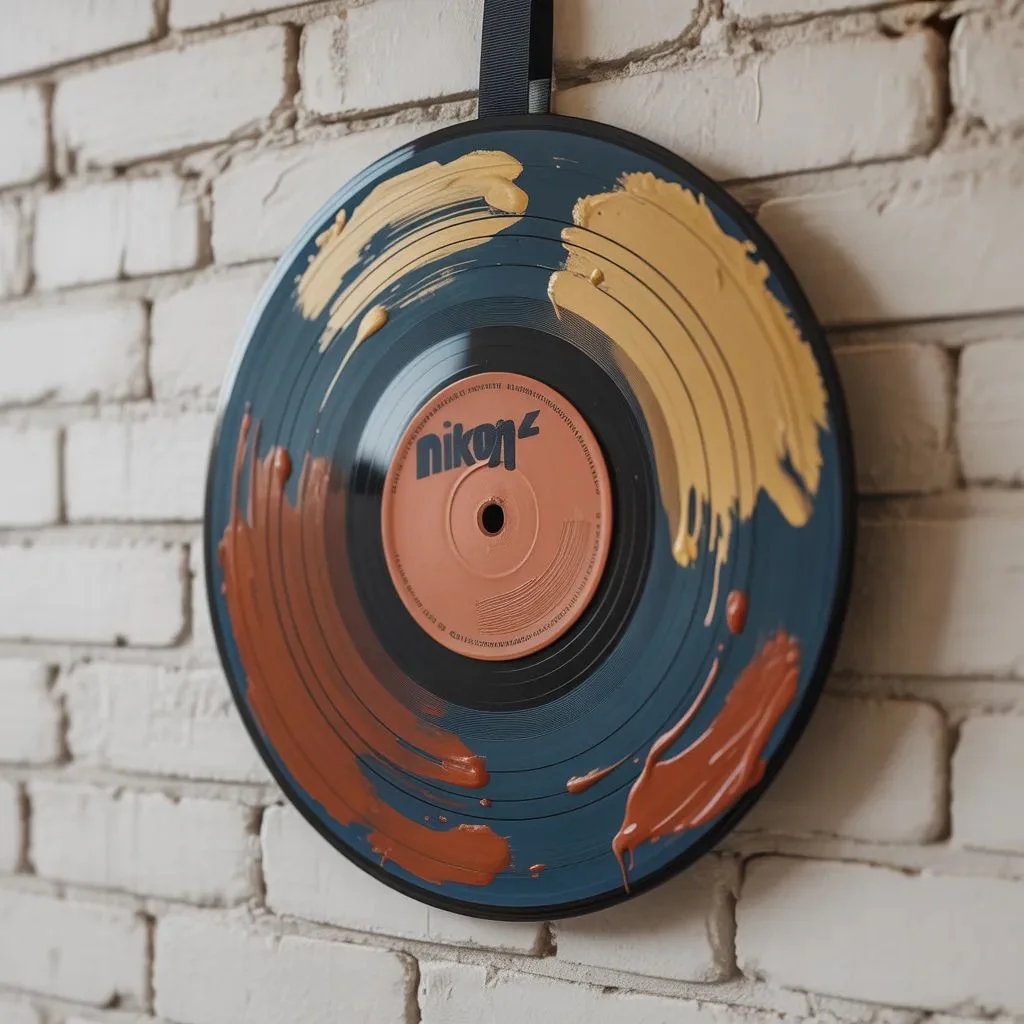
Painting directly onto a record transforms something throwaway into something gallery-worthy. The circular canvas creates instant constraints that force creativity — and the result almost always looks intentional.
Abstract painting works best here: think brushed metallics, splatter techniques, or poured acrylics that let the grooves add natural texture. The ridges catch paint differently depending on how it’s applied, creating visual depth that a flat canvas simply can’t replicate.
For a more controlled look, try geometric patterns — concentric circles, line art, or minimalist black-and-white designs that play off the record’s existing shape.
- Seal finished records with a matte varnish to protect the paint and deepen the colours.
- Hang a series of three or five painted records at the same height for a cohesive installation.
- Mix painted records with plain black ones for contrast within a larger arrangement.
Melted Vinyl Record Clock
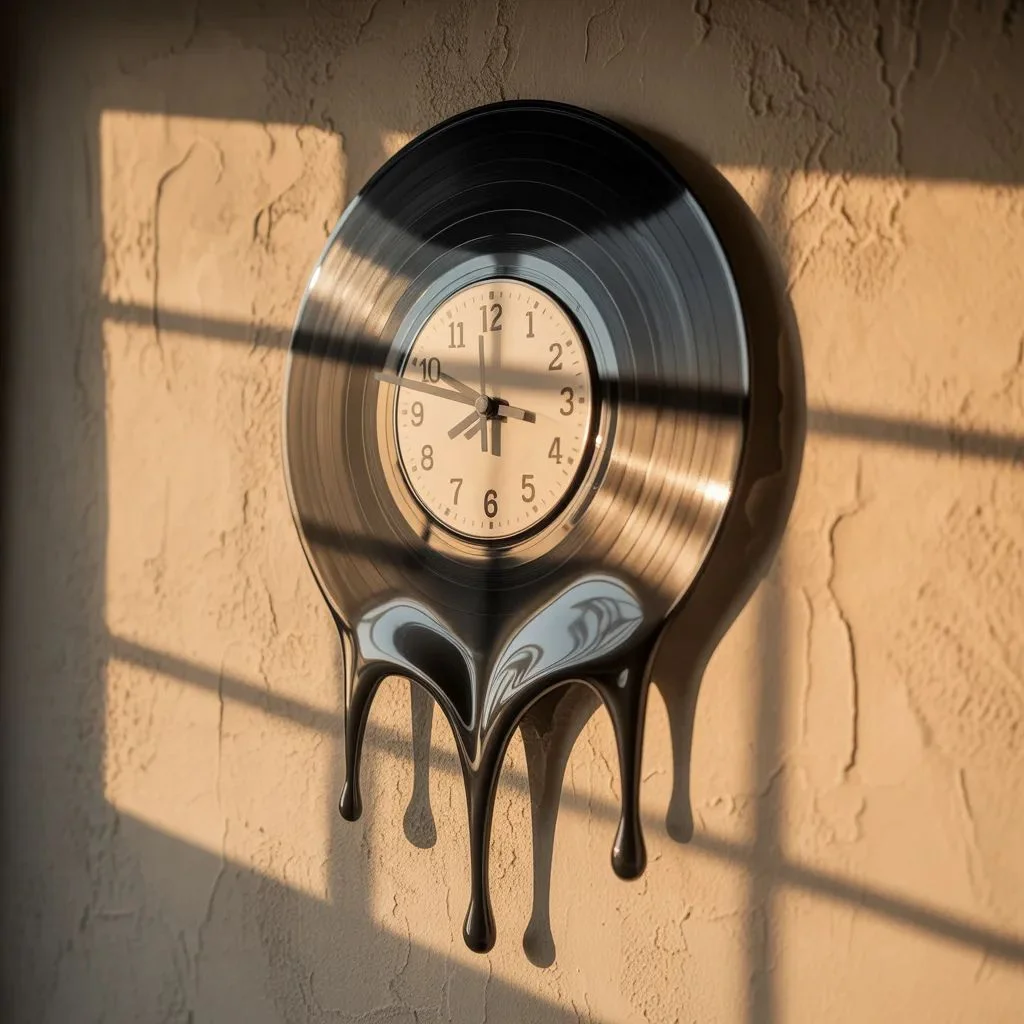
Melted record clocks sit at the intersection of functional and bizarre — in the best possible way. They reference Dalí without being derivative, and they work in spaces where conventional decor would feel too safe.
The process involves heating a vinyl record in an oven until it becomes pliable and then draping it over a bowl or mould to create the iconic melting curve. Clock mechanism kits are cheap and easy to install once the record has cooled and hardened into shape.
Hang it on a wall where it can cast a slight shadow — that shadow adds to the dimensional, sculptural quality that makes people do a double take.
- Use coloured or picture disc records for more visual impact.
- Always use proper ventilation when heating vinyl — a well-ventilated kitchen or outdoor space is best.
- Pair with floating shelves and stacked record crates below for a music room corner moment.
Record Sleeve Frame Display
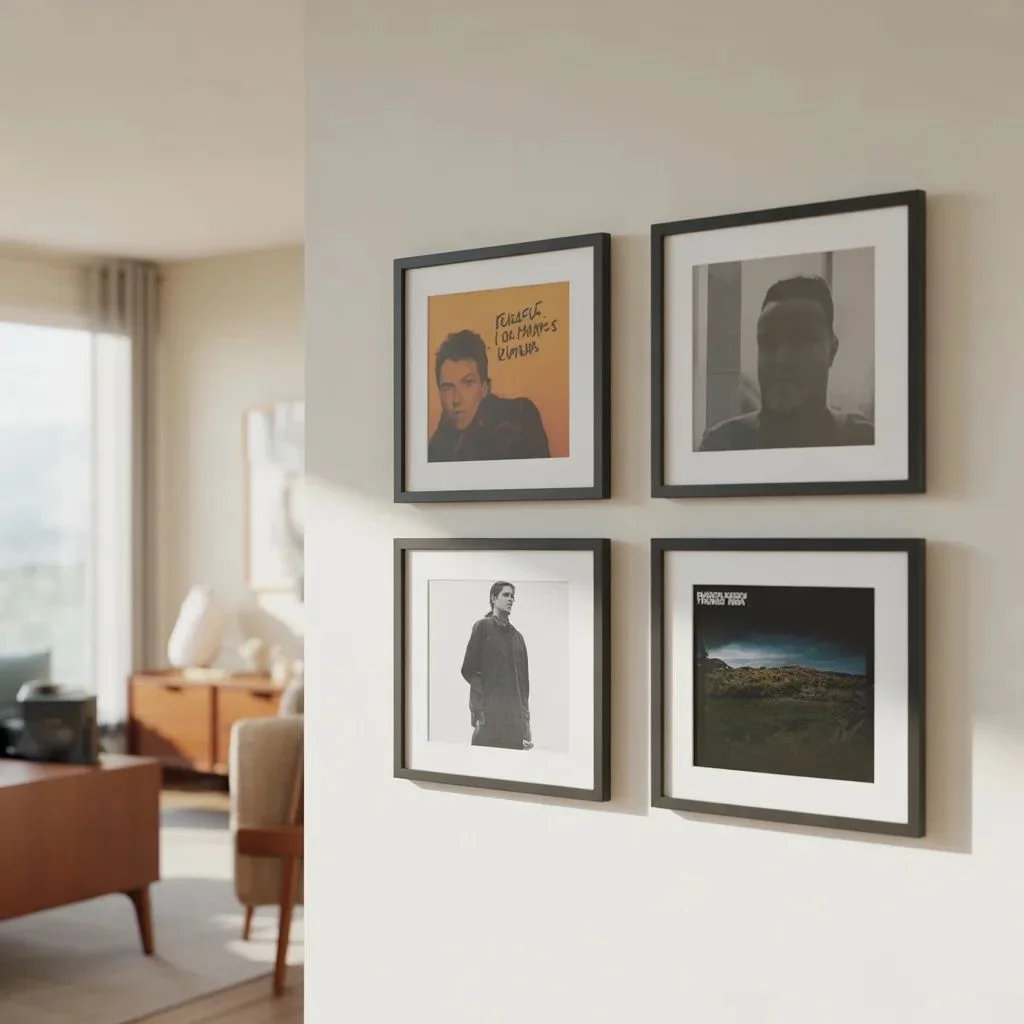
Album artwork deserves more credit. Some of the most striking graphic design ever produced ended up on record sleeves — and framing them is one of the simplest, most affordable ways to create meaningful wall art.
12-inch LP sleeves fit standard 12×12 inch frames without any cropping. Group four sleeves in a 2×2 grid for an instant gallery effect that looks considered and stylish. Choose sleeves that share a colour palette rather than randomly mixing genres — the visual consistency does a lot of the heavy lifting.
Swap them seasonally or whenever your taste shifts. The frames stay on the wall; only the art changes.
- Charity shops and car boot sales are excellent sources for visually interesting sleeves at very low cost.
- Shadow box frames let you display the record and sleeve together for a 3D presentation.
- Mix horizontal and vertical orientations within a grid for subtle visual rhythm.
Floating Record Shelf Arrangement
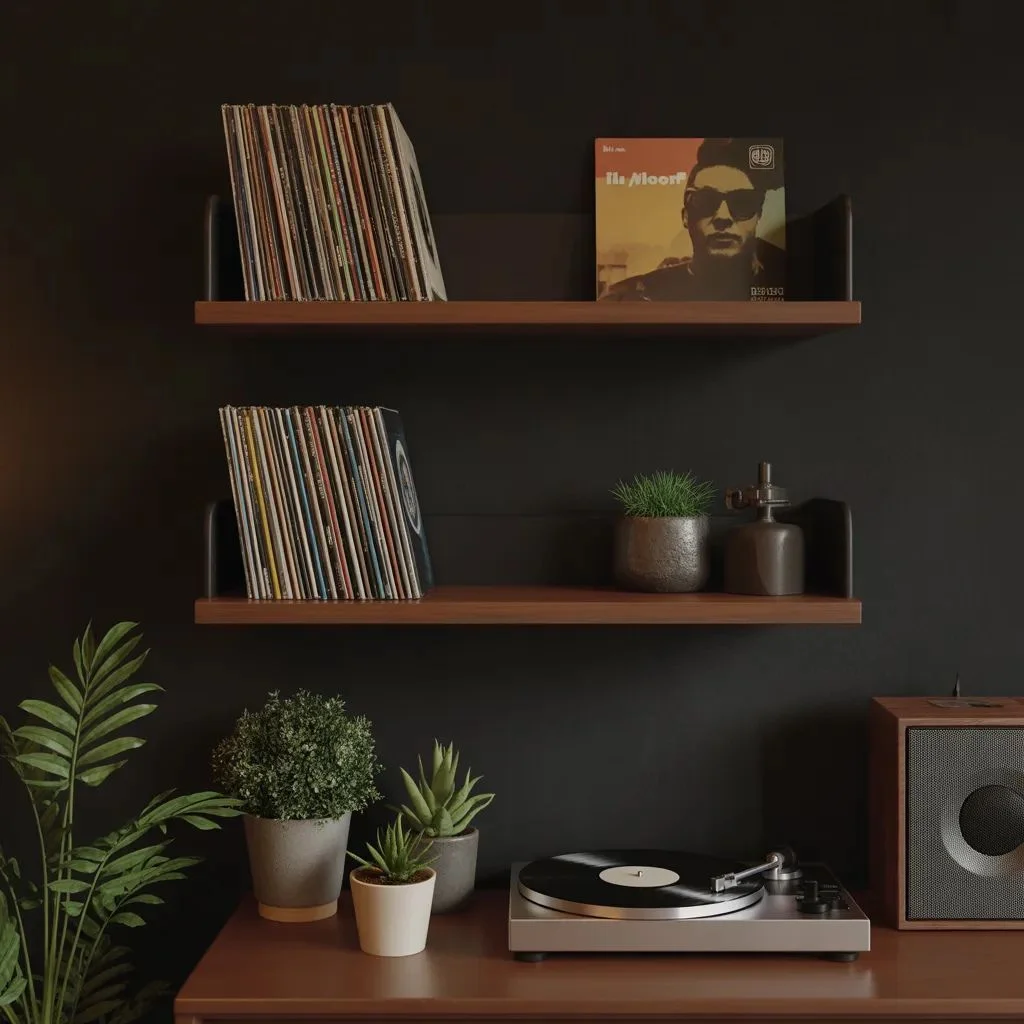
Floating shelves let records become living decor — easily rotated, rearranged, and updated without ever touching a nail gun again. It’s a softer, more casual approach to vinyl record wall art that suits relaxed, eclectic interiors.
Display records standing up, spines facing outward so guests can flip through them like a bookshelf. Intersperse small plants, candles, or ceramic objects between record groupings to break up the visual monotony and add texture.
For maximum impact, install shelves floor to ceiling on a single wall. The height draws the eye upward and makes even a small room feel significantly larger.
- Group records by colour for a visually cohesive display without needing matching frames.
- Backless shelves allow records to lean at a natural angle — easier to browse and more visually interesting.
- Include a small Bluetooth or vintage-style turntable on one shelf to tie the display together functionally.
Backlit LED Record Display
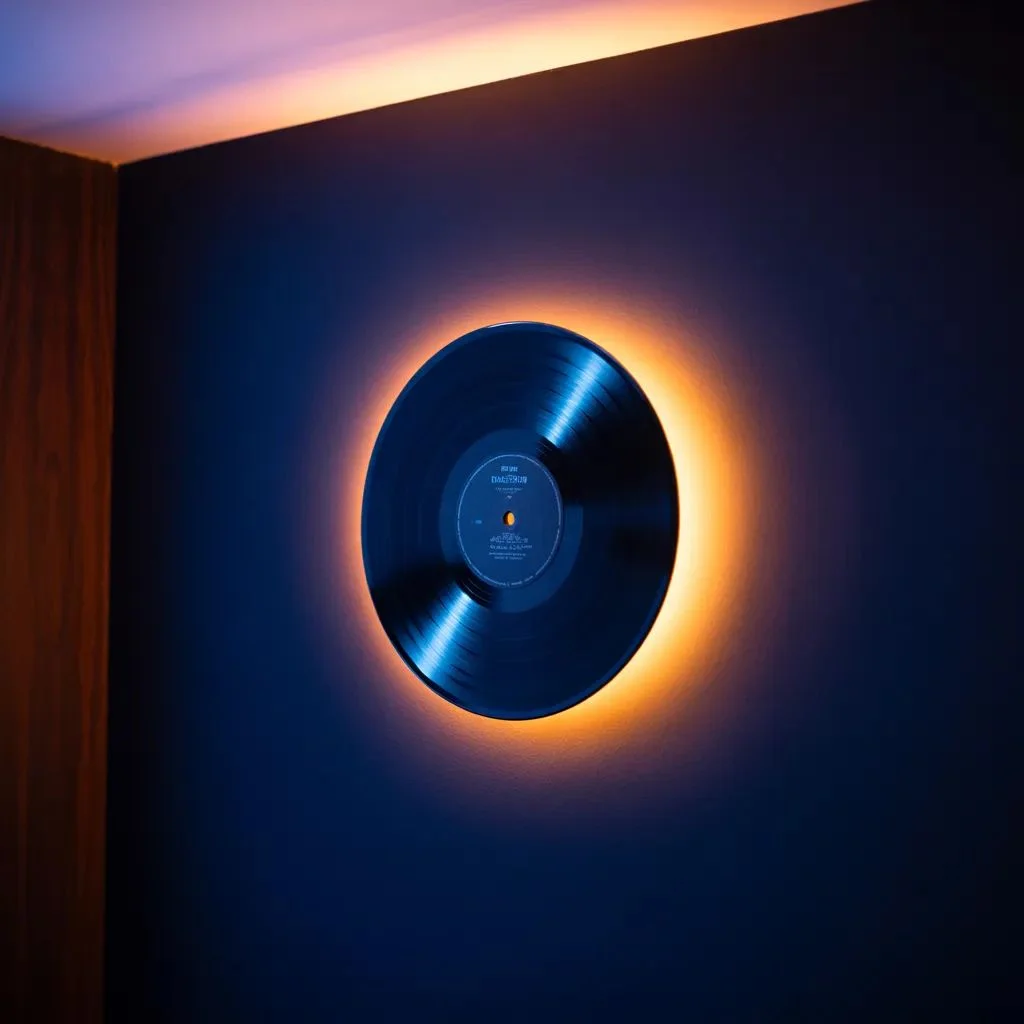
Backlighting transforms a record from a flat object into something that almost glows from within. It’s an especially effective technique in music rooms, home studios, and media rooms where drama and atmosphere matter.
Peel-and-stick LED strip lights are inexpensive and simple to apply around the back rim of a mounted record. Warm white or amber light suits vintage and bohemian interiors; cool blue or colour-changing LEDs work well in modern or eclectic spaces.
Mount the record on a small standoff or clear acrylic spacer so light can diffuse around the edges rather than being blocked by the wall.
- Dim the LEDs to about 30–40% brightness for the best halo effect.
- Use a remote-controlled strip so you can adjust the ambience without moving furniture.
- A cluster of three backlit records at different heights creates a dramatic focal point on a feature wall.
Record Label Print Wall
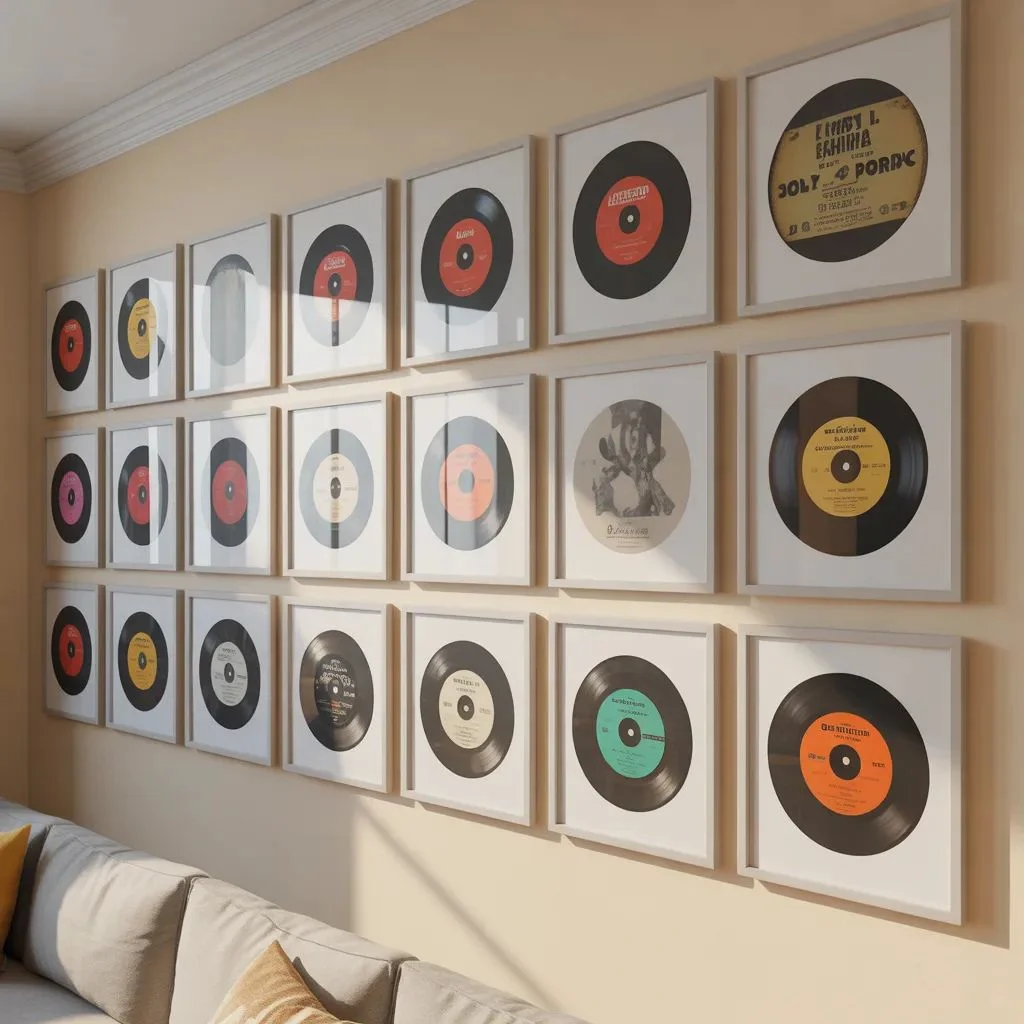
Record labels — those paper circles at the centre of every vinyl — are miniature works of graphic design. Blown up and printed, they make striking wall art that most guests won’t immediately recognise for what it is.
Scan the labels from your favourite records and print them at A3 or A2 size. Frame in circular frames for a playful nod to the format or go square for a more editorial feel. A wall of six to eight label prints arranged in a grid looks bold, graphic, and genuinely original.
Vintage labels from iconic record companies — Parlophone, Stax, Blue Note — tend to have the most visually interesting typography and colour combinations.
- Print on matte fine art paper for the most authentic, tactile finish.
- Pair with actual records displayed nearby so the connection between the prints and the format is clear.
- Choose labels that have a cohesive colour palette across the wall rather than clashing primaries.
Geometric Record Grid
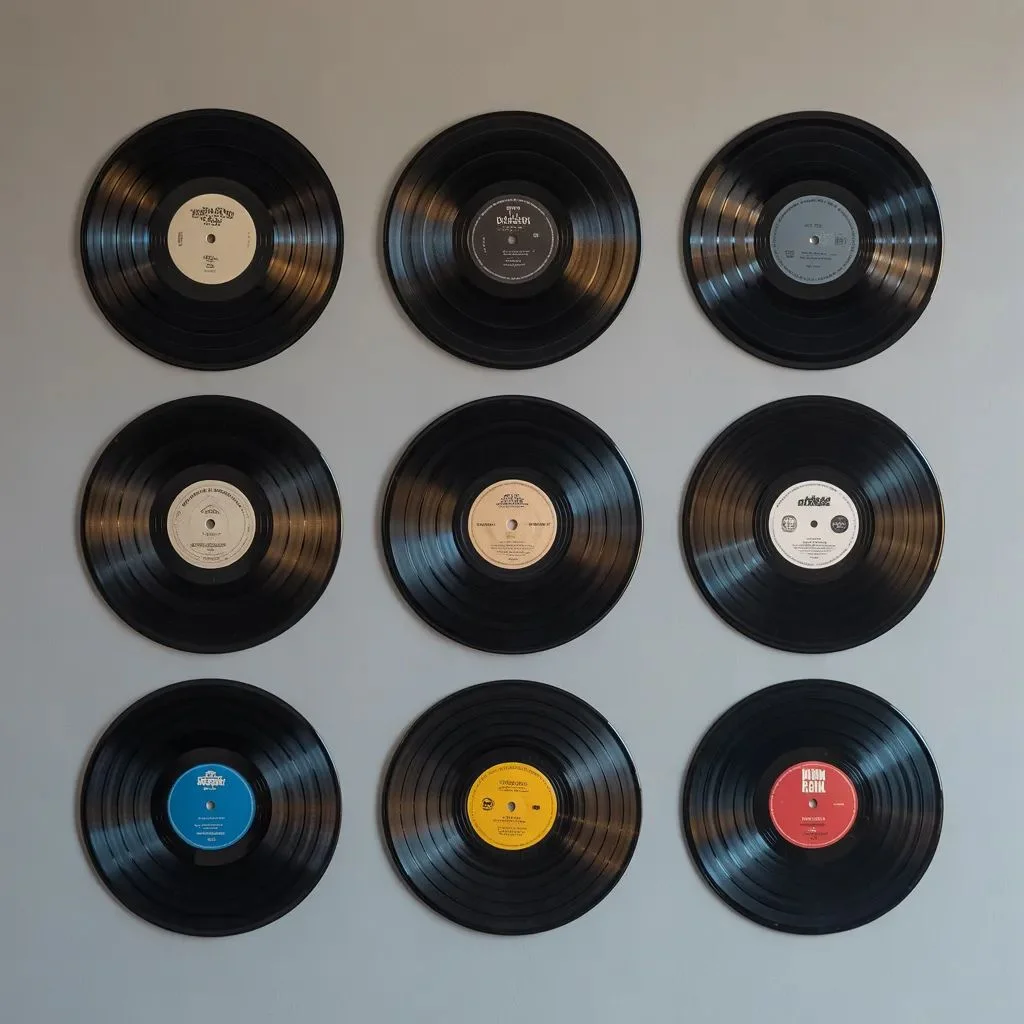
A perfectly spaced grid of records is one of the most visually satisfying and architecturally clean approaches to vinyl record wall art. It suits minimalist, Scandinavian, and contemporary interiors where symmetry and order are part of the design language.
Nine records in a 3×3 grid is the sweet spot — substantial enough to feel intentional, compact enough to fit above a sofa or console. Use a level and tape measure to ensure equal spacing, ideally 5–8cm between each record.
Alternate black records with coloured pressings or picture discs to add rhythm to the grid without disrupting the geometric structure.
- Use identical record hooks for a perfectly uniform hang — avoid mixing hook styles.
- For extra precision, make a cardboard spacing template before installing any hooks.
- A monochrome grid of plain black records on a white wall is as quietly stunning as anything in a design magazine.
DIY Melted Record Bowl Art (Wall-Mounted)
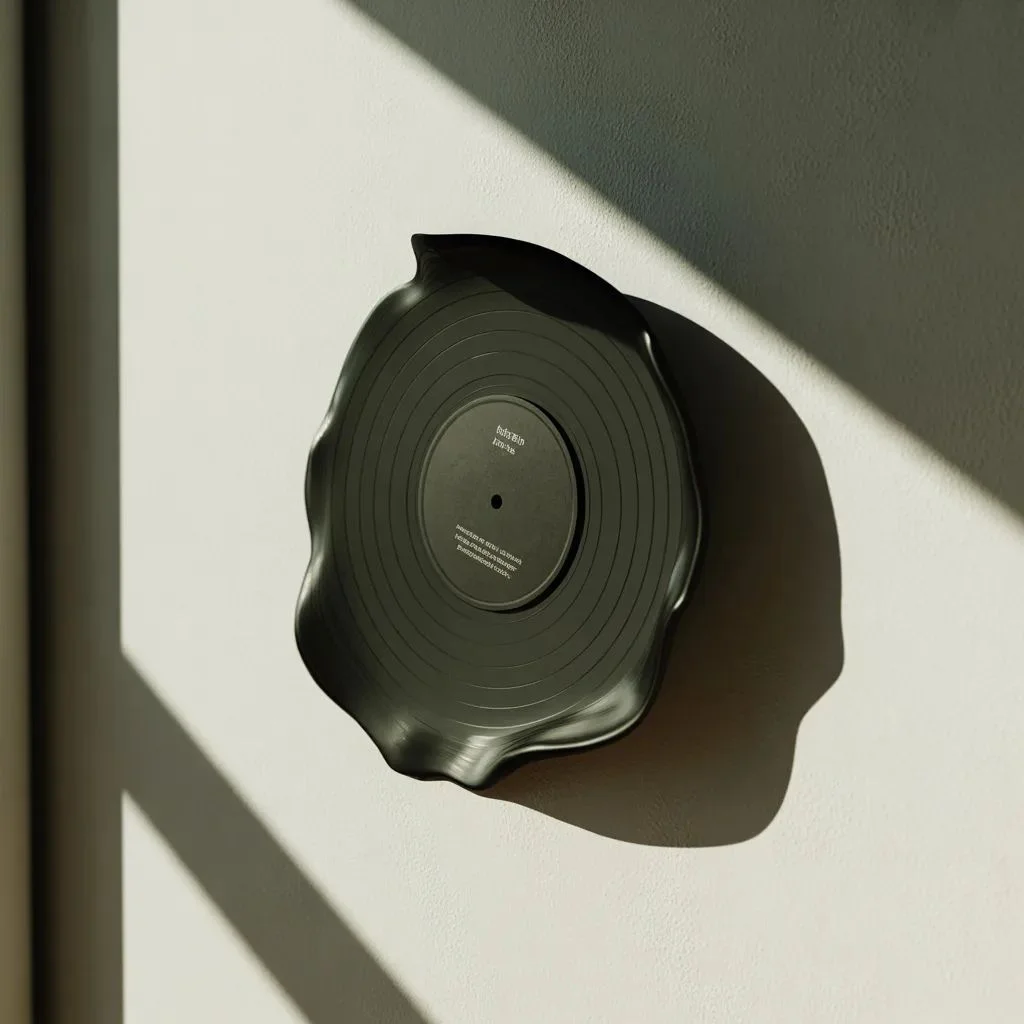
Melted record bowls are usually made for tabletops — but mounting one on a wall shifts it into sculpture territory. The concave curve casts beautiful shadows, and the result looks like something you’d find in a gallery rather than a craft fair.
Heat the record until pliable and press it into a wide bowl mould to create a gentle, organic curve. Once cooled, drill a small hole at the top and mount it flat against the wall using a single bolt and decorative washer.
A series of three or five mounted bowls at ascending heights creates a wave-like installation that’s unlike anything else on this list.
- Spray-paint the bowl before mounting for a finish that suits your colour palette — matte black, copper, or chalk white all work beautifully.
- Use records with interesting original colours or textures for bowls that need no additional painting.
- Mount alongside floating shelves and trailing plants for a sculptural, mixed-material wall moment.
Colour-Sorted Vinyl Wall Installation
Colour-sorting is one of those ideas that looks deceptively simply but creates an effect that genuinely stops people in their tracks. Sort a large collection of records by sleeve colour — moving from warm to cool tones or following the visible spectrum — and mount them in rows on a floor-to-ceiling wall.
The result is part art installation, part personalised library. It works best with at least 40–50 records so the colour gradient has enough range to feel intentional. Below a hundred records and the transitions start to feel abrupt.
Use narrow floating shelves so records lean naturally without the need for individual hooks. The shelves themselves become invisible behind the records.
- Include only sleeves that have visible, distinct colour — avoid all-black or all-white covers, which disrupt the gradient.
- This works especially well in open-plan spaces where the wall is viewable from a distance — the gradient reads best from across a room.
- Photograph it when it’s finished — it’s genuinely one of the most visually dramatic DIY home decor projects possible.
Start With One Wall and Let It Grow
Vinyl record wall art is one of the few home decor styles that gets richer over time. Every new record added is a new piece of the story, another layer of personality in a space that genuinely feels like yours.
Start with whichever idea on this list matches your current skill level and your existing collection. A painted record costs almost nothing. A backlit display takes an afternoon. A colour-sorted installation could become the project of a weekend — and the result of months of collecting.
Highly Recommended: Why Album Cover Wall Decor Beats Generic Prints Every Single Time.