Most living rooms play it safe. Western ranch living rooms do not — and that is exactly what makes them unforgettable. There is something viscerally honest about a space built around raw wood, worn leather, and the kind of warmth that only comes from a room with real stories behind it.
Authentic cowboy-inspired design is not about chasing a trend or slapping horseshoes on a shelf. It is about layering materials, textures, and heritage colours that feel like they were earned — not ordered from a catalogue. Whether you live on forty acres or in a city apartment craving open-sky energy, western ranch living rooms offer a visual language that is bold, grounded, and timeless.
From hand-hewn timber beams to hand-stitched leather sofas, from Navajo-inspired textiles to statement cowhide rugs, this guide covers every element that makes a western ranch interior feel genuinely rooted rather than merely themed. Read on for ideas you can use.
The Foundation: Colour Palettes That Set the Tone

Before a single piece of furniture enters the room, colour sets the entire emotional register of western ranch living rooms. Get this wrong and even the most beautiful leather sofa will feel out of place.
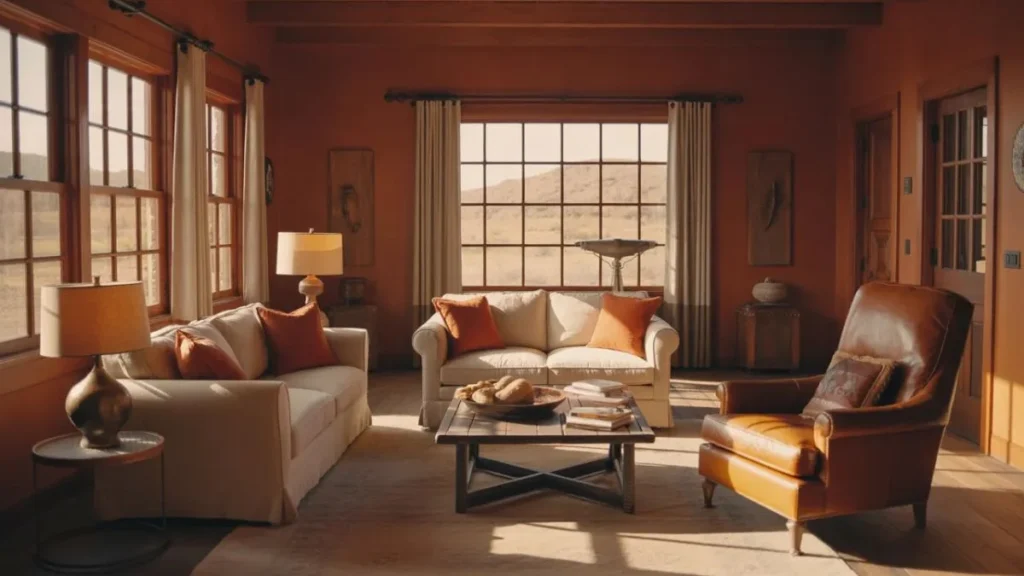
Earthy warm neutrals form the backbone — think weathered wheat, sandy ochre, terracotta, and warm greige. Deep accent colours like burnt sienna, tobacco brown, iron black, and dusty sage add depth without competing with the natural materials that do the real work in a western interior.
Avoid cool greys and stark whites. They undermine the warmth that defines authentic western ranch style. Instead, pull your palette from the natural world — sun-bleached adobe, red canyon stone, drought-dry grass, and midnight indigo from a clear high-desert sky.
Palette Combinations Worth Exploring
Warm canyon: terracotta walls + cream linen + tobacco leather + black iron fixtures.
Prairie dust: sandy beige + aged denim accents + dark walnut + copper hardware.
High desert: sage green + white plaster + raw pine + burnt orange textiles.
Raw Timber and Reclaimed Wood — Structural Character
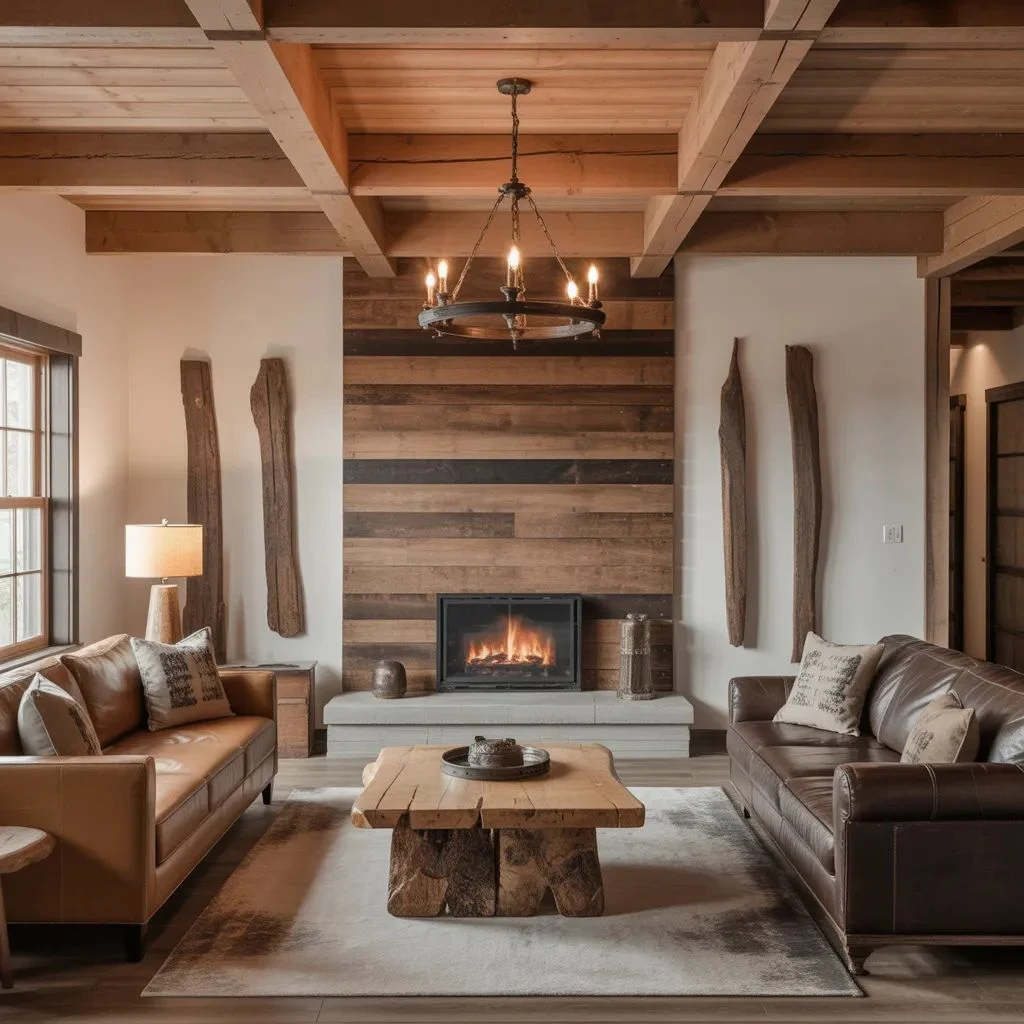
Nothing defines western ranch living rooms more immediately than exposed wood. Not polished or painted — raw, reclaimed, and visibly aged. Timber carries the history of working ranches in its grain, knots, and weathered surface in a way no manufactured material can replicate.
Exposed ceiling beams are the most transformative structural element available. A pair of hand-hewn beams running the length of a living room ceiling instantly shifts the spatial register from domestic to rancho. If your ceilings are too low for structural beams, false timber beams achieve the same visual effect without the engineering.
Reclaimed wood accent walls work particularly well behind a fireplace or along the primary seating wall. Wide-plank boards in varying widths and weathering tones read as genuinely aged rather than manufactured. Leave gaps irregular and avoid uniform colour matching — imperfection is the point.
Wood Elements Worth Prioritising
Coffee tables: Live-edge slabs with visible bark and natural irregularity are among the best western centrepieces available.
Floating shelves: Thick rough-sawn timber brackets mounted with visible black iron hardware give shelving genuine weight.
Window frames and door surrounds: Wrapping openings in reclaimed wood anchors windows and doors to the western material language of the rest of the room.
Leather Seating Done Right
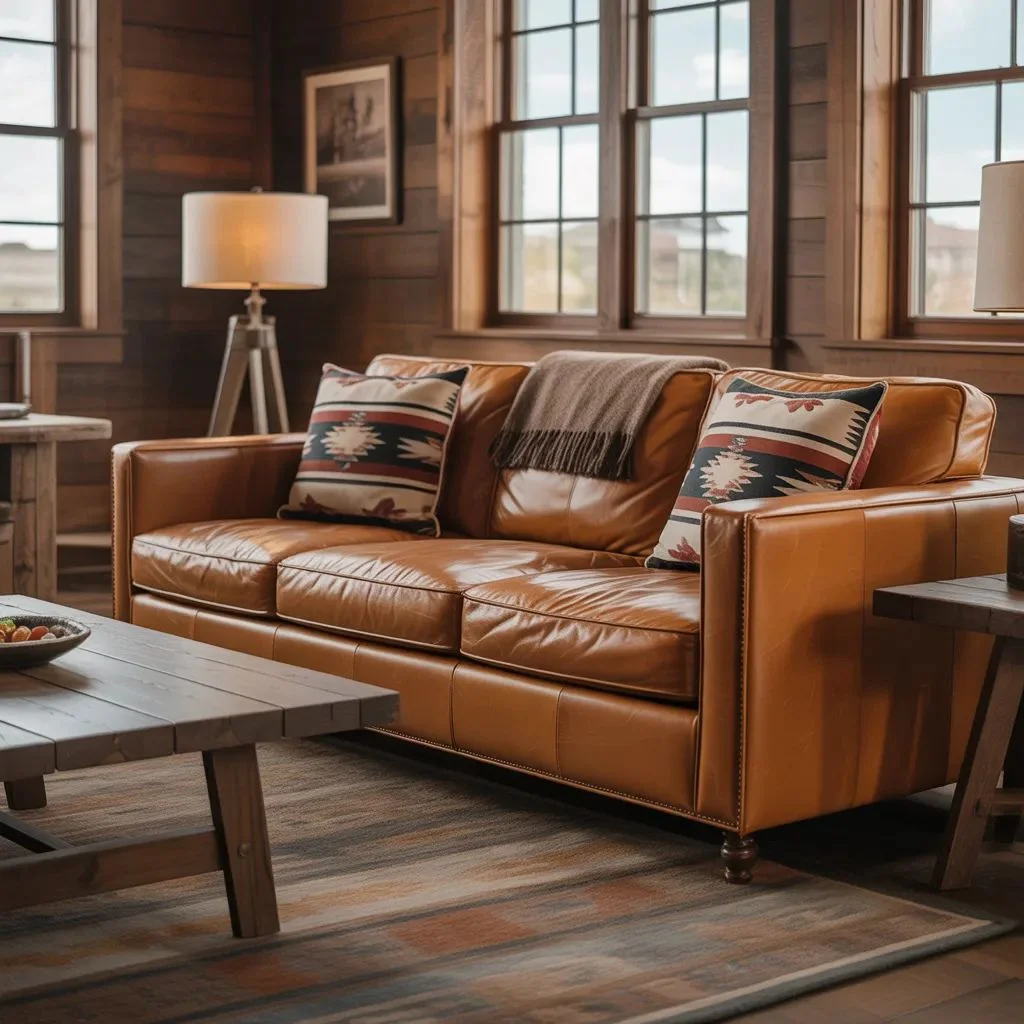
Leather is non-negotiable in authentic western ranch living rooms. Not synthetic, not ultra-glossy, and not brand new looking. Genuine full-grain or top-grain leather that shows its character — the slight variations in tone, the way it softens with use, the story it starts to accumulate from day one.
Colour choices matter enormously. Tobacco brown and cognac are the most versatile western leather tones. Both read as warm and historic without veering into the reddish oxblood territory that can feel more formal than ranchy. For bolder rooms, near-black espresso leather grounds a space dramatically against lighter wood tones and woven textiles.
Sofa silhouettes in western interiors tend toward the substantial. Tufted club sofas, wide-armed Chesterfields with a rustic rather than British sensibility, and deep-seated sectionals all work. Avoid anything too leggy or Scandinavian in its restraint — western seating should feel like it takes up space with confidence.
Pairing Leather With Textiles
Leather works hardest when it is not doing everything alone. Layer woven wool throw blankets in geometric or southwestern patterns across the sofa arm. Stack kilim or Navajo-print cushions against the leather back. The contrast between the smooth hide and rough-woven textile is one of the defining tactile pleasures of a well-done western interior.
Cowhide, Navajo Textiles, and Layered Rugs
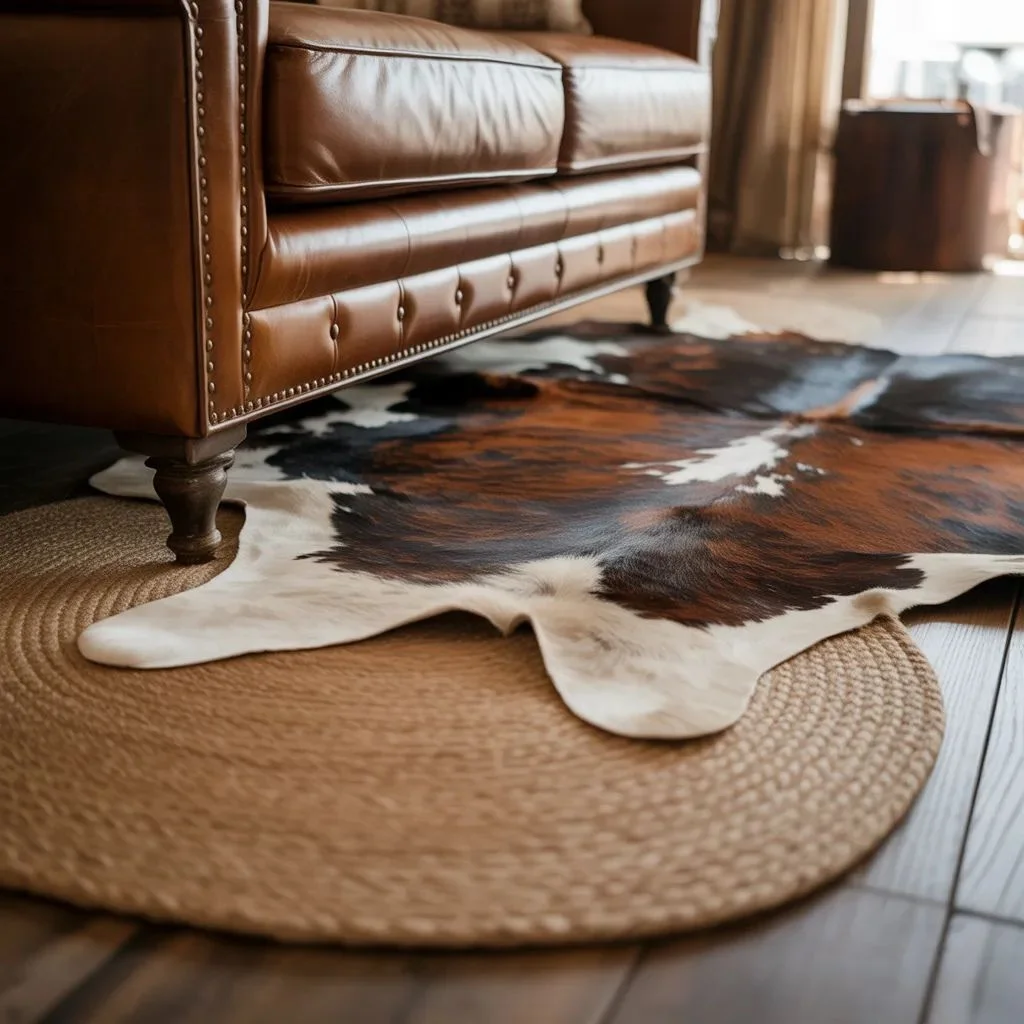
Western ranch living rooms earn their visual complexity from layered textiles on the floor and walls. A single area rug under a coffee table is rarely enough. Layering — one large neutral base rug topped by a smaller cowhide or woven geometric — creates the kind of depth that makes a room feel collected rather than decorated.
Cowhide rugs are among the most characterful options in a western living room. Each is unique in its patterning, and the natural variation in brown, black, white, and brindle tones means no two rooms using cowhide will ever look identical. Lay them over jute or sisal for a layered effect or use a single large cowhide as the sole floor covering in a smaller space.
Navajo-inspired woven rugs and textiles bring bold geometric pattern and a cultural richness that grounds the western aesthetic in genuine tradition. Look for patterns in terracotta, ivory, black, and sage — the colour families that have defined southwestern weaving for generations. Use them as both floor rugs and wall hangings.
Textile Placement That Works
Large jute base rug + small cowhide layered at an angle under the coffee table.
Woven geometric runner along the hallway entrance connecting to the living space.
Single Navajo-print throw folded over the sofa arm as a colour accent.
Stone, Brick, and the Statement Fireplace
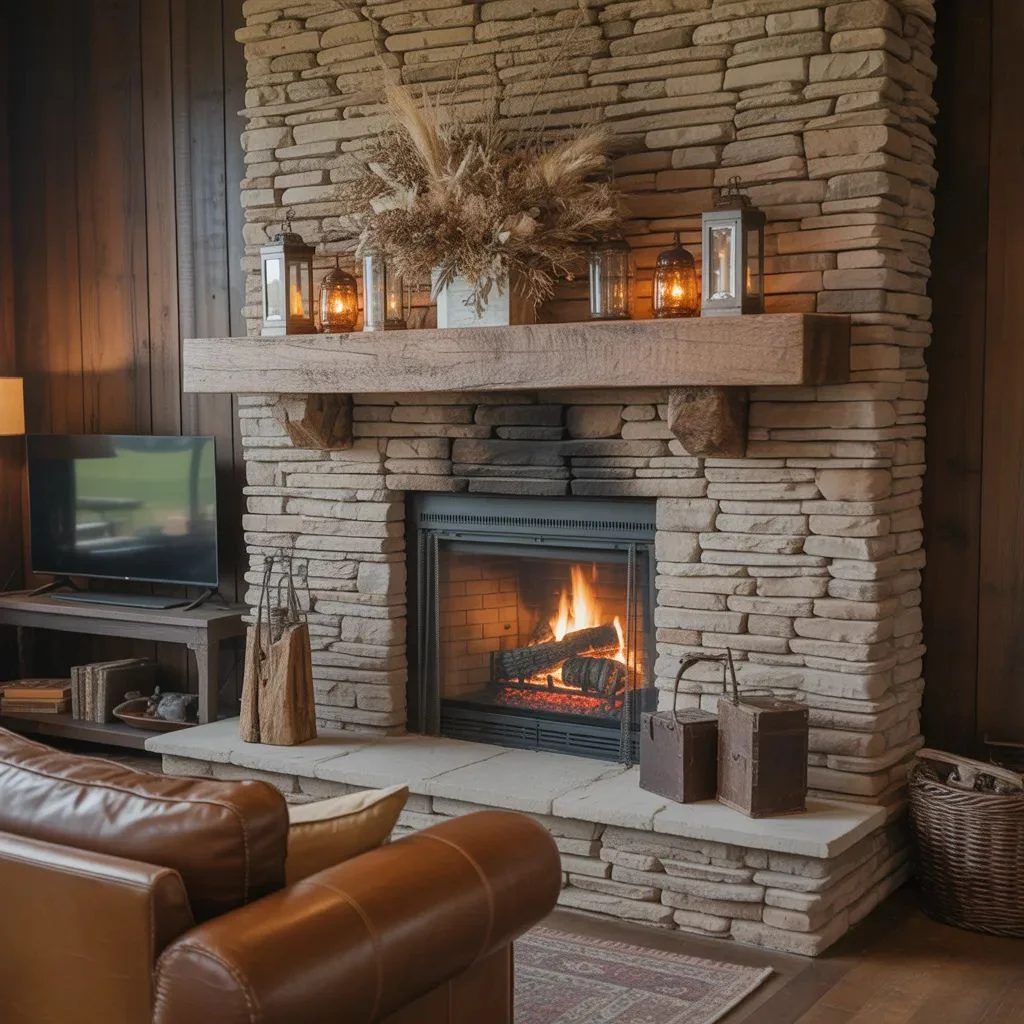
If any single element defines the soul of western ranch living rooms, it is the fireplace. Not a gas insert behind tempered glass — a proper hearth with mass, presence, and architectural weight. Stone and brick are the natural materials, and the scale should be unapologetic.
Floor-to-ceiling stone fireplaces are the pinnacle of western ranch design. Stacked fieldstone or rough-cut limestone creates a wall of natural texture that anchors the entire room. The scale communicates warmth before any fire is even lit — it speaks to shelter, gathering, and the long winters of ranch life.
For rooms where a full masonry fireplace is not an option, brick surrounds with a generous timber mantle achieve much of the same effect. Reclaimed brick with visible mortar and patina reads as historic rather than new construction. Keep the mantle heavy — a thick slab of rough-sawn oak or pine in proportion to the fireplace below it.
Styling the Mantle
Layer objects of varying heights — a pair of aged lanterns, a stack of hardcover books, a small antique clock, and a length of trailing dried eucalyptus or cotton stems. Avoid symmetry; asymmetric arrangements feel more genuine to the western aesthetic.
Lighting That Channels Lantern-Lit Nights
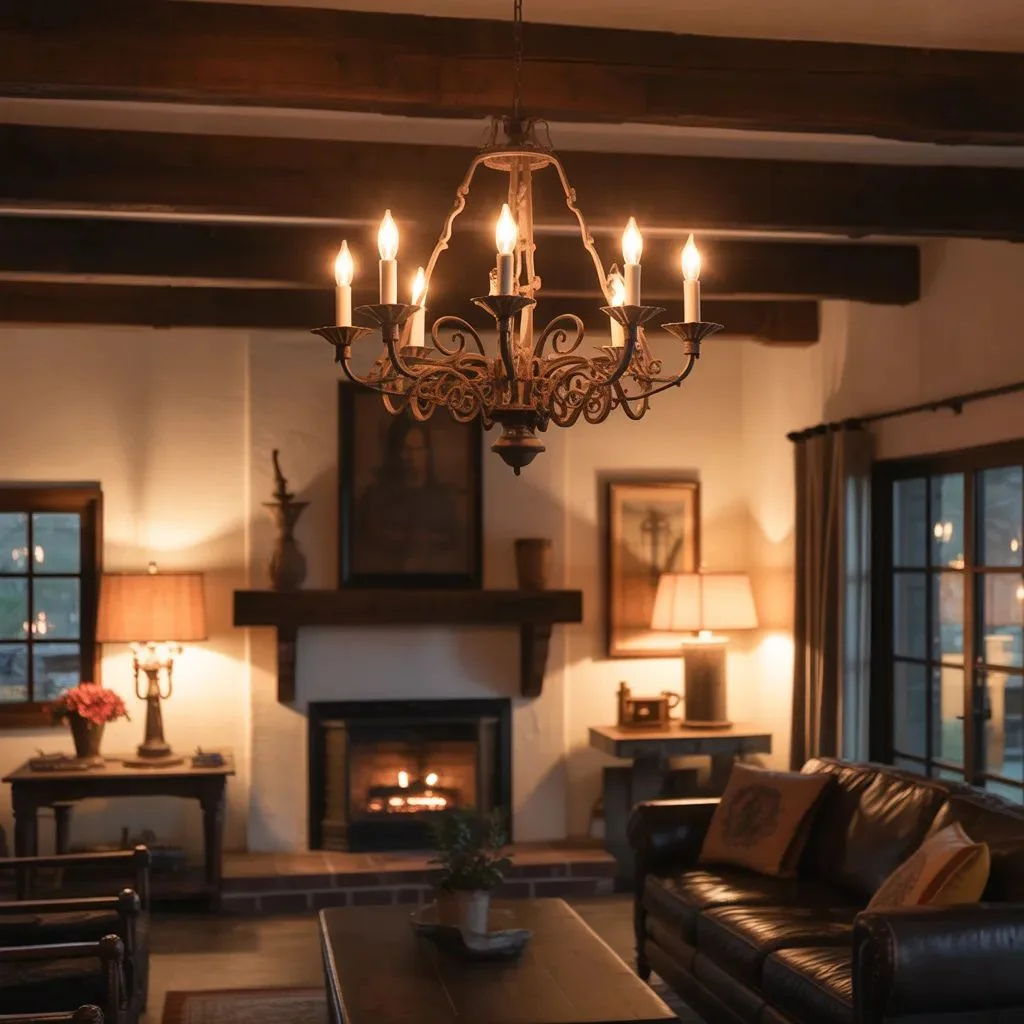
Lighting in western ranch living rooms does not illuminate — it glows. The reference point is the lantern on a porch at dusk, not a recessed grid of LED panels. Warmth, directionality, and visible fixture character are what distinguish western lighting from generic interior lighting.
Iron and bronze chandeliers with candelabra-style bulbs are a natural choice for rooms with timber beams — they complement the material palette and add vertical interest in tall spaces. Look for fixtures with visible hardware, forged or hammered metal surfaces, and bulbs that show their filaments.
Table and floor lamps in western interiors often feature bases made from ceramic, bronze-patinated iron, or carved wood. Shades in aged linen, burlap, or stitched leather reinforce the tactile material language of the rest of the room.
Layering Light Sources
Western ranch lighting works through layers. One overhead source is never enough. Pair a statement chandelier with table lamps on either side of the sofa, a floor lamp beside a reading chair, and firelight or candles for the final warm layer. Each source should operate independently so the room can shift mood from bright and functional to low and atmospheric.
Western Wall Decor With Real Weight
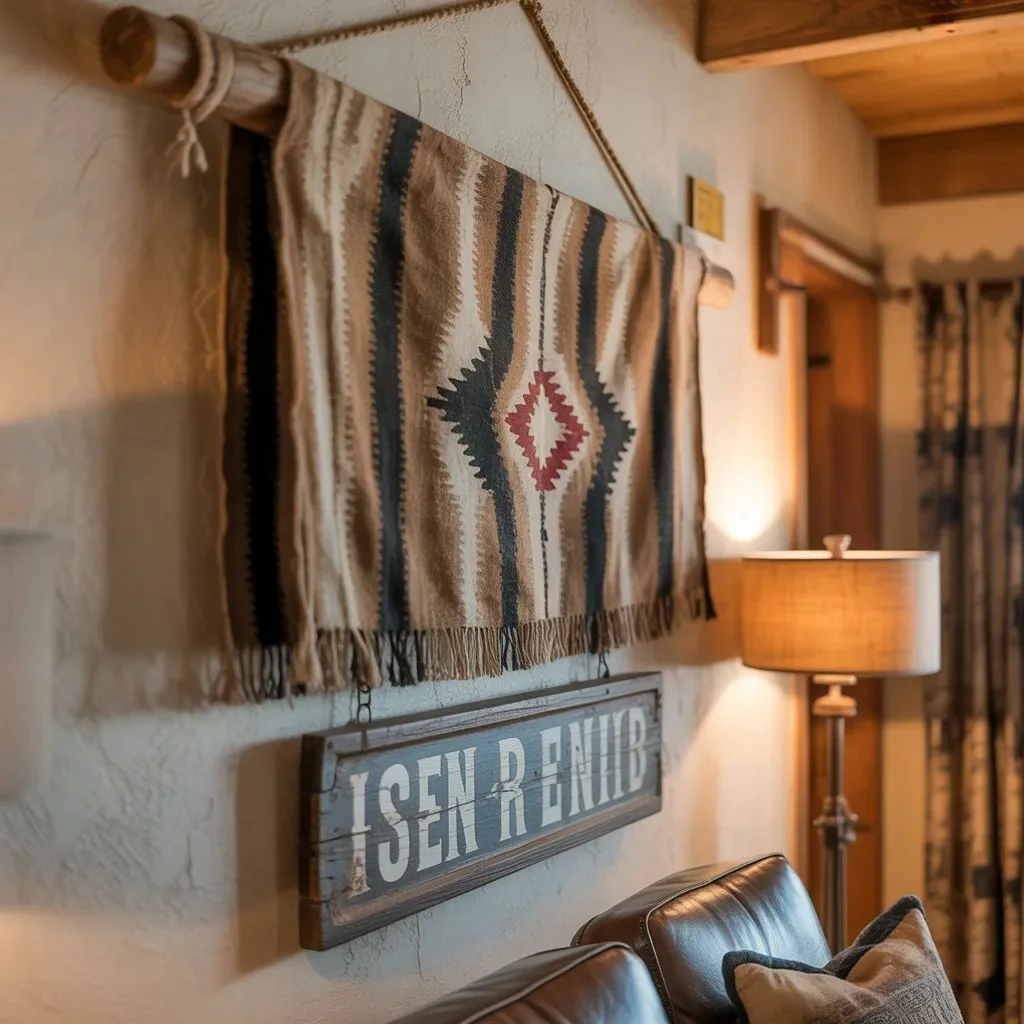
Walls in western ranch living rooms carry their fair share of visual identity. Done well, wall decor feels curated and personal — not bought as a set and hung at eye level in a row. Done poorly, it reads as costume shop themed rather than genuinely western.
Large-scale landscape photography or paintings — canyons, open plains, horses, storm light over mountain ranges — give walls immediate narrative presence without being kitsch. Size matters: a small framed print over a large sofa disappears. A single oversized canvas or print creates impact.
Mounted textile wall hangings are one of the most underused elements in western interiors. A large woven Navajo or southwestern-pattern textile hung on a simple dowel brings colour, texture, and cultural depth simultaneously. It also softens sound and adds warmth in a way that framed art cannot.
Decor Pieces That Feel Authentic
Vintage ranch signage: Weathered wooden signs with brand marks or hand-lettered text from old ranch operations carry genuine character.
Framed maps: Antique survey maps or topographical prints of western territories add intellectual depth.
Wrought iron wall sculptures: Minimal silhouettes — cattle, horses, cacti — in flat iron work without being novelty items.
Plants, Antlers, and Nature-Driven Accents
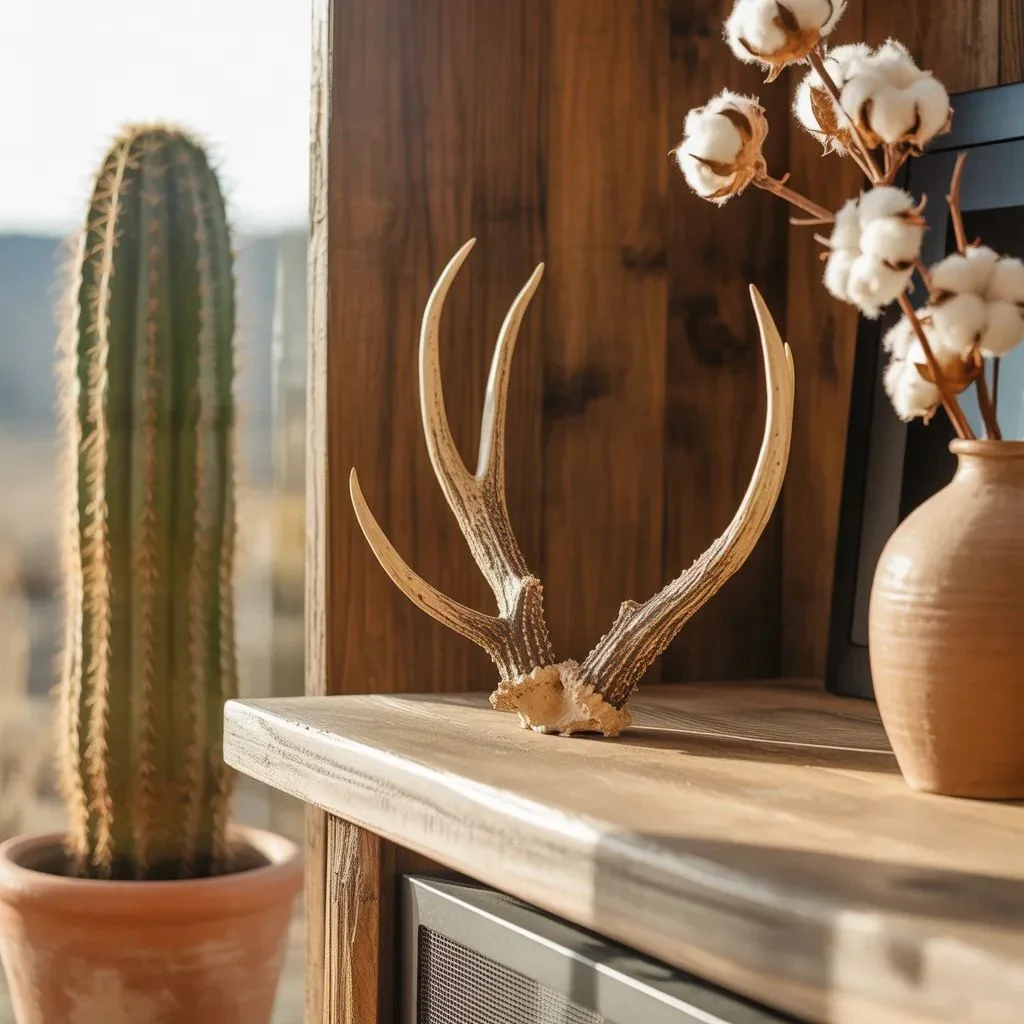
Nature is not decorative in western ranch living rooms — it is structural to the aesthetic. The ranching world exists in constant relationship with the land, and that relationship shows up in the objects that fill a well-done western interior.
Antler decor divides opinions but used with restraint it is among the most genuinely western elements available. A single shed-antler piece on a mantle or coffee table reads very differently to a wall of mounted trophy heads. Decorative antler candle holders, natural shed antler bowl holders, and small antler accent pieces all add organic texture without overwhelming the room.
Plants in western interiors lean toward structural and drought-tolerant — saguaro cactus, prickly pear, agave, and snake plants all suit the aesthetic far better than trailing pothos or large-leafed tropicals. Terracotta pots, aged clay, and hammered copper planters keep the container language consistent with the material palette.
Organic Objects Worth Featuring
Driftwood — as sculptural centrepieces or candle holders.
Smooth river stones — grouped in a clay bowl on a coffee table.
Dried botanicals — cotton stems, pampas grass, and desert sage in ceramic vases.
Small Western Ranch Living Rooms — Big Impact, Tight Space
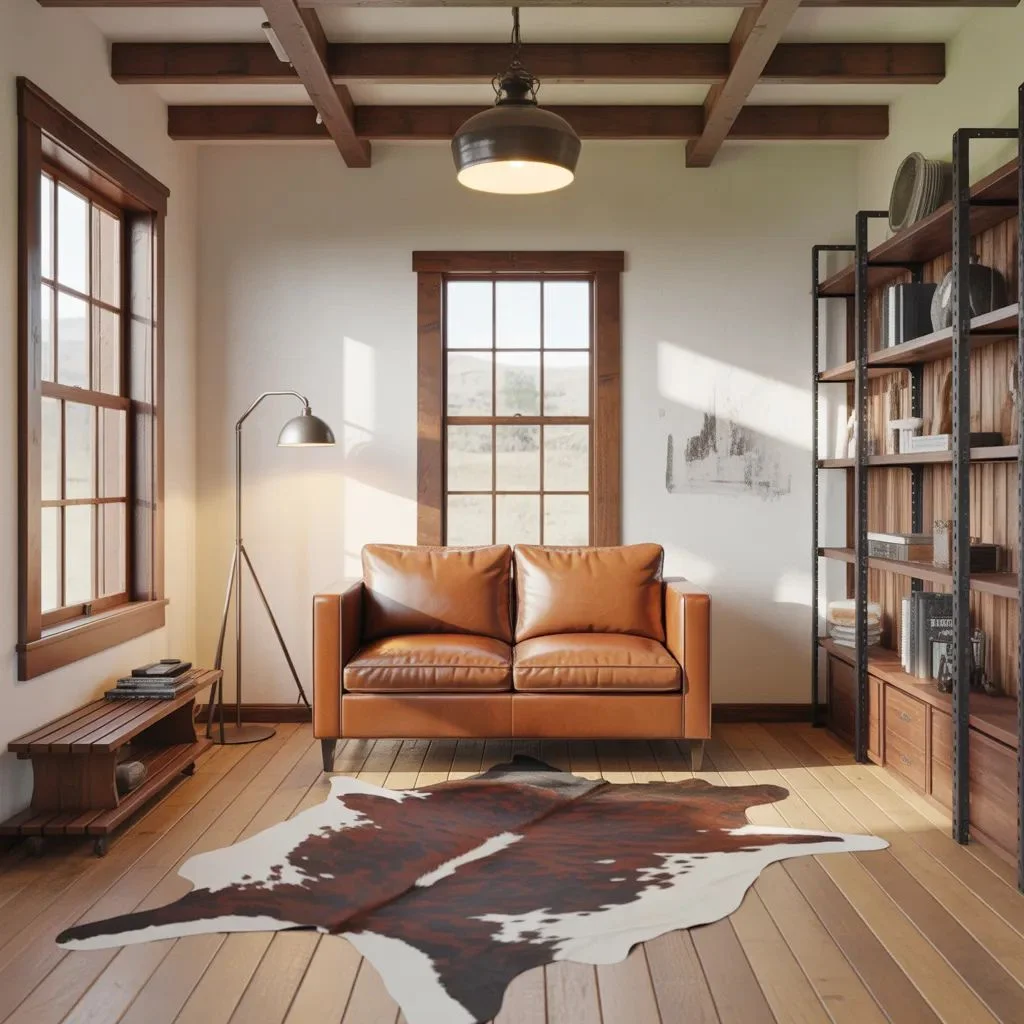
Not every western ranch living room has the square footage of a homestead great room. Apartments and smaller homes can carry western ranch character just as convincingly — the key is editing with discipline and letting each element do more work.
Prioritise one signature material rather than attempting all of them. In a small space, a single leather sofa, a cowhide rug, and one timber coffee table with black iron legs deliver the full western message without crowding. Add more only if each piece genuinely earns its space.
Vertical space matters more in smaller western rooms. Tall iron floor lamps, a narrow reclaimed wood shelving unit running floor to ceiling, or a vertically oriented woven wall textile all draw the eye upward and give the room height it may not structurally have.
Small Space Rules for Western Interiors
One bold rug: Do not layer rugs in a small room — choose one impactful cowhide or geometric woven rug and let it anchor the space.
Limit colour accents: Stick to two accent colours maximum. Terracotta and sage, or cognac and black — not five competing tones.
Wall-mount where possible: Mounted shelving, wall-hung textiles, and sconce lighting all save floor space while maintaining western material language.
Finishing Touches That Pull It All Together
Individual elements make a statement. Finishing touches make a western ranch living room feel complete. These are the details most people overlook — the hardware, the hardware finishes, the basket weaving on a side table, the aged copper bowl — but they are often what separates a room that feels genuinely curated from one that feels assembled.
Hardware and fixture finishes should be consistent throughout the room. Oil-rubbed bronze, matte black iron, and aged brass all suit the western palette — but mixing all three creates visual noise. Choose one metal family and commit to it across drawer pulls, curtain rods, lamp bases, and decorative objects.
Window treatments in western ranch interiors tend toward the functional and honest. Natural linen drapes, raw cotton Roman blinds, and wood shutters all suit the material language. Heavy drapery in velvet or silk belongs elsewhere. Keep window coverings simple so natural light — the most important element of a western interior — can do its work.
Final Details to Layer In
Leather-bound books stacked on a coffee table or shelf.
A vintage or antique clock on the mantle or console table.
Woven baskets in graduated sizes as storage and texture.
A single bold ceramic — hand-thrown in a warm earth tone — on a side table.
Hand-stitched leather coasters on the coffee table for the kind of hospitality that defines ranch culture.
From Saddle to Sofa — Final Thoughts
Authentic western ranch living rooms are not built in a weekend. They are assembled over time — one reclaimed timber, one inherited leather chair, one woven textile with actual history behind it. That unhurried accumulation is precisely what makes them feel genuinely lived-in rather than staged.
Start with the material foundation: a warm colour palette, one honest leather sofa, and either a cowhide rug or a woven geometric underfoot. Build upward from there — add structural timber elements, find a fireplace or at least a fireplace wall worth investing in, and let the finishing touches arrive organically.
What makes western ranch living rooms endure is what makes the ranching tradition itself endure: quality of material, honesty of form, and spaces built for people who live in them. Design from that philosophy and the room will take care of itself.
Editors Choice: Travel Inspired Bedroom Designs Wanderlust Lovers Will Absolutely Fall For.