
A worn linen apron and a chipped porcelain teacup can turn an ordinary garden post into something with real character. That is the appeal behind the best scarecrow ideas for gardens right now, figures built almost entirely from things other people gave up on. Cottage gardens thrive on that kind of imperfection, favouring faded florals, mismatched buttons, and fabric that has clearly lived a full life somewhere else before landing in your flower beds.
Thrift stores and estate sales are quietly the best resource for this look, often costing less than a single bag of new craft supplies. This guide walks through the pieces worth hunting for, the styling choices that make a secondhand scarecrow feel intentional rather than thrown together, and a few lessons picked up from building one at home.
Before You Start Thrifting
- Look for natural fibres like linen, cotton, and wool; they weather better and photograph softer than synthetics.
- A single statement piece, such as a hat or apron, does more for character than a dozen small accessories.
- Budget roughly £15 to £25 for a full outfit if you shop secondhand shelves patiently.
- Weatherproofing matters more than styling; a beautiful outfit that disintegrates in one rainstorm was never worth the find.
A Weekend Estate Sale Started My Cottage Scarecrow Obsession
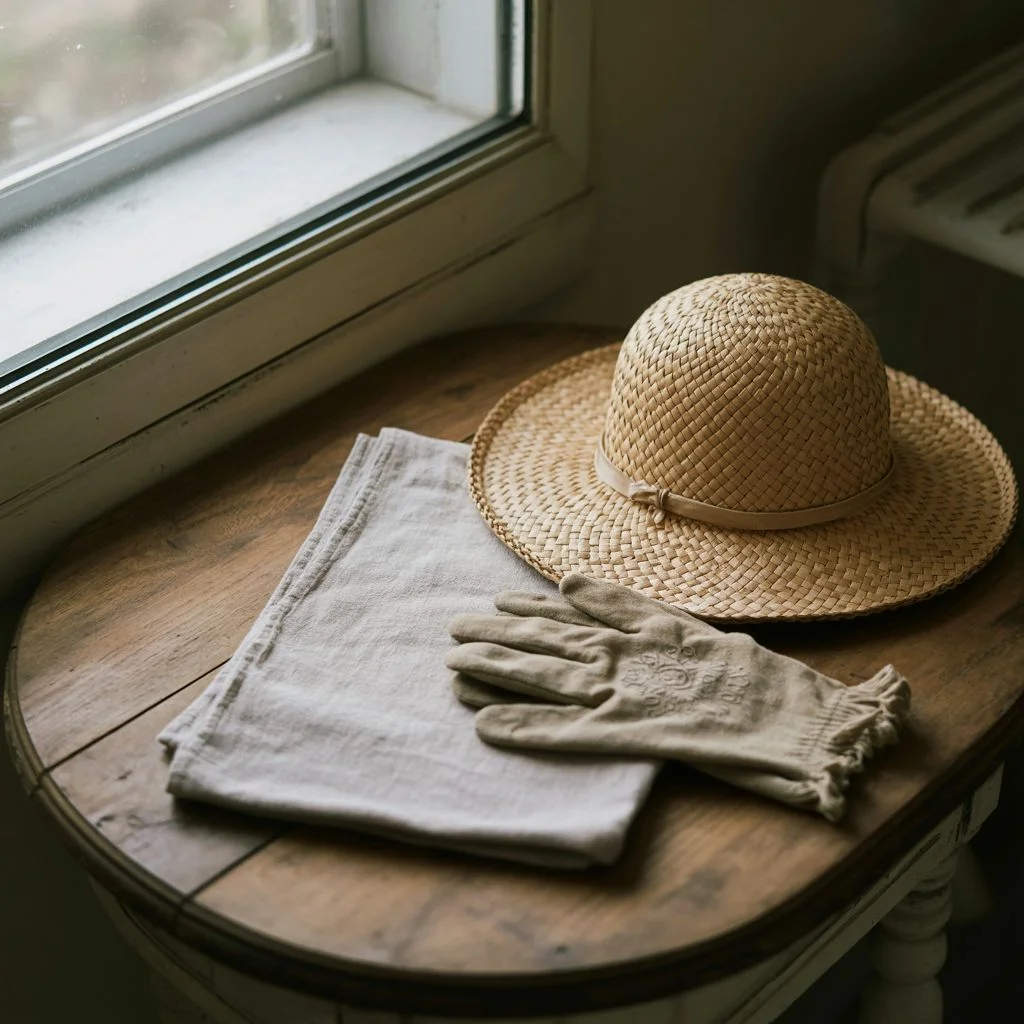
My first proper attempt came from a Saturday estate sale rather than a plan. A box of table linens sat next to a straw sunhat with a torn brim, both priced to clear, and the shape of a scarecrow more or less assembled itself in my head on the spot.
That figure ended up more admired than anything I had bought new for the garden that year, which is really the whole case for building scarecrow ideas for gardens out of secondhand pieces. The wear already built into old fabric does work that new material simply cannot fake, softening the figure until it looks like it grew into the border rather than being placed there.
Why this works: ageing and fading are usually flaws you pay less for, yet in a cottage garden they read as authenticity rather than damage. New fabric needs weeks of sun and rain before it starts blending into a border, while a worn piece already carries that softened look on day one.
That head start is the real value in shopping secondhand for this project. You are not just saving money, you are buying time that new material simply has not had yet.
Chipped Teacups and Linen Aprons Build Instant Cottage Character
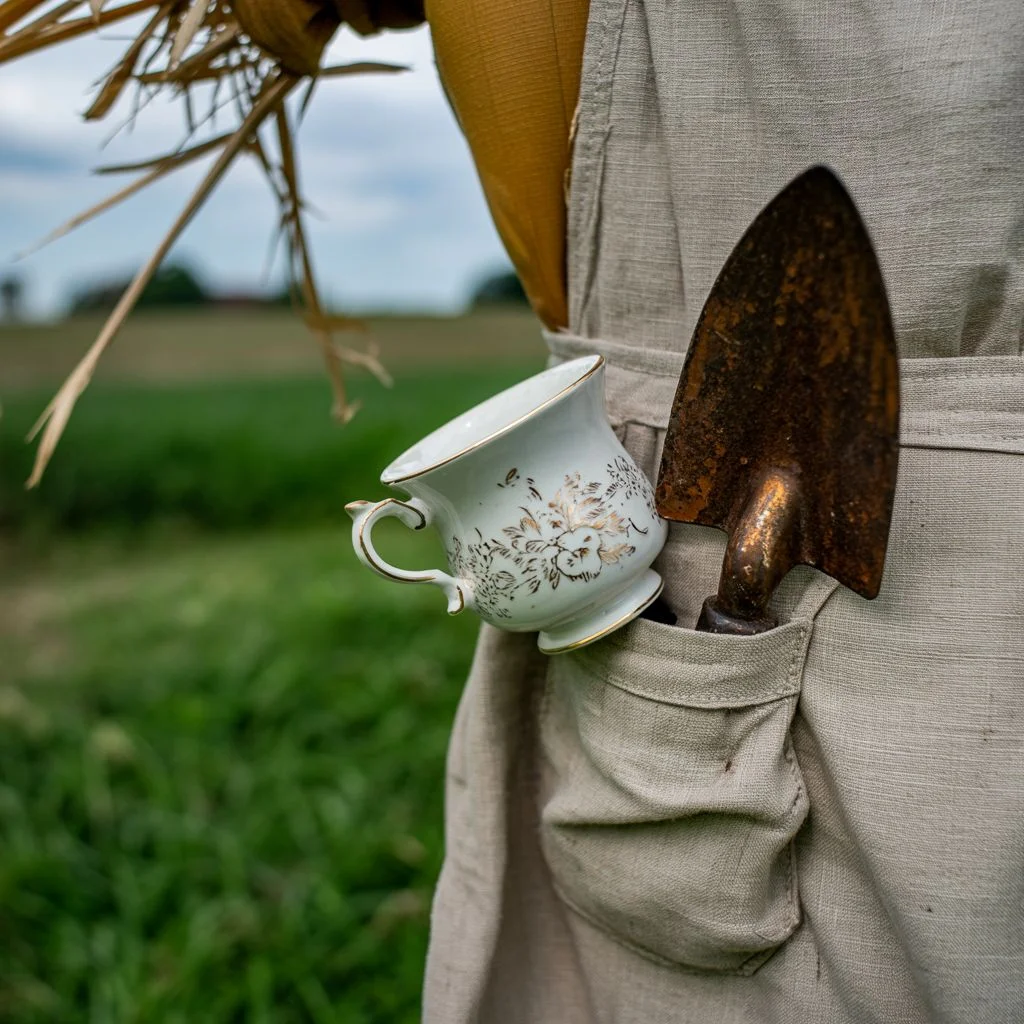
Cottage style leans on texture and imperfection, so the small kitchenware aisle at a charity shop is worth as much attention as the clothing rail. A chipped teacup wired into a hand, a rusted trowel tucked into an apron pocket, or a cracked jug used as a makeshift vase at the figure’s feet all read as lived-in rather than staged.
Linen aprons are especially useful because they hold their shape better than thin cotton once damp, and their pale, washed-out tones sit naturally against greenery. Look for aprons with visible mending or embroidery; those small imperfections are exactly what separates strong scarecrow ideas for gardens from a costume-shop version.
Kitchenware sections are usually overlooked entirely, which is precisely why they hold the best value. A dented enamel colander worn as a hat, or a cracked butter dish balanced in one hand, gives a figure a small story that visitors actually stop to notice, rather than walking past without a second glance.
Five Thrift Finds Worth Hunting Down for Your Scarecrow
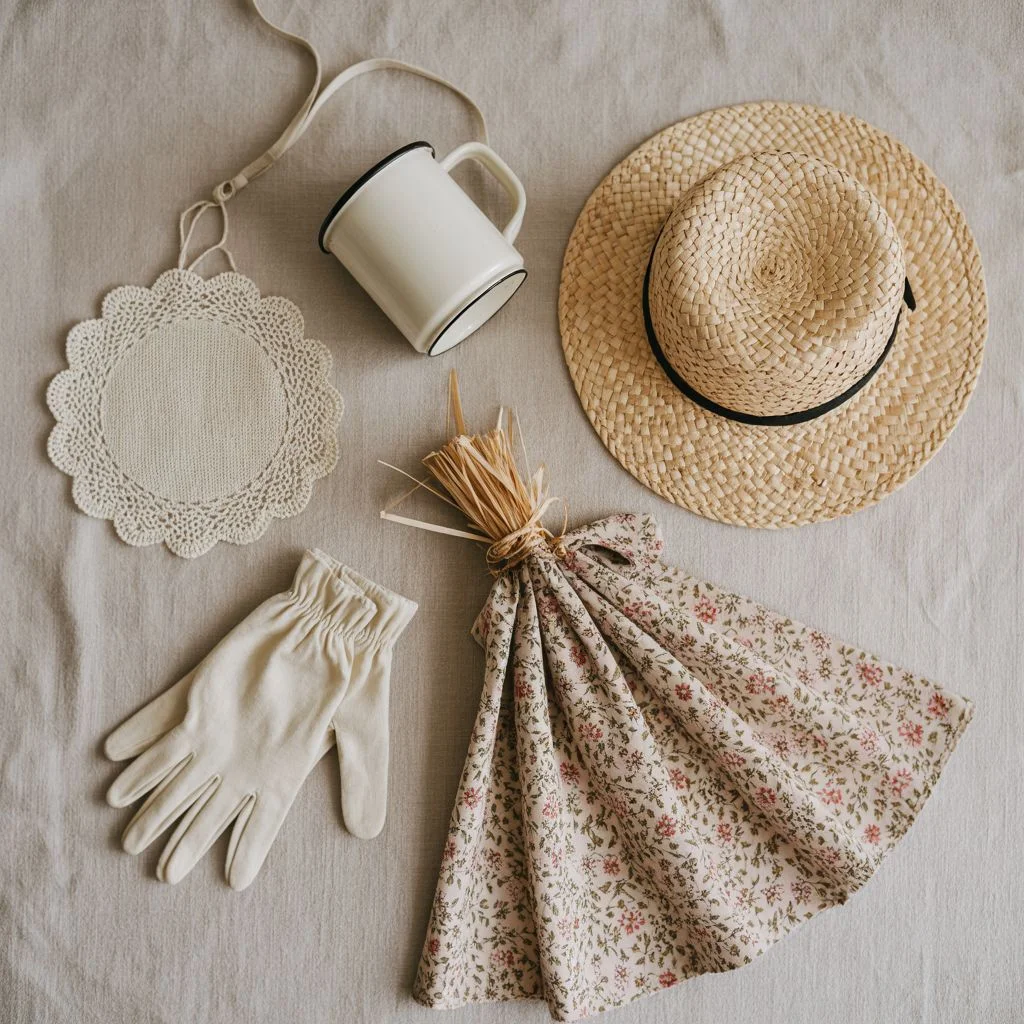
Not every secondhand shelf yields something useful, so it helps to know what to search for before you go. These five categories consistently produce strong results:
- Linen or cotton nightgowns and slips — their loose drape moves nicely in wind and layers well under aprons
- Straw or felt hats with some damage — a torn brim or faded band adds age without extra effort
- Mismatched garden gloves — stitched onto the wrists, they finish the hands convincingly
- Enamelware or chipped ceramics — used as props, they anchor the figure in a lived garden rather than a display
- Old lace curtains or doilies — layered as a collar or shawl, they add a soft, cottage-specific texture nothing else quite matches
Building a shopping list like this before browsing keeps a thrift trip focused rather than overwhelming, and it is one of the more efficient scarecrow ideas for gardens on a tight weekend schedule. Most of these categories turn up within one or two visits to a well-stocked charity shop, so there is rarely a need to hunt across multiple locations.
A worthwhile habit is checking back every few weeks rather than treating it as a single trip. Thrift stock rotates constantly, and the strongest finds, like a genuinely worn straw hat or an embroidered apron, tend to appear when least expected rather than on demand.
Faded Florals Give a Softer Cottage Garden Feel
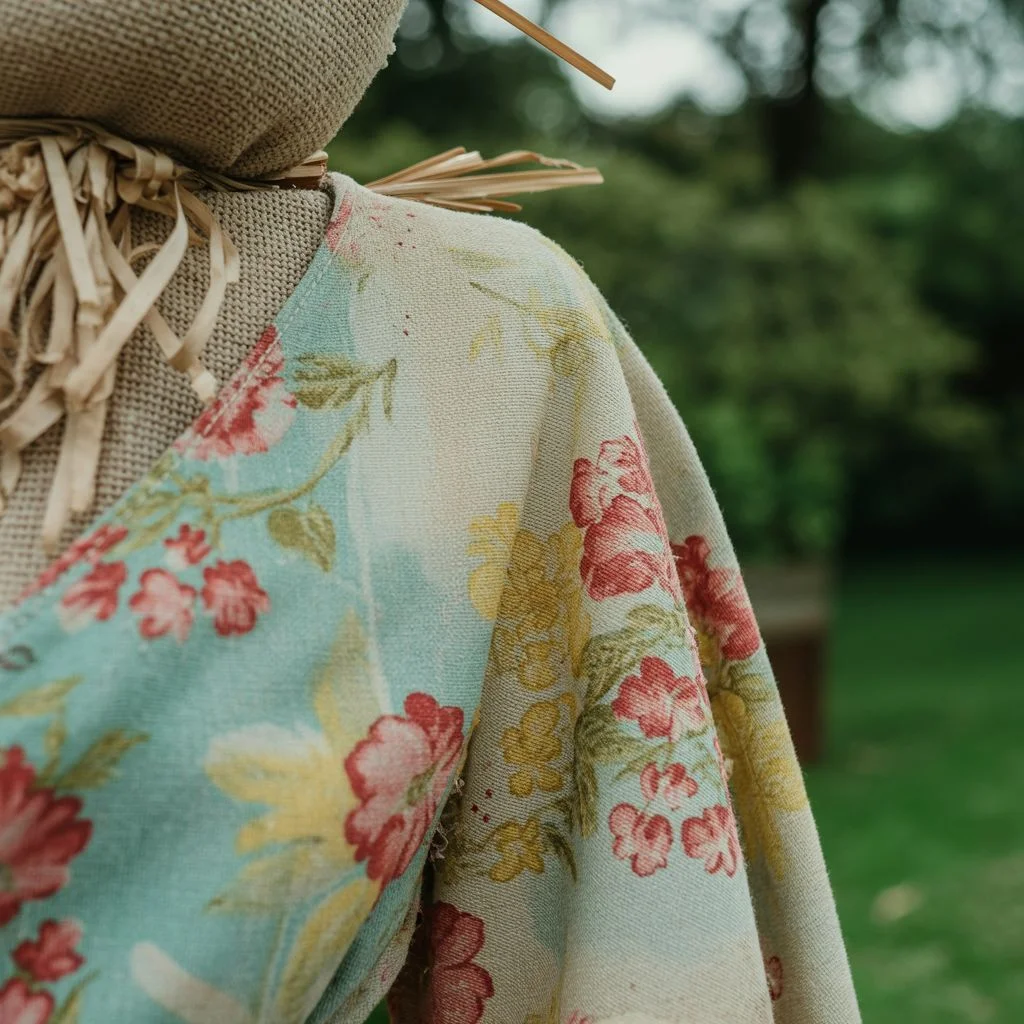
Bright, saturated prints tend to fight with a garden rather than complement it. Faded floral fabric, the kind that has clearly been washed dozens of times, blends into planting beds instead of competing with them, letting the figure feel like part of the landscape rather than a prop dropped into it.
Vintage floral tablecloths and worn dresses are reliable sources for this fabric, and they are usually priced as low as anything in the shop. Among floral-led scarecrow ideas for gardens, a dress with a slightly outdated cut works even better than a fashionable one, since the goal is warmth and nostalgia rather than anything current.
Small floral scarves or headwraps in a similar washed-out palette can tie the outfit together without adding bulk. Keeping colours within the same faded family, rather than mixing several bright competing prints, is usually what makes the whole figure read as one considered look rather than a pile of separate finds.
Weatherproofing Vintage Fabric Without Losing Its Charm

Secondhand fabric was never made with outdoor exposure in mind, so a little preparation extends its life considerably. A light fabric protector spray, applied evenly and left to cure fully before the piece goes outside, adds water resistance without stiffening the material or dulling its faded colour.
Stuffing choices matter too. Straw looks the part but holds moisture, so a bag of polyester fibre fill hidden beneath a straw-stuffed outer layer keeps the classic look while resisting mildew far longer. Rotating the outfit indoors during extended wet spells, rather than leaving it exposed all season, is a simple habit that quietly doubles how long weatherproofed scarecrow ideas for gardens actually last.
A wide-brimmed hat also does more protective work than most people expect. Positioned correctly, it shields the shoulders and upper body from the worst of the rain, meaning the most visible parts of the outfit stay drier for longer even without extra sealant underneath.
Common Mistake Gardeners Make With Secondhand Scarecrow Materials
The most frequent misstep is overdressing the figure, piling on every promising find from a single shopping trip until the character gets lost under accessories. A cottage garden scarecrow reads best with one or two strong pieces, not five competing ones.
The second common mistake is skipping weatherproofing altogether, assuming vintage fabric will behave the way it does indoors. Within a few weeks of rain, unprotected cotton sags, colours run, and even well-planned scarecrow ideas for gardens can start looking simply worn out in the wrong way.
A smaller but common third mistake is mixing eras too freely, pairing a clearly 1970s print with a distinctly Victorian-style lace collar. One or two decades of consistency in the fabric choices keeps the figure feeling like a coherent character rather than a costume assembled from unrelated boxes.
Placing Your Scarecrow Where the Cottage Garden Story Comes Alive
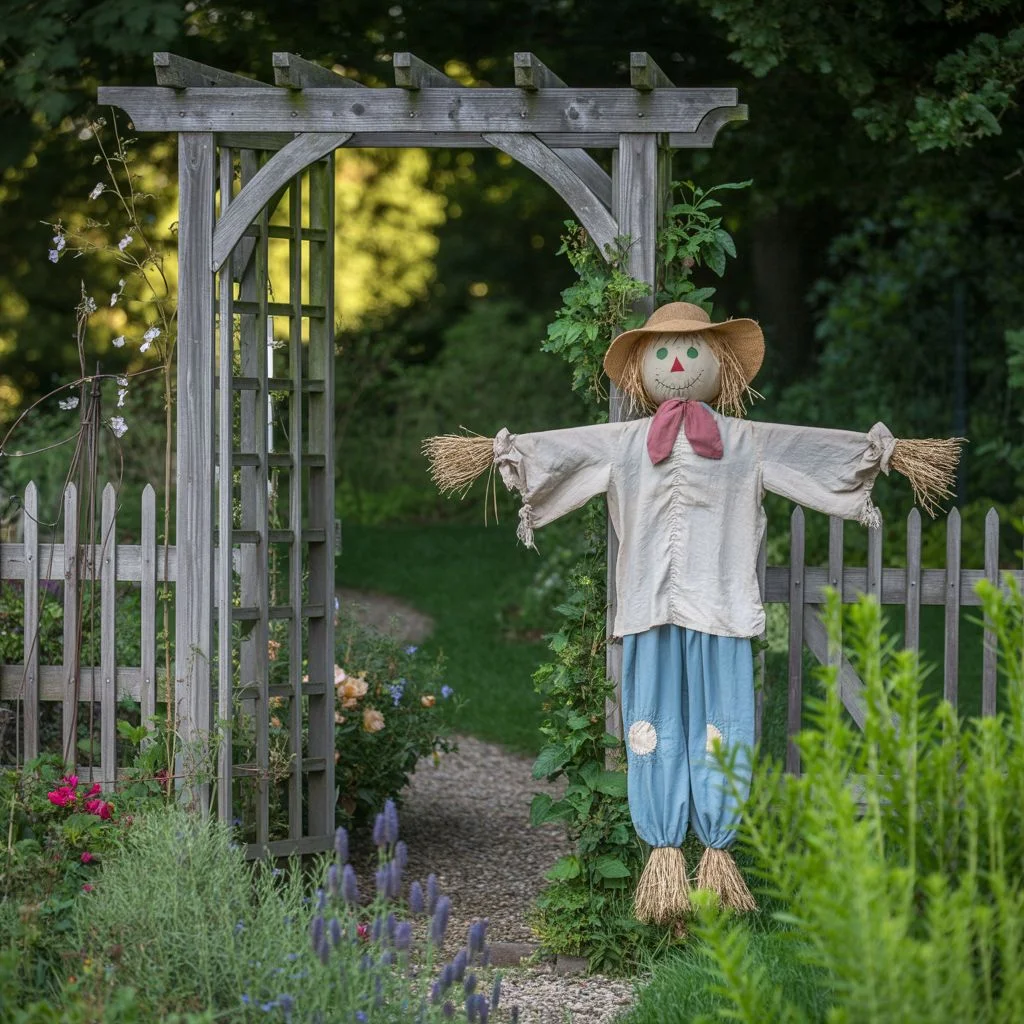
Positioning does as much work as the outfit itself. A figure tucked among tall foxgloves or leaning near a rustic trellis looks like it belongs there, while the same figure standing alone on open lawn can look oddly staged.
Height and sightline matter as well. Placing the scarecrow so it is partially visible from a kitchen window or garden path creates a small surprise each time it comes into view, which is part of what makes these scarecrow ideas for gardens feel like ongoing decor rather than a one-off Halloween prop.
Avoid the very centre of an open lawn or the exact middle of a bed, since perfect symmetry tends to undercut the relaxed, gathered feel a cottage garden is meant to have. A slightly off-centre spot, angled toward a path rather than facing straight ahead, almost always looks more natural.
Seasonal Refreshes That Keep a Thrifted Scarecrow Looking Intentional

A single outfit rarely needs replacing across the year; it usually just needs small seasonal swaps. Tucking dried lavender or wheat stems into a hatband for summer, then switching to a knitted shawl and a few dried leaves for autumn, keeps the figure feeling current without a full rebuild.
Winter calls for a heavier layer, such as an old wool coat, while spring suits something lighter like a linen scarf with a few silk flowers pinned on. These small, low-cost changes are what separate the best seasonal scarecrow ideas for gardens from a figure that looks forgotten and clearly overlooked.
None of these swaps need to cost much. A charity shop scarf or a handful of dried stems from the garden itself usually covers an entire seasonal refresh, keeping the whole project within the same low-budget spirit it started with.
Where Old Treasures Find New Garden Life
Building a cottage garden scarecrow from secondhand pieces rewards patience more than budget. The best results tend to come from slow, occasional finds rather than one big shopping trip, with each piece adding a little more history to the figure over time.
That patchwork quality, gathered rather than bought all at once, is exactly what makes thrifted scarecrow ideas for gardens feel so at home in a cottage setting. Start with one strong piece, build outward slowly, and let the garden tell you when the figure is finished.
Our Pick: Spooky Halloween Archway Ideas for a Show Stopping Entrance.