Glass stair railing quietly shapes how a home feels the moment someone walks through the front door, turning an everyday structural feature into a design statement. Swapping out heavy wood balusters or iron for glass panels lets light travel freely between floors instead of getting blocked.
Whether a home leans coastal, industrial, or classic and traditional, there is a glass railing look built for it. Here are ten distinct styles worth borrowing, from breezy beach house glass to moody art deco glass, each with its own personality and finishing touches.
Glass Stair Railing Panels for Sleek Minimalist Homes
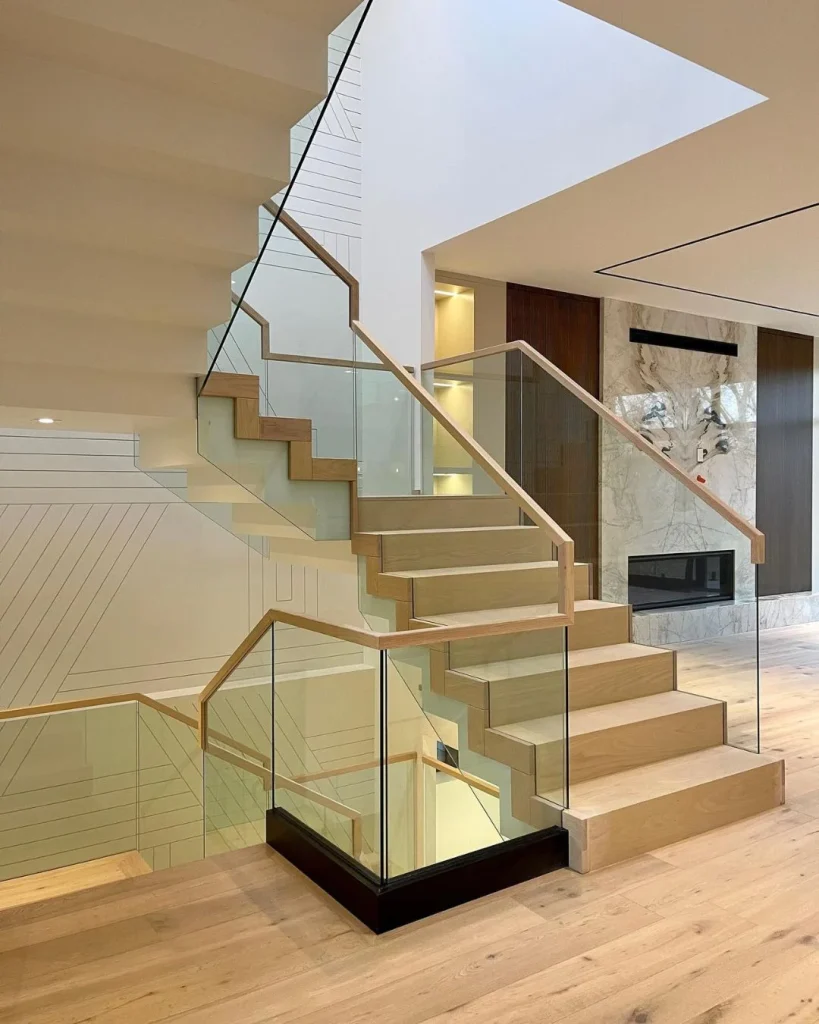
Photo Credit: robleglass.ca / Instagram
Minimalist homes reward negative space, and glass stair railing panels are one of the easiest ways to keep a staircase from crowding a room. Frameless glass, held by discreet metal clips or a slim base channel, disappears visually while still meeting safety requirements. The result reads as floating steps rather than a boxed-in staircase.
Pair the glass with a matte black or brushed steel handrail for a bit of contrast, or keep everything tonal with a glass-topped rail for a fully see-through effect. Either way, the staircase stops competing with furniture and art for attention.
This look works especially well in open-plan homes where sightlines matter, since clear glass lets natural light bounce between the entryway and upper floor instead of stopping at a solid wall of balusters.
Farmhouse Staircases Get a Modern Glass Update
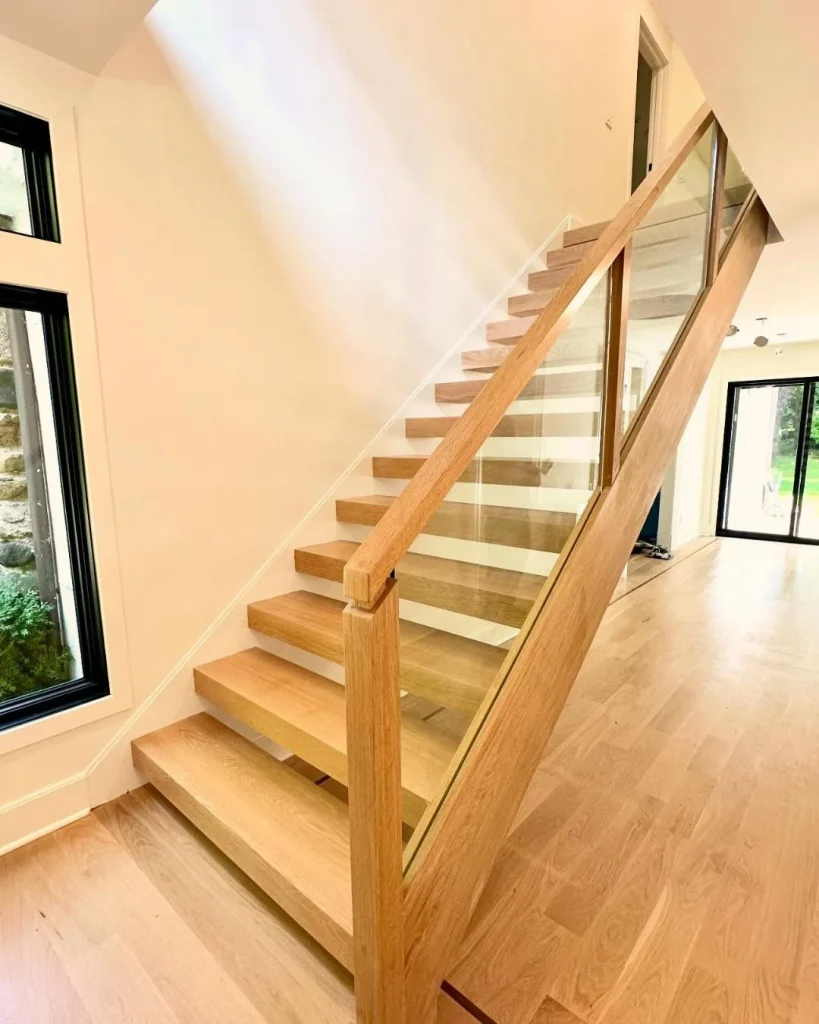
Photo Credit: paulatomisaki / Instagram
Farmhouse interiors lean on wood tones, shiplap, and a slightly worn-in feel, so glass stair railing might sound out of place until it is paired correctly. The trick is framing clear glass panels with a chunky white-painted or natural wood newel post and rail, keeping the farmhouse warmth while letting the glass handle the safety work quietly.
It is a swap a lot of homeowners make after realising traditional wood spindles collect dust and visually chop up a staircase that could otherwise feel open. Glass keeps the rustic materials as the star.
A favourite pairing here is reclaimed wood treads with glass rails and black hardware, since it reads collected over-time rather than newly renovated, which suits the farmhouse mood far better than anything too polished.
Coastal Homes Feel Breezier with Clear Glass Rails
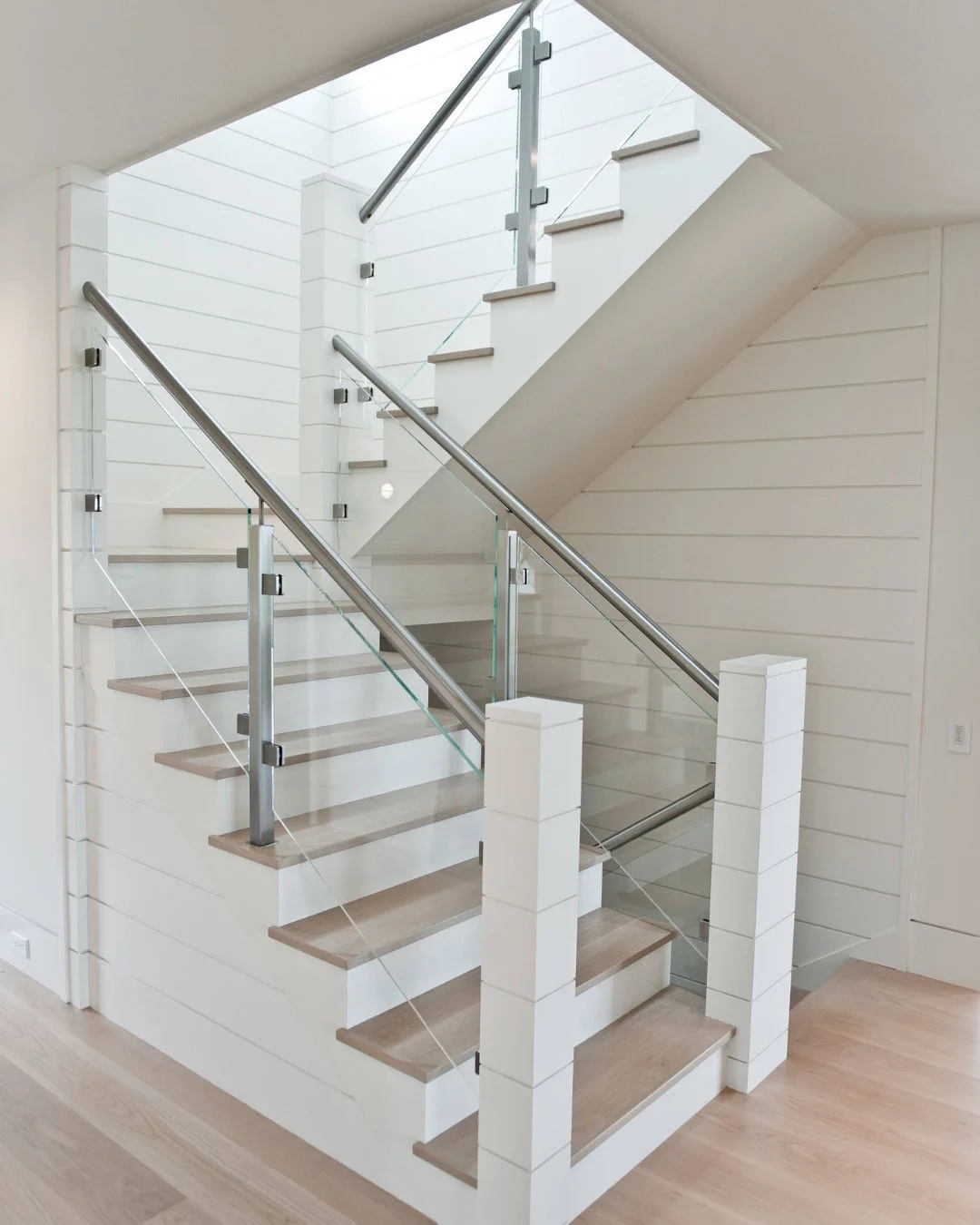
Photo Credit: houzz.com
Coastal and beach house interiors are built around light, air, and unobstructed views, which makes glass stair railing close to a natural fit. Clear glass panels let ocean views or garden light continue past the staircase instead of getting broken up by rails.
Whitewashed wood or brushed nickel framing keeps the hardware feeling relaxed rather than industrial, matching the softer coastal palette. Rope detailing on the handrail is an easy way to add texture without losing the airy feel glass provides.
Why this works: coastal design depends on sightlines to windows and outdoor space, and glass is one of the only railing materials that genuinely preserves them from every angle of the room.
Contemporary Staircases Mix Glass with Warm Brass Accents
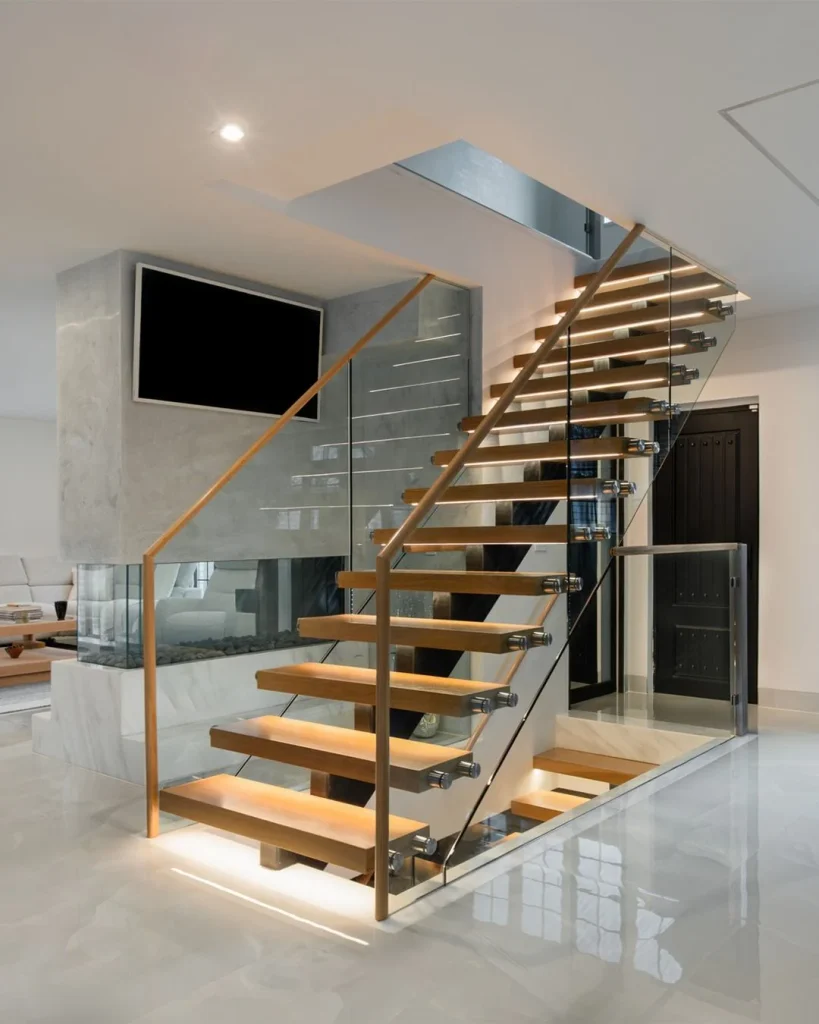
Photo Credit: ariaglassny / Instagram
Contemporary interiors often walk a line between sleek and warm, and glass stair railing finished with brass or warm gold hardware hits that balance well. The glass keeps the staircase feeling light and current, while brass posts, caps, or handrail brackets add warmth that plain black or chrome hardware cannot.
This pairing tends to show up in newer builds and renovated townhouses where the staircase doubles as a design centrepiece near the entry. A curved glass and brass staircase in particular reads as a quiet luxury detail rather than a loud one.
Keep the rest of the entryway simple, since a glass and brass staircase already carries enough visual interest on its own.
Industrial Lofts Pair Glass with Black Steel Frames
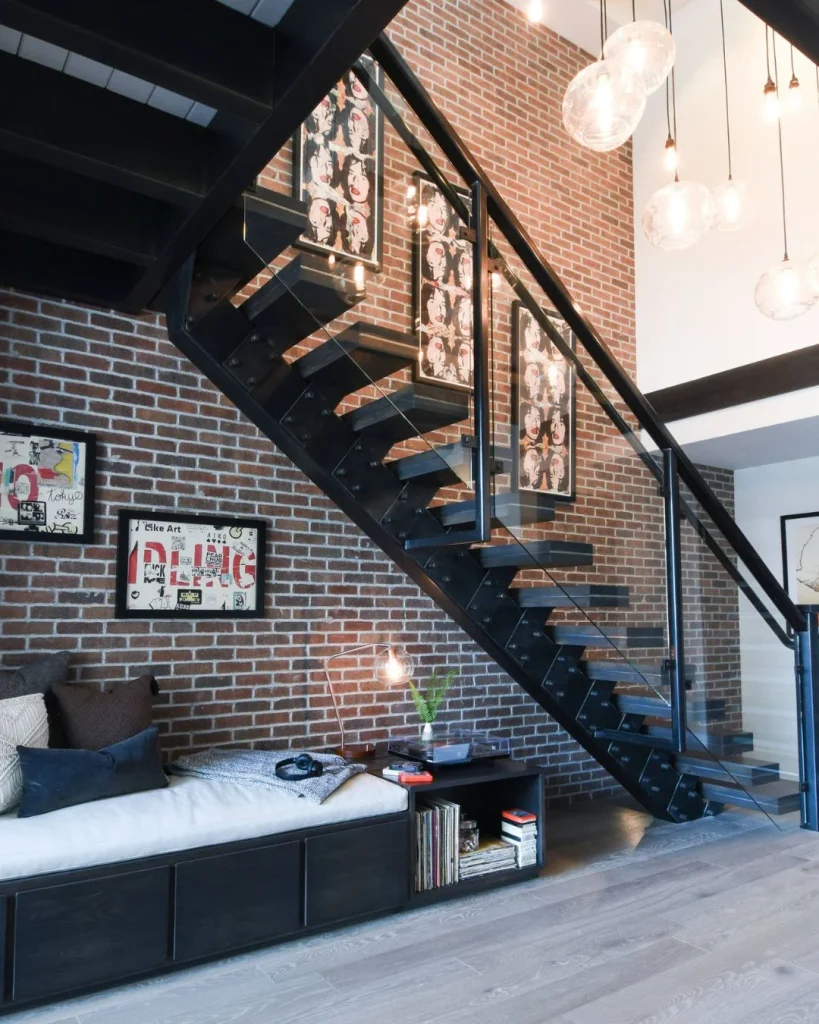
Photo Credit: houzz.com
Industrial loft spaces usually already have exposed brick, steel beams, or concrete floors, so glass stair railing framed in matte black steel fits right into that material palette. Thicker black steel posts with tempered glass infill panels give the staircase an architectural, almost warehouse-style presence.
This look holds up particularly well in multi-level lofts where the staircase is a focal point rather than a tucked-away utility feature. Pairing it with a black steel handrail rather than wood keeps the whole structure feeling cohesive and intentional.
One common mistake here is mixing too many metal finishes on the same staircase. Sticking to one steel tone across the frame, handrail, and any nearby fixtures keeps the industrial look sharp instead of cluttered.
Scandinavian Interiors Stay Airy with Simple Glass Rails
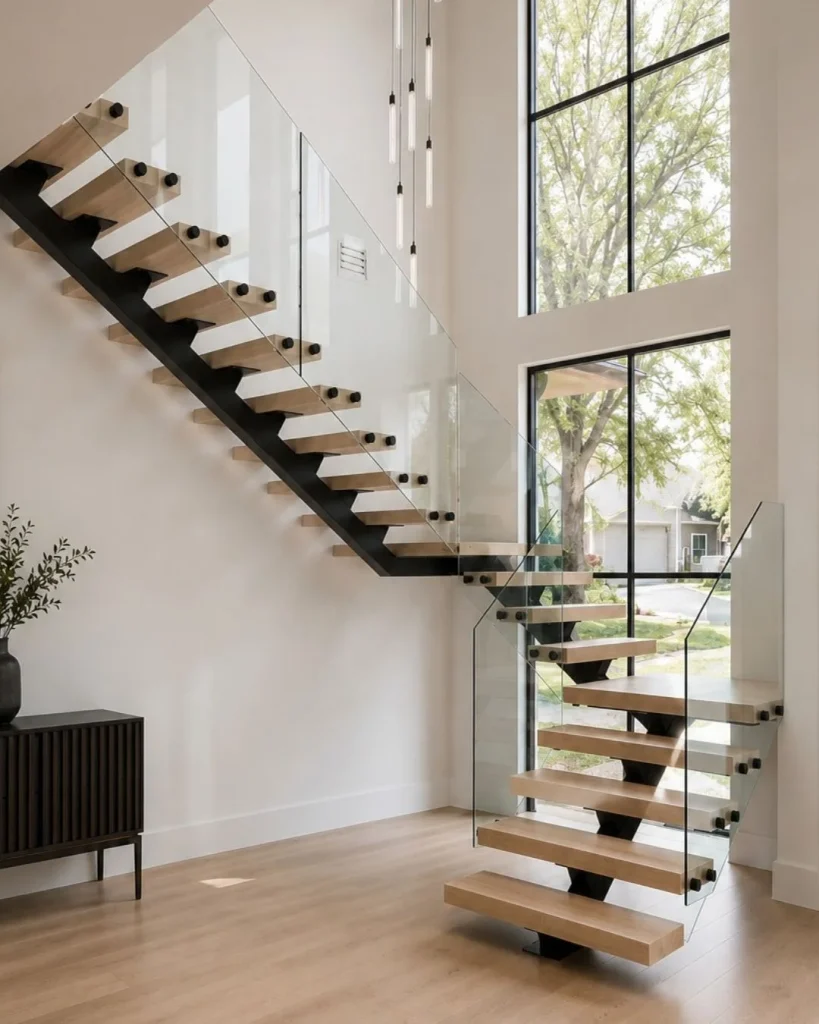
Photo Credit: elevated_stairs / Instagram
Scandinavian design leans on light wood, white walls, and as little visual clutter as possible, which makes glass stair railing an easy match. Simple glass panels with a light oak or birch handrail keep the material palette soft and natural rather than cold.
Skip anything ornate here. The whole point of Scandinavian styling is restraint, so a plain glass panel with minimal hardware does more for the room than an elaborate railing design ever could.
Natural light matters a lot in Scandinavian interiors, especially during darker months, and glass railings let daylight travel further into the home instead of stopping at a solid staircase wall.
Timeless Transitional Homes Choose Classic Glass Framing
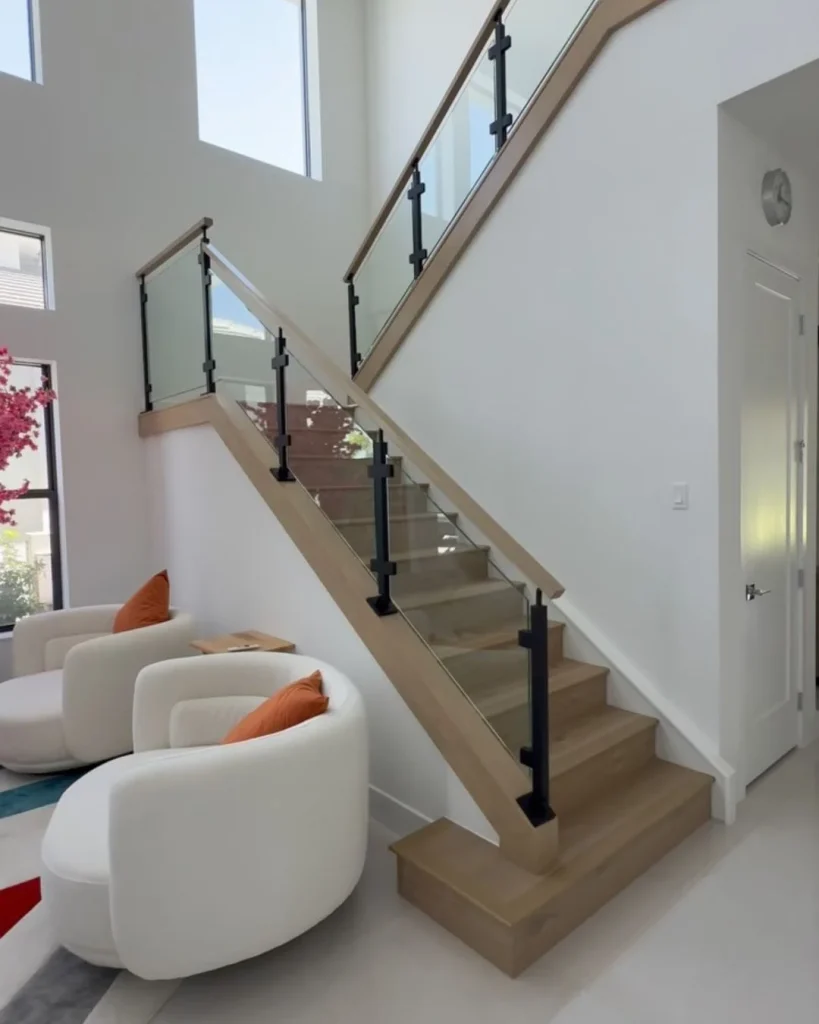
Photo Credit: glassprorailings / Instagram
Transitional homes sit between traditional and modern, and glass stair railing with simple wood or wrought iron framing captures that in-between feeling well. The glass keeps things current while classic newel posts and handrail shapes nod to more traditional staircases.
This is often the safest glass railing choice for anyone unsure about committing to a fully modern look, since it suits both a period home and a newer build. It also tends to age gracefully, unlike trend-driven railing styles that can feel dated within a few years.
A stained wood handrail over glass panels is a particularly popular version of this look, especially in homes with existing wood staircases being updated rather than replaced.
Mid Century Homes Blend Glass with Warm Wood Tones
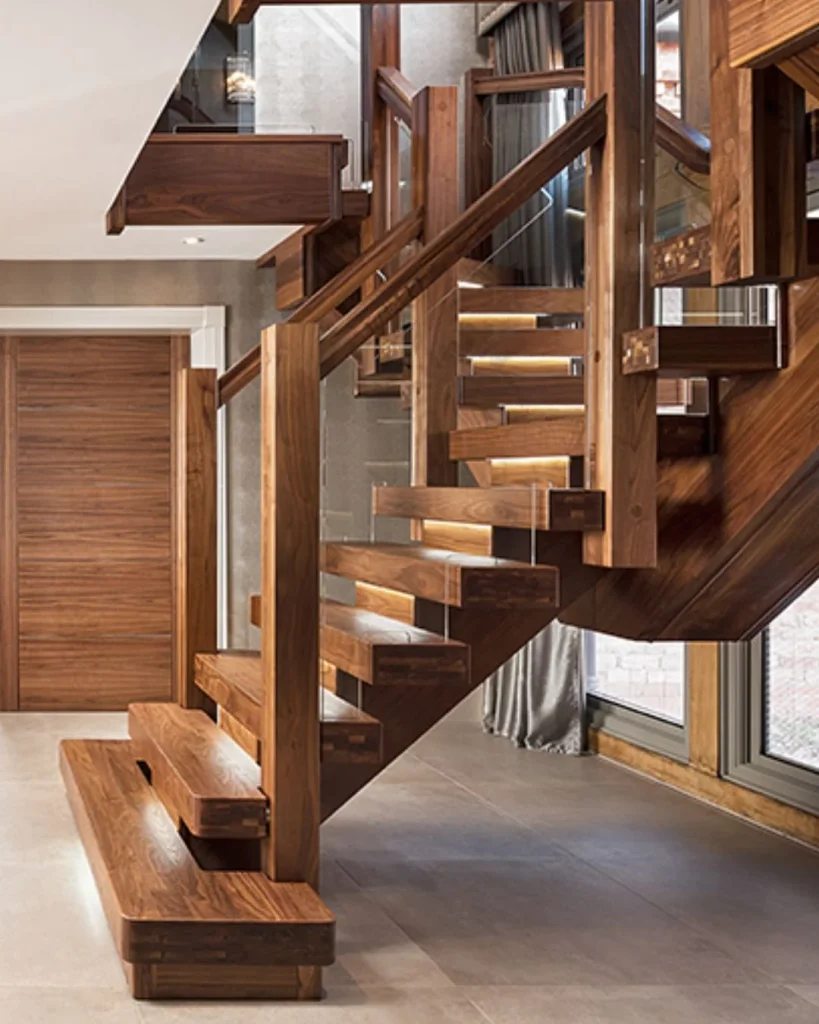
Photo Credit: stairplan.com
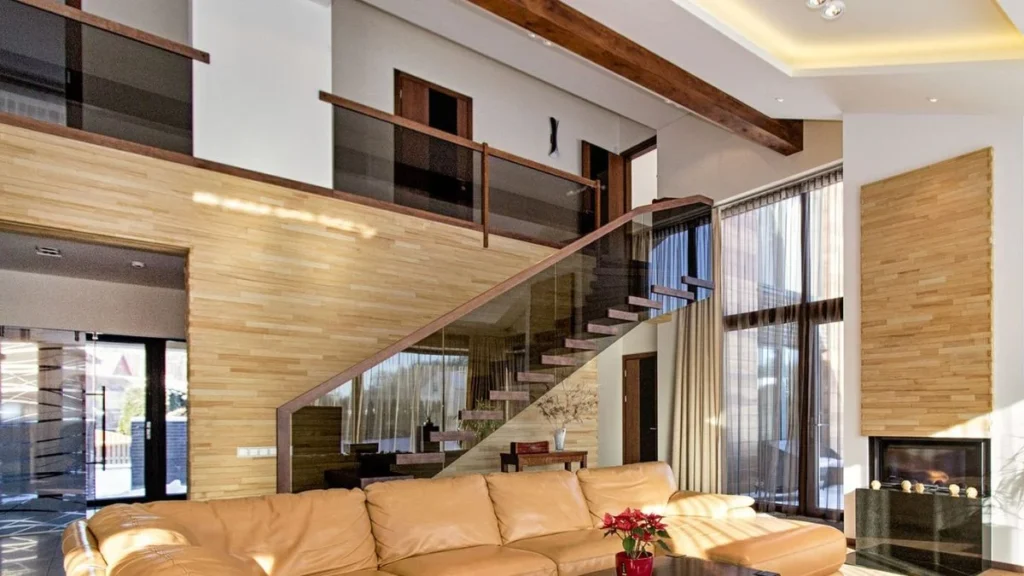
Mid century modern interiors favour warm wood tones, clean geometry, and a slightly retro feel, and glass stair railing fits that brief when paired with walnut or teak-toned wood framing. Thin wood newel posts with glass infill panels keep the staircase feeling period-appropriate without using the spindle-heavy railings from that era.
This combination shows up often in renovated mid century homes where the original staircase gets a lighter, more open update while keeping the wood tones that define the style. It is a way to modernise safety and sightlines without losing the character that made the home appealing in the first place.
Round or tapered wood handrail profiles tend to suit this look better than sharp, squared-off shapes.
Bohemian Staircases Soften Glass with Texture and Colour
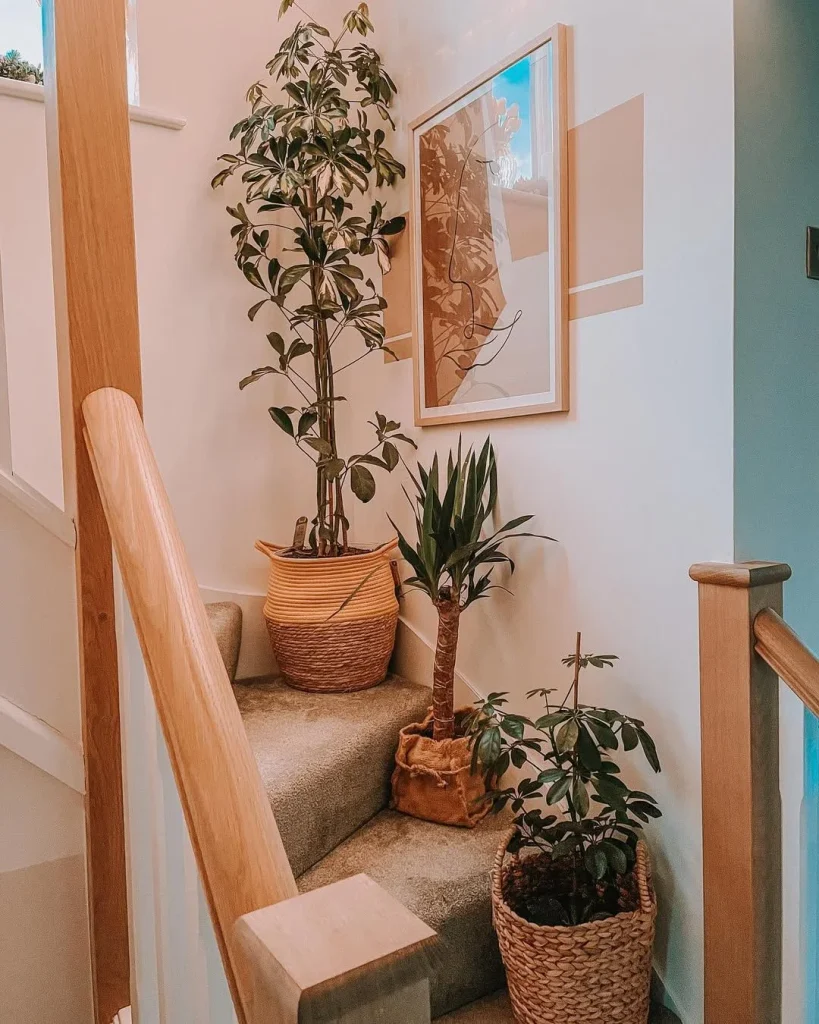
Photo Credit: my_midcenturyboho_newbuild / Instagram
Bohemian interiors thrive on texture, pattern, and a lived-in feel, which can make glass stair railing feel like an unlikely fit at first. The trick is softening the glass with woven runners on the treads, a patinaed or aged metal frame, and plants or hanging textiles nearby.
Rather than letting the staircase feel stark, the glass becomes a quiet backdrop that lets everything layered around it stand out. A rattan or wood handrail keeps a natural, handmade feel next to the smooth glass panels.
This is one of the more personality-driven looks on this list, and it rewards a few unexpected touches, like a vintage runner or a cluster of trailing plants along the stairwell wall.
Frosted Glass Brings Art Deco Glamour to Modern Homes
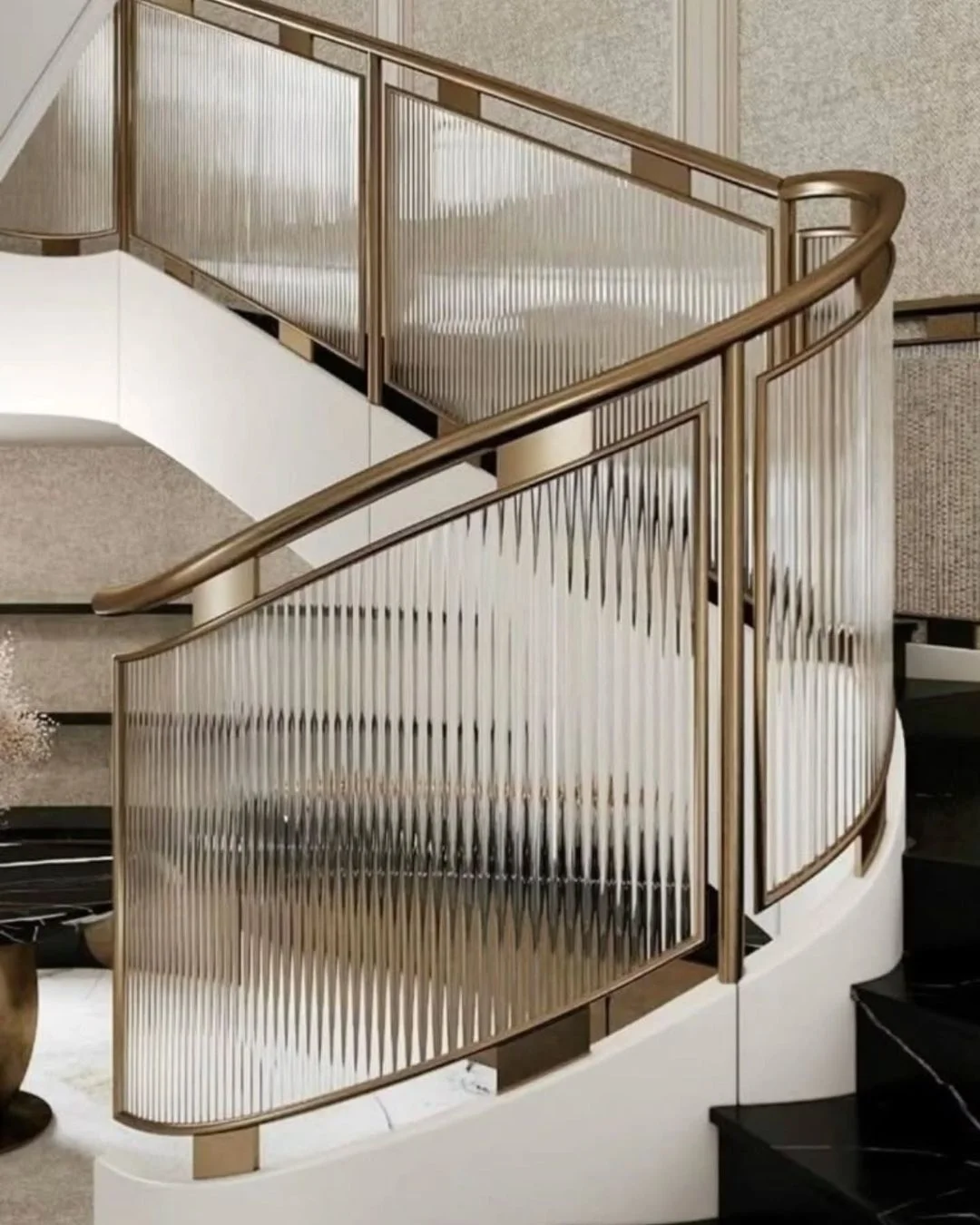
Photo Credit: aluminium_glass_design / Instagram
Art deco styling loves drama, geometry, and a bit of glamour, and frosted or fluted glass stair railing delivers all three without needing ornate ironwork. Etched patterns, reeded glass, or a soft frosted finish catch light differently than clear glass, giving the staircase a jewellery-like quality.
Brass or black lacquered framing finishes this look off, especially when paired with a bold handrail shape rather than a plain straight bar. It suits homes that already lean into rich colour and pattern elsewhere, since the staircase can hold its own as a statement piece.
This is a good option for anyone who loves the idea of glass stair railing but wants more privacy or texture than a fully transparent panel provides.
Glass Railing Look That Fits Your Staircase
Every one of these ten looks proves glass stair railing is not a one-style-fits-all choice. The framing material, the glass finish, and the hardware colour all shift the mood, whether that is the airy feel of a coastal home or the drama of an art deco staircase.
Before committing to a style, take a walk around the rest of the home first. The staircase usually reads best when it echoes materials and tones already used nearby, rather than standing apart as a separate design decision.
Whichever direction feels right, glass stair railing remains one of the simplest ways to make a staircase feel more open, more current, and a little more considered.
Recommended: Wooden Stair Railing Trends That Are Redefining Home Interiors.