Some trees look decorated. Others look remembered, as if every ornament arrived with a story attached. A nostalgic Christmas tree works because it mixes color, shine, and texture in a way that feels collected over time, not bought in one box.
That collected feel is the point of this list. Each idea below is a finished look you can copy in full, with its colors, materials, and the small detail that keeps it from looking flat. Pick the one that matches the ornaments you already own, the size of your room, and the amount of sparkle you want at night.
The ideas are grouped by color and material, not by price or brand, so you can start from a box you already own. A red and gold box leads to one look, a pink and silver box leads to another, and a small space leads to a mini tree that still feels complete. Read the practical point under each idea before you start hanging, because that point is where most trees lose their balance.
1. Red and Gold Baubles With Berries and Warm Lights
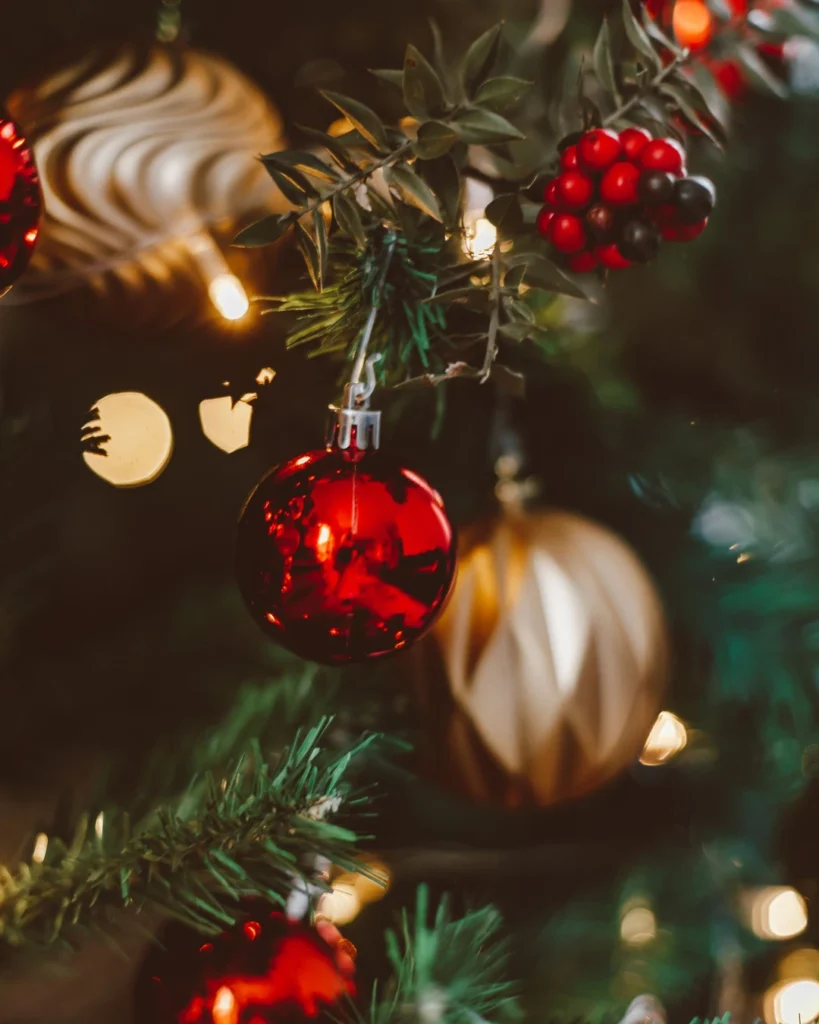
Photo by ROMAN ODINTSOV
This is the classic nostalgic Christmas tree most people picture first: deep green branches, shiny red baubles, soft gold baubles, and warm lights glowing through the gaps. In the photo, a large red bauble sits at the front, with a smaller gold bauble behind it and a cluster of red berries tucked into the greenery. The mix of matte and shiny finishes stops the red from looking harsh, while the gold adds warmth without turning the tree into a display case.
The look works because the colors stay close together. Red does the bold work, gold softens it, and green holds the whole tree together. Warm white lights matter here more than bright white lights, because they make the red look deep instead of sharp and they keep the gold from flashing too hard in a dark room.
One practical point helps this tree most: hang the largest baubles first, near the tips where they can be seen, then fill the spaces behind them with smaller gold pieces and berries. If every bauble is the same size, the tree can look like a pattern rather than a collection. For more ways to use baubles beyond the tree, see Christmas Decoration Ideas With Baubles.
A plain tree skirt helps this look more than a patterned one. A solid deep red, cream, or natural fabric skirt keeps attention on the baubles and lights, while a busy skirt can fight with the red at the bottom of the tree. Check the metal caps on older glass baubles before hanging, and set aside any with loose caps so they do not fall after the tree is finished.
2. Candy Canes, Pinecones, and Mixed Red and White Baubles
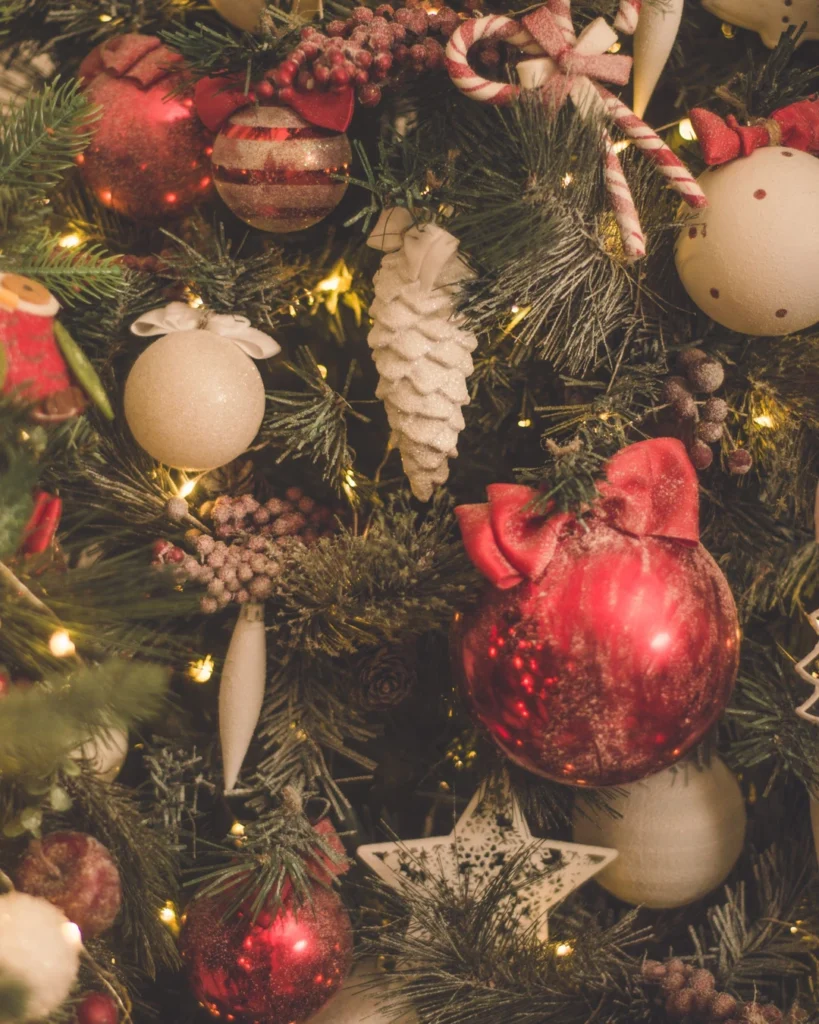
Photo by Alisa Mitus
This tree trades a single color plan for a busy, old-fashioned mix. Red baubles sit next to white baubles, a white pinecone ornament hangs in the center, candy canes cross near the top, and small pinecones and berries fill the lower branches. A white star and a red bow add two more shapes, so the eye keeps moving instead of stopping on one repeated ornament.
The materials do a lot of the work. Smooth glass, frosted white finishes, rough pinecone shapes, and striped candy canes create contrast even before color is considered. Red and white keep the palette clear, so the mix still reads as one tree and not as leftover ornaments from several years. Warm lights woven through the branches soften the white pieces and stop the red from dominating.
The practical point here is spacing. With so many shapes, it helps to step back after every few ornaments and check for bare patches and crowded patches. If two large red baubles end up side by side, move one to a thinner branch. The goal is a full tree where each shape gets a little breathing room.
Candy canes need a firm hook and a branch that can hold their weight without tipping forward. Hang them with the hook over a sturdy inner branch, not just on a tip, and keep the lowest candy canes above the reach of small hands and pets if they are made from real candy. For fragile glass pieces in this mix, place them at eye level where they can be seen and handled with care, and use sturdier plastic or wood shapes near the bottom.
3. A Pink Tree With Silver and White Glitter Baubles
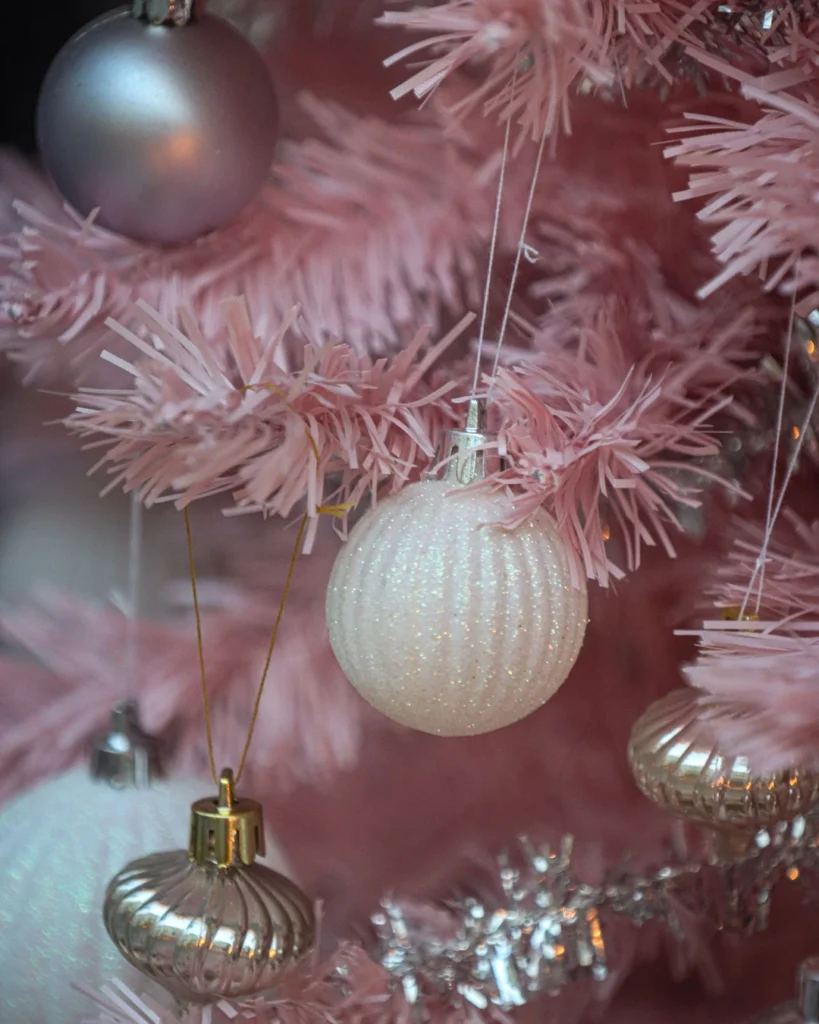
Photo by Efrem Efre
A pink tree changes the whole mood of a nostalgic Christmas tree. Instead of green branches, soft pink branches carry silver baubles, white glitter baubles, and a thin silver tinsel strand. The pink reads as a mid-century color choice, especially when paired with silver, and it suits a bedroom, a hallway corner, or a living room that already leans soft and light.
The look works because the palette stays narrow. Pink, silver, and white glitter share a cool, light tone, so even a tree covered in ornaments does not feel heavy. The silver baubles reflect light, the white glitter baubles catch it, and the pink branches fill the space between them. Without green, the tree needs that shine to avoid looking flat in daylight.
One practical point matters more for a pink tree than for a green one: keep the lights warm and gentle. Cool white lights can make pink look washed out, while warm lights keep the pink soft and the silver bright. Test one strand at night before adding a second, because pink branches show light differently than green ones.
Room color matters for this tree as well. Pink and silver sit well against white, cream, pale gray, and light wood, where the tree can be the main color in the room. Against strong red walls or heavy green curtains, the pink can clash and lose its soft mid-century feel. If the room already has strong color, place the pink tree near a plain wall and keep nearby cushions and throws in cream or silver.
4. Gold Baubles, a Glitter Bow, and White Snowflakes on Frosted Branches
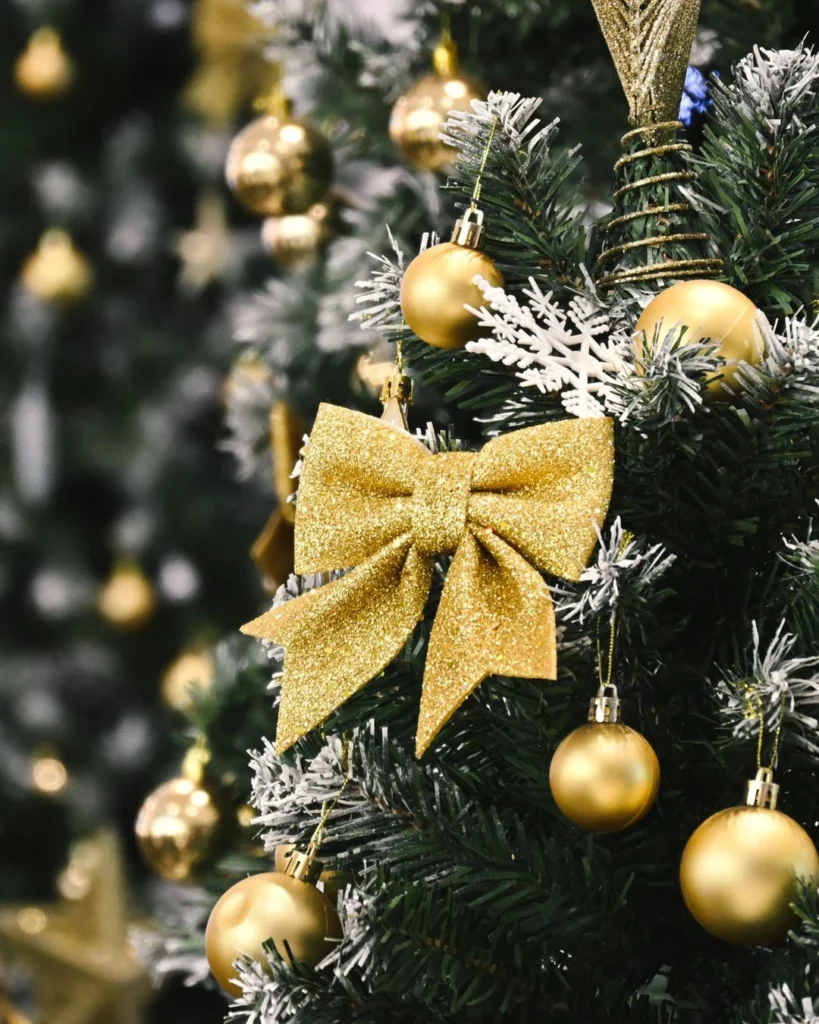
Photo by Castor Thunder
This look is calmer than the red trees, and it relies on frosted branches to do much of the work. Gold baubles in matte and shiny finishes hang from dark green branches dusted with white, a large gold glitter bow anchors the center, and white snowflake ornaments sit near the top. The frosted tips lighten the tree, so the gold stands out without needing a second bright color.
The materials work together because they share a smooth, polished feel. Gold baubles, a glitter bow, and crisp white snowflakes all reflect light in a clean way, while the frosted branches add a soft, snowy texture behind them. That contrast between smooth gold and soft white keeps the tree elegant rather than plain.
The practical point is restraint with the bow. One large bow, placed where it can be seen from the main seating area, gives the tree a clear focal point. Two or three large bows at the same height can split attention and make the tree look busy. Smaller gold baubles around the bow help it feel connected to the rest of the tree instead of added on top of it.
Frosted branches need a little care after decorating. Shake the tree outdoors or over a sheet before bringing it inside, and vacuum lightly around the base after hanging ornaments, because flocking can shed. Wipe gold baubles with a dry, soft cloth before hanging, since fingerprints show clearly on gold and can dull the shine under lights.
5. A Mini Tree on a Piano With White Baubles and a Burlap Base
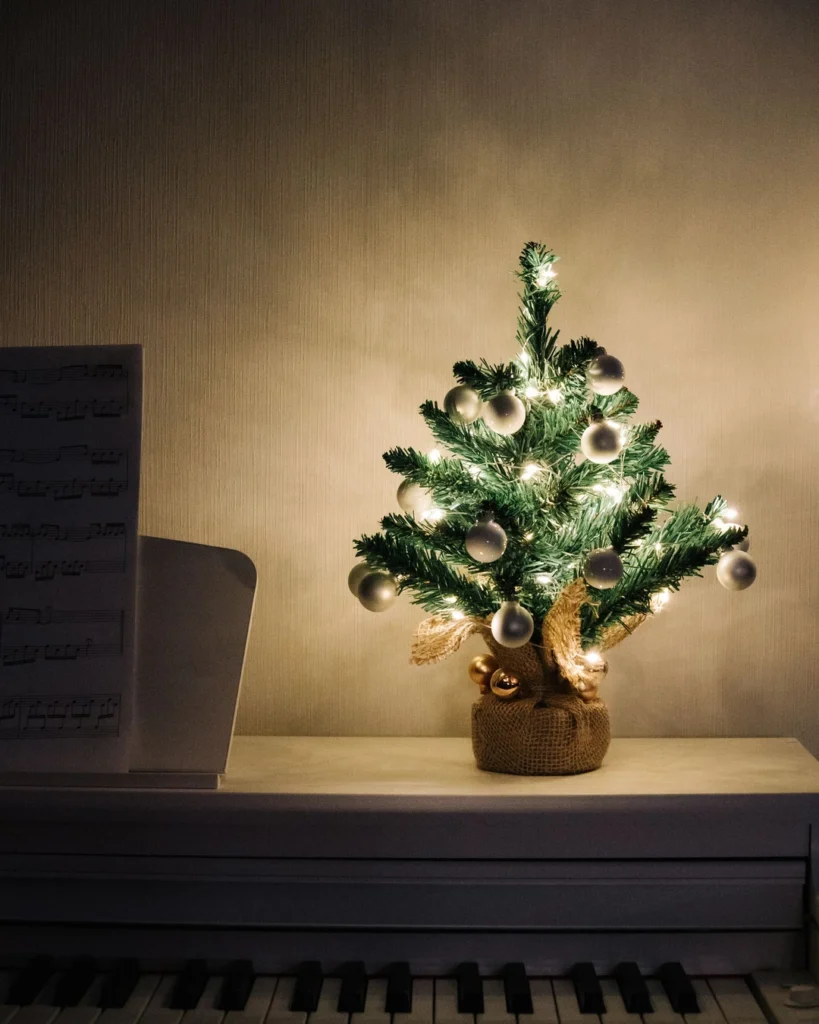
Photo by Stanislav Kondratiev
Not every nostalgic Christmas tree needs to fill a living room. This mini tree sits on a piano, with green branches, white and silver baubles, warm lights, and a burlap-wrapped base holding a few small gold baubles at the bottom. The scale is the charm: a small tree, lit well, can carry the same old-fashioned feeling as a full-size tree in a room that has no space for one.
The look works because the base and the ornaments share a simple, natural tone. Burlap softens the bottom of the tree, white baubles keep the branches light, and warm lights make the small tree glow against a plain wall. The piano top gives it a clear stage, so the tree does not compete with other decor on the same surface.
One practical point is stability. A mini tree on a raised surface needs a base that sits flat and does not wobble when the lights are adjusted or an ornament is moved. Keep the heaviest baubles low, near the base, and save the lightest white baubles for the outer tips. That balance also helps the tree look full from the side, where a mini tree is often seen first.
Protect the surface under the tree as well. Place a thin felt pad or a small cloth under the burlap base, especially on a piano or polished table, so the base does not scratch the finish. Use a timer for the lights if the tree will be left on in the evening, so the small tree does not stay lit all night and the warm glow stays easy to enjoy.
6. A Full, Busy Tree With Red and Gold Baubles, Gold Tinsel, and White Snowflakes
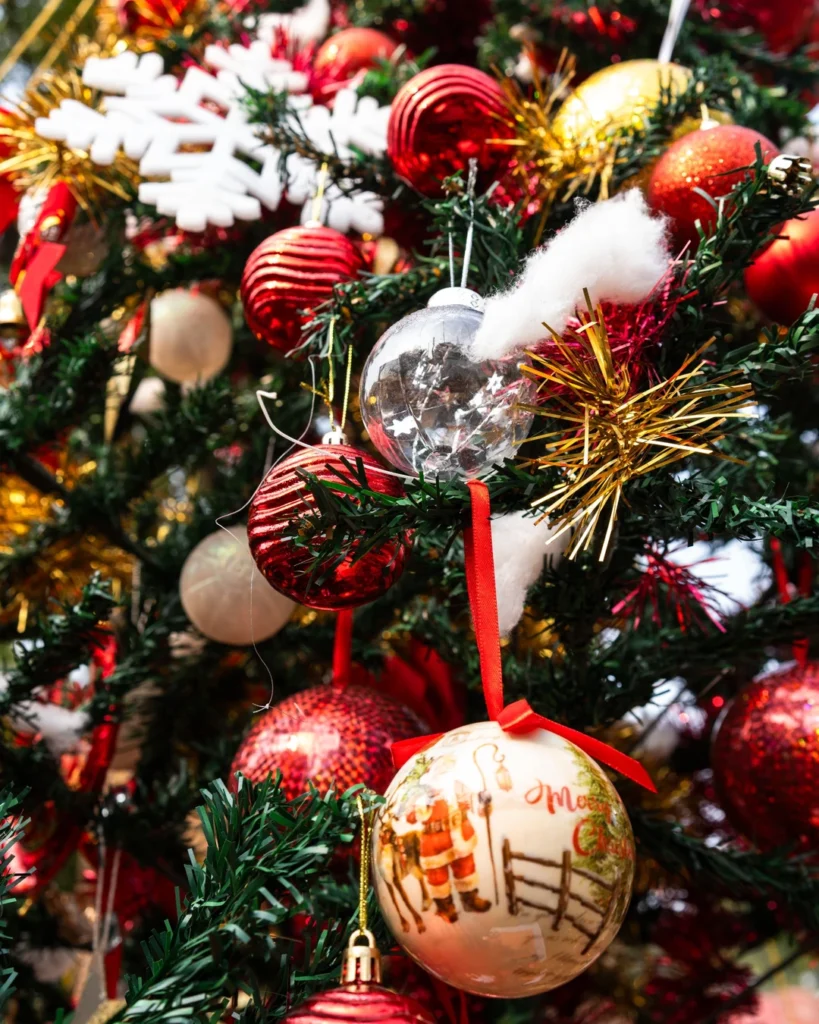
Photo by Swastik Arora
This is the fullest tree in the list, and it leans into abundance. Red baubles in several finishes, gold baubles, gold tinsel strands, white snowflake ornaments, and a clear bauble sit close together on dense green branches. A cream bauble with a Santa design and red ribbon sits near the bottom, adding one pictorial piece among the round shapes.
The look works because the busy mix still follows a plan: red and gold lead, white snowflakes break up the color, and gold tinsel adds sparkle between the baubles. The clear bauble gives the eye a pause, while the cream pictorial bauble adds a storytelling detail without changing the palette. In a large room, this density reads as festive rather than cluttered, especially under warm light.
The practical point for a busy tree is light placement. With so many ornaments, lights placed only on the outside can leave dark holes in the middle. Push one strand deeper into the branches first, then add a second strand near the tips. That layered light keeps the red and gold visible from across the room and stops the tinsel from looking like a flat sheet of shine.
A busy tree also needs a topper that matches its weight. A light star or a simple bow works better than a heavy topper that pulls the top branches down, especially on a tree already loaded with baubles and tinsel. If you use loose tinsel strands, keep them out of reach of pets, since loose strands can be a hazard if chewed or swallowed, and a metallic garland can give a similar sparkle with less risk.
Pick the Look That Fits Your Room and Your Ornament Box
A nostalgic Christmas tree does not need rare ornaments or a perfect theme. It needs a clear color plan, a mix of finishes, and one or two shapes that break the pattern, whether that is a pinecone, a bow, a candy cane, or a small pictorial bauble.
Start with what you already have. If your box is mostly red and gold, build around the first or sixth idea. If you have a few pink or silver pieces, let the pink tree lead. If space is tight, a mini tree with white baubles and a burlap base can carry the same feeling in a corner. For the rest of the room, fresh greenery and seasonal flowers around the tree can extend the same warm, traditional feeling, as in Festive Christmas Flower Arrangements For A Beautiful Home.
Choose one look, hang the largest pieces first, step back often, and leave a little space between ornaments. That space is what lets each piece read clearly, and it is what turns a decorated tree into a tree that feels remembered.