A flat, freshly painted wall does its job quietly. A textured wall does something more: it catches light, adds depth, and gives a room a sense of touch even before you cross it. The best modern textured wall designs feel calm rather than busy, and they age well because they rely on real materials — plaster, wood, stone, and fabric — instead of loud patterns that date quickly.
Below are twelve ways to bring that depth home, from soft limewash to bold marble slabs. Each one works in a modern interior, and each one stays sophisticated because the texture itself is the decoration. Before you choose, think about light: a texture only shows when light moves across it, so a wall that gets daylight or a well-placed lamp will always look better than one left in flat, even light.
Limewash Walls for a Soft, Sunlit Finish
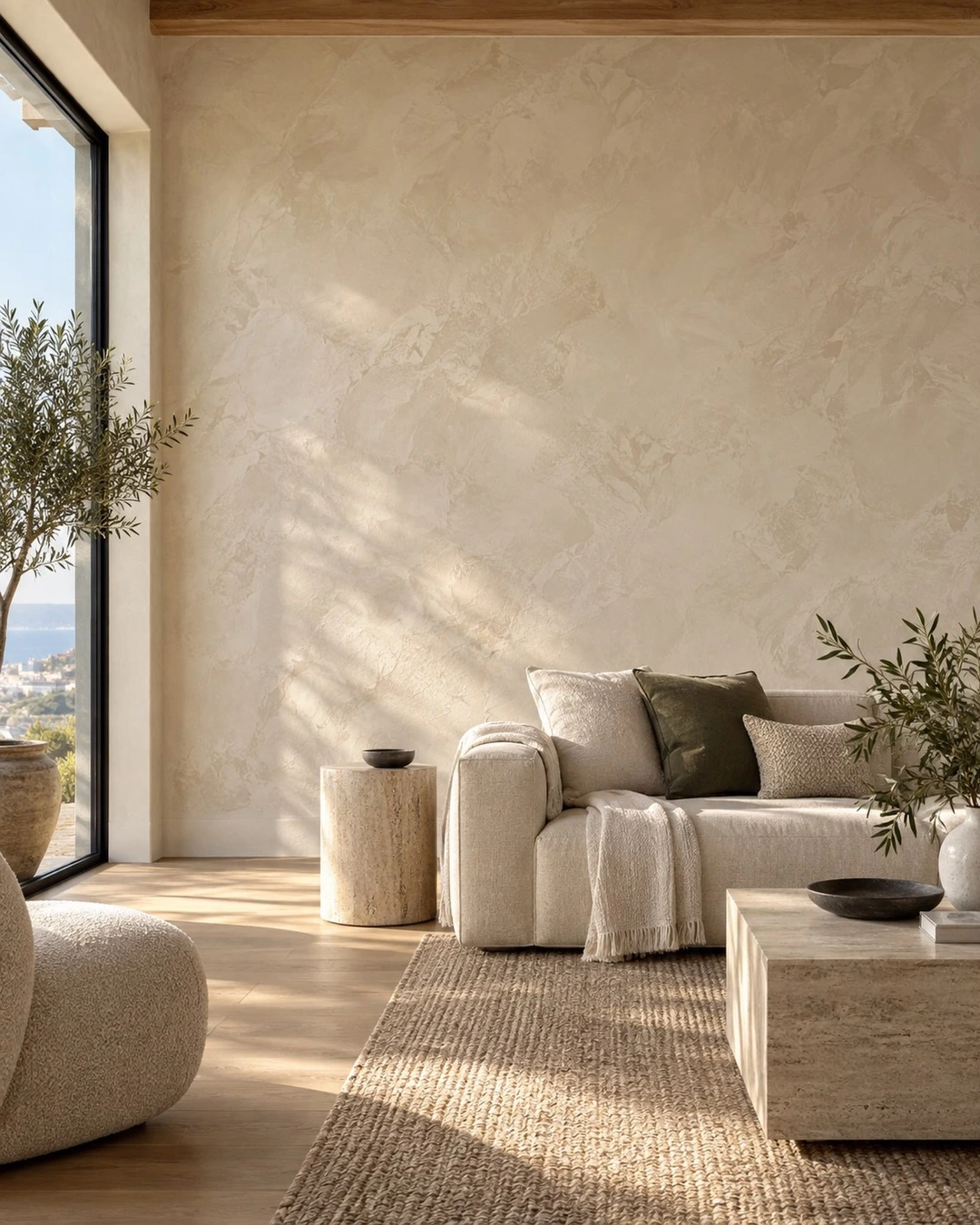
Photo by @lime.andlayersd
The first textured wall in this guide is a warm lime plaster wall in a sunlit living room. A low beige sofa with soft pillows sits against it, flanked by stone side and coffee tables, while a tall window frames a sea view and a potted olive tree softens the corner. The limewash finish is what makes the room feel calm: its cloudy, mineral surface shifts gently with the daylight instead of sitting flat like standard paint.
Limewash suits living rooms and bedrooms best, especially in soft white, beige, or warm gray. Keep the rest of the palette quiet so the wall can do the talking, and choose matte, natural fabrics for sofas and curtains so nothing competes with the plaster. One practical note: limewash shows its hand-applied character, so sample it on a large board first and view it in morning and evening light before committing to a full wall.
Fluted Wood Panels Beside Marble
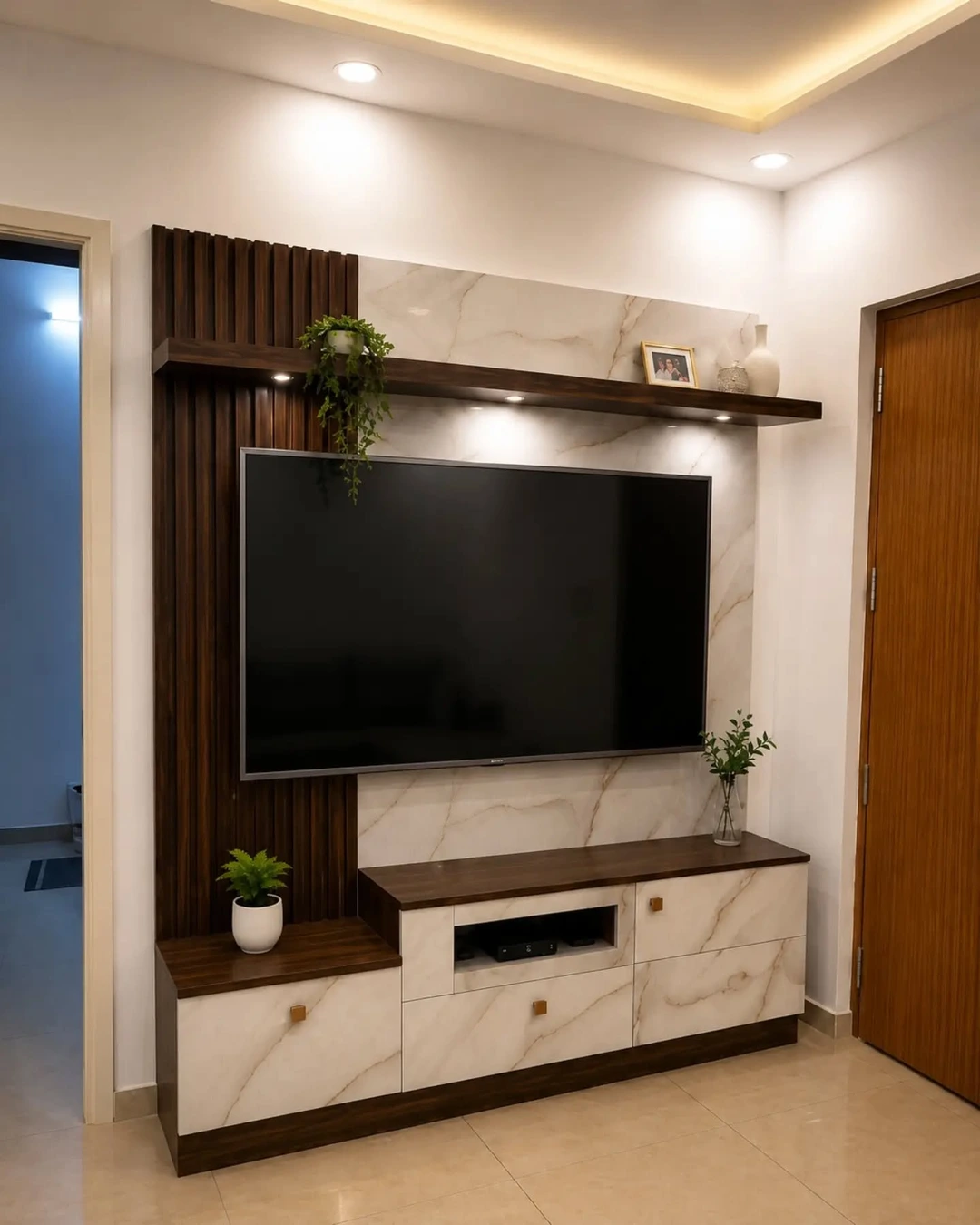
Photo by @d_decor_home_interior
This media wall pairs warm dark wood fluting with a white marble-vein panel behind a large television, finished with a floating shelf, a plant, and a marble-front console. The fluted wood panels add rhythm and vertical lines, while the marble keeps the composition light and modern rather than heavy.
Fluting works beautifully as a partial wall treatment. Running it floor to ceiling on one wall, or framing a television or fireplace with it, gives structure without closing the room in. Pair dark wood fluting with pale stone or off-white walls for contrast, and keep the wood tone consistent with nearby furniture so the wall feels built in rather than added on.
Microcement Walls for a Seamless, Modern Look
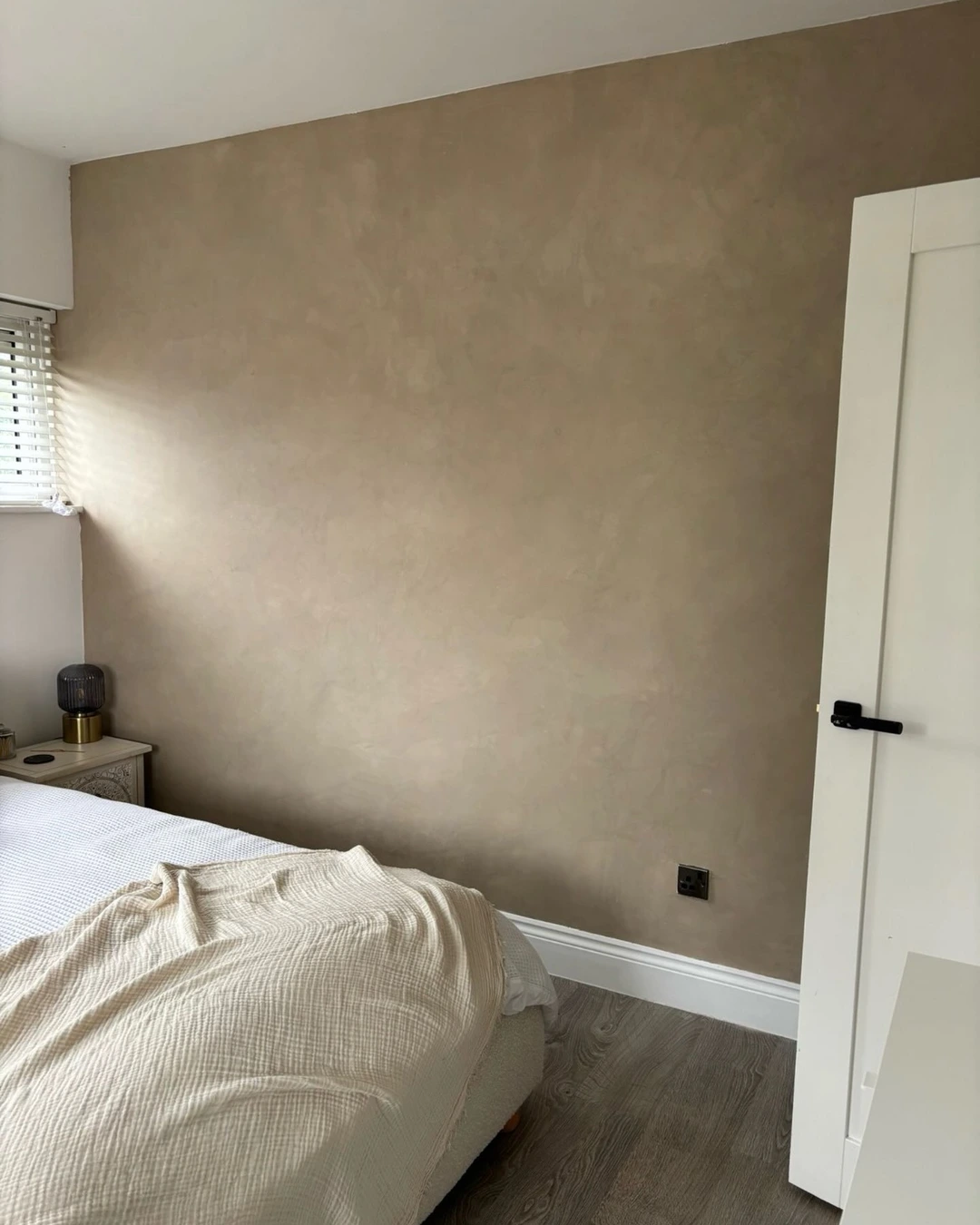
Photo by @surfacelabmcr
In this bedroom, a large smooth microcement wall in warm taupe-beige sits behind a bed dressed in white textured bedding, with a carved nightstand and a dark glass lamp beside it. The microcement finish has a subtle mottled surface that reads as polished plaster from a distance and reveals its depth up close.
Microcement is a strong choice for bedrooms and bathrooms because it has almost no joints or seams, which makes a wall feel continuous and calm. It also pairs well with natural wood, linen bedding, and soft lighting. Because application needs a skilled hand, get quotes from installers who can show you finished rooms, and ask how the surface is sealed, especially if you plan to use it near moisture.
Travertine Feature Walls with Natural Warmth
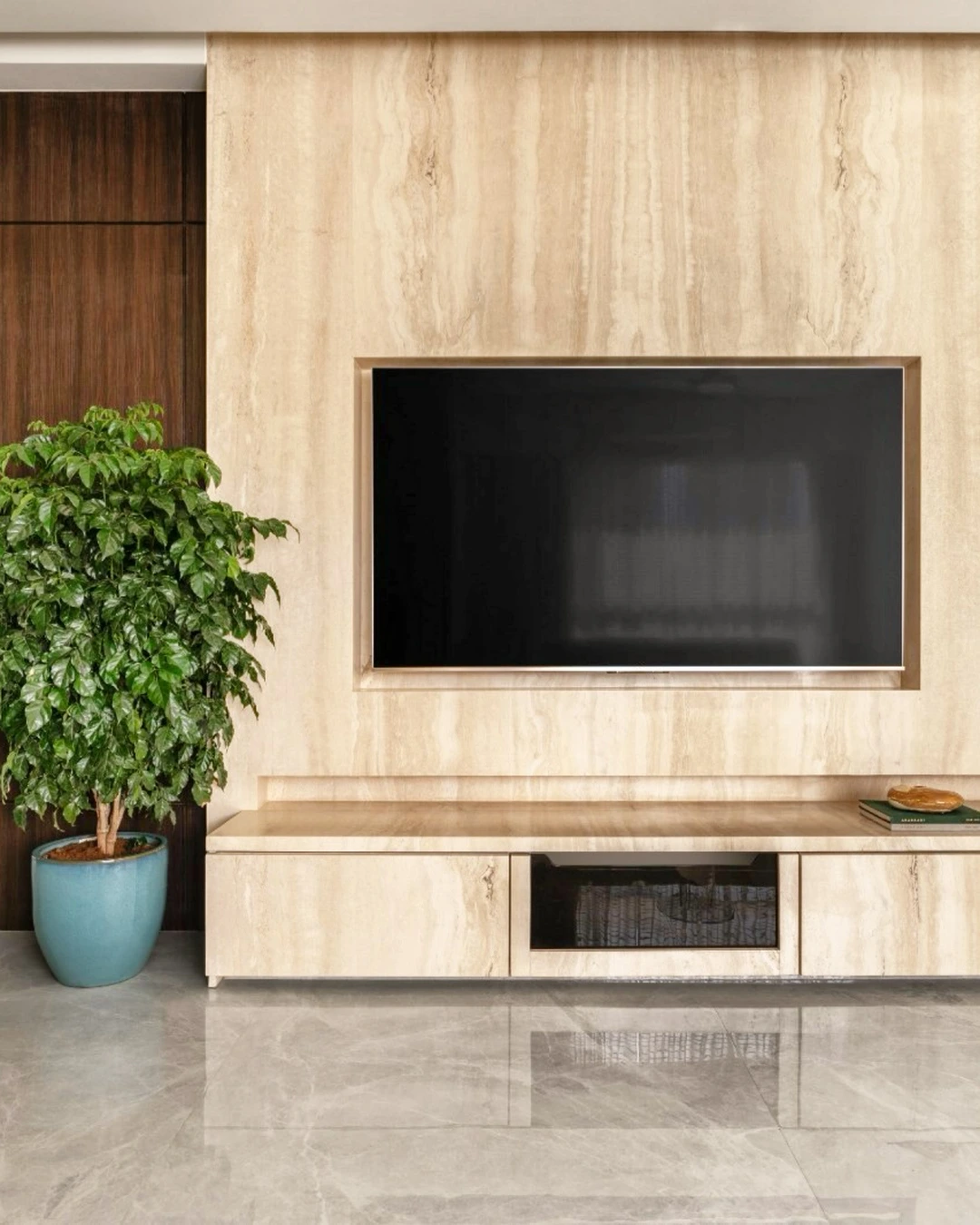
Photo by @mooi_lane
A light travertine feature wall holds a recessed television above a matching low console, with dark wood paneling on either side and a tall green plant in a turquoise pot bringing in color. The travertine stone gives the wall a warm, layered grain that feels both natural and refined.
Travertine suits living rooms and fireplace walls, where its stone texture can anchor the seating area. Keep the surrounding wood tones warm and the decor simple so the stone stays the focus. If full stone slabs stretch the budget, stone-look porcelain panels in a travertine pattern offer a similar effect at a lower cost, though the real stone’s variation is hard to copy exactly.
Linen Wallcovering for Quiet, Tailored Texture
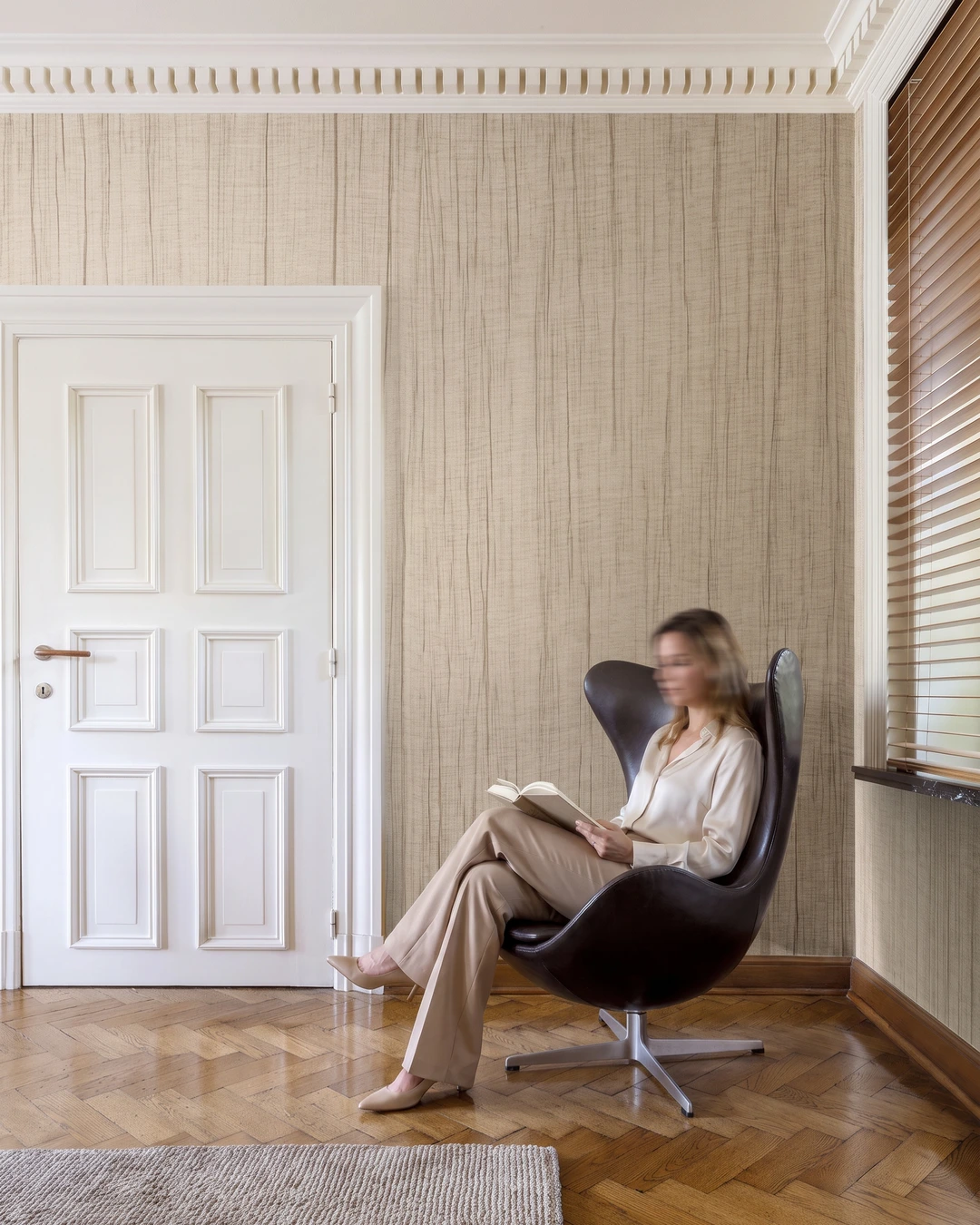
Photo by @tissagemahieu_nederland
This room shows a beige vertically textured linen wallcovering beside polished herringbone parquet, a white paneled door, and a window with wooden blinds. A woman sits in a dark leather chair reading, which gives the room a lived-in feel. The linen wallcovering adds a fine, woven texture that softens a modern room without adding pattern.
Fabric-look wallpapers in linen, silk, or bouclé finishes are ideal for bedrooms, dining rooms, and studies, where their softness makes the space feel finished and calm. Choose a tone close to your wall paint color for a subtle effect, or go one shade deeper for gentle contrast. Keep lighting soft and indirect, since grazing light across a woven surface is what makes the texture visible.
Whitewashed Brick for Rustic Warmth, Modern Style
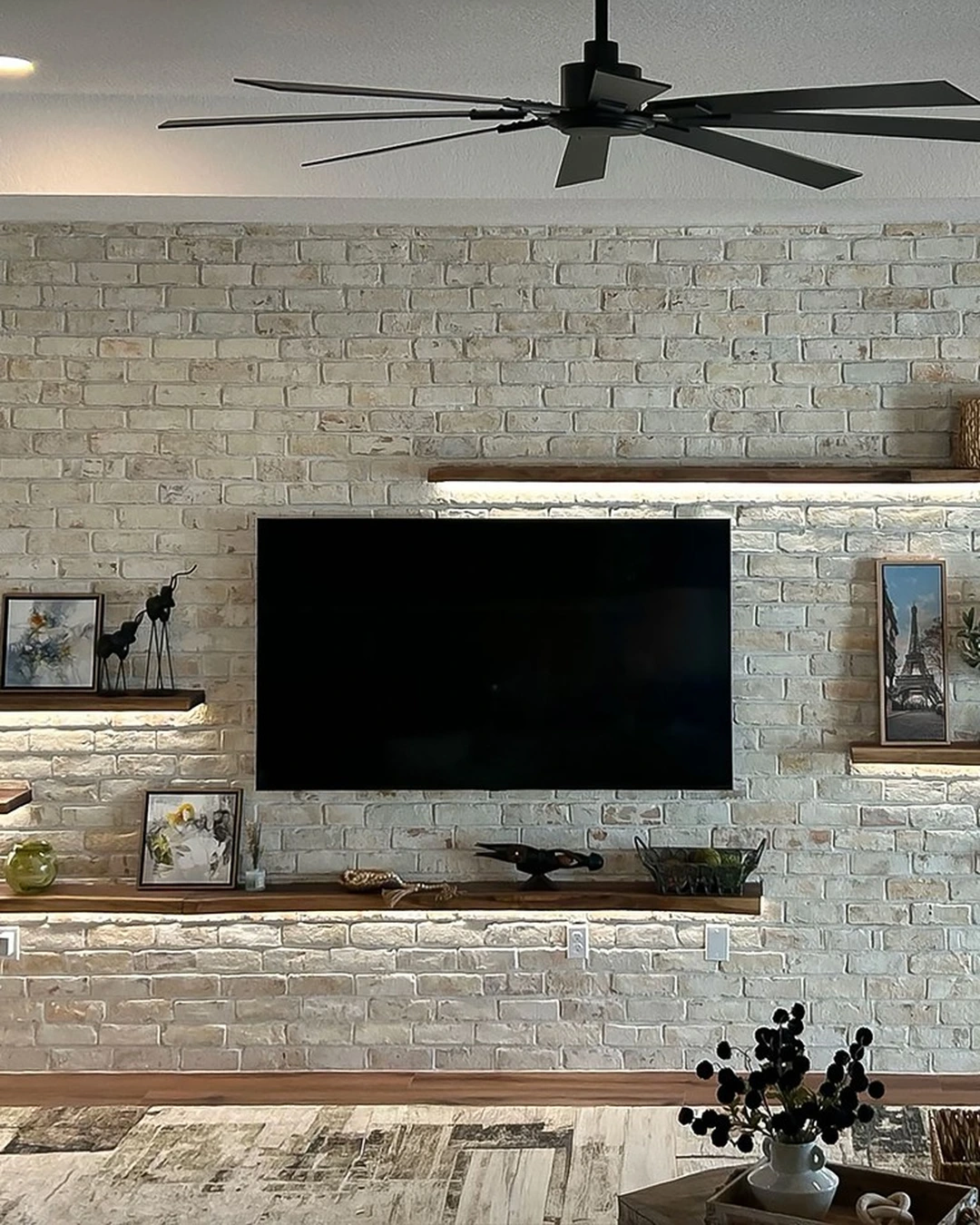
Photo by @brickitofficial
A whitewashed brick feature wall carries a mounted television and floating wood shelves with warm integrated lighting, with a curved sofa in the foreground and a black ceiling fan above. The whitewashed brick keeps the character of real brick while lifting the room with a pale, airy finish.
Whitewash is a practical way to refresh an existing brick wall or fireplace without losing its texture. It suits living rooms, kitchens, and entryways, and it pairs naturally with wood shelves, black accents, and soft neutral furniture. Before whitewashing, test the wash ratio on a small hidden section, since a thin wash keeps more brick variation while a heavier coat looks closer to painted brick.
Board-Formed Concrete for Raw, Architectural Character
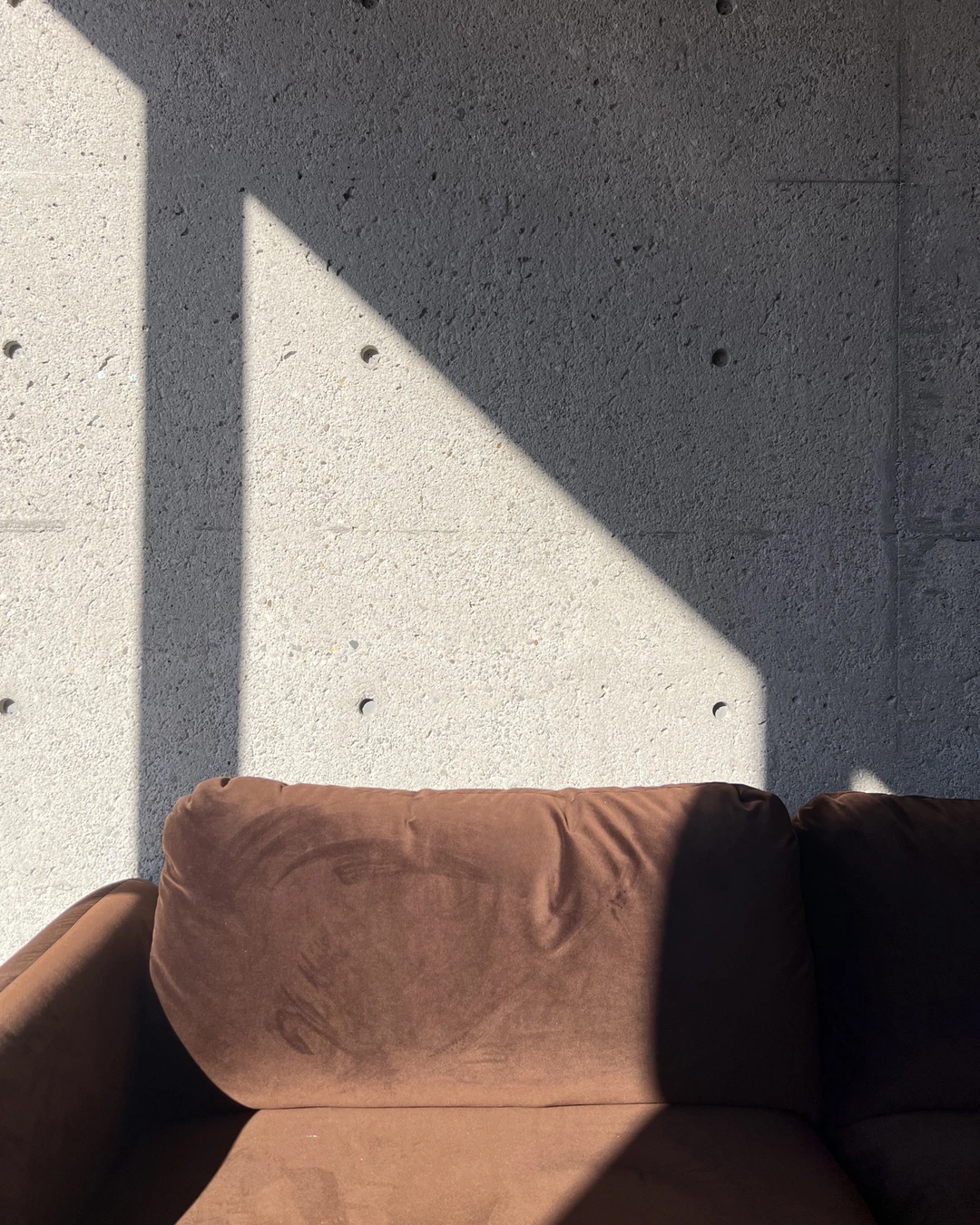
Photo by @fluxdevca
This wall is raw board-formed concrete in sharp relief, its pitted surface and grid of tie holes catching diagonal daylight above a plush brown velvet sofa. The board-formed concrete brings an honest, architectural texture that feels modern precisely because it does not try to look polished.
Concrete walls work best as a single feature wall in a living room, studio, or hallway, balanced with warm furniture, soft textiles, and wood to keep the room from feeling cold. If pouring real concrete is not practical, board-formed concrete panels or high-quality concrete-look plaster can recreate the plank marks and tie-hole rhythm. Keep the rest of the room simple so the wall reads as intentional rather than unfinished.
Geometric 3D Panels for Bold, Sculptural Depth
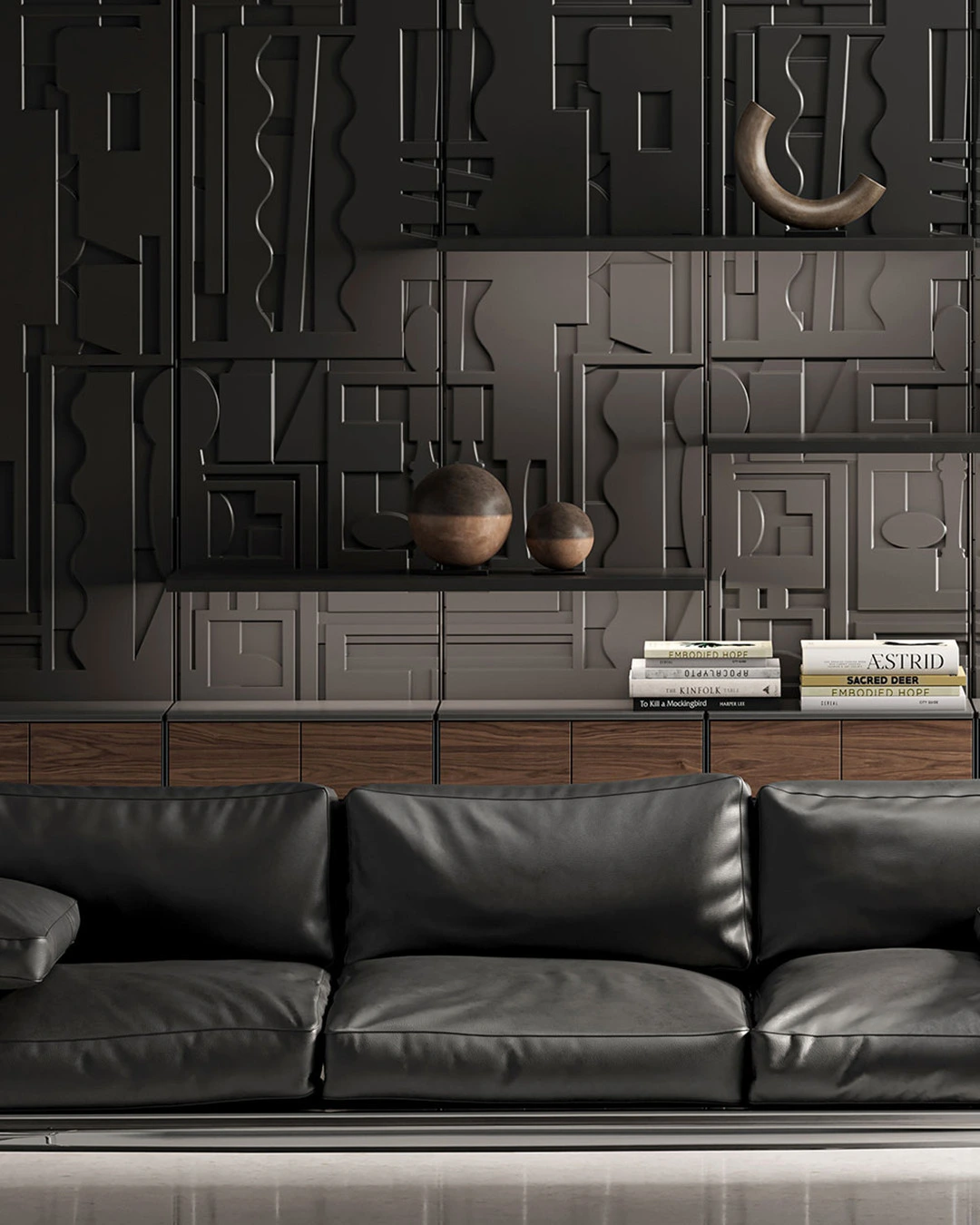
Photo by @interiordesignmag
A black leather sofa sits against large-scale geometric relief panels, with floating shelves holding a bronze sculpture and decorative spheres above a low wood-front cabinet. The geometric 3D panels turn a plain wall into a sculptural backdrop, and their repeating relief catches light and shadow through the day.
Three-dimensional panels suit living rooms and media walls where you want one strong statement. Because the pattern itself is bold, keep furniture lines clean and colors restrained so the wall does not fight the rest of the room. Panels come in paintable finishes, so you can match them to your wall color for a tonal look or paint them darker for extra drama.
Vertical Wood Slat Walls for Warm, Natural Rhythm
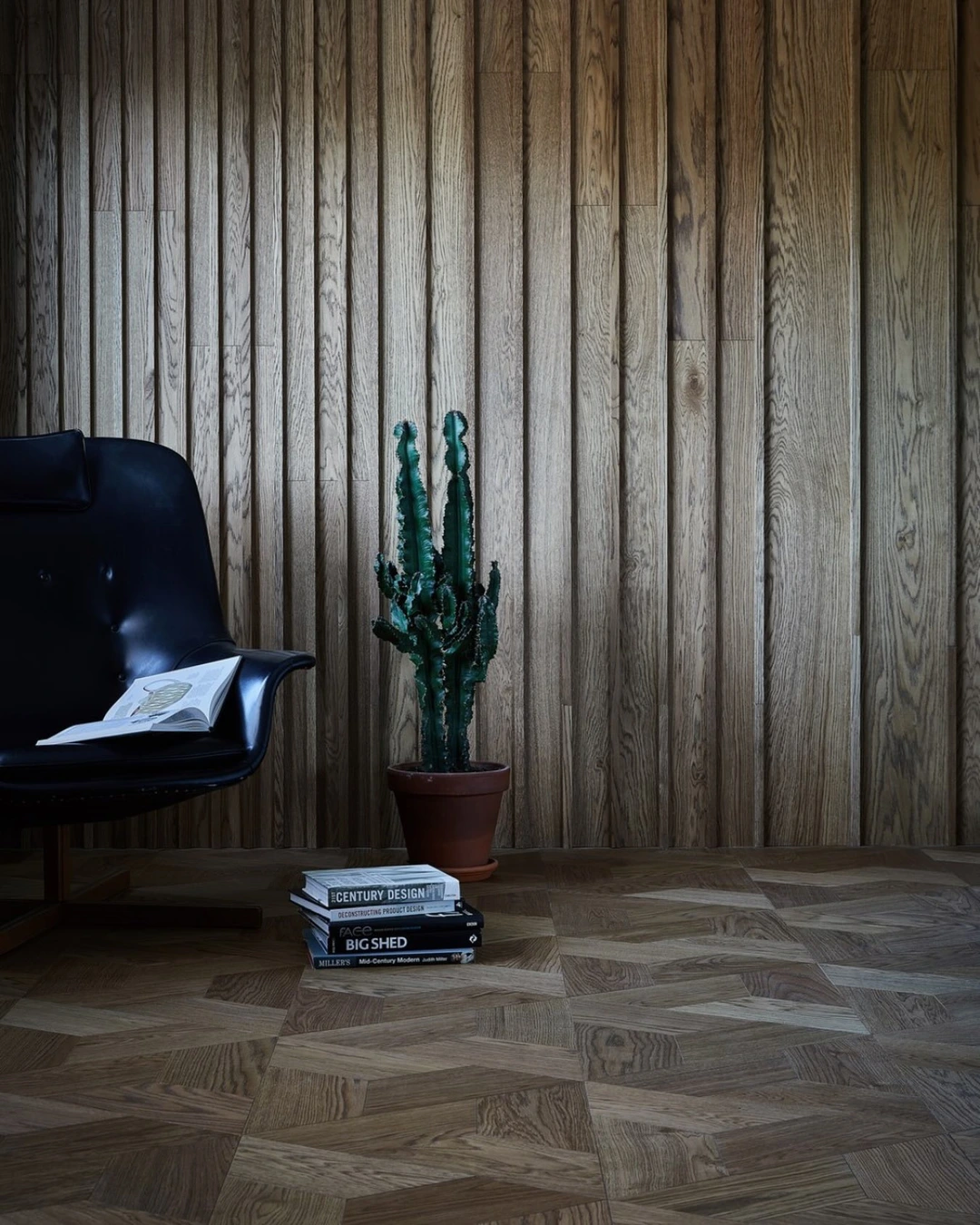
Photo by @timberwiseofficial
Dark vertical wood slats fill this wall from floor to ceiling, with a black leather lounge chair, a tall potted cactus, and a small stack of books in front of them. The vertical wood slats bring warmth and rhythm, and their natural grain keeps the look timeless rather than trendy.
Unlike the fluted media wall earlier in this guide, this treatment is the wall itself: full-height slats with no television and no stone, styled with a chair rather than a screen. That distinction matters when you plan your room. Use slats behind a sofa or reading chair for a cozy backdrop, or run them along a hallway for a warm, crafted feel. Choose a wood tone that matches your floor or furniture, and leave small gaps between slats so the shadows between them add depth.
Marble Slabs for a Luxurious, Timeless Statement
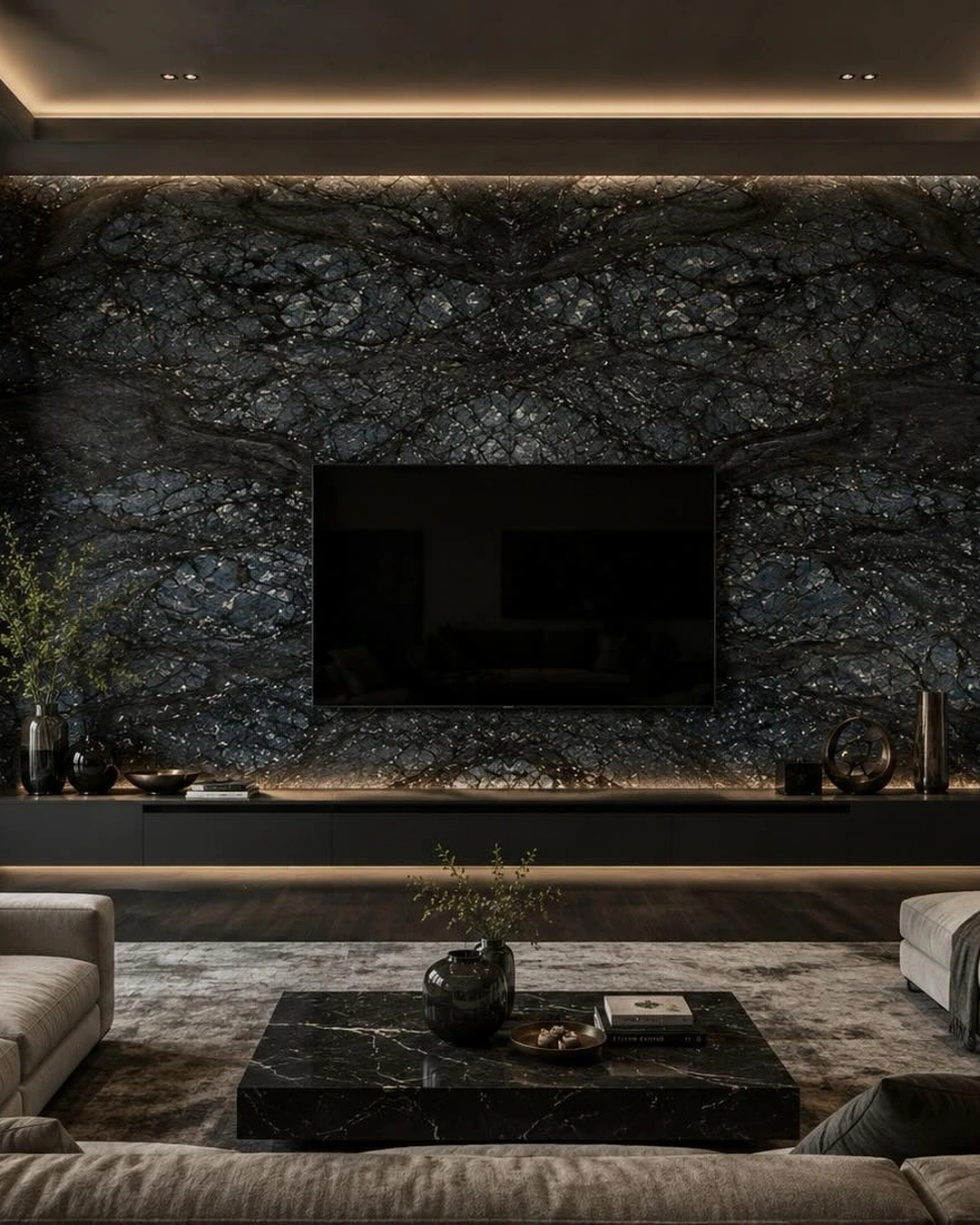
Photo by @maisondemarble.eg
A floor-to-ceiling dark veined marble wall holds a mounted television above low cabinetry with warm LED underlighting, facing light-beige sectionals and a black marble coffee table. The marble slabs make the wall feel luxurious without any extra decoration, since the stone’s veining is the design.
Large-format marble or porcelain slabs work best on a single feature wall, where their scale can be appreciated. Book-matched slabs, where two pieces mirror each other, create a particularly striking effect behind a television or fireplace. Because dark marble can dominate a room, balance it with light seating, warm lighting, and simple decor, and let the stone carry the drama on its own.
Suede Textured Paint for a Subtle, Velvet Touch
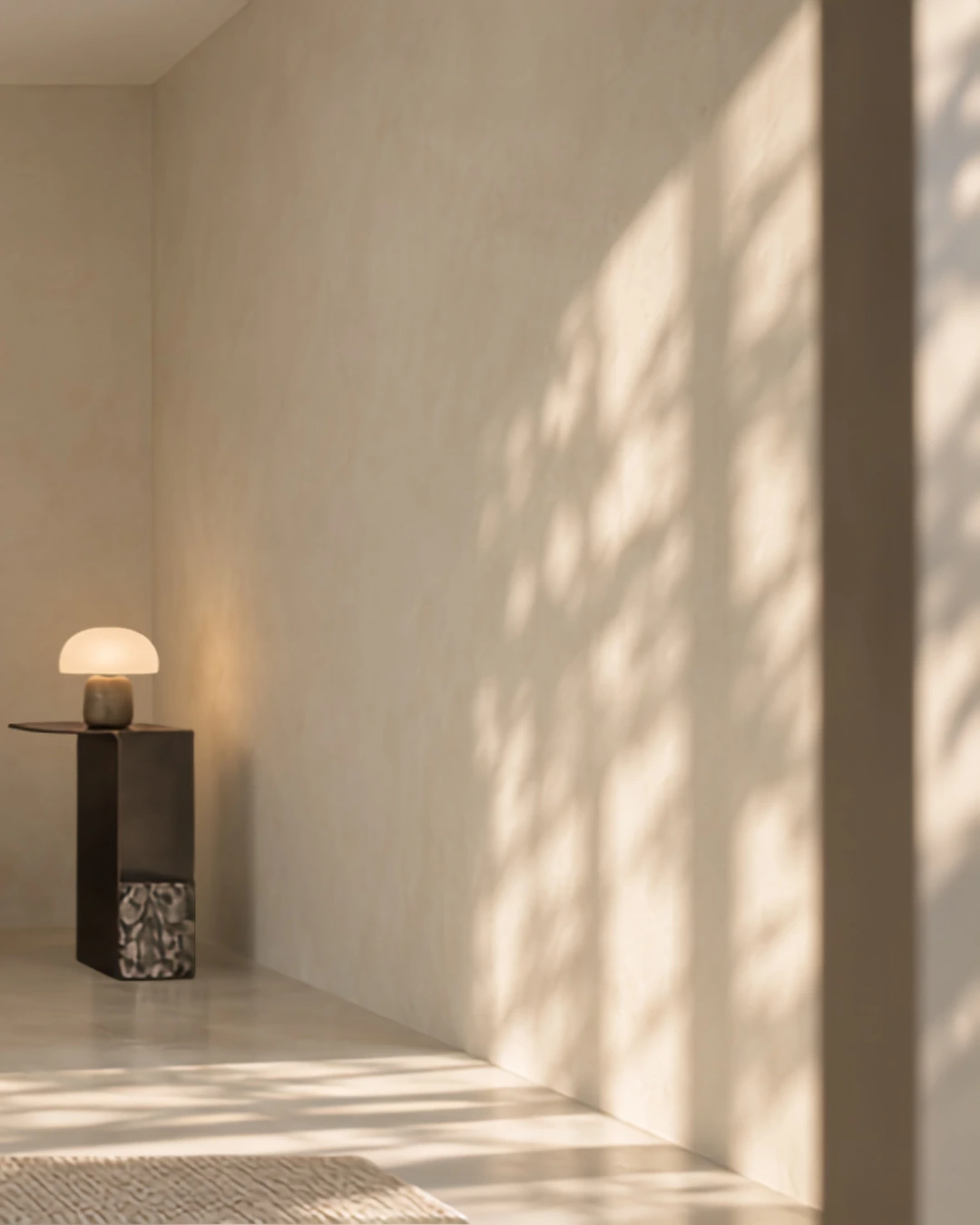
Photo by @wallhubsg
This quiet corner shows smooth light-beige walls with a subtle suede-like texture, dappled tree shadows falling across them, and a dark side table with a mushroom lamp. The suede paint effect is the most understated texture in this guide: it reads almost like flat paint from across the room, then reveals a soft, velvety depth up close.
Suede, sand, and metallic paint effects suit bedrooms, hallways, and reading corners where you want warmth without a strong pattern. They are also the most forgiving option if you are not ready for panels or stone, since they apply like paint and cost far less. Use a matte finish and soft, indirect light, because harsh downlights can flatten the effect. If you want the texture to show in photos or from the doorway, pair it with a contrasting trim or a darker accent piece nearby.
For more painted wall ideas, see Hand Painted Accent Wall Patterns.
Panel Moulding for Classic Structure with a Modern Feel
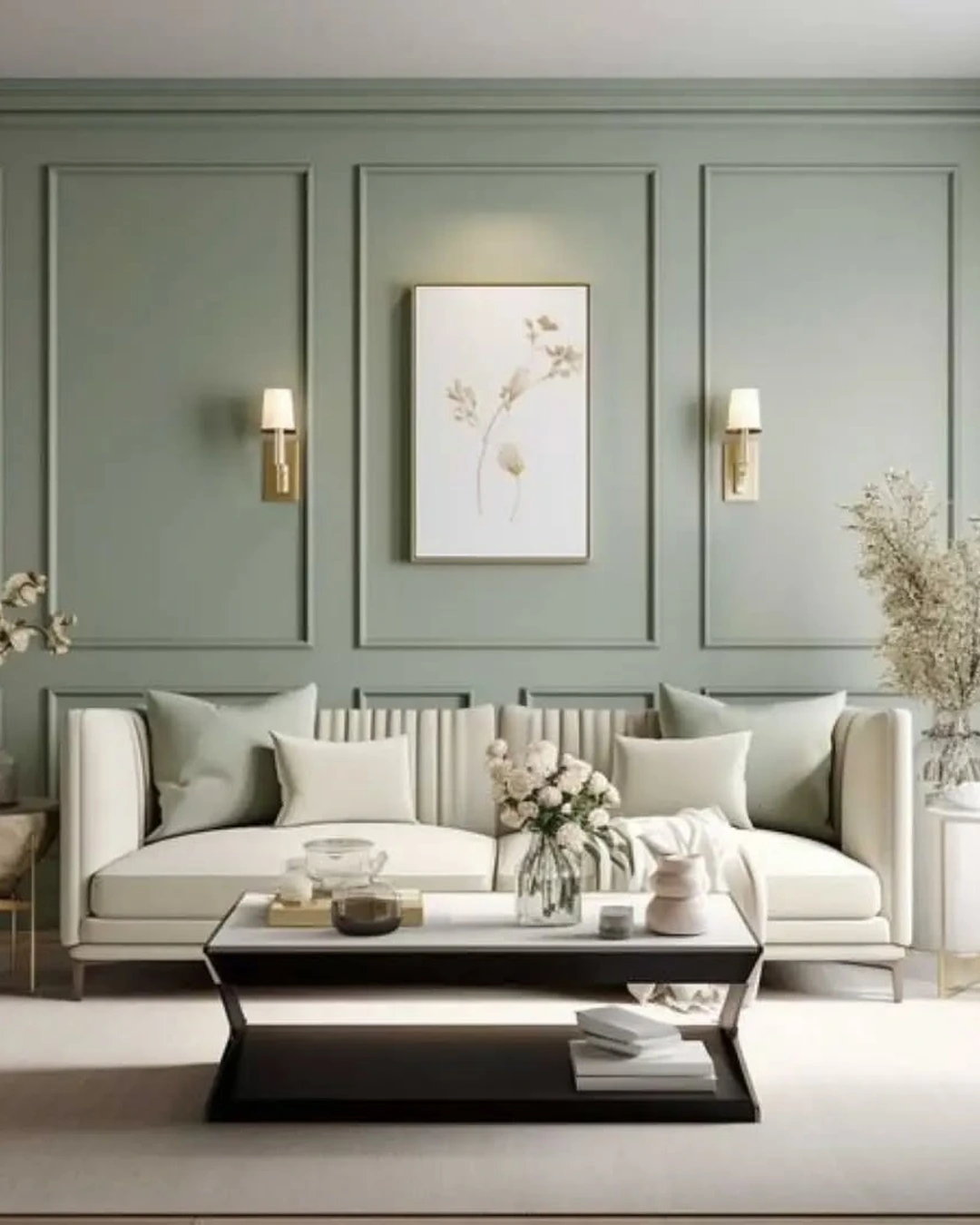
Photo by @smarttecnicalservices
A sage-green panel moulding wall with rectangular recessed panels frames a botanical print and two brass sconces above a cream sofa with sage pillows. The panel moulding adds classic structure while staying modern, thanks to its clean lines and single soft color.
Panel moulding is one of the most versatile textured wall designs: it suits living rooms, bedrooms, dining rooms, and hallways, and it works in both traditional and modern homes. Paint the moulding and wall in one color for a seamless look, or use a slightly deeper shade on the panels for quiet contrast. Keep panel sizes even and aligned, and let the wall be the feature by keeping nearby furniture simple.
For more moulding styles, see Modern Wall Moulding Ideas.
Choose Texture That Fits the Room, Not Just the Trend
A sophisticated textured wall is rarely the loudest choice in the room. It is the one that fits how you live: limewash and linen for calm bedrooms, wood slats and brick for warm living spaces, stone and marble for a single confident statement. Start with one wall, keep the palette restrained, and let light do half the work. The texture will still be there in ten years, quietly making the room feel finished.