
You know the feeling: you sit down and sink a little too far, one side of the sofa feels lower than the other, and getting up takes more effort than it should. Sagging couch cushions are one of the most common sofa problems, and the good news is that most of them can be fixed at home without replacing the whole sofa. The trick is to find out what is actually sagging — the cushion, the support underneath it, or the frame itself — and then pick the fix that matches.
Work through these ten fixes from the simplest to the most involved. In most cases, one or two of them will bring your sofa back to life.
Flip and Rotate Your Cushions Regularly

Photo by @ahartupholstery
The simplest fix starts with a habit, not a purchase. In this photo, a woman kneels beside a gray sofa and adjusts a cushion, straightening it and pressing it back into shape — the kind of small, regular attention that keeps cushions wearing evenly. Flipping and rotating cushions spreads the wear across all sides instead of letting one favorite spot take all the pressure.
Turn seat cushions over and swap them left to right every few weeks, and do the same with back cushions. If your cushions are not reversible, at least rotate them between seats. This will not rescue a cushion that has already collapsed, but it is the easiest way to slow sagging down and keep a repaired sofa feeling even for longer.
Add a Support Board or Ready-Made Insert Under the Cushions
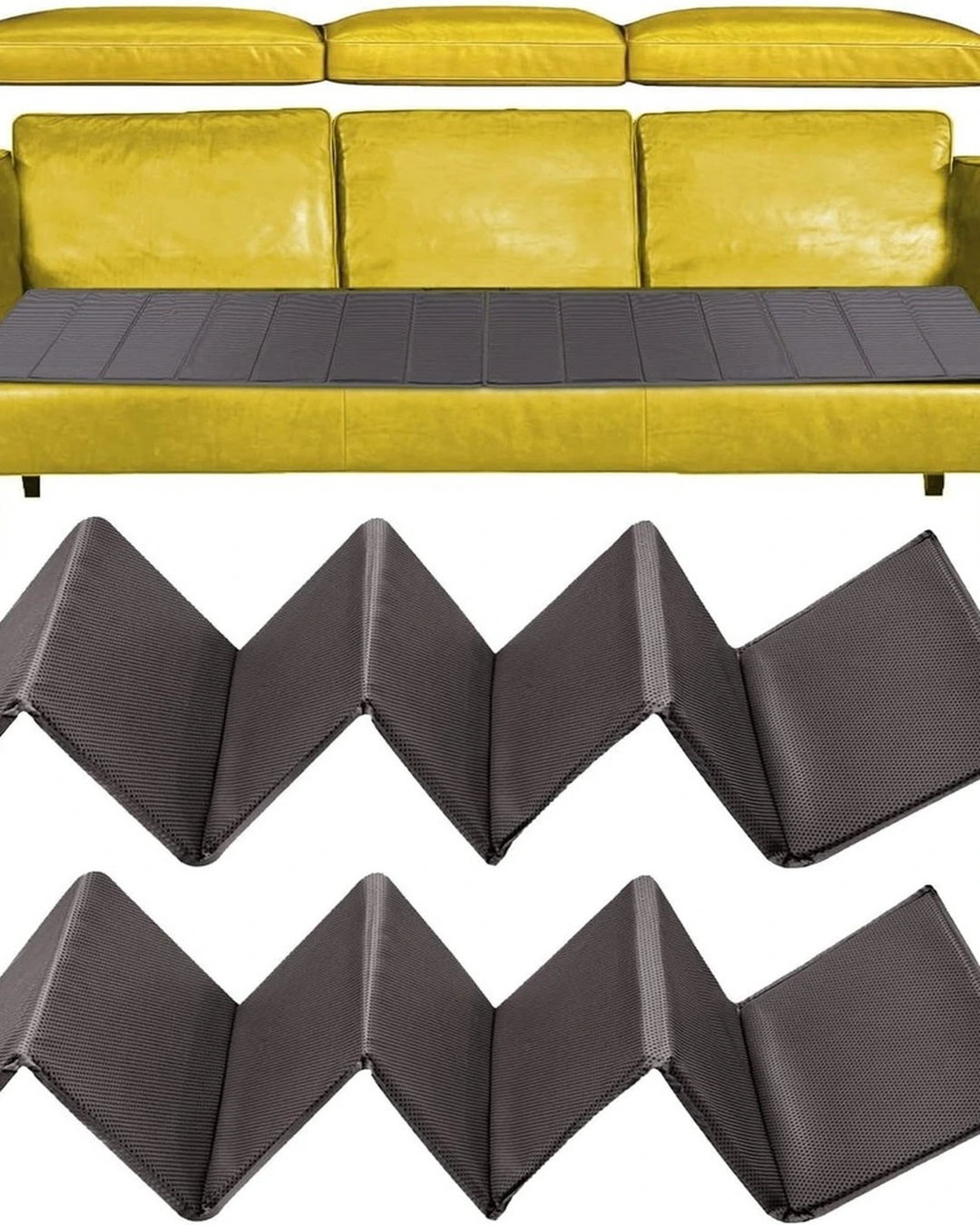
Photo by @peakupoutlet
When the cushions themselves are fine but the seat still sinks, the problem is usually the support underneath. This photo shows the idea clearly: a yellow sofa with its seat cushions lifted, a dark segmented support board laid flat across the seat frame, and the same boards folded below. A support board gives the cushions a firm, even base to sit on instead of letting them dip between worn springs or webbing.
You can buy a ready-made foldable support insert like the one pictured, or cut a sheet of plywood to fit your seat frame as a DIY version. Measure the inside of the frame, round the corners so they do not snag fabric, and wrap the board in an old sheet or batting so it does not squeak. Lift the cushions, lay the board flat, and put the cushions back — the difference is usually immediate.
Replace Worn-Out Foam Inserts
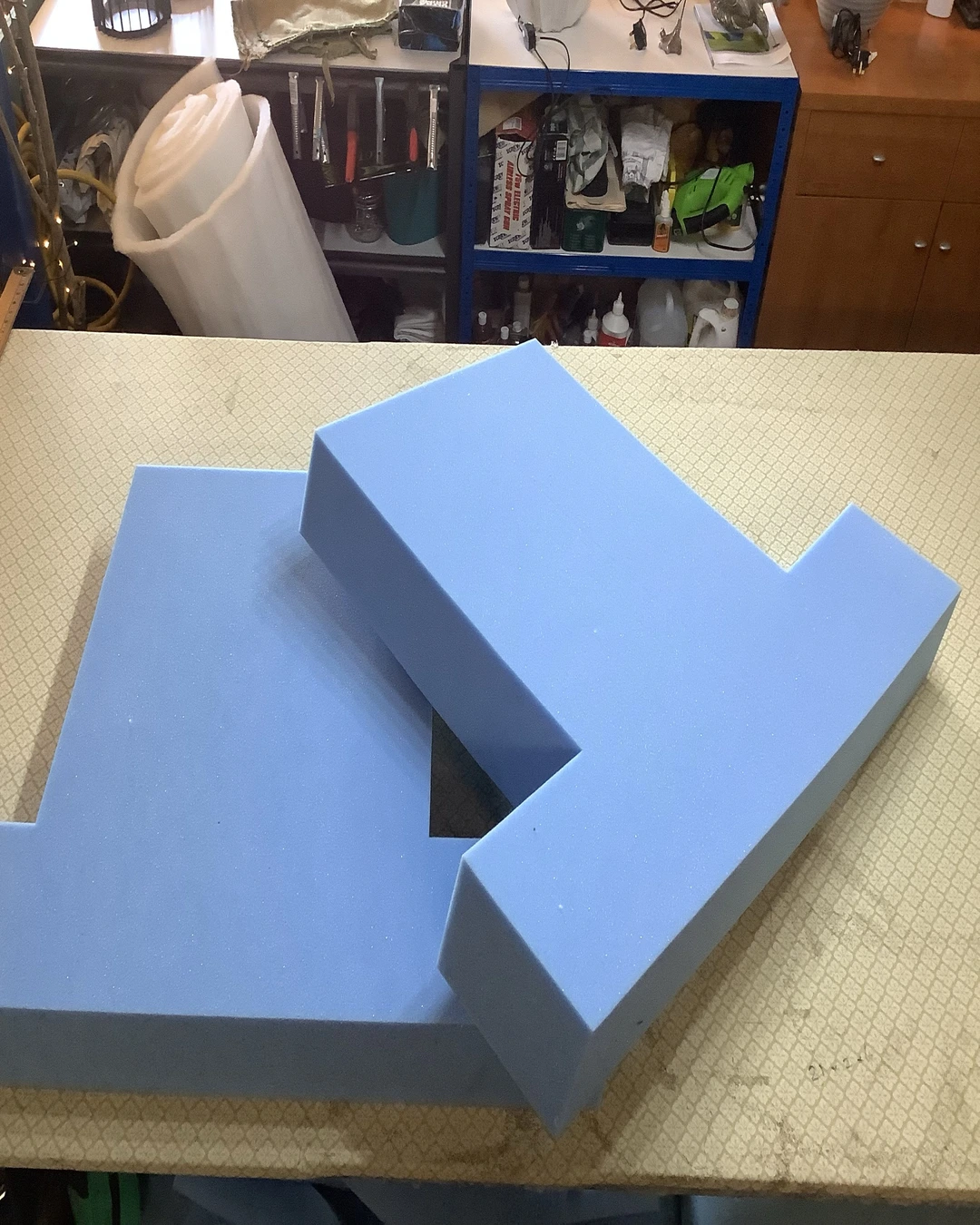
Photo by @scrtmsgsupholstery
If a cushion feels flat even on a firm base, the foam inside has likely broken down. Here, two freshly cut light-blue foam seat pads rest on a workshop table, ready to become new cushion inners. High-density foam is the key detail: cheap, soft foam collapses quickly, while dense foam holds its shape for years.
Measure your old inserts carefully, including thickness, and order foam cut to the same size or slightly larger so the cover fills out properly. Unzip the cover, slide the old foam out, and push the new insert in, working it into the corners. If the cover is tight, wrap the foam in a plastic bag first so it slides in easily, then pull the bag out through the zipper before closing it.
Wrap Cushions in Batting and Restuff Flat Spots
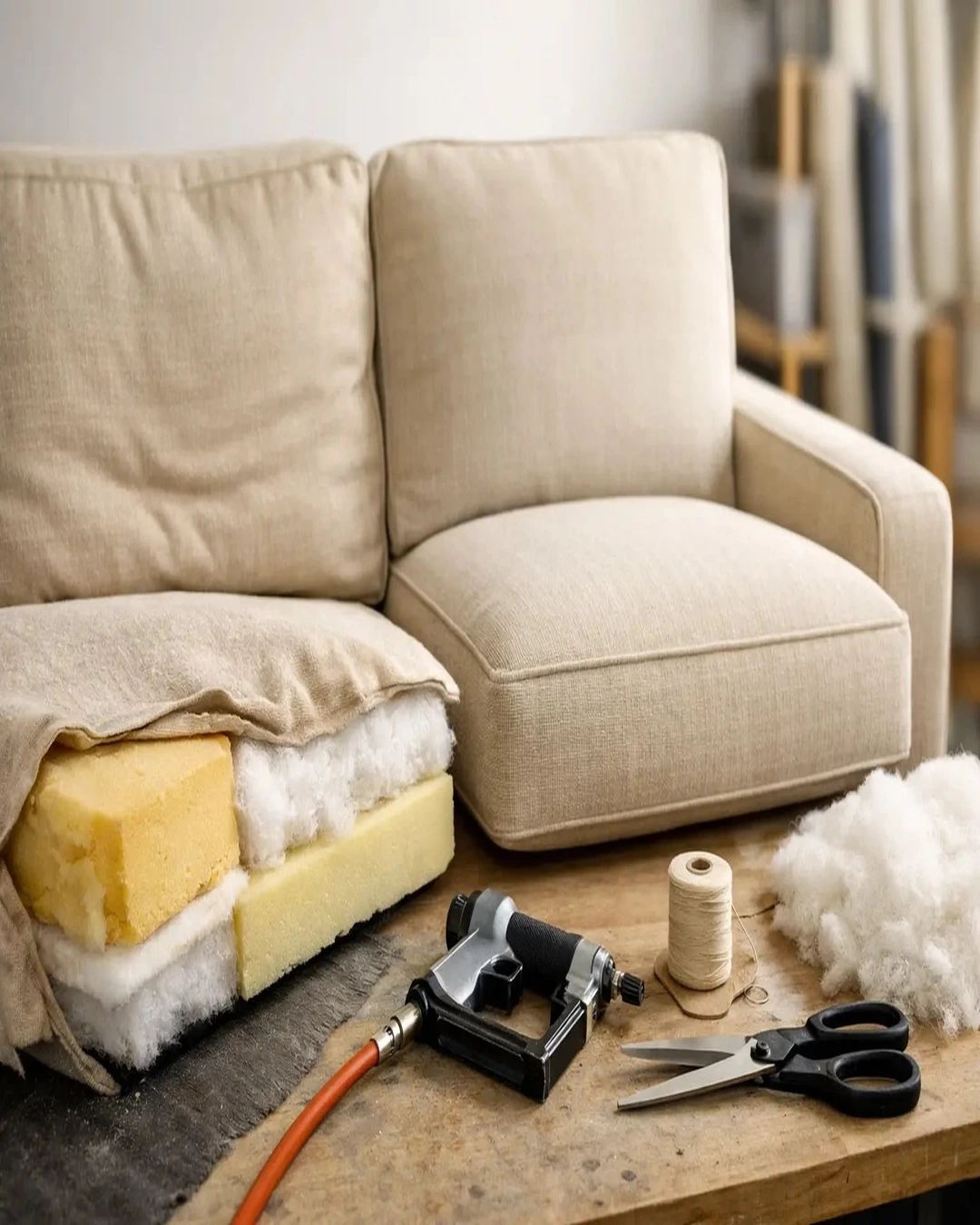
Photo by @ahartupholstery
Sometimes a cushion does not need new foam — it just needs its shape rebuilt. This workshop photo shows exactly that stage of repair: a sofa cushion opened to reveal yellow foam layered with white polyester batting, with a pile of loose stuffing, a staple gun, scissors, and thread on the table beside it. Polyester batting wrap smooths out lumps, softens hard foam edges, and adds back the plumpness that flat cushions lose.
Wrap one or two layers of batting evenly around the foam, then add loose fiberfill to any thin or hollow spots before closing the cover. Keep the layers smooth and avoid bunching extra fill in one corner, or the cushion will look lumpy instead of plump. This is also the right moment to check the cover’s seams and zippers, since a cushion that is already open is easy to repair.
Fix Sagging Springs or Webbing Underneath
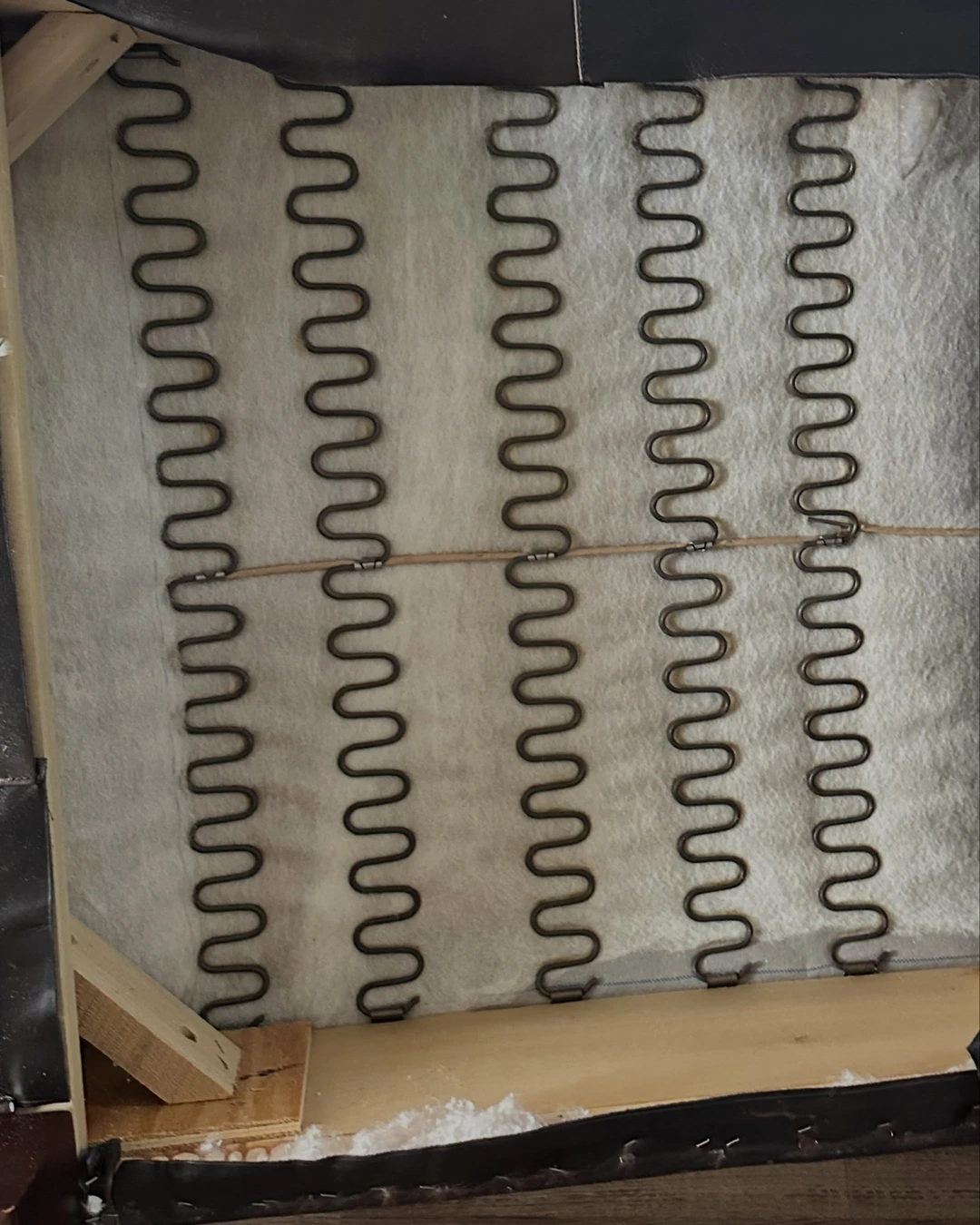
Photo by @ellenmoore2
If the whole seat sinks rather than just one cushion, look underneath. This close-up shows the underside of a sofa with its zigzag springs exposed — five parallel sinuous springs clipped to the frame with a support wire across them. Sinuous springs and webbing carry the entire weight of the seat, so when one breaks or stretches, everything above it drops.
Tip the sofa carefully onto its back and remove the dust cover underneath. Look for broken springs, stretched webbing, or clips that have pulled loose. A single broken spring can often be replaced or re-clipped, and sagging webbing can be re-stretched and stapled. If several springs are damaged, a support board from step two is a faster temporary fix while you decide whether a full repair is worth it.
Plump and Fluff Feather and Down Cushions Daily
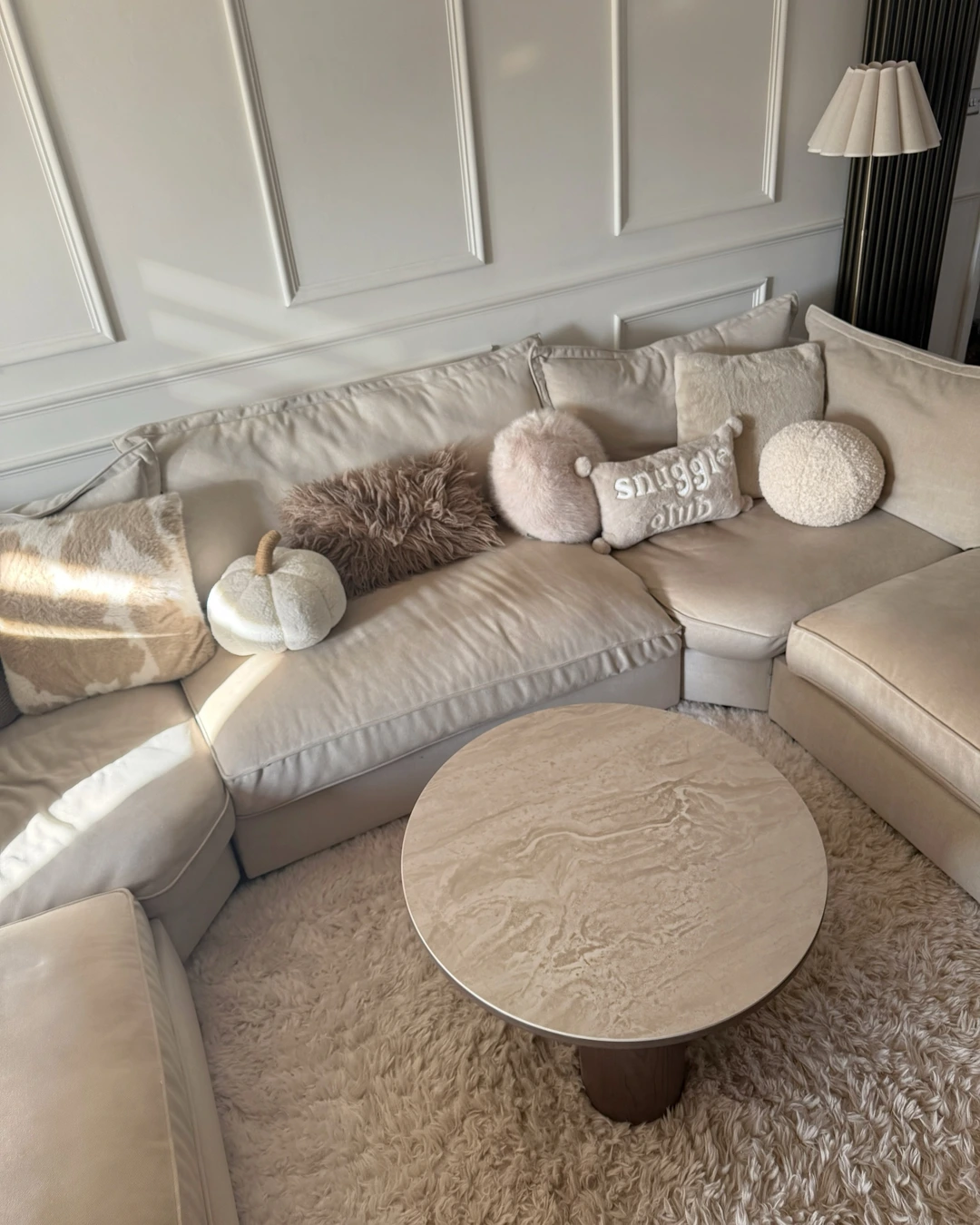
Photo by @bethanyhome_
Feather and down cushions do not sag the way foam does — they go flat because the filling settles. This cozy living room corner shows the goal: a large beige sectional with plump, full cushions and a row of soft throw pillows that all hold their shape. Daily fluffing is what keeps feather cushions looking like this instead of flattening into pancakes.
Pick each cushion up, hold it by two corners, and shake it firmly, then punch the sides inward and plump the center out. Do this every day or two, and give feather cushions a spell in fresh air now and then to let the filling breathe. If a feather cushion has gone permanently thin, it may need topping up with new feather or down fill, which a local upholsterer can do without replacing the whole cushion.
Add Supportive Throw Pillows for Comfort and Structure

Photo by @sohohome
When a seat still feels soft even after a repair, firm throw pillows can fill the gap. This warm living room centers on a ribbed caramel velvet sectional layered with many decorative pillows in floral, botanical, and bouclé fabrics. Firm throw pillows placed behind your back or along the arms give your body support where the seat cushion no longer does.
Choose pillows with dense fills rather than soft, squashy ones, and place larger, firmer pillows at the back with smaller ones in front. This is a comfort fix rather than a structural one, so it works best alongside the repairs above, not instead of them. For more living room styling ideas, see 10 Inspiring Living Room Decor Ideas.
Use a Bolster for Lower Back Support
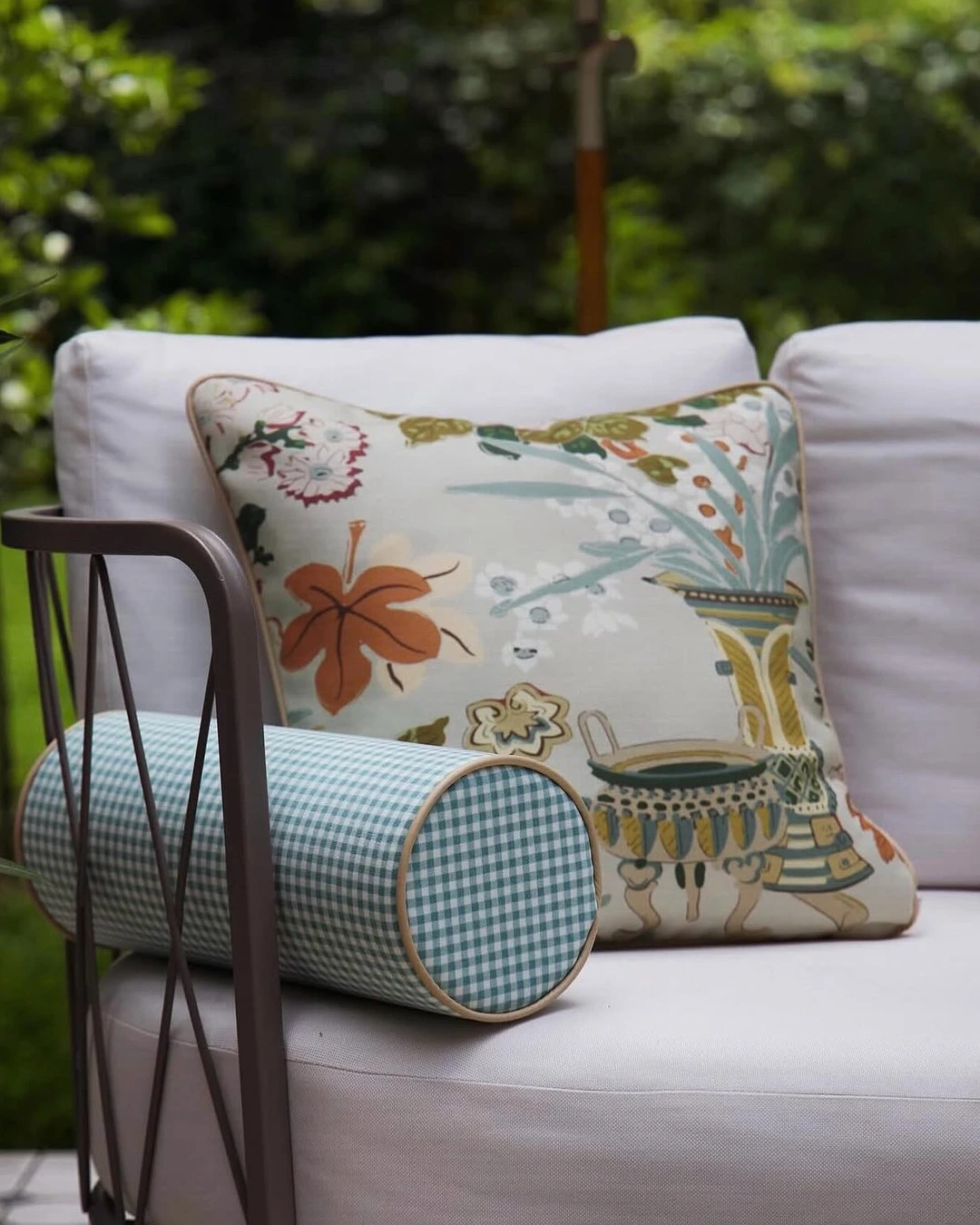
Photo by @majalaptos_studio
A bolster does a job that square pillows cannot: it fills the curve of your lower back. In this close-up, a blue-and-white gingham bolster with tan piping rests on a white cushioned sofa beside a botanical print pillow. A lumbar bolster placed across the back of the seat supports your spine and stops you from sinking into the softest part of the cushion.
Use a firm bolster rather than a soft one, and place it horizontally where your lower back meets the seat. Bolsters also work well on deep sofas, where the seat is too long to sit back comfortably. They are inexpensive, easy to move between seats, and a good short-term fix while you plan a bigger cushion repair.
Check and Tighten the Sofa Frame
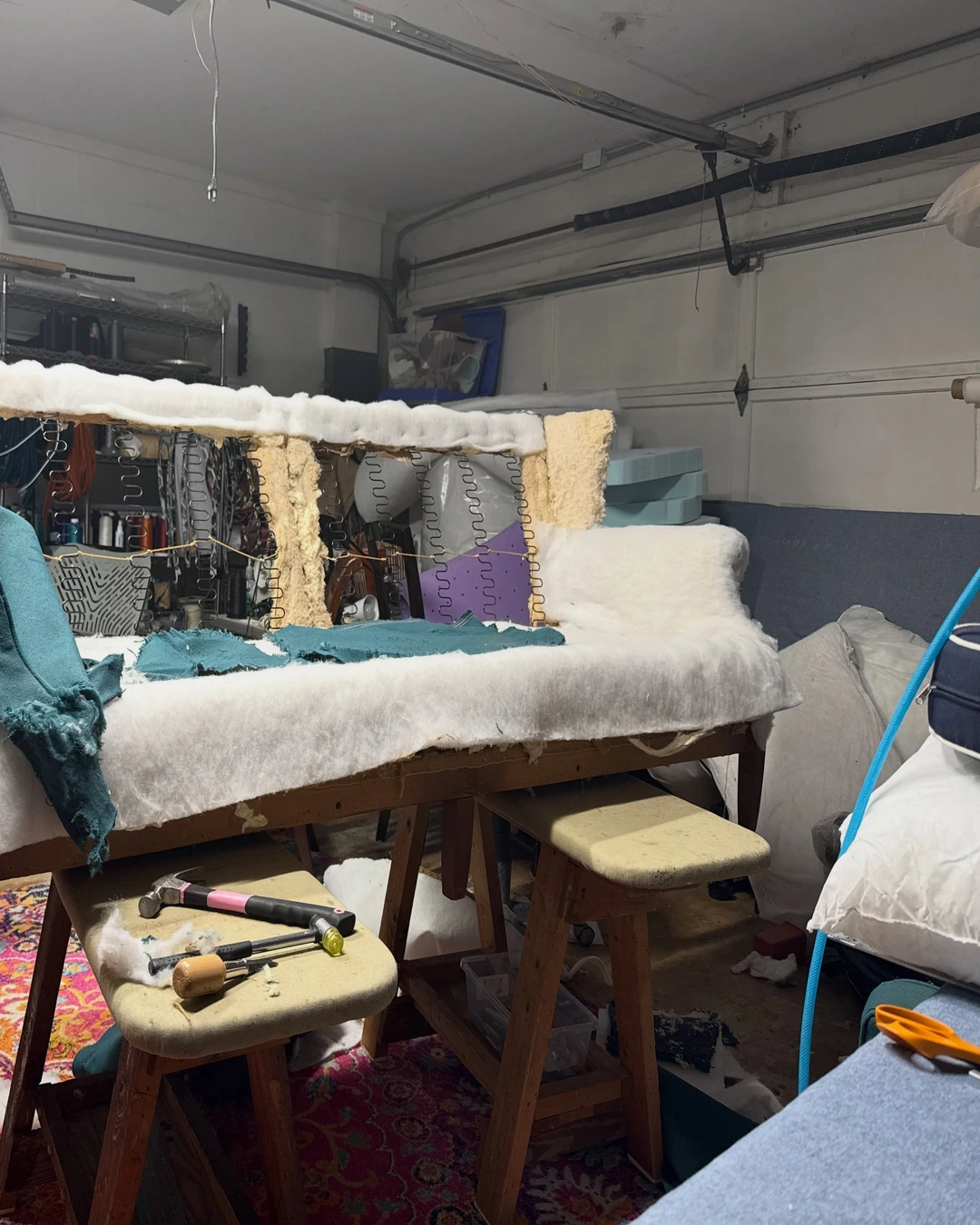
Photo by @dorothyaliceupholstery
Sometimes the cushions are innocent and the frame is the problem. This workshop photo shows a sofa stripped down to its wooden frame during restoration, with coil springs, batting, and tools — a hammer and screwdriver — on stools nearby. A loose sofa frame lets the whole seat shift and sag, and it often creaks or wobbles as well.
Check the legs first: tighten or replace any that wobble, and add felt pads so the sofa sits level. Then check the corner joints under the sofa for loose screws or brackets and tighten them. If a joint is cracked or a rail is broken, that is structural damage — a repair shop can reinforce it, but it is worth getting a quote before spending more on cushions for a frame that will not hold them.
Know When to Reupholster or Call a Professional
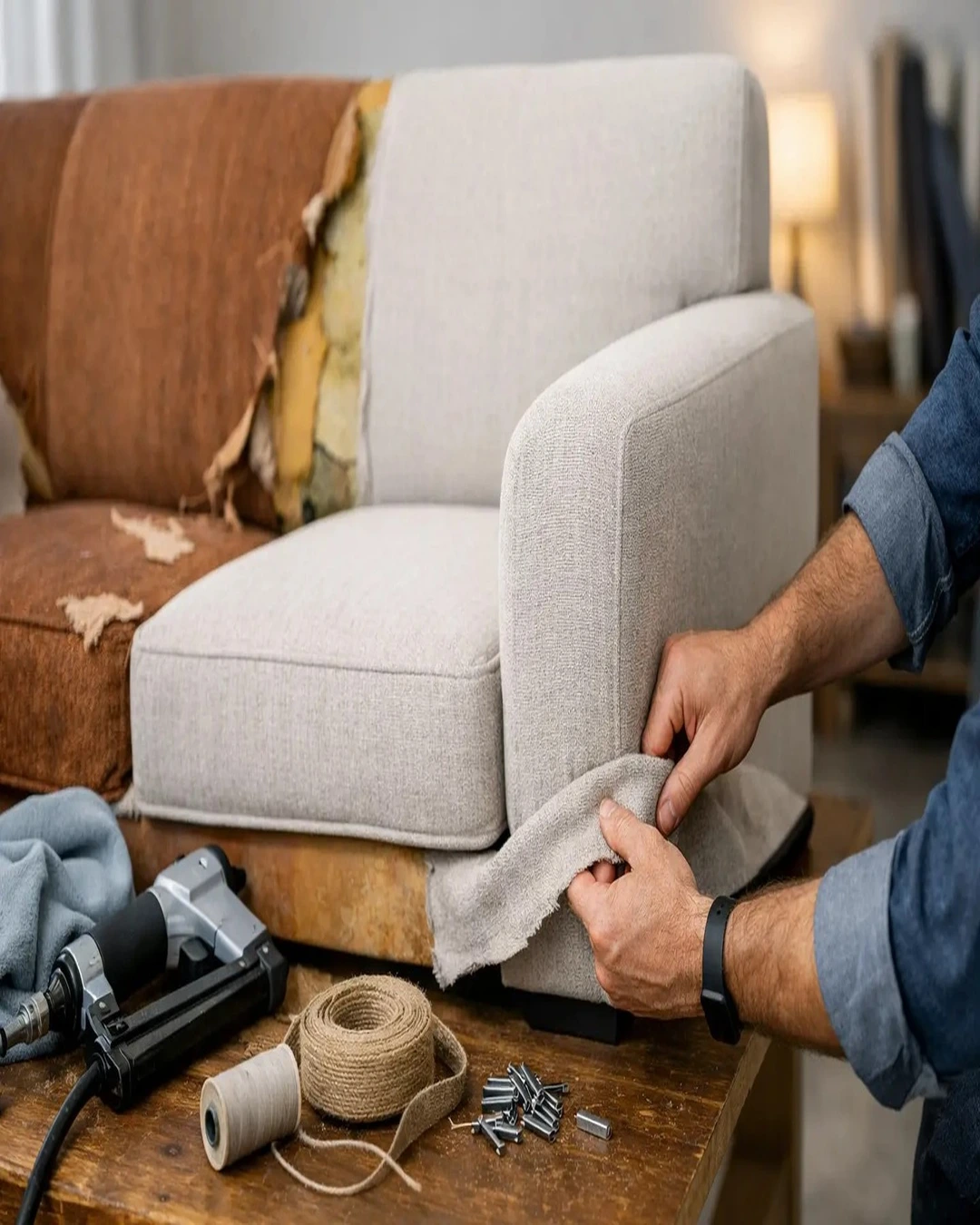
Photo by @ahartupholstery
Some sofas are past the DIY stage, and knowing that saves money. Here, a craftsman fits new light-beige fabric over a sofa while the other side still shows its worn, torn brown fabric with yellow padding underneath. Professional reupholstery replaces the fabric, foam, and worn internals together, which is the right call when the frame is solid but everything else is tired.
Get a quote before deciding: reupholstery can cost close to a new mid-range sofa, so it makes most sense for a well-made frame or a piece you love. If the frame is damaged, the springs are mostly broken, and the fabric is worn through, replacement is usually the better value. For sofa styles worth investing in, see Chesterfield Sofas for Living Room.
Keep Your Sofa Comfortable for Longer
Fixing sagging couch cushions is rarely about one big repair. Flip and rotate cushions regularly, support the seat from below, replace foam when it collapses, and check the frame before you blame the cushions. Add non-slip gripper pads under cushions that slide forward, and they will stay in place instead of bunching up at the front edge. With the right fix for the real cause, a sagging sofa can feel comfortable again — and stay that way.