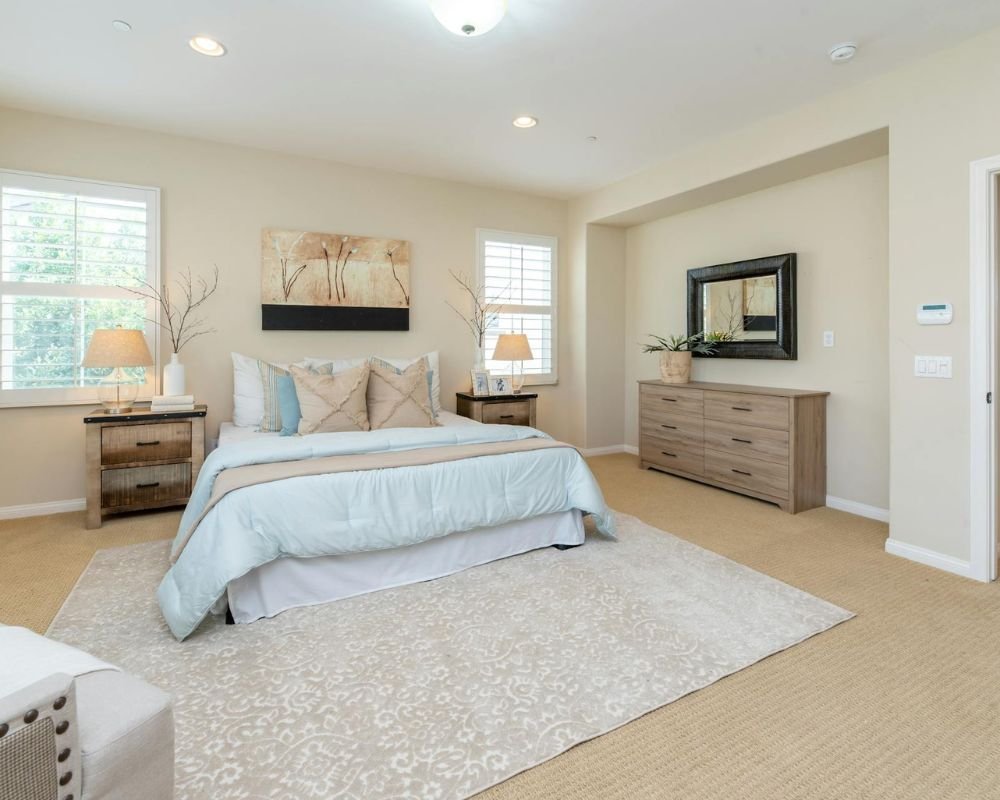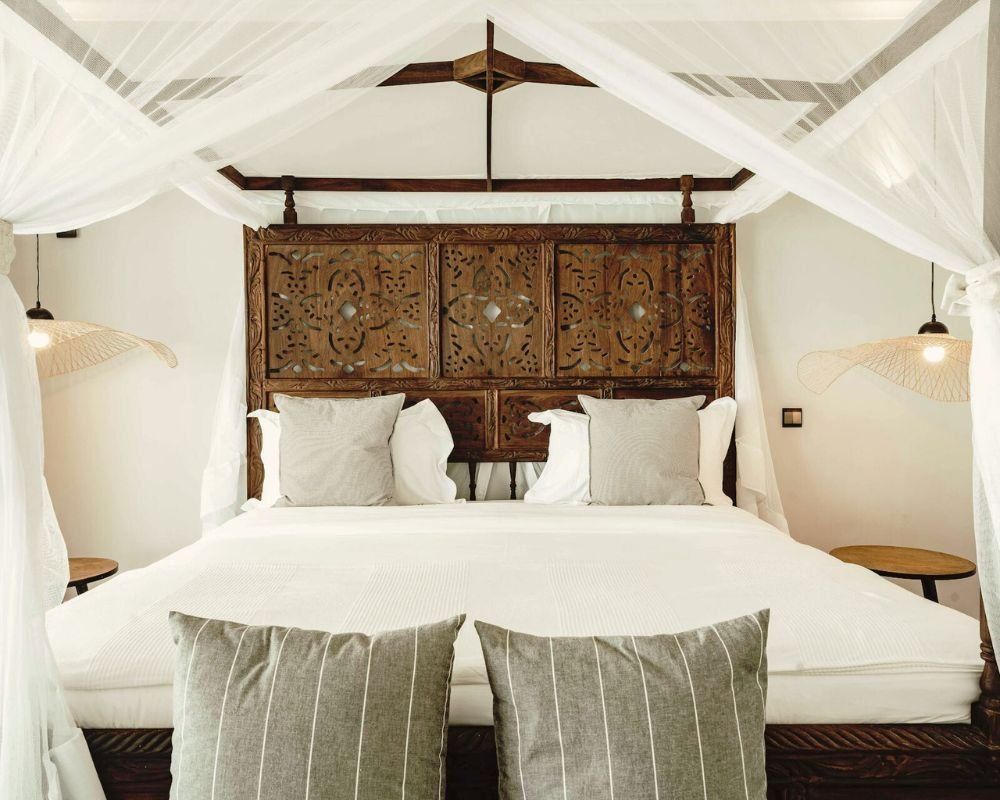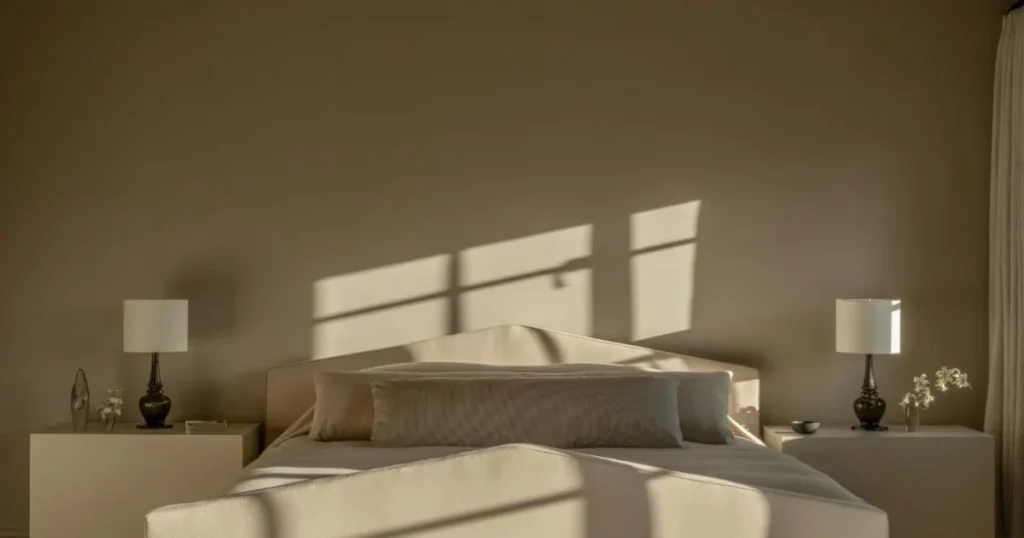
You open the bedroom door and the whole room is right there in front of you — bed, wardrobe, nightstand, all of it, before you’ve taken a single step inside. Nothing in the room is wrong. The room is simply too small to let everything breathe.
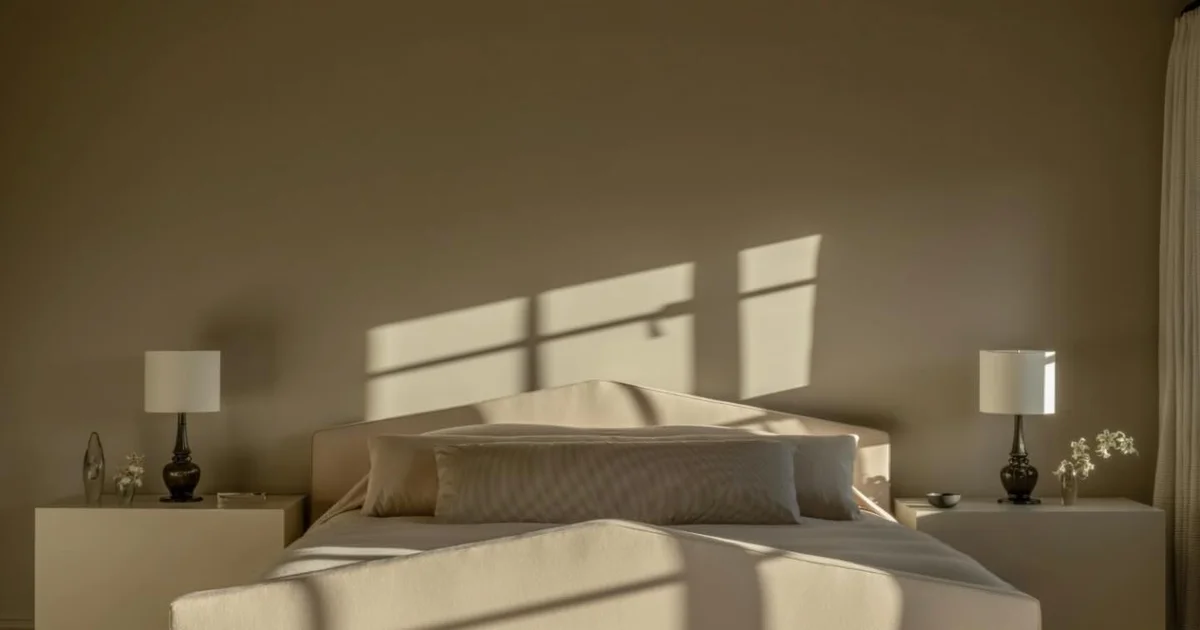
What makes a bedroom feel cramped isn’t the square footage — it’s what your eyes read first. A tall bed eats the wall. A dark corner pulls the room in. A floor hidden under furniture makes the whole space feel smaller than it is. Every one of those readings can be changed, and none of them needs a builder.
Here are 15 ways to make a small bedroom look bigger, each one a small change you can make in a weekend, using the room you already have.
Pale Walls, Bigger Room
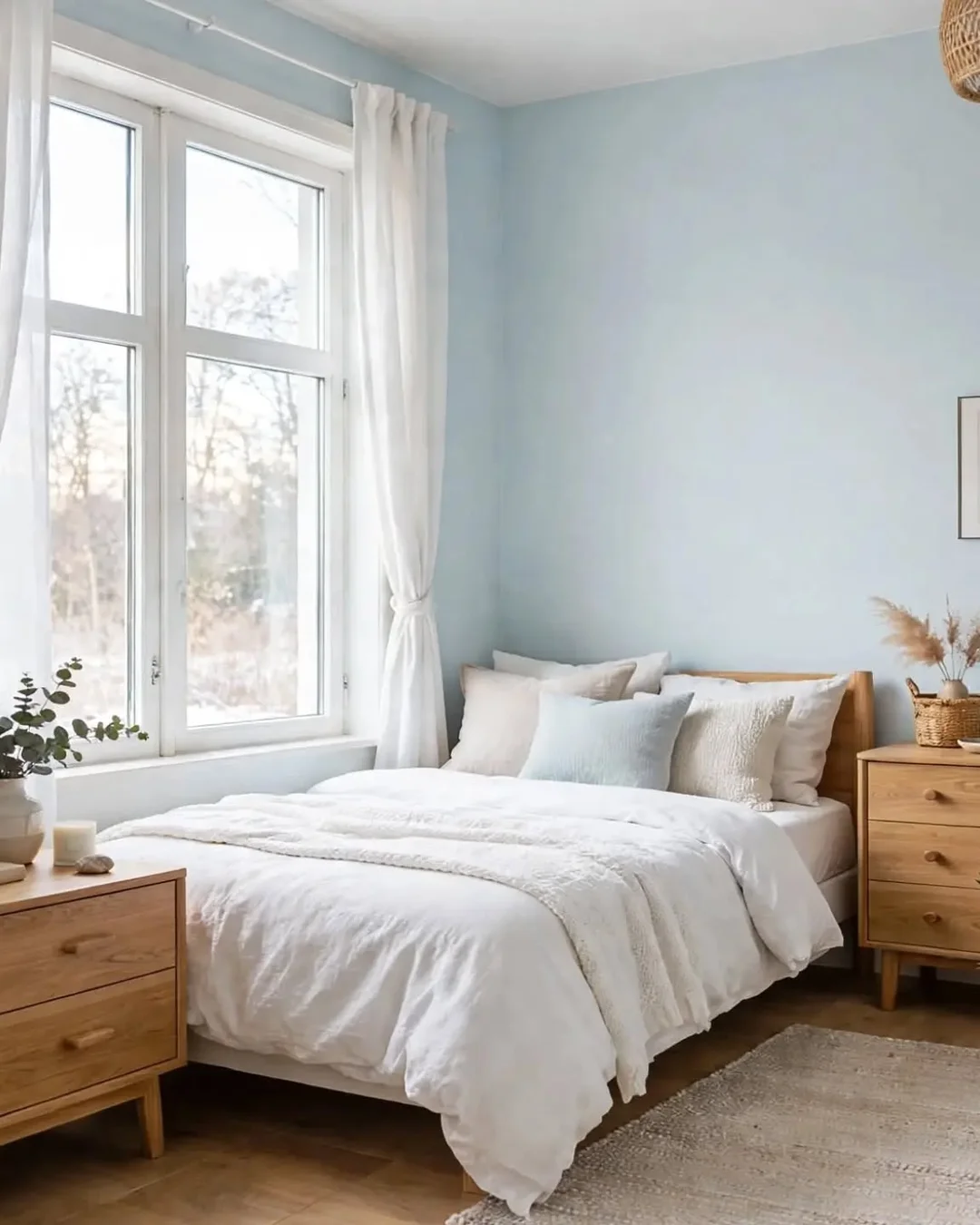
Pale blue walls do the quiet work in this bedroom — white linens, sheer curtains, light wood nightstands, and suddenly the walls feel further away than they are. Light colours bounce the daylight around instead of soaking it up, so the room reads brighter and the corners soften.
Keep the palest colour on the walls and let the trim match it. When the skirting boards and the ceiling share the wall colour, the edges blur and the room stops announcing its size. A dark accent wall does the opposite in a tiny room — it pulls one wall towards you.
The practical point: Paint the trim the same pale colour as the walls. One continuous colour from floor to ceiling erases the lines your eyes use to measure a room.
Put a Large Mirror Opposite the Window
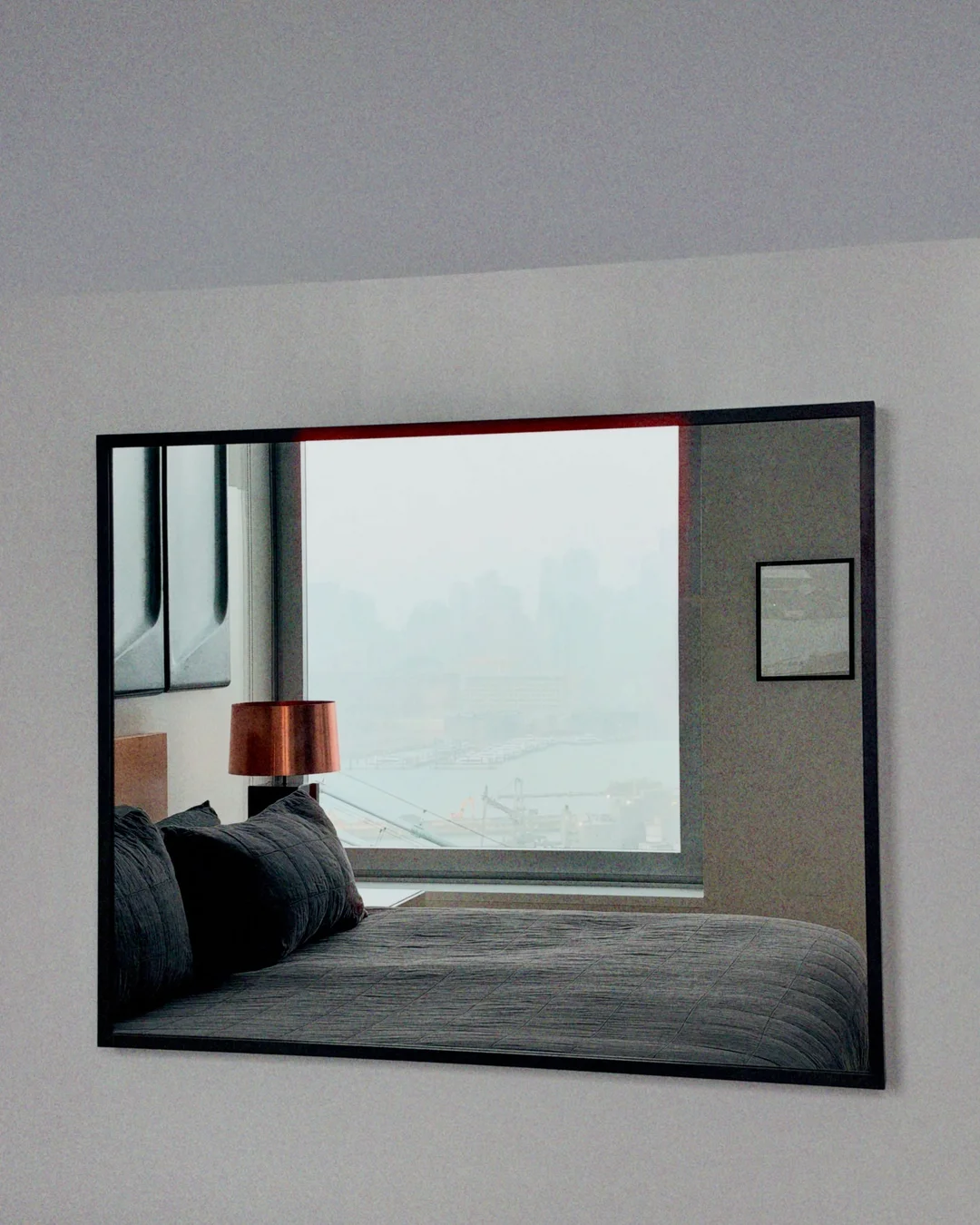
A large rectangular mirror on the wall opposite the window does something no other trick can — it brings the window into the room twice. The mirror in this bedroom reflects the bed, the copper lamp and the whole floor-to-ceiling window, so the light doubles and the wall behind you seems to open up.
Size matters more than the frame. A mirror half the width of the wall reads like a second window; a small decorative mirror reads like a decoration. Hang it opposite the window, not beside it — beside the window it only reflects a wall.
The practical point: Hang the mirror opposite the window, at the height where it catches the sky, and keep the wall in front of it clear — a mirror opposite clutter doubles the clutter.
Let a Low Bed Raise the Ceiling
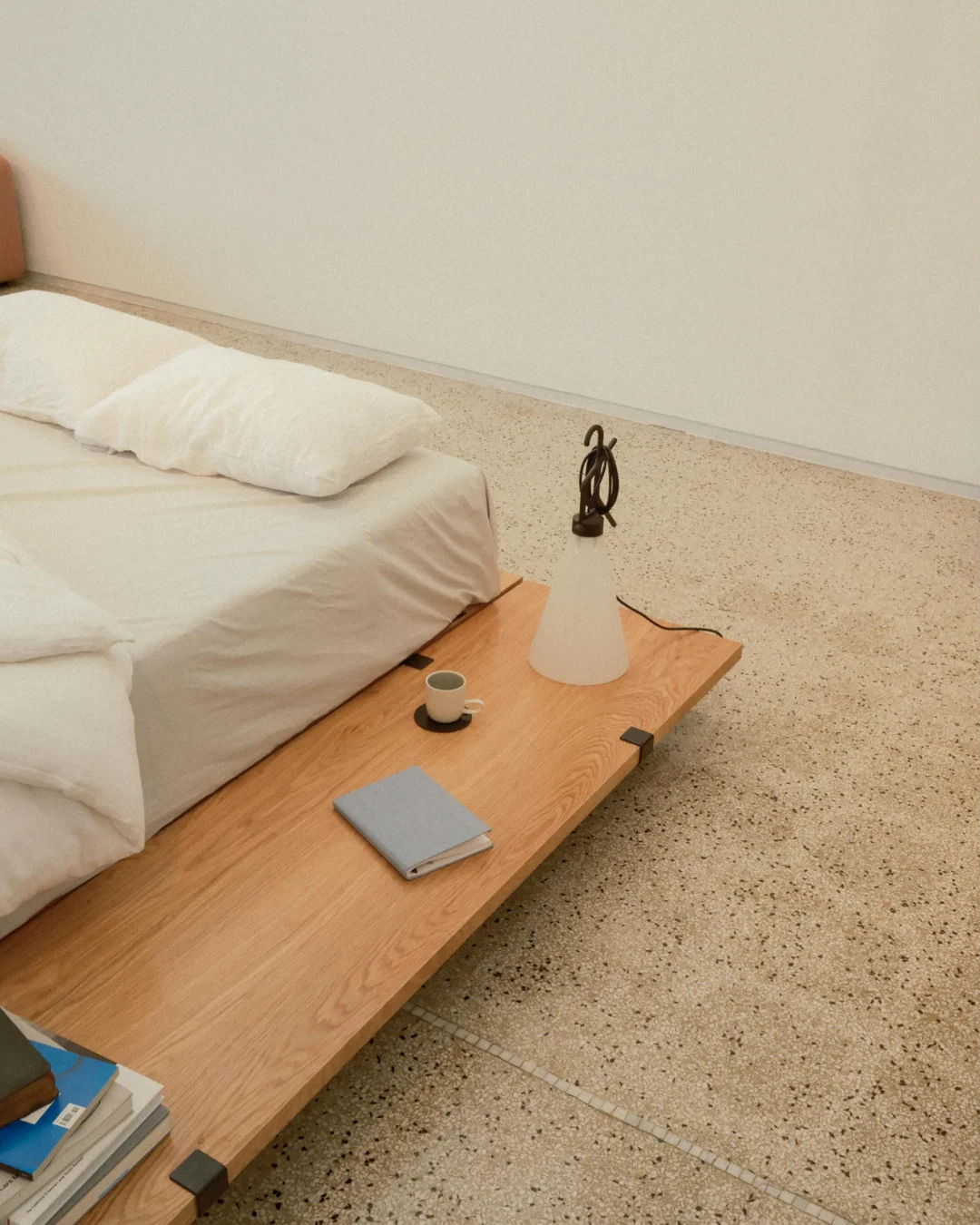
A low platform bed sits almost on the floor, and that gap above it is the whole trick. With white sheets and a wood platform doubling as a nightstand, this bed leaves a generous stretch of empty wall above it — and your eyes read that empty wall as height.
Keep the headboard low too, or the bed gains back the height you just saved. Platform beds work best here; a tall upholstered headboard and a deep mattress undo the effect. The honest trade-off is getting up — if your knees complain, a low bed is not the trick for you.
The practical point: Choose a bed frame under 30 cm high with a low headboard. The wall above the bed is what makes the ceiling feel higher.
Keep the Floor Visible
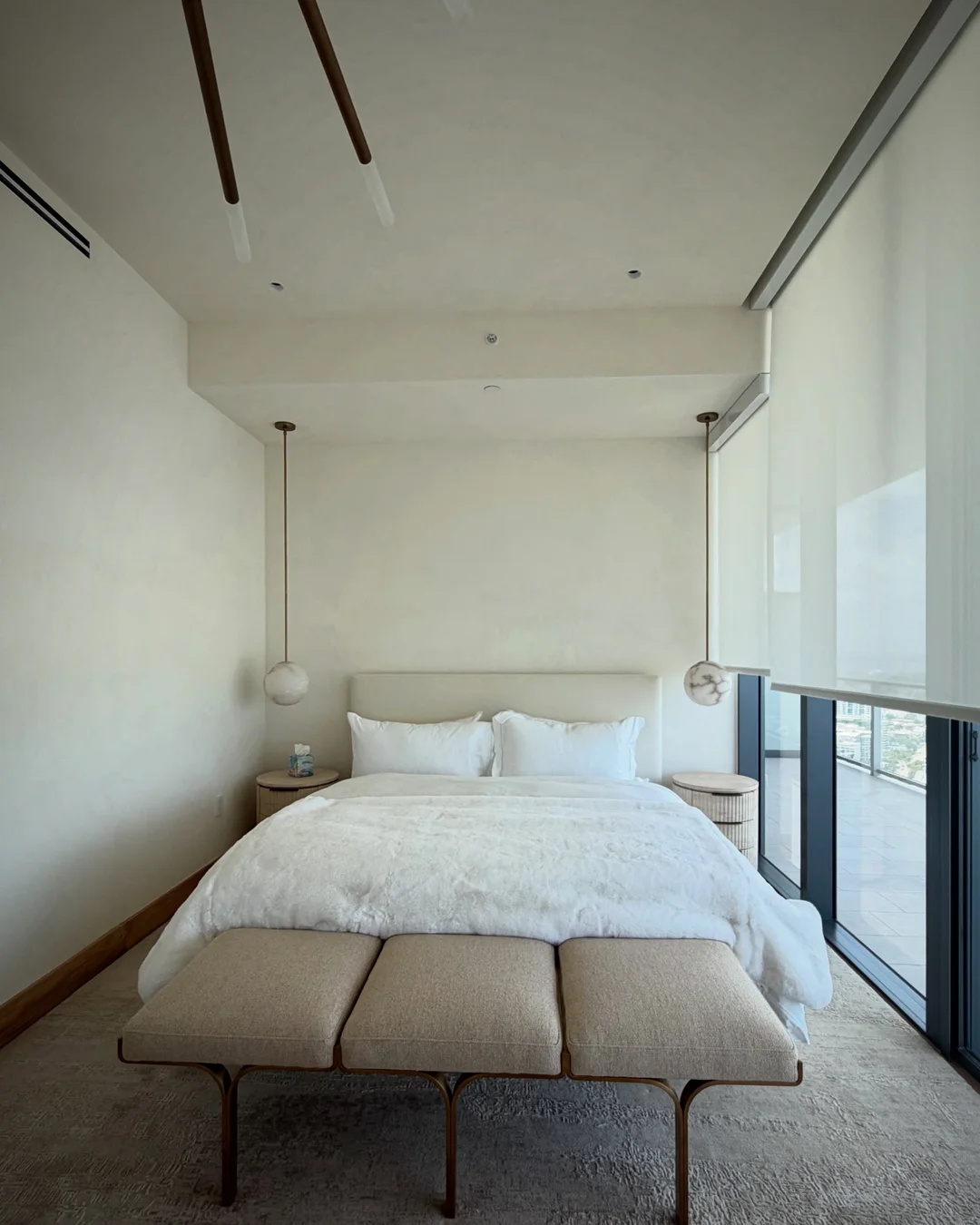
Light flooring runs across the whole room here, from the door to the far wall, and that unbroken stretch is what makes the bedroom feel generous. A bench with thin metal legs sits at the foot of the bed without hiding anything — you can see the floor underneath it, so the room keeps its depth.
Anything that touches the floor in a wide skirt — a bed valance, a heavy ottoman, a chest pushed flat to the wall — chops the floor into pieces. One rug is fine, but leave a border of bare floor showing around it, at least 15 cm on every side.
The practical point: If you can see the floor from the doorway to the far wall, the room reads bigger. Furniture on slim legs is the easiest way to get there.
Curtains Hung High and Wide
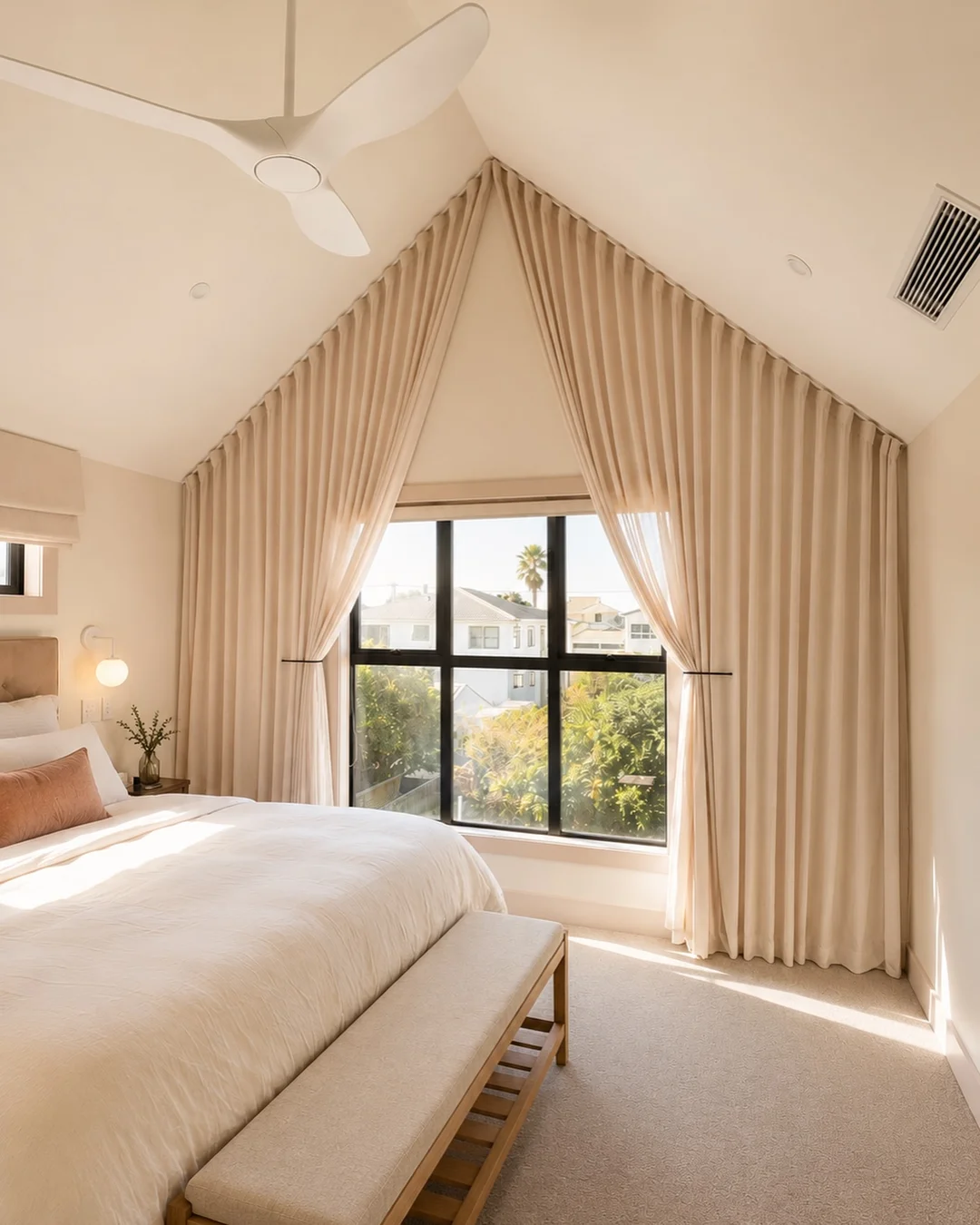
Beige curtains run from the peak of a vaulted ceiling right down to the floor here, tied back on either side of a black-framed window. They stretch well past the frame, so the window reads far wider than it is — and the height of the rod makes the ceiling feel taller too.
Mount the rod as close to the ceiling as you can and extend it 15–20 cm past the frame on each side. When the curtains are open, they should sit on the wall, not on the glass, so the whole window is uncovered. Keep the panels slim — too much fabric in a small room swallows the window it was meant to enlarge.
The practical point: Rod at the ceiling, panels past the frame, fabric to the floor. The window you already have becomes the biggest one in the house.
One Big Piece of Art Instead of Many Small Ones

One huge horizontal painting — bold blue and red drips — fills the whole wall above this gray bed, and the room feels calmer for it. A wall covered in small frames gets chopped into pieces; one large piece gives the wall a single idea, and the eye rests on it instead of darting around.
Scale matters more than colour. A painting about two-thirds the width of the bed is the right size — smaller and it looks lost, bigger and it crowds the headboard. Bold colours are fine; a quiet room can take one loud wall.
The practical point: One frame, its centre at eye level — about 145 cm from the floor — and nothing else on that wall. The art does the decorating, the wall does the resting.
Storage That Disappears Under the Bed

Wooden drawers pull out from under this bed, each one packed with neatly folded blankets, and the wardrobe breathes a little easier for it. Under-bed storage is the one trick that actually removes things from a small room instead of just rearranging them — out-of-season bedding, spare pillows, the things you need twice a year.
Measure first. Most beds need at least 15 cm of clearance for boxes, and drawers on wheels beat loose boxes — you can pull one out without dragging the whole bed. Keep the heaviest things underneath and the everyday things where you can reach them. For more ways to keep spare bedding out of the way, these clever blanket storage ideas work with the same principle.
The practical point: Store under the bed only what you use seasonally. If you open a drawer every morning, it isn’t storage — it’s a wardrobe without a door.
Floating Nightstands That Leave the Floor Clear
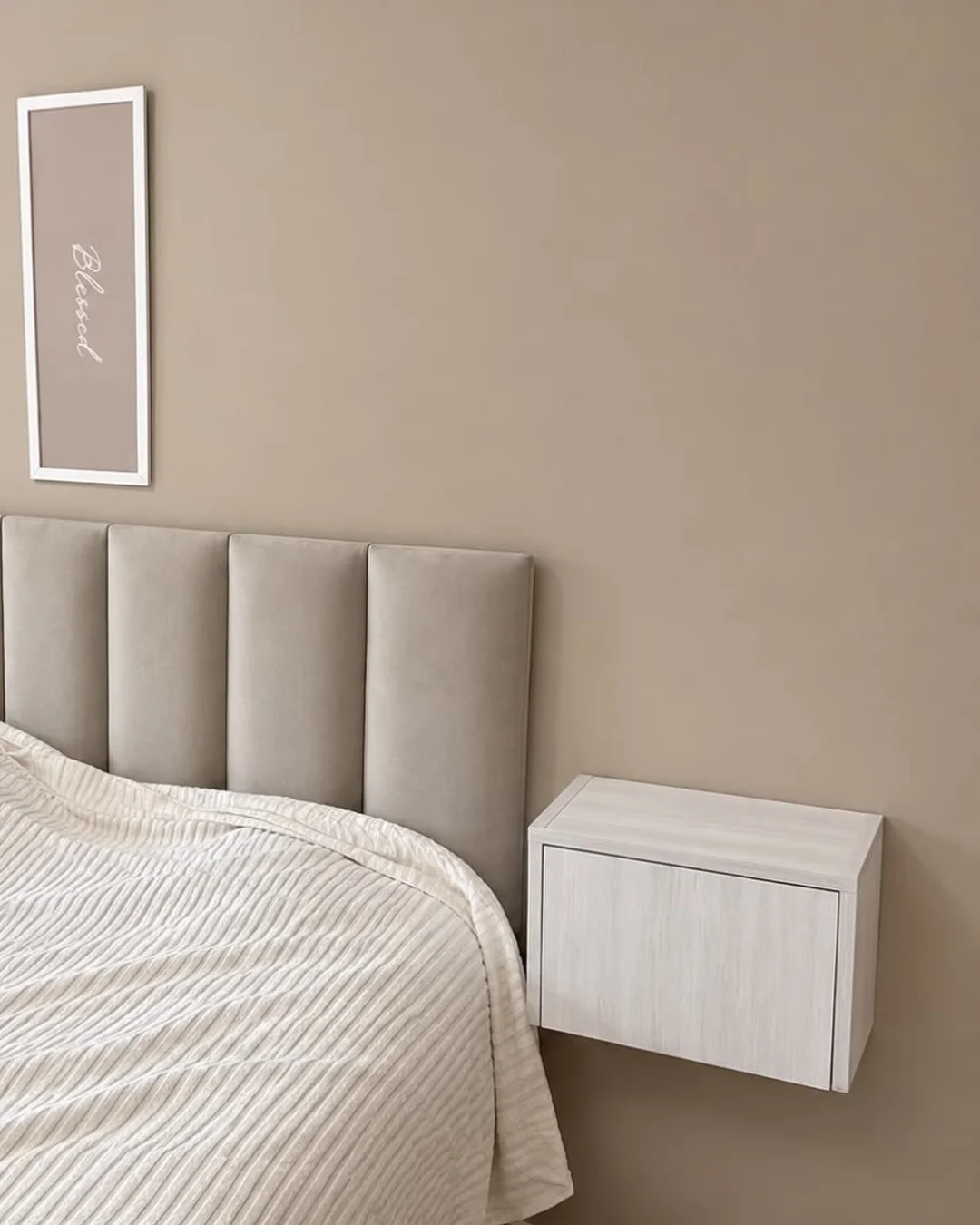
A white nightstand floats on the wall beside this bed, and the floor runs clean underneath it — no legs, no shadow, no clutter at ankle height. That clear strip of floor is what your eyes read as space, even though the nightstand holds exactly what a standing one would.
Mount them level with the top of the mattress, so a glass of water and a book are within reach without sitting up. One small drawer and an open shelf underneath is enough — a floating nightstand is not the place for a lamp collection. Solid walls take them easily; plasterboard needs proper fixings, so check the wall before you drill.
The practical point: Wall-mounted, level with the mattress, floor clear beneath. The nightstand disappears and the floor does the talking.
Why Vertical Stripes Stretch a Wall
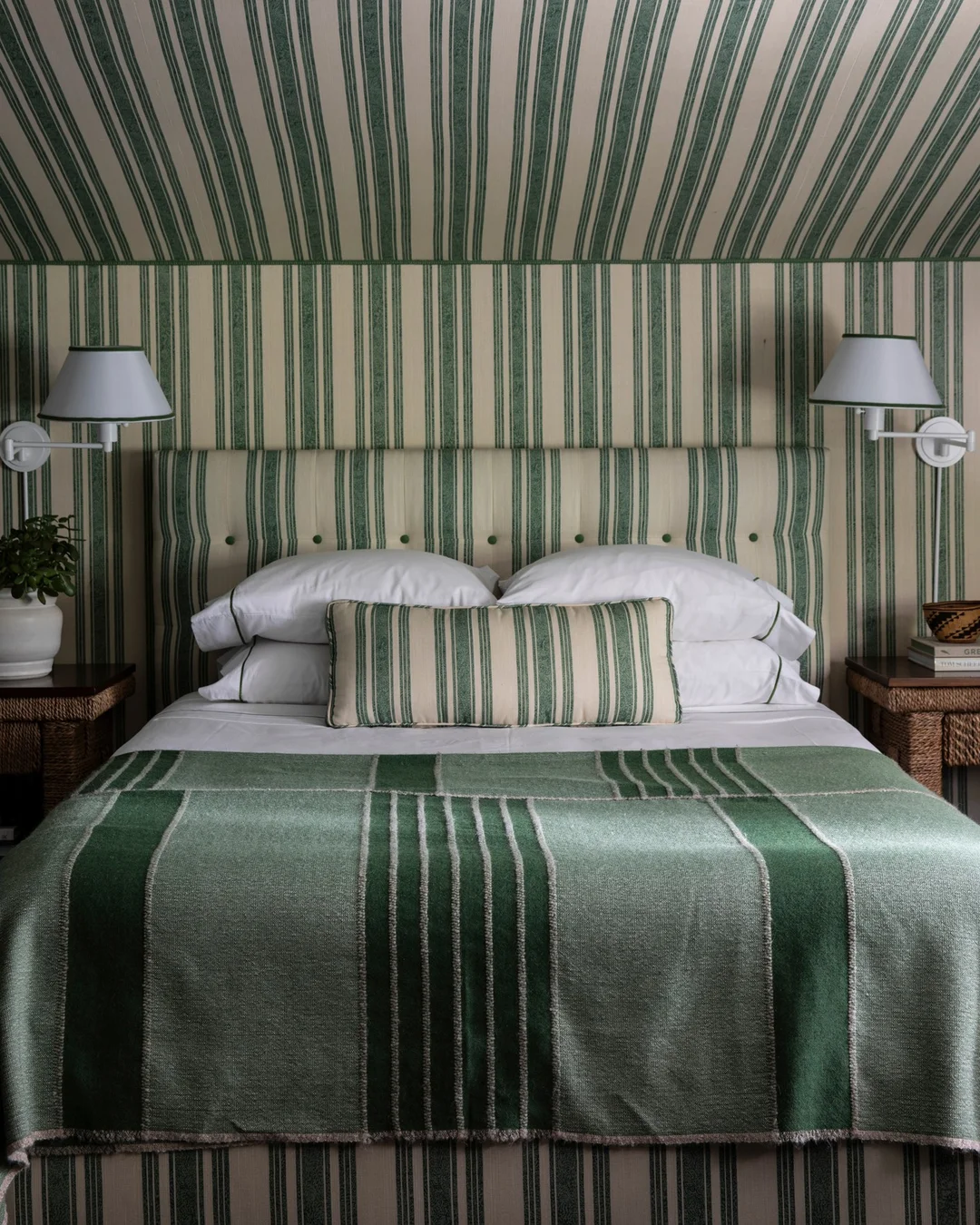
Green and cream stripes run up the walls and across the sloped ceiling of this bedroom, and the whole room feels taller for it. Vertical lines pull your eyes upward — the same reason a striped shirt looks longer — and in a small bedroom that upward pull is worth more than any mirror.
Thin stripes read calmer than wide ones, and low contrast reads calmer still. Five to eight centimetres wide, in two colours close together, gives you the height without the noise. Wallpaper does it cleanly, but paint works too — and if you want the painted route, these vertical striped wall paint ideas show how to get the lines straight.
The practical point: Thin stripes, low contrast, one wall or the whole room. Bold, wide, high-contrast stripes turn the wall into the star — and the room into its background.
Bedding in One Light Colour
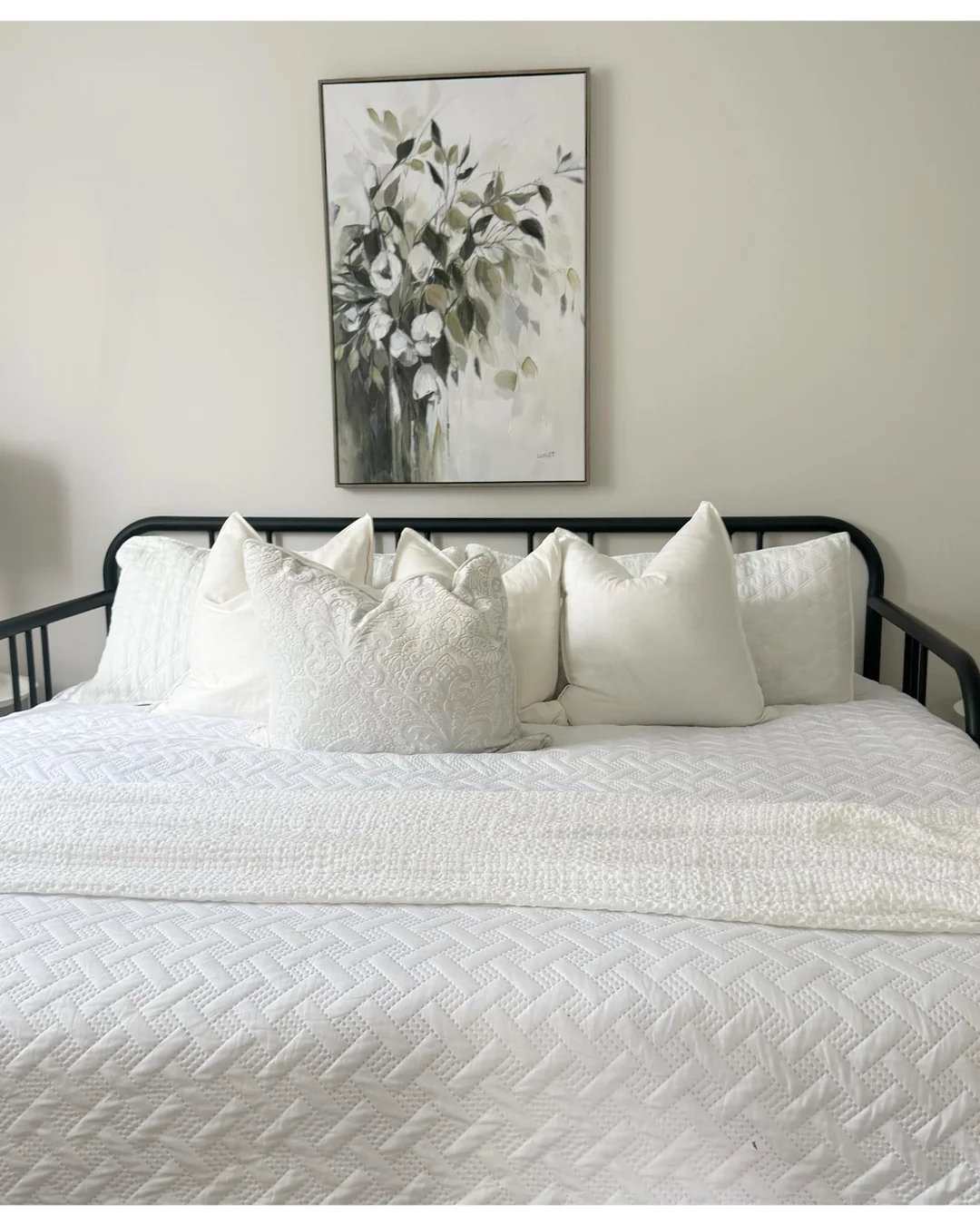
This bed is dressed entirely in white — quilted coverlet, white pillows, a pale throw — and the bed almost disappears into the room. One light colour erases the bed’s edges, so the biggest piece of furniture in a small bedroom stops announcing itself.
Texture does the work that colour usually does. A quilted coverlet, a knit throw, a linen pillowcase — three textures in the same white keep the bed interesting without breaking the single colour. The honest trade-off is laundry: white bedding needs a weekly wash, so choose a duvet cover that comes off easily.
The practical point: One warm white, throughout — but only one. Two different whites side by side look like a mistake, not a scheme.
Choose a Chair You Can See Through
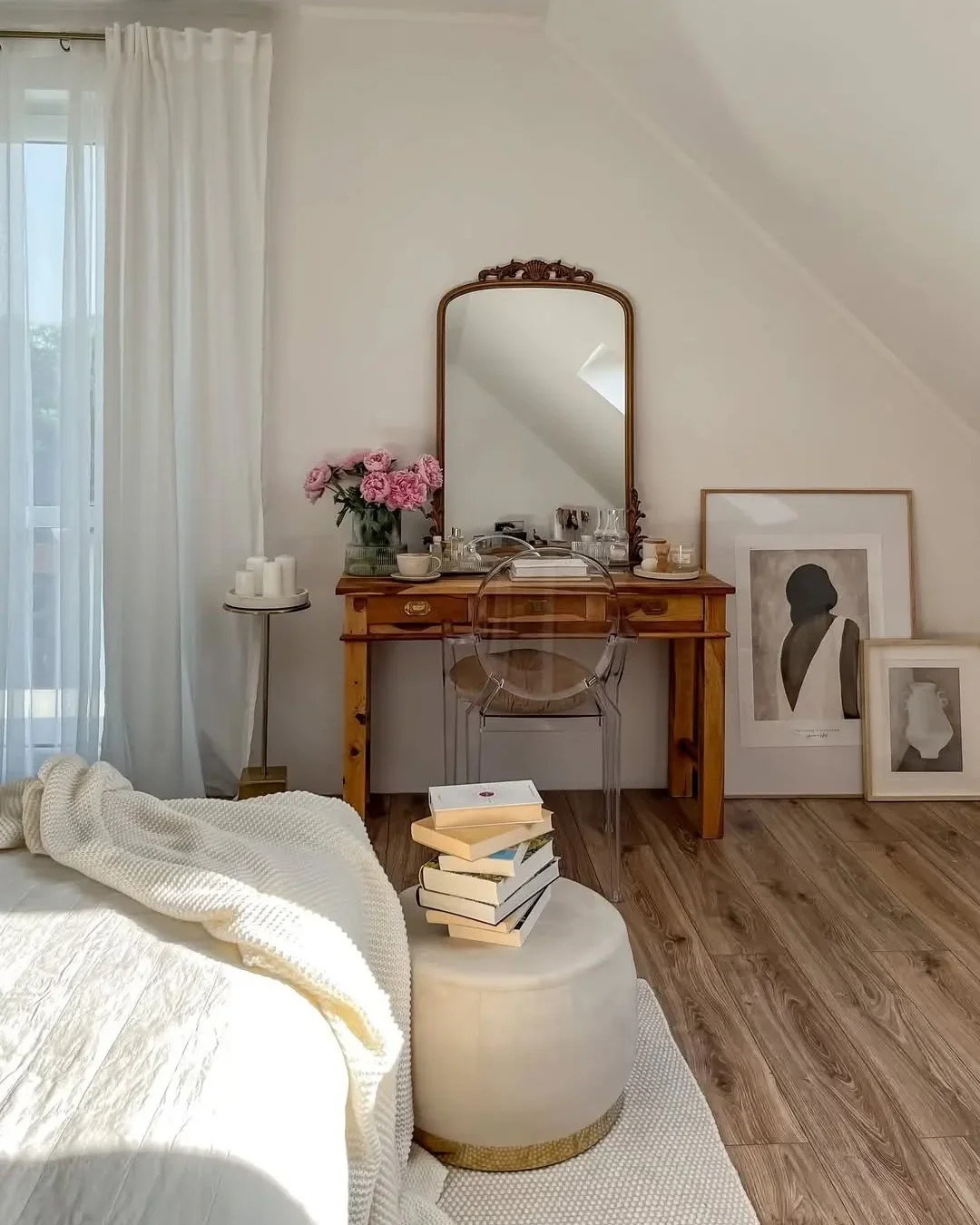
A clear acrylic chair tucks under a wooden vanity in this sunlit attic bedroom, and you barely notice it — the wood floor runs straight through it, the mirror above it stays the focus, and the chair takes up no visual space at all. Transparent furniture doesn’t block a sightline, so the room keeps its depth.
Acrylic scratches if you clean it like glass, so a soft cloth and warm water is all it needs. The trick works anywhere a chair would block the view — a vanity, a desk, a reading corner — and it works for side tables too.
The practical point: A clear chair belongs wherever the chair would block the view. If you can see the floor through it, the room keeps its size.
Warm Light in the Corner
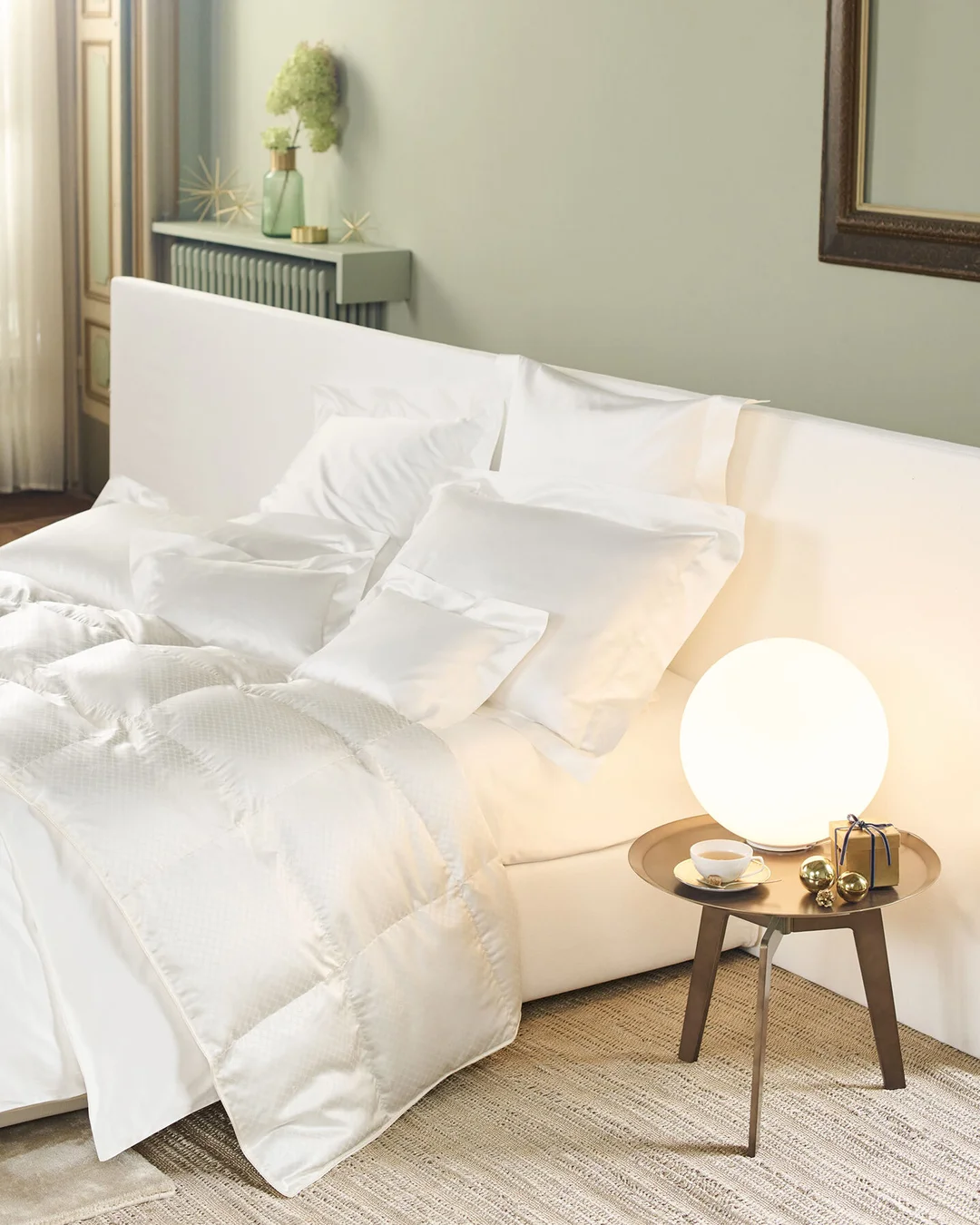
One glowing spherical lamp sits on a small round table beside this bed, and the whole corner feels softer for it. Warm light — the yellow-white glow of a 2700K bulb — rounds off the edges of a small room in a way that cool white light never does.
Think in layers rather than in brightness. Daylight does the daytime work, one warm lamp does the evening, and a small reading light finishes the job. Two or three small lights beat one bright ceiling light in a small bedroom, because each one lights a corner instead of flattening the whole room.
The practical point: Warm white bulbs, 2700K, in every bedroom lamp. Cool white light makes a small room feel like an office — warm light makes it feel like a bedroom.
One Colour, Everywhere
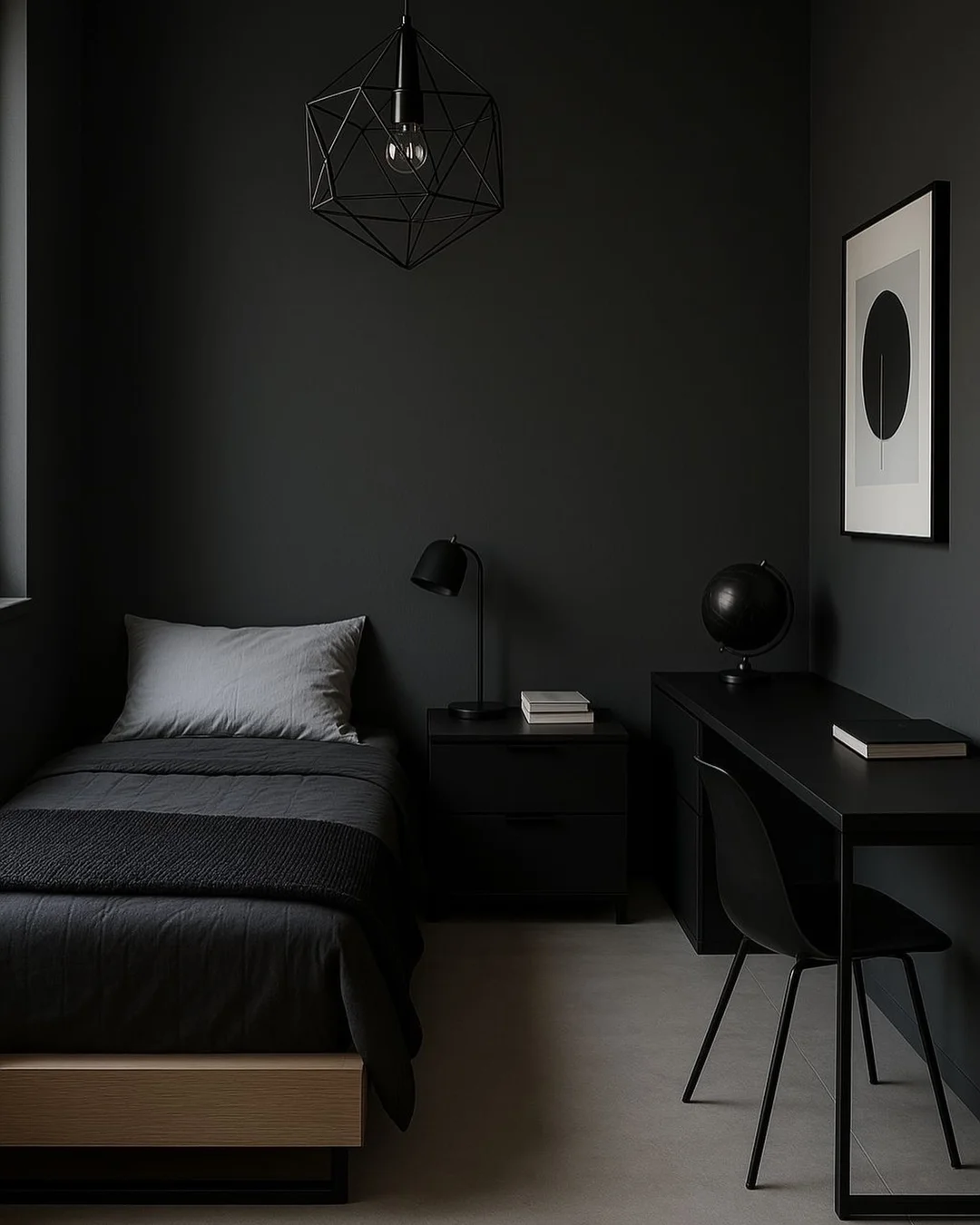
This bedroom commits completely to dark gray — walls, bed, desk, chair, all of it — and the room feels bigger for the commitment, not smaller. When everything is one colour, your eyes find no edges to stop on: the wall doesn’t end at the furniture, the furniture doesn’t end at the wall, and the whole room reads as one continuous space.
Dark monochrome needs daylight to work, and this room has it. The honest trade-off is mood: a dark single-colour room feels calm and cocooning at night, and smaller on a grey morning. If you go dark, keep the ceiling the same colour — a white ceiling on dark walls cuts the room in half.
The practical point: One colour on every surface, ceiling included. The moment one surface breaks the rule, the room’s edges come back.
Push the Bed Against the Wall
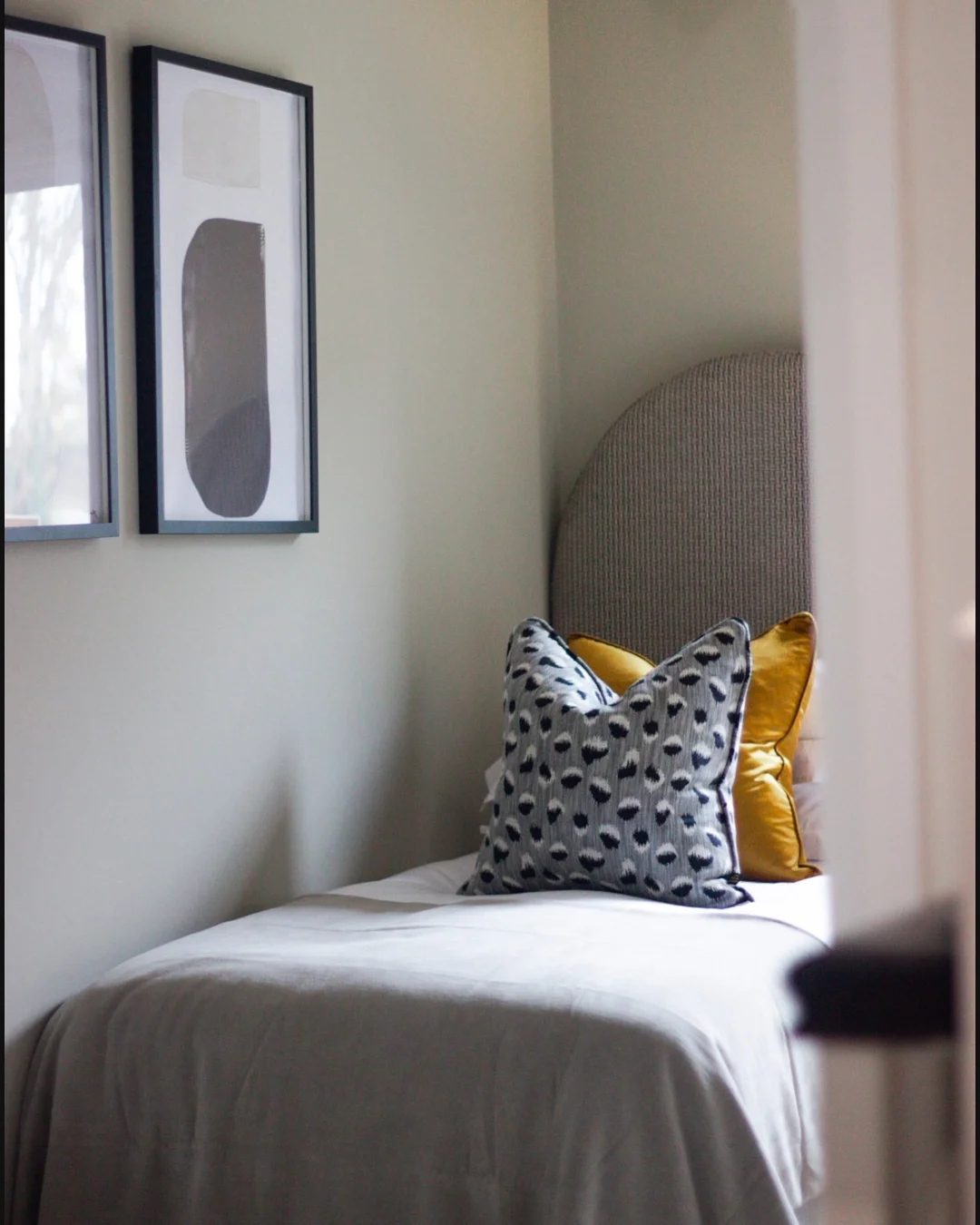
A single bed tucks into the corner of this compact bedroom, headboard against the wall, and the middle of the room opens up completely. Pushing the bed to the wall is the oldest space trick there is, and it works because it gives the room one clear empty area instead of two cramped ones.
It suits single beds best — a double against the wall means one sleeper climbs over the other. Leave a few centimetres behind the headboard for air and for tucking in the bedding, and keep the side you sleep on free of furniture.
The practical point: A bed in the corner frees the most floor. Leave 5 cm behind the headboard, and the bed still makes itself without a fight.
One Wall Left Empty
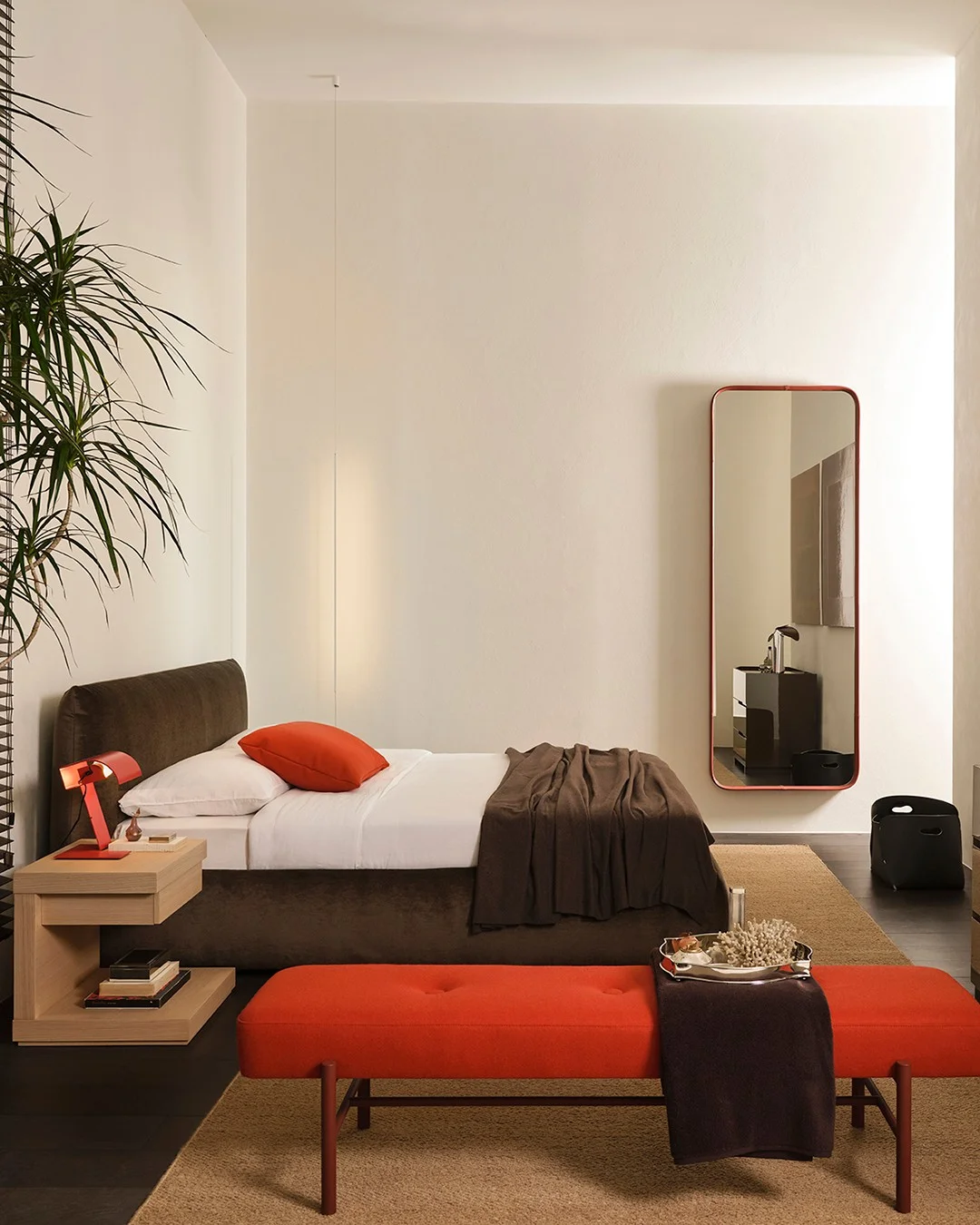
The wall behind this bed is completely bare — off-white, nothing on it — and that emptiness is doing more work than any picture would. An empty wall gives your eyes somewhere to rest, and in a small room that resting place is what makes the room feel calm instead of crowded.
Resist filling every wall. A tall mirror on the side wall is fine — it bounces light without adding clutter — but the wall you face when you wake up should stay empty. One bare wall is a design choice, not a room left unfinished.
The practical point: Choose the wall you face when you wake up and leave it empty. The room feels calmer every single morning.
The Room That Feels Bigger Than It Is
None of these ways to make a small bedroom look bigger adds a single square metre to your bedroom. They change what your eyes read — where the floor runs, where the ceiling sits, where the walls end — and that reading is what a small room really is.
Start with one or two. Paint the walls pale, hang the mirror opposite the window, or push the bed against the wall — and by the weekend, the room you already have will feel like a different one.